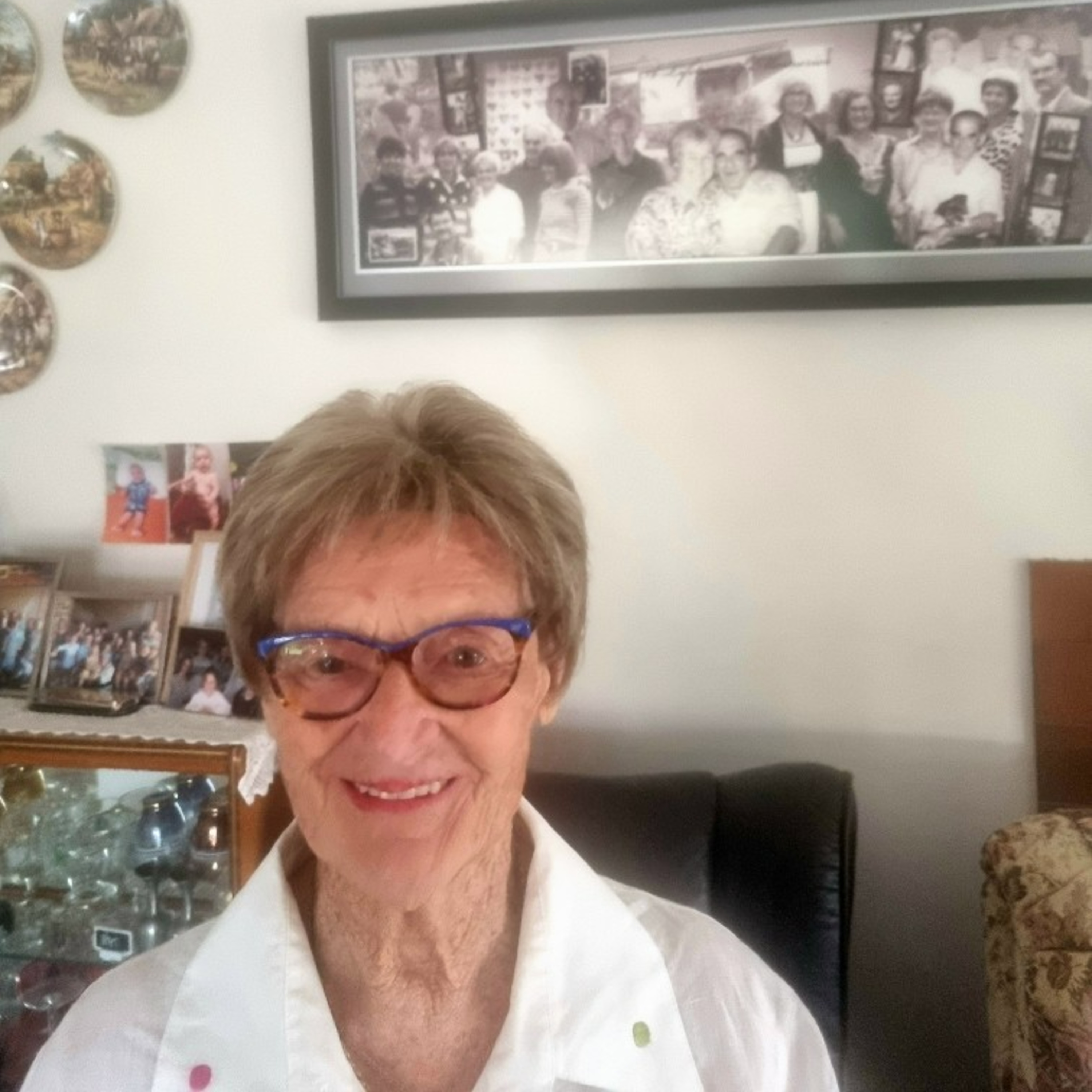
In this conversation, Betty recounts her early life growing up in a large family on a farm near Casted. She humorously notes she was named after the family cow, being the twelfth child. Daily life involved self-sufficiency: milking cows for fresh milk, receiving bread deliveries from a talkative baker, and using creative methods like ice chests to preserve food without refrigeration. Household chores were labor-intensive, with washing done manually using coppers and scrubbing boards, and no telephone for communication. Community figures included a nightman who emptied outdoor toilets and doctors like Dr. O'Sullivan, who made house calls. Betty recalls Casted as a vibrant town with numerous shops, cinemas, and services, where residents rarely needed to leave for essentials. The discussion also touches on family stories, such as her father's work as a butcher and her husband's gardening, painting a vivid picture of rural life and community bonds in the past.
[Music] Hello and welcome to Casted & Connections. An initiative of Hands Up Casted & where a group of enthusiastic locals have come together to capture, preserve and share stories of people who have a connection to Casted & Welcome back to another episode of Casted & Connections. We hope you enjoyed part one of Betty Commons life story. Please sit back and enjoy part two of Lulsa's chat with Betty. Well Betty I thought we might just go back and touch a little bit more on your family and your siblings from the days out at Begala Road. And actually the naming of your siblings you had you were the 12th. I'm the baby for 12 years. Yes and everyone had different names. They were all family names. They had family names but when they got to me they reckoned they ran out of names so I was called after the cow. I was informed how true I don't know but that's all right. After the family cow. Family cow. Oh dear. We always had a cow. Yeah. Yeah. Always milked cow. Yeah. So did you milk it or? I had a go. Mostly my mother milked the cow. I think it is. Don't let it be white. So you'd have fresh milk. We had fresh milk all the time. We used to separate it. We put the separate together. I don't know whether I know how to do it now but do I? Yeah. And we always had nice fresh milk and cream. Bloody cream. Bread and jam and cream you'd finish up with. Oh yeah. I can remember having bread and jam and then you put holes in the bread and jam and then put the cream on top. Crug on top. Oh yeah. So true. So true. Yeah. It's very um. So you the Smith family of course. Yes. We spoke about before. So you would just run down the line of the family and who's still around the area? There was there was Kath and there was Mary and there was Dory. There was Ted Tom. No Ted Dick who was Herbert not Dick. Tom. Eddie Henry itter. Edith Walter. Alan and Betty. We come right down the track. Betty after the calf. Betty after the calf that was her yes. Yes. But yeah. So you still got a few nieces and nieces around 10? A few around 10 yes. Yes. Not as many as I used to. It used to be half-customers Smiths but no I think they've died out a bit. Oh yeah. But there's still a few nieces and nieces I have got a few yes. So those early days out of the gallery you also had I think we spoke touched a little bit on it before about the you know how you had the baker deliver bread. The the baker called the wood to call and there was a milk when I think but we didn't get milk of course because you had no. Isn't it cow? No. The baker the called on us used to but the tell me got out place I think we were on the end of the list to be dark. He did too much talking on his way you know I talked. So who was the local baker? That was Jimmy Joyce. Now you would remember that's Harry Joyce's father. Oh yeah Harry and Vinnie. That is father yeah. He was the baker dear old Jim. Lovely old fella. Yeah so what he used to bring the bread out? The bread out. Yes. No sloth bread most days of course. Yeah. No. We used to get through a lot of bread now household. Yeah. Of course there was school lunches and everything else had to be cut out of it. Yeah. Yeah. Yeah we all so he used to deliver it out. Were you on the end of the line? I think we were on the end of the line yes. Yeah. Yeah. Last of it. Yeah. So because he was a bit of a talker. He loved to have a talk to be yes. The bread was nearly star-boy. Yeah. Yeah that's true. Yeah. But that was yeah. Well then when I got married the baker still called we had the baker. Yeah. Yeah. We delivered bread. Yeah. Andy Whitty. Yeah. We used to deliver bread. Yeah. Remember Andy? Andy yeah. Very fit man. For Andy I can't remember who's before Andy but yeah we had the bread delivered then. There's a sit in the milk man in the belly. Yeah. Hang the belly on the gate with the milk man. That was here but my step there. Yeah. That was here. We didn't know. No. No. No. No. We didn't get any milk. So you had a little belly. A little belly yes just a little bit of the belly here. Probably found it out there somewhere still. And what you just hung it out on the gate. Hang it on the fence. Yeah. When come along and just filled it up. He filled it up. Oh wow. That's how you got your milk. What about hot day bottles or cartons then? No. You get pretty warm on a hot day. Well you had to be quick to the fence to get there. And every day those days I don't think I had a fridge. Okay. That's I've still got it. Yeah. But if funny how you managed. Yeah. I could remember my mother used to keep we had that years ago they had a cool, garly safe they called it. It had sort of nitty-go-nitty. Yeah. You got through it all round and you put the legs of it in probably jam tins or something you know. So the ants couldn't get up. Oh. Into the, yeah. Yeah. Keep it. Yeah. So it's just like a cupboard. I love a while cupboard. Still got to sit at the round of the act. Yeah. Oh mother's yeah. Yeah. And that used to keep the food from the cool and preserve it sort of. I don't have that kept it so well. How we never died from anything. And I remember the butter sometimes. The Landry Fowl place was the coolest place. She had an ear that was sort of dish. She kept it in and in the fireplace. Okay. That was the coolest. Coolest place in the house. Yeah. When the fire wasn't lit. When the fire that was in the summer well then you didn't need it in the summer. Yeah. Yeah. Yeah. Yeah. So growing up on the farm you were pretty much well you saw the self-sufficient. Yeah more or less. Two, two or three. Yes. We never have a vigil guard because we didn't have the water. Oh okay. We didn't have water. I don't think mum had the connection. The service water to the left. Yeah. And it was very sandy up there. You couldn't grow much. But yeah no we didn't grow vegies believe it or not. Few potatoes I think I can remember growing here. But otherwise no. So what your dad was a what did he he was a butcher. He worked at the abattoirs part out at the Begala Road. That was further out the road. My kids he's had at the most days still. And he used to do all the killing of the beasts, the sheep and the cattle. Oh yeah. I can always remember the story of my father. As long as I remember he had the top off one figure and I said he was meant to make for the sausages. So somebody might have got a different flavour sausage style of that. That was the story. I never even had the top off one figure. It meant to with the sausage make. I dare say somebody got the sausage made either. Would have been painful. Okay so to get around you dad had a a gig. Yes he had a little gig or that was a transport not but so for people that don't know what a gig he is. Some young ones out there that think that's a music. It had just had a little yeah and this gig got old my father's or he used to he used to go all the way down to Hendy in the gig horse of gig to get the chaff for the horse. So he built this little try up the back to put the chaff on. Yeah and we used to we were only one of us with a lad to go with him because I know more room down for the and this day he was down in big big it in the Hendy I think it was getting the chaff and the chap he used to get it off said to him is that your daughter and he could get with him. He said oh yes he said that's a patent of man dad was deaf. A patent of a man he said he meant he was talking about where the chaff was sitting. A patent of his own I suppose he was a little bit. A patent of his own. Actually I've still got the gig seat out there. Normal Russell I I found it out how when we're cleaning the backyard and I've got sitting out there normal Russell but it was seat full. Oh yeah yeah. Okay and remember that dad had a painted green and red of all colors. Green and red maybe nice and bright see you coming. Says coming yes. Yes. Have you ever had gigs or or gigs or what did they call them big uh. And they're cats. Cats yeah just cats and horses. Quoting the awesome cat a lot of people they just they set up at my horse and cat.
So what sort of horses did you have more than one horse? You were a horse, you say at one stage, but it was only the one year. I remember the chaff, we had a big box up in the garage. Not the garage, the shade, we did the chaff was put in there. We had a big pear tree up the back and the pears were getting robbed. We used to pick them and put them in the chaff and that's a ripen them. We had to be quick to get the pears before Dad fed up the horse. You know, we used to rip them in the chaff. Also back in those early days, I suppose housework would be quite manual. All manuals this week, but you could get down your hands and knees and polish the lino. So there was no modern sort of appliances like washing machines and stuff like that? My mother never had a washing machine. She had a ringer, they had a ringer, I never had a washing machine until just before my last child was born. Wow. So how were the clothes washed? Well, we had the copper, the building copper I had in the end. And they had cement wash troughs. You put them in there, you scrub them. So the copper was what you heard of the water in? Yeah, you heated the water and you know, your board just sheets up in that. You build them up in the copper. Because everything would have been cotton? Cotton, yeah, well that's right, it was those days. And I had a scrubbing board, I was scrubbing the clothes, I had to get them clean. I must have got them clean, I can't remember the bend duty. This way they wash socks, the old wash and water in today. And the old straight lines, we had you know, post-each-end, straight lines in the middle. I had that two and I's first marriage, out in the yard, probably the best lines of the lot. Yeah, I've still got one. You still got one? Good on you, good on you. I reckon they'd draw the clothes great. Yeah, yeah, yeah, yeah. Yeah, yeah, yeah. Okay, so the washing I suppose was done once a week and. Oh, well, what would it be? Well, I used to, when I was first married, I was still a little bit old. It's children, but I suppose my most were often two. My mom had all my habits of bench, outside the back door. The copper would have been here to the out there, away. In sitting in the middle of the backyard. To when they. Rainhill, or shall I say? Rainhill or shall I say? Yes, she did wash it out there until she got a copper and a troughs in the wall. She built a garage there in later years, after I was married. But she never ever had a washing machine. Never ever had. Mum and mother never ever had the phone on. Never had. To this day, I'm trying to think how. When I was born, I never ever fell on death. I just thought this was a reality years. I was born at home. The doctor came. But I was just wondering how the doctor got word to come. Why do the alder wants Mr. Rowden push bark in to tell him? Or somebody wrote a horse? I can't just don't know how it happened. But the dear old doctor, a seller, was the doctor. Wow. And he did come. He was there at my birth, I know. But there you are. I don't know how the word got to it. He must have been. Because I looked up to a seller and was around. He brought me into the world and he brought me all my. Three children except Kathy. And his doctor, Dr. Joskey had just come. Working at O'Sullivan Z. He was around for a lot of years, Dr. O'Sullivan. He was like that Mr. Lane the teacher, Mrs. Ollivan. Yeah, Mrs. Lane. This was around for a long time. A twit or a vine too. There you go. There you go, that's right. The other thing I think also when you're at Pagelerode, well I suppose also in town, there would have been the night. Watchman, was it the nightman? Yes, to call. Like, yes, why was it called the night, but because he came in the daytime. So, for people out there that aren't aware, what was his job? His job, well, he emptied the cans and the dany they called them, the toilet. They emptied the cans. I can still see them, they used to wear a leather thing around their waist because they'd sit up here. On there, it was protected, I suppose. But the man that had the. it was a low. It was a low trail where they could reach to put them on. And the man that used to do the emptied your cans in those days lived just up around the corner for us. So, lunchtime in the summertime, lunchtime he'd leave the truck, fully loaded with full cans. Under the old gum tree just in the corner of our place, Wiley went up and had his lunch. So, you could imagine what that would be like. If the wind blew the railway. And then they'd take them. everything was emptied out the Pagelerode again. They emptied them out there somewhere. Probably they were all very well fertilised paddy this time. It's somewhere out where the dump is now. Where the tip is now. Somewhere in that way, they used to empty them. Yeah, and they used to take their lunchtime and go up there, and leave it under the tree manager. I can still remember that. Scared for life, really? Scared for life. You could get the nice views. It wouldn't be much for a job, would it empty the cans? No, it wouldn't have been. Somebody had to do it. That's right. So, they used to just come in like, because everyone had outside tools. Outside tools, they'd just come in. You just had to tell them yourself not to be sitting on the toilet. They told it, obviously. Well, they had to tell them that. They had to be well-fulfilling. I don't know, yeah. You could have been sitting in there. I remember in the old toilet, too, we used to cut the newspaper up. You'd cut it up in little squares and put us big needle through it. A bit of string. A bit of string and tyre on the nylon, the toilet wall. I can remember when we had the cans where we first got married. And anyway, it was much of a carpet in my husband. The toilet was built, and he put the seat on it. And there was a cup of carbon stain with the face all there. They placed and they stayed here with us for a while. And Neil said to me, "Oh, Betty said that toilet seat he used. It's a bit rough, isn't it?" There's just put the top on it. Cut a hole out there. He never planned enough for anything. He was a little on the back side. And he stood up against it and thought, "It's all right." But I had to have a block of stone to stand on to get on it. He made it a bit hard for me. Yeah, they look good. They're funny days. I was speaking of death. I remember you telling me too about him being. Well, you did say he was a bugger of a driver. Was your words? Oh, yes. That's the first time he was. But he used to take the green kids out. Yes, out to the bush. He used to take rabbits or anything. Sometimes I don't think their parents knew what happened. They goodness. I used to mind them. Yeah, Kathy was a work. And they'd be turning all the great toves they had out in the bush. They'd come over with rabbits, killed rabbits. I used to have a great time. I used to love it. Up in the garden here, one would be sitting in the wheelbarrow as deserts. Wheeling it round. Yeah, the red suns were very popular with the power. I used to walk the block. I think I'd tell them to do that one. Get the lollies off the people around the neighborhood. Yeah. I used to have a great time with their power. The boys especially here. And unfortunately, they had, like, not good health. No, in late years, he had to give up. In late years. He had to give up his shoe because he'd done his back in. But he then got himself into his veggie garden, which probably wasn't good for his back either. But he had probably the best veggie garden in Castan, I think. Yeah. All up the back there. He supplied half-castoured with veggies. Yeah. We had a great veggie garden. That's where the boys brought a lot of time with their grandfather. Yeah. In the veggie garden. And the boys. You had a little bit of a story for me about one of the grandson's, Joey. Joey in the drafts. Yeah, Joey, I wanted him, my little brother worked. And we used to play drafts here. I got the draft board out. We had his children. And I said, "Come on, Joey. I'll teach you to play drafts." Well, we used to play them in the end. He played for quite a while. but I had to his mother when his mother picked him up and took him home. He said, "Why is it the man that
"Nen, I never ever let's me win." She said, "Well, she's probably treated you, "just who you've got to learn." You know, I had to play properly, if you let you win all the time. So I still got the draft board, and I'm going to give it to Joey, but I've got to have one more game with him. Hope he I can win. (laughs) You did also tell me that he used to cry a lot. Oh, yes, yes, yes, yes, yes. Cry about getting beaten. Get beaten, yes, he didn't like, and he cried to his mother about it, yeah. He cried, say, "I don't know when, "and doesn't let me win." (laughs) Good lesson for you, Joey. Joey, yes. Might have helped him in his long, it is life, but not yet. Might have. Yeah, yeah. Just back, can you. Oh, actually, what I was going to say to you too, you said about Jess being a bugger of a driver. I did hear a little bit of a story about yourself but at the cemetery one day. Oh, no, we don't talk about that one. Yeah, we do. Oh, no, no, no. (laughs) It's terrible when the dead people upset you, isn't it, so good? (laughs) Of course, I. Yes, I took the corner a little bit fast, fast, you know. Not fast, a bit sharp. Yeah. Yes. I've been in the cemetery and had a little bit of a incident with your car and a headstone, wasn't it? Yes, a headstone, yes, yes. Well, or a grave, actually. What a big cement grave, yes. It was right on the quarter. Never mind. Yeah, and we can't name what family the grave come from at all for. Better not. (laughs) I'm a charge of it for bedding. It's got a crack in it. Oh, dear. Okay, no more, we're not saying more. We don't want the police after you. No, no, no. No thanks. I was just wondering if you could describe casted in, you know, like in your youth when you were very young and. Yeah, in my youth, I thought casted was a good little town. We had so many shops. You know, we had so many butchers, so many bikers. There was always a menswear shop. We had a good dry cleaners. We had everything here. You really didn't have to leave town for anything. I think it was a good little town. It's still a good little, pretty little town. But it has lost a lot of those old shops that have gone. So can you remember where some of them were? So were like. I think you said about the where the cinemas in that were? Oh yes, the two cinemas. The town hall was one picture theater. Yeah. And the bottom theater down the bottom. We had two killer shops. One where the garden place set. The garden set places there now. And one further down new. It was country closed, I still move. Oh yeah, back paddock. Back paddock is there. Yes, yes. We had bags. I and Z, where the paper shot casted news is. We had the national up the top. We had the New South Wales. And the I and Z was at the cross the road. And the Covenant wealth. It was the stage savings there. Yes, so we had five. I think now we've got none. There was a CBC bank there. Yes, that's where. Next to Bakery. Yes, that's true. And in that block where the nursery is now. Of course, there was three or four shops there. There was Joe Lake County. Joe Lake County Saddlery Place. And the chemist and a bird call since. Grocery shop. Grocery shop there. In that he used to be a fishing shop where Joe Lake used to be. And beside that where the. Now it's the cafe was a paper shop. That was a paper shop. What about where was Cory's? Was Cory's? Cory had there was a. Yes, that was a truck shop where the chemist used to be originally there. Oh, I see. Just there for me. Just there. We need Adam Robinson here. He knows. He knows, yeah. We had Brandon Cato's, Biscuit shop. I remember it's shorter. We used to go down there and then we used to get a. Pettish with broken biscuits, a big bag of biscuits. That was when they had all the biscuits and tins, you know, along the shell. Oh yeah. We weren't remembered, yeah. So you would buy everything in bulk? Like sugar and flour and stuff like that? You would have bought in bulk? Yeah, yeah. We could eat by somebody's bulk, yes, yes. As in, you just go in and say, can I have a. So many pounds? Pounds of sugar or whatever you eat or flour or whatever you eat. So did you take containers in the pool? No, no, they put in brand-paping bags in those days mostly. Oh yeah. We put it in just a brand-paping bag. They were done up in bags like today. No, no. Yeah. Yeah, we had a good joy of cloders down there, with opposite town hall. We had a. Trish Collins there, she, I think, about right away, but we were Trish boys. We had a Williams Assummon, we had McCann's shoe shop, we had Higgs. We had three shoe shops, all up that same side. Jimmy with us the barber. The men's barber, yeah, Jimmy with us. That's about where the. Butch! Just down from the butcher. Yes. That area? Yes. They called it "Colders". It was a bit like. The stores of today like Target and all of them, you know, a big, long shop. And it was where. They now have the. I can't think of it there, what they call themselves. Actually, the centre-league isn't the front of it. Oh yes, the mention. Then we're right back down, which I guess. Yeah, a big long game. My mother bought me. I've still got that doll sitting there next to her cabinet. It's early 10 when she was a little about that side. And she brought this little break, she was breakable. I brought her out of the shop and I dropped her on the footpath. She picked up every piece of that my mother took it out and stuck it together for me. But I say every piece, we lost one piece, she's got one leg, sure, of the other. So I still got that doll. Yeah, that was a cashy carry, they call it. So a cashy carry, so what did that mean? So it was like you're saying like a target. Or any bits of everything. Bits of everything and you just went in and paid cash and carried it. And in that a year, it became a fish shop. Tom and the group we called him. And it went right back down. Fish shop and all the seats are on each side. You know, they're seats where you. Tablets in the middle, you've got a big seat side of it. Yeah. There was a whole row of them down there, down each side. So, saying Tom the Greek, just interestingly, was there many immigrants in town at the time? No, not really, not really, no, no. No, I don't know, he was. Oh, I can't remember. Really, I think, yeah. I can't remember a lot. He was one of the sticks of the memory, yeah. Tom the Greek. Probably gave you free chips or something. Yeah, yeah, sometimes when we were led by a lunch we come by and things like that. Now, in McGregor's, where Dave Bigger was there in a little years, McGregor's? What did they have? They had. He was a delicatessen and he made the most beautiful pasties. I remember by pasties they were led by a dinner from school. And we just come from school, the state school down. It's still there, I think, but closed off an alleyway at the side of that shop between the hotel and the shop. Oh, you find my room in Poryne, no? No, no. Oh, I know, we've been. Right up the top, yes, in the hotel. Between Tesson Hotel and the old. The old Murray Golding Order. Yeah, Murray Goldbid Shop there. We used to come down that alleyway, it was down to. And by our lunch. I now led to buy it once a week. Yeah. Because there were stables out the back there. That's where the stables were out the back there, yes. So the kids rode to school? Right, quite a few rode their horses to school, yes, yeah. Yeah, a lot. A lot was about a fact, yeah. Yeah, their horses stayed for the day, yeah. So you were allowed to leave school at lunchtime and stuff? Yeah, and go on the street. And go on the street. Did you have a wax school? I don't think I did. Are you a perforated? I know, a couple of my children did. Oh, did they? Or, yes. But their brother dubbed them in. Winding wax school, lunch. Winding a friend up a road here and he dubbed the big caravan "Dumb the Bede." Oh, that wasn't there. That wasn't very nice, no. No, no, no. It wasn't very nice at all. No, the others would have said would they? No, no, the others did. They were so perfect. Yeah, they were perfect. Yeah, yeah. I can remember one I have heard in later years climbed out the bedroom, at the bedroom window at night. And now the other one was sworn to secrecy not to tell Martin, you know? Thank you. Oh, climbed out the window too. Do you want to do it?
in which one was a girl. The other one would guess. And where was she off to on Monday? Probably at 7/7 or 7/11. I never said to get into much business, so it was alright. Not I knew about that. That's right. So the cops weren't up at all? No, I never heard the cops knocking on the door for that. That's alright. I wouldn't ever swap my child who dies. No, no. Even my early married days, we battled on. We just what we had, we had, and that was all of us to it. You never know. Whereas today I think they have homes that could have everything in it, haven't they? Yeah, they've worked a lot. But we didn't have it, that's all of us to it. You survived with what you had, yes? Yeah. And you never had a choice, I suppose you don't miss it, do you? That's right. Really, no. But when you get something, you appreciate it. But look at Casterden, I still think it's a good little town. Look at how they're with us green. A beautiful hills. Beautiful. It's very pretty, I think. It is a very pretty town, isn't it? Yes, yes. What's your secret to a long life, bed? Well, I see, my secret is a good health to life. I have never been one to take pills. Yeah. I don't know whether that's the idea or not. I've always walked a lot, right for a child, I used to have to run to keep up with my mother. You still walk now? I still walk, well, I think I've been a lucky one by my health. And even as children, I can't remember as being sick. I don't know whether it was a diet or what it was really. But I put mine down to, perhaps I don't take many pills, because I think you take one pill that chases up, you know, upsets upnils in your system, I'm up and wrong. And I know people have to take pills, but tablets I should say, I suppose. But no, no. Do you think your activities within the community helps too? Like being a hampe? Possibly does. Being a hampe, you're possibly right there, yes. Keeping active, I think the fact to keep active is a main thing too. Very important. Otherwise you. Because you built up a big circle of friends and relatives over the years. The relatives? I suppose 70 bills a month. You know, kind of fewer of them. Over the times, yeah. Yeah, not many lay out. I'm the old generation now. And as I keep saying to my children, "Rough, go on, you'll be the oldest." I can remember saying to my brother years ago, "Well, you know, we get the stage "for soon, but the old generation." And that happened pretty quick, and now it's nearly there to it. How the world goes by. My husband moves on, doesn't it? It moves on, that's right. Things older, don't they? Does it seem like it's been quick, like so far? Like. Did it have the years gone by? Oh, I've let it use the years I think are going quicker. Yeah, it's definitely. Yeah, but I hear everybody say that. I don't think it's the fact I'm old. No. I think it's just more going on in the world, perhaps. Yeah. When I was a child, I don't think it went very quick. Sometimes I'm quick enough for you, you know. Especially to get the weak heads from. Yeah, nothing else to do. No, no, no. It let it is, I thought it is, but I think it's. Well, how it's progressed, you know. Well, it's. Sir, just some weak heads and stuff, what did you do? Did you get in the river swimming and stuff? Oh, yes, we used to get in the river swimming, yes, yes. Just down below our place, we used to swim, yeah. And then all down, also down at the horseshoe, I suppose you've heard of that, the Lombogella Road for the end. I've heard of it, don't I? I'm not sure where it is. It's down on the bend. You know, where the. He's got his. all cars and everything, you know. Oh, yes, yes, yes, yes. It's very unabent there just before we. Sort of. to him. Yeah, but at the back of. the old pack-up place. And we've. Yeah. Yeah. And we. So how much water was in the river then? Oh, there was much more water in the river than in now. Yeah. But it wasn't deep, deep that we could go there and allow. We were safe, you know. Yeah. It wasn't deep, deep. Not where we went anyway. In different spots, we're deeper. Yeah. Where we had snakes when you were in the water. That's what I'd be. Well, do I water? Don't remember ever seeing a snake. Yeah. Ever. And we went down there, no? No. Um. I remember we had a spot where. Did I tell you the roots of the river? Nope. The roots. and the earth and water were there. And we could step on it like a step-scaling up. Oh, like the tree roots? Yeah, tree roots. And I've still got the scar on my leg where it went. Where we. I cut it. Yeah. It broke this day and down it went. So my brother got me with a tail over my leg. I bleeding like that and takes me up to mum. But it was a Sunday. You did not disturb the doctor on a Sunday. Mm-hmm. She's got it and plastered me up. But. No, I should have had stitches in part of it, but it didn't happen. But I survived. I survived, yeah. And you got. you get. leaved to tell the tar. I lived to tell the tar. My mother fixed it. She was good by the year. Yeah. Yeah. Yeah. I mean, yeah. Um. I don't know what else goes. What else happens? Nice. I can't see anything else, I don't think. I think you've got enough out of me now. Well, just about. drag. Yeah. Drag me out. Drag. drag me out of here having a. Yeah, you're right. So, it's. We'd have to tell what we've. I can't remember what we. because you told me that story, but I can't remember whether we recorded it or not. What's that one? The one in Batley League. Oh, yes, I'm not sure either. I mean, got it there twice. You've probably got there twice, people. That doesn't matter. No, that's right. Cut out what you don't want. Yeah, Peter. Peter fix it, I'd like to. Yeah, Peter fix it. Thank you. Uh. No, I don't. Yeah. So, thanks, Betty. It's been great. Okay, Doug. You're pointing out a bit more about, sir. Oh, yes. It was a pretty simple life, man, but. We had a good. We had a good childhood, no, no. I went, so I didn't. No, we'd ever had a lot, but we were happy. Yeah. We always had a meal on the table. And clothes on your back? Clothes on our back, yes, yes. Even if I didn't have to wear my brother's socks to school, I remember up to my knees here to keep me warm. Pass me down, see? Yeah. Well, and by the time I got here, I suppose. There wasn't much left. There wasn't much left, they would be pretty warm, wouldn't they? Not much left, but. Although I was a very sport one. My older sister used to do dressmaking for people and the big material over in the. I'd say to her, "I'll keep that, you know, you might want that to do." And she'd find enough to make me a dress or something, you know? Yeah. And my mom made all my clothes, yes. Our tart and skirts. Oh, beautiful. And I did the same for my tour and I must have went down to the garage, yeah. Yeah. But anyway. That was it, yeah. So, did you ever actually. I should have seen a song machine, I remember. She had. Yes, I've seen it. She got it out there and one with a. A hand-butt. A hand-butt, yes. Did it have the foot pedal too? No, no, no. Just a hand-butt. Just a hand-butt. A hand-butt, yes. She used to make pevers clothes on that one too. I suppose a few extra Bob, you know? Where did they get the cotton. Cotton and stuff? Did they have a hawk or anything that you saw? Yes, yes. I remember the old hawk, what was he saying? I mean, he did. And I only knew the man used to come around. And he had everything in that cart, yes. If it was a big wagon, you know? With a hood on it. Did on it. Top of it. And. Do you see it? Was he? Do you see it? I'm not sure if he's dying now. But he came around regularly, yes, yes. And the Watkins man used to come regularly too. Watkins. Watkins. It was ornamented, uh, uh, ointments and. Have you ever got. Like the old Ruralies. Ruralies. Right. The Ruralies. Yes, yes. So what they just had like. Yeah. Intense. Intense and things. Yeah, yeah. And he had little drawers with everything in, you know? And he had buttons and all those sort of things. Oh. Yeah. I've still got my mother's buttons. Jazz buttons, she had with. She had buttons and buttons and buttons. And I've still got some. Yeah. Good. What are your kids going to do with all this stuff? Don't talk about it. Ask my children. They're on me back there. They're back there. They're too bad. They'll have fun. They'll have fun looking at it. I tell them it's not my problem when I've got. No, that's right. That's right. Oh dear. I don't know why he kept this stuff up. Oh, it's good memory, so isn't it? I keep my members. Yeah. Yes. And probably it's, you know, because your very, um. What did you say? Your memory's pretty damn good. Oh no. So you have that. those reminders around you too. - Yeah, it's a little cross-remediated. - It's a little cross-remediated, that's a little too. - Yeah, 'cause I don't think my memories is good as it used to be. I've got a son that I tell you, he'd be the one when he gets older. He can remember everything. - Yeah. - He used to do a paper round when he was a kid on his push bike. And he could tell you who's house everybody lived in, you know. Even now when I talked to him on the phone, he says, "Oh yeah, that's where so-and-so lived." He remembers at J.A. You see how they did the paper round on the push bike. He'd get up at six o'clock in the morning. - Every day? - Every day, do the paper round. - Yeah. - So what, just go and pick up the papers from the two seats? - To the paper, yeah, and deliver the town here, round, right, round the town. - Thrown over the fence and the. - Trace by dogs. - Trace by dogs as well, yes, that's true. - I wonder if he didn't really like people. Did he do, like, throw him into the duffers? - I suppose he did that too. - I'm a dance to be, I wouldn't tell me that. Would he? - No. - No, no. Well, because he's pocket money, you know? - Yeah. - Yeah, yeah. And I tell you, he, as some of them say, he's probably got the penny made first, what he made. Now I remember when the paper round, his father had the bad back then. And he came on this day with an electric blanket for his father. He said, "Dad, I didn't get one. "I'm outside of the bed." And he just grabbed the side. He said, "Dad, this might help you back." He saved his pocket, he's paper money, a board of fish and a lot of that. But he made a few bob too. He used to buy, June, cooks it up, the corner had a milking carousel, that had calves and things, the need bob calves and rear him up the back yard. - Oh, yeah. - And rear him up the other bucket. And he'd sell them then. He made a few bob out of them. And we always had pet lambs. We always had pet lambs had to be fed in the mornings before they went to school. - Yeah. - I could remember. And then when the poor pet lambs were sold, mind you, we'd sell them to the butcher. - Yeah. - And by the means of the opposite butcher to the butcher, our lambs were gone. Couldn't eat our lambs. - Couldn't eat our lambs. - No, it wasn't enough. - No, no, no. That was funny, yeah. But he always, he had calves. He made a few bob out of his calves. - Mm-hmm. - You were not even eating, but yeah, he used to save his money. - Oh, that's good. - Yeah, we didn't want to work in broadies, silver and old. It was a zephygut. - Mm-hmm. - Yeah, he had that for years. He loved his zephygut. - Well, but how old were you when you got your license? First life. - I didn't get my license to a Catholic with what I'd be by my 20s, like 20s. - Yeah. - I never would, Catholic was a baby. I remember Deez was going, oh, that was my fourth child. Our fourth child. Deez was going away up north some way for three months, shearing, and the cow was got a city in the garage. And I had four children, you know, to try to look after. And I went mad and got my license then. - Was it hard to get? - No, no. Well, the first time I was a bit, I missed on my backing. They took me to the courthouse with the courthouse, that building, they did. And then had me back around like that. And I missed that one. So you mustn't be good on bench. And then I went back just after the teeth Davis took me then for a few of me backing tree. That's anything they've felt about. And they, it was better when they see, but when I'll back down the drive at the back of the town hall, it was Jack Phillips. - Yeah. - And he, I'd got my license then. - I remember when we used to go for hours, the thing was you had to go up and I can't think of, they call it all up past Lorda and Max's bugle holes. - Oh, you stopped on the hill, didn't you? - And you had to stop and do a hand brake start on the hill. So you get up on the top and had to do a hand brake start. And I can remember one of the, one of the, a girl that actually got to the top and just could not do it. And it just, the car just rolled all the way back down. Through your fence, into the, and it-- - Poor Davis. - Now I got to anyone, I was able to get around then. - Yes. - I could remember my sister, when she, can you remember when they had a mark at the, where the old Butter factory was? - Oh, yeah. - Oh, vaguely. - vaguely, yes. I hit with a mark of things. - So a mark of the, - The shaft built a jacket. - So this is it in the carlin', yeah, my sister. - Which is it. - And in later years after, or after she had a children everything. She was used to drive, they lived at Wandavale. And she used to drive from Wandavale to the mart to work it. - So where was the mart, where was it? - Where the old Butter factory. - Where was the Butter factory? - What the domes had this, the, the plumber, but it, - Oh, yes. - Yes, yes, yeah. - He's not now that-- - Yeah, down the end of the, - Right on the first street. - Yeah. - Anyway, at this time this day, she thought she'd better get a license and she went to get a license, and she was a jack Phillips, and for goodness sake, you've got your damn license. I've said you'd drive any day off the day. (laughing) She didn't have a license. - No, that only girl, it knows days, it was a bit of a, yeah. But anyway, she got a license. - Oh, dear. - That was the store of the license, see. - So was it, I sell it in Jackson, or the mart? - I had a shaft built. - So, charred stuff, they all lost some stuff. - Oh, so I sort of, - The agriculture stuff, he had the used to care. So, - Agriculture quit my job. - And she put in this little map with all the second-hand stuff, and she used to sell lots, a lot of the second-hand jobs there. She had that there as well. She ran that part. - Just as well, you hid some of your stuff away, she was so long, you know, for me. - Yeah, I didn't probably have as much as that, I just don't know. - Yeah. (laughs) - Yeah, no, that was. - So, your mum and dad still alive? How old were they when they passed away? - Okay. - They were 74 and 75, I think they were fine. - I guess you. - I thought you said that. - Which is a decent age at that time. - That's right. - I thought they were old. - Yeah. - You know, at the time, isn't it? - So that would have been about 19, what? - 19, oh, that looks like. - 60s. - 60s, isn't that 60s? Yes, dad died earlier. Dad died before I was married. Yes, he died in the 40s. - Oh, I can't, I can't. - I died. - He died. - He was quite a few years old, the mum. - Yeah. - The mum died when. - Ah, the 60s were the mum died. - Yes. - He died when the 60s. - So you lived through, God, you lived through some great times. - You know, what about the 1960s and 70s? - Yeah, I think I lived through the best times. - Yeah. - Lots of times. - So did you get through the whole mini skirts and all that? - Oh, yes, we had the big ones. - The long ones and the, yeah. - Minis and maxis and. - Yeah. I was brought up into the mini. - Yeah. - Good music, great music. - Yeah, they are folk music at the old, yeah. Scotch and Irish, I was with Jesus. We got to head every week. I remember when he said, "After his marriage, "he was in Melbourne at this time, "and they were out this night to a. "Some evening, the herd, they went to." And they put out all the Scotch and Irish songs and she's singing away to all of them and the couple of bits of them said, "How do you know all those songs?" She said, "If you live with my father when I was young, "she said we got them. "Every said done art. "The records play a came out at all the records. "That's all we got." So you had the old 78s? - Yeah, we had them lot. - You know, the big old records? - The big ones again. - Yeah. - For them, yeah. We had them as kids at our place here. We had a lot of them. And out of that club, yeah, that'll be our editor table. We did never TV or things you see. But we had our records. Record night, every weekend. Said done art was record night. - Also, it sort of be. Well, generalising I suppose there's been a sheer in Cyborg in the country music. - Yeah, we get to play the sheer and all those songs. We got there. Yeah. He was great, very lucky. Got your knowledge, Seagas. - Yeah. - Foster in Ireland and all those fillers. - They were his favourites? - They were his favourite, yes, yes. Still got them in there. Well, Drone asked me about them last time his home. I got the records. I said, "Tagum, tagum." But he hasn't. - Yeah. - They're still there. That's something we did have as children. I record Pire. - Yeah. - We recorded Plope. That was a bit of our way to Tadmond, you know? Record Plope. - What about a piano? What do you like that did to a piano? - Oh, no, no. We didn't have none of us heard to play. But I remember Dad going to a sail once when we were kids and brought this organ, an old organ. It stood about this high. - Yeah. - And I still love it in my garage. (laughing) We always used to say, "That's what we learned to play on." Is that no tune to it at all? - Yeah. (laughing) Matter of fact, I think it sat in the bathroom and that was our mirror set on top of that. Remember that it'd be mirrors so high that you could put your trists in back once and forwards. - Yeah. - And there was something else we had as in the bathroom was a bathroom stand, I think they called them. They were just a stand with a hole in the middle of the dish satin. - Oh, yes, yeah, I know.
cutting it again with the ceramic dish in it and then you'd have a no our dish was a the Neamel one again oh I sat in there and the soap sat beside it on a little tray yeah yeah yeah that was it was a bit of a sign of wealth wasn't it if you had the Neamel oh if you had basin of the Neamel bottle that's right there was the China one China ones you had a China dish and there was a China jug when we're at the potty yeah and there was a stand underneath this thing where we sat the pot yeah potty it sit through the day so but you had China or no no no no we didn't have the China one stand up we went up to that we had just their Neamel ones there was a green enamel and a bluey one yeah yeah it's two different yeah it's cold on the bottom not a child but that's alright you're managed didn't you you didn't walk have to walk up the backyard God when you think about it now walking your walking your ensuite yeah you know it's when you think God yeah the things we did but that's all we had yep no was it you know and however other things got invented as time went by yeah they just were available were they because people out in the bush a lot of them used to have big holes didn't they they'd think big holes I must what they do shift the they must have shift the toilet all over the top yeah I don't know yeah I remember a couple times it none them I was petrified there's gonna fall in oh you have to frighten me oh no thanks I have the old can oh you bit up market we're up market yeah the can oh it's terrible I'm leaving today in the you know it's a lot in the national parks well I have the long drops and stuff in camping places in camping places yeah that's right yes yeah nice great old days you can laugh about them there can't you I can we can yeah yeah they're good times it probably hard times hard times but good times yeah everybody see being the same but we're in the same boat more or less unless you had an animal pot a charter part we had the right the charter was dear I'm trying to win this enough a few would have had a few would have the charter pot yeah it's a laugh I think yeah I think that's about it all I cannot oh well there's probably lots of things now I'm not done a day to go you know not again I don't get it all we hope you've enjoyed today's episode of one of our homegrown heroes jump over to one of our other episodes to continue the Kassadin connections journey with us please don't forget to follow our podcast and share it with your family and friends
Podcast Summary
Key Points:
Betty shares family anecdotes, including being named after the family cow and details about her 11 siblings.
She describes self-sufficient rural life
Household chores were manual, with no washing machines or phones; clothes were washed in coppers and scrubbed on boards.
Community services included a nightman emptying outdoor toilets and local doctors making house calls.
Casted was once a bustling town with multiple shops, cinemas, and banks, contrasting with its quieter present state.
Summary:
In this conversation, Betty recounts her early life growing up in a large family on a farm near Casted. She humorously notes she was named after the family cow, being the twelfth child. Daily life involved self-sufficiency: milking cows for fresh milk, receiving bread deliveries from a talkative baker, and using creative methods like ice chests to preserve food without refrigeration.
Household chores were labor-intensive, with washing done manually using coppers and scrubbing boards, and no telephone for communication. Community figures included a nightman who emptied outdoor toilets and doctors like Dr. O'Sullivan, who made house calls.
Betty recalls Casted as a vibrant town with numerous shops, cinemas, and services, where residents rarely needed to leave for essentials. The discussion also touches on family stories, such as her father's work as a butcher and her husband's gardening, painting a vivid picture of rural life and community bonds in the past.
FAQs
Betty was named after the family cow because her parents had run out of family names by the time she was born, being the 12th child.
They used a cool safe or cupboard with legs placed in tins to keep ants out, and sometimes stored butter in the coolest part of the house, like the fireplace when not in use.
The nightman emptied the outdoor toilet cans, often leaving the loaded truck during lunch breaks, and disposed of the waste at a designated area like the tip.
Clothes were washed manually using a copper to heat water, scrubbed on a board, and rinsed in cement troughs, then hung on straight lines to dry.
Casted was a self-sufficient little town with many shops, including butchers, bakers, cinemas, and multiple banks, so residents rarely needed to leave for essentials.
They kept a cow for fresh milk, which they separated to get cream, often enjoying it with bread and jam as a treat.
Chat with AI
Loading...
Pro features
Go deeper with this episode
Unlock creator-grade tools that turn any transcript into show notes and subtitle files.
 PodcastTranscript AI