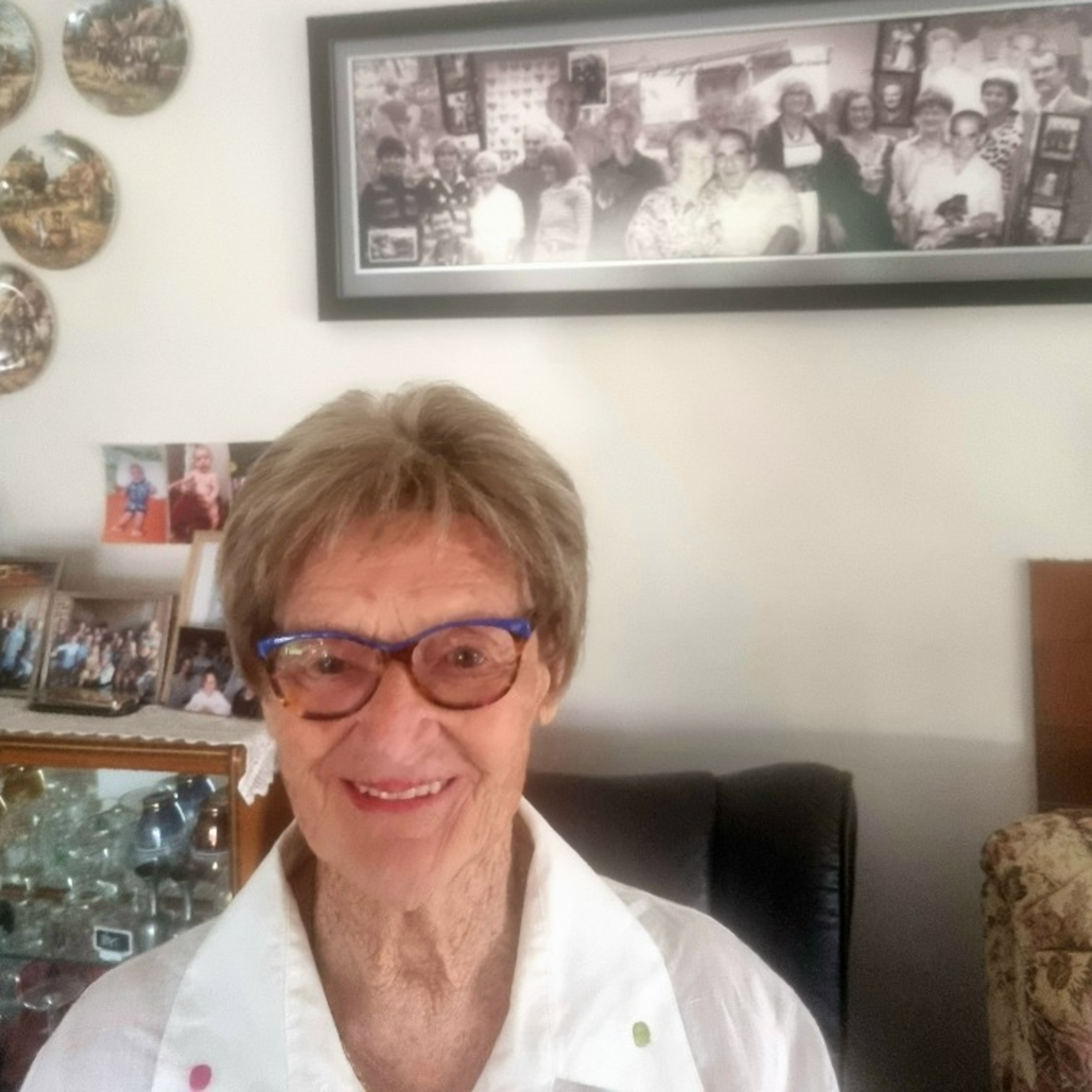
Betty Collins, aged 92, recounts her life growing up in Casted and, beginning with a modest childhood on Begella Road where she walked miles to school and helped with chores like delivering milk, rewarded with cakes. She shares vivid memories of teachers, schoolmates, and family, noting she was the youngest of 12 children, with three brothers serving in World War II, one as a prisoner of war. Betty married in 1952, gradually building a home with only basic facilities like a kerosene lamp and no power, and raised four children often single-handedly while her husband worked away. She describes a supportive community of women who met weekly for socializing, and entertainment involved walking to local theaters for films. Throughout, Betty emphasizes resilience, adapting to hardships like loss and isolation, and cherishing simple joys, illustrating a life of endurance and connection in a bygone era.
[Music] Hello and welcome to Casted and Connections. An initiative of Hands Up Casted and where a group of enthusiastic locals have come together to capture, preserve and share stories of people who have a connection to Casted and. [Music] Today's guest was born in a house on Begella Road, 92 years ago, the youngest of 12 children, the mother of four, the grandmother of 11 and great grandmother of 31. The local legend that is Betty Collins agreed to have a chat with us on Casted and Connections. Hi Betty. Hi Lois. What do you remember about those early days growing up on Begella Road? Yes, we had a good life as children, but it was straight down the line. You know, we didn't have much, but we did have a good research there. The school days, yes. We used to walk from Begella Road to Begella Road, but we could, what, mile and a half I suppose? To MacPherson Street School, yes. And part of our own show, you know, we still had to, and I always remember my father, put a brown paper in the cells of our shoes in the winter to keep our feet warm. That was a piece of paper. Okay. Whether it was true, I don't know, but we did. Yeah. Yeah. And in later years, when I walked that road to school, you know, it's a whole, whole stable to lay down on the golem. Yeah. Well, there was a home there, and I used to walk to there, pick up a billy of milk and take it right down to the bottom end of the street where, bottom end of the first street, no, in the Heddy Street. Oh, yeah. Right down to the bottom end. A Stuart's bakery was just the, this sort of, pub supply. Yeah. And the lady that lived there, Mr. Stuart, was a sister to the baker, Mr. Stuart, on Jack Stuart. And I used to take their daily milk to the end every day in the billy, and then I'd go back after school and pick up the billy, which would be full of little cakes for me to eat on the way home. Oh, no. I used to feed with cakes, and I'd bring that all the way back home. And also that other house, further on, near the rubbish pub, you know, yeah, it's an emplies, whatever it is. I used to drop his paper into it this old man, yeah. And we walk every day. I did that except the weekends. I don't know what they did on the weekends, but yeah, that was my job to, and I got the cakes. Did you share those cakes? I know, because I walked home now. My brothers were on a push bike, but I had to walk. Oh, you know, although we had one push bike between us, and sometimes I did get a ride home on the bike, but at that house we had to stop, and I had to get off because my other, while he would ride the bike, Alan would be sitting on the seat and I was on the bar. I'm right. Yeah, and if man caught us three of us on the bike, well, we would be popping to get out. You got into trouble. So I was the one that had to walk, of course, in the August. Being the youngster thought you would be in the sport one. I was very, very sport, yes. I'll admit to that too, I was a sport child, yes. Probably still got schooled after I was married. No, I'm not. I'm leaving. You're ho. But that's okay. So you probably schooled as it went first and straight there. Do you remember your teachers and some of the kids you went to school? Oh, yes. Do you remember what she wanted to do? Mrs. Oliver? No. No, Mrs. Oliver. She was misled when I went to school. Now she taught me, and believe it or not, she taught all my children. Wow. After which she was Mrs. Oliver, by this teller. And I remember her telling me I was the worst, Miss, she taught me. Well, I'd she taught a few. Oh, okay. Actually, Miss Lada reckon was brought up once before one of her other punctures. She could have. Miss Lada was here for years and years and then she became Mrs. Oliver. Yes. And Mr. Price was our headmaster. Oh, he was a tough old fellow, yeah. Yeah. Mr. Price, I remember him too. And I could remember Mr. Buchanan. Yeah. Uh, yeah, yeah. Did you ever get the strap? No, I never got the strap. No, I've even ever was a worst miss. I don't know why that, but I thought there was a, I thought some of those boys might have been worse than me, but never mind. No, that's how it works. So, do you remember any of your schoolmates? You know, some of the kids, I do remember. I remember Barbara with us, you know, with us to Barbara. Yeah. She was a great mate of mine. And there was Zoe Gazzard, the Gazzard's. Yeah. Uh, Nancy Bughalho. And I think Nancy is still alive. And Zoe Mark B2. But, uh, yeah, not many of us are alive now these days. Uh-huh. And of course, Ray, the desert system was always a mate of mine. That's how I first met Dee and his. Yes. Yeah, three, right? Yeah. But, yeah. So, what did you do after school? Did you, I suppose you had chores and stuff to do? Oh, yeah, we all had a little chores to do. But maybe I had my school fun. I don't think I'd do this many years of boys, you know. I think I was. So, yeah. Um, so when the boys, you were the youngest. I was the youngest. And the girl. And then was that boy, that was the obviously the youngest. That was Alan, two years old, the boy, two years old. We were the ones and the other girls, they, they even met. But the rest of the family grew up in a head of a, if you know, I'd call him, the obviously younger one. So, some of them would have left home before they were born. Before they were born. This is true, yeah. Yeah, but we all would. And you know, we might have our own fun. You'd have died. You've been your kid, you've played hardy and this is that, yeah. Yeah. But yeah, yeah. What else did you used to do? What else did we do? Yes. We never, we never left home much. We played around home, you know. We were kids. We were about rabbit and I used to rabbit-y, yes. Well, we, as we've got all the years, we'd go out and gala with the ferrets. Oh, they lovely creatures. Oh, I wouldn't touch them. Never touch the ferrets. So, the boys hadn't do that. Many of them get stuck in the, they'd stay in the grave. And they wouldn't, in the grave, in the barrow. Yes, in the grave. In the barrow, in the wood grass. So, you had to come back next day and get the ferrets out, yeah. But we did a lot of, and we ate a lot of rabbit that was eaten. We did a great food. I don't think anybody ate it, but today they do. Rabbit's doing this. We've got a rabbit. Yeah, yeah. I loved rabbit. Yeah, yeah. We had a lot of rabbit. That's a sad, sad, sad, sad, sad, sad, sad. We always had a good meal put in front of us. And I think, till nearly the day my mother died, before she got sick, you would go there in a sudden, and you'd get a rose meal. Whether you, you were coming or not, that was a habit. Did you always cook that rose meal? Yeah. The boys used the furs, because a lot of people used to. Oh, yes, they used to drive the mother. I think the summer, the mother, back yard still, you know, the wires, that you put the, oh, yes, yeah. And drive the man and sell them, yeah. Yeah. There was money in the one stage. Yeah. And then they used to, up here, well, that was the last of the years. What's up? The people up here had, they put the rabbit, so it wasn't just the skis. Oh, okay. The, the, the hails. I'll talk to him. Yeah. But yes, rabbit, it was a great, great, great to do. A very interesting one, when I, when I was quite, well, my brother was at school, Anzac Day. Yeah. I think he would be about 12 when this happened. The teachers got them to, well, write a letter to the old soldiers from the first war, that were in Hard work Hospital on Anzac Day. So he wrote this letter and he said it. And when it got to Hard work, the man that he wrote it to had gone home. And there was this Mr. Rick in there and he said, I know the man and I'll give it to him when I go home. And the nurse said, no, you will answer that letter because you were the one in hospital. So he did and you know what, there was a very great friendship for him to come out of that. Oh, I know. To this day, now that would be what? Well, it would be 96 now if he was alive and he would be 12 when this happened. Yeah. This Mr. Rick, he retired, of course, worked on the rowers and he just come up here regularly. So this letter and I had great contact here. And he used to come up a lot when he blew his wife and everything. And they had two children, a boy and a girl. The boy never married, but the girl did Joyce, who became great friend of mine and her husband. Yeah. Well, they went down to the wedding and yeah. And then Joyce, the daughter, passed away and Roy married a guy. And Joyce was very friendly with my old big hub friends. And they are
we were down to the third generation, is the only one left, the granddaughter, who still keeps, she came up from her 90th birthday from Queensland actually, she lives up there now. And it's been a great year. So all just from one letter and from a schoolboy, she came out of it. He used to come up and train me off, fellow, and stay with us for a few days here. Yeah, yeah, it was great and that friendship is really, I know, I often wonder how many others had a creative context. Yeah, it was very good here. So with all your oldest siblings, did anything go to war? Yes, one was in the Air Force, two in the Lard Force and one in the Harmon. Three boys here, three older boys here. Oh yeah, we're really, I think it was a prison war with a Japanese. Yeah, yeah, by Tom, I knew he was a Darwin, but the others were obviously the other two. Yeah, yeah, yeah. That must have been a sort of that hospital. That must have been for your parents, for the parents. I think it must have been a terrible time for parents, not knowing and you know, we'd take the prison war, we didn't know whether it'd even get home or where he was or, and that just said I'll let the card to you that they only had to put in what they told, I think, you know, you'd never got anything. Oh, as in the cards were coming from, yeah, from Ditty, like to give it to a button, yeah, the family, yeah, but that must have been very trying times for our parents, you know, yeah, that's outwind and a lot went through it. Yeah, that's right. So many of the Smith family, your 12 of you are still in the area, aren't they? They just, they're families. Yes, I'm the only one left in F, you're the only one left in F, but there's still others, they're all array on D, yeah, there's still quite a few. Smith's there everywhere, aren't they? Where his girl was a very pop to Smith town, but no, the door deal, I think. I think we've got a street, a Smith street. You think they'd have to be a Smith street, wouldn't they? No, they're not. Where the Rism Smith street. No, I'm not sure. We'll have to get on to Cancel Steve's about that, I think. I can remember my dad's mother had that, you know, we were large as had the body care, the bed, bed down. Oh, yes, yeah. Well, that was my grandmother's body care. Okay. She took it borders and they just had a room, you know, I suppose she got a breakfast. And I always remember, she was our great mother I ever had, 80 grand peers. And in those days, grandparents were very stately, you know, always remember just a little old lady sitting in a car chair, all dressed in black, and every Thursday after school, Mum had picked us up and we'd have to get some granny Smith. You'd never get a cattle or, you know, we're the cuddling type in those days. Yeah. Nothing like yourself is a normal bit. No, no. So I never had the Prasadianic Grand Pyrrida I had and I think, look at my wife, my grandchildren, they got four and five. Yeah. Yeah. Yeah. Yeah. That's true. But anyway, that was the only one. But as I said, they were different, they were different in those days. Yeah. So as you said, of the siblings, you're the only one left. Yeah. You also had your mum lost a, she lost two children. Two children very young. Yeah. One was one with the both, but with one was 15 and one was I did. Yeah. Which, yeah, it's going to happen to you before you realise what your mother goes through, I think. So you know, which and your parents, you know. Which unfortunately did happen to you as well. It happened many leisure life, you know, that's true. And you know, people say, oh, you get over these things, but you don't. I think things probably get easier, but I don't think you ever get over it. Never. So you've got four beautiful children. Oh, four beautiful children. I had to. I'd say they're beautiful, anyway. Don't we all? So which one do you think is the most like you? Catholic. Catholic? Yes. Okay. Definitely. Sandra's a father, definitely. Yeah. And I think when he was more on Dad, yeah. And Walter could be a bit of both. Okay. So he's a bit of a bit. Yeah. A lot of his dad did him, though. Yeah. But Kathy's, I think, is more like my definitely. Yeah. Okay. So you and there's got married in about 1952. 1952. Yeah. We started building this house in 1952. Yeah. And then it just gradually got built bit by bit. Yeah. And we had a bedroom and a kitchen to start with. Yeah. Bathroom with a bath in it. Yeah. No taps. No. We survived. So where did you get the water from? No, the tan water wasn't on them. We must have had a tank. Yeah. But if it had no taps, did you have a part at the water? I didn't know. Any outside taps. Yeah. And to this day, which is stupid, in my kitchen, I have not got a tank tap. It's all service water. Why it was never put on, don't ask me. We'll have to go. If you've got any plumbers in the family that could fix it up for you. I have got to plum a half a night. Yeah. And July. Yeah. Yeah. You could hear it. You could hear it. You might come and fix it up for you. No, I worry now. I manage. Quite funny, wasn't it? Yeah. Wow. Okay. But yeah. So you just started off, you just had the kitchen. Kitchen and a bedrope. Yeah. We had them finished and now furthered your in. Except we didn't have a sink. But that was alright. We had galvanised dishes. Those were tindish, I think they were. Yeah. Yeah. And what about you would have power? No power. No power. My mother never had power either. But after I left out there, they got her own. No, no power. So what did you have? I had a lamp. I can remember that beautiful bedroom suite. I thought I was made. You know, at this nice bedroom suite. And we set the kerosene lamp on the dressing table. That was our lighting. And crack down the mirror she went. The mirror stayed there for a lot of years. I might have. It's gone now. Yeah. No, we were a long time before we had power. That's right. So did you have it? We built a suite for the Ford. That was what it was. Yes. Okay. So as you, you know, could the four things, you thought things, yes, wouldn't go into depth. No, no, we had to. Which is not a bad lesson. Well, probably not, no, no. We eventually got there. Well, all the walls were up. It was just the room's not finished. You know. Yeah. But anyway, we survived. We survived and we had this. Different days. Different today. Yeah. That's true. That's true. So you had, you didn't muck around. You had four kids pretty much. One had to. All had to. We bought in the 50s. It did it all in the 50s. Yeah. Yeah. Over 50s. Don't get too elaborate there. No, no, wait. No, no. That'll do. Yeah. That'll look like it's a wall. Yeah. All of us. I'm never really going to have it anymore, you know. Close to close. Really? Yeah. Yeah. Yeah. But, um, so it would have been a lot of nappies to wash. A lot of nappies to wash, yes. And I had them a lot on my own because there's was hearing and he used to be awake. Nothing for you to go for probably two or three months. Wow. That's a ton. Yeah. Up when he had to follow the follow the way. I'm just saying. So, days was a year and he used to follow the work where the best was. Yeah. That's right. Yeah. Yeah. Yeah. So you basically single mum for a lot of time. Oh, well, yes. I did. I had them myself caught off and yeah. Yeah. But anyway, we got through it. Yeah. Well, never regretted it. It would be nice. No. Yeah. It was different when this today. A lot different. Yeah. Yeah. No childcare. No, no, no, no, no. But we had, um, everybody, I didn't have to go down the street. I took the statement for that was erotic, you know, the imprave and everything when one walk and beside it, one of the school. Yeah. Yeah. Um, but you had the milk and raw deliver when delivered, but you delivered the bacon delivered. Yeah. I remember the grocer would come on Monday morning, take your order and come back on the afternoon, deliver it and you'd pay with the money back on in shoulder. Yeah. So you didn't really need to leave the house. I didn't really need to. I just, but would that make you feel a bit isolated like no, I didn't really. No, no, you just because you were so busy and you kept busy. That's true. Yeah. There would have been other women in your situation, I suppose. Other friends around. Oh, it means a lot of it. I would say, yes, there were many. But there was, I used to, when she was in my middle, there was a group of as women and we all got together probably once a week at different houses and had our cups. So you know, and we ended up with flesh cups. We brought out those fancy cups. They were opposite cups. Yeah. And nothing got broken. Believe it or not, with little children around. Yeah. No. So you just gather at each other's house. You just gather. Yeah, that was a trouble. You check that was really tight. Yeah. You didn't, we had children, you couldn't get out. No. And a lot of them were probably in the same boat as me. Yeah. Husbands. Working way. Yeah. So what about other entertainment you were telling me the other day about the pictures from probably? Well, that was about the entertainment when I was young because I was
was in the dance room, which I was always sorry I always had them. But we used to go to pictures. We had two theaters then to choose pictures to go to, believe it or not. Yeah, where would I? One was they had in the town hall, pictures there in the town hall, and they also had a theater down the bottom where the lawn trim ad is or something. Yeah, around that area if it's there and it's probably part of the farm supply yard there. Oh yeah, I can't hear down around there. There was a theater, yes. Which the furrows ran that? Yeah, do you remember any of the movies you watched? Yes, I remember, oh I'm with the wind with my fauvature. Yeah, yeah. Okay. Yes. Yeah. So you just walked down there and walked. We walked the pictures all the way and from the Galarode, but there's another recording we walked at the picture. Oh yeah. I could remember one night getting really home. And he was a harmless deer, I'll feel it. It's all like, I'll eat clark, you probably remember? I'll eat. I'll eat that behind us and he was harmless, but he drank all the time and you know. And this night he was really drunk and the gust of death and he said, oh, knock up past, knock up past, you know what? I must have convinced him. We walked all the way back and around the top one home again. And we were almost home. Yeah. Oh. Oh, dear. It is. So for the romance side of things with deer, so you went to the pictures? We were pictures. Yes. That was sort of how they caught it. How they caught it. And I could remember a nephew of mine lived with us and mum and sister, we'd take him to the pictures with us. Well, you wouldn't have been too happy about that. So we used to send him, I used to say you got there and that, yay, don't move. And we used to park on the peppercorn tree. That's un-fidious a point and then they've removed it. It locks memories under their paper. I had a corner. Yeah, the kids were joking about that one. I used to say, don't you go in, to log in there. It pulled real close to me. Oh, dear. I wonder if he remembers. Well, he's passed away since during back home. Oh, and you were back home? Yeah, there you are. Yeah, yeah, yeah. He lived with us, went to school because now he's school with my life to worry, you say? Oh, yeah. Yeah. I suppose there's the other thing too, there was a lot of people aborted in town those days. Well, that's right. Carried me and had to board because there was no transport from their properties. Yeah. That's right. There was a lot. Yeah. What's so weird, I think of it? Something, I mean, you got heavily involved with, well, while was the big cyclist, of course. Oh, well. You were telling me about the cycling club was pretty strong. It was very strong years ago. He was starting to do a visit, a yoga, he started riding things, about four days, I think. And he had a lot to do with it. All that ding can you, to school, probably helped him, you know? Probably. That's not really a strength card in the strength, you hear? Possibly, yeah. Yeah, no. And no, he was strong in the Kestin 50 till he passed it well, just before he passed away. And that was very much easier to him those days, you know? It costs a lot of money today to get the police to ban those roads. It's gone into thousands now. Where he used to go to the police station, then he might just take over and do it years back. Yeah. But that's well, it's begun for 75 years now. It's one of, yeah, it's one of, did you say one of the longest road races in Australia? It was the longest running race in Australia, except for the Melbourne to warnable, which is red and longer, but it had a gap. Yeah, that was a lot of things. Through the war. Through the war, I think it was, yeah. And it has red longer actually, yeah, yeah, straight. So you really hope that we can try and keep that going then? Yes, I don't know whether we'll, I think it's going to give hard review now. Just because of the expensive. Because of all the expensive. But you can't afford it. Yeah, yeah, yeah. Because it's been getting the day. You've got to wait to lay a lot. You give them a date. So the cycling authorities. So the adventure at cycling. But anyway, it's getting harder, as I said. We've now got a committee to run the race. We used to try to the foundation malt that I mean. Yeah. We tried to run it, but we knew nothing about it, you know. And we've got a committee going now. I don't know what it'll have at this year. We don't really show it with it does. But because there's been some absolutely amazing cyclists. Oh, yes. We have had some. World renowned over the years. And the Russell Mulbridge. Yeah, yeah. So what was his claim to fame? He was a great cyclist. Yeah. And my brother was very proud to be, he wasn't the Keston 50, Wally. When Russell Mulbridge got fastest time. Oh, okay. Actually, they have a lovely photo of them to give us. Yeah. They can hang, yeah. But he was a great, great cyclist. He was a pure poor man, training in Melbourne. Okay. Yeah. And he's early 30, so I think. Yeah. Because there was a few, like Olympic cyclists. We had a lot of Olympic, yeah. And others wouldn't. Yeah. And others wouldn't. Yeah. Cyclists that actually rode in big races like the Cheetahs. Big races. Big races as well. Yeah. That's true. Yeah. Why do you reckon they came here? Do you think the attraction was? I don't know. I don't know. I don't know. I suppose they just followed the cycling round. Well, we touched on you having been involved with the cycling as a volunteer, et cetera. I'd like to touch on your volunteer work. But it's statistics are pretty damn amazing in this section. What she's done for this town. I don't know. But I do. So just be quiet for me. All right. Okay. Do it as you tell it again, Betty. Okay. So that was nominated. Well, it was the senior citizen of the year in 2007. And mainly for her volunteer work. And I was just going through a few of the statistics. Now, she started up cover for cancer. 20. She was running that for 23 years with. With Pat. Pat. I did that. Air Pat. You did that. A lot of years. Yeah. And then she was meals on Wheels Volunteer for 25 years and tool. That sort of went by the way. So I'm the COVID stop that. And when now we, they do it themselves. Yeah. Yes. Community went to Christmas. She ran that. She did that for years. We did that. Yes. Who was involved in that with you? More or less the same group of the friends of the nursing home. Okay. We were all that connected. Well, that's another one. Friends of the Glenelhouse nursing home. 39 years. And that was telling me there's only two of them left now. Two of us left on that community. So anyone out there who would like to actually jump on board and help out that would be fantastic. We could do it. Yes. Very good. So what do you actually do there, Pat? Well, we go up on the Wednesday. Every Wednesday we play Bingo with them. And they just say, do it. Love it. And once into their day makes a bit more of their day. We take the mail for lunch, some of them, and the ones that we can, you know, now and again. Yep. Years ago we used to take them on bus trips we did. But we really, they're all passed up there now to do that. Yeah. You know, but the time they got the nursing home now, they passed doing those sorts of things. Yeah. So just visit, do you visit, do you visit? Yeah. And now we started up doing a shopping for them. You know, they look like the bus and the lollies. People, what some up there that haven't got family. Yeah. And we take the orders Monday's, delivered to choose after noon. Yeah. And they just love it. They buy it. You're incredible at that, by the way. Yeah. I did laugh when Beth was telling me, you know, she likes to visit the oldies at 92. And I'm thinking, well, I wonder how many of them are older than them. But apparently she assures me there is a few. Yeah. And a few. Tell a cares another thing. Yes, I still do to get, tell a care and I enjoy that. Yes. Just to go down there. Which is where you just, you ring, you just go down and ring into people in their homes. They're on their own. Yeah. Just to check them out, but they're going okay. And people say to me, why are you still doing these things? But I just love it. And it makes a bit in my day. Otherwise, your day could be boring. Well, just nice to just go out and do a few things. I find I can still do so I do it. Yeah. And I suppose it's come, you know. And I can hear from people you're running to and talk to. Yeah. Yeah. And they're every day. Yeah. For those that don't know, Betty, she's a very young 92 I like to say. Like, she's pretty sprightly. Sometimes. Sometimes. Sometimes. Sometimes. I still walk every day. I walk every day. Yeah. Yeah. Yeah. I think it keeps me going. Otherwise, I still vague. Occasionally, yes. I can testify that she makes some beautiful macaroons. I think that's what they call something like that. Yeah. Yeah. That'll do. So I'll be keeping it. So I call it. So when the kids are little, you used to, oh, sorry, back on Betty volunteering. I also did a lot of, I can always remember Betty selling raffle tickets down the street. How? I don't know how many thousands of dollars Betty would erase for different.
different organisations, different local things around and with a good friend, Marg. Yeah, Marg, he was good. Marggy woods, you know, they were like, not the odd couple, well I suppose the odd couple, I suppose, down the street. So I suppose you formed them on a friendships, through the two. Through the two. Yes, you do, that's true, yes, you do. Talking of the raffle tickets, somebody said, "We'll throw a book and you'll grow with you." I said, "Well just make sure you put a pen there for me." Put a pen so I could write them out. When the kids were little, you were telling me that you know, you used to make all their clothes. Always buy their clothes, yes. And I suppose you bought, you know, your mate made their clothes, don't know that sort of stuff. Yeah, yeah, I used to sit in the back and I suppose what this was the way she and that, that killed a lot of time too, you know, if I didn't make one dress, I had to make three. Yeah, I wouldn't make one one without the others, they all had to have a dress. Yeah. And it shows when I market, you know, you were saying, "You used to always get a new dress yourself." But there's always a new dress to the show. I can remember one year, making always made waltz, little crowds at the church. And this year I made him this little yellow sea sucker shirt and green trails, a dark green trails trim with the sea sucker. Beautiful. And he flatly refused to wear them. And I said, "Oh, no, I was brought up sitting. There's said, "Look, Betty, just, just realize I think your little son is growing up." He just didn't think they were him. Even a little baby anymore. He wasn't my little boy anymore. So was that the last thing you made for? That was the last thing I made. He, yes. Except jumpers. I used to nip it. Nip jumpers for them too, yeah. Yeah. Yeah. I'm sure the girls would have looked awesome in there. Beautiful. Oh, and they're tart and skirts and those days tart and skirts. Red jumpers. I always mind I'll red jump every winter. Yeah. Yeah. Yeah. And you always buy them. So did they go in show girls or whatever it was? No, they didn't. No, they were never, never. That sort of thing. No, never did. Yeah. I just go off in their dresses. Quite happy. Yeah. Yeah. Yeah. I guess I looked sewing from my mother. My mother used to, and I have still got her old, old hand machine, you know. She only ever had the one she had. Oh, the one that sort of, yeah. I can't believe you used to have to turn the handle. Yeah. Turn the handle. It was a seagull. And she used to even make clothes for people in, you know, sellers. So they come to get them, make them. Oh, again, the building in the building in the middle. And Billy Peap went to school with me. Yeah. Um, Mum used to make his trousers for him out of his father's old trousers. Oh, yeah. But we're in the back side. Yeah. And yeah. And out of the league part. Yeah. I suppose you did a lot of mending too. Mending, yes. Yes. Oh, every Amanda did everything. Yeah. Yeah. You didn't, oh, everything the socks were damned. Yeah. Yeah. And everything. Oh, yes. You always, yeah. Right down to my mother. Yeah. You would have been clueless. That way. Yeah. You would have mended too. Oh, well, I did for a long time. But you don't do it now. Do you? No, no. It's more dismantling clothes and more disposable socks, you know, the hull and the socks. The sake. Yeah. I don't know. I must admit, I was never one, a good downer. I would never swap my childhood for today. I think my childhood, we did never lot. But I was, we had a happy childhood. And yeah, we were loved and everything. Yeah. Yeah. It was a great time to grow up. I've probably seen it through the lot. Have you known how it's? Yeah. So do you think your era was the best era to live? Well, not growing up wise. Do you think I was children? I think yes. Yeah. Why do you think that? Well, it was simple. I mean, look at all the things today. There's some even more day. We didn't have to be dangerous or anything in our life. You know, we'd grow up playing, 'cause it was dark. Come on, we went to the dark. Yeah. We'd go to play on them across the night. It was across the road and everything. Yeah. But do you think the kids today could be out on the street playing anyway? Yeah. Well, they could be, but the way the world's gone, they've played with their machines all the time. Not playing. Yeah. That's true. You know, they got, they don't get the outdoor life. We did as kids. No. No. Definitely not. No. And you know, like learning to climb trees and learning to play. Yeah, simple, simple. Play cooperatively together and all that sort of stuff. Yeah. That's right. Simple things today. I think children are endorsed too much, don't you? Yeah, I think so. I agree with that. Yeah. Yeah. That's how the world's gone. No, I wouldn't have bothered. Yeah. Yeah. We were probably seeing, what other things have you seen like three-year lifetime that's sort of affected you, probably, you know, like events, probably world events? And is that really affected you much, like things that were happening? Like wars and yeah, well that's right. We're farmers and farmers and floods and things. We've all gone to that, though. Yeah. We've had the storms and everything anyway. Yeah. Yeah. Now I can't remember going through fires, you know, yeah. And let those fires are around, you know, but we were devolved. Yeah. No. Not about the floods. Do you remember the floods that they've had? There was a few floods back in the 40s and that wasn't there? Oh, the floods, yeah. Well, we used to have to win when we were children, we called it the top road. You go up around our bank every road and up Russell Street to go to school if it's longer. Oh, yes. The floods were on. We had to do that. Yeah. Of course. Yeah. All the water was doing that. And I could remember as a child who we didn't get to a lot of entertainment, but mum was tagging us to the movies this night. I can't remember what it was. And of course you didn't have a lot of clothes. The only overcoat I had, I had on. Yeah, school. And home I comes in this. Some but another one of the children did me to go up and pick some flowers somewhere up in Russell's. Not Russell, they all meant there'd be a road part there. Well, of course, this one goes to pick the flowers and what happened? It was all mud slush down our wet. Oh, gosh. Only overcoat I had, of course. So that was it. Didn't get to the pictures that night. That was a disappointment. Oh, really disappointed. Yeah. Yeah. But yeah, we used to have to go right up round the year. Yeah. Yeah. And you went when you left school, how old were you when you left school? I was 15, I think. Yeah, I'm 15 and you worked. And I worked for Norma Larger. He was an accountant. And you went into his, where the library is now, but there was a door off the street into it. A little off there. He was a brother of Bill Elijah's who you probably remember. Yeah. And he I used to work there. I got the job there. To it myself to type on the old type, right? I couldn't type. But yeah, those days. To it yourself. And he was secretary of the race club. Yeah. I used to grab race days at the race club and in the office part. Yeah. I was so what did the book work? Yeah. And he was also the secretary of the water trust. In those days it was called the Colerane Caster water trust. Yeah. And we had definitely do all the accounts and all that, you know, for that. Yeah. And he used to do accounts around here for shops and feats. Yeah. Yeah. We kept busy there. Yeah. I do that with the book marriage 52. Okay. Yeah. Yeah. I was there. So you've never really left town. Have you? No, I never left town. No. I'm a townie. You're a town. I think you're pretty much a local. I think I'm up and down. What do you, what do you classes are local? Well, somebody said that. You've got to live here 10 years or something before you were a local, didn't I say? Oh, I've heard that. Yeah. I've heard that, but I don't know. Well, I don't know really. I think what you're ready if you use you must be a local. If you're staying. That's there. Okay. Okay. Yeah. So on that, in that line, you know, what does Caster didn't actually mean to you, bet? Well, I would leave Caster. It means a lot to me. I, yeah, this is where I've been, all my life. And I'm happy here. I don't think I'd know. You wouldn't know anywhere else. It's a good little town. I mean, we haven't got what we used to have years and years ago, admittedly. But now I'll never go anywhere else. No, no. Caster will do me. So you mean through? See you through your record. Yes, I think so. Not gonna be many years, but that's okay. Oh, I think you lived a good life. So I can't complied. No. So you're very, you know, we look at left a great legacy, bet. Oh, well, thank you very much. You've done a great job and it's been fantastic catching up with you today. Thank you very much. Thank you very much. I hope it's yours. We hope you have enjoyed part one of Betty Collins' "Castered and Connection" interview. Be sure to tune into our next episode to continue part two of Betty's story. In the meantime, be sure to check out one of our other episodes and remember to share our podcast with your family and friends. Thank you for listening.
Podcast Summary
Key Points:
Betty Collins, a 92-year-old local, shares memories of her childhood in Casted and, including walking long distances to school and performing chores like delivering milk in exchange for cakes.
She recalls school life, teachers, friendships, and family dynamics as the youngest of 12 siblings, with some brothers serving in World War II.
Betty discusses her marriage in 1952, building a basic home with limited amenities, raising four children often alone while her husband worked away, and community life with other women.
Entertainment included walking to local theaters for movies, and she reflects on enduring hardships, loss, and the value of simple pleasures and resilience.
Summary:
Betty Collins, aged 92, recounts her life growing up in Casted and, beginning with a modest childhood on Begella Road where she walked miles to school and helped with chores like delivering milk, rewarded with cakes. She shares vivid memories of teachers, schoolmates, and family, noting she was the youngest of 12 children, with three brothers serving in World War II, one as a prisoner of war. Betty married in 1952, gradually building a home with only basic facilities like a kerosene lamp and no power, and raised four children often single-handedly while her husband worked away.
She describes a supportive community of women who met weekly for socializing, and entertainment involved walking to local theaters for films. Throughout, Betty emphasizes resilience, adapting to hardships like loss and isolation, and cherishing simple joys, illustrating a life of endurance and connection in a bygone era.
FAQs
Casted and Connections is an initiative by Hands Up Casted where locals gather to capture, preserve, and share stories of people connected to Casted and.
Betty had a good but modest childhood, walking about a mile and a half to school and using brown paper in her shoes to keep warm in winter.
She delivered milk daily in a billy to a bakery and returned after school to pick it up filled with cakes, and also delivered newspapers to an old man near the rubbish pub.
She attended MacPherson Street School, remembered teachers like Mrs. Oliver and Mr. Price, and noted she was called the 'worst miss' but never got the strap.
She and her siblings played around home, went rabbiting with ferrets, and often ate rabbit as a regular meal.
Her brother wrote a letter to an old soldier for Anzac Day, which was answered by Mr. Rick, sparking a lifelong friendship that extended through multiple generations.
Chat with AI
Loading...
Pro features
Go deeper with this episode
Unlock creator-grade tools that turn any transcript into show notes and subtitle files.
 PodcastTranscript AI