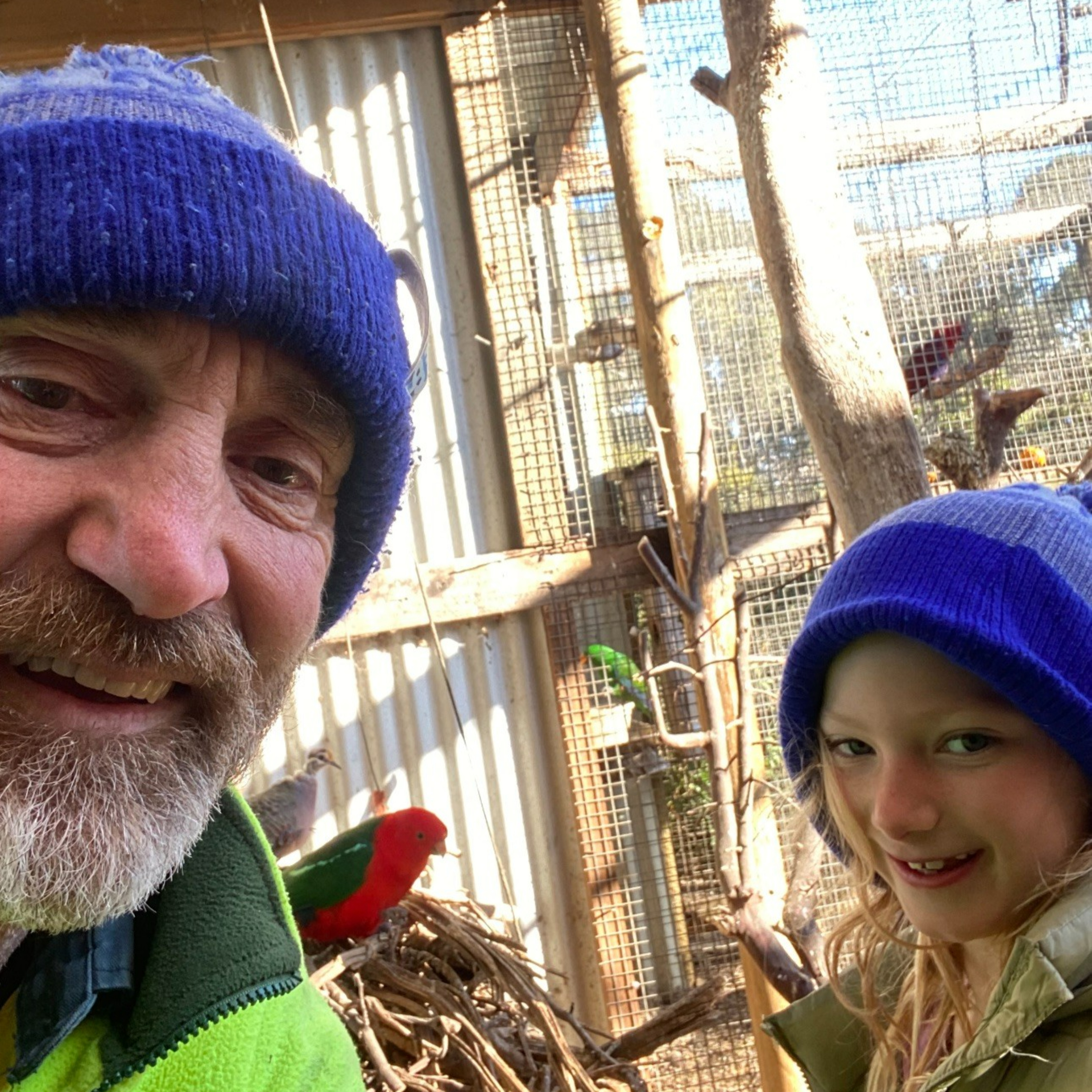
In this interview, John Rook shares his life story, centered on his move to the Castlemaine area in 1981. A former teacher, he prioritized family and community over career advancement, opting not to become a principal to stay locally rooted. An accomplished sportsman, he played football and cricket until dedicating more time to his young family and developing his property. He and his wife Joe built their mudbrick home and garden themselves, transforming a dry block into a nature-rich sanctuary, which became a profound source of connection and family effort. John recounts a rural childhood defined by freedom and sport, and how a teaching scholarship provided crucial direction after secondary school. Throughout, he emphasizes the importance of family, the local community, and a deep, hands-on relationship with the natural environment.
[Music] Hello and welcome to Casted & Connections. An initiative of Hands Up Casted & where a group of enthusiastic locals have come together to capture, preserve and share stories of people who have a connection to Casted & Connections. Some things discussed in this episode you may find upsetting. If yourself, a friend or family member needs help finding support or crosses resources, please contact Lifeline on 131114. John Blue on 1300, double 2, 4, 6, 3, 6 or a trained healthcare professional. John Rook, a family man, a teacher, a footballer, a cricketer, a keen bird watcher, a beekeeper, and a gardener are a few ways in which we could describe John. John walks us through his life and his passions. In particular, the wide open spaces with extensive wildlife and nature right at the back door of the home of which John and Joe have created together. Welcome back to another episode of Casted & Connections. Today I've got the pleasure of sitting down with a former teacher of mine, actually John Rook. John, thanks very much for taking some time and sitting down with us today. That's a pleasure, can I? John Rook, awesome. Firstly, I just want to thank you for hosting me out at your house, walking in and getting a tour around all of the different elements of nature was really magical and I think something that a lot of people underestimate. I just want to go through how you come about getting here and what it was about, you know, acid and how you've developed your property to this unbelievable experience it is right now. Not sure where to start, you'll have to help me hear a little bit, but it's a journey, it's been a not in '81 week came here and I guess it was a case of, at that particular time, I'd been teaching my wife and I graduated in 1976 and our first posting obviously of teacher was at Bonnie Dune, we were there together and then met some wonderful people there, it was only a short time then we were over the mountains to I was at Boisedale and Jail was at Haifield. Made some good friends there including the Wajinsky family who we later met through football when Max was involved at Jail on and then from there we were looking to get a permanent position and because Joe had just become pregnant in those days I think you lost your permanent position if you just I do, leave and have a family. I ended up at Nelson and at that time we had two little kids and we're still looking for some stability in our life and we were looking, looking, looking and with the budget in mind which in those days I think was about 30 grand which seemed like nothing now but was massive then. No it was massive then I can't remember what we were getting but when we were at teachers college thanks to Gough Whitlam we were getting a stewardship which was a reckon about $50 or $4.00 and rent in those days I was in a house with three other guys and we were paying $7.00 each rent and $5.00 each for food and you know $28 a week rent was a big deal then so I guess so just getting back to where we were we were lived in a farmhouse at Green Point from about 18 months until we were desperate to get out of there. Tiger Snakes drivers out basically I mean got a house in Mac Gambia and lived there for a while and mixed foster and mixed Sullivan actually helped a shift. I'd been playing Fuddy at Port Mac at that time and a guy called Martin John Dunston who was teaching up at Eden Hope knew that I was down in that area and he was involved in casted and somehow I'm not too sure how but he had known me because him and his family were involved in Leopold where I played Fuddy in Jalong. So that may be an offer I couldn't refuse and we were looking at that time as I said to for somebody to raise our family and just have his solidarity and we looked in the casted area and found what we wanted we also looked in a few other areas but fortunately in retrospect this was by far you know yeah and our connection with that this place has grown massively over the years and we've been very very happy here. I guess the connection football obviously brought you sort of to the area what was the real appeal about this place you described to me earlier that it looks nothing like a deep now compared to what it did so what was it that really appeared to you about here that where you are now? Well I'd be brutally honest probably cost it was very very cheap I think like I say to the comparative Lee or looking at other areas the other area we looked at was Sonanad which was an area where actually friends here a friend of Joe's lived there and that it's incredibly dry and harsher. This area is very very fortunate with rainfall we've met a lot of really good people here it's blessed with massive natural resources like the rivers the bush that's around about us that's a really important part to us where our connection with the bush around us is really important to us yeah sure so when you make the move obviously from Portmac to Castan in a coaching capacity what are you doing in your career at this stage? Teaching as I said three years at Nelson and then from there I came to Castan and talked there from 82 to 87 I had a short time down at Haywood and then ended up at Marina when I was there for about 20 years I suppose and then teaching had changed a lot and I guess I changed too and I needed the change and had some time off and then worked with Delpas it was which is I think Deacon now but I worked there for about eight years and loved that just being outdoors and being in the bush as much as I was like I was going to say a dream come true but it was worked with some really great people when it has some wonderful time there with them yeah. So with the change in different schools is that just through opportunity and it was a career progression or was it just a lost old change what made you change you know Castan the Haywood then yeah that's a great question what did make me change well one of the things I'm probably fairly stubborn and and I'll ask Joe will I she's worse when we graduated and this is a bit of a normally I suppose but in 1976 when we graduated I was head teacher at the primary school point he didn't don't ask Joe about that because we only she actually came out at a higher level and I did but I ended up with the principal position based on my gender which yeah in those days that was just happened yeah and we were three qualified and in 1976 they changed the rules and say well you have to be four year qualified now to be to be fully qualified so what they did over four years are running you had to do two units a year for the first four years well our first unit was music and we went to Mathura once a week and sat down to listen to a goat herder who tried to teach us about music and it was I can still remember his name his name was Mr. Brieho and we used to call him Mr. B. Ho it was a waste of time I was a complete waste of time and and it was a bad idea so I stopped going and went and did a welding course instead and Joe stopped doing it and she went and did a carpentry course which has come in handy much later on and I think she's a frustrated carpenter in truly but so that meant that I couldn't take on a principal's vision because I wasn't four-year train. So along the way I did a lot of acting here.
teaches jobs like at marina I think over 10 year period I was acting print for five or those 10 years and through various things we had three or four principals who had milked downs sort of pick up the pieces and with the people around me who had some wonderful people helping me as well But it was hard work and whereas I opted not to take on take the training on to do a principal because I knew it would have been sent away and various Inspectors as they were in those days Suggested I do that and wanted to send me here there and everywhere which is I was more I want to stay here basically grounded already. Yeah. Yeah. I was loved where we are and I wanted to be in this area and make a difference in this area Whereas Joe later on went back and did masters and bachelor of head and whatever and I think her principal Record was two weeks at cast and one time so yeah, I think yeah, so that's basically how that's all worked out Yeah, sure So just quickly on the on the teaching stuff What's your memories of me as a student? Good question, I don't know if I really want to know the answer, but let's go. I taught As you can imagine probably thousands of kids over there stretch and many of them There are a number who stand out and basically they are either wonderful kids who Or they were absolute at the other extreme of things and I don't have strong recollections of you can't That's good. Yeah, so that tells me you were a model student and And that's a good place to be I think you know, yeah glad to hear that I wasn't at the The back end of Yeah, the things that I do see and you You're a credit to yourself honestly Yeah, and I'm glad to have had some influence on you along the way I Applied in a premiership at Port Mack in 79 and 1980 Castan came or maybe an offer to come over and play so The fact was a Port Mack wouldn't clear me and it wasn't until six months in or half way into the season I Think Castan Port Mack had made a demand and Castan paid them an amount of money which led them to release me and So I played stood at a 44 half their season and then played the last half of the season And played there from 81 to 84 I think I was 30 at that stage had 30 which makes let me think about this at that stage we had four kids and The demands that let's say at school and with a young family were pretty full on and I At the end of 84 I stood out of I coached under 18s in 84 and Played and that was hard work I think particularly John Bell sat in the family And playing cricket probably to it which took up a lot of time really And then So I finished I remember the doc Greg who was coaching Castan at times said to me He rang me up and said listen you're half the team and I'm the other half and I And that went down like a lead balloon. I just said well That's it, you know like I'm yeah, I'm done and I focused in on Trying to get things set up here. I was telling we talked about this before There was no run no Catchment off the roof here as far as water We didn't have garden water. It was very dry and So I probably focused on doing things here we built we'd put extended the house on two sides and Did that in Mud brick and I've any other two sides in Mud brick and the kids were the two older ones particularly were wonderful Helps at that time Sam and Carly and They were involved in everything we did whether it was being building the house or yeah So although there was probably a lot of work to do John. I imagine the Escape for you was actually getting outside and getting the garden up to scratch Yeah, yeah, yeah, stuff like you have it obviously very busy man and yeah Yes, it might seem like work now that yeah, it was probably your escape as well Well, I was a family. It was massive them out the work because four kids and a house that was very small and It was a massive credit to Joe Because she was one who was put you know Holding it all together basically and Yeah, so I can remember at one stage who were putting the Mud brick wall up On one side of the house and there was just a big lump of canvass there on On that wall over there And I remember when we felt finally bricked it up Carly said now we're gonna have to start using the doors to get in and out of the place and we had a few unwanted visitors in the house a couple of reptiles and things that You know, they things a little interesting and lively but it was pretty hard At least in the day I was able to get away and go to school whereas Joe was home all the time with that I mean that's one of the decisions we made With the kids that one of us would be home with the kids all the time and that was hers that turned out so For her to be able to hold things together Get food on the table each night. I can't remember having a great Contribution towards that so We all know behind every good man. There's an even better woman So yeah, well that's very true. Yeah, what she was able to do was amazing. Yeah, absolutely So you said you had some interesting reptiles and creatures. I'm hoping that it's passed in tense. You don't see many anymore I'm not inside the house. We don't there's a few You know out in the paddocks and things like that. You'll see two or three each year but that's part of living in You know where we live is that so That's part of living in Australia. Yeah, absolutely So back to you for the days mate. How would you describe yourself as a player? How would I describe myself good question. I never saw myself as a Outstanding sports person of any sort, but as a person who'd have a crack at everything Like I said you applied baseball But didn't I can't remember really strong Christian background Sunday was church twice a day and As a kid, I think it was normal those days things were pretty hard You had one set of clothes and they'd get washed on Saturday night and you'd wear them to church on Sunday and then but Mum and dad particularly what Was a frustrated sportsman. I think he was never allowed to play and when he finally did he was about 30 or I can he play cricket For a bit, but never got to play football And so all I wasn't allowed to play football until I can't remember I think I was 13 when I first started but So I played baseball in first year high school and then I was captain of the I went to a long high school which had about a thousand kids here at the time and so where I lived was an a fairly rural part of Jolong out at Newcombe which in those days was Very rural was only 100 kids at the school and then our car came in and the 60s and built thousands of homes and the school went from 100 to about a thousand in a very short time and so I Think It was footy and cricket and all those things were just outlet. I mean I had to go like I said it everything basketball and volleyball and baseball and cricket and 40 But those other sports and hockey and then others other sports sort of faded away and I guess I was determined and I didn't drink smoke or Swear all these things and I was probably fortunate in that my health was pretty good and part of that was probably to do with my upbringing and So how I describe myself fortunate and determined I think yeah and and applied yourself You know to make sure that you're really achieved It's funny when you say apply yourself. I mean when you're out there you're going like a million miles there But when I look back on preparation at People, I'm gonna say I'm ex- I'm- I'm just-
Suns, Sam and Max, what they did was pretty amazing. I mean, and even local footballs in town, what they do now is compared to going for extra runs and things like that, don't think I ever did that. (laughs) And love, our bushwalking was another thing we used to love doing. A couple of years along the, in my sporting time, as far as playing football, I took a couple of years off. Like, when I, for 30, through to 30, I didn't play and also when we moved from Mansfield to Haifield, I had a 12 months off then and then went and played with Boisedale who was a team just north of Maffer. We're us teaching. So along the way I had different, you know, and went bushwalking and did other things and which we really enjoyed and kept me fresh mentally, I suppose, too. Yeah. So, sure. Speaking of Max and the religion he did say to me that maybe once upon a time you were thinking about being a church minister, is that correct? No, it's not true. Oh, he's still living out the garden part. Yeah. No. As I said, what are growing up in a very church environment, in a church environment? A lot of my good friends, some of my best friends, along the way have been people who I was involved with through the church, and the guy who was best man at my wedding and still family friend has really close, I met him when I was 15 years old, he said, "We used to have family camps and kids camps and youth camps and all that sorts of things." And him and I went to New Zealand on a, called the Old Youth Leadership Group, which we went and ran camps in New Zealand for church groups, similar sort of camps. And that was over a six week period. Then that's the sort of thing that we used to do. But in that particular, in the church I was involved with, which is now called the Community of Christ, they had, when you got to about 18, 19, that sort of stuff, they were like lay ministers, I suppose, if you like. And so I worked as a lay minister for about 18, 19 months. We did a lot of family visits and things like that. And then, of course, when I moved away from Jolong, well, then that was a different stage of my life. And you do different things and different influences and that sort of thing. So, Jo always says that my grandmother didn't think much of her at all because she wasn't a member of the church. But my grandmother came and lived with us, oh, stayed, sorry, stayed with us for about a fortnight and she changed her opinion of her very much then because she realised what she saw in Jo was similar to some of the things that she put up with when she was a younger woman, I guess. Yeah. Yeah. Very good. So, you were close, Max, not quite right, but, yeah, some good insight about that. So, you mentioned about having a really good upbringing. What are some of your childhood memories grown up? I was one of six. I'm the eldest of six kids. And as I said, I grew up in Newcombe, which is sort of east of Jolong and very rural as I was saying, well, you know, if the football went over the boundary of the school ground and went into a cow paddock through a barbed wire fence, it's hard to believe that now, but that's memories of all the houses being built by our coer and we used to ride our bikes or walk around the houses after working hours and pick up all the empty bottles that we could find and then go and catch them in at the milk bar. It was real family-oriented. My grandparents lived at Leopold and who I ended up playing football for. And I used to spend a fair bit of time out there. Freedom was probably one of the things that you had a lot of. Mum would kick us out of the house early in the day and then said, look, make sure you're back in time for tea. Yeah. You know, so we got on our bike. Not mainly by myself. My brother had different interests. I was into sport and I used to practice tennis or cricket or football by myself a lot. Anything with a ball. And whereas he was into cars and things like that. So, yeah. Yeah, it was. They were good memory, good times, but uncertain and confusing along the way. You know, you wondered what the life was going to look like after. After knowing that you were going to be able to the place when you finished secondary school, that was a really empty, confusing time. And had no idea what you wanted to do. You know, I think I got to 12 and thought, well, the army might be something I could go into. And then when I was playing cricket, some of the guys were coming back from we get in the time and with wounds and the guys don't even bat the cricket. I opened bat cricket when I played at Leopold. Went to Vietnam, came back. And I said, do you still remember saying to him, what was the like? And he said, just another place. And that was the end of the discussion. So do you think he was he was sheltering some stuff from you? Or he didn't want to talk about it. And I was thinking then too. So conscription must have ended. Yeah, we're not doing year 12. I think the war was still on, but I think they'd stopped conscription of stuff then. So and then in that same time, student ships came out, which were so you would be paid while you went, did you teach a training? And so that was a bit of a godsend really, because it gave me some direction. I thought that I wanted to do recreation and work with young people on that sort of thing. So teaching sort of fitted into that really well. I don't know if they were dreamt it or it actually happened. I was going to do recreation and I heard that it was in South Melbourne. The office was in South Melbourne. So I got on a train one day. Got to Melbourne and then wonder what the heck am I doing here? I got no idea where I'm going or what I'm doing. So I got my train going back home again. So the teaching was more of an opportunity like just a timing thing that was fortunate timing. And input into that, things like guidance councils or people mentoring you or suggesting things. There was none of that then. And dad was doing his own thing and Mum was in survival mode, I guess. So, yeah, it was, yeah. You had good friends along the way, but when I looked back, there were some more acquaintances and real true friends. So, yeah. So did you have any, you mentioned like there weren't many people in terms of mentor, she himself, but did you have any role models when you were going up that you really looked up to and thought, you know, your values really align or anything like that? I thought about the couple times. I had an uncle who is now in Western Australia and has visited us recently. And as a young person, he, I looked up to him a fair bit. He was, became a doctor of science and it was also an electrician. And I stayed with him a couple of times in Melbourne. While he was doing his studies. And he was a, he played a little bit of sport. And I had another cousin who I didn't see very much of, he was a mum's side in the religion Sydney. And I, I idolised him, I guess, a little bit. He was in the Australian rugby union team and played in South Africa when a part-eyed was there. I remember talking to him about that. But, yeah. They were, I didn't idolise them or dwell on those sorts of things too much. It was sort of, like I said before, a lot of that time along the way was, you had to make your own way a little bit, I think. And I was confused and you've a bit lost and trying to work out where you fit into everything. It wasn't easy. Yeah. And I imagine having so many siblings, it would be quite challenging at times. Well, I think, yeah, being the audition or, you know, being the audits, you sort of, you know, you had to look out for them and help them if you can. And you were, it was put on you that you had to set an example for them. And you had to mentor them basically and help them along if you could. And I was well aware of the fact that, of doing the right thing, I suppose, that I've always did, but, you know, you were conscious of your decisions. You went to slap the end of the ear actually, but you felt like you were. And I know, I was, things happened that you didn't like being a prefect at school. And that I was prefect for three years. I think I was the most kept one there at the school. It was only because I failed year 11. I was there twice, but, so what I was trying to do, I suppose, set an example and do the right thing must have been obvious to some people who made those decisions along the way. Yep.
Yeah, I don't envy your parents. Six kids would be a handful, I'd imagine. Yeah. And yeah, obviously, yeah, you're able to help take some of that burden maybe. Oh, well, a little, just by staying out the road, if nothing else. Very good. So back to the footy stuff mate, after you had some time off, you ended up coaching Sanford. Is that right? Yeah, and I think it was 1987, I think, Swampa, Doyle, Gavin Low, and Ivan Tompkins came out here and convinced me that I should make a comeback in coach. And one of the incentives was that I didn't really want money because I find that money can go through your fingers fairly quickly and then those times, so we got a damn put in and that was probably the best thing that ever happened because I meant that we had garden water and we're able to have some sort of garden which gardening and growing your own food and things was a real passion of both of us. And that's helped us set up what we've got today, which is, you know, we're really proud of and really happy and a great relaxation thing. So I coach Sanford 97.98. I think I won the league. B&F in one of those years. And I think after two years, I'd had enough and had a couple more years off. And then I think it was about 38. I came back and played a few games that I was coaching down the 16s. I think when Max and Sam came through and I did that for about four years and obviously we fit. So I started playing again and played a few seconds games and then played a senior game when Sam was about 16 and I was about 42 I think. Well that's special. Yeah. I didn't last long, ran out of the ground, cleaned some bloke up and he kicked me in the car for his own, slapped into him and that was the end of me for the game. So I'm happy to say that Sam had a better career around it and I did. So I played till I was 44 and in 1990, that's right. And in 1999, Tim Chatfield who I convinced to come and coach Castan, he said he wanted me to be like sit on the bench and chairman select this sort of stuff. And I said I do it and he said, well the only thing is that you've got to give up playing. So I said, okay. So that was the end of, yeah. So I was 44 then. So before you mentioned that you weren't that talented, there was a couple of things. Why I'm not many people play to their 44, but two, when you're league best and fairer. So do you think you've undersold yourself a little bit? Things happen, don't they? I don't know. I think how you see yourself. Yeah, I don't think I've ever put any great store on medals and that sort of thing. And those sort of things just happen. I think. I mean, you don't see any medals of trophies around here either. And most of them in a box out in the shed there. And we also always try and look forward. And what's new and what's around the corner? Yeah. And how special to be able to play a senior game with your son. Yeah, that was really special. Yeah. Yeah. All bet you didn't last very long, but special, special nonetheless. So back to the coaching stuff, mate, what are your recollections from coaching? You know, with some standout challenges, were there some really standout players that you were coaching at that time? You're talking about Sanford, then when you were coaching at Sanford. Yeah. It was very different then as to now it's much more, much more, let me think, what's the word involved maybe? Complicated. It's much more complicated. It's much more scientific. There's much more research for you to in those days. I think it was come on fellas. Let's go and Gary Phillips gets your hands up there and grab the ball. You know, like, and it was more than about getting the right people on the paddock. Well, I suppose that's important today too. And I was fortunate that I had some good people around me and Humphries was on the bench for me in those days. And coaching and playing is incredibly hard. You've basically just doing the best you can and encouraging the guys around you to do their very best. You're not making any moves or anything like that or really. I remember Stuart Munro who I got to the club as a reserves coach. I think Peter Dalesley came as a assistant coach and that was really important. Stuart used to sit on the gate at Sanford waiting to see who came through the gate so before he could be the champion. Basically that's right. So nothing's changed. You know, in that way really like, seconds for you was just guys who wanted it. We're happy to have a kick. In fact, some of the first place were like that too. So we played finals in our first year and then I think we just missed the finals in the second year and I figured if you're on and down with direct trajectory, it was time for me to finish up. So, which I did. I guess I could have kept playing but mentally, I think, mentally and that was time to have a stop, to have a break at least. Yeah, sure. So you're going to jump right back, mate. You mentioned about Cache and the cans in at the milk bar. Is it true that that's the lollies that was made you lose your teeth over time? Well, they probably didn't help. I also blame my mother's genetics for genetics for teeth. She had very chalky teeth but we had a milk bar for two years. Mum and dad had a milk bar for two years. It was when I was around 16, 17 and yeah, let's just say that the lollies got a fair hiding from the four of us older ones and my favourite was milk shakes with every flavour that was available in the container at the one time. My two younger brothers, they were about 10 years gap between number four child and number five child. So I remember one day, somebody was especially looking after the two younger ones and it wasn't me and that pulled, went into the room and they'd got into the cigarettes and there was a pile of cigarettes pulled apart on my ground. Well, dad and mum were not happy. They were going to be well. No, I can't remove his look after him. That was a said it wasn't me. I was like, I'll end up here. So I still remember trying to wrap a cabbage one time. One earth, I wanted to wrap a cabbage one, I had no idea but it was a nightmare. So yeah, very good. Back to the sport stuff, like you mentioned cricket. So did you feel like you were more successful than cricket than football or did you enjoy it more and talk us a little bit about your cricket career? Well, I just got back a little bit because trying to compare the two, there was no talent scouts or anything in those times. And with food, I went from Easter long to Leopold and had about five or six years at Leopold and played seniors there. And like I said, success was, you didn't really, I mean, there was a lot of luck I reckon in that too. I remember kicking five goals one day and then, but the sport didn't, it was just another, it wasn't a massive passion. That's all it was to life. I had a girlfriend up in Northern New South Wales at the time. I remember when we had the first semi-final, I reckon we were playing Ocean Grove and I fell up to grafting for my holidays and they rang me up and said, listen, we need you back for the finals. And I said, what are you talking about? I'm not coming back. And they were going to fly me back. Well, all year, they've been promised to pay me $20 for petrol money and I've never seen a cent. And then, so they obviously had a higher regard for more ability than what I did. And then I remember the B&F, they said, if it was a long and long West being in touch with you and I said, no, they haven't. And then I reckon that would be in the year that we left and went to money doing. But with cricket, so I never compared one to the other. I just. cricket it out, the hobby that you enjoy doing. Yeah, I always subtract the slots in the back yard by myself, as I said. And I started playing cricket. I think when I was about 30, I mean, obviously you play at primary school and then there were no teams, oh well, no teams in. But Newcomers, a new club to the area, I still remember our coach, a guy called Harry Bennett and he said, what colors are we going to have for our hats on that? And I said, well, I said to him, I still remember saying to him, well, the primary school ones are my own and like blue and he said, oh, that'll do. So that's what we did. And he had an old
use of some sort of a camp member what it was and he as coach he would drive us all to the my parents never had a car and a lot of other families were in the same boot. So if you were captain of ice captain you got to sit in the front of it with him and if you all the other players got in the back and you know that's just how cricket was in those days and yeah we play Wellington and Ocean Grove, Queen's Cliff, Barwin Heads, Suttliners, all those terms and I was captain when I was 14 and so it must have been doing something right and then I was captain of the Bellarine league team and that was under 15s and then Leopold who played in the Jolong cricket league came and wanted me to play and I reckon I played two senior games for Newcom and then they cleared me to play with Leopold and in retrospect I reckon I should have finished that season when you come and then gone out there I found it a massive jump I started playing under 16s with Leopold junior and I remember scoring a couple of hundreds and then not making many in the seniors that afternoon and I remember one of the coaches said to me oh you could have even dead up a little bit and yeah so I played there for about five or six years played I think one senior game while I was here every holiday as I go away on holiday so cricket didn't you know like there are other things that are important to me or I guess as what I was saying and so I played a lot of seconds games one or two thirds games when I came back from you know holidays and things like that and you have to work your way back up again mainly as an opening batsman and a spin baller and it was until I went down to Gipsley and I played in the South of Africa which is a really strong comp down there played with Hayfield and played as a middle-order batsman and an opening baller and that was probably where I played my best cricket and I wasn't there club champion whatever it was they had an outstanding cricket or a wooden I won that there and I felt like that was probably the best you know I'd played there but in Jolong when I played with Leopold it was a really strong comp and some really really good players there but so then when you got got to Kassadin did you still play much here and what are your memories of maybe some yeah players that you played against that you know we're pretty handy or yeah some that were maybe unfilled potentials I think like when I came here cricket was an extra tight thing you know it was an our main focus like probably young family family would have been first putting bread food in the table work focusing on family things were probably the most important I played a number of years here played with both boys tried to help them as much as I could captain the interleague teams we played up at Neil one time I reckon I remember Mark Tomkins on myself opening the batting and I was never a great hooker but I can remember this black ball one and I hit it out under the mains down the street and it rolled down the street and I think Mark made about 85 and not out and I got about 80 something as well and the blocks from wherever the japerot and rainbow were not happy I thought I got a roll through this this bloke was ball and he's juicy off break so I remember hitting him for four fours in a row and I thought I'm going again to end up getting out but there's some great talents the Corey Baxter from Eden hope was a really good guy really good baller pretty sharp too from where he was yeah he there were guys like him and probably Luke Robinson was another one who just needed good coaches and to get the right influence around them and they couldn't play at better levels than what they did and Corey didn't do a lot with the ball but he was pretty quick and I remember hitting him for six one time and hitting him for six before he'd actually bowled it like I knew what I was going to do and all he had to do was put in the spot and that's where it was going and he was predictable I guess I was what I was saying but he was a really good kid and a really good baller very early days caston competition was very very strong there were a lot of really good players the hill family was worst and and it was a good competition I mean Andrew Ferguson was a really honest baller two he'd always keep you honest he was relentless and he wasn't slow either so I just try to think that pigeon pond boys I always love playing up there against them the afternoon cheese were an absolute highlight they still are yeah well they used to have the tennis and cricket going at the one time and so they'd have this massive spread in the afternoon and yeah and I played with footballs I think first when they had a team and then marino for a couple of years that was hard work and then played with you knotted at the end there so but like I said it was it was really an extra thing to the core stuff of with family and being involved with things other interests and that that we really had with our family or had a field net screw going for a while really enjoy getting out in the bush you know wildfire walks or orchid walks or chasing I did a lot of bird spotting with a really good friend of mine who passed away a couple of years ago he got right into bird spotting and we're not saying that hayfield there was a bloke there Maxiardi's name was that teacher who was really into that and he he reckons it was like playing golf only so you hop in a car you'd draw around see him a different sort of bird species you could see in the short so he taught me a bit about that and I really got to enjoy that and kept that passion for life really so yeah just before we move on to the bird stuff and some family stuff mate one last one on the cricket is it true that couple of hamstrings maybe when you were trying to defend one of your sons or something like that or not sure I have to expand and not not sure what you're alluding to the only time I remember doing a hamstring after I'd finished it casted and I played a couple of years at Tahara and Daniel Tamar who good friend's son he was looking for somewhere to play and so I took him out there and I remember doing a hammy when I was chasing a ball at one time at any others I was thinking I was 50 I reckon it was about 54 when that happened so pretty well doing pretty well to still be out there yeah yeah yeah do you have to give me some more information about what that was about oh Max did something about maybe yeah you're a little bit later in life and you and Sam were playing and you must have went on to defend him I think and I ended up with with an injury coming back the other way but I'm really sure I reckon he's making that up I've got no no recollection of that at all he speed me full of lots of tall tiles so I don't know what you're doing about that anyway um we're we're jumping to the bird watching and that that sort of stuff mate so around here what what is it commonly that you would see or go and find um that's a good question yeah one of the interesting things over 40 years so 1981 we came here and what is it 2024 so that's quite a few years yeah I can't do the math that quickly maybe can I um is to see some of the things that are no longer here and then see things that are here now that never used to be here like rainbow loriquettes one of the obvious ones that you see quite a few around here now you can't help but hear them and their ranges increase massively from what it used to be like they're up in Queensland and another one let's move down this way as a um crested pigeon that they got this will uh when they fly you'll hear them um but they used to be up in the whimmer and further up that way and and now you'll see them regularly down here there's other lots of little birds that we don't see around here anymore things like um uh uh I'll just try and think about the that chats which are a little black and white bird um that I haven't seen around here for 30 years I suppose um nine of mekelum who's a good friend of ours and helped a lot with our building early days um he talked about things like blue face tunneed is which I've never ever even seen around here but you know they here it can say used to be around this area um white wing trillers I've seen about once in my lifetime you know yeah uh so that would have been pretty special I imagine yeah same things like that in a one-off um yeah would be is
pretty special. When we were living over at Green Point, we used to see Orange Valley parrots over there which are renowned as been quite rare now and they were unusual then, but yeah, they were a really good thing to say. Yeah, so it's just an interest that is mentally really relaxing. Yeah, it's just something we. So what we've done here too is try and provide habitat for a lot of different birds that we've done a lot of tree planting here as Cain would have noticed and when we first came here, there were only about half a dozen redgums on the place where we're now, the place is a bit of a forest actually. So how do you go providing different habitats? Do you do a bit of research to see exactly what they are? Do you know just through walking the bush and then how do you actually go to providing that for them? Yeah, well being aware of what's in the bush is a start. One of the issues is here is a lot of the land that's been cleared is heavier carrying country like Redgum Country and a lot of the bush that we've got left down here is Stringy Park Country because it was unsuitable for farming. So reference areas for the heavier country, a few and far between. So it's a bit of hitting Miss Reilly. What we've tried to do is grow ourselves and plant a lot of indigenous plants to the area but also we've mixed it with a lot of other things. So we do get things like rainbow laurequets here and the black cockatooze, yellow tar black cockatooze come in regularly because we've got food sources for them and one of the other things we've got a lot of which is only a fairly recent thing is red-brayered finches. We've got flocks of 20 or 30 now where last 20 years we're probably haven't had many at all. So imagine back then John when you're researching to put all the different habitats and stuff in that probably wasn't that easy as what it is now. No, no. Not having water was probably the biggest drawback. And time and energy all those things. So life's certainly a lot more relaxed than it was. You know we don't have the pressures of young family or we're family chasing our grandkids around now which is a joy and because you can give them back. Yes. Well a guy we met up in halls Gappy said five best words he hears is when the grandkids come to stay is say goodbye to grandpa. That's not true. We love having our grandkids here and some of them really just want to be there. One of our stories that we tell one of our grandkids should qualify to go to state ninja championships in Western Australia along with her brother and her sister was at state swimming championships and she said I'm not going. I'm going to stay with Nana and bumpy. So she came up she wants to come and stay on the farm which was wonderful that she wanted to do that. So it's yeah we love having them here and they love being here which is great. Yeah absolutely. And just on the birds mate you've got some pretty impressive averys yourself and breed a few different varieties is that correct? Yeah yeah I've got we've got a few. I've seen it you before that's probably a hangover from my dad who always had birds and animals and whatnot. He grew up in the Mally and then moved around a few bit. He had a farming background but he found himself due to circumstance working in cities and things like that but he always had birds of once he bred budgies for a long time which I did for a while and now I've just got finches and I'm thinking that might be the way to go. I mean you don't have to feed the maintenance is much lower on him than it was with some of the other parrots and things which I have too. So yeah that's a just a lifestyle mental relaxation top thing along with music I suppose. I really enjoy that and I find that I've got to be in the right frame of mind to do that though. If you know it's probably a happy place to be but you need time and some people do it when they're not feeling great. I find I need I usually do it when I when I'm feeling good so yeah but that was you know that there's been that's been I remember at high school I was in a lot of musicals and things like that and it's great to see Kali who eldest one who's writing to music at the most teaching music and singing groups and things like that too. Yeah so all of your kids are very successful in their own right. I'm particularly interested with the role that you played in supporting them and then the second part of that you know what support you gave Max to get him to the AFL level as well. I guess we we're there kids if they showed any interest in something we were 100% kept behind them and try and support them this however we could whether it be science or sport or some other in music or some other endeavor. When the kids were small we talked about the things that they that we thought were important for them growing up and one of those we thought sport. Another was music and the reason was because the discipline involved it wasn't the sort of thing that you could mind you or with it myself I don't know but yeah you know it was there was commit when it once you committed and followed through things through music and sport you had to practice some and you had to persevere with them to to be successful with them and we supported our kids as much as we could and all that sort of thing and that with varying degrees like Sam we chased him around him with a bit with 40 and that he was in the rebel squad at one stage and Max obviously with his athletics and football and cricket and Emily with her running triathlons and cross country which was massive commitment. Joe mostly was running around all over the countryside with she sometimes go one way and I'd go the other with the boys and you know supporting them with cricket and football and yeah so I'm not sure where I am now but no that's good inside so then if we go specifically to Max and him getting drafted what sort of role did you play in in that unfolding? It was just a confusing sort of time when he was in 99 when Tim Chapfield was coaching Max played seniors along with who's about 16 is that right? What was 99 that would make him why don't let me think 81 he was born his December so he would have been yeah sad in this and he turned 18 at the end of the year so he was 17 when he was playing yeah and he did really really well he played so in a half-award in a major league and he kicked something like 65 goals or something like that and I remember a couple outstanding games that he played and he was very when he was younger he was very he didn't really grow until he was about 16-17 he played as a rover when he was you know 13-14-15 round that age. Yep. I remember driving down to Fuchcoda watching play in the Western border under whatever team it was then and he sat on the bench the whole game and well that was pretty ordinary yeah yeah and then he went up and tried out the rebels I watched you in one game he did really really well and then the day invite didn't invite him back for games or anything like that so he sort of okay whatever but then I think it must have been in 2000 I guess it was when he made the mid-South East team that went up to Adelaide and played there and then he got in the South Australian country team and they played up in Queensland and it was sort of hard to get a gauge on things because he wasn't rebels were seen as the bill on end all and there was nothing happening in that direction and you know we used to say well what's gonna what what is what they will be but on the South Australian side of the border he was looked at as a real but really um potential potentially uh young player that had a lot of ability um and all the feedback from that direction was you know one more I know this is that not happening there was another young bloke called Kevin Pangana Mini who came down from Darwin who played with us in that same year and he went up to a rebels as well and he came back and told me that the culture there was terrible he was never going back again and and you know as a parent
you think, well, you just got to provide that opportunity. That's all you can do. He played in a hand in league versus Western Watergame and played it fallback. I think Colin Riddle was coaching and he didn't have any idea where the Max could actually even play or not. I reckon that quarter time he put him to center back and he was playing on one of the Clark boys who were playing with the Rebels and Max actually got best on ground. At the time, I was standing next to a brother who lives in Waterball and who was an electrician and he was an electrician made a guy called Alan Thompson who was recruiting guy for the Falcons and I was talking to Alan, got introduced to him and started talking to him and I said to him, what sort of players the league players looking for and he said, well, say that guy over there and he said Richmond looking at him is one of the heffernons and he said he's not going to make it. He said he's playing the best football he can now he's fully grown. He said he looked at he scanned the field not knowing at that stage he didn't, I'd met him that was all and he looked at, he said that kid out there he said does sort of play at the league player clubs looking for and unbeknownst to him he'd just pointed out Max and I said, you know, he said, look he's athletic and he'll grow into something and all that sort of stuff so so he said, do you see playing at Ribbles and I said no he's not and he said so he rang up the guy who was in charge in Hamilton and he got invited up to Ribbles again went up and train with him but he never ever got a game so Sam actually has played one game with the Ribbles and Max has played none. Yeah yeah yeah. There's a lot of stories I've heard I don't know with a Hawthorne looked at him, poor dad laid, I heard that they said they already had players like that um so I thought oh well you know I'll try a different tack so I it's in a note to faxed a few of the free medals one and and there was a guy who had been a decent free medal free medal who worked with Joe as a banking casted or in Hamilton I think and he said look you can't make a bad decision things or work out one way or another any contact at least free man hall and West Adelaide rang us here um and North Balarat uh Jared, Jared who was coaching there what was his surname um coach for a number years to premiership was coaching North Balarat and we both went down and met them um one of the guys I was with at school with Stephen Wells who was a recruiting manager of Jolong um Stephen was a few years behind me but I contacted him and unbeknownst us he sent his brother Greg who was a year ahead of me at school um up to have a look at him a couple of times and after talking to Greg later on he said he noticed he was really courageous that was one of the things he stood out to him um and so there's a lot of up in the air and you know I think at one stage Max was going to North Balarat and then um Stephen invited Max down and I think you know that story anyhow um you know about when he got invited down to take him off the track yeah so the luck going on we didn't know what was going on and so they were I think as a rookie they thought he was worth a shot and you know try him so yeah and it was great to catch up with Stephen and Greg later on you know and talk about it yeah it's funny you know the guys above you in school better than ones behind you really I didn't really remember Stephen um when I went to high school in Jolong I said there were a thousand kids at the school I was in the same year as Gary Davison Jolong in those days used to bring players across from Tasmania and send them to school there the two Evans brothers Phil and Tim were there in the same year and all one not a bit older Gary was in the same year as me um and he was a brilliant footballer I played in the actually it was one thing I was pretty proud about that as far as footy goes because I got um I got the football award in year 12 at high school and Gary was in the same year as me and so I felt pretty good about that that's a very important and one of my mates then was Paul Sarah who um he was he as because I failed that year he was a year ahead of me but we spent a lot of time together right through high school um he played at Jolong and Richmond and yeah um and I probably the Middle East Jolong too so yeah so I don't know whether that that is spot on so how many you mentioned about sending factors and letters to play how many did you think you've all seen I see which clubs would you like so I didn't hear back from any of them apart from Jolong I think yeah I can't remember half a dozen maybe that'll be kicking themselves yeah yeah yeah although I remember I'll probably annoyed Jolong a little bit because because I knew them and and Gary Davison was general manager at the time of the club and Steven was um as a head recruiting manager um and they asked me this keeper record of what he did each Saturday which I tried to do and you know in terms of these on to a performance stuff yeah yeah which I did for a while on um yeah they probably thought it was like bloody and the way let's give this like a rookie spot so it stops annoying us yeah it was a bit like that but as a parent it was pretty um uh well you know what was going on really uh yeah just tried to help however you could do yeah yeah yeah um and you know it would give you that a little bit or the best of our ability anyhow so the nursery where does that fit in amongst everything like you're teaching and while you're still running that or you're teaching finished yeah um I guess I had a passion always had had passion for growing things and plants and so forth so I reckon in about 19 maybe 90 around that time there um Pete Smith's nursery came up for sale which was out of Mac Gambia road at the time we ended up buying that which uh well hindsight's a great thing whether that was a good idea or not I don't know um probably not it wasn't a great spot to be we didn't know in the land we only owned the business um Joe ended up doing most of the work there and she hated it um so I was still teaching um and then in 1990 uh I reckon we bought that block of land in the main street with the nursery is now in about 1990 from memory and then for two years we were basically trying to get it set up like apparently there'd been a couple of shops the years ago and they'd burnt down pharmacy I believe sorry pharmacy I believe oh really there might have been a fish and chip shop there I reckon I'd any how that burnt down and so there's a big drop from the footpath down to there's about a four foot drop so we had to put a heap of um soil and fill in there and we wondering what sort of building we could do and the long and short of it was that we end up moving a railway carriage from Heathcut of any bendie go away on the back of a truck and with the day that arrived was uh stop the town like the big cranes were there in the main street and everybody was sticky beaking over the as it was loaded into position um and we with the help of a bank manager at the time Barry memory he he actually helped us do some of the building Barry was was some wonderful actually and he helped me build the fence out the front and helped with the finest as obviously um and we did things like we're got about two thousand dollars worth of roses um from a nursery called Klein nursery um and put them right around the place unfortunately we had about three floods in the time we were there uh reckon we had the nursery from about 92 to 98 something like that um and I really enjoyed it but Joe didn't and the kids sort of suffered through it with me I suppose and um but they're all interested in growing things and um in their own way so I reckon you know we've had an influence on our kids in that way I think they're both they will love yeah so so 98 I reckon we sold the nursery and um Joe was very happy about that and uh yeah but I mean I still grow things and like we try and grow most of our own food and um we've actually sold a little bit in the past two um I got into honey reduction with bees and that's been a new hobby that I've been involved with um with Ivan Mills over at Colrain helping him out a bit and learned a lot along the way and that was the reason I started doing that so yeah yeah that's awesome mate there's a fair bit unpack just in that little that little bit the first is that you mentioned you draped the kids along with you it's funny because actually um the nursery is now up the sale and I sent it to Max a couple of weeks ago he said I'm still traumatized from that place there's no way I'm going back so that was funny but um what made you what was the decision to get a train carriage I guess oh well not put a building up or yeah I mean it's it's an amazing yeah it was I guess it was instant I actually don't know Joe I know that story I might have to to Gary Allen find out where.
it was, but I don't know. I think it's so that we had something instant, some sort of shelter. It's amazing. Still stands here today and they still operate out of the air. It was actually on Sunday and it's amazing to see. We started to fall apart a bit by now, I think, but no, it was, we sandblasted the inside of it. I remember we were going to do the whole lot, and then when we saw how long it was taking and how much it was going to cost, I think we had to cut him short after about two or three days, like, yeah. Yeah, amazing. Great to still have that in ten years. We had a beautiful big seat there. It's been sold long the way somewhere, but it had two wagon wheels on either side of it, and a lot of people used to love that. Early days then too, there was a big demand for farm trees and up into a wonder-dial area, wonder-dial area, with the Ian Potter Foundation. We did a lot of tree planting in that area, and it was a good time to be involved, and I think. You mentioned that you really enjoyed it, Joe, maybe not so much. I guess, potentially, did it turn a hobby into a livelihood that then made it a bit stressful, like you said, you're still teaching as well, because very strenuous. Yeah, I mean, as you know, in business, I think, you probably, yeah, you're going to deal with everyone, whether you like them, and there's some great people you made there, but there's also some people who well. You don't want back, but you've cut terrible lights, some of them who do. You feel like locking their gate and saying, no, not up in the day. And I imagine that with any business, it's a bit like that. I mean, teaching can be a little bit like that too, except in the state system, you can't close it or say no, you're not welcome now. Mind you, I did do that one time. Please explain. I was down at Nelson, and I had this eye rate parent. She came screaming and yelling at the door in the schoolhouse, and I had, like, I might have had a dozen kids here at the time from prepto year six. And I think I was the longest serving. I was the only teacher that had been there for more than one year. I reckon, and there were some kids in there who were hard yards, and there's some great kids too. But this one parent was anyhow. Instead of grabbing her by the scruff of the neck and throwing her out, I'd just close the door in her face. I would never do something like that. I was, you know, yeah. But yeah, yeah. I mean, the point is that you've got people who are some great people, but you've got some very ordinary ones too, sometimes who are not really interested in themself. Yeah, for sure. So onto the growing your own fruit and veggies, mate. You've got a very, very extensive garden with fruit trees and vegetables and everything. I guess talk us through some of what you have got here, and does that serve you all year round, and how do you make it sort of last through the more difficult months when it is trying to grow things? Yeah. I was told here before about how, for many people, like 50 or 60 years ago, that was a lifestyle thing that if they didn't have it in the yard, that didn't happen. People were able to, they mainly had to base a self-sufficient as possible, really. Like, if they didn't have spuds in the yard, well, you didn't have spuds, if you know. I'm not going to go to the great potato famine or something in Ireland, but we've tried to make sure that we've got fruit and veggies all year round. We grow a lot of, we're going to have 140 fruit trees, and we grow a lot of salvin berries, and that gives us enough, we freeze them, and that gives us enough for smoothies all year round. So yeah, um, do you ever get sick of the same eating the same thing over and over? Like, how many different ways can you have, you know, X, Y, Z. Yeah, you're probably talking about zucchini's own. Well, that's a good point. Yeah. Um, Joe loves zucchini's. I think if I haven't got some ready to go, soon, that'll be a, there'll be hell to pay. Um, no, that it's fairly, it's really seasonal. Like the brass checkers are basically finishing. I wouldn't bother growing cabbage, any of those after now because the cabbage moss do you in, I'm, I tend to grow red ones because the cabbage moss leave them alone. Cabbage is collies, that sort of thing. Yep. Um, if you can grow the red varieties of those. Um, that's, and we, the other thing is to grow small amounts of, like lettuce, for instance, you might say them every three weeks, so they've got stuff going all year round. Um, but Sam, loves his garden. He's got a great garden. We're here. So that's, and, and, and they all, all the kids do, which is a great thing that we've passed on to them, I think. Um, what about in terms of the time, commitment that it takes for the, for the upkeep and getting those? Or you just, it's a lifestyle. Oh, we just do what you can, you know, yeah. Um, yeah, you just do what you can. Um, yeah, you try to short cut a lot of things. What, what, you know, one of my wasting time with, and, uh, you know, some things I find, thing go a waste of time. A lot of effort and then not much output, really, like, a bit of troll on the road. Yeah. Yeah. Yeah. I mean, a lot of things like some of the root crops, brassicas and, uh, not brassicas, um, beetroot carrots, things like that during winter time, some like, what's happened with mine? They're bolted this year and, uh, um, I'm better off growing them in the, so like in summer. Um, and we add a slower growth rate so that I've got more output, um, what's going on under the ground, rather than what's above it. Yeah. Yeah. Sure. So, um, some of the books that got us interested in growing, uh, doing as much for yourself were John Seymour's book. We got that, uh, early days he talked about it's a book of self-sufficiency. It's some great stuff in there and we've tried a lot of different things. Some works, some haven't. Um, there's a seasonal book by Petty Cundle, which I can see at the moment. No, he's got a week-by-week program about keeping yourself in food for a long time. But a lot of those things, people say, oh, you could write your own book now. Well, that's probably true and I kept diaries, uh, of different things that have worked and some that haven't. And there's plenty of things that don't work, you know, sounds like you better get writing. Oh, well, haven't got time. I've been the garden, you know, like, yeah. So we're working on bananas at the moment and, um, uh, shift like out at, uh, just out of customs got bananas going out there. So if he can do it, I'm sure I can. Yeah. I want to challenge that you've accepted. So good luck. Good luck on that little journey. Yeah. The beekeeping mate. Yeah. Give us a little bit more details around what, what that looks like. I mean, we all know what bees are, but the upkeep of them and then how you go to get the harvest to get the honey to use on your toast for breakfast. Yeah. Well, like a lot of things that I've touched on, probably won't go into it very in depth, but, um, we got hives originally from a guy in Panolla whose son had them and he was left with them when the sun left him went to Adelaide. So we ended up with all these bees and no idea what to do with them. I thought it sounded like a good idea at the time. Um, I got some, some good memories, some shocking memories. I think a lot of the hives, like someone offended say, oh, you want to bring some hives out of the place. So I take the hives out there and leave them there. And I remember going to check someone at a Wilkin and, um, white answer got into the meat and all the boxes and that, that was an absolute mess. And then there was some over an Astralbury farm in Mac Gambia, a friend that said, oh, put them over and put them on your strawberries. And okay, it took them over and I still remember we had a van in those days, a big Toyota van and I had the trailer on behind it. And I'm checking these bees and I looked in the, looked up and it was about 30 degrees in the van. It must have been about Sam was there with no shirt on and cooking the kids were sweating like anything and Joe was waving frantically me to get it, you know, hurry up, hurry up. I remember absolutely, I reckon I was through the boxes on the, in the trailer and got them to drive down the road because the bees were chasing me. Hopped in the thing and we drove on a ship back and went on fortunate cyclists. We went past the reconcopter fuel and there was a roadblock. The police had had a roadblock out just as you're coming out of the pines in Mac Gambia and I'm ready to do a U about them and they started waving and flapping their arms about too. And yeah, um, so I sort of learned a little bit along the way but last year I rang Ivan Mills over and call Ray and said to him, listen, would it be okay if I come and give you a hand and I just wanted to learn a little bit about more about the bees? Because I'd had about 13 hives at the time and lost most of them. The last two summers we had were very wet, you remember. And so what had happened was that the rain and so forth that we had had been happening when a lot of the stuff was in flare, a lot of that and they'd washed all the nectar and pollen off the trees and the bees were actually starving. So I was feeding them sugar water which you do as a supplement to help me get through but I'd end up losing about 11 hives out of the
13. Just through pure lack of food. That's right. So there's a massive amount to learn with their nature and whatever and Ivan's sensational, he's had about 40 years with his father and so he's the second generation at least probably third V Farmer and it's been a joy working with him and collecting a hundred of the points we've got some to sell from time to time now. Last year was a sensational yellow gum crop up around where are we? Wombalano, Douglas around that area up that way. This year not so much canola maybe which the honey very happens to candy pretty quickly with canola but it's still good honey. One of the things we hear a bit about is people getting flow hives which basically don't like them because it doesn't teach the people anything about the life cycle or the care of bees. People would like to have a bee hive in their backyard but then but they're not prepared to learn a little bit about how to manage them and look after them. So I hope that's not the case in every case but you know that tends to be a thing that happens I think. You know people if they buy a flow hive they think they can just go and turn a tap on the honey or just come out and that's all areas to it but it's not there's a lot more to it. And obviously it is quite a task to keep them healthy and well and then be able to then harvest the honey. Yeah and what I've learned is with Ivan is that if you've got some you need to really move them around to follow flows and that like right now he's got about 350 hives. I've got about six in amongst 350 and at the moment they're up at Kalinga Forest up near and up near Garoke that way and he's brought some of them back down towards Kaurayne and the mess mate which will fly our I think after Christmas sometime that's where they'll go next which will be down towards Hotspur. So the way to yeah and it's a it's a hot interest or a vocation that's probably disappearing a little bit. Most of the people I know who are apres are older people and I don't know what the future for that industry is really. So when do you say they go to different places? How do you organise that with someone just ring and say I've got some highs. I know property or there's he's got sites all around both the Mally and right around it's on state Crownland usually but he could ring up a farmer for instance if the red gum around here was flaring heavily which it hasn't for a long long long time he could ring up a local farmer and say you know can I put someone here thinking I'll give you a bucket of honey when we're done and that sort of stuff like John Steyle up at Pigeon Ponds he's had bees up on his place for the red gum but the red gum's been really patchy for a long time. Yep and is there a risk when moving like is there a risk of losing your hive or losing the hive or the bees or anything like that from transporting them? Not so much to transplant it importing them all wouldn't think but just keeping an eye on them like checking them regularly to make sure that they haven't swarmed if they swarmed there might be nothing left in the boxes to make sure that they've got plenty to feed on but not starving to death. Voroo I might in the future might be an issue too but that's management probably again so it's just looking to check that they're healthy and that the place isn't full for all of them right killing the bees and so yeah there's a number of issues that could happen but so it's all that management looking after them so it's a good idea if you want to try and get some fresh honey with sand luck it's a fair bit of work to try and get to that it is yeah it is yeah I know it is yeah now that's that's all something of that so just moving on mate semi-retired or retired not really sure what to call you now but no I call myself retired retired good yeah not for life just from work just yeah that's right yeah I just was interested to know a little bit about your volunteer stuff like still very heavily involved in the Fuddy Club as sort of football director and have been since I raped you in a couple of years ago but also did it previous to COVID and everything else and yeah just interested in a little bit more about you know why these that you decide to give back you know in the latter part of your football career I guess yeah good question not sure the answer to that to be honest yeah no Dylan and yourself ask me originally be football director and Dean Munner I was fortunate enough to have him as an off-sider just so I can bounce things off and he's been a great friend and I said to him last year listen I've done this for about three years and I said I'm about burned out and I said would you be happy to take over and he said you're a wood so I've sort of just supported him in the same way and probably driven him crazy by daily chats and that but I really value his friendship and clear thinking and support and energy and that so yeah yeah I like that that social side of things is probably as much social social as I am these days but oh we've never been a great throughout coming socialising a lot but keeping touch with a few people yeah I don't know there's any other volunteer top stuff I was involved in CFA for a while but not not these days yeah that's about it I think yeah so connection to people I guess more than anything obviously there's the mutual interest in terms of the football and the sport and yeah but yeah connection to people is probably what help yeah I think wherever you go there's always good people that have similar interests and things and that that you click with and there are quite a number of people around here that you know we see a bit of and we know you know that you know if things went pear-shaped tomorrow that that'd be there for you I love that Adam Harvey song you know when things are going well count your friends and then when they go pear-shaped basically count again you know like and if you count good friends on one you know the number of good friends you've got to probably on one hand so if then you're very fortunate I think if that's the case yeah sure John it's being awesome to catch up and have a chat and yeah thanks again for thanks John me around I have just got one question the thing I've called called caston home now for I don't know what it is 40 something years yeah 43 years yeah and it's one that we sort of close each of our interviews with and it's what does caston mean to you well time to us at home and the wonderful thing about that is that our kids even though they're spread from Melbourne to Portferry warnable and Jolong it's still there home too yeah yeah maybe to be emotional with that but um you know growing up and I'll probably mention that before you felt a bit lost along the way sometimes but having some place you can call home in such a special places caston is we're very fortunate yeah absolutely John thanks very much for your time really appreciate Mara's kind thank you we hope you've enjoyed today's episode of one of our homegrown heroes jump over to one of our other episodes to continue the caston connections journey with us please don't forget to follow our podcast and share it with your family and friends thank you for listening
Podcast Summary
Key Points:
John Rook is a former teacher, sportsman, and nature enthusiast who moved to the Castlemaine area in the early 1980s, drawn by affordability, community, and natural beauty.
His career spanned multiple schools, with a long stint at Maldon, but he chose not to pursue a permanent principal role to remain grounded in his local community.
He was an avid footballer and cricketer, playing for local clubs until family and property commitments took priority.
John and his wife Joe built their home and garden from scratch, using mudbrick, with the property becoming a central family project and a deep personal connection to the bush.
He reflects on a rural, church-influenced childhood with great freedom, and found direction through a teaching scholarship after a period of post-school uncertainty.
Summary:
In this interview, John Rook shares his life story, centered on his move to the Castlemaine area in 1981. A former teacher, he prioritized family and community over career advancement, opting not to become a principal to stay locally rooted. An accomplished sportsman, he played football and cricket until dedicating more time to his young family and developing his property.
He and his wife Joe built their mudbrick home and garden themselves, transforming a dry block into a nature-rich sanctuary, which became a profound source of connection and family effort. John recounts a rural childhood defined by freedom and sport, and how a teaching scholarship provided crucial direction after secondary school. Throughout, he emphasizes the importance of family, the local community, and a deep, hands-on relationship with the natural environment.
FAQs
Contact Lifeline on 131114, John Blue on 1300 224 636, or a trained healthcare professional for support.
They moved to Casted in 1981 after a friend involved in the local football community offered an opportunity, seeking a stable place to raise their family.
He taught at multiple schools including Nelson, Castan, Haywood, and Marina over many years, with acting principal roles, but chose not to pursue formal principal training to stay in the area.
He stopped in 1984 due to the demands of teaching, coaching, and raising a young family, focusing instead on developing his property and spending time with his children.
He grew up in a church environment, served as a lay minister for about 18-19 months, and was involved in youth camps and community activities through the church.
He recalls growing up in a rural area with freedom to explore, playing sports alone, collecting bottles for money, and spending time with family, including grandparents in Leopold.
Chat with AI
Loading...
Pro features
Go deeper with this episode
Unlock creator-grade tools that turn any transcript into show notes and subtitle files.
 PodcastTranscript AI