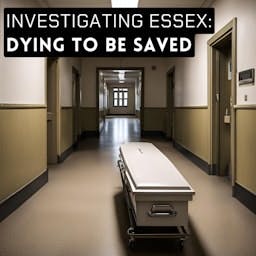
Lisa Morris, mother of Ben Morris, confronts the official verdict that her son died by suicide at the Linden Centre, a secure mental health unit under Essex Partnership University NHS Foundation Trust (e-puts). Ben, diagnosed with ADHD but never properly assessed, was subjected to 11 restraints in 20 days, including a forced restraint on Christmas Day while his mother was on a phone call. Witnesses and physical evidence—such as a 52-inch belt (far too large for Ben), missing personal belongings, and bruising inconsistent with hanging—raise serious doubts about the suicide claim. The post-mortem was conducted by Dr. Joseph Calouba, a histopathologist later struck off for falsifying reports and inappropriate use of hospital systems. Multiple recommendations from the inquest—such as removing ligature risks—were ignored, with similar tragedies occurring at the same institution in 2012 and beyond. Lisa contends that staff concealed information and acted deliberately to cover up mistreatment, and that Ben’s death was not a result of his own actions but a consequence of systemic neglect and abuse. Despite the inquest’s suicide ruling, Lisa and her family remain convinced of foul play, calling for a full re-examination of the evidence and greater accountability. Her story highlights a broader pattern of failure within the mental health system in Essex, where thousands, including Ben, have died under care with no meaningful safeguards or follow-up on warnings. The case underscores the urgent need for transparency, proper oversight, and trust in families’ lived experiences.
Warning, this is a true crime podcast and is not suitable for all audiences. Please
use discretion. This series details descriptions of suicide and sexual assault. Please take extra
care whilst listening. We just wanted them to get better. It's a phrase that I've heard
so many times through making this series. In today's case, the Inquest concluded that
this loved young father's calls of death were suicide. But his mother is here to tell
us that is not what she believes. She believes he was killed and she's going to explain
why. I'm Naomi Channel and this is Investigating Essex, dying to be saved.
When I first started this podcast, Melanie Leahy was my first point of contact and she
told me that I had to speak to a woman called Lisa Morris. She is also an integral part
of this inquiry and so is her son Ben. Ben Morris can't be interviewed because sadly,
he is one of the 2,000 people that died whilst he was in the care of e-puts. Remember,
that stands for Essex Partnership University NHS Foundation Trust.
Lisa was one of the first people I spoke to when I was researching this podcast and she
was also one of the first people Melanie spoke to when she was looking for other families
who had been affected by the loss of a loved one whilst in the care of e-puts. Melanie
had heard that there was another grieving mother. After hearing about Ben's death on
the news, she wanted to connect with her. To find out if she had the answers to her son's
untimely death. She had her name, Lisa Morris, a name that isn't that unusual in England.
She knew that she lived in Essex and had an idea of which area, but that was about
it. Melanie told me how she walked through the snow, knocking on door after door, trying
to find Lisa. She eventually found someone who knew where Lisa lived, and the two women
bonded together by trauma, merged their fight together. Melanie has warned me that Ben's
story is just as traumatic as Matthews. This is Lisa. She's a lovely, warm, caring woman.
She's blonde, ugly, but there's a sadness in her eyes, and you can tell that her whole
life is dedicated to her children, her two on this planet, and the one who's left. Here's
Lisa. Lisa, I just wanted to ask, first of all, before we talk about Ben and who he was
and his whole story, I just wanted to ask why you agreed to talk to me. The separate
year is just not getting out there enough. What's going on is horrendous. What's going
across the nose is not shoving the real picture. That's exactly what Melanie said to me when
I asked her that same question. So first of all, I really want just to extend my heartfelt
sorrow for the loss of your son. I was looking at some pictures of him just before I started
speaking to you, and he has really lovely kind eyes. There's a photo I saw of him he's
wearing like a baseball cap, and he looks like he's on holiday. I'm sure it's one of the
ones you treasure because I've seen it circulated in a few of the press articles and the blogs
you've put up. It's a really beautiful photo of your son. Lisa, can you tell me a bit about
Ben? So was he your first born? Yeah, he was my first born. He was very, very hyperactive.
I was obviously a, a new mum didn't really know much about being a parent, but he was
very hyperactive. As he got older, I was concerned, I would take him to the doctors and just
got really that naughty child syndrome, single parent, naughty child, nothing ever really
come of it as being a older. It got worse and worse. It interfered with his school. He started
getting trouble with police at the age of 13. Eventually he was, I don't know if he was
still 19 or just 20. He was diagnosed with ADHD finally, but only because he was, he lived
in HALO. So he was under HALO. I moved him down to live with me back in Morden and changed
the doctors who then referred him to a different mental health team and he was diagnosed pretty
much that day. Ninety percent, the psychiatrist said he thought he had ADHD, but he thought
he had temporal lobe epilepsy as well. So he wanted brain scans done, which Ben had
the first part of and then there was to be a sleep deprived one, which was during the
January. So in the mean doctor Chad said that he didn't want Ben medicated until he knew
if he had the temporal lobe as well because it would depend on the medication. So we went
off being diagnosed 90% with ADHD, but no medication had to wait for the scans. In the mean
time, Ben had a bit of meltdown. So he ended up going into the Linden Center voluntary on December
the 7th 8th, it was early hours of the morning. Oh God, just that's where it all went so wrong.
Ben died in 2008 and 16 years on you can still hear that raw pain in Lisa's voice. Ben was put
into the care of E putt at the Linden Center in Chelmsford. It's the same unit where Matthew
Lee he died. Lisa, how long was Ben an impatience at the Linden Center? 20 days he was in there.
I think he was restrained 11 times in 20 days. One happened on Christmas afternoon, Christmas
day. I was on the phone to him. I heard it all and what they sent through in all the notes
about that is just, it's just, it's lies. It isn't what I put it far from.
For context, Ben had called Lisa on Christmas day and during that phone call, Ben was forcefully
restrained. Lisa said she heard a team of workers coming into his room and start restraining
him whilst she was on the phone despite him sounding completely coherent prior to their
presence in his room. I put in a massive complaint about that. They knew I heard it because
I was actually around the hospital from another phone. So I stayed on the phone that I was
on to Ben and then around the world from a home phone to say, "What are you doing to my
son because I can hear it all?" Someone came in the room and put that phone down. I wanted
to make a massive complaint on the Monday, which would have been the 28th of the 29th of December.
I wanted Ben psychiatrists, the world manager, just everyone there who was involved in the
restraint and I wanted to find out why and why they've done that to Ben and he died the night
before that meeting was meant to happen. Lisa is now going to give her account of what happened
on the night of the 28th of December 2008. This will be so hard to listen to, but I just want
to note that Lisa and all other family members recall
pulling these traumatic moments have fully consented to these incredibly difficult interviews
and they're going into as much detail as they feel comfortable with. They want their voices heard.
I spoke to him on the phone half past eight on the Sunday evening and he was slurring like I'd
never ever heard him slur before. I could barely understand what he was saying. He was really,
really agitated, he wanted to discharge himself, he hated it there, he'd rather go to
Harlow if he had to go to another hospital. I ended the conversation or the conversation ended
with Ben and I run the wall straight away. Well they said I've heard the conversation and they
was watching Ben and waiting for the duty doctor to come, who should be around about nine
to see if he was alright to discharge and I didn't then hear anymore. I ran the hospital eight
o'clock the next morning and I was told to call the police. So I ran the police, they couldn't
tell me anything. So I ran back the hospital, they still wouldn't tell me anything. I ran the
police down to ask to be put down to custody because the hospital used to call the police a lot
on Ben. So I thought perhaps it called the police having arrested he was in custody.
Run custody wasn't there. Run the hospital back. They said that they would call the police and
for me to bring the police again in five minutes. So I've done that and they confirmed my
address and I sit on my part of Ben's dead. I just I just know I can feel it and he said don't
be silly. He's in a hospital we call the dead is the safe you know the safest safe can be
and 15 minutes later the front door went to tell me that Ben was found dead in his room at nine o'clock
the night before. They told me first of all that that found him hanging off the back of his door
and I could remember saying what did he use a chair or something to stand on and jump or
or what and he was like no no he'd have put a literature over the door and just probably lifted
his legs and then it all come through that you know it wasn't the back of his door it was off
of his wardrobe handle but then I found out what I heard it took me 18 months to prove it but
the wardrobe handles were just glued on and that puzzled me how can you hang you had bad injuries
he had a horrific gold chain in it it's sunk literally sunk in his neck here and I just can't
get my head around how you can do that with such a force that chain would you know gold chain
would sink in your neck and and hold you in that the handle wouldn't snap and then obviously
yeah as all the information started coming through there's just so many
confliction in it's one one nurse says she can't even remember if it was heard from the ambulance
Lisa when I was reading some of the documents regarding Ben and his death I read something
that stood out and I know that when we were messaging you said it was something you could talk
about the belt that the staff say Ben used in his suicide was 52 inches in length
but Ben was much smaller than that wasn't he so am I right in thinking that that wasn't his belt
the belt isn't Ben's belt is 52 inches long Ben's waist was 28 inches probably even less than
that because it lost a lot of weight just in the 20 days he was in there and I've just constantly
thought of myself if that is the truth and then done what they say while the while the lies
his injuries as well on even on his post-mortem the tauties he had they're not on his post-mortem
so the belt wasn't Ben's so how did someone who was in a secure mental health facility
get access to a belt that wasn't his Lisa and the rest of Ben's family also couldn't comprehend
what had happened that night especially when they heard from the staff members
Ben's time of death was listed at 9.50 pm on the night of the 28th of December
Lisa had spoken to her son on the phone at 8.30 pm that's just an hour and 20 minutes
between that conversation where Ben was slowing and the time of his death
statements were taken from the staff who were on shift that night but those statements
left Lisa up with more questions than answers in the statements apparently when they tried to cut Ben
down it cut the sorry the licatrices broke so they had to go and get another pair of licatrices
and cut the belt again well I asked to go and see the belt that was actually taken as
exhibit officer and it was held at the coroner's court I asked to go and see it and luckily the
coroner did agree and I was allowed to measure it through the plastic bag that's how I found out
it was 52 but the two parts look like they've been through a guillotine so again if it
broke the licatrices that wouldn't have cut straight through that belt surely that's why they
had to go and get another pair of scissors but it sliced clean to cut through the belt so what happened
there was a toxicology report done on Ben apparently he had the amount of drugs in his system that
first of all actually as well that's another funny one the toxicology was only sent off to see if
he had alcohol and street drugs in his system so we insisted that actually it might want to be
checked for medication as well because obviously my first thought was he'd been over-medicated
to be slurring like that but no that come back all normal he had the medication in his system
that he was allowed but having said that he was prescribed lirazapan and on his notes he'd
only had lirazapan once in his 20 days stay the day or the night he died he'd had four doses
in less than 24 hours but it was still in accordance with what he was allowed so the toxicology report
was all right before we go a bit deeper with that I just want to remind you here that Ben had
voluntarily admitted himself into the care of the linden center he was escorted there by police
who had been called to do a welfare check on him because Ben had called his grandmother
from a local train station he told her that he was feeling low and he didn't know what to do
they arrived and it was then he started inpatient care at the linden center
if it's okay with you Lisa if we go back to before Ben passed away was there a point during his
stay at the linden center where he had told you that he wanted to leave and if so do you remember
when that was and did he say why he wanted to leave? We're about a week and a half two weeks
after we'd been in there really I'd never heard anything about the linden center
I knew nothing about mental health hospitals so when he was saying that he was needing to be
or they've just I mean he used to say he'd been restrained and jabbed and that he come over
DC in the shower and but none of that is on his records that he was ever jabbed with anything
and I knew Ben could be really hard work so I feel awful I just thought them restraints that's
what they was allowed to do they had to do it to him before his own safety but after a couple of
weeks I thought this just isn't I don't think this is is right and I know went up the hospital
and they didn't even know where he was they went around the hospital look
for him and I'd just left him in Chelmsford Town Centre. I'd just gone back to the hospital
to take his dressing gowns a few bits with both in town. I got there and they didn't really even
ask me what I wanted and they're like, "Oh, we'll go find Ben for you." They was looking for him
for about an hour. Didn't even know he wasn't there. That caused concerns.
Whilst Ben was there did he ever get diagnosed with any mental health conditions?
I know you said he'd been living with ADHD which just for any listeners who aren't familiar
with that acronym it stands for Attention Deficit High Proactivity Disorder and it's described by
the NHS as a condition that can affect people's behaviour. It's something actually myself and my
family are very aware of. It's very close to us and ultimately it can make people seem restless,
contribute to having trouble concentrating and at times acting on impulse.
But the restraining and the medication that made him slur in context, it's really hard to align
those two together. Were the doctors at the Linden Centre doing any specific assessments or tests
on Ben that you were aware of? Did they think that he might have had a mental health
condition accompanying the ADHD or was this something they were investigating?
Nothing and as well what happened is when he went because Dr Chad said he didn't want to
medicate it until he'd had this upper scan which was due in the January. Just for some context,
Dr Chad is a psychiatrist based in Essex who specialises in adult ADHD and he had seen
Ben before he went into the Linden Centre. So of course as soon as he went into the Linden Centre
he was massively medicated. He was all put on one for ADHD at some oxygen. Apparently you're not
meant to have as an adult if you haven't as a child and you're really meant to be supervised on it.
Well then they doubled in ten days but then there was a question whether he was meant to have it
once a day or twice a day. So I think that was overdosed to him on the double dose of it as well.
Not watching him but in all the notes they seemed, they sort of seemed to put Ben down as like one
of the heart of these patients that have ever had to cope with because he's so fit, he needs very
verbal. They would restrain them for their words kicking the skirting bolt.
That makes me think back to the conversation that you were talking about with Ben that you had
on Christmas day and that he was just talking to you. He wasn't causing any trouble and then he
was restrained whilst you were on the phone. So did you ever get to the bottom of that and find out
why they did that because if he's talking to you on the phone and he was coherent and he wasn't
kicking off he wasn't being physical or verbal. Did you ever find out why they came into his room
to restrain him? Christmas day, Christmas day, they finally said that they restrained him for
something he'd done earlier in the day which actually turned out to be a little bit verbal to one
of the nurses and that was kicking the skirting bolt. So if that was done for something he'd done
earlier in the day I give under the impression that that that restraint was then used as a punishment
rather than something to deflate an active situation. Yeah because he was sitting on the bed quite
calm talking to me. They all barged in his room and I said to him don't turn the phone off Ben
leave the phone leave the phone and there's even in their statement when they went in and had to
switch the phone off. He'd put the phone on his windowsill which was the opposite end to the door.
Their story is he was kicking around and verbally abusive being out in the corridor so they
restrained him out there. Had they done that then his phone would be on the floor in the corridor
and not on the windowsill in his bedroom? As a mother I know you know your first instinct is
always to protect your child whether they are a baby whether they are a teenager or whether they
are in their 20s or you know 50s I would imagine 60s you know I imagine it's always there.
Going back to Ben's sort of state of mind when he was talking to you I know you said he was
really coherent. What did he want from this situation? Did he want some tests done? Did he feel
like he had something else? Did he want medication? Did he want talking therapies or support
or do you think he was he was just lost and he just needed something someone some professional
guidance. He so wanted to get diagnosed properly, medicated and be able to control more of what
the ADHD done to him. He had a little girl. He so wanted to get well for his baby girl.
I'm sure he did but it's I know from what you've said he was a fantastic dad and
I'm just oh god it's just so it's so hard I'm so I'm just so sorry Lisa and
if it's okay with you can we just go back to the night he died? Did you ever manage to establish
a clear timeline of the evening that he died because I know that you said to me you were on the
phone to Ben for around eight minutes so within a period of about 25 minutes this happened
because they said they found him was it about nine o'clock? So have you ever had any clarification
of what happened after you came off the phone with Ben that night? One of the nurses he said they
checked from the phone from the phone call at half eight twenty five to nine she went and checked him
five minutes later in his room. It's about quarter to nine and he said that he was naked he was
getting changed and told her to f off apparently and he barricaded himself in his room
and from the pictures the police sent me of what they took of Ben and the room after it all happened
I believe that he's barricaded himself in the room because you can see that where they've
shot the door open the chair has gone right as far as it can to the wall it can't go any further
and Ben's brand new tracksuit is on the floor by the chair where we would have been
sitting to to stop anyone coming in the room so I believe that was true and I've also heard
from a patient that was in the room opposite Ben's room now she told me they was all told to get
in their rooms before Ben even come to his room and barricaded himself in they was all locked in
their rooms I believe around half past eight while Ben was on the phone to me and they wasn't
allowed out till lunch right the next day and then there was all told not to mention it not to talk
about it what do you think that means oh I believe whoever I was you know who ever done it
actually had planned to do it I believe it was staff I believe there was four of them and yeah
everyone else I didn't hear that I didn't hear that till very long ago but that makes sense yeah
that everyone else is putting their rooms no one can say anything Ben's cause of death was registered
by the coroner as suicide but I want to look at how they got to that conclusion Lisa when
the post mortem was done did they find any other physical injuries on Ben's body at all that you're
aware of Ben was checked by the only time actually they was checked he did they did actually call
a doctor to check him after he was restrained which again I didn't know they meant to do every
single time and a body map they meant to list every single mark or bruise on the body from the
restrained there was nothing no marks or bruises on Ben's body so that was on the 25th on the afternoon
on the 28th that night they took the pictures on
Ben, Ben was really bruised and marked all down his right side. So if they haven't been
caused by the restraint on Christmas day, what caused them when Ben hung himself? I've also got
that, well, they are actually with the solicitor, everything's with the solicitor, but in all the
things they send back to me in the hospital bags of Ben's when they clean this room. I've also got
two scrunched up socks with stuff on her, and it's the same stuff that you can see in the pictures
that surround Ben's nose and mouth. I don't know if it's sick, I don't know, but what's come out
is mouth, but these socks have got the same stuff on them. So what did they do? politely wipe his mouth
with a couple of these socks. The weird thing is like I say that's not his belt, it's 52 inches long,
his belt is nowhere to be seen. That hasn't come back to me. I know exactly what Ben took into that
hospital, and I know what it's come out with, his belt's missing, and then there's a white t-shirt
missing as well. His favourite white t-shirt, and the police originally told me that they had to throw
that away because it had so much blood on it, and I was so puzzled, "Blood boy, why would you bleed if you
harm?" Where does blood come from if you hang yourself? But they destroyed that white t-shirt,
and then the police denied having that conversation with me. Again, in the pictures that the police took,
you can see what is it, the hospital, like his scinerator bags. Well, there's two of them full up,
and zoom in, and you can see the blood stuck to the plastic. And I know there was blood,
because there was blood all over his gold chain, but there's not any blood or skin on the belt.
I can't imagine what that's likely start to have to look at those photos anyway.
Let alone have to wander about things like that. I think you're very incredible. I just need to say
that. With Ben the night that he died when he was on the phone to you, I know you said that he wanted
to get out of there. Did you ever talk about how that might happen? Because he was in there
voluntarily, so I'm not sure of the process once you've admitted yourself in, you know, if self-admitted.
Did he want to see a doctor or something before he left? Did he ever talk to you about what
he wanted? No, on the 28th, he was willing to wait there for the doctor to come to assess him,
and hopefully discharge him with medication. I'm trying to get my head around what that must
have been like to have had that conversation that seemed quite hopeful to then obviously receiving
the news that he had died going on to the post-mortem because I think this is a really important part.
Did you, were you asked to identify his body Lisa? His body, I was never asked to
identify the body, perhaps I don't know, perhaps it's because he died in hospital, I don't know.
I was never told that I could have a doctor of my choice at the post-mortem,
either, while that was being performed. According to, you know, when you do the subject
access requests as things like that, I've done it, I've worked on loads of them, but one concerning
Ben's post-mortem, and they seem to think on their record records that his post-mortem was done
by a company in Oxford, but it wasn't, it was done at Runefield by a histopathologist,
a man that checks cells while people are being operated on. The cells are quickly
go to the lab, he'll check and say what's there and send it back to the operating theatre with
results, meat operation. He was actually sacked in 2012 for a list as long as your arm
of things. One being he was sent in in decent pictures of people from his, from the work,
work laptop, out to people, that actually made me shudder because are they pictures of
dead people? That was my first fault. He was also sacked for filling in death certificates
with the wrong cause of death. He diagnosed one woman wrong from these cells and had they
followed that and given them medication to go with what he diagnosed that actually would have killed
her. I've tried and tried and tried to get information on him and he comes under Mid-Essex
Hospital and they just won't let me have anything. They won't even tell me if he was qualified
to do a post-mortem or not. The doctor that leases referring to here is Dr. Joseph Calouba.
He was a histopathologist and they are often assigned to conduct post-mortems
and they will feed this information back to the coroner so he would have been qualified
to have conducted Ben's post-mortem. But the fact that he has now been stripped of his medical
registration partly for falsifying documents, well his involvement in other cases is something
that is likely to be questioned by the families of those he examined. After some research,
I found this article on the British Medical Journal's website.
A consultant histopathologist has been struck off for continuous systematic abuse
of the confidence placed in him by his employer Mid-Essex Hospital Services NHS Trust.
Joseph Calouba ran a car export business from his hospital computer and used it to deal in
property in the United Kingdom and Zambia. An investigation at Brumfield Hospital in Chelmsford
showed that nearly a third of his emails were not related to his duties. He used his computer
extensively while on duty for social networking and banking and he twice forwarded images
of a sexual nature to another email account. The Trust's IT manager, Kate Thompson, told a hearing
of the medical practitioner's tribunal service in Manchester, "I have never known anything
quite as detailed as this, where we started looking at one thing, the possibility of private
working and ended up finding something completely unexpected." Calouba was regularly missing from
work and unaccounted for, having missed 46 days over a seven-month period in 2012.
On days when he came to work, he would often disappear for lengthy periods and his usual explanation
going to the post office became a catchphrase among hospital staff. The panel ruled that he had
breached good practice and hospital rules by altering a cancer patient's histology report
to cover the fact that his original report was inaccurate, placing a patient at potential risk,
and he had then denied having done so. The inquiry and the solicitors that Lisa has instructed
on behalf of the families for Essex, they will look into all the circumstances surrounding Ben's
death. At the moment, there is no correlation between wrongdoing between Dr Joseph Calouba and
Ben's post mortem. But it does, of course, pose questions. Questions that hopefully will be answered
within the inquiry. Lisa had many questions surrounding her son's death. And afterwards,
she went and met with the ward manager and client liaison officer from the hospital.
But she said she felt like she was getting nowhere with finding out what happened to her son.
And it started taking a toll on her own mental health. I'd actually been sectioned myself and lost
my home. I was in private mentee accommodation about a year and a half after Ben died. I went to the
doctors, couldn't really cope with it all anymore. And he suggested that I had a mental health social
worker to help and perhaps see the mental health team. So I agreed and that went really only
tips up. Ben's psychiatrist who originally diagnosed him with ADHD doctor Chad,
he suggested to my community mental health team that I went and had a stay in hospital.
I have the phone. He hadn't seen me and spoke to me. So I was whisked away by the police
and I was actually sectioned.
and drugged heavily, I told her, I told her lines that I was religious and I didn't do
medication, they said that if I didn't take all this medication, I mean the honey really
assessed me, what was wrong with me or anything, if I didn't take all the meds, they would
restrain me and inject it into me and basically if I give them any trouble I wouldn't be allowed
to go to Ben's inquest, I'd be too ill and then while I was in there, my house was
being pretty much taken away from me, I was told that when I come out I'd been evicted.
Lisa said that she had very little support and she was housed in a room in a pub with
her two other children upon her release. They were 12 and 14 years old and the school
was opposite the pub so there appears no they were living there. Lisa felt like she couldn't
take any more and she said if it wasn't for Melanie knocking on her door that day, she
may have given up. The inquest ruled that Ben took his own life whilst under the influence
of Atomoxatine. This is a drug that is often used to treat adults with ADHD. Atomoxatine
came on the market in 2002 and the FDA which is the Food and Drug Administration had warned
that Atomoxatine might cause greater incidence of suicidal thoughts or behaviour for over
a decade. But then the University of Florida College of Pharmacy found no confirming evidence
for that warning after conducting research. The inquest was a jury inquest. A jury is
called in an inquest if they need to return a conclusion about the cause of death when
there are criticisms of the authorities involved. Lisa was not satisfied with the inquest, mainly
because she had a list of witnesses to be called that the coroner decided not to call
and never gave a reason why. Witnesses that could have given more insight into what was
really going on at the Lyndon Centre. But there were 23 failings that were identified
in the 20 days that Ben was under the care of E putt and there were 17 recommendations
made. But Lisa made a good point to me about the recommendations. They're not legally
required to be acted on. They're just that recommendations. They said they had failed
him. There was 23 different ways that failed him in 20 days so they had needed neglect
back day, just the day died. 17 recommendations were made by the coroner. I think none have
been followed. In Ben's case, the wardrobe handles in 2006, 2007, and again 2008, it was
recommended that then handles were made either removed or made flush because they obviously
were a ligature risk. No one ever checked that that was done before Ben's so called hung
himself off one of them. The handles were still there.
One of the recommendations was a call for a review of ligature points across the acute
boards of the Lyndon Centre. But in 2012, two other patients died by hanging at the trust.
One of them was Matthew Leahy. In June 2013, the Care Quality Commission inspected the
Lyndon Centre and its report acknowledged that the trust had carried out risk audits. But
again, highlighted ligature points as a concern. Reassureances were given, but then in March
2014, 73-year-old Iris Scott hung herself from the door of her ensuite bathroom in another
of the trust's units, the Crystal Centre for the elderly, and then 11 months later, a 57-year-old
man died after being found hanged from a door of a shower room at the Lyndon Centre.
And in 2015, 30-year-old Richard Wade was found hanging in the Lyndon Centre. There have
been multiple opportunities to try and stop this from happening, as early as 2004, when
Denise Gregory died at the Lyndon Centre. She too died by hanging.
Well, if I had to match it one, and this is selfishly, this is just for my part, I would
love some tests to be done on the socks and the belt to prove what I think I know. I can't
see it. I don't know if we're ever going to come to an end of it, or leave them with this
statutory public inquiry, because obviously I'm convinced in what I believe was true. And
if they have the power to cover these, and they're ever, ever going to let it be uncovered,
I can't leave here. I can't, there's other people it's happening to.
Lisa, what do you want people to know? Maybe about Ben, maybe about you, or what do you
want to tell them off the back of your lived experience?
I'd like people to know, for them to know, just if their loved one is poorly, and they
need this help, need just such a close eye on them, believe what they're saying as well.
That's where I wrote wrong, because when Ben had told me some of these things, I'd think,
oh God, no, that can't happen. He's been in a hospital that can't happen. But what he
was telling me was true, I believe Ben saw things he shouldn't have seen, and then members
of staff didn't want him leaving that hospital with what he'd seen.
The police have portrayed me as a mum that can't accept that her son would do this, but
what people don't understand as a parent is that that's your child's life, and that's
the last thing you ever want for your child is for them to take their life, but it is
their decision. The fault for a parent of someone hurting their child was still murdering
their child is harder to accept in my heart anyway. I would rather believe that Ben took
his life than that someone else took it. So I'm not the mad parent that just wants to
prove that Ben didn't do it, because if I could settle with that, then I wouldn't believe
in these nightmare now.
Lisa and her family have been through so much. Ben is now one of the 2,000 people whose
deaths are being investigated by the Lampard inquiry. Ben was suffering with an intense mental
health crisis, but until he entered the Lyndon Centre, he had never attempted suicide.
The jury at his inquest said he took his own life, and his death was ruled as a suicide.
But the inquiry will have to reexamine the evidence surrounding his death.
When I started looking into this inquiry, I had no idea who the people were behind the
headlines, behind the 2,000 deaths. But the more I look into it, the more I realised
how diverse this group of people were, and how these valued and loved members of our society
entered a system that was supposed to protect them, and how they never came out of it
alive.
Next time, we're going to look at what happened when someone went undercover on 2 of Essex's
mental health wards, and the footage is just harrowing.
If you have been affected by any of the issues raised, please see the show notes for organisations
that can help you. Episode 3 is out and available to listen to now.
[Music]
Podcast Summary
Key Points:
Lisa Morris, mother of Ben Morris, challenges the official finding of suicide at the Linden Centre, asserting her belief that her son was murdered due to systemic failures and staff misconduct.
Ben was held in the Linden Centre for 20 days, subjected to 11 restraints, including one on Christmas Day during a phone call with his mother, and suffered severe physical and emotional trauma, with no documented mental health assessments prior to his death.
Critical inconsistencies in the evidence—including a 52-inch belt (far too large for Ben), missing personal items like his favorite white t-shirt and belt, unexplained injuries, and a post-mortem conducted by a medically discredited histopathologist—raise serious doubts about the suicide verdict and suggest possible foul play.
Summary:
Lisa Morris, mother of Ben Morris, confronts the official verdict that her son died by suicide at the Linden Centre, a secure mental health unit under Essex Partnership University NHS Foundation Trust (e-puts). Ben, diagnosed with ADHD but never properly assessed, was subjected to 11 restraints in 20 days, including a forced restraint on Christmas Day while his mother was on a phone call. Witnesses and physical evidence—such as a 52-inch belt (far too large for Ben), missing personal belongings, and bruising inconsistent with hanging—raise serious doubts about the suicide claim.
The post-mortem was conducted by Dr. Joseph Calouba, a histopathologist later struck off for falsifying reports and inappropriate use of hospital systems. Multiple recommendations from the inquest—such as removing ligature risks—were ignored, with similar tragedies occurring at the same institution in 2012 and beyond.
Lisa contends that staff concealed information and acted deliberately to cover up mistreatment, and that Ben’s death was not a result of his own actions but a consequence of systemic neglect and abuse. Despite the inquest’s suicide ruling, Lisa and her family remain convinced of foul play, calling for a full re-examination of the evidence and greater accountability. Her story highlights a broader pattern of failure within the mental health system in Essex, where thousands, including Ben, have died under care with no meaningful safeguards or follow-up on warnings.
The case underscores the urgent need for transparency, proper oversight, and trust in families’ lived experiences.
FAQs
The inquest concluded that Ben Morris died by suicide, with the cause attributed to taking his own life while under the influence of the medication Atomoxatine.
Lisa believes Ben was murdered, citing evidence such as the 52-inch belt used, which was too large for him, and the lack of physical injuries consistent with suicide, as well as staff actions that appear punitive and suspicious.
Lisa questioned the presence of a 52-inch belt not belonging to Ben, the absence of his favorite white t-shirt and belt after the incident, and the use of socks allegedly used to wipe his mouth, which contained the same material as found on his body.
The post-mortem was conducted by Dr. Joseph Calouba, a histopathologist who was later struck off for misconduct, including falsifying reports and using hospital computers for personal activities and sharing inappropriate images.
The inquiry found 23 failings, including 11 restraints, lack of proper ligature risk assessments, failure to remove or secure wardrobe handles, and inadequate mental health support, all of which contributed to a dangerous environment.
Staff restrained Ben multiple times, including during a phone call with his mother on Christmas Day, and he was allegedly punished for minor verbal conflicts, raising concerns about punitive discipline and lack of proper assessment.
Chat with AI
Loading...
Pro features
Go deeper with this episode
Unlock creator-grade tools that turn any transcript into show notes and subtitle files.
 PodcastTranscript AI