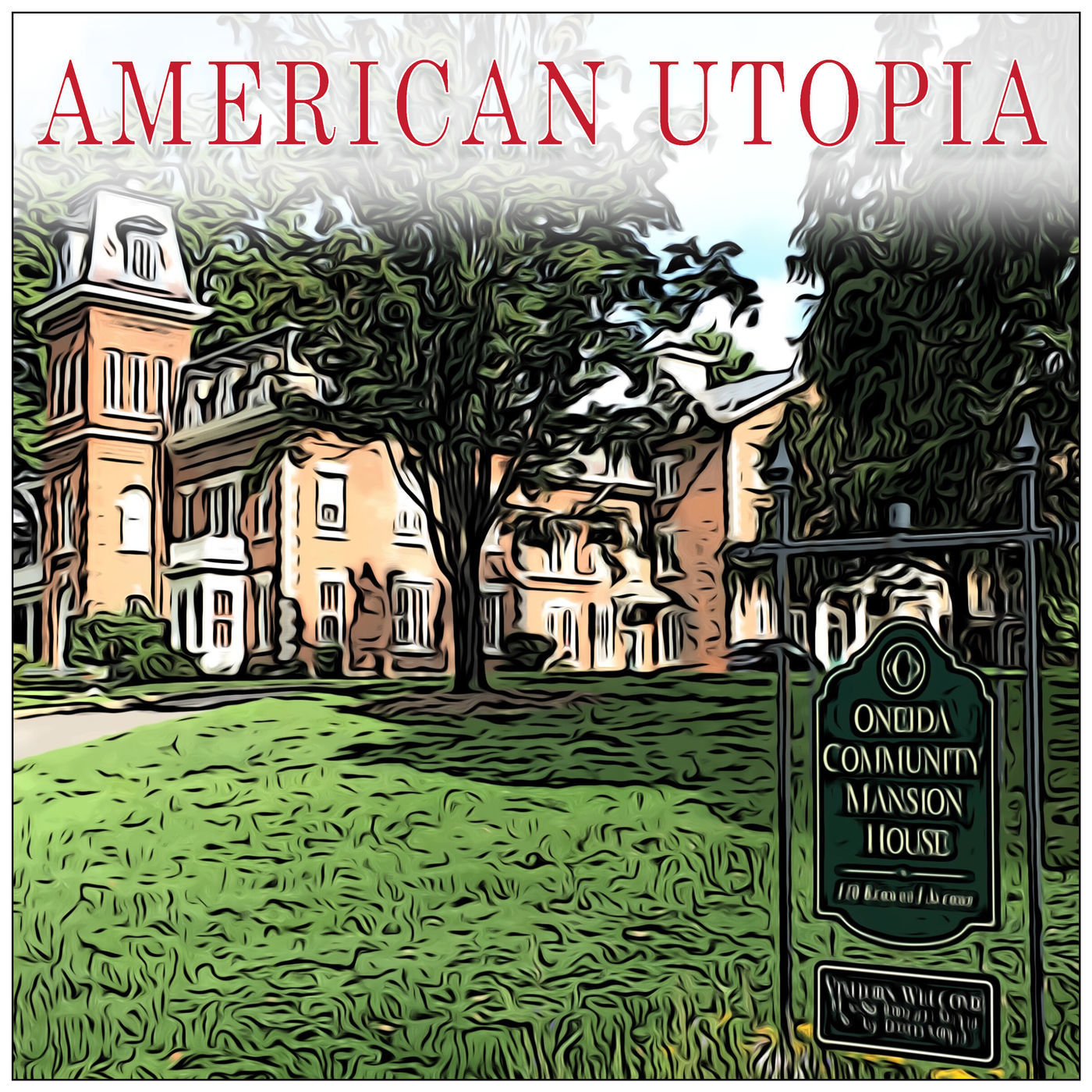
John Humphrey Noyes, born in 1811 to a devout mother and a worldly, business-minded father, struggled with acute shyness and self-consciousness, particularly around women, despite his privileged upbringing. His mother’s wish for him to become a minister seemed unlikely until 1831, when a powerful religious revival converted him, leading him to abandon law for theological study. After disappointing stints at Andover, he transferred to Yale, where he embraced free will over Calvinist predestination and developed the radical belief in sinless perfection—the idea that true Christians can avoid sin entirely. This heresy got him expelled, but he continued preaching, moving to New York City for a period of intense, possibly manic, religious experiences. He later founded the Oneida community, where he implemented "mutual criticism" and challenged societal norms around monogamy and family, claiming divine inspiration for practices like complex marriage and unique birth control methods. Despite his controversial actions, including relationships with many women and fathering children with at least 11, Noyes remained a high-functioning visionary who saw his work as a Christian mission. His story reflects the fervent revivalist spirit of early America, where religious enthusiasm often blurred with social radicalism.
When he was seventeen and yet to kiss a girl, John Humphrey noise confided to his journal. "O for a brazen front and nerves of steel. I swear by joe I will be impudent. So unreasonable and excessive as my bashfulness that I fully believe I could face a battery of canon with less trepidation than I could a room full of ladies with whom I was unequainted." Seldom has a vow of being executed so faithfully. For while John Humphrey noise never fought in a war, before he was done, he had founded and led a utopian community that discarded society's rules about monogamy and family. What's more, he had sex with hundreds of women. He invented a unique and effective birth control method. He introduced dozens of virgins, including several of his own nieces into the world of sex. And he fathered children with at least 11 women. And what's perhaps most remarkable? He did all this in the name of Christ. I'm Dan Greenstone and this is the American Utopia podcast. Last time we introduced the story of Oneda through the prism of one woman's life, Harriet Warden. This time we meet John Humphrey noise, the visionary and controversial founder of Oneda. Moments after giving birth to her son, Polly noise took a deep breath and prayed right then and there that he would in her words become a minister of everlasting gospel. Though she eventually got her wish, given the worldly nature of her husband, John noise, it was no sure thing. Ellen Walen Smith is a highly regarded historian of Oneda and she recently published a book called "Oneda" from free love utopia to the well set table. She's also a descendant of John Humphrey noise. Now in my visit to Oneda, I met with her at the mansion house where she happened to be visiting her mother who still lives in an apartment on the premises. I asked her to tell me about John Humphrey noise's parents, John and Polly. You know, his mother was a congregationalist. She was very sort of premon proper and was very concerned that her children be raised Christian and you know it was her sort of dearest hope that one of her sons would become a minister and the fact that John Humphrey noise did take that path was gratifying to her until she figured out that he was sort of going off track a little bit. And the father was a little more worldly. He was a businessman. He was very, he was very sort of canny and again business-minded. He also apparently became, you know, he liked eating and drinking. He was sort of verging towards alcoholism in his later years and there's a letter that exists from John Humphrey noise and his brothers and sisters imploring him to stop drinking. Before he met his future wife Polly, John Humphrey noise's father, John noise, had floated from career to career during his early adulthood. He'd tried his hand at teaching, he was a tutor at Dartmouth and then a minister. But none of these jobs proved to be a calling for him. In 1799, at the age of 35, he settled in Brattleboro, Vermont, where he worked as a clerk in a store. And that's where he met and married the devout and strong-willed Polly. Soon, John's senior's career began to flourish. He became a prosperous part of the merchant class and eventually won election to Congress where he served a single term. The family moved to nearby Putney, Vermont where John Humphrey was born, the first boy in a family of seven siblings. Polly made sure her son prayed and read from the Bible daily. But initially, this religious environment seemed to have a limited impact on her son. I talked with Ellen Wayland Smith about what John Humphrey noise was like as a child. He was sort of confident and boisterous and fun-loving at the same time intensely, especially towards adolescence and tensely shy and self-conscious. He had red hair and he thought he was hideous and was convinced that no woman would ever love him. And when he got into situations with the opposite sex, it would just sort of turn crimson and not be able to speak and it was highly uncomfortable in social situations. At age nine, John Humphrey noise went away to boarding school in Amherst, Massachusetts. From his letters home, it's clear that while he found being away from his parents at such a young age difficult, he was still eager to please them. Mama, he wrote, "I must say that when I am not reading or writing or studying, I am homesick. Yes, I am homesick. But away with all this, I fear that I have distressed you already. Tell Papa that I am studying Cicero and that I have got to the fourth book of Virgil." He entered Dartmouth College at age 15. It was here that he began to acutely feel a sense of inadequacy about his interactions with the opposite sex. He was terribly self-conscious about his red hair and the complexion of his face, which he said was, "As freckled as a toad's back. And once he recalled, I look so uncomlly that I never expected to make myself agreeable to a woman as a lover." After he graduated Dartmouth in 1829, John Humphrey noise decided to become a lawyer. In those days that meant a "prenacing." And so he moved to Chesterfield New Hampshire to study with his brother-in-law, Larkin Mead. He found, to his delight, that Chesterfield was home to a school of younger ladies, who he would encounter at dances, where the girls would have been draped in constricting garb that hid their bodies and emphasized their virtue. And by now, John Humphrey noise gooeyed both by the age difference between himself and the girls. And by his college degree, which gave him an unusual status in tiny Chesterfield, was able to overcome as a neat shyness. And he courted a young woman named Caroline. They danced together and he even wrote her a banal love poem. Though the whole affair was entirely chased. Still, this was a time of growing confidence for him. And as 1831 dawned, it seemed that John Humphrey noise was set to follow his father's worldly conventional path. Instead, he got swept up in the biggest spasm of religious revivalism in all of American history. Right near the beginning of the year 1831, there was a total eclipse of the sun. And that somehow seems fitting, because 1831 was a year of portents and disturbances. A year so turbulent that for generations just saying the year conjured up emotional associations for people. In the same way that 1865, 1945, 1968, and 1989 can still do. 1831 was the year of Nat Turner's prophetic slave rebellion, which left scores dead and shook the South to its core. It was the year that America's most famous abolitionist, William Lloyd Garrison, declared war against slavery. 1831 was also the year of the nullification crisis, which pitted Andrew Jackson versus John Calhoun and raised the specter of disunion and civil war. And while religious revivals had been sweeping the country for years, 1831 is generally recognized as the peak year of intensity. And it was at one of these revivals, a wild four-day affair, that John Humphrey noise became a devout Christian convert. Revivalism was a central part of American life during the 18th and 19th centuries. Back when I was in college, the standard narrative we were taught was that there were two great episodes of religious revivalism in early American history. Historians called these the first and second great awakenings. In recent years, however, scholars have revised that narrative. Instead of seeing the great awakenings as discrete events, they now view Revivalism as a near constant feature of early American life. And the Revivals are best understood as being largely the result of anti-authoritarian impulses that have always been a part of the American fabric, and were always strongest on the frontiers, precisely because the authorities there were so weak. Christian Goodwillie is the director of Special Collections at Hamilton College, and an expert on intentional communities. And I met with him on my visit to O'Nida, and he helped me understand just how passionate and intense the spirit of religious revivalism was. Revivalism is a constant thing, and there's many books printed with letters from participants in these local revivals in all these small towns, and they'll send them in, and a publisher in Philadelphia or in New York will publish an account of all of these revivals that are always going on. And if you read the religious magazines of the period, they always have a section in the back with letters from far-flung places where revivals are going on. Can you, I don't know if you can give us any kind of texture of, I've read that the revivals were highly emotional affairs. Yeah, can you give us any detail or texture about what that felt like or sounded like? Well, yeah. I mean, the most famous accounts come from Kentucky of the Canaryd's Revivals, 1802. Basically, think about an outdoor rock festival, you know.
the camp meetings, as these were called, were opportunities for people to come from, you know, 100 miles in any direction and a given radius and come together, have, you know, their wagons, provisions for a few days, and then there would be preaching stands, usually multiple preaching stands. So you might have a Methodist, a Presbyterian, a Baptist, and you might have other non-affiliated people just there preaching as well. So the people who would come could go here any number of religious opinions. They could also buy whiskey. They could also visit prostitutes. I mean, there's great accounts of-- there's one account by a minister named John Lyle and Kentucky of a trumpet, you know, entertaining two or three men at one time under one of these preaching stands while the revival's ongoing. That's first of all, a trumpet is an fantastic word. That's the word he uses. Secondly, so with those vices that you mentioned, whiskey and prostitutes, with those of it something that the preachers would have condoned or would they-- No, they're there because it's the biggest show in town. Yeah, exactly. It's an opportunity for everybody to come together. And the biggest thing that comes out of these revivals is they often, in the writing of the time, call it a leveling spirit. So leveling in kind of the English radical sense of class, race, gender, none of that mattered in these revivals. And so African-Americans would be preaching. Children would be preaching. And oftentimes, in the Kentucky revival, the subjects of the revival who got the spirit, who had the Holy Spirit come into them, would bark like a dog, crawl on on all fours, jerk uncontrollably, weep for hours on end, be struck down, slain by the spirit and lay stiff as a board, seemingly dead for a day, a day and a half, and then come back with incredible visions of the spirit land and that they're saved. And so there was definitely a very theatrical element to this thing too. And a lot of the greatest accounts are of the hardened frontiersman comes into the revival and drinks his whiskey. And then he hears the preacher and he just smithes it all and everything. But beyond his control, the spirit slays him. And then this hardened man is now made into this Christian land because of this Holy Spirit that the revival has brought to him. John Humphrey noise was no hardened frontiersman. He was, in fact, a 20-year-old wealthy and educated son of the United States Congressman, the very face of privilege. And he went to the revival in Putney grudgingly, agreeing to attend only to Pleas' mother. Indeed, as he wrote in his diary, to this point, he'd lived his life with a name too, indulge the lust of the eye and to forget about the life to come. And yet, the revival experience had such an overpowering effect on him that he took to his bed sick immediately after it ended. Overcome with exhaustion and emotion, noise prayed and studied the Bible until he was literally sweating. After two days spent like this, he wrote in his diary, the matters of God and of eternity seem alone worth attention. And he vowed to devote myself to the service and ministry of God, hitherto the world henceforth God. Many of those who knew John Humphrey noise suspected that this dramatic reversal was evidence of a mental breakdown of some sort. Larkin Mead, who was married to noise's sister and was overseeing noise's training to become a lawyer, was especially concerned. And he wrote to his young brother-in-law, expressing his sympathy. But in noise's letter back to Mead, he notified him of his intention to quit the law and with the zeal and condescension of a new convert, he chastised his brother-in-law for his lack of faith. Weep not for Me, but weep for yourselves as for your children. I solemnly assure you that till within the last week, I never had the smallest conception of true happiness. I take God to witness that I find more, infinitely more, enjoyment in the exercises of religion than I ever took in the most fascinating pleasures of the world. Just a month later, John Humphrey noise entered and over seminary, determined to make his mark as a minister. But he found and over deeply disappointing. His fellow students seemed to him to be consumed with theological minutia and trivia and had none of the revival spirit that now animated noise. He described his classmates as full of levity, bickering, jealousy, worldliness, and pride, and unholy ambition. And he castigated his fellow seminarians over and over in his diary. What would the churches with their glowing zeal and glorious revivals think if they could see how lifeless and worldly we are, he asked? Before long, noise sank into depression, punctuated by eating benches and physical illness. However, when he recovered sufficiently, he was initiated into a small secret group of dedicated seminarians called the brethren. In order to ensure the purity of their souls, the brethren met regularly to criticize each other. Noise's biographer, Robert Allenton Parker, described the meetings this way. In the plainest, most unvarnished manner, they recited the breath and extent of their comrade's defects. Silently, without verbal protest, each was compelled to submit no retorts, no protests, no explanations, and especially no backbiting, no revenge. Though noise only finished out that one single year at andover, he took this technique, which he called mutual criticism, with him. Ultimately disappointed with andover, noise transferred to Yale, which under the leadership of Nathaniel Taylor, was known for being open-minded and progressive. And indeed, noise seemed to flourish there. He became politically active, working with a group of free blacks and helping to have found an anti-slavery society. And life at Yale so suited him that his diary is full of ecstatic statements like this. I poured my soul unto God and wept for joy. My peace was like a river or like this. My heart was so burdened with spiritual joy that my body became weak and pined away. Moreover, the theology being taught at Yale was, at least for the moment, to noise his liking. The great divide in theological belief in the 1830s was between the old school establishment Calvinists, intellectual descendants of the Puritans, and the new generation of revivalists like Charles Grandeson Finney, who rejected Calvinism. Christian Goodwillie explained to me why the stakes were so high. Could you explain what does it mean to reject Calvinism? Well, so one of the key tenets of Calvinism, which is in the Westminster Confession, is that there's predestination. You're either saved or you're not. And you can't really know if you are. And what the revivalists did, particularly the Presbyterians, is they believed in the concept that each person has their own free will to embrace Christ and therefore be saved. You have to take Christ into your heart and then live according to Christian principles. But you can make that free will effort to be saved. So it's really up to you. And it's kind of in keeping with a lot of what the spirit of early America was about. So by transferring from and over to Yale, noise was implicitly rejecting predestination for the more upbeat and more modern idea that our actions and our beliefs can contribute to, if not completely control, our own salvation. But though Yale's curriculum was considered progressive by liberals and downright heretical by conservatives, by his second year in New Haven, noise had moved past his teachers into uncharted territory. No longer content to believe that sinners could earn their way into heaven by trying to avoid sin and repenting the sins that they did commit, noise came to believe that avoiding sin altogether was in fact possible. In so a February of 1834, John Humphrey noise preached a sermon based on a passage from the book of John that reads, "He that committed sin is of the devil." In other words, those that sin at all ever are not true Christians. That night, as noise lay tossing and turning in bed, he had a life-changing religious experience, which he recorded in his autobiography. Three times in quick succession, a stream of eternal love gushed through my heart and rolled back to its source. Joy, unspeakable and full of glory filled my soul. All fear and doubt and condemnation passed away. I knew that my heart was clean and that the father and the son had come and made it their abode. The next day, one of noise's classmates, who had attended his sermon, confronted him. "Don't you commit sin?" he asked. "No," noise replied. News of noise's heresy spread through Yale like wildfire. Noise's announcement that he was essentially perfect left the Yale faculty no choice. They expelled him.
But he took this decision in stride. I have taken away their license to sin and they go on sinning," he said. "So they have taken away my license to preach. I shall keep on preaching." Banished from Yale, noise moved down to New York City. Ellen Walen Smith picks up the story from there. Right. So he gets turned out of Yale and he goes to New York City. It's sort of unclear why he went there, but he either had a psychotic break or just an intense religious experience for a couple of weeks in New York City where he just sort of ran around. The city hung out with sort of drunks and prostitutes and tried to convert them and had all kinds of crazy visions. He thought Satan was trying to tempt him. He was in love with a girl or sort of repressed love with a follower named Abigail Mourwin and she appeared to him in a dream and the guys of Satan. So sort of all these crazy things that he records later in his memoir or his autobiography. And yeah, most people thought that he had gone mad. But he sort of, you know, he pulled himself back from the brink and actually never had that kind of a psychotic experience again. He was then able, you know, his ideas were certainly very strange, but he never lost his senses in that way. It's really interesting, I think, because you know, you think about someone who has manic episodes. Right. You know, you would maybe suspect that they would be a recurring thing. Right. Right. That's why I mean, I think the whole question of his madness is a really interesting question because people, most people assume that he was mad, that he was crazy or just deviant, you know. But at the same time, it was if he was, he was remarkably high functioning. No, he spent the next three years in the wilderness. He had no pulpit, no congregation and little money. Still, with a small stipend his family gave him, he was able to set up a monthly newspaper called perfectionist, which he used to outline his views. However, at this early stage, the audacity of his ideas still outpaced the boldness of his conduct. And this was made clear in 1835, when noise and a friend of his name Simon Loveitt visited Brimfield, Massachusetts, where a small, but passionate community of perfectionists was based. The young women of this group greeted noise like a celebrity, flirting with him to such an extent that he couldn't sleep. According to his account, I became afraid of them and of myself. He decided the temptations were too much for him, and it was best to head back home. As he wrote, "I left the next morning alone, without making known my intention to anyone, and took a beeline on foot through snow and cold, below zero cold, to puttany, fully 60 miles distant." Noise's instincts proved to be solid, as one night one of the flirtatious young women snuck into Simon Loveitt's bed. Loveitt and the young women insisted later that they had not had sex and had only bundled, which was the 19th century term for what we today would probably call spooning. Still, bundling was scandalous enough. In news of this incident, which quickly became known as the Brimfield Bundling, cast a shadow on the whole perfectionist community, and especially on noise because he'd gone to Brimfield with Loveitt. His ministerial career, which would briefly seem so promising, looked to be over. He lost his influence and became, in his words, a homeless wanderer entirely dependent on charity. So eventually, he returned home to Putney, where he set out to work converting his own family. He went over his younger sisters and one of his brothers, who all announced that they, too, like John Humphrey, were without sin. But if being perfect was meant to signify a sort of radical freedom, in reality, it meant giving up one's will utterly to John Humphrey noise. For all his early recruits in Putney were made to take a vow of obedience. John Humphrey noise, it read, is the father and overseer whom the Holy Ghost has said over us, to John Humphrey noise as such, we submit ourselves in all things spiritual and temporal. Noise defended this kind of dictatorial control simply and with remarkable self-assurance. His followers, he said, had to acknowledge that I am a man of God and that I am right whether they understand me or not. The toughest holdout amongst noise's inner circle proved to be his devout mother, Polly, who somewhat ironically had wished that her son would become a minister, even as she held him in her arms right after giving birth. But she was slow to warm up to perfectionism, and this frustrated noise. He responded with a combination of arrogance, mixed with the sort of creepy, Freudian recasting of roles. You must expect I shall affectionately approve you for thinking you know more than your father, noise told her, referring to himself as the father. My child be still, you know but little, and it becomes you to be modest. But eventually Polly caved into the pressure being put upon her, by John and also by her other children. In 1839, she wrote an open confession of her newfound Christian perfectionist faith in a publication noise edited called the witness. Her son she now acknowledged was actually her teacher and father in all spiritual things. Still, her submission to John's will seems to have been grudging and she complained more than once about what she called his spiritual tyranny. The same tyranny was extended to all of noise followers, a group which in these early days consisted of his siblings and their spouses, along with a few other early recruits. This tight nucleus would stick with noise through all the ups and downs of the next four decades. What's surprising about this loyalty is that these were people with something to lose. The noise family was, after all, established and well off, a respected family with a reputation to maintain. And so to understand their embrace of what were considered fringe ideas, it's worth exploring the different ways that Americans in the 1830s and 40s were re-examining so many of their core foundational beliefs and experimenting with social relationships. Indeed central New York where O'Night it was located was the epicenter of this social earthquake. The religious intensity there was so hot that historians refer to the region as the burned over district. It's hard to say for certain what exactly made this region such a hotbed of faith and experimentation. But it seems to have been stimulated at least in part by the building of the Erie Canal. Here's Christian Goodwillie. Ideas spread rapidly along the Erie Canal. And in the 1820s, of course you have Joseph Smith having his first vision and then ultimately excavating the Golden plates and translating the Book of Mormon which he publishes at Palmyra in 1830. So you have the birth of the Mormon Movement upstate. Then you have the explosion of the ideas of Shah Fouier, the French social theorist whose theories were brought to America by a man named Albert Brisbane. There were also the spiritualist communes. John Murray Spear had a commune out in Western New York where they were doing all kinds of bizarre things. He had tried to build an electrical infant in Lin, Massachusetts. What's an electrical infant? So he and some followers got the plans for a machine from the spirits that was going to be kind of like a living motor they called it and it would redeem the human race. So they spent all this money, they built this machine and then they had to bring it to life and it's pretty clear that to do that they had to have someone have sex with the machine in some way. Did it work? No. But didn't stop him from moving out to Western New York and starting another community at a town called Kayan Tone, K-I-A-N-T-O-N-E, which I don't know that I know that's the right pronunciation but and at that place they tunneled hundreds and hundreds of feet into the earth questing after I forget what but that they never found. So. Oh and then John Cleef Sims, classic story. This guy's out in New York St. Louis. He'd been in the War of 1812 and he was a huge proponent of the Hollow Earth theory and he, which Edmund Halley was as well, Halley's comment. What does that mean? What is the Hollow Earth theory? That the earth has two large openings at each pole because remember no one had seen the poles yet and that you could enter the earth at the poles and inside the earth there was a lot of different theories but generally there was a continent and an advanced race and you know all kinds of things. Living inside the earth. Yep. Yeah. He lobbied Congress for funding to support his expedition into the Hollow Earth. You know this is in the 18 teens. So there's a lot of weird stuff going on and I meant to mention Mordekai Noach as well. He was a Jewish American who had worked for the government and traveled into the Middle East. He wrote a book about traveling and I think the Levant. he came back and started a bird.
attempted to start a community on Grand Island, believe in the Niagara River, which was supposed to be a gathering place for the Jews. And that's a fascinating story in and of itself. And that was right around 1830 as well. And then you had Sojourner Truth, of course, who was involved in the community of Matthias the Prophet, which was down closer to New York City, but a self-appointed prophet, and there's wife swapping going on, and then a murder, and her narrative, when she was known as Isabella Bomfries, which was her birth name, is published in the narrative of Isabella, gives one of the greatest accounts of that community. And that was right around this time as well. So New York really was a hotbed. And I guess the point I wanted to make is, you know, you go from the religious revivalism along the kind of more mainline sectarian lines, and then it starts morphing into a lot of other, much more fringe and novel and innovative things religiously. Noise's ideas were certainly on Orthodox, but when compared to some of the wilder fantasies and schemes of his contemporaries, they didn't seem quite so outrageous. And now that he had a small ring of followers in Putney, noise began to explore the practical implications of his central and guiding insight, which is that selfishness is the master's sin. Noise surveyed American society and saw a whole legion of customs, habits, and institutions that were designed to rein in and control our selfish instincts. And so when he quietly sketched his utopia, which was meant for people who had entirely escaped in all together, he proposed a radical reshaping of how we interact with one another. And these innovations included communal sharing of wealth and property, communal living, and of course communal marriage. Noise expanded the circle of members slowly. The first non-relative converts to be admitted were George and Mary Craigin. Mary Craigin was a special figure at Onida. As an early convert, she was one of the most powerful people, male or female in the inaugural years of the community. And she was a zealous perfectionist, she was the woman behind the banning and burning of all the children's dolls that we chronicled in the first episode. And just as importantly, by all accounts, she oozed sexuality in a way that had a magnetic effect on nearly all men. Mary was an extremely passionate person. As a young woman of 18, she took a job as a headmistress of a school that served New York City's countless and ever-growing population of desperately poor children. And she threw herself into that project completely. Indeed, she met her husband, George, while she was searching for the parents of one of her abandoned young charges. She grabbed George off the street, literally, and asked him to help. George was so taken with this young woman that he later remembered that when they said goodbye, he felt as though a queer sensation came over me. It seemed as though I had parted with a large part of myself or my life. Soon after, they married. And it was Mary who first came across John Humphrey noise's writings. And she was instantly converted to Christian perfectionism. And such was Mary's hold on George that wherever she led, he was sure to follow, no matter how radical the idea or severe the consequences. In this case, publicly declaring a commitment to radical perfectionism, cost George his job as the editor of a reformist newspaper. But despite the fact that George and Mary now had a baby and were facing a frighteningly uncertain future, Mary seemed to exalt. Indeed, she wrote to John Humphrey noise, "Bless the Lord, on the first day of December, George will be without money and without business. How this rejoices me." So in 1840, with nowhere to go, no money, and no prospects, the Kregans accepted an invitation to live on a farm in the Hudson River Valley with a man named Abram Smith and his wife and their four children. Smith was a fellow disciple of noise. And the Smiths welcomed the Kregans and the two families began to live communally as one. But Smith was immediately smitten with Mary and they began having an affair. George, who seems to have been terribly naive, believed, or at least made himself believe, that his friend and his wife spent so much time alone together because of their shared interest in Christian perfectionist ethics. But the affair did not stay secret. And when it came to noise's attention, he invited the Kregans to come join his little community in Putney, Vermont. George Kregan was understandably keen to move his wife far away from Abram Smith and he eagerly accepted this invitation. And so the Kregans joined the little community of perfectionist said Putney. The society they entered was in the process of building a true commune. This plan was aided and embedded by a remarkable stroke of luck. In 1838, just after the Brimfield bundling episode, when noise's reputation was at its lowest, Harriet Holtin, a wealthy young Christian perfectionist and follower of noise's writings, sent him a check for $80. Noise responded with a marriage proposal and we'll have much more on their relationship in our next episode. But for now, the key point is that Harriet Holtin and her money offered noise in his fledgling community a crucial lifeline. And so by 1841, noise had gathered around him a small but loyal group of disciples and he required the funding necessary to begin his breathtakingly ambitious project, which before it was done, would present a radical challenge to American customs, norms and institutions. And in noise's vision, no part of American life was more in need of radical reform than the trinity of sex, love and marriage. That's next time on American Utopia. (gentle music)
Podcast Summary
Key Points:
John Humphrey Noyes, founder of the Oneida utopian community, overcame extreme bashfulness to lead a radical religious movement.
His mother Polly devoutly prayed he would become a minister, while his father John was a worldly businessman and politician.
Noyes experienced a dramatic religious conversion during a revival in 1831, abandoning law for theology.
He rejected Calvinist predestination, embracing free will and the belief in sinless perfection, which led to his expulsion from Yale.
Noyes developed "mutual criticism" as a communal practice and later pioneered controversial ideas about monogamy, family, and birth control.
His early life included a period of intense religious fervor in New York City, marked by visions and socializing with marginalized groups.
Revivalism in early America was a constant, emotional, and theatrical phenomenon, often featuring "leveling" of social hierarchies.
Summary:
John Humphrey Noyes, born in 1811 to a devout mother and a worldly, business-minded father, struggled with acute shyness and self-consciousness, particularly around women, despite his privileged upbringing. His mother’s wish for him to become a minister seemed unlikely until 1831, when a powerful religious revival converted him, leading him to abandon law for theological study. After disappointing stints at Andover, he transferred to Yale, where he embraced free will over Calvinist predestination and developed the radical belief in sinless perfection—the idea that true Christians can avoid sin entirely.
This heresy got him expelled, but he continued preaching, moving to New York City for a period of intense, possibly manic, religious experiences. He later founded the Oneida community, where he implemented "mutual criticism" and challenged societal norms around monogamy and family, claiming divine inspiration for practices like complex marriage and unique birth control methods. Despite his controversial actions, including relationships with many women and fathering children with at least 11, Noyes remained a high-functioning visionary who saw his work as a Christian mission.
His story reflects the fervent revivalist spirit of early America, where religious enthusiasm often blurred with social radicalism.
FAQs
John Humphrey Noyes was the founder and leader of the Oneida utopian community, known for his radical religious beliefs and practices, including complex marriage and a unique birth control method.
He was born in Putney, Vermont, to a devout mother and a worldly father. He was intensely shy, especially around women, and felt insecure about his appearance, particularly his red hair and freckles.
In 1831, during a religious revival, he had a powerful conversion experience. This led him to abandon his law career and enter Andover Theological Seminary.
He came to believe that true Christians could avoid sin altogether and achieve perfection. This belief, known as perfectionism, led to his expulsion from Yale Divinity School.
He was expelled for preaching that he had achieved a state of sinless perfection, which was considered heretical by the faculty.
It was a technique Noyes adopted from his time at Andover, where members regularly met to criticize each other's flaws in a plain and unvarnished manner, without retorts or explanations.
Chat with AI
Loading...
Pro features
Go deeper with this episode
Unlock creator-grade tools that turn any transcript into show notes and subtitle files.
 PodcastTranscript AI