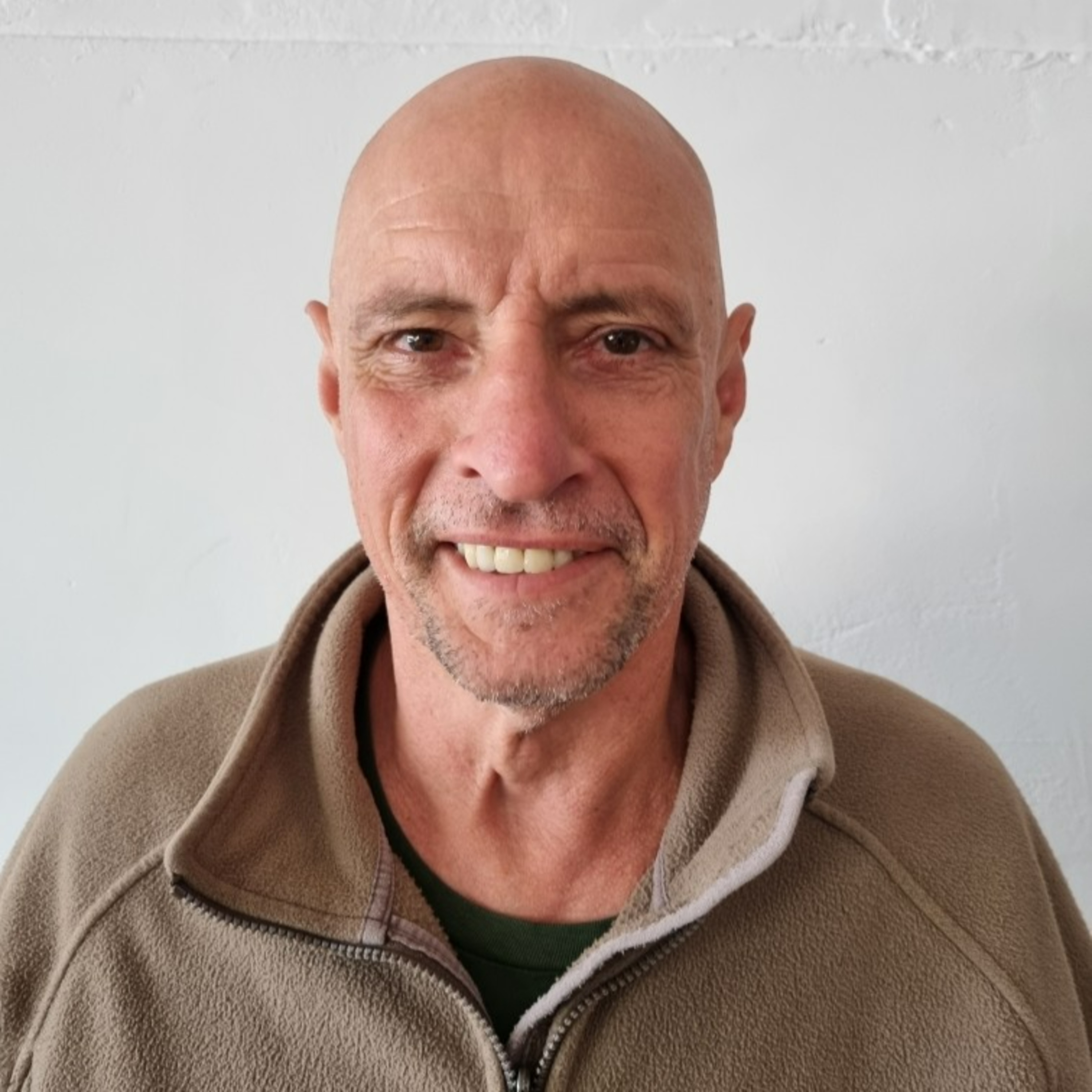
Russell Johnson shares his life story growing up in Casterton, where his family’s open-door policy and his father’s soft drink factory created a lively community gathering place. The family business evolved from producing cordials to operating bus services, including school routes and charter tours for events like Expo 88. Russell recalls his school days as less focused on academics and more on sports, particularly basketball and football. His football career took off when he played for Casterton’s senior team and later for Port Adelaide in the SANFL, where he captained the 1989 premiership side and was honored in the club’s "Team of the Century." After his playing days, he held jobs ranging from council gardening to hotel management before settling into an electrical apprenticeship. He also touches on family life, his daughters, and his views on Port Adelaide’s iconic prison bar guernsey debate. Throughout, Russell emphasizes community, friendship, and his love for sports.
[Music] Hello and welcome to Casted and Connections. An initiative of Hands Up Casted and where a group of enthusiastic locals have come together to capture, preserve and share stories of people who have a connection to Casted and. [Music] Uncasted in Connections today, Gavin and I are chatting to legend and all-round nice guy, Russell Johnson. Russell's parents, Styrus and Kiwi, Johnson had five children and an open house policy where any child in the neighborhood was always welcome. Hi Russell. Hi Russell. Tell us about those early days growing up in Casted and. You're right about the open answer. It's like Dad used to have the local soft drink factory and with the oil sector creator soft drink at the back door so that used to attract a crowd and the pool table. So there was always somebody kicking around with the brothers and five of us. So there was plenty of friends who were always around and Mum and Dad were always saying very welcoming and he was a great place to go up to the 31-80 straight. Still more password, do a lot of things. Oh, I'm just kidding, I'm not talking. I can have his side. Oh, that's dromy. Anyway. Oh God. Yeah, so the cordial factory, you did was a bit of an entrepreneur? Yeah, you went through a few different phases with the soft drink and cordials and we used to go around the local district and up the land coop, eating down Marino. You said, "A bloke is to sell a bit of soft drinks over in the mountains too. Do you used to do the door to door sales back then?" And there was a lot of country soft drink makers. It used to be the agent for e-t chips as well, you know, the crisps and school holidays were great. We said, "Chump in the truck with the Iron Man and go around all the pubs and deliver the soft drinks. It was great and my brother and I." Yeah, that was good days. So this was Geoffrey Brothers? Geoffrey Brothers, yep, which is in McPherson Street. There's still the old factory there. Yep. Oh, it's not running anymore. It actually looks a bit de lappardated, but the facade is still there. Yeah, it's a bit of an iconic building in the town, isn't it? So Russell, the Geoffrey Brothers soft drink bottles are assorted after item on marketplace in that these days. Yeah, I see. I've seen one for $5-$24 a few years back now and I sent it around all the family. Tell them they've got to be driven, do you know? So what else did your dad do? It's originally at Davis Brothers, which is near Taiapai down there. McPherson Street, so he didn't move far and then him and Jackie Phillips, the local copper, he gave the policing away and they bought the soft drink factory together. That's sort of slightly they got into the school bus runs and they started having a few extra buses and they got charter buses and they bought the soft drink company in Portland. And dad seemed to work, we moved down there, used to get down there and stay down there during the week. That was called Shaster and the buses just got bigger and bigger and eventually took over the soft drink ideas. So yeah, the soft drink got phased out and the buses got phased in. Yep, so your mum and dad then used to trip around, mum used to go with dad trip around? Yes, yeah, you spent a lot of time down in Portland and they had had a house down in Portland too, as well, there's two, three, one, handy street. So that's along with bus trips, did they do bus to worry type things? Yes, yes, I remember they used to have done ones up there, Expo, 88. They were very big in the day and they used to do trackset tours, had a couple of buses done up in trackset colours and they used to do tours up through the Red Sander and up the Darwin. Also, Torval and Deen, the ice skaters, I don't know, with your memory, the ice skaters, but that was one where they really kicked off and they had run a lot of trips to Torval and Deen and just events like that in Melbourne, I used to do all the football trips and the netball trips at the end of the year, they were pretty big, you'd probably been on a few yourselves. Yes, I recall. Yeah, I do recall too. I do recall one very funny one coming home from Adelaide that your sister, Leigh and I had organised and he actually, Kiwede, had actually put a little toilet in the front seat for us to do us. So we're pretty happy with that but no one was going to use it. Right, nothing. Anyway, so, your school days, how did you cope with school, did you like school? No, I went really that good at school. I mean, I used to like woodwork but I wasn't very good at that either. Now, I went to my school top person but anyway, it was interesting, you used to have great fun and you know, it was like to sporting town and you just used to hang out with your mates and the girls and that, we got a reunion coming up next week in which is going to be great, catch up with all more year. It was great times really, I mean, just friends and just living life, you know, if I could do it as a kid but school wasn't a high priority for me. It was more the sport. More the sport. Okay, well actually I was just talking recently to Jo Taylor and she was telling me that she had to sit with you in grade two and it was the most annoying person to sit with at school. So I'm not sure what that was about. Yeah, I can't remember. Actually, not a good thing to own up to Russell. Yeah, Jo's lovely. I'll call it up a few times before and I'm looking forward to catching up with her on Saturday at the reunion. Okay, so you weren't necessarily good student and already the sporting thing had kicked in for you. What was the sports you played around town and perhaps who you played with and all that sort of stuff? Yeah, or I've done it played one season of cricket because I got hit with a cricket ball and then like that I did. In the summer it was tennis for me. He's played tennis and with the church. So I'd first and then I ended up playing down the lawn caught back in the day, which was they were great courts down there. That was when they were actually lawn courts. Yeah, it's grass courts. Tennis is big but probably my main sport that I love the most was basketball and you know, I played with you. You're good cells. The modi Saints team back in the day. Those years when I was like 13, 14, 15, 16, 17, you know, with just a dive of basketball but I also used to play football on the weekends. I loved the footies as well and I played with casted and Sam. So that was good days. Russell, your group of neighbourhood friends in the old days. Who can you name in those? They're still my friends today always. I'll Billy Robinson would flip the other hand he but he used to just about live in town. Yeah, and Morris Faire, I, Jaron Pitcher, your brother Gavin Raylite. You know, they were the main ones. We were thickest thieves and we used to all play basketball together and hang out. Just great days. I recall in the neighbourhood it was the gathering places with either Johnsons or at Lowe's. Yeah, yeah, yeah. Always good for a feed. Yeah, your mother was fantastic. I guess we used to go over there. I remember we used to, if we were drawing the dishes for your mum would be crying or be frowning to each other and she'd be yelling, "That's was good fun." Probably the only two or three dishes we had in the play. So your football journey, Russell, where did it start? How did it get started? Well, when was 16? I played in, I got selected for the cast in Senu so I'd done pretty well in the, well, must have been reasonably well playing in the under 18s and I was getting towards the end of the season and I thought they'd give me a run in Senu so I'd cast it in. But during that year I'd been involved in the, I suppose it's a Western border side. They had like a, they picked a Western border side and then we'd play, I think was the first game was against the Hamden League and then I got picked, and then that had the Hamden and Western border play again. Somebody else can buy maybe the Mellie or Bendigo, I don't know how it actually worked, remember how it worked, but that can buy. So then I got picked for the, can buy Western border and Hamden League one and we went and played in Ballerade.
I think it was and I don't reasonably well in that game, but I don't think I didn't go to the next level which might have been the Victorian countryside, but anyway, Colin would have gotten touched and I ended up down there as like an under-9 in-play. Okay, how old were you then, Russell? Well, that was the end of Form Five. So I think I think one of, yeah, 77 so I would have been just 7-0 in February, so yeah, 16, 17. It's a long way from the Double Ds. It is the long way from the Double Ds here, it was just like with Dan Robyn Dergham in the under-16s. Yeah. So he was, sorry, who was some of the other kids that played in that Don Robyn Dergham's site, do you remember? Oh yeah, the Deegmans and the Macalones or the Johnny Macalone and Michael Macalone, Peter Macalone. Gerald Macalone was a coach. David Block was a pretty handy player. Who else? George Dergham? Oh, I can't remember. You tested the Mac? The Darts, the Bruin Darts? Yeah, Darts. There was a Darts plan as well. Terry, Spike. I seen a photo not that long ago actually. We sure I can't remember now to be honest, but yeah, it'll be good to know. I remember, like I come back here years later and I went down to Roy Bonzer. He used to have the clothing place there in the Main Street and I remember I got in and make me have a double-dead guarantee that even when I was back at Colling with at least that I love it. You know, they all bring on the Yolk. Yeah. I had it for years and years I don't know where it is now. It's gone somewhere. So your junior Colling Wood wasn't smooth sailing, I recall, as a young lad. You sort of disappeared there for a while. What happened? Yeah, I was a country boy and I didn't like city life. I love coming back here. I mean, the football side of things was pretty good and they stuck me in Melbourne High, which is a pretty elite sort of Melbourne Boy School and it was a whole new world to me. And I didn't really like, I didn't really settle into the city life straight away. I was coming back here every opportunity I could and for some reason I decided to take off and because I used to hitchhike back a year back in the day. So I ended up, hitchhiking, I ended up disappeared and I took off to Western Australia and I thought I'm going to change my life and I ended up on the front page of the newspaper but eventually I come back and I went over there. I was probably going from there to the three weeks I guess and everybody was wondering where I were. You know, like when you look back and you think, what do I do that? But anyway. I recall the police arriving at our place in Murray Street asking us, had Russell Johnson been in contact with you. That's funny, you say that, because the only black that I'd been in contact with was Ron and Rachel, he used to coach Kastan and he'd moved from Kastan pretty much. He had same years of, and I went up and Kastan each place the night before I took off. I have a very good memory Russell of a 1977 basketball season in Kastan. Where I think, you and my brother staged a dramatic comeback to win the preliminary final and which eventually got us through to the grand final. Can you remember it at all? Not really, to be honest, however, I know you would have been additionally uppasses and assistives out the front, like you always did. No, it was actually on his honeymoon. I come back for the grand final, Russell. When you and Ray got us through to the grand final, I made Laos come home. Is that right? Yeah. What would you consider Russell dear, your greatest boarding achievement? I'd say that in 1989, Premiership was Port Adelaide. I'd missed the year before suspended, unfailing, that's a long story. Come on, tell us. Well, I mean, I'll whack a few blokes on me time when the disturbing young players or something like that, but this guy just came out of the blue and soon to run into my elbow and I got five weeks for an Adelaide back in the day in the SNFL. And I got five weeks for it, but it didn't look good on video, but I never intended to hit the goal. I never played the game that way, to be honest. But anyway, it is what it is. It's part of history now. In 1989, the next year was a big redemption for me. You know, we won the grand final again. It was great. And I was a skipper. Yeah, I seen in your passageway. Russell, Johnston, what a happy man. He missed out last year. He would be over the moon at the moment. And what's gory-played extremely well as Peter said earlier, when you have over the best players, he's got to be in the top three or four, just the fact that he beat Michael Redden on the day. Peter Kerry is given four out of eight huge boosts both physically and morally. Yeah, tremendous effort from Russell Johnson. And McRedden has been the former admiral year. It was built as a pretty good jewel and a jewel that could decide the game and fantastic effort from Russell Johnson. You've got to give him tremendous credit. And after his disappointment last year, he thoroughly deserves what he's got out there to do. I seen in your passageway in your place in Maruchido, a great photo of yourself and Gilbert McCadham, I think. Was it taking the toss for the grand final or a presentation? That's correct. Gilbert won the McGarry medal that year. That's why he was tossing the coin and it was myself. Young Paul O'Roy, I couldn't have was Daisy Foster and Darryl Harp, he was the captain of North Adelaide that year. Yeah. And that's who you played in the grand final. That's correct. Yeah. So then your football career sort of took a bit of a twist and you come down to the southeast to Millicent. How was your time in Millicent? Yeah, I loved my time in Millicent and playing in the local league. You know, like as an XSA NFL player, you tend to cop a bit of attention. But coming over here, playing against Castan, you know, playing for Millicent all around the local league was fantastic time. You know, like I'm in, I loved it. I still had a bit of petrol in the tank. That was a good day. How long were there for Russell? Four years I played at Nelson. Okay. I cast for two years. Okay. Was that the end of football career? Yeah, that was it. I couldn't play the last half of Millicent. I was just, you know, like my back started to go out all the time and which I don't have any problem with now, but I think it was just an injury that, you know, never really got over. It was a bit of a lot of soil etiquette. I just like to go back track a little bit on back onto the Port Adelaide days. I don't think we've really given that time justice. I believe you've been named in the Port Adelaide team of the century. I don't which St. Trey was it was this one or last one? I think it was the last one. Yeah, and you actually you're a rockman, yeah? Yeah, so it was the greatest team they call it the greatest club, greatest team and greatest club probably in SNF, all football. Yeah, I was pretty honored to be named the rockman in that side, you know, against some great players, you know, the Craig Bradley's, great Phillips's, you know, Russell Ebert, these people in the Australian football hall of fame. And I'm in the side with them, which is pretty amazing really. So who was your biggest influence in football, do you think? Yeah, I'd say if I had one person, probably Johnny Coe, he was a great bloke. He was a coach. He's always very positive sort of, you know what I mean? You know, like he wasn't like, you can do it like Joe McElaine sort of positive, but he always put a positive spin on the team and always give you something to grab hold of and say, oh, you know, like try it this way, odd. Why don't you try this or suggestive coach, you know, like to improve you. And I think that's a great way to catch and I think to be honest, I think it still holds up to date. So because Darren, his son paid two, did he? Yeah, Darren Coe. Yeah, did he? Was that your. No, Darren Coe was a tennis player. Yeah, yeah. He was a top tennis player, still coaches. Yeah. Today he's coached Andre Aguisey. I don't know, he's coached in the name. It's Sonana Halop and all these famous tennis players. Yeah. He was a great tennis player. I know the semi-final of the US Open one stage. Yeah. So that's Jack's son. Yes. Yeah, but they're pretty famous family. They're Darrell Cale, Jack's brother. He played in the 81 premiership side with me when I first went over. Yeah. He's a lovely guy as well, but he turned his way to golf, you know. He's a real good golfer, but Jack went coach, colling with after he coached Port, and then come back to Port again. So who coached did you of your premiership? Johnny Cale. Oh, was he. Yeah. Yeah. Yeah. And what were your other. Did was his name, what's that fellow Williams? Choco. Yeah, did you?
Mark Williams, no, Mark was in the 1990 Premiership Satellite. I originally got traded. I was at Collinwood. Mark Williams was a port ad-load, or originally got traded for him. I went to Port Adelaide and he went to Collinwood. So that year, and then he come back to Port Adelaide in 1990 and we played in the Premiership Satellite together in 1990, which also had Gavin Wanganine in it. It was a great player. So I was his captain for 1990, which was great. Correct. So your life in Adelaide, I suppose, was filled with football, but at those days it was a professional football, and what else were you doing to earn a living and so forth? Initially when I first went over there, I worked on the Port Adelaide Council on the Garden in Crew, which was a pretty cozy job. I used to give to a few footballers, but we used to go around all the streets in the Port Adelaide area and the Premiers were trees. We operate chain sewers and loaders and trucks and all that sort of stuff. Not that I did any truck driving, but I was loaded driving, but I used to do all the other stuff. So that was good. Then I bought my wife at the time, Mary, and we got the lease on a hotel there in Port Adelaide and Port Adelaide's like, there's 13 hotels in a square mile back in those days. So it used to be a sort of funny sort of business to be in. So like a small business, probably a kind of owning a shop, you know what I mean. It's not real. They weren't really big pubs or anything like that. So that went pretty well for a while, and then after that I was in a snack bar for a while. And after that I come down to Millson, that's when I started my electrical apprenticeship. But in Adelaide, but you and Mary had two daughters? Two daughters, Abby and Courtney. Yeah. So that was when you were still in Adelaide, yeah? Yeah, they were both born in Adelaide. So and now you've got your child? Abby, my oldest daughter, she lives up at Lenny's Hedme, Borne Bay, Northern New York, New South Wales, that's where my granddaughter is, Ernie. And then my other daughter, Courtney is in Melbourne, which is always a great place to visit, because she lives in Richmond and is having walk in distance to the MCG. So I'd love to go down there and say, yeah. I'd be the idea. Russell, can you delve into the controversy over Colin Wooden-Port Adelaide's argument, shall we say, over the prison bar, Goernsey's? Well, my opinion is, if you ever watched it, hang on, he's Premier League or NBA basketball or any of these other sports, you know, most teams have a home Goernsey and an away Goernsey, you know, and they swap colors. It's like, it's a marketing thing, really. And Port Adelaide certainly sell plenty of the prison bar Goernsey's. The fans are attached to it. But nowadays, the teal and the black white and silver are part of their DNA. But I don't say any reason why. If they're not playing, it's calling with why they can't, whether they are prison bar Goernsey if it suits. You know, I mean, it's part of our history, Port Adelaide's history. And, you know, we've morphed into more an Aiffel side, but I don't see what the big cuffel is about it. I don't think, calling it just dug their heels in, but I don't see the reason why. Yeah, fair enough. So you still have contact with the, you know, past players that you've played with? Yeah, Port Adelaide has got a past player's, like the managers, all the past players and all the past player functions. He's a full-time employee there and I've played with him, David Hutton, and back in late eighties. He's a good player and he's still involved with the power and they put on past player functions. There's one every two months called swoopers. We get invited to the girls games, which are now a little bit noble and you can sit up there and watch the girls play and Aiffel W games and have a past player's function. You know, they run all different sorts of things all the time. If I went back to Adelaide, I'd be an alcoholic or I guess. And what about with Colin Wood? Do you have much to do with any of the Colin Wood players? No, not really. I don't really keep in touch with him. You know, that was probably the Port Adelaide, just like I don't know how many people, that you know, if you, back in the late seventies, we never had phones or anything like that. But no, I don't really keep in touch with all that. I had a good story that I heard once at one of the time about your football trip with Colin Wood. The overseas, you went overseas. Yeah, when overseas went to with Colin Wood, lucky enough playing the 1979 night premiership at the time. Peter Moore was the first rock and he was brown like a medalist and I was on the bench and remember we played against Hawthorne and Don Scott was in the other side and he was a pretty fearsome black. So like the first time running into him was like a bit scary when big Peter Moore come off. He was a Peter Moore with a lovely guy. But yes, I like enough to get a trip over the US because we won that premiership. That was part of the entitlements. The only game we played at the year 1979 and went over there and run with Dennis Banks on the trip went to San Francisco, LA, Las Vegas and Hawaii on the way back. I remember Peter Dacos on that trip. The only thing you wanted to do the whole trip was buy a sunroof for his car. I'd like to talk about it with you now. You know, see what happened with that. You know, but I'm pretty sure we got a sunroof and brought it all the way back to Australia. I'd like to talk to him about that. Wouldn't it be in carry on, long-age? No, no. Well, it would have been amazing going to the US at that time of the year. At that time in your life, you know, a young country kid from Castan and you're so into basketball and the NBA was so big and all that sort of stuff. Yeah, like in 1979, the USA seemed a long way away. Not like a nail daze, you know, when a lot of people in Castan had travelled with like those days, it was a pretty special thing to do. And like basketball was so strong within the area here then and you know, there was, I think you went to a lot of game to new and I'm so huge. No, no, no. I did go and watch the San Francisco 49ers play the Atlanta Falcons at Candlestick Park, the rugby, what are they called? Gridline. Oh, okay. Yeah, that was pretty good. Yeah, okay. But I can remember because basketball was a big thing with all of us and I can remember back in those days, it was no streaming services or anything like that. You guys in Melbourne, I don't know if it was your bill, Robison, bought home, his ring home VHS on a Friday night, VHS tapes on a Friday night of the games that were played in the US. And it was the only way we could get to watch them. And this particular Friday night, you bought it home, we're all around the VHS TV watching it and it was close between LA Lakers and Celtic and there was two minutes to go on the tape finished and we never found out for days who had actually won that game. Yeah, we'll blame Bill for that. You couldn't Google search it. No, you couldn't Google search it or anything. So a travel has become a bit of a, perhaps your leisure time has spent travelling. Yeah, well, as I had more towards retirement, I'm then not likely to, I'm not going to travel. Well, I've done a fair bit of travel and have a bit of time off between projects and like to travel. Yeah, I can spend every last year on travel, I love it. Perhaps who has been your biggest influences in life as a, you know, role models, perhaps influences role models in life? So it's pretty amazing, like you come from a town like Castan and you're pretty anchored sort of a childhood. I think just having family has been good and all the cast and connection, you know, like I'm in, there's something, you know, about being from Castan and knowing all your good people and all that, you know, you have to hold a certain standing in life, you know, you don't want to do anything super crazy because you've got all these friends from Castan, you know, you want to garner their respect, I suppose. You know, I think just being close to family, you know, a lot of people from Castan, I mean, same with the football club and we had a president there, Bruce Weber, his name was here, he's a lovely guy. He done the initial entry for Port Adelaide to go into the IFL. He was a president at the time, he was a great man, a good influence on me, I think. So perhaps just to finish off for us all, I like to ask this question to most of our participants, what does Castan and mean to you? Well, you know, I'm back here today and you know, I've been here for a week.
And you know, it was born here. It still means so much to me. You know, I've tried past the hospital where you're born. You know, it's part of your DNA. And like, when you grow up as a kid, you know, you play basketball, having good people like yourselves, traveling around the back of the paddle van the day, all over the place to go to basketball tournaments, the footy, the tennis, any sport. It was just a great place to grow up, really was, you know. It just to be a good tease in my eyes, think about, for be honest. I'm very proud, casted in person. Always say I'm from the home of the Kelke Dog, you know. I've got three sisters here. It's just one of them places in my life that I need a dose of every now and then come back here, you know. A lot of school friends are from here. You know, more or less there. I walked the Kelke Trial today with my sister. It was good. You know, I love it. And, you know, I was in the bottom hotel the other day. And I had lunch with Bill and Marse, a couple of old schoolmates. And they had the '69, cast in the Premiership Saw at there, you know. And you look through the names, you know, what the. Well, the Wumble Brothers, you know, Bobby Marl, or Johnny Gill, you know, they're famous names, you know. I love that cast. It's great, it's a little sporting town. Good people, you know, good honest, hardworking people. You can go up here, you know, and have a good work, I think. And, you know, most of the kids that come out of you, you think, "Oh, yeah, I'll employ them." Oh. And now I love it. Thanks, Ross. It's great seeing you. Thanks very much. Thank you. Thanks very much, Ross. Thank you. Appreciate it. Yeah, now I appreciate it. I wanted to be on. Thank you. We hope you've enjoyed today's episode of one of our homegrown heroes. Jump over to one of our other episodes to continue the cast and connections journey with us. Please don't forget to follow our podcast.
Podcast Summary
Key Points:
Russell Johnson grew up in a welcoming family in Casterton, with his father running a local soft drink factory that became a community hub.
His father transitioned from the soft drink business to operating school and charter buses, expanding into tour services for events.
Russell was more passionate about sports (especially basketball and football) than academics, playing locally and later professionally.
He played for Port Adelaide in the SANFL, captaining the 1989 premiership team and being named in the club's "Team of the Century."
After football, he worked various jobs, including council work, hospitality, and an electrical apprenticeship, while raising a family.
Summary:
Russell Johnson shares his life story growing up in Casterton, where his family’s open-door policy and his father’s soft drink factory created a lively community gathering place. The family business evolved from producing cordials to operating bus services, including school routes and charter tours for events like Expo 88. Russell recalls his school days as less focused on academics and more on sports, particularly basketball and football.
" After his playing days, he held jobs ranging from council gardening to hotel management before settling into an electrical apprenticeship. He also touches on family life, his daughters, and his views on Port Adelaide’s iconic prison bar guernsey debate. Throughout, Russell emphasizes community, friendship, and his love for sports.
FAQs
His parents, Styrus and Kiwi Johnson, had five children and an open house policy, welcoming neighborhood kids. His father ran a local soft drink factory, which attracted many friends.
His father co-owned the Geoffrey Brothers soft drink factory in McPherson Street, which later expanded into school bus runs and charter buses, eventually phasing out soft drinks.
He played tennis and basketball, with basketball being his favorite. He also played football for Casterton and was selected for representative sides like the Western Border team.
He was part of Port Adelaide's 1989 premiership win as captain, a redemption after missing the previous year due to suspension. He was also named in Port Adelaide's 'Greatest Team' as a ruckman.
After football, he worked for Port Adelaide Council, leased a hotel, ran a snack bar, and later started an electrical apprenticeship in Millicent while playing local league football.
He believes Port Adelaide should be able to wear the prison bar guernsey as an alternate jersey, as it's part of the club's history and marketing, similar to home/away kits in other sports.
Chat with AI
Loading...
Pro features
Go deeper with this episode
Unlock creator-grade tools that turn any transcript into show notes and subtitle files.
 PodcastTranscript AI