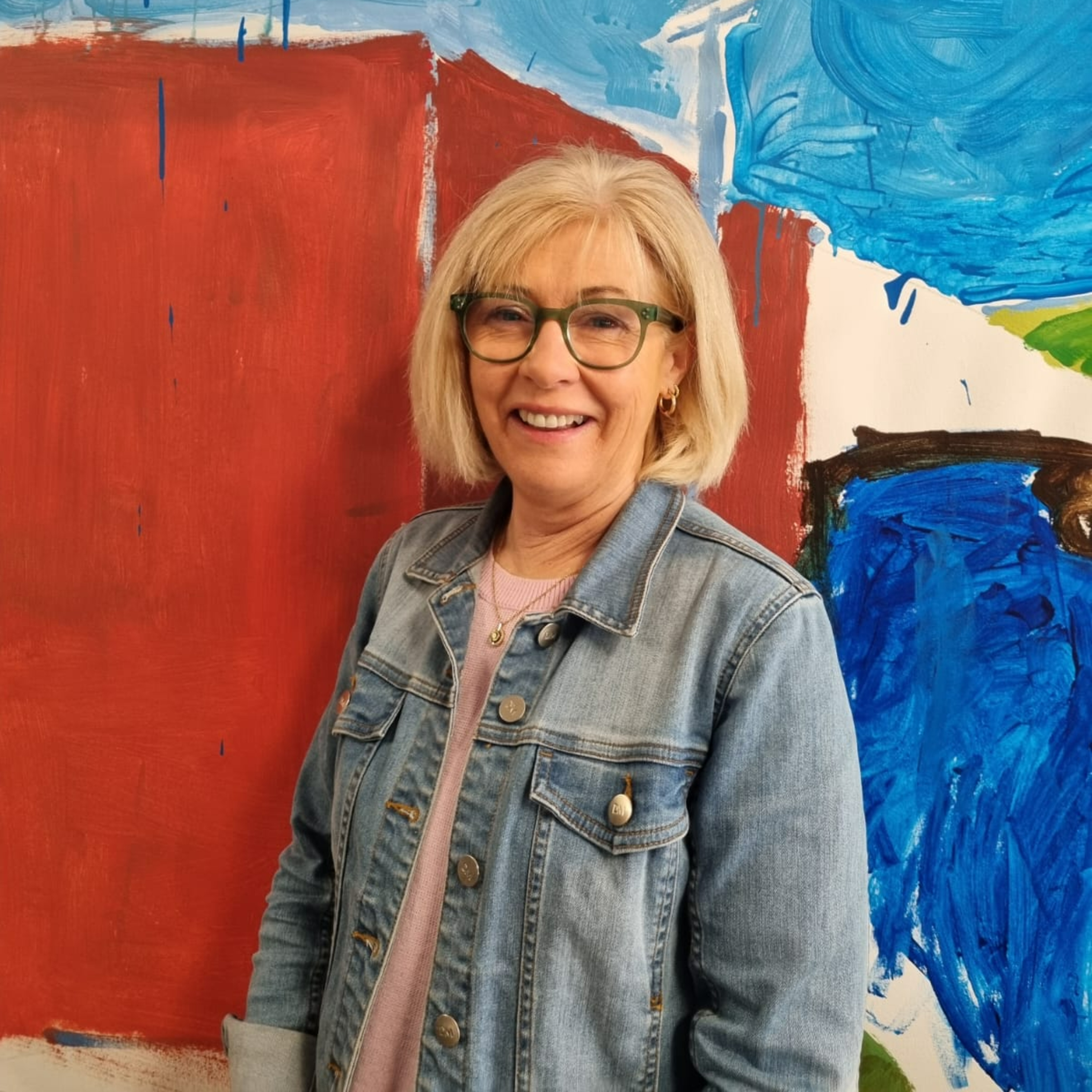
Joe Taylor, a featured artist at the 2024 Kilpie Festival, reflects on her upbringing in Castlemaine, describing a childhood marked by freedom and community that nurtured her early artistic interests, supported by a creative family. After school, she moved to Melbourne for teachers college, adapting to city life while maintaining connections with hometown friends. Her career path included teaching, a brief secretarial role ending in dismissal, and specialized work in gifted education before a long tenure as a teacher and assistant principal. While raising a family, she returned to art through local courses, now maintaining a home studio where she experiments with mediums like oil and watercolor, often using unconventional tools like credit cards. Joe views her art not as work but as a pleasurable and therapeutic practice, integral to her mental well-being, and remains connected to her school friends, with a 50th reunion approaching.
[Music] Hello and welcome to Casted & Connections. An initiative of Hands Up Casted & where a group of enthusiastic locals have come together to capture, preserve and share stories of people who have a connection to Casted & Connections. [Music] Today on Casted & Connections we welcome Joe Taylor. Joe was born in Casted & the youngest of three girls to Eileen Keith Smith. Joe has become a renowned artist and in 2024 was the feature artist at the Fabulous Kilpie Festival Rotary Art Show. Welcome Joe. Thanks Lewis. What are some of your earliest childhood memories? Oh, I've casted and gosh, I was just talking about these the other day. Probably the best childhood memories are the freedom that you had in Casted & Connections. And just being able to wander, get on your bike, ride out to the half-miler, have a picnic, all that sort of thing. Lots of friends, always people in the street, lots of friends to play with. Yep. And yeah, just I'm very grateful for such a lovely childhood in, yeah, lovely place. Yeah, nice. So you were the youngest of the three girls? Yes, so there's my older sisters 11 years older and then the next sister's 7 years older. Okay, so you were the sport breaking the family? I was probably a little bit more fortunate. So you went to school here in Casted & you went to the primary school and then onto the secondary school? Yep. Well high school as it was then. Yeah. How did you like school? Yeah, I loved school. I loved school. So my best friend lived next door, Karen. And because she was an April baby and I was a July baby, she got to go to school first. So I was really envious and so I was etching to get there and that probably, yeah, probably favoured the beginning for me. And I just really enjoyed it. Loved going, loved high school. Yeah, probably year nine I got a little bit sick of it as kids really do in year nine. But stuck it out and yeah, really happy. So did your creative bent? Was it around then? Do you think? Are you artistic and so forth at that stage? Yeah, even primary school. I used to do lots and lots of drawing and you know when you're a kid and you get positive feedback from your friends. So I think that probably made me continue. And apart from that I loved it. I just really liked doing it. So I used to do lots of drawing from a really early age mum. You know, they bring the meat home in the butcher's paper and that's what you draw on. Yeah, so no, from really early. So was there like that artistic being also within your family? I was very motivated by my middle sister who used to sit and draw but she will scoff at that and say, "Oh, I can't draw a stick figure or whatever." However, they're both really creative, both of them. My older sister here makes very quirky birdbards and. I think gorgeous. Yeah, yeah, she does that and my other sister Pauline, she makes those similar sort of things and she does all sort of quilting and so they're both really creative. What about you dad and mum? Mum was extremely a really good writer, an incredible writer and a really good cook and so it's that creative. Just wanting to create and she used to write lots of poetry, she was really, really good and dad. You know, in those days I didn't get a lot of chance, I don't think, but he bred birds. So he was really into breeding birds and showing his chucks at the show, casted and choked. And so I would say in his own way he was quite creative as well. But he passed away quite, he was 58 so it was quite. Very young, really. So were you at school then? And now I was in Melbourne. At that show. Yeah, I'd been in Melbourne for about three years by then. So you still got, have you got any of your mum's poetry still? Oh, that's interesting. Cheryl's got all that. Cheryl's got all mum's stuff, they're probably his. In grade six the Queen came to visit Portland and of course we got the train and then train back and it was dark and it was. I paid from Castor to Portland and then back and mum worked at night time and I was the only one home at that time. So I found a poem to me on the back door and then a poem on the next door and then a poem on the fridge to lead me to where dinner was and then what to do afterwards and it was all little poems. So how gorgeous! So it really feels great right back. Oh, that's fantastic. So did you do well at school? Ah, yep, yep, that was pretty academic. I heard a rumor that you might have been darts. Ah, well yeah, I might have been. I was thinking about that. Yes, I was, I was, I was really lucky enough to be darts of the secondary school. I must have been up to the names on the honour roll up there but. But I was thinking about that and really in those days it was one exam and everything was based on. Not one exam but everything was based on the exams and I think I was just pretty lucky enough to perform well on the day on those exams because I was at school with some really clever people. Oh, that was probably my next question. You know, were you at school with clever people or.? Oh yeah, yep, yep. So you want to name some names or.? Well, there was Theresa McGraw, who we call tweed, she actually got a perfect score in English that year. Wow. So that was fairly difficult to do. Yeah. Kathy Whitiecomb also, very creative, very good artist, Russell, who you'll meet later on, very good footballer. There were lots. Yeah, so it was a pretty smart year that year. I think we're a pretty good group. Yeah. Okay. Speaking of which you get together quite regularly too, that group of people, don't you? We do. Yeah, which is fantastic that you still have that connection with those guys that. Yeah. Good to school. This coming Saturday, Jolong, Novitel. That's fantastic. Yeah. Which is. How many years since you left school? In three years it'll be. It'll be our 60th year. Can that be right? 77. No, it can't be. 50th. That's be 50th, isn't it? 50th. Yeah, 50th. So it's a long, long time. And considering, by year 12, there was 18 of us. Yeah. And we've got, I think, about 25 coming to the reunion on Saturday. But it just keeps growing. People contact more people. Yeah. Oh, that's fabulous. You went off from here to Teachers College, Jolong? Yes. And how was that for you, moving from a small country town to the Big Smoke? Yeah, well, so I was enrolled at Melbourne State Uni. And arrived in Melbourne and realised that Melbourne State Uni was in the city. And couldn't quite. I freaked out. And so changed my enrollment to Rec State College, which was a lot closer. Yeah. And ended up staying in an education department hostel called Red Court, in Melbourne, in Perennial, Melbourne. And was thrilled to walk in and find Jared Pitcher, who was one of the people I was going to school with. There as well. Yeah. So Jared was also from Castor and. Yes. Yes. So it would be nice to see a friendly face. It was very nice to see a friendly face. So, yeah. So going to. I was really excited to go to Melbourne. It was what I wanted to do, but I needed a little bit of a slower transition rather than having to go into the city every day. And yes, it was great having somebody I knew living in the same hostel. So the hostel itself was all country kids? Yeah, all country kids. So the girl I had a room with, Anne Marie, she's from Benstale. We're still best mates. We had a lot of Heath kit. They were all over the place. Yeah. Lots of people. So you went on and did your teachers training? Yeah. I was supposed to say to speak. During that time in Melbourne when you first left. When you first went to Melbourne, sorry. What was your social life life? Prolific. Yeah. So everything was just. The biggest difference was being anonymous. It was just such a different experience to be in a place where nobody knew you. That didn't mean that we played up that much. But everything was a novelty and so everything was great.
We obviously went out every weekend. We were obviously pretty poor. So it was very pubs. So when you say we do mean like other kids from Castan or just the group that you're with at the hostel? They were okay. So people at the hostel, but also there were lots of people from Castan in Melbourne. So there was usually a party somewhere every weekend. And the word would get around and people would congregate. So people that I'd made friends with at the hostel would then have then made friends with people from Castan and so a bit of a mix. I did hear about it. An infamous pool party. Oh yes, yes. So we were in Armadale. We lived in Armadale and we heard that Margie Pitcher, who lived in Kensington, which is quite a long way, was having a pool party and everybody was invited. So bring your bailers, which we did, made our way over there. I can't remember how. And Margie had a really cute little kids blow up plastic pool filled with water in a concrete backyard. So yeah. So it's probably a bit different. Live up to the expectations. No, no, no. So you were going through your teachers' training and then you completed your teaching. What happened after that? So that was a three year diploma course. And in those days there was a thing called limited tenure where the education department could send you anywhere in Victoria for very short amounts of time. And I got Churchill in Gippsland for a three month tenure, which I wasn't going to do because by then I was in sharehouses. I'd committed to renting with other people and three months was just not practical. So I had to defer. So I deferred for a couple of years and worked as a secretary in a couple of insurance places, century insurance was the first place I worked. And in fact, I really enjoyed that sort of life and was starting to think, "Oh, maybe I don't want to do teaching, maybe I want to do this sort of thing." But after the two years I put my name back in the ring and ended up getting a place called Mamosa Primary School in Glen Waverly and a little grade one class with 35 children. Oh, which people would be horrified by now, but it was pretty normal. Yeah, pretty normal back then, yeah. Yeah, yeah. So I was going to just back to your insurance, there's a secretary, a secretary of life. Yeah. Well, he got sacked. I did, I don't know how much detail to go into here, but yeah, I did. I did get sacked. Well, I was told it was time we parted company with the actual words from. So we had had a boss and he actually got the sack first. And so the receptionist and I ran the company for about, in Melbourne for about four months, it was a Sydney based operation. And then they allocated a new manager and he was completely inappropriate. He used to come and sit on my desk and talk to me about various things that him and his wife like to do and things like that. And like I was, I was 20 or 21 and over. Quite young. Dying of embarrassment and you know, you're quite smidgeless when. And so I just sort of shut up and anyway, because I probably wasn't forthcoming, he one day came in and said, "Listen, sweetheart, I think it's time you and I parted company." And yeah, so there you go. So it's great to see. I went, you know, that sort of thing should not happen today. I'm sure it does sometimes, but you know, that recourse of action wasn't there. I. You know, it didn't, it actually didn't enter my head that I had any recourse of action. It was simply that, well, I'm not prepared to get any sort of relationship or anything like that. So I need to leave. Yeah. So probably the best decision. Oh, yeah. Yeah, yeah, exactly. Yeah. But pretty, in this day and age, it's pretty horrifying. Yeah. Do something about it. Yeah. Character building, character building. Yeah. Yeah. So you went back to teaching and you also did a bit of special ed stuff and. Yeah. So I taught for a couple of years and then I applied for 12-month study leave, which I got and did my graduate diploma because that was then moving towards teaching needing to be four years rather than three. Yep. And so I did graduate diploma in special education in hearing impaired and worked in hearing impaired settings, which I didn't really love. So I eventually went back into mainstream. Yeah. I imagine it'd be quite difficult. Yeah. It would look. Kids are great in everything, but the. Because you're not really good at sign language, I mean, I could do the basics. It's very hard to communicate. And I actually didn't like the way to get the kids' attention. The teachers would stamp their feet so the vibration felt the vibration. And they didn't work for me. Yeah. Yeah. Yeah. It's fair enough. So then you started. Oh, you did a gifted course as well? Well, yes. And then a friend. I had this child in my grade who was very gifted. And the gifted children. talented children's task force used to come and do some work with him. And then they had an opening for a consultant and I applied and got it and then spent 12 months working with. was the out of Campbellwell. And we had an office there and we used to go into schools and talk to staff, teach staff about strategies to use to cater for your gifted and talented children. Okay. Which is a great experience as well. Yep. Yep. Another life experience along the way. Yeah. So you're still at that same school now, Joe. He's a. 27 years? Yep. Yep. 20 years. Amazing. It's amazing. How amazing. Yes. So I ended up getting a job at a local school when after my three children were born and then my children went through that school. So you know, you start. it gets. It becomes a community. Yeah. And it's very, you know, the school was seven minutes away and when you've got three little kids, why would you go for a job that's, you know, further away than that and, you know, you'll go off to school at the same time and. yeah. So it was really convenient but it's also. it's a really good school. It's great school. So you're a assistant principal? Yeah. I was. Yes. Yeah. Yeah. I'm in a leave now. So yeah. Yeah. Yeah. So now during this busy time, you know, you're teaching, you've got three little kids. What's happening with your art and your creative stuff? Yeah. Well, so when the youngest was about four, I started looking for some courses or some places that I could go and, you know, just rekindle all those skills that, you know, they'd been put on the back burner completely. And yeah, I ended up going to Menton Mortier like art group, which was a quite a strong art group at that time and did courses at night time and started to get back into it and starting with pastel. I used to because I was fairly. I loved drawing people and I and it was drawing that I like to do. So it took me a while to get into painting and landscape. Yeah. So the mediums that you use, like currently, you're into just about everything. Yes. Well, I've got a studio at home and I have one end is watercolor and the other end is oil. So speaking of this studio, was that supposed to be a joint little base for you and I told you I was willing to. Yeah, yeah, yeah, yeah. When we were renovated, we actually built in a. it was a carport. And so we built it in, it's got two lovely big sliding doors to a deck that look at the pool. And so the idea was he had one end with his drum kit because, you know, electronic drum kit, but that he was learning the drums and he likes to learn new languages. So we had always sound stuff set up, but slowly over the. Well, actually, what happened was he had a serotonous reconstruction which put paid to the drumming. And so. No, that's right. So it was a waste of space. I thought, "I better make use of the space." And he's walked in one day recently and went, "I'll never get it back alive." That's it. No. So anyway, so you're into. You know, you've done so many different things. Like even jewelry, you've made jewelry. What's your favourite medium, do you think? Or you're still. Yeah, that one. Well, oil and watercolour. Because they're opposites, because generally speaking, they're opposites. The way you start a watercolour is probably different than the way you start an oil.
Well, that's not, settings don't. But I really love the contrast. I really love playing around with oil and it's just so beautiful. You can change it, you can, whatever. And then water colour is what you see is what you put down. They say it's unforgiving. It is actually quite forgiving, but it's so much fun with all the effects that you can get. Yeah. So is this sort of tactile? Like, you know, well, that's the other thing I've got in the cupboard to try is clay. Yeah, okay. So sculpture is another thing I'd like to do. Yeah. Tactile, yeah. Probably oil, I'd say, is the more, the more tactile sort of thing. So you always, like, because I don't know how to do it, I'd expect you always use brushes. Or do you use the stick? No, so the most success that I've had in water colour, in success in terms of getting awards or selling the work, is painting with a credit card or pieces of cardboard. Yeah. Because you then get marks that you, that they work for themselves. They, the painting sort of creates itself. Or, and then you finish it off in some way. So, yeah, I've actually talked to Linda Cleary down here to probably come and do a workshop. Just, you do, shall I? Oh, that'd be how to paint with a credit card? Well, anything that's got an edge or something like that. So, anything that donate the credit card? Yeah, exactly. No, your cell phone's card, that sort of thing. But it's really good because you have little control. You only have control over the colours that you choose to use. And then the marks, and then you can, you see what happens. So, have you seen different stages in your art over the years like? Yeah. Yeah. Yeah. I've still got the first pastel that I did, and the first two. And they're just so tight and so stilltodden, so, you know, every little detail you try to do. And so that, you know, and that's quite, I mean, that's a very normal journey, I think, for an artist. Yeah. To get to the point where you're free enough with your work, you're probably just so much more confident in your knowledge that you can be free of with your work. And it's just a better result. So you say work. So is it work or is it pleasure? Or not. It's a complete and utter pleasure. Yeah. Okay. Yeah. People talk about art works and their work. I don't think it's the same, in the same, I don't think it has the same meaning as, you know, going off to work every day. No, I'm defyful, something like that. No, it's completely, it's completely a delightful thing to do for me. Yeah. So you do, have you got a regimented sort of system that you say, well, I'm going to get up at six o'clock and I'm going to paint? Or is it just a spur of the moment there? No. I have to really force myself to go and do all the jobs that I need to do in the day before I put my nose in the studio because once I put my nose in the studio, you know, can I? I don't come out. And so in that way, yeah, I have to be disciplined because, you know, you have to do the gardening and often, you know, to the shops and things like that. But I'm never really stuck for anything, any project to work on out in the studio. So there's always something there that's appealing to me. Do you think you've created the perfect piece? I work hard, yes, hard at that. I think it's a really good piece. Yes. I think it's a really good balance. It is completely relaxing for me. So I get a lot of hours, therefore, of doing something that's really relaxing and just really good for your soul. Yeah. It's a great for your mental health and everything, really. Yeah. Because I guess you do lots of thinking while you're painting as well. So you're sorting through lots of things in your head and mulling over things. So addition to music sometimes. So does your head go to a different place? Does that make sense? Like so if you're stroking away, does your head go off thinking about the next holiday you're going to do? Or are you actually really into the producing the work? Yeah. And I think sometimes both. Sometimes you're lost in it and you're thinking of something totally unrelated. And then sometimes you're really just really focusing on the painting or whatever that you're doing. Yeah. It's a bit different. Different things are different. I do find that if I really have to concentrate I can't have music on or I often listen to podcasts that there as well. I have to be into the work before I can have that sort of distraction. Happening. Yeah. Okay. So what else do you do for leisure, if you like? I do a fair bit of exercise. I do parties, I do yoga, which I love yoga for the exercise and for the spiritual if you like. Side of it. I go to gym and my husband and I do, we often do lots of hikes, lots of walking. We would love to do the commenno and we intend doing the commenno at some point but we haven't quite got there yet. Lots of walking, really enjoy walking. So you do a bit of overseas travel, etc. Yeah. Before Nard's retired, he, a lot of his work, some of his work would involve overseas. So we'd do whatever he had to do and then we would go on from there and make the most of being. At the time when I have a best friend Fiona who lives in Mallorca in Palmer. So I visited her a few times, which has been great, very nice. And her and her husband Seren come out and stay with us. Oh nice. So you had a big trip to South Africa, I think it was in your climbing climb some mountain. What does that thing mean? Well, we went to South Africa and we went to Durban first because Durban was where the World Life Saving Conference was on, which is why we were there. And Nigel's cousin lives there so we met up with him. Then we went to Cape Town and stayed in the most magic place. It was just so good. And we climbed Lion Rock, which was good but quite foggy at the top. And then we climbed Table Mountain, which was horrendous. Oh, okay. The photo I posted of me on Facebook, it just shows it all. I think it's only about 12,000 metres. But it's just up straight up. It's just up. There's no flat bits. And we climbed Lion Rock the day before and because it was foggy and misty and whatever, we didn't realise the need to have copious amounts of water on you. And also I didn't even have a hat on. And climbing Table Mountain, it was bright sunshine all the way so it was a bit foolish. However, we did it and it was wonderful once we got to the top. So you returned home to a lovely phone call. Yeah. Before I went, I'd had a CT scan because of a condition called ground glass on the lungs that had been found inadvertently looking for something else. Now, ground glass can be scarring from a bad flu but it can also turn into cancer. So I had this CT scan not thinking for, because it had been monitored for quite a few years. And anyway, I got back and went to work for a couple of days and then got this phone call saying, "Are you going to have to come?" No, I've got, you've got an appointment with the surgeon tomorrow. You have to have your upper right lung lobe removed because you've got a tumour. So five days later, I was in homescline having the upper right lobe removed. And it all happened so it was an enormous shock. It was an amazing shock. And because I think I'd become quite complacent, I thought it was just a thing. And I'd stopped smoking many, many, many years before that. So, yeah, it was a shock. I was in there for over three weeks because the lung collapsed. So when they put a tube in and when they take the tube out, it's very important. And the air bubble doesn't get in when they're doing that. And it did. And so the lung collapsed. And so we had to sort of make sure that was okay before I got out again. Yeah. So what it means, I mean, perhaps,
Thankfully, you didn't have to worry about it too long because you didn't know for very long. Exactly. So that wasn't. And did you have to have further treatment, Joe, or was that. No. So I've since had two more surgeries because that ground glass has been moved into something else. But I've been very, very lucky because it's being monitored. The moment there's any change, treatment can happen and my treatment has always been able to be surgery. And that is the best outcome that you can have or treatment for lung cancer. Yep. So, yeah. So it's been able to be treated straight away. Yeah. And, yeah, so I've had three surgeries and that's October. We'll be. And this month will be five years since the first one. So that's statistically, that's pretty good. Pretty good. Yeah. So, did it. You know, it was such a shop, couldn't, you know, it's trauma, et cetera, mentally and physically. Did that affect your art at all? I think it made me more. I don't know about, determined, but it gave me the permission, if you like, to just indulge myself in my art as much as I wish. Okay. Yeah. And also the importance of avoiding stress. That's what I was going to say before about the art. So, to avoid stress, do something that, you know, makes you feel good. And I did a bit of an experiment and took my pulse after I'd been painting for a little while, just to see, you know, what it was like and it was about 40. It was so low because I was just in such a zone. Yeah. Talk about mindfulness and meditation and things like that. I really do think it's a form of meditation, basically. Yeah. So very good for you. So, yes, after that I decided I would just. Yeah. I didn't matter how much time I spent on painting. I mean, obviously, I have family and I spend time with them as well. Yeah. But most of the time I'm out in the studio. As I said, people know to text at the front door because I won't hear them. Yeah. And I'll be out the back. Yeah. And speaking of family, you've got some lovely news recently. Yeah. So I'm going to be a first-time grandmother in January. So our youngest son, Zach, who is 29, got married in April to Alicia, who, Zach, of course, went to primary school at the school I teach at and so did Alicia, but a couple of years before him. Oh, nice. And they met both working at outside school hours care. And anyway, they're having a little baby girl. Oh, nice. And I'm wearing a yes, which will be quite an novelty because I've had three boys and my husband Nigel comes from one of four boys. So little girl in the family is going to be-- Oh, she's going to be a little pressure-side. Well, yes, because she's the first for the other side of the family as well. For Alicia's parents. No, it's so easy. It's really exciting. Oh, that's great. Yeah. Just back on your art. And I know you said to me that, you know, hard work creates good results as well. So it's not all just, be in skittles, so to speak. You put a lot of work into it to get the results that you do. What do you consider some of your best achievements? You've won a few awards, you know? What's your-- Yep. Yeah. So, yes, on that note, a lot of people will respond saying you're so talented. And I think with anything, with people who are good at music or whatever, I think first it's a passion for it. And then it's hard work. And you're passionate about it. And not hard in a bad way. It's just being persistent and just, you know, developing your skills over time. But yes, I have been very lucky to get some, you know, awards like, you know, commended. And when they're by-- when the judge is somebody who's worked you admire, then it's really, really affirming to get them give you a highly commended or, you know, a best. Whatever last year I was really thrilled to get the best Hobbsons Bay scene at the Hobbsons Bay Art Show. And I've got five paintings here with me today because as I drive back, I'm going to be dropping in at Altona to drop off five paintings for this issue. But in all honesty, the most thrilling thing for me so far today has been being the feature artist for the Kelpie. I was absolutely thrilled to be asked to do that. And really, really grateful that I could because I had surgery at Christmas time. And I wasn't sure whether I'd be able to make it. But it's just really special to have been asked to do that in Castan. Wow. And it's such a great little-- oh god, I can't think of it-- art show. Oh, yes. Isn't it? Yes. Yes. So by art standards, is it a standard pretty high or-- You're very-- Yeah. Each year, it just gets better and better and better, I think. And I'm starting to see-- because I now go to lots of different art shows, the Campbell Well and things like that, people who enter those shows are bringing their work to Castan, which is such an amazing achievement for that committee to have attracted artists from all over Australia. And really high standard. Yeah. It's quite-- and the Clarissa Beckett as well, it's fantastic. It's fantastic as well. Yes. We've got a lot of very talented people. You've got quite a community here. Yeah. I mean, Julie, who's-- Julie Kent. Yeah. Is incredible Colin, Jenny. Oh, there's many. I shouldn't name Jen. Jen White. Yeah. But that's-- there's lots of different artists, but-- Yeah. And the-- I love the fact that they've created the Clarissa Beckett art show. Oh, no, no, I don't think it gets as much. Kudos. Kudos as it deserves. Yeah. Because she's considered now a very significant artist. And the fact that a community group has continued that on. Hmm. I think it's quite significant. Hmm. Well, Joe, it's been great chatting to. I just like to finish off with a question I'd like to ask. What does casted and mean to you? Oh, yeah. So I've been coming back to casted and for a very long time, since I've left at 18. I love coming to casted and it's always been really important to me. And it's for me like a step out of time. And I don't mean a step back in time. I mean a step out of the demands of my life. And I've always been able to come to casted. And it is honestly like taking just a deep breath and just chilling. Breath of fresh air. You recharge your batteries. And back you go to the demands of your life. And I am always very, very grateful for that. And it's always been like that. Thanks, heaps, Joe. Great to spend some time with you. Thank you, Lowe. So it's been really interesting talking about all that. Thank you. We hope you've enjoyed today's episode of one of our homegrown heroes. Jump over to one of our other episodes to continue the casted and connections journey with us. Please don't forget to follow our podcast and share it with your family and friends. Thank you for listening.
Podcast Summary
Key Points:
Joe Taylor grew up in Castlemaine, enjoying a free and idyllic childhood that fostered her early love for drawing and creativity, influenced by her artistic family.
She pursued teaching after moving to Melbourne, experiencing a significant social life transition and working various roles, including a stint in special education, before settling into a long-term teaching career.
Joe rekindled her passion for art later in life, now works primarily with oils and watercolors, and finds the creative process deeply fulfilling and mentally beneficial.
Summary:
Joe Taylor, a featured artist at the 2024 Kilpie Festival, reflects on her upbringing in Castlemaine, describing a childhood marked by freedom and community that nurtured her early artistic interests, supported by a creative family. After school, she moved to Melbourne for teachers college, adapting to city life while maintaining connections with hometown friends. Her career path included teaching, a brief secretarial role ending in dismissal, and specialized work in gifted education before a long tenure as a teacher and assistant principal.
While raising a family, she returned to art through local courses, now maintaining a home studio where she experiments with mediums like oil and watercolor, often using unconventional tools like credit cards. Joe views her art not as work but as a pleasurable and therapeutic practice, integral to her mental well-being, and remains connected to her school friends, with a 50th reunion approaching.
FAQs
Joe recalls the freedom of growing up in Castlemaine, including riding bikes, having picnics at the half-mile, and playing with many friends in the streets.
Her mother was a talented writer and poet, her sisters were creative with crafts, and her father bred birds, all fostering a creative environment from a young age.
She initially enrolled in Melbourne State Uni but switched to a closer college, finding comfort in a hostel with other country kids and a familiar face from Castlemaine.
She works with both oils and watercolors, enjoying the contrast between them, and often uses unconventional tools like credit cards for watercolor effects.
She disciplines herself to complete daily tasks first before entering her studio, as she becomes fully immersed in her art and loses track of time once she starts.
She trained as a teacher, worked briefly as a secretary, taught special education and gifted programs, and served as an assistant principal for many years.
Chat with AI
Loading...
Pro features
Go deeper with this episode
Unlock creator-grade tools that turn any transcript into show notes and subtitle files.
 PodcastTranscript AI