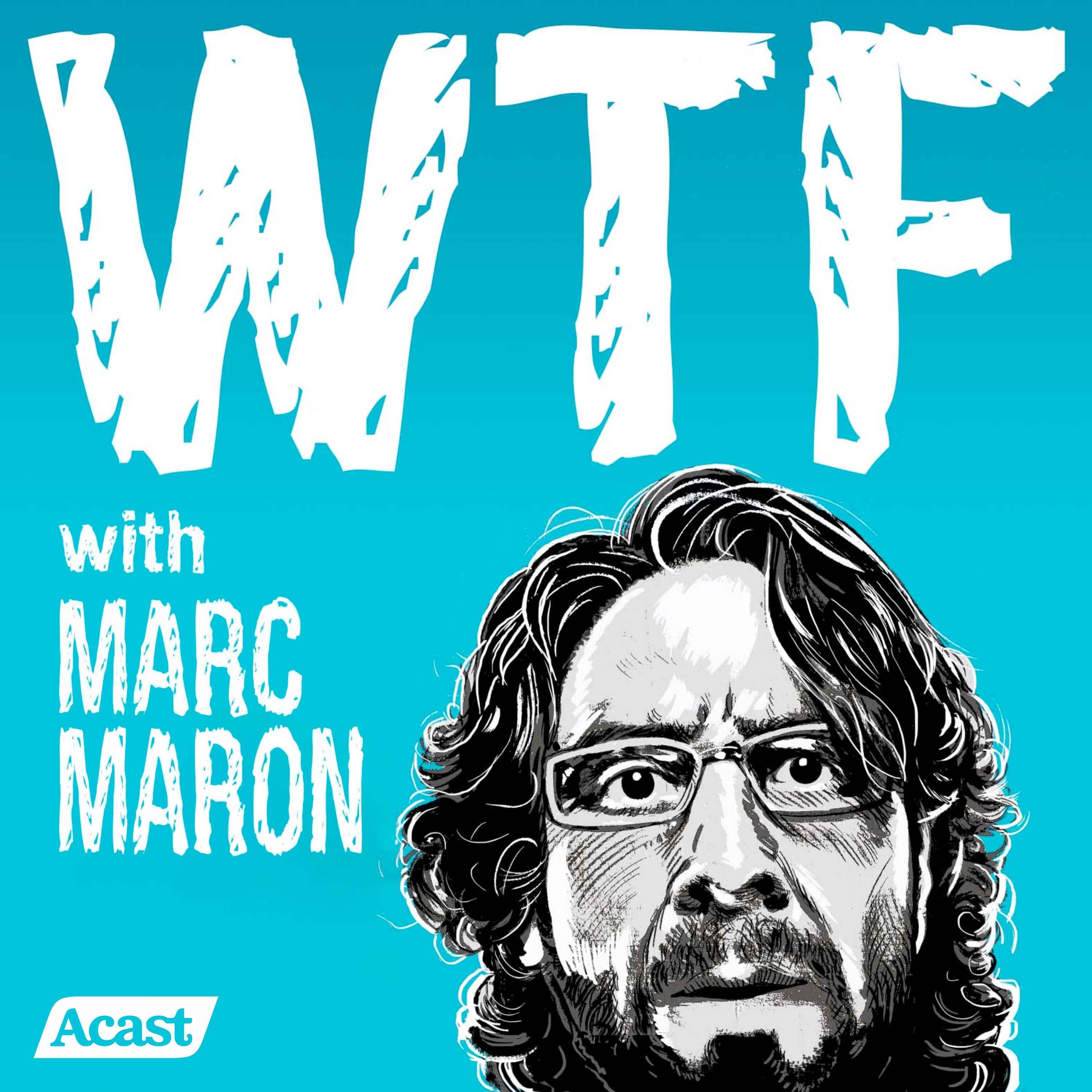
In the final episode of the WTF podcast, host Marc Maron interviews former President Barack Obama. Maron discusses his mixed emotions about ending the 16-year show, acknowledging the unique trust and companionship he built with his audience. Obama, relating to the experience of leaving a defining role, advises taking a deliberate pause to reflect before seeking a new purpose that utilizes one's core strengths, such as Maron's talent for vulnerable, connecting conversation. The dialogue then shifts to a critical analysis of technology's societal role. Obama recounts how early digital tools like Meetup fostered in-person community and understanding during his campaigns. In contrast, they both express concern over contemporary social media algorithms, which they describe as addictive and designed to narrow worldviews, exacerbate division, and undermine democratic discourse. Despite this, they affirm the enduring power of long-form, authentic dialogue—exemplified by podcasting—to foster genuine human connection and nuance in an increasingly fragmented media environment.
Lock the gate! [Music] All right, let's do this. How are you folks? This is it. This is the last episode of WTF. I didn't really know what we were going to do for this episode. Initially, I thought, well, maybe I could just talk to you guys and reflect. But we did that on Thursday. So then it came down to, well, who are we going to have on the last episode? And, well, you know, I do a lot of talking about how I feel about the world, both interior and exterior, micro, macro, what's going on in me, how am I reacting to what's going on in the world. And it became clear that the guest we needed to have was singular in that he could address the importance of this being our final episode, but also address how we move through the world we're living in. And the good thing is it is with what's happening and how do we do it with some grace and perhaps some hope and some focus and really call what's going on what it is. And that guest is President Barack Obama. So I went to Washington, D.C. He came to my house the last time, so I figured I'd go to him. And we sat down for about an hour plus and we talked about a lot of things, but I think there's a lot of grounding sort of instructive advice in this conversation about how we frame where we're at and how we think about it and what's necessary. And this is me talking to Barack Obama, President Barack Obama in Washington, D.C. Can I say before we start or when I want to start? To me, I can't imagine anything tougher or more terrifying than doing stand-up comedy. So once you do that, I mean, everything else is easy. I won't say easy. I'm saying not as frightening. Yeah, to me, standing alone on a stage and hoping a bunch of people laughing and stuff. Yeah, it's, yeah, you get used to it, but not unlike I'm sure you're a gig. You know, sometimes it's not going to go exactly right? It's not always going to, you're not always going to hit it out of the park. But I guess what I'm saying is at a certain point for you, there's got to be just, you had a lot of reps. Yeah, reps are helpful, man. If reps in talking to people and reps in comedy, but it's weird with both for me because I seem to get just as anxious and never was a way. It's not for me because I don't know if it's part of my preparation, but with stand-up, it's a little less where like I know that a part of me lives up there. That that that I exist on that stage. And so I don't freak myself out as much. But with conversations, I don't generally know what's going to happen and the anxiety's different. But, but yeah, I still keep it fresh by being terrified. Well, look, there's a, Bill Russell. Yep. Bill Russell. Greatest, greatest champion of North American sports. Yep. Keep throwing up, even after you have, but right before games. It's true, right? Yeah. I mean, you got to have a little bit of a few butterflies, otherwise. Did you, you don't get it? You know, not, not just having a conversation. Right. You know, if there's a big speech that I got to give, then there's still a little bit of, a little bit of fear, a little bit of adrenaline. Yeah. Yeah, a little bit of like, I let me make sure that, yeah, you know, I got you're ready to go. You're focused. I'm focused. I'm pumped up. Are we, are we just going to dive in here? I think we're already doing it. We're already doing it. I do want to ask you, let's go. I got a weird question I want to ask you and I decided to start with this as opposed to end with it. It's kind of business, but it's important for me. It's important for the show. I'm going to, I'm going to ask you to, for your signature on something. Absolutely. What do we got? I got to tell you, is it a commutation? I can't do that anymore. No, this is, I created this pseudo legal document to, to, on this, our last episode. And this is, this is something I wrote and it's, it's honest, but I wanted to witness in a year. So to all the concern, this is dated 10, 13, 25, the date of the last show, I'm Mark Marin here by formerly release. Brendan McDonald from the professional responsibility of listening to me talk from now and in perpetuity. Brendan has listened to me talk and I'll listen 10,000 hours over the last 22 years. Often several hours in one sitting, that's a lot. Even more than I've listened to myself talk. Brendan is free to talk to me socially, but that is entirely up to him. If, if he chooses to do so, I will be delighted and promise not to abuse the privilege. It has been a life-changing ride on my yammering and I am forever grateful to Brendan for keeping me at my best. I am, I am more than happy. I'm going to sign it. Just, just, you sign it. I will witness it. And this is kind of a commutation. I mean, I'm essentially, Brendan is released. Yes, it's a big hit. From me. From you. You know, I have a sense that he kind of liked hanging out with you. Yeah, it's been a hell of a partnership. It's been a, it may be a little Stockholm syndrome. No, no, he won't let that happen. Yeah, I'm completely aware that I have not had that impact on his brain because if I did, we both be in trouble. He's like the better half of, he's protected me. You know, I'll say shit. And it'll go on, I'll record stuff and in the back of my head, I'll think like, Brendan's not going to, he's not going to leave that in. No, no, no. Yeah, it's, you got to, you got to have, he's like your super ego. That's exactly right. And he's a functioning part of my memory. Yes. Like, I don't remember, like, how do you say I remember our conversation, but there's been 1600 and more, almost 1700 conversations. That's a lot. So tell me how you're feeling. Yeah. Look, first of all, congratulations. Yeah. Second of all, I'm honored to be on your last show. How are you feeling about this whole thing? Transition. Well, moving on from this thing that has been, well, one of the defining parts of your career in your life. Sixteen years. Yeah, yeah. I mean, well, I mean, I, maybe you could help me, I feel okay. I feel like I'm, I'm sort of ready for the break. But, but there is sort of a, a fear there of, you know, what do we, what do I do now? I mean, I'm busy. Right. But not unlike your job, I'm going to compare my job to the president. Yeah. I think it's personal. Thank you. I've got a lot of people who over the last 16 years have grown to rely on me. Yes. And you've got a lot of fans just around. Yeah. And in unlikely places. Oh, yeah. Yeah. As in here. Yeah. Yeah. Yeah. But like, you know, they, they need something. Right. That there is a feeling of like, how am I going to feel, you know, less alone? How am I going to deal with my mental, this or that? And, and how am I going to find, you know, a way to exist in the world that we're living in? I mean, I'm not offering them solutions, but I am commiserating. And it's comforting. They trust you. Yeah. And, and they feel as if what you're going through and what they're going through occupies a similar space. Right. And so they don't feel like they're traveling this journey that can be frightening alone sometimes. That's right. And, and yeah, there's a power in the human voice. Yeah. That you grow attached to. Yeah. So when you left, what did you do for your mental health with the weight of? Well, look, how old are you now? I'm 62. Right. So, you know, you've still got a couple of chapters left. And my theory was, somebody gave me advice right before I was leaving off. And it was, don't rush into what the next thing is. Take a beat. And take some satisfaction, looking backwards and saying, "Ah, you know what? Didn't get everything done that I wanted. Right. Wouldn't always exactly how I planned it. But there's a body of work there that I'm proud of. Right. You know, pat yourself on the back for a second. Just be a little brain dead for a while. You know, I've read a bunch of books that had been stacked up by, I had a big deficit with my wife. And I had to kind of work my way out of, right? So we went on a lot of trips and hung out. And, you know, you know,
this had nice dinners and slept in. And then I think, you know what, what this is an opportunity for you, it was an opportunity for me was figuring out all right. What's my next highest and best use? Yeah, what's my, what's a new purpose that scratches that itch? And it may not come to you right away. The podcast was kind of a random thing, right? You said, "Oh, let's try this up." And you didn't know it was gonna go for 16 years. I assume when you did the first show. No, we didn't know anything. You didn't know anything. You're trying to figure it out. And so, but you probably have an inkling of, you know, what you just described about people trusting you, you're connecting partly because you're willing to be vulnerable in front of people and kind of let them know what's going on inside your gut. There's a power to that. What's another way of channeling it, right? That may be different than you play in a character in a movie or even you're doing stand up. There's something more raw, honest exposed about what you do when you're just having a conversation and connecting with people. And so the question is, well, is there another way for me to catch that? Yeah. But you don't have to rush into it. I guess my main thing would be, you know, take your time. Unless you really got some bills to pay. No, no, I'm okay. But like it feels like that, like I remember when you left. And that, you know, there is this sort of a vacuum and in terms of like my, obviously my responsibility to my audience is different. But how do you sort of, you know, did you feel the weight of that responsibility? Yeah, I mean, what was unusual for me was obviously, a lot of what I represented, a lot of what Michelle and I had tried to project. The values are thinking about America. My successor seemed to represent the opposite. Right. Not seemed did. Yeah. And so I think there was a lot of anger, lost a lot of sadness, some fear among a big chunk of the country. And one of the problems with the American political system is although we have political parties, we don't have a parliamentary system. So basically the president, in my case, Democrat, I leave office and there's no obvious person who's now the shadow prime minister, the leader of the party for the Democrats, right? And so there were a lot of terrific people who were doing good work, but we have this weird situation where you don't have a designated person who's speaking on behalf of the whole party. So I actually found myself drawn back in to day-to-day politics or commentary more than I'd wanted to be after the second turn. After the, yeah, in 2017, 2018. And I thought I was gonna be able to remove myself more from being out there in public and was gonna be able to concentrate on what I really wanted to do, which was coach the next generation of leadership. You have moved from player to coach, essentially. And I kept on being asked to comment on news of the day and look at this outrage and why aren't you out there more and that kind of thing. And look, that's flattering. Yeah. And it's an indication that you made a connection with people. Sure. But I tried to be a little bit disciplined about recognizing that I'd moved on to a new phase where I did not have formal power. I have some hopefully moral suasion, some credibility. But I didn't have formal power. And so more than anything, for the long term, what I could do that would be most helpful would be to start promoting up, lifting up, shining a spotlight on that next generation of leadership and talent, new voices, because part of what also happens is, you know, as you get older, I'm gonna show you what I joke about this, no matter how much you want to pretend otherwise, you're starting to get a little out of touch. You're not completely plugged into the zeitgeist. It happens naturally. It just happens. Yeah, I mean, look, my brain doesn't register TikTok. Yeah, my neither. The same way that it does my 16 year old lease, right? You gotta get a guy to do it for you. (laughs) It's not just the technology itself, it's that I'm not plugged in, I'm not relating to the cultural stream in the same way that somebody who's 20 or 25 or even 35 is. But that's an interesting point is that, you know, human connection, you know, TikTok, and like when you and I did the podcast, 2015, the landscape was not as glutted. Instagram didn't have the power, it does TikTok. I don't even know if it was around. Not that I remember. And, you know, there was a way of making a real connection. And it seems like a lot of these platforms now, like TikTok is just an inundation of stuff. Like I know when I talk to you, and I can feel it, and you can hear it, that there's a human connection. Right. And it seems like, you know, that's necessary. Yeah, listen, I've been wrestling with this for a while. You know, people talk about me being the first digital president. And that's true. Obviously the internet existed before me. But, but, you know, I, when I came into office in 2009, the smartphone was not yet widely around. And so the smartphone comes out around 2010, Facebook, Twitter, a lot of social media is just taking off. It seemed optimistic. It did, right? Yeah. So, you know, there's all this sense that this is human connection. My campaign wouldn't work. I joke about the fact that I was an early adapter of all this social media, not because, by the way, I was so smart. Yeah. It was that my campaign was broken off that I had to rely on a bunch of 20 and 25-year-olds volunteering in our office. Yeah. And they'd say like, "Hey, Senator, this is a website." And I said, "Oh, our website, great." Yeah. So, that sounds good. Sounds good. And say, "So you can have pictures and you can have even video on there and see this little box like people can click it and they can contribute money." Right. And I'd be like, "Really?" That's good. Well, that's, that seems useful. And then they'd say, "And this one, they can like volunteer." And I'd be like, "Well, that's great. Yeah, let's do that." And so I probably, I mean, part of the reason I was elected was we were adapting all these new media. But, you know, this dates myself and I talked to audiences as I was like, my social media, our social media was my space. Yeah. And meetup. Now meetup is the one that I always tell people is the most interesting to me. I don't even know what it is. So meetup was, you know, it was a social media. Early, early, early application. And you could send basically text over. So, so let's say there were a bunch of volunteers up in Idaho. Oh, yeah. And you know, Idaho is not a big blue state with a lot of delegates. So we don't have the resources to send a whole staff. Right. Paid staff up to Idaho. But we have a few volunteers. Some people, some supporters, they send us a message saying, hey, we're Idahoans for Obama. And we'd, we'd love to build a, we think, you know, you can win this state. And so we go, all right. So we'd send a bunch of information through meetup and we'd give them the app. And basically what the app would do is you could send out, here's Obama's positions on things. Here's, you know, dates of debates and this and that. But the main thing it did, hence the name, was it would help these volunteers organize themselves to meet up in person, in person. Yeah. In a church basement, in a bar, in a VFW hall, whatever. And what I always tell people was wonderful about this rudimentary app was, they'd show up when they actually met in person. And maybe they were assuming that they were all fought the same way and we're we're we're have
the same positions and everything. And they'd show up at some Obama volunteer meeting and you'd have a, you know, what looked like an ex-army sergeant with a crew cut. And you'd have a black, young black woman with a nose ring. And you'd have suburban mom with some kids. And it turned out that by virtue of meeting a person, you kind of realize that people are a little more complicated. Sure. Maybe they don't agree with me on everything. Right. Maybe they're, and that's a good thing, right? So it creates this friction and this interest. And it forced people to kind of say, all right, well, you know, it turns out that I don't have to agree with everything to work with somebody. Right. And then out of those meetings, they'd have to go out and start knocking on doors. And that's the ultimate meetup, because now you're forcing yourself to talk to strangers who definitely don't agree with you on stuff. But there was that sense of human interaction that gave people a sense of how somebody could be a good guy, but also have blind spots. Somebody could be, you know, seemed like a real jerk. And yet there's this redeeming quality. They, they, they, it's the same sense that you get living in a neighborhood, right? Yeah. Which is like, you go to the soccer game and all the parents are sitting around and, you know, some guy or gal may, may not be your cup of tea. But then you see him hug their kid and you go, Oh, you know what? He's all right. He's all right. Well, and that's foundational to democracy working. Correct. And what happens now is that with, you know, us and them and with all these social media platforms, you know, being individuals reality. Right. So there's no conversation. You just got people blasting away at your face all day. And, and, and the, and the whole real thing, the algorithm. Yes. Yes. Yes. It does capture your mind and send you down a very narrow track in a way that, and it's interesting for me. I said, like, my brain doesn't work that way. Right. But I'll be honest with you with me. It's mostly like sports videos. Yeah. Sure. But I see how this mechanism works where you can just get on a track and you will suddenly be consumed by this thing for half an hour or, and you look up and you've wasted a whole bunch of time and, and, but what it's also done is it has narrowed your world significantly. And if, if you get on, on a political or social track on those reels, it's hard to break. It'll break your brain. And it's, it's so terrifying and disturbing that where you don't, and also the dopamine part of it. It's that, people don't have necessarily whether they do or not. It'll annihilate the, their sense of values, it'll annihilate principles, you know, in a way because it works them up by delivering the thing. Well, it is well known. I mean, this has been documented. Right. You know, the, the design of phones, the way social media apps are set up, a lot of that is science based on that, that arose out of, you know, figuring out how to make addiction, right? Figuring out how to make slot machines. Sure. Sure. I mean, there's a reason why all these pings and lights, right? Right. Yeah. Stuff comes up on your phone. Yeah. When notifications come, if you have, and silenced it on your phone, right? Just that sense of, the only game I really play is on my, my phone is word with friends with pizzas, my old photographer from the White House. Sure. Took our picture. Yeah. And it's just a way for us to stay in touch. Yeah. There's a very particular ping that comes up when he's played. And if my, if I haven't turned my phone off, I could be in the middle of negotiations on, you know, nuclear treaty. Yeah. And that ping goes off. There's a part of me that's like, you know what? I got it. I wonder what he played. Right. So, so all that is shaping the political environment in ways that even when you and I talked in, in, in, in, was 2015, that didn't exist. And now the interesting thing is podcasting. Obviously, it's gotten segmented and, and, and it's getting chopped up so that people don't listen to a whole conversation on the video, yeah, on the video and all that stuff. There is still, I think, a power in just people listening to conversations if they listen to the whole thing. Sure. That I, I think is different. Yeah. You know, I, you enrolled and I just came up, yeah, started right around the same time, right? And it, it, was interesting to me when, you know, people started criticizing, uh, Bernie or somebody else for going on, Rogan, right? It's like, well, why wouldn't you? Yeah, of course, go, go, if you have time to go have a conversation with somebody, you know, then that is consistent with democracy. To, to, to me, engaging in a honest conversation that's not just yelling, not just trying to score points, but all right, I'm going to take time to listen and then I'm going to kind of share how I'm thinking about things. Um, still valuable. That, that part of it is valuable and the fact that we can have access to that, we can in some ways participate in that conversation. I, I, I think is, is actually not the big, the big problem, but the problem that happens with podcasts is that they get all chopped up. And that's the, it gets put up on the, on the, the video stream. Yeah. And, the content economy. Yeah. The one thing that we did was always keep it audio. So then we were kind of, it's harder to, to clip audio and, and, and, and, and the people that listen to my show are in for the whole conversation. And, and I think what you're talking about, which, you know, I try to kind of understand or, or wrap my brain around is that there's a tribalization happening in terms of even if Bernie, you know, goes on Joe, you know, that, you know, Bernie is focused and he knows what he wants to say. Yeah. But, you know, in, when it's taken out of contact towards, or it's, you know, so we looked at by a bubble of people that the, the message can become obscured, right? And diminished. Yeah. But, but, but, look, if there's this young state rep, James Tereco, who was on there a while back, yeah, Texas. Oh, that guy's good, right? He's terrific. It really talented young man. And, and, you know, it, it does require a certain confidence in your actual convictions, to debate and have a conversation with somebody who disagrees with you on a whole bunch of stuff. Well, it makes him so good though, because there is something grounded about him that you had it too. I, I, you know what? So, so in our foundation, a lot of the work that that I do is, is, is working with young civic leaders, political leaders, journalists, human rights lawyers, not just here in the United States, but around the world. And one of the first things I say to him is, know what you really believe. Right. Like, that's your starting point. Right. And, first of all, if, if you understand your convictions, you got a moral compass, you got a code, you've, you've spent time wrestling with what it is that you care about and what you believe. Yeah. Then it's a lot easier now to be open and actually listen to other people as opposed to constantly trying to beat off anybody who might contradict. Right. You know, your, your, your current perspective. And I think a guy like him, his starting point is, let me, let me say what I believe. And, and it doesn't mean that anybody in public life, and, and by the way, anybody who's married, anybody who's in a relationship, you know, it doesn't mean that you, you, you can't practice the art of diplomacy that you can't say, compromise in ways that are more likely to be received. Right. But I think now more than ever, what people long for. And, and the word authenticity gets overused, I think. What people long for is some core integrity that, that seems absent, just a sense that, you know, the, the, the person seems to walk the walk, does, does talk the talk. Well, there's a vulnerability to that. Yes. And there's a vulnerability to, you know, having that integrity and having those principles where if you're going to do it, you know, straight, yeah, that you have to leave yourself open to what's going to come back at you and still stand strong. Correct. And, and, and sometimes it's going to be uncomfortable. And, and, painful. Yeah. Look, and, and, and I, and I think that that's, you know, there's been a lot of post-mortem about Democrats and, yeah, progressives. And, you know, I saw, you know, you're, you're stand up where you said, you know, you know, we figured out how to be so annoying. We annoyed the average American into fascism.
crack me up because I wasn't as funny about saying this, but even four or five, six years ago, and say, you can't just be a scold all the time. You can't constantly lecture people with that acknowledging that you've got some blind spots too and the life's messy. And so the vulnerability, I think, comes in and saying, all right, I've got some core convictions. I've got beliefs that I'm not going to compromise, but I'm also not going to assert that I am so righteous and so pure and so insightful that there's not the possibility that maybe I'm wrong on this. Sure, or that other people, if they don't say things exactly the way I say them, or see things exactly the way I do that somehow they're bad people. And so there was this weird, what I saw in, and I think this was a fault of some progressive language was almost asserting a holier than now superiority that's not that different from what we used to joke about coming from the right to the moral majority and a certain fundamental about how to think about stuff that I think was dangerous. Because it was also a single issue. If you have progressives, on how you straddle this stuff in general with being constantly trolled and attacked by the right, and then you have the left who are like, well, he drowned a lot of people and never goes. I get my ass kicked. Right. But it seemed like the intention on your behalf. And I noticed this is something that happened recently. I was in Canada for a couple days. And I was talking to somebody up there. And I said the best thing that Trump has done is bring your country together. They seem to be rallying around the Maple Leaf. But it was fundamentally, despite whatever differences they have, there's a parliamentary system up there, but it's individuals that however they were leaning culturally right or left, that when the bullying started and the terror started and the threat started, they were able to go down to their core beliefs of what their country meant. And what it meant to them. And how they were going to come together and rebuild from the inside. So we don't have to deal with this. But it struck me as to like, you know, well, how, how, and I know the answer to some level, how are we not capable of it? How is it that most people don't understand the civic responsibility or the civic structure of how this country supposed to work, outside of the people that are shamelessly against it? Yeah. Look, I mean, I think the way I describe it, America has always had warring narratives. A lot of American history is a war of ideas. Right. And, and I gave a speech, probably my, the speech that is closest to my heart that I gave throughout my presidency was the speech I gave on the 50th anniversary of the summer, the March on summer over the M. Impettus Bridge. And I talked about that clash being as important as as get his burger, apomattox. You've got on one side John Lewis and a rag tag band of, you know, Pullman porters and maids and clergy and a couple rabbis and college kids. And they're marching from one side and on the other side, you've got folks with Billy clubs on horseback and fire hoses and dogs and all that. And what what John Lewis represented was the narrative that says, we the people means just what it says. That we hold these truths to be self-evident, that all men are created equal. And on the other side was the fact of slavery and conquest and hierarchy and domination. And if you didn't have property, you didn't vote and women weren't involved. And and that was always part of America too. Right. And the question has always been, can we pull off this experiment in which people are showing up from all over the place, they're not tied together by blood. They don't necessarily worship God in the same way or worship God at all. Right. They they speak different languages. They they have all these weird foods. They they show up with these odd customs. And and and some of them were dragged here in chains and and some of them had had their their land taken from them and their culture destroyed. And and how do all that? Can we create a shared creed? Right. That allows us to live peacefully together and get stuff done. And on the other side, there has always been the idea that no, no, we the people means something very particular. Yeah. And so at each stage and and look, this led to ultimately civil war, but even after civil war, you got Jim Crow and reconstruction. Yeah. And the clan and you there's always been this fight over what is the the true story of America. And I believe deeply in this story that if we can pull this off, if if we can actually treat everybody with decency and respect and compromise and make democracy work, it shines a light for the entire world. Right. And the other path of tribe and a zero sum game and everything's dog eat dog and a competition and you try to take advantage of the other person because they're going to try to take advantage of you. And if they don't look like you and they don't believe what you do and they have a different faith in you that that they're a threat to you, that is the path that leads to things like World War Two and the Holocaust. And slavery and and and and Pol Pot and and Rwanda and you know, we've we see how that plays out. Yeah. And and so the question is, you know, can we can can can the better in my mind? Can the can that better story win? And I and I think that after World War Two, you and I are basically the same generation. We grew up in a co a monoculture and and as flawed as it was, you know, with TV and Walter Cronkide, we were all watching the same things. We were seeing the same things. We were listening to the same things. There were groups that weren't represented. There was, you know, bias in it. Women didn't have power and were stereotyped and all kinds of awful ways. The LGBT community was just invisible and forced into the closet. There was all kind of flaws to it, but but there was a common narrative that said, yeah, you know, we can all pledge allegiance to the flag. We can all feel that we are full fledged, you know, true blooded Americans because we believe in these, these certain these ideals and what you're seeing right now is a reassertion of this idea of like, nope, if you don't look a certain way, you don't think a certain way, you don't practice a certain faith, you know, you're not a real American. And I started to see this during my that's what birtherism was. Yeah, yeah, yeah, that's what when Sarah Palin was talking about real Americans versus right, I guess the unreal Americans, it was that that was already boiling over. And I say all that because I think that I think the majority, the vast majority of Americans, I still, I think, still believe in that creed, that sense of unity, that sense of assured narrative. But it's not reinforced a lot in the media. And that's where we get back to this whole issue of social media. You don't hear that sense of what we have in common, except during the Super Bowl, yeah, a couple other, yeah, maybe during the Olympics. A sense of unity, a sense of like people helping each other, like I believe that what you're talking about, you know, politically in terms of what we spoke about earlier, that people are different and some may have different beliefs, but there was a compromise it could be met. And that tolerance in and of itself was is conditional to democracy working. Four parents, I think, is the formal term that political science used. You have to put up with folks. That's right. If they, as long as they're not actively hurting you, right, you've got to put up with them. And you can battle them and ultimately it gets sorted out in politics and the winners get to
move their agenda forward and the losers lick their wounds and come back later. But there's always that sense of, yeah, but we're not going to call each other vermin. And we're not going to try to crush you if you lose. We're not going to target you. But the brains have been broken through exploiting grievance and anger. And you know, in talking about the left, the fact that so many decided to not vote at a protest because they didn't feel that the, you know, the situation in Israel, the ethnic cleansing of Gaza and whatnot was not going to be dealt with by Kamala or however that goes. So you get this protest vote of people not willing to make a compromise for what you used to talk about as the incremental progress. Yeah. Well, and look, that's the thing that I spend a lot of time talking to younger leaders about this. There's no simple solution to it, but I will say that part of what a liberal democracy requires is an acceptance of partial victory. And not, not perfection. You know, when I was in the White House, I'd sit around on any issue with my cabinet or my staff, senior staff, and we'd go around analyzing everything. At some point, I'd say, all right, I think I've got all the information. If we do X, is this going to make things better? Because, and I'd say, I'd tell them, better is good. Yeah. We're not going to get to perfect. All right. If you're telling me that the Affordable Care Act is going to ensure 50 million people, do I think that's better than if we had, if we were starting from scratch and I can get a single-payer plan instituted and get that through Congress. And suddenly, we had universal healthcare and we had taken the profit mode about it. Do I think that would probably be a smarter way to absolutely? Right. But since I can't do that, I don't have the votes for that. How about this? Yeah. We can make it better. A little bit. And this sense that things aren't worth it unless we get everything we want. I think is either a recipe for disappointment and a democracy, but also maybe in life. Or it leads to this weird cynicism where you just withdraw entirely. That's part of what happened to too many of our folks. I think we decided, all right, if I'm not going to get everything, then that justifies doing nothing. It's interesting. I had a conversation with Malia, my daughter. It was probably three, four years ago. And she was saying to me, "Dad, I'm talking a bunch of my friends and this climate change thing. Everybody just feels like it's hopeless now. It looks like we just keep on throwing this cred into the air. People aren't listening to science. And we're going to blow through these targets and the scientists tell us if we don't keep it at two percent Celsius increase. We're going to have these catastrophes and it doesn't seem like there's any chance for us to do it. So a bunch of my friends now say, "What's the point?" Right. It's too late. So what should I tell them?" And I said, "Well, it's true that we probably will blow through this target because it's really hard for humans. It's never been done before to completely re-engineer our energy sources in one generation." And there's greed and profit motives and just getting people organized and legacy systems. It's hard. But actually we're making some progress. I said, "If we're able to stop the increase at 2.5 instead of 3, there'll still be a lot of disruptions and flooding and drought and wildfires and some bad stuff will happen." But you know what? That half a centigrain difference. That could make a difference in a billion people's lives. Right. Totally. And so I told her, I said, "You tell your friends, well, that's worth working for." It doesn't mean that we won't have some really serious problems because of climate change. But that's the reality. But you know what? That half a cent difference. That could be an entire coastal village. It could be what happens in Bangladesh where hundreds of thousands or millions of people can eat instead of not eat. It could affect whether or not people can make a living where they live as opposed to trying to cross the oceans to migrate to places where they can and all the political conflicts they come with that. That mentality of understanding, we should be doing better than we're doing. It's a shame that we're stuck with this crazy, you know, short-sighted approach to climate. But let's see what we can get done. That I think is the mentality that all of us have to carry with us. Well, I think what you were talking about, about cynicism and disengagement is now there's a level of fear that is real. Right. And then just a fun. Totally. So, you know, what happens, you know, in terms of what we're talking about, all the things that you live through and we live through whether we were kids or not, the progress that was made, civil rights, gay rights, women's rights, you know, things, policies that were meant to, you know, making attempt at sort of expanding the democratic ideas. And you always had this core group of the other side that had been, you know, trying to dismantle this from, you know, since the New Deal. But now, you know, and look, the left and people like me, you know, you throw right on the words, you know, fascism in relation to authority, just willy-nilly. And you talk about authoritarianism as if it's something that happens everywhere else. And I think right now you have a lot of people who are still locked into this way. It could never happen here. But at some point, don't we have to wake up and say, what's happening? I think there is no doubt that a lot of the norms, civic habits, expectations, institutional guardrails that we had, that we took for granted for our democracy have been weakened deliberately. I don't think they're destroyed, but I think they have been damaged. And it's, and they've been systematic about it. You know, when I, when I used to travel around the world, you know, this is back when democracy promotion was still bipartisan. Yeah. You know, George Bush was for it. Bill Clinton was for it. Yeah. I was for it. Marco Rubio apparently was for it. Right. But it wasn't controversial for me to go to other countries and say, you know what? It's a good idea for militaries to be under civilian control. You know, yeah, because when, when you have military that can direct force against their own people, that is, that is inherently corrupting. And so when you now start seeing the politicization of the military deliberately, right? We just landed in Chicago. Yeah. What, when you have, what, what looks like a deliberate end run around, not just a concept, but a law that's been around for a long time, Posa Cometades, that says, you know, you don't use our military on domestic soil unless there is an extraordinary emergency of some sort that when you see an administration suggests that ordinary street crime is an insurrection or a terrorist act or a terrorist act. That is a genuine effort to weaken how we have understood democracy. And that that was understood by Democrats and Republicans. I always try to, I mean, it's, it's almost too easy of a thought experiment. find.
in the National Guard, into Texas. And just said, you know what? A lot of problems in Dallas. You know, a lot of crime there. And I don't care what Governor Abbott says. I'm going to kind of take over law enforcement because I think things are out of control. It is mind-boggling to me how Fox News would have responded. Yeah. I mean, there were times where I remember there was there was a moment. I don't remember what year this was where the military just had regular exercises in Texas to be able to be out of one of the bases for a bread or and Ted Cruz and a number of other folks were out there lending credence to the fact that I was preparing for, you know, the whole black helicopter, one world government, I was about to take over Texas. And this is like a sitting U.S. Senator. Yeah. I was just like kind of retweeting about what's going on with these exercises. Secret ops. I didn't even have any, I didn't monitor military exercise because you know what? That was the Pentagon's job. That was the Secretary of Defense and the Joint Chiefs of Staff. And the co-coms, that was their job to prepare and focus on military readiness and they'd report to me. The point is that we have blown through just in the last six months, a whole range of not simply assumptions, but rules and laws and practices that were put in place to ensure that nobody's above the law and that we don't use the federal government to simply reward our friends and punish our enemies. And the same things obviously happening in the Justice Department. So people are right to be concerned. The interesting thing and what I've been trying to do when I've been speaking about this publicly is just to remind folks, yeah, justice was true during the McCarthy era and has been true throughout our history. What's required in these situations is a few folks standing up and giving courage to other folks and then more people stand up and kind of go like, yeah, no, that's not who we are. That's not that's not our idea of America. We don't want masked folks with rifles and machine guns patrolling our streets. Yeah, we want cops on the beat who know the neighborhood and the kids around. And that's how we keep the peace around here. We don't want kangaroo courts and trumped up charges. That's what happens in other places that we used to scold for doing that. We want our court system and our Justice Department and our prosecutors to be and our FBI to be just playing things straight and looking at the facts and not meddling in politics the way we've seen lately. And I think if enough people start not just being in a fetal position but also not being just not worrying about it and detach from it but being vigilant but also saying, you know what? We can stand up to this. We can call it like we see it. We need people who have whatever platforms they have to be able to say, no, that's not who we are. And to be willing to get attacked on X by whoever for doing that and it's not easy. Yeah, because sometimes you fear for your life. And there's this whole process of doxing. And yeah, I always used to Michelle and I talk about the fact that a lot of our friends we used to call them civilians because if they got criticized on the comment page about something, they'd be freaked out. You know what? I mean, we've had so much incoming over the course of 10 years. Now we chose it or at least I chose it as Michelle will point out. And she was subjected to it. You do get it to tougher skin but I understand how it's hard when suddenly your email or your phone is filled up with hostile nasty trolling garbage. And you've gotten used to it too. But I tell you, you know, it's not like we're not at the stage where you have to be like Nelson Mandel and being a 10 by 12 jail cell for 27 years. Yeah, and break rocks. Yeah, we're not at that point. Right now, there's just a little discomfort. And so when I say, for example, if you're a law firm, you know, you saying to we're going to represent who we want and we're going to stand up for what we think is our core mission of upholding the law. And maybe we'll lose some business for that, but that's what we believe. That's what's needed. If you're a university president, say, well, you know what, this will hurt if we lose some grant money from the federal government, but that's what endowments are for. Let's see if we can ride this out because what we're not going to do is compromise our basic academic independence. If you're a business, you say, you know what? We think it's important because of what this country is to hire people from different backgrounds. And we're not going to be bullied into saying that we can only hire people or promote people based on some criteria that's been cooked up by Steve Miller. Yeah. We all have this capacity, I think, to take a stand. And ultimately, this goes back to something I said earlier about convictions. You know, if convictions no cost any there, then they're really just kind of fashion. They're not really conviction. And I do think that our generation, yours and mine, Mark, because again, we're about the same age. We were so accustomed to things kind of getting better consistently over our lifetimes, a little less racist, a little less sexist, less homophobic, little more generous that it was easy, I think, to say, well, yeah, I'm a progressive, but it didn't really cost us anything. We could take positions on things that we thought were correct, correct. But they were never really tested. Right? So, well, here's the test. And I think, I think, ultimately, a lot of people will pass, but I think they haven't realized yet. No, we're being tested right now. I think people, and that includes young people, right? Like, understand their consequences to the choices that we're making. If you decide not to vote, that's a consequence. If you're a Hispanic man and you're frustrated about inflation and so you decided, you know what, all that rhetoric about Trump doesn't matter. I'm just mad about inflation. And now, your sons are being stopped in LA because they look Latino. Maybe incarcerated for a few days. And maybe without the ability to call anybody, might just be locked up. Well, that's a test. There's some clarity that's coming about right now that I wish, you know, it'd be great if we weren't tested this way, but you know what? We probably need to be shaken out of our complacency, anyway. Yeah. And what's interesting about the test and standing up and what you said, the difference between fashion and standing up is that people, if people are comfortable in their own lives and they can convince themselves that it doesn't affect them, I mean, that's the biggest challenge. And also on the list of, you know, universities and law firms and businesses that, you know, a corporation, or a different animal in relation to the bottom line and to whatever which way the wind was politically. And that's certainly with the destruction of DEI policy. They're not beholden to toe a democratic line. And that becomes the biggest fear in terms of the certain freedoms. Well, look, I mean, we saw what happened with Kim only. And I mean, the consolidation of media, it's interesting. We were talking about there used to be sort of a monoculture, yeah, three TV stations. Sure. And PBS. But partly because it was coming out of World War Two. And I think people had been sufficiently scared and traumatized by what had happened in terms of propaganda and Hitler.
and all this, we set up a bunch of structures that created journalistic standards and fact checking and clear lines between opinion and fact. And now we've got, media is just as concentrated, but none of the rules, right? And it can feed some of our worst impulses and tell each segment of people out there, you know, just feedback their own biases and prejudices back to them and make money on it. This whole point about corporations, this is something I've been thinking a lot about also, is that I do think so much of what's been driving political instability everywhere is this widening massive gulf in opportunity, wealth income, within countries, between countries. I mean, the idea that some people now have $300, $400 billion on their way to $1 trillion and you've got ordinary people still trying to figure out how to eat and pay the rent. That is driving a lot of this, right? And part of what is the idea of what is the idea I think we have to spend more time thinking about is some old-fashioned values that aren't based just on money. And how much you've got and material concerns. And I'm somebody who believes that market-based economics is actually not only the best way to create enough stuff for everybody to be okay, but I also think it's tied to freedom, state-run economics generally don't work very well. But so much of our culture now, so much of what we teach our kids is geared around buying stuff and having stuff and posting it on Instagram and then it's the else. - Winning to something. - Right, winning is now defined solely by material, goods, how much you got and to some degree fame. That's become another currency, right? And I do think part of what our conversation needs to be more about is and it used to come out of the church or the stories we told our kids was this sense of, you know what, character matters, honesty matters, community and family and loyalty and kindness matters. Those are the stories that that's part of our political project, is reaffirming that stuff. I think you were asking how I navigated some of these conflicts and I'd get attacked from the right and I'd get attacked from the left. One way I did that was trying to tell people what I really thought. But you know, the other thing was, I actually had some pretty old-fashioned values, even if I had progressive or new-fangled ideas. - Yeah. - You know, if I talked about trans issues, I wasn't talking to down to people and saying, "Oh, you're a bigot." I'd say, you know what? It's tough enough being a teenager. Let's treat all kids decently. Why would we want to see kids bullied? - Oh, shame. - Or shamed. Why would we want to do that? Why wouldn't we want to just, you know, what if it was our kid, right? And I think spending more time talking about why those values are important, not being cynical about them, not being ironic about it. - Yeah. - But saying, no, no, that stuff matters. - Sure. - That would make a difference. - All right, well, we've got our work cut out for us. - Yeah, yeah. - You know what? I think we're gonna be okay and I think that part of the reason you had such a big fan base during the 16 year run is there was a core decency to you and the conversations you had may be slightly edited by Brandon. - Yeah. - Thankfully. - That, that, I think speaks to who we are. And yeah, we can't take this stuff for granted, but my experience is most people are really decent and I think that's why when they hear somebody else who is, it gives them courage and gives them hope and you should be proud of having done it. - Well, thank you, Mr. President. And thank you, and I'm glad I made the trip. You came to my house the first time I'll come here and I hope to talk to you again. - We'll meet halfway next time. - Okay, buddy. - Thanks, man. - All right. (upbeat music) - So that's it. I hope that was helpful, was certainly an honor for me and I was very moved. That he took my work into such consideration and thank you to his amazing team who made it a smooth undertaking and also really helped us get it all together. And again, if you didn't listen to Thursday, I think I addressed almost everything I needed to address as a thank you to you and as a farewell in terms of how I felt. And now I think it's important that we thank some people that were essential to this show. John Montanya, who created our theme music, Nathan Smith, who created our logo, Olivia Wingate, my manager when we started, David Martin, my manager now. Kit Pleasant, who has been on board for the last five years. Kelly von Balkenberg, Nikki Herarion, Walter Heyman, Frank Kapello, Ashley Barnhill, Sam Varella, Stosh Kusaki, for all their assistance through the years. Joanna Jordan, Bella Harkins, Lindsey Johnson, Abigail Parsons, Ashley Wheeler, and everyone who booked anyone on the show. Chris LaPresto, for his work on the full Marin, Don McDonald, and Owen McDonald, for letting Brendan McDonald do the work. And of course, all our guests, and of course, all our listeners, all of you. Boomer lives, Monkey and LaFonda, cat angels everywhere.
Podcast Summary
Key Points:
The final episode of the WTF podcast features an interview with former President Barack Obama, chosen for his perspective on concluding the show and navigating the current world.
The conversation covers the host's feelings about ending the long-running podcast, the weight of audience connection, and the challenge of transitioning to a new phase.
Obama shares personal advice on post-presidency life, emphasizing the importance of taking time, finding new purpose, and mentoring the next generation.
A significant portion discusses the evolution and impact of social media and technology, contrasting early optimistic, community-building platforms like Meetup with today's algorithm-driven, divisive, and addictive digital landscape.
Both reflect on the enduring value of authentic, long-form human conversation as a counterbalance to fragmented modern media.
Summary:
In the final episode of the WTF podcast, host Marc Maron interviews former President Barack Obama. Maron discusses his mixed emotions about ending the 16-year show, acknowledging the unique trust and companionship he built with his audience. Obama, relating to the experience of leaving a defining role, advises taking a deliberate pause to reflect before seeking a new purpose that utilizes one's core strengths, such as Maron's talent for vulnerable, connecting conversation.
The dialogue then shifts to a critical analysis of technology's societal role. Obama recounts how early digital tools like Meetup fostered in-person community and understanding during his campaigns. In contrast, they both express concern over contemporary social media algorithms, which they describe as addictive and designed to narrow worldviews, exacerbate division, and undermine democratic discourse.
Despite this, they affirm the enduring power of long-form, authentic dialogue—exemplified by podcasting—to foster genuine human connection and nuance in an increasingly fragmented media environment.
FAQs
The guest is former President Barack Obama.
He was chosen because he can address the significance of the final episode and offer grounding advice on navigating the current world with grace and hope.
He signs a pseudo-legal document releasing his producer Brendan McDonald from the professional responsibility of listening to him talk, expressing gratitude for their partnership.
He advises taking time to reflect, not rushing into the next thing, and considering new ways to channel the raw, honest connection he built with his audience.
He notes that early social media like Meetup fostered in-person human interaction, but current platforms can narrow perspectives and create addiction-like behaviors, harming democratic discourse.
He sees himself moving from player to coach, focusing on promoting the next generation of leadership rather than engaging in day-to-day political commentary.
Chat with AI
Loading...
Pro features
Go deeper with this episode
Unlock creator-grade tools that turn any transcript into show notes and subtitle files.
 PodcastTranscript AI