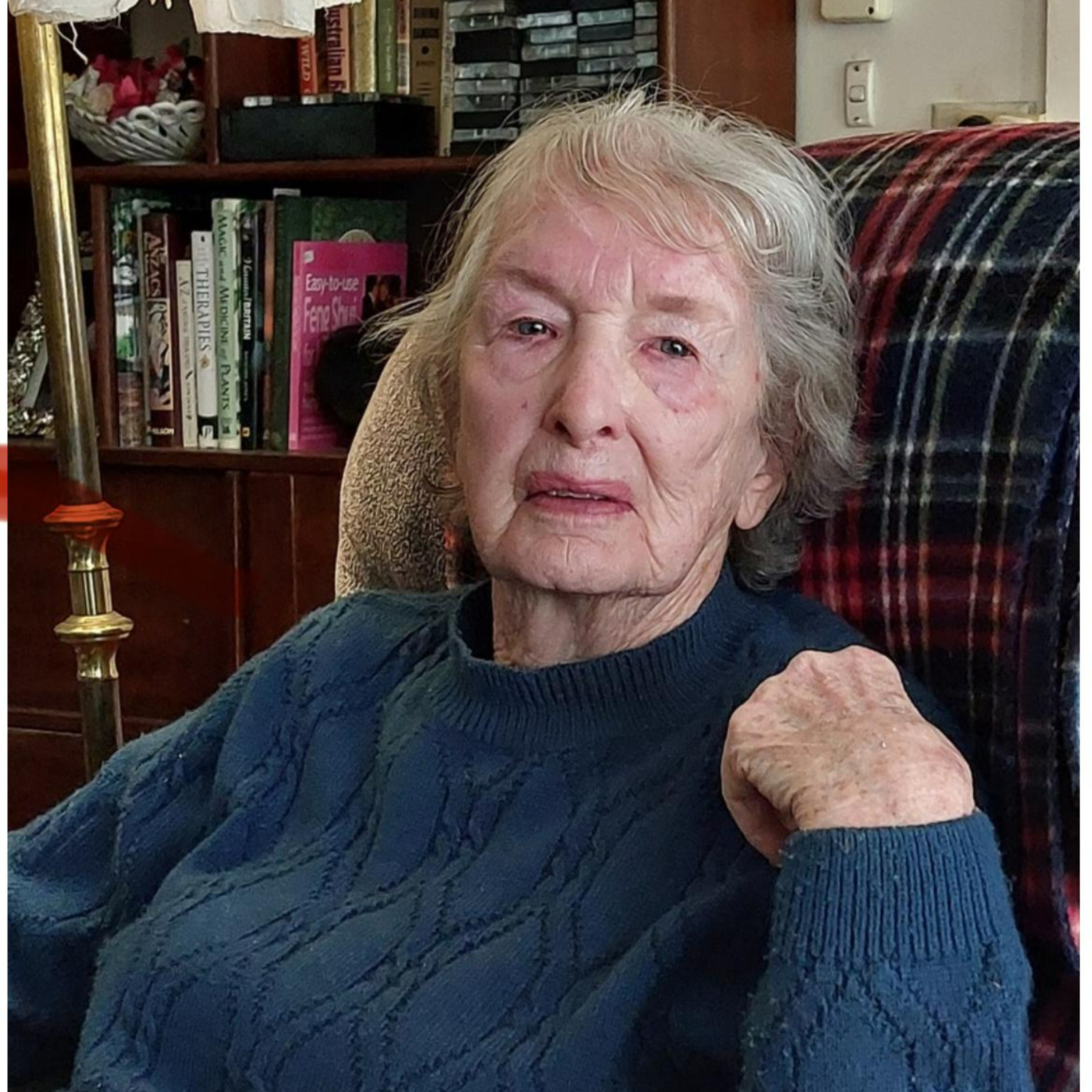
Karam shares her life story, beginning with a childhood in Sanford during World War II, marked by rationing, community war efforts, and contracting polio. After the war, her family moved to Chalong before returning to Sanford. As an adult, she held various jobs, including in telephone exchanges and caregiving, and lived in several towns like Horsham and Melbourne. She married twice; her first marriage ended after about 20 years, and her second, to John, involved extensive caravan travel until his passing. Karam found creative fulfillment through community theatre and writing plays, such as one based on the Wayne murders. She eventually settled back in the Casted region, valuing its peaceful, tight-knit community. Reflecting on changes, she notes increased population post-COVID, restoration of old houses, and a decline in social venues like dance halls, but embraces new residents and the area's enduring appeal.
[Music] Hello and welcome to Casted & Connections. An initiative of Hands Up Casted & where a group of enthusiastic locals have come together to capture, preserve and share stories of people who have a connection to Casted & Connections. [Music] Welcome to Casted & Connections. Today we're talking with Karamikinand Ward. Karam has been involved in the theatre, writing and the community. How are you, Karam? I'm thank you. Oh, that's nice to hear. Anyway, Karam, just come to talk to you about your life and tell me about your upbringing in Sanford. Oh, well, we struck the war when I was about eight. And although it didn't mean much to me as a child then, but it did to the adults in Sanford. And it was a big change of life. We used to have nights up at Sanford House to raise money for help with the war effort and so forth. And we kids would be running around playing and there was to be playing cards and all that business. And we had a lot of functions for the war in Sanford. Making camouflage nets the adults were and we kids, well, we missed all the men. The men had gone. My father went and he finished up in New Guinea and it was different because there was no chocolate for us. Sanford, all right, everything had to be Russian, didn't it? Everything was Russian and there were no chocolate, so all of these were ice creams or anything like that, which was probably a good thing. Depends, you ask. But we had a lot of fruit trees and my grandparents were across the road on the main street and they had a dairy, small dairy. So we had milk and cream and butter and we were pretty well off as far as food, weren't. You weren't deprived of everything? No, no, it was only the luxuries we didn't have. There was just mum and myself and a resistor and we had to milk the care and just look after ourselves, generally, dad wasn't around. So eventually when I was about, no, I think dad was sent back to Victoria. To Lavaeton, he was in the Air Force and he said, "What about coming to Chalong for a while until the end of the war? It looks like it's going to finish soon." And it's the change of lifestyle for you. We went to Chalong to live and we were just boarding here because we'd mum locked the house up and we boarded it at a boarding house and it was pretty rough in those days. Although nice country people stay there but I mean the accommodation was pretty basic but anyway, while I was there I caught polio and that made me very ill with a lot of other kids and the doctors to come around twice a day to see me and after a week I was there out to it for a week and then one day I woke up and I was starving hungry, screaming for food. And mum went and got me, "What do you want to eat?" And I said, "Tomata's on toast." I was remembered that I reckon I had four-rain slices. I told somebody I had four-rain slices of it. You must have been starving. Oh, I was about two slices really. But yeah, I was hungry and but anyway I was thinnest in the thing. This went on through all the school holidays and by the time I got back to school I was like a stick and there was a lot of, and that was more than another of other kids were and I wasn't crippled. Although I've got one leg short and the other from it but that was all and it was a lot of worry to mum and dad, dad got time off from there for us and he used to come in and sit with me at night and the mum would sit down and I would go to the house and and anyway I got over that and we used to go down swimming and down to beach and it up was good but I didn't like the school much. It was up past the hospital and some of the kids were different to what I'd been used to and so I wasn't too keen on that side of it and it was well ahead of me academically too but anyway when the war ended dad went to work at some big factory out this way and got on the Melbourne road at least and then he said he wanted to go back to the castle and build bridges and so we trotted back to Sanford back to the old house and then I went to school in Sanford for 12 months and eventually up to the castle in high school which was where the primary school is now and had several years there and that was good school to go to, nice teachers and that and oh well I just had a, the war was over by then and things started to come in we'll get a few chocolates and things by this time and I was getting into them and a few little dresses we had we didn't have much but we were happy enough and the chocolates sorry with the chocolates sound like you'll make it for lost time. Yeah, every once a week or something my mother came home from cast and on the bus and she bring us some chocolates or something and but we were all terribly I see photos of us now and we were all so thin we didn't have these things to make us fat I suppose we were terribly thin and but we were I suppose we were healthy enough and we used to go to the dances then we started dancing and you know dances everywhere around this district then they had a wonder violin carapook and everywhere there were dance halls and we went to a lot of those dances and they were great and I worked at Donnells finished up work of them, it was empty now but it was a thriving business then and so I was there for four years and and then I just sort of wanted to change so I left here when I was 19 and went to Horsham to work I finished up the job in Horsham at Rockmans and worked there and I sent gates to a local bloke and I was there for two years but that didn't really work out and he died and I left then and I finished up in Hamilton after that at the exchange and that was good it was a good job and then I went on to Melbourne on the exchange there and I worked in City West for six weeks and then I went out to Horsham where I lived both the telephone exchange out there and well then eventually I met another bloke and got married and we were living in Horsham and we decided to get a house of our own so we bought a house in Croydon and I went to work at a quadriplegic centre in Croydon and it was a salesman and it was good working at the Croydon centre that was in Croydon Road and there was about 24 of them there we had to look after and feed them in all that business but there are nice bloke blokes, mostly blokes and
jostegar ni, jostegar ni, jostegar ni, jostegar ni, jostegar ni. I went to work at the box hill town hall doing home helping that and looking after older people and and to clean your hair and this happened, filling around with whatever they wanted and that was a good job too, because I know so people and I liked them and then a few months later after that I said to Kevin I like to get back home I think. I'd had enough of Melbourne and he was originally from over there on the other side of the state, I forget the name of the place now and so he was used to the country too and he agreed so we sold up and we came back to Kastan to live then and then he after 20 years the marriage broke down and it was the best thing that could have happened and then so I was free to sort of do things then get into the acting and writing plays and that for them and just generally getting around and meeting people and having a good time in Kastan. Well you were moving on with your wife? Yeah, well then eventually I met John and John was a newspaper man from Melbourne and he had to come up here because he lost his home and he could afford this place so he came up here and then we met through the theatre group I think it was and so I went with him for seven years and then we decided we should get married and so I said well I didn't want any ministers or anything I just wanted to just wanted to ceremony and be done with it so he was agreeable to that he said he had three sons and he didn't want them thinking that it was just another business of living with someone so we got married and we were very happy and he had a caravan so we travelled a bit in that then and we finished up over in the west at one stage and had a nice time there and then we came back to South Australia and we propped there where there was a festival going on I think the name of the town now but anyway it was a nice seaside town and so we stayed there for a while and then we came back home so we travelled until John got healed we went down to Portland and one time in the city he wanted to come home because he felt ill so I said yeah so we came home and he never really recovered then he was quite a bit he was in his 80s by then he was about eight years older than me and we were here when he died and so that was the end of that marriage but it was very good marriage and we had a nice time together while he was alive we were together for four or three years old old seven of it married and it was really nice we had a nice time together sounds like you lived a good life yeah yeah it was interesting yeah and so I've been on my own ever since but that's alright yeah I live with my own so I know what it's like plenty to do these days don't they so yeah so things have been quite ever since these are groups split up then a lot of them went away and so that was the end of that but I had the other interest too so I lost my parents here they both died while I was here and my sister then went so there's only me left now right so can you tell is there anything we could tell you about your theatre trip Carol oh yeah that was a good group yeah they sort of moved away a lot of them but we ran a few plays and but they were playing quite a few older ones and I thought well we can have something else be so it's this because people were starting to drop off from it so that's when I got on to about the Wayne's murders it was such a strange case and so I wrote this play about the Wayne's murder I've very fear bit about the Wayne's murders yeah it was quite interesting story it is and they played it well too the cast it was about 13 years I think and they acted it very well and then I did a sequel told with the help of Barbara and John I can't think of his other name at the moment but anyway there were three of us in that in the first one that's right and the second one I wrote on my own and it was quite an interesting story and I went down to the Melbourne jail to see if there's what they knew about him and they said there should have been a picture of him there but they couldn't find it anyway we had a good discussion about the play so that was good but yeah the Melbourne jail they usually have a picture of you know before the they usually take a photo of the day before they execute him yeah although I did execute him I did that with Ned Kelly and Ben Hall so did they do that with George Wayne Well I said it must have been stolen I thought it or lost yeah or lost in the process so that was quite interesting and and then I met John so we were travelling a lot then anyway we were all sort of a way doing things and that was the end of the theatre group then but it was good while it lasted so Carol when you moved from Croydon what happened then when back to Sanford? Yeah I went to Sanford from Croydon and I was married then to Kevin and we were there for a horse supposed to be about 20 years or something and it was a fairly long marriage anyway then that's right we're still in Sanford when we finished up divorced he'd gone off with someone else and I wish to be good by and I was on my own so I didn't mind that so much I was quite happy in Sanford because I was involved in a lot of things there I was in clubs and all that and going out nearly every night of the week to meetings and doing things like that and so I was alright on my own and I knew everybody in Sanford so it was alright I went to Dancers and all socialised and then after that there was about seven or eight years later I met John and that's when we got around together just walking around the hills and doing all that country stuff and travelling a bit in the van and when he's just we get married after seven years I said oh well that's alright I suppose so that's when I came up here and I felt well I'll sell up in Sanford and I did I sold up to a couple of blocs and there were there now and it was John and Peter isn't it, they had the dogs and moved up here and then John and I got around in the van a lot then and travelled up to or sometimes we just went into state and sometimes it was just in Victoria somewhere
Nói, kami highteak, we had a good time in the van. Sombang ones, we just went down to Portland for a few days and enjoyed that. And John was interested in the writing I did because he was the writer too for the someone he was working and so we had a few lot of things in common and we were quite happy together. So that was about ease I think. Sounds like you had a lot more trouble than I've ever done so. We were always on the go and the caravan, well John is to complain that the caravan sitting there and we're not using it, he said, "We've got to get out and use it." And I said, "Yeah, that's right." And so we did then we started to go to places and stay for a few weeks and there's only a couple of weeks to attend then we want to come home. And we'd stay up in Wales, we just got a day off for the fair bit. And our Melbourne once or twice, not very often we both had enough of Melbourne. And we were also going to Perth and Western Australia anyway. And South Australia and we travelled around the fair bit in the van. It's been good experiences there, met a lot of nice people and enjoyed those trips until John got too old to do them. So that was that, but we had a nice time together. That's good, there's no use leading the caravan, languishing the driveway I guess. So I sold that after John had gone and I thought, "Well, yes, they're leaving it there." So I sold it to a couple from Haywood and put a garden there and there then. And just been involved in the gardening he since, I've got the garden. It's sort of going well now, but I've got to get the front cleaned up, but other than that it's looking quite good. And that's the main interest now. I don't think I've got any other interest really. I'm going back to yoga when this summer comes. It's warmer in the mornings because they started eight o'clock and it's too early for these small needs. Usually too cold this time of year. That's right. So I won't be going back until summer time. That's about all I do now. Well to be honest, I don't blame you if you're not liking Melbourne. Yes. Don't take a long to get sick of it. No, it does not. But she now that it's so crowded and it's just terribly crowded. And there's a street so busy and everything's busy and it was a lot slower when I lived there. I think last time I checked six million people lived there now. Did they? G, six million. It was probably about half that one I was there. It passed the million mark in 1956. Did it? Yeah, well I went there in 1960 something, '64. I think it was. I lived with two other girls there in the whole town. We shared a house. We were just on the edge of the Richmond. It was good. We could look down on Richmond. And it was nice place to live. It was opposite a park. Remember a park beyond the corner. There's a bridge and a Hawthorne bridge and we lived there. But yeah, I stayed for about 12 years until I met Kevin and then when I got married I moved to another end of Hawthorne. In a unit we had. And that was alright too because we were others living there and we got became friends with them. So it was quite good there. But eventually we built this house in the groin and moved in. What changes have you seen from your upbringing in Sanford to now? In Sanford. Well just in the district. In general the district. Oh yeah well of course there's a lot of people here now I don't even know. Have they met a lot of them? Well that makes two of us. And it has changed a fair bit. In Sanford we had all the old familiar faces there and then suddenly they were all gone. And there's all these new people there. They're good people. But there's just different the ones that I grew up with. There's still a few in Cassett and I know fortunately. But then there's a lot of strangers here now too. They've come in with this COVID thing that was going on and they seem to have rolled into town. But that's a good thing for the town. And it has changed somewhat. It's changed the town itself. Some shops are empty now. But I think that'll pick up again in time. It's still a nice place to live. It's still attractive. Nice places here to live in now. Nice houses. And I think we're very lucky to be able to live here. It's practically crime-free. Middle-Aid is a bit of trouble with drugs, I suppose. But most of us are dust and effect. And we're very lucky. We're living this nice, clean, peaceful place. I would think. I think the main reason why there was a bit of a uptick of population was COVID because people wanted to get out of the city. And if you're not so, don't blame them. That's right, they all fled to the country. And a lot of strangers turned up. And some of them have left again. But there's some still here. And they're fine. They're interesting people. And it's good we've got them. And they've done the houses up nicely. We were quite lucky we got them. And in Sanford too, it's all different people there now. But they're filling the houses up, so that's good. I guess so. There's been a bit of restoration going on out there too. - Some of the old houses. - Yeah, they have. And that's a good thing. So I was up here. And they bring their skills with them too and improves the place. So it's only an improvement, that's all. And it's good to have them here. I think it is. And who knew a pandemic could be a curse and a blessing? Yeah, that's right. It can be both. And Hasby. But yeah, they've done the houses up a lot around here. And they look quite good. And they're quite nice people. So that's the main thing. But it has changed. I mean, when there was time when we went to dance twice a week or something. But there's no dancers now. And the old halls are empty. And that's rather sad. And now the pubs are sort of battling a bit, I think. There's not a lot of socialising going on, although I belong to the friends and neighbours. And we socialise a bit together. And that's nice days we have. So there's that. And there's not a sports course on here too, of course. And it's not a bad place to live. I guess you're right. I've lived here with my life. I've seen no reason to leave. No. Because I like it here. Yeah. Yeah. So it's here, I suppose. I couldn't stand living in the city, to be honest. So exactly my cup of tea. No, I don't think I could go back there again either. But it was good when I was young. But now it's different, of course. I've got used to country life now. It just suits me better now. Thank you for your time. Carol has been nice talking to you. And thank you for sharing a few stories. My pleasure. We hope you've enjoyed today's episode of one of our homegrown heroes. Jump over to one of our other episodes to continue the casted and connections journey with us. Please don't forget to follow our podcast and share it with your family and friends. Thank you for listening.
Podcast Summary
Key Points:
Karam grew up in Sanford during WWII, experiencing rationing and community war efforts, and later contracted polio as a child.
She moved multiple times for work and relationships, holding jobs in telephone exchanges, caregiving, and retail, and lived in places like Horsham, Melbourne, and Croydon.
Karam was involved in community theatre and writing, notably authoring a play about the Wayne murders, and found fulfillment in creative pursuits later in life.
She married twice, enjoyed traveling in a caravan with her second husband, and eventually settled back in the Casted area, appreciating its peaceful, community-oriented lifestyle.
Karam observed significant changes in her hometown over the decades, including population shifts post-COVID and a decline in social venues like dance halls, but views new residents positively.
Summary:
Karam shares her life story, beginning with a childhood in Sanford during World War II, marked by rationing, community war efforts, and contracting polio. After the war, her family moved to Chalong before returning to Sanford. As an adult, she held various jobs, including in telephone exchanges and caregiving, and lived in several towns like Horsham and Melbourne.
She married twice; her first marriage ended after about 20 years, and her second, to John, involved extensive caravan travel until his passing. Karam found creative fulfillment through community theatre and writing plays, such as one based on the Wayne murders. She eventually settled back in the Casted region, valuing its peaceful, tight-knit community.
Reflecting on changes, she notes increased population post-COVID, restoration of old houses, and a decline in social venues like dance halls, but embraces new residents and the area's enduring appeal.
FAQs
As a child, she recalls community efforts like fundraising nights and making camouflage nets. While luxuries like chocolate were scarce, her family had access to food from their fruit trees and grandparents' dairy.
She contracted polio while living in Chalong, becoming very ill and bedridden for a week. Although she recovered without severe crippling, one leg was left shorter, causing worry for her parents.
She worked various jobs, including at a telephone exchange and a quadriplegic centre, and lived in places like Horsham and Melbourne. She married twice, with the second marriage involving travel in a caravan.
After her first marriage ended, she pursued acting and writing plays, including one about the Wayne's murders. She collaborated with a theatre group and even visited Melbourne Jail for research.
She notes an influx of new residents, especially during COVID, leading to restored houses and a different community vibe. While social activities like dances have declined, she finds it a peaceful, crime-free place to live.
She focuses on gardening, plans to return to yoga in summer, and socializes with groups like friends and neighbours. She appreciates the quiet, country lifestyle and has no desire to return to the city.
Chat with AI
Loading...
Pro features
Go deeper with this episode
Unlock creator-grade tools that turn any transcript into show notes and subtitle files.
 PodcastTranscript AI