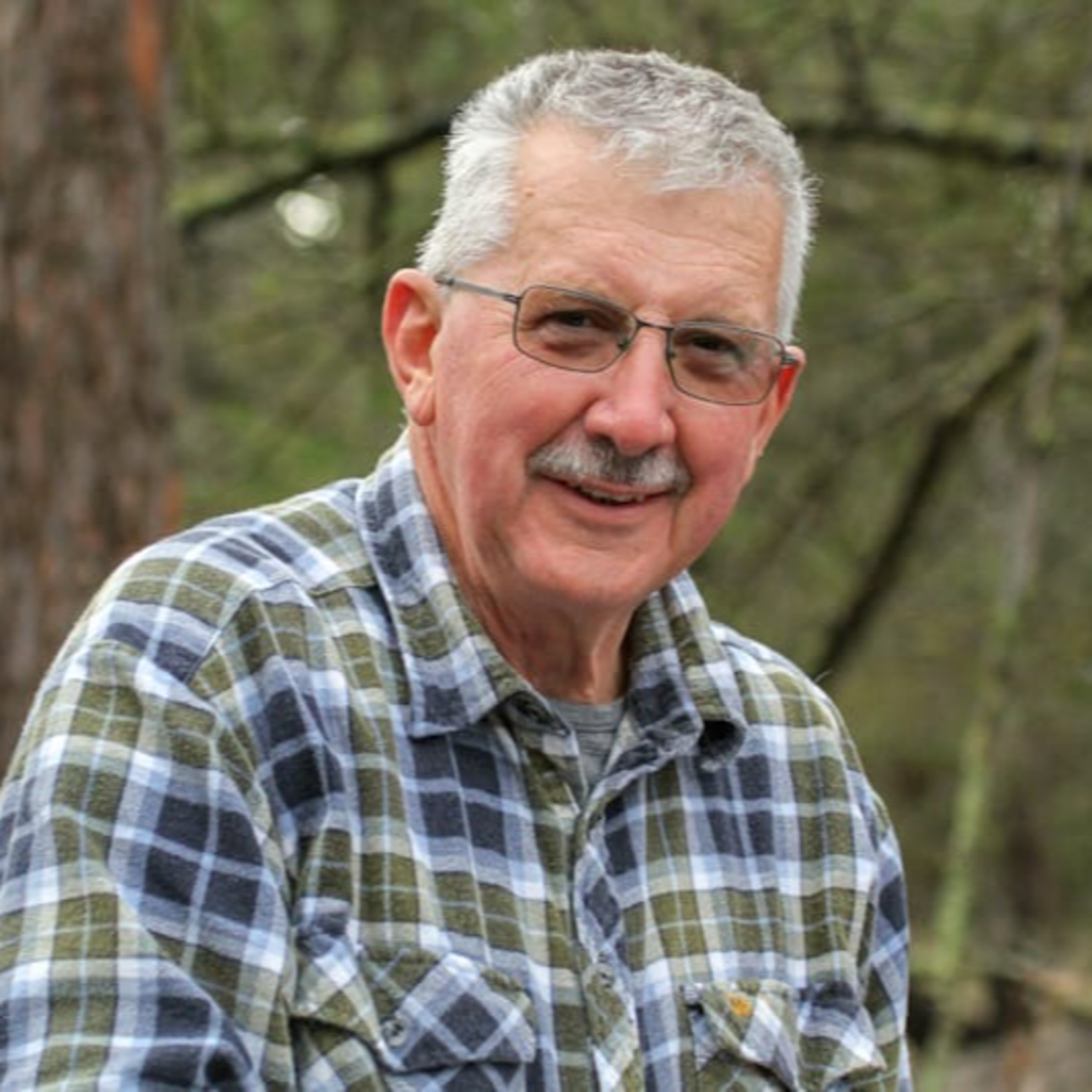
Len Edwards, a guest on the "Casted & Connections" podcast, reflects on his upbringing on a sheep farm in Montham and his extensive career with the Bank of New South Wales. He fondly recalls his rural childhood, marked by community closeness, biking, and simple pleasures. After proactively securing three bank job offers at around age 17, he began a career that spanned decades and continents. His postings took him to Papua New Guinea and the remote Gilbert Islands (Kiribati), where he experienced primitive banking, colonial life, and even oversaw the construction of a new bank branch. He also worked in various Australian country towns, embracing each location's lifestyle. Throughout the conversation, Len emphasizes how his travel bug, inspired by his mother, and his love for country life shaped his journey, allowing him to reconnect with his roots in Castlemaine later in life.
[Music] Hello and welcome to Casted & Connections. An initiative of Hands Up Casted & where a group of enthusiastic locals have come together to capture, preserve and share stories of people who have a connection to Casted & Connections. [Music] You may have seen him cycling around the countryside or at the local footy. Elder son of Joyce and Keith Edwards, Len Edwards grew up on a sheep farm at Montham with his three younger sibling, Sandra Colin and Barry. Len spent many years working and living all over Australia and overseas. Then the COVID pandemic struck enabling him to re-acquaint himself with the town of his youth. Welcome back, Len. Thank you. Tell us about those early days at Montham. Great times, it couldn't be a better way of being brought up on a farm. It was really magic roaming around all the sheep and the hills. What I really appreciated with the hills out there around Montham, you don't realise till later on when you come back, just how beautiful it was. Because you've now that I'm riding around the district on the bikes, you could ride up Montham hill. I'm sorry, walk up Montham hill with the bike and get beautiful views over the place that you never appreciated then. So yeah, really loved that. Yeah, so around the district you had neighbours across the road and. Yep, I was born in Coleraine, which was closer to Montham than Castan was, but Castan was still a base. Then we went out of Tidrae used to roam around McNichols Estate over the road. Then it was cut up into sole discernment properties after the war. And all of a sudden we had all these family show up and I saw all the houses being built. And what really was great was over the road, we had the family called the Macintoshes and they ended up with ten kids. So we immediately had another big family over the road. And that was apart from we had Povey's next door and the Kellys up the road. But we've suddenly had a big family around us and that's what developed the high school and the primary school in Coleraine. That's what the Solid Deceitle and sort of properties did. Okay, yeah. Okay, so what did you do for entertainment in those early years? We didn't have television till quite later. The Macintoshes got it first so we used to go down there. But more so, we had bikes right from the very early years so we could ride around to Patixon and because we're on a heliprope the sheep would roll over on their back so that was out to roll them back up again and the bikes come in pretty handy for that. Mind you, we're probably scared out from the rollover anyway, we're riding the bikes and you're going around but are these push bikes or made of push bikes? No, no, no, no, it didn't have motor bikes too much later on. That wouldn't let us ride motor bikes. You reckon just scared the sheep but you can know what we're doing on the push bikes either. But apart from that, for our pocket money we used to ride around the roads, the main roads, people had tried their soft drink bottles out and we collect those coming to town Saturday morning, sell the bottles and that was our pocket money. Oh yeah, it was fantastic. What about sport? Did you play any sport as a little tucker? Yeah, we played for the great Karapuk tennis club that was magic. We couldn't, that wouldn't take us to training and and mum didn't drive or she didn't have a license I should say. I won't go any further than that but so coming home from high school we dropped off at the main road Gnolk highway and we'd have to walk down to the halls about three ks down to the hall but we always knew that La La Gibra was coming along the school teacher from the high school so if we behaved ourselves at school she'd pick us up and drop us off the training and that was magic. That was a little Karapuk club and we'd played in Kastan and all around the district. That was good fun. Dad was a keen footballer but he wouldn't let us go to training. He wouldn't, the only northerners with a the 40 club at that stage up at Nareen. But we couldn't get there so we couldn't play football or cricket. Dad played cricket at Karapuk but there was no junior league so we couldn't do that so really tennis was the only thing we could do. So do you think your lover sport come from your dad or? Yeah, your dad was keen cricket football. He was into everything, not in the basketball so he'd be going to the matches here in Kastan whenever it was on and coming every Saturday morning and we'd go down and watch as well so at school I played basketball which was quite good. I wasn't any good at it but I loved it anyway and it's later on now at this stage it's more looking back on what's happening around the district and what I could have done I think more than anything else but I'm now into a lot of bike riding and triathlon that sort of thing in life not in the early days. So what about your school days? You went to school in Coleray? Coleray? Yes, the Clover Flat School had closed just before I started primary school so we the bus route started coming from Coleray now through the all the district round through the Soul Dissevelman so we jumped on the bus and went into the Coleray primary school. And then secondary into? And then the bus used to run the other way into Kastan so secondary school in Kastan. Were you a good student? I tried to be. Yes, I passed all the subjects, but at this way I was never held back right through high school I passed everything. The worst subject I had was French and the past marked in was 50% I got 51% and then ended up in a French speaking country for 10 years would you believe? Yes, rather ironic. It's ironic but now when I speak French they always ask me to go back to English so they can understand me so just as well I was never a linguist so I always say. Do you know idea? So you left school at the tender age of 17 around about wasn't? Were you at 17? 5 plus 6 is 11 plus 5. Yeah, 16 that's about it. Yeah, yeah. So your first job, how did you acquire your first job? That was an interesting one. We come into Kastan on the Saturday morning as all farmers did, did you shopping and a dad had gone down to have a drink, the pub, he'd only have one but that was it and they'd go to the pictures on the Saturday night. We'd be in stay with the grandmother and the house are in right now. Then they'd come home at midnight, pull us all out of bed, cold winter, goodness knows what, no heater in the car, drive us home because had to milk the cows in the morning, he wouldn't let us stay overnight. That's another one. But when we're in Kastan, I'd ducked out on a Saturday morning and I went down and opened the back gate of the national bank and the manager was mowing the lawn and I said, "Oh look, I'm just in a job here." It's right from so far in school and I sort of thought I was either going to become an accountant or a banky and my teacher there got on really well with the Zian turns and he said, "Look, go and have a talk with bank manager." But I don't think he met us the best to do it on a Saturday morning. Now the manager looked at me and said, "Oh, hell alright then." So we had a talk actually on the back of the friend of the bank and he said, "Okay, it's pretty good. We'll get in touch." So I walked out and I walked over the road to the bank of New South Wales and did the same to the manager there. And then Peter Leake was in the state savings bank then and mum knew him and Peter had to talk to me as well. So I had three lined up and shortly afterwards I got letters in the mail and the whole three had accepted me. Yeah, so that started something off. Parents didn't even know that I'd gone to the national or the bank of New South Wales. So it was a shock to them as well. So I had to decide. So I went to the bank of New South Wales. What made you decide in New South Wales? It was interesting in that they didn't have a position in custom. They did in Coleraine. So one of the reasons was I was close close to home and I knew the farmers and whatever that went into Coleraine to work and one of the reasons was, "Oh, New York had drive their cars for them," which became one. But the other one was they realised after being there six months you had probation period in the bank and they asked, "Why did I choose the bank in New South Wales over the other two?" And I said, "Because you've got officers in New Guinea and around in the islands?" And they said, "Oh, that's interesting." And, well, six months later I was in New Guinea. Wow. What struck you? Why did you want to go to New Guinea? Why did you want? Mum was always a
a traveller, but she couldn't travel. Dave wouldn't say let it go, but they both worked a farm together and they couldn't get out the front gate. Mum said to me, "Well, you've got school excursions going all over the place. We'll pay you to go on the excursion." We went around Tasmania in 1967, then '68, right through the snow mountain scheme, and I sort of got a bit of a travel bug. I thought, "Oh, well, you can hear sounds good. We'll go a little bit further and that's where I ended up." So you've got that travel bug from your mum basically. So you headed off to New Guinea at the tender age of. I must have been 17. Okay. Going on to 18. Yes, so at that age you consent and whatever my parents had to sign a declaration to the bank too, that they become mummy and daddy, I think, so I became a son of respect. So we sold banking to South Wales as it was then. So I just a youngy that ended up in the Highlands of New Guinea, up in Bolo, those little places right up in the Highlands. And those days New Guinea was not like it is now. It was open, you didn't close your doors or anything like that. It was free and easy, beautiful lifestyle, beautiful people, really good. Yeah. And then six months after that, the bank decided to open a branch on the island of Bovenville. A minor just started at Panguna. And they wanted staff to go over there and they said, "Oh, could I go over?" And I said, "Oh, that's interesting." But the trouble was that I'd gone through the bank as a probationer and then a junior and I was getting up to the next level examiner and they said, "Oh, you'll have to go over as a machinist and the machinist is the lowest rank in the bank." So I had to go down the line a bit and thought, "Oh, okay." And the reason was that it was a mine that didn't allow females to go in and machinist those days were all females. So I didn't wear a dress but I went as a machinist. And you learned a lot just seeing it from that side, but the bankers, they said to me, "Take that one and we'll look after you later on." So, yep. And that's what they did. So from New Guinea to. So then I came back to Australia and back to Victoria. And when you do overseas service like that, I was over there for two years, just a bit over two years. You go on to release staff. The reason being that when you're off shore, you get a bit out of touch with the reality of banking, shall we say. So you go on release staff and I was attached to Horsham and went all over the place, which I really loved. You'd spend a month in all these different places, filling in for people that were on holidays. So I was been here, you go to long down the peninsula morning, to Lake Balorade, all those sort of places. That was really interesting. And then, oh, yes. So then got a job in Caniva. They said, "Can you go to Caniva now?" Which was great. And I was second in charge. I thought, "Gee, that was a great promotion." Really great. Until I got there and realised there's only two of us anyway. So, manager of the self. But I really loved it up there. A nice little country town wasn't too far away. A couple of hours from Castan and I bought a caravan and lived in the caravan park, which was magic. Can you get to know the town of the football going on there and all that sort of thing? So they said, "Oh, can you look after the caravan park?" I said, "Oh, yes. All right. Just book people in and out and we'll give you a free rent." And the swimming pools there as well. So they said, "Oh, can you look after that at night after hours?" "Oh, yes. I'll be back to on to it anyway." So that paid from the food. So I was living for nothing and having a great time working my way up in through the bank. So yeah, so it was really good. But then that came to an end and they are not small country branches as a sensation. I said, "Oh, I love these country branches." So they sent me to Bendigo. And that was a biggie. But I loved it there too. That was a good spot. Really liked it. It was boarding with a lady that wanted a bit of company. So sold the caravan. Actually, I took the caravan home and mum and dad sold it on me. I come home and it was gone. Dad didn't want it plugging up the paddock. But anyway, that's another story again. But then Bendigo worked well there and they rang up one day and said, "Can you go to Curibas?" Or was called Gilbert Islands into Taroa. And they said, "You've been to New Guinea. Have you ever tried another island?" And I thought, "Yep. First question is, where is it?" And it's, Gilbert Islands is on the equator, way up near Nauru, up in the middle of nowhere. And it's the most remote branch that the bank has got. So I went up there as a training officer. So I went down to Melbourne, learnt how to train people. And that wasn't sharing and making round with sheep. It was banking. But that was great. Went up there for two years. And the bank was in an old war bunker. Or they called them a nissing hut with the big round. Yeah. Round hut thing. Very primitive banking. But we wore white shorts. White shirts, white socks, even the shoes were white, I think, because it was English colonial. Yep. So become a colonial. And they even gave me a car, which surprised me. It was a mini muck, which was perfect for the islands. So yeah, it really got on well there. And. I said that colonial influence there was quite strong. Very still. Very. It was all British. There was very few Australia. Even though it was in Australia and currency, it was a British colony. Yeah. Little Ireland, 20 kilometres long, quarter of a kilometre wide. And the houses had views of a lagoon at the back and the sea at the front. You left the doors open. Crabbs went through every day. Everything else went through. And it was just living on on that island. It was magic. Yeah. Real Pacific. That's now. House said Bamboo walls and a fetch roof. Wow. Yeah. That's island style. Yeah. Yeah. Then they said, "Well, time to come out." And another option there, those days, it was that you could choose where you wanted to go to. And I said, "Well, okay. I'm traveling. I'll go to New South Wales. Just put me in southern New South Wales, that way Victoria is not far away." So they put me in Casino. And Casino is on the northern border in New South Wales near Queensland. That's an awful, too bad. And that's relief staff again. And I was relieving around Ballonville this morning. Malambimi, all those sort of areas. Good. Just coy-oval. Yeah. Tari. Magic. Just moving around. And then they said, "Well, okay. Your leaf days are over." So they only did it for about nine months. And then they said, "Oh, can you go to the entrance?" So the first thing I said, "Well, the entrance to what? Where is it?" And it's the coastal area near Gossford, north of Sydney, beautiful holiday area. And I had a flat on the beach, which sounded good until the rust got in my car. And that was. Yeah, that was a nice spot. And I said, "Well, how come I end up like that when the people in Sydney all want that position because they could commute to Sydney and have cheaper housing?" And they said, "Because you didn't know where it was. You were neutral and it stopped all the arguments." So then they all argue with me, of course, but anyway, that's the way it was. And then the manager, one of the big bosses that I was working with, and how in Curibass or Gilbert Islands, the base was Fiji. And the manager from Fiji went in to hit office in Sydney. He said, "Oh, come down and try out Sydney." I said, "Straight up. No. Go away. I don't want to see. I'm not a city." He said, "Come down for a month." So I was in the hit office in Sydney, trying to catch trains and buses, choking on the pollution. And God knows what else getting lost. And that's a part from being told to get lost, which happened quite a lot. Anyway, I was in charge of all the staff from Sydney to the Queensland border and out to the pollution territory border. Yeah. Did it for a month and then the boss come out and said, "What do you think of that?" And I said, "Bloody Horrible. Send me home." So where was home? You got the message, "Well, never home there. I was back at the entrance, I guess. I'd moved on." Home, I guess, was western Victoria, but I wasn't going back there. So they said, "I will put you in Newcastle." And I thought, "Well, that's getting pretty close. The size of Sydney." But that was where I said, "I will let you build a house there." And you had good conditions. So Lake Macquarie, beautiful area just south. So I built my first house there. But the position was assistant to the manager and I really loved that. So I was going up the ranks a bit. So how I'll bore you then? That was, I know, I've kind of looked a little bit paper here now. I was 1980. So there you go. 30s. Yeah. Oh, yeah. Yeah, 29. Yeah. So I did a couple of years there. And then the, then the come back to me and said, "You're over in Gilbert Islands. The place has been wrecked." So a couple of people went up there and thought it was a holiday and the branches formed park.
and you go back to curabass. I thought, oh yeah, that's all right. I said, but I can't, the house isn't finished. They haven't done the driveway and the fencing and landscaping the bank. In those days, it was pretty good. They said, look, if we do all that for you at our cost and we put a tenant in, will you go there and I said, yep, and that's what happened. The bank finished it, put a tenant in the house. I've still got the house and the same tenant is still there. Wow. Yeah, so that was 1981. Yeah, which is fantastic. Yep, so back I went to curabass and in that time, that you did the independence that went from Gilbert Island to over to curabass. So Queen Elizabeth came out and I got within a meter of it. Wow. Yeah, that was different. Did you curtsy? No, I wouldn't have done that. But I look good in my watch. Oh. She actually came out on the Britannia, the big yacht anchored in the lagoon. And the locals in their canoes rode out and put her in the canoe and I thought, this would be fun if they upended it. That's it. They brought her in and they had swimmers underneath that picked the whole canoe and her up and walked her up into the land up into the maniava, or which it called a town hall. And plunked her up on the stage sitting in the canoe for the whole time, which was quite a spectacle. Wow. Yeah. So the bank then said, oh, you better take a bit of time off. I've been there a year at that stage. And get out of the old round hut. They still had that, the Nuson hut. We need to build a new bank. You build a house, build a bank. Oh, OK. That'll be exciting. So yeah, for a year, I mucked around with builders and everything else. Got the bank built. And they said, find the staffs. I did the staff train them up. And I went. So I became, I've got the title, the secretary, Bank of Curebass Limit, and assisted to manager training administration. I couldn't put a badge on because I wouldn't have fit it. What's the acronym? Yeah. But OK, that's interesting. It was a big title on a mastery mat. All of them that no one would have recognized anyway. But it was great. So you've built up a bank, you've built up your staff. And that was the two I see there. And we had about 50 staff. And it was great living on an island, rebuilding a bank, getting it all sorted out. Great achievement. Yeah, it was great. So, and that was for two years, too. So five years later, they rang up and said, we forgot about just time to come home. Yep, so I said, OK, I've been to Victoria, New South Wales. I'll try Queensland. And they said, we would do like to go in Queensland. And I said, well, I'm not going to say North, South, or anywhere else because you'll put me in the opposite direction. So I've headed back to Queensland. And I hadn't been to Queensland before. So I ended up in Rockhampton on Relief Staff again. And I thought, OK, that's interesting. And at this stage, they'd be appointed me manager, first management then, 1986. And they saw as a junior manager of learning the ropes, I suppose you could say. Under a load of local cura bass, but Australia had changed a bit in that time. So we had to change-- Re-adjust. Re-adjust everything. And they said, stop calling it, bank and New South Wales. We're west back now. And I thought, oh, did you change the name when I was away? Yeah, so that was interesting. But there was two managers there. One was a senior manager, one was a junior, and they're relieving capacity. And there a senior guy said, well, I've just got married. And I don't want to go west. And I said, hey, I'm from the country. I'll do all the west. You do all the coastal. So yeah, I ended up in-- oh, oh, list them all for you. Moura, Merriam Vale, Theodore, Rockhampton, shopping center, Wilhelm, Billerwiel, or Emerald Black Old Emerald again. So they sent me right out to the border at Wilhelm in the middle of winter. And that was a thrill, cold as blazes, but beautiful town. And then later on, say six months later, when it was summer, they said, oh, can you go back? And I said, well, there at least it would be warm, well, it was. Yeah. It was too warm. It was too warm. But a beautiful little place. And I go back there occasionally on tours and really loved winter. And the manager out there loved it too. He wouldn't move. And he said, your job is to move him. And I said, well, how am I going to move him? Because I was only leaving there and I met him at the end. And he said, go to his wife. To his wife that we're going to give him-- what's the island just north of Brisbane? The little one that's crossed the bridge anyway, to real. Oh, a bribe. A bribe island. Tell the wife that we'll send him to bribe island. The wife said, well, I'm going whether he is or isn't. So I wasn't in the good books with the manager, but the wife was pretty happy and that's where they ended up. And then they sent me off. Said, OK, you've sort of caught up with the system now. We'll send you down for training to the manager's training depot in-- it was in Victoria, out East of Melbourne, in the middle of winter. And I walked outside and there's a fish pond there. And the fish pond was frozen over and say, well, the fish, I was still in it. And the guy, the manager, I knew from rock camp, to hang up and said, look, you've been offered cans. I said, I'll take it. [LAUGHS] But I said that in before they said what the position was. And I ended up as a commercial manager. And I was the youngest commercial manager in Australia at that time. I thought it was Queensland, it was actually Australia. So I took on a commercial role. When I left school in turn to do a seafood getting accountant certificate. So I did that by correspondence when I started in the bank. And I eventually got my accountant certificate. And that helped with the commercial manager role, because I knew I had it. So-- Yep, so I went to cans. And they-- yeah, it's in a commercial role going round a lot of cane farmers, but also industry, all that sort of thing. And that was a bit different to branch banking. And just expanding your experience, I guess. And that was great. Love cans. So I thought it was going to be nice. I'll build another house. I did. Still got it. It's on the market at the moment for anyone wants to buy it. One of that's in free holidays for castatonians. Who's a big good idea? Yeah. Yeah, do you know what I do? But yeah, cans was great. Now, this is an interesting one. The manager in Curibass at that time, he had moved out. He went back to Darwin. And then he was offered the role in New Caledonia. The bank decided to buy the French territories in New Caledonia and Tahiti. And he said, look, go and learn some French. And I said, that's going to be great. I didn't pass it to Willett School. So I went to TAFE for a week and learned how to count to 10. And I've never succeeded very well at that. But the game is a bit difficult to say that I could speak French. You worked that one out. And he said, right, you're coming to New Caledonia. I said, OK. All right, so that was not in 1991. So I left Australia as a New Caledonia. And I never saw Australia again in the bank. So right through 2009, I stayed offshore. And I didn't like the way that bank was going. It was losing touch with customers. And electronics were coming in. And it just wasn't the way that I thought the banking should go. But so back to the islands over to New Caledonia. So I did five years there. And then they said, oh, can you go across to another island? And I said, oh, yeah, we're going to send me this time. They said, Tahiti. And I said, oh, yeah, I've heard of that one. So ended up another five years over there in Tahiti with the French people. It was the hardest-- Tahiti was the hardest posting at the bank head, really, according to the wives. OK. The Vlakes got on all right because you're at school at work. You're at work with a teacher there teaching your French at the same time. Wives left a home with the kids without the French and had to drive on the other side of the road, go to the supermarket, not understand what they were buying. And it was a very big adjustment. The kids at go to school, knowing, they're spoken at school. And they just hated it. So Tahiti, it sounds nice from a holiday's perspective, but living there for the wives was hell. What about New Caledonia? Same thing. Yes. New Caledonia. New Caledonia is very formal. Formal French. The ladies go to the supermarket in high heels and all that sort of thing. Tahiti, they go in flip flops and it's an island start. Two different countries. You have lived overseas too long calling them flip flops. Oh, farms. I love Eastern New Zealand, I guess. J.A.N.D. What do you call them? Fonds.
I'll go and say that in New Zealand. It's got a different menu altogether. Alright. So Tahiti, but I love Tahiti. I got on well because I was single and just loved the environment and the way it was. And the bank after 10 years, they bought the bank it was broken down and we fixed it up and turned it to a profit. 10 years later they said, "Oh, you're done a good job there. Now we're going to sell it." And I thought, "Oh, great." Yeah, a bit of a shock to the system that come over and say, "Well, that's the end of the offshore side of it. What are you going to do, Edward?" And I said, "Well, I've been out offshore 10 years breaking back into something I didn't think you want to do. It's going to be hard." It could be another island. So they said, "Okay, here's your Tonga." And just going back to Tahiti, another funny part there was because it was so hard on the wives. So they decided every six months to send the wives and the families and myself off to an English-speaking country just for a break for a week. So the bank paid the fees, accommodation, everything for a week. And I thought, "Oh, that sounds nice." Tahiti. So where do you think the nearest place to Tahiti was that would speak English and back to the United States? To the United States? US? No. How are you? Oh, well. So I'm telling the blokes, "Look, I live in Tahiti. You've got to reality. You've got to go to Hawaii every six months." Okay. Anywappers fun. Over to Tonga. Did three years there in Yuckel-Ofa as a manager credit, looking after all the loan book, all that sort of thing there, as I didn't know who Yuckel to, up the ranks a bit. And then after that, I got coming back to Tahiti. Sorry, I'm jumping around here. It's okay. I used to go on weekends, we could fly across to the Cook Islands, it was only an hour away. And New Zealand over there had to put up with a lot of strikes going on. And the airport handlers would just walk off the job. So there was only five Australians living in Tahiti at the time and over the New Zealand engineers. So they'd ring up and say, can you come and load a plane? Okay. So they'd come in through the luggage on the plane. And then we didn't get paid for it. We got a free trip across the Cook Islands for the weekends. So we go over Friday night and come back one day morning. Yoni, pick up with that was the plane broke down in the Cook Islands on one of those excursions. And we forgot to tell the rest of the crew will go in there. So we got stuck. Oh dear. Oh dear. Yeah. But I fell in love with the Cook Islands at that stage. Beautiful, really beautiful place. So why did you fell in love with the Cook Islands? What attracted you? Cook Islands is a small island, it's only 3rd to kilometres around. Beautiful white beaches and big mountain in the middle of it. Got supermarkets that civilised New Zealand currency, English speaking, beautiful place to live. And thought I might head there one day. So that was a thing. And they west back had a branch there. So my aim was to get there sooner or later. That's here I'm in Tonga. Did the two years. And then the war broke out in the Solomon Islands. And that was just the Ramsey. Oh, the civil war didn't affect expatriates too much, but you still add to that guards and wire around your house or that sort of thing. So they took the marries out and put the singles in. And I said, "Oh great, throw me in for war zone." They said, "Well, name your price, well yes, every time I went berserk, they said yes, so I couldn't refuse it, I suppose." So they said, "Okay, it's been a couple of years. There was only there three months and the war stopped. Ramsey, retail systems mission came in. It forces between Australia and New Zealand. Landed their Hercules on the air strip, walked out the back with machine guns and people went everywhere and it wasn't a shot fired after that." So it was a matter of cleaning up the town and what had been wrecked. The bank was okay, but it's the way it was. And then after that, one of the conditions that I went to the Solomon Islands, was of the war zone, was that I had to cook on and after it. You must see me the cooks after it. That's number one before salary, everything else. And they said, "Yeah, well, we'll do our best and I said no, there's not good enough, I want it riding." And that's what happened. Yeah, it was just amazing. So they said, "Right off, the manager in the cook islands was due to retire after two years after I'd been in Oniara." So I jumped on a plane and headed straight for the cooks. So I was in home then, I thought it was home. So they said, "Okay, two, three years, something like that." And I said, "Okay, then so five years later, they said, "Well, you're still there, yep, I said no, I'm retiring." I said, "Well, you can't do that, we want you to stay there." And I said, "I'm staying here, but I'm not working in the bank." So the government at that stage gave me citizenship because I was tied up in goodness knows what Triathlon Club, Running Club, Ike and Club, and Hachael Sarrias, and the sporting committee, there was an Olympic committee there. So you were really involved in the community stuff? Yep, and was loving it too. But you can't stay there unless you've got citizenship, and I said, "Well, I want to retire." But somewhere in the island, it's a good place, it's any so, next thing they say, "Well, he's a citizenship now, Triumelieve." So it didn't happen. The Prime Minister gave you? Prime Minister gave me that one. It was quite an emotional way of getting it. I was a JP there, and they had a citizenship ceremony, and they were handing out the certificate, and I had to sign the bottom of the bottom and down. Yeah, and they got to the bottom and it was my own. Yeah. It didn't even know. Oh, right. Yeah. So, yeah, so, in 31 January 2009, I walked out of the bank, and I built a house there, and I got tied up with everything, they probably got tied up too much. But I was loving it. So I had a national retirement, I didn't think I had, but I had a better boss. Yeah, I was fine. And then I fell out, came along, I had a holiday house there, and he was a triathlete. And he said, "What are you going to do now?" And I said, "Oh, well, I'm building my house, and I'll do me to travel, I guess." And he had a young to travel agency. And he said, "Oh, how would you like to do me to travel with us?" And I said, "I suppose so." And he said, "Oh, boy, I've got a job for you." So I became a tourist court. So what does that involve? Tourist court, the office in, so his main office is in New Zealand, he's got the biggest travel agency, they're only one office. And they organized tours going overseas, all around New Zealand as well. And so they arranged the customers and they set up the artinaries and all that sort of thing. And you just get all the information and you go with them. So you meet them in Auckland, fly down, meet them near Port in Auckland, normally between 2020-25 people. And you get them on the plane, just get them through the electronics, get their luggage sorted, all that sort of thing. Make sure everything's right, get on the plane. When you arrive at the destination, you pick up a local guide. So at that stage, I sit in the back of the bus or the plane or the ship or whatever we're doing. And you're just tucking them into bed at night, basically. Ringing your head, make sure the hotel's fine. Paul and Meals recovered, just make things a. sure things are going along alright. So you'd have some interesting stories. Well, yes, good and bad things. It's great when things go well, but when people get lost in airports and you've got to find them and they're calling them, they're no-mouthing sort of thing. They get ill, they fall over, my broken arm. I've had two deaths. Oh, that would have been. I mean, that's not real good. You didn't run, didn't you? Things to slow you down a bit. So you've got to sort that out. It's not so hard. You go back to the head office in New Zealand and tend to. this guy's not forming up to it. So you can ring the family, but they're all. it's compulsory, insurance. You're in the insurance company. They take over. Because you can't just leave the rest of the group, you've got to stay with them. So it's a matter of making sure everything's in train and then move on. But yeah, it's a bit frightening to go back and say, look, Freddy's not joining us. He's just rock dead, but it tends to put a downer on the group a bit. I thought it would take a half a bit. You can laugh out of it. It can be serious at the time. Are there any funny things to have. and you've got to, it's not a school camp, I tell them that right from the start, but you have to be on time at times to get a bus to the airport or take off on a tour in the morning or something like that. So you have ways of getting the late comers to come on time. Oh, share your secret tomorrow. Oh, I don't know if I can do that. I do tell a joke every morning and it starts at the time that you're supposed to be on the bus and if they show up later I won't repeat the joke. That's one of them. The other one that does work is that you seat them all in the bus nicely. Then you ask them, "Is everyone comfortable?" "Yes fine, okay, but take your seat belt off and jump off for a minute." And I take them to the back of the bus and show them there's not only a picture or something on the back of the bus and you're saying you'd like that. I said, "Yeah, I said, "Well, that's what you'll see going down the road if you're late in future." Put them back on the bus. It does work. That's what? Yeah. So yes, I've been all around the world, been around the world a few times. I guess doing all those sorts of tours. Yeah, wherever America inside Passage Vietnam. Oh, you know it. Especially back in Tahiti where I do a cargo passenger ship that goes up around all the Mark Haysers, all the islands and tourmatoes have done that so and so. So a cargo passenger ship as you know it's a. Oh, okay. Yeah. Carries cargo. Carries car takes two to three hundred passengers and the other half is cargo, but you go to remote islands and you get off and the people on the islands pick you up in their cars and take you out to their villages and entertain them. Everyone. For the day. And that's really good. That'd be really interesting. Yeah, I enjoy that one. It's the tour companies got quite a few escorts. I think it's about 20 office, but none of them want to do that one because it's French territories and the French comes into it, but I don't tell them that they give announcements in English and I don't tell them that they don't understand my French anyway. You're going to say, "You pull the French car." Yeah, Vietnam's good Croatia. Great. And Europe done quite a few through Europe. I've got Scandinavia coming up. But now I'm specialising a bit more so in Australia. They want an Aussie out there and with a bit of an accent. So I'm about to do one from Keynes to Perth, direct straight across the middle. I did the same last year. And I've just done Brum to Darwin. I got Tasmania coming up. They tried me out once. They hire trains in New Zealand. They take a hundred people on it. They go around all the train lines, whether they be for the industrial trains or the passengers, but we have our own train. And they put four escorts on and they have two buses following. So the night they take you stay in hotels. But it's hard work because you have to look after all those people. Coordinate buses, coordinate hotels, coordinate the train. So if you've got another one coming down the line, you've got to get out of the road. All that sort of thing you're loosing with the driver. But the worst part of it is it, and this is the part I hate, you become a trolley dolly. And you've got a certain tea and coffee and beer and everything up and down this wobbling train. And that's just not me. Not me. No. No, we're at rest either. And the other part is that when they learn that I'm in Australia and don't know anything about New Zealand, they want to know why they put an Aussie showing Keynes around their own country. And the bloke doesn't even know where he is. But yeah, it's a fun one. It's a good tour as such. I've done it twice and I said, I don't know if it'd keep you out of New Zealand. So you haven't really retired, Leighn. No, you couldn't say that. No, really. So what brought you back to Castan? Right to say, when did COVID hit? Whenever that was? 2019, 2020. I was on a tour and I was doing the Great Ocean Road. And that's not a bad tour because the bus diverts to the farm property that we're on and we have a bit of a bush barbecue there. But COVID hit when we're on Kangaroo Island. And I had to get the group back to New Zealand that day. So we had to get the bus back on the ferry across to Adelaide. They shot them all back. That was easy. Well, easier. And then I shot up to Sydney with the red direct flight back to Cook Islands. And was about to board the plane and they said, sorry, the island is closed down. The plane's leaving empty. So I'm stranded. So I thought, well, I've got a house in Castan. Head back there. So I came back to Castan and it cost me two and a half years. The island was closed for two and a half years. I just couldn't get back. And I reunited, I guess, with everyone in Castan that I knew. A lot of the schoolmates had gone. But I was looking after Dad. He was in Gunnell Castle until he died. Mum had died just before. So I had to place to myself. So I started renovating that. Mum and Dad had done a good job on it. But I did the, I repainted it inside and did all that. Got footballed a couple of push bikes. Just went about around the district. Got to know some great nephews and nieces that I hadn't known before. Didn't even know I had some of them. Anyway, as a rogue away, wasn't I? Yeah. And it became a family thing, you guess. And I suddenly realized what I'd been missing all these years. So, yeah, if I'm two and a half years, got to know the district for a year, I didn't even have a car. So I got ran on the push bike. I did a bit of history on the family. Worked out some of the properties that my grandparents had. My grandfather died before I was born. But I didn't realise he had six properties, not all at once. So I went around found them all on the push bike. That was good. And I thought, hang on. This place is in so bad. And I just loved it, loved being back. So I didn't miss the Cook Island. I suppose you could say I didn't, didn't. I was happy to be where I was and I never regretted COVID for that reason. It locked me back where I should have been in the first place in O back home. And yep. So now I'd commute more so back to Australia. So every Jan 5th March I come back. That's funny little coincidence in that my house in Raritonga is favoured by people from Alaska. They leave their winter when it's completely iced over and come to the hottest climate they can find. So I've got permanent people that look after my house for three months and I come back to Australia. Okay. Yeah. And right now it's August so I'm in between two. So I duck back down here quite often. You've got the house here so you've got to look after it. It's 140 years old so I've seen just been more time looking after that when I come back and anything else. But great neighbours around. I can catch up with the sister and brothers and yeah. At home so now it's sort of developing in the area where I can't stay in the Cook Islands forever in that there's no elderly care there. The hospital care is fine. But there's no retirement type places there. It's all families look after their elderly and I don't have any family there. Lots of friends but they wouldn't want to live with me. I wouldn't want me living with them I should say. So I've got to find a place to firmly retire eventually and I guess it's back to the home roots again straight back home. The only problem is I don't like this cold will it but anyway we'll get over that. So yeah so I'm hunting around just looking at the future in this area. That's fabulous. We're glad to have you back. Yeah you can't you can't beat it when you've come back you're rolling to Colour Andy on that hill and through out past the farm up month of hill and back into Colour Andy and Castor and it's just beautiful. And even now I've got a circuit every day I ride around a 40k circuit that's up and down the hills and I just love it. Right now it's so beautiful and green no feet around but and yeah you go down to the 40 down the Thursday night and I'll go to all the 40 games when I'm here and the kids of Asgard ball and yeah this town's got everything so it's me. Well I was going to ask you what does Castor mean to you and I think you've just answered that. Yeah you don't miss out you've got a great supermarket here. You get this things that I've tried to find all around the place I could make a couple of instances now and I found them both in the supermarket and Castor and they're not available and I haven't got amount of gamebue on Melbourne. Yeah and you've got that there's not much a mess out I'm a bit worried about the medical situation but you've got Hamilton close by or Mt Gambia and you've got the ambulance here so you know you can overcome the negative so yeah it's the place worth living in well and Trillini and that's basically where I'm headed. Thanks for your time tonight. Appreciate it. Thank you.
We hope you've enjoyed today's episode of one of our homegrown heroes. Jump over to one of our other episodes to continue the casted and connections journey with us. Please don't forget to follow our podcast and share it with your family and friends. Thank you for listening.
Podcast Summary
Key Points:
Len Edwards grew up on a sheep farm in Montham, appreciating the rural lifestyle, community, and simple entertainments like biking and collecting bottles for pocket money.
His banking career began unexpectedly at 16/17 when he secured three job offers by directly approaching bank managers, leading him to choose the Bank of New South Wales.
His career involved extensive travel, including postings in Papua New Guinea and the Gilbert Islands (Kiribati), where he experienced unique cultures, built a bank, and witnessed historical events like independence ceremonies.
Throughout his postings across Australia and the Pacific, Len embraced diverse roles and lifestyles, from living in a caravan to building a house, always valuing country life and new experiences.
The interview highlights his deep connection to his hometown, his adventurous spirit influenced by his mother, and his reflective appreciation for his upbringing and global experiences.
Summary:
Len Edwards, a guest on the "Casted & Connections" podcast, reflects on his upbringing on a sheep farm in Montham and his extensive career with the Bank of New South Wales. He fondly recalls his rural childhood, marked by community closeness, biking, and simple pleasures. After proactively securing three bank job offers at around age 17, he began a career that spanned decades and continents.
His postings took him to Papua New Guinea and the remote Gilbert Islands (Kiribati), where he experienced primitive banking, colonial life, and even oversaw the construction of a new bank branch. He also worked in various Australian country towns, embracing each location's lifestyle. Throughout the conversation, Len emphasizes how his travel bug, inspired by his mother, and his love for country life shaped his journey, allowing him to reconnect with his roots in Castlemaine later in life.
FAQs
Len grew up on a sheep farm in Montham, Victoria, and describes his childhood as magical, roaming the hills and appreciating the natural beauty, especially when returning later in life.
Len approached three different banks in Castan on a Saturday morning, speaking directly to the managers. He received offers from all three and chose the Bank of New South Wales, partly because it had positions closer to home.
Len developed a travel bug from school excursions encouraged by his mother. This led him to seek opportunities with the bank that included postings in places like New Guinea and the Gilbert Islands.
He found the lifestyle in New Guinea free and easy with beautiful people. In the Gilbert Islands, he worked in a primitive setting, wore colonial attire, and even helped rebuild a bank after independence.
While working at the bank in Caniva, Len also managed the local caravan park and supervised the swimming pool after hours, which allowed him to live rent-free and integrate into the town.
Tennis was the main sport Len could participate in due to lack of transport for football or cricket. He played for the Karapuk tennis club and later took up bike riding and triathlons.
Chat with AI
Loading...
Pro features
Go deeper with this episode
Unlock creator-grade tools that turn any transcript into show notes and subtitle files.
 PodcastTranscript AI