Episode 149 -- Takin' pictures at Woodstock with Eric Bram! (part one)
52m 28s
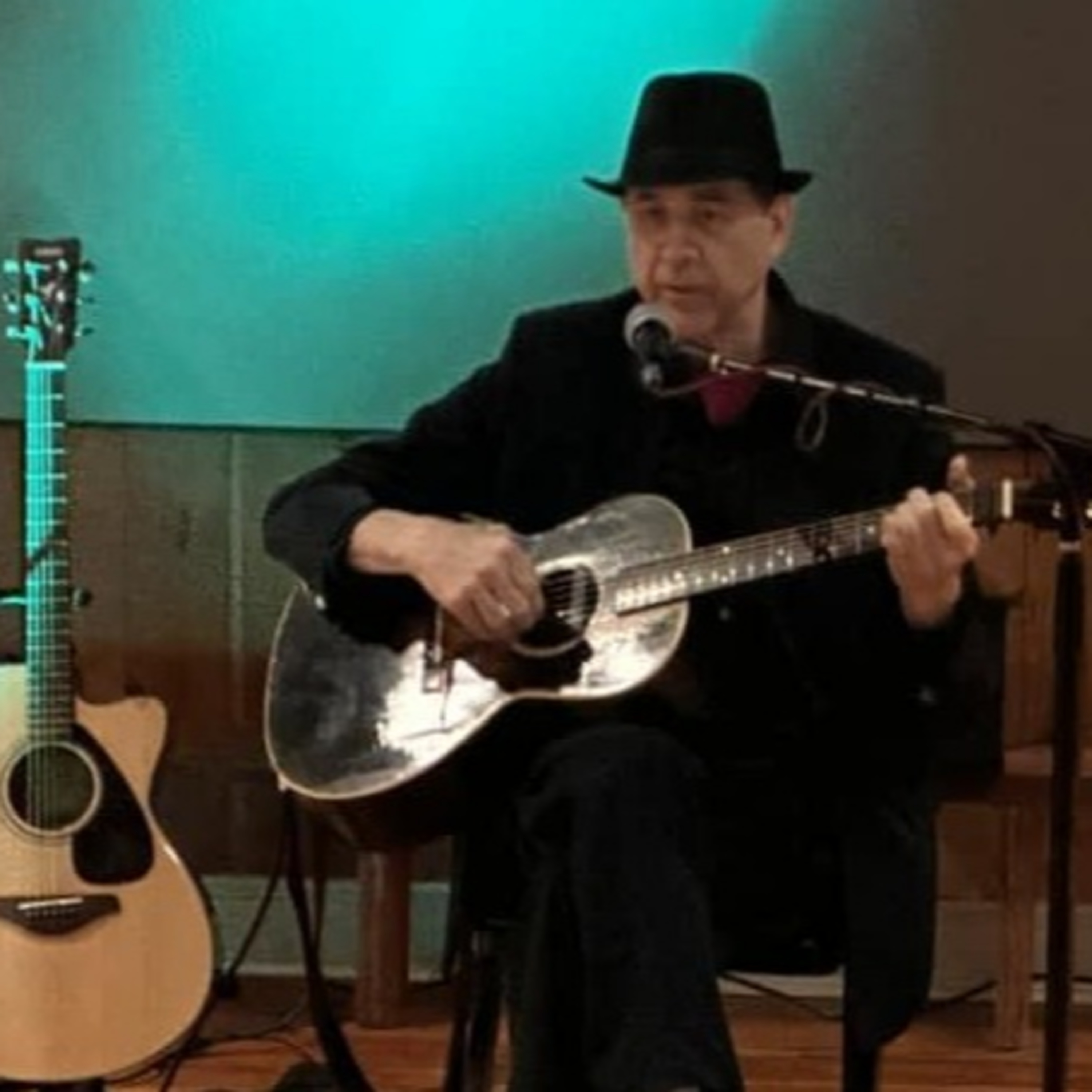
In this episode of the "Keep a Dream Flying in Woodstock, 1969" podcast, host Scott Parker interviews Eric Brown, a Woodstock attendee, musician, and photographer originally from New York City but now living in northern Alabama. Eric shares his journey to Woodstock in 1969, explaining how he and friends walked and hitchhiked from the city after traffic stopped miles away, arriving to find the fences trampled and tickets no longer collected. He reflects on his early exposure to 1960s music, recalling concerts by Judy Collins, Janis Joplin, Pink Floyd, and the Rolling Stones, including specific details like Mick Jagger's frustration over a lyrical mistake. At Woodstock, Eric stayed near the stage, taking photographs under the camera boom, though he admits he didn't know most performers well. He also discusses his life as a musician, attending open mics, and his connection to the Woodstock community, noting that alumni are welcomed at reunions. The conversation touches on his background, from growing up in Manhattan to living in Scotland and India, and his current slower-paced life in Alabama, where he enjoys traditional music and mountains.
[Music] Happy folks, this is Scott Parker, near listening to another episode. It keeps a dream flying in Woodstock, 1969 podcast. And with me, as always, is the man with well over was it 12,000 now? Yeah, of what's that? The legendary, the man the met the legend called it. Our ladies and gentlemen, into crowd cheers and applause. I hope you're putting that in when you edit. Why should, actually, they do on the back. Our guest today, from, are you, was it Alabama? I love Alabama, northern Alabama. That's for the cause of the scenario. Yeah. All right, we got to get into that. But, I originally from New York City. Oh, yeah. Okay. From Alabama, but originally from way up this way, he took pictures of Woodstock, he's a musician. He went to Woodstock, obviously. I mean, what else can you say? The man the met the legend. Eric Brown, ladies and gentlemen. Well, thank you. I've never heard myself refer to as any with Smith. Okay. Just this guy. This is a little guy in the Bronx. Yeah, so, you know, it's funny because when, when I talk to people who went to Woodstock, a lot of people were from the city. And you can really hear that on the, on the tapes that were made of the, you know, if you get, if anybody out there has the 39 CD box set that came out, that ridiculous box, you know, you hear a lot of the audience commentary and stuff like that. We're the video that I have. And a lot of it is obviously, you know, New York City from the Burrows. Did I know that kind of thing? I was born in the Bronx, but I grew up mostly as a teenager in Manhattan. Yeah. And I lived all over the country since then, and even lived in Scotland and India for a while. But, uh, wow. But now I'm kind of settled down in a place where there's a lot of mountains and music, a lot of traditional music, which is why I moved here. Life goes at a slower pace down there, doesn't it? I don't know about that, but there's, I don't know if I'd want to live in New York City anymore. I don't, you know, I live in, in Waterbury, Connecticut, so I'm like 90 minutes away. And even I'm going to the city less these days just because, you know, I mean, it's, I'm 54 now and it's getting to be a little bit of a hassle, you know, and to deal with it all. You're a young guy. Oh, yeah. I don't feel young. I kind of feel young sometimes, but I'm a, I'll be, this month, I'll be 75. Oh. You would have no idea from looking at you, like literally no idea. Thanks. I, I look great, young. Yeah, I tell people that's because I married late. That'll keep you young. Yeah, I look older than you do. Yeah, now I'm single, so that's like kind of wearing the one ring, you know, you. Yeah, I hear you. Yes, yes, yes, long as you keep the one ring, you're going to stay up great. That would that line goes up to my wife, Michelle, a giant Lord of the Rings stand just like me. I have an entire room decked out that way, but. Oh, do you play a lot of music down there now? I do. I go to a lot of open, open mics. Someone actually wants to pay me to play, but that's not what I do usually. I just go places and I visit, I support the local talent. And usually your occasionally when I'm there, they'll ask me to sit in because they know I always carry my guitar with me. Yeah. I know, but that's great. I have a little band up here. We just established on our last interview that Paul is still playing the bass. So that means Eric, you've got to come up here and you'll have to play at at Yazgers or something next year. You know what? I was waiting till the. I missed it. I missed the, you know, the 75th, that'll be in another 18 year night. 14 years. Yeah, 60. I missed all the good reunions, but probably by the time I get there, I'll be like, there'll be five people there. Another, you know, the 55 was somewhat subdued. 50 was, was big. That was the, Paul, you will remember the 50th. Yeah. Yeah. That was crazy. I didn't go. Oh, really? Yeah. I thought you went to the 50th. You didn't go to COVID, I thought. I didn't go to COVID and didn't go to the 50th either. Oh, Gerald couldn't get her instructions, you know, the way I, it sounded like it was going to be a giant mess. And I, I'm not carrying all that camping gear down there and there by myself. So it was a giant mess. No. Maybe I'll try to get there for the 60th. You should. You know, if you do, then, you know, we can put you on the stage and play. Really? Yeah, sure. I don't think it was anything about Gerald's place. Oh, then I could say I played at Woodstock. Yeah. I mean, you know, anybody who went to Woodstock is kind of like royalty over there. You don't have to pay to get in, you know, like any, any of that kind of thing. Really? Like we caught the alumni, we called them. So any of the alumni, no, you don't have to pay or anything. You just come, you do what you want at your place. Oh, great. Well, that's, that's fun. Oh, it's like, just you want me to take the way back machine to 1968. Yes. Yes. We'll get the key body out here. [LAUGHTER] Is there, what, what's the pop? I said, Mr. Wizard, take me back. [LAUGHTER] Go for it. So how, how does the boy from the Bronx wind up? I mean, you were raised primarily in Manhattan. Yeah. But, I mean, what a time to be in Manhattan and in the city at large, because, you know, if you're coming up through the '60s, all that music is there. Oh, yeah. And I was mostly raised by walls, but I did. I went all over the city. I was 15 cents and you could go from Brooklyn to the Bronx to Queens everywhere. Now, at the time, and when I was growing up in Manhattan, I helped start a an amateur astronomy club, which is now one of the two major amateur astronomy clubs in the entire New York metropolitan area, from Long Island to New Jersey. But at the time, it was just, for high, we started just for high school students. Yeah. Which is why I had to step down as president when I went away to college. Sure. And, in 1969, I, there was someone, he was really an acquaintance. I don't even remember the fellow's name. But, he had told me about this, this concept that was coming up. And I said, "Oh, I'm going to get tickets for that, and I'll go with you." Yeah. Now, I was a little equated with music seen by that time. Back in high school, I knew almost nothing about it. I think I heard about the Beatles first in 1965. But, eventually I did. I went to University of Michigan the previous year in August of 1968. And, I had already seen some concerts. I remember the first day I was there. I passed by, I was working along the northern edge of the Quadranco. And I saw a sign that said, "Foke music, $5." Which was a lot for a concert back then, actually. Yeah. Let's see if that's for the bottomers. Yeah. But I went over there. And it was a large room in this building. And it was mostly empty, but there was a filled with floating chairs that had been set up kind of on a slant. So, I was facing toward one side of a long edge of the room. And there was a single floating chair there. I don't remember if there was a low dius or stage, but there was one chair. And I said, "Townline, I didn't even know who was going to be playing. Just paid my $5 and went in." And a young lady came in and she introduced herself as Judy Collins. Oh, wow. And the only other concert I'd think to was a Carnegie Hall concert of Tom Paxton. Oh, love Tom. Yep. And if you look up his concerts, you won't find it there. But I checked my memory. I contacted his manager and said, "Oh, yes. Tom says he did do a recital at Carnegie Hall." I think that was in 1966. Anyway, I digress. So, back in 1968, I was at this concert of Judy Collins. And that was the first, I really, well, the first actual concert of that type I'd been to, aside from that Tom Paxton recital. And I don't remember much about the concert at all except that she played both sides now. It was great.
And I had been to the previous year in that first freshman year of college, which I went wild and completely screwed up my academic year. But I heard concerts by Channis Chaplin, Pink Floyd, Rolling Stones, and even see the birds local band called the MC5. Oh, yes. Kick out the jams. They were not, I didn't like them very much. They were the beginning of punk along with, uh, New York favorite sons and daughters of Alvin Underground. Oh, yes, yes. Yeah, I never saw a vote with Underground concert, but I did like their music. We had the banana album when I was in college, we listened to everything. We would listen to a lot. I mean, my, the next year I joined a fraternity, kind of an animal house fraternity, and we did what we thought was masculine and listened to a lot of Pink Floyd. Yeah. A lot of Pink Floyd. So Pink Floyd was one of the concerts I went to. I went to a concert in Detroit of theirs. That was the one where the, uh, fellow, what's his thing? The front man, Roger Walters. Yeah, Roger Walters. He hit the gong and it knocked it over and he got furious and kicked it around the stage. Apparently that's a famous one. That's so great. Yeah, there's no, um, I collect bootlegs of Pink Floyd. And there's no tape of that show, but that's a famous incident where the, you know, because at the time they had the gong ringed with, with fire like, you know, they would just set a match to it. They had stuff on there that, um, you know, was going to be flammable. And, uh, apparently it didn't work properly and Roger lost it and just took it out on the board going. Well, actually, I don't remember that I, I don't remember fire. I do not remember fire. Oh, maybe you're right. Maybe you're right. Oh, no, I don't think I think that the problem was that the fire did not, it didn't take for whatever reason. Maybe they didn't put the stuff on the gong. Well, this one fell down. The gong fell down when he hit with the big hammer and knocked it over. And he was really pissed. Yeah, because that was the whole like that thing. At the show at that time, Paul, if you don't know, it's a song called "Set the Controls for the Heart of the Sun." And, um, one of the big, climactic moments of the Pink Floyd show at that time, just visually. This is before they had flying pigs and all that stuff. They, you know, he would, he would hit this, you know, it was this big show with this gong. So if the gong fell down, I can imagine how angry he was. That was pissed. Yeah. It's interesting that it's the little mistakes that make you remember the more memorable, make the concert more memorable. Sure. For instance, when I was at that Rolling Stones concert in Detroit, I remember I was sitting very close. I left to one side, stage right. And Mick Jagger was playing midnight rammer, I was saying nightrimmer. And he made just a little mistake. I don't know if anyone else noticed it. But, you know, the part where he goes, "Hit it in the midnight." Yeah. Well, he made a mistake and said, "Rammer." Oh. And he can see on his face, he kind of went, "Yes." I was impressed by that because I thought what he cares so much about his music that he's a little like piff. It's piff and so for making that mistake. Yeah, it's funny because you would not necessarily associate the stones with that level of, back then, with that level of professionals, because they had a lot to do with influencing what became punk and all that stuff. So they would sort of more laissez-faire attitude. So to hear that is very cool because, you know, that's the image that most people have. But no, they were listening to what they were doing. I was very impressed by that. Now, Janice Chopin, that was, that concert was the night before her first Ed Sullivan show. Ah, yes. And she pretty much phoned it in, I think. I mean, she was still good, but she was drinking whiskey out of a bottle. She was drunk, obviously drunk. She was dancing around the slage and, and there was a, who was that, the other opening act was something blues experience. I don't remember this project. Huh? Blues project? No, no. I could find out for you. I'll let you know later. Yeah, sure. I remember. I still have the ad for it. Oh, wow. Let me add in here that Scott and I are both coming down there to visit you. We're going to go through everything you own and find out. It was the James Cotton Blues band. Oh, that's that. Hey, I, it's my show. I have a copy. I have a photo here of the poster, which you fight. If, I don't know, can I show poster here? You might be able to. I do it. Just hold it up. No, it's on its computer. It's on my computer. I can paste it. I can paste it. I've never actually done that. I know what I can do. Yeah, I'm zoomed. I can just turn the camera around. You just send it to Paul on his, on his messenger. Okay. That's great. Yeah. I just got a photo. Yep. So if you're, that's great. And I have, and, uh, oh, yeah. I'll send you a photo of the one of the reviews that showed how bad she was. I mean, she was, we still appreciated the music. And so I don't want to say she was bad, but she played three songs and then she left. That was it. Three songs. Oh, there it is. I see it. Well, you still have this poster? I don't have the poster. I looked it up recently because I was doubting my memory because all these concerts I'd been to, I went to the websites that talked about the concerts. I couldn't find any of them. I couldn't find the Rolling Stones concert. I couldn't find Janice Chopin. And, uh, I finally tracked them down. Couldn't find Tom Paxton. Yeah. So I turned out my memory was correct after all. Well, yeah. I didn't go to those concerts. And I'll get back to where Zoom. I've had shows that I've went that I've gone to over the years that I can't find any, any historical evidence of, you know, like on the internet of ever having happened. But I know they happened. I have ticket steps. It's funny. I had the ticket sets. Yeah. Sure. And somebody just sent me a bunch of hand bills from the film or, and just because they wanted to send them to me. And I thought that was like the coolest thing ever. You know, like to be in the city, in the mid to late 60s, and even be able to go to the film or East as run down as it was, famously run down. It was the old village theater for people who don't know out there who are listening. And it had to have been so amazing to, because, you know, all the, all the stars of the day, all the, all the big rock acts and other people too, like Chuck Berry and all that stuff like other, I mean, rock act, but loved playing the film more for whatever reason. You know, it was just a good room for them. Like the Gravel Dad played there 100 million times. And I never been in the film where I wish I had. Yeah. I still have my tickets to Woodstock, but now, of course, they're not worth anything because someone found a, some boxes of like 10,000 tickets about 10 years ago. Oh, no, that's not true. If they're original tickets, and they're your tickets and you went to Woodstock, yeah, they're worth a fortune. Really? No, not anybody tell you different. No. Because, because you hear about people finding boxes of these things and then they turn out to be counterfeits. I mean, you have your, not only do you have the tickets, but you were there. So, yeah, no, those were worth a fortune. I don't have a original set. I wish I still had my Zach Comics from that year too. Oh, yeah, speaking of worth a fortune. Yeah, of course. That's what I was going on. I mean, you must have been pretty well versed in what was going on musically in the city in order to want to go to Woodstock in the first place. Because, you know, for somebody who lived in the city, were you driving like how do you even get to Woodstock? I don't tell you the story. Yeah. Anyway, one of the fellows, and I said how I found out about this. So, I said, yeah, for the tickets, they got the $3, $18, which was a fortune. I bought tickets for the entire weekend. And we, of course, being four kids, no, it was living in New York, no one had a car, even our parents didn't have cars. Yeah. They had a subway was 15 cents. So, I don't remember if we took the subway down to the Yankee Stadium stop or not, but we just basically walked. And we're gonna walk.
to Woodstock. We figured at that time, we were just going to head start heading in that direction and we'd get there eventually. That's how it was like that. Your hiking was relatively safe and very common. So we just took off and we walked across the George Washington Bridge and started walking on one of the highways that we know would get us eventually to Woodstock and pretty soon we got picked up by us at the end, the full of long hairs. Now I guess and we headed out and they picked up another hitchhiker. It was just kind of a street person who later pulled well never mind that part. There was supposed to be no crime at Woodstocks. I won't tell you that story. No, well you can tell us that I can remove it if you want to. No, I just he borrowed my bathing suit and up there at the fair and then when next time I saw him I said if I get the bathing suit back and he pulled a knife on me. Oh, you was a real street person. He was not a hippie type street person. A street person, yeah. I don't know where I could take that out of the show. I don't mind the one. Because there were occasional incidents like that. There's no way that you could have a half million people in a field and have nothing happen. But nothing happened. He pulled a knife but then I said okay, keep it. Under a bathing suit. Keep the bathing suit. Yeah. That's great. So anyhow, I never saw him again. So not important. Anyway, I was there. Now we got up there. We were driving in pretty soon. We started seeing traffic. A lot of traffic. And before we got to about five miles away, it was bumper to bumper. Eventually the traffic just stopped. Everything stopped. There was no, it wasn't bumper to bumper. It was just stopped. And we were still a couple miles away. So of course we just got out and started walking. We were walking to be with anyway. So we got up there to the fair. And the first thing I noticed was there was no place to give you tickets because all the chain link fence was already trampled down. And we were already kind of late for the beginning. We heard some music going on there. Yeah. So we just walked in. That's how this wise do out my tickets. That's why someone can still have their tickets. Because they never collected them. So you have to have gone, you have to have gotten up there probably Friday afternoon. That's right. Trampled. That's right. Right from the beginning. Yeah, pretty much. But it was after they were no longer taking tickets. Yeah. And now I got to tell you my timeline is confusing. I mean, I know I was there Friday. I know I was here Saturday. I think I left Saturday night. We had no place to sleep. I don't know where or if I slept. Probably did not sleep on Friday night. But we got up there and to me, it was the event that was exciting thing. I did not know most of the people on the stage. I knew because I listened to, of course, in college, music was everything. Sure. You just listen to music all the time. And I know I knew most of them, but I didn't really pay that much attention. He asked me what they played. I don't remember it. Yeah. Would anyone played almost I was right up front for a couple of them like the Johnson Fashion one, which you know is where I took those photographs. Yeah. And I was just sitting right underneath the camera boom because I was shade under there. And the only place I could find to sit that close. Well, there has to be pictures right at Paul. You showed me pictures of Eric there, right? Yes. Yes. Oh, there are pictures of me and never places. Yeah, that it's funny because that camera boom for just for the benefit of our listeners who don't know this. It was probably the first major use of a close circuit TV field to stage sort of close ups of the stage. That they weren't filming anything. They were just broad. The theory was they were going to broadcast pictures from the stage that people way in the back of the field could see what was going on on the stage. And just for historical purposes, there is video evidence that it did work very briefly during Janice Chaplin set. And the rest of the time I don't think it worked at all. So yeah, and people took to that that crane that was that you were sitting under. People took to sitting on it and there's chipmunk who's the who was the lighting director of Woodstock and also the one of the MCs, the guy with the really deep voice. He spent a fair amount of time yelling at people to get off the crane so that they could operate it. Interesting. I thought they were working up there. No, no, no, that was like a real thing. It was an actual camera on top of it. But it just didn't it only worked briefly and then it was a putt. They said, "Do not know that." It was supposed to be broadcast. Excuse me, back at a booth, live camera action there also, so that people walking by can see themselves on TV or get reported and see themselves on TV and also watch what's going on at the stage at the same time. Yeah, those guys, uh, uh, got video freaks, right? Yeah, video freaks. Yeah. That's what they were called. So you were right there. I mean, you were literally you couldn't have been significantly closer to the action than you were. No, Paul has the photos of me. I think there was some that I took right off the John Sebastian album because just as I was taking a photograph of him, Paul there was taking a photograph of me, although he thought he was taking a photograph of John Sebastian, but he was actually taking my photograph. I hadn't taken it. Right. On that point. Well, talk about, you know, your picture being taken by one of the most important people. Talk about your picture being taken by one of the most famous photographers in history. Yeah, he was, uh, and he was up there and, uh, another fellow was up there next to him who I guess was, what was he doing? Um, he must have been. There was, there was a film guy up there. Yeah, he was doing, he was doing film. Yeah. Of, I guess he was, was doing the movie? Yeah, probably. Wadley, it could have been Michael Wadley, the director. With somebody else. I think it was, uh, I don't know. I can look at it. I know the names of, I just sent the photograph of him. Yeah. Oh, do you have the, do you have the picture? Yeah, the picture. I'm apparently identifying him. That's what it is. The, Marty Scorsese was at the front of the stage, but I'm not, I think he only briefly had a camera in his hand. Ah, could be. Yeah. Yeah. I was taking that, this photograph that I just sent you, I took that just as, just as, uh, Henry was taking this famous photograph from the big Woodstock, that became the famous Woodstock poster. I just sent that to the earth. Yeah. Oh, during the Johnson fashion set. Yeah. Yeah. It was Richard Pierce. Richard Pierce. Yeah. Yeah. Never knew any of this. There was also a, a, a documentary, recent documentary called, of Laurel Canyon. Oh, yeah. And I'm actually in that one too. He's sitting in the same place. So I was able to see myself. Those few photographs. Is that your picture, Eric, that I see on the, well, the one that shows Johnson fashion from the back, there was Henry. That's Henry. And the one next to it was taken by me. It almost the identical moment that the, that Henry's picked. You could look at the position of the camera and his hands and everything and, and you'll see they're all, they all match. Look at that. Let me look around behind him. You can't get much closer. Yeah. Yeah. I was, um, I could, you can see me in that photograph too. If you look at Henry's photo. Just to the left of the camera boom, you see me holding my camera and, uh, interesting. That, now that was actually not the same second. It was obviously just a couple of seconds later because by that time, I was pointing over to the left. Yeah. And I took a picture of the backstage, uh, the backstage area, which included a scene of Grace Slick. That is so cool. Yeah. I just said that to Paul also. Wow. Who else was that was, um, not just Grace Slick, her, her famous, her friend.
Who's oh Grace grace is for a man Sally man Romano. Yes Sally. Yep She was Spencer Dryden's well later. She was Spencer Dryden's wife the drummer from the Jefferson Airpoint. Yeah, she's she's in that photo too that I said yeah and one of the big Film cameras that they used to film the the movie I guess was right next to them So it's a bit of cinematic history there too and next to them were a couple of other members of the Of the Jefferson Airplane Yeah, I think I think Spencer was up there there's there's some pictures that I think Henry took right Yes Yeah, Spencer was up there because Sally was up there and Yeah, there were a couple I can't or came in the only one that wasn't on site for quite a while was Marty Ballin because I have video footage of them trying to Get him to come out of the motel that they were staying at the hotel and He just wouldn't do it. Oh look at that There you can see you can see Sally and Grace Is that Richard ears with the camera? I think so but I can't tell because I can't see his face. Yeah, let's see in the back there the the gentleman with the Afro That's snooki flowers from Janet's job on the left. Yeah, yep And I can't tell who that is next to him, but Well, he's the camera's a he's a cameraman's assistant. I don't know who it is. Yeah, he's checking the light He's got a head of light cage there. Yeah Oh, yeah, that's definitely snooki. He's unmistakable Yeah, you can't yeah, you can't miss that That's right. It's good. He's someone you said. Nookie flowers. Yeah Yeah, he played in Scotland. Yes, Janice joblin. He he Actually performed a song on his own during her set and it was the only time Just for the benefit of the listeners out there. It's the only time. I think Janice really enjoyed herself at Woodstock was when he was singing I don't think otherwise. I think she was kind of miserable all the way through By the way One thing I saw very few things I have left I lost more than most of the photographs. Yeah, I took there But I do have those tickets somewhere. I also have the camera I was using Oh, wait, this is the nicker mat the nicker mat that I used to take those photographs. Is there any film still in it? You forgot? I have no I had all those know that would be great, wouldn't it? Yeah But no, I can't it'd be nice if I could if I could still I forgot how to open this thing up to find out I think there was some kind of pull this and Oh, there we go. There we go. No, unfortunately Well No $100 bill or anything huh No, it's it's hard to find film at all anymore. Yeah, it's very expensive if you do and we do and you have to have you know We're gonna get them developed so It's modern cameras make much better photos anyway The telephone those huh some to telephone is just as easy to use. Yeah, that's all I use usually. Yeah But that's what I had at the time. I love this nicker mat. So I still have it There's a there's a certain field though, isn't there that film has that digital can never Yeah, I guess so it's like vinyl records. I guess yeah, exactly vinyl versus digital. Yeah I mean, you know I've I've tricked myself again maybe because I have over 10,000 records at home, but I I've tricked myself again into believing that vinyl sounds better than CD it probably doesn't But you know my hearing is so shot from years of playing That it doesn't matter what it sounds like really I I went to one really loud concert that pink Floyd concert. I went to yeah, and I got that day in arbor Got out of the car. I heard crickets. Oh Yeah, tonight. Oh, that's that was the year damn hearing damage. Yeah, but after that I would very careful and I still have relatively good hearing Because I did not go to a whole bunch of loud concerts Now when you were in an arbor did you ever get a hold of or or associate with John Slaire or the white Panthers? No, but I live near their Not the white Panthers. No, but they were the the rainbow Yeah, party. Yes. Yeah, they had a house Nearby and sometimes you would walk by And you would see the torsos of a couple fornicating up in the top window We're not there not their faces, but the rest of the body. Yeah, I mean, why don't I know if you needed to see their faces Didn't you see any One time I think I saw that I was Tripping on missus and it was like, oh, yeah, what's that? I don't do this stuff anymore by the way I haven't touched an elixir substance in over 50 years every everybody like you know Well, not everybody but there there are a number of people who went to Woodstock uh That didn't do it for years and now they they call it microdosing you take a tiny little bit I'm not sure what it was for you, but you know, I was I had an operation and I was having spasms Yeah, I went to Colorado to visit my niece and she told me oh, I have this stuff Just take a hit of this because it helps with those basms I'll just give you the not the kind that makes you trip. Yeah, I'll give you The other kind that's just for medicinal work. So I just took one breath Healed in for like five seconds, let it out I had The most horrible Like almost a psychotic break type of trip from that one So is nothing like what I had what we had back in the day. Yeah, you know, it was like a hundred times stronger And she said oh, I give you the wrong kind Thanks a lot thanks a lot. Okay So I was supposed to go nopper not that Now Woodstock is actually the first time I Trying marijuana. I didn't really use marijuana to the point where I Eventually kind of destroyed my college career Had Michigan that was the next year Yeah, it was but uh, I tried marijuana, but Actually, it probably wasn't marijuana because it had no effect at all So the next uh next year is oh, yeah marijuana doesn't affect me and then I got stoned It's probably a regano a regano was you know, but like again for the benefit of our younger listeners out there who don't know Like what life was like in the days before marijuana was was legal in most places If you wanted to buy stuff sometimes people would charge you if this is in the 80s 35 dollars for a bag of what turned out to be a regano and if you really like seasoning Then that was really good for you, but if you wanted to get high that probably was not the way to go Well, it's not you're right But it looked the same It did look the same yeah I mean, you know you wouldn't really be able to tell And certainly the teachers at school weren't always able to tell so what's your new once you knew you could tell right Like a girl. Yes, there were scenes and stamps and also is it fun good stuff in there. Yeah I mean here's the time This was in 1969 a lid Which was I don't know if it was announced, but it was Orfingers tall No, it's a lid or fingers or a time A lid was the boot black boot boot shoe polish of the time yeah One of those little round things you filled that with marijuana that was Code a lid and that was $15 at the time Lot of money Well It lasted a while it was a trophy amount of marijuana Yeah, he does grass or we just called it grass We're weed I think it was just What the stuff that you add in the 60s was probably what I would describe as friendly or stuff then what oh You get now yeah for sure It was just gross sized stuff you find it everywhere yeah you find it it was a weed and uncut Yeah, yeah, you just pick it and try it There was anyhow So I guess where was I what when I was um It was tennis chopper and And one more one more thing about Michigan before we leave there and go back to a battle During all of your your going to concerts did you ever go to a Frank Zappa concert? I know I never did But I know that I remember if you like progress Yeah, there was a There was a coffee house
there and those days at coffee house was a place he went in you drank coffee. The hangout though. Yeah. And now it was you just talked to philosophy and listen to folk music. Yeah. And Doc Watson and his son, Murl. Oh. We're playing at that coffee house. I think it was called the arc. Yeah. Yeah. That's right. It was. You're right. That's crazy. You got to see Doc Watson and his son. Who was the other thing? He had his old hair. He was thin at the time. Yeah. And he had just learned to play the banjo because Doc talked about it. What? Yeah. My son, Murl is pretty good. He just just learned to play the banjo recently. And he's playing it pretty well. That's crazy. I mean, you know, like, I know people killed to go back in time. Oh, yeah. I'm one of them. Because that's what you know, like that was a, and we were doing an interview a couple of weeks ago. Paul, you'll remember where I sort of postulated that that part of what made Woodstock what it was was that it came at least partly out of the folk movement. And those coffee houses where people were talking, Philist, you know, philosophical things and all that sort of stuff. And I think the germination of the idea that you could bring all these people together in this one place and have a sort of power that was your own came from that folks scene, I think, because I think a lot of rock fans, you know, they were just they didn't really care. Like they they wanted to hear rock and roll and that's it, which is fine. You know, that's fair. But, but I think that it came from that folks scene, which you experienced firsthand. Oh, yeah. It was a wonderful time. And of course, being in New York City with the West Village in 1968, 1967 was a magical, magical place. Oh, yeah. I mean, you couldn't even, I mean, you know, from when I mean, it was happening before Dylan came to the village in 61, but after he started to rise and all of the young people started to come in and they were playing, you know, people like, you know, Stephen Stills and people like that, like all the people who came through the village at one time or another. And they were just like, hey, then obviously another example of that just amazing like on any given night, what you could see there. Also just walking down through the street. There was a head shop and a poetry shop and and it was just kind of a, it was the, it was basically hate as per the east. And so, what Frank's that was said about it too, because the mothers, the mothers of invention had had a, a gig at in 67 at the Garic Theater down in the village. So the others had a gig down in the village in 67 at the Garic and they, you know, Frank said that he saw in the spring of 67 that evolution that came from like the pure sort of folk coffee house thing in the village. And then they went to the shops opening for hippies that were, you know, where you, where you came up through the village and that whole scene, like that's the sweet spot right there. Yeah. And there was just a moment in history that was amazing to live through at the time. Yeah. And nothing like it since. I mean, what, what attracted you to Woodstock in the first place? I mean, did you have, and I mean, you couldn't have had any idea what it would be. No, but as I said, having just spent the year at college, you know, music was everything. And here's a place to see a lot of different bands. Well, at the same place. Yeah. So definitely wanted to go see that. That's why we're not there. Yeah. I mean, you know, people, even people who put the festival on like like Paul, you know, Tisha, Agri, who was Michael Lang's assistant, Michael Lang was the guy who really put Woodstock on made it happen. He was one of the four. And, you know, we talk all the time about what brought those people there and some people say, well, you know, there were advertisements saying that you could smoke all the pot. You want it. And, you know, all this other stuff. And I said, no, I think at the end of the day, I think it was just all these, these musical acts were going to be there in this field out in the middle of nowhere. And people just wanted to go. And I, you know, it's just like a common sense thing. It would be that way now. You know, in a field somewhere. Coach, I'll, you know, same thing. I mean, I don't know, you know, what other attraction there was. I mean, yeah, there were some people that got there. And then they felt trapped by it all. But most of the people that were there just saw this massive influx of people and thought, you know, wow, there's a lot of us. I would have stayed if I had a tent or something, but after the two days I was so exhausted and they were. Ride out. So I did. So I missed one of the day. I missed when everybody was money. Oh, Sunday Sunday. Yeah. Yeah. There was there was a big rain storm on Friday, but it wasn't like the Sunday one. It was. Yeah, because the Friday one was overnight, you know, and the field before that was still in fairly good shape. By the time you get to after the big rain storm, they can see in the movie on the Sunday. Yeah, a lot of people left at that point because they were just like, nah, enough. Too much. I mean, only the people die hard committed people. And maybe they should have been committed were. I couldn't imagine, you know, like I, you know, that's some intestinal fortitude right there. I mean, I just, you know, you got a hand at them. But the fact that you stayed as long as you did is pretty damn impressive because right, we were just talking to not a felonberg who has a radio show up in the cat skills. And she went to Woodstock and she decided to go home after the rain storm on Friday because it was just too much of a mess for her. And it wasn't even that much of a mess really if you see like, you know, the bands like on Saturday, John Sebastian, Santana, all those guys. It's not that bad really. But Sunday it just got impossible. There was a lot I missed. I, I never saw the place where people went swimming. I don't know where that was, for instance. It was a way from the stage. It was. However, there's one thing I remember that I like to share with you that was amazing. A bit of Woodstock history. I am sure thousands of people remember this. But I think a lot of people don't realize that this was the first time it ever happened in a concert. As far as I know and I've tried to find other examples I haven't. It was certainly novel as far as I was concerned. It was toward evening. It was dark. And the fellow on the stage was that wavy gravy. I didn't know. I think I know what you're going to say. It was probably John Morris. The guy that you see in the movie for people who are listening. The guy that you see during the big rain storm on Sunday, which you weren't there for. The guy that you see on stage telling people to get off the towers and try to keep calm because it's going to, you know, this storm is going to blow through. I think it was John Morris. I'm pretty sure I know what you're going to say. Yeah, probably because I said it was dark. Yeah. And it was I just thought of him as the MC. I didn't know what he was name. Yeah. Oh, you wouldn't know. I didn't know Henry Dill's name until maybe started talking about my photos. Oh, you're better off not knowing some of this stuff. Trust me. Anyway, he says, hey, everybody. Anyone who has it just, just see anyone has a lighter. We had big lighters back then. Yeah. Turn on your big lighter and hold it up. And everyone did. And the entire. It was a big bore. A big amphitheater where the audience was. And it was like a 10,000 or 100,000 stars in the sky. It just filled everyone with the holding up their lighter. And it was everybody just gasped and knowing it was the first time that had been done, I believe. And there was just a roar that went through the crowd when they did that. So everyone held up a light. I can send you an audio of the moment that that happened because that's how I know it was John Morris because he said he was inspired. He says on the tape. He said, you know, tiny Tim did this thing and fill it. And I want to see if we can do it here. So if you got a, you know, highlight, like, you know, and they did it twice actually. And Melanie, you know, Melanie, Safga was waiting to go on on the side of the stage. And she said she saw this and that's what inspired her to write candles and rain. She literally wrote it backstage at Woodstock.
sitting at that time I was way way in the back at the far back so I could see everything out in front of me. Oh that must have been it. It was a brand of what I was saying. That was one of the what they call a peak experience. Yeah. One of the peak experiences I've had in my life was Woodstock in general but that moment was one of the particular ones. I'm gonna embarrass somebody publicly for a minute. Josh White or the Joshua Light Show reminded me that last year when we were in Philadelphia on July 4th. Tiny Tim came out on stage and did something. None of us ever thought would happen. Let's see if we can do it again. Everybody in the audience pull out a match and light it up. Let's see how bright it can be. Maybe that's only for Philadelphia. Come on we must have more matches out there. Oh that's it. Wow. Hey look around at that. One two three four five six seven eight nine ten eleven. And that's our show. Keep the DreamFloing a Woodstock 1969 podcast was produced and edited by Scott Parker. Your hosts were Johnny Hudson, Paul Dittmer, Aaron Sheer and Scott Parker. Keep the DreamFloing a Woodstock 1969 podcast is not associated in any way with Woodstock ventures or any of its entities. Come and check us out on our Facebook page. The group is called Keep the DreamFloing where we keep you updated on various things that we're doing and give you a heads up when there's a new episode coming so check that out. On behalf of all of us here at Keep the DreamFloing this is Scott Parker saying thank you so much for listening and we'll see you next time. [Music]
Podcast Summary
Key Points:
Scott Parker hosts the "Keep a Dream Flying in Woodstock, 1969" podcast, interviewing Eric Brown, a Woodstock attendee, musician, and photographer.
Eric Brown, originally from New York City but now living in northern Alabama, attended Woodstock in 1969 as a young man, walking and hitchhiking from the city after tickets were no longer collected.
He recounts his early concert experiences in the 1960s, including seeing Judy Collins, Janis Joplin, Pink Floyd, and the Rolling Stones, noting memorable moments like Mick Jagger's mistake during "Midnight Rambler."
Eric describes the chaotic journey to Woodstock, arriving after fences were trampled, and spending time near the stage, where he took photographs under the camera boom.
He discusses his life as a musician, attending open mics, and his connection to the Woodstock community, noting that alumni are welcomed back for reunions like the 60th anniversary.
Summary:
In this episode of the "Keep a Dream Flying in Woodstock, 1969" podcast, host Scott Parker interviews Eric Brown, a Woodstock attendee, musician, and photographer originally from New York City but now living in northern Alabama. Eric shares his journey to Woodstock in 1969, explaining how he and friends walked and hitchhiked from the city after traffic stopped miles away, arriving to find the fences trampled and tickets no longer collected. He reflects on his early exposure to 1960s music, recalling concerts by Judy Collins, Janis Joplin, Pink Floyd, and the Rolling Stones, including specific details like Mick Jagger's frustration over a lyrical mistake.
At Woodstock, Eric stayed near the stage, taking photographs under the camera boom, though he admits he didn't know most performers well. He also discusses his life as a musician, attending open mics, and his connection to the Woodstock community, noting that alumni are welcomed at reunions. The conversation touches on his background, from growing up in Manhattan to living in Scotland and India, and his current slower-paced life in Alabama, where he enjoys traditional music and mountains.
FAQs
The guest is Eric Brown, a musician and photographer who attended Woodstock in 1969.
He was born in the Bronx and grew up mostly as a teenager in Manhattan.
He and friends walked from New York City, crossed the George Washington Bridge, and hitchhiked. They eventually walked the last few miles due to traffic.
No, the fences were already trampled down when he arrived, so he walked in without using his tickets.
A street person borrowed Eric's bathing suit and later pulled a knife when asked to return it, so Eric let him keep it.
He saw Judy Collins, Tom Paxton, Janis Joplin, Pink Floyd, the Rolling Stones, and the MC5 during his college years.
Chat with AI
Loading...
Pro features
Go deeper with this episode
Unlock creator-grade tools that turn any transcript into show notes and subtitle files.
 PodcastTranscript AI