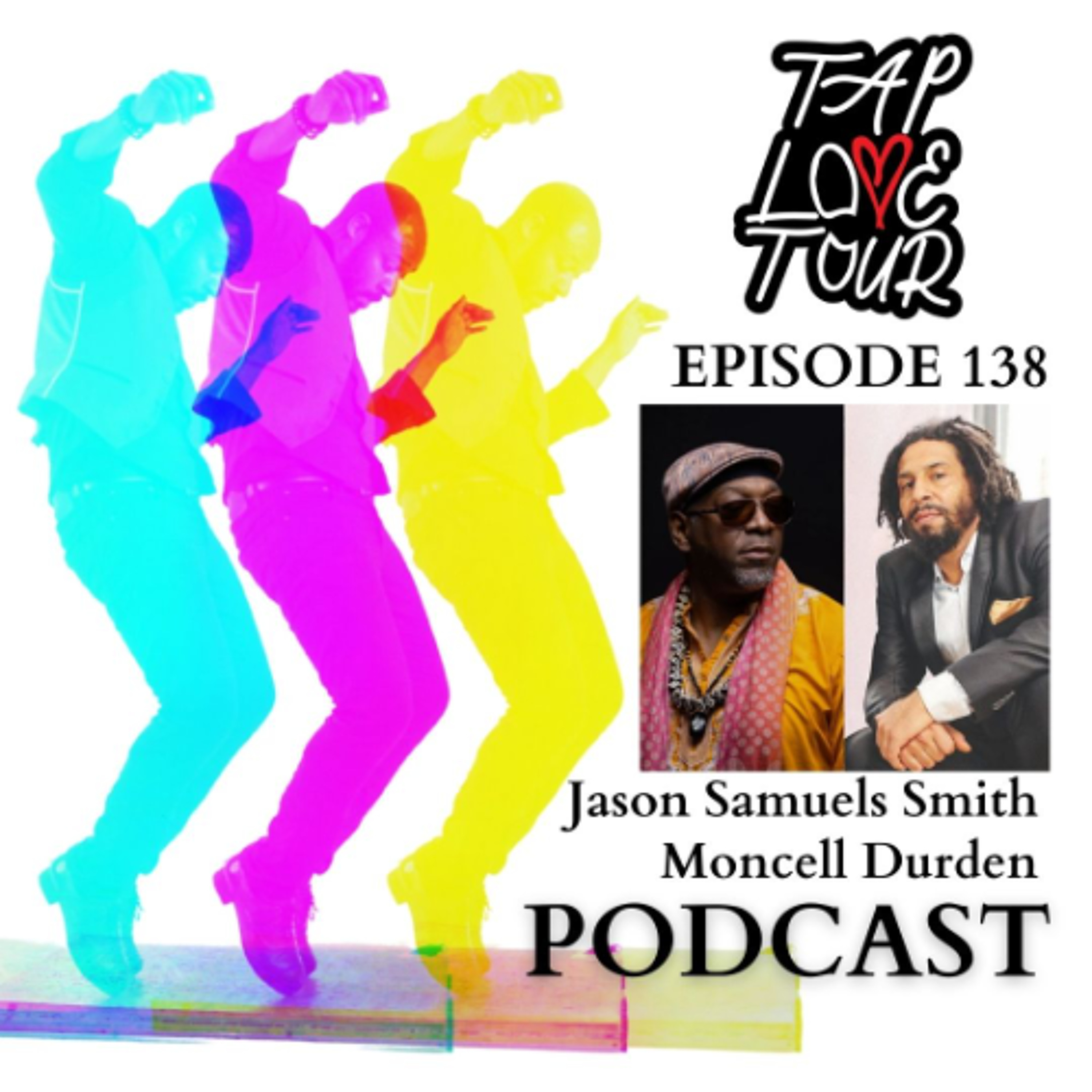
Episode 138: Jason Samuels Smith & Moncell Durden - Rhythm, Lineage, and Reclassification
109m 41s
The conversation explores the contested origins of tap dance, emphasizing Master Juba as a key but complex figure. While Juba was a free Black man from Rhode Island with Barbadian lineage, his influences are debated, raising questions about whether tap dance is fundamentally African, European, or a unique American fusion. Participants discuss evidence of early cultural exchanges, including flatboat dances in New Orleans and indigenous rhythmic traditions, suggesting tap emerged from a convergence of influences in the Americas. The dialogue also touches on broader issues of cultural reclassification and identity, arguing that movement serves as a living archive of history, resistance, and continuity for Afro-diasporic communities. The speakers advocate for a nuanced understanding that acknowledges both indigenous roots and the dynamic interplay of cultures in shaping artistic forms like tap dance.
What's up brothers, what's up, what's up, you can hear me okay? Yeah, I can give you just fine just fine You look good. This is good. I should have saved myself Don't well, man. I'm it's some struggles, but I'm doing well. How about yourself? I'm doing well, man. I can't complain I'm trying not to see you man. Yeah, I've been I've been looking forward to speaking with you I mean I was trying to have this conversation really, you know between us first, but I think Why not I think it's great to have for the people that is Jason time you'll smith and Montsell Durden and this is the top of tour podcast Welcome to the show. I'm your host Travis nice. This is part two. I have an important discussion with Jason Samuel Smith If you haven't heard the last episode then listen practice a little San Cofa and go back and get it okay I was all up in my feelings that last episode Jason's perspective Challenge me as some of the claims even upset me and I and I felt I spoke to Montsell about this afterwards Like I felt a bit ashamed for not being able to challenge some of the claims directly and so as I just alluded to like I called One of my favorite educators on the planet Montsell Durden He's joining us today for what I'm confident will be an important conversation a back and forth in exchange a Cypher a Cypher of the minds if you will full disclosure I Do have an overall agenda? I Want reparations and I want justice. I want revolution Reform has its place, but I want revolution. I want to see a world where people lead with love and curiosity not fear and resentment Montsell Durden is a dance educator choreographer ethnographer and embodies historian whose work sits at the intersection of movement memory and culture He is an associate professor of practice at the University of Southern California's Gloria Coffman School of Dance where he specializes in what he calls the morphology of Afro-canetic memory. Let me say it again the morphology of Afro-canetic memory the study of how African diasporic history lives in the body through dance I highly sought after teacher worldwide Montsell is an expert in locking house hip-hop authentic jazz and Afro-diasporic social dances from 1900 to the present He is a member of the pioneering New York City hip-hop group Mop top crew and an alumnus of Renny Harris pure movement one of the most influential hip-hop theater companies in the world Beyond performance in pedagogy Montsell is a leading voice in dance scholarship his writing appears in major academic texts including jazz dance a history of The roots and branches rooted jazz dance and the sage encyclopedia of African cultural heritage in North America With current work underway for the Oxford handbook of hip-hop dance his groundbreaking documentary everything remains raw a Historical perspective on hip-hop dance was invited by the U.S. Embassy to screen internationally That's where I met Montsell that that documentary was kill it kill it kill it in 20 to in 2010 He founded in tangible roots an organization dedicated to preserving and teaching Afro-diasporic social dances as living history Montsell Jordan doesn't just teach he reveals how movement in self is an archive a caring truth resistance and cultural continuity across generations No slouch himself Jason Samuel Smith is an Emmy award-winning Tap dance or choreographer and cultural force Widely regarded as one of the most influential artists of contemporary tap dance period Born in New York City into a legendary lineage Jason is the son of master dancers Sue Samuels and Joe Joe Smith good guy He began performing professionally at age 8 on Sesame Street trained under Savion Glover and worked closely with the late great Gregory Heinz forming a bridge between taps golden euros And its future present his work has earned him an Emmy a dance magazine award the Gregory Heinz Humanitarian award and recognition from the New York Times as Among the years best in dance Jason has performed on the world's most prestigious stages from Carnegie Hall and Kennedy Center is it still called the Kennedy Center Jason is a Trump Trump Kennedy right to London Brazil China and Collaborated with artists ranging from Michael Jackson to Debbie Allen to Pentech to Tres Daz beyond the stage He redesigned what many consider to be the most influential Professional taps you in the world block. What's up? Shout out and continues to impact global global communities throughout Through education humanitarian work and cultural preservation Jason Samuel Smith isn't just carrying the tradition forward He's actively recéping how tap dance looks sounds and lives in the world today without further ado gentlemen So I'm all of in my feelings the last the last the last time we spoke of like I don't even know What's up as down was down as up what I appreciated about the last conversation was this concept of reclassification I think that's very important very relevant You we've all witnessed in our lifetimes this idea of reclassification So I know that like from a government perspective reclassification is a thing personally from an Afro diaspora Perspective I'm aware of being identified as colored and then Negro and then black and then African American I'm not American but you know, you know, I'm saying there's there's a lot of things what I like about that from From inside the culture is it's it's a it's a push towards self-determination You know in a in like a colonial cult in a colonial structure the idea of self-determination is very important And so I really appreciated that about our last conversation the idea of reclassification and an understanding how that can erase history as well as shape something new So with you both on the line right now I'd like to jump right in it. I am a dog with a bone There's really one issue that I'd like to not settle but Raised up raised dust and and look at the parts Tell me about the origins of tap dance was was was was master Juga African Well, I think that's a complicated story. Yeah, right? Because when we get to the slave trade which was very much active at the time The people that He he was associated with were going Frequently to different places in the Americas and trading people This is it's documenting and so You know technically where his family was brought from was Barbados Right now It if you're using a certain amount of conjecture to say that Negroes are particularly coming from Africa or any specific place You can suggest that maybe his family was prior from another place But as far as he even claimed I believe he always claimed Barbados so and then when we're talking about where he's from and who he was personally he was from New England he was from Rhode Island Spent a lot of time in the five points in New York But he was always free right so I guess For me that always brings up the argument of How how did slavery specifically Dictate the foundation of an art form from somebody who's Who gets the credit as being the first who's already free? Right and obviously we know he wasn't the first because he was continuing a tradition That he was a part of so the question is You know Is tap dance foundation in Lee African and European Right and I think that's for me the real question so I say no And I say no because of who he was at least at that point If we're just measuring from master Jewel Boan he was a free black man in America and typically that made you were indigenous to the land Now Where all people that work involved in a development originally from the Americas
No, I don't think so, but I think at its core the dances that have been presented here ring shout Going back to these indigenous dances that were always circled up From war dances to you know ceremonial dances We can trace these these circles the ciphers back To a lot of tribes here in the Americas and then when we're talking about tap specifically I look in New Orleans as a core Location for this thing to start and for to thrive and for to continue to live today So myself what do you think about that? There is a book I can't think of the author's name, but there's a book written. It's not in print form and I can't find it in print But it's supposed to be the memoirs of master juba and in the book this gentleman is Saying that juba is saying His great-grandparent Was aboard the slave ship Sally Slaveship Sally comes from the brown brothers in Rhode Island who decided to get into the thing and sent the ship It's matter of fact it's documented in this book Exactly what happened on the ship I Have the actual because it's held at Brown University. So I got it from Brown University. I have the actual ships logs that says how many of them died In that story it's saying he comes from Guinea they did stop in the West Indies in Barbados to trade Rome the Africans that they got 190 190 Africans 109 of them died because of a rebellion on the ship, which is documented in the story now this gentleman is saying that Juba's great-grandparent survived that and Moses Brown being a quaker was like After that Trieste this man is going to be free I think Stephen Nicholas Nicholas Brown Wanted to wanted to sell juba into slavery in Virginia But Moses was like no. He's he's staying here. He's going to be free Whatever now the story that this gentleman is presenting is that Juba's ray is in Rhode Island at the time and the research of Rhode Island Whatever your cultural background is you were able to observe that especially as a free person and so his coming up Juba coming up under his dad Billy At the at the saloon owned by Daddy low right He was a cussed he was a cussed him to different types of music and was able to observe those his music other people's music cultural dances and so on so forth I won't go into the whole story, but he was shipped to New York via the Lexington steamboat when he was around 10 He met with Pete Lowe who was daddy Lowe's cousin or brother Who lived above the all-max alone? Where Pete has been suggested to home Young juba skills as a tap dancer. He was black. So then the question's like, okay, where did Pete learn from and he owned I'm sorry just to just to add another point because you I agree with everything you're saying and yes I was gonna say Uncle Pete on the the saloon that supposedly Juba was you know getting his chops in so yeah, so yeah, I that part. I didn't know Because he he lists Another name, but um so Like It begs the question where to Pete get it from it also begs the question if John diamond was his One of his rivals where did he get it from um if he wasn't taught by do it so There's there's that and it's like uh did he did he come from get I don't know and I can't find this gentleman that wrote this book into to you know clarify What his research was so conjecture But I will add um, I don't I don't how I can't seem to find it, but There are four to your other point the conversation behind European or African Um, there are accounts Um of Because the the Scottish had the highlander dance um that was really popular is that they did that's I wouldn't have called it tap, but it's progressive footwork um That if you look at it okay like yeah, did I see tap words the similarities now There are accounts of them the Scottish started coming to America heavily in 1700 There are accounts of them in the late 1700s even people who drew pictures because they were if I can find it I will grab it, but I don't know where it is um These men would help bring merchandise down a Mississippi river via flat boats because flat boats could ride over to debris And you can store more stuff However, when they were dance During this journey they were known as flat boat men And they were known as flat boat men for riding these flat boats down because you had keel boats and flat boats Keel boat have the art which would get caught in a debris and flat boats could ride easier So these flat boat men were known to do a dance as they were calling at that time It wasn't their cultural name, but they called the dance flat buddy Which becomes popular throughout the Appalachian Mountains which gets into all the other languages are Highly reclassifications of the dance that you know we we have so that's part of like all right Is there some influence because we're now talking about people who are New Orleans area because those flat boats were used once you get to New Orleans you can't go back up the river So they were tearing the flat boats apart and make houses out of In the lower wards in New Orleans, but To Jason's point again, you're looking at New Orleans you talking about juba in Rhode Island, New York like you know Dancing for wheels also, you know, there's a term. I don't know if you're familiar with myself and I think I brought it up To you Travis was dancing for eels was also Yeah, famous term, you know, used in the Northeast New York New Jersey uh, you know, probably New England area for for the dancers because most of the dancers at that time and again This is before this is leading up to juba where They were fishermen and they they would work on the docks and you know, they were danced for eels and eels were a big part of the indigenous diet again They were sacred so And let me let me say this too Um, I believe that black people are indigenous to America I believe that You know the story of Cool black people are here is complicated because I don't think everybody who's black in America is indigenous to America So let me say that as well But I do feel like every time we describe tap and again, it's similar to how we describe black people in America Is homogeneous and some type of fusion with another culture So are we the only culture here in the Americas? incapable of creating an uh rhythmic footwork dance because it seems like Europeans could do it South Americans can do it You know, you look at the folk dance of mexico. They're shuffling and dropping rhythms so I just Think what makes us so different here for us to need the influence of any um external sources for dance rhythm drumming all the accounts of of us um in in a lot of these first you know explorers and conquerors We're talking about how our people were dancing and drumming all night here and so It's part of the cultural thread here And it just it had me questioning um How much of this culture if any is what they describe it at its core because then or let's go back to the famous Challenge between John diamond and jubah John diamond was known for doing Negro jigs just like jubal was Now what are Negro jigs And where did that also come from Now that's Negro so that's you know again But take but to your point though to your point um you know one of the accounts of jubah was that jubah could do his thing But he could also do
y'all thing and then he could mix them all together. So what is he mixing together? And you know, we're somewhat different on this as a place of origin for us. We're somewhat different on that. But I think you still raise the correct point. Like all of us no matter where we come from, have rhythmic complexities within our cultural practice. And I think, I think there's a conversation in there to explore. It's not what we didn't have or why did they have it. It's all of us were brought here and it converged here because of course, Africans got theirs and they got theirs and Europeans again. And with them here, then there's a like, because you're living in close proximity, I see what you're doing. We got something just like that. And I think what if you were already here, there was something that we're here and to that point. And so that's where I steer veer off from. Yeah, go ahead. Sorry. So the two things, two things I was thinking about. I've been some murders, some murders work as well as others. But then like this book here, I don't know if this is backwards or not. But this talked about a lot of the sculptures that we're done here. Sorry, so put it up again. It says the art of terracotta pottery in free Colombian central in South America. Right. So in this book, I'm going to try to find one of the pictures really quick. It's loaded with photos. But I should have marked the page and excuse me for that. But in this book, it shows you what the faces of the people, you know, they're of course, they're they're going to do what they how they look. But there were Africans coming here, which is why they also had the pictures of them, which in this book, they refer to as Negro, but then when you look at the other faces, like, yeah, those are not. So here's one. Like this one will be a face of a Negro. Right. And some of these are not, some of the other ones are not. But what what is being suggested here as well as Ivan is like, and I think, I think, well, I listened to the podcast for Jason alluded to this. Like early ships were dominated by around the Egyptian area. That's where Europeans were getting their ships from. Once they did start getting into ships, they had mastered it. So of course, they're traveling. And if you're you wonder, it's like, well, why are you when you when you're doing these different faces, you know, what what are what are the faces they're saying? They're suggesting that like you had to see these people, but there's more of what could have been here. Well, to your point, what about the old Mac heads? Let's talk about them. So yeah, they kind of say the same thing with Ivan is like that those faces didn't dominate the land, but they were here suggesting that people were here. Now whether or not they dominate the land, no, these are the largest stone heads. Like, this is my question to that because I've heard this as a part of that argument that these are people depicted that came here, right? And were possibly African. But why would you engrave some of the largest skull like these are some of the most ancient large earth works that humans have done? And instead of depicting your own people, you're going to depict visitors who came here, you know, occasionally the trade that doesn't that doesn't add up to me. What if they stayed? What if those people stayed? I mean, I'm not saying they weren't from here, but I'm just like trying to listen to it and they built them understood, understood. So what I would I do think happened was a contact between ancient Africa and ancient America for sure. I think there's clear evidence. There's proof that we were in Egypt, corn, you know, maze as being a douline. Their deities are all American animals. They're all indigenous to these lands. And so when you start thinking about the connections, because that's what I'm in the the mine state that not only did they exaggerate about the amount of people that were brought here, but they told us the story possibly in reverse. You know, proximity is also a major thing, right? So if you're European and you're looking at ancient Africa in front of you, which is right there, I mean, it's connected to the same land, you're like, that's the oldest place in the world until you come here. Then you're like, oh, wait a minute, there were civilizations, either just as old or older here, which again, to me suggests, and when you look at our agriculture, you look at our ecosystem of fresh water and river systems, you look at the oldest water and in on the planet is in Canada. You look at the largest pyramid in volume. It's in Mexico. I mean, these things are here in the Americas. I don't separate those borders. The same, you know, with the colonial lines. This is the Americas. And so our culture here is a through line. If you look in North America, the Caribbean South America, the carnival culture, you look at that. That ties us together, the parading. That's something that the rest of the world didn't do until they came here and saw us do any. And now they're doing it on the other side. So I'm thinking there's a there's something they're not there that we're missing in the story about humanity and the possible origins of where people come from. Did we start from there or did we start from here? I don't know, but what I would offer as part of the conversation is like, I've been to the Smithsonian. I've been to the library kind of listen to the tapes, the recordings of those who were in, who's in to us as being enslaved. Even with what I was sharing with Travis last time, is this book written by Norris Hill, zill herson of barricone who talks about who talks about being in Africa, talks about the homie who were the ones who actually sold Africans into slavery for trade. Like they were, that's who the woman came, the women, the woman came, the woman came right. That's what that film is about. It's about that group of warriors who were like the most amazing warriors ever. But it then you start to like ask as you're doing like what are these questions like, all right, well, is barricone, is he lying? I mean, barricone's got his real name. But those accounts of them saying like, no, this is where I came from and this is what happened to me. No, I don't dispute anybody who says like, who can who can say, look, I came from here or my people's came from here and there's a through line. My issue is that when you ask black people in America about their background, most of the people that I've asked, they don't know if they have African lineage, but they know they have indigenous American Indian lineage. And so my question has become well then what is blackness if well, of course, but we also consider it certain cultural things. Yeah, appearances. Even though, you know, it's a thing. We know that. But in terms of the idea of even thinking of what's a Native American, you know, you don't think of a black person. You don't think of a Melanated person because the imagery that we've been programmed to see is not that. It's it's Hollywood. And so, and and let me just make this point. A lot of the depictions of like photographs of indigenous people came post 1800 when they were moving to the West. We're not even talking about any of the indigenous tribes in the southeast, north east, the Shinnecock, my people, the Cherokee and the Kataba, the East Shack, like they don't never depict none of us because they don't want us tied to our that identity. They want us looking elsewhere. The term African-American came around when we I was a kid. But yeah, I don't I don't feel the terms of because people don't know who they are. So they keep coming with different terms. And and again, we're in an alignment in many ways. My my my mother's side of family, one of the elders in our family did our whole research. My mother's side of family here comes out of Memphis. But the records show what our elder did that we're connected to people from Mozambique. My father's side of family is is Muscogee again from here. Now my two would be my great grandparents. So my dad's mom and my grandfather, my dad's mom and my! Sorry, my granddad's mom and my grandfather's mom.
I was a grandma or both Muscogee, but they married black men. And like I could show you a picture of my granddad right here, I don't know if we got to think, but so you see that, that phenotype and everything in that part of my family, you don't see that on my mother's side of family. I'm not saying that that defines something, I'm just saying, you know. - Let me ask about your African culture and your family tradition. But how did that story get past along and how did your family do that research? - I would have to talk to that elder. I have a lot of the paperwork upstairs. I would have to talk to my mom, she passed it on to me after he had did it. So I don't have that for you right now, I would have to find that out. But, you know, from what I can understand, however time we've been here. Now according to, according to, if you believe these, if you don't believe these, according to this, the documents in this, which, you know, suggest who was taken from where and dropped off where and all the such and such and such. Mosin Beek was, one of the, Mosin Beek was one of the last that, you know, during that time that people brought over. So it's quite possibly in our family that they came over in the 1800s. But life here, you, whether you migrate here on your own, or it was forced migration, you begin to assimilate to what is here in order to live in this environment. You think the point you're made in the beginning, like the idea of when did you become, I don't know where nothing is right now, when did you become white? If you look at, oh, here's a killboat. So this is a book on kill boats and flat boats and such. And in this book, it talks about how the Irish, it should be on the title, how the Irish became white. So again, to like people forced or brought here, the concept of who was white, who was black, really started after 1640. There was a Scottish man in African and I forget the other gentleman's origin. They were enslaved, but they were indentured, and dentured servitude was meant seven to 10 years. The three of them escaped and were caught. They then gave the two European men extended time. So I think they might have did up to 20 years in a dentured servitude, but the black man, I'm sorry, I can't think of their names right now. They gave him light of servitude, which is what kicked off Africans being enslaved period. But the concept of white and black starts around there because before 1640, you were identified either by your religion or where you came from. And so what I'm bringing all of that up, that coming here, that assimilating, we can see, especially through Lindy Hoppe, we can see the relationship, the obtrace Lindy Hoppe's, not the solo dances, the solo dances come from here, they come from there, they come from all over, but they come from the people and their experiences. But when you look at Lindy Hoppe, and if you look at the 1914 footage of the Texas Tommy, there's a dance in there that they called the round dance. As it appeared in the Lafayette Theater in 1913, it was written about this round dance. The round dance that they're doing is actually a quadril, which is a European court dance. I lived in London and studied it. So when I saw it, I was like, yeah, that's a quadril. They're just doing it with the, whether you wanna say black or African, they're doing it with a different aesthetic, rhythmic sensibility, play, improvisation that people didn't do in Europe. When you look at Lindy, the structure of Lindy is also based off of partner dances that were popular in Europe that were being done here, but people doing them were like, yeah, we don't move like that. We move like this. And I can give you direct movement. I can give you years. I can give you places where those dances came in and people did they thing with it. So again, I still would say there's a level of conjecture even with this information, but it brings about more questions. How do we look at this? - Well, you made a couple of really great points. It's simulation, right? And this is, I agree with that totally because when most people come to America, they're trying to assimilate to America, but what is that? Who is that? It's the original people of this land. It's the black people of this land who have always steered the ship of what is the culture, what is the measure of what we're doing, the language, the style, the dance. Why is it that black people in America move so differently than Africans so that we have to actually blend our cultures together to make something new? - From do we? - We do. What does Afro be? That's a, that's what if you've been, it's Western music tied with African music, with African cultural, either language or melody. But when you look at the, like some of the movement, so I said this to, when I went to see Tereek Naseed's film, microphone check, we definitely gonna get that conversation. But microphone check was interesting because we have a lot of people here that, think they love hip hop, but they love rap music. And so I'm watching Tereek's film, very well made film, but he's using a lot of clips from breakfast at Tiffany, I mean, 80 blocks from Tiffany's, which is a documentary on gang culture. He showed, I have the film, he showed clips, and I was like, yeah, that's, you're showing it to fit your narrative because he presented one scene where, I won't go into all the details, but it was a Puerto Rican and the Black guy, and the Black, the Puerto Rican guy was upset 'cause somebody was trying to mess with his girl. And the Black guy was trying to calm him down. They knew each other to represent it as if they were arguing. Like they weren't arguing. But that's another story. The thing I wanna get to is, I suggested to him 'cause he brought up the Charleston. And in my research, the Charleston comes from a dance called the Yonkity. And you can see how the original dance is done from Guinea. South Carolina had the largest, quote unquote slave port in America. They brought a lot of people from Guinea because Guinea people understood how to cultivate rights. And the marsh lands around here, even when you go to the museum down there, it gives you all the information about how much right, whole thing that built, helped build South Carolina. So that dance and totality didn't survive here, but one particular movement from the Yonkity survived here. It ends up becoming known as the Charleston through different ways 'cause even Ernie Smith, now I hope he get his whole, now I'm sorry, I'm dealing with a whole bunch of stuff in my mind, ain't fully in it. But Willie the Lion Smith, sorry. And Willie the Lion Smith music on my mind, he talks about these kids from South Carolina that come up, those kids were part of Reverend Daniel Jenkins orphanage band. They brought that dance to New York City, New York, not knowing them, you know how we do. If we like Malcolm X was known as Detroit Red, we don't know your name, but we know where you from. So that's how the dance arguably got the name. Now James P. Johnson, he has a whole other, he think he did. So you know, it's again, conjecture. But when you look at that movement, the movement is like that's the movement that came from there and these people came from over here. And so I could like, we have those, but one thing I'm curious about with Jason, and there's something else I wanna introduce, when you think about, you know, the origins of your people, when you think about the Chick-Tall, when you think about Muscogee, when you think about how is there in a, in a razor of these people here, when we say like, not a black, 'cause if they're black, then who would these people? And so is there in a razor of them? Absolutely. If we're saying, no, they're all black. No, so are we just calling them black? So the erasure absolutely happened even within my family. And part of my family branched, my father's, mother's family is from South Carolina. And that's that family is Cherokee and Kataba. And I asked them, you know, many times, are we African? Do we have any African roots? And they said no. And so I believe my family. And then I start to believe the things that I remember, even as a kid, like if I mentioned that I was Cherokee or Indian or whatever, you know, that was something a point of bully. Like people would,
try to insult you and dish you and talk down to you because you mentioned that because again there's an idea of anti-blackness of people who claim to be indigenous Americans. There's an idea that we are anti-black anti-African anti-everybody else and it's more like no we're just trying to be heard and be known that we are still here. The stories of us getting killed off by blankets and you know everything but all of us being driven to Oklahoma, nah some of us stayed and we chained and we were reclassified you know for that and there was a time when it didn't benefit you to really claim who you were you know either you would be moved off your land killed or whatever enslaved because the the indigenous enslavement was also very real. I was listening to something yesterday which was really profound and in 1711 I believe in Natchez, Mississippi the French and the Natchez started getting into it even though they had been living somewhat peacefully up into that point. The war broke out and the French sent you know an army and eventually you know captured the remaining Natchez and the Natchez were like look we'll move off with a land if you you know let us leave or whatever so they were like cool they took the land but they enslaved the Natchez and sent them to Haiti in 1711 so now we're talking about people sent from the Americas there and who are those again what are Haitians? Who are the Cubans? Who are any of the people that we claim them to be with these labels and then I'll just say this too when we use the term Afro-Perovian, Caribbean, Afro you know Brazilian I think that that it further brings us takes us away from our identity either you're African or you're Brazilian. Okay great this great this great. So what's what I've been wanting to ask this question for while because if it is the case like we can go back and forth in terms of the ancient travels from across the waters but once you land at a place at what point do you become indigenous? So that's why I feel if you ask if you start to ask your family your family's your number one source but then your community members that you can confide in and understand your your history and culture they're the next people because everybody else is gonna lie they're gonna tell you you're from somewhere else and they're gonna keep you chasing the carry as opposed to digging deeper into your identity and claiming that and there's so much power in doing so I'm coming to some like this is why I started with just my personal journey but really it's about the dance too because understanding the true identity of tap and being able to present it to people in a real way other than saying okay this is a this is just a mishbash of a bunch of people that came here that's that's so unfair to the culture and the people presiding here who all those people are trying to assimilate into so let's understand when Europeans and Africans and Asians and everybody is invading this land they're trying to assimilate into our culture yes they'll try to eliminate us and move us out of the identity of it but they're still trying to be down with us and this is this goes back to blackface like why would you create a hole in this you know your point Travis of menstrualcy being something that you know you're added to the to the mix I said I met that as I kind of dig against right or they added this my back but what I'm saying is the whole idea is I'm trying to be you right I'm blackening my skin and trying to even know you know making a mockery of your culture I'm trying to imitate you and who is you who are the people that they were actually trying to imitate again these are indigenous and I'm not saying migrated because I understand a lot of people still believe that out of Africa theory that's why I'm stuck you believe that anymore I think that's a theory that hasn't been proven and that's what I'm trying to say is going back to the to European philosophy you're gonna go with something in proximity to you that you understand that you've seen that you're aware of when when Europeans invaded here they weren't coming to study they still don't know about the ancient cultures here they're like oh there's a city here yeah you built another one on top of it or or this is you know the idea of understanding this place as being more ancient than it was is still new to people and so I just think that we have to start thinking about everything differently everything has been labeled one way you have to start peeling those layers back and see you know even then when you talk about 1619 the first Negroes brought they were Negroes it didn't say where they were from these could be black people from Cuba they could be black people from Florida they could be from Louisiana they could be from New England we don't know so until you really you know case by case break it down and then we're talking about Europeans these were not all white people we're talking about 1492 after the Moors fell the Moors were coming here in droves so these were melanated people from Europe working for Spain I mean so melanated people are everywhere absolutely and and and the hard part about the research the hard part about the history is we weren't there so we will never ever ever actually know we settle into a mind-famous like I think I'm gonna go with this the evidence for me is telling me this and I'm gonna go with this and that's really all we can go on but some interesting things I think to consider and again as I said before we were having difficulties you know I'm not an expert in some of this information I'm continuously learning and so I think one of the interesting parts of this is and I'm interested in your thoughts I have some thoughts the relexification of African language in this country like the way one of the ways that anthropologists archaeologists study how people move is through the language and we through the language like oh you okay from here you all speak this there was a war these people stay and then okay so when we look at the language here these scholars these experts in this field of linguistics many of all suggest like when you hear like certain retention certain grammatical structures constant clusters they're tied to African grammatical syntactical morphological structure example an easy example that all of us would be familiar with is constant clusters that are used and constant clusters that are not used so Ernie Smith talks about linguist Ernie Smith talks about the use of certain constant clusters amongst black folks here and that would be like N.P. or like or we're like jump N.P. or we're like punk N.K. you clearly hear that but that exists in Western Niger-Congal languages what doesn't exist is like ST configurations so for most part you hear a black person say here fast they don't say fast they say fast you're not you're not omitting it because this this language that we speak is standardized English has it it's not that we're omitting it but our mother tongue comes through and we don't say that even with all these years you still don't say that and it's these linguists saying that is a retention of that so then I think an interesting dialogue or research is what are the grammatical structures and retention of the people that were here why do these African grammatical structures outweigh so does that does that get of a suggestion of how many Africans must have been here for our language to be situated in that retention and that this is what like how much study has been put into the Inau and we Cherokee language and I ain't talking about from the five other ones in Oklahoma I'm talking about our people yeah how much of our culture has been studied with that perspective of like this is the root and core of these people there's no attention it's the same as the land where people are playing golf tournaments on indigenous mounds right now because they don't they don't respect the land
or the culture or the people. Now, they do respect the place, and this is why they've been trying to get black people to willingly leave the Americas and go back to Africa. But every time they've tried, and trust me, they've tried since the 1500s, 1600s, there's a new organization trying to mobilize black Americans to leave here. And it's always unsuccessful. Liberia, it was a failure. You know, I'll tell you what though, a lot of, I think, what we identify as African, I think needs to be more credited to black American culture. And I'm not saying linguistically, but I do think I disagree that African linguistics outweigh indigenous. So you can term "yo" comes from Oceo. And we're still using hundreds of words to describe things here which were indigenous words. So I mean, I think we can go back and forth and try to measure how much of this is this. In tap, I don't think you can give credit for any place for rhythm. There's no place that has a monopoly on rhythm, on timing, on dancing, on movement, on expression, and on spirituality. And so the discrediting of here has always been my issue. This is why I'm trying to do this work because I don't disagree with you that black people are the source of this myself. I disagree of where we're saying black people are from. And I'm saying not all black people are from here, but I do believe black Americans are primarily. And when I say Americans, I'm talking about Caribbean, South American, Canadian, black people are Americans. Black people of the Americas are mostly indigenous to this land. We've been shuffled. They've moved us around. Some of us don't remember our original tribe. So it's harder for us to connect. And sometimes it's easier to connect with a culture outside that has already got their thing going. So we know, okay, these people got a language, a spirituality, traditions, cultures. Let's move with them. But unfortunately, and if we just look historically, how much help have black people in America received from anywhere in Africa? I'm not talking about the land of return, the year returned and getting a dual citizenship. When, if we are truly African, where were the Africans that come and get their people? - That was always, I mean, I was always actually a question that everybody had. And I don't, I've asked that one myself. It was like one of the things that, that I mean, there was a deep, a deep deconstruction of Africa by Europeans. But, - Not the same way that it was here though. - Huh? - Look, Africa was colonized and they left. - Yeah. - America didn't ever go nowhere and they never leave them. And why? - That's the other question we have. - I mean, I know, I think you might have said, like a lot of, it said, 'cause I'm not the one doing the science, but that a lot of the resources that we use, the phones, the whatever it is, like African resources, diamonds, we got no diamond mines here. Cobalt, we got those mines and not-- - We got everything else though. - We got everything else. Listen. - Wait, wait, wait, wait. - This is the land of milk and hot milk. - I'm with you, but I don't think there needs to be, in order to prove your theory that Africa needs to be downgraded in terms of it's well riches and resources. - No, but as a cult, like I was raised, with all due respect to the people that raised me, I love them very, very much. They did a great job being. But I do feel like a cultural orphan, myself being born and raised in Montreal, Quebec, Canada, like second class citizen below, below, below, below. I don't even speak French that way. So I'm not even considered Quebec-Wad, there's a lot of things, culturally, that I'm very sensitive to. So a part of the reason that tap dance is extremely important to me is because my teacher from Harlem, it's taught me her culture. And I felt like, similar to Johnny, like I adopted that culture and I feel very fier as the word proud of that culture. When I think about the women of the tap dance Renaissance, the Brenda and Heather, and you name them, they all pointed to very specific black people who came from a very specific culture. When I say tap dance, I'm talking about something that was instrumental in jazz culture. Anything before that, but what was happening during the Harlem Renaissance, during the great migration was very important to black people and the idea of self-determination, this becoming more and more of ourselves, and quite frankly, having to reinvent that. Of course, getting as much information from different places and sources that we can, but it's about standing on our own two feet and being our authentic self, at least in the jazz space in that jazz cultural space. One of the most important things for me has been to travel to a bunch of different places around the world. And when I have an eaten and slept and I'm feeling particularly bad, I get jealous of a kind of cultural understanding that these different peoples have from around the world. But I also get concerned for the whitewashing of their own cultures. I don't feel like a lot of people understand what happens. Coming back from Brazil a couple of weeks ago, it is astonishing to me how I'm gonna say African, the culturally, I know, I know, I know, I know. But it's like, you know, because, so with the English after Stone Overbellion, they learned these people are communicating through the drums, they banned the drums. And so in English regions, the drums are de-emphasized every time I go to a non-English region. These drums are all, it's like you bake with us with the culture with the society. So it's hard for me to understand that as being indigenous American versus African. That last thing I'll say just to add more mud to this water. In doing the documentary with Jonathan Moron, there is an indigenous awareness of what Whistling does in terms of conjuring spirits, in terms of welcoming spirits into a space. When I worked with Mapo Macoballo, this gumbo dancer from South Africa, he lives here in Toronto. He said to me while indoors, he said Travis, Travis, be careful about Whistling indoors 'cause it conjures the spirits. It's like, I don't know how old this conversation is, how old we are, how much mixing has been done before, before the era that we're talking about. But I do think that things are much more complicated than they seem. And I do think that the answers that we seek are literally all around us. - To Jason's point, I don't think and to your sort of question, I don't think Jason is trying to diminish Africa's presence. And I'm not trying to put words in my Travis. But I don't think you're trying to diminish it. I think you and correct me from wrong, these are your feelings. But I think you're trying to say that we're not speaking enough of here. I don't not trying to dismiss them, but I think we need to at least equally, appreciate something or give it its gravity. Now we may not agree totally on it, but that's still like, you can't dismiss your point of how you see it. And so we may never get to the truth of the matter. It's been too many years of trying to untie these knots. But like I said, I think we all have listened and learned and read and whatever, do whatever we can. And we come to our point was like, what, this right here makes sense for me. And what I'm seeing, this supports what I'm seeing. And then you run with that. So I'm never like, you're wrong. We're all wrong. - I agree with you. - And no, you're absolutely right. Not diminishing, I'm not even diminishing European contributions. I would question all of it and say like, what is what? But at the same time, it's for me, it's more about saying that there is a culture and an identity of a people here that right now, you know, what we call black American culture.
is the we are the barometer for the world for for everything. And it's here, interestingly enough, again, we could be black people anywhere as the center. But this for some reason is the place where not only are we here, but everybody is still coming here. As if this is they're keep handing out, come on, come on, come on over. There's no other country in the world or place in the world that is just open to everybody being there. And so I think there's no one to lose. Yeah, well, right. Like I guess, you know, this is all in the balance right now, right? But I think at the same time, there's no other place that's treated with disregard like the Americas. With regards to identity, because the identity as always presented on us are people that came here later. And I'm like, well, how is that the case if the people that came here and I'm talking about everybody, Europeans, Africans, Asians, if you're coming here to assimilate and be a part of this, then you're trying to be like the people who are here. And who are those people is really the question at the core. Like you said, we maybe never will know. In my opinion, it does come down to where do you believe the world began? And then you go from there, because we're always told, you know, we're told the same thing. But just like we're told tap is African and European and we just closed the book. There's like nothing discussed about American traditions, you know, that we don't go deeper into the Negro jig. And what is that? Who was doing that? What tradition does that come from? Because again, we get to the tap history when we're talking about tap when it's presented on stage and it's commercially viable to another audience. But we're not, you know, that's not the development of the form. That's not the identity of the form. That's the sale of it. So if we're only going to talk about when it was on sale, it was already commercial by that point, which means we might not even been knowing it at the same pace that we just like we do everything when we're creating a new style, a culture, a language, a way to walk. If it's too commercialized adopted assimilated, we move on to do the next. But you know, you brought up a point earlier that's interesting thinking about how how Africa was colonized. And I'm not saying that these people were more powerful. I don't know how that happened. That is a massive country or a continent. But what I'm curious about now, and when I find time, I want to look more into this is the structure, the setup. So if these people were able to colonize these layers and they didn't stay, they they they gain control. They outsourced whatever resources they were finding. And then they came here and set up a structure that to your point is they came here first. Well, yeah, yeah, yeah, yeah, yeah, yeah, we're here and the four. So so this is what I was going to say that we got invaded by multiple places at the same time. And we've been fighting nonstop for the last 500 or so plus years. The wars never ended. The treaties were never honored. The people never left. We just got reclassified. So when we're talking about, you know, what again, what happened in Africa, they they stole the resources, but they didn't stay because they weren't they they weren't trying to take the land. They were just trying to take the resources. Here they want all of it. They want the land, the resources, the people, the culture. And there is a spirituality to this place that people talk about as being the the holy land for for all people. Maybe that's why everybody keeps coming here. I don't know. I'm not sure. I mean, we're we're. Did he breathe or what? Did we we what I mean to that we're like, it has been structured in a way. I mean, to be a American to me, the the the lens of America is like this big bully. We run everything. Everything everybody looks to America, but the structure that that whoever set it up, Europeans, whatever the structure allows for that sort of gravitational pull, right? It could have happened other places, but the way this structure does that. I think that's one of the reasons people do come here, but I had a point and I lost it. I like totally lost it. I think it's important to acknowledge that the center of powers over time in the world constantly shift, right? I think I just want to I just want to like add that to the to the conversation. What's happening currently in the United States is terrifying in a way that's like I've never experienced in like. They're all my goodness. My parents, my parents are talking about, oh, it's the worst it's ever been. And they were they they witnessed 1968. I'm like, yeah, this is worse than 1968. You know, and and I don't know. I don't know if it's worse than the 60s. That's that's a stretch right there. We headed that way. We're not there yet. I mean, it marks the little hits. We there. I said, it makes me curious. Just the last thing from a cultural perspective, you're both culture keepers in your own way, given the current situation that's happening. And that's been happening. Do you for your future works for your future contributions to culture? Do you have any ideas in terms of what cultural preservation, cultural elevation looks like? Absolutely. Yeah. I we're definitely one different into the spectrum about it, but I think we still meet in the middle. You know, because like I said, when I when I look at, I think this is where I was probably trying to get to before, but when I look at like certain dances coming out of the kind of coming out of Africa, there's a totality in their structure that's not here, but then there are movements that are there. So like when when and even I haven't been to Africa, but even when many of them went, they were like, we were doing this and they were they would show us their traditional one that had that same step in it. So I feel like dances were brought here, not maybe not all, but there were dances that were brought here from these people that didn't survive in totality. And then when we start to deconstruct, we see, but I know Africans will look at the dances we do here, they don't compartmentalize, right? So if they say, if they say this is the Ottawa, the Nautilus has all this stuff going on, we look at it and compartmentalize it like Cente. I can see all these different dances with in Cente, but they'll say no, it's not different. It's all Cente. So somehow parts of those dances through the migration survived, but they didn't survive in totality, which means suggests that what we're doing here comes out of that. I don't argue that. I don't argue that. I do believe that there's, yeah, especially when we're dancing, you know, our bodies remember, right? Even if we don't. And the movements come out, you know, when we're completely free and we let go. And that's when I say you always will see, you know, who somebody really is when they're dancing and they're like locked in, you know what I mean? I agree. I do think that we've retained dances. And you know, I do think that part of our nature here and as black Americans, you know, whether you think we're African or Indigenous, is that we are capable of not only creating, but doing everybody else's stuff at a high level. And when when you think about Juba, that's all he was doing. He was doing him. And oh, you like to do a little bit of this cool. I'll throw it in here. Now, when you get the pen involved, right? With Charles Dickens, then that encapsulates that experience to an audience who never knew about our culture at all, including him, which is why I always always argue that being the moment to have started because I'm like, well, why? Because a journal or a writer from England came through and witnessed our culture for the first time. This is now when it starts. Like, no, this is when it started for them. Right. And I, you know, so that could mean so many things. But as a starting point, we can still look at who he was. And the culture that he was continuing. And I feel that these dances that we've retained, you can go to Bourbon Street right now and see these young, young kids from all the neighborhood is holding it down with no attachment to the commercial world or the rest of the community, which also tells me this is a self-preserved individual presentation of this thing that will will not change. It's going to be done like this. And so that place doesn't exist.
anymore. And you can say, "Yo, that's that place is European, African, Indigenous." Absolutely it was. But at the core, they are still continuing the Indigenous culture that Marty Grau Indians are part of the key. That's why I say, "We gotta go, we gotta look at New Orleans in a different way now." At least if we're talking about foundation of this thing. Dig it. Would you call that tap dancing what they're doing there? The dances they're doing in New Orleans. Absolutely. At what point is it no longer tap dance? You know what I mean? Because you put yourself next to what they're doing. You're doing two different forms, but they're called the same thing. Maybe people from styles are the same form. Okay. I think you're the same thing. I think it's the same conversation as saying what we do in our circles of tap is different than what's being done on Broadway. It's not. We're using the same vocabulary. It's how it's being used. The comparison is like I think about the dancers there as they're reflecting the music. They're reflecting those brass bands and the second line culture and the in the bounce of the jazz there. Again, that's what I go back to that always to the original feel of jazz was more almost like Caribbean. If we talk about that, back line that. If I can't, I'm sorry, I cut you off, but yeah, I'm watching because think about think about the indigenous tribes of these lands, right? So, the Mardi Gras Indians, in the stories of the Mardi Gras Indians represents the blacks and in the infusion, the support that they got from some of the indigenous, the homo's Indians that were in that area. When you look at like the indigenous here again, the chick tall and look at how they dance, that looks like second line more than anything. It doesn't like tap to me, but that bounce in there, I'm like that's okay. There's an internship there. Interesting. Absolutely. And I feel like that second line, those parading dances and cultures, which are all carnival cultures throughout the Americas, you could go and you know, try to die Haiti, Jamaica, Brazil. And that carnival culture really is what also ties all of this, all of the black people in the Americas together. And we call it African, but if you really look at carnival culture and history, it's started here, the way that it's done. They started doing it there after people were coming over here. Is it related to Powows? At all. So, this is a different one. I have a correct term, but not as a correct term, but I'm thinking of the movement that we see of indigenous people here that looks that looks like second line to me than it would be anything else. So, you know what's interesting point is, another branch of my family is from Louisiana and they're the East Shack, they call them a Sotacopod. We are really the ones who started Zydego, right? When you look at Zydego, it's that's what is the foundation of Mexican folk marionages. It's the same thing. They're copying Zydego. So, in the end of the day, you know, you got to give black American people their own credit. And when I say that, we can't keep co-opting everybody else's culture unless it's directly from these people, especially at this point. We got to look at the core of who America is, who the people were and are. And what our culture continues to mean to the rest of the world. It's the reason I think that they've never left is because they can't. They love us. They love everything about us. But there's people, there's a portion of our community that still is that war. So, there's always going to be portions of us that want people to leave. And that's to go to this conversation now, which is it's political, right? There were a few years ago, they opened the floodgates and a lot of people came in. Now, they're doing the opposite. And this is what I always say, the pendulum swings back. Right now it's over here. It's going to swing back this way. It never stays in one direction. What we got to look at is who is the one like pointing the finger, right? It's like if somebody who you don't really have ties to the land, you're telling other people they can't be somewhere, that's just wild. That's like me going to Japan and telling whoever else is coming in immigration now, now you'll turn around. And they're like, "Who are you?" Well, the trick is you got to deal with a straight face. One of the, one of the things I'm thinking about, some of the Jason just said, and again, I feel like Jason and I always, we always come together in the middle. We started different plays, but we always come together in the middle. And when I think about how there's many conversations about how you can have this. I think about the dancers and the way that we move here. There's an aesthetic quality that is a foundational way of moving. So, you know, the bounce, the rock, the roller skate, all that stuff in hip-hop. You see that because black people here, the hip-hop dance in New York might be different from the hip-hop dance in the south, might be different from the hip-hop dance in the west, but they all have the same fundamentals, right? The four bounces in the legs, the improvisation, the yada yada yada. Now, there's been stories where it's like because of some dancers, we think about Africa, some dances were shared through this country, that country. Some dances weren't. The concept that, you know, 14 plus groups of Africans were brought here suggests, or could suggest that, okay, when you go to Africa and you see this, this group of people there dance focuses on the shoulder, this focuses on the hips, this focus is on the feet. Here, it's that culmination of all of that. And that could be from these Africans come all coming together. Now, the aesthetic here is still different than the continent of Africa. But again, when I look at my trace dances, like the Adoa, the Adoa is a dance from Ghana, most likely where the Camelot comes from. As people in Trinidad, it's called the King Salad Dance, but it's still the Adoa. It's a piece of the Adoa. But then we get here and it gets renamed the Camelot. You can see its iterations over time from the footage of Joe Rochtis from the passing show to three gentlemen, to how it looked then, to how it then looked in the 1924s with Maranise music to the 40s to Sonsa. And even that, it's like, there's a shifting, there's a building, there's an influence that inspires the next generation as we were all young and we see elders and we get it. So there's this passing down of heritage, but our aesthetic here, the presentation is what it is here. It has roops pulling from other places, but here it's developed in a particular way. So you don't see that in Africa. If you die, you'll see a structure, but the expression is particular to here or seems to be particular to here. So that's why I think the thing that is never, people can never describe that's like the difference between it being African, European or something else. That difference is what makes it here, from here. And instead of us trying to just like, I think it's also a it's a product of when people join into a culture, they want to feel a part of it. And so they start to write themselves in to the story in certain ways. As time goes on, that becomes foundational to the actual identity of the thing as opposed to maybe some some point of meeting or reference. I just feel like we got to we have to start thinking about and dissecting each person, right? And I'll challenge us to do this in every field in hip hop and lendi tap. Let's start looking at people's family trees and saying, what is this person's culture? Because the way I understand my family culture, we are expressed gospel, blues, jazz, um, tap, hip hop. We've done everything that people here get credit for and also people get credit for else.
elsewhere. And yet we've been at the cornerstone of these things and we're indigenous to America. So they're not, it begs me to ask the same question. What is Bill Robinson's real story? Because in his book, they say, well, his grandmother may have been enslaved. That, I mean, that doesn't tell me anything about who she is and where she's from. Right? Enslaved is something that many people and traditions have gone through, whether you are a prisoner of war or indentured or whatever the case was, you're fleeing persecution from some other religion. Enslaved in the Americas was a byproduct of the wars and the conflicts that happened, the massacres that happened here. Every time they would go to a place and if they didn't bow down to the church, they were, you know, essentially the papal bull and the, you know, the doctrines of discovery gave all of these Europeans the, the rights of common pillage, take steel, murder and slave. So when we talk about slavery in the context of that we understand here in the Americas, that's how it started here. It started with people getting enslaved here, brought to other parts in the Americas and even taken over there. There's accounts of American Indians getting enslaved and taken to Africa. And to Europe and like, but so what are your, what are your thoughts? I'm actually curious about a couple of things and we probably don't have time to go in everything, but I'm curious. What are your thoughts of conversations around your of the traditions in Africa that evoke cosmograms which help build the ring shout? That influence here, I'm curious to your thoughts on, let me pick three things. I'm curious to hear thought on that. I'm curious to your thought on the Austro's dance in Congo being the original structure of what became capweta in Brazil because even the, the, the, the earth bow, there's a, there's a documentary if you can find it called Miller bitter bitter melons. And it shows the some people in Congo and it shows them using an earth drum which was basically, it's basically a bit and bow, but there's a big plate on the ground with the stick in the string and they're playing it. And the suggestion that that becomes, and the Austro's dance becomes capweta in Brazil. And then lastly, I'm curious to your, if you know it for familiar with John Barbo who journeyed to Guinea, I have a crazy read. He wrote a three volume set about what was happening there to what he saw happening here. Now, I know a lot of people like, and I'm not suggesting you, but I know a lot of people will discredit anything that Europeans wrote, but to me, I'm like, they, they, they, they told on themselves because they actually wrote what they saw which supports. Yeah, no, I don't discredit everything. So let me go back. I remember the first point. The first point was about the ring shot. Ring shot. Yeah. Again, I, when it comes to like circling up, like, and I just think about as a New Yorker, what the cipher means to us, right? Like whether we're in a cipher, you know, rap, you know, freestyle in a, you know, be boxing or just talking or cat or a cat or a cat's a beefing or, you know, whatever the case is, that cipher is everything. So it's just hard for me to say we got that, you know, that's something that I feel again, all people do, especially we've been doing here. You know, there's depiction, ancient, ancient depictions of the Aztecs and Mayans, circle duck and these are melanated. Absolutely. Absolutely. Um, you know, and there's so many things that like I just, I think about black American culture, right? Aside from music and dance and, you know, all things connected to art, we're incredibly athletic. Well, most sports started here in the Americas. I mean, the, the rubber tree is indigenous to these lands. So again, the idea of a ball started here. I mean, there's so many things that we don't. Yeah. No, the, the, she, the old Mac, that their, their name, which is probably, that's not what they, they didn't call themselves the old Mac, but old Mac means the rubber people. Yeah. I mean, I know we have rubber trees here because like gum trees, where what, when you, when, when, when people during plantation times, thank you. Okay. When during plantation times, especially like in South Carolina, where there was very marshland, it was Hama, malaria. And it is said that the Africans there, it was doing the work, they knew how to make a substance from the, the, the gum tree, which is this rubber there. And that, but that, they could make a serum or whatever to combat malaria. But yeah, but I didn't know about the rubber water. No, that, well, my, my thing is this too. And when we're talking about, you know, who were the majority of the people working the lands here during the enslavement periods, is that the, the things that were being harvested here were indigenous to these lands. Not all, because ochre is not from here. Okay. But being squash corn, tobacco, cacao, vanilla, cacao, no cacao is from here. There's cacao, you could, you could, it's from here. So again, why has a, as a, as a, a question of exploration. And we don't know when something started, but if, if there's a belief, I believe it, but if there's a belief that this, all these lands were, if you want to call it panjee or whatever, and it's separate. So there's the possibility of stuff being everywhere, but we're split. So we just see it in this land, that land, that land. But if there, if there was a potential of once it was one whole land must, that stuff could have been everywhere. Yeah. So if, if you do believe in panjee, and I'm not sure if I do, you know, obviously, if you look at how maps are drawn up, it looks like, it looks like it, you know, they're right. But I mean, to be honest, it's kind of like, well, I'm never going to measure. So because I can't, and I won't, I can't tell you exactly how these things are shaped and how we, they look before, but I don't know how they did. But to this, no, because because they're, you know, technology is older than our understanding of it. And I think that we were, I think our civilizations in the past were smarter than we are now. If you ask me, sure, they were able, they were capable of things, we still can't figure out. And I'm talking about here, right? So what I'm saying is, I think there's a possibility of us just, yes, can this be all originally the same land? Yes. And if so, I mean, then this is all Africa, this is all America, this is all Asia, this is all Europe. And none of it matters about origin. But there is such a conversation about, and it's just like tap around the origin of humanity and society and civilization in the Americas. And it always starts with people coming through the bearing straight, but that's a lie. Because when they came, we were here already. We already had our civilizations. And we showed whatever people we encountered, how we showed them how to live off of the land. So I'm just saying we, I want to, I want to offer the question to everybody is this, is to start picking apart each thing and to do, let's all do our own research on each subject, right? If we're talking about origin of dances, I honestly think we can't look at the books because they, especially with tap, we've all summed it up the same way. And it seems like people have just looked at who wrote what and they just kept that same information going as opposed to saying maybe there's another story here that we're not telling, which includes a voice of people who have been erased from the culture or tribes have been dismantled and whatever they claim these people are, it's not us anymore, right? At the same time, I want us to just be sensitive, right? Like I'm, I try not to say all is anything because like you say, your family has proof of something else. So I believe your family, I also want to see the proof, but if your family told you that, then I believe you, right? And that's what I think. I think my family told me something about my people over the, what I've been told by society and includingly been a part of the programming of, because let's, let's be real, I was in bringing the noise, bringing the noise was another, you know, as great of a show as it was, it was a one-sided perspective about who we are here. And I had to really dig about it for, I'm like, man, I was in there for three years telling this story. And it's not, again, it's not like everything was wrong about it or everything was alive, but if we're just talking about programming and this is what I would like to do, like Travis was saying, how would you like to inject this into your work? I want to show more
imagery of indigenous people looking like our community and not and and and us not feeling um a certain way when we when we say when we talk about us being indigenous. I want us to feel like yeah that's family. Even if you know Africans and indigenous Americans are related like let's say as a human family we're all cousins and we're maybe we're very distant cousins but maybe we're closer than that and I think that's when we encounter each other and people go there and then people come here they they can feel a relationship but there's there's also as many similarities in our culture to people there there's the same amount of differences so that's where I would argue and say like you can find those overlapping things with everybody right like I really feel that as as much as I traveled I can see there's there's a rhythmic dance to every people. Korean folk dance has rhythmic dance in it you know so I'm like there's something about rhythmic dance that ties us all together. Yeah rhythm frequency, tonality, pitch, vibration that is part of the human makeup. Exactly. Like I think like so to Travis's question my way is looking at the movement. Like I have the books in the research whatever but it's like like you said the body remembers so I look at the movement and I define myself as an ethnocemporalologist meaning I go into other ethnicities cultural practices and I'm looking at the body and how it's moving and I'm finding those similarities those disconnections. Well I think one of the things is really interesting about us and if we're having a conversation about like Africans Americans I think the divide has been placed upon us to that Dave's U.S. No way we view the I was watching you know I show speed the internet sensation dude who did it like I think he did 28 days or something in Africa and I'm reading some of his comments and people were like I didn't know Africa looked like that I'm like we're so divided between understanding how similar we are and maybe some of that similarity is direct retention maybe it's just similar same consciousness double consciousness but yeah I think that the movement looking at the movement can offer a great story about that connection. I have a question myself what do you think about Catherine Dunham and her practices because she started out as an anthropologist and in her studies led her to Haiti. Yeah so what do you what do you think about that? There's a lot of stuff again when you look at certain dances that she was studying a lot of that is supposed to have come from Africa but just because and this is something I've heard somebody else talk I think a key thing is like just because something may have come from these these this place over here and we like or now it was brought here it still can develop into its own thing completely devoid of what it was over there it's now built on this infrastructure this this landmass this surrounding this product and it develops into something new that is specific to that place but still has when you look at it when you peel the onion you're like oh okay I can see some remnants of how this was placed here but here it's it's its own thing with her work I think she did a in finding the the the that interspace between let's say ballet and hip hop I think what she created was brilliant because if you're into ballet but you want to understand how to move like hip hop and vice versa she's the bridge that looks at those social movements I I venture to call her stuff pure jazz even though she did the barrel house blues and what she did in stormy weather but her anthropology work was heavily influenced by what she saw in Haiti and and Martinique like the Augie Dancing Mark Teneek which gives you ideas of crap what up and so looking at if you want to say millenial people how are looking at like the movement the the totality of expression through the whole body that is not poised by a Eurocentric aesthetic and it's funny because the Eurocentric aesthetic is the only one that really looks like that everywhere else in the world however you might refer to them Haitians Dominican's goobins Brazilians Africans all move with the similar aesthetic grounded polyrhythmic polycentric so there's a sense of spirituality into it and so it's like well I get it that we have to understand that too so I still don't know how this European destruction gained so much power to organize all these places that had more people than them I don't know if that's not my expertise but excuse me I know I'm off topic from Catherine Dunham but I do see that there's some research done in that area I can't explain at least the whole trade but I do from what I do understand because I've been asking that same question like how how do we get here right and how how could a place like this become you know overtaken what the reality is when we were invaded by like seven or eight different different people and when you have ships you have armies you got resources and if you in my opinion these places even know they were battling for territory here they were working together to take this place over and it took them so long I mean like I said for us to get here where we still don't really understand where here is to be honest like we just we define it we call it what it is but we still don't know what's really going on right now I still think that there's the smaller stories is what we need to focus on because they're never going to tell this history in any type of one general story they'll always say well you know the blankets right we handed out blankets and then these people disappeared right or or we just you know we just took over the land nah it wasn't that simple and it wasn't that easy there were battles fights um wars whatever you want to call them all of all throughout the hundreds of years they were small they were local but every time they happened it would justify people coming in and taking an entire village of people as prisoners of war and now I can call you what I want you to I can send you where I want you to now let's just talk about practicality if we're talking about a system does it make more sense to go conquer a group of people or fight with a group of people here and then bring them somewhere in the Caribbean or to bring them all the way out there first unless you're just trying to show off or be like look who I captured over here but when you're talking about why captured you and I'm trying to dismantle your your way of life your group of people now as a group doesn't exist anymore now you are renamed and you're now with this group um how how is my question we have we need to look at the small the small massacres the treaties that were broken the land that was supposed to be allotted then you got to look at how did black people in America owned so much land at a certain point and and have it taken away from them how do we how do we get so so many acres millions and millions of acres of land that was then taken away from us how do we get it we weren't given land after enslavement and we definitely weren't just buying lots of land these we are tied to this land this is our land yeah I mean in any space we talk about before this concept of actually owning land like now it's just we live off of this it feeds us but um I think you made uh the point you made is well made because um in terms of how people were working with people so even again when you look at the Dahomey again touted as one of the fiercest armies women armies ever the way that they conquered the western part of Africa and working with Europeans to sell the people that they were in war because no place was utopia your pens are fighting with your pens and it's all resources it's all egos you know and so they're working with them until they realize they shouldn't be but you're helping to enslave your own surrounding people until you realize what we're doing is wrong which is what they were trying to show in the movie woman king um and I think you know the pope and the palpable sending first the ball and all of them here like a lot of them were thieves and people that they wanted out of Europe to go hey go do this they didn't even think they were going to live hope but if you do live great for us but if you don't
we try to get you out of here anyway. So a lot of that, yeah, looking for resources, looking for the capture as they were doing throughout Europe to each other as they did in Africa, as they did here. It's like we're trying to grant conquer and gain and control the displacement of people, again, whether you're forced or you volunteer, whatever situation is, then somehow this becomes the hub. And then people who come here are no longer, you're no longer, you're here now, you're American, you're white, you're not Irish, you're not French, you're not Russian, you're not, you're this now. And so then that concept becomes the thing and it takes over the mindset, whether some of the history is false, whether some of history is correct. Leo Tolsoy said history would be a wonderful thing if only it were true. Oh, we don't know, we can only go by what's presented to us. We can believe the evidence, not believe the evidence, wherever we're forever going to be in conversation. But to Jason's point as well, we look at the small things and try to make sense of them. And for tat, for dance, it's looking at how are people sitting at that where we may differ in this, again, we're aligned in some of these spaces. But where we may differ is I totally agree, and it's factual that all people have rhythm. In some ways they perform. We talk in rhythm, we walk in rhythm, the planets that are aligned in rhythm, the fetus grows in rhythm. So I do believe that the Scottish had their dance that was heavily foot-procussed. The English had their dance, the Scottish Irish, I believe people here had their rhythmic dances that were foot-procussive, I believe, Africa had their hands. And their aesthetics were different. How they developed here, even for the Scottish that came here, and it developed differently. Like the Scottish people here are not doing the Highlander dance from Scotland. They're doing what developed here. And when you go to the Appalachian Mountains, it's like, well, whether they call it the flat footing, whether they call it bucket, whether they call it-- there's a different approach that even for them, knowing they came from the European land, it's not the same. Now, the jig might be the same. But the Scottish is not the same as they did in there. So there is something that developed here. But I think there still could have been influence, not to say what dominated what. But all of these places had percussive foot workings. I don't-- I stay away from the Zoololi dance in Africa because that wasn't born until the 50s. I'm like, that's not old enough. But it's still foot heavy, percussive, probably with me. And so I think those things-- I think there's definitely the possibility when people are in close proximity to one another. They're influenced by one another, whether they like it or not. Well, the-- Gentlemen. Language or movement or mute-- it's in there. So it's hard to fully dissect. But we can look at it and we can be like, when we take it in totally, I think this might have came from these people over here. I'm just-- You're in this though. I know you want to wrap it up, Travis. Yeah. But again, we've got to just-- I want to do the genealogy for all the Lindy hoppers and all the-- because I do think that throughline is-- again, it's something that we all-- in the black community, some of us knew about our indigenous culture. Some of us didn't. And it became almost embarrassing to talk about because we would get bullied or clowned for mentioning it. So I also didn't understand what does it mean to be that. But now I'm like, OK, I heard Leonard Reed tell me, I was born in a T.P. I'm starting to put the pieces together like these cats have always been who they were. The world decides what to call it. Just like every style of dance and music that we've ever done here never really came from the people doing it. That was always from some article that was trying to now sell a new style or version of whatever we were doing currently. But honestly, all of that's the same throughline. Yes, influence for sure. But I would just say that we are the most influential people on the planet. So to influence us, you got to be doing something really special because if you go from city to city in America, there's a regional dance. There's a regional dance that doesn't exist in another part of America. So now how do you sum-- are all of those regional dances in the American communities? Are they all rooted in Africa? I would go down that rabbit hole to, yes. Do me continue, gentlemen. You're both geniuses. Much longer. I know. I know. Honestly, I want to talk-- But myself, let's talk, man. Let's talk. Yeah. I do think-- you're both saying how difficult the road is going to be in terms of documenting all things. I do have absolute confidence that we can and will do hard things. If I may say so, this is about to be the blackest, black history month. That's good. Thanks. Thank you, Jason, expanding my scope of what it is to be indigenous, of quite frankly, of blackness. Look at this. Oh, God, give me some of that. Look at that. Look at that. You know, that's a black man right there. Black men are all got to stay. But definitely took me-- I remember the first conversation I said to myself, I said, "Wow, this is about to be like a two-year research project." Nah, nah, it's a lifetime. It's a lifetime. It is. And I look forward to traveling more, learning more, and being able to speak from experiences and direct sources. Talk to people that, y'all. I think that's great advice. Talk to your family. Ask them-- Yeah, sure. --and questions. The oldest person in your family retains all the history. That's right. That's right. Absolutely. Digging, y'all. I pray this. What are we on? I pray this Google Meet works. [LAUGHTER] I know, we two hours in now. I know, I know. I hope we can put that. I'm just going to say it's OK though. It's OK though. Now, you know, to be continued, let's do this again. Yeah. Because again, you know, what we could do is go subject by subject and talk about the nuances in each thing. Yeah. Tap is its own thing. And even with that, it's like, all right, did it start in New Orleans, did it start in New York? Wasn't this guy-- was it these people? Like you said, we don't know, but we need to keep unpacking. Because we're going to understand the identity the more we ask these hard questions. So let's do it. And I bow down to the two of you gentlemen in that conversation, because I don't do that dance. I can shuffle a foot. I can times that, but I'm about it. As I met, you will master yourself, brother. So we bow down to you as well. And Travis, thank you for hosting this. Yeah. My pleasure. My pleasure. Thank you. Thank you for listening to the podcast. If this conversation resonated with you, if you've learned something here over the year, if this podcast has helped you think differently about tap dance, jazz culture, black cultural lineage, this is the moment for you to step in and show you support. Tap love tour ink. Woo! Exists to document and preserve and expand and explore tap dance culture across mediums. For over a decade, tap love tour has been a living archive used by dancers, educators, researchers, and artists around the world. It's helped shape ideas of what a career looks like. It's challenged assumptions and past knowledge forward. And we're just getting started. Tap love tour ink is now officially a not-for-profit production house creating podcasts, films, performances, residences, educational programs, and community-based projects that keep this culture alive, relevant, and evolving. The podcast is one branch of a much larger tree of creativity. If you'd like to support this work, you can join us at patreon.com/travisnights. Patreon allows listeners to directly support the creation of new works sustainably, transparently, and over time. Have you ever become a kind of micro-producer, helping us to fund conversations, document elders, develop new performances, and build platforms for the next generation? Listen, I want you to join at any tier that you feel makes sense for you. Your support doesn't just keep this podcast going. It helps us to create the future of this culture across stages, screens, classrooms, and communities. Listen, we'll be back next time with another wonderful guest until then, much love, one love, tap love, peace.
Podcast Summary
Key Points:
The discussion centers on the origins of tap dance, questioning whether it is solely African, European, or a fusion, with a focus on historical figures like Master Juba.
There is debate over the influence of free Black individuals, indigenous cultures, and transatlantic connections in shaping tap dance, highlighting complexities in cultural attribution.
Broader themes include reclassification of identity, self-determination, and the role of movement as an archive of history and resistance within Afro-diasporic communities.
Summary:
The conversation explores the contested origins of tap dance, emphasizing Master Juba as a key but complex figure. While Juba was a free Black man from Rhode Island with Barbadian lineage, his influences are debated, raising questions about whether tap dance is fundamentally African, European, or a unique American fusion. Participants discuss evidence of early cultural exchanges, including flatboat dances in New Orleans and indigenous rhythmic traditions, suggesting tap emerged from a convergence of influences in the Americas.
The dialogue also touches on broader issues of cultural reclassification and identity, arguing that movement serves as a living archive of history, resistance, and continuity for Afro-diasporic communities. The speakers advocate for a nuanced understanding that acknowledges both indigenous roots and the dynamic interplay of cultures in shaping artistic forms like tap dance.
FAQs
The origin of tap dance is debated, with some suggesting it has African and European influences, while others point to indigenous American roots and cultural convergence in places like New Orleans and Rhode Island.
Master Juba, a free Black man from Rhode Island, is often credited as an early influential figure in tap dance, known for blending various cultural dance styles in the 19th century.
Slavery's role is complex, as tap dance evolved from both enslaved and free Black communities, with influences from African, European, and indigenous American traditions in the Americas.
Reclassification, such as terms like 'colored' to 'African American,' reflects a push for self-determination and can both erase and reshape cultural history within colonial structures.
New Orleans is considered a core location for the emergence and thriving of tap dance, due to its cultural melting pot and historical connections to rhythmic footwork traditions.
Evidence includes shared agricultural items like corn, depictions in art and sculptures, and similarities in cultural practices, indicating pre-colonial exchanges between ancient civilizations.
Chat with AI
Loading...
Pro features
Go deeper with this episode
Unlock creator-grade tools that turn any transcript into show notes and subtitle files.
 PodcastTranscript AI