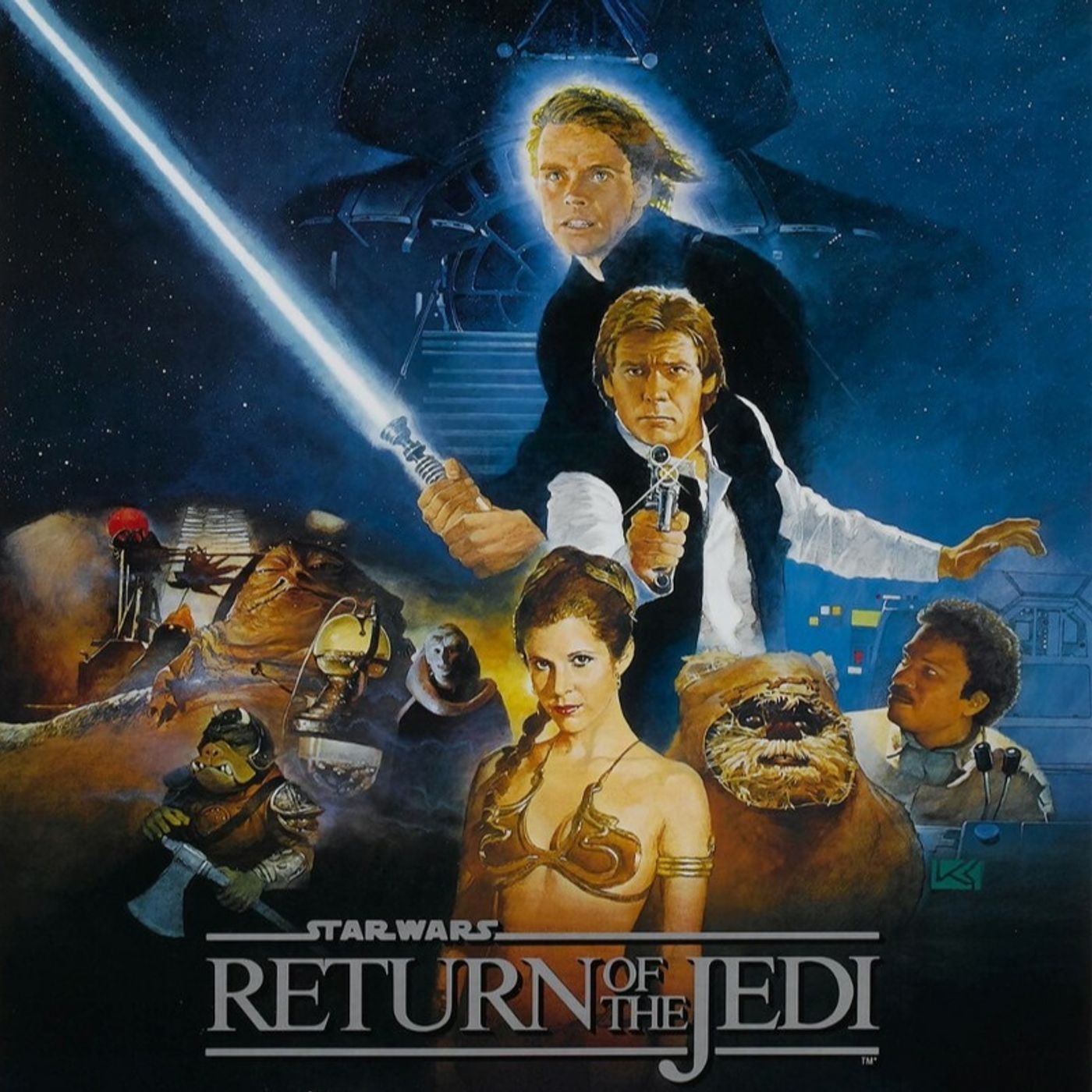
The podcast examines the complex role of rewards and punishments in parenting, using Star Wars as a powerful narrative to illustrate how fear, control, and punishment (the Dark Side) create cycles of compliance and emotional harm, while empathy, relational support, and intrinsic motivation (the Jedi path) lead to growth and connection. The hosts emphasize that rewards are not inherently negative—when used thoughtfully, they can support skill development, build self-esteem, and reinforce shared family values. However, rewards must be paired with relational context and meaningful discussion to avoid becoming superficial tools for control. Punishments, particularly those based on fear or guilt, are highlighted as more destructive, undermining emotional safety and trust. The discussion stresses the importance of breaking these cycles by fostering open communication, emotional regulation, and collaborative problem-solving. Real-life examples show how parents can shift from punitive approaches to supportive ones—such as celebrating pro-social behaviors, building shared goals, and modeling healthy emotional responses. The episode also critiques common practices like token-based systems or competitive reward charts, advocating instead for collective, community-based reinforcement that emphasizes connection and mutual growth. Ultimately, the message is that parenting is not about control, but about creating safe emotional spaces where children feel seen, valued, and empowered to make good choices through understanding, not fear. This approach aligns with developmental psychology, showing that children learn best through relational experiences, not external rewards or punishments. The episode concludes with a call to move beyond black-and-white thinking about rewards and punishments, embracing a nuanced, growth-oriented parenting style rooted in empathy and shared responsibility.
This podcast is brought to you by guiding growing minds a
Social enterprise that aims to give all children the best opportunity to reach their potential and
succeed in living rich and meaningful lives
Dr. Billie Garvey we have just finished recording
Rewards and punishment and star wars. What are people going to learn in this one? Yeah movie you grew up on yes
Great one though great one and we tried to yeah record a really practical topic this time about something that I think all of us really struggle with what's the right thing to do with rewards
What happens with punishments, you know and trying to be really understanding that all of us have a different experience with this and then the big important stuff around
Totally cycles. I think if you're in that cycle of reward and punishment, which I know I am day-to-day not in a bad way
But just in our way and what I thought was interesting was how you can transition people over to more of
Intrinsic motivation
Potentially looking moving on from rewards the whole time is that kind of where we're going?
We're trying to get to it. Yeah, I don't think it's black and white. I don't think it's like be perfect
No goodness no, there's always going to be at carrots and sticks and stuff like that
That may be no we're about carrots, but like not sticks
Hope you enjoy the episode guys and are really looking forward to your questions
Make sure you contribute your questions and contribute them sooner rather than live
Yeah, they're better. Also, particularly professionals come in love it
joy the episode
Hi, I'm Billy a developmental pediatrician and I'm Nick a developing parent
We're going to use scenes to work on activities to talk about how we best support our kids
This is both contra-parenting
Hey
I
Don't really got me someone's got you a chocolate
This is your company that a good boy a good way laughing at me all laughing with me. We're actually laughing at me for being honest. Well, that's true
We're all laughing at me my body language is just close isn't it and I'll try and give it up just put on three layers
Not as cold as your joint used to let's be honest. It's a bit fresh
Do you know where's not this cold?
He's having a lot of time
I'm going to confiscate that lovely being those people gave you an Adelaide. Yes for you. I've been eating this
Yeah, you tell me how warm it is on that east coast of Australia
We sit here in the cool weather of Melbourne. Yes, you well. Yes. Yes. I am well. I'm well, I mean a therapeutic space
We do also the beautiful team of the man cave for man cave couldn't be doing it without them
No, can we can we love them more? No, yeah, just amazing humans
Early hours kick off. Yeah, not easy and greatly appreciated. Yes. Yeah, they're just amazing humans
I've got one criticism. Oh, okay, I had to cut this bit out for the first I think that's it
And one thing I'll a little bit annoyed about Cal
The guy who sets it up doesn't a great job a little bit too sharp on the camera
I look a little bit older in the social highlights than I'd like
I used to like him and we used to stuff up the focusing and I just come through a bit blurry
It's because I'm told I was too good a job and I look amazing. No, it captures everything. I'm kidding
Cal does a great job. Oh, I think you look great. I just yeah
I noticed on the first ones. I was like, oh, this is what HD looks like
Right, maybe when you go back to what is it 720p?
Just some some pink and sorry
Yeah, like the old school games, but um, but no, hopefully that's making life a bit easier for the amazing
AV1 and all things or creatures and I'll be straight all the other guys that provide pro boners support
but they're not happy to deal with them
Yeah, audio that doesn't sound great or vision does blurry. Yeah. Yep
Yes, very much so I just realized you know, I realized what which is a bit of a I'll find one
I don't have a grizzio or a winter. I'm just so excited. Oh, I got a grizzly
Oh, do we have any shout outs shout outs shout outs all shows are sold out except for you guys all
Yeah, yeah, so please come to new e like we're
We want to see as many people as possible the shows have just been this phenomenal experience
Like if you if there's a show coming up come early and I'm extend the babysitter out afterwards as well if you can
Because it's not just a show because we do like we don't go anywhere either
Yeah, we've been we've had to be kicked out of every place. Yep
Every venue. We've been booted out of for staying too long. Yeah, so
So the venues have been amazing. Yes. Yeah, venues have been amazing
It started 10 am
Yeah, thanks for people who are getting the merch helps us do what we do 100% of profits go back
Patreon, please come and check out the patreon. We're going to do why more in that space
So the patreon don't know if you can but otherwise everything's free anyway. Yep. Yep. Definitely. I feel like there's something I'm missing
We're looking for a social media manager
That's one particular thing that's drowning me that not I don't not have the time for I don't have the skill set
So anyone who's interested in that please reach out
Yes, and watch
Oh, there's a couple of things I wanted to say. Yes. So two things particularly about Adelaide
Do you remember because people get a laugh out of this? Okay, I remember the lovely guy that is doing the AV
Yeah, well, do you remember we said how long you worked here for? Yeah, I think I was four years
Please yeah, we said what's it like? Do you remember the answer? Yes. Yeah, you remember exactly because I'm a bit vague on it or something like
Usually you usually do rock shows
Usually deal with yeah rock shows and rock stars, and this is a bit different
Took that personally
And then I told you this but how cool is this this was like life highlight moment? It's getting on the plane back
Pilot came out of the cabin. So Billy got a handshake. Did you get fake did you sit in the cockpit?
Didn't get the clock man went back to a middle seat
Just in the draft to the cable
It's just always great when you've had out any slip. Well, no, you know you fly
7 30
We're all making sacrifices as I spoke last time. I'm sleeping above cabab shops
It's about the community here. I actually couldn't agree more. I don't give it a stop
How I get to these places and how long I'm there for absolutely love performing. It's so good
Oh, is that yeah, can you say a name after that? So it's really legally bonding nothing's bonding you
No, it's it could do love shows every weekend. Yeah, yeah, maybe that's yeah, do you if you got a grizzly in a winzling?
Yeah, I got a little I got a grizzly
Um, it's a very grizzly, but it's something that I just need to check myself probably need some advice on this
Okay, I'm gonna play there
sure
I don't object to fun. I love fun. In fact, I'm the grand funk master of fun
That's a win's low
Hey, if you need me to the buttons, I can do you threw me back on I've been done for two years
Can I give you one win's low a little quick one? What I'm it's not something I've done other parents are probably be like
Yeah, we know mate, but
My kids recently came up with a joke
Yeah, and I was like this is really proud of her
He's really good, yeah, and I believe it. She's like cheap. I was mostly she might have heard someone else's own
But she's like no, come up with it. Yeah, but it's really good. I was so proud of it and I killed over laughing
I couldn't believe it. This is the imagination. She goes hang on
Why why is a mathematics book?
Um always so sad
Why because it's full of problems
I said that's amazing. Yeah, she's not came up with it. I'm amazing. Okay. I guess Henry is pretty funny
Result time
Hey, don't let your mother smell that beer and your breath she'll take it on on me
This is episode 130 I'm pretty sure Billy I've had to be out once I make it 200 hours probably blasts of chatting alone
Maybe it over that's the way that I go. It's out there two days ago, and it was
The end of the
Was the end of the day and I was like cool, um upstairs guys like to go and
You know go to bed. Yeah, wasn't that that's not the put down routine
But it's the start. I mean if you have any of the beds we want to dance like guys, let's go up and
Nothing I was like give it a minute come back. Hey guys. Yep, let's go
Nothing give for me to come back
Guys wise no one wise no one listening to me
Nothing and I was like
And I was like, why is no one listening to me?
And I was like, I just was listening to myself saying,
I sounded crazy.
And I was like, why am I?
And then I was like, what am I doing wrong?
And obviously, I don't know.
No, I'm listening to me.
No, I went upstairs.
No, I didn't like it when they were just like
sitting there crafting happily.
I mean, it's my having, but I was like,
I was like, they probably passed that age where I can just
demand I go upstairs and go to bed and do these things.
And I just was like, sitting there going, what am I doing?
And I was just like, they're not like lamings or something.
I don't know.
You don't just direct which way they go.
And they were just sort of like, I just had to check my,
yeah, but like, but even it was like,
anyway, I was like, no one was really reacting.
I was like, oh, I just sound like a tyrant right now
trying to get these kids upstairs.
And everyone's like, what's your big stress or all, man?
Like big fella.
That sort of looked at me and I was like,
oh, I just sound like a broken record.
And like jump, say how high and all that sort of stuff.
And I just was like, this is a weird moment.
I was like, yeah, I don't know what it was.
I just sort of checked myself and was like, this is ridiculous.
And then what happened?
I only got connected with them or something.
Or I probably got the irritants or something.
And I probably just said, hey guys,
should we go upstairs and do a look?
And I was like, yeah, you know, I don't know.
I just felt like these, I feel like I didn't feel great.
But the moment, because I didn't listen to these weird things,
I was like, what am I?
Why am I barking for everyone to get upstairs?
And I don't know, it's just these weird, man.
Yeah, yeah, yeah.
And I just was like, I sound like an idiot,
trying to match people upstairs.
I just didn't bother connecting or anything.
And I was like, yeah.
And it's just like telling of the times.
Maybe there's a bit older there, like, yeah, we don't just.
No, we've got to be the autonomy mate.
Like, yeah, I'm more worried about your experience
in that moment.
No, I don't think so.
Oh, I just felt like a goose.
But I think, like, I should have expected to feel like a goose.
Oh, yeah.
Anyway, how amazingly on topic that is,
and you don't know the topic.
Oh, I don't know the topic.
Is this demanding parenting with no background?
I don't know.
I don't even know why I told the story.
I just kept thinking about it.
And I think everyone was looking at me like,
what do you expect?
Like, and I was like, yeah, maybe I,
speaking to my kids, I was getting older.
You know what I mean?
Six and eight.
Yeah, we did.
What did you feel like?
Maybe it was that.
It wasn't to me.
Yeah, but maybe, sort of maybe, given the benefit of like,
or maybe I'm raising them to, you know,
I try to look at it and be like, oh,
make their own decisions, go up.
Like, don't run the show, not in my house,
because we've just come off chaos and control.
I can tell you I'm quite controlling.
Yeah.
Well, default is.
But I was just sort of sitting there going,
oh, maybe they're just not that at that age anymore.
You know, come on, let's go.
And they just go, and I've got to try my data.
So we had done a level of that.
Oh, it doesn't, mate.
But we're very, really is the answer to our harder.
I don't know, mate.
I don't think I'm feeling for you, but in that moment,
and feeling like you shouldn't probably,
wouldn't feel great to just be getting ignored.
Yeah, it was weird.
Yeah.
It was really strange.
So I obviously love your family.
I don't think that's, I don't know what happened.
An experience that you should just put down
to your fault for trying to be too controlling.
Like, all of our relationships should be,
reciprocally, emotionally safe. Yeah. You know, they should feel safe
to express how they feel about what you're asking to do,
but you should also feel safe emotionally as well.
I think the emotion's poured out, I mean, really.
Yeah, but it was just odd.
Maybe, yeah, maybe not much in it.
But I think, yeah, probably not much in it.
Not much, but not a lot.
What I more meant is I didn't want to make a bigger deal
over it than it was, but it is that interesting.
I feel that a lot, sometimes, where I'm not succeeding.
In, like, getting the kids to do something.
And I'm just, yeah, I often feel like I'm so fatigued
that I either give up or introduce punishment for it.
You know, or I'm like, if you don't do that now,
there's no book or, or I'll just walk away and be like,
just maybe think like I've been doing that for too long.
Mm, yeah, okay.
Anyway, amazing, amazing to see that as a growth opportunity.
I struggled to do that.
Yeah, maybe I'm just like, yeah, try, try.
I don't know.
We'd want to bring up, sorry.
Um, grizzy.
Grizzy, on the spot, grizzy, which will just give me another chance
to shout out for a social media manager.
Yeah, we, one of our clips was getting a bit of heat,
which I've spoken to about where I was like,
essentially saying it's not normal for kids to struggle at school.
Which I was like, that's not the kids problem.
It's this broken systems fault that I don't accept.
Some kids have an experience that's a negative one at school
and we shouldn't collectively accept that.
We should be like every kid deserves to be succeeding
in those environments and they should be truly inclusive
and safe and belonging and celebrating.
Um, but anyway, the reason I'm saying it as that
is that I just couldn't get out of it.
I like, most people were like attacking me and all this stuff.
And I was even like, Evie, who was the one thing
she was looking forward to all week was a movie.
I just couldn't get off my phone
because I was like needing to keep checking it
whether I needed to like respond to someone or whatever.
And yeah, people were like, yeah, just four thousand likes
and like, you know, six people ever got me about it.
But exactly, really?
But yeah, it was just this interesting thing about like,
just not being able to like just be present.
I think that's like, it's funny that you would think
with the little time that I have with them
that I could actually be present with them.
And it's been, um, yeah, it's been quite a, yeah,
it's so funny that that like, lip, um, causing that,
you know, um, agitation to the community impacted my week.
Like, you know what I mean?
I like, we've spoken a lot about the podcast
about the journey of that.
And like, yeah, and even I just showed you
there was one email where like, they asked me to do something
and I was like, I really have capacity
to properly invest in this.
And they just sent back this like attacking email.
Yeah.
And I'm just like, I find it really hard to like,
to just find that calm and like find that
just be present with my kids and present with my friends
and not carry all that stuff around with me.
Like, I think there's the like,
there's the initial reaction to it, which is one thing,
which is like an emotional regulation thing.
But then there's like this just reflection
and how much you let this stuff impact your daily weekly functioning.
And I think I'm getting better at the first.
But I'm struggling quite a bit with the second.
And I was just like, and not just those examples
with the other things too.
Or I'm just like, stressing about stuff and being like, you know,
where's, where's if you're going to go to school next year
where we're going to live, like where we're going to, you know,
like I'm just finding that I'm struggling to be like, it's sweet.
And I always spoke about this in control and chaos.
But like, yeah, that's, I reckon because of the control
and chaos, like it helped me have insights.
But there's also this emotional aspect to it
that's not just about knowledge.
- Yep.
- It's about just being like far out.
- This is tough, I'm feeling.
- Are you vying off?
- A bit of load in this.
And like, you know, then you go through the process.
I don't know if you do this.
Then you beat yourself up about letting it get to you.
And, you know, it's like this, it comes back again.
It circles around again because you're like,
- Vicious cycle building.
- Yeah.
- That's what they'd say.
- Yeah, so yeah, I just, that's my on the spot
because I didn't prepare for one.
I forgot about it.
- There you go.
- Do you have a, that's it?
- That's it, huh?
- You got with the joke, obviously.
- No.
- Because you did as a quick one.
- No.
- But yeah, that was a very good one.
Yeah, my win slow is just, the times I am present
with the kids, they're just amazing.
Yeah, amazing stuff.
Just, just adoring them.
Like, you know, even a bit similar to your story.
Evie's like really the other day we're eating dinner
and there was like carbonara
and there's like a little black bit of burnt stuff in it.
And she's like, "Oh no, there's a fly in my food."
I was like, "Oh, that's a bit gross."
And then I went to get and she's like, "Ah, I tricked ya."
- So it's a humor?
- Yeah.
- You're like, "Oh, joke."
- Yeah, yeah, yeah.
- They come up with joke.
Like there's a same theme, and you just go.
- Yeah, 'cause the lines of complexity
and being able to do that.
- Oh, that was a joke.
- Yeah.
And then, yeah, just hide is becoming a little person
and like, it's just been beautiful.
Like it's, as one of the man-cafe guys were saying,
what was it, the hardest and best thing
as two little kids, including a three-month-old
- Yeah.
- One of the man-cafe boys.
- Best and hardest thing.
- Best and hardest thing, you know?
And like, yeah.
So just, there's been a lot of the best bits of it lately.
So I think that's probably my car wins life.
- Yep.
- Baby.
- What do you, what?
- So the movies is Star Wars.
- Yes.
- Finally taking a look into the space opera.
- Space opera.
- Space opera.
- Yeah.
- 'Cause the briefing of watching the movie this week
was we were looking and I think we were looking
at the Star Wars universe.
- Yeah, 'cause I was frantically.
- I know, I know.
- It's fine.
- Fortunately, I think I've talked about this.
I think I talked about it in our first episode
back to the year.
Kids and I re-watched it.
- Yes, that was why I thought
it would be less burdensome if you watched the first five.
I've got halfway through.
So thinking, we watched five chronologically.
Do you make sense?
So we watched the original Star Wars.
'77, '79, '82, whatever it was.
We did a lot of that.
And then we went back to watch Jar Jar beings
in Natalie Portman once.
We only got halfway through the second Natalie Portman.
- Oh, yes, sorry.
- You mean, yes.
- It got a bit sketchy.
- Yeah, sorry.
Chronologically, not Star Wars chronologically.
Was that a bit of it scary?
So we stopped.
- So yeah, we'll focus on the whole thing,
but we'll focus on the return of the movie.
Jedi. Which was my favorite. Yeah, favorite. Watched it easily, the most out of all of them.
And is that love it? Remember how good it was seeing the cinema at all.
I'm not that old. You're not a colleague said to me yesterday. I'm sensitive this way.
There's a bit, one of the best burns,
a bit of a cop she goes, sorry, I can't. I said I couldn't sleep on the, I couldn't sleep on the
weekend. I had a couple of wines. It's split about a wine time, three people.
And I just couldn't sleep. I've been up since really early and she goes mate, you're not 40 anymore.
That's one of the best laid burns of all time. I was like, what do you think I am?
Anyway, that's great. I had recently taken like iron and vitamin D and V12 and all these things
and I went to the pharmacy and I was like, got all these scripts filled and I was like, God,
I didn't think I was at the age where I'd be taking this many medications every day
and thinking the person would laugh and they're like, oh yeah, but you probably need them.
That's worse. You should have hardly just probably been. You know, back to the movie, so sorry.
This is the best. It's the best one. Have you got a favourite lightsaber duel in any of them?
Well, I think that the one between Vader is Vader and Luke. Well, it's the one that goes,
I think it's the most meaningful, longest one of the three films. I mean, I don't want to
give into what I emphired great, but I didn't much prefer this one. I don't care. I love Forest
Moon of Endor. I love all of it. You look at the dates. It's pretty amazing.
Jewel of the Fates, you know, with Darth Maul, where they send him a Gregor. I think you're talking
about the original style. Sorry. I think, yeah, I think Darth Maul is the best choreographed ones.
Yeah, so I agree with that. If that's your contention, I'm asking you now, yes.
I think so. I think it's a beautiful, because it is the moment that decides Anakin's fate.
So he hasn't, he's not really in the movies yet, but it's the moment because
you and survives, and Liam doesn't, and Liam would have possibly been a better mentor for Anakin,
and so the duel of the Fates has that idea. And yeah, do you identify with any of the Star Wars
characters the most? Probably Wicked. Yeah, he walked, no. Well, the main A-walk is called
Wicked. It's a lovely Wicked. I think it's called Wicked. Do you ever watch Karen in
a carriage? Yeah. Yeah, I love it. I think because of as a kid, I loved the A-walks. I'm
pretty sure the Wicked are on the, yeah, yeah, yeah, yeah, you might be right. Sorry.
Loved, loved the A-walks. No, I don't really like to them more than any of them. I just
absolutely adore the whole aesthetic in the forest, which has probably shot some of our own
outside Samfran, I would have thought, don't know. What do you have a character you love?
Yeah, well, I don't know, it's hard. I mean, you've got all aspects of hunts.
Solo. The talent of the flick. The wisdom of your. I mean, you can replace the diet of Jabba.
I mean, yeah, how can you go past that as one of the best battle scenes on the Sam barge,
like on the barge? Yeah, yes. Incredible. Yeah, do you know they say that that's in the movie
because Lucas wrote that scene because it doesn't, it's quite out of the story. And he's like
the audience needs a win because all these bad things have happened. It's like, you know,
hard getting captured and all this stuff happening that it was like the audience needed a win.
So it's, yeah, it's, it's a really, I really like Star Wars, like I'm not a diehard, like my
older bro was like, they're bit older than me and he really loved and bred this stuff. I don't
know, it's a bit, I don't think this will be, I think this will be timeless, and/or. You're watching
And/or? Ah, I've got a series. Ah, no, I started, I don't know. I was phenomenal. No, watch
Mandalorian. It is phenomenal. Okay. So, yeah, look Star Wars. Star Wars, obviously culture, like
conic, like I don't know where it sits with you in like, you know, the back to the future,
the Indiana Jones, like all those classic trilogies that like, you know, which is your favourite,
and how you feel about those. I think I could safely say Star Wars. Yeah, really, yeah.
And Harrison Ford, like what a crazy thing to be like a big part of two of those franchises,
like it's probably, I'm trying to think if there's anyone who's had a similar thing where they've
been across multiple, because you know, it's interesting like Hamill, um, Gary, Michael J. Fox,
like, but a lot of these people didn't go on and do other things, really like huge things,
like big franchises, whereas Ford, you know, famously discovered on set as a carpenter and
started quite like something. He has something though. Oh, yeah, he's got this. He's just got
something charisma and like, it's good looking and it's like, you know, so yeah, um, but he also
has significant acting chops as well. So yeah, so I, yeah, I really like Star Wars, and it, um,
it is, yeah, I mean, the space opera idea is a really cool thing as well, because it is
about relationships, like there's battle stars and all this stuff. But my favorite space opera,
which you'll probably never be able to do, um, Flash Gordon. Oh, Flash.
Gordon's alive. Yeah, I've watched that on repeat as well as a kid. Yeah, it's amazing,
and that's what they're handing it to you. Yeah, and it kills them, doesn't it? Yeah. Yeah,
and they come. That's the battle song. Oh, and then they come over there. They come through the
clouds, don't they? Yeah, they're flying. They're battling on the thing that wings. Yeah, they're battling
on the thing. It's incredible. And who's the baddie? He's a great like a merciless. No, but the other
turns and becomes the goodie. Who's that actor? Great. In wearing the green? All the beard. He's a good
looking guy. And he's the baddie initially. He kind of looks like he's on a cast through the
arm thing. Yeah, he kind of looks like a Robin Hood. Yeah, yeah, and then he can't turn to the
thing. Haven't seen it in over 30 years, turns a lot more. Yeah, totally. Flash. He would be flashed
out of us. Yeah. Oh, thank you. Wow. Not sure what we're going to do. That was, um,
it's good. That even that answer was on topic. Okay. Um, so yes, so what are we going to talk about?
We're going to talk about what what Star Wars is really about is about relationships and Star Wars
is about like the duality of choice. Um, and it's a big choice that we have in parenting as well.
And this is a topic that we've been asked a lot about. Um, which is really, um, rewards and
punishments. Ooh, so we're talking about this a bit over many topics, but I thought let's just
put it in a spot. A lot of educators are like, we're all waiting for you to talk about this.
You guys to dive into it. So I thought we would dive into it. And Star Wars, why do you think Star Wars
is a perfect, if you think about, think about punishments and the dark side.
Like how does, how does Vader control everyone through the force? Yeah, but how, how does he use
the force? Yeah. Threats. Threats. Fear. Punishment. Control. I will control you.
The emperor is the same. I will control you. It's fear. And again, the reason he goes off the rails
is because of fear and loss and grief. He's lost his mom. He has fear. He wants redemption.
He wants to bring his mom back. You know, the dark side tells him that that will happen of power
over others to keep yourself safe. You know, it's this interesting thing. The beautiful thing
about the arc of Star Wars is that we see a cycle break, which is like the most powerful thing
that can do in parenting is break a cycle. And a lot of us in punishments and punitive approaches
and physical discipline is a really important cycle. We will break. He's moving away from that.
Okay. You know, and thinking about, that's how my parents were because they didn't know any better.
Physical discipline, punishments, punitive, fear, threats, all over me. And we all do little
versions of this. And moving towards, you know, the Jedi. And the Jedi is all about growth.
It's all about support. It's all about learning. It's all about improving. It's all about skillsets,
isn't it? Yep. Even think about Luke in the swamp with Yoda. There's no quick way to get through
this. You've got to try and do the work. You've got to, yeah. And so there's, you know,
you need a minder, you need guidance and he sits with him that, you know, there is no try,
there is only do. And it's like this ethos of like, we will get to this point. You will be able
to do it. You know, and it's like, it is this beautiful narrative where we see Anakin finally
breaks his own cycle as well. Well, he sticks up for Luke and saves him. So Luke saves him first,
doesn't kill him. Luke has this like really amazing emotional journey where he's trying to
understand his story, where it came from, he's trying to like, all he cares about is relationships
and growth. He still has emotional turmoil. He still struggles. And he still lashes out in
moments. And we see it in this movie famously. But then he finds the control again. And he has
firm boundaries, but he's able to exist in the world.
where fear and punishment don't control him and he doesn't use them to
control others. You know, it's this beautiful thing and I think rewards as
well have a similar vein that we should talk about which is that I think
rewards get too much negative press of like you just externally reinforcing
people and like, you know, they're only doing it because of what they're going to
get out of it, that positive idea. And we know, so there's four different ways
that we learn. I can't remember spoken about this on the podcast before. There's
classical conditioning which is the Pavlovian stuff about the bell rings the
dog salivates. Yep. That's an involuntary response that Pavlov found in first
in that research and then a lot of other researchers shown that we can be
classically conditioned to have an involuntary response such as around fear
when we see someone who is threatening to us like Vader walking down the
corridor. You have a classically conditioned response to that where you just
become afraid and you will comply. So think about it in our own parenting journey.
Where do we come in as a classical conditioning where we want our kids to be
classically conditioned that they see us and sense us and we're with them and
they know through classical conditioning that that will be safe and
supportive. Yes. Not punishing. Then we have what's called operant
conditioning. An operant conditioning is ABC, antecedent behavior, consequence.
And that's a voluntary response that we have. This thing happens beforehand.
It causes this behavior. This is the consequence afterwards. So my sibling
annoys me. I hit them. I get in trouble. So then you'll usually be more
secretive about how you get them back on the only. So you haven't actually
changed the behavior. You've just operantly conditioned them to be a different
way because the response was a negative one. The guy who came up with that
interestingly, Skinner. He heard of Skinner before. Yes, famously like the
principal in Simpsons. He's named after F Skinner, who was the psychologist who
came up with all this idea. So yeah, and Skinner is like that, isn't he? Skinner
is a principal. He's just like fear, intimidation all right over these
students. Like, you know, it couldn't be me that's wrong, it's all the kids, you
know, has no like insight and reflection. And then the third we have is social
learning theory. And social learning theory comes around main research that's
a foundation. I suspect of it is a little kids in a room. I don't know if I've
told you about this before. Kids go into a room with toys and stuff. There's an
adult in the room. The adult is like hitting toys and punching them. And what's
called a Bobo doll where it's a big like, you know, one of those ones that falls
over and it comes back. Yep. And if the, if the adults just playing normally, then
and then the adult leaves, the kid plays normally. If the adults punching the
doll and then the adult leaves, the kid will punch the teddies, throw them, hurt
them and all that stuff. And that's social learning theory. That's the thing I
worry about when my kids are on the playground and like, I'm sure any social
behaviors are happening. Kids are going just pushing past everyone else in the
slot. And all the kids watching that behavior and it's contagious because they
go, that kid just pushed past, he didn't have to line up and he got to go first,
he didn't have to wait. If he can do it, I can do it. They all just then do it.
The pro social behavior can have that same contagion. But the problem is the
short victory of like the dark side. If you're like, I will take what I want
because I'm bigger, faster, whatever is what happens in a lot of
any social behavior development. Kids, the highest level is cognitive skill
development. And that's the force. That's like, I want to learn how to be good
with the lightsaber. I want to learn how to use the force. And it's
interesting. Star Wars, like with the lightsabers and everything, it looks like
they're physically battling. But they're actually mentally battling
in all those moments. So they're thinking about like where is my strain,
where is my stress, where is my fear, where is my control. The lightsabers are
just an extension of what's going on in their mind. So that's why it's all
about, think about when he's hanging upside down, is it hot? And the
ice monitor has got him. And he's trying to get his lightsaber.
He has to find calm first, before he can use the force in all the time.
Whereas if he's terrified and he's worried, he can't access his higher
functioning skills. And so the aspects of learning that we think about, that
we're trying to use to reinforce behaviors in our kids, should always be
ones the positive strengths based skill development. And rewards can actually
fit into that. Now the reward, the idea of rewards when we want to use them
well, whether it's a star chart, a tree, whatever, needs to be paired with
relational support that's trying to gain a specific skill set.
What does that mean? So, for example, a lot of the kids take their bags
up to their bedroom after school. Yeah. So you could do that and just be like,
"If you take your bag, you get it to the lolly." Yep. You go sweet.
The problem is they don't understand the meaning behind it. What,
why it matters to you, you're not talking about it in a way that you're getting
better at this. You know, I'm really proud of you. You should be proud of yourself.
All that now, what would it be? What would be a better way to do that?
So you sit down and go, "Hey, it's pretty full on after school.
It's a bit chaotic in this house, isn't it? It's a bit wild.
What do you think it'll be better if all of us try before we end to play
and just enjoying each other and all that stuff?
We just put some stuff away. I'll grab your lunch boxes
and I'll put them in the sink. You grab your bags,
take them up into your room. We'll come back down together.
We'll get to play together." Now, if that works, sweet.
You can also be like, "And you know what we'll do?
If we can do that, I reckon we'll have a quick treat."
You know what I mean? And so you don't use just the trees.
You tie it as an initial external reinforcer or reward
to the deeper underlying behaviour that you're trying to build in the kit.
And then the idea is that while they're having that external reinforcer,
they're also building their sense of self,
their capacity, their skill set, their shared goal setting,
and achievement around this matters to us.
This is why we're doing it.
I feel good in my relationship with my dad and my sister
because we're succeeding at this and then you specifically,
instantly, reinforce it through that affirmation.
That's when rewards can be helpful as reinforceers.
On their own, they don't have as much depth
in helping kids that have helped skill sets.
And there's a risk in rewards when they're used to control.
Okay. What's the risk?
The risk is that if you hit your brother again, you're not getting a treat after dinner.
That's a punishment?
Yeah.
So we're trying to--
But if you flag before your key to hits,
the other one goes, "If you guys play nice,
the lane no one gets hit, we get a treat after dinner."
But if we don't, but if you don't play nice,
you won't get the treat.
That's a consequence.
It's come beautiful.
So you have to be aware, like a punishment.
You have flag stuff.
Yeah.
So this is about flagging stuff.
Yeah, it's about flagging stuff,
but also tying it to a deeper meaning.
Yeah, deeper purpose.
Skill development.
What matters to us is a family,
the relational connection.
I can get around this.
Yeah, well, so I, you know, I have to be honest.
We often use them very superficially to just get through the day
where we're like, "I need this kid to eat."
And so I know all the research around like,
our choice is to decide what the food is.
And when we have it, the kid's choice is to eat it.
But I'm also like, "I just like them to eat something."
And so we're like, "Hey, if we all eat well,
we can have something after it, it's extra."
But then I try and be like,
"Isn't this yum?"
It's helping us go stronger.
What do you call it when you like, "Gate keeps,"
so the kid comes in and says, "You just sit there."
You know, I read in the paper and silence,
having a great time at the kitchen table.
Nothing I really believe in. It's a joke.
Kid comes in and goes, "Can I have a biscuit?"
I'll often go, "Yeah, but can you take your stuff upstairs first?"
"Yeah, can I still do that?"
"Yeah, great. I have the same thing."
Like, and you can tell when it's that you're doing it a bit
because Charlie at the moment is waking up at like 5 a.m.,
and he's like, "Who's up at Dupor?"
He's up at Dupor, was he a given?
No, not sponsored, yeah.
Um, but yeah, so he's just, you know,
he, that's all he's thinking about, so he's kind of too focused on that.
If that's the first thought he has in the morning,
but I will definitely use them if they come out,
because I want them to have some autonomy as well.
So if they come out and need to think about how it sits
in the rest of our day and other meals and all that stuff,
if they go on an ice-cream and it's happening out before dinner,
I can set myself up a trap and give them some.
But I also will see that opportunity.
But for me, I tied a lot to experiences.
So like, for example, you used to do this thing in a joint,
you know, on the main street we both used to live near,
where every couple of weeks we would go and have a milkshake.
Yep, at that joint.
And it would be a little bit of like,
how cool is it going to be to have a milkshake?
But it was actually about just 40 minutes for us to sit there
and just enjoy each other.
And so there's an external reinforcer.
But there's this internal relationship part that it's tied to.
And I think whenever we're doing those things,
whether it's like a treat or it's screen time
or it's whatever, thinking about how can I move away
from I'm using this to get control
and just get through the day and survive
and move towards I'm trying to build a specific skill set
and there's a relational component to it.
So that's when they work best.
For example, a classroom.
A classroom can have a star chart
and it can have kids' names and stickers next to it.
But in the best case scenario,
it's because everyone has sat around
and said what matters to us as a class.
been kind to each other looking
after each other, let's think about catching moments when we're supporting each other and
let's map it and see how good we can all do together at it.
So, it's an odd, opumative thing, it doesn't make it competitive, it's really a collective
thing that says what our opportunity is to highlight and amplify the success that we're
having in the things that matter to us.
Because I think you said you were getting this question a lot from teachers around rewards
and punishment.
I think I might have talked about this one before but in cases, we're specifically talking
about so people might find it.
I've got one good one on this that I'm saying in my kids' classroom, they do that.
They sort of say this is the behaviours that they want to see and each time the sort of
teacher sees it, they give them basically a token with their name on sort of thing and
it goes into the lotto for the end of the week.
So there's not a scorecard of like Jimmy gets 11 and Billy gets four, so Jimmy wins, it's
like no, Billy gets 11 chances in the draw at the end of the week and Jimmy gets four.
So it's not just about a leaderboard because sometimes people say a leaderboard and go,
yeah, I'm never going to catch Jimmy, he's always got three on Mondays, I can't catch
him.
They put it all in.
And the other thing is, the other thing is like tokenistically making sure that every kid
has got as many tokens and you know, that's not great.
That's not great.
No.
That's not true.
What you're actually saying either.
Yeah.
Right.
Yeah.
Well, it just loses any value if it's like, it just doesn't actually mean anything.
Friend and one, what happens when the lotto?
Oh, they draw it out and we have wins wins.
What do they win?
Oh, I honestly can't remember.
Oh, honestly, don't know.
Maybe he's super nervous.
I'm like that.
I don't know.
So you know the best examples I've seen of that in school settings is when they almost
camouflage another skill development thing in the reward.
I might have spoken about before with this amazing educator had this thing where whoever wins
gets to pick one other kid in the class, it always has to be so indifferent that they
go and do something fun with and it's this cool thing because you kind of like the kid
doesn't realize, but you're actually building social development and capacity and confidence
with the reinforcer as well.
Just a cool thing.
They reckon that it's like, and you get to pick someone that you go to the well-being
office and you go and get to do this cool crafting.
The kid's like wins and then gets to form a deeper bond with a peer through that process
as well.
Like, you know, there's opportunities everywhere to reinforce the social and national development
of our kids.
And I think the idea that all rewards are bad and kids just should intrinsically be motivated
to be good in the world doesn't really understand how childhood development works.
You know, and some kids will need more support with their professional development than others.
But I think external reinforcers are okay as we use them as bridges to help develop
intrinsic motivators and skill sets and kids that are reinforced through relationships.
You know, like it's a really, I think it's a more helpful way than just the black and
white thinking about we shouldn't use this stuff.
Now, the punishments is an interesting counterpoint to that as well, like, I think they can be
more destructive than rewards when rewards are used superficially and poorly, but you just
want to think about, like, you know, we've spoken a lot about the worst punishment being
that kind of love withdrawal thing, but I think a lot of us grew up with that and thinking
about challenging and breaking those cycles of how are these things used in our home.
Like, siblings being played off against each other with their stuff isn't great either,
whether it's through rewards or punishments saying like, I struggle with this too, where
I'm like, look, you're sibling your brother or sister has finished their dinner, they're
going to get a treat, you won't if you don't, like, it's just not great because it's like
not a collaborative thing and we try and be like at our best when we're at capacity, it's
like we're all working on that thing together and we're not signaling out a kid and we're
saying the reinforced or something we will all guess and the reinforced or will exist
in bonding our relationships with each other and reinforcing and harming that skill set
as well.
Yep.
We're all working on being kind to each other and it's been an interesting thing like
Charlie and Nate Lee has it, Charlie like quite innately if I give him something like I,
the other day what were we doing, we were building a rockish because we've been talking
about space and we were building a rocker and we were like, what's the rock I'm going
to have?
It's going to have a bed in it and all this stuff and we're like, and I was like, can I live
in the rocker with you and go to space in the rocker with you?
And he's like, yeah, but he's like, EV2 and he's like, he's always like that.
You give him something and you give him a lollipop, he'll be like, one for EV.
So he needs less support in that.
EV needed a little bit more help, but I check in with her now where she's like, I'll be
like, you know, Charlie's done something amazing and look, how good is Charlie getting
skateboarding and she'll be like, yeah, but I'm better.
I'm like, come straight away because she's a bit like insecure about that and hearing
the praise that Charlie's getting about something specific and all I need to say to her now
is like, hey, remember we're all working on celebrating each other and then she'll stop
what she's doing, look at Charlie and she'll be go, she'll go, we're Charlie, you're getting
so good at skateboarding and she feels good and she knows she does now, which just happened
quite organically.
She'll set up opportunities for him to win.
So she'll be like, Charlie, let's have a race and she'll pretend that she's trying as
hard as she can and then let Charlie win and celebrate it.
And it wasn't that long ago.
There was no way I know if that was happening, but I've what I've tried to do is say, this
is how we should be with each other, we should celebrate each other and I'm not directly
trying to stop them competing and having conflict, I'm just putting a better pro-social
behaviour in its place, helping them understand why and reinforcing that as part of their identity
and strength.
Okay.
I like it.
I like it.
This makes sense.
This is good.
Well, siblings can be tough and thinking about how do I use reinforces to increase a behaviour
I want to see, as opposed to punishments that I want to try and extinguish by negative
experiences that are associated with them, because a lot of you probably don't have this,
but I think a lot of us have experiences where there was conflict with sibling and it was
all about who can you convince your parents that it was the other person's fault, and
it's just combative.
It's really unhealthy ways to learn what do you do with the emotional skills?
You take all the heat out of it.
Yeah.
You say, "We."
You say things like, "We."
This is not good.
We're not doing well.
We all feel a bit crumbly at the moment.
We all seem angry.
You're not trying to figure out who fault it is.
It's that collective responsibility and saying, "I'm sorry, this is happening."
We, we, we.
Yeah.
We.
Yeah.
We.
Right.
And I might have, I don't know if I said this right.
I don't know if I, I don't think I said this on the part I might have said it at a talk
but I did it recently.
At the moment, I've been really conscious of like, you know, Charlie, it's kind of taking
the blame for everything.
Like it's just such a sensitive, beautiful, pro-social kid like too much so he has no like assertiveness
in him.
And so I'm trying to build that in him.
But I've been like, I get frustrated because I can't find something and we're running
late to something and they'll pick it up and I'm like, no, no, no, it's Daddy's fault.
It's not your fault, it's Daddy's fault.
But now every single time something goes wrong, Charlie's like, it's Daddy's fault.
And I'm like, so because I'm just trying to take the weight off him.
So what do you do if you kids start saying, oh, sorry.
Yeah.
Charlie's like that.
Do you know what?
What do you do?
I did this.
I didn't, I was quite insecure.
Like as I was having that tough time that I was talking about in the grizzly.
And I don't know if you ever do this.
I was like, I'd done something.
I think I'd accidentally bumped Evie as we were getting on to trampoline together because
I was holding a high D in my arms and I bumped her and I was kind of like, oh, I'm sorry
Evie because I was like really insecure and just had a tough two days.
And you know, I swear to God for your old.
She's like, it was an accident.
You don't have to say sorry like that.
She's like, you only say sorry like that when you've done something that's hurtful like
something like that.
I was like, fire out.
But like, you know, so she's kind of learning at difference, but I actually realized I was
over apologising because I was feeling insecure about myself.
And so I'm raw modeling to her an unhealthy way to be around always taking the blame.
And you know, and it is an interesting thing to balance that we talk about and develop
mental pediatrics about like that idea of like it's someone else's fault.
It's all my fault in moving away from those two extremes and thinking about it more deeply.
Do you know what I mean?
Like, it's hard as an adult, isn't it?
Yep.
I'm having a tough time and I mean, they're looking around what external thing can I blame
for how hard I'm finding this moment or I completely internalise it and go, this is
because I'm hopeless and I always fail at stuff, you know, like and so thinking more objectively
validating that experience but going like actually it's because of this.
Okay.
But actually, almost broadcasting is what we call it, broadcasting that experience by verbalising
it so kids can understand that process that we're having internally because otherwise they
can't obviously read our minds, they can't see us working on a healthier way of processing
that frustration or when things fail and thinking about that.
And I think there is like within the space of rewards and punishments, there is this
of work that we have to do about how do we appraise these things for one of the less complex word,
how do we kind of try and step back from what's happening, whether it's using the word we,
and saying we're trying to do better at this and all this stuff, but just kind of
sitting with them and helping them understand that they were working on this, why it matters,
all that stuff. It's a very superficial approach even without the destructive component of
punishments when we just use rewards and punishments to try and get kids to comply. In fear,
looking at Star Wars and the Dark Side, fear should never be used as a motivator in pediatrics,
fears like a dangerous thing that can often cause kids to become either hostile or really permissive
and just shut down that foreign response or that freeze response that's just, I don't feel safe
because I'm afraid, so I'll comply and sometimes it looks like how the kids sitting quietly,
the kids listening to me now, the kids not playing up on the playground,
but if it's because of fear, it's dangerous. And you think about a lot of us, like Rebecca Harris,
talked about this beautifully actually, about how I would have never spoken to my dad like that.
You know, the way that these kids do now, I would have always respected my teacher and she talks
about, but think about, is it because you were afraid of that person? And if it's because of that,
that's not what any of us want. I don't want my kids to ever have a moment of being afraid of me.
You know, I have a personal history with us and I hope that there's never a second in their life
that they're afraid of me. You know, I want them to think about my feelings and think, be reflecting
and when they get older, be like, I've let dad down a bit, you know, because I went behind his back,
or I didn't tell him the truth, or I said something hurtful, but I always want to have open arms
for them to come and express that to me, work through that, you know, like the kids will sometimes
say hurtful things to us. But a kid that's having an emotional tough time with you,
and I've had feedback personally on this recently, that like Evie struggles more, which is around me,
maybe that's because I'm a safe relationship. You know, if you're the educated that the kid
always loses control with and breaks down and cries or acts out, maybe because you're the only
one that they feel safe to do that with. You know, a lot of kids school is the safe place,
and if you're all the educated that can hold space with the kid when they're disregulating,
maybe you're the safest person in their life. And instead of thinking about
what's going on for this kid. Yeah, I forget about that with my kids.
Yeah, just because a kid struggling emotionally with you doesn't mean it's a relationship,
or I think it's a safe one. Yeah, and mum would be the safest relationship in our house.
Yeah, you're a very safe one too, mate. Yeah, but there's mum's safer.
Yeah, but sometimes the safe relationship has to take a lot of emotional hits.
Yeah, yeah, for sure. You know, an analyst and I have very different
temperaments. Analyst is like just so crazy about everything. She's, I don't know how she's
like Adam Jellis-Over, like I wish I was, I can't be like I can't change my temperament.
But yeah, I think like she's a safe harbour and lots of ways for my kids. But I think often,
you know, especially with my sensitive daughter, like I am the one that she feels really safe
having those big feelings with. And I don't want to ever use fear or punishment as a way to stop
her doing that. No. And if she stops having that, I have to be careful and be like,
is that because she's got a healthy wife processing it or is it because she doesn't feel safe
anymore expressing herself? Yeah. Because it'll be a punishment. Yeah. You know, anyway,
cool. Does that make sense? Yep, makes sense. All right, sure we do the same. Yeah.
Make it tight. So the same. If any hardcore fans will know the amount of editing I've put into this
because it was a nearly 10 minute clip. So it's a bounces between your, your homies on end or
carry a carriage. God, that takes me back. It bounces between that and the throne room.
So I'm going to say the throne room, the most important things in the stars universe,
open in the throne room in this scene. And think about it as a cycle breaking. Think about it as
fear and intimidation and punishments falling to the wayside because there is a more powerful
relational approach that can be used to reinforce connection and relationships in skill sets.
See, you've pushed together a few scenes. I've just cut so essentially to
stay in the throne room. Yeah, so we're just in the throne room and just right before what's happened
is this doth has, or Anakin has learned about layer. And I said, if I can't turn you, I'll turn
your sister threat punishments trying to get Luke to turn to comply through that. Luke attacks.
This is not perfect. He attacks, cuts off, cuts off Vader's hand and sees the cycle, doesn't he?
Yeah, so we're going to, we'll get there, but he can't just cut starts hand off and he looks at
his own hand, doesn't he? Which is really, and he realized he's just cycling. He's doing, he's
just repeating what happened. An eye for an eye, you know, and what does he do then? We'll do it
about to see. No. Yeah, that's really beautiful. We're asking me, you keep asking me, do you want to just
let me know? I don't know, we're sorry. I don't know. I probably do it pretty well too. I'll see,
what you doing? I look as old as the Emperor. Your heat has made you beautiful. Now, fulfill
your destiny and take your father's place at my side.
Never. I'll never turn to the dark side.
You failed your highness. I am a Jedi, like my father before me.
So be it, Jedi. Now, young Skywalker, you will die.
No, no, no, no, no, no, no, no, no, no.
Look, help me take this mask off. But you'll die. Nothing can stop that now.
Just for once, let me look on you with my own eyes.
Now, go, my son. Believe me? No, you're coming with me. I'll not leave you here. I've got to save you.
You already have a look. Yeah, what do you think? Amazing. Well done, lived, didn't it?
Yeah, I had to cut out for food or for slighting. I think they're always so fond of that special effect
that there's a few minutes of it. That's right. It's a lot. It's an amazing saying.
Yeah, I think I can see how you tie it in now, like they're taking over,
the choice about doing the right thing. Yeah, yeah. And also how he puts aggression aside,
he puts fight aside, he puts fear aside, and he tosses the lights over, doesn't he? Yeah, he's like,
I'm not going to do it. I'm not going to do it. And this hope that Palpatine had that he would use
hatred and he'd use fear and power and threats to keep exerting control on others and how the
connection piece with Darth Vader and the opportunity to take his mask off and break the cycle of,
fear and intimidation of others meant that it was healing and he's been saved and Lucas saved him.
And I think it's probably one of the most powerful things any office will do that
have had experiences that weren't great,
just break those cycles.
And that's, I'm lucky to meet families in clinic every day
that are doing this and thinking about how can we reflect
on this and think about how do we move away
from punishment, still have boundaries and consequences
in a way that keep us safe, help our kids learn how
to keep themselves safe, whether it's siblings or their peers
looking after themselves in the playground,
healthy assertiveness, all those things,
but also think about what do we want the kid moving towards?
How do we try and build intrinsic motivation
and intrinsic reinforces where they feel good about themselves
and they have that sense of achievement
because it's something they cared about
that mattered to them that they specifically worked on?
But thinking about sometimes we need bridges for that.
Sometimes we need to help set up our kids to succeed.
Give them more rewards first and then. - Yeah, and if we give them a pathway to success,
often that helps them move along that area.
- Yeah, I think that I'm interested
in how you win them off the reward,
the intrinsic sort of motivation,
which will be good to unpack
'cause I'm sure we'll get questions on it.
We'll have to have a look while, you know,
how does this work, how long does this have to work for?
- Yeah, definitely.
- And a lot of kids can definitely get stuck in that
so 100% right? - Totally.
- Oh, tell me, tell me, I don't know many parents.
Oh wow, I know a lot of parents in my circle,
you sort of, particularly with like your kids early on,
you're like, you're sitting up in these put down cycles,
putting kids to bed cycles and like it all involved,
it needs to be two blueies and a pepper pig.
Like that's your settling routine.
Like, and you're like, that's it.
And then you find yourself in these weird cycles.
You're like, how do we end up there?
- Oh yeah, we're out of the mind, we're just like 5am
they're watching TV because we just haven't had enough sleep
and we don't have the capacity to play with them.
And so the TV's gone on and then, you know,
and I always look at people like, don't have a TV
or don't use iPads and I'm like, that is amazing.
Like, how do you do that?
- Yeah, how do you do that?
And I don't think my kids suffer
because we have a TV in an iPad.
But it is, I need to be careful about making sure
that it's not dominating their life
and all the impacts they're functioning.
- So, yeah, I've been there and done all that.
I'm still in those micro cycles now as well,
just with like, I'll give you this, if you do this.
- Don't like, how do you move them from, you know,
doing their reading and getting TV
to wanting to actually read, that's what I'm doing.
- Yeah, so you use the two big intrinsic motivators
of skilled development stuff they care about
and relationships is around forces.
Like, we'll talk about it a lot more.
- Yeah, so I guess that's in terms of questions,
we really wanna hear about people through different ages
that are struggling with rewards and punishments
and where it fits in how to practically apply it.
I love some reflections about it,
whether it's like cycle breaking
or how you've changed that practice or whatever
and also it would be great if some professionals
that work in this space can send in how they do it,
either the phenomenal educators in classrooms
and to work things. - Love classrooms.
- You see any classrooms as well as just kid classrooms?
- Yep, yep, exactly.
And also, the allied health guys like be cool,
come in like the therapists and amazing,
other people that work in this space,
all the professionals sharing their specific strategies,
practical stuff, we know the PCP community, loves that.
And then, yeah, just, yeah, all the usual stuff
that we get would be amazing.
- Awesome, reflections, reflections.
- Yeah, awesome. - My favorite bit.
I feel that I've loved it, I'm in this cycle.
I don't think it's a bad cycle at the moment
of specific rewards for specific outcomes.
So, I'm keen to hear everyone's feedback on this.
So, this is a pretty timely for me.
And yes, I think like you said before,
on my Griswold, it's like, how am I actually gonna
sort of figure out what's going on here
to try and motivate a bit better, yeah.
- Yeah, yeah, it was a really good bit.
My favorite bits, yeah.
- No dramas, guys, enjoy.
Make sure you email your questions
in the pop culture community in Gmail
or send them via the poll.
So, you're gonna be following us on Instagram.
It's really important just so you can access the polls,
contribute your questions,
which we'll read out in our second part episode,
which will be two weeks after this.
So, make sure you get to questions in quick smart,
we really appreciate it.
And hope you enjoy the episode.
- Hey, you're making my little small app,
you're on your brush.
We'll take it out on me.
- I don't want to see you getting the brush in my brain.
- I don't want to see anybody else hiding.
- We're so daddy, what does it do?
- Just use your best judgment to be trusted.
Podcast Summary
Key Points:
The podcast explores rewards and punishments in parenting, using Star Wars as a metaphor to illustrate how fear and control (the Dark Side) lead to cycles of compliance, while empathy and relational support (the Jedi path) foster growth.
Rewards and punishments are not inherently good or bad; their effectiveness depends on how they are used—when tied to deeper skill development, shared values, and relational connection, they become tools for fostering intrinsic motivation.
Punishments, especially those rooted in fear or control, are more damaging than rewards when misused, as they can disrupt emotional safety, create resentment, and perpetuate cycles of conflict, particularly in sibling relationships.
Summary:
The podcast examines the complex role of rewards and punishments in parenting, using Star Wars as a powerful narrative to illustrate how fear, control, and punishment (the Dark Side) create cycles of compliance and emotional harm, while empathy, relational support, and intrinsic motivation (the Jedi path) lead to growth and connection. The hosts emphasize that rewards are not inherently negative—when used thoughtfully, they can support skill development, build self-esteem, and reinforce shared family values. However, rewards must be paired with relational context and meaningful discussion to avoid becoming superficial tools for control.
Punishments, particularly those based on fear or guilt, are highlighted as more destructive, undermining emotional safety and trust. The discussion stresses the importance of breaking these cycles by fostering open communication, emotional regulation, and collaborative problem-solving. Real-life examples show how parents can shift from punitive approaches to supportive ones—such as celebrating pro-social behaviors, building shared goals, and modeling healthy emotional responses.
The episode also critiques common practices like token-based systems or competitive reward charts, advocating instead for collective, community-based reinforcement that emphasizes connection and mutual growth. Ultimately, the message is that parenting is not about control, but about creating safe emotional spaces where children feel seen, valued, and empowered to make good choices through understanding, not fear. This approach aligns with developmental psychology, showing that children learn best through relational experiences, not external rewards or punishments.
The episode concludes with a call to move beyond black-and-white thinking about rewards and punishments, embracing a nuanced, growth-oriented parenting style rooted in empathy and shared responsibility.
FAQs
The podcast emphasizes that rewards and punishments should not be used as tools of control. Instead, they should be paired with relational support to build intrinsic motivation and skill development, focusing on positive, growth-oriented behaviors rather than fear-based compliance.
In Star Wars, the dark side represents fear, punishment, and control—like Vader using threats to dominate others. In contrast, the Jedi represent growth, support, and emotional connection—showing how breaking cycles of fear leads to personal development and stronger relationships.
Yes, rewards can be beneficial when used as bridges to build skill sets and strong relationships. They should be tied to meaningful behaviors and include relational affirmations, not just as external incentives to control behavior.
Punishment, especially fear-based or love-withdrawal, can create cycles of compliance through fear, damage emotional security, and inhibit healthy emotional development and self-regulation in children.
Children learn behaviors by observing others—such as parents or siblings. If adults model negative behaviors like aggression or pushing, children may imitate them. Positive modeling promotes prosocial development and emotional resilience.
A healthier alternative is to focus on building shared goals, celebrating effort, and reinforcing positive relationships. This strengthens connection and helps children develop intrinsic motivation through meaningful experiences.
Chat with AI
Loading...
Pro features
Go deeper with this episode
Unlock creator-grade tools that turn any transcript into show notes and subtitle files.
 PodcastTranscript AI