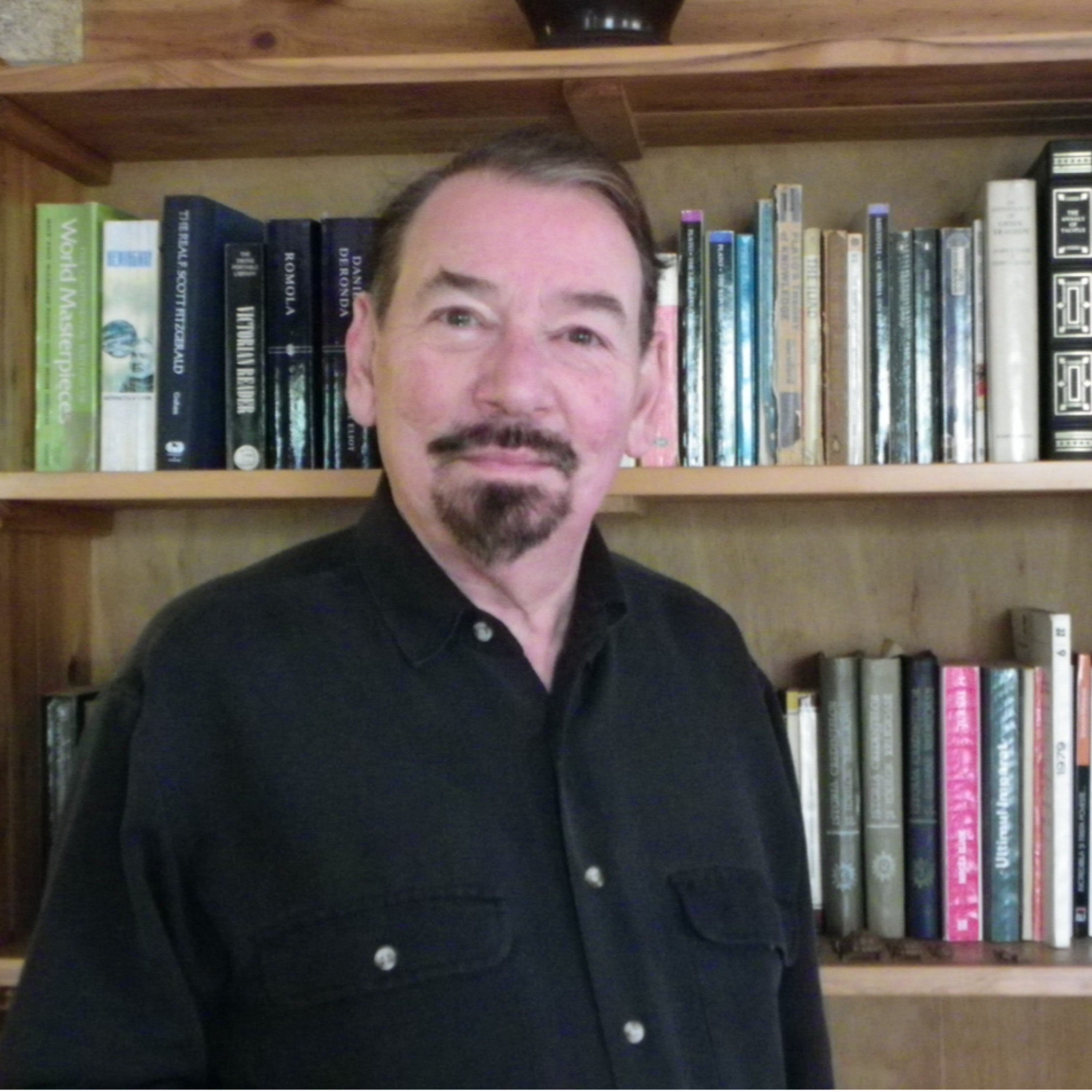
David Schill, a versatile performer in comedy, acting, and classical music, discusses his life and career on the podcast. After living overseas, he and his wife settled in a quiet Victorian town following a troublesome experience in a previous rural community, specifically seeking a home with room for a grand piano. Born in South Australia, his artistic inspirations include composers like Debussy and Copland, and comedians such as Peter Sellers. Schill developed humor as a defense mechanism against childhood bullying, which later shaped his career. He created a successful one-man show blending piano music with satire, performing internationally from Edinburgh to London's West End and venues worldwide. He enjoys a countryside lifestyle for its tranquility and work-life balance, contrasting with his touring schedule, and has recently engaged in conservation volunteering, reflecting a long-standing environmental interest.
[Music] Hello and welcome to Casted & Connections. An initiative of Hands Up Casted & where a group of enthusiastic locals have come together to capture, preserve and share stories of people who have a connection to Casted & Connections. [Music] On Casted & Connections today, Kane and I are chatting to the incredibly talented David Schill, who has made our area his home. David is described as a comedian, actor of film and stage, classical musician and composer. He has performed at the West End in London and on the BBC. After living overseas a number of years, David and his wife Teddy Arna are now settled in our community. Welcome David. Thank you. Why here? [Laughter] Why not? Indeed it was just a case of moving to another country area having lived in another part of Victoria. We lived in the Blue Mountains for a long time. And then what with Covid and not not. We decided to move down to Victoria at the end of Covid. And we moved to a very, very quiet village. We thought about 100 cases from Wadonga. Very, very beautiful snow on the mountains, high country, all of that horrible people. Oh really? Absolutely horrible. And the kids kept vandalising our property and our cars. And when we reported them to the police, the parents threatened us with physical violence. And I didn't particularly feel like taking on someone who was 6.5 inches tall and half my age. So we said, "Right, that's it, we're moving." Oh dear. So we wanted to find somewhere that was also a nice quiet country place because in my job I don't have to be in a city. And with a nice big garden and one room big enough to house a grand piano. And this one fitted the bill. Which is most important of course, the grand piano. Well, it is useful if you play it for a living, yes. Yes. That's help. It does help. So just a little bit on your early life, you're a pro-eager as we saw it. Originally, yes. Yes. grew up in South Australia, born in South Australia. Yeah. Born in Sterling, which is now a rather affluent suburb of Adelaide, which is a little country village, not much bigger than Marino in those days. So in a sense, I've come back to where I brought the wheel-round full circle. There you go. So what about your influences in your life, your role models in your life? Interesting. Quite varied. I've come to composer composing music. It varies from Debussy to Aaron Copeland. I love the open air kind of feel of Copeland's music. And a lot of my own compositions have got that kind of fresh air feel about them. When it comes to the comedy, I loved Peter Houston off. Because of all the accents and things that he did. He used to not want it to be Russian. He could be Russian. It's a great thing to be Russian unless you like Putin. If you don't like Putin, it's not a good idea to be Russian. And he did all sorts of accents. And I've been doing them since I was a kid. And also Peter Cook from Beyond the Fringe and also on television with Dudley Moore. And I liked Peter Cook because he had this kind of. He could make absolute, stupidly boring people riotously faddy. So that sort of leads to, I suppose, what your West End show? Yeah, Edinburgh Festival first then the West End. I did three Edinburgh festivals which was sold out. And that logically should lead to television and radio. And in my case, it did. I didn't have. I had quite a long radio career. I didn't have quite a long television career in England as it should have been. Because the usual thing, new director of the BBC decided to ax all the top rating programmes. Mine was one of them. But, you know, I had my day in the sun there. So your show, don't shoot me on my nose, piano player. And on the West End for quite a long time. I did some runs in the West End, short runs, but very successful runs. And lots of tours, of course. I still tour Britain, even now. I just got back from one. So tell us a little bit about your play, about the show. Well, it's sort of having fun with classical music. It's different from a name that older listeners would remember Victor Borger, who used to sort of send up the classics. But he never finished what he started to play. You never actually heard him play anything properly. He'd play like a couple of bars and then go into some nonsense. Which was great, great fun. I make fun of the music. I have fun with it. But I also make fun of whoever and whatever is in the news. At the time we're recording this, we're about 100 days off an American election. And so guess who I'm having fun with. Give us an example. I'm not sure if I. Yes, go for it. Well, I think enough has been said about that particular gentleman. I just keep fingers crossed that American gets its first black woman president. Yes, we can only hope, can't we? We better not get too political, I suppose. I was listening to your composition, "Dance of the Birds" and I just thought that was just so beautiful. That's probably my best known piece. It's probably my best selling piece. And that actually came around. My wife actually persuaded me to write it. I just improvised it and I thought that's a piece of rubbish. And she said, "I like it." And it will turn out that sometimes the composer is not always the best judge of his or her own composition. I think it's a female theme. Well, in my case it certainly was. So speaking of your wife, Teddy Arna, how did you meet? I met in Romania. I had been overworking in England and I was told to go on holiday. And I happened to. by chance I happened to know her sister who was living in London. And she said, "Oh, my sister's not doing much at the moment. You'll need a tour guide in a country like that." So, Tatiama had some time off. And that was it. We met at the airport in Bucharest and a week later she was back in England. A couple of weeks later. So David, just to digress a little bit, you mentioned about your childhood influences and your role models. And when you were talking about Peter Houston off and the apologies of pronouncing correctly. No, you haven't. That's correct. Oh, fantastic. I guess just to look at that in itself, that you've also been referred to to be a lot like him. So I guess how does that make you feel? And something else I read someone had said, "You've got a very similar, you know, comedic background like Robin Williams." How does that actually make you feel to be referred to these sorts of people? Well, to be compared with those two is I find it very complimentary. If they compare me to Russell Brand, I don't think I'm being quite so happy. And we might leave that one here. And I think I'm reading through some of the stuff that we've had gone through. You'd actually mainly self-taught as a composer, is that correct? Pretty much, yes. My father was an orchestral conductor. And I wanted to compose music and just an instinctive thing that I wanted to do. And dad said to me, "Well, I think it might be a good idea if you learned to play an instrument first." So I learned to play the piano. And to really, just because I wanted to compose music. But there was no course in composing music. So by the time I actually got to university, I pretty much knew how to do it. And my father taught me the basics. And when it came to orchestration, with the instruments all we had in the house was a book of big band arrangements by Glenn Miller. Right. But, you know, I expanded it from there. And did you find learning that as a simple task, or was it just a lot of time, a lot of hours to be able to become. No, it came fairly naturally. It came much more naturally than playing the piano. I'm a natural composer. I'm not a natural pianist.
very interesting. So where did your comedic influence come from? Like where do you think are you just naturally funny? No I was bullied at school when I went to primary school because of my accent because being an only child brought up in what was then a fairly isolated environment I didn't come into contact with kids my own age till my first day at primary school apart from the odd one and I had this accent which I've always had a combination of English father, French speaking mother and and and and all of the radio was always on the ABC which sounded in those days like the BBC so and I was beaten up on my first day at primary school by all the kids because I sounded like a bloody bummy bastard and I was bullied quite a lot and I quickly discovered that the one way to diffuse that was to make people laugh so you use humour as a as a defence shield and it just progressed from there plus I've always been a natural mimic I always like imitating people. Perhaps you can give us a couple of examples now well not off the top I did. I put you out of too much pressure then didn't I? David I think it's an amazing coping mechanism that you've been able to develop like there's a lot of kids that go through school that don't know how to diffuse or deal with difficult situations for you to be able to recognise that and implement a strategy to make your life easier I think is an amazing well it might have been then I would question it now because if you're a kid now you don't do it verbally you have to learn how to do it with a phone in your hand and reading messages text messages or things that have been posted on TikTok and I wonder how the kids can cope today because in my day it was just a question of saying something funny and that defused the whole situation now you've you've got all this apparatus all this I take and God knows what's going to happen when when eight-year-olds have got AI which they're about to have if they haven't already got it it's a Pandora's box I would not like to be a child or be the parent of a young child today so we're and let us touch on but where did your first I guess hybrid show come in where the comedy comedy really started to take over from the composing and the music sort of thing well you're quite writing thinking they were absolutely separate up for quite a long time I never combined them I did piano recitals playing the classics or I acted doing comedy parts and sometimes straight parts I played a Creon in Antigone for example and that's pretty heavy and a couple of parts in in Shakespeare including Richard the second but I can pinpoint that exactly I was doing a review in London called News Review which was like a stage version of Saturday Night Live it was a live show we did three nights a week the script changed every week depending on who was in the news I was playing I played every member of Margaret Thatcher's cabinet in the existence of the 80s at the beginning of my career and I even played Margaret Thatcher herself the original Mad Cow these two say and when the review came to an end you do what all actors do you go to the pub for a drink and think what are we doing next where's the next job and they said to me well you can play the piano and you can do all this things why don't you try one man show so I sat down wrote a script did a political satire based on the upcoming British General Election which Maggie Waden but like I played all the politicians the opposition leaders and all that and it worked and I thought wow hey and I also discovered that when you do a solo show in the theatre the amount of the theatre is going to pay doesn't get divided between six actors you get it all for yourself so it actually paid better so David in the lead up to that show you've obviously put a lot of preparation and work in planning and all of that but when push comes to shove and you're about to go out on the stage for that first time with everything being so unknown in a first gig how does that actually make you feel well look up Rogers at Soros for synonyms or petrified and then obviously all compared better than you could have probably imagined but you were able to just take go with that and make a real career out of it traveling right or in the world well yeah it's well the English speaking world I don't I am not done very many shows in non-ing to speaking countries I suppose I could if I just played the piano because music is a much more international language but yeah I day I did a tour of Ireland you know all the British Isles even the Channel Islands and quite a lot in South East Asia because English is quite well spoken in the Philippines and seeing but in the Philippines I actually they got into the they put me in the hard rock cafe with a grand piano in Manila and it's on two floors and there's a gantry is the hard rock cafe is is known as as as a bit of a red light place as well so I've got all the the glitter art of Manila society some of them even wearing fur coats I mean in Manila I would say but they're on the ground floor it needs plush leather chairs on the upper gantry all the prostitutes are there waiting for their turn to do some business they're looking down at me and I look up at them and I thought I'd been in a look up too much because otherwise I forget where middle C is on the piano and and I also do the Tour of South Africa which was absolutely fascinating wonderful audiences and of course keeps in the United States I guess it's a great segway to leading to probably more next question and do you have a favorite shower of favorite memory of when you're performing about any of these various different venues or countries not necessarily a favorite venue I do have I do have favorite venues yes a pit lock festival theater in Scotland is one and why is that what does that one come to the forefront well apart from the fact that I've sold it out every time I've been there but it's it's just a beautiful setting it's right on it's right on the River Tay it's just beautiful as another one the theater on the lake at Kessik in the Lake District another beautiful setting we have an equivalent of that in Manjara in West Australia where because Manjara is sort of like a satellite town built out on on peers and like it's like a marina and the theater is there as well that's beautiful I love theaters it's a sort of on water settings yeah and and then favorite audiences well obviously here the audiences are great but for wild enthusiasm I have to give it to the Irish because they you're not performing they are the minute you start talking they're coming back at you they're yelling at you say oh no no no no but I'm just going to tell you there's a little story of my own and you think who's doing this show you or me and and the Americans are wonderful audiences well the always full house as huge audiences very enthusiastic very polite and they give you standing ovation as well and you have to earn it I mean I know the Americans are more likely to give a standing ovation than than others but in fact the British never do all along my last tour they did so I thought I must be doing something right but but I love the American audiences as well yeah and I guess you said like they more might be more willing but like you said you've still got to go out there and they're not just gonna ditch him out oh no when I first did the improv club in Los Angeles and I had it I was on there with Jay Leno and I didn't even know he was he was upcoming and I'd never heard of him and I actually said to the proprietor as they said well I'm following Jay Leno who's Jay Leno and it wasn't quite the right thing to say apparently but you know I finished that I finished my thing and everybody loved it and as I came off stage to the managers said to me nice job and that's that's that is a huge compliment in America if a management says nice job well normally they say nothing but the audiences the opposite yeah so obviously just give a little name job with Jay Leno that's pretty impressive to be able to work alongside him or he's adding the same sort of shows and those sorts of things one after another have you got any others that really stand in mind that people might recognize yes well Patricia Rutledge, Tyson's bucket lovely person I didn't work with him but I had the opportunity of meeting Jack Lemmon at one point
It was absolutely charming. And on the flip side of the coin, the person I would at least like to work with again, Ben El. - Okay. - Aggressive nasty, not very nice at all. - Wow. How, just looking at, I guess, life now being in a small country town, how do you go from being caught up in all the showbies and all these amazing places to then handle the bustling life at Marino? - Well, I must have been handling the bustling life at Marino is quite a challenge. Finding where it is to start with. No, my wife and I like being in the countryside. It's a question of the switch off factor. It's lovely to have a work-life balance where I work in the towns of the cities. I spend half my life in airports, not now, but until recently. And then here, we've got this lovely rules around and we have two kangaroos and two koalas that come into our garden on a regular basis. I'm surprised they're not here looking at us today. And we just love that. You switch off completely. I wouldn't like to live and work in a city I did it, but that city was London and London is special. Every designer label has three cities, London, Paris, New York, and they are the three greatest cities. But I wouldn't want to live in a city again. I must say Melbourne is a very nice city. I certainly wouldn't live in Sydney. Apart from anything else, it's a wall-to-wall traffic jam these days. And having lived in the blue mountains for quite a long time, I had to go into Sydney quite often. It's not as easy a city to get around as Melbourne. But no, like for the work-life balance, as I say, we much prefer working in the city, living in the country. What are the cities and places around the world have you enjoyed? I have my favourites. I think my favourite small cities, the big ones I've just pretty much mentioned, London, Paris, New York. But they're the small cities as well. Quarter by in Spain. I found absolutely wonderful architecturally, as well as everything else. Venice is a place that is like a bandage. You just want to go back there all the time. And we just went on holiday after my last British tour. We went to Finland and we found that Helsinki was a fascinating city. We didn't expect it to be, because we'd been to Oslo before. And we found Oslo pleasant, but not terribly exciting. But Helsinki was very vibrant, very modern, but also some very nice architecture, because it's sort of modeled more on 18th century St. Petersburg, so it's architecture very interesting. And in the United States, I have a favourite city as well. Savannah, Georgia, which is gone with the wind country. Savannah is a beautiful little city. Those would be my favourites, I think. The other thing I wanted to discuss a little bit with you was your conservation values and so forth. Well, I've just started doing a little bit of volunteer work with the World Wide Fund for Nature, literally just last week. We were kind of in touch. So I've been looking at offering comments on discussion papers that they're doing. But yes, I've been involved in conservation now for quite a little since the 80s, when I started when I was working in Malta doing concerts there. And there was a bird sanctuary and all the birds had been shot. And some of the locals approached me and I went there, took some photographs and published a photo essay in BBC Wildlife Magazine and just highlighting the plight of this. And as a result, that sanctuary was reopened. Restocked with armed guards to stop the hunters from coming in. And then I got involved with the campaign in the San Diego Zoo to save the California condor, which was then the world's rarest bird. There were only five left in the wild. And the Audubon Society, which was like the equivalent of the Society for Protection of Birds here, said, "Oh no, no, you mustn't capture those birds because they should live free and die with dignity and all of that." And they wanted to put them in a gene pool. The zoo wanted to capture them to increase the genetic pool. And I agreed with the zoo and I took on the Audubon saying, "There's nothing dignified if you let them fly free because they're going to eat carcasses, which is what they do eat, which are full of lead poisoning because the carcasses have been shot with lead pellets and they're going to die of lead poisoning." So anyway, we won the battle. The article got published as a cover story new scientist and the Audubon Society climbed down and I've been involved with conservation ever since. And at least I can say, I've accomplished two things. Now, getting away from the wild animals and let's delve a little bit into your radio life and perhaps shop jocks, those type of people. Do you have much, have you had much contact with people like that? No, I haven't done that. I did quite a bit of television in Britain and radio. And I did a series called "The Garden Party," which was the top rating daytime television program. And I did satire on that and I also did satire and stopped the weekend weekend, which were two top rating BBC radio shows. And then I had my own drive time program for quite a while. And I didn't last for that long, which is probably a good idea because you had to get up at three o'clock in the morning and be in studio for five. But so I did a lot of that. And I also presented quite a few documentaries on aspects of classical music for ABC, classic FM here. I'd done about 40 of them on various classical music related topics. So it's quite a lot of radio and some TV. You feel as if you're winding down now or. Well, as you get older, you do. And you know, there. I'm sort of. I'm slowing down. I'm picking and choosing what I do more. I'm not touring to the States anymore. I loved the States, but I had 20 years of it. That's enough. I still touring to Britain. But I'm just trying to keep things a little more local because there are certain health issues that you have to look at as you get a bit older. And the traveling. You try and cut that down. And the last thing I want to do, which did happen to me on my last tour of North America, was to get ill and be hospitalized in North America. And if it's a pre-existing condition, travel insurance won't cover it. And when I looked at the bill, I thought, "Right, I don't think I'd better go to North America anymore." So, David, just with the radio and TV sort of stuff, I'm interested to know a little bit more about how that opportunity comes about. Is it that you put yourself out there and say, "Look on here, I'm willing to do this." Or is it just by chance that someone's at your show and they get contacted following that and say, "Look, you've got a fantastic thing that you've got going on here. We want to know more about it." Well, the second one is what should happen. It didn't happen to me. There is an expression that says success in show business is 1% talent and 99% luck. Well, I'm not sure if I've got the 1%, but I certainly never had the 99. Those doors, with the person in the audience who happened to be a TV producer or whatever, never happened to me. It was more a case of knocking on doors. And the Edinburgh Festival did help, because at least I had an agent there. And the agent happened to get wind of a new series coming up at the BBC. And they were looking for one comedy contribution. And so I did it. And the agent, very cleverly, he could have walked to the BBC because his office was 200 meters away. Ordered a courier to deliver the tape. So it was so important. And so they listened to this and they said, "Oh, we want you to do the whole series." Not just the one program. And so that happened from there. Wow. It is a lot of knocking on doors. So a little bit of a fantastic story about Perseverance and a little bit of luck going your way. Yeah. That's why the title of my autobiography is called Fame Can Wait, because that has not yet happened. And I'm not expecting it to have my stage of life now. But there is an expression in the Chinese-E King, where you throw these exagrams. And very often they come up Perseverance further. That's the advice that they give you. Perseverance is the middle of-- is the next.
of the game in this industry. So and then if we talk about your career as a whole hell long in terms of years have you been performing from composing music through the TV and radio even to today? Well I won my first composer's competition good god 55 years ago. Well mind you I was a teenager and I've been performing well when I left university I spent one miserable years as a high school teacher and I've been performing ever since then. So that would be that would be coming up 50 years in a couple of years time. And do you think that the promise you just mentioned miserable as a primary school teacher? Do you think that was because it's just not where you heart lied and you weren't passionate about it or yes and I wasn't any good at it either. Okay I mean the kids were bigger than me and I had no sense of discipline I never intended to be a teacher. I imagine it'd be quite difficult with your satire and your humour to not apply that to some of the kids when they're giving you a bit of backlash. Well yeah it wasn't easy. I guess more probably the last sort of couple of questions I've got for you David lowest touch on about the conservation and stuff. So outside of music what other passions do you do or what helps you pass the time in today's tombs? Oh well well for relaxation I don't play sport anymore because that's one thing the body is not letting me do that anymore. I can still play snooker but that's all I can play that quite well. Using the path practising. I've recently just acquired an old hobby that I used to have which is astronomy and so those are the those are the main ones. Yeah fantastic and is there any plan of a local show here in Marina or cast in any time soon? Well not in Marina because there wouldn't there's anywhere to perform in Marina but I am doing three shows at the beach to open next season which is February next year in Warnable Hamilton and and Portland and apparently the person who runs Portland also has a brief to arrange shows at Castleton. Okay apparently it comes under the same umbrella and I did notice that there was someone doing a short cast in town hall so I am actually going to be talking to by the time your audience listens to this I will have had a word with a view to doing a show in Castleton at the town hall. Yeah fantastic hopefully we can get that out there and yeah everyone gets to see what a fantastic entertainer you are. If it has a piano I don't know if it has a piano or not but we might have to do a big borrow or steal. Whichever comes first. Okay David well that's being lovely meeting you and chatting with you today. We thank you so much for your time. Oh thank you for everything. Thanks David. Let's just sit back and relax and listen to David's composition called Dance of the Birds. [Music] [Music] [Music] [Music] [Music] [Music] [Music] [Music] We hope you've enjoyed today's episode of one of our homegrown heroes. Jump over to one of our other episodes to continue the Castleton Connections journey with us. Please don't forget to follow our podcast and share it with your family and friends. Thank you for listening.
Podcast Summary
Key Points:
David Schill is a multi-talented comedian, actor, classical musician, and composer who has performed in London's West End and on the BBC.
He and his wife moved to a quiet country area in Victoria after a negative experience in another rural community, seeking a peaceful life with space for a grand piano.
His artistic influences range from composers like Debussy and Copland to comedians like Peter Sellers and Peter Cook.
His career combines music and comedy in a one-man show that satirizes classical music and current events, which evolved from his early use of humor as a defense against childhood bullying.
He values a work-life balance, preferring to live in the countryside while touring internationally, and has recently begun volunteer work with conservation organizations.
Summary:
David Schill, a versatile performer in comedy, acting, and classical music, discusses his life and career on the podcast. After living overseas, he and his wife settled in a quiet Victorian town following a troublesome experience in a previous rural community, specifically seeking a home with room for a grand piano. Born in South Australia, his artistic inspirations include composers like Debussy and Copland, and comedians such as Peter Sellers.
Schill developed humor as a defense mechanism against childhood bullying, which later shaped his career. He created a successful one-man show blending piano music with satire, performing internationally from Edinburgh to London's West End and venues worldwide. He enjoys a countryside lifestyle for its tranquility and work-life balance, contrasting with his touring schedule, and has recently engaged in conservation volunteering, reflecting a long-standing environmental interest.
FAQs
They moved to a quiet country area after experiencing issues with vandalism and threats in their previous village, seeking a peaceful place with a garden and space for a grand piano.
In music, he draws inspiration from composers like Debussy and Aaron Copland. For comedy, he admires Peter Sellers for accents and Peter Cook for making mundane characters hilarious.
After a satirical stage revue ended, colleagues suggested a one-man show, leading him to create a political satire that blended piano playing and comedy, which proved successful and financially rewarding.
He was bullied for his accent in school and discovered that making people laugh helped diffuse tense situations, using humor as a defense shield and developing his mimicry skills.
He enjoys theaters with scenic water settings, like the Pitlochry Festival Theatre in Scotland. His favorite audiences include the enthusiastic Irish and polite, responsive Americans.
He values the work-life balance, working in cities but living rurally to switch off, enjoying nature like kangaroos and koalas in his garden, and prefers not to reside in a city again.
Chat with AI
Loading...
Pro features
Go deeper with this episode
Unlock creator-grade tools that turn any transcript into show notes and subtitle files.
 PodcastTranscript AI