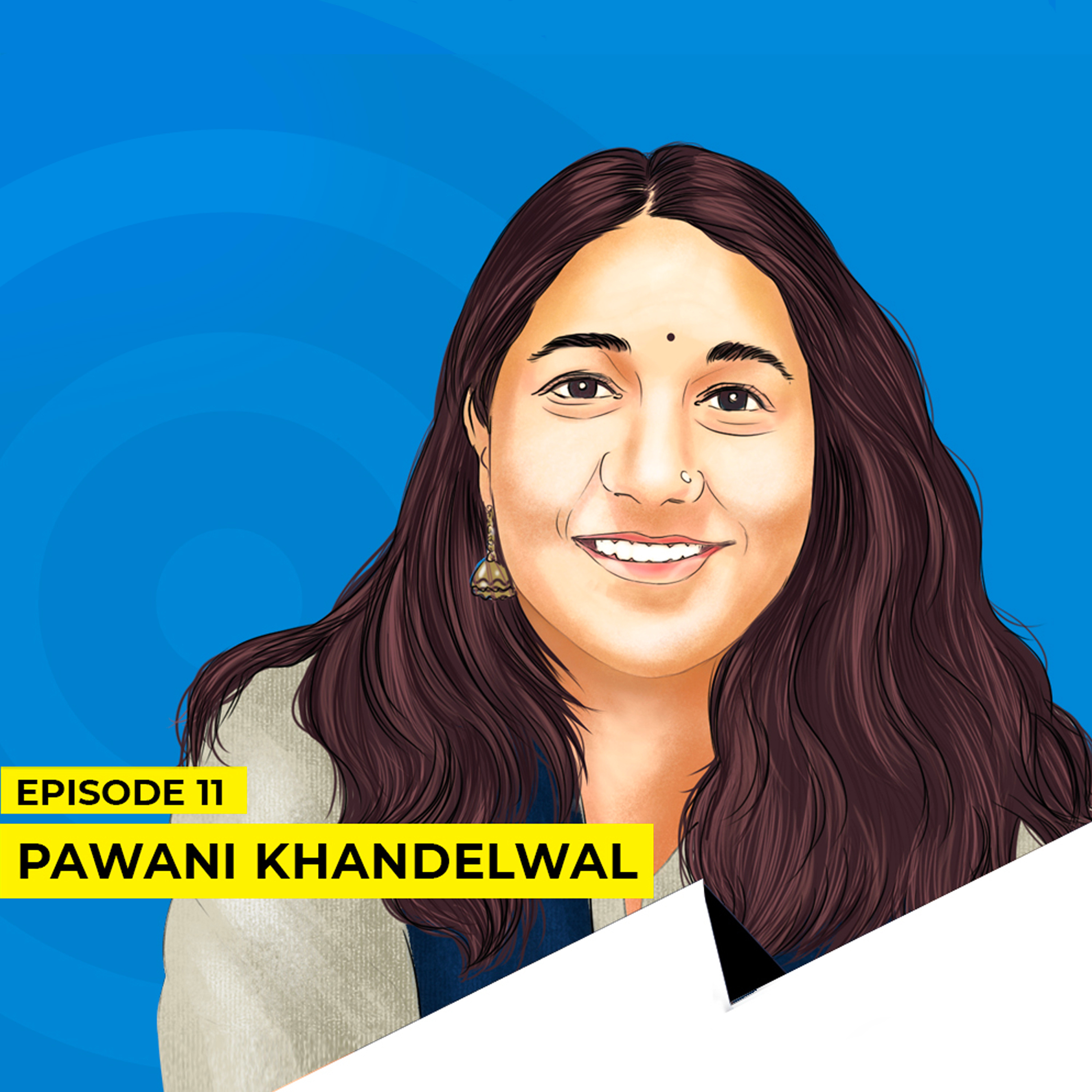
The conversation centers on mobility as a fundamental form of empowerment, particularly for women. Host Pankaj Misra introduces Pavni Khandelwal, founder of Aatmavir, who explains how her upbringing as an "outlier" in conservative Mathura revealed the restrictive lack of mobility for women. The idea for Aatmavir, a driving school for women by women, sparked when her mother expressed a deep desire for the freedom and independence that comes with riding a scooter. Pavni's early sense of purpose and entrepreneurial passion led her to build the venture, starting remotely from Pune before establishing operations in Mathura with her mother as co-founder. Despite challenges like societal skepticism and the pandemic, Aatmavir has scaled significantly. Beyond teaching driving skills, it generates employment for female trainers, dramatically increasing their income and, more importantly, their confidence and agency. The discussion highlights that mobility enables broader social and economic participation, with Pavni sharing impactful stories, like that of a once-shy domestic helper's daughter who became a pioneering trainer, illustrating the profound personal and community transformation Aatmavir facilitates.
mobility is not just about being able to move from point A to point B. It is a way to help you ascertain your identity, right? Because when you can move from point A to point B, you also gain the confidence to say that, okay, not only am I going from year to year, but I'm also going to handle whatever situations come in between. And that gives you a confidence that I don't think anything else can. And therefore, I always say that mobility is not a form of empowerment. It is the foundation of empowerment. Welcome to the season six of Outliers. I'm your host Pankaj Misra and I'm really thrilled to be bringing this edition of Outliers in collaboration with the Times of India. Outliers is a series of free-willing conversations with the ones who choose to take the road not taken off. It's about the crazy and the curious, those who dare to stand out and stand alone, keep this language. I'm really thrilled to be joined today by Pavni Khandelwal. I'm not sure how many of you have heard of her, but the first time I heard her story, the Akmanilvar story, it was really pregnant and it was also very powerful. How often do we think of mobility as a kind of an important catalyst to bringing social changes? How often do we relate mobility, just our ability to move across from one point to another through the lens of some of the baguages that we are carrying in our society? Now Pavni started Outliers a few years ago with a very simple idea and I let her talk about it, but I'm really thrilled to have her on this conversation because it's not just the idea, but what it does in highlighting something which is often ignored. We'll talk more about that, but first of all, Pavni, welcome to this conversation. Thank you so much, Pankaj. This is my pleasure to be here on this podcast and I'm really looking forward to how this conversation about mobility and women empowerment shapes up today. Awesome, Pavni. So let us start from the start. Pavni, can you talk a little bit about where you come from, the social context and give us a sense of all of that before we jump into the idea? So I come from a small city called Madhra. It is the birthplace of Lord Krishna. I think a lot of people might have heard about it. It is in Western Uttar Pradesh and I've been born and brought up in typical narrow streets going up and down the city of Madhra. And most of my childhood looked like me by cycling all around Madhra. The first time I think my journey towards Athnir, but ever shaped up when I look back is probably in my early teens when I first learned the word purpose, you know. This is probably when I was 13 years old. And I realize that there is a lot more to life than just more than what do you want to grow up and become, right? So when you're in your early teens, when you're in sixth, seventh class, I think every kid gets asked this, what do you want to grow up and what do you want to become? Do you want to become an engineer? Do you want to become a scientist? Astronaut, pilot, so on and so forth, right? So around this time, when I was trying to figure out, okay, what is it that I want to grow up and become? It was same time and I also heard the word purpose. And it kind of clicked me that it is not just about what I want to grow up and become what I want to get from the world, but it is also maybe alongside I should also think what I want to give, right? What is my purpose? What do I want to contribute to the world around me? And this led to the start of something very interesting. So I was 13 years old. We had our summer vacations at school. And during the summer vacations, I used to go by cycling every day early in the morning. And one day when I was cycling, I saw a couple of kids around my farmhouse and that is where it clicked me, you know, that, okay, I have my summer vacations going on right now and I have time. And these are kids who've never seen school, who might never see school again. How about I utilize this time to teach these kids? And thankfully, I was academically bright. So if I told somebody, I want to teach them they would not have really questioned my own competency at it. And these were really small kids, right? Like seven, eight year old kids. So for the next two months, I spent my entire summer vacation collecting all of these kids around from all the slum areas around my farmhouse. And these were around 50 kids who we continue teaching for the next four years. So this is the first time when, you know, I actually witnessed the joy of contributing to the world around me and realized that this is something that I want to do throughout my life. And whenever I think of what I want to grow up and become or who I want to be or where do I see myself, I want to look at it from the perspective of not just what I want, but what I can give. And I'm glad that this journey started very early on in my life at a age of just 13. And because of which I could start at Nibbher also at a very early stage in my life. So I'm very grateful for that. So after finishing my schooling, I realized that so my entire family has a business background, right? So that is when I realized okay, that I have certain business women genes in me, business person genes in me, and I want to pursue that. I want to be an entrepreneur. Now, I don't know if I want to come back, join my family business. I want to do a startup. I don't know all of that. I'll figure it out, but I know that this this is something that excites me, business is something that excites me, building things excites me, and therefore I decided to pursue a BBA. And that is when I did my first startup, which was in Pune while I was in college, in my first year. And that is when I realized that entrepreneurship was my passion. So I'd already realized what my purpose was to an extent. And then when entrepreneurship happened to me, doing my first startup actually made me realize where my passion was. So when the opportunity for at Nibbher really came in, it was the perfect intersection of purpose and passion. Over the years, what had also happened is growing up in Mathura, which is quite a conservative society, especially for women. I had always, outlier is the perfect word I think that you could call from a perspective. So I was the outlier of the entire mall, entire share, I was the outlier that this is a girl who doesn't really fit in any box. I was, I always used to be roaming around on my scooty, on my bike. I used to be in all sports, all activities. You name it and I would be there. And it was not a box that anybody could fit me in. And as a result of that, I would often question what is it that I'm doing so differently that my life is so different than the rest of the other girls. So the other girls living in my streets, why do they not even step out? Why is it that if I have to go for a basketball match, I'm the only girl there and they're all boys and there's no other girl there on the basketball field, a basketball court. So this realization, right, or the awareness that there was something different in the way that I was being born and brought up by my family from how all the other girls around me were being born and brought up. And how that was making a lot of difference in how our lives were shaping up in terms of what we wanted to achieve, what our goals were, what kind of impact we could create. It was extremely, extremely visible. So that was exactly, you know, when the idea of Aadneer Bird came in, all of these little little things that had happened throughout my life, wherein I had been an outlier in terms of how the society looks up for an ideal girl to behave. And I realized that Aadneer Bird is what I'm supposed to do. So yeah, that is I think pretty much about how the early years of my life shaped up to the moment where Aadneer Bird started. Nice. This is this is this is a great context. Now I think it's a good time to look at the events that kind of led to you building Aadneer Bird. How did you start and why? So I'll tell you quite honestly, I have been riding a bicycle for up since a very young age, like I said. Thankfully, I was good with the catamakes and sports and extra carcass. So I also bought a scooter scooter Honda, they were very early on in my life. I also used to ride a lot of motorbike. So every time whenever I was to go out with my friends, if they had a bike,
I would tell them, "I'll do your homework. "You let me ride a bike." So it is something that always intrigued me, right? Being behind a steering wheel or being on a bike. It is something that really filled me with a lot of independence and freedom and I enjoyed that feeling a lot. However, it really never clicked me that how exclusive this feeling was to me. And if this feeling, I mean, how exclusive this feeling was for most women, right? This is not something, I think I took this feeling for very granted. I never thought that it could have a very significant impact on the rest, on the lives of the rest of the women, also around me, if they only got to witness this feeling. And the first time I had that realization was when my mom kept saying that she wanted to learn how to ride a scooty, right? So my mom said that she would see other women and she would see them riding a scooty. And every time she saw somebody riding a scooter, she would feel like, wow, they're so free. And why am I also dependent? Why can I not be as free as these other women riding a scooty or a bike hard? And she did not know how to ride a bicycle. She did not know how to balance. So it was a lot of years to find her a female trainer who could actually train her properly because she was in her forties. She'd never rode a bicycle. So it was quite a complicated, difficult process for her. And everybody in our family had already tried and given up. So when she finally learned how to ride a scooty and I met her, the first line she said was that when I ride a scooter, I feel like I'm in a punk. Like every time I ride a scooter, I feel like I've got in wings. And in that moment, it clicked me how candidly I'd taken this feeling all throughout these years. This is such a powerful feeling that I'd been feeling all these years. And it never clicked me how strongly, how strong it is or how empowering it can be for women. So I decided to do a little more digging spoke to other women to figure out how important it was for other women or how pressing of a need it was for other women to learn how to ride a scooter and see if it could actually be shaped up as a proper venture, right? And then all the women that I spoke to around me had a very, very similar expression on their face when they narrated their stories to me, just like my mother. And that is when I realized, okay, I want to run a driving school that is for women, by women and only trains two wheelers and thus started the Artenet-Bharjani. Very, very, very exciting, Pabani. This is, now let's talk about building Artenet-Bharjani. See, it is one thing to have this spark of an idea and you would really touch deeply by this problem that you see around you. How did you go about building Artenet-Bharjani? How did you make it something that could be used by more people? Can you take me through those, you know, brick by brick? What did it take to create an organization? What did it take to scale? So Artenet-Bharj started almost four years ago from today around the same time. And I was in Pune, I had just completed my graduation. And I was also preparing for GMAT, so I was applying for ISP. And I was already running a startup, right? Where I was a co-founder. And the previous startup that I was in was a fitness startup and I really loved what we were doing there. The startup was doing great. But I think a lot of days I would come back and ask myself, you know, Pavni if somebody tells you, "Okay, because of you or because of your startup, I'm now fitter. How does that make you feel?" And it really did not make me feel anything, right? So except for the fact that I really loved working and building a company, the fitness part of it is not something that ever really gave me a kick or you know, woke me up in the middle of the night. And so when the idea of Aatnaibar came in and I thought, you know, if somebody tells me today that because of you, we are independent, we can write a schoolty, we can go for a job, we can pick up our kids, we can take our husband for a ride or so on and so forth. It's an endless list. It makes me happy. It gives me so much joy. And I feel like I'm on the right track. So I thought about this that time and somehow managed to write from Pune, having this feeling, you know, that, okay, this is somewhere where my purpose aligns, decided to start Aatnaibar from Pune itself. In fact, for the first month when we were running Aatnaibar in Mathura, I was still in Pune and did everything remotely out of there. The first few steps that were very critical for me in building Aatnaibar were obviously creating a brand, which is in fact the word Aatnaibar, the entire logo, website, the look and feel, all of that. So that we could communicate it to women in such a way that they would actually understand the importance of mobility, how it can transform their lives and be willing to learn schoolties, right? And the second most important step was to find women who could be trainers with us. And this was the most challenging part of the job. Find girls or to find women in different cities who would be willing to become trainers. In fact, even till today, we do struggle with this challenge. But thankfully, at that point of time, we were able to very easily and very quickly make a good team to get started with. And within no time, while I was still in Pune and Aatnaibar already kicked off really great, I had tried putting up processes in a way that I could remotely manage them from Pune and while the operations were running in Mathura, which is my hometown. And within our month, we got a fantastic response and we started getting inquiries from all over India. In fact, we started getting some inquiries from countries other than India and South Asia. So that is when I decided, okay, now it's time to pack my bags and go back to Mathura. So I went back to Mathura. I took a very small, hundreds square feet office, set up everything there, started running operations from there. I was very proud because my mother also joined in as a co-founder and both of us started the operations together. Till date, she handles all the operations from Mathura. And after we set up in Mathura, I always had a knack for processes and operations, right? And trying to automate as many processes as possible. So that came in really handy and because of that, we were able to expand to other cities very quickly. Had it not been for COVID, I think we would have been able to expand in a lot more cities last year. But yes, I mean, the last one or two years have been comparatively slow because of lockdowns happening unpredictably anytime. But this is also taught as a lot of resilience and helped us optimize our services on operations even more. So yeah, I mean, this is pretty much about how we set up. The initial first couple of months are always very, it's like an uncharted territory, right? You have no idea what you're doing. And there are, even though I had a lot of people who always had my bag, there were also some people who would be like, okay, so you've been selected in the Indian School of Business, you've studied year and year and you've already run a startup which was funded at an ideation stage. And now you want to come back to Mathura and run a driving school in Mathura. And the kind of environment and the people around me were, right? They were like, okay, we always said that, don't go, don't send her to Pune for a BB. She could have always done a BB from Mathura. She always had to come back to Mathura and run a driving school. So there were always comments like that. But thankfully, the support of my family never really made me question what my intentions were or what my purpose was. And I could always somehow see the bigger picture and kept working towards that irrespective of whatever was being thrown around. And I think we've come a really long way from there. Having trained more than 10,000 women now and generated employment for almost 200 women who are now working with us almost full time. Most of these girls earn up to 1.5 times their family incomes combined. A lot of them when they joined us, they were really struggling to put meals on the table. Now when you see them, it is not just the fact that they have earned financial independence for themselves or that they're making money. What is more important for us is that they gained agency. They are able to advocate for what they believe in, not injure their families, but also in their communities. They are able to advocate for the other girls in their communities.
And that is, I think the biggest impact that we've created. I always say that mobility is not just about being able to move from point A to point B. Yes. Right. How do you empower somebody if you can't make them move out? This is so wonderful to hear, Pavani, because you're so right. A lot of time we look at mobility as this movement between point A to B. Also for people like us, not just because I'm a male member in the society, but it is highly underrated and taken for granted. But the context that you are talking about and the way you're describing it is fascinating. In fact, I was looking up on your website, you know, and this Mackenzie Global Institute report, which talks about how the country could add up to $770 billion to its GDP by 25 just by giving equal opportunities to women. And this participation is such an important thing through doing it the way you are describing it. Pavani, the other thing I wanted to learn from you is in your journey so far, what are some of the most moving stories of impact that you have come across? You know, those moments when you told yourself, I want to do this more. What if you were to go back in your journey and hand pick one or two such impacts that you came across, what would some of them be? There are a lot of stories with there's one story that I always like to tell and that is Sushi Lashis. This one story that is closest to my heart because immediately when I shifted back from Pune, this was a young girl who had just turned 18 who was working with us as the domestic help. Sorry, who was the daughter of a domestic help, right? So she would all often tag along with her mother and just come and sit at her house. And she didn't really make any money. She would help her mother do the domestic chores in the house and one day I was discussing with my mother about starting at Nibir and how we're supposed to do things and what all we can do. And she was over your ring and she said, I honestly loved it off because you ask her what is your name and she would be like, and blush. She wouldn't even have the confidence to say her name, tell her name to anybody, that is how timid and shy she was. But then she was very persistent about this one thing. I know how to write a scooty and I'm going to take you for a ride and that is when you'll believe me and you'll make me a trainer. So she was very very persistent about this one thing. So I said, okay fine, one day I told her, okay, you take me for a ride and she did a decent job after which I said, okay fine, we'll train you and she joined in as one of the first trainers in Matra. She recently completed 400 trainings but keeping that aside, I remember early on there were days when she bought her first mobile phone, right? Her first smartphone. She had to hide it from her family. So after her work was over, she would have to keep her phone at my house or at the office and then she would go home because she could not tell anybody in her family that she was earning enough to buy a smartphone. After a couple of months when she earned enough to buy a scooter, a scooter and when she did buy her first scooter, I remember getting a call at Vanilla, I'm in the night from her and she's crying on the call and she's like her brother beat her up because he found out that she bought the scooter in her name instead of his name and that was the reason of a major fight in their house and he just got drunk and beat her up and I went to her place at Vanilla in the night and got her to my house and these were two incidents that happened very early on in her career when she started of as a trainer and I'll tell you some incidents that have happened in the last one year. She bought her own plot of land in her own name. She is marrying somebody of her choice now. So you think about it that there was a time when she couldn't keep her smartphone, she couldn't be an active owner name and now she's marrying somebody of her choice going to a city where she wants, has a plot of land in her own name and is also making sure that her nieces in her family are going to school. She's fighting to get a toilet built in their village home. So apart from the fact that she has assets of her own, she's able to exercise her choices. She's also exercising the fact that she can advocate for others and this is a story that really moves me and every time I feel demotivated. I remember that so Sheila's life changed because of what we did because of two wheels, right? And the journey on two wheels for her was not again from point A to point B but the journey on two wheels for her was from being a very timid shy person who had completely given up or was subjected to the patriarchal norms in her family and her society to now being a very confident person able to exercise her rights. And I realize that there is a different journey for every woman that we work with. So for some it is that the journey is about identity, for some it's about freedom, for some it's about independence, for some it's about getting a job, for some it's about fulfilling their responsibilities or duties for their family. But everybody has a telling story and very, very small incidents. This is a huge one but I tell you some very small incidents that really keep me going and it is when I'm driving, right? I remember just a couple of days back, I was driving on a highway and I was driving alone and there was a auto that was that was right in front of my car and there were these women in Pallu's sitting in the auto in a way that they were facing the car, right? So they were facing backwards. And throughout that two, three kilometer patch where in this auto was in front of my car, these women kept looking at me and kept smiling. Was it they wanted to experience what I was experiencing? They wanted to feel how it was like to have control of a wheel, to have control of their life for once. And throughout that entire patch I kept thinking how can we take Aath Nidhva to these women in rural areas who are still carrying this Pallu who have never experienced any kind of freedom or independence. So what could be the most minimal form where we could take it to them? And it's these small stories that really keep all of us going in the team. Thankfully everybody who is working in our team as managers or as trainers, all of them have had similar experiences. Every woman has had a similar experience when it comes to mobility. Whether you talk about a car or a bike or a scooter or whatever the vehicle. But when a woman is behind is in charge of a vehicle, she feels like she's in charge of her life. And that is a very powerful feeling in itself in a patriarchal society. Indeed, Bhani. And the way you described it with example, it makes it so clear that mobility is not just about movement. It is about identity. It is about freedom and so many things that you talked about with some amazing examples. On a more final note, where do you think this is headed? How are you building this out? What are your ambitions? And I'm just trying to understand how do you have built, taken this from idea to where it is and creating the impact that you are describing. How do you build something that lasts? How do we build something that lasts? It's still something that we're trying to figure out. Like every other starter, we don't have it all figured out yet. But what we do see it growing up into and becoming is apart from the fact that we obviously want to train every woman who wants to learn, be accessible for every woman who wants to learn whether she be from a village or whether she be from a tier one city or tier two city, whatever. So apart from creating a network of trainers, pan India, there are two notions that we
especially want to challenge. One is of the permission culture that is in India right. 60% of women in India even today have to ask for permission for going to the market or for going to the hospital and that really hampers their mobility. The permission culture that we have in our patriarchal society in India is something that we really want to change and challenge over the next years, the next coming years as we continue to grow. And the next thing that we want to challenge is seeing an equal proportion of women on the road right. And what I mean when I say that is the gig economy is really growing. One of the only fastest growing sectors in the last two years has been deliveries, paid food delivery, online delivery. But how many women do you see on the road or how many times as a woman delivered your pizza from Zomato or your order from Amazon the average is less than one. There are very very few women working in the gig economy for deliveries even though the sector has been growing at up tremendous speed. There are so many startups, so many companies in this particular sector and despite of that. And there are a lot of challenges obviously why there are so few women doing deliveries. But we want to make this job more mainstream for women by challenging and changing all the notions and the problems that they have to face on road. And yeah this is where I'm hoping we can take out there were two. Where in every time you step out on the road there is a one is to one ratio. I always do the social experiment whenever I'm in a new city. I'll count passing by how many women pass and how many men pass. And I won't believe that the ratio is less than one is to 10. There's one women for every 10 men on the roads. And then we're talking about equality. Right like if they're not stepping out they're not going anywhere. How are we talking about equality? You're so right, Bhavni. And I I truly believe that what you're doing is important and it's not this important it's so critical. And then first of all like you rightly pointed out there's so much of catching up to do before we start actually talking about it being fair or unfair because there is such a massive lost opportunity which already exists and that gap. Godspeed Bhavni with what you're building and I wish that you scale and you create the impact that you envision and stay well and all the best. Thank you so much, punk. It was great to have this conversation with you. I always get very passionate when I'm talking about mobility and women and seeing women on roads. I have been a rider all my life. I have done a lot of solo travel. So for me personally I know how life transforming mobility can be for a woman not just from a recreational perspective. Right. But for women who are from areas where there is no access to very basic things like be it education, healthcare, water, electricity, think about all of those areas that are very, very remote. And on top of everything we have the infrastructural issues whether there are no roads reaching there or there are no lights or even the roads are not safe. There is no public transport reaching to all of these places. And as a result of all of this these women have to continuously consistently kill their aspirations. We have to park their aspirations and I hope that no woman has to park her aspirations because of the lack of mobility because she had to wait for somebody because public transport was not available and I hope that every woman with aspirations can take the keys of her life in her own hands and this is something that we want to achieve at Atonet Bird and continue advocating for. No and then keep riding and keep giving the winks like you said. Thank you so much. Thank you.
Podcast Summary
Key Points:
Mobility is framed as the foundation of empowerment, not just physical movement, but a source of confidence and identity.
Pavni Khandelwal founded Aatmavir, a women-only two-wheeler driving school, inspired by her mother's experience and the observed lack of mobility and independence for women in conservative societies.
Her entrepreneurial journey began from a childhood sense of purpose, leading her to combine her passion for business with the goal of social impact.
Aatmavir has trained over 10,000 women and created employment for nearly 200 female trainers, fostering financial independence and personal agency.
A key impact story involves a timid young woman who became a confident trainer, symbolizing the transformative power of mobility on self-esteem and advocacy within communities.
Summary:
The conversation centers on mobility as a fundamental form of empowerment, particularly for women. Host Pankaj Misra introduces Pavni Khandelwal, founder of Aatmavir, who explains how her upbringing as an "outlier" in conservative Mathura revealed the restrictive lack of mobility for women. The idea for Aatmavir, a driving school for women by women, sparked when her mother expressed a deep desire for the freedom and independence that comes with riding a scooter.
Pavni's early sense of purpose and entrepreneurial passion led her to build the venture, starting remotely from Pune before establishing operations in Mathura with her mother as co-founder. Despite challenges like societal skepticism and the pandemic, Aatmavir has scaled significantly. Beyond teaching driving skills, it generates employment for female trainers, dramatically increasing their income and, more importantly, their confidence and agency.
The discussion highlights that mobility enables broader social and economic participation, with Pavni sharing impactful stories, like that of a once-shy domestic helper's daughter who became a pioneering trainer, illustrating the profound personal and community transformation Aatmavir facilitates.
FAQs
Aatmnirbhar is a driving school for women, by women, focused on teaching two-wheeler riding to empower women through mobility and independence.
Seeing her mother learn to ride a scooter and express newfound freedom made Pavni realize how crucial and empowering mobility is for women, sparking the idea for Aatmnirbhar.
Key challenges included finding female trainers, managing initial operations remotely from Pune, and facing societal skepticism about her career choice after business school.
It has provided financial independence, increased agency, and enabled women to advocate for themselves and others in their communities, creating broader social change.
Training Sushi, a shy 18-year-old, who became one of the first trainers, gained confidence, financial independence, and eventually trained over 400 women.
Mobility builds confidence and independence, enabling women to handle life's situations and participate more fully in society, which is essential for broader empowerment.
Chat with AI
Loading...
Pro features
Go deeper with this episode
Unlock creator-grade tools that turn any transcript into show notes and subtitle files.
 PodcastTranscript AI