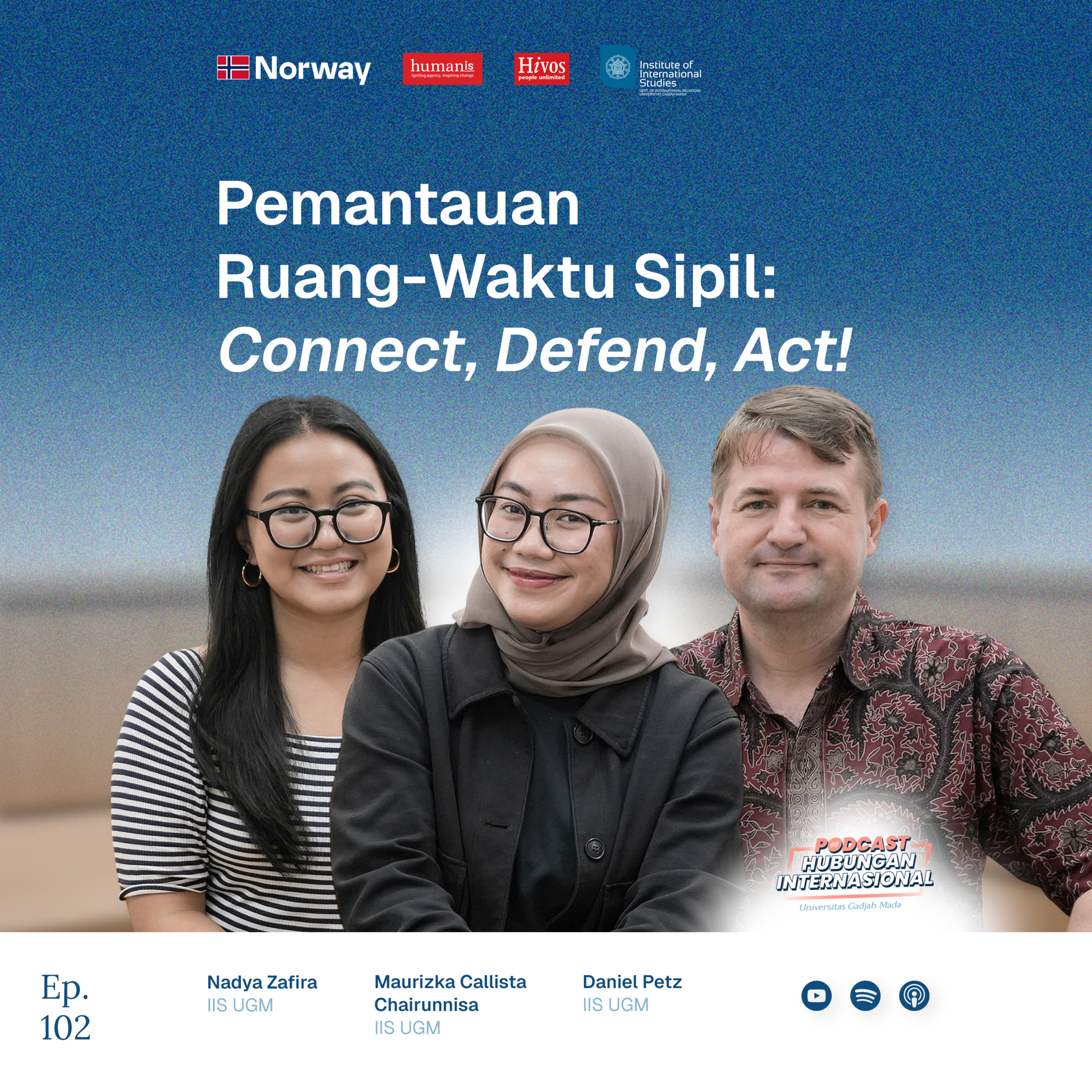
The discussion introduces the concept of "civic space-time," extending beyond traditional notions of shrinking civic space to include the significant time burdens placed on democracy defenders. These burdens stem from complex NGO regulations, donor and state reporting requirements, and the need to counter both online and physical harassment. The Connect, Defend, Act (CDA) project, implemented in Indonesia, addresses this by monitoring civic space conditions. The project employs a participatory methodology, developing and refining surveys and codebooks through feedback from civil society actors, students, and local partners in pilot provinces like Yogyakarta. The survey captures data on general democratic views, organizational connectivity, defense capabilities, and actions to push back against restrictions. The monitoring is sub-national, action-oriented, and context-sensitive, aiming to help civil society organizations self-evaluate and strengthen their strategies against autocratization without imposing external definitions or rankings. The process emphasizes continuous engagement with informants through follow-up interviews and workshops to track dynamic changes in the civic environment.
What is constrained or restricted is not only the space for civil society to act both on the real world and on the kind of online world. But yeah, there's also a lot of strain on the time of people who are wanting to protect democracy and yeah, civic space. And so yeah, there's a lot of regulations, for example, for NGOs to register. So it takes a lot of their time, there's a lot of reporting requirements from donors, from the state, harassment, online or in real world takes time to defend against. So there is a real time component also that we wanted to highlight. Hello everyone, I'm Mauryzka and I'm Nadia. I'm Daniel. I think many of us are already familiar with the concept of civic space, but not many are familiar with the concept of civic space time with the addition of time. So Daniel, would you like to elaborate more on the concept of civic space time? Of course Mauryzka. Well, when we did our baseline study for the CDA or Connective and Act project last autumn under the leadership of Mbadiqa, we felt or found out that basically what is happening amongst this kind of third wave of autocrotization and the world of neoliberal capitalism that we're living in is that what is constrained or restricted. It's not only the space for civil society to act both in the real world and online world, but there's also a lot of strain on the time of people who are wanting to protect democracy and civic space. There's a lot of regulations for example for NGOs to register, a lot of the takes a lot of their time, there's a lot of reporting requirements from donors, from the state, harassment online or in real world takes time to defend against. There is a real time component also that we wanted to highlight by this drawing on this kind of concept of space time coming out of the theory of relativity, just applying it a bit or borrowing the term for dealing with kind of autocrotization in Indonesia and in other countries. You mentioned something about a baseline study earlier and I think it relates to the background of the project itself where we studied on three concepts, which is the concepts of Connect Defendant Act or CDA, because you please explain to us a little bit about how they relate to the concept of the space time as well. So basically that CDA or Connect Defend Act project is a project by he falls and in Indonesia it's run by the humanis and it works and helps civil society to deal with kind of shrinking civic space or how civil society deals with shrinking civic space in four countries, which is Malawi, Colombia, Palestine and Indonesia. For that purpose, there was a baseline study that looked at this three dimension, Connect basically is the idea on how do civil society organization kind of work together, what other networks, but also who is left out, which groups, for example, organization can still be brought in who connects civil society, defend, so kind of how do civil society actors deal with kind of threats to civic space. Yeah, from both state and non state actors and act, yeah, so kind of how can civil society push back against some of these challenges that they are facing. And yeah, after this baseline study, basically two organizations were tasked with civic space monitoring in Indonesia, which is contrast, which do a form of day to day monitoring, so like if there is kind of a threat or someone is attacked, then they can report that to contrast and then contrast reports follows up on that and reports on that. Meanwhile, yeah, he is again, who got the second part, so this what we are mainly talking about now this first phase of our CDA monitoring. We are monitoring regionally as well in four provinces in Indonesia, so we started with Chok Chokarta, then the Acha, then Papua and central Java. So the aim of this monitoring is to kind of in, in, in, in, in, actively kind of deal with civil society actors, so we don't make kind of an index or a national white index, yeah, there's enough organizations like civic cuss or freedom house or VDEMs who are working on this issue, so we don't doing a national innings, also maybe down the road, we might want to do a provincial index. Yeah, we are not ranking any kind of provinces here, and we are also not in the business of, yeah, need kind of categorizations of kind of these different threats. What we have in mind is kind of also be action guiding in the sense of kind of helping civil society actors to figure out now some of the weaknesses that are within civil society in terms of connecting or defending or, or, or engaging in non-violent civil resistance. And yeah, yeah, hopefully be helpful in kind of helping to push back against auto-cretization in Indonesia and the world. Yeah, so it's part of the project. One of the first tasks we had was to develop how we would monitor civic space for that purpose we developed and, and, and refined a survey and then develop the code book. Yeah, Nadia was one of the leaders on kind of developing that survey and then and help with the code book. So Nadia, maybe you can tell us a little bit more about the process, how that came into being. So the process of creating the code book and the survey went through multiple process of us refining and revising the survey questions. Initially, we developed a very straightforward survey that we tested with not just undergraduate students, but also the master students in the IR program here at University of Amanda. And then we received feedback from the students on how we could better develop the survey questions. And then after that, we tested it on the first initial 20, Jogja civil society actors and organizations who were then invited to be part of the workshop in which they also. They gave further inputs on the feedback on the questionnaire as well. But yeah, I think there were multiple stages of us receiving feedback from different organizations, different people. And then from that, we created this first version of the survey that was then used to create the code book, which is essentially the guidance tool for our enumerators to survey the civil society actors not just in Jogja. But also in ATA in Papua and later in Papua and in Central Java as well. So how many interviews are we doing within the project? For the first year, so for the first year, we've done interviews, 15 interviews in Jogja so far. And then we've done about 30 or 14 interviews in ATA. But because of the given situation in ATA, we are currently stopping the data collection process. But next year, the idea is that we will have 15 almost all provinces except for Central Java. Okay, great. And what kind of civil society actors are we targeting? Yes, so I think that's a difficult question to answer because as we selected the informants who we want to interview, we realized that the definition of civil society can be really broad. And dealing with these broad-based sectors of civil society, we kind of have to create the survey to accommodate different perspectives on different views and different types of civil society actors. Personally, we've interviewed like a big manager of an art festival in Jogja, and we've worked with the director of the project in Jogja, and we've worked with the director of the project in Jogja. And we've worked with the director of the project to provide information about the impact of civil society in Jogja.
Nah, siapkan di sosialnya sangat berguna di sini, di perjalanan semua. Jadi kita harus melihatkan kepercayaan di perjalanan. Pandangan Umum, Connect, Defend, Act, and Aspect Demografic dari Informan. Nah mungkin satu persatu aku akan ceritah sedikit ya. Pertama terkait pandangan Umum, ini menanyakan, mengenai pandangan Umum para Informan, mengenai pemilu dan kebebasan CPL. Nah kenapa 2 indikator ini yang utamanya kita tanya kan ya? Itu karena menurut literatur mengenai demokrasi. 2 indikator penting dalam demokrasi adalah pemilu dan kebebasan CPL. Jadi, ketika kita memintaan tentang, "What do they think about?" Sebebasan CPL dan demokrasi, kita harus memintaan tentang itu terima kasih. Itu di bagian pandangan Umum. Yang menariknya pertanyaannya berbentuk skala dari 1-5, misalnya sangat baik sampai sangat buruk atau sangat sempit hingga, sangat luas. Dan yang menariknya juga selain kita menanyakannya dalam bentuk skala, ada aspek temboral di sini. Jadi, kita menanyakan sekalater sebuah misalnya bagaimana kondisi demokrasi Indonesia. Saat ini dan juga 5 tahun yang lalu. Bagi itu juga dengan bagian kebebasan CPL, kita menanyakan kondisi kebebasan CPL di Indonesia, menurut informan saat ini dan 5 tahun yang lalu. Nah, dari situ bisa terlihat apakah angkanya naik atau turun, atau kastak-nan begitu. Nah, itu untuk bagian pandangan Umum. Kemudian untuk bagian KONAK, di sini, basiknya kita menanyakan keterhubungan aktor atau organisasi masyarakat CPL ini. Bagaimana mereka terhubung satu sama lain, bagi itu bagi mana mereka mungkin berorganisasi di dalam organisasi dan juga dengan sesama aktor atau organisasi masyarakat CPL lainnya, itu bagian KONAK. Kemudian untuk bagian DIVAN pada desarnya kita menanyakan how well can they defend themselves. Bagaimana bisa? Para informan ini, para aktor atau organisasi masyarakat CPL ini, membelah atau mempertahankan diri mereka di tengah berbagai serangan fisik dan juga serangan digital, yang datang ke pada mereka dalam pekerjaan-pekerjaan mereka terkait kebebasan CPL dan demokrasi di Indonesia yang kita semua tahu. Itu adalah sektor yang cukup challenging untuk dilakukan dan dijalani begitu. Itu untuk bagian DIVAN, kemudian untuk bagian AC, kita menanyakan bagaimana mereka bisa memukul balik melawan penyemitan ruang waktu CPL di Indonesia. Nah, lalu sebelum masuk ke bagian demografis yang mempertanyakan mengenai aspect-aspect demografi informan ini yang menurut aku sangat menarik juga dari surfe kita adalah kita menanyakan mengenai bagaimana para informan ini menefini sikan ruang waktu CPL. Jadi itu adalah pertanyaan yang ditaruh di bagian akhir, delas obstantif question before we move on to the demografi question. Jadi, menurut aku, itu menarik karena kita tidak memberikan definisi di awal, bahwa ruang waktu CPL adalah bla bla bla. Tapi kita menanyakan kepada mereka terlebih dahulu mengenai pandangan umum, kemudian aspect connect defense dan AC, lalu kita bertanya kepada teman-teman ini, kemudian menurut teman-teman apa sih ruang waktu CPL itu, "How do you define that?" Mungkin yang menarik juga dari kot-kota, karena kita mengambungan coding option secara induktif, ya jadi, berdasarkan dengan jawaban informan-informan, baik itu dari yang 20 jauh jawa, maupun informan lainnya, begitu jadi ada kemungkinan coding option kita akan berubah ya, kayak ke depannya, begitu jadi ada kot-kota versi 1,0,0 dan seterusnya begitu. Lalu yang penting juga untuk dihaire, adalah kita tidak memaksakan definisi civik-spaces time apa itu yang akan pada informan, dan mungkin pada informan juga baru pertama kali, pada situ membuat apa itu civik-spaces time begitu. Jadi kot-kota sangat emik, begitu tidak berdasarkan dengan sebut dan nyal tadi, sangat terbuka pada definisi dan pandangan yang terbeda dari masyarakat civil yang juzuru sangat diverse juga, gitu, Sikap. Oke, ngomong-ngomong sual codebook ya, Nadia, tadi kan di awal, Nadia sepat menyebutkan bahwa dalam membuat codebook ini, jogja adalah pilotnya, gitu, dimana. Nadia dan teman-teman EECDA ini melakukan interview terhadap 20 informan pertama di jogja. Nah mungkin Nadia bisa cerita lebih lanjut, gitu mengenai engagement teman-teman dengan para informan awal ini. Oke, mungkin penting untuk dihaire juga, ya kalau misalnya dalam projek CDA dan kod-dai ini, kita tidak menggunakan pola, pungguman datang eksraktif atau pun terhadap saksional, begitu jadi kita tidak hanya datang ke 20 informan atau pun informan lainnya, tok oancaran, tok survey, lalu tidak ada follow-up lagi, begitu, tapi kita juga ingin mengadakan metode-metode lainnya, untuk memasakan kita terus engaged, gitu, dengan informan dan masyarakat civil baik gitu di jogja, pun dari lainnya, begitu. Nah, kenapa kita mengadakan in confirmation workshop tersebut? Karena ketika kita mengumpulkan 20 informan jogja tadi, terata baik banget temuan yang tidak terkawar dalam survey awal itu, jadi itu menjadi kesempatan yang baik, untuk tidak hanya memfaidan si temuan kita, begitu, tapi juga, bisa menjadi ajang untuk para informan ini bisa bertemu kembali, dan untuk kita tetap indelup, di tetap indelup dengan masyarakat-kalkan masyarakat civil di jogja, begitu. Nah, ada kemudian juga, gitu, tahun depannya, ketika kita melakukan wawancara kembali, kita akan bertemu dengan informan informan yang sudah kami wawancari sebelumnya, supaya kita bisa tahu, apakah ada perubahan dalam jauh benar-benar, dan itu bisa menjadi temuan bersama, untuk laporan yang nanti, kita publish, tidak cuma tentang jogja, tapi kita nangga di rada lainnya, begitu, sikap. Oke, jadi kalau bisa akurinkas, begitu, ya, proses pembuatan kodbuk dengan jogja sebagai pilotnya ini, pertama, dilakukan interview dengan 20 informan pertama, kemudian teman-teman ini diundang untuk workshop konflirmasi temuan di mana bisa share, dan kalau ada teman-teman dari workshop tersebut, kemudian tidak menutup kemungkinan, nanti tetap kita akan kembaktu teman-teman ini untuk mengkonflirmasi apakah ada perkembangan atau perubahan dari yang sudah diungkapkan, gitu, saat interview dan juga saat workshop. Pana ya, seperti kita tahu, dalam memantau ruang akusipil, situasinya bisa sangat dinamis ya, apalagi di Indonesia ini, jadi, itu important for us to come back to them untuk mengkonflirm di kedepannya lain. tadi seperti yang sudah di sebut Daniel, yang memedakan kodak dengan program memantauan ruang si pilihnya, adalah kita berusaha untuk menangkap data di tinkat sub-national, ya, jadi alih-alih nasional, dan kita tahu komesii, sebesarnya di jogja, makanya tadi aku udah berisai baik tetang, pengalaman memantau ruang si pilih di jogja, tapi kita tahu ini, tahun pertama ini, kita juga akan ke Aceha begitu, boleh gakkan morsi, kita akan sedi kita tangga pengalaman bertemu dengan masyarakat si pilih di Aceha bagaimana. jadi untuk di Aceha, iso game bekerja sama dengan teman-teman di kontras Aceha, jadi terima kasih banyak untuk teman-teman kontras Aceha, yang sudah bersedia menjadi partner kami dalam captur Aceha. untuk di Aceha sendiri, kemarin aku berkesempatan bersama tim pengeting lainnya itu masyarakat untuk datang ke Aceha pada awal bulan October, dan bersilaturahmi dengan teman-teman kontras Aceha. mungkin pertama aku mau ngomongin juga kenapa konteks Aceha ini juga menarik untuk kita captur dan monitor ruang dan waktusibel di sana. karena di Aceha ini kan ada konteks paska konflik dan paska tsunami. dan untuk membicarakan paska konflik, di Aceha ini ada sesuatu yang has, itu ada perdahari ah dan juga ada partai lokal, di only profins in Indonesia yang memiliki partai lokal. jadi sangat menarik begitu untuk diitaliti. di sini kan kami menggandang teman-teman dari kontras Aceha yang tentu lebih tahu tentang konteks di Aceha. jadi di Aceha kami bersilaturahmi begitu saling sharing pengalaman, mengenai misalnya karena dijogias sudah pernah diadakan interview dan workshop kami sharing. dan yang terpenting di sini kami bukan ingin misalnya mendikte waktu duduk atau imposing certain things to them, tapi kami ingin mendengar feedback dari teman-teman Aceha. bahwa dengan pengalaman di jogia kita melakukan Aceha. apakah Aceha ini bisa di implement juga di Aceha dan Jika Bisa? what kind of things yang harus kita twik lagi? apa yang harus kita ajah? tentunya tidak bisa di seragam-keran karena konteksnya beda gitu ya. jadi kami melakukan workshop untuk enumerator di Aceha. kami memperkenalkan codebook kepada teman-teman yang juga sangat antusias untuk belajar mengenai codebook yang sudah kita buat ini. kemudian yang menarik juga kami melakukan simulasi wawancara di situ. jadi pertama di situ kami dari E. ini memperagakan, ini adalah how we do interview di jogia. kemudian teman-teman enumerator selanjutnya ada yang poluntir untuk mencoba untuk melakukan wawancara, bahkan sampai tahap coding di sini. jadi kita belajar dari satu sama lain mengenai konteks dan juga proses terkait. bagaimana kita bisa memonitoru wang dan waktu si pilih di Aceha. begitu kalau dari pengalaman aku kemarin. jadi bisa di bilang kita harus tetap sensitive ya guys. terhadap prebeda-prebeda dan konteks tual dalam masing-masing profinsi. dan pun sama lain itu nanti kita ke papua atau kejauh tengah pas ya ada konteks context tertentu yang khusus gitu.
masih-masing profinsi yang mungkin itu kan jakan juga kan menginform proses menyeisun kodding atau surveynya begitu. Sebelum menutup podcast ini, kali aja pte manteman disini bisa share satu kitek wai dari pengalaman hampir satu tahun ya, melakukan pemantuan rama kota si PIL baik gitu di jauh kejahat atau di acah atau di Indonesia. Mungkin Daniel, boleh kita coba? Oke, ya, temen kasih Nadia. Terima kasih, yang bagus banyak mungkin Digital mixing Indonesiapaper, sebagai yang lain yang masih pentang whisperan dan toujours hal. Semuanya kaget kelegatan itu tidak terfituskan Indonesia berեսplik Swelho, tapi tukur, hanya dengan datang dulu, Dalam ini ada turun capabilities Raz counselors, seru sirurku dan CPU teaching dan師ologi loro. Sangat sering di layANG, ayo turun k recollial. Ini Pertanyaan untuk mengenai dan membuatkan kelihatan. Dan untuk mencari dan kelihatan, untuk mencari dan kelihatan. Mungkin berkaitan dengan aspect action tadi akan maurya. Kenapa pemantan orang sibil itu juga penting untuk teman-teman sias otosi SAA. Karena itu mematuh mereka untuk meri eses kembali atau merihavalusi kembali. Gap antara apa yang mereka claimkan bisa lakukan dan realti di lapangan begitu. Jadi misalnya ini ada satu sias-sias yang mengklaim dia bisa membeli orang sibil dengan baik. Tapi padanya-tanya tetap ada represi antar jadi dan teman-teman masih rentan terhadap represi tersebut. Pemantan orang sibil itu menjadi kesempatan begitu-teman-teman sias otosi SAA untuk menyegarkan kembali. Represi terwarrenya ke kerasa mereka bisa lakukan. Jadi selain action yang sudah melakukan apa sih? Action yang bentuk-action yang dapat mereka melakukan untuk lebih baik pushback against Shaking Civic Space Time. Nah itu tadi obrolan kita. Nah soal proyek CDA, proyek Connect, Define and Act, pemantawan ruang waktu sibil di Indonesia yang dilaksanakan oleh institut of international studies, Saya preset dan arfokasi di partamen Ilbu Hubungan International Universitas Gejah Mada. Si mak terus podcast hubungan international dan sampai jumpa. Da-da! [Muah]
Podcast Summary
Key Points:
The concept of "civic space-time" highlights that restrictions on civil society involve not just physical and digital space, but also the time consumed by administrative burdens, reporting, and defending against harassment.
The Connect, Defend, Act (CDA) project monitors shrinking civic space in Indonesia (specifically Yogyakarta, Aceh, Papua, and Central Java) through a survey assessing civil society actors' views on democracy, their networks, defense mechanisms, and actions.
The monitoring methodology is participatory and iterative, using local feedback to refine surveys and codebooks, and aims to be action-oriented by helping civil society identify weaknesses and strategies rather than creating rankings.
Summary:
The discussion introduces the concept of "civic space-time," extending beyond traditional notions of shrinking civic space to include the significant time burdens placed on democracy defenders. These burdens stem from complex NGO regulations, donor and state reporting requirements, and the need to counter both online and physical harassment. The Connect, Defend, Act (CDA) project, implemented in Indonesia, addresses this by monitoring civic space conditions.
The project employs a participatory methodology, developing and refining surveys and codebooks through feedback from civil society actors, students, and local partners in pilot provinces like Yogyakarta. The survey captures data on general democratic views, organizational connectivity, defense capabilities, and actions to push back against restrictions. The monitoring is sub-national, action-oriented, and context-sensitive, aiming to help civil society organizations self-evaluate and strengthen their strategies against autocratization without imposing external definitions or rankings.
The process emphasizes continuous engagement with informants through follow-up interviews and workshops to track dynamic changes in the civic environment.
FAQs
Civic space time refers to the dual constraints on civil society: not only the physical and online space for action, but also the time burden on activists due to regulations, reporting requirements, and harassment, which limits their ability to protect democracy.
The CDA project, led by Hivos and implemented by Humanis in Indonesia, supports civil society in responding to shrinking civic space across Malawi, Colombia, Palestine, and Indonesia through monitoring and capacity-building initiatives.
The project conducts sub-national monitoring in four Indonesian provinces (Yogyakarta, Aceh, Papua, Central Java) using surveys and interviews with civil society actors, focusing on connection, defense mechanisms, and actions rather than creating national rankings.
The survey and codebook were developed iteratively with feedback from students and civil society actors in Yogyakarta, refined through pilot interviews and workshops to ensure they capture diverse perspectives and local contexts.
Elections and freedom of expression are fundamental to democracy, so the survey assesses civil society actors' views on these aspects both currently and over the past five years to track changes in civic space.
The project uses confirmatory workshops and follow-up interviews to maintain engagement, validate findings, and collaboratively identify changes or challenges in civic space over time.
Chat with AI
Loading...
Pro features
Go deeper with this episode
Unlock creator-grade tools that turn any transcript into show notes and subtitle files.
 PodcastTranscript AI