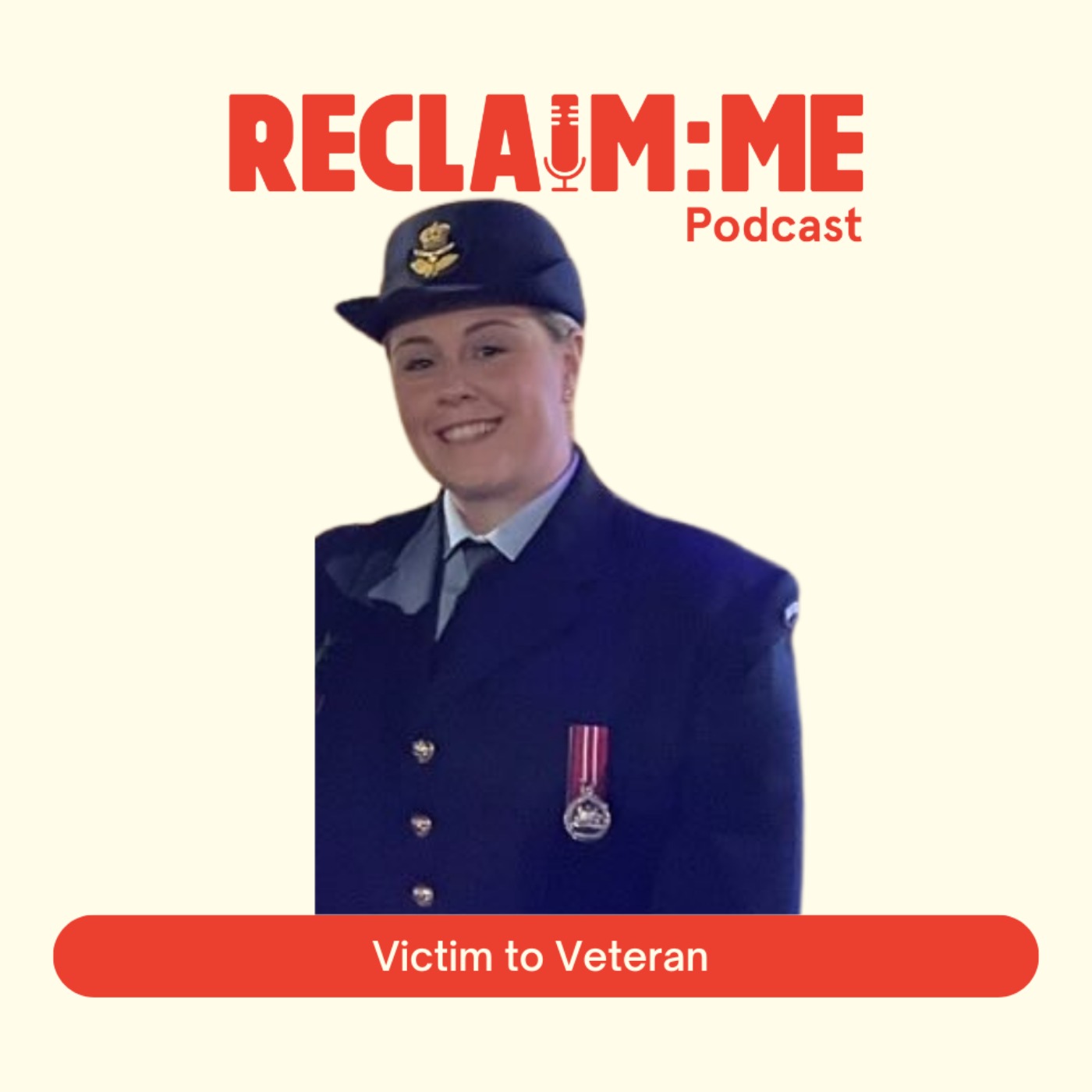
Episode 101 - Victim to Veteran With Jordyn Gray - Part 2
41m 56s
This episode of "Reclaim Me" features host Madeline Heather's land acknowledgment and podcast introduction, followed by a personal update celebrating 100 episodes and advocacy for the Polished Man campaign. The core content continues Jordan's story from a previous episode, detailing her traumatic experience after a sexual assault. She describes receiving a shocking message from the perpetrator, triggering severe distress, and the subsequent inadequate response from authorities. Police took her initial statement in a group setting with friends and witnesses present, compromising its integrity and her privacy, which she later recognized as unprofessional and harmful. Jordan criticizes the lack of proper training for handling sexual assault cases, especially in rural areas. She further explains how, as a defense force member, she was subjected to a restrictive "freedom of movement" order by her base for six months, which severely limited her autonomy and safety while the perpetrator faced minimal consequences, illustrating systemic failures in both civilian and military institutions.
This podcast is recorded on the stolen lands of the warringery people of the colon nation and I pay my respects to the elders past and present. I extend that respect to Aboriginal and Torres Strait Islander peoples listening here today. Sovereignty was never seeded. It always was and always will be Aboriginal land. Welcome to Reclaim Me. I'm your host, Madeline Heather. Reclaim me is a true crime podcast told by those at the centre of those crimes, the victim survivors. The general public often hears stories of victims survivors through the lenses of perpetrators or the media and we're changing that narrative here. These interviews are raw and honest so a word of warning is necessary. Discussion and topics may be triggering or distressing for some listeners. So please use your discretion. If you need help or support, please see the suggested resources in the show notes of this episode or contact your local crisis service. Hello fam. It is just Maddie from the editing room. I just wanted to give you all a heads up and say, "Well, thank you so much. We've just surpassed out 100th episode. This one will be 101. So I have uploaded a little bonus episode for our 100th, which is just a bit of a reflection and I've just dropped that. So please go and listen. If you've got anything else that you'd like to let me know or say your feedback around this podcast or what this community means to you, then please share that with me and let me know. I love to hear it." And also just a reminder that this year, 2023, I am a polished man and ambassador. And what that means is that I'm going to be supporting the polished man campaign, which is powered by YGAP. And what we're basically doing through this is supporting polished men to advocate and raise funds, which will support the ending of violence against women and children. We ask you to polish up, so paint and nail blue and generate some conversations through that as well. For all of the information regarding that, please go to the show notes for this episode. And if you can, please support me by following the link and support me as an ambassador. Any amount counts. So if it's a dollar, if it's $2, that will be so much appreciated as anything that we can raise to go to this worthy cause, would be absolutely tremendous. So thank you so much for that. But anyway, on to part two of Jordan's episode, just a reminder as well that this is part two. So if you haven't already, please go back to episode 99 with Jordan, which is part one of this conversation. Otherwise, we're just dropping right into the middle of it and none of it will make sense. Big love. And I just remember seeing that kind of come up on my phone and initially it didn't come up with a name attached. So I had to click into the message to see who, like who it was from WhatsApp, cause it just came up as a number. And I could see the tagline underneath the number and it said his name and I went into a complete new state of shock. Because I had no idea what to do. I started screaming. I was crying. I remember throwing my phone across the room. I called out to the girls who were in the house at the time and they came in and they were trying to console me and understand what had happened. And she took my phone and in that moment, she just said, you just calm yourself down, just like drink some water, just try and keep breathing. One of the other girls came in and tried to console me. She, the initial girl took my phone and then proceeded to block him on all social medias, which wasn't very hard because we didn't have each other on social media at all. But she blocked his number, she blocked his social media, she did everything like that. So having that support in that initial moment was fantastic, but it was something I then didn't even have to think about. So, but yeah, it just, it sparked a new kind of level of like I was just in terror, like just essentially felt like this sense of terror, this sense of unease, this, like how could you message me? I still haven't even figured out what's happened. I know that I'm in a lot of pain and I don't want to think that this is what you've done because that's what we're in grain to think, right? Like we don't want to jump to the worst case scenario, but the evidence was pointing to the contrary. Like I had to, I had to assume something bad had happened and I knew that I couldn't have consented to that. So for then that person to message me, it set off a whole new wave of emotions and triggers and traumas for me in the space that followed. And while that was happening, the police then turned up and they took an initial statement from me in front of everyone who was in that house. So they didn't take me to the room outside. They didn't ask me to step outside with them. They asked me to recount what I had recounted that morning to them in front of everyone in that house that morning. What the fuck? That was my recollection of giving my initial statement. That wasn't my recorded statement that then got turned into a transcript. But that was the initial statement that appeared in their essentially their incident report. They sat on the couches. I remember sitting on the floor at the time. There were three women. One, so one was the person whose house were at one, the other was an admin officer. So my admin officer, the other was actually the owner of the house whose party I'd been to the night before. And also the other woman's husband was there as well. And not at any time did the police ask me to go like somewhere private? They just said, look like we've been told by the hospital that you've been sexually assaulted. Can you please tell us what you recall in front of everyone? That is so unbelievably unprofessional, especially just like take away the fact that you're a victim of a crime, a sexually based crime in which it is very personal, it is very distressing. But even just back to the evidentiary value of a statement, usually when something like this happens, the police come in and they interview people individually to make sure that all of their recollections and stuff all align. But if people are also listening and talking and contributing when you're making a statement or they're around and they're making faces and they're inadvertently or overtly participating in your statement, which it lessens the value of that in the eyes of the court as well. And it is just so incredibly demeaning and dismissive. And it's also just like the power dynamic of that situation as well. You just being victimized in somebody else's house sitting on the floor while they're on the couch. It's just completely unacceptable. And I understand that when you're in rural areas, these aren't maybe things that all police officers are completely trained in. But there should be no situation that a police officer is not educated enough to interact with the public knowing how frequent sexual assaults and domestic violence happen to at least understand the power dynamics of where you're fucking sitting. It's completely horrible for you. And I can just imagine like for you at that moment, did you feel like you had any power to say anything or were you just still, like you said before going along like you're in shock kind of and you're just going along with what's happening around you? Completely going along with what's going like with what's happening around me. And you are so correct. Like in that moment, the questions that they were asking were not only directed at me, they were directed at every single person in that room. They were essentially taking that initial statement from me with the input of everyone else. So I said, this is what I remember. And that was the moment where I found out that I'd walked home with three other people. That there was a recollection of someone from someone of me leading that party, which I didn't have myself. There was so much information that came out in that very moment that I should never have known, that I still cannot to this day personally remember, because it's in that blackout period for me. But there was no autonomy for me in that moment. And as much as I'm appreciative for the support that those women gave to me in those initial hours and in the days that followed that, I made no decisions for myself. They called my boss, they called my chain of command. The police were there. They were contributing. They organized with the police. Like they took the police, like the business card from the police and set it aside for me to see later, like at no point was there any decision that I was making on my own in that initial 24, 48 hours and what we were then, which was the first, I know 12 hours after I'd woken up. So. And like you said, as I like, there's so much information coming out. Did they record that interview or were they sitting there with stupid little notepads trying to recall what every single person is contributing to this very information dense conversation? They were sitting there with notepads and a comment that I will make now that I've been through the entire process is that I wish, I wish they had recorded that that conversation because those people and those girls as much as I'm very grateful for everything that they did for me in those days and those weeks that followed. Their stories changed by the time we got to court. So I honestly do wish that that initial conversation had been recorded, but the narrative
that perpetuated by the time we got to court was completely different from that first morning. And it's something that through this day still breaks my heart and as much as like I still hold like peace and love for them in that space there's a lot of me that's still frustrated and kind of wants to understand how the fuck that changed when you could have so much support to having the complete opposite by the time you get to the court case. Yeah, absolutely. And you know, I just kind of giggle to myself almost as well thinking like if there was a recording of that they would use that in police academies to teach people how not to take an interview from a victim of a crime especially the fact that it's just lazy and if they can't show that their timelines and things have changed then what's the point in providing the statement like it's just it's a shit show. And I just want to say like again like how sorry I am not only that you've gone through what you've gone through but just the utter what to call it unprofessionalism from emergency responders and I understand that it is a rural area. I do appreciate that but you have to have training and you have to have better processes and practices in place. This isn't responding to a one-off event. Sexual assault is common and domestic violence is common. You should have safe spaces in hospitals that are established for that very reason. You should have officers that are police officers that are trained enough to be able to know that the initial statement should be by you on your own in a safe place voluntarily. Not forced out of you in front of 10 other people in which they're only documenting dot points of in a notepad. Like they can't pull out a transcript of a six-person conversation like that's just a ridiculous like no no the best EA in the world would not be able to minute that conversation that is just ridiculous. And like I just and I think at that point I was so naive and I was so unaware that I was just going with it and it wasn't it wasn't until after everything had happened and after I stepped into the advocacy space that I truly understood that there was so many fundamental flaws in those initial first hours for me but it's just not something that I had considered because it's not something that I'd experienced before. It's not something that I had ever been a part of firsthand so I did know to ask for those things. I didn't know to to clarify and as if like I could have even done that when I was in that state that I was that morning where essentially all of these decisions were happening and things were happening around me and it felt like life was happening around me and I had absolutely no control. So it was another two days from from that interaction with the police before I gave my official recorded statement at the physical police station. So you can imagine just there was a whole heap of emotion around those couple of days for me because I was still coming to terms with what had happened. I still hadn't been back to visit my bedroom. I didn't feel safe going back there so people had gone back and collected things for me. So I hadn't actually seen anything done anything. The police had then gone in and taken all the forensic evidence so that had the forensic team going and sweep and take everything out and I made it very clear that I didn't want to be anywhere near it because I didn't feel safe going back there. But yeah it was just it was just so strange and you hear like other stories and you you read about how it's meant to be handled and you don't realize until you have conversations like this or you hear other people speaking about it that that's not best practice and that's not business as usual. That is like you were saying, "Mari it is it's laziness" and it's a lack of training and it's a lack of understanding. So and I'm just so sick of having the conversation where people are the response from professionals is that we need to train our people more. Like I'm sorry but when sexual violence is as prevalent as it is, when domestic violence is as prevalent as it is, your training should already include that. It shouldn't be something that people are so inexperienced or so so so devoid of empathy that they can't actually talk to a victim survivor of crime. In that case they should not be a front-facing police officer. If you're interacting with members of the public on a daily basis, a good portion of them being victims, if you can't empathise with the whole portion of the population, you can't be kind enough or empathetic enough or intelligent enough to understand that you need to take that person away into a safe space to talk to them about not only what they've gone through but the process from here for them, what they can do to support you as well, things like that, whether you could expect to see him on base, whether he's going to be like this all should be talked about to you in private or with an advocate. And if an advocate is ever there with present with anybody while they're giving statements, they're not adding to them. They're there to be there with you. They're not there to add to the story that you're telling. And it's just it's so frustrating because it's this didn't happen in 1920. It's not like being in a rural community means that you can't access all of the online training, all of the seminars, all of the things by a video link like we're recording this episode now. You know, it doesn't, it's not the excuse that it was before we had the tools that we have available now. Being in a rural community and rural setting is not the barrier that it once was. I'm not saying that they don't have barriers. Obviously they do. But the responses for me are just something that is so preventable and easily avoidable. And it's just so frustrating that it adds to what your horrible experience was and what happened to you. Yeah, thank you. It's like it's a lot to take in right. You are right. It didn't happen in 1920. It happened in 2020. So like those things and and and you'd think as easy as that is understanding if I'm going to see him on base, that was not something that the police actually wanted to touch because of the intricacies that the defence force and being both of us were serving members, that the intricacies that that brought that that meant that the police weren't going to touch it. So there's there's so much to unpack here, but there's essentially a line in the sand that exists between civilian police and defence forces. Defence force bases are considered commonwealth lands. So in their mind, he was going to be reprimanded fairly on the base and that meant that I wasn't going to have any issues, but what actually fell out of that was something that the senior officers at the time called a freedom of movement instruction, which essentially outlined where when and like if I could move at certain places on the base, it stipulated more restrictions against me as the victim survivor than it did against him. And they decided to call that a freedom of movement instruction, which outlined when, where and how, I could move around on the base and the surrounding areas. So I essentially had no no say in that at all. They asked me what areas of the base do you need to be in at what time? I essentially said I need to be at my workplace. I need to like, I need to have access to the gym because at that point part of my job was to stay physically fit in the defence force. I said I need access to the gym. I need access to food. I need access to the medical centre. They then devised a mutually agreed upon plan between his chain of command and my chain of command, but what eventually fell out of that was more restrictions on me than on him. And whenever I needed to go somewhere, I had to be escorted by an officer who was aware of what was happening to me. So I was escorted to the medical centre. I for the first couple of days was escorted to the cafe on base to get coffee. I was escorted everywhere that you can think of. I had someone who had to come and pick me up from my workplace to drop me home. I wasn't allowed to drive myself. It was everything was taken away from me at that point. So and I will note like those freedom of movement restrictions went on until I ended up leaving that base six months later. So they were in place that entire time. And on three separate occasions, he actually broke those restrictions and nothing was done to correct it. So you've been, you've had all of your freedoms taken away. You've basically got less freedom than many prisoners have. You are being followed everywhere. You cannot access things freely. You can't ship without somebody knowing exactly where you are and what you're doing. And it doesn't sound like it's for your protection. No, it was essentially to make sure that I just didn't run into him. And it was more protecting him than it was me. So I remember like just I was trying to go to the gym on what was my lot of afternoon. I come home from work and it ended completely
changed my daily routine. My daily routine at that point was to get up super early before work, go to the gym because I'm a morning girl, like love to get up, go to the gym, just like kickstart my day. We didn't do that. So the restrictions that essentially were alternating mornings and afternoons. And on this particular day I had come home ready to go to the gym because I had had a frustrating day at work and I went to grab my stuff, go to the gym and I walk out and he was going to the gym and he just proceeded to walk at me, which left me no other, I've recourse essentially except to flee back to where I was living at the time. So I then called and reported that to my, who was my boss at the time and he was told he then got called from his boss at the time and told to go home, nothing happened. Nothing was reprimanded, there was at that point he had been charged and he was out on bail and nothing happened because of the intricacies between the civilian police and the defence force. They had just assumed that the defence force were going to take over all administrative requirements of what that meant at the time but it was completely ignored essentially. It's just absolutely shocking because this is something that any other person would be either fired for. The charges aren't being found guilty yet but you're not, like you said he was almost of a similar level to you, it's not like it would have been the hardest thing in the world to relocate him and relocate him, not you. You've done something wrong, you've been charged with this, you're on administrative leave, you're on this or whatever and that's in a way to protect you but these assholes at this fucking prison that you're in now think that they can just stand around you and protect you in inverted commas at all times in some way that that's good enough and it just shows how little they actually care about the severity of the crime to not even move him away and to not reprimal on him for breaking an order and I just find it so shocking that there has been a literal freedom of movement like a prison sentence put on you that stops every freedom that you're in the defence force trying to fucking protect. Yeah, it was and I mean at the time I was made to believe that that was normal, that that was what was expected of me, that what was expected of me was silence and essentially complacency, right? Like I just had to go with what they were telling me I had to do and they to them it was completely normal that my commanding officer was escorting me to on base social events that I was expected to be out because I had a team of 40 people and those people would have expected me to be part of that community and to be at social events but for me to attend those events I had to be escorted by the most senior officer on that base. So of course people had questions I was trying to keep it very private what had happened to me because I wasn't willing to share it at that point because I was still in essentially in the process of understanding what had happened to me and what that meant for me but I wasn't afforded any of that privacy I wasn't so even though people say they don't know what happened there were so many telltale signs that something big had happened because the commanding officer had to escort me everywhere. If I went to a social event on base he would walk me home or drive me home if it was too far away. It was I just I don't even have the words for it and I mean in those six months after the initial assault and then like in the fallout of what happened to that I fought so hard against the system but they insisted that I needed to post that I so posting means like leaving and going getting a new job essentially like being removed from the location and put in another location to another role and I fought so hard against it because I felt that my time at that base was not complete I had more goals to kick I even had a new job lined up at the at the back end of that the people had been scouting me for but I as much as I said I don't want to leave I don't want to leave why can't he move it was something that was never considered and in in multiple subsequent investigations that have still cut like there's a couple that are still ongoing everything that's come out has proven that there was ample opportunity for administrative leave for him to be removed from the workplace and that it should have been considered for him to be removed from the locality but his chain of command pushed against that so that never happened so what ended up happening at the end of that six months was I had to leave and I got posted and I had to start a new job. Now almost just like a no wonder in an organisation led by somebody who believes that the four A's are why people are sexually assaulted no wonder it's on you for having and you didn't even choose to raise this by the way you know for having something happened to you and not keeping it 100% secret you are now in a position where your career is in jeopardy where you have been put in basic prison it is prison it's a prison sentence that you have had to endure for six months being followed around by a man horrible horrible like removal of your freedom of basic human rights then to be told that you're the one that has to leave that is just complete and utter sexism and it is so sad how not shocking that stuff is considering as well the top chains of command like if it was in a female led organisation or somebody that really invested in I don't know victim safety well being none of this would happen because it is completely unacceptable and I think that this is just such a huge violation not only of your body but of your basic human rights. That's the thing but I've spent the last two years trying to convince people that what happened was wrong but all they can see was that oh but it benefited you like you got away from that person you and people multiple senior officers have used the fact that oh but you posted and now you found a really loving partner. I'm sorry should I be grateful for that like yes I have a beautiful life partner that I now have but the initial event should never have happened like I should not have had to move at what was close to coast in Australia I should never have had to do that because while I was still going through the throws of trying to go through the legal system and trying to deal with police and trying to deal with prosecutors I was also having to move my entire life and for me at that point it also meant setting up my very first apartment because I'd never lived off a military base because I'd been I'd come straight from the academy gone to living on a base and I'd never lived in a normal apartment before. So while dealing with all of that in the legal system while navigating what was starting a new job in a new location with new people who had no idea who I was I was also setting up a brand new apartment I had zero furniture at the time so I had to I had to outlay all of these costs to set up a new life on the other side of Australia where I hadn't had to do those things before and that's something that I wouldn't have even considered because I was planning on having multiple years still at that base where the event had happened. So I had to outlay a series of money which then became a financial burden for me. I entered a new level of depression which I didn't even know I could get that low because I was trying to balance all of those different things and trying to succeed at my job because I was still only two years into my job. So trying to do all of that at the same time and respond to different things that were going on was was near impossible. And it's just completely unacceptable like I just am so sorry that people have responded like that because I just the phrase that comes to mind is like what's that got to do with the price of fish. So you relocated to another area and you met somebody that's got absolutely nothing to do with your basic human rights being removed with you being sexually assaulted with the constant violations of all of those things with you having to be upended with your career having been jeopardized and not his and everything that you've just said. These are all things that you've had to do as a result of his actions. It is not something that is fair to put on you and when people turn around and say shit like you know, oh, but you've met your partner. Either they mean it is in like it wasn't bad enough or you know, look at the silver lining. I don't know. Nobody has time for that. Like acknowledge the fucking hardship that's gone for as if you don't already know that it's wonderful that you've got a loving partner now. Like you don't have to point that out to you. You're a pretty intelligent person. I'm pretty sure you're aware of that. Thank you. Like I just get that shit like that just pisses me off because it's like I understand maybe people don't know what to say to somebody that's gone through this, but dismissing it and pretending that it didn't happen and talking down to somebody like you and saying, but look at you know, it's a good thing that it happened. Otherwise you wouldn't know. I don't believe in that and I don't have any time for that. That's bullshit. Yeah. And that's the thing right. Like and even when I was fighting so hard against actually getting removed and getting posted from that location.
I chose a different location to where I ended up. So I did actually end up here in Brisbane. That was not much using my next choice. They said they came to me when the initial discussion was proposed and they said, "Right, so the end state is your posting? Pick a location." And I said, "Okay, I want to go to Newcastle." Like, that's where my next career goal is. Like, here's me, young junior officer still trying to keep goals in her career, like still trying to keep something on track. They essentially turned around to me and said, "No, we were really hoping you'd say Brisbane because it's close to where your family is." So even though I was essentially my life was in peril, I was still keen on pursuing my career in the Air Force. That's where my next career goal was. So I said, "I want to go to Newcastle." Like, that's where I want to go. That's where my five-year plan has me. I want to go there. And they said, "Well, we're so sorry. We were hoping that you would choose Brisbane because Brisbane is closer to your family and we think you need your family at this time." And I turned around to them and I said, "I don't need my family. I can call them. I can go and see them when I need them. My career, my next career goal is in Newcastle." Like, that's where I want to go. And they said, "We've already organised it. You're going to Brisbane." And here I ask you, like, what's the point in it? What's the point in thinking it was? Number one. The fourth sense of autonomy was honestly how I felt. One of my best friends at the time, and she still is, God love her. She was also an admin officer by trade in the Air Force. And all of this was happening. So she wasn't actually my admin officer at the time. But after every decision and every meeting that I would have, I would send her a voice note, essentially, like rehashing everything that had happened in a meeting and sending it to her. So everything that had happened along the way, she'd be like, "This is going to happen. This is going to happen. This is going to happen." And the afternoon that I told her what happened there, she goes, "100%, they were just trying to give you a false sense of autonomy." You are not incapable of looking after yourself. Something horrible has happened. You don't need to have your human rights removed from you by this horror. I still can't believe it, like, I can't believe it, but I just find it so fucked up that you can't move. Now you can't even have any choice about where you go because you need to be near your family. This is just so ridiculous that you have no choice, no rights, no options. You are being told by a bunch of people who don't know what they're doing, how your life is going to play out, and it's just completely unacceptable. And that's how it felt, but I had to just accept it and go with it. And what it eventually led to for me was I got placed in a role where I was drastically underprepared. I didn't have the right experience. I didn't have the right anything. I didn't have the right qualifications. So that meant that every day that I went to work, I was fighting to understand more because people couldn't take me seriously because I didn't have the right experience or the right credentials or the right background in the right things. But they had just placed me in a role for where it was based in a location, not because of what I could provide to that role. So that then led to me essentially becoming disenfranchised with my job. And what would have happened and what did happen two years later was my eventual medical separation from Air Force because my mental health in those two years after that, sure the sexual assault and the court case impacted that as well. But being placed in a role where I didn't understand anything that was happening, I didn't have an opportunity to prepare for it because I was given three weeks' notice to move. I just, I couldn't prepare myself for that and with everything else that was spinning out of control in my life, I just, I couldn't deal with it anymore. And it's all decisions being made for you without your informed, like without your consent by people who should know better. And it has again only impacted your career. You were the one who was fighting for it. You were the one that knew best and yet you've been placed into something that has done nothing but hurt you. And it is just so, I just want to punch somebody like it is so horrible because it's not just one thing or one person. It is each individual person that should be held accountable for each violation against you that has had such huge impacts on the trajectory of your career and your life. Yeah, but it's just something that, and I think through this day a lot of the people that I have, like, have been part of that process don't actually understand the role that they played and sure. I'm not saying that every single one of them was a negative experience. There were some fantastic people that actually listened to me and took on board things that I actually wanted. And one of my last CEOs here in Brisbane, he, so CEOs, is commanding officer, one of my last commanding officers here in Brisbane, was the most supportive person that I have ever encountered in the Air Force. And he took it upon himself to learn more. He did his own research. He did his own reading on what I was going through and what being a victim survivor meant. He did his own research on statistics of this experience and exposure in Australia. He knew everything that he could know because he wanted to take care of me. Everyone else just hoped that I was going to tell them along the way. Yeah, he cared. He actually cared and he asked me what I wanted. And he was part of the reason that I essentially got to the end of my time in Air Force and he said to me, "Jorda, look, like what do you want?" And I said, "Sir, because that's what you have to refer to senior officers, as I said, "Sir, there's nothing left for me here. I need to get out." And he said, "Right, let's make it happen." And that was the only time that there was actually someone pushing me and pushing the system for what I wanted. And that was the end of my career. And it's just so frustrating as well because it's like, that should be the bare minimum. That's not hard for a leader to do, to go and look up and search. So let's say somebody's got a rare disorder. A Julian Barst in Drone or something. Causes a vertigo and horrible things in different people. If somebody in your team was experiencing that or whatever, it wouldn't be out of the question for you to do a quick Google search, have a small research. It's the same thing and I understand what you're saying, but it's just like, he's the only one that did the bare minimum. He's the only one that gets cared enough to do a fucking Google search. Yep, that's it. Like everyone else just relied on me to tell them everything else. Like at no point did they take lead and look up what he did. But you are so right. Like it doesn't take a lot of effort to look up what people are going through. So at the same time and in a very similar timeline to what I was navigating while I was still at the first base, one of my team members was going through a traumatic miscarriage. And having not been a mum myself, I had looked up like and done a lot of research about the best ways that I could care for her in that time for her. So as much as I was going through my own shit time that no one knew about, I'd taken the time out of my day, my life to find out how I could better care for her because I was a leader and I had that. That was that was a privilege to me. But I think that's just it just shows the different outlooks that people can have as managers and as leaders. Like you can be an officer and you can have this, essentially this qualification, this responsibility placed upon you. But you can at the same time, you're not a leader. You have to work to be a leader. It's the same way as respect is not given. It is earned. And for me, like seeing what those people did to me, it made me a better leader. It made me a better person because I wanted to be able to make life easier for people if I ever had to go through this situation again or if someone reached out to me for help and many people have in the months that followed my separation and in the months that followed my own choice to speak out inside Air Force about this. So I think it just goes to show that you can be a senior officer, you can hold a position, you can be high up in the corporate ladder, but it doesn't make you a good person. No, and I just want to say as well, like you referred then to like the, the, they're the reason that you're, you know, like that now. And it's just, I want to make it clear that their horrible behavior should not be rewarded in any way. But your intelligence, your tenacity, your empathy, your care, those are all things that have led to you saying, this is the way that I'm not going to do it. So while it might be inspired by them, your, your personal advocacy, your journey, you've done the work, you're the person that's responsible for that, not them. They, they might be the ones that you look at and grow. That's how not to fucking do it. Let's put that on a poster. But there's no way that they can even like as a slip, you know, they can't get any recognition for the person that you are, the person that you've become, the leader that you are, Because
That's giving them something that they don't fucking deserve. Yeah, 100% could not agree more. Well, Jordan, we've gone through so much. You've talked so much about your experiences and we still have so much to talk about. And I really want to get into with you what it was like to go through that court process and I want to go through a little bit more detail as well. And kind of allow you to talk through some of those other scenarios with freedom. You know, I always say the beauty of podcasting is that there is no time limit. I run this shit so I can make it her as long as it wants. So I would love to have you back. Because I really want to talk with you more in depth about this. And I think it's something that we really need to talk about in depth as well. And shine a light on. And I really want to get you back on to talk more about the project that you've gotten and the hopes and dreams that you have and hope to achieve with that as well. Thank you so much for having me here. Honestly, I think it's been such an empowering way for me to tell my story for the first time outside of my circle and for the first time outside of what is the defense force circle that I've existed in. So thank you so much for having me here. Thank you for listening to this episode. If you do need help or support, please reach out to those crisis services or suggested resources in the show notes for this episode. Have a look after yourself and make sure that you're doing and taking the time that you need to process the information or to process anything that may have come up that was triggering for you. Lastly, I do have one ask. Can you please take the time to rate and review on Apple Podcasts, Spotify and any platform that you listen to reclaim me on. This helps tremendously with me reaching additional people and making sure that we get the word out there that there is no shame or stigma that should be associated with being a victim of these crimes. If you could also share this podcast with somebody you may know. As you may not be a survivor yourself, but you sure as hell no one. Thank you again. Bye.
Podcast Summary
Key Points:
The podcast host acknowledges Indigenous land sovereignty and introduces "Reclaim Me," a true crime series centering victim-survivors' narratives, with content warnings for sensitive topics.
A personal update includes celebrating 100 episodes, promoting the Polished Man campaign against violence toward women and children, and directing listeners to a previous episode for context.
The guest, Jordan, recounts traumatic post-assault experiences
Systemic failures are highlighted
Summary:
This episode of "Reclaim Me" features host Madeline Heather's land acknowledgment and podcast introduction, followed by a personal update celebrating 100 episodes and advocacy for the Polished Man campaign. The core content continues Jordan's story from a previous episode, detailing her traumatic experience after a sexual assault. She describes receiving a shocking message from the perpetrator, triggering severe distress, and the subsequent inadequate response from authorities.
Police took her initial statement in a group setting with friends and witnesses present, compromising its integrity and her privacy, which she later recognized as unprofessional and harmful. Jordan criticizes the lack of proper training for handling sexual assault cases, especially in rural areas. She further explains how, as a defense force member, she was subjected to a restrictive "freedom of movement" order by her base for six months, which severely limited her autonomy and safety while the perpetrator faced minimal consequences, illustrating systemic failures in both civilian and military institutions.
FAQs
Reclaim Me is a true crime podcast that shares stories directly from victim survivors, aiming to change the narrative often shaped by perpetrators or the media.
The podcast includes raw and honest discussions that may be triggering or distressing, so listeners are advised to use discretion and refer to support resources in the show notes if needed.
Listeners can support by painting a nail blue, generating conversations, and donating through the link in the show notes to help end violence against women and children.
The host was asked to recount her sexual assault in front of multiple people, which she found unprofessional, demeaning, and detrimental to the statement's evidentiary value.
The instruction imposed more restrictions on the victim than the perpetrator, requiring her to be escorted everywhere and limiting her freedom for six months, with the perpetrator breaking these rules without consequence.
She argues that despite being in a rural area, police should be trained to handle sexual assault cases professionally, including taking private statements and understanding power dynamics, as such crimes are common.
Chat with AI
Loading...
Pro features
Go deeper with this episode
Unlock creator-grade tools that turn any transcript into show notes and subtitle files.
 PodcastTranscript AI