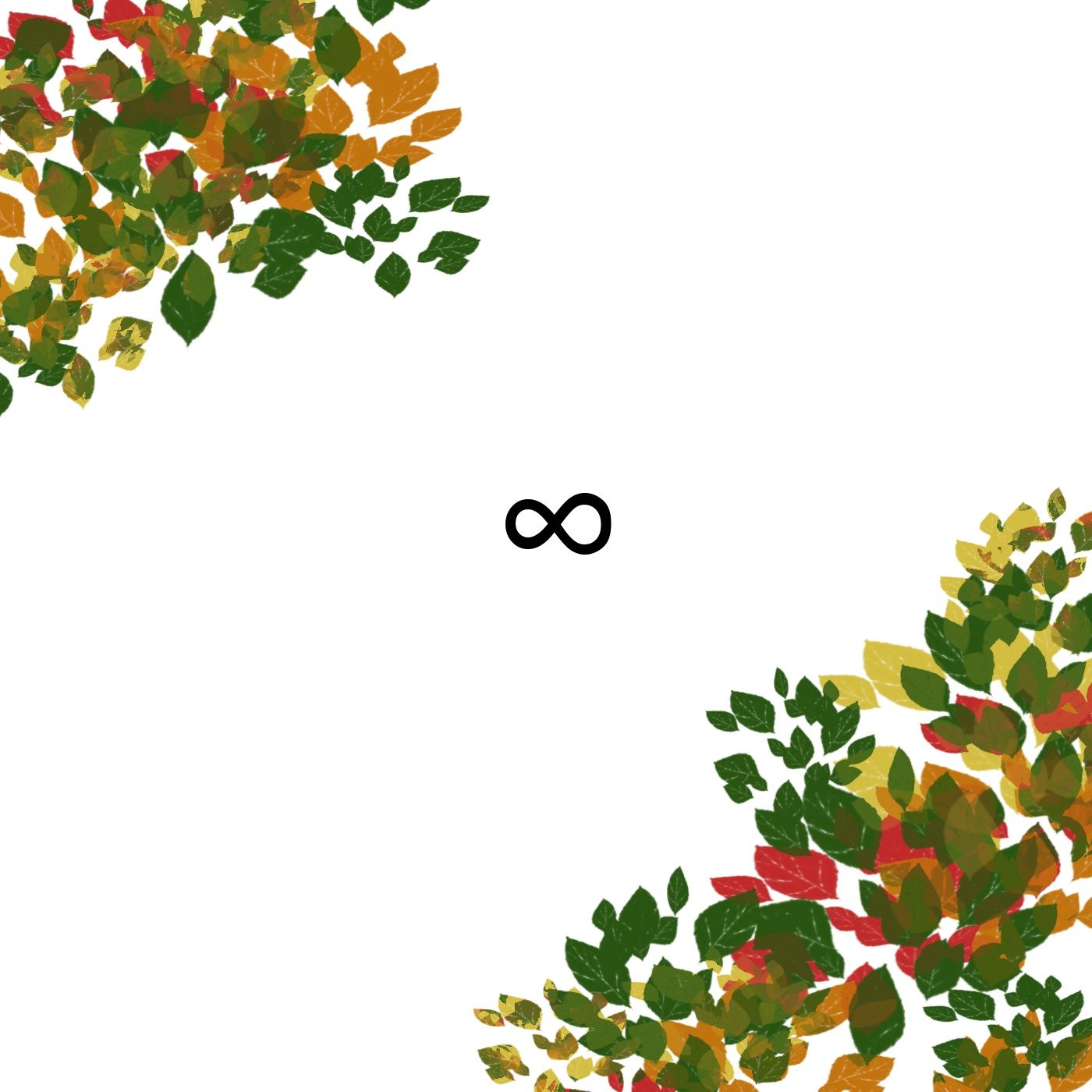
This podcast episode introduces the concept of infinity, emphasizing its abstract and boundless nature. The host, a math major, explains that infinity is not a tangible number but a representation of something without end, symbolized by the lemniscate (sideways eight) since the 17th century. Key mathematical properties are highlighted: operations like adding or multiplying infinity with itself or finite numbers still yield infinity, and negative infinity follows similar rules while retaining its sign. The discussion extends beyond pure math, relating infinity to real-world examples such as the infinite expansion of space and the infinite hotel paradox—a thought experiment about accommodating endless guests. The host stresses that infinity cannot be physically reached or counted, making it a mind-bending yet foundational idea in mathematics and broader thought. Future episodes will explore applications and paradoxes further.
Hello and welcome everybody to infinity and beyond. This is the only podcast that talks about infinity and the concept of it a little too much. But if you're in the math, this will be a nice treat for you. But if you're not in the math, just stick around anyways, because there's plenty of things to talk about that all relate to you and your life coming up on our first episode. Alrighty, hello there. Welcome to our first episode of two infinity and beyond. Really, really cheesy name that I had to pick for the podcast. It was the first thing that popped to my head. I said, why not? Yeah, so infinity. It's something you guys have probably seen in your math class at some point in your life and that is about the extent of it. I am actually a math major and of course, I really wanted to talk about this because infinity and the concept of it is just so abstract and so it has a lot of applications and not just math, but in the world of how people think and how people can imagine things even beyond our imagination. There's so many different topics to brush on and we will throughout the course of this podcast. But for now, we're just kind of wrong with it and I'm going to start off today's first episode by kind of laying down the groundwork. So you get an idea of just how abstract this really is. Now, if you're like a lot of people who are in a math class, you probably had to answer equals infinity or negative infinity at some point without really knowing exactly what that really entails. There is a lot more that goes into it and I just want to preface by saying I literally have no script for this at all. I'm just kind of rattling off and I think that's going to kind of be the point of this. I know a lot about it. I feel like I can talk about it. It doesn't mean I'm an expert by any means. Certainly there's people with higher qualifications that could talk more about this with me and I would love to. I would love to have guests on this podcast or even just anyone who in general wants to talk or ask questions. Maybe I can make a segment where we ask or I take in some questions and I'd be more than happy to answer them live on the podcast. But for now, let's lay down the groundwork. So what does infinity mean? What does it actually mean? Well, basically, we'll go over some definitions, but essentially one of the basic things you should understand at a ground level. If you don't know any other terminology, you should know that it basically means that something is really, really big. Something is boundless, a set. We use in math, we call it a set. Imagine a sack. Imagine a knapsack and it was filled with potatoes. Now you want to know how many potatoes fit in this knapsack. You're thinking to yourself, "I'm trying to envision someone carrying a little bag of potatoes." Obviously, if you were told that it holds an infinite amount of potatoes, what does that mean? Is it just mean that it's so large that at some point, it just takes up a certain amount of space? And it's really, you know, it's a really abstract concept because infinity is boundless, right? boundless. So that's the key thing to understand that a number can be so big, but it's still countable. In my take a very long time, you might not be able to count the number before, say, you pass away. But if you started from one, held out your fingers, say, 1, 2, 3, 4, 5, 6, 7, 8, 9, 10, you could probably count pretty fast. But nowhere, would you get even close to something that is what we would say of a very huge size? I mean, that is a very broad term. But let's say you counted one every one second, right? Imagine, you know, you could only count to 3,600 in one hour. That's nothing. That's very, very small. And so when you try and imagine infinity, your brain, it's really hard to kind of wrap your head around it because we say that numbers are infinite, you know, if there's no bound to them, there's no end to them, you cannot count to the end point. There's nothing tangible about it, right? You have a back of potatoes, you fit 20 of them, you can physically count 20 potatoes from start to finish, right? If you have an infinite amount of potatoes, you could count, but you'll never get there. And that's what kind of makes this very, very unique. Now, that's just one definition of it. There is plenty of definitions of it. There's plenty of working definitions of it. And some things in math just wouldn't work if we didn't understand this concept of infinity. And if we didn't have proper notation for it, which if you've seen the cover for this podcast, which I designed and I am no graphic artist by any means, but they have given as the sideways eight sort of as it's what it looks like. It's not called a sideways eight. It is the symbol for infinity. And a quick little fact about that symbol, it was discovered by an English mathematician, his name was John Wallace. And it was in 1657. You can imagine that's how far mathematics has gone back. If you think that's how far it's gone, it's gone back even way further than that. But that's just one, that just shows you how crazy and advanced mathematics is because you see that concept of infinity, you've probably seen in school or you, I mean, you've already seen it. And this concept was just recently introduced in our lifetime as a human species recently. Roughly, let's just say roughly 400 years ago. Okay. I'm not going to be here to doing any round inner math. I'm not here to be counting anyone off, but I mean, means, okay, I'm a math major, but that does not mean that I'm good at it. I just like it, you know, it's very interesting to me. And basically, it, well, if you want another proper name of the infinity symbol, right? It's at the sideways eight. It's called the lemon skate. Did I say that correctly? I'm pretty sure it's the lemon skate. I've heard that term before from a previous professor. And I know that, but I could be wrong. So if someone would be more than willing to correct me on that, that would be perfectly okay. Not everyone is right. That's one thing we're going to learn about here. Not everything I'm going to say may be right. There's a lot of different topics that we're going to talk about, but I want to broadly talk about it. I'm laying down the groundwork that is true. We're going to go over a lot of abstract things in your life, maybe not so in your life, but I'm going to use this concept a lot. So that's why we're laying down the groundwork that I believe to the best of my ability without, with, with all reasoning alone, that it is true. Now, it's very important to note that this kind of concept of infinity is used. It represents potential, right? Because like I said, it's not definite. You cannot sit here and tell me, I'm going to count an infinite number of potatoes. It will take me a while, but I will get there. No, it is potential. Things have a potential to reach an infinite amount. This will go into more like series and summations and stuff of that nature. But an actual infinite quantity, right, is not obtainable. But let's go. Now, now we've kind of touched on infinity. You kind of understand what I am talking about. You have seen it before. And if you haven't, I was also perfectly okay. I have also laid down the groundwork. So let's just recamp real quick. Infinity is boundless. It has no end. And it is, it's just, yeah, that's, that's basically the way that we can represent it. Now, obviously, we're talking about real things, right? We're talking about tangible things. I said an infinite number of potatoes. What does it mean to have negative infinity? Now, you could say it's the opposite. I wouldn't call it the opposite. We will touch more on that later. It is essentially in the opposite direction, the opposite. How would you call it? The opposite magnitude, right? That would be the better word to describe it, I believe. But negative infinity is kind of, it's, you imagine a line, right? You imagine a line. And in the middle, the direct midpoint of this line is the point zero. There is nothing. There is no numbers counted. And to the left of it, you have negative infinity. So it's a negative value. So big. It's boundless, right? This is kind of a sense of the same thing. It's not as tangible to represent, right? Because you can't count, let's say you can't, there's, there's, let's say we start today. Today at zero, hour, zero minutes, that's zero. A negative infinity would be going backwards in the day. You cannot count, you cannot live your day backwards. That would be really cool to live your life in reverse, but you can't. And that would imply that time exists forever behind you, which in fact is something that we're still trying to figure out how life exactly started in this universe. Obviously, there's lots of different perspectives. And we respect all different perspectives and attitudes towards it, but we're just talking about right now, right? We're talking about tangibility, things that we know, things that we can see and touch and smell and taste and hear, you know, we can't really taste infinity or hear infinity, but you get my point. You, you, I'm talking about tangibility, things that are closely, things that you can kind of wrap your head around, right? So with that being said, we're going to talk about properties. Now, in math, right, you're given certain sets of numbers and you're told that there's certain properties, there's additive properties, there's multiplicative properties, associative distributive, commutative things like that. I'm going to say those things, right? It sounds complicated, but I'm going to give you something very abstract essentially. It's kind of a cool way of thinking about infinity and what it is and why it's so unique. Now, we're going to start off by talking about addition properties, right? So let's say you have infinity, right? And you add another infinity to it. What do you get? Do you get two infinities? That seems like it would make sense. No, actually, you would just get infinity back and that's what makes it so abstract is because you have some boundless amount plus some boundless amount shouldn't it equal twice as many of that boundless amount? No, the answer is no because we don't know where that bound exactly ends. There's no definition. Like I said, it's not tangible. You cannot count to infinity. You cannot count an infinite number of objects, right? And the same thing goes kind of in the opposite direction. What would happen if I added two negative infinities? You would think two times this boundless amount, but no, is in fact just negative infinity, right? So that's something really, really cool, right? That's just kind of one way of strictly thinking about it. And this is going to be used, these sort of properties, these sort of definitions are going to be used when we talk about other things that I have planned. I wrote them down in some notes somewhere. If I could just find them, sorry if I'm making a little wrestling noise, let's see here, right? I have some plans, some future plans for it. Oh yeah, so I kind of wanted to bring up different scenarios that occur in your life if they had infinite infinity related to them, right? Something like when people talk about space, for example, space, people think it's ever expanding, it's infinite. We do not know the limits of this. It doesn't exist to us, right? But you would think space cannot be, you know, it's got to end at some point. There has to be an end of our dimension, our three dimensional world that we are seeing, her has to be an end. And that's just something that we're going to time us. So we're laying down some properties now in advance so that we understand, right? Later on what's going on. Now anyways, we're done with that. So sorry, I had all my notes. I thought I should share ahead of time. But now we're talking about multiplication properties. So multiplication, right? Kind of a way that Greek mathematicians kind of thought about multiplication was kind of like using shapes and multiplying vectors. And this is going to be something that we talk about later on. Not right now. This says nothing to do with it. I don't even know why I said that I just have so many ideas spinning in my head right now. But anyways, infinity. And sorry if you hear my, my chair, see I'm squeaking it around a little bit, you know, whatever. It adds a little cool background noise, right? So infinity times infinity, right? Imagine you had an infinite number of things. And then for every infinite number of things, you had an infinite number of things. Wait, did I explain that right? No. So for every one set object in this infinite amount of things, there is infinite amount of things attached to each object, an infinite number of times. What does that equal? That sounds like that'd be a pretty freaking high amount. And you would be right. It would be infinite. It would be infinity. It's one of those really cool things. It's like two, right? Two plus two is four, two times two is four. It's like, oh, that's really cool. You don't see that all too often. Well, folks, infinity plus infinity is also infinity times infinity. It's just infinite. Now, obviously, right? This is where some rules start to make sense, right? Because if you had a negative infinity times infinity, that's just negative, right? There's still a negative attach to it. There's no tricks. I'm not tricking you. It is what it is. And the same thing goes for if you multiply two negative infinity, as you would imagine, you multiply two numbers together, two negative numbers. And you get a positive number. Yes. Okay. There's no tricks there. There's no regardless. It is a negative. It has a negative sign to it regardless. If it's boundless in the negative direction, it is still a negative amount. So those rules still apply. Now, here are some properties you could probably guess based on what I've just told you. So let's say you had an infinite amount of potatoes. Again, I'm using potatoes. I'm not even a big fan of potatoes, but I feel like I don't know. I've painted a picture already in your head of this. You had an infinite amount of potatoes and you tell yourself, well, I would like to add one more. Right? You want to add one more. This napsack that you hold all these potatoes in can somehow squeeze an infinite amount plus one. How many potatoes do you have? You would say, well, it's got an infinite boundless amount, whatever that is. I can't count it, but it's one more than that, right? No, it would just be an infinite amount still. And this will go on to another episode, which is a really popular paradox. It's called the infinite hotel room paradox. And I'm not going to talk about it. I'm going to strictly save it for another episode. And it is a popular concept that you can look it up pretty much anywhere. I feel like, but anyways, it talks about more on that line. And we're going to kind of branch off of that real quick. If we had a negative infinity, right? You add one. What do you get? Well, it surely be one less than this boundless amount in the negative direction, but you would be wrong again. It's kind of the same thing. Negative infinity. That would be the answer. So just to recap that one, I'm saying, let's say you had one one plus negative infinity is negative infinity. One plus infinity is just infinity, right? Let's take a step back really. Appreciate just how complicated napsack that really is. You know, that doesn't make sense. No, it makes sense. It makes sense. But it doesn't make sense, right? It's it's just one of those things like you wish you could count it, you could physically see it. And then you would have your answer right there. It's just, you know, it is what it is. Now, again, this isn't trying to trick you or anything, right? Let's say you had one potato and you wanted to take away an infinite amount. Well, would that give you? That's just a negative infinite amount negative infinity. One minus infinity is negative infinity. And see, those are things that it kind of is difficult to wrap your head around because you have one, you've taken an infinite amount. Why, you know, what if this? It's it's a negative infinity. Like, what does that even mean? You know, you had now one less, you know, because you you had one, but you took away an infinite amount. Now it's the infinity isn't as great, but there is no greater infinity. There's no strictly greater amount. It's just infinite. See, things really abstract. Now, if you had one and you took away negative infinity, those negatives can't. So, you add just plus infinity. No tricks there, but really hard to grasp. Right? And so, let's say now we can use the same multiplication properties, right? Like from before, like if we have one and we multiply it by negative infinity, well, that's just negative infinity and one times a positive infinity is positive infinity, right? Simple things like that. And if it was less than zero, the negatives there, the negatives cancel out, you know, things like that. Those properties make sense. It's just hard to abstractly think about what's something of an infinite measure exactly means. Now, it's it's very conceptual, right? It's a numberless number, right? You can use it operationally. You can get it as an answer in an equals or an equivalence relation. It's it's it's an infinite number of things, but it's not the same as a number, right? So, if you like I said kind of earlier, let's say you're like I said, like you're counting your fingers one, two, three, four, no matter how long you could possibly count, I think I just shook the tail off, I mean, noise, no matter how long you could possibly count, you could never reach the end of all countable numbers. No one ever could, even if you said right on your last dime breath to pick it up from where I left off, and you kept doing that for on a three year entire family tree, six, seven, eight, an infinite number of generations you would never count to infinity. And that is just something that is really mind blowing to me. And I think if you kind of hear it from an outside perspective, you just it's it's hard to grasp. And as we're sitting here, we have passed so much time as a human species, we're still not even remotely close. We have reached the smallest amount of time that we've taken up in this universe, right? Compared as a human species, we have not, you know, in terms of other life and other life forms that maybe have lived billions of years before us. You can see where I'm going with this, it's very, you know, it's very difficult to think about now. Kind of in a similar fashion, right? I mean, like I said, if you passed it on through a family tree, you know, let's think about like what I said earlier, universe, right? Never ending, right? If you had the fastest, the fastest mode of transportation, it doesn't matter what it is, right? If you are moving at the speed of light, you would still not reach the end of our unending, our infinite, our boundless universe. So we think, right? We we think it's never ending. I'm not sure I'm not a space or NASA expert. I don't know if someone has literally proven that it's never ending. I don't know how you prove something that you cannot see is never ending. So I'm just going to assume that they haven't figured out and they assume that. Yeah. And so that's and that's just kind of a way to think about infinity. And now that kind of breaks, we're going to we're going to talk in future episodes about like scenarios in your life where if instead of it being tangible, what if infinity was applied to what would happen to the way that we operate as a society? And like I said, there's some popular problem called the infinite hotel room paradox. It's just the say it's the same kind of concept. I don't want to spoil it by any means, but it's a situation that you could genuinely encounter if the numbers were tangible. And what would you and the goal is a hotel manager, right? He has to deal with this problem. And and abstractly, it just doesn't it doesn't really or when you apply it to your real your real world view, it doesn't make sense. But when you apply it to math and the concept of infinity, it does. And so we're going to talk about it in future episodes. Obviously, but I am so glad that you have stopped by to take a listen to listen to me ramble about math because I'm sure it took a lot of energy for you to even do so. It is not exactly fun to think about math. Some people they really, really like it. I like math. Doesn't mean I'm good at it. But with that being said, if you enjoyed this podcast, stay tuned for more episodes. I know that you just listen to me talk about properties, but it's going to get a lot more interesting. And if you know all these properties, obviously, in advance, you didn't have to listen to this. Hopefully I prefaced that in the beginning that I said I wanted to talk about laying the groundwork, right? We're going to talk in future episodes about things that we as humans with our brains see and can feel and can understand tangibly and try and replace them with with scenarios where infinity is encountered and just kind of open ended, you know, be open ended with a kind of see, what do you think would happen? How exactly do we go about doing this? And that is going to conclude today's first episode of two infinity and beyond. If you wish to check out any social media platforms regarding me, I will have them linked any different all the software that I post these podcasts on. And if you're wanting to speak to me or get on the podcast, ask questions or just be someone that I can interview about this and talk about, then you're more than welcome to reach out to me, just in case you cannot find it on the podcast channel or any of the information or biographics. You can email me at r-y-l-a-n_-r-o-b-e-r-t-s at outlook.com. Thank you for stopping by and have a nice day.
Podcast Summary
Key Points:
Infinity is an abstract, boundless concept representing something without end, often symbolized by a sideways eight (lemniscate) introduced around 165
It has unique mathematical properties
The concept applies beyond math to real-world ideas like the infinite expanse of space and thought experiments such as the infinite hotel paradox.
Negative infinity represents boundless quantities in the opposite direction, with similar properties but maintaining a negative sign in operations.
Infinity is not a tangible number; it cannot be reached through counting or physical measurement, making it a challenging idea to grasp intuitively.
Summary:
This podcast episode introduces the concept of infinity, emphasizing its abstract and boundless nature. The host, a math major, explains that infinity is not a tangible number but a representation of something without end, symbolized by the lemniscate (sideways eight) since the 17th century. Key mathematical properties are highlighted: operations like adding or multiplying infinity with itself or finite numbers still yield infinity, and negative infinity follows similar rules while retaining its sign.
The discussion extends beyond pure math, relating infinity to real-world examples such as the infinite expansion of space and the infinite hotel paradox—a thought experiment about accommodating endless guests. The host stresses that infinity cannot be physically reached or counted, making it a mind-bending yet foundational idea in mathematics and broader thought. Future episodes will explore applications and paradoxes further.
FAQs
Infinity is a concept that means something is boundless, without any end or limit. It represents a quantity that is so large it cannot be counted or fully comprehended.
The infinity symbol is the sideways figure-eight (∞). It was introduced by English mathematician John Wallis in 1657 and is sometimes referred to as a lemniscate.
Infinity plus infinity equals infinity, and infinity times infinity also equals infinity. These operations reflect its boundless nature, where adding or multiplying infinite quantities does not change the result.
Negative infinity is a boundless quantity in the negative direction, representing values that are infinitely small or decreasing without limit. It is not simply the opposite but rather the opposite magnitude of positive infinity.
No, infinity cannot be reached or counted to because it is boundless. No matter how long or how many generations count, they would never reach an end point.
Infinity is often used to describe concepts like the universe, which is thought to be ever-expanding and potentially boundless. It helps in understanding scenarios where limits are unknown or unimaginable.
Chat with AI
Loading...
Pro features
Go deeper with this episode
Unlock creator-grade tools that turn any transcript into show notes and subtitle files.
 PodcastTranscript AI