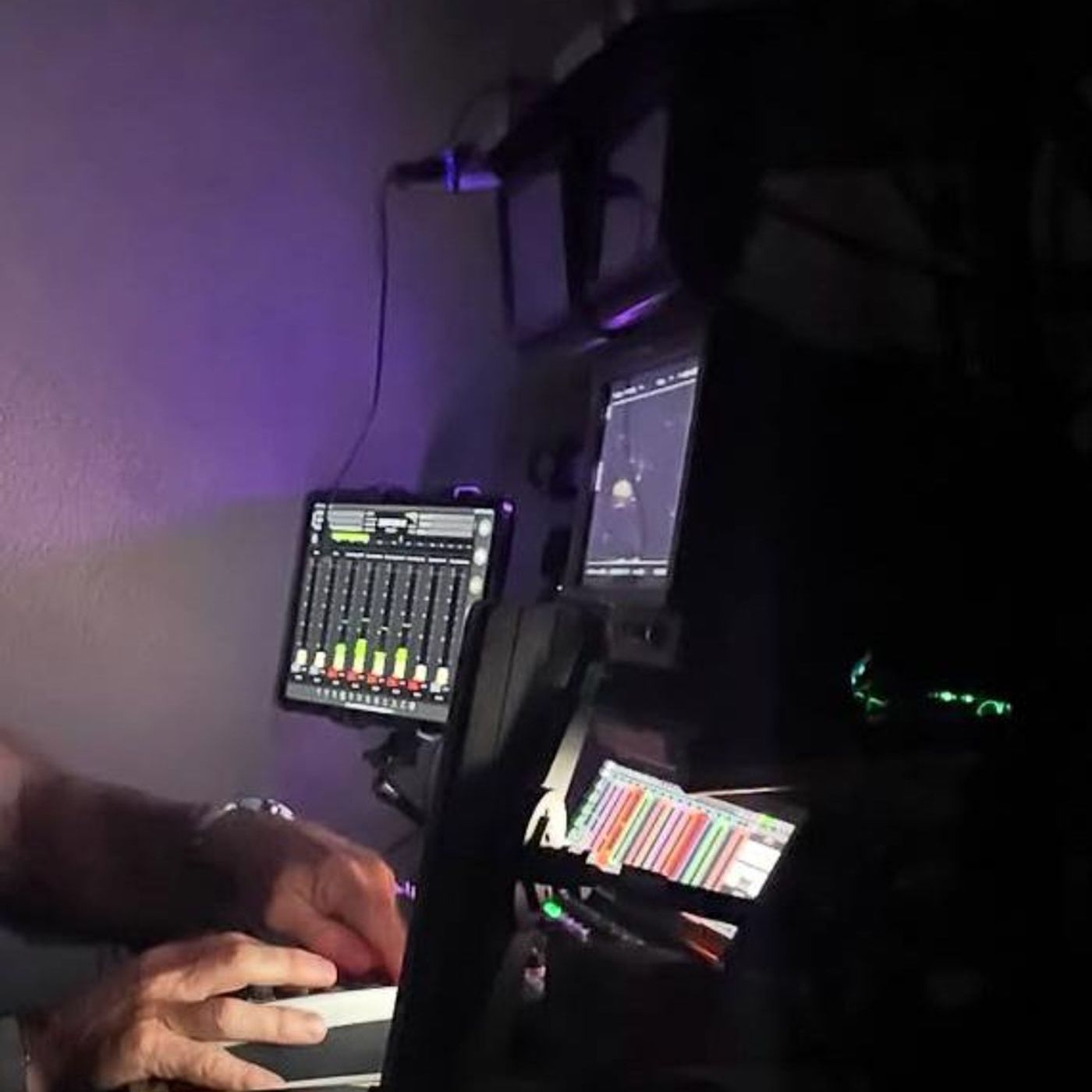
The conversation between Simon Hayes and Chris Munro delves into the topic of 32-bit float in film sound recordings, highlighting its benefits and challenges. They stress the need for innovation in proposing new technologies to enhance production sound quality. Using 32-bit float for onboard recording allows for capturing full dynamics and reducing artifacts during processing efficiently. The caution is advised in using noise reduction tools on set to avoid negative impacts on the final mix. Practical aspects of managing 32-bit float workflow, including transmitter logistics and conforming files for post-production, are discussed to ensure a seamless recording process.
Transcription
7692 Words, 42087 Characters
Hi there, I'm Simon Hayes, I'm a production sound mixer and I'd like to welcome you to
me and Chris Munro's first podcast, this is Chris Munro.
Hi Simon.
We're going to be having a chat today about all things sound and we thought that we'd
start our first podcast talking about a subject which is very, very divisive at the moment.
Lots of people have got a lot of opinions about 32-bit float and about where it fits
into a professional film sound and does it fit in.
And Chris has done a workflow which has been highly beneficial and I really wanted to talk
to Chris today about that workflow and about how it has benefited his production sound
recordings on the last film that he's done.
So Chris, you recorded 32-bit float on your last movie, can you tell us about that?
Yeah, I mean first of all something that I think I'd like to say is that, you know,
I read a lot about opinions on forums and so on and so forth and I'm always a little bit
disappointed that, you know, sometimes there are a lot of fairly young mixers, fairly established
mixers who say, "Oh, I wouldn't do anything that Post doesn't ask me to do" or "I wouldn't
do that" or "nobody's asked me to do 32-bit float".
And I would just say that, you know, sometimes we have to be innovators and I'm not suggesting
that we have to do things against the wishes of Post but sometimes I think we have to propose
things to Post about, "Hey, how about trying this, doing the tests and actually taking
the lead on it rather than waiting to be told what to do?"
Chris, I think you're right because Post are never going to want to push forward a change.
They're often very happy to carry on doing what they're doing.
They have very short time frames like all of us on film sets and they don't want to explore
new possibilities and I think as production sound mixers, sometimes it's down to us to
push the technology forward and to make the changes that are going to benefit Post.
Yeah, especially because, you know, usually when we are starting, we're not talking to
the sound post, we're talking to Post production too, we're talking to a picture who, okay,
fair enough, yeah, they care about sound but maybe not as much as we do and not as much
as the supervising sound editor, the dialogue editors and the re-recording mixers do.
Well, the other thing is, Chris, you know, although they care deeply about sound,
it's rare to have a skilled sound technician in picture editorial.
They do exist and, you know, and the ones that I've worked with are fantastic.
However, it's rare and often they are just keeping up with the technology that they've
got in Avid and they don't really want to raise their head above the parapet and change something,
which of course is what would be required for 32-bit float.
I'm not sure Avid does actually work at 32-bit float yet.
The Avid will accept 32-bit float files.
It actually downreses them to, I think, 16-bit, but it will accept 16-bit,
I will accept those two-bit float files and probably won't, you know, most sound editors
wouldn't even know that's what they're getting, or most picture editors wouldn't really know
that's what they're getting.
But my workflow doesn't work quite like that because where the problem comes with a lot
of 32-bit float is in the dailies lab because a lot of the systems that are
used for syncing dailies really haven't kept up with technology.
And in fact, you know, I even remember not that long ago when people were asking me
to work in 16-bit because that's what the dailies software worked at and obviously I refused.
But you know, and it seems a bit like the tail wagging the dog, but we do need dailies and we
do need to make those work and we do need to make a workflow that works for everybody.
So the system that I use is that I record in 24-bit on my Scorpio.
I do everything as normal on my Scorpio.
Here's the big difference.
I'm using an Exos and the Astral radio mic system, which has onboard recording.
I use those for my booms, for my personals.
Everything is on Astral, is on A20s and I keep them in record all the time.
You know, whenever my Scorpio is rolling, I put all of the onboard into record as well for
everything. That not only gives you a backup, but what it also gives you is 32-bit float,
which has never been compressed for transmission.
It's never been, it's actually coming straight from the mic to the recorder.
With no, you know, a clean chain is the cleanest you're ever going to get.
Well that's interesting and many of us that are using Sound Devices Scorpio and the Astral
system are also doing that, but what we're doing is rather than using that 32-bit float facility
like you are, we are using those recorders on each person's transmitter and on the boom
transmitters as a safety and only auto conforming if we have a dropout and I don't know about all
of the other listeners, but what I'm doing is I'm auto conforming to the Sound Devices sound sheets,
but of course I'm auto conforming to 24-bit and sending those files into picture editorial.
What you're doing is slightly different. You're keeping them in the 32-bit domain.
I am and another point is it also conforms faster in 32-bit float when it doesn't have to go down
to 24-bit, so it's a quick up process, but also you know what I find is that if you do it all the
time, it becomes part of your process, it's fast, it's seamless, you know, and it just becomes
part of my workflow. I would say some days it might take me 15 minutes at the end of the day,
rarely more, and often I've caught up before the end of the day.
So effectively rather than using this as a safety like I am and only
re-recording someone's personal if you have a dropout, you're re-recording everything.
Yes, that becomes the master. What I do is I copy everything onto, you know, a fast hard drive
and at the end of the end of the production, that hard drive will go to the Sound Editors.
When the sound editors conform from the picture files, from the files that the picture editors
give them, instead of going back to my original 24-bit files, they go back to the 32-bit float
files. Pro Tools works perfectly well in 32-bit float, has done for a long time.
Yeah, I mean that's not a problem and so effectively picture editorial are getting what
they want and what they're used to, as are the labs who are making the dailies presumably.
They're staying in the 24-bit domain, but of course what happens is you're delivering your 32-bit
float to Sound Editorial who then do their a complete auto conform, which can also I think
have many other benefits as well, because not only are they getting those 32-bit float files,
but they're getting files that haven't been through Avid. If anything, if any buttons have
been pressed in Avid, if any EQs been added, it's rare now, but it can happen. They're going to
bypass any of that and they're getting your pure recordings and also the benefit of the 32-bit float
word length. Speaking of the benefits of 32-bit float, what do you think they are?
Okay, so the first thing of course is when they're used in on-board recording,
you know, they've got those amazing dynamics. So we've got whispers, shouts, screams, everything's
going to be usable. It's pretty difficult to create distortion in that field and you know,
that's something that a lot of SoundMixers are here saying, well, well, I know how to record at
correct level. I don't need 32-bit float. What's the point? You know, it's that's the mixer's job
is keeping it in a recordable level. But when you're recording it direct to an on-board, then
obviously you don't have that control. So you want the 32-bit float to give you those full dynamics.
But I've noticed a few different things that by experimenting, I've now done two films this way.
The first film I did this way is Just Release. I just saw it the other day. And it's interesting,
when they were mixing it, it's Wake Up Dead Man. It's the third film in the Knives Out series.
When they were mixing it, the the re-recorded mixers from Skywalker called me up and said,
"Hey Chris, you're using different microphones this time. They sound great. What are you using?"
And I said, "No, I'm using the same microphones I've always used and the same,
you know, doing the same things I've always done on stuff you've mixed, you know, that I've done.
But this time it's just the 32-bit float. And if you see, if you see the film, there's screaming,
there's whispering, there's there's praying, there's a lot in the film that all those dynamics sound
really good. But there's another advantage, which is, you know, maybe not quite seen. It's that when
you're processing audio for to get rid of, I don't know, background noise, aircraft noise,
all kinds of things. Generally, what stops you doing that efficiently is the artifacts are created.
And so you can only do it up to a certain level. The great thing about 32-bit float is kind of a
bit of a by-product as it appears that you can process that little bit harder without creating
artifacts. So we're talking about like Isotope or Hush or any of the plugins that are used to de-noise
stuff. You feel that if they're presented with 32-bit float, we can potentially go five, seven
and a half percent harder before artifacts start to be heard acoustically. Yes, I'd like to talk a
bit about that as well. You know, I don't know what your view is, Simon. I've been using Cedar for
some years on set very gently, just to improve the mix track, just for dailies, never in a
destructive manner. I've always done it purely just on a mix track, one of the mix tracks for
dailies and so on and so forth. I'm very careful with it and it's been great and I think it's useful
too. I'm now hearing of production mixers using other processes like Isotope, like Hush on set,
sometimes in a destructive way, but sometimes not in a destructive way. And my experience of this
is that if you're doing it on headphones, what might sound great on headphones when it goes
into the mix stage, onto big speakers, you then hear the artifacts. So sometimes you think you're
making stuff work and you're not. And I think that what makes you very unpopular with Rexas with
producers is if you give the impression that something can be saved that can't be saved,
because maybe you could actually do something about it at the time. And I think that's a very
dangerous area and I think for production mixers have to be very cautious about using any kind of
processing or noise reduction and also need to use it very much in collaboration with post sound.
It's funny you should mention that Chris, because I can remember rewinding about 10 years to me
doing Allied, which was directed by Robert Zemeckis with Brad Pitt. And I was presented, we weren't
using a sound studio, we were going interior warehouse and we were shooting exterior scenes,
which were going to be whispered on top of, it was supposed to be on top of a rooftop in Morocco.
And I knew that we had wind machines, they were going to be silent wind machines, we were going
to place the wind machines outside the studio and pipe in the wind, but of course there's still
that broadband noise. And I phoned you up because I knew that you'd been a CD user for quite a long
time. And I was very nervous about using cedar and also quite suspicious about it. And I said,
look Chris, I think I'm going to have to get a cedar for this, just to create confidence in the
mix. As you say, not in a non-destructive way, never cedering the ISO tracks, but just to create
something on the mix that would create confidence in the production sound and give Robert Zemeckis
and his picture editorial crew something that was usable for audience test screenings.
And I said, you've been using cedar for years. What's your advice? And I can remember you saying
to me, whatever you think sounds good in the headphones, dial it back 50%. And that is how
I've used cedar, because you can almost, for want of a better expression, you can almost get drunk on
cedar. You start to turn it up and you go, oh, that's fantastic, because of course there's production
sound mixers. We can sort of tune in and get very, very single-minded about removing background
noise. And what you are not aware of if you go too far with it is you're starting to make it sound
sterile. It doesn't sound real. And you can start to make the voices sound very, very robotic.
Fast forward to putting them into those voices into studio monitors in Delaney Studio One.
And you're not listening through some Sennheiser HD 25s or 26s. You've got full range sounds,
you've got 20 hertz to 20 kilohertz. And you're absolutely right. If you've hit the cedar too
hard, that can not sound good. Now, of course, sound editorially, they're going to go back to our
ISOs. But there will often be a whole bunch of audience test screenings. And I think if we've
processed too hard on that mix track, the audience test screenings, which of course are going to be
shown in theaters, are going to suffer. And that's when I think production sound mixers are not going
to be popular with their director and producers. Yeah, I think that's right. I think, you know,
it's something to be used carefully. I'm not saying we shouldn't use it, but I think it's
to be used really, really carefully. And I think cedar is probably the least destructive. I think
once you start to get into these heavy AI processing, I think you have to be very careful
about doing that on headphones and doing it on set, because apart from anything else, you know,
you are just doing on headphones. But often you can hide sounds with different sounds that's
going on, different effects, different things that's going on, the music that's going on,
all the stuff that's going on, that in post, you know, the sound editor can hide stuff rather than
affecting the dialogue. And one of the biggest problems I find is when dialogue is overpressed,
it tends to lose dynamics. And then when you when you're in, when you see the final mix,
the dialogue doesn't have the dynamics of the music and the effects and so on and so forth.
It starts to become more difficult to understand. It starts to sound not as good as everything else.
Well, you're 100% in agreement with that. And that's why every really great re-recording mixer
asks to have the dialogues without anything baked in. They want to hear what the dialogue
editor has done with the processing, but they also want to be able to undo it or dial it back.
Because of course, as soon as we put music and effects in place, that could actually hide the
indiscretions that the processing was trying to remove. And you end up with a with a halfway house
which is much, much more effective, a little bit of processing with some score and some effects.
For instance, the Moroccan scene that I'm talking about, there would be the sound of the streets
below us on the rooftop, you know, which would hide some of that broadband silent wind noise.
Exactly. Exactly. Yeah, that's, you know, we've got to remember what our role is on set. But I
have to say, I still say, you know, we, you know, we don't just sit back and do what we've always
done. I mean, I've always made a point of every film, you know, I always try to do something different
to try to move on. So with the 32-bit flow, how did you actually push that and get it accepted?
Was it difficult? It was, it was difficult with the, it was difficult with the Dailies Lab.
It wasn't difficult with the editor, who I'd worked with a lot on, on films who had a lot
of confidence in me, who really said, look, you know, if you think this is a good idea,
we're going to run with this, you know, we'd like to do it. I also had good support from Skywalker,
who, who were happy to use it in post and they've been using it for a long time on a lot of
their effects, a lot of their field recordings, everything else. It's, it's something that's
not new for them to use 32-bit float. Well, it's, it's funny, you should mention that. I'm just
about to start a Danny Boyle film that Johnny Burns is supervising sound editing, and he's
actually asked me to go 32-bit float on all of the vehicle recordings. So I haven't quite jumped in,
in the way that you have with the, with the onboard microphone recordings. And I'll talk
about why in a moment, but all of our vehicle recordings are in 32-bit float. Again, because
Johnny just wants those dynamics. He wants to be able to be, you know, we're doing a period film set
in 1969 and beautiful car engines. And he really wants, and there's lots of car, car scenes, and he
wants to be able to build up that, that soundscape underneath all of the dialogue with the 32-bit float
files. Yeah, why wouldn't you? I mean, that's, this is the point when people say to me, you know,
about 32-bit float is, I wouldn't you? Well, that, that tells you why, that brings me nicely onto,
onto the reason why I haven't gone there yet. I'll tell you what I'm scared about, Chris.
I'm scared about the time it takes to get the transmitters at the end of the day off the actors,
back to my cart. Often on the movies that you and I are doing, the actors are getting whisked away
while we are still shooting the scene. They've done their turn on that scene, and they're being
taken back to costume. And often what happens is my boom operator, Arthur Fenn, has done a deal
with the costume department where, okay, that person's microphone is going to be left in their
trailer and we'll pick it up tomorrow morning. And we have it down to a fine art. It's a very,
very effective system. And contradicting that system and going with something new is a little
bit nerve-wracking. How are you finding that? That's interesting, because I did find it a little bit
difficult at first, because we used to do exactly the same. I found it tricky at first. But once I'd
got the ADs on board, particularly, you know, often before they, the actors would leave the set,
they would say to me, "Oh, do you want to grab their transmitters?" And so very often what I would
do is would be grab transmitters as actors left the set, pick up stuff during the day, and then
we'd put them back on them. Often also what we'll do is from a battery change point of view. And I'd
be interested about how you deal with this. But like you, I generally work with two boom operators.
You know, one of the things about this is because we manage so many radio mics. And of course,
in the UK, we don't have a young break. We have a continuous day. The lunch break is normally the
time, traditionally, where you change radio mic batteries, you do kind of stuff with radio mics.
Actors usually have makeup touch-ups and all the other stuff, and it's a good time when we
normally do a complete battery change. When you don't have a lunch break, that time doesn't
materialize. But production don't want to be held up while you're changing batteries.
So what we often do is we often have double ups of our transmitters. So often, rather than change
your battery, we'll just swap the transmitter over. And then I'll download the material. And
when the next battery change is needed, the transmitters get swapped again and download.
So I'm able to download pretty much most of the stuff throughout the day.
There's, as I say, it's 15 minutes at the end of the day when I do the conform.
So you're recording everything all day. But of course, sound posts don't get all of those files,
because there's privacy issues. You're using the sound device's workflow so that when you conform,
it's conforming to your sound sheets, which of course have got all the time code in and out.
Yes, it will only conform when basically when the main recorder's been rolling,
which is when the camera's rolling. So what happens just to explain this, I know you know it,
so I'm just so that to explain to others how it works, is that in the normal way on all recorders
now, we can press a button at the end of the day and get a sound report. I always have a thing,
and another point is I never see there's any point in having a sound report in PDF format.
It's useless, you can't do anything with it. So I will always do my sound reports in CSV,
which is can be converted to anything you want, be it PDF, be it Excel.
Or .ale, for average. Or .ale, it's the same thing, exactly.
So that's what we call a sound report, it's actually an edit decision list, it's an EDL.
It tells us, you know, it's a file that has all of the slate and tape numbers,
all of the time code ins and outs, all of the notes, lots of other information in that file.
Trac naming. Trac naming, everything in the file.
What we do then is that we use that file to conform from all the individual radios.
So we then get all of those files. So let's say, for instance,
it wouldn't be unusual to have 15 different radios out in a day.
We could have all those radios out, we'll use our file, our EDL, our edit decision list,
our sound report in CSV format, we'll use that as the master. And what that will do in SD utility
is it will collect all of those individual onboard recordings, and it will only use the parts where
the main record was rolling. So it will only decode those parts and cut them into takes exactly the
same. And it will also create a polyfile with an all in one polyfile. So now we have a polyfile that
has 15 tracks of all the different booms, personal, everything, all in one file. The only thing that's
missing from that, there is no mixed track. So that's why we also need to put in our master
recorder because that has the mixed track and that's what goes to sound editing. But the ISOs
will be exactly the same. The only difference will be that the ISOs from the onboards will be
better. They'll be 32 bit float. They'll also be direct to the recorder. They won't have been
compressed for RF transmission. They won't have had anything done to them. They'll be
in probably the best quality that you can get directly from the microphone.
Yeah, I mean, what you're going to hear is you're going to hear the performance,
you're going to hear the microphone and nothing else. The moment that vocal gets into that
recorder, it's going straight into the digital domain. There is no other kind of packing taking
place. It is a pure recording. It's very, very interesting. But the other kind of advantage
is let's say, for instance, you have some kind of, it happens, sometimes you get some rustle or
something happens on a costume. And, you know, isotope is greater taking that kind of stuff out.
But imagine if it can work on files that have never been transmitted that are straight from the
mic rather than stuff which has been compressed for transmission has other things. So actually,
removing those kind of sounds from that track are much easier than recording them from your ISOs
that's been recorded from your main, your main recorder. I mean, am I right in thinking that
at 32 bit, for any given waveform, you've got more ones and zeros. And that's what allows isotope
to dig into it harder. Is that how it works? It's a slight, that's a slight oversimplification.
But I think that the probably a good way to look at it is that, you know, what creates artifacts
often is when the process can't decide where it should be a one or a zero. And so it makes an
approximation. And often it's wrong. So it just gives it more opportunity to make the correct
decision. Okay, that's interesting. And so picture editor, really happy, they've got their 24 bit
files, they've got your mixed track, which is what we would always have sent off to them.
That mixed track lives within the avid, it then gets worked on within the avid within
with the director when he starts work, sitting next to the picture editor on picture wrap,
they spend a few months cutting the picture. And at that point, I would imagine at some point,
sound editorial will be starting depending on the size of the movie, while that picture editorial
process is still in place. So they they receive your your 32 bit float files. And then when they
start getting turnovers from avid, their 32 bit files, which of course have never gone through avid,
have never seen the picture editor, they are basically time code locked to the EDL that avid
is spitting out. And everything can then start to be replaced by by sound editorial, very,
very simply with time code lock. And the sound editorial process can start in the 32 bit domain
in Pro Tools. Yeah. And and the other thing is, remember, we've put everything on to one drive.
So it does save a lot of looking for stuff. And I'll put everything on that drive, I'll put all
my wild tracks on that drive, my sound effects. So there's one drive that I'll give to the sound
editors, which have everything I've recorded, you know, because I always have a fear that wild
tracks and things that we've recorded get lost in the in the post process. And it's very, very
easy, particularly, you know, I've had it a lot with daily's work where they don't send the wild
tracks, they only they only take the those wild tracks end up not going anywhere. That's right.
That's right. We've all experienced that. So you know that you're done. I mean, and in fact, Chris,
I actually still at the end of the movie, although not in the 32 bit domain, I actually get all of my
SD two cards off my sound devices, Scorpio, put them all into a lacy rugged drive. And if we're
in if we're if we're in the UK, I actually drive over to the dialogue editor and say, here you go,
there's that lacy rugged drive, just in case there's stuff missing. Call it an old school paranoia,
or just call it realism, whatever you like. But that's what I do. And in fact, on big US movies,
I asked production to send that lacy drive off to sound editorial, because I'm still of the opinion
that somewhere along the line, those wild tracks and atmosys, whatever it is, vehicle effects can
get lost, because they're not locked to picture. So they're not necessarily going to get carried
through the avid process, because they're not attached to a picture because camera wasn't
running. Exactly. Now interesting, we talk about drives. That's something which can very much
determine how long the conform process takes, right? So you need a fast drive. I tend to use
this Samsung drive, it's very fast as a glyph drive, it's very fast. You need to use a very fast
drive that that cuts down a lot of your your time load waiting for files to download.
So let's talk about let's talk about the average day on a big US studio movie shooting in the UK.
Let's call it 10 radio mics. How long at the end of the day?
Well, because I've picked up stuff throughout the day, and generally the bigger the cast,
the more chance you are of getting things back early in the day. So I'm, you could speak to
any of my crew, I'm rarely there more than 15 minutes after they've called rap. Very rarely.
That's quick. You know, but it's because I have a process, it's become part of my process.
And it's quick. Another thing to mention, actually, what I've mentioned about hard drives is,
interestingly, good quality cables from your hard drives and short cables make the process much faster.
Interesting. Interesting. And do you think that this is something that we're going to end up
adopting as an industry? Do you think that this is coming? And I feel like it is. I feel like
I'm going to get asked for this soon. I'm already thinking about doing it on my next big movie.
The reason I'm not doing it on this very, very small, fast moving movie that I'm about to start
is because we are literally doing five locations a day. And I understand, I know how quick we're
going to move. So that process at the end of the day in December on the side of a street in London
may not be the best time for me to do, for me to experience this process for the first time.
I think the first time I do it, I'd like to be studio based, just to get my head around it.
Yeah, no matter if it's fair enough, you know, when you're comfortable, I have to say,
this kind of process was forced on me with Mission Impossible with COVID. When, you know,
all the car chases, all of that stuff, that was pretty much nearly all of that where we couldn't
go and follow vehicles. And I mean, by the way, I rarely go and follow vehicles anymore.
I do everything with onboards. But on Mission Impossible, you couldn't have been in harder
location situations in the middle of Rome, in the difficult, in Venice, we were in difficult
locations. But again, it's part of, it's part of what your crew do. I mean, it's not like everything,
it's not just us, is it? You know, I have a second assistant who's really on board with getting
this stuff back to me, you know, she's really good at changing the transmitters
and knowing when to get stuff. Our workflow just incorporates this, and it doesn't cause anybody,
any kind of delay or any stress, just simply because we've been doing it for a long time now.
The interesting thing is, Chris, you mentioned two boom operators earlier.
That's something which on motion pictures in the UK has become the norm. And I just think that the
way that our workflows are changing, this whole conversation that we've just had, if you are
absolutely being left behind through a lack of crew, you're not going to be able to keep up with
technology like this. And I think we really do owe it to producers and directors to explain this to
them. You know, we're not recording on a dattape, we're not recording just, you know, or, you know,
six iso tracks anymore. We really are creating production sound that will survive and with them,
with the advent of modern noise reduction. ADR has become rarer and rarer if we can apply
two boom operators. And it's not just about having two booms swinging above the actors,
it's also being able to commit to these kind of technological advances, because we are not just
trying to keep up with the speed at which we're shooting three cameras. We're not just trying to
hold on for dear life when we're shooting five rolling actions in a rehearsal and then moving on.
And I honestly feel that if we don't have two boom operators and a second AS,
of course the Americans will call second AS utility. I don't see how we can really keep up
with these technological advances and give our directors, sound editors and picture editors
the best of what's available from modern technology. I think this is interesting and I think there's a
couple of interesting points when you talk about, you know, what happens in America. And first off,
of course, what happens is that, you know, the idea of having a mixer, a boom operator and a
utility or a second assistant was very much set up when we were recording to a single track.
We were recording to one track. We rarely use radio mics even. That was the basis,
but we had a narga we were recording to one track. Maybe we had that, we had two tracks,
but that was it. And our mix was an on the fly mix. We weren't able to worry about things like
off stage dialogue, off screen dialogue. We got it when we could, but it wasn't a major part.
We would only really be concentrating on anything which was actually in frame. That was what we
were mixed. We have much less to cover. I don't know about you, but if I sent in now a film without
the offline's being recorded, I'd get emails from Picture Editorial. They want all of those offline's
and what they're doing, even if it's simply just as a collation of a bunch of
wild tracks of those off screen dialogue lines, which the picture, which Sound Editorial will
eventually get. And that is almost if you like, on set ADR, which stops them having to get an
actor back into a re-recording studio. They want all of that. Yeah, they also need it for the cutting
style. You know, there's a different cutting style now that the way that films are cut,
the different ways that works out. So actually saying, you know, why do we need
two boom operators now when we didn't need one for the last 50 years doesn't make any sense because
we're doing things differently. But also what it meant was when we were only recording to a
single track, that mix that we did, it was either usable or it was not usable. It couldn't be undone.
That was it. And so either you did a good job and it was used, and everybody padded you on the back,
or it was all ADR'd. Now what we're doing is very, very different. But imagine if you only have one
boom, only pointing at the person that's speaking, and bear in mind also in those days, we probably
only used one camera. Now we almost always used at least two and three. And directors were also
happy for the sound mixer to say, can we go without the overlaps? I don't know about your
directors, but they want the realism of the overlaps. As you say, styles have changed.
Styles have changed. Yeah. So but imagine if you've got one boom and it moves only from the
person that's speaking, you're going to miss any kind of little ad libs, but you're also going to miss
little expressions, breaths, puffs, things that bring the dialogue alive, the performance alive.
You know, actors use those expressions, little efforts or sounds. But if your boom's not on them,
we're not going to, you're not going to get it. You're losing 25% of the performance.
What director would ever want that if they knew what they were missing because the sound crew is
basically hamstrung and so small it can't keep up? I don't know about you, but I'm shooting three
cameras on most movies now. It's not even two anymore. It's three. You know, I don't see how
it's possible to really cover a film shooting three cameras unless you've got two boom ops.
But there's also another difference, Simon, is that we shoot continuous days in the UK.
We shoot pretty much 10 hour days. Most productions are pretty good at keeping to about 10 hour day.
Our days for everyone are, I think producers in the UK have done a great job in making that work.
I think we actually have a very reasonable day now. Yeah. We don't, we don't have these fratter
days. We don't have long days. We have reasonable working, you know, very often I could be on a
studio film, you know, I'm at home at seven o'clock, very often. We have dinner with our families.
I've dinner with my family. That doesn't happen in America because it's very hard to work continuous
day. 14 and 16 hour days are very common. So, but what the downside of that is, is that for a boom
operator who's in the front line all day long and shooting sometimes hour long, 45 minute long
takes with one boom, that's very hard with no break whatsoever. So just physical, physical labor,
isn't it Chris? And mental, you know, mental because it's not just holding boom, but you know,
it's anticipating where someone's going to speak. It's, you know, it's knowing the dialogue. I mean,
I've even had people say, Oh, why does your boom operator need a script? Well, so that he knows
who to point the microphone at. Yeah. Yeah. But the whole thing is when you've got that continuous
day, one boom is very difficult. The other thing that you don't have in the US is what we've been
talking about earlier is onboard recording. You know, because of a, you know, a pattern
complication that we know about, in the US, it's not possible for most manufacturers to release
their, their equipment, which is able to record onboard in 32 bit float. That is something which
we can do all the time in the UK that's often not possible in the US. Yep. Yep. It's interesting,
isn't it? So really, we've got, we've got a perfect storm. We can make these recordings in the UK.
We're very, very fortunate to be able to, to do that. It's great. But if we want to take advantage
of it, we've got to, we've got to crew these films appropriately. We've got to crew them
appropriately for the fact that we are working a 10 hour day, big movies, two cameras minimum,
often three. Now, you know, we've got three camera crews that are able to flip flop and keep up.
Often when we've got three cameras, two cameras are shooting and the third camera is setting up
around the corner to do a quick cutaway of the, of the actors, you know, they're able to basically
work at a pace. And what those two boom operators allow us to do is to work at a pace safely.
As well, where the boom operators can flip flop, they can rotate, which again, from a,
from a health and safety aspect, that's really important. People don't start rushing around.
And also from a, from a mental health perspective, you know, that's an awful lot to take on board
a 10 hour day full bore, no stopping, trying to keep up with three cameras that are flip-flopping
when you're on your own on a boom. And also being asked by the mixer, can you go and grab that
transmitter off character C, because we've got to do a battery change on them. And I'd love to
download that, you know, it really requires an appropriate size crew. But what, what do directors
and producers get out of it? Well, they get really, really the best quality sound that we can present
with modern technology, which as you've proved is moving onto 32 bit float. It could very well
be that a scene that could be marked up for ADR in 24 bit, perhaps with a 32 bit float workflow,
that background noise could be reduced enough for that scene to be got working and to,
to remove the need for ADR on that scene. And who wins there? The directors and the actors,
because they're not having, they're not having that toil, that creative and artistic toil of
having to rerecord those performances. Singularly, in an ADR room, six months later, without their
fellow actors, without the costumes and the props that make them feel like they're in that world.
You know, it's tough. And I'm not saying that ADR doesn't have its place, of course it has its place,
but it should be there to help directors and actors. And what it should be used artistically,
to think that a director and a cast have nailed a day's work, they've nailed a scene. And they really
were happy with the film making process and the performances that were captured to then have to
go back and rerecord because of poor sound quality, because potentially a sound crew was,
was not appropriately crude and the files couldn't be recorded because there wasn't time, blah, blah,
blah. You know, that's a shame. And, but let's think about it, it's not actually the sound
that's missing, is it? It's the performance that's missing. And performance is the one thing that
every department is there for. Yeah. Yeah. So we're all hired to support those performances.
And that's something I've been talking about a lot recently. You know, every single person on the
film crew, their presiding priority should be protecting those performances. And part of the
performance is obviously the visual image, but 50% of that performance, if not more, it's arguable,
is the sound. It's the dialogue. That's the story. We're telling a story. The actors are telling
the writers and directors story, and we're capturing that story. I guess the problem is with sound
is kind of an invisible art, isn't it? That nobody ever appreciates it until it's bad.
And, and also people don't really, you know, everybody thinks they understand it,
but nobody actually wants to understand it. I think very few directors and producers really
understand what we do. I think very few realize how closely, for example, we work with costume
designers, how closely we work with special effects, how closely we work with production design,
all of those things. And I think, and I think in some ways it's kind of a shame that we're still
called production sound mixers, because yes, we do still do a mix. That mix is no longer in the film
or rarely. That mix is there for lots of reasons for, for, and it's very necessary. I'm not saying
it's not necessary for us to do a good mix, but it doesn't have the same importance it used to have.
But what is much more important is how we collaborate, how we design our production sound,
how we even, you know, how we discuss with a director in, in, in pre-production, often on,
often on the, on the tech scouts on other times, how we discuss the sound and try to
interpret what their vision is. And sometimes realizing that they haven't actually thought
about sound and they don't actually have a vision. And sometimes you can give them that.
Well, there's no doubt about that. What we're doing is production sound design.
You know, mixing is only a tiny part of that. And actually not the most important part anymore.
The most important part is the collaboration and the design elements and thinking about
all of the different elements and how we can make them better for sound editorial and present
those performances and that storytelling with more ability to keep as much of those original
performances in the film. That's design. Yeah, definitely.
Well, Chris, it's been really interesting talking to you today. I think we should do this more
regularly. I think we should. Let's try and do it weekly. Okay, very good. Thanks everyone for
listening. I hope you've enjoyed it. It's been an eye-opener for me hearing Chris talk about 32
bit. You know, we kind of, we keep bumping into each other and not being able to have this full
conversation. We've had snippets, but it's been fascinating hearing about how you're pushing
the craft forward with the 32 bit float. It's made me somewhat jealous. I want to do it as
soon as possible. You're making it sound very easy and I can't wait really to get that fast,
hard drive to get it all back onto the cart and see whether I can get home in 15 minutes to have
dinner with my family. Chris, thanks a lot. Okay. See you next time. Okay, bye.
Podcast Summary
Key Points:
Discussion on the benefits and challenges of using 32-bit float in film sound recordings.
Importance of innovation and proposing new technologies to improve production sound.
Utilizing 32-bit float for onboard recording to capture full dynamics and reduce artifacts during processing.
Caution in using noise reduction and processing tools on set to avoid affecting the final mix negatively.
Managing the workflow of 32-bit float recordings, including dealing with transmitter logistics and conforming files for post-production.
Summary:
The conversation between Simon Hayes and Chris Munro delves into the topic of 32-bit float in film sound recordings, highlighting its benefits and challenges. They stress the need for innovation in proposing new technologies to enhance production sound quality. Using 32-bit float for onboard recording allows for capturing full dynamics and reducing artifacts during processing efficiently.
The caution is advised in using noise reduction tools on set to avoid negative impacts on the final mix. Practical aspects of managing 32-bit float workflow, including transmitter logistics and conforming files for post-production, are discussed to ensure a seamless recording process.
FAQs
Recording in 32-bit float provides greater dynamics, making whispers, shouts, and screams all usable without distortion.
32-bit float processing allows for more aggressive noise reduction without creating artifacts, enabling cleaner audio enhancements.
Production sound mixers should be cautious with processing audio on set, collaborate closely with post sound, and ensure dialogue retains its dynamics in the final mix.
Adapting to 32-bit float recording may involve adjusting workflows, such as managing transmitter changes efficiently and ensuring proper data transfer for sound editing.
Challenges may include managing transmitter changes efficiently, ensuring data privacy compliance, and adapting workflows to accommodate continuous shooting schedules.
It's crucial to use audio processing tools with caution to prevent overprocessing, which can lead to artificial sound quality and difficulties in post-production mixing.
Chat with AI
Loading...
Pro features
Go deeper with this episode
Unlock creator-grade tools that turn any transcript into show notes and subtitle files.
 PodcastTranscript AI