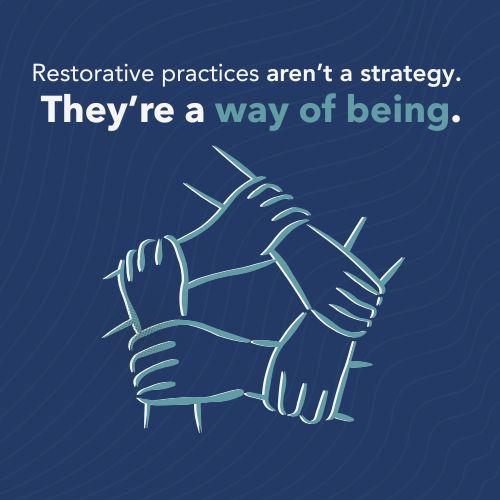
EP337 Restorative practices aren't a strategy–they're a way of being (with Marisol Quevedo Rerucha)
51m 2s
In this episode, Angela Watson interviews Marisol Coveido Verruja about restorative justice, addressing why it often fails in schools. Marisol argues that restorative practices are mistakenly seen as a quick fix or an external protocol, rather than a fundamental way of being. She emphasizes that the system was not designed for connection or belonging, and that true restorative work requires acknowledging everyone’s humanity, including pain, joy, and vulnerability. A key failure is that teachers are told to be restorative with students while leaders don’t model the same care for staff; thus, adults need this culture as much as kids. Marisol explains that restorative communities start with individuals getting clear on their beliefs, purpose, and how they want to be treated, then collectively committing to those agreements and having accountable, loving conversations when harm occurs. She critiques common misapplications, like eliminating all consequences, which she says stems from shallow implementation lacking deep cultural change. The work must happen simultaneously at individual, community, and system levels. Marisol also shares personal insights about healing from self-worth struggles and seeking validation, ending with the metaphor of the buffalo, which faces storms head-on with courage and intention. Ultimately, she calls for educators to become the work themselves—embracing authenticity, grace, and lifelong commitment to equity and connection, rather than just following processes.
Welcome to episode 337 of Angela Watson's Truth for Teachers. I'm your host, Angela Watson, and I'm here to speak encouragement into the hearts of educators and get you informed and energized for the week ahead. Today, I'm talking with Marisol Coveido Verruja, about what it means to live a restorative life. Visit truthforteachers.com for an easy to read, easy to share version of this podcast episode. What if you could bring entrepreneurship education to your K-6 students without paying a dime? The Mia and Tiago Educator bundle is a turnkey six to eight week curriculum that teaches kids to think like expert entrepreneurs, and right now there are funding opportunities available so you don't have to cover the cost yourself. The first ten responders can claim a free kit valued at $465. You'll also find promo codes and a simple request form that matches schools and clubs with corporate sponsors who are ready to pay for implementation. This bundle includes six Mia and Tiago picture books, an entrepreneur in me, student activity book for each student, and a full educator's guide. Students learn priceless real life skills and it's fun. Don't miss this chance to give your students future ready skills at no cost. Visit Mia Tiago Books.com/Angela. That's Mia MIA Tiago, tiag.com/Angela or just click the link in the show notes. I'd like to make a request from you, especially if you're a longtime listener and supporter of my work. If you've never left a rating or a review for truth for teachers on iTunes or wherever you get your podcasts, would you take a few seconds and do that? You can click through to do it right from your podcast player app and there's a link in the show notes too. Every review helps boost visibility for truth for teachers and helps more educators discover it. Leaving a review or even just clicking the star rating is one of the fastest, easiest ways to support the show. And your reviews mean so much to me. A huge thanks to everyone who has done this. You are so appreciated. One quick message about today's episode. I recorded this conversation on a day when there were some trees being removed outside of my house. And the work was supposed to be done hours earlier but it took longer than expected. I have done my best with the audio quality on my end, but you may still hear occasional chainsaw buzzing in their weird mechanical sounds and I'm sorry about that. Fortunately, my guest does the majority of the talking and her audio quality is fantastic. In this episode, we are talking about restorative justice. Something that many educators have heard about, maybe even trying to implement, but often struggle to sustain. If you've ever felt like restorative practices in your school are shallow, chaotic, or just not working, you're not alone in that. Today, I'm joined by Marisol Calvado Ré Rucha. I can't roll my R so, I'm going to forgive my pronunciation there. Ré Rucha, she says it in a much more beautiful way than I do. But Marisol is the author of Beyond the Surface of Restorative Practices, building a culture of equity, connection, and healing. It's a beautiful, beautiful book. She's also the CEO of Heart Set Consulting Group and she's a former teacher, principal, and district leader. Marisol brings not just expertise to this work, but deep personal insight, vulnerability, and heart. And in this conversation, we go far beyond service level strategies. We talk about what restorative justice really is and what it isn't. We explore what happens when it's done to teachers instead of with them. And we look at what it means to lead with humanity and systems that often don't allow space for that. You also hear Marisol share parts of her personal story, her own healing, her struggles with self-worth, and would it took to finally stop seeking validation outside of herself. She ends with a powerful metaphor about being the buffalo, facing life storms with courage and intention, and I think that metaphor will stick with you the way that it did for me. So if you've been looking for a deeper, more authentic understanding of what restorative work can look like in the classroom, in your school, in your own life, this episode is for you. Let's get into it. So Marisol, let's start by talking about the elephant in the room. Restored of justice has gotten a bad reputation in some circles and there have been some teachers who have just given up on it. And schools that have decided this does not work. We're going back to punitive methods of discipline. Why do you think that is? Because we see it as another thing to do. We see it as a training that we receive, information, processes, and protocols from books that we've read. What we're not doing is we're not seeing it as a way of being. When you are restorative, and this is for me, any of the work that you embrace, I know that the word equity is in a space right now in our country, but if you are someone that is committed to equity, if you're committed to inclusion, if you're committed to community to belonging, if you're committed to healing to the work of being restorative, then you have to be the work. It is seen again as one of those things. I think it got like all of this big hoopla right, because we were looking at it as we do in education as the is it called the silver bullet? Yeah, yeah, exactly. A silver bullet, a magic bullet. The magical thing that's going to fix everybody else. It's going to fix my kids, right? It's going to fix potentially the culture and the thing about being restorative. So the reason why I think that implementations haven't worked is because it's been seen as something outside of ourself. That's the restorative classroom. That's the restorative teacher. That's the restorative system principle. And we as a community have to make the commitment. We need to identify what it means to be restorative, first of all, that we believe in relationships, that we believe through our own experience and our own humanity, that we are all coming in with all of the beautiful things that characterize what it means to be human. We're coming in with pain. We're coming in with joy and with love. We're coming in with burdens that are more than we can bear. And I think one of the other ways that and so acknowledging that, right, then we need to acknowledge that we need healing. And I think the other reason why implementations go wrong is that the system, the leaders, right, of the system that are making decisions are telling teachers who are the ones really on the front mind, like go and do this work, go and be restorative, go and build relationships, and they're not giving the permission to take the time. And also, they are not providing this work for them. They are not creating restorative systems for their staff. The adults in the systems need this work, need this way of being as much as the kids do. And I believe that we need this way of being of connection, of acknowledging our humanity in all workplaces. Because I feel that if we can create this space where we can connect and build relationship outside of work, what happens, and we can see each other in our humanity, and we can be brave and take down our professional mask, right? And show our vulnerable and be authentic. Then that creates space then for real human connection. And when you feel connected to the person that you work with, you're more likely to work through challenge and difficulty, you're more likely to see them as a human being, as opposed to doing what we do sometimes, even with kids, right? Making them the bad guy. And what we know, what research has shown is that highly productive and effective teams and high-trust organizations, the work, people are more productive, but more than that, they are happier and healthier in their lives. And one of the indicators of that is that the system, the organization allows for time and space for people to connect truly and authentically in their humanity. One of the other things is that the leaders of the system, the managers, the people who are in charge of people, right? Are authentic and vulnerable in these say things like, I don't know, I'm sorry, and I need help. And so part of it is that we're seeing this restorative work as something that we do as opposed to who we are. Yes. I really like your point that the staff need this just as much. And a lot of times that is the resistance that I'm seeing is like, you know, I as a teacher, I'm expected to listen to students and to help them repair and do all these things. But for me, it's like, I just get a reprimanding email, you know, or the whole staff gets reprimanded for one, so something that one person did. And like, we're not shown that same level of care and consideration that we're expected to show to our students. And it's not model for us because this really is it's a whole school wide culture. It's not something to do. It's not a tool that we're using. It's it's a way of showing up. And I love your point about it being a way of being. It's a way of being in community. It's about our system. Our system was not created. The system that we live in was not created for us to be restorative. The system that we live in was not created for us to really develop that sense of belonging to others. And what I know is that in order to really belong to others, we have to do the work of belonging to ourselves.
And the reason why I know that the system wasn't created for that is because the way that it divides us. - Hmm. - Same old. - And it denies us. It denies us by denying us. We are trained. I say there are things that we were sold that we bought. And so they were sold either by society, culture, or family. It could be religion. But there were things that we were sold that we bought. A lot of the things that we were sold denies our humanity. One example. And I really got to thank our millennials and our Gen Zers because I feel like this doesn't happen as much. But I'll give you an example. What happens when people get emotional, especially in the workplace? But what happens when people get emotional and they start to cry? - Say, "Pologize." - Say, "They apologize." It is inhumane for us to apologize for having real human emotion. And we are so trained to be more concerned about your discomfort with my emotion, then we are to feel the gratitude and the joy that we can feel that and that we're brave enough to be authentic. And to share our emotions, it is a gift. But that's not what our society teaches us. The other thing that we're taught is that when you go to work, you put your professional mask on, right? And you don't share things about yourself. Because, and one of the reasons why is that we, some people have learned a lot of us. We have been vulnerable and we've shared a piece of ourselves and that was used to hurt us. But when we do our work, when we stand in our truth, and we share pieces of ourselves, and we hold our heart out and our experience out, and we offer it, when we are really whole, then we recognize that we're doing that for ourselves and for connection, and we release it. And if anybody uses that against us, that gives us a lot of information about who they are, and not about who we are. Because we are whole and grounded, and we give, and we receive in our wholeness. Not because we're trying to manipulate, not because we're trying to get somewhere, not because of anything with that. It's for us, and it's for the other. So when we talk about being restorative, can you paint a picture of what that looks like? We've talked a little bit about how it's been misapplied. What should be happening? What does that look like? Well, okay. So our sister was created in a way that really pushes out of the people. Our system was created in a way because it centers the few. We said to work out the logistics system, okay? It centers the few, the benefit of the few, on the backs and the bones of others. But it convinces us that that's okay. But what the system does is it pushes people out, it marginalizes people in groups. And because it does that, the system as a whole is not healthy. But what we see is we see that there are certain groups that are harmed the most in our system. People who may have been born into either poverty or into that lower income bracket regardless of race, right? There's, there pushed, there pushed out. We can see just in data, right? And the disproportionate numbers based on percentage of people and incidences, right? We see it in academic disparities and behavioral data. We see that there is, you know, our groups that get pushed out, our, you know, students with IEPs. Right now, one of our groups that are, and really we demonize in the society, right? Our LGBTQ group, those who do not have citizenship, those who may not speak English, or who may speak more than, you know, more than, more than one language. And that's what we need to fight. And so the way that we fight that is that we commit to what Mother Teresa said. And what she said is when we have no peace, it's because we have forgotten that we belong to each other. The system doesn't teach us that. So what I pose is what we need to do, is we need to center on doing the work of the individual, of the community, and the system at the same time. And we start the work by getting crystal clear about our purpose, and about how it is we want to be treated, and we want to treat other people. My premise in this working in my life is that we all want to be happy, whole, purposeful human beings with lives that are filled with joy, and with love, and adventure, and all of the goodness, right? I don't think I, when I do this work, I ask people to add nobody disagrees with me. We all want that life. But if we are not experiencing that life, what we have a tendency to do is to blame the other. And if we can recognize that all we control is ourself and our reactions, right? That's all we control is us. Then we can really start to make some headway into this work. That's what we start to set the foundation for a restorative self, for a restorative culture, community, and a restorative system. And we start that by identifying what are our beliefs? Every single school, district, university, nonprofit, corporation has a mission statement. We do not know how to live to them. We do not know how to keep what we say is our purpose and also our beliefs, right? The things that we value. We don't know how to keep them centered to our work and to our decisions. We also don't know how to address. I think number one, be really clear about how we want to be treated and how we treat others. And then how to address it when people start to break that. That's how harm happens. And so for me, the beginning is the community, the collective, the actually first, the individual, being really clear, what do I believe about myself? What do I believe about kids? What do I believe about the humanity? So when I do this work with systems, I always encourage them to not just see it from the lens of kids. But if we're going to talk about what do I believe about kids, what do you believe about your colleague? What do you believe about human beings? And when we're creating student plans, our academic plans, that's the professional learning plan or evaluation for your staff. Everything that we want to do for kids and offer kids, we should be just adding staff to that and making sure that we're creating that system. So if we have these beautiful mission statements, right, and these purposes and people say, "Oh, we did that work." We have our agreements or our quote of conduct. Well, then why aren't you seeing the results that you're looking for? Because your humanity is getting in the way. And so, and we are not taught, right? We don't practice how to have that conversation with ourselves or our boss or our teams when we're straining away from what we say our purposes. Or when we're straining away from what it is we say we believe. If I believe that all kids can, and I'm hearing my colleague talk about the bubble kid or about the kid that just needs to be kicked out of their class or their school, that's written contrary to what they say they believe. And so then how do I have that conversation and a way that is honoring, loving, and respectful of myself, of them, and of our work? Those are the things that we need to learn. That's the work that I have the honor of being able to do with individuals, with communities, and with systems. And so, what it means to be and live in a restorative, right community, it's being committed and clear about our purpose, our collective, our individual and our collective purpose. What it is that we believe in our heart collectively and individually about ourselves, about each other, about our goal. And how do we want to be treated? And the thing is the clarity in that. A lot of times you'll see like, "Oh, be respectful." But respecting you means something different to me. So we got to be really clear about what that means. The other thing, the biggest way that harms and relationships are broken, there's two things. One is communication. And so one of the things we got to be clear that it commit to is, "Okay, what does that look like? What do I need in communication?" While also maintaining that we are human beings, and that we're not going to always get it right. So we need to have some patience and grace for each other, right? And so that's for me what it means to start to build that culture. We got to get clear individually and together about what our purpose is and how we want to be treated. And then learn and practice, how to hold ourselves and each other accountable, when we start to veer off. When we have the language around how we want to be treated and what we believe, then I have the beginning of the way to address things with you. If you start to bend against or to push against those beliefs are the ways that I want to be treated. So as opposed to me discounting you and being like, "Well, forget her then." I have language that I can center on to have that conversation with you. And there's ways of having those conversations that are based in love and honor and dignity for all. I think that, like people being willing to do their work and to do this work collectively and to practice. And this is lifelong work. That's what a restorative community looks like. That's what a restorative person looks like. It's not about being perfect. It's about stating the aspiration of who we want to be and acknowledging that we're going to have grace for our humanity and commit. Not just to be in the best version of ourselves, right? But if we commit to that to being our best individual,
and collectively what that means is we commit to doing the work and facing and addressing all the things that keep us from being our best. That's the work. And so, you know, like this to me is not again, this isn't just processes. The processes are fantastic, but it has to be about how we approach ourselves and how we approach and commit to each other and to the community, which includes our kids. And that's the piece that I feel like is missing in a lot of schools, in schools where educators are sort of giving up on this process and feeling like it doesn't work. It's that respect and that accountability that you're talking about, because one of the things that I hear a lot from teachers is like, for in our school, restorative justice has meant we don't, we never punish kids anymore. There's no consequences for anything. The kids can say and do anything they want to and they're just going to have someone have a really nice conversation with them and then the behavior gets worse and worse and worse. How do you respond to that? Well, yeah, well, because that, it's not a restorative culture. The deep work hasn't been done and the thing is the deep work that I'm talking about is not hard work. It takes some time and it takes commitment. But there's a couple of things. One of the foundations of restorative practices that we do things with people, that we don't do things with the acknowledgement, sometimes we've got to do things to people, right? Sometimes we've got to let them figure stuff out on their own and we've got to do things for them. But the goal is to do things with people. And so a lot of times the reason why the initiative or the implementation goes wrong is because the decision to practice the restorative practices was not made by everybody. Capacity was not built. It was something that was done to people. Someone made the decision. We're going to become a restorative system or we're going to become a restorative school. And the decision was not a collective decision. That's the very first way that people get it wrong. And then I think also, or not people, but systems, sorry, people run the systems. But I think the second thing is just looking at it through the lens of the student as opposed to us as human beings, including staff and students. But all staff, so all of our certificated and credentialed staff, right, and our kids and our families. But we'll just take the first group, right? Also the ones that are there on the campus. I think that's the second part where we go wrong. And then we also then make the restorative practices somebody else's job. And when we push it on somebody else, then we release responsibility. And we don't do our individual work a lot of times that manipulation and I've seen it. You know, like we're all smart as human beings, kids, people, all ages, right? If you know how to talk, you can figure out pretty quickly how to manipulate somebody. And what it looks like, you aren't getting out of any consequence, right? One of the things though is we have to make a decision about what we believe about behavior, right? And we have to make a decision also about what we believe about kids and about each other. But if we, you know, part of what I would I hear from that, there's no consequence. Sometimes the adults want blood. They want children to suffer for what they did. And I think we need to take a look at that within ourselves. And so that's one piece. Yeah. Can we pause on that part? Because I think that's really important and people are often reluctant to say it. Because it definitely steps on people's toes. And I want to unpack that because I think we've all felt that way, where it's like this kid has personally offended me with their behavior. And I want to see them pay. I can think of examples in my teaching career when I have felt like that. How do I unpack that as an educator when I realize that I'm wanting someone to be really harsh on this student, you know, as Ben just. Number one, Angela, it's not about unpacking it as an educator. It's about unpacking it as a human being. Why are you, right, allowing yourself to be so triggered by the behavior of a 5, 6, 7, 8, 9, 10, 11, 12, 13, 14, 15, 16, 17, 18, 50 year old? That's your work. And that's what is hard about this work. And that's where, you know, I know that's where I get some of the pushback because people aren't ready to look at themselves in that way. And I think though if we can make that commitment to having grace for ourselves and commitment to our humanity, then we can get to the work. And we can get to opening ourselves up to this way. When I think also the recognition, sometimes we're coming to work and we're not okay. And so our patience is less. Our desire to sit and build a relationship. And we have so many pressures. Ooh, the pressures that teachers are under, right? So there's this monumental effort that we are putting forth every single day and that we expect of teachers every day. That's inhumane. It is. It is inhumane. The working conditions are inhumane, which then create inhumane treatment of students. Well, but here's the thing. It's what we choose. Yeah. So if we're going to choose to do it and we're going to recognize this is what it is right now, right? Then how do I want to be in this work? Who do I want to be in this life? Do I want to be the person that is going to be reactive or that is going to be triggered? So we have to be willing to look at ourselves and do our work. Like I said, let me give you a quote by Victor Frankl. He wrote a man search for meaning. He survived the Auschwitz concentration camp. His entire family, including his fiancee, were murdered. And just horrible atrocities. And he came out and wrote this book about the meaning of life. And one of the things that he tells us is he says the one thing, the one thing I had to say. I'm not going to remember the quote exactly, but what he says is that the last of one's freedoms is to choose how to respond to what you do to me. The only thing that I control is how I react and I respond to what you do to me. And he survived the most horrific horror, horror-effic circumstances where he saw death and the face of evil every day. And what he came to understand is all that he could control is how he reacted to it. That's it. And so if we can sit with ourselves and recognize that we're reacting out of our own, maybe places where we're stuck, right? When we get stuck in our fixed mindset, which is when we're stuck in the way we think that other people should be, or the way that I should be, that student should respect me. I should have more time. The principal should communicate more. Like all of those things, right? These parents should hold their kids accountable. When we get stuck in the should, then we are blocking ourselves from embracing the growth, which is doing things that are hard, you know, like seeing something hard and doing it anyway, making the decision, like the conscious decision, I'm to move forward and to continue to try without commitment to like what the outcome is going to be, but just that belief in that faith that our efforts are going to make a difference. Being willing to celebrate ourselves and other people. And if we start to feel that sense of competition or that like recognize that that's our stuff that's starting to come up, or jealousy or whatever it is, right? And so really, it always comes back to doing the work of self. And I think if we can accept that and look at that and our collective and our community, then that will give us permission to take the time to build relationships, right? We need the system to give us that permission, but we also need to give ourselves permission. We need to give ourselves permission to try. We need to give ourselves permission to fail with the understanding that we can learn from that, right? That we continue to grow and be better. But it really, what it comes down to is it comes down to us. What I have seen, what you're describing is true. There are systems that claim to be restorative. And the kids that go into a room or they talk to somebody, they don't are never the impact of the harm that they did is never fully understood to them. They're not really given and they're not really talking through the process of what it means to restore harm, right? I'm sorry, it doesn't cut it. It doesn't mean anything unless there's a change in behavior. So, and then, when those conversations are had and action is taken, the communication needs to go back to your staff. And so, there has to be an entire system that's put into place for people to see and know and trust that the behavior and that incidences are being handled, and that there's learning and growth happening, and that there is healing happening. So, there's a system that can be put into place, right? But we need to build the community and we have to be willing to do our work, our individual work. What would you say to a teacher who is listening to this and their school is not, is claiming to implement restorative justice or is wanting to be this way? And the systems are totally there.
When we talk about like I can only control how I show up. What can I as this one individual teacher do? Is it possible to have a restorative classroom? Even within a school that's that is not that way. Angela have a restorative life. Who am I when I who am I when I get in my car and that's when I struggle most with my humanity? Who am I who am I in the grocery store? Who am I when somebody who looks scary? Or maybe or maybe look like they may want something for me? Who am I in that moment? So it's not just about this is this is my point like it's not just about the classroom It's not just about the school building. It's not about the district. It's about who we are and so I Think if we can take that time and what a beautiful place, but to be able to do this at work right to have these conversations The other pieces we have to again be clear about what we believe and what we're committing to What what does it mean to be restorative? What does that mean? So as a school we understand that being restorative means that we understand that building relationships is critical we believe that That healing Healing is something that we all deserve and that we all need We believe that When given the opportunity And the relationship that that others that human beings that we also will rise and try to be the best versions of ourselves And we acknowledge that then we have to do the difficult work right of all those things that keep us from that So we have to ground into what our purpose is and what we believe and So then if the system is saying and there's a process that I use one of the issues Why mission statements and belief statements and agreements or codes of conduct don't work in my opinion is because it wasn't done with people It was then years ago a small group did it they voted on it and now they're on posters or in a binder We don't review them. We don't keep them present So there's a process that we use That gets everybody's worse in the mix and it's such a beautiful thing when you finally get a belief statement and you can I did then this was 600 people like when everybody in the room is like I believe that Yes, there's a magical moment that happens So you got to go through that process and then you have to do the work of holding yourselves in each other accountable when you Fear from it. So if we stay that we're going to embrace right what it means to be restored and we're gonna build a restorative system And then we see that our boss is not then we need to have practice right and maybe and have that way the word or You know are just to be able to go up to that person and say hey You know during the meeting I just you know we've made this commitment to each other we made the commitment to being restorative and there are some language that was used That was not restorative or this action was taken and It wasn't done with us and so I want to have the opportunity for us to talk about that Because we've made this commitment and I've tried to uphold that by xyz by doing these things and I want us to have I want us to have this Conversation and see like what we can do and how I can support or there's anything that I can do You know in the future so that so that it doesn't happen again or when it does like Maybe we can stop it in the moment as opposed to letting it go on and by being willing to do that you stop the drama and the gossip and The polarization that happens because if I'm gonna address it with you right then I'm not gonna go and just I'm gonna go and talk about it With my with my mother it was my you know with my work bestie. Hey, this is a conversation that I had that's much different than can you believe? Bapapapapapapapapa they say you know we're restorative but then they want to treat us like did did did did yeah But that's the stuff that we need to be be willing to stop and be willing to brave Having those conversations So let me take it back to the individual classroom again What would it look like to be restorative? Let's talk. Let's do like an elementary example and a secondary example Let's say that a student just said something really disrespectful to appear no physical violence Nothing that you know you need to go through this whole behavioral chain of things and you know But just something that is it can't just be Let happen like you do need to address it What would it look like to be a restorative teacher at the elementary level? What would it look like at the high school level? First of all we have to before you even get there you got to set the you got to set that classroom environment with your with your students One of the things that I think is so beautiful is think about this When when you're keeping in the classroom when your students come in if you have a preschool day and you have parents come in to meet you Or if you don't but the first day you have your kids come in and you take some time and you let them know who you are You introduce them to yourselves. This is who I am. I'm your teacher. This is what I hope we can accomplish This is these are the plans that I have for you and Like do you have any questions about that? Is there anything that you need that I you know like give them some time to think talk like set up those processes right and Then get some feedback from them and for the most part you know the little ones They're just gonna they might be like I want recess or give me better lunch food But then what I think would be so beautiful is ask them Do I have your permission to be your teacher this year? Do I have your permission to do this work with you? Do I have your permission to support you and guide you and walk this journey of your first second third-kinder year with you and What does that mean? Okay, so now they're committing to me that I'm committing to them and I'm creating a space for them to have voice in their experience That in itself can start to set the culture in the stage right the environment I think even for this disrespect to not even happen And then you build that commitment right so then we talk about what do we believe in our classroom? What do we believe about school? So like you take your kids through that process. What do we believe about each other? What do we believe about ourselves? Okay, we're gonna write that down and then every day we're gonna review that Every day and then we're gonna practice right and model I might model at whatever grade level If I'm having an issue with somebody or an adult I might even make one up right hey everybody You know I had Mrs. Mrs. Watson really really hurt my feelings I was telling her a story today about something that happened at home and And she got on her phone and she didn't or mean it really hurt me and I want to talk to her about it Would you be okay if I brought her in and had that conversation in front of you because I want I want to just like also show you like how we have these conversations And then also like I might want your feedback because I need a little bit of love right And you know in any grade level like this is kindergarten's understand this yeah my four-year-old grandson would understand this It might be shorter right but this is this is how I say I'm sorry and This is how like we agree that we're gonna move forward and so then you know when you do have something you can pre pre I don't know the word is pre-empts, but like okay, what are we gonna do? Proactively there's a word in here. How many of you ever experienced somebody calling you a bad word? What does that feel like? Okay, and so have you ever called somebody a bad word? I have and I've done it because I was angry or I was really hurt and this is how I felt and so Okay, so because I'm a human being It might happen. It's gonna happen again But how do I then want to look at how do I how do I then either stop myself beforehand? Right and recognize I'm getting angry and getting irritated and getting blah blah blah And it's really great. I see how stories and all of that that you can embed into this But then when when when this happens when the student is disrespectful and maybe speaks out of trend because kids come in with a lot Right, I think I'm thinking right now of maybe our kids that have you know just a lot going on and just cannot Control and may go off on another staff member or another kid who isn't in their class Right, you've already set some of the foundation to have that conversation and for them to be ready They may even like preemptively or proactively be like, oh, yeah, I messed up and this is what this is how I want to You know move forward and the hardest thing can be is when there is a relationship existing Right, we're more likely to want to have these to repair Relationships when there is a really when there is one But it's harder when we're strangers, but that's when we make that commitment to humanity And we make the commitment to ourselves and who we want to be so well I may not have a relationship with you. Do I want to be somebody that hurts people that I don't know And even if I don't do it on purpose, how do I want to respond? When I heard somebody that I don't know It just because I'm a human being and they're a human being So your Your thought is that if when we are proactive in creating these kinds of relationships and modeling this for students and setting up these Expectations then these things are less likely to happen and then when they do then you can have a more helpful conversation about it with the student and the conversation
but also the action, right? So what are you going to do to repair? So the conversation is about developing understanding, the impact that the behavior had. And also, it's developing understanding is to the root of the behavior. Because if we have one of those kids that's going through a lot and there's some deep roots and we're looking, if we look at the behavior, behavior's communication. There's a function to behavior. Are they trying to get attention? Who's attention are they trying to get? Are they expressing pain? Are they so it gives us information also to them provide further support? The thing is though, and I want to remind us of this, we've got to do the same thing with the adults. The same patience, the same heart that we offer to our students, the same grace, right? We've got to offer to each other and to ourselves. And how does a teacher begin that practice of self-compassion? Is it something that I've talked about a lot on the show? A lot of teachers are pretty far along in the journey, they've been practicing it for a while, but there are also folks who are just like, I'm not sure exactly what that looks like in practice. How am I practicing kind or self-talk? How do I show that to myself? What do you recommend is like beginning steps if a person feels like this is a really foreign practice for them? I almost want to say, I hope that they can sit and think about and really like sift through why it's so hard for them. Why is it so hard for you to love yourself? Why is it so easy for you to love and pour into others and to nurture others? Why is that so easy? What were you told? What do you believe about who you are? What were you told about who you are? Because if we are not able, or this is difficult for us, it's because there's some beliefs that we have. There's something that was sold to us that we bought. I shared with you earlier, I'm going through a Phoenix moment, the last two and a half years, I've been burning. And it's been through harm and through harm that's been done to me by the people that I love and cherish the most, that I have been able to go on this journey of what it means to really love and care and nurture myself. And I'm not there yet. But what I've realized is the core. And I've done a lot of work. I've been in therapy for a long time since 2018. And I've done a lot of work on myself. A lot of work around my ego, around my self-esteem, around that sense of competition, of like needing to shine. Like I've done a lot of that work. And so I know that I'm a good person. I know that I am worthy. I know that I have a positive impact on the people that I engage with. I know that I know how to love. I know that I'm beautiful. I know that I'm worthy of being chosen. I didn't believe it. And at the core, because I wasn't believing that, it opened the space for those that I love the most to hurt me. And when I got hurt, what it translated to me, and this is through my children, like if my child could treat me like this, if they could treat me like I'm unworthy that I miss enough. And it broke open the last remnants that core self of mine that didn't, that, that, that, that, I knew it. I didn't believe it. And I was stuck because I couldn't figure out why I didn't believe it. Right? But by, by, by committing to finally just going through the pain of all of this, and the emotions of it, what I know the process that I'm getting to, is I know that all of the love and the nurturing, and the goodness and the way that I, like, hold the people that I love in that magic that we share, I know that I'm learning how to give that to myself. And I know that I will no longer be seeking validation outside of myself. And I know that I'm no longer going to seek protection from outside sources. And that's childhood stuff from someone that wasn't. And so my answer to you are quite like, how do we start, right? We've got to look at, why do I not? Why am I not taking care of myself? Why am I always putting other people ahead of me? Why am I so proud of always being strong and being the rock and being the center? Like, why? Where is, where is that coming from? And what I will tell you though, Angela, this work is really hard and painful. And so we've got to be patient, we've got to be loving, we've got to reach out to those that love us. And as much as we can fight isolation, you know, get the resources that we need, for some people, some people don't have, you know, they've been very blessed in this life, to really be held and loved, and not have, we've all experienced trauma and pain, but they may just have different levels. And so this kind of work is going to be easier for them. And I just invite them to hold those of us, right? And to just be that space of like holding without judgment and with love when it's needed. But for me, like, I'm sorry that I don't just give simple answers. And that's what I thought, what I call the book, Beyond the Surface, right? The restorative practice is because this is about living beyond the surface. We're trained to live on the surface. We're trained to give all the answers, right? That I know that you're going to like and that you want to hear and that are easy. But that's not the real ish. That's not going to get us to that place of purposeful whole love and goodness and joy and health and peace. We have to do this work of our humanity. Right. And the way that I frame it, when I'm talking about these things, is I talk about blending personal development and professional development. Because often we're looking for professional solutions, teaching practices, philosophies, when really it is the work on ourselves that needs to be done. And I'm just, I'm so grateful for the work that you do, for your book, for the story that you just share, the way that you just modeled for us, you know, that kind of vulnerability and, you know, inner work, that it's something that once you begin it, it feels less scary because you know that you can do it. And you know that it's going to make everything else easier. You know, because you-- It's hard. Yes, it is hard work, but it makes staying regulated in that situation, where you're triggered by a student or a coworker, however, it makes it easier because now you have tools. You can recognize why am I feeling this way and how do I communicate about it? And it does start with us in that way. Yeah, what is my goal? If my goal is relationship or my goal is this, then how am I going to act to get to my goal? Yeah. I want to close out the show with what I call a takeaway truth. And I want to center it on the teachers who really want to have this restorative heart and, you know, really want to go deeper into this journey with something that you wish that everyone listening understood about what we talked about today. I think that you're loved and you're worthy and doing this work and being the best version of yourself is the most beautiful, most difficult, most painful, most joyful, most light-given gift that you can give yourself. And you're not alone. There is-- there's something that I call the way of the Buffalo. And it was offered to me by Ed Campos, who is-- he's a math consultant at King's County in California. And he told me the difference between Buffalo and Cal's. And when a storm comes, Buffalo run into the storm. And Cal run away. Buffalo run into the storm-- they don't like water, okay? But they run into the storm, not knowing. If it's going to rain and they're going to drown, if it's going to snow and they're going to freeze to death, if it's going to be a freaking tornado that tears them apart, right, but they run into the storm because they intrinsically know and they believe they have this faith that it's through the storm that we're going to get to where they want to be. That that's where the sun is. That's where the green pasture is. That's where the water is. Where they can take care of themselves and take care of their herd. And so they run into that storm and it's dark and they don't know if they're going to make anything, they may not make it. But they go into that storm. They brave into the storm, not knowing what it's going to be. And cows run away from the storm and eventually, the storm can overtake them or it'll chase them the rest of their life or it could dissipate. And for me, I think about-- I've had a lot of moments in my life when I'm looking at that storm and it's a decision that I make. Do I want to be the buffalo or do I want to be the king? And I'll be honest, I have been the cow. And it wasn't until after I became a cow that I was like, "Ooh, that was a cow moment." And then I turn around and decide to be the buffalo, right? And so my call is my hope is that we cannot be the buffalo and here's the thing that somebody shared with me. When I told them this story, right, it was the same day that Ed told me because I was so like, "Oh my God, like I love this, right?" So this woman asked me, "So the cows, is that where the term coward comes from?" And I don't know, but I know I'm not a coward and I don't want to run or avoid myself or avoid the difficulty because I have that faith in that belief that I need to get through this in order to be and live that whole healthy, healed life. And the other thing, you know, in this Phoenix, this Phoenix.
moments is that I've had all the burning that's happened. A friend of mine told me I was having a really bad day. And he told me he said, "Here's the thing about the buffalo. They don't go into the storm alone." And so sometimes, you know, we don't feel it so dark in there that we don't see the people that are with us, those that love us that have cared for us in this life or those that have passed. We don't see them. But they're there. And on the other side is where we can be together, right? in our wholeness and inner hell. And so I think just to take away, like, please be the buffalo and know that you're not alone. And you're loved and you're worthy. [Music]
Podcast Summary
Key Points:
Restorative justice fails when treated as a tool or silver bullet, not as a way of being.
Staff need restorative practices modeled for them; leaders must create systems that support teachers, not just demand they fix students.
The current system marginalizes groups (e.g., students with IEPs, LGBTQ+, non-English speakers) and denies humanity, requiring individual, community, and system-level work.
Clarity on purpose, beliefs, and how we want to be treated is foundational; accountability conversations must be loving and respectful.
Misapplication, like never having consequences, stems from shallow implementation without deep cultural commitment.
Personal healing and self-worth are essential; being restorative means facing storms with courage and intention (the buffalo metaphor).
Summary:
In this episode, Angela Watson interviews Marisol Coveido Verruja about restorative justice, addressing why it often fails in schools. Marisol argues that restorative practices are mistakenly seen as a quick fix or an external protocol, rather than a fundamental way of being. She emphasizes that the system was not designed for connection or belonging, and that true restorative work requires acknowledging everyone’s humanity, including pain, joy, and vulnerability.
A key failure is that teachers are told to be restorative with students while leaders don’t model the same care for staff; thus, adults need this culture as much as kids. Marisol explains that restorative communities start with individuals getting clear on their beliefs, purpose, and how they want to be treated, then collectively committing to those agreements and having accountable, loving conversations when harm occurs. She critiques common misapplications, like eliminating all consequences, which she says stems from shallow implementation lacking deep cultural change.
The work must happen simultaneously at individual, community, and system levels. Marisol also shares personal insights about healing from self-worth struggles and seeking validation, ending with the metaphor of the buffalo, which faces storms head-on with courage and intention. Ultimately, she calls for educators to become the work themselves—embracing authenticity, grace, and lifelong commitment to equity and connection, rather than just following processes.
FAQs
They fail because restorative justice is seen as another task or a magic bullet, rather than a way of being. It requires a deep commitment to relationships and humanity, which is often missing.
The key is to see restorative practices as a way of being, not just a set of tools. This means building a culture where staff and students alike are supported to connect authentically and acknowledge their shared humanity.
Restorative justice should be applied to staff as much as students. Leaders need to model vulnerability, allow time for connection, and avoid reprimanding entire staffs, so teachers feel the same care they are expected to give.
It involves being clear about individual and collective purpose, defining how people want to be treated, and practicing how to hold each other accountable when veering off. It's not about perfection, but about committing to growth with grace.
This indicates the deep work hasn't been done. A true restorative culture includes accountability and clear agreements, not just conversations, so it's important to focus on building those foundational elements.
Start with the individual by getting clear on your own beliefs about yourself, kids, and humanity. Then, collectively define your purpose and how you want to be treated, which forms the basis for addressing harm.
Chat with AI
Loading...
Pro features
Go deeper with this episode
Unlock creator-grade tools that turn any transcript into show notes and subtitle files.
 PodcastTranscript AI