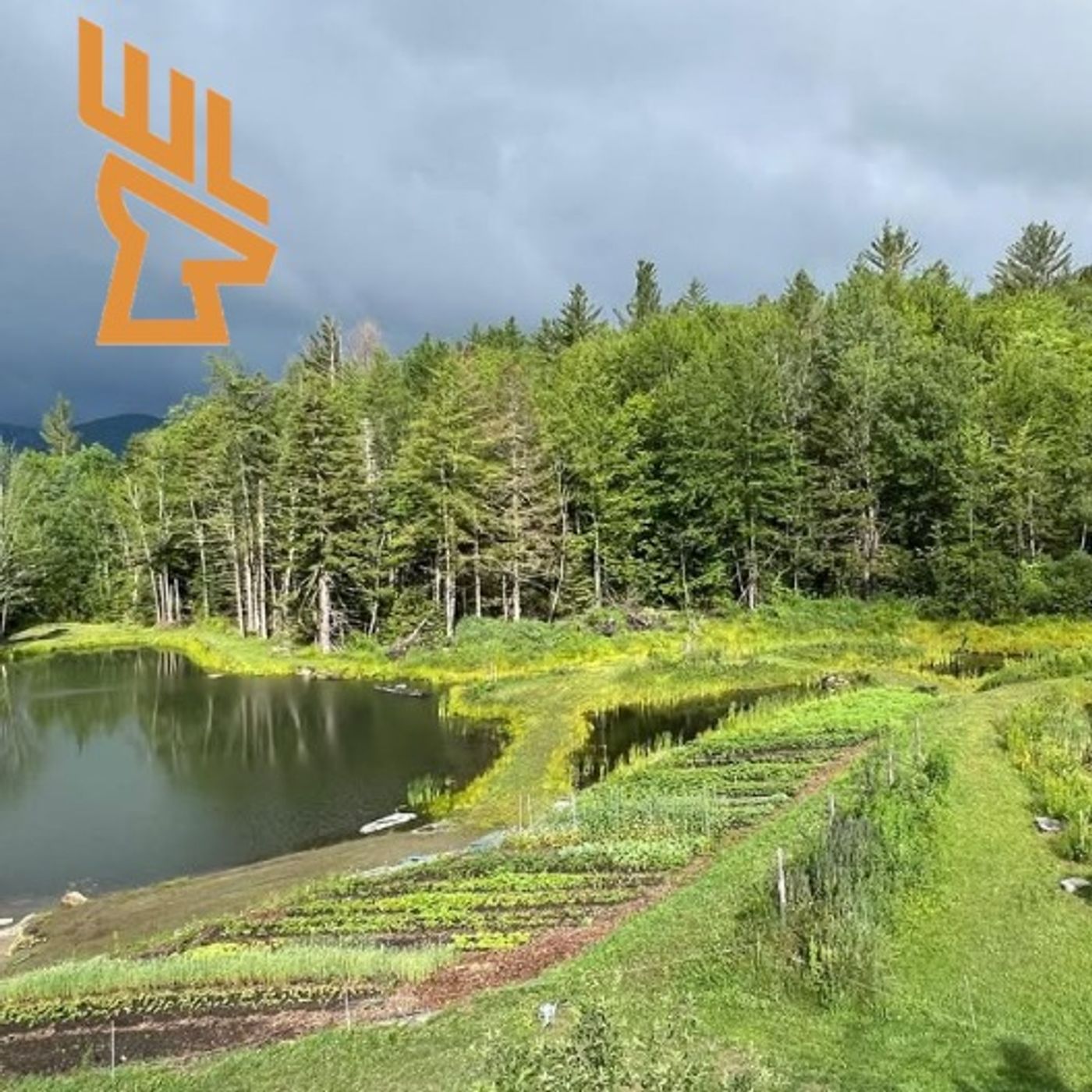
EP215 Healthy Landscapes, Pond Design, High Density Tree Plantings, Wildlife Habitat
69m 12s
The transcription begins with an advertisement for White Tail Institute's specialized seeds for deer food plots, followed by an introduction to the "Maximize Your Hunt" podcast hosted by John Teter. John discusses his travels and the challenges of property evaluation in snowy conditions, emphasizing holistic management, plant diversity, and the need to balance deer populations for environmental sustainability. He introduces guest Ben Falk, who lives in Vermont and prioritizes clean water and air. Falk highlights the multifaceted benefits of ponds, including microclimate creation, wildlife attraction, drought resilience, fire suppression, and health benefits for humans. He explains his approach to water management, starting at high elevations to capture and store water, which recharges groundwater and creates valuable seasonal habitats. The conversation underscores the importance of thoughtful landscape design for both hunting success and ecological health.
Since 1988, White Tail Institute has been perfecting annual and perennial seed products, specifically for hunters who plant food plots. Their seeds have been engineered to be palatable, high in protein and extremely attractive to deer. Whether you live in the deep south or Midwest farm country, they have products that will help you grow your best food plot yet. For more information about their seeds and their blends, visit whitetailinstitute.com. Enter the discount code SE15415% off. Welcome to Maximize Your Hunt, the podcast dedicated to those who want the most out of their hunting property. This podcast explores land management, habitat improvement, and hunting strategies that will help you maximize your time in the field. Follow along as industry professionals that live and breathe whitetail deer, share their secrets to success. And now, the founder of White Tail Landscapes, your host, John Teter. Hi, I'm John Teter, White Tail Landscapes. This is Maximize Your Hunt. Welcome back everybody. Hope everybody's doing well. I am on the road the next two weeks. I will be in Ohio and Pennsylvania and then back to New York. It's going to be busy few weeks for me, one right after the other. And this time of year is usually tough. Most of us are dealing with a lot of snow load. There's a fair amount of snow, but looks like some warm weather on their rise. And I'm super excited for that because it's tough walking in two, three feet of snow on properties. Makes the whole landscape evaluation difficult. You know, one thing I'm working on right now is a property audit checklist. I'm kind of going through this with Perry Patton and Thomas Mills. And starting to think more about evaluating your property of finer level. That level of fidelity, you know, the scope when you evaluate a property is critical. A couple other things when I think about just general design. And this is repetitive from almost every podcast that I've done at least solo is starting your design with solo type. Understanding the regional land use and the pressures that we put or other people have put on our properties and adapting to that. There's always a strong feedback loop. We preach holistic management and paying attention to the plant diversity, the structure. What areas have better soils, the water interest, dear interest, just managing browse on your property, just looking at the over animal interaction and focusing on utilization, but not too high of use. Today, Thomas Mills that had posted something on Instagram and shared with me last night, we had a conversation on these on Wisconsin, just the volume of deer in the landscape and how it's degrading our environments. And there's an overabundance on increasing populations of deer for general human interaction, hunting, all those things. And there's a negative with that. And at times we kind of misstep and don't think about what we're doing on our landscape. I mean you as a conservation person needs to think more about how we manage that, whether it's trigger control, thinking about the economic side of things. As well as working with your local DNR, your environmental group to just focus on herd health and herd dynamics. I think those are important things when we're thinking about this. My environment is the things that I focus on beyond just design is animal enrichment. It's a topic that I've talked about quite a bit here is giving the animal more social opportunities, exposing it to more things that's creating a different microbiome for them to engage with. And then positive animal welfare. It's just it's a very simple mindset thing, but it's getting these environments to flourish with the animals feel safe. We lower their cortisol levels or stress levels. That makes them a hell of a lot easier to hunt and creating like the optimal situation of comfort, meeting their needs, etc. We focus on the wrong things, the silver bullet kind of equations in this and it doesn't work for hunting properties. Those that think soybeans or corn are going to fix your property, it's wrong. It's just it's not part of their daily ingestation. They don't eat those on a regular interval. So thinking about diet demands and comfort needs, etc. is really important in this equation. All right, that's enough of my rant. We're going to get into it. I got a brand new guest, Ben Falk. Really excited to have been on the podcast. He has a very interesting mindset. I have a chance to go to his property. I was there for a couple of weeks and I've learned quite a bit from Ben. There's definitely some different principles. I think that he'll teach you today that I think may shift how you approach your property and maybe even your living condition. So we'll get back on the line. Hey, Ben, how are you? Good. Good. Good. Good. Talk with you again, John. Good man. Let's give a little history on you. Where do you live? I'm right in the middle of Vermont in the mountains in the right in the green mountains. So Vermont. I mean, Vermont's a lot of different places. A lot of people. I mean, some of the best hunting in Vermont is actually not in the mountains. It's in the Champlain Valley. Much richer landscape, you know, deeper soils, the whole zone warmer. But where we're in the thin, the thin lands part of Vermont up in the mountains, 1500 feet, shallow soil, cold, you know, snow all winter. It's still basically every year for many months. Yeah, high elevation, clean water, lots of forests, not a lot of fields, this soil. Here's the question I have for you. In all the places you can live, you're living in Vermont right now and you chose Vermont for a reason and your location for a reason. Maybe you want to discuss a little bit about that. Yeah, well, we're a mentioned clean water. I mean, we're above, you know, of the pollution that's happening in so many places, except what comes down in the rain. So, you know, we, the, the know above our house, you know, we, we own that land, pay taxes on it. No one else is up there, you know, dumping stuff on the ground into the groundwater. No one sprays and crops around us. We're not getting, you know, drifted over by herbicide and, you know, we don't have septic systems and roads and, you know, industry, you know, above us or really even around us. And so, you know, that's not something you can really change if you live in those areas and there's a lot of other advantages to being lower elevations, mainly deeper soil and easier climates. But, you know, we choose to have a harsher climate and less soil to have really clean water and pretty clean air. You know, we're not near industrial ag. They keep bees. They can't really fly to sprayed agriculture. They're not really flying to even sprayed ornamental, you know, yards, because we just don't, the subgroup is in the very suburban, so people aren't spraying their yards. So, we're in a really clean place, all in all relatively speaking for the northern hemisphere. And I love the snow, but, yeah, I mean, we make some compromises, you know, in terms of what we do to grow. We're homestead and we small farms, so we raise cows and a lot of vegetables and fruits and herbs, bees. We make compromises to do that to be in a really like relatively clean space. But it is, it is a challenging landscape and a lot of fronts to do that, you know. Well, I want to talk about the challenges, but I want to get, I just want to mention your book real quick. You have the, and it was an update, and I think I had read the update, not the prior version, the resilient farm and homestead. It was an amazing book that turned me on to you. I had watched videos on your YouTube channel over the years, and I also liked the whole concept of how you move water and water is a big piece of your designs. I've got to see some, you know, some of your designs on your own property, I looked it through some of your clients, drawings and systems that you put in for clients. I have an interesting, I think, perspective on landscape designed, particularly pond building. And I want to talk a little bit about your own property. I know things evolve with observation and you evolve your mindset has evolved over the years to think about pond layout and benefit. Sometimes I look at ponds as creating these microclimates, generally for wildlife use. However, in your context, it promotes a whole bunch of value to you. And you've laid out a pond, and I'm thinking about the pond behind your home, your zoned area there for family use. Why don't you talk a little bit about that pond design and development and what's its functional purpose on your particular property and just, you know, mindsets of surrounding this topic, because I think water use is a big piece of your overall design. Yeah, I mean, it is. And I think we've, we've essentially surrounded ourselves with ponds here around my home. Both places I've lived in the last 20 years, we've ended up just basically surrounding ourselves with water. Yeah, the benefits of water are so many from like you mentioned microclimate, I mean, recreationally beauty, like extra daylight bouncing off the water into the home. And just fire suppression, just actually having a huge reservoir of water, if you're, you know, watering can in there and pour it on your garden bed when you're starting to see some things are dry, because there's a huge basin of water there. That's not a main reason we do it, but you get off and you'll get a little bit of an insurance reduction because there's a fire suppression pond on site. And then, you know, wildlife is a big one as well as you know, so any, there's a lot of water in the ground in a lot of the world, not in some places, but definitely New England. And so, you know, we're basically all on top of water, but it's not exposed in most places and there's just so much benefit to just exposing that water table, especially to wildlife. So like I just look at it.
some game cameras, you know, USB, or, you know, the microchips the other day. And I didn't see, I was thinking I would see some of these coyotes that have been around. And I actually saw all sorts of animals that I never didn't expect to see, especially one was an owl, I think it was a barred owl, just making use of this, it was, I had these two cameras aimed at a spring that I developed years ago, that even despite a lot of night's below zero, some negative 15 Fahrenheit has stayed totally open. So that's one thing that, you know, I think I like drought resiliency, but actually water in the winter, that's not frozen as a huge value of wildlife too. And there was this owl that has been visiting this spring on the daily drinking, it seems like drinking and actually eating like able to, I don't know, I'm not sure what it's eating, but it's like picking around the edges and maybe it's eating some worms or snails that are there. And we've seen so many different animals on our game camps at ponds and water table exposures like the spring, which stays open all year long. Our pond actually don't stay open at all in the winter because they're have, you know, 18 inches of ice on them. And then this summer in this intense drought, we have like a pretty historic drought in most New England, definitely this part of Vermont. And we were starting to see Bob cat and other animals, which we never see close in with the cows near where there's a lot of human activity coming in. And I think they were utilizing the ponds because there was just no surface water kind of in the general landscape. We're very little major, you know, major creeks are starting to run pretty dry. I mean, there's still some water down in the big river valleys, but not much. And our ponds were, you know, still had a few million gallons of water across, you know, about seven ponds. So yeah, the benefits are numerous. And I mean, not least of which for us is just health, a health care benefit. I mean, every pond, especially the ones we swim in that are by our home are part of our health care facility that our larger landscape is for us as well. But the pond's being like a key part of that health care facility. We're in our garden pond, the one you're referring to, I'm actually looking at it right now, not on my deck. It's a sun shining, which is amazing. It's been such a cold, very cloudy winter until this last week. And I'm looking out at that pond. We're in that pond, you know, like three, five, eight times every day in the summer, you know, while we're out there gardening, hanging out with our son, you know, just having fun hanging out with friends. All right. We have a wood fired sauna next to that pond. So that's, you know, for us, I've said for a long time, it's one thing to stay fed in a world with a lot of challenges, but it's a whole another challenge to stay healthy. And that's going to be maybe a bigger challenge going forward. I originally wrote that in my book 13 years ago. And I mean, that's more true now than it was that. It's just, you know, staying like vital disease free, feeling good, you know, for a better your life is no joke. Nowadays it's far harder for a lot of us than just to stay fed, you know, which fortunately where I live is for most people is terribly difficult, but staying healthy, a whole other level of challenge. And the pond are a huge piece of that is such a such a vitalizing force, have a water body that you're able to immerse in and live around. Yeah, I really like the concept of, you know, introducing ponds and a lot of different settings. And like you mentioned a lot of purposes. I think when it comes to water and just again, a basic fact is that water isn't just for growing plants. It decides where life exists and you kind of just identified that where when there's water issues across the landscape, animals flock to certain areas. Now, there's a whole host of other issues that have come up and having healthy water bodies. And, you know, issues in our area and particularly that's in Valley, specifically, they've had a bunch of EHD outbreaks. And, you know, that's been impactful to the deer population and a lot of people run around with their hair and fire. And that could be a symptom of habitat quality in and around these sites, specifically and building a more resilient or abundant type habitat with various type of insect, stragon flies, etc. One of the risks, I think a lot of times is people don't know where to start. And having a water source on your property, things critical, like you said, you know, in New England, there's a whole bunch of them, seeps. And I watched you and I saw you uncovered some of your seeps and you kind of designed them such that they could become kind of holding pools that, you know, drain into a bigger base and you kind of have a whole system of filtering. That was one thing that I don't think you spoke about, but I kind of watched exactly how you how you had some of those ponds laid out. Maybe you want to talk at a high level. And when you're starting to do your pond layout, just general considerations that you would think about, maybe from a human youth standpoint, but also from a wildlife or a static standpoint that might be valuable to anybody listening. Well, I mean, the starting point for us, you know, when I'm on my land, all the different land we manage and when I work with clients, doing design work or consulting, we're always starting high. You know, where's the highest place you can reasonably hold water and or expose the water table. You know, what's the highest water body location you have? So we're looking at Valley, even if they're small valley land shape, we're looking at Valley, you know, con cavities in the landscape and starting at the top of whatever the landscape is, that's the subject. And then working downwards. So the biggest gains are to be started by holding water high. And then as you go down, you know, it's still really valuable, but, but there's usually an abundance of water as you get lower and there's more of a scarcity of waters, you get higher. So like with anything, we want to address our limiting factors first, right? Limiting factor principle, weakest link principle being so important. It's like you want your card to go faster and you have a flat tire. You don't push on the gas pedal harder or try to get more horse power. It takes the flat tire. So we're always trying to address the weakest link and that is often water, where there's not enough of it, but there's scarcity of it and that's usually higher in landscape. So where there were always establishing water bodies, you've just there's small as high as we can and often even if they are empty part of the year. And we have made many different water bodies that are essentially fertile pools and they have their own values and can still be very useful even if they're not full or even half full year round. I mean, even if they empty completely, they have a lot of seasonal value. They have a huge amount of aquifer recharge value. They serve as rental pools and you get all sorts of habitat that you actually can't even get. If you have plenty of water, that's what rental pools are considered such a key habitat you get. Like very shrimp and all sorts of salamanders and different things that you won't get or it in as much abundance if you have plenty of water because then you can have fish and different predation for those animals and you actually sometimes have a greater groundwater recharge potential. And the more we recharge our groundwater, then the more water we have everywhere. So we're always trying to slow spread sink water everywhere. And as a result, we've seen on both the main sites we've managed for over the one for 13, 14 years and the other for over 20 is we've seen new springs come about. We see new expressions of groundwater at the surface. And that, you know, I don't know as much as the sightings against the do what that makes the new spring like, hey, we've made that spring over there. Obviously, you know, the rain makes two, but our, our, you know, massaging of the land and just adjusting of how what where water used to run off holding that water, storing it season after season after season and banking it slowly into the water table and then raising that table over a year after year. Then that water expresses itself in certain areas, especially in the key lines and key points on the where the slopes go from steeper to less those steep those inflection points. And we have now this amazing you, you, when you were here last summer, she saw that pond on the ridge below my home. And that, you know, that there was no willows, no stages, nothing there to indicate that there's been water there for very long. And now there's, you know, let's bring that ran most of the drought right on this ridge, it's not even a valley location. And it's pretty high and, and you know, we're pretty sure that's just a result of nearly 10 years of holding water. Well, more than 10 years of holding water above that area, you know, over a long period of time. And yeah, that's that's when it really comes home as far as the value that's happening. And we're in a wet place. I mean, the more of a drier your landscape, the more important that even if the do to bank that water and not let any of it run off, you know, you get dry into the drier regimes like out west. And so much of the water comes in pulses and ends up running off. And you're not actually even getting into the ground, you know, we said deserts love to flood in permaculture. That's kind of a thing. And it's not that they love to flood. They just tend to flood because you have these high, highly impervious, um, land surfaces forms when you it's type or arid and then tons of water comes down to three, four, five inches and very little of it actually has time to
make it into their ground. But when we change the landslope, we'll land shape with ponds and whales, especially. We can all of a sudden catch all that water and put it in the ground. - Yeah, I think that's a pretty good synopsis. And I like the way that you integrate aesthetics and human use into the equation where you have rock placement and just the way they're organized. I got to kick out of kind of some of the things that you do. There's overlaps in our worlds, but we live very different lives. And that's what I took a lot away from kind of our systems. It was interesting, the conversations that you and I had personally just looking at your landscape, you were really smart on trying to keep as many things in house. I don't think you go for many outside resources to build kind of the systems of systems. Like your fertility program seems strictly based on your environment. You said you have poor soils, the shallow soils, but water is a pretty big piece of that equation. And the fertility benefits of water seem to kind of play into your design and layout. So I want to go talk a little bit about your perennial system. So in agriculture, most of the times we get to see annual crops rule the rules and for whatever reason. That's the commodity resources that we've created kind of are foundational to that for whatever reason. By the way, a lot of that applies kind of in the environment that I work in where corn and beans tend to be like the primary food sources that people think are relevant to the wildlife specifically whitetail there. And that's just a fallacy. I'm not saying that there isn't value in those food sources, but that's not a predominant part of their diet. Break, the question is, you know, where do you have these, I want to say raw landscapes that are in poor areas, tough climates, short growing seasons. You've kind of built, I feel like a fertility program in your system with cattle. And you know, they're kind of the nutrient harvesters that they replenish the landscape. Why don't you talk a little bit about like your system of design integrating animals so to speak in your, you know, particular layout. And I want to talk a little bit about perennial crops. Like the tree systems you integrated with swales and you've got a lot of food systems. I want to kind of see that for the conversation afterwards. But maybe just talk about your layout and some of the food systems you've integrated with, you know, these microclimates with trees and redundancy and everything that kind of goes along with that. Yeah, well, I mean, and we don't even ever provide fertility. We don't like fertilize to promote wildlife. We really just plant trees. So, you know, in this part of the world, and in a lot of places, if you just start going and planting fruit trees, for instance, or just letting apples grow up. Like we live in a place where there's thousands upon thousands of apples seedlings, wild apples coming up to the edges of fields, you know, all over the place. And, you know, over two acres of very poor wet area of our field, one of the first things we did was just stop mowing that down. The previous landowner just brush hogs it once a year. And you know, just land that wasn't even, hey, it couldn't be hay. It was too kind of rocky and it was essentially wetland. And so we said, well, why, I mean, I don't want to waste my time on a tractor, waste diesel and just rut up wet ground. I'll just leave that. We didn't really appreciate that there was loaded with apple seed, apple seedlings. And so we just let those grow up. And like I can't, I don't want to really run on a grayset anyway. It's too wet. I'm definitely not going to make hay on that ground. It's all just below all our hayfield. And it turns out there's hundreds of apple trees started to bring it up in there. And we just started taking care of those apple trees. Those volunteers, we would put vulgar around some of them so they wouldn't just constantly get like knocked back by vols and have to reach sprouts. We start graphing dozens of them. And then all of a sudden, that's a huge wildlife food source. So for us, we don't even know a lot of your clients. You probably have to have a fertility program, so to speak, to grow the annual crop that you want to feed wildlife with. For us, we just let trees grow plant trees and chop trees down. And that's all we need to do to greatly support the deer herd and the turkey population and a lot of the other wildlife around here. For us, the wildlife we're trying to grow, so to speak, is really the deer herd and the turkey population. A lot of the apples that I graft actually are crab because they fruit every single year and they're small, so they're super reliable. They never take a year off. And they're really small. And I've seen up to 25 turkeys in these types of apples. Just loving them. Like, oh, winter-- oh, and they hold all winter. That's the other few times. I mean, there's so little food in the landscape up here in the winter. And now we have this turkey game park that we never even had to plant. We just let the trees grow up that we're getting mowed down every year and graft them with the right varieties. And I mean, we're going to have turkey hunting heaven down the road here. I mean, it's already pretty good in this area, largely because of the volunteer apples, which are also kind of a side benefit of grazing cows. So the cows do offer a lot of fertility because they turn the grass into poop and really help cycle biomass into higher nitrogen sources. And all the trees kind of below the cowfield tend to do really, really well. The trick for us is actually just keeping the cows off of these apples because they will decimate. And so I occasionally let them through these areas, but mostly kind of fence them out. I also pile brush for pruning. I'll just throw the pruning around these apples to kind of just keep the cows away. I mean, they could get to them if they wanted to, but it just kind of deflects them. And they just aren't-- they don't look into that brush pile as much so they don't see there's an fresh, nice apple that they love to browse on in there. And then I would say, we do some hinge cutting, and I drop a lot of red maple here and there to feed the deer her in late winter around now. And I'm always logging for my firewood. And that helps feed the deer just so they can get it bud. But then I also spread like 5 to 10 pounds of purple top radish and diacon-- or purple top turnip and diacon radish. I'm actually right now looking over at an area of roughed up ground where I made a kind of new driveway. And whenever there's bare soil, I just go out with white clover, purple top turnip, and diacon radish and I spread it any time the summer. And then all fall and winter, there's literally hundreds of not thousands of pounds of root vegetables coming up. And those things can be the worst soil. And then now, this is how you're the deer start pond through. And I know my dog's lying in every morning knows the deer's out there. And they're digging through the snow just gorging on all this root crop. And that takes no fertility whatsoever. I mean, those-- I've had purple top turnip get bowling ball size in the backfill, craft soil, backfill around building foundations. And they don't care. They'll still grow huge or be softballed small bowling balls like big. But you will get them. And then I also harvest them in the fall and feed them to my cows, just give them a little more nutrition. And they love them. So that's a super low hanging fruit. When every herb disturbs soil, just throw down radish and turnip seed. And might as well throw some nitrogen fixtures in there like clover and get a nice-- OK, awesome. That's what I'll do. What wildlife-- quote unquote wildlife feed mixes. I have killed in our old orchard and like thrown a proper deer plot. But there's always enough disturbed ground that I really don't even find the need to have to do that. And certainly, I'd rather not kill if I don't have to. So-- Yeah, I mean, just to plant themselves, especially if perennial, we find our just such a value add to feeding the local wildlife that I don't even find fertility to limiting factor. But we do have fertility coming out of our ears now with five cows. So we have tons of compost. But that really goes into my veggies system for me, you know? I want to go back to a topic that I think is important. And this is a piece of your farm where you have these layered tree systems, essentially kind of in rows, but on contour or just off contour or on key line. You know, you talked about high density planting or planting in those areas in these trees, providing local benefit for fertility and growth. And I want to kind of just talk about-- I mean, you had a lot of-- I recall a lot of grazing opportunities in there in between those tree rows for the cattle, but specifically the trees themselves. There was a lot of diversity in trees. And it was a high density planting. What was the mindset behind that new plant of that years and years ago? And I know that there's been some financial gains associated with that. But there's a diversity of trees in those areas, whether they're chestnuts or white oaks, et cetera. Why don't you walk through your thinking there and what was the net game? Yeah. Well, we-- that's in about 12 open acres of what normally just be called hayfield. But again, the water-- back to the water thing, there wasn't any swells. There was kind of no structure to check the flow of water moving downhill. So that's always the starting point, this water management. You know, we say, if you get the water right, you have a chance to getting everything else right. But if you get the water wrong, you could do everything else right, and the system's not going to be very functional. So we started with a water layer. We wanted to check that water flow. So we-- with a bed shaper that we made,
we installed about eight different twales across roughly on contour, pitching down towards the ridges. The water ever does flow and it was just rare. It moves towards the ridges, not the valleys, because that's where it's most limited on the ridges. Then we planted the tops of those twales on the loose and soil with 7,000 trees. Basically made about, I think we had about 7,000 to 8,000 linear feet of these, of these hedgerows, swell hedgerows, and then we planted about a tree of foot on average. Because some of them we planted like two and four rows of trees. So even if they're every four foot in the row, you know, if there's four rows, we still have a tree every foot. So, and we didn't know how many of them would survive, because we were planting like zone five, six, you know, we planted five types of oak of white oak, just five types of just white oak. So none of those are quote unquote natives to this area right now. Like we planted more white oak on this property than our in the 10 towns north and thousand less combined, because white oak isn't, well, it wasn't here. It's here now. I'm actually seeing seedlings from trees we planted, from burrows we planted 20 years ago come up on our other site, which is really exciting. So we're naturalizing white oak into this region, which is smart to do just from a warming climate standpoint anyway, if that is what's happening, which it seems like it is. But yeah, we just wanted the benefit of all these different, all the different massing trees. You know, we focused on trees with mass, with fruit and nuts. Chonds of apples, tons of pears, you know, hundreds of apples, hundreds of pears, hundreds of white oak, some red oak, but not as much red oak, because there is right up red oak around here. So what I always tell my clients is, you know, plant what you don't have a lot of. If you walk into the woods and there's tons of X, Y and Z, well, don't plant X, Y and Z, because that's not a limiting factor. For us, we have this amazing hole in the ecosystem with no white oak. So it's like, okay, that's the no brainer. Let's plant burrow, quercus rober, which is English oak, which we didn't know would live. So that's getting back to, again, why I planted so many. Is I remember one of our interns at the time, who helped us plant us, is why don't we just go to a place, you know, around here that's done this and we'll see what's survived. And I laugh, I said, this is that place. You know, we don't have a place to go to. If I did, I don't need to plant 10 times as many trees as I think we'll need down the road, except that I'm not sure how they're going to do here, because no one had done that at that point with those species. But it turned out they all lived, like basically, well, 395 out of 400 pop-haz died, but pretty much everything else survived the first winner. And it has survived since. We actually, I think it was lucky, we got the harshest winner, basically, in 100 years, that first winner. So it was a good call to anything that survived that, was ended up being worth taking care of. But all the oak survived, mulberries, a lot of different chestnuts. As I said, pairs and apples, plums, which are mainly for the biomass, they grow super fast, and we just hack them back. And they're actually nice and thorny, so they help protect some of the other stuff in the hedge row. And there's a lot of berries too, and some of the rosers see berry, and there's a whole couple rows of hazelnuts, and those are very much thrived. So yeah, that's kind of the rationale, but also down the road shade, as part of the rationale, for the grazing animals. I mean, the cows love being in there. If even on a six-year-go-day, if it's sunny, they would actually rather be in the shade than not. It's amazing how much cows will chew shade if they have the opportunity to. And then the food itself being for wildlife, human-therically, and for cows. The cows are already eating chestnuts, that fall from these systems. Obviously, they love apples, but pretty much more than anything. I mean, I think I could fill my one ton dump truck full of apples, and they would polish them off in two days, and they wouldn't do anything else but eat the apples. I've never seen-- done with eating apples. And pears are starting to come on. They take longer, but we've been in the-- getting the pears now for a bunch of years. And they're more reliable than the apples from year to year. They don't really take a year off as much. Typically, as the apples do, they're not as biennial. But yeah, that's kind of the rationale. And then, as I mentioned, when you were here, we've ended up getting these side benefits, which I didn't even anticipate, like selling two, three-inch caliper field-grown nursery trees to clients, which wasn't even my goal. That's not why I planted them. But now it turns out, if somebody lived, the hedgerows are so thick I want to thin them out. Turns out there's tens of thousands of dollars with a tree in these hedgerows. Well, let's talk about the thinning principles now. And I asked you this when I was on site. And I don't know if it's the wink of the day or how you feel in the morning. But you're going to have to eventually make some decisions, or the trees will make decisions themselves for that matter. What's your thought process around thinning? Yeah. Well, I've started to dig out trees to sell the clients or just give people or plant another part of the property. I'm starting to cut some down like coppists on. So it's nice. If they're really thick, it's like, all right, we can cut these down in the winter. And they'll just be back where they were. After what took them 10 years, they'll be back at that spot in five years, just they're capitalizing on their existing root system. So you can, the cool thing with hardwood, you just can copp it small and just be like, hey, I don't have anything to do with you guys yet. But let's just set-- yes, just reset you and cut you all down. And you know, either take the trees out of there or just mold the other trees with that small amount of biomass that you cut out. Yeah, that's kind of what we're doing. But mainly what we cut down are the stuff that's not producing very well, or we don't really want it as much like the plums. You know, plums are actually to be toxic to cattle if they eat the dead leaves. So I'm trying to thin the plums out especially. But I haven't got to the point yet where I'm like really cutting down much else. I'm mostly digging other stuff out. And every now and then, I'm coppishing or mostly pruning the other stuff. But yeah, as the time continues, I will need to in places. But it's amazing how well trees do close together. And you see that in natural systems. But I mean, I've even been shocked to see how well-- if we wouldn't have any of the apples in there, one of the hedgerows that have survived the cows, the cow pressure, except that they're just emerging up in like a thicket of plum and hazelnuts. And so they're shielded from the cows. And it's like, you know, that was a total win to just plant those apples within those other species. Go in with the machete every now and then, you know, what's the year and just kind of like make sure they're getting enough sun, like hack a little opening around them. And you don't have to worry about the cows, you know, mass occurring those apples. Because they will go for apples first, way before any other tree. Yeah, that's a good strategy, I think, for folks that are planting trees. I have a huge project coming up this year where we're planting a whole bunch of chestnuts and just the various amount of trees, you know, in these areas. And that has been a strategy that we've tried to employ with using debris or, you know, other tree species, realm of those areas that kind of hide and protect. Just that's not so worried about. That's probably a bad example, but, you know, any fruit bearing tree is probably a good consideration there. So I want to go down this other road. And I want to talk a little bit about, this isn't a mindset thing. It's more of a practicality. You know, you have this, and this was interesting to be around you and other people at your property, you know, in my world, there's a tendency to, I don't know if the right word is deplete, but basically eradicate. We use chemicals to eradicate other plants. And on this podcast, I've been pretty adamant of plants, flight plants, that's a mentality. And then you can pick and choose what doesn't work and you don't have to waste that resource, you don't have to kill it in order to rid yourself of it per se or cut it and use the resource elsewhere. But the typical motivation to eradicate or remove is for human control. And, you know, in some examples, they're using herbicides. And if I was to bring up herbicides, I think in the group of people that were on site at your property, I think it would have been shot. And so I'm careful on using herbicides of my property. But I want you to talk a little bit about herbicide use and just your perspective. There's a great book. It's, I think it's called the toxic legacy. It's a book about glycephane and its impact on human health and animals and plants themselves. And I just, I want to get some of your take on just using herbicides in general. Yeah. Well, I mean, I would start by saying, I just never had the need. I've never even felt any need to try to, to need help to pressing a certain plant. And, but when there's a plant in serious abundance, I mean, it's always just been viable for me to like, you're braised that area heavily or brush hog it.
at the time of the year or just otherwise like plant other stuff, like otherwise like trying to just tear that area into something else, you know, cutting, hacking back and planting other stuff. Raising, as I said, has been a big one. I've never felt the need of like, oh, you know, without a chemical war on it, you know, there's just nothing else I can do. So that's been the main thing. And then obviously, you know, I've been around, you know, studies of and kind of knowledge of all of the unintended consequences of using chemicals for a long time in my life. So it never also crossed my mind. It's like something that would be worse than possible unintended, you know, unintended downside. And I totally get why people feel like they have to turn to chemicals because they just don't have the labor or other means to suppress the success of one plant. But it is a mindset thing too, because like, you know, we tend to just want to have a high level of control, you know, in a lot of human systems. And one of the things about agro ecological land management, permaculture, regenerative land management, we do have to learn how to step back from that control impulse a bit and say, you know what, this system, like nature is not making mistakes. This system is unfolding for reasons way beyond which we know. And this plant that we think is a total past, invasive, whatever is thriving because oh, there's this excess, you know, nutrient in the soil, whether it's nitrogen and not weed or, you know, all sorts of nutrient imbalances and excesses, else certain species we like to call invasive be so invasive. They're often they're fire-mediating plants, they're plants that are really good at mopping up, you know, excess nutrients. And so for us, we'd rather address the source of the issue, the source of the imbalance. Okay, there's, you know, there's too many nutrients in this, there's too many of this type of nutrients that's there, let's let's let this plant uptake it and let's harvest the plant compost it or, you know, feed wild feed in our cows on it, et cetera, et cetera. We like to ask the question, what eats that thing versus how do I kill that thing? Okay, what's that thing good for? Not how do I, how do I go to war with it? How do I block it? Stop it? How do I actually harness this energy? You know, it's that land I keto. We've probably talked about when you're here during our course. Like how do I work with that energy expression, that nature is showing us versus how do I oppose that expression of energy? Because, you know, ultimately nature, nature has more energy and more intelligence that we do. It's going to win, you know, there's no, you know, you don't go to battle. It's, it never stops, you know, so we want to be working with the expression of natural systems as much as possible, aligning ourselves with them. Even if we have to shift our goals a bit, then going to battle, you know, again, the way the landscape wants to express itself. And, you know, when I see a plant just doing really, really great that hasn't been here for, you know, more than 10, 20, 30 years, it's supposedly, you know, a new novel plant, non-native fellow, I have problems with that term. You know, my question is, okay, why is it doing so well there? Not, oh, you know, you shouldn't be there. I'm going to go to battle against you. That's just, then a cascade of like really compromising decisions tends to be made. And none of those are really actually very good. Can we manage a, okay, what can we learn from, from this presence and expression, you know, about how to work better with the landscape, you know, in that area? You brought up the term invasive or non-native plants. And since I got you on this dialogue and we talked about it when we were there, and there were a few people that were listening to you and I. I want you to just kind of go down that road a little bit. And, you know, you've introduced a lot of perennial plants on your landscape that origin currently that I'm aware of may not be, you know, within the past few hundred years in our locale. Again, you know, what happened, eons ago, it's hard to, hard to know, ununderstand. But humans, of course, have, have moved plants around the landscape since times before you and I. So I'm trying to, you know, for people to think about plants and their use. And then there's a concept of balancing. And I love the way that you reframed, you know, plants that are pervasive or, you know, highly engaged in the landscape. But the ones that are being productive, they're productive for a reason. Like Tria, having for example, I've seen it in the Midwest and it does really well in certain areas. And I know it does pretty well in the microbiome because there's been a bunch of studies on it. And so it's a plant that has propagated itself more often. And it's attracted spotter and land or fly, which has killed a lot of other species of trees and been problematic. But it feeds on that plant coincidentally. So, you know, just I'm throwing some examples and thoughts out there. What's your take on plants in general and moving our ecosystem forward, not back? And is there a mindset shift we should have around this topic? Yeah. And the way I think about it is just as an ecosystem participant trying to work with the system, who is at every bit a natural part of the system as the beaver is making a beaver dam, right? We don't look at a beaver or beaver lodge. We don't look at a beaver lodge. We have a bunch down in our big pond to acre pond down below. I never, you know, walked past that beaver lodge thing. Oh, you know, there's a natural, you know, built system that another species made. But we think of the things that we build as, you know, unnatural. Because we ultimately, I think only in recent years, but definitely in recent years, come to think of ourselves as somehow not part of nature. And obviously a big part of permaculture and kind of reclaiming, you know, our sense of being a beneficial part of the system is to rethink of ourselves as being nature, as nature working, as the thing has gone. We are nature working too. We can do bad things, we can do negative things. We don't have to look hard to see all that. We can build, you know, interstate highways disrupting land and build tons of crap out into the watershed. Or we can, you know, mob dot cattle and we can, you know, plant this that and the other thing and for all sorts of, you know, ecosystem flourishing. And so I think that's the biggest shift is learning to see ourselves as part of nature, first of all. And then ask yourself, okay, what can I do to help this system flourish in the face of new changes, what is climate changes or chemical changes in the atmosphere and the soils, because of pollution or the natural drift of, of a pest, you know, in that effect, the landscape throughout time and memorial. So that's really not a new way to think. I mean, I think people all, again, the terms of little problematic, but all indigenous people never thought of themselves as not part of nature as well. And they moved plants wherever people have traveled for thousands of years. They were always moving seed and plants with them because they were partnering with those life forms to make more possibilities for themselves and often the rest of the ecosystem. So we can see that all around us like the oak and chestnuts moved further north into England and all over the world. Further north and south away from their origin points because of, you know, anthropogenically because of human assisted migration. So we look at like assisted migration as a natural force and something we should do consciously rather than just willing to lead. So the starting point for us is looking at the ecosystems, you know, the neighboring systems to us. So we're in zone four in the mountains here. When I go down to Connecticut, visit my parents, I, in the oak hickory complex, even though I live in the, you know, beach, and the northern hordes and the northern hordes and the northern hordes have been there for a couple of years. So I'll collect seed when I'm down there in the fall, I'll bring that to Shagbarc and Bitternaut. I have to usually buy because it's not so close to here. All sorts of white oak and red oak. And bring those species back with me when I drive, you know, get on the car and it's three hours. So this is a complex that can usually benefit from that migration of species. And all of those species would have been here now if people had just decided or animals, other animals had decided to move those species north once the ice sheet melted. But we were completely bulldozed by ice. So we're, we're now, we're still in this phase of recovering from the last ice sheet. And if you think about humans being here now, we can look at ourselves as, as horses in helping the landscape recover its previous diversity from that huge disturbance event, which was, you know, 5,000 feet of ice over this landscape. And the heaviest seed moves the slower. So hickory oak, black walnut, those only without human intervention tend to move like a few hundred meters.
a year. There's rates you can look up on different species mainly from rodents and blue jays. But we can get in our car. We happen to be driving 200 miles one day anyway and might we'll put a bucket of heavy seed in our car and then be able to help assist the migration of super beneficial plants to those places that we're moving back into. Now I'm not saying I know some people are going to hear us and be like, "Oh, that's crazy. You're going to mess all these places up." I'm not talking about doing that with pioneering plants. I'm generally talking about doing those doing this with math species, nut trees for the most part, some fruit trees, but mostly nut trees that have really no no downsides. Like there's no downsides to having more acorn, more oats in the northern hardwood forest than the beach first fable. Or hickory or black walnut. In fact, there's a million upsides. All of a sudden per acre calorie production goes up by many times because we basically have one nut tree in the northern hardwoods of the greenhouse. We have beach because sometimes beach bicks, barely any nut, not every year and the bears really need it. Everyone is happy with us adding not just everyone human, but everyone more than human. All the other animals are super stoked for there to be more nut in the landscape. That's why one of the main reasons why you have so much more extended seasons for the deer hunt or the turkey hunt and the shampoom valley because they have a lot of those massing crops, massing species we don't have in the green mountains because those species came back earlier. There was work native people presence that brought the species back etc. So we're just doing that work of assisted migration and it will never be over. It's one of the most exciting things we do. And now I'm 20 years in, so I'm seeing children of the trees we originally helped establish. I've seen the second generation come up. I walk through the woods down. I'm seeing not just red oak, but white oak species of come up along our woods paths from just years and years of broadcasting acorns. They're never going to be a, or maybe not never, but they're not, they're not going to be a big part of the forest composition here for a long, long time, but there at least can be a really valuable minor part of the forest composition. And that's you know, that's just such a simple way to be a benefit to the larger landscapes. And it has you know ecosystem value, but it also has you know personal value. I mean, we're it's all creating this intergenerational game park that is our home. Yeah, I love the way that you kind of frame that. And that brought me back to an article I read the other day was about the passenger pigeon and its role in the landscape. And you know, human server purpose and the landscape. But again, we think for whatever reason our roles are such where we go to work every day, you know, we produce an output, we come home and go to the grocery store, those type of things. I mean, essentially, you know, you're living a lifestyle that I envy a little bit. You are self reliant in a lot of ways. You built redundancy into your system. You're pretty thoughtful about pretty much everything you do. And I know that's taken a lot of research and time, you know, in your life to get there. And it's just done an overnight success. But you know, some of the basic principles of design, a lot of that relates a lot to me and my business. There was a couple of things that I took away that I was intriguing to me. And I I think, you know, not odd or different, but just, you know, being mindful is there's a big perception of EMF. We're on cell phones right now. I mean, I'm on on one Wi-Fi. So the impact's a little bit less. But, you know, you're you're take on cell phone use and cell towers and we had a conversation there. And I think this is relevant to people. You need to start thinking about human health and impact. So I want you to just talk about EMF briefly. Oh, sure. That's cool. I don't get to emotional these, you know, interviews. People don't know me for that at all. But yeah, you know, it's something that's definitely important. It's become important to me. I mean, I grew up in a in a household of a thyroid doctor. My dad was a thyroid doctor. So it was impressed upon me at an early age that these things we can't see can actually be very impactful to our health radiation. He was focused on nuclear radiation. Because that, you know, this is what can give you thyroid cancer. And he was he was very focused on that. But it's stuck with me that there's all these pollutants that you just can't see. You can't chase. You can't smell. But they can have a very real and negative effect, you know, on your life or your kids or, you know, your family's life. And yeah, the more I've looked into it over the years, the more I've realized that, you know, even though it's non-ionizing, it's not, you know, atomic radiation, these low levels, but incredibly persistent, you know, high frequency. We're interacting with them many hours today of forms of radiation, like, like EMF from Wi-Fi and cell cell, your phones, routers, cell towers. You have very real consequences. And it's not even like a disputed thing anymore. And you can go to the bioinitiative bioinitiative.org website. And they have like a thousand plus studies, you know, just on these and all showing, you know, a high degree of correlation of cellular effects on our body. How these forms of radiation affect our cellular function or might have connoial processes in our DNA replication processes, even though they're relatively low level. That being said, they're actually, if you just get an EMF meter and I have, you know, a decent one, and you go just even five feet from your router, the amount of radiation five feet from anyone's router isn't twice as high as it is out in the woods if you're far from, you know, a cellular human EMF source, non-NATIF EMF is a good term, unnatural. It's thousands of times, you know, it's like, it's not even hundreds of times, it's thousands upon thousands of times, which is totally crazy if you think about it because imagine you're exposing yourself to just twice, you know, the mercury levels that we're evolved to deal with, or twice the lead levels, or, you know, whatever, it dioxin, all the chemical, you know, when it comes to chemicals, 2X, 5X, 10X, that's massively important. And we're talking, you know, thousands of times, the levels. So the dose is incredibly strong, but again, you can't, most people can't feel it, you can't smell it, you can't see it, you can't taste it, unless you have a meter, you know, you just, you just don't really know what's happening and then you start looking into it and you realize, wow, you know, I'd make myself crazy trying to have no exposure, but it's really easy to cut your exposure, you know, by 90%. So like, right now, I'm talking on Wi-Fi, it's a lot less radiation than if I was using my phone to communicate with the local power. So I have the cellular turned off, it's a Wi-Fi and airplane mode. That's all I ever do because I have a router. If I'm out in my shop, I'm not my router, I basically don't use my phone, if I need to, I'll flip it off airplane mode and I'll, you know, I'm not a purist, I'll make a cellular call connected with the power, but I use my speaker phone then and I don't hold it against my head, there's just no need to, you know, I mean, if I live in a city, I probably have wired earbuds, because obviously, you can't really be on speaker phone then, but it's really easy, we flip our router off at night, you know, last person out of the bathroom says, "You done using the internet, you know, you're ready to go sleep, flip the breaker that goes to the mudroom where the router is." Bam, no EMF all night. Actually, it just ends up saving us some electricity, drops our electricity bill a couple bucks a month. You know, it's like, so nothing lost, just potentially a lock game, like potentially not getting cancer or getting cancer later, could be the result of such little action. So it's the kind of thing that's just, you know, put your phone airplane mode when it's in your pocket or you don't carry it on you if you don't have it, you know, it's a little habit, but digital hygiene, you know, it's going to be a term we'll all know down the road, but but right now it's not a concept that many of us have yet, it's just, you know, basic, basic hygiene around the technology that we use all the time to be aware of some of what it's doing that we haven't typically understood, you know, because it's not intending to do that. I thought, you know, I don't think cell phones are there in the way I try, you know, it's trying to harm us necessarily, but it's just an, you know, it's a side product, you know, of the technology that we can make ourselves aware of and are just our actions a little bit to have a pretty different outcome, you know. I like the information. I think people should think more about that. I've got like, I got into it because of keeping these. I started reading studies from beekeepers who were being become very aware of these are very sensitive to radiation. And so that's what got me into it. Keeping my bees, one day I'm looking at my bees are really close to my router. Like right outside the window, I'm like, oh, that could be an issue and then I start looking into it. And so that's what kind of hit me off to pay attention to it more. Yeah, no, that's good. And I think there's a lot of people interested in bees. We've had a couple beekeepers on this podcast. So I think that's totally relevant. 100%. Yeah. All right. There's kind of two things. And I took away a few things out of this is not just this conversation, but my interaction with you on your property. And there'll be a link to your book and your website. And
And you have, I think you do a bunch of different trainings over the years and over the seasons coming up. So just pay attention to stuff that comes out from you. Human input is a big piece of this and we're part of the equation. I think that was kind of the piece that I gained in the conversation today. But there's a bigger piece of it. And the impact that you have on your landscape. So Ben Falk passes away, John Teter passes away. The legacy of the things that we're doing hopefully outlast us. And that, you know, what we're building is a better environment. That's kind of one of our objectives. And as conditions get worse and we're, you know, we're talking about not just social conditions, but environmental conditions. So I mean, it's all kind of compounded itself at this point. As those systems that work through and our systems are redundant or resilient, they survive. You know, that's a legacy that we're leaving on the landscape. So I wanted to kind of leave you with the last couple of minutes just to talk about, you know, mindset or design issues or just things that are apparent in your world that have kind of changed your thinking. As you've aged, I'm sure, you know, the maturity of or season season self here has kind of taken on a different perspective on what you're doing today helps the next generations, you know, including your son. So I want to just kind of think, think around a topic like that that's meaningful to folks. And maybe that's an action or call the action for them to start thinking about their, their landscape stifferently. And, you know, just just leave it with you. Yeah. I mean, I think when I, when I first got into, you know, land management and planting trees and just being part of my, my landscape to the homestead and farm, you know, it was very much your typical like, I want to eat apples. I want to teach his and thumb. So I'm going to plant, you know, peaches and apples and some palm trees and walnuts and everything else because, you know, I want to eat them. And, you know, just this kind of like, what do I want out of the deal kind of attitude. And I think it took, you know, a lot of the trees actually took a while to produce, especially I was planting them pretty poor soil, like really clay soil. And at some point, I guess it's twitched without me realizing that a lot of the trees weren't producing. They were taking a while. And so I kind of just forgot a little bit about that they were going to produce something. And I started appreciating them just being, you know, in my yard, like for their beauty of start climbing the apples as they got bigger and same with the black walnut. And you know, I remember distinctly one year and it was like five years later that I thought it would be, there was an apple, you know, like I'm a sure apple I was trying to with with the bottom of my yard, you know, in September on this tree I planted and, you know, somewhat forgotten about the tree. You know, I knew it was there, it was growing and growing and growing, but it never wanted to produce anything. And I lost all like ambition about it producing something. And then one day it was down there and there's this perfect apple on the tree. And I just remember the moment was very much like it just felt like something extra. Like I had, I wasn't like, oh good, finely an apple. It didn't feel like that at all. It just felt like, oh, that's amazing. Like, and there's an apple, you know, like there's that tree, but there's also an apple. And I remember it just struck me. It's like, wow, that's not how you used to think about it then. You used to want that damn apple. And now it's like, oh, that apple is just a gift. That's like extra. It's the tree with so cool just to have in the first place. And I remember that just, I think that just made me realize that just that I guess the act of planting trees puts you into different space after a while. You know, like there's the idea that if you're not happy just smile and you actually, you might feel a little bit happier just if you just try smiling a little bit. You know, it's kind of that same kind of idea, you know, like just by going through the motions and saying, I'm going to invest in the long term. I'm going to put roots in the ground. I'm going to plant trees. I don't know if I'm going to be here. I don't know if I didn't have kids then a child. I don't know if I'm ever going to have kids. I don't think I have a partner at a lot of the times then who knows the future, but I'm just going to plant trees anyway. Which is a long term thing to do. You know, you're investing in a legacy, you're investing in a long term future to plant trees. You may be really surprised how that actually changes your life. You know, just like that. Hey, if you don't, you're not happy, you'll start trying to smile a little bit and maybe you'll surprise how you start feeling differently. And yeah, I think it's the act of planting trees itself that has shifted my perspective a bit and even beyond that, "Oh, I'm doing this for my son." I don't know if my son's going to like farming or home saying, "I hope to God he does. I hope he loves to do what I do. He's in the shop of being he likes it." He can be a tattoo artist in New York City God for better. Nothing to get tattooed for artist in New York City, but secretly, I hope he's done. I hope he wants to be on the farm. But who knows? We have no control over the future when it really comes down to it and all we can do is really cast some ripples into the pond and cast some effort in a good direction. And so, now even though I have, I finally am raising a child, I'm not even really thinking about it as like, "Oh, you don't hope I get to put white oak on the mill when he's my age that I planted." That's really cool. I think about that sometimes because I don't get to mill white oak and looks like, you know, by the logs in the Champagne Valley, but it really has got much beyond that. It's just like, "You know, I don't know who the benefits for. I mean, I know it's for wildlife, but I won't know what I want to meet most of the living beings that will get to enjoy the benefits of all of these systems that we're getting rolling here, whether they're ponds or trees, but I know they'll be there and that's enough. That's really plenty for me to just take a lot of peace and satisfaction in. I think that's what it's left me with. It's just that knowledge of it. It will be beneficial, you know, and I don't have to know who for, you know, to feel really good about it at the end of the day. Yeah, I echo all that. I can relate a lot to resonates with me. One last thing Ben, if people are, are you doing your prime class this year or not? I was unsure if you could. Yeah. Second installment of the pond master class, online class. Yeah. Cool. Yeah, I think people should have some interest in that. I think that's a big piece of kind of your knowledge and experience. And that really seemed to, you know, breathe loud during the class that I had taken at your property. Just really appreciated, you know, your perspective and Marx perspective and Eric's perspective. You're all kind of different, but you've really coupled with each other in a lot of ways. And I give you kudos or doing that class that you did. I think that was a, it was a good break. And my day I had traveled all over the country and then I was up in Vermont. And, you know, I got to meet you and learn more about you. And then I went to a farm class right after that with a, Darren Doctery. So it was kind of cool to kind of see everybody in that space and just learn different things from different people. And I just applaud you for all the effort. I would, I would ask people to look at the book that you have out there. I've recommended this book to many clients just to read because I think it, it changes your mindset and gets you in a different space of thinking. And I think for those that live in the hustle and bustle, you're living an alternative lifestyle in some ways. And I think that's, you know, I think that's critical to people thinking differently about their long term health. And certainly there's a lot of value and things that you do and the experience that you have. Well, thanks, John. It was just awesome having you on the farm for those 10 days. And yeah, it's just so valuable to have people who are also engaged in land, but in a little bit of a different way and different approach, although with a lot of common ground because there's so much to excitement to talk about and, you know, so many overlapping things that lead to growth for, you know, both of us. Yeah, yeah, exactly. All right, Ben, well, I appreciate you taking time out of your day for me. And we'll talk again soon. See you. Maximize your hunt is a production of White Tail Landscapes. For more information on how John Teeter and his team of experts can help you maximize your hunt, check out WhiteTailLandscapes.com.
Podcast Summary
Key Points:
White Tail Institute specializes in engineered seed products for hunters' food plots, focusing on palatability and nutrition for deer.
The podcast "Maximize Your Hunt" covers land management, habitat improvement, and hunting strategies, hosted by John Teter.
John discusses property evaluation, holistic management, plant diversity, and the importance of managing deer populations for environmental health.
Guest Ben Falk emphasizes the benefits of ponds for microclimates, wildlife, drought resilience, fire suppression, and human health.
Falk advocates for water management starting at high elevations to address scarcity, enhance groundwater recharge, and create seasonal habitats.
Summary:
The transcription begins with an advertisement for White Tail Institute's specialized seeds for deer food plots, followed by an introduction to the "Maximize Your Hunt" podcast hosted by John Teter. John discusses his travels and the challenges of property evaluation in snowy conditions, emphasizing holistic management, plant diversity, and the need to balance deer populations for environmental sustainability. He introduces guest Ben Falk, who lives in Vermont and prioritizes clean water and air.
Falk highlights the multifaceted benefits of ponds, including microclimate creation, wildlife attraction, drought resilience, fire suppression, and health benefits for humans. He explains his approach to water management, starting at high elevations to capture and store water, which recharges groundwater and creates valuable seasonal habitats. The conversation underscores the importance of thoughtful landscape design for both hunting success and ecological health.
FAQs
The White Tail Institute has been perfecting annual and perennial seed products since 1988, specifically engineered for hunters to create palatable, high-protein food plots that attract deer.
You can visit whitetailinstitute.com and use the discount code SE15415 for 15% off their seed products.
The podcast explores land management, habitat improvement, and hunting strategies to help listeners maximize their hunting property and time in the field.
Water management, such as creating ponds or exposing water tables, provides multiple benefits including microclimates, wildlife attraction, drought resilience, fire suppression, and health benefits for both animals and humans.
Start by holding water as high as possible in the landscape, addressing water scarcity at higher elevations first to maximize groundwater recharge and create resilient habitats.
Focus on holistic management including plant diversity, soil quality, water sources, and animal enrichment to lower deer stress levels and create a safer, more comfortable environment.
Chat with AI
Loading...
Pro features
Go deeper with this episode
Unlock creator-grade tools that turn any transcript into show notes and subtitle files.
 PodcastTranscript AI