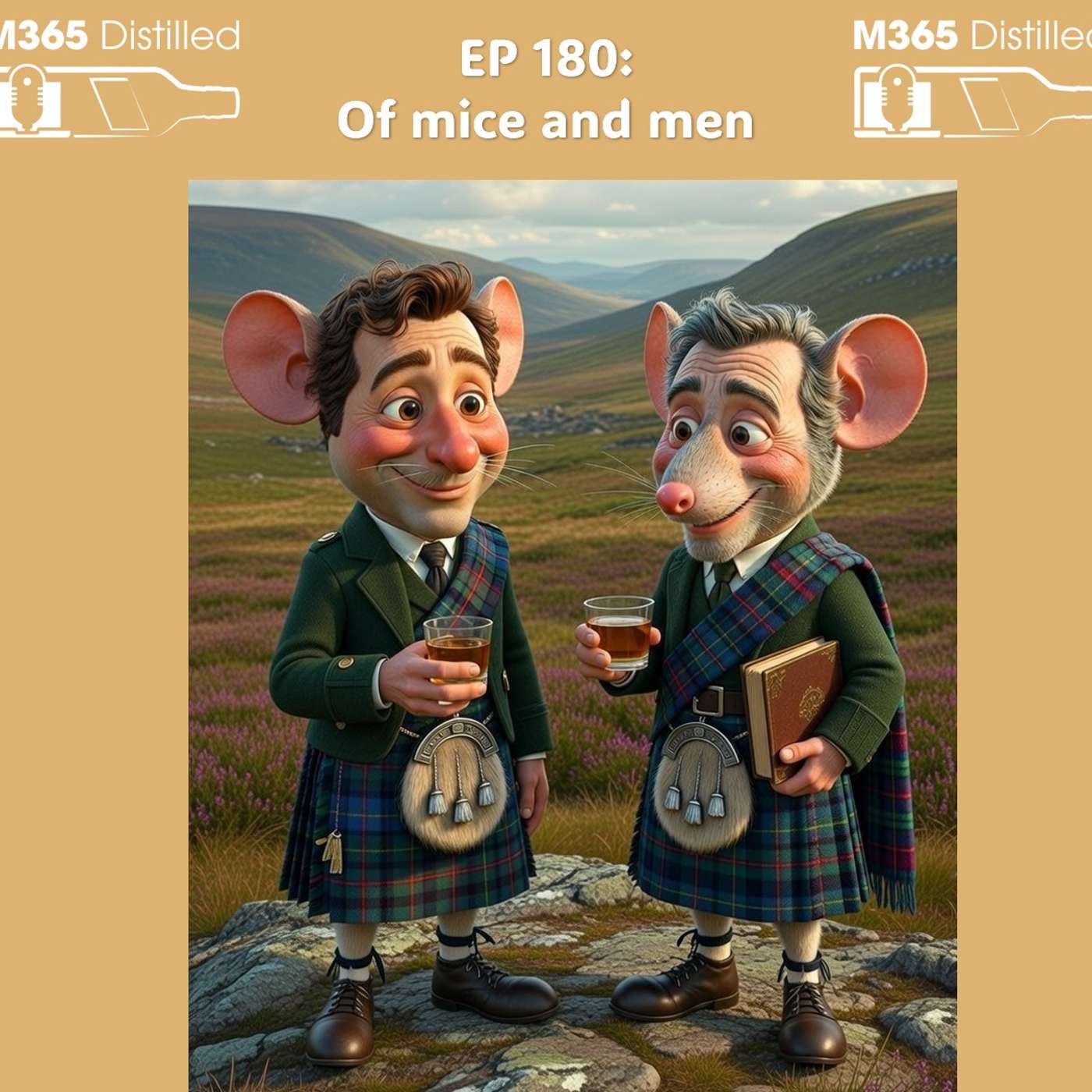
The podcast begins with a Burns Night celebration, featuring poetry by Robert Burns and whiskey. The hosts explore how Burns' 18th-century insights apply to modern technology adoption and change management. They focus on the quote "To see ourselves as others see us," emphasizing that empathy and understanding user perspectives are crucial for successful rollouts of tools like SharePoint and Teams. The discussion highlights common pitfalls, such as assuming users share the same priorities or technical understanding, and stresses the need to communicate tangible benefits tailored to user needs. Another Burns quote, "The best laid schemes of mice and men," is referenced to acknowledge that even meticulous plans can go awry without accounting for real-world user behavior. The conversation underscores that adoption is less about the tools themselves and more about aligning them with users' experiences and motivations, advocating for a people-centered approach in IT projects.
[Music] Hey! Ladies and gentlemen, Office 365 distilled bring you direct from Antwerp, the poet extraordinaire Malagov cocktail. [Laughter] So very calm! Look, Kevin told us we did a really good introduction last time and you just blown it! All right, all right, all right. Welcome to Burns Night, guys. Welcome to Burns Night. Yes, awesome. So we wanted to start off this podcast with a bit of poetry. Let's upclass ourselves. They've worked that out by now. Oh, yes, I guess. All right, so here we go. One, two, three. One for the money? Two. Oh, no. No, no, it's a different poetry. It's hip poetry. Hip hop poetry. All right, let's go. We slick it, cow-run, Timurus Besty. Oh, what a panic in diabetes. Down-need, in a start-away, say, "Hasty, we're bricking brapple. I want be late to win and chase thee with murdering battle." I'm truly sorry, man's domain has broken nature's social union and justifies that it's a real ill-opinion which makes the startle at me, thy poor, earth-born companion, and fellow mortal. There's about 16 fricking verses. Oh, yeah, yeah. Let's not do all of them. No, no, no. The wee bit he believes in, Stibble, has cost the money a weary nibble. Now, thou's turned out for thou a trouble but house all haid to throw the rightest sleety dribble and chronic cold. Of course. Of course. But, Mousy, thou art know thy lane, Improving foresight may be vain. The best laid schemes of mice and men gong aft a glare and leave as naught but grief and pain for promised joy. All right. To a mouse by Robert Burns. To a mouse by Robert Burns on Burns Night. Yes. So, today is Burns Night. Maraine will not fail. He will publish this on the 25th of January. Yes. And we're going to celebrate Robert Burns Scotland's national poet. Exactly. Yes. We'll do, they start a fire and they drink whiskey. We skip the fire park, we'll just have a whiskey. I did think I'd call it would be if we'd actually had some haggis. Okay. So, the traditional food for Burns Night, haggis, neeps and tatties. Do you know what that is? Potatoes and doughnuts? Parsnips. Parsnips, yeah. Parsnips. So, yes, that would have been cool. Yeah. I think this is a gravy, but I don't know if it's certain. Probably. So that basically means we're going to drink a Scottish whiskey later. Exactly. Yes. About a mouse. About a mouse, yes. Definitely. Yes. And I already had that and I, it's amazing. It's really, really, really good. It's an independent bottle. Yeah. But we've had a few of these before. Yes. And this is just a special release they made. It's just right up my alley. Everything is a special release they make. They don't have normal stuff. Well, they kind of do, but really? Yeah. Yeah. But this one, the normal version of this one that we're going to drink later, that's the regular. Oh, is it? Yeah, yeah. Oh, okay. So they. Yeah, yeah. Well, let's talk about that later. Okay. That's fine. Good. You, because we're obviously in a very intelligent mood. Yeah, funny mood. Is. Actually, we're copying my other podcast, Aiffusion Talk, aren't we? Oh, we. We did tattoos in M365. You did, yeah. And we're going to do poetry and SharePoints and teams. Yes. Yes. We will reflect on the Robert Burns' spoil tree and see how that influences project management, user adoption, technology roll outs. Just sharing that the man from 1786 was way ahead of his time. Or that we haven't evolved. That might. No, I mean. No, I mean. Okay. We're still whiskey drinking. Exactly. It's 250 years, more or less, after that. I mean, it's. Basically, we're still. I don't know. I had to do the maths then, because I thought you were wrong, but you're not, you're right. All right. So, I'll start off with trying to do this, but the problem is that it's in old Gaelic Scottish. Old Gaelic Scottish, yes. Okay. So, this one's about. That's why I'm letting you do this. I don't mind. I've had a whiskey already. I don't care. Yeah. So, this is adoption and change by Robert Burns. Okay. All right. And the quote is. What some per the gift of the Giers? Obviously, yes. All right. From 17. This is to the Lady Louise. That's what I would say to Louise as well. Yeah. What some power the Guild of the Giers? Yes. No, I wouldn't dare to say that to Louise to be honest. That's Louise. That's Louise. That's Louise. That's Louise. She told me off, so I'm not saying that to her. All right. Well, actually, I think she'd quite appreciate this. I'm sure Louise doesn't ever listen to our podcast, so that's fine. No. But if she does. So, effectively, the translation is this. I'm going to do the literal translation first, because I think I can. I can translate. Oh, what's power the gift is given us? That's his direct translation for the line. Nice. But that's called pilot. AI. No. Maybe. Maybe. But no, no, that's actually what I just translated that directly. So, the paraphrasing is to see ourselves as other seasors. Okay. To see ourselves as other people see us. Which is really cool when we think about adoption, change management, user experience, that kind of stuff, yeah. Yeah. Because we assume that everybody else thinks like we do. Yes. And when we assume we make an ask-of-you-and-me. Yeah, exactly. Which we can do without thinking about assuming anything. Oh, yeah. We were very fluent at that. More fluent than in old Gaelic Scottish, yes. But it is true, isn't it? I mean, okay. My organisation at the moment, we are struggling with a number of things. Of course you let me go. Of course you struggle. Dear. Yeah, we need to talk as well. There's something I do need to talk to you about, but that's okay. We won't do it online. Where I was going to go with this. Yes, I was going to say that I don't mind drinking a whiskey before we do a podcast. But I think that if I'm still drinking a whiskey when we start the podcast, it needs a little bit of a gap. Okay. Gotcha. So, I was talking about the fact that we kind of roll things out of the organisation that I work at. And then they don't do anything, they don't respond. Simple things. We're old when there's 11 hours. All they needed to do was, hey, look. Click on the update button and then just go and get a coffee and come back an hour later and you'll go from 10 to 11. And we get down to the last 30 and we're now having to phone them and include their managers and say, look, he needs to bloody do this. We rolled out CloudFlair, a new internet proxy server. All they needed to do was when this little window pops up, say, it's okay and logging with their username and password. And we're down to the last 10 people. We cannot get the same people as we do this. Sorry. The same people as we do this. No, I don't know actually. This is a very good question. I didn't line them up. There was a few months in between the two. But it's actually true. We assume that they would do what we do. If someone says you need to do what we tell them to do. That is one of those subtle differences. Ask them to do. Ask them to do. Yes. Just fucking do it. Exactly. No, no, but seriously, if we add an upgrade on the laptop, we go, okay, I'll do the upgrade or to convenient time, but I'll do the upgrade. Yes, true, because this morning on my phone, it says, oh, you got an update. So I was like, oh, cool. I'll do that right now. And then it says, yeah, but you're not Wi-Fi connected. So are you okay with 250 megabytes over your 5G line? How do we tonight? You're a James Cate. Yeah. So, okay. But, yeah. But then also, I mean, I must be getting all, I guess, because I had this for a few years now that every time, like, when a new package arrives for me. I knew something. I knew something. No, no, no, like a physical parcel arrives at my doorstep. I can easily put it on the table and not look at it, and then after a few hours or maybe a few days, like, oh, let's open that up and see what it is. So, yeah, sometimes new shit doesn't trigger me that much, but that was not the thing that we need to talk about. No, no, no. It is part of what we assume other people will do. Like, if you've got a new bottle of wine, a bottle of whiskey, rather, you're not going to stare at it for long before you take the lid off and smell it and maybe even take a nip out of the top of the bottle. Yes, exactly. Yeah. Just because. Yeah. But also, I mean, we always assume a lot of things. Like, for example, I overheard someone talk today that this organization built a new internet and nobody's using it. Yeah. Because the organization thought, oh, we need a new internet. And then apparently doesn't fill some kind of void or it doesn't cater to the needs of the people. So nobody's coming. That's a really key statement you just made. Which one? The needs of the people. Yeah. It's true. But we'll come back to that maybe a little later. But for certain, we assume that people understand what we understand. So we assume they understand the importance of upgrading, the importance of updating, the importance of using SharePoint to collaborate with or to store your content with your teams to collaborate with whatever we assume they get it. Yeah. But we're just so unique and special that not everybody could be like us. Is that the way I think? Well, that's how people think about IT people, but maybe there's a bit of truth in there. Maybe it's, yeah, it's where people. But I get that. I mean, when I'm sitting, when I'm doing meetings with proper IT people, I always get that feeling as well. Like, you're very strange people. Because I always say like, oh, I'm a PM in the IT world. But I talked with people more than I talk with computers. So that's kind of my, how do you call that? I'm not talking about my excuse. Like, oh no, I work in IT. But I really am people focused. I'm not one of those weird IT people. I'm working on IT, but I'm not an asshole. Yeah. I can't fix your printer. And I actually talked to people. And I was saying the same thing to those. The amount of times that my family phone open say, hey, my printer won't print. I've just bought a network box. What are we to do about it? Exactly. Yeah. It's true. But I guess it's an assumption we make going back to the whole Robbie Burns thing is that we want to see people as ourselves. But they can't be. That's the reality of the situation. Because we want this. So you must want this as well. We're also a person. So we want this thing magic, this button there. And because we want it, I assume that you want that as well. Yes, you must. Because I do. Because I click on that button five times a day. So you must click on that button at least five times a day. That must be so valuable to you that little button. We're done on buttons. Maybe. So when we talk about adoption and putting ourselves in the position of the kind of end user, then we stand a better chance of understanding what they need and what they're after. Yes. And that's the key point that Robbie Burns was saying. 250 years ago. 250 years ago. Smart cookie. He died very young, you know. 35 or something. 36 or something. Too much whiskey. We missed a club of 27. But no, I wanted to say something. But then beat again and shout out. No. We were talking about filling a need or something needs to have a permanent understanding. Yes, not filling a need. Yes, maybe that's another podcast. But I don't know where I picked that up. I've been listening to way too many podcasts for the last few days and weeks. Where somebody said, this is the age of information. Information is abundant right now. So we've got so much information around. And we didn't have that 200 years ago, for example. I'm going to disagree with you. We carry on. I like it. We'll come back to my disagreement. So 200 years ago, the only people that had access to a lot of information were like clerics, at wizards, and yeah, like people that were specializing in knowledge. And we have all the knowledge in the world right here on our fingertips in our little device. And so we have that information abundance. So in order to make something worthwhile for people, it doesn't just need to have that information. It just needs to fill that gap or cater to that specific need that a person has. It has to be, how do you say that? It's not valuable to a person, but it has to be useful for someone. That's true. I get that. If we want somebody to use SharePoint and we want them to start using SharePoint to store their files for collaboration for their department, we need to work out where the value is for them. But that's still, Robert Burns is still right. We need to understand what they are giving, what we are giving them and what they're getting from it. So I'm not entirely certain about the knowledge thing. So this bit was about, it was about the internet. And it's about an internet doesn't only have to contain all the information about the organization. It doesn't just need to have all the procedures and what nots. But it needs to give you that information in a very easy way. And all the questions that I have should be, I should have an easy way of asking them and finding out the answer. It shouldn't be browsing through all the information, but it needs to. I'm a twisky, have you had a drink? Just that wee bit. But we drum. Yes. I get it. And I think part of it is making sure that the message you give the person is what they need to hear. As we understand them, we can tell them what they need to hear. That's what Robert Burns is saying. It says, "To see ourselves as others see us." So hey, you should do this because this is what it will give you. But if they don't see that in us, or if they don't see that in themselves, then we've not got the value that we need for them to adopt things. True. Is that also why you haven't mounted the cameras yet? Correct. That we're not visible on YouTube. Correct. I think that basically you're so ugly that you're just drive people away rather than drive people into it. Yes. I have a Facebook podcast. I have been incredibly busy since when it was talk about it. July last year. Yeah. Something like that. Yeah. Well, the part of the problem is that the camera, the video project has gone so I'm depressed in this room. So no, I need to, yeah, fuck it. Thank you. Just for pointing out that I failed. But anytime you want to come around and do it. Yeah, yeah, yeah. I know. That's all right. So, what, why it fits? So, what Robert Burns is saying here is that this is peak adoption thinking. This is the key adoption statement. So, Burns is literally saying, if only we could see ourselves the way that others experience us. So, if people understand why this is important and why we think is important, then they would adopt it easily. And because they don't see the experience of ourselves, it's why they resist new tools. Why I think something is simple and other people don't. And why adoption fails because there's no empathy. If we don't see them as we see ourselves, there's no empathy. And it's actually true. That's the level of empathy. So, yeah. So adoption isn't about the tools. It's about seeing the experience through your user's eyes. It's really the fucking deep actually. Wow. So, it's okay. So, we would go like at the moment, Mateus, A. God bless Mateus, how you doing? We've been rolling out new printing software. So, every day is. Printer's, oh my God. He's been rolling around the floor. It's my favorite 80s technology. I know. I know. Which I didn't have to deal with. Glad printing. Well, to be honest, I gave away my printers six years ago. And I've never printed anything since. I've never printed mine as a scanner, mostly. But anyway, but that's irrelevant. The point is that what I was trying to get to was that he's been doing the tour of everybody to say, hey, you need to print and use this new software. But he's been showing them how to do it. Click, click, click. All right. And then success for him is now United Print. But that's something tactical and practical. If we want people to start using one drive and synchronizing their regular files down to their laptop, we have to feel that under some way. And the message we need to give those people is why this is good for you, why this is important to the way we work, because you might need these files when you're not online. Yeah. Now, that is an empathic message. That is that you feel you will feel better when you want that information and you're not online. You won't feel frustrated. And that's what our man, Mr. Burns, born in 1786 or when he wrote this, I want some power that Gifty gives us. Exactly. The power, the gift of power, the reduction in change, to CSLs as others, CS. Yeah. That makes me think about this company that I went to last week. It was a little company of audiologists. Yeah. About 15 people. And how they were working was somebody, so they all had a one drive, and somebody made a shared folder with everyone, and everyone put all their files in that. And so I came in and I said, that's really not the best way to do this. But then they were all like, yeah, but it works. Exactly. And we know where our files are and it's so easy and it's just there. So I need to explain why in IT terms, that's not very useful. No. And if you say to them, hey, you won't be able to search them anymore, or you won't be able to search them as easily. Co-pilot won't pick them up to give you some information, because they'll go, don't care. Exactly. Yeah. But then when I said, look, we can have all the same stuff. If we just move it somewhere else, if we move to a SharePoint or a Teams, we can have the same user experience. You will still find all the same bits and bobs, but it will be safer and it will be better and a number of things. So I wonder whether it's just, hey, I'm not interested. As long as I can get to the files, I don't care about anything else. So I wonder whether it's a kind of halo. We don't care about IT. We're making widgets, and that allows me to make widgets better. Or whether it's a stubbornness. You know, John had this idea, and I support John, because he had the idea of doing this, and so, hey, it works. And so that's the empathy in there, in that they're supporting the person that's getting the idea and what they're doing. If only those people could see us, like we see ourselves, or experience ourselves, yes. So do a Spock thing. You sort of meld the minds, and then they'll go, "Now I get it!" Oh, that's actually the whole thing about the Pluribus series on Apple. It's the big mind meld. Robert Burns predicted this 250 years ago. Okay. Cool. All right. It's the Borg. It's a Star Trek Borg. So there we go. Robert's first lesson is get people to see you the way that you see yourself. All right. And then next, Robert Burns line for him, this one's actually a little bit later. Nope, it's a one year earlier. I had to go and have a look at the number. It was 1785 instead of 1786. Oh, we're so good at this. We are. We're so professional. But this was really special, because this one is two a mouse. Mmm. All right. And the best laid schemes of Mayas and Men. Yeah. We've heard this before, of course. Yes, you. It's a proverb, isn't it? Best laid plans of Mayas and Men. Yeah, but what does that mean? I mean, I mean, I know this because there's a movie called "Of Mayas and Men". Yes, there is. And the book. And it probably a book as well. But what does that mean for someone who's not UK, English? So the universal truth of collaboration is what they're saying. No, no, no, no, no, no, no, just the proverb, the saying, like, "Of Mayas and Men". What does that mean? Oh, it's for everyone. It's for everyone. For everybody, yeah, yeah. Okay. So that's basically what I think you're saying. The best less schemes of Mayas and Men. Okay. But effectively, what he's saying is it doesn't matter how well you plan it. How will you plan something? Reality will intervene. Okay. So how many times do you try and plan a night out and find it goes wrong? Actually, night out, I'm good at. But how do you plan a project timeline? Like, "Hey, I'm going to get rid of Citrix in a year." And then the reality of it, once you start digging down, is the reality intervenes. And it's a two year project simply because you don't see the complexity and you're getting involved in it. Yeah. So that's what it's actually saying here. Or in the morning where you say, "Today I want to tackle this problem," and then you open up your email inbox, and there's 25 other fires that you need to put out before you can actually start on working on that thing. That's true. Yeah. That's, that happens. And I honestly think that if you talk about any kind of adoption and change exercise, it's really is. Okay, look, if you just email these 200 people, very simple. There's seven steps, guys. Here you go. Open up your stock button. Click this icon. Put in your username or password. Press go. That's all we need you to do. So the plans of my cement. You're a mouse. You should be able to do this. Okay. But the reality is they'll go, "No, I need to check my email." "Oh, I'm not going to do this. I'll do that later." Yeah. "I can do that anytime I want." Yeah. And then you piss them off by chasing them up two days later. I can see that you're still not registered yourself to it. You know what you mean? Fuck you. Do it yourself. Not going to do it at all. I'm a human being. I'm naturally stubborn. That's beautiful. I'm a human being. Okay. I know that that's definitely true for about 50% of the population. It's the 50% that hasn't done anything that's supposed to do. Oh no, I was just thinking about the non-piniest-wielding part of the women. I'm talking about women. Jesus Christ. Man. I didn't work it out. Okay. The look on my face was I'm going, "Where's he going with this?" And I was also trying to work out why you were swinging around at your knee levels. I'm fairly sure it's not that big. Oh well. And just to clarify, that's why we don't have cameras on there. Exactly. That's why we don't have cameras. Yeah. Oh man. Yeah. I think I think YouTube would definitely demonetise this very good. Maybe we should just put this on only fans or something. Only fans. One way of judging your audience, I suppose. Yeah, well, to be honest, I actually, because only fans is for creators and getting money for the stuff that you create. So my first idea was to put my. Just get all that thought. Are you telling me that there are other things on only fans than ladies in Skimpy Underwear or No Underwear at all? I have no idea, but that was the original intent. Okay. So I was thinking of maybe putting all my courses, all my training courses on only fans. And I thought that was a brilliant idea until I thought about, "Okay, so people will need to go to their manager and say, "I've got this invoice for only fans." Because I want to do an online training. So that's probably not the best business decision ever. So, yeah. Yeah. But I believe that there's other stuff than. There are lots of other tools to do your coursewear. Oh yeah, that is one. I'm not trying to work out when the first time you told me you were going to do that. Oh, years ago. Years ago. And now you're just swinging your dick on a podcast. Yeah. You know, trying to say. I'm your only podcast. Audio only podcast. Yeah, it's a good job really. Guys, trust me, you didn't want to see that. Kevin is sitting there and I go, "No, go, that would be funny. That would be funny." Yeah. That would be funny. So, yeah, perhaps a nicer man, things never going as well as they want. How do you get around that? Well, is it. I was thinking about that. Is it like, do a good pre-study or just have good project management? Calculate for where things that are going to happen? Or is it just something that comes with experience? Every audience is different. Every project, then. Yeah, it's all done. I mean, you have. The question you used to have in Amsterdam, they were quite good at doing stuff like this. If I remember rightly. The small number of people, all kind of smart, scientist types. Yeah. So, anything they needed to do from an instruction for an IT perspective, were they good at it? Or do they still ignore it? Yeah, actually they were. I think you told me in the past they were. And they were following orders or hints very well. Hints very well. Yeah. Yeah. But it's typical Dutch people. They need to know why. Yeah, yeah. That's very important for them. So, do we? So, the very first Burns players is like you. You said why don't I need to do that? I don't need to upgrade this. So, you know, why don't you click on that link? I'm definitely not like that. I mean, my phone is like you got a new update and I'll go oh cool, install it. But that's because it's safe inside there. If you had an email with a link on it said click this for my fan site. Smeep your label. Yeah. Would you click it? There you go, you see. Yeah. So, I don't think that you would do that. I think that we just kind of know. But so the question still comes back is how do you persuade people that it's a trustworthy something and it will add them value and give it to them in terms of whether or not. We've just been through this whole thing about it because we're rolling out sensitivity labels. We're rolling out about three other changes that are important to the end users. Well, I wish I could remember what they all were. But, you know, I'm not at work now. So, I can officially kind of shut it off. But I know we're going to trouble. Yeah, I know we are. Because I mean just because I explain. It's going to happen. Yeah. So, and I'm not entirely certain about the answer. It's really quite good meeting with HR that said a lot. If you want them to do, you need an action banner that you can use every single time. So, they know something needs to be done. Oh, that's a cool idea. So, and then like today we were talking about the printer stuff. What we've realized is that we don't have the two calls to action. So, people are doing the first one because it's the top of the page. They don't get down to the second one. So, we'll put a link in the top that said, hey, there are two things to get printing. One, you need to sign into the software using this button and do this. Two, and we'll put a link in then to that part of the page. And two, is you now need to follow the instructions for registering your card on the system so that you can then print by, you know, secure print. So, we realized that that second button was done. So, we've got a lot of continued improvements, a great thing. So, there you go. So, there we go, Mr. Burns. Call. So, one's a lot easier, I think, than the first ones. But so, there we go. The first one, I'm not going to repeat it in the original, but to see ourselves as other seers, meaning that basically if we think something's important, other people would as well. And so, as you say, I think we need to understand why. The second one is that it doesn't actually matter how well we plan it. Reality will get in the way. Yes. Yeah, I love that. So, Mr. Burns on SharePoint Information and Management. Okay. Hit me. I do have a year. I don't have a year, so I can't advise myself here. Facts are shields that winner ding. Yeah, I love a good winner ding. Facts are stubborn things. Perfect for SharePoint and Record Management. What Burns is saying is that facts don't disappear just because we ignore them. They're going to be there and they're going to keep writing your ass. So, that's call pilot security in a nutshell. That's what our co-pilot said here, actually. He said, "Holy said SharePoint, Gov. Conversation, Ever." This is basically every SharePoint conversation ever. Yeah. And if you think about it, there are some facts like documents will actually live longer than people expect. Yes. Yes. It's very true, yeah. And not only the documents, but all the versions, 9 out of 10. Unless you turn on that version. Clearing up the thing. Depending on how many you create. Nobody does. No, but then again, nobody ever used to turn on minor version either. No, because it's not your set as default. I also read this article that people would rather buy more storage than actually clean up what they have. There was also a good article. I wish I could remember who wrote it. People would rather buy more storage than clean up what they have. Yes. It's the lazy man's route, isn't it? Yeah. You know. Just draw money to the problem and then. We do that, they don't. How much whisky do you have in your cupboard? Last time I counted 73 bottles. There you go. So you could drink that before you buy another bottle. That would be the logical thing to do. No. If there were all the same bottles, yes. But they're all different. They're all. They just stand and respond. One something else every once in a while. Yeah. Yeah, maybe that's true. But going back to our change in adoption thing. It doesn't matter when you sit there and go, "Hey, look, if we don't secure our network, we could go to prison and be fined 20% of our income." And they go, "Yeah, okay." If we get caught, if we get caught. Again, those facts, they were stubborn things. But they don't necessarily drive you to change or drive you to do something differently. Yeah, sure. Your documents will just mount up inside this document library if you don't use metadata to try and filter them. Your book, "Corpile", it's going to fix all that. Is it really? No, I don't know. But I mean, "Corpile" is going to just plow through all that information and only get me the relevant stuff. So if you've got some old documents in there. Yeah, I know. Yeah. See, facts are stubborn things. Facts are stubborn things, absolutely. Even though you know this, not only do they value it. Yeah. Yeah. That reminds me. I made a little oopsie. I have a customer and they have about a library with about 3,000 procedures. And we were busy creating review dates for these procedures so that we can keep these things relevant. So I made a beautiful button when they click it. It publishes their documents, approves it, and also adds a review date. They can choose one year, two years, three years. Nice. Did you build that workflow? I built that workflow and it almost worked from the first time. Excellent. Yes. So I was very, very happy with Power Automate for the first time in my life. But then we were looking at it and then we were saying, "Oh, that's very cool for all new documents, but what about these 3,000 documents that we're already here? How can we give them a review date?" No worries. I will build a second workflow that will be a. I will click it to start it and we'll just go over all the documents. It's going to grab the modified, last modified date. It's going to add three years to that. It's going to put that in a review date. Awesome. So I ran it and then I. Because it will only do like 50 documents. So I did it again and I did it again and I did it again. And then I looked it up. Does it really have to be like 50 documents at a time? No, you can do it until 5,000. So I said, "Oh cool, I can do the whole lot." So I just did the whole lot. And then two days later I get a phone call from this lady at the customer and she was like, "I've got 900 something documents that we all have the same review date." So something went wrong into your workflow. So they now all have this review date on the 16th of January, 2029. So I was like, "Okay, yeah, that was not supposed to happen, so there's a little flaw in this." But how am I now going to fix this? Because it's 900 something documents. Because in my mind, I need to go into the document version history, jump back to a previous version to see what modified date that is, and then add that into the review date, and then just approve the document again. I don't want to do that manually for 900 something documents. Do I want to write a power shell that does that? The question's in life, or the amazing, how they? I'm not that smart. And then suddenly, like all good thoughts come when you take a shower. I was thinking about what if I just grab the documents that were modified after that moment, put them away in another library, and then just restore the full library with the restore function, just like you have in one drive, restore that up to that day until all those 900 something documents are back in the original place, rerun my workflow so that every document now is the good review date, and then just add all the files back. That was clever. I don't know yet. We'll see. But that was my upsea. That was my first upsea of the year. I gave 900 something documents a wrong review date. This document library is not active yet. It is fully active. It's being used by 7,000 people. And you're now going to take their top versions. I'm going to reset the whole library, like how it was on the 15th of January. What happens if somebody on the 16th of January made a change to a document? Well, I'm going to move those documents. So I'm going to create a view, say, just show me all the files. Why don't you delete the column? Because I can. But I mean, the review date needs to be three years after the last modified date. That's what the document was doing. No, because the document is now changed because it's got a review date on the metadata. So it's changed so the last modified date is today. Because today it was changed because I added a review date. Yeah, yeah. Yeah. Very funny. Did you work out why your dates were all the same? Yeah. But I was thinking because I ran that freaking fucker so many times. It probably said, oh, now my last modified date is now. And then I ran it again. So it said, okay, so now I need to add three more years to that thing. It wasn't the same company that sells estate agent. The estate says it and officers. No. Okay. Come back to that later. Yeah. All right, cool, cool, cool. All right, so you did. So I did an oopsie. Yes, we're three weeks in and I already f'd up. Yes. So I think Burns actually has a poem for you. Oh, you dimmer his fuck up. Yes. Exactly. What a shite thing you've done. So a man's a man for that. Uh-huh. Exactly. Knowledge sharing and learning. A man's a man's for that is there for honest poverty, apparently. I believe Burns believe knowledge and worth weren't tied to title or status. Correct. Yes. Just because you have a status or title and source of it. I'm an MVP. And I fuck up. Yes. I'm so proud of this. Yes. Oh, God. Let's just have we've had enough of Burns as much as it's finally its burns tonight. We'll have a whiskey. I think it's time for that drink. Let's. Yes. Yes. And we started off the podcast with the poem to a mouse. To a mouse. And the poem to a mouse starts off with him talking to the Timurus Basty. And that's the mouse. And Timurus Basty is the highland whiskey from Douglas Lang. Yes. So we like Douglas Lang. We had a tasting with them some time ago. Was that Douglas Lang or was that the other Lang? Which Lang was it? Oh, it was a Lang. The Lang. No, no, it was that one. And how they work is they've got regional whiskey. So they've got lowlands. And that's the Epicurian. Yeah, but it's called the Epicurian ones. And then the highlands one, that's the Timurus Basty. So it's a blend from Glengoyne, Dalmore, Blarathol, a number of these things. Yes. And the default Timurus Basty is nice. It's sweet. It's brilliant. It's good. We had it before. Yes. Absolutely. We had it at the tasting. All right. I didn't know that. Yes. Yeah. That's fine. But they also bring out every now and again a different version of that. So they. They'll couple of barrels in their store and they go, hey, we can do something special with this. So for example, they. And I just saw that when I was looking this one up. They also have a 40-year-old Timurus Basty. It is very early. And this one, because this is not a 40-year-old, this one is called the Phantom Smoke. And. This is from a crocodile cask. It's. Yes. It's heavily charted crocodile cask. So why don't you explain what a crocodile cask is while I pour some whiskey? Yes. I saw the box when Mureen came in. He was busy on the call. So I was kind of reading it. And the crocodile cask is. You know what crocodile skin is? You've all sat there and touched a crocodile. But you know, it's kind of shaped with dints and raisers. And if you chart cask or you chart wood enough, the wood will split. And that's basically what they're saying is this is such a heavily charted cask. You know, five or six, rather than a three or a four, that it actually looks like and feels like crocodile skin. Nice. But it means that there's lots and lots of cracks in it for the whiskey to ease themselves into, rather than a single charred smooth surface. Yeah. Surface. Yeah. And also this one is also pitted. So it's pitted. It's got a lot of smoky character. It's. It's typical highland sweetness. Yes. Yes. There's a pitted highland whiskey in it. And I was trying to figure out which one was. Many pitted highland whiskey, I mean. No, I know. I know, I know. This is also a limited edition, only 3000 bottles. Price is fairly decent. I got this around 70 euros, I think. That's not too bad. 45% alcohol. So it's not full cost string, but it's definitely not 40 or 48. Yes, right. Pitted high-risk malt with the classic liquid. Yes. So it keeps that sugary sweet highland whiskey, but it combines that with a lot of power and a lot of smoke. A lot of power. And this is just burralliant. This is brand new, I've not tasted it at all. Mm-hmm. So I'm very. It's got a very interesting nose, though. It is. Vinegar. What? I kind of get like pickled onion, the kind of vinegar. Only in essence, not a strong, just sitting there in the background, that kind of bag. Okay. Okay. So this is coming from a. A mellow. Okay. Oak. Okay. So this is coming from bourbon casks. So no other types of casks were harmed. So there's a bourbon cask, but heavily charred. Yeah. And then combined with. That makes sense. Pitted. No, I don't get the whiskey vinegar anymore. Maybe it was just. Good. That didn't sound very nice. It's quite an earthy smoke on the nose. Not like a charred, but campfire kind of smoke. No, no, no, no, no. It's not on the nose. That's what it is. It's not that smoky on the nose. Oh, but I'm trying to think what it is. Oh, I'm gonna taste it. Yeah, go for it. Fucking hell, fire. This is awesome. This is awesome, right? I know. This is so delicious. Oh, man, that is so good. I'm still going. Yeah. I mean, all that smokiness comes out, all that. Mmm. But still that sweet character that you definitely get in a highly sweet smoke. Yeah. And it's definitely not I like it. Oh, it really is hell. Yeah. I think that's because if it's also the 54% alcohol, I think that definitely has. It doesn't have that bite that you would expect. No, no, no. That was expecting to have the water to it. Mmm. I didn't do that yet. Adding a bit of water in it. But I do like this whiskey. I think this is. You know what it reminds me of. It's a fun smoked whiskey. Yes. And it's a bit like an animation cartoon. You sit there and it's kind of colors of orange and reds. And maybe I'm just going nuts here. But when I drink it, it's kind of that fun smokey drink to have. It's not. This is not a fireside peated whiskey. No, no, no. This is a barbecue peated whiskey. This is. I tell you what this would really, really go with. You know, when you barbecue pineapple as a dessert. Mmm. Yeah. So you kind of just sit there and rum some spirit over it and then char it so it's covered on the outside. Yeah. Then I know. This is actually what I imagine would be good with something like that. Yeah, because when you say barbecue, I think about. Um, um, not look frog, but the other one with the look of all in the other one. Oh, there's a lot of one. No, the other one that's next to it. So you got like a lemon. No, I never go. Oh, well, anyway, the. Well, the Ugg doll. That's your favorite one to me is bar. Yeah, but as you said, like pineapple. Yeah, roasted fruit. Yeah, this would be brilliant with that. Yes. Because this doesn't taste like a barbecue. No, it doesn't. But I really, really, really like this drum. Why is there a tealing the black smoke? Oh, yeah, yeah, yeah, the black pits. Yeah, black pits. Black smoke is the barbecue restaurant, too. Just on the road, actually, the brewery. That's my, that's how I like my dinner. So how I, how I make my dinner. Um, that was amazing. I'm definitely going to put that on my buying list. Yeah. That is so cool. Yeah. Well, this was an interesting night. It was. Burns night. Are you doing anything Burns night? It's why everyone's listening to this podcast on Burns night. Are you actually doing anything? And whether we should. Maybe we should. Yeah. There's bound to be a Burns night. Something happening in Antwerp. It's not far away. Oh, no, I'm not here. Oh, no. It's this weekend, isn't it? It, it, it, don't know. It's 25 today. It's the 20th today. First, second, third, fourth, fifth Sunday night, isn't it? Ah, it could be. I actually don't know. I think, I think it's Sunday, yes, because Tuesday is a 20th. 20th. Yeah. Wednesday is the 21st. Thursday is the 22nd. Friday is the 23rd. Saturday is the 24th. I will be back. Okay. 25th. Mm-hmm. Your mission, if you wish to accept it. It's to find a Burns. Find a Burns night on Sunday night for us to go and eat Haggish, Nips, and drink some. I can whisk you with people who appreciate it. I've got my daughter this week and that's why I'm not coming to Bremen with you. She's a vegetarian. She's a vegetarian. Go with your mother. But. do you like Nips and potatoes? Yeah, exactly. Yeah. I don't know, what are the weather there, herlissus? Anyways, actually, you know. I'm really empty-dried now. Nips and thoughts? Are you gonna look it up? Okay. Now, let's wrap up the podcast first and then. Okay. Alright. Hey, Holly. Hey there again. Always happy to have you pop in for a job. Let me know what's next on your mind. Right, I need to know whether there's a Burns night celebration in Antwerp, happening this weekend. Do a deep dive. She's thinking about it. Oh, right. Are we going to be happy or disappointed? Tum, tum, tum, tum. Tum, tum, tum. The anticipation is amazing. All the people listening. Searching, searching. So how can we piss yourself laughing at the beginning of this podcast? How did you introduce me? Oh, yes. It's a car, even. With James Bond, like, ladies and gentlemen. It was still funny. No, okay. That's fun. Alright, well, she's not only coming back because I told her to do a deep dive, so she's kind of thinking and searching. But that's good. If we can do that Sunday night, I think that would be good. I mean, I'm coming back from Bremen, but if I know we're doing that Sunday night, then we'll go and have a look it up. Yeah, that'd be cool. Alright, neat. Well, this feels good, actually. Yeah, quite like this. Nice. Nice. Alright, Mr. Burns. Yeah. So you need to publish this Sunday morning, then. It's fine. Yeah. You know, I think we need to do a few social posts to let people know that we're doing a Burns night special. Yeah. Yeah, yeah, yeah. Do we have a weird title? Um. Burning SharePoint. MySenseMan. The MySenseMan. Episode 180, often in my身. Burns night event, Nantorp, just yet for this weekend in 2026. But there have been places in the city that's celebrated in the past, so it's worth keeping an eye out or giving a couple of venues a quick ring. And if you're up for a little travel, there is a Burns night event from a club in Belgium on January 30th. So keeping you to the ground, didn't need my phone. Oh, well. So there is some, but not maybe. Yeah. Okay. Which is the restaurant that they're saying has done one of the past is some, some petrol, which is that amazing Italian place. There's an amazing Italian place. Of course they do a Scottish. I have no idea about that. That's what she's going to do. Of course, yeah. But anyway. Some spaghetti and some. Spaghetti and a whiskey. Exactly. Okay. All right. Cool. All right. Listen, enough. Enough with Rattle the Way. Yes. This was fun. Thank you very much. The whiskey was amazing. Really? I'm sure you're going to be in Brem in this weekend. I don't. Otherwise give me a sample. I'll take it with me. I promise you that I won't drink it. Yeah. Sure. Casper is going to be there. Yes, Casper. So that's brilliant. We got a little gift for him. Yeah, but he will have got it by the time he hears this. Yeah. I hope so. Let's somebody drink it along the way. Maybe. Or something. Or something. Maybe. Or something. Maybe. Or something. Yeah. That was good. But, ciao. Bye for now.
Podcast Summary
Key Points:
The hosts celebrate Burns Night, discussing Robert Burns' poetry and its relevance to modern themes like technology adoption and change management.
A key quote from Burns, "To see ourselves as others see us," is highlighted as essential for understanding user needs and improving adoption of tools like SharePoint and Teams.
The discussion emphasizes that successful adoption requires empathy, addressing user-specific value rather than assuming universal understanding or interest.
Another Burns quote, "The best laid schemes of mice and men," is noted to illustrate that even well-planned projects can fail without considering real-world user behavior and needs.
Summary:
The podcast begins with a Burns Night celebration, featuring poetry by Robert Burns and whiskey. The hosts explore how Burns' 18th-century insights apply to modern technology adoption and change management. They focus on the quote "To see ourselves as others see us," emphasizing that empathy and understanding user perspectives are crucial for successful rollouts of tools like SharePoint and Teams.
The discussion highlights common pitfalls, such as assuming users share the same priorities or technical understanding, and stresses the need to communicate tangible benefits tailored to user needs. Another Burns quote, "The best laid schemes of mice and men," is referenced to acknowledge that even meticulous plans can go awry without accounting for real-world user behavior. The conversation underscores that adoption is less about the tools themselves and more about aligning them with users' experiences and motivations, advocating for a people-centered approach in IT projects.
FAQs
Burns Night is a celebration of Scotland's national poet Robert Burns, traditionally held on January 25th. It involves reciting poetry, enjoying Scottish whiskey, and eating haggis with neeps and tatties (turnips and potatoes).
The poem 'To a Mouse' reflects on how even the best-laid plans can go awry, as captured in the famous line 'the best laid schemes of mice and men.' It highlights the unpredictability of life and the impact of unintended consequences.
Burns suggests that empathy is key to adoption—understanding how users perceive new tools rather than assuming they share our perspective. This helps tailor communication and solutions to their actual needs, increasing acceptance and usage.
Empathy allows us to understand users' experiences and needs, preventing assumptions that lead to resistance. By seeing situations from their viewpoint, we can design solutions and messages that resonate, fostering smoother adoption.
Organizations often assume users understand the importance of updates or new tools as they do, leading to poor adoption. They may overlook user needs and fail to communicate the personal value, causing disengagement.
Focus on demonstrating the tool's value to users' daily work, such as enabling offline access or easier collaboration. Use empathetic messaging that addresses their specific needs rather than just technical features.
Chat with AI
Loading...
Pro features
Go deeper with this episode
Unlock creator-grade tools that turn any transcript into show notes and subtitle files.
 PodcastTranscript AI