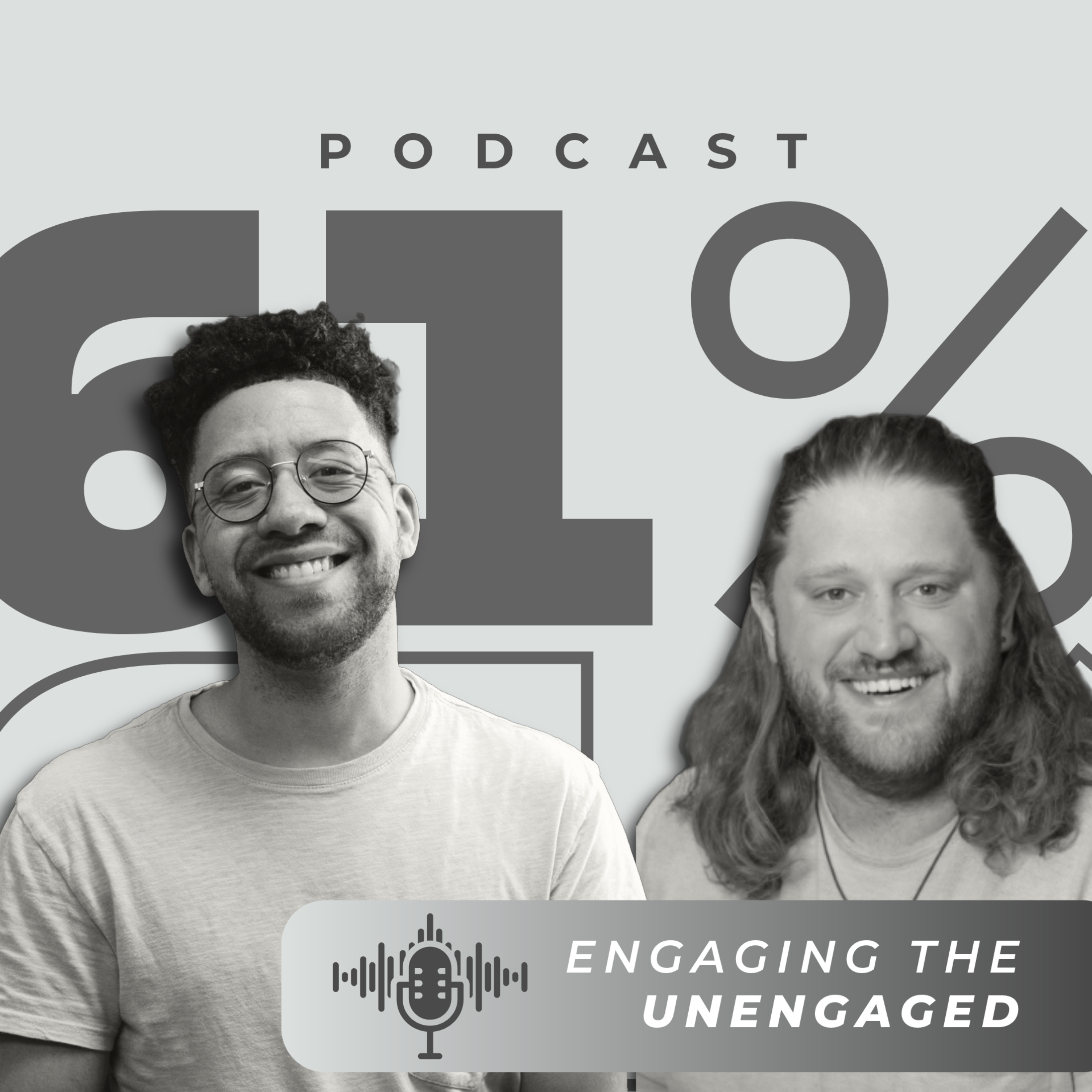
The 61% podcast, launched by Mario and Jordan, aims to engage the 61% of believers who are disengaged from church due to busy lives, cultural shifts, or life transitions. Rather than replacing church attendance, the podcast seeks to deepen connection by redefining engagement as meaningful relationships, service, and spiritual gift use—not just Sunday attendance. Drawing on biblical teachings like the body of Christ and the role of spiritual gifts, the hosts emphasize that disengagement doesn't mean unbelief. The podcast highlights how cultural demands, such as sports schedules or work, impact Christian rhythms, and calls for churches to adapt ministry approaches to be more inclusive. Through real-life stories, guest interviews, and overviews of biblical themes, the podcast offers practical insights into how believers can stay connected in diverse ways. It promotes a community-oriented, flexible model of faith that respects individual realities while honoring the body of Christ. The hosts commit to transparency, research, and ongoing dialogue, ensuring listeners feel supported, informed, and encouraged to find meaningful engagement in their local church or community.
welcome to the 61% podcast where we want to just engage the unengaged my
name is Mario I am Jordan and this is the official launch is it day one day
one episode one episode one how are you feeling about I'm starting I'm really
excited yeah I texted a picture of the setup to my life a little bit ago
did you seem like everyone in the like as I walked in they were like oh I'm
excited you know this is going on yeah yeah it's I don't know it's it's been
obviously we've been talking about it for feels like a year almost now I
think it has been a year yeah it's been a year something we both enjoy and just
chatting it's fun yeah but it's I don't know I think it'll I think it'll be a
fun way to hopefully engage engage the church in a different way yeah yeah
definitely in a needed way too in a needed way because we're very much in a
hot cast driven culture right now yes so I think it'd be very helpful yeah for
a lot of people anyways we'll get a lot more into that but I think because it
is the launch and it is episode one you know I think it probably would be good
for them who are gonna be our future listeners to know who we are yeah if they
don't already yeah most likely a lot of our you know people that we do know
probably listen to it but you know if there's anyone that doesn't know yeah it
could be good just like a background of like who we are where we serve our
role yeah things like that so yeah if you want to go for it yeah so my name is
Jordy I'm the the associate pastor at the Community Alliance Church in Detroit
Lakes Minnesota I've been in this role now for just about three years before
this I I was a church planter in Fargo North Dakota did that for about five
years and that was out of teaching high school math so it is an impressive big
swing there but yeah yeah so I've been in this associate pastoral and that
associate pastor means many different things in different churches so I'm I
do I do more preaching than most associate pastors do which I love and then you
know trying to do some more stuff with small groups Bible studies yeah you know
connecting the community yep I coach tennis just do different things to be
yeah yeah yeah yeah that's then they've been married now but not almost nine
years oh for real yeah it's almost nine years for me too well let's go in May is
when no nine in July so okay okay that was a fun fact we didn't know yeah yeah
we've got two little boys four-year-old and two-year-old nice so yeah yeah that's
good yeah it's good awesome man yeah I'm Mario and I've only recently moved out
here to Minnesota it's like I've been out here as a connections pastor at a
church in Hawley Minnesota people probably have no idea whether that is maybe
not even Detroit like they're not from Minnesota yeah because I never do yeah
and if they're not from like north of Alexandria they'll never know so just
small town near Detroit lakes and I've been there for about going on two
years now in July it would be two years which is kind of crazy to think about and
the role is it's associate but it's very specific to like attending the first
time guests and church assimilation like getting people connected into the
life of the body small groups classes things like that and then I've been
married going on nine years it's my wife Jordan and she we've yeah it's been
finally got a little guy three-year-old and we're loving it we're loving in
Minnesota I'm glad they're making it through the winter got through the winter this
we made it through one yeah this one was brutal this isn't a hard one yeah and I
heard from people in Ohio because I'm from Ohio yeah that it was a brutal one
there too sure so it's like we got a double brutal it was like I commuted to
Detroit lakes from Fargo for a year oh and I think in that whole year there was
one time that I could not get here because of whether yeah I had four
different times I had to turn around this this winter alone and I wasn't
meeting every day just trying to get into the town yeah I don't know this
winter is crazy yeah I was just thinking as you were talking I don't know that
I've ever even told you this but I remember when so Kyle the senior pastor at
York Church was when they were the process of hiring you he told us that you
know we've got a guy he's coming he's coming from Ohio and every time we
talked about he just gives in like you guys are gonna be friends you and Mario
are gonna be along really well you don't know why it's because he's going off
of the SDI oh you're blue and I'm blue that makes it so much sense you just
kept saying it's like you like I know you're gonna get along yeah yeah you's right
you called it and if people don't have any idea what the SDI assessment is
we don't have to go into but it's basically like a personality test thing yeah
blue is people and yeah very very used in our denomination yeah that's all
it's a very common lingo yes in the Christian Missionary yeah yeah so yeah
so like the podcast is called the 61% podcast and I'm sure a lot of people are
like what does that even mean yeah you know what is that obviously it's a
statistic yeah you know but what is that statistic and who who are the 61
percent and I know we've been talking about this yeah like you know like a year
now yeah and I remember we were having the conversation I think it was in my
church yeah in the lobby and you brought the statistic and I think it would be
great for people to just hear you know who are these yeah the 61% yeah so
people as I mentioned I was a math teacher so I can't help but think about things
in numbers sometimes but I've heard this statistic so many times that the
average church attender is in church on 1.7 Sundays a month and so I was thinking
about that 1.7 and I pushed 1.7 out over 12 months yeah and that comes out to
about 39% of Sundays people are or the average church attender is in
church 39% of Sundays yeah and that varies obviously with you know rural
communities in big communities like that's the national average that's not like
our church yeah but we see those trends too you know and and so as we are
thinking about what we want this podcast to be it's we we want people to be
engaged with the church still and people are not it's not necessarily that
the so the 61% is the other side of that 39 so 61% of Sundays people are not
attending church mm-hmm and most of the time it's not just I don't want to mm-hmm
life is busy yeah we've got family and we've got work and we have like it's good
reasons that we're missing church other priorities right right and then we just
our schedules just don't allow for it yeah and I feel that you've probably
heard this too or people get mad you know well why are people coming why aren't
people showing up yeah like we could have that stance or yeah you know I just I
think so much about Paul saying you know becoming all things all people yeah and
just being in the culture right now yeah and if if church is not working as it
is mm-hmm 61% of the time yeah can we do something to engage people in that
61% yeah and that that kind of was our goal I think even as we started
talking about it yeah and then yeah we just kind of we both watched on that
61% yeah yeah yeah I mean it really so after you mentioned it actually looked
this up a couple of times I actually found the the stack oh yeah from Barna
2006 study and it actually had two layers to it almost so I had what you're
talking about what the genuine so these are all genuine Christian like these are
not these are not unbelievers yeah who are like unengaged with their church or
have or don't have a church or don't go to church these are these are believers
and genuine Jesus lovers who love church but just can't fit it in their
schedule yeah yeah is that side and then the the Barna study actually showed
another side of same same 61% that within that group of 61% there are
people who grew up going to church as a teenager sure very much involved in
the church
at least from an attendant standpoint, but ended up just going college and getting
busy or getting a family, making a family, and now they're doing all these
things and they've just kind of gone away, just kind of drifted from like the
life of the church and just kind of like they don't despise it, they don't just
like it, it's just, it's taken a back burner, and there's just other things that
seem more important and more like in front of them, and so I think I think it's
important, as we were talking about I just think it's important that we address
like you're saying like we can either get mad as pastors, and I'd be lying if I
said I haven't been there, like I've served in two different churches, the one
I'm currently at is bigger than the other ones that I've served at, and the
other ones I've served at times had that thought of like man why aren't people
coming, like we're doing everything, it's like what are we doing, and but I never
had that mindset of like oh maybe maybe it's just not, maybe it just doesn't,
this isn't working for the the average busy family, I think it's important to
note like attending church on Sunday is not what makes you a good Christian,
yes, right, attending church is a wonderful thing, and I think you know I've
been thinking a lot this week as we've been preparing for this for this moment,
you know, as we've been preparing for this I've been thinking a lot like our hope
with this podcast is also, or it's not that people would, oh I'm gonna watch that
podcast instead of going to church, yeah, yeah, this is not to replace church,
no, in any way, no, but if this can create a moment of, you know, to find the
churches it's the body, yeah, the body coming together, and so if this can, you
know, this can spark a conversation that you have with someone, you know, this
can encourage you in some way to maybe you can't make it on Sunday morning, but
you can, you know, get plugged into, you know, Tuesday Bible, so you're, or
something like something that's going on in the church, yeah, to engage, not
necessarily attend, you know, the service, yeah, if you can't, yeah, but do
something to want to at least engage or feel that you can engage in some way,
so that's one of the one of the questions I think we'll get to today is, is what
does engagement actually mean? What do we mean when we talk about engaging with
the church? Yeah, yeah, yeah, yeah, so I mean like, you know, we've given our
opinions of like, you know, this that is important, these people are important,
you know, these are people made in the image of God who love Jesus, and when we
look at the Bible, specifically the New Testament, but all of the Bible
talking about community and how God has created us as humans, to be in
community and to flourish in a community, like why why is it important for
these people, the 61% of people are unengaged in that in the life in a sense
that they would, they would probably not say or define their like church
experience as I feel connected, yeah, to the people in my church, maybe they
attend or maybe show up to some event or but they don't necessarily feel
connected to the people, you know, like what does the Bible have to say kind of
about like why it's so important for this to be dealt with, you know, why is it
so important for us to feel connected and be connected, yeah, engaged, which
will define, but I mean like, you know, yeah, that's the thing I think about all the
time is the, you know, we talk about the the A-Pest, the like he has equipped us
to be apostles, prophets, evangelists, shepherds, teachers, and that is
certainly not, I know I got those five right, I didn't quote them, but and those
things for the education of the church, yeah, but but when you think about those
five things, the five things that we have been created to be, you can't do any
of those things by yourself, you can't teach nobody, right, you can't leave
nobody, there's one I was a teacher whenever my students were mad and this
is maybe not the best, but I would tell them all the time is like if you're
actually mad at me, yeah, the fastest way to get me out of here is to stop
coming, just stop coming to my class, yeah, because if you stop coming I'm not
teaching anybody, I'm not doing my job, because I'm not, I can't teach to an empty
room, you know, but but that applies to this, like we can't lead and you know I
think all those things that can be easy to say well I'm not a pastor, I'm not a
shepherd, I'm not like, but we lead, yeah, yeah, like, yeah, we individually are
called first and foremost to our family, you know, we shepherd within our
family, yeah, and we teach if we're in a Bible study, we're teaching amongst the
crowd, you know, like it's not just pastors, it is, yeah, the saints, it's yeah,
the saints, and even like, you know, when Jesus commissions his 12 apostles, but
also us, Matthew 28, you know, one of the parts that I think a lot of people skip
over, you know, it's just go out and make disciples of all nations, but a part
of that is teaching them to obey everything that I've commanded you to do, you
know, he's not just telling pastors to go out and make disciples and then teach
he's telling every disciple to teach other people how to be a disciple and
write, you know, what he's commanded, and so I mean, you're right, like it's not,
this is for all of the Christians, all of the people that would say that
they're a follower of Jesus, yeah, I think the other scripture that really comes
to my mind in terms of like, why it's important for us to be connected and why
the 61% stat is actually concerning is because, you know, when Paul talks in
Corinthians, I think it's chapter 12, 1 Corinthians 12, about the body, Christ,
that we're the body of Christ, yeah, he's using very intimate language with like,
you know, when one body suffers, another member suffers, and one is joyful,
another one is joyful, and one hurts, another one hurts, it's this like
interconnectedness of like, I cannot, my arm cannot live apart from my shoulder,
yeah, yeah, it's like if it is severed, yeah, it will die, yeah, yeah, yeah,
I mean, it's a very vivid imagery, but it's like, that's why it's, in me, it's so
concerning of like, okay, we want the people who feel like they can't engage to
know that there is possibility to do it, like God has given us possibility,
we're in whatever capacity that you can, you know, it's not a, want you to be
doing all of the church things because that's what I think a lot of people think
about, like, yeah, for sure, like, I can't go to Bible study and I can't go to
service, I can't go to that event, and I can't, you know, yeah, whatever the case
but, yeah, and you don't, you don't need to do all of it, no, you don't engage, just
not doing everything, I would, I would argue you shouldn't do everything, I would
probably best not, I don't do everything, no, I feel the pressure to, yeah, but I
don't, yeah, so you mentioned, you know, engagement, you know, what does like, so we
want 61% of Christians who are just engaged to be engaged, so what, what does
that mean, yeah, you know, we're saying like, maybe it doesn't necessarily mean
attending church, yeah, so what does a, and this, I think it'd be good coming
from pastors, like, what is a genuine and realistic definition of engagement?
Yeah, and disengagement, so maybe we'll just start with engagement. The, the way
that I've been thinking about it is, yeah, I've been challenging leaders in our
church to rethink about the way we define attendance of church, because, you know,
if someone is in attending Sunday morning, yeah, but they are coming to, you know,
we have Thursday morning Bible studies, yeah, they are a part of ministry
happening from our church, right? And, and, and I think we get so focused on what
that Sunday morning number is, yeah, but we miss the point that there is, like
Christ focused engagement happening, yeah, within the ministry, within the
ministry, yeah, and, you know, so we do like, we do a mens breakfast, we have
mens breakfast coming up this weekend, yeah, and, you know, a question I ask the
men leading that all the time is, you know, if they're not coming to, like,
[BLANK_AUDIO]
think men's breakfast is good for them. If they're coming on Sunday or not. Well, of course,
we do. Yeah. Well, then invite them to men's breakfast. They don't have to come on Sunday
morning first. Yeah. And start off going to something simple. And again, I hope that Sunday
morning becomes something that people will want to attend. Yeah. Yeah. But if you can't,
you know, and I mean, this week, we're recording this the week before Easter. It's only week. Yeah.
Yeah. Yeah. And so you think about this weekend, like we have men's breakfast on Saturday
in between good Friday and Easter. And that's not always the case. It just just landed there.
But so Easter Sunday people travel, right? Yeah. People are going to see family. So if you can't be
here Sunday morning, yeah, it doesn't matter. Yeah. Yeah. Like if you can't make it to the Easter
service. Yeah. Are you disengaged? You know, are you unengaged? Yeah. And and that's the
was again, the we're not trying to get to our purpose. And this is not trying to reach those
who are not going to church. Yeah. Our purpose is to encourage people to be engaged in some way.
And and so that's just one of one of the many ways that we talk. Yeah. But it's, you know,
engagement is being connected to the body in some way. You know, it's like, you know,
to use your example of the arms. Like if you put your arm in a sling,
sometimes it has to be in a sling, right? But if you just choose to have your arm in a sling,
it's it's it's connected, but it's not engaged. Yeah. It's not doing. It's not doing. It's not
functioning. Yeah. And so we want we want members of the body to function as they have been created.
Yeah. As God has created them to function. And I also, I've been talking so long on this now.
But but I encourage people so often that the best way to discover what your gifts are,
the best way to discover what your function in the church is, is to be in the church, right?
It sounds simple. Yeah. Because it is. Yeah. It is simple. And I mean, and then I'm encouraging
people to like, if you see a gift, call it out. Like tell people tell people what they're gifted in
and encourage people that way. Yeah. You know, there's things that I, I mean, truthfully, I just
didn't know that I was gifted in that way. Because it was just, you know, normal to me or it was just like,
yeah, you know, I've just always loved just always do. Yeah. Or you know, it's like kind of the
norm in my family or whatever. And then I get outside of that context. And people are like, hey,
like you like being evangelism. That's the example that I think of.
Or I just, like, it's just so naturally like faith conversations come up. Yeah.
I don't necessarily try. It's just a part of, it's just a part of how you engage and people.
And so that it can be really easy for me to like, well, just go tell people. But,
but I believe that is a gifting that I have where it is just, it's natural for me.
Yeah. Yeah. Where there are some other things in the church that I'm clearly not gifted in.
Yeah. Yeah. And, you know, anyway, I have rambling at this.
No, I think it's good because, you know, when you talk about like a function in the church,
you know, and I think to, you know, defining church for people is like, you know,
it's more than just a building. Yeah. Like again, there's going to be this 12 like God has made us to be the
body of Christ here on earth. The pot, the body, the representation of Jesus here. I mean,
it's a big deal. It's like, yeah. And so I think even within that same chapter, he talks about,
you know, because we are the body of Christ and because every member has a function,
the Holy Spirit has given every believer a gift. And I don't think a lot of people believe that.
Yeah. Right. I think they think like, oh, they're really gifted in that. Or, you know,
I like this thing. And I don't really see that as like a gift of the Holy Spirit. Maybe it's a
talent or, yeah, or maybe, you know, I don't know, I'm very good with administrative stuff.
But is that a gift of the Holy Spirit? I don't know. And it is, you know, absolutely. And so I,
I think like, that's what I'm thinking when I'm thinking engagement. Yeah. Like someone who is
disengaged in church or unengaged is someone who, even if they attend every church service,
but they don't have any type of personal connection with people. Yeah.
To where they are pouring into another person's life or serving another person with what God has
given them. Yeah. To do that with, you know. And so, like, it can be as simple, you know,
if your gift is helps, we got this guy at our church. We call him the utility guy because his
gift is helps. And so whenever someone needs help with anything, yeah, they're always like,
hey, Harley, like, can you help with this? And he will immediately, like, just be on it and he
will support you and he will help and he will do it. And, you know, it's like that's engagement.
Yeah. Yeah. Even if he doesn't, I mean, he's there every Sunday, but say like he wasn't there
at the same amount of time, like the 61% is not attending a church. He would still be engaged
in the body because he is so utilizing his gift to serve people to pour into the body of Christ.
And, you know, he leads in some capacities with that stuff. And so that's what I'm thinking about
when I'm thinking engagement, disengagement is the biblical sense of like, are you connected to the
body? Where are you? Yeah. Right. You know, over there. I'm hesitating because I'm not a 100%
shirt. This is actually the term or the, not the term, but the name of this stuff. But I want
to say it's Dunbar's number. Okay. Have you heard of Dunbar's or familiar with that at all? No.
So I hope this is correct. And if it's wrong, we'll put a comment on it. We'll fact check it down.
But whatever this is called, I'm confident in the research. Yeah. But I think it's Dunbar's number.
It talks about like the number is 500. Okay. And 500 represents the number of people that you are
able to have like a casual acquaintance ship with. Oh, gotcha. Okay. Like you can maintain like 500
people. Like you know their name pretty confidently. Or if it's sometimes he has a tape,
but pretty confident. Yeah. But you see him at the grocery store. Hello. How are you doing? Good.
Yeah. You got what are you going to move on or whatever it is.
casual interaction. And then it goes down from there to like, you have, you know, 300 people that
like, or 300. I think it's 100 or 150 people maybe. If you see him, you'd stop and you'd have a
slightly longer conversation. Oh, gotcha. And then 50 people that you are like 50 people that you
would maybe hope to like, have a cup of coffee with or a gotcha again. Yeah. Roughly. Roughly these
numbers. And then it works its way down to like, you're like inner circle, your closest friends
of like two or three. And then there's, you know, maybe eight more just outside of that that are
really tight also. Yeah. But so if we, if the church is just part of that 500,
it's just the people we say hi to. Yeah. I don't think we're engaged in church the right way.
Yeah. I would go so far. I say that's not even we would not doing it biblically. Yeah. Right.
In the biblical sense of life. But I think the church has to be, you know, we're not looking for
everybody in our church to be. Mm hmm. That's that circle of two or three. Yeah.
Yeah. That circle of two or three might not even be people in the church. Yeah. That's okay.
Yeah. That's not what we're trying to get to. No. No. Yeah. It's, but if there is no,
if that circle doesn't go from 500 down. Yeah. When you're inside the body of Christ,
we're missing something. Yeah. Absolutely. And I think like so at our church, I think a year is
two, but like, you know, small groups is a big thing. And again, I've been in two churches where
small groups didn't exist. And so like I've seen the difference. And like small groups are hard
to maintain. It's hard to find people to lead. You know, it's always difficult to keep a good
number of small groups or whatever. But like from a, you know, how do we trickle this down
practically, you know, say you have someone who's a part of the 61% and they're like, you know,
my kid is in four sports and my other kid is in three other sports and they're not
I work 80 hours a week and my wife works and you know, we just can't make it to every Sunday.
Maybe we can make it to the big ones or building a house.
We're building a house, you know, but during the week, not a Sunday, I can make it to a small group.
Because I can bring my whole family, I can go after work, we can all go like when, you know,
the day that there's no sports or after sports or whatever the case.
And in that small group, that's the trickle-down version of, you know, like what you're saying.
And even in that small group, it's, again, would love it to be, but it doesn't even necessarily
have to be like, our church has a like continuing, like every Tuesday morning.
Yeah, yeah, yeah. It can be, I'm going to call my friend as I'm driving to work.
Yeah, yeah, on Wednesday mornings, very simple or whatever, you know, like I'm going to have,
I'm going to have a connection point to the body of Christ at some point this week.
Yeah, you know, and again, we want it to be.
Yeah, we would love for it to be Sunday mornings.
We would love for it to be small groups, like put on by the church.
Yeah, but more than anything, like I have people apologize to me.
They'll come up like, "I'm so sorry I've been gone."
Yeah, I know that's interesting trickle-down, but like also we went for a walk yesterday.
Yeah, yeah, like there's engagement that's like I'm not, I'm not worried about you.
Yeah, not worried about your family.
Yeah, and I think a lot of people probably are like worried that like,
this is like one of the things in our church that we're really trying to like
change where a lot of people are coming from a very, and there's no, this, you know,
this isn't a dig against any traditional way of church, you know, that people that we have,
like Lutheran or Piscopalian or whatever, but like a lot of people coming from a more traditional
way of doing like liturgical church where like attendance on a Sunday was seen as, or can be seen.
It's not the case in every liturgical church, but can be seen as like this is something is wrong
if you miss this. Yeah, it's like something's off, you know, you're not, you're not spiritually maybe
where you should be to to the point where you've made this like the main priority. Yeah,
where it's like in a very realistic sense, you know, a person could love Jesus very much,
have a very intimate relationship with them, disciple their family very well. Yeah,
but the, just the normal rhythm of a Sunday morning at this particular time,
just doesn't practically work every Sunday for my family, for my job or for whatever they can.
I mean, there was a guy who wants to come to our church and he wants to be in cage on a Sunday morning.
He's from Fargo and he works at Amazon and he and he he works on Sundays and he was telling me like,
I would love to get that Sunday off, but I have to wait until someone else's schedule
clears up for them to take my Sunday and I can take their other day. And so he's unable to
like come on Sundays because he has to, you know, and that's his living. And you know, so it's like
what I'm going to make him feel like a terrible Christian or something because he can't come.
It's like, so how do we, how do we, I would say he's a part of the 61% and so how do we engage him
and provide opportunities for him and show him how, and people like him, how can he continue to
still be engaged in a local body, whether it's our church or different church, you know, it's
closer or whatever. If you think about even culture right now, you know, and you grew up in Ohio,
so I don't know exactly culture in Ohio. But I around here like, when I was in, you know,
middle school, high school, like Wednesday mornings were, or I'm sorry, Wednesday nights were church
nights. Big thing. Nothing happened. Nothing else happens Wednesday nights. Yeah.
But and I've been coaching for the last 10 years and I've seen a shift over the last 10 years of
like sports games are scheduled on Wednesdays now. Yeah. And yeah, like the, you know, practices,
there was a, I think it was the school policy that practice had to be done by 530 on Wednesdays.
Wow. But now, now that's not the case at all. I mean, obviously, kids need to leave.
Yeah. And of course, I'm a pastor, so I don't know if every church, every sport is a site,
but kids on our team need to leave like, yeah, go to church baby. Yeah. But then a lot of it is like,
oh, but then there's this pressure for the kids that like, oh, not, I'm not going to be as good.
Yeah. Because I'm missing out on like training or I'm missing out on, you know, and so then
there's like pressure on both sides of like, I can choose to either leave and engage in the church
Wednesday nights, whatever it is youth group, or I can stay and be really, really good at my sport
and keep up with the team. And that's a big, you know, I even think it's like,
if the Vikings played in London and Ireland this year. And so two weeks in a row, Vikings kicked off
at 9 a.m. on Sunday morning. That again did not happen. Yeah. You know, and I don't think the NFL
is anti-church. I don't think I highly doubt there even thinking about it. I don't think I don't
they don't care. Yeah, that's not the stance I'm trying to take. No, no, no, no, no. But, you know,
but just culture, again, culture is shifting away from the priority of that. Yeah. And I mean, I've,
I mean, and Cleveland, it was, you know, sports was big, but it wasn't as as big as it is here. Sure.
You know, where it's like, yeah, like I've had multiple parents come up to me and say like, we
wouldn't want to come on Sunday. But I'm so frustrated with my kids team because they're,
they're scheduling on a Sunday morning at 9 a.m. You know, during service. It's like, you know,
it's just like, I just feel the frustration of a believer who wants to engage and feels like
they can't. Yeah. Because of those priorities, you know. And so, so yeah, so I mean, I think,
I think we've kind of clarified a lot with that. And hopefully that helps people understand
a little bit of like what we mean by like engagement, disengagement, why it's so important that like
the 61% experience that and are in that. So we're not trying to, we don't want to shame or guilt
someone that is not able to be in church. And we are not encouraging those who are in church
to be in church less. Exactly. That's a good way of finding the balance.
Yeah. So, you know, like I think people now kind of get a little bit of a grasp of like what,
you know, what this podcast is, who it's for. And what we're hoping to achieve with it.
And I think you've said something earlier that I do want to make clear again that like the
podcast is not seeking, like we're not seeking as pastors to replace, you know, the local church
in this, like, oh, if you can't make it to church, just listen to a podcast. And that's the extent
of your, you know, your community and your connection and your engagement. I think specifically
modeled by the fact that we work at different churches. Yeah. This can't. It's not a church.
Yeah. Exactly. We can't. And really, you know, our hope is to really just almost be like,
I thought of this term like a jumping pad. Yeah. Yeah. You know, like we want people to understand
that why it's important that they're engaged and what that means. What are the, what are the
opportunities? You know, coming from genuine real pastors who are pastoring churches that feel
with people that experience this or in that, you know. And then for them, wherever they're at,
like going in and just finding that place for them in the local church and whatever capacity
that looks like and what is available to them, wherever they live. But in terms of the podcast,
like, as people tune in, what can people like really, I guess, hope or look forward to hearing
about, like, you know, just giving people a little taste of like the topics or stuff. Like,
what are we, what are we going to talk about? Yeah. You know, there's one of the things we both,
we both certainly want to do is, is have guests on. And the guests that we have on, like,
you know, we talk about, we've talked about having people on that, like, you, we talk,
community. We know pastors that are so passionate about community. Right? Before we started recording,
we talked about how, you know, there's a kind of a trend of kids like leading the family into
the church. Yeah. And so we want to have like children's pastors and you have pastors.
You know, worship pastor, like we want to talk to people in the church as to, you know,
what they're doing and maybe even what engagement means to them, you know.
And then, and then beyond that, you know, we've talked about doing not necessarily studies
of the Bible, but maybe overviews of, yeah. Overviews of books of the Bible or kind of themes that,
you know, if you're not able to be in church as, you know, we talk about a launching pad of like,
yeah. Hopefully this will help you as you study the Bible. Exactly. As you study this,
you may be a foundation to build off of. Yeah. Yeah. And so that, you know, you have that phone
call with your friend or whatever it is. Like the shrewd, hey, this is what I've been studying. Yeah.
Yeah. Ecclesiastes blowing down. Yeah. Yeah. Yeah. Yeah. I think, you know, when we're talking
about engagement, disengagement, wanting to like get people to catapult into the local church,
it's like, I think about talking about the things that they're missing out on. Yeah. You know,
by being unengaged, you know, what are you missing out on? Sure. And some of the things that come
to mind are things like, yeah, like overview of, you know, biblical understanding of things,
you know, understanding specific passages or I think a big one and, you know, a big
topic arena, I guess you could say in our culture that I think a lot of people are either asking
or engaging in that the church doesn't necessarily always engage in is like cultural topics. Sure.
Yeah. Wow. Like why the Bible matters in the context of other cultural, different
dynamics and for sure, things that the culture is talking about or presenting to people. Yeah.
And, you know, I think that's important too. Yeah. Applying a biblical worldview to that's
good way to everybody. Yeah. Yeah. Yeah. And so stuff like that, you know, the guest thing, you know,
yeah, just having guests on and just talking about their ministries or talk about, you know,
even just their engagement in a local church, you know, like, what does it look like for you?
What do you do? You know, yeah. What is the hurdle of, you know, having a family and like,
what sacrifices do you have to make in order to make that happen? And things like that.
Yeah. And I think there's something so good to you about, you know, we, so we work at different
churches. I mean, one of the things that I'm excited about is like through this process, people
and in the church that I work at will be shepherded by you and hopefully vice versa a little bit too.
Definitely. But then beyond that, like, you know, we've got friends of pastor in the cities and we've
got friends that pastor in South Dakota and I mean, I mean, it's just all over. I mean, it's all over
and we know missionaries and you know, things like that. Yeah. And so people that are that are
shepherding all over the place that that through this platform, yeah, can shepherd our people too.
You know, like, it doesn't have to stay within the walls. Yeah. As again, what is the church?
The church is not the four walls of your building. Yeah. It's the body, right? It's the body coming
together. And so we can bring to other, I don't know how to end that well. That other people
fall in the part in my brain. And just other people who are, you know, doing what we're doing on the
platform here, just in a different context, a different way. Maybe they're not a pastor, but they
they're business owner, but they're very engaged in like talking to their co-workers about Jesus
or they, you know, I've met people who hold Bible studies in their office before work, you know,
things like that. And it's like, you know, getting people to hear and like, oh, it is possible. Yeah.
Like it is possible to be an engaged Christian and have a busy life. Yeah. Yeah. It is like,
it's possible. Yeah. The apostles did it. Yeah. I can do it. Yeah. Yeah. I knew that life
would be this way. He did. He did. And I mean, obviously, you know, we're not endorsing, you know,
just run yourself to the ground and no, just stay busy, but it's like there's, you know, there's
a time for rest and, you know, yeah, the Bible applies today still. Mm-hmm. And
there's things about culture that we just can't fix, right? We can pray and God can do whatever
God wants to do, right? But if God does not change those things, culture just still matters, right?
Yeah. They will just keep going. And I think the church needs to definitely not adapt to the culture,
but like, be able to change the ministry approaches based on the flow of the culture in order to
reach them when things change so quickly. Yeah. I mean, because 10 years from now,
who knows? Yeah. Who knows what the culture is going to be like and what is going to be the
most prioritizing thing, you know, for people or the church should be able to, like, be able to
create space for people no matter what is happening in the culture. Yeah. And so, yeah. I mean,
I feel like that's really just the, the gist of what we want to do in the platform. So, yeah. And
as, as you're listening to it, you're maybe hearing, like, I feel like there's just so many different
things that we could have expounded so much more on. I know. Yeah. You know, just like, I just want to
jump into it. But not yet. Not in the first episode. You got to say what
to give bed. I don't want to give too much. You know, this can't be, we're not going to do seven hours
every time. But yeah, so hopefully you kind of hear the heart and hear the, you know, where we're
hoping some of this will go. And, and also certainly tell us. Yeah. What do you want to hear about?
Yes. But we might know experts. Yeah. And we can research, you know, we can find answers to
some things maybe, but yeah. Or, or we can just talk about how we are thinking about it. Yeah.
We bring it into discussion. Yeah. I mean, it's like, I mean, I got no problem saying, I don't know.
Yeah. Sure. Let's figure it out like. Yeah. Let's process it during, during the podcast.
You know, out loud. So yeah, I mean, if there's any, any questions or any topics or anything's
like that in the realm of like engagement or how do I do this or what does it look like? You know,
just definitely send the email. Yeah. And definitely like subscribe to the podcast. You know,
whatever platform you're on YouTube or Spotify or whatever it is. You know, yeah. That way,
you're notified of the. Yeah. When the next episode is released. Yeah. The wonder. I think a lot
about, you know, we're trying to wrap it up, not bring it up this new thing, but
there's people about the, you know, people come to church on Sundays. And, you know,
the Sunday that I'm preaching, you know, I stand up and I talk about this passage for 30 minutes.
But it's taken me a few weeks of time to get that couple hours together, you know. And I have the
benefit of co-workers who are thinking about the same things all day long. And I have benefit of
all of the books in my office. You know, like, it's not a, I don't get the topic as I'm walking up
there. Yeah. And then talk up for 30 minutes on it, like on it. Yeah. That's not how, you know,
it usually works. Yeah. I don't want to come across, like, I think I'm an expert on anything,
because I'm not. Yeah. I don't. Yeah. It would be huge live. We say that we were. And so the
point of bringing that up is like, you know, we might come to a topic that we don't know that much
on. Yeah. But I know we're going to research. Oh, yeah, definitely. Like for sure. And if we
present something on the podcast that, you know, question comes up the episode before and then,
yeah, you know, we come back from the next episode and have some answers on it. Because we really
for sure, you know, we weren't pretending to not. Yeah. And if there's ever anything that we share,
you know, for example, in this, in this current episode, you know, in the description, I am going
to put the link to the Barna study. Oh, yeah. So that people can read, you know, and dumb bars
number or whatever. Whatever it is. We'll find it. But, you know, just putting that kind of resource
out there for people, you know, whenever we talk about book overviews or we talk about whatever
else someone brings up, you know, just providing whatever material we can to like help people to be
able to have whatever, not only have, but also confirm what we're even saying, you know, that's
one of the things as a pastor. I'm very passionate about it. I was like, I want to just take my word
for it. Like read your bio. Yeah. Check my work. And, you know, yeah. Anyways, anyways,
Anyway, I think it's time to wrap up, maybe it's over.
So thank you guys for watching and we'll be back with another episode soon. Yeah, thank you
Podcast Summary
Key Points:
The podcast addresses the 61% statistic—believers who are unengaged with church due to busy schedules, life transitions, or cultural shifts—highlighting that engagement isn't just attendance but connection and participation.
Engagement is defined biblically as being connected to the body of Christ through personal relationships, service, and the use of spiritual gifts, not by attending every Sunday service.
The 61% includes both those who can’t attend due to practical demands and those who drifted from church life in adolescence, emphasizing that disengagement doesn’t equate to unbelief.
Church should not be seen as a rigid institution but as a living body where members function in diverse roles, with small groups and weekly connections serving as accessible entry points.
The podcast aims to inspire, not replace, church attendance by providing practical, relatable conversations about community, culture, and spiritual gifts in everyday life.
It emphasizes that cultural shifts—like sports schedules or work demands—impact faith schedules, and churches must adapt to remain relevant without shaming or excluding people.
Episodes will feature pastors and church leaders sharing real experiences of engagement, community, and ministry in different contexts, including urban, rural, and volunteer-based settings.
The podcast values transparency, admitting when it doesn’t have all the answers and committing to research, dialogue, and resource-sharing to foster trust and deeper understanding.
Summary:
The 61% podcast, launched by Mario and Jordan, aims to engage the 61% of believers who are disengaged from church due to busy lives, cultural shifts, or life transitions. Rather than replacing church attendance, the podcast seeks to deepen connection by redefining engagement as meaningful relationships, service, and spiritual gift use—not just Sunday attendance. Drawing on biblical teachings like the body of Christ and the role of spiritual gifts, the hosts emphasize that disengagement doesn't mean unbelief.
The podcast highlights how cultural demands, such as sports schedules or work, impact Christian rhythms, and calls for churches to adapt ministry approaches to be more inclusive. Through real-life stories, guest interviews, and overviews of biblical themes, the podcast offers practical insights into how believers can stay connected in diverse ways. It promotes a community-oriented, flexible model of faith that respects individual realities while honoring the body of Christ.
The hosts commit to transparency, research, and ongoing dialogue, ensuring listeners feel supported, informed, and encouraged to find meaningful engagement in their local church or community.
FAQs
The 61% refers to the percentage of Christians who are not attending church on Sundays, based on a Barna study from 2006. It represents believers who are genuine in their faith but struggle to fit church into their busy lives.
The podcast aims to encourage Christians to feel connected to their church community in meaningful ways, even if they can't attend Sunday services, by emphasizing connection, service, and spiritual growth outside of traditional attendance.
Engagement means being connected to the body of Christ through personal relationships, serving others with one's gifts, and participating in church life in ways that fit individual schedules—such as small groups, Bible studies, or daily conversations.
No, the podcast is not meant to replace church. It’s designed as a 'jumping pad' to inspire deeper connection with local church communities and to help people find meaningful ways to be involved in church life.
Each believer is given spiritual gifts by the Holy Spirit, and engagement happens when people use these gifts to serve and support others in the church community, regardless of whether they attend services regularly.
The podcast acknowledges how modern culture—like work schedules, sports, and family commitments—can make attending church difficult, and encourages churches to adapt their ministries to meet people where they are.
Chat with AI
Loading...
Pro features
Go deeper with this episode
Unlock creator-grade tools that turn any transcript into show notes and subtitle files.
 PodcastTranscript AI