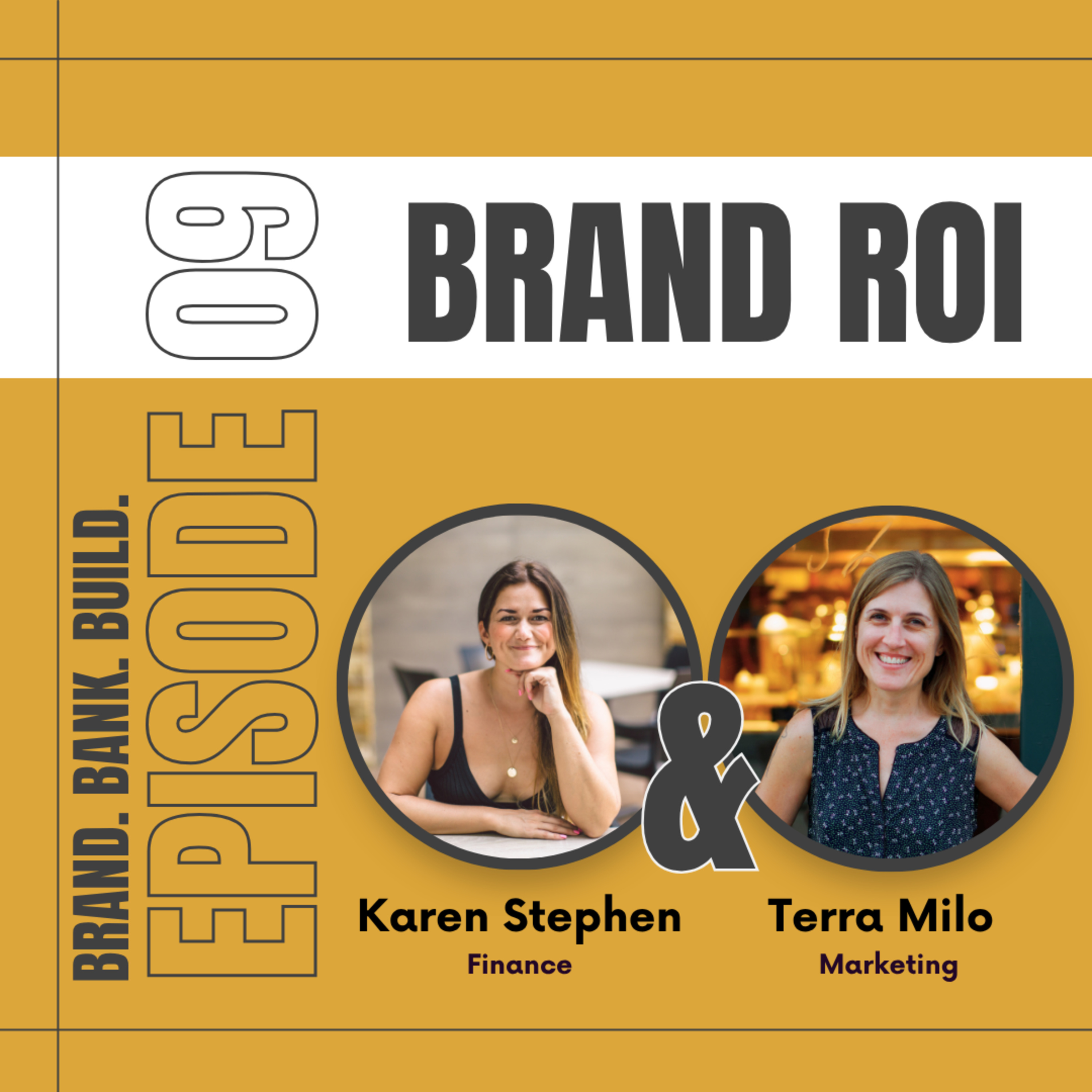
Ep. 9 Brand Is a Feeling: Why Cutting Brand Spend Costs You More
38m 20s
En este episodio del podcast Brand Bank Build, Tara y Karen discuten la importancia crítica de la inversión en marca y su frecuente subestimación, especialmente desde el área financiera. Karen, desde la perspectiva financiera, destaca que el presupuesto de marca suele ser el primero en recortarse debido a la dificultad de cuantificar su retorno de la inversión (ROI). Utiliza el ejemplo de Coca-Cola, que durante la pandemia de COVID-19 redujo significativamente su gasto en marca, lo que resultó en una pérdida de participación de mercado frente a competidores como Pepsi que mantuvieron su inversión. Tara explica que una marca va más allá de los elementos visuales; incluye la voz, la consistencia y la experiencia emocional que se ofrece al consumidor. Ambas coinciden en que, aunque costosos y a veces imperceptibles para los no expertos, los rediseños de marca se basan en una investigación profunda en psicología del consumidor y son esenciales para mantenerse relevante. Concluyen que, en la era actual, construir una marca es más accesible y requiere un compromiso continuo, ya que su impacto, aunque no siempre inmediato, es fundamental para el éxito sostenible del negocio.
Transcription
6272 Words, 34025 Characters
Welcome to Brand Bank Build, the podcast about how to build a strong sustainable finance and marketing mindset to grow your business. I'm Tara and I'll talk about all things branding and marketing. I'm Karen and I'll talk all things finance and money. We'll overlap because we both have insights on how to grow a strong business and together we have over 25 years experience of growing and advising businesses. We do. I'm excited to get into today's episode. But first, as usual, the information shared in this podcast is for educational and informational purposes only and should not be considered legal, tax, accounting or financial advice. Always consult with a qualified professional before making any decisions about your business. So Karen, what are we talking about today? Today we're talking about a topic that's pretty close to my chest and it's all about branding and the return on investment with branding because as someone that works in the finance side of the business, there's often a constant battle between marketing and financial budgets and it's never more evident than in the branding spend of an organization. The brand spend is just always this line of the budget that gets caught immediately. It's always the spend that gets sacrificed. It's constantly being something that in the businesses that I've supported, there's someone in the larger organizations that I used to work on. I should say that would be the amount that they would go to to save money. And that was truly because a lot of people in finance didn't understand the return on investment that brand represents. A lot of businesses still to this day don't understand the full impact of working on a brand and actually investing into a brand. And that's what I wanted to like I like today and giving your experience in branding organizations and how important that can be I thought would be a worthwhile conversation today. I thought that was so cool then. This is your focus is talking about the importance of branding. Even though you're the finance person, you know that this is such a big priority for businesses. And it really is. So I'm really glad that you want to talk about this. I think it comes from years of working in businesses and supporting the marketing department and having to advocate for the necessity of the brand budget and observing. Observing are downfall when we didn't invest in that area. I don't get me wrong, those were large, you know, we're talking millions of pounds that we were spending on brands. But the level, the level of brand you can get for the spend that you can get. It really is significant in those large organizations. So I'm not going to use the examples of the ones that I worked for for confidentiality reasons. But there are some statistics around when you drop that brand spend, really the impact that it has on your business. Now I think one that really stands out to me is Coca-Cola. Now I know it like we're not necessarily a big fan. Coca-Cola. But in 2020, they significantly reduced their ad spend, specifically on like the branding side of things. And it had a direct impact to the market share that they had in the market over sort of 2020, 2021. During COVID, basically Pepsi maintained and increased its marketing investment and gained the upper hand during that period. And I know these are brands that people think of that, you know, that they almost don't need to spend any more money on branding because they're just so commonly known. But believe you me, if they stop spending on branding, if they stop making those financial decisions, you would, as a consumer, you would notice it. While their revenue will notice it too, because it's one of the things I can imagine that Coca-Cola stopped doing its Christmas ad, right? Like, yeah. If that would ruffle feathers. And it were actually like, because it's so significant in the first year that they did it, it would probably generate a lot of PR. All right. I was like, yeah, rep or cushions. But they stopped doing it for two years. It's gone. That's it. And it's no longer, like Coca-Cola is no longer associated with Christmas. Just from, I'd say two years of not doing that. And people think that brand spend is sort of like an optional ad on. When actually, if you can get a brand that hits, it's worth keeping that investment off and going. And the large organizations that I've worked with, they just lean on the fact that they did invest maybe a couple of years ago, significantly in brand. And then they caught it. And the thing that happens is that they might not see the repercussions immediately, because this is, and this is the difficulty. No one ever can fully understand the return on investment when it comes to brand. They might not see it immediately, but they will see it over the next few years. And I guess it just worked with too many amazing marketing directors that have been able to break this down for me. And that I've witnessed this happen in organizations where they just stopped spending. And that's what I'm passionate about it. Because if you don't think about brand, everything else in your marketing will effectively fall apart. Does that make sense? It does. And I'm glad that you brought up Coca-Cola, even though we don't love them, but like we all know the Coca-Cola brand. So it's wild to see that if they don't continue to spend on that brand and keep them top of mind for people, they will see that fall in the market share. Like you said, they had a reduction in net revenues of 11%. That's insane. That's so much. And during COVID, when we're all like the whole world was turned upside down, you would think, I don't know, maybe we needed some consistency in something in life. And if Coca-Cola wasn't providing that, they're going to see the impact. I don't know. It's just one of those things that I think that organizations don't necessarily notice that the consistency is key when it comes to brand. I think I mean, I'm definitely not sitting here thinking that I could advise Coke on this. I'm pretty sure they know what they're doing, but they made a decision. And I know I could put hand on my heart like that was from the finance department, right? Was oh, it's COVID. We need to save money like because I don't know how their sales would have really been impacted during COVID as significantly as any other apart from actually a tell a lie. They do a lot of wholesale. So all the bars in the restaurants, a lot of them are Coke, Coca-Cola, orientate it. So that's a huge part of their revenue. And as soon as they're not actually generating that revenue for Coca-Cola, they needed to save money. And the immediate one to go to is the ads from the marketing investment brand. And yeah, like you cut that out and it will have an impact on revenue. Now, don't know how directly correlated those things could be because there would have been other impacts because of COVID. But yeah, brand can be a big thing. And that's that's another piece of the puzzle with a company like Coca-Cola. And it's not so evident in Europe, depending on where our listeners are from. But having been to the US and, you know, spent time there, there's bars in restaurants that only have Coca-Cola, right, as opposed to Pepsi. We do have that in Europe to a degree, but it's not as hardcore. Whereas there's just so many restaurants that are like, oh, we're Coca-Cola only. And I think that's an element of their brand that wouldn't have been so clear in 2020, 2021 when that happened. Yeah, I guess like you're the marketing expert here. Tara, and we're speaking about Coca-Cola as an example, but everybody knows what Coca-Cola branding looks like. What would you say is like important in a brand? What does branding even mean? What does it represent in a company? Yeah, it's a good question. I mean, the most obvious things are the fonts and the colors and kind of the look and feel. The brand is like the vibe or the way that you feel when you think about a company. But a lot of it is voice. And that's the hardest part to get right is to have a brand voice. There are some really cool companies that have a distinct brand voice like Oatly. You see their ads and their copy is really kind of sassy and bold. And that's a brand voice. And they have to commit to that. Like, imagine if they put out something really bold and that says like milk is for babies, you know, and then next week they're like, well, just try it if you want to. It's fine. You don't really have to try it. You know, like that brand voice should be consistent all the time. Otherwise people get confused. They're like, what do you mean when you're trying to tell me something? If I don't know what you mean, then I'm not going to buy your stuff because somebody else is going to come through with something more confident and consistent. So the brand voice is the hardest thing to really capture. And that's why branding is expensive. And that's probably why it's the first thing to cut because it's hard to explain to people who don't get it. It is very creative side of marketing. So you need a creative expert who it comes naturally to them. It's intuitive. So it's hard to be like, well, this version of red is better than this version of red for your brand. And though, you know, like a finance person will be like, dude, it's red, but it isn't. It's really, really meaningful. And people are intentional designers and brand experts are intentional about stuff like that. So it is a big investment. It's hard to define, but it's so important. Okay, so like work with me on this one though, because you're right. Like as a finance person, like sometimes it's like, I don't understand like what's the difference between that red and that red. I've had this conversation too many times. But one of the things that truly gets me and I know it gets all of my finance buddies is when we do like a rebrand. I don't like, especially huge organizations where they do a rebrand and you're like, what is the difference? Like, you know, it's like, it's like a tiny different color or they've moved, they've moved the logo slightly. And like, it's you know, in these rebrands, I'm not kidding. They can cost a lot of money like millions of dollars to rebrand. And you see these rebrands and you're like, like the logo has moved a millimeter or a, you know, or we've, and I just, that's the bit that I don't get. I know I've worked in organizations where we've rebranded. And I'm looking at it going like, oh, we changed, we changed the letter like the background is and I read. And the lettering is white. And we've moved it around cool. Like how much of that cost? Also, I know. And we're like, work with me on this one, give me a little bit of an insight as to, I guess, why, and maybe, you know, maybe you don't know, but like, well, want to why? Like, why is it such a significant cost for such a minute appearance or is that just me because I'm not creative? Well, I think a lot of research goes into this stuff. So that's where you do get a lot of that investment and that spend in the larger companies for smaller companies and people at you and I are working with. You're not going to spend that much on research. But you're going to be a little more intuitive and you're going to trust your brand designer. And that's they're just going to tell you this is the brand that you should go with. But yeah, for those bigger companies where they're just moving a tiny little thing and they've invested all that money, they probably invested a lot of that money in research and design. And there's so much psychological stuff that's going on behind the scenes that again, it's hard to describe and to explain why it's so important to move the letters and change the font slightly. But it makes a big difference in perception, in consumer perception of your brand. So it takes a lot of trust. This is the thing about branding is because it's not ads. When you're spending money on ads, you can see a return on investment. I spent $4 and I got $20 in return. That's a great investment. But with branding, you're like, yeah, you have to trust that I'm the expert and I have studied enough of consumer psychology and color theory and the reason that people choose one font or the other, you just have to trust your designer on that. And that's harder to quantify and to justify in a budget. Yeah, you're right. And I think there could be an element with the with the rebound piece that I'm speaking about, for example, where it's people just don't fully understand what is happening where it might look not significantly different. However, that's been brief. It's almost like the brand has been be validated. And I think that's why large organizations do spend that every few years in I think they've branded that wrong to find ice people instead of because when you call it a rebrand, a finance person is like, oh my god, it's going to be such a significant shift. But then when you go out to the audience, the audience is still saying the same thing or like, you know, but slightly different. And the psychological impact is not like, it doesn't have to be that different. It's just slightly different. That's kind of what the research and what the testing has given you. So that's what you move ahead with. It just to us, it seems ridiculous because it's like, well, we haven't changed anything. So how can we call it a rebrand? It should be like, Oh, we're doing brand validation, right? We're revalidating our brand to make sure that we're still resonating with the right people. And it's still carrying that healing like because it's not all about how it looks. It's like, does it still feel good to the customer? Does it still resonate with our voice? And is this still our brand? And yeah, like, that's why the return on investment with that piece is just so confusing to, especially with a rebrand to a finance person because it's like, well, why couldn't we just stick with what we had? We really make that much of a difference. And in my experience, it does make a difference. And I don't understand why because I don't, yeah, I don't know the intricacies of the market research. I don't know the intricacies of the customer psychology behind it. But it makes a difference that like slight update in the Coca-Cola brand or the like, how Nike uses the tick but without writing Nike on it or something. Now, it that's different. And everything like that, it makes a difference. Even like take Apple, for example, right? Yeah. Apple's logo is so much more simplified now than it ever was back before it was branded. As in, I'm showing my age, but I remember Apple when it was the big huge desktop things. And they had the Apple logo. But it's not the Apple logo that is today is not the brand that exists today. And they shifted that significantly. And I feel through brand, but if you were to look at that as a finance person, take one logo and look at the other and be like, I don't see the difference. Yeah. But we all know and have experience and gone through how significant the feeling, the luxury, the need to have the day-to-day of that brand has become, I mean, I'm an Apple person. So for me, it's significant. But I had no concept of what they were or who they were back when it was the, was it all color-fuller? So I can't remember the logo, but it was very different. That one's funny because when I think about it, I think it's always been this, but you're right. It hasn't been. It used to be like striped colors through the Apple shape. And it has evolved over the years. But Apple is really interesting because the product is part of the brand. Like the clean experience, the user experience is as clean as their logo is. You know, like, yeah, they control so much of our experience on the iPhone and on our laptops that like Matt that non-Mac users don't have. Like, they've got a little more creativity. They've got a little more space to play with. It's a little more loose. But those brands are designed specifically that way. And then you kind of get brand loyalty. You get locked into one or the other because you want the experience that you want. So yeah, Apple's really fun. There's another fun one that is interesting for marketers to look at. And that is Jaguar. Jaguar did a huge rebrand maybe last year the year before. And it was crazy because we all know the feeling that you think of when you think of Jaguar is like the sophisticated, elevated, it feels very wealthy, I think. And they had their font and they had an image of a Jaguar. And then they redid the branding and they took away the cat. Cat is no longer there. And the logo is completely different. The font of the logo. And the whole vibe of it has changed because they want to appeal to a younger audience. They don't want to be the grandfather's car anymore. They want a younger audience. So they went all colorful. Really a lot of diversity in the people who were in their ads. And it just shook up the whole marketing branding creative world. We were like, what are they doing with their brand? So that one is going to actually take some time to see if that investment and that decision paid off. And I'm not sure we're going to see that result yet. It's been a year. Have the car, you know, have their sales gone up. We don't know it's too soon to tell, but that one was really fun. But hang on a minute, you're telling me the cat is gone. Uh-huh. Yeah. Which I don't like. It's Jaguar. Right? I don't know. Oh, well, I'm not a car person. So this just didn't come on to my radar. That's all. That is wild. Yeah, they've given up the cat logo. But you never let's see how this pans out over the next few years. Crazy. Yeah. And the fun thing was, okay, so Twitter also did a rebrand and now they're X. And both of these rebrands actually gave the World Wildlife Federation Foundation an opportunity to talk about brands and how over the years we have removed the animal from the product. The cat is gone from Jaguar. The bird is gone from Twitter. We are removing wildlife from our experiences and they were like, guys, let's be aware of the impact that we're having on the planet and the animals and we're literally removing animals, even in branding. I'm laughing because it's so clever. Like for them to pick that up and pull out those two really solid examples was really, really smart marketing for the World Wildlife Foundation. Oh, okay, okay. I was thinking I was like, oh no. But they're doing that on purpose. And then then I thought they were, I thought you meant that Jaguar were like, oh no, we need to protect the animal. So let's take away the cat and not use its emblem and like take advantage of, I mean, now it's using diversified people. So yeah, but interesting. Yeah, that's a really cool cake on it from the, was it the World Wildlife Federation? Yep. Yep. A foundation. That's crazy. See, we're talking about brand. We don't know if it's foundation or federation, but it's WWF. It's WWF and it's not wrestling. Most likely it's found foundations. So I got federation. federation. When we say WWF, we know we're talking about, we just don't know exactly what it's called. Yeah, but I think that for me, what's interesting about modern day branding and modern day marketing is that there's things like that that people, you need to be really clever. I think that there's a lot of clever people out there doing interesting takes that help like the WWF doing like, okay, like let's use this for us and our advantage is like, we're commenting on someone else's rebrand and using it as a marketing play for us and to promote us. So there were like, I would say that branding has never been as accessible as, as it ever has been before in terms of, I feel like you used to have ridiculous levels of budget, millions of dollars, millions of pounds to be on billboards and on TV ads and in front of people. Whereas obviously, now there's so many different ways to build a brand. You can build a brand without ever going on big TV shows or like being adverts on that scale. And you know, we, it's not like social media is new, but companies would be enabled to build their entire brand do it. Like the one that really comes to mind for me, like I talk about them as an example for a lot of things, but Jim Shark, right, Jim Shark used a network of influential business enthusiasts on social media to effectively get their brand out there. I mean, it's still going, like no matter how big this company is going, it's still going in that direction where it still has influencers, it still has people basically campaigning. I follow a lot of fitness people on my socials and I see people actually campaigning to get that brand. You know, well, they're they're almost, they're tagging them and wearing their stuff to try and become a Jim Shark influencer, a Jim Shark ambassador. And that's crazy because it's actually like, at first they would have paid people to get their brand out there. And now it's almost like the reverse engineer effect where their brand is so big that people are wearing them and tagging them and building them anyway because they want to be the ambassador. And that's, um, it's like a full cycle moment where a lot of that is relatively small in investment versus some of the traditional branding work that you would have expected in, like to be that significant as a company because Jim Shark is now huge. That's really interesting that the influencer thing kind of shifted. I think people are still paying influencers, but yeah, like to become an influencer, you have to use the product and talk about it and kind of be a non-paid influencer before you become a paid influencer. That's funny. I think it depends, right? It depends on what stage the company is at and that's the uping. So when Jim Shark was younger, when people didn't know it, they had to pay or they had to like, you know, but now that it's bigger, people are almost trying to get it to notice them. Now they do eventually, like some of them do eventually become ambassadors and they forget paid or get free products or whatever it is. So they do eventually get the deal, but there's a huge run out to that where they're wearing their brand and wanting to be deemed to be a Jim Shark representative. And they already are. They're just not getting me for it. Yeah, exactly. Yeah, that's so fascinating. I don't know if you have any like particular favorite things that you see modern brands do in terms of how they get out there in front of the audience because I don't think that, you know, there's a lot of different things and a lot of different social media campaigns that we can probably cite as to different ways that people are getting in front of their customers now. But what would you say is one of your, I guess, favorite trends in 2024, 2025 of how brands are really getting in front of people? Well, I'd have to separate myself as a marketer and as a person as a marketer, I really admire a bold voice that shows me that you trust the team that you're allowing the team to just go crazy with the marketing with intention like they being crazy crazy. They're being intentional about their boldness and the way they're getting in front of consumers and kind of challenging people to think differently. That's what I like to see as a marketer. I don't know. I think as a person, I like that too. I like a smart brand who sees people and says, I see you. I know where you are. I've made this thing for you. That's what I'm looking for as a consumer. Like solve a problem. Show me that you understand where you're where I'm sitting and how you can help. That's the essence of marketing. But that's what I like to see both as a marketer and as a consumer. Do you think that that's tied into like at the moment, I feel like a lot of brands are trying to get more personal, a more connected to their audience. Yeah, I mean, they're doing that either through like community led conversations or community led campaigns or through like basically, I think what they call it is like hyper personalization where, you know, they're really trying to speak to you directly. Now, these can be, I'm sure like simple things like in your newsletters and all the emails that go out that you're always speaking to them specifically, you know, where you're using their name and like speaking in their language or the voice of the so the brand, but in a way that feels so connected. And I think, you know, we've seen a, I've certainly seen a rise in like like user generated content across all media platforms where they're personalizing like the brands that really hit at these days, I feel like the ones that have a personality behind them where they have somebody there. And the reason that I guess so many smaller businesses are doing well is that they might be led by one person who has a strong voice and a strong identity. And like large, I think I really want to remember what example there was of these brands, but there's large brands that are trying like almost hire someone to be their face or to be that voice or to because user generating content and having those videos from particular influencers or particular people, it works well. But having that one person and that one connection that like all the way through that actually is the thing that large organizations are trying to replicate from small influencers. If you will, I want to say small businesses. Very big for solo businesses, if that makes sense, but very small if you compare it to a large multinational, but a large multinational would find it crazy hard to be one person online. But I think that's where AI might step in at some point. Yeah. And that's, I think we're wrestling with that. And I think we're having conversations about that like how personalized can you be without being creepy? And that's going to be a fine line with AI, I think, because nobody wants to feel like they're being watched, but they want to feel seen. Ooh, yeah. And a challenge. It's like a tightrope. Yeah. And they're trying to wall in the grand old scheme of business. It's like, I want to feel seen, but I don't want to feel watched. Like, why are you watching me? So creepy. Like when you think of something and then you get an ad for that thing on Instagram and you're like, how that happened? That is scary. We don't like that stuff. But if I'm talking to a friend or if I'm googling something specific and then I see an ad, I'm like, okay, that is smart because they know that I was googling it and then they show me an ad. That's intentional. Yeah. It's interesting. But this is why we have to pay for branding experts because they're the ones that we're wrestling with this, having these conversations, doing the research. I'm not advocating to hire me. I wouldn't say that I'm a branding expert. It's one thing that I do. But like, this is why it's so important to invest in branding and let someone else be the expert. Like you said, as the finance person, I can't tell the difference between the reds. You guys make no sense. But that's not your job. That's our job in branding and marketing to know the difference and to know why it's important. So like, I'm not going to come in and do your job. And this is why there's that element of trust and respecting the other's expertise, even though it feels wild when the investment amount is so big for branding. But it's really important. Yeah, because I guess there's going to be a lot of companies these days that want to cut their spend on branding and just do something through AI. Like, be that, as I was saying, be that like, you know, some kind of AI avatar that they use across all of their socials or be that like actually, I can use AI as a consultant, which I speak a lot about on my LinkedIn. But use AI as a consultant to be like, hey, let's do your rebrand and just do it through AI. And rather than actually get the experts in to help them. And I, I would say it's such a complicated area. Again, I don't fully understand it. Maybe that's what I think is a complicated area. But to outsource that to outsource the rebrand, the brand of the company to AI, I feel like it's leaving a lot of room for error, a lot on room for because like, how do I put this nicely without annoying my good friends on AI that I use all the time is like, I feel like still it's computerized. So still, there's going to be regimented to it. Like, there's going to be rules. There's going to be black and white. And that's why that finance people find it really hard to understand the marketing world because we're looking for black and white. We don't like the gray. Whereas like, all of branding is gray. Like they're not, it's not so clear cut. It's not so like, oh, well, we have to put this here because some of it's just a feeling, some of it's just innate, some of it's just that. And I guess in my experience, AI currently, I'm not going to speak to the future. It doesn't have that capability to live in the gray. It wants to live in more, it's still form of computer. So it's still going to be like, black or white, I really hope they're not listening to me right now. Oh, by listening, you know, they are. You do everything for me, your brother. But yeah, there's a soul behind a brand, whether we like it or not. And there is a soul behind stuff that's created by AI. And when when we look at videos and then later you find out that cat video was actually AI or like, oh, well, now I'm bummed because I just, I wanted that to be a cat. And that was cool and funny. And now I find out that it isn't. I don't like that. But the other thing, Coke, last Christmas, used AI to make their video and everyone hated it. And people were here video, their Christmas video was made by AI. And it replicated an original Coke Christmas commercial. And that one had heart and soul. And it was beautiful. And it was warm. And then this other one that was made by AI, people are like, no one liked it. And they're like, oh, look how realistic it looks. And they're like, no, it's not realistic. There's nothing there. There's no substance or personality. It's a fake personality. So I don't know. I'm not on the AI train when it comes to branding. I think there's just so much humanity that goes into branding that non branding people don't recognize yet. Yeah. And that's the eternal battle that people that sit in the branding world exist in. At hence, we needed to have this conversation today. So at PKU, sharing your thoughts. I think we're both advocating for brand here, which is probably ironic as a finance person. But hey, you know what? That's why we're talking all the time is I believe marketing is one of the biggest pieces of the puzzle when it comes to a business. And honestly, have a business without finance. So these two things need to be working so concurrently together for the success of your organization, which is why Brown Bank builds even exists. So shall we sum up Tara on like what we feel are key messages from today's episode for our listeners? Yes. But first, I do want to thank you for bringing this up and talking about the importance of brand because I feel seen, Karen, thank you. Okay. I love that. I love that. But I like that. And thank you. Thank you. What's our brand takeaway today? Yes. The brand takeaway is that consistency and authenticity rules. And that takes time. Building that trust and that that feeling of authenticity takes time. Yeah. 100%. 100%. I'd say our bank takeaway is just because you can't see the immediate return on investment. With brand, don't assume that it's not working. This one goes out specifically to any of my finance colleagues listening to that today because it's not so clear cut with brand. I'm afraid. But believe me, it's there. It's true. And build. Don't skimp on this. Brand needs investment and support across the business to build truly does. And like, it really needs to across all of the business because those big brands that we've talked about today, the reality is their brand doesn't just exist in a logo. It doesn't just exist in a front or a color. It exists in the way that they move, the way that they feel, the way that they treat their employees, the way that they treat their customers. It's completely throughout. So it definitely needs support through the whole organization. Yeah. That's so funny. I know we're we're wrapped up. But like, when I'm doing design for people and I'm trying to choose a font, I'm like, I just feel it. I'm like, this font is not how Karen thinks. And there's no way for me to explain to you that this font doesn't make sense for you. It just doesn't. Like, if I if I give you a big blocky font, you're like, I don't know, or times new room and you're like, that's born. That's not me. And like, there is a specific font that goes with every person. I can spend hours looking at fonts. I have to like cut myself off and be like, you have to make a decision. Choose five, narrow down, choose two, narrow down because like the font says so much about the voice. It's so funny. But that's why you do what you do. I would have. Yeah. Like, I like fonts. Don't they me wrong? But how how it represents me. I don't know. I'm just like, oh, that looks pretty. I that seemed nice. And when I look at them, I'm like, absolutely not. That is not Karen. This one absolutely is. Like, it's so interesting. And it's not something I can write down and explain to people. It's a feeling. Brand is a feeling. We'll leave it with that. Brand is a feeling with a healthy return on investment that I can't that helped you verify with a calculation, but know that it's there. Exactly. All right. Okay. Well, thanks so much for the conversation today, Tara. It's been great. And I look forward to our next episode. If anyone has anything else, any questions or anything else that they would like us to talk on, please drop that in the comments. And we'll see you next time. Thanks, Karen. This was fun.
Podcast Summary
Key Points:
El gasto en marca suele ser el primero en recortarse en los presupuestos, especialmente por departamentos financieros que no comprenden su retorno de la inversión (ROI).
La inversión continua en marca es crucial para mantener la participación de mercado y la relevancia, como demuestra el caso de Coca-Cola al reducir su gasto durante la COVID-1
Una marca fuerte abarca mucho más que el logotipo; incluye la voz, la consistencia y la experiencia emocional que genera en los consumidores.
Los rediseños de marca (rebranding) pueden ser costosos y sutiles, ya que a menudo se basan en una investigación exhaustiva en psicología del consumidor, aunque su ROI sea difícil de cuantificar a corto plazo.
La construcción de marca moderna es más accesible y dinámica, permitiendo a las empresas ser creativas y responder rápidamente a las tendencias culturales.
Summary:
En este episodio del podcast Brand Bank Build, Tara y Karen discuten la importancia crítica de la inversión en marca y su frecuente subestimación, especialmente desde el área financiera. Karen, desde la perspectiva financiera, destaca que el presupuesto de marca suele ser el primero en recortarse debido a la dificultad de cuantificar su retorno de la inversión (ROI). Utiliza el ejemplo de Coca-Cola, que durante la pandemia de COVID-19 redujo significativamente su gasto en marca, lo que resultó en una pérdida de participación de mercado frente a competidores como Pepsi que mantuvieron su inversión.
Tara explica que una marca va más allá de los elementos visuales; incluye la voz, la consistencia y la experiencia emocional que se ofrece al consumidor. Ambas coinciden en que, aunque costosos y a veces imperceptibles para los no expertos, los rediseños de marca se basan en una investigación profunda en psicología del consumidor y son esenciales para mantenerse relevante. Concluyen que, en la era actual, construir una marca es más accesible y requiere un compromiso continuo, ya que su impacto, aunque no siempre inmediato, es fundamental para el éxito sostenible del negocio.
FAQs
The episode focuses on branding and its return on investment (ROI), discussing the common tension between marketing and finance departments over brand spending.
Brand spending is frequently cut because many in finance and business do not fully understand the tangible return on investment that a strong brand delivers.
Coca-Cola significantly reduced its brand ad spend in 2020, which correlated with a loss in market share to Pepsi, demonstrating that even well-known brands suffer when they stop consistent investment.
Branding includes the overall vibe, feeling, and especially the brand voice—a consistent and distinct way of communicating that builds recognition and trust with consumers.
Significant costs often come from extensive market research, consumer psychology studies, and design work to ensure even subtle changes positively impact consumer perception and brand resonance.
Unlike direct advertising where ROI is easily measured (e.g., spend $4, earn $20), branding ROI is long-term and harder to quantify immediately, requiring trust in brand expertise and its cumulative impact on business health.
Chat with AI
Loading...
Pro features
Go deeper with this episode
Unlock creator-grade tools that turn any transcript into show notes and subtitle files.
 PodcastTranscript AI