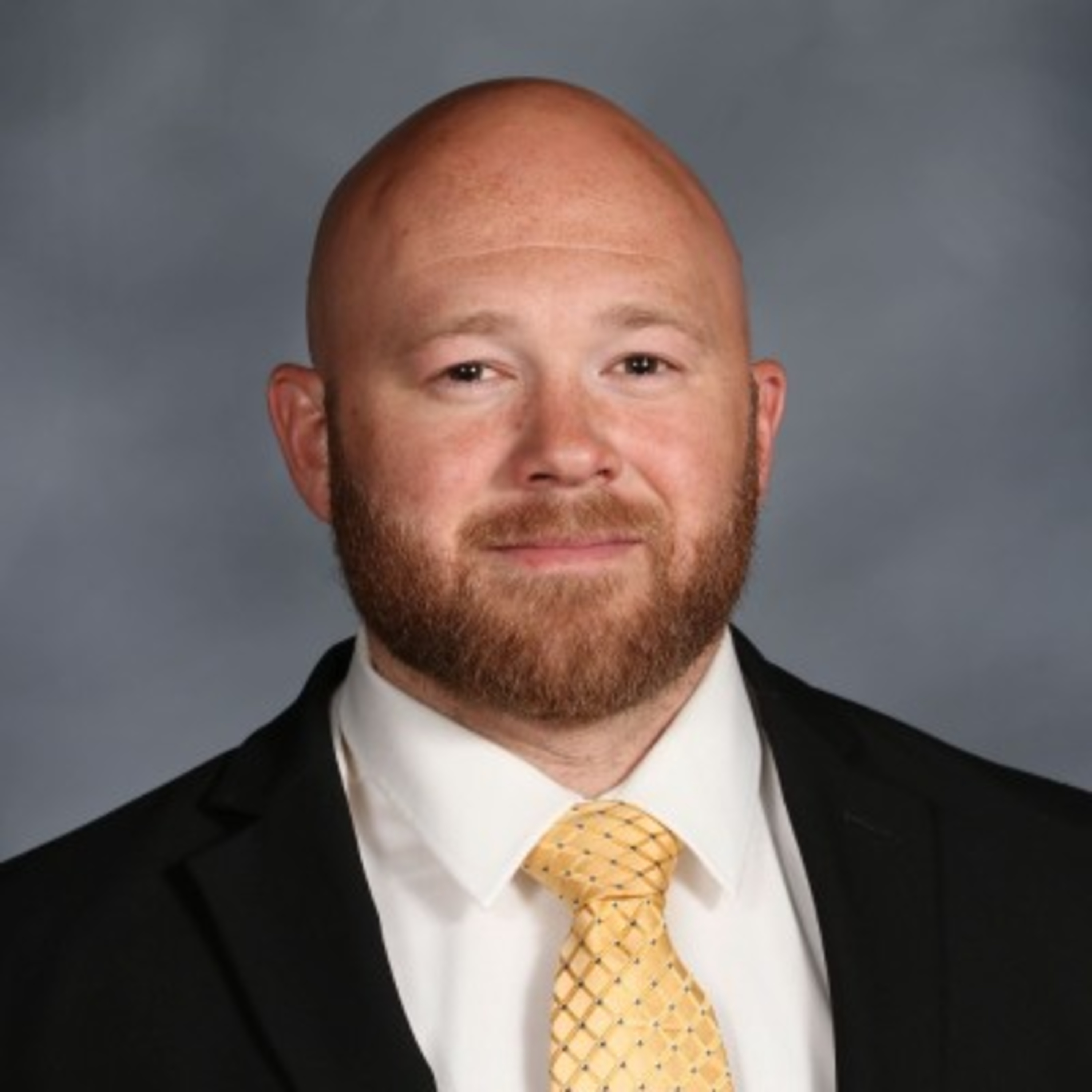
Ep #736 - Logan Erwin of Upper Arlington High School (Ohio)
61m 17s
In this episode of the Educational AD Podcast, host thanks sponsors like Sideline Interactive, Huddle, Beacon Creative, Home Campus, Gipper, Booster Hub, Ohio University, Hometown, and Athletic Surveys, highlighting their value for athletic directors. The main interview features Logan Erwin, Assistant Athletic Director at Upper Arlington High School in Ohio. Erwin recounts his background: born in Wooster, Ohio, he played multiple sports in youth and high school, then attended the University of Mount Union for football. After injuries ended his playing career, he focused on academics with plans for law school. Post-college, he briefly attended law school and worked in politics before shifting to athletics. His early roles included working under Russell Halzer at the College of Wooster and later at a residential facility for at-risk youth, where he used sports to build teams and integrate treatment. To enter the competitive Columbus market, he took a job with children's services and volunteered at Upper Arlington under legendary AD Tony Pusatari. Erwin emphasizes how his work with at-risk youth showed him the transformative power of athletics. He now oversees student life and activities at Upper Arlington and founded "The Coaching Tree," a resource for coaches. The episode underscores the importance of leveraging sports for personal development and community building.
Hey, welcome back everybody to another episode of the Educational AD Podcast. We're going to be right back with today's guest, but as always we want to give a shout out to our great sponsors. You've heard me say before, these companies are companies that you should have on your team working for you. Some are money makers, all of them are time savers. And again, there's something about each one that you can use as an athletic director. So I want you to take the next three minutes, listen to our shout outs, then listen to our interview, and then go and visit these sponsors. I'm telling you, you're going to be glad you did. Here we go. We want to say thanks to our friends, it's sideline interactive indoor score tables and video boards. Go to sidelineinteractive.com and you can schedule a live web demo to see their products in action. Probably one of the best purchases I ever made as an athletic director was our sideline interactive indoor score table. Go to sidelineinteractive.com, schedule that live web demo today. We also want to say thank you to Huddled. As a football coach, I used Huddled for years, but when I became an athletic director, I made sure that our school was a Huddled school. There are coaches, telling you all of our coaches, just love the tools that the Huddled platform provided. Our students and our parents love the streaming, but there's a lot more. I want you to go to huddled.com, join the 100 million fans and users and turn your school into a Huddled school. We want to say thanks to vital signs, Wall of Fame and beacon creative. Now Wall of Fame has been helping schools bring their legacy to life for over a decade, but beacon creative brings it to a whole new level. One is a content creation service. They're going to take your stores, your history, your students, your coaches and come up with compelling narratives that you can then post on social media, maybe on Wall of Fame video board. I want you to reach out to John Townsend and you can do that by emailing John, J-O-H-N, at beaconwalloffame.com. Make out beacon creative and vital signs, Wall of Fame. It's a winning team. Let's also say thank you to Home Campus, Scheduling, Roasters, Results, Facilities, Communication with your coaches. Home Campus does this better and it does it faster than the other platforms. Did I mention athletic clearance and eligibility? That one alone is a game changer. Go to HomeCampus.com, find out all the things that they can do for you and your athletic department and don't forget to mention you heard about it on the educational AD podcast. We also want to say thanks to Gipper. Gipper is the modern marketing platform that makes it easy for any athletic department to look like it's division one. Look like it's professional without spending extra time or adding additional staff. Gipper is used and trusted by over 20,000 high schools and colleges. This professional graphic design made easy. Use Gipper's thousands of professionally designed templates to program in your colors, your logo, your brand, create, share, and schedule all your social media in one simple platform. Go to Gipper.com for more information. That's Gipper.com. We want to thank our friends at Booster Hub, the number one booster club software program. Sponsorship, payments, concession sales, scheduling volunteers, scheduling volunteer changes. You know what's going to happen. It all flows through Booster Hub's secure system, so nothing falls through the cracks and everybody stays engaged. Give your Boosters the platform they need. Give them the platform they deserve. Go to BoosterHub.com. Let's say thanks to Ohio University and their online masters in athletic administration. Now, I didn't get my masters through the Ohio program, but guess what? My assistant athletic director did along with thousands of others. While they were earning their degree, they also completed 11 anti-triple leadership training courses at no extra charge. Check out Ohio University and their online masters in athletic administration. Let's say thank you to hometown. hometown is your trusted partner in growing school revenue, creating powerful websites, online ticketing, fundraising. The list just goes on and on. Whether you're a principal and athletic director, even a head coach, hometown solutions are going to help you save time. They're going to help you raise more money. They're going to help you bring your entire community together. Go to hometown.com for more information. That's hometown.com. We want to say thanks to athletic surveys by LifeTrack. If you're not using a survey to take the pulse of your student athletes, your coaches, even your parents, you're really missing out. Go to athleticsurveys.com. They're going to create a custom survey that connects you with all of your stakeholders. That's athleticsurveys.com. As always, don't forget to mention, you heard about it on the Educational AED podcast. Welcome back everybody to another episode of the Educational AED podcast. We're going to Ohio today and our guest is Logan Erwin. Logan is the Assistant Athletic Director, also involved in student life. We're going to hear all about that at Upper Arlington High School. He's also the founder of a really cool resource, the coaching tree. We're going to talk about that as well, but Logan Erwin, welcome to the Educational AED podcast. Thank you for having me. We're excited. We got connected through our mutual friend, Aaron Wright at Ohio University and their online masters in athletic administration and listeners. Yeah, we're going to hear about that too. Let's go and jump right in. Logan, we always like to let our listeners have a chance to get to know our guests. Give us your quick buy-up where you were born, where you grew up. Maybe take us up through your own college days and then we'll take a break. What's the Logan Erwin origin story? Well, I was born in Worcester, Ohio, not too big of a town. I played every sport you could imagine growing up through youth and middle school, high school. I then went to the University of Mount Union for football. I was recruited by then. It was Larry Carris. So I got to experience him. I eventually due to injuries and getting my blood kicked, dropped out of the football. I was more focused on the academics at the time. I was playing on going to law school. So it seemed appropriate to me. Then throughout college, I ended up being a senior class president. I gave commencement speech. So that was awesome. It was a really, really cool experience being able to do that. But yeah, that's basically what I did through high school and college. Pretty typical for an athletic director. I would think is a place for sports. So it's a lot of my time. I definitely want to hear about some Mount Union days. But let's go back to growing up in Worcester. And I always ask this question because I'm fascinated by the different responses. For you, was it backyard football, driveway basketball, or were your parents driving you to soccer tournaments and things like that? What was it like, say, pre-middle school days? Pre-middle school. No clubs at all. I didn't do any kind of club anything. It was what you said actually, a lot of backyard football. We played a lot of backyard football. We did have our own smaller leagues within the city. Youth football, we had a youth basketball league where the different elementary would play each other. But that was basically the extent for my experience. I wasn't driving around doing clubs. My dad actually coached back then. It was called a Junior Olympic volleyball. Now it's national or something. But we were, I basically grew up in Indianapolis on massive courts as far as you could see of volleyball players. So it's been a lot of time all the weekends growing up doing that. That really kind of exposed me to the club scene. But I've never really participated in it outside of that. It's an interesting take there. Moving into, let's say, organized sports, middle school and high school. What are some of your memories of getting started where you said, "Hey, I kind of like this." Yeah, so really what I liked, well, before I discovered sports, I sang in it while that was kind of what I did in my free time. And then I discovered basketball in gym class. I loved basketball. In my elementary, I was one of the best players. So naturally, that was enjoyable for me. So yeah, that was my first real experience with organized sport. And then we started football. We were able to start football on fourth grade. My mom didn't really want me to play football. So I didn't end up in the end.
convincing her until six grade. So six grades when I first experienced the football, I was not very good. The team I was on was a pretty good team, but I was not great. They put me at fullback at the time. And then in seventh grade, I tried fullback, and I fumbled the ball four times in the first game. So then I decided, you know what, maybe we shouldn't have you at fullback. So yeah, but then eventually I figured out that I was a receiver and that worked out pretty well for you afterwards. Oh, yeah, absolutely. You know, if you're fewer bodies out there in the perimeter, right, moving into high school, were you a one sport guy? Did you play multiple sports? What were your experience at high school student athlete? So I played multiple sports in high school. I played basketball. I played football. I played lacrosse. I actually swam one year, and I will say that swimming is by far the hardest sport that I have ever done in my life. Swimming is no joke. Let's see, I didn't play baseball in high school. I played baseball in middle school. What else? I did run track one year in high school too. Now, as you were going through that high school experience, were you thinking, hey, I'm going to go to college and play football, or I'm going to be a professional athlete, or was it just kind of living in the moment? I never really had the expectation to be a professional athlete, but I playing college football was the goal. It really wasn't that high on my priority list until I, my freshman year, I broke my collarbone, and I didn't realize how much I loved football until I couldn't play football. And that kind of really lit a fire under me afterwards, and I just kind of took off with it after that. I knew I was going to play in college, really I wasn't sure which college I was going to go to. But once I did decide on a Mount Union, getting there was still, football wasn't the priority. I guess the priority was getting into law school. So that's kind of what I wanted to do since I was nine years old was I wanted to be an attorney. So anyway, at one point that kind of took over, and that's when I eventually quit. You know, listeners, maybe you have to be of a certain age, but I certainly, during my coaching career, did some college football coaching. Mount Union certainly was, I think, a standard bear for the, you know, success, multiple national championships, Larry Karrist, Coach of the Year, et cetera. What are some memories of being in that type of program? It was intense. It was very intense. I will say that it was really, the recruiting process for me was really cool. I got to know Coach Karrist very well throughout my senior year of high school. The respect that he had with his staff, I mean, you could look back at the staff now that was there when I was there. Nick Sirionny, coaches Eagles. You had Coach Campbell, who was at Toledo, Coach Candol, who is now at UConn. They had, I mean, the staff was incredible. I think that it was, I knew what the standard was at Mount Union. I think they had won three out of the last four national championships in my freshman year. But you couldn't know as you got on campus. Getting on campus and seeing that you are compared to, you're a normal D3 receiver and you're standing next to PR Garçon, who is not a normal Division III-wide receiver. It was tough. It was more physical than I expected it to be. It was very cerebral. It was just a very intense, intense program. I loved it. I mean, it was great. I loved the guys. I ended up living with, even after I left the team, so my best friends today are still football players. I lived with all football players throughout my four years at Mount Union. Larry Karris was incredible to me all four years. He would stop and talk to me all the time. He was incredible. Incredible human. That's so cool to hear. Again, I just love hearing stories about different programs, particularly successful programs like that. Let's go and take our first break. Our guest today is Logan Irwin. He's the assistant athletic director at Upper Arlington High School in Ohio. We're going to hear a lot more. Please stay with us. This is the educational aid podcast. We want to thank our good friends at sideline interactive indoor score tables and video boards. Go to sidelineinteractive.com. You can schedule a live web demo to see their products and action. You've heard me say before, probably one of the best purchases I ever made as an athletic director, was our sideline interactive indoor score table. We use it for home games, of course, but we also use it for signing ceremonies, for pep rallies. Their products are incredibly versatile in their customer service, just outstanding. Schedule that live web demo today. We also want to say thanks to Huddl. You know, he's a football coach. I used Huddl for years, but when I became an athletic director, I made sure that our school was a Huddled school. And our coaches, all of our coaches, just love the tools that Huddl provided. Our student athletes love the videos, and our parents love the streaming, but there's a whole lot more. Go to huddl.com. Join the 100 million users and fans and turn your school into a Huddled school. That's huddled.com. And as always, tell him you heard about it on the educational aid podcast. I don't even know what we did before Huddl. Let's just think about that. How did we, every one of our sports uses Huddl. And we have 34 different programs. So we have 34 sports here, and they all use Huddl. And I just, I can't remember how people did it beforehand. Well, I'll tell you how they did beforehand, because I did it. We stayed up till four in the morning with that VHS tape. You know, rewind, right? Fast forward, rewind, fast forward. Where does this play go? And then the young assistant Saturday morning drove that copy three hours to a gas station and made the video exchange with another coach before coming back and working with the team. So you're absolutely right. I think revolutionizing is not strong enough of a word to say how Huddl has changed coaching. Yeah, especially with highlight films. I remember my dad did take forever to put together a highlight film based on VHS tapes. Yeah, that's, that's something I didn't, I didn't thought about that for a long time. But I guess that's good. I don't have to anymore. Well, I'm glad you guys at Upper Arlington are enjoying Huddl. For listeners, once again, our guest is Logan Irwin. He's the assistant athletic director, also in charge of student life and activities. For Upper Arlington High School. Logan, you took our listeners on your journey through Mount Union College. You know, were you thinking about becoming a coach or, you know, what was your next step right after college? So no, I, I mean, I had coached through through college. I coached a little bit. I coached a coach football back home at Worcester. The, the varsity receivers, I coached them for a few years. I coached my brother who was seven years younger than me. I coached him, his lacrosse team a little bit too. So I did, I did coach sporadically, but no, I didn't really plan on coaching when I got out of college. Like I said, I was dead set on one of the law school. And I knew that I was going to have virtually no time on my hands whatsoever. So that wasn't really something I was thinking about. Well, what was some of those early jobs right out of college that got you eventually on this education path? So I did not take a traditional route at all. I actually went to, I got into law school. I went to capital law school in Columbus, Ohio. And I did not finish law school. I got into politics. So took very different turn. Some of my friends, some of my related friends from Mount Union got into politics. And we got, we all came to Columbus. They got pretty heavily involved. Then I jumped on board with them. So I worked in politics for a little bit. And then decided that was not for me. This is just something I try to stay out of now, especially. But did that for a little while, then decided that I need to do something I loved. So I thought about sports. And as you know what, this, this is something I love. I love sports. Let's, let's look at this. So I'm.
moved home and took a job at the College of Worcester working in athletics. I worked under Russell Halzer who is now, I believe he is at Fitch High School in Ohio. Russell is great. He taught me a lot about athletics operations, how to run events, how to manage coaches, etc. That was the next gig I had and then after that I went to a place that advertised the job as a high school athletic director and it was a school that I had not heard of before. But it was about 20 minutes away from where I lived so I thought okay I'll go interview there and see what this is. Well it ended up being a more of a I'm trying to think how I want to work this, a home for the link with youths. So kids who get in trouble before they get sent to child jail for prison was called D.Y.S. This was the last resort and so if you've read the book Holes or seen the movie Holes that takes place in the middle of desert this was basically the exact same thing except it took place in the middle of the forest. Anyway there I kind of fell in love with what I was doing there. The whole idea behind it was to get these kids to believe that they were still playing high school level sports and so my job was to build teams, to coach these teams and to get these kids into other tournaments etc. So I started a basketball team and we would host tournaments bringing other schools, private schools would come to our gym and play basketball. We would get into tournaments where we go up to Michigan or Chicago and play in tournaments and so that was kind of my whole job was to integrate sports and treatment for these kids that we were trying to rehabilitate. So that was a very very interesting job. I was there for two years and then made my way to Columbus after that. So I knew that I wanted to get into a much bigger position that I was in at this place and I knew the only way to do that was to get to Columbus. Well I had to live in Columbus and Columbus is a very hard market to get into if you're not from here. So I actually took a job with children's services to be able to move to Columbus and then I volunteered at Upper Washington High School under Tony Pusatari who is a Central Ohio legend when it comes to athletic directors. So I got to to learn from him and then that kind of started my stint at UA. Wow really interesting experiences and working with those groups. I had flashbacks when I graduated from college. I had a job in a similar school for the summer and again I enjoyed it but I didn't think that was where I was going to spend my career. Can you look back on those two years and some of the times that you at your next job were an experience and event something that's stuck with you this time and you still lean on that lesson today. I don't know if I phrased that question very well. Yeah yeah. I think that the two years that I was there it really showed me how important athletics can be in a person's life. We can say this all the time sports are very important. We know that sports teaches you life lessons and whatnot but I think that being in this facility using sports and recreation we did it at a different level. You can see how it changed kids lives at a level that you don't get I don't get to see in my current position. I could give you an example this is probably the best example I have. We had a kid who was I believe he was arrested for aggravated assault firearms drunk possession all kinds of stuff like this this kid was a real gang leader in one of the cities in Ohio and very rough life. He was 17 at the time and we got a phone call that his mother had been stabbed to death outside of a nightclub. He didn't know his dad and he had four younger siblings that now he was going to be in charge of basically once he got out. This was a kid that was a huge flight risk. One of the strongest 17 year olds I've ever been around in my life. This kid was a brick and if he wanted to he could have got out of this facility. He could have probably injured me pretty good if he wanted to and I had to tell him that his mom had died and so he was a basketball player. I knew he loved basketball and so when I went to tell him that night in his room it took a basketball with me and I said hey I got to tell you know what would happen and I said he just looked at me at the blanks there. He started to cry and I said do you want to talk and he said I just want to shoot I just want to shoot hoops that's okay and so we went into the gym and this is like 12 o'clock at night and we shot hoops for two hours. I just rebounded for him for two hours. He didn't talk much been towards the end he started to a little bit but it just showed me how important that sport was for this kid. This kid's entire life had just changed and his normal reaction before he came to us and we really emphasized sports and treatment would have been retaliation. We actually came to his I took him to his mother's funeral and they had half the police force at the funeral because they were worried about gang violence and then what not so but anyway that that's probably the best story I have from that. It's just we I think we take sports or granted sometimes and you know we can stay here and say yeah they have they teach you life lessons but I think that they can really provide a lot of support mental support for us and our lowest times so that's probably the best thing I did there. Oh wow I mean very powerful thank you for sharing yeah it's such a personal story and you're absolutely right you know we just have no idea the impact that you know a sport experience is going to have on someone great stuff. Let's go and take another quick break. Once again our guest today is Logan Irwin. He's the assistant director of athletics and activities at Upper Arlington High School in Ohio. We're going to hear all about Upper Arlington in our next segment so let's take that break. This is the educational AD podcast. We also want to say thank you to Vital Signs Wall of Fame and Beacon Creative. Now Vital Signs has been helping schools bring their legacy to life for over a decade but Beacon Creative is helping them take it to a whole new level. Beacon is a content creation service and they're going to take your stories your history your student athletes your coaches and come up with compelling narratives that you can then post on your social media channel maybe even on a Wall of Fame video board. I want you to reach out to John Townsend and you can email him at John. john@beaconwall of fame.com. Beacon Creative and Vital Signs Wall of Fame. It's a winning team that you should be a part of. We'd also like to say thank you to Home Campus scheduling, rosters, results, communication with your coaches, facility management. Home Campus does all of these things and a lot more and they do it better and they do it faster than the other platforms. Did I mention athletic eligibility and clearance? Go to homecampus.com for more information. That's homecampus.com. We also want to say thank you to Gipper. Gipper is the modern marketing platform that makes it easy for your athletic department to look division one even professional without spending extra time or hiring sports information director. Gipper is used and trusted by over 20,000 high school and college athletic programs. It's professional graphic design made easy. Use from their thousands of professionally designed templates that you can customize in your colors your logo your brands. Create share and schedule all your social media content on one simple platform and that platform is Gipper. Go to Gipper.com for more information and tell them you heard about it on the Educational Edie Podcast. Welcome back everybody to the Educational Edie Podcast. Logan you've just done such a great job of sharing your journey so far through athletics. How did you
you end up at Upper Arlington and what are some special things about the school you'd like to share with their listeners? So I knew the Upper Arlington was the place that I wanted to be when I decided to come to Columbus. I wanted to go for the vest and like I said earlier Tony Pusteri was at Upper Arlington at that time and he is a legend in Columbus as far as being an athletic character goes and for coaching. So I knew that would be a great place to start if I wanted to learn from the best I'd go to the best. So that's how I kind of got to UA. I moved to Grandview Heights when I moved to Columbus. Grandview Heights is right down the road from Upper Arlington both are within five miles of Columbus. So I moved to Grandview and then I knew that would give me the ability to volunteer at night to help out with their events at UA. So that's what I did. I reached out to Tony. He said sure come on over we'll talk and that's how I started at UA. I started as a slight manager running all of the varsity events at night. So that was a good time to kind of pick Tony's brain, learn the ropes of Upper Arlington in sports in general and then that's why I decided to get really serious and started the NAA program. You know talk a little bit about that program. I think it's very interesting. What the Ohio University program? No we're going to do that in our second segment. No I thought you were talking about the student production program there I guess I missed her. Oh no I said the NAA program. I saw the Master of Athletic Administration. This I could talk about the student production program if you want. Sure. Okay it's massive. We have Amanda Fountain is a godsend for us. We could not do what we do at Upper Arlington without her. We bought we have a brand new school I think is four years over this point. Got a lot of the say the art technology the the splays the scoreboards all these different things and Amanda Fountain runs our game day productions class and basically what they do is they're kind of sports information for us. They will do live broadcasts they'll do breakdowns they have a morning show that they do every Friday. Well they'll go the well and interview different teams and they'll interview different kids for different events and whatnot. But then they have like their own production that they put on every Friday. It's called Kicking It Live. They actually have an entire studio. There's a green screen and everything that they produce all these videos and it's it's incredible. The kids love it our athletes love it the displays and the graphics that they put together for all of our events are just wonderful. Amanda was in here earlier to help me figure out the sound on this computer. So she is she's incredible but just one of the many opportunities that we provide that's something that I'm actually very proud of. Now the students that are doing this are they just rank and file students that are sports fans do you have student athletes to participate in this program? So it's it's not specific to student athletes we do have a lot of student athletes that do the program but it's it's all kinds of students it's there's a couple of different levels of classes. Game day productions is the highest one. It is a lot of athletes and game day productions but there are plenty of students who do not play any sports at all and they just love sports. One kid for example I needed help with the scoreboard that we have there's two different displays on it and our clock operator can't do both displays well we had a parent who was supposed to be doing it and the parent didn't show up one night so I grabbed this kid and said hey can I teach you how to do this and he ended up doing it for us the rest of the season and it was incredible he did a great job for us but yeah she she gets a lot of very talented kids and shows them the ropes on everything with production. Now in your role as assistant athletic director I'm guessing you've got a decent size enrollment do you and the athletic director do you share duties as far as game supervision or setup how do you divide I guess the the challenge of running an athletic department between the two of you. Yeah so we have 1900 students and we have 1,452 athletes so for comparison Ohio State has 1,050 athletes I believe so we got about 400 more athletes in Ohio State does and they'll tell you they have 500 people running in Ohio State and we have three and a half in our department but no we we shared duties it's really there are certain things that I do I and basically in charge of all our facilities scheduling our facilities all of our rentals that we do we host a lot of different events a lot of events we're essentially located in Ohio so a lot of people would like to use us for example we hosted special Olympics here for the state a couple of years ago we're going to host them again in a few weeks we have an Olympic Taekwondo event here in two weeks when teams come to play against Ohio State a lot of times they'll practice on our facilities on our fields University of Denver as the process here a couple weeks ago but we we've hosted a lot of big events and that takes up a lot of my time. Jeremiah Smith for example he does all his commercials here so that's that's a big part of my job is is navigating all the facilities another part of my job is game management I'm basically in charge of making sure the schedules are set with the coaches everybody knows the schedules are getting officials and then game day operations running the events being here for them and then outside of that it's pretty much shared responsibilities HR he does do eligibility that is one thing that I that he wants to make sure that he is on top of which I completely understand you don't have too many people getting involved with eligibility um yeah I mean that's an in nutshell our job I mean the different coach concerns HR with coaches making sure they're on boarded navigating any issues with kids celebrations we we I think we just want our 157th state championship this year um yeah it's it's we've I think we've won like six or seven in the last couple years we won I was talking for the first time last year in our in our history which was awesome um girl swimming just won their third state championship in a row this winter um yeah it's it's it's it's a big program there's a lot to do I mean you we could be here 24 hours a day I check my email I joke I check my email on my phone probably three times a minute and then I'll I'll even catch myself on my laptop checking my email and then pull up my phone and start checking my email my phone so it's it's a lot but it's it's uh it's it's it's a pretty well-willed machine for as big as it is oh no it sounds uh very very well oiled very successful hey we're gonna do this at the end of the podcast but let's do it now if one of our listeners wanted to reach out pick your brain a little bit more find out how you do things in upper Arlington or just add you to their network what's the best way that our listeners can get dutch with Logan Erwin well uh you shoot me an email if you'd like it's L-E-R-W-I-N at u-A schools dot org or look me up on LinkedIn I'm on there too so either of those always happy to talk and Logan's information is also available in the N-I-Triple A uh member portal for our N-I-Triple A members let's go and take another quick break I know that shocking to our regular listeners but we are coming back with more so please stay with us this is the educational ED podcast we want to say thanks to our good friends at booster hub the number one booster club software program you know booster hub handles just about everything sponsorship payments meal fees concession sales they're gonna take care of volunteer signups how about volunteer changes you know it's gonna happen when they do change nothing falls through the cracks everybody stays connected everybody stays engaged give your boosters the platform they need give them the platform they deserve go to booster hub dot com we'd also like to say thanks to Ohio University and their online masters in athletic administration now I didn't get my masters through the Ohio program but guess what my assistant athletic director did along with thousands of others and was a great experience and while they were earning their masters degrees they also completed 11 N-I-Triple A leadership training courses at no extra charge check out Ohio University and their online masters
and athletic administration. We'd also like to thank our friends at hometown. hometown has been and still is. You're trusted partner in growing your school revenue, creating athletic websites, fundraising that's going to bring your entire community together. And whether you're a principal, whether you're an athletic director, even a head coach, hometown solutions are going to allow you to save time. They're going to allow you to raise more money and they're going to help you bring your entire community together. That's hometown.com. And don't forget to mention, you heard about it on the educational AED podcast. That's crazy me how big hometown has gotten. They, I'm pretty sure that we uproar into one of the first schools in Ohio to use hometown. That was, was that during COVID or right out of COVID? I think they're actually based in Columbus. I'm pretty sure they are based in Columbus. I remember when they came to us with the pitch to do the digital tickets. And we were very hesitant at first because I mean, back then everybody was hesitant about everything. But it was like, okay, we need to do this because of the whole contact tracing and everything. And that was great. And I'm glad that we still use it. It makes my life a lot easier and a lot less paperwork. It's funny because we do still do cash tickets. But the cash ticket side of things is so much more complex and having to talk with the treasures department and all these other things we have to do versus hometown just takes the money, sends it to the treasure department and off do you think with it. So they're great. - Again, you talked earlier about, what did we do before Huddle? And now I think it's the same thing. What did we do before we had hometown? Now, have you had a chance at Upper Arlington? Are you using any of the other features of hometown or are you still focusing primarily on the digital ticketing? - Right now that's all we do. It's just the digital ticketing. But like I said, it really helps with the reconciliation process. So I don't have to be sitting there handing out each individual ticket and then going back through and making sure that my ticket seller's math is correct and everything else. But no, that's pretty much what we've used it for so far is just the digital ticketing. - Oh yeah, and again, I hear this school after school, the speed at which it handles the students coming in or the fans coming in, the collection of the funds coming into your business office, the tracking, the analytics to go with it, just a great, great feature. During that last break, we also got to hear from another one of our sponsors of How University. And Logan's actually a graduate of the How University Masters in Athletic Administration program. - Logan, people have choices. You had a lot of choices when you were getting ready to choose a program for your master's degree. What stood out about the Ohio program and what are some things you can share with our listeners about your experience? - So the reason that I chose Ohio is was because of reputation. I don't like to do things halfway. So if I'm gonna do something and I wanna do it really well and so I knew that OU was the place to go if you wanted to get a higher education in athletics. I went to up Rawlinton to learn from the best AD in Central Ohio and so it was logical for me to go to the best program to learn from the best instructors in athletics. But yeah, I have to say that OU is, the OU Masters program is no joke. If you are trying to check a box, don't go there because it is going to be life-changing. It is a tough, tough program, but you will learn so much more than anything else that's out there, at least to my knowledge. I have people who are higher up in athletics than me, people who work for me, who have taken, who have been part of other Masters programs. And they, from what I have heard, they don't even compare. I won't give specifics or name specific programs, but I've been with people where they have said, oh yeah, I did this program. It was a year long and I didn't have to write any single paper, but Logan over here did the OU program and he wrote over a thousand pages of policy. So it's not a joke. If you are serious about learning and being prepared to do your job as best as possible, that the OU Masters program is it. That's the one. - Boy, thanks as always for sharing. Now, we've had a number of Ohio University graduates on that have shared their experience. And one thing that we've heard, in addition to what you just shared, the, let's say the rigor and the application of the activities that you do. Another thing we've heard is the connection that you make with the other people in the program. Can you comment on that? - Oh yeah, there's, I mean, in that program, in the cohort, there are people from all over the world. In fact, one of my projects I had to do was with someone who was in China. So we had to have our Zoom meetings at midnight to discuss our project. But it exposes you to so many different areas of the world, so many different trends in athletics and how Europe is very different from how the United States runs athletics. Same thing with China has a very different approach to athletics. Something that you really wouldn't think about in a normal day, but it, it provide a lot of perspective. You get to know a lot of different people and their perceptions and their perspectives on sports. You get to hear a lot of different policies and procedures and how people do different things. And the connection is last, even outside of that. So I know I'm connected with a lot of the people in my cohort from all over the world, the most of the United States. There's a bunch of people in Columbus who took the Master's program as well. And yeah, I mean, it's getting bigger and bigger and there's more and more connections with people as they continue to graduate from it. I like so, I was seeing people pop up all over the place that it had the Master's program. It's nice because you can really connect on the rigor of the program. Yeah, that's a really good way to bond with people is talking about the program and really some of the tests with it. Now, this next question I'm going to put you on the spot here. So I apologize. One of the things that we talk about in our promo of the aisle program is the fact that they are affiliated with the NITRIPL-A and that your curriculum, as a master's student, allows you to complete 11 of the NITRIPL-A leadership training courses. How much of that was, I guess, a feature that attracted you to the program and what have you been able to do with those NITRIPL-A courses so far? So I will say, I don't think that when I was there, it was 11. I think it was, I think we had nine that we got accreditation for, which was awesome. Those LTC courses prepared me for my job very well. I'll just give an example. Talking about Title IX, for example. I was talking about this a few weeks ago. Someone was talking to me about Title IX and trying to explain to me what Title IX is and how one school is going to get in trouble because they don't have equal opportunities and equal representation. And I just remembered my LTC courses and I could come back and say, well, there are actually three prongs to Title IX. And this person looked at me like I was crazy. This person's been an athletic director for a very long time. So I was able to explain what that actually looks like and how this school might not necessarily be in trouble if they can prove one of these other two prongs. I gave another example. I talked about this earlier, the over 1000 pages of policies that I wrote. That sounds like a lot, but that has saved me a lot of stress because I have the ability to create policies that make sense that work. I was actually subpoenaed over seventh grade girls tennis tryouts, but because I
The emphasis on policy and procedure was so strong with the OU program, I had a bulletproof policy in place that I could defend when subpoenaed by two different attorneys when to talk about our trial process. So that actually saved me a lot of time because I explained the process, explained the procedures and the policies and everything. I think I actually used one of the LTC courses to help draft that policy and both attorneys said, "Yep, you're right. There's nothing here that we need to even bring you into court for." So that was great. That's a real life example of how bad we're drafting all those policies. Wow. I mean, great example for just on a topic, being aware of Title IX and what it actually is, out impact schools and also for the MAA program. Thanks for sharing that. Yeah. Boy, this has been just a very cool conversation, Logan. I appreciate you coming on today and sharing with our listeners, but we're not done yet. We always wrap up with the Athletic Director's Toolbox. Now, you certainly established you know you're way around the world of athletics. We're going to take our final break here from Athletic Surveys who sponsor this segment. When we come back, I'm going to challenge you to send out a brand new Athletic Director on their first job, but I'm only going to let you put three tools in their toolbox. So, let's hear from Athletic Surveys. And when we come back, we're going to find out what Logan Irwin puts in his new Athletic Director Toolbox. We'd like to thank Athletic Surveys for sponsoring the AED Toolbox segment. You know, at my school, we use surveys for just about everything. For our student athletes, for our coaches, even for our parents. And here's the cool thing. The information that came back on these surveys, almost always over the top positive. I'm talking 98% approval. We still got to hear from our squeaky wheel parents, but the surveys allowed us to hear their concerns, usually address their problems before it turned into something big. But getting back to that positive data, incredibly valuable, especially when you're visiting with that frustrated student or parent, or sometimes your principal and sometimes even your school board. They're going to create a custom survey that lets you take the pulse of everybody in your program. That's AthleticSurveys.com and tell them you heard about it on the Educational AED podcast. Well, it's that time of the podcast. We've been visiting today with Logan Irwin. He's the Assistant Athletic Director at Upper Arlington High School. He has a tremendous background. Also, teaser alert, check out his company, The Coaching Tree. We're going to have him back for a toolbox extra later this spring. But right now, we're going to challenge Logan to send out a brand new Athletic Director on their first jump. And I'm only going to let him put three tools in the toolbox. So Logan, what three tools are going to go into your new Athletic Director toolbox? So, the first one, if they've already accepted the job, I don't know if this one will work or not. But I think that the most important part of being an Athletic Director is understanding what the job is. What it is and what it's not. I think with coaches, for example, a lot of coaches get into coaching because they think they get to go to practice and then they show up on game night and they get to coach from the sideline. And that sounds awesome. But that's not what coaching is. There's a lot more to coaching than just practices in the games. There's a lot of relationship building. There's a lot of communications. There's discussions with families. And there are some things that aren't necessarily fun to do. I would say the same thing with being an Athletic Director. You have to be okay with making decisions. And getting criticized for them. I think that you need to be comfortable in your own abilities. And if you're not, then this is going to be a very difficult position to be in because people are constantly going to be questioning you. Your job is not to appease the loudest individual, but to set a precedence for an entire program. When it comes to parents, a lot of times they have tunnel vision and they are most concerned about their kid. Well, your job is to their job as a parent is to fight for their kid. Your job as an Athletic Director is to fight for every kid. So I think that there's a lot that comes with being an AD that people may not necessarily know about the time commitment. There's a huge time commitment with it. You're basically on call 24/7. And I think that if you don't know that going in, you're not going to be very successful. So yeah, I think that's the first thing is to know the job. Understand how visible the position is. With inter-scholastic athletics, there's inter-scholastic comes before athletics because grades are very important for a reason. But I would argue that athletics is just as important because you are in control of the most visible thing in your school. Sports is the most visible aspect of your entire community. And it's how people gauge their success in life in a lot of ways. So it's very important to do a good job with that and to be delicate with how you handle that. At the same time, I'd also say, well, you need to understand that your job is 24/7. You need to be able to set boundaries or else you'll go crazy. For me, one of the boundaries that I set is I give in front of all of our parents at each of our meet the team meetings and say, if you somehow got a hold of my cell phone number, do not text me. That is not your way to bypass the process of calling my phone in the office. That is not your way to bypass sending me an email. I need to have my phone for my 200 plus coaches. So setting boundaries like that is good. The second thing I would say is be visible. You have to be visible. I just talked about how sports are the most visible thing for your community. The only way that you can build trust with your athletes and with your parents is if they believe that you are in this with them. And the way to do that is to be visible. Show them that you are sitting in the stands with them. You are on the sidelines with them. You are talking with kids, you are talking with families. As you do that, you are building a savings account with them. So when you have to withdraw someday, because you are certainly going to have to, you have already build up your savings account enough that you can make withdrawals with that. The third thing I would say is I have had different ADs talk to me about this in different ways. They take different approaches with this. Some will absolutely defend their coach to the death, regardless of whether the coach was right or not. Others will throw the coach under the bus at the quickest sign of controversy. I think that there needs to be, as an AD, you really need to have a good balance with that. The most important thing that we have is our integrity. If a coach screws up, one, did you put that coach in a position to succeed? Did that coach know and still screwed up? Or did you not as the AD teach that coach well enough? And if you didn't teach that coach, then you need to be okay with saying, "Okay, I messed up." You need to be okay with telling parents, "Hey, this was a mistake. We're going to learn from it. We're going to move on." You need to be able to do that, to be humble about it, and show some vulnerabilities because I think that builds your integrity with families. If someone did something well, you tell them they did it well. If they did it wrong, you tell them they did it wrong. I think at the end of the day, that builds up that trust with families so that they stop questioning all your decisions. At some point, they're going to say, "You know what? Love has done this a lot." He's explained his philosophy. I can follow the logic in a lot of these things. I'm just going to trust him on this one. That was my biggest challenge as an early AD. It was getting to the point where people trusted my judgment and trusted my decisions. There's a lot of explaining that I had to do with things. If you follow a logical path, if you uphold your integrity, if someone makes a mistake and you admit to it, yes, we screwed that up. We will do better next time. I think that you build a reputation as a leader and as someone who really cares about kids and athletes. Those are my three things. Well, great, great ideas. The first one you mentioned about knowing the job. I've heard that we've been doing the podcast now for six years. A frequent comment is all of these tools suggestions that we collect from great people like you. I wish I knew this when I first started out because when you start now, you don't know what you don't know. Having that opportunity to learn the job. Your second one about being visible. It's so very important. I've seen so many athletic directors. Well, I've seen too many athletic directors. Let's say, just spend their career.
behind their desk in the office and they don't get out there. They don't get to practices. They don't get to games and you're absolutely right. That's how you you know build that trust, which was your third one. You know the trust and the integrity. Great, great tools. One more time Logan. If one of our listeners wanted to reach out and pick your brain a little bit or just connect with you and listeners, I think you got a great resource here. What's the best way that they can get connected with Logan or what? Just shoot me an email. I just talked about my cell phone. Shoot me an email. It's l-e-r-w-i-n-u-a-schools.org or just send me a message on LinkedIn. Well, Logan Irwin, Upper Arlington High School. Thanks for sharing with our listeners. All the best as the spring season continues to unfold and we are definitely going to get you back on the podcast for a toolbox extra to talk about the coaching tree. All right. Thanks, Jake. I appreciate it. For our listeners, we appreciate you and just a reminder, we upload the Zoom recordings of every interview to the Educational Edie podcast YouTube channel. We do this just about every day. We try to share stories and best practices from the world of athletics. So please come back and join us again on the next episode of the Educational Edie podcast. We'll see you next time.
Podcast Summary
Key Points:
The podcast host thanks multiple sponsors
Guest Logan Erwin, Assistant Athletic Director at Upper Arlington High School in Ohio, shares his origin story: born in Wooster, Ohio, played multiple sports in youth and high school, attended the University of Mount Union for football, but quit due to injuries and focused on academics (pre-law).
After college, Erwin briefly pursued law school and politics, then worked in athletics at the College of Wooster and later at a residential facility for at-risk youth, where he used sports to rehabilitate students.
Erwin moved to Columbus, volunteered at Upper Arlington under Tony Pusatari, and eventually became Assistant Athletic Director, also overseeing student life and activities.
He founded "The Coaching Tree," a resource for coaches, which is discussed as a key initiative.
Summary:
In this episode of the Educational AD Podcast, host thanks sponsors like Sideline Interactive, Huddle, Beacon Creative, Home Campus, Gipper, Booster Hub, Ohio University, Hometown, and Athletic Surveys, highlighting their value for athletic directors. The main interview features Logan Erwin, Assistant Athletic Director at Upper Arlington High School in Ohio. Erwin recounts his background: born in Wooster, Ohio, he played multiple sports in youth and high school, then attended the University of Mount Union for football.
After injuries ended his playing career, he focused on academics with plans for law school. Post-college, he briefly attended law school and worked in politics before shifting to athletics. His early roles included working under Russell Halzer at the College of Wooster and later at a residential facility for at-risk youth, where he used sports to build teams and integrate treatment.
To enter the competitive Columbus market, he took a job with children's services and volunteered at Upper Arlington under legendary AD Tony Pusatari. Erwin emphasizes how his work with at-risk youth showed him the transformative power of athletics. He now oversees student life and activities at Upper Arlington and founded "The Coaching Tree," a resource for coaches.
The episode underscores the importance of leveraging sports for personal development and community building.
FAQs
Sideline Interactive provides indoor score tables and video boards. Athletic directors can schedule a live web demo at sidelineinteractive.com to see their products in action.
Huddl offers tools for coaches, student-athletes, and parents, including video streaming and coaching resources. Schools can join at huddled.com to become a Huddl school.
Gipper is a marketing platform that provides professional graphic design templates for social media. It helps athletic departments look professional without extra staff or time.
Home Campus handles scheduling, rosters, results, facilities, communication, and athletic clearance. It streamlines athletic department operations efficiently.
Booster Hub manages sponsorships, payments, concession sales, and volunteer scheduling. It ensures secure operations and keeps everyone engaged.
LifeTrack creates custom surveys to gather feedback from student-athletes, coaches, and parents. This helps schools understand stakeholder needs and improve programs.
Chat with AI
Loading...
Pro features
Go deeper with this episode
Unlock creator-grade tools that turn any transcript into show notes and subtitle files.
 PodcastTranscript AI