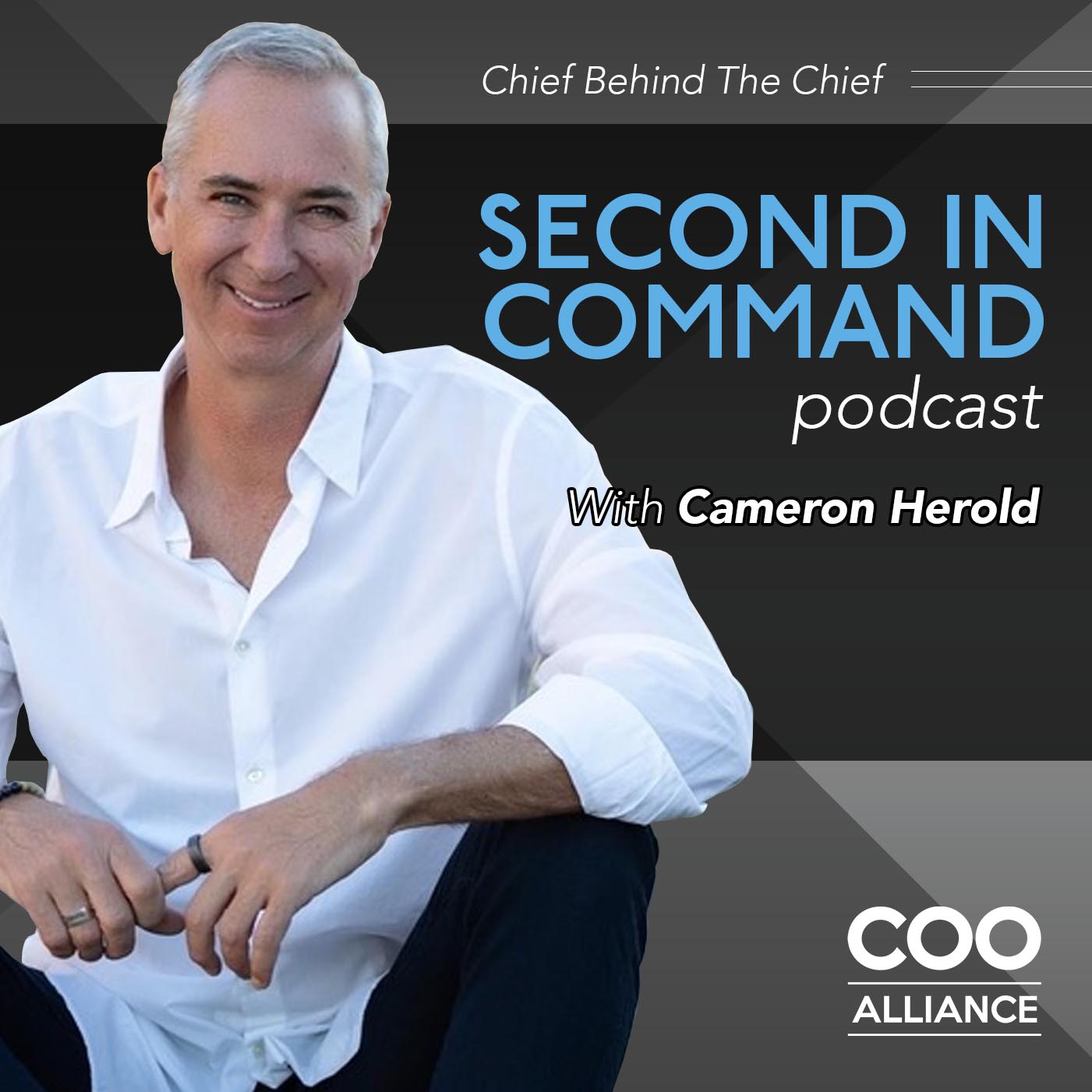
Ep. 566 - Virta Health COO Amit Shah - Exclusive Lessons from Scaling a Mission-Obsessed Team
44m 17s
The discussion highlights the importance of leadership that balances empathy with performance, as demonstrated by Amit Shah, COO of Verda Health. Verda’s mission is to reverse metabolic diseases in one billion people by using personalized, science-based nutrition and lifestyle changes, rather than relying solely on medications. Clinical trials show significant results, including sustained weight loss, reduced cardiovascular risks, and improved patient well-being. The company operates through partnerships with employers and health insurers, offering a comprehensive program that includes biomarker tracking, app-based coaching, and community support. Key to Verda’s growth has been a steadfast focus on its mission, a culture prioritizing patient impact over busywork, and early hires who embodied these values, enabling scalability and long-term success. Amit’s journey from skepticism to commitment underscores the transformative potential of Verda’s approach to healthcare.
people don't care how much you know until they know how much you care. And I think that especially in this role, you know, I have the good fortune of leading a large team. There are a lot of people that I have a try to respond to respect and care and love for actually that I get to work with. You know, I spend a lot of my days thinking about how we can impact more people, how we can do a good job and win. And therefore that requires providing people with real feedback and having tough conversations at times and all. And I have always found that balancing those two things, making sure people understand that I yes, I care about for, yes, I care about, you know, winning, you know, that's what really care about you. And I really care about how we work together. And what that means and how and how we pull that together. Welcome to the Second and Command Podcast, produced by the COO Alliance and brought to you by its founder Cameron Harold. In the Second and Command Podcast, we talked to top COOs who share the insights, strategies and tactics that made them the chief behind the chief. And now here's your co-host former COO of a multi-eighth figure remote company and alumni member of the COO Alliance. Savannah Brewer. Today's guest is Amit the Chief Operating Officer at Verda Health, a company on a mission to reverse type 2 diabetes through personalized evidence-based care. Amit joined Verda back in 2016 and now leads both the product development and patient care delivery teams, helping scale a model that's changing how health care is delivered across the U.S. Before Verda, he was an early team member at Paladine Health, a direct primary care subsidiary of Divida and helped to grow its footprint as VP of operations. His background also includes time at McKinsey, Amazon, and even co-bounding a renewable energy startup focused on serving people living in poverty. In this episode, we dive into how Amit and his team developed long-term talent and build a culture that lasts, what it means to stay grounded in mission while scaling fast, and how he personally plans his week to lead with clarity and focus. If you're a leader looking to grow your people, protect your culture, and run a purpose-driven company at scale, this conversation is packed with gold. Let's dive in. We are live with Amit. Welcome to the show. Thank you so much, Samhan. I'm so excited to be here. Of course. Let's talk about Verda Health. That's the company that you're working with. Tell us a little bit about what you do and who you serve. Of course. Maybe I'll start with myself. I'm, as you said, Amit. Amit Shah. I'm the chief operating officer at Verda Health. I lead our growth product development and patient care teams, which means I spend every day working to get more people to improve their health using Verda. Let me take a minute and tell people what Verda is. Verda is on a mission to reverse metabolic disease in one billion people. I know that's a lofty mission, so let me take a moment and talk a little bit more about what that means. We take a fundamentally different approach to metabolic disease by using personal biology to optimize nutrition and heal people's metabolism. We really address the root cause of the problem when it comes to metabolic disease. We guide patients in making sustainable lifestyle changes that lead to metabolic health improvement that, you know, these are the key improvements that we have. We show weight loss of about 10% of body weight sustained through two years. We have proven a 56% reduction in stroke heart attack and death, and we significantly lower the risk of diabetes, chronic kidney disease, fatty liver disease, among a variety of other ones. And most importantly, this results in really happy patients. I always say we add years to the life of our patients, and we put more life in those years. Internally, we joke about having like a partnership with Levi's, given the hundreds of thousands of pairs of genes that people have replaced, or hear from grandparents about how they can now play with their grandkids and take them to Disneyland. So that's a little bit about Verda and a little bit about me, and I'm super excited to share more with you today. Who is an ideal client? Yeah. Unfortunately for us, for not for Verda, but for our society, 93% of people in America are somewhat metabolically unhealthy. And so for me to answer that question, it's truly like we can really be helpful to everybody. I think at the root cause of the problem that we see today in healthcare around metabolic disease and the incredible prevalence of metabolic disease is actually food choices. And you don't solve a food problem with drugs. So just as we have many new drugs that people are excited about that they think we'll solve this problem. We actually, because we solve the root cause of the problem, it couldn't be impactful to anyone. Now that being said, healthcare is an interesting space, and our go-to-market is V2B2C. And the reason for that is we like to be value-based. We partner with risk-bearing entities, so self-insured employer groups such as United Airlines or US foods, etc. And other health plans, so Bushield, California is a large partner of ours, for example. So we partner with organizations like that and then we serve their members. And so we have a variety of members across all 50 states, hundreds of thousands of people, but generally through a covered plan. And how does that work? So if I'm someone that I'm working at United Airlines, what do I get or how is this going to, yeah, what's the protocol? Yeah. You would hear about us through your benefits. We would send an email or a drug mail or something to you to educate you that you have access to something like Verda. And then you'd like to sign up. So you'd come to our website and you'd give us your information, VerdaHealth.com, join now. Once we have your information starting from your first interaction of us, we start to learn more about you and personalize our approach. Personalize are both what you need to do for enrollment and what you need to do in order to improve your health. And so as you go through that process, you meet clinicians from Verda, doctors, health coaches, and nurses. And they are really responsible for putting together that personalized plan of what your food intake and macro nutrient balance should be to optimize your health. Then we send you a kit that includes the ability to track biomarkers like weight, glucose, blood pressure, ketones, just a variety of biomarkers that give us and you an objective feedback loop as to how your body is responding to the changes we're making. And then we deliver all of our care via our app and in our app, there's personalized content we're educating you on how your body is reacting to the changes while we're educating you or giving you a variety of different interventions. Hey, try eating this versus that, try doing this versus that. Our doctor is for the most part, de-prescribing medications. Again, we're a net de-prescriber. We tend to take people off of drugs like insulin, GLP ones, like ozemic, mongaro, wigo vzep bound, etc. We take people off of SGLT2s, etc. So we tend to take people off of drugs, manage their statin intake. And then there's a community in our app of other patients that are doing the same thing that you can interact with. And that often helps, you know, often we see questions like, "Well, I'm going to such and such restaurant in this town. What can I eat?" And, you know, we have a patient community of hundreds of thousands of people. So oftentimes, people have experienced that and will lay in. Or if you're just struggling with something, you can again talk to your health coach, talk to your doctor, look at our content, or you can talk to someone in the community. So that's kind of what you get. That's kind of the process. And over the course of the first few days, weeks and months, we see pretty significant health improvement that helps people continue to stick with the plan for a very long time. That sounds super impactful. Amazing. And how did this start? What's kind of the beginnings of the company? Yeah. Verda started in 2015. And we, the first thing that we did, I was not on the founding team. So I joined in 2016 about a year after we got started. There is a wonderful origin story of the founding team. I won't do it full justice, but I'll give the abbreviated version here. Our co-founder CEO, his name is Sami. Sami had founded a company called Trulia, which is a real estate marketplace company. He had built it from the ground up IP, they went through an IPO, and eventually they got bought by Zillow, which is another real estate marketplace in the space. Towards the end of his tenure at Trulia and Zillow, Sami was a performance athlete, including winning the Iron Man for his age group. I think in 2012, don't quote me on the year, but in that time frame. Soon after he did that, he went to the doctor, got labs as folks do, and found out he had pre-diabetes. And that was a turning point for him. He looked, he thought, "Wow, how can I have pre-diabetes?" I literally just won an endurance race for my age. And so as he did a lot more exploration, he learned that the driver of his metabolic disorder was actually his nutrition, the way he was feeling his workouts, et cetera, et cetera. And that led him to our other co-finders.
Dr. Steve Fendi and Dr. Jeff Volik, who had done decades of research on this metabolic disease and metabolic health improvement. And Sami just had a light bulb go off. He said, "Pian, I could help so many people if I can get this science in their hands." And what's the best way to get this science in their hands? Well, it's to do it via technology. And so the first thing that we did, this in back to 2015, where I started this story, is between Dr. Fendi, Dr. Volik, Sami and Dr. Halberg, who was a physician in the obesity group at Indiana University, we launched a clinical trial. And so from 2015 to 2020, I would say we were in R&D mode. We did all, we did, we have a clinical trial. All the results that I'm talking about have been peer-reviewed and published in our clinical trial in terms of our ability to help people drive weight loss, drive A1C improvement, get people off of medications, drive cardiovascular risk improvement, all of that has been studied. Then took that trial and we began to commercialize. And over the last five years, we've got literally hundreds of clients across the country. And like I said, we've served hundreds of thousands of patients across every single state in the U.S. Well, that's amazing. How did you get involved? So you came in a year later? Yeah, I came in a year later. I would say it's better to be lucky than good. Sami reached out to me relatively cold. He knew of me through the broader network of folks that work in healthcare and folks that had kind of gone to the same schooling, through the same schooling that we had. And he reached out to me, when he reached out to me cold, I honestly wasn't looking for something new. At the time, I was in a value-based care company that was based in Denver, which where I live. But I got curious. And when he first told me what Verda did, I honestly was quite skeptical. At that time, especially because I worked in healthcare for a little bit of time, this concept of disease reversal did not exist. And so it was very surprising to me that he was talking about disease reversal. And it took me a couple of meetings with him before I even started to accept the premise. So to speak, you know, then what happened was he introduced me to and shared some of our early clinical trial results, as well as allowed me to talk to some of those patients and some of the clinicians at all. And my mind was blown. I'll never forget hearing about one of our first clinical trial patients who she came off of when she started, she had elevated a one C. So her blood sugar was out of control. She was overweight. She was on multiple medications, et cetera. She had diabetic retinopathy, and then a way where she struggled to her eyesight was poor. And over the course of nine months, in Verda, she had lost so much weight that her knee and hip pain had reduced. She, her A1C was now in a normal, at a normal level, so her blood sugar was controlled. She had come off of all of her diabetes medications, insulin, GLP1, SGLT2, self-honoria, et cetera. And her diabetic retinopathy has improved so much that she was able to start driving again, which meant she was able to go get her job. And without going deep into my background, I have always tried to work in spaces where I felt like we could improve the quality of life for people. So I remember after that feeling like I might be skeptical about this, but gosh, I can't think of a better place to spend my time. And so I joined, and I was an early employee at the time. And it has been an incredible nine years of getting to work on this mission with this team. What did that first year look like when you came in? Savannah, you're really asking the hard questions here. You're asking me to remember something nine years ago, prior to my two young toddlers. I know, and I started to do it. That first year, I remember focusing on a few big things. And the key business thing we were trying to focus on again, this was in our clinical trial phase was to deliver great results for a clinical trial. So I would spend a lot of time with our coaching team and our medical team. And honestly, just looking at the data that we had about our patients and trying to learn more, figure out how we can help them be successful in our, in our vertile method. So that that's where we spend I spent a good chunk of my time. And a lot of it was education for me. I wanted to understand what we were doing. You know, when I started at a vertile, I have a deep belief that great companies are built when you really understand the customer that use her very well. So I said, hey, I'm going to try the vertile method. By the way, I thought I was pretty healthy when I started at vertile, I ran all the time and all these other things, not so indifferent than the story I shared earlier about our CEO. I ended up losing about 20 pounds in those first two months or maybe a little bit longer than maybe is about three months, but I ended up losing fair amount of weight. And I felt so much healthier than now nine years later, I'd stayed on the vertile, that I've been doing it for the entire time that I've been here. And so there's a lot of that. There's a lot of just me getting in there and understanding both for myself, but also for our patients, for our clinicians, et cetera. The second big area of focus was around culture in that early period in that first year, I spent a lot of time with our first coaches and at the time we're talking 10 people, 10 to 12 people, 10 to 12 teammates, thinking about what we want this team to be. What is our ethos, what is our approach, because in those early days, as you might well know Savannah from from all the folks you've spoken to in your experience, there isn't a lot of process or product, you know, you're building that as you go. But you need a way to make sure that folks can make in the moment decisions and make in the moment decisions that align with where you want the company to be going. And so to me, that was creating a culture around putting patients first ownership and accountability, being data and evidence based again, we're running a clinical trial. That's something that we had to be driving impact impact over busy work, those types of things. And so we we spent a lot of time there. And then the third area was building process and product, you know, when you when you had enough data on something that worked that you wanted to do more broadly, how do you actually create an operating system to enable people to do that at scale. And so that was a lot of the first year. And you know, when you want to talk about it that way, it feels like I take some of the hard out of it. It was also just, man, it was so cool to be in a room with 20, 25, 30 people in that first year. Who are just here for the mission, just here to impact as many lives as possible and putting that literally the seed in the ground and watering and taking care of it so that it could flourish as it has as it has now. What did you guys do that you would attribute to the flourishing now like what were those early key decisions or focuses that you're like, man, if we wouldn't have done that, this may look very different. There was an incredible focus on the mission and there is today to I've been here for nine years and so I can't speak to the to the time before that, but every single Monday for the last nine years, we have a company all hands and we kick off the company all hands with one of our patients talking about their experience every single week. And that is we have them join the virtual call to zoom call or the Google me call and talk about what worked for them, how it worked, what the impact has been on their life, etc, etc. And that's that's so centering for us that is what we exist to do we exist to reverse metabolic disease and a billion people and we get one of those people every single week to tell us if we're doing our job basically working to accomplish that has been a key thing that again and that's been around since I've been here so I don't take credit for putting that in place that's saw me or CEO and our initial leadership team, but that has been around since day one. I think a second thing is along with that what I shared with we focused on in those early years, which is that culture of impact over busy work of ownership of decisions of putting patients first, you know, one of one of the big ones that I actually have loved over the years is one of our one of our values is no ego. And the way that shows up is that one of the things I love about my job is I get to work with people that are here to win as a team and so it's hard to have people that have zero ego and you know we're not we're certainly not saying that you know people shouldn't have any confidence and you know it. But it is great that we really come together to try to do what's best for the business because that is not just how we talk about what we do is the type of people that we try to attract and bring. And so I think those cultural points early on so first of all being very mission driven second of all being establishing the norms of the culture establishing the this is how we want to approach problems as a team was was very was very important. And I would also say those early hires that represented that you know or tenure for we've got some folks with with incredible tenure people have been here longer than me nine ten years and for a growth company you know that's not something that is that common you know often there's a there's a lot of turnover along that path. And so for us to have people that have been able to be representatives of that culture over that time and continue to grow but that also means is that we have teammates that have to grow into different roles I mean when you grow the way that we have your job is different every. Kind of 12 to 18 months. It's totally different job.
So people that are able to grow with the mission, grow and understand what their new roles are. So that was another thing that we focused on and made sure we tried to get right. I mean, nothing was done at 100%. Please don't interpret that, but everything was an effort that we put towards. Hey, it's Cameron Herald, your high energy leadership guru here to pump you up on the second command podcast. If you get frustrated because your managers aren't leading like you want them to be, check out my game changing leadership course at investinyourleaders.com. That's investinyourleaders.com. For just 347 per liter, you get 30 years of my proven experience straight from taking 1 800-gout junk from 2 million to 106 million as COO and it's packed with 12 easy modules. Learn situational leadership, coaching, delegation, conflict management, and more, all in under 6 hours at investinyourleaders.com. With straight to the point videos, worksheets, and real life scenarios, your team will master time management, be able to hire a player and get aligned with your vision. It's all backed by a 30-day money-back guarantee and raved about by hundreds of CEOs and thousands of managers already learning from the content. Grab this now and watch your business store. Great recap. I love the idea of bringing on a client live. I have done my team meetings with people bringing every single one of my recruiting meetings that I used to lead as an example from my recruiting team. We were a sales recruiting company. They would come with a sales rep that we had placed or a client that had gotten one of our reps and done really well and they would say, "Hey shout out, we want to shout out this client. We would like rapid fire. Everyone would give a client win. Everyone had to bring one." That was awesome. I love this idea of having someone actually live. It just always feels different when you see their face and you know that they're sitting there right there and you can ask them questions. That's really powerful. I just want to double click on I will be stealing that in the future. I wanted to ask for these employees that have been able to up-level and up-level time and time again to be able to be with the company for a decade is very, very rare. What did you guys do? What was the support blocks for those people? What allowed them to be able to do that? Long ago, you guys were scaling so quickly. Savannah, that's a really good question. The things that come to mind are first helping our managers provide clear feedback to help people understand what the next job was. The way I think about this is because the job does change so rapidly. One of the things that needs to be done, one of the things that we have to do is share with an individual what they're, and I'm now air-quoting, I don't go to someone and say, "You're a new job is, but share with someone what their new job is." One example is as we scaled our health coaching team, the job in the early days was to set up some processes and product and the operating system of how coaches will work. The job after that, as we started in the early days of skill, was to hire the right next set of people to continue the culture, to continue to grow the team, etc. The job after that was to figure out how to hire a manager layer. Now we have, now we need managers that are aligned and understand the job after that was around management infrastructure. Now now you have this manager layer, the right people are, "How do you actually create a management infrastructure that then allows managers and ICs to be on the same page and managers and directors to be on the same page and directors and VPs to be on the unit?" So being able to articulate that and share that and share those updated views as to what is most important for the business, looking forward for the next 12 to 18 months is super important. So I think that is one thing that we or CEO Sami said this a lot, it says this a lot because we get the blessing of having him experienced high growth, the high growth company. So yeah, the job does change every 12 to 18 months. He said that early and often. And so I think that prepped us to say to be looking forward and saying, "How is the job going to be different in the next 12 to 18 months?" I think along with that, the second point I'll make is to be able to look backwards and have an accounting of the impact and ownership and what's good and what's not. You better pair those two things. If you know what you need for the next 12 to 18 months, you have to be able to look at the leader and say, "Do you have that intrinsic skill set? Is that something you can be successful at?" And if so, let's push towards that. Let's track it. Let's see how it works. And if not, is there a role that you could be successful at? I'm not saying everybody is in the same role a decade later. People are doing the exact same thing. Many people are here and have had two or three careers. You know, have had, we have a health coach, a health coach manager. And now she does a lot of marketing work for us because it turns out educating the market on what we do. She's got this depth of experience in our treatment and our approach and our method that she can, but she's very good in front of crowds of people and sharing what we do. And so that's her career. And so there's also that. And again, she's one of these people who's been here for 10 years. And so she said a couple of careers with us because what was needed looking forward didn't align with what she was awesome at. I think backwards. And then we were able to find a great fit. Speaking of the job change, how has your job changed? You said, we didn't start off as the COO role correct. They didn't hire you originally for that. No. No. Okay. So how did you find yourself in the COO position? Good fortune. And the blessing of having a great boss that I've loved to work with for the last, for the last almost decade. So my original role was to lead the care delivery team, specifically the health coaching team. And again, at the time I joined that was, I think it was eight teammates and soon it was 10 and 12. It's kind of in that range. And over time, gosh, how did we get here? Over time, it's that exact process. I saw what I was good at looking back, looked forward and decided what we needed. And that meant adding the enrollment and support team at some point. And the supplied our supply chain approach at some point. And you know, the things is slowly, it got added. One of the through lines, the big through line was care delivery. It's like how we deliver care. A big change in that was in 2021 or so. We decided to integrate the product development and the care teams. Because at the end of the day, we deliver all of our care via, you know, via app. And so we don't, we were like kind of a virtual clinic in that sense. And so the app experience and the care delivery experience being more integrated, that's where a lot of magic happens. A lot of us being able to proactively intervene with a patient comes from we have intense machine learning models that we have built over a decade with hundreds of thousands of patients. You know, we've got literally hundreds of millions of data points that we are helping personalize our approach. So knowing what Savannah needs at a given time and then having the right intervention, whether that's from a human or from our content or from, I mean, that was a lot of the magic that we were able to create to be able to scale our intervention. So bringing those two things together made a lot of sense. And so luckily, saw me or CEO, looked forward and said, Hey, if we bring these two things together, that would be really valuable moving forward. And to me, I think you can help us do that. So that was a big piece of it. And then a couple of years later, we were looking to, as an extension of that, we realized that, Hey, what you do up funnel, how you bring someone in is really important. So then I kind of took on that role. But at each step of the way, as I reflect on it, it was, it was the process that I shared. It's like looking backwards. What was I good at? Could that be leveraged in a different way? And looking forwards, what do we need? And then making that market. And look, there are times where I stepped in a role for a period of time and then stepped out of it. You know, that's another thing that happens in growth companies where for a while, I joke about this. I led our legal team on an interim basis, you know, between leaders. And even at the time, it was very clear that that wasn't like the best thing for me to be doing. But if somebody needed to be done for a period of time and I took advantage of the opportunity to learn, I mean, just have to learn really fast. So yeah, that's how that came about. What does your role look like now? Day to day, when you're Sunday night, you're looking forward to the rest of the week. Do you have a planning process? Is it the same every week? Is it quite versatile? What does that look like? Yeah, I'm chocolateing because most people that know me know that I have some planning process. Yeah, I'm a relatively structured folks and folks person. And when I think about one of the things I always tell people is I live by the I live the one calendar life. I put everything on my calendar, whether it's something I need to do with the family, with the kids with with my wife, or whether it's work. And again, 80% 90% of what's on my calendar's work stuff. But yeah, especially if it's your work hours, like it's going on my calendar, so that I can do that. So yeah, I have a pretty intense planning process. I guess you there are two questions and there's like, what is the actual job and then how do you plan for it? So I'll answer the how do you plan for it and then we could get into what the actual job is. I do have a process. Sunday nights, I generally spend or Sunday, Sunday, whatever I sit down for the hour to two to three of a work block time, whether that's while the kids are napping,
before they're awake in the morning or after they go to bed at night, I generally look at, basically I have a Google sheet to do list that I prioritize and I try to make sure there are no more than three priority one things. I'm not saying that all this happens. There could be more than three priority one things, but I tried to really figure out what is a top priority for now. And then generally that list is pretty long. It is a running list and I kind of restored it every time I add things to it. And oftentimes during the week, by the way, I will be adding things to it and putting an expected priority. But when I spend Sunday night on it is really looking at the thing and the priority and trying to make sure that I am not in a position where I won't be impactful. I then look at my calendar and try to figure out when I am going to push those priorities forward, basically. Like, you know, when am I going to actually be able to work on this thing that I said was really important, whether it's I see work or it's teamwork. And most of what I do is on the team side, you know, most of the time at some version of, okay, we want to push this initiative forward and who are the right people working on it, etc, etc. And so then I try to make sure there's alignment there and there will be things that move around when that happens. I will schedule new meetings, take meetings off the calendar, etc, etc. And then beyond that, then this doesn't happen on Sunday night because it's not helpful for people all the time. But I usually wake up pretty early in the morning and have a little bit of time to work for myself. I spend that morning time generally composing thoughts that then I need to share with people to drive alignment on the things that we're working on. And so that could show up in the form of emails that shows up in the form of Google Docs or whatever whatever I can share. But that's essentially my process. My process is essentially doing something. Why do you prioritize that as the one thing in the morning? I find that really interesting that in the morning you're working on the communication part and driving alignment. Yeah, maybe I framed it as communication. Actually, what I'm working on in the morning are those initiatives? I find often what that results in is me getting collecting my thoughts and sharing them. Yeah. But not always. I mean, sometimes it's just collecting my thoughts and putting them down. I do think, I will say this, I find that I need to put things on proverbial paper, you know, electronic paper, Google Sci-Fi, for me to feel like I am actually moving the ball forward. You know, like I think there's something about that that's personal to me. I mean, some people don't. Some people could just think about it and then they have it and then they could have. But I find that putting them down is very helpful. And I think as a corollary to that, I think once things are on paper and shared, I think that people then feel they're more real. Does that make sense? Like, I sit down and say something to someone. But then once it's written down and it's something that could be shared and something that you digested and all, I think it's pretty different. So. I heard this on a YouTube video while back, maybe from one of the Promosi's videos, which I referenced in a lot because I've consumed their content like crazy. But yeah, I think it was Laila. She said, if you tell your team something, you can almost be guaranteed. No one's going to remember it. No one's going to do it. So it must be written somewhere. If there has to be, it has to be in a project board or in the internal team Slack, pinned, but those things have to be documented because your brain just interprets it differently. And interprets it as this is written down, this must be important. I find that to be true. The other thing about writing it down is it leaves less for interpretation. It doesn't mean that there aren't different interpretations. But oftentimes I find when I just say something, people will interpret it differently because of all the things that are involved with speaking, you know, whether it's body language, tone, or addiction, just a word choice. And then when I write it down, it feels like it is more formed and easier to not misinterpret or easier to interpret, but that, you know, debatable, but certainly easier to not misinterpret. And so and so I think that is a key piece of it. And to your point, it yeah, makes it feel more real. I think when we read something, it's like, okay, like I process that. So I mean, is there a golden nugget or a motto that you kind of live by? Yeah, one of the ones, they're a handful, but the one that comes to mind that, you know, that I've used pretty much for my entire tenure at Berda is that people don't care how much you know until they know how much you care. There are a lot of people that I have to try and respond to respect and care and love for actually that I get to work with. You know, and I want Berda to win. You know, I spent a lot of my days thinking about how we can impact more people, how we can do a good job and win. And I have always found that balancing those two things, making sure people understand that I, yes, I care about Berda, yes, I care about, you know, winning, you know, that's what really care about you. And I really care about how we work together and what that means and how and how we pull that together. And so, yeah, this people don't care how much you know until they know how much you care has really resonated with me. And I try to find ways to show people that I care. And you know, at the size and scale of team that we have today, that doesn't mean that I haven't, and equals one individual relationship with hundreds of people that I'm maintaining, you know, that's just not real. But I think people, the way I interpret that at a much larger scale is people need to know what you care about, people need to know what you're all about, you need to authentically be who you are like, photos of my family. I care a lot about my family. They need to understand, you know, what it is that drives you so that they can feel connected to that in a way that's different than just the work and the feedback. So there is definitely something about having pictures of your family or things that you care about behind you that just instantly creates this like, oh, I feel like I connect with this person a little bit easier. Like, this isn't just like some work robot that I'm showing out and talking to. This is a real person with real people that they love and who are loved by and being able to bring in that like personal touch is so important to the team. Yeah, I think it's one of the things in remote work that gets a little bit difficult. I actually, I went on a run with a friend yesterday and she was talking about, you know, job search that she was doing. And we, this is the exact conversation we were having where she, she was like, yeah, it's hard because I've had four Zoom calls with, you know, this team. She's like, I don't really feel like I get the teeth. Like, I just want to like go to their office and like, you know, hang out in the space and like feel the, you know, and look, there are tons of positives to remote work. There are tons there and there are tons of things that, but the ink has been spailed on both sides of this and remote work. So this isn't a comment on remote work in and of itself, but I do think that we have heard our remote first and have a bit of a hybrid model. I've been at office today and I have found that when, when I do see people in person and get to connect with them and that's something we do invest in ever to bring people, bring teams, our team, our entire team together so far that every year that I've been here, we've done that at least once a year during COVID, we did it virtually. I'll be it, but other than that, you know, once a year, everybody gets to see everybody in person, those in-person relationships that feel that you get from being around someone, that just the ability to see them 3D and honestly, I try really hard not to do virtual backgrounds as much as I can. I mean, sometimes I'm in a place where I just like, I need a virtual background, but just to even see the 3D space that they're in, I think is just super helpful. And so, sorry, anyway, no, no, no, no, no, no, no, no, no, no big insights. Just this getting the vibe in a virtual world is tough and I think finding ways to invest in that is always helpful. Yeah, being in person, there's definitely like a deeper connection that can be formed and there are many ways to do that remotely too. I mean, I've been remote my entire career, but I will say like being a COO, one of the common things that COO's experience is sometimes it feels really isolating, you might not be able to really share too many things with the other founders or your team that you're going through experiencing, not just why camera puts together the COO alliance, so you can really bring together people, he does both remote like virtual communities, which have been amazing. I've met some great friends in the program that way, but then also posting live events and there's something about when you're live at an event, especially for me being with other COOs where you're like, wow, you experienced this too. What have you done to fix that or solve that problem and being able to have that just like real close cohesion feels so nice. And then doing that for team events and leadership off sides who are important. And this is kind of we're tailing off of talking about thinking that we care about. So we have a little bit of a bridge from that, similarly, it's a word, similarly, similarly. Yeah. What are you most excited about in the next six months? It could be in business or personal or both. I'm going to have to go both. So I'll share a little bit about about both. One is I have a four and a two year old and those ages are just so fun. And so I literally like I'm most excited every
day, basically when I see my four-year-old in the morning and she tells me what she dreamt about or what she's thinking about or experiencing the world through their eyes has been a blast and they're at an age where they can articulate what they're thinking at some level or experiencing and they are excited to share. And so that has been super fun and so that's just like something we look forward to every day. Professionally I'm incredibly excited about the impact that we are having and growing. We just, as of the recording of this podcast, it was just this week but you know, when by the time it drops it'll definitely be out there, shared our first metabolic disease reversal report. We are the really the only scaled company that are reversing metabolic diseases and we shared a tremendous amount of data about what that looks like about the impact that we have had on obesity and diabetes and prediabetes but also cardiovascular risk, chronic kidney disease risk, fatty liver disease risk, stroke, heart attack and mortality. We significantly reduced that too. And so being able to share all that and showing the life impact that we have, again, I said this earlier in the podcast but the number, the pairs of genes that we've helped people replace, the seatbelt extenders that people no longer need, the trips to Disney with grandkids that people are able to take and that just continues to grow and for us to have that impact on more and more people. That is, I'm incredibly excited about that and for the world to know, I often think about how Verda and the Verda method is this incredible thing. It's changed my life. Both, I get very personally, I'm much healthier as an individual and we've changed the lives of so many and metabolic disease impacts 93% of Americans as I shared earlier. It drives over a trillion dollars of cost and we will not fix that problem with drugs. We will fix it by hitting the root cause of all of those issues which is nutrition and Verda has that solution. We proven it at scale. So I'm super excited for more and more people to learn about us, to join us, to try the Verda method and to see their life get better. So I'm driven by that and again every Monday morning I hear a patient tell me how it's impacted their life and that is just fuel to the fire. Beautiful. Well, thank you for sharing that and thank you for coming on and sharing your wisdom and your journey. I'm really excited. I've actually never heard of Verda and so I saw that you were booked on the podcast, so they're looking into it and it's really amazing. And the root, yeah, I'm such a big believer in getting to the root of things after my own old toxicity and Lyme disease journey and being subscribed drugs at the beginning of my journey and then eventually doing deeper research and testing and realizing you got to fix it in the gut biome and a lot of changes to my diet just changing my diet alone. Cutting out gluten in the area for me was like a 60% difference in four months. It's amazing. So I am such a big fan of the work that you're doing and excited to keep seeing it evolve over time. Thanks for being here. Savannah, thank you so much. I failed to say as well. I just mentioned it real quick. People are welcome to connect with me on LinkedIn. I'm a meat shop and I work at Verda Health and please check Verda Health out Verda Health.com and Savannah, your story about changing your diet to change your life is is the same. I think people don't realize that when you change nutrition you could really change your life and so excited to have people hear that. Not just for me as a guest but for you as the host. That's helpful to hear. So thank you. Absolutely. Thanks for me. You've been listening to Second and Command brought to you by COO Alliance founder Cameron Herald. If you enjoyed this episode, please be sure to like, share and subscribe to us on Apple podcasts, Spotify and there are other podcast streaming platforms. For more best practices from industry leading COO's, visit COOaliance.com.
Podcast Summary
Key Points:
Effective leadership requires balancing care for people with the drive to achieve goals, emphasizing that people need to feel valued before valuing expertise.
Verda Health aims to reverse metabolic diseases like type 2 diabetes through personalized, evidence-based nutrition and lifestyle interventions, supported by clinical trials.
The company operates via a B2B2C model, partnering with employers and health plans to offer accessible care, focusing on patient outcomes, medication reduction, and community support.
Early success is attributed to a strong mission-driven culture, patient-centered values, and strategic hires that fostered growth and adaptability over time.
Summary:
The discussion highlights the importance of leadership that balances empathy with performance, as demonstrated by Amit Shah, COO of Verda Health. Verda’s mission is to reverse metabolic diseases in one billion people by using personalized, science-based nutrition and lifestyle changes, rather than relying solely on medications. Clinical trials show significant results, including sustained weight loss, reduced cardiovascular risks, and improved patient well-being.
The company operates through partnerships with employers and health insurers, offering a comprehensive program that includes biomarker tracking, app-based coaching, and community support. Key to Verda’s growth has been a steadfast focus on its mission, a culture prioritizing patient impact over busywork, and early hires who embodied these values, enabling scalability and long-term success. Amit’s journey from skepticism to commitment underscores the transformative potential of Verda’s approach to healthcare.
FAQs
Verda Health is on a mission to reverse metabolic disease in one billion people by using personalized biology to optimize nutrition and heal metabolism, addressing the root cause of metabolic issues.
Verda provides personalized care through clinicians, health coaches, and an app, guiding sustainable lifestyle changes. Patients receive biomarker tracking kits and access to a community, leading to weight loss, reduced medication use, and improved metabolic health.
Verda can help anyone metabolically unhealthy, which includes about 93% of Americans. They primarily serve members through partnerships with self-insured employers and health plans, such as United Airlines and Blue Shield California.
Verda has shown sustained weight loss of about 10% over two years, a 56% reduction in stroke, heart attack, and death, and significant lowering of diabetes and other disease risks, based on peer-reviewed clinical trials.
Verda was founded in 2015 after CEO Sami Inkinen, diagnosed with pre-diabetes despite being a performance athlete, partnered with doctors to translate metabolic health science into a technology-driven care model, beginning with a clinical trial.
Verda is a net de-prescriber, often reducing or eliminating medications like insulin, GLP-1 agonists (e.g., Ozempic), and SGLT2 inhibitors by addressing root causes through nutrition and lifestyle changes.
Chat with AI
Loading...
Pro features
Go deeper with this episode
Unlock creator-grade tools that turn any transcript into show notes and subtitle files.
 PodcastTranscript AI