The New World screw worm, a deadly blowfly that lays eggs in living tissue, has re-emerged in the U.S. after being eradicated for over 60 years. Though currently confined to Texas, its return poses a serious threat to U.S. livestock, especially in dairy and cattle industries, where it could devastate production and prices. The re-emergence may be linked to weakened pest control programs in Central America, though this remains speculative. The U.S. response relies on a multi-pronged strategy: deploying sterile male flies to suppress populations, monitoring for infestations via chemical traps in key states like California, and educating veterinarians and pet owners on early signs such as non-healing wounds and distinctive, spine-lined maggots. These maggots are easily identifiable by trained entomologists, but AI-based detection is currently ineffective due to subtle physical differences that require human expertise. California has launched a monitoring program involving four counties, a working group of experts from multiple states, and public-facing educational materials. The program emphasizes vigilance in animal health and highlights the importance of accurate identification to avoid false alarms with harmless fly species. While the risk to humans is low due to their ability to seek medical help, public misinformation could lead to harmful self-treatment. A coordinated, science-based response is essential to prevent widespread spread and protect agriculture and animal welfare.
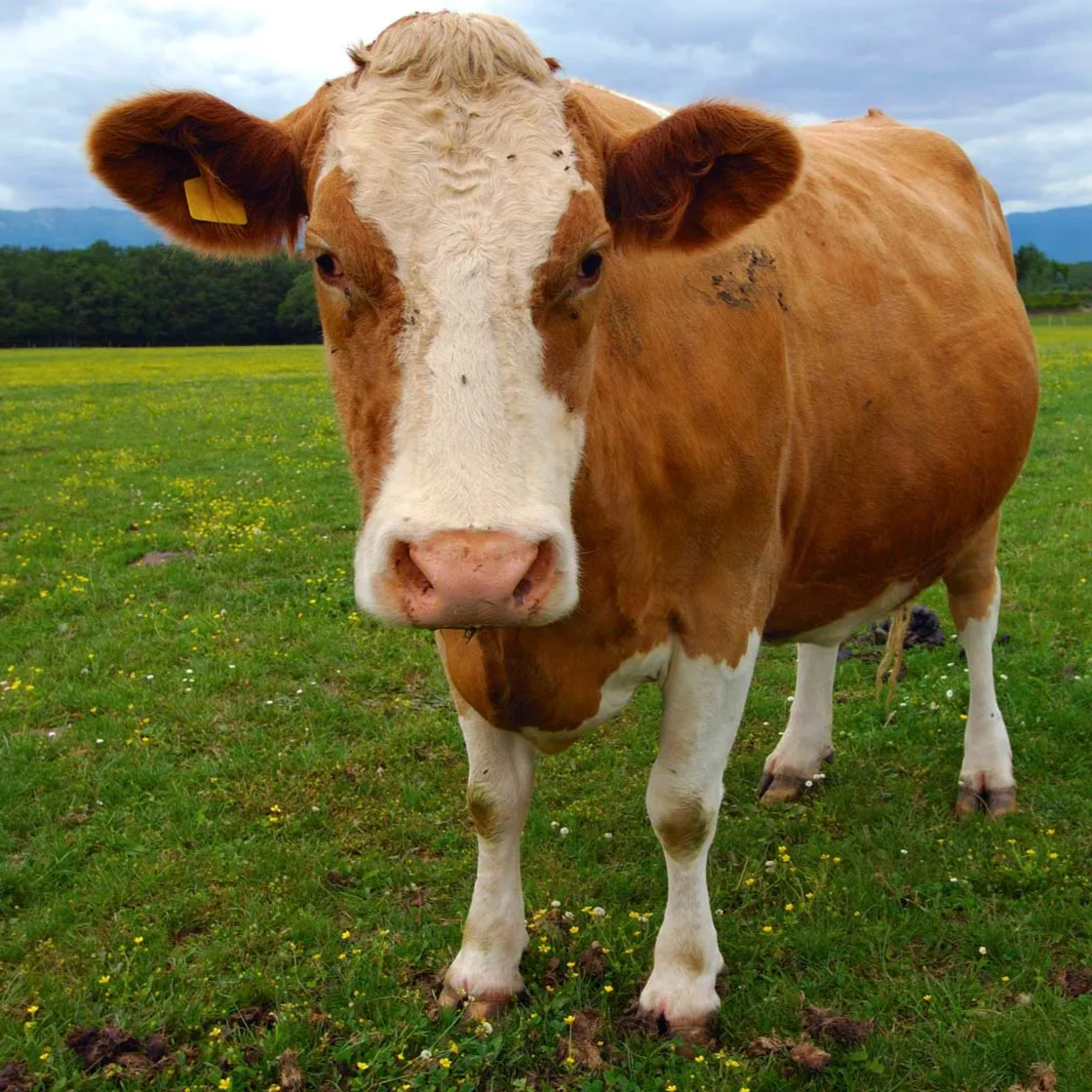
If you're a cow, I'm sorry, but this is not your moment.
In fact, if you are a goat or sheep or other livestock mammal here in the United States,
this is not your time.
Similarly, if you are a beef eater, this is not your moment either.
But if you are a blowfly looking for places to lay your eggs, which hatch into what we
know as new world screw worms, this is your moment.
The United States thought it had eradicated you about 60 years ago, but you're back.
There are now more places for you to flourish to the detriment of beef and dairy prices
which are already sky high.
What are screw worms?
Who should be worried about them and where are they right now?
We're here to talk about all that and more on today's episode of Can I Bug You?
I'm UCR Science writer Jules Bernstein.
Here is always with my co-host, Senior Scientist at UCR's Entomology Research Museum, Dr. Doug
Yanigan.
Hi Doug.
Hello.
We are fortunate to be joined today by UCR Veterinary Entomologist Amy Murillo, who is leading
a new world screw worm monitoring program funded by the California Department of Food and
Agriculture.
Welcome Dr. Amy.
Thank you for having me.
So let's start with the basics for people who are unfamiliar.
What is a screw worm?
Well, first of all, there are many types of blowflies and screw worm is one type of blowfly.
We have blowflies all over here in California and the rest of the U.S. and most blowflies,
what they do is they lay their eggs in carrion or freshly dead animals and the immature maggots
will use that carrion to feed on and develop into adults and complete their life cycle.
And they're really important decomposers.
So I want--
I'm sensing a fly PSA coming on.
Yes.
So many most blowflies, really important decomposers, really helpful.
And so I don't want to paint all flies with the same brush that we're going to talk about
screw worm with.
Would you say-- is it fair to say that if we didn't have flies, we would be shoulder
deep in poop and dead things?
Absolutely.
Okay.
Flies are very important.
Thank you, flies.
Now the screw worm, the new world screw worm is the exception to this rule.
Instead of laying their eggs on dead things, they need a living flesh to develop.
So the females will lay their eggs on animals or humans that have an opening or a wound.
And the maggots will dig into that wound and feed.
And as they feed, they grow, and they make that wound deeper and more flies will be attracted
to that wound.
And it's not a pretty sight.
I've been told it does not smell very good.
And if left untreated, these wounds can be fatal.
So we're unlikely to see o-discruer hitting the shelves any time soon.
Absolutely not.
That would be the last thing you'd want to put on, too.
You don't want to attract them to you.
I think I just gave someone somewhere a gross idea, though, that's going to sell out, because
there's a market for everything.
I mean, it's bad enough if you've got an actual open wound, but you don't want to pretend
that you have them, because they will get into your eyes and other openings.
They don't have to have a wound.
So on that point, how worried should humans be about infections of this thing?
I think it's important for humans to be aware of it, but when humans feel pain, we tend
to know something is wrong, and we can take ourselves to the doctor.
And so that's the big difference between humans and animals.
I think right now we're very concerned about animals, because they can't always tell us
when something is wrong, and as I mentioned, if left untreated, there are treatments.
These can be removed from the wounds and animals and people can make a full recovery, but
it's very helpful to catch it early.
And so that's one of the big concerns right now with animals is being able to check the
animals and look for these potentially contaminated wounds with the flies and helping them.
So I don't need to be walking around in like a full snuggie and a helmet with like goggles
and things.
No, I don't think so.
And also, you know, the flies, if you're awake and walking around and moving, they're
not going to want to come to you because you can fight back.
And that's very risky.
They're going to want to try to lay their eggs when it's more opportune.
So if you're sleeping, if you're taking a nap outside, you are going to be an easier
target than if you're just existing and walking around outside.
And how big a wound does it need to be for a blow fly, a screw or blow fly to find and
deliver its payload?
The wounds can be quite small.
So the size of a tick bite, which is very small, is all that they need to enter and start
feeding.
How do they even see, do they have good eyesight?
How do they even find a wound that small?
No, they smell it.
I mean, that's all that they're antennae basically are good for.
They can smell members of the opposite sex and they can smell blood basically.
And also the smell of the larvae give off, which is why the larvae give off the smell.
It makes the wound bigger and deeper and makes them all happier.
So it escalates.
So a wound as small as a tick bite that doesn't even have blood gives off the smell of blood?
Well, a wound as a tick bite will give off the smell of blood.
I mean, it's not the kind of thing that humans can smell easily, but insects that have had
millions of years to evolve receptors for those sorts of molecules, they're pretty good
at it.
Interesting.
And as I was saying in the intro, we thought we had gotten rid of this thing 60 years ago.
Is there anyone in the room who remembers when this thing existed in the United States?
I'm the only person in the building who was alive when it was before it was eradicated
from the U.S.
I don't remember it well.
I mean, I was a kid at the time, but I lived in New York, so we didn't have that issue
up there, but I mean, I was alive and well when the program to eradicate them was taking
place.
It was a pioneering program, it really was amazing, and as like wonders of the practical
insect control world go, that would be one that's pretty high up on the list, because it
was the first attempt to use sterile males to control insects, and it was dramatically
successful.
I mean, they really put a lot of effort into it, and it was a huge success.
And it was a lot of research went into it.
It was a triumph of modern science, but now it's all at risk.
So I did want to ask about that.
Once you have an infestation of screw worm in your country, area, city, state, what steps
can you take to get it out?
Yeah, so right now we're still really relying on the sterile fly release, because it did
work the first time, and it does still work.
So by flooding an area with these sterile insects, when the sterile males meet with the
wild females, the wild females only meet one time.
If she meets with one of these sterile males, she will lay the eggs, but they will never
hatch.
And so it's a really effective way to manipulate their populations and cause rapid population
decline.
The issues right now that we're facing are building capacity.
So in order to have enough sterile males, you have to rear millions of them to drop
them in these locations.
And then how do you, do you have to give them millions of tiny vasectomies?
Like how do you sterilize a male fly?
They're still using gamma radiation, so they irradiate the pupil stage.
And then those pupae are what is released, either from airplanes or they have ground-release
chambers, and the adults will emerge from those pupae already sterilized.
And as long as they don't emerge like huge and green, that's a never mind.
There are hulk.
Thank you, thank you, somebody got to go.
One thing I wanted to ask you about, as far as this sterilization program, what
are two things?
One, how much basic science went into developing that sort of control program in the first place?
Lots of basic research.
I mean, that's the short answer, but really there were a lot of key things that had to come
together for this to work.
One thing was understanding the screw worm.
So watching the screw worm, understanding their mating process and that very key discovery
that the females only mate one time really opened the door to this kind of manipulation.
So this was in the 1960s when we eradicated it earlier than that earlier.
Yeah, this was much earlier because you needed that key discovery to even come up with the
idea that this could be possible.
And they did pilot tests in like, you know, Kurosau and islands off Florida and stuff.
They wanted to make sure it worked.
But yeah, that whole thing about the mating only once.
That was just basic entomological research, and it was an eye-opening.
because that's not really a common thing in insects.
A lot of insects will mate multiple times
over the course of their lives and screw worms.
Thank goodness are one of the exceptional cases
that only mate once.
- You could say they're romantics.
- Sure, so that was one really key part of this.
And then understanding that you could even sterilize insects
using radiation, so that was done with Dr. Sofla,
so that's a key discovery from another organism
that was brought to the blowfly.
And then after the proof of concept,
making sure that those sterile males are still acting
like normal males and they can still mate normally,
they can fly normally, all of that is just basic research.
And then to really execute this in the way
that was able to eradicate flies,
you need to be able to rear the insects in an artificial lab
so that you can have the numbers you need to release.
And so that also took many years
because these larvae typically use a living host.
They were not gonna be able to use living hosts
to mass rear them.
So figuring out a diet that involved fresh meat and blood
and the temperatures, so the host is a much higher temperature
than ambient temperatures.
So these rearing facilities have rooms that are very warm
and humid and then they move them into another room
that has a different temperature and humidity
so that they'll pupate there.
And like all of these steps in order to get the females
to over-posit indoors in this lab facility
took many years of basic entomological research
and perseverance so that we could have the program we do now.
- And do you happen to know
who was spearheading that basic research?
- This was all spearheaded by the USDA
and it was Dr. Nippling and Bushland
who were the leaders of that.
And Dr. Nippling was really the lead on this idea.
- So you're telling me in the 50s,
Dr. Nippling got a green light to watch flies do it.
- He did and he talked about this later he did interviews
and talked about how he didn't talk about it publicly
because it would have been seen as government waste, right?
The government is going to pay scientists to sit around
and watch flies meat.
That's a pretty radical idea.
- So he was worried that doing basic fly biology
would have been considered waste, fraud and abuse.
But in fact, it became a cornerstone
of a successful eradication program.
- That's correct.
- Interesting, interesting point about basic science.
And now that they're back, so where are they now?
Where are the flies now?
- As of today, which is June 24th,
we have 19 cases, 17 of them are still active.
They are confined to Texas so far.
So there's several counties where the fly has been found
and we're still monitoring and updating every day now.
- Okay, and how did they, so they were gone for 60 years,
I guess there were like one or two small re-emergences
that quickly got squashed.
- So those were in Mexico as well, they weren't in the US.
- Oh, okay.
And there was like a something in Florida, maybe briefly.
- In 2016, 17, there wasn't outbreak in the Florida Keys.
And that lasted about one to two years
while they did sterile releases.
- Okay, and some people are making the claim
that the program that monitored and contained
screw worm in Central America was canceled,
perhaps becoming a factor in the re-emergence
of them here in the United States.
Are you able to speak to what role that cancellation
or perhaps a program like Doge and the cuts they made
may have played in the re-emergence of screw worms
in the United States?
- I can't really comment on that.
I'm a scientist, however, what I can say is now,
the USDA is really investing in not only ramping up
the sterile male releases by building new facilities
that will be able to rear these insects
in this very specialized way,
but they're also invested over $100 million
recently in new research projects that will, again,
look at the fly biology, look at the technologies
that have advanced over the last 60 years,
and hopefully we'll have more tools
to combat the new world's screw worm.
- So it's not currently in California.
- That is correct.
- Is it goodness?
- Yeah, is it likely to come here?
- I think that we are all preparing for the possibility.
There are ways that we can manage the spread of screw worm.
So beyond the sterile insect releases,
we can do monitoring, and one of the tools
that California is using right now
is making sure that any animals that come into the state
from affected areas are inspected by a veterinarian
before they enter.
So that is one possible route of introduction
would be for an animal with maggots to enter the state.
So hopefully some of these regulatory measures
will help either slow or stop the spread of screw
worm into California.
- But that's, you know, it's asking a lot
to have that sort of extra step at it
into your interstate commerce and everything.
People are gonna have to be patient and tolerant
and willing to live with, you know, extra regulations
like that, but it's really necessary
because it's the price of failing
to keep things quarantined is way worse
than any inconvenience that something like that may cause
and a little extra expense is well worth that investment.
- Well, speaking of well worth it.
So from what I understand,
the USDA's economic research service
released production data summaries for 2024 in California.
And it appears that dairy products in milk
as well as cattle and calves are in the top four
California commodities totaling multiple billions of dollars.
- Happy cows come from California.
- Absolutely, it's our number one agricultural commodity
which often surprises people because we tend to be known
for other types of produce.
But really, we produce a lot of dairy products in this state.
- And so that's kind of what's at stake if it comes here.
And if it does come here because they're putting
in monitoring steps for cattle and livestock,
if it does come, is it likely to be through official commerce
or is it likely to be through like someone
who had a dog that got a scratch
and they drove the dog across the border or something?
- Well, to be clear, these regulatory measures
do also apply to companion animals.
So cats and dogs and other pets
that might be moving across state lines
are also supposed to go through this vet procedure
if they're coming from an infected area.
However, that is a lot more arduous
and that is more likely I would think to be missed
than our commodity animals.
In part because we think of this as a cattle
and a livestock pest.
And so I think we're more used to looking at it
from that perspective.
One of the goals of the grant I'm working on actually
is to educate not just large animal vets
but also small animal vets and more companion animal vets
because I do think it is possible
and maybe more likely that a screw arm could be moved in
on someone's pet unknowingly.
And the first thing that a pet owner is likely to do
is to bring their animal to their local vet.
And so if they are able to notice the signs
and report that to CFA,
we'll have a much better chance of managing it
right at the source.
- So in the very early stages of infection,
what are the signs you would notice?
- Yeah, so if you had a dog with a wound that wasn't healing,
that could be a sign.
As we talked about earlier,
there isn't a malodor associated with it.
So a smell of decay,
which we don't associate with healthy animals.
So that's another sign.
And there are some morphological characters
even for the maggots.
So it's important to know that there are other types,
so this condition is called myiosis.
When you have fly maggots that are feeding on living flesh
and that's what new world screw arm is doing.
They're a form of myiosis.
In other flies that might do this accidentally
or we see on occasion here,
though white maggots are kind of all over the wound.
But with new world screw arm, again, that screw
that implies that they're digging deep.
The way it's been described is that these maggots line up
like sardines and a tin
and they're in a single direction feeding down.
And so I mean, maybe I'm the exception,
but I would probably get in there
I saw something wrong with my dog, and I would look and see.
And that is one of the signs that might clue a vet in that this is not a typical mayis
case.
This might be something special.
And those maggots need to be extracted and sent to CDFA are California Department of
Food and Ag for inspection.
And they're going to look like little circles, because all that they show is the tip end
of their abdomen, which is, it was basically a little circle, and so you'd see a bunch
of little bobbing circles in the wound.
And it's, yeah, it's not pleasant, and it's pretty distinctive if you, I don't necessarily
encourage people to go online to look at photos if they're squeamish.
But it's the kind of thing where if you want to be responsible and, you know, if you care
about your pets and you have something going on like that, it's worth checking and playing
it safe.
What did they look like under a microscope?
So the maggots typically are cream colored, and they have a thin tapered end.
That's actually the head, and then a fatter post-year end.
So that's where these circles are, that Doug mentioned.
That's the butt end of the maggot.
And under a microscope, the new world's groom will have these rows of spines around
it.
And these spines help it to anchor inside the flesh and dig in.
And there are a couple of different ways to distinguish this from other maggots that
might have spines.
In short, they have more rows of these spines than some of the other closely related
flies.
Creamy maggots with big butts.
But it's mostly the behavior that's going to tip you off as to what they are, because
it's the behavior that makes them more distinctive physically that's hard to tell them apart,
especially as larvae.
The adults are also not that hard to identify if you're an entomologist, but for a regular
person it's just going to be another green fly.
So full disclosure, I was in Amy's office last week, and she had a bunch of flies pinned
to a piece of cardboard.
And yes, if you're an entomologist, you could tell them apart.
But to me, it just looked like a bunch of pinned flies.
So that brings me to another question, which is how essential is entomological knowledge
to monitoring for and eradicating this kind of pest, like could AI do it?
Well, in short, no.
So the difference between New World's groom, which we've been talking about and how devastating
it is, and a very closely related species that is completely harmless and is found here
in California, is a spot on the back of the head and the placement of some CD and the
color of the Baza Costa.
And you try to put that into AI, and it's going to be very difficult for even machine learning
to be able to distinguish those key characters.
And so I do think entomological training is going to be really important because the
first step in any sort of pest management is knowing that you have the right species.
And again, a very closely related species, completely harmless.
If we waste our efforts on that red herring, that could give New World's groom an opportunity
to grow in population or be devastating.
And in just a practical sense, suppose you have a sample.
If you hand a sample to an entomologist, they can identify it probably in a matter of
a few minutes, maybe even a few seconds if they're really familiar with these species.
Just taking a technician to position the fly under a microscope camera, take the photos,
take a whole bunch of them, send them to a computer and try to get a response back is
going to take more than ten times that amount of time that it takes a human to just look
at the specimen and know what it is.
Even if you've trained the AI to know the difference, you'd still have to spend so much
time and effort to get the necessary photographs and imagery sent into the computer to process
that you could do it faster by hand.
Well, right.
The main difference is say like a spot on the back of the head and that head is like a
millimeter in width.
So you'd have to position the fly just right to get a photo of that spot and then take
photos of comparable flies without the spot so you could say this one is definitely it.
It's very hard to get AI to do that sort of thing without a huge set of training things.
And just on the routine basis it's faster to do it by eye if you know what you're doing.
So to that end, so can you describe a little bit this grant that you got for monitoring
it in California and what are the different components of this program you're involved
in?
Yes, so this is a California Department of Food and Ag funded grant to work on integrated
pest management of invasive species and our proposal has four objectives.
One of those is to do monitoring and surveillance.
So we do have adult fly traps in four different counties in California.
That smell like dead meat.
They do.
So we are using swarm lore four.
So this is a chemical formulation that was developed by the USDA and it's called swarm
lord, swarm lore, okay, but I like that one better.
That's a marvel villain if ever I heard one.
Also a great band name, yes.
So this blend is meant to mimic these wounds we've been talking about.
So there's some sulfur element to it and it's stringent and blow flies love it.
So the traps are baited with this material and we have them in Imperial County, San Diego
County, Riverside County and Los Angeles County and we've been trapping monthly since
April and we are just keeping an eye out for these adult flies as well as doing some
education and working with our collaborators on what to look for.
So that's one part, another part of this is to bring together experts from California
and beyond.
So we have a working group and it's made up of entomologists and veterinarians from various
different departments across California and agencies both state and the USDA as well.
And right now it's been especially helpful.
We have members who are from out of state, Texas, Florida, Oklahoma on this working group
as well and so we're able to share information about the response and what's been going
on in Texas and it's helping California better prepare by seeing what's working, maybe
areas of improvement that could be worked on and that's been a really helpful tool for
sharing information so that all states can be prepared just in case we do see new worlds
group room.
And then is any part of this program going to be interacting with the farmers themselves
that you're doing or is that going to be somebody else's?
That will be one part of it so eventually well we're also working on developing materials
so especially since the detections in Texas we have my colleague Dr. Alcarry and I have
developed several different fact sheets ranging from things for vets and large animals all
the way to general practitioners for human health and these are all in our website and
I'll share that with you which is merillolab.ucdr.edu/screwerm and we have all of these materials
available and then what we're going to be doing is we are going to be interacting with
producers through different conferences in the state the World Ag Expo is in California
every year we'll be attending that and that should be a well-attended table.
I think so especially in the coming year so we are planning to interact with a lot of
different stakeholders and interest groups and really just try to inform people about
this so that they're aware I don't think it's something that needs to cause any panic
or you know anything like that we just want people to know that this is a possibility
so they can look for it especially if something is not right that's not fitting the typical
diagnoses that we would see here in California and are you worried that there are other side
effects perhaps psychological ones of the re-emergence of the screw worm in the United States?
That's hard to predict I mean it's been so long since we've had them it's how people
are going to respond I mean we now have you know mass media nonsense to contend with
and you know we can we always face misinformation coming out with real information and it remains
to be seen just how well the media is going to actually handle something like this.
Yeah I do think that there is a concern of misinformation especially and we saw this
in during the pandemic.
where there might be people touting their putics or, "Oh, if you just do this one thing,
it will prevent, you know, this infection."
And my concern would just be that people accidentally hurt themselves or their pets if they're
not getting information from trusted sources.
So the USDA has a great website, screwworm.gov, and they can find all sorts of information
that has been vetted by professionals on that website.
All right, well on that note, this has been another episode of Can I Bug You, produced
at KGCR Studios University of California Riverside by Jules Bernstein, Dr. Doug Yaniga,
and sound engineer extraordinaire, Mr. Elliott Fong, in cooperation with the UC Riverside
Anthemology Department, theme music by the talented Mr. Dean Littner.
Thank you for listening, perhaps it's time for a vegetarian snack.
We'll be back soon for more deep dives into the world of insects.
Podcast Summary
Key Points:
The New World screw worm is a dangerous blowfly that lays eggs in living flesh, causing fatal wounds if untreated.
Unlike most flies, screw worms require a living host and are not found on dead animals, making them a serious threat to livestock and humans.
Screw worms were eradicated from the U.S. in the 1960s through a successful sterile male release program based on key entomological research.
The pest has re-emerged, with 19 confirmed cases as of June 2024, all currently confined to Texas.
California is implementing monitoring, veterinary inspections, and public education to prevent spread through imported animals and pets.
Early signs include wounds that don’t heal, a lack of decay odor, and characteristic “sardine-line” maggots with spines that anchor into tissue.
AI is not effective for identifying screw worm maggots due to subtle morphological differences requiring expert entomological training.
A collaborative state and federal program involving veterinarians, entomologists, and public outreach aims to detect and contain the pest quickly.
Summary:
S. after being eradicated for over 60 years. S.
livestock, especially in dairy and cattle industries, where it could devastate production and prices. The re-emergence may be linked to weakened pest control programs in Central America, though this remains speculative. S.
response relies on a multi-pronged strategy: deploying sterile male flies to suppress populations, monitoring for infestations via chemical traps in key states like California, and educating veterinarians and pet owners on early signs such as non-healing wounds and distinctive, spine-lined maggots. These maggots are easily identifiable by trained entomologists, but AI-based detection is currently ineffective due to subtle physical differences that require human expertise. California has launched a monitoring program involving four counties, a working group of experts from multiple states, and public-facing educational materials.
The program emphasizes vigilance in animal health and highlights the importance of accurate identification to avoid false alarms with harmless fly species. While the risk to humans is low due to their ability to seek medical help, public misinformation could lead to harmful self-treatment. A coordinated, science-based response is essential to prevent widespread spread and protect agriculture and animal welfare.
FAQs
A screw worm is a type of blowfly whose larvae lay eggs in living flesh instead of dead animals. The maggots feed on living tissue, causing deep wounds and potentially fatal infections in animals and people.
Female screw worms lay eggs on open wounds or skin openings in animals or humans. The maggots hatch and feed inside the wound, causing it to deepen and attract more flies, leading to a self-sustaining infestation.
Humans are at risk, especially if they have open wounds or cuts. While humans can seek medical help when they feel pain, animals cannot, making them more vulnerable to severe infestations.
Yes, even a small wound such as a tick bite can attract screw worms because it emits a smell similar to blood, which the insects detect through their antennae.
The primary method is the release of sterile male screw worms, which prevent wild females from laying viable eggs. This method, developed in the 1960s, is still effective but requires large-scale production and release.
As of June 2024, screw worms are confined to Texas with 19 reported cases, 17 of which are still active. They are not currently present in California.
Chat with AI
Loading...
Pro features
Go deeper with this episode
Unlock creator-grade tools that turn any transcript into show notes and subtitle files.
 PodcastTranscript AI