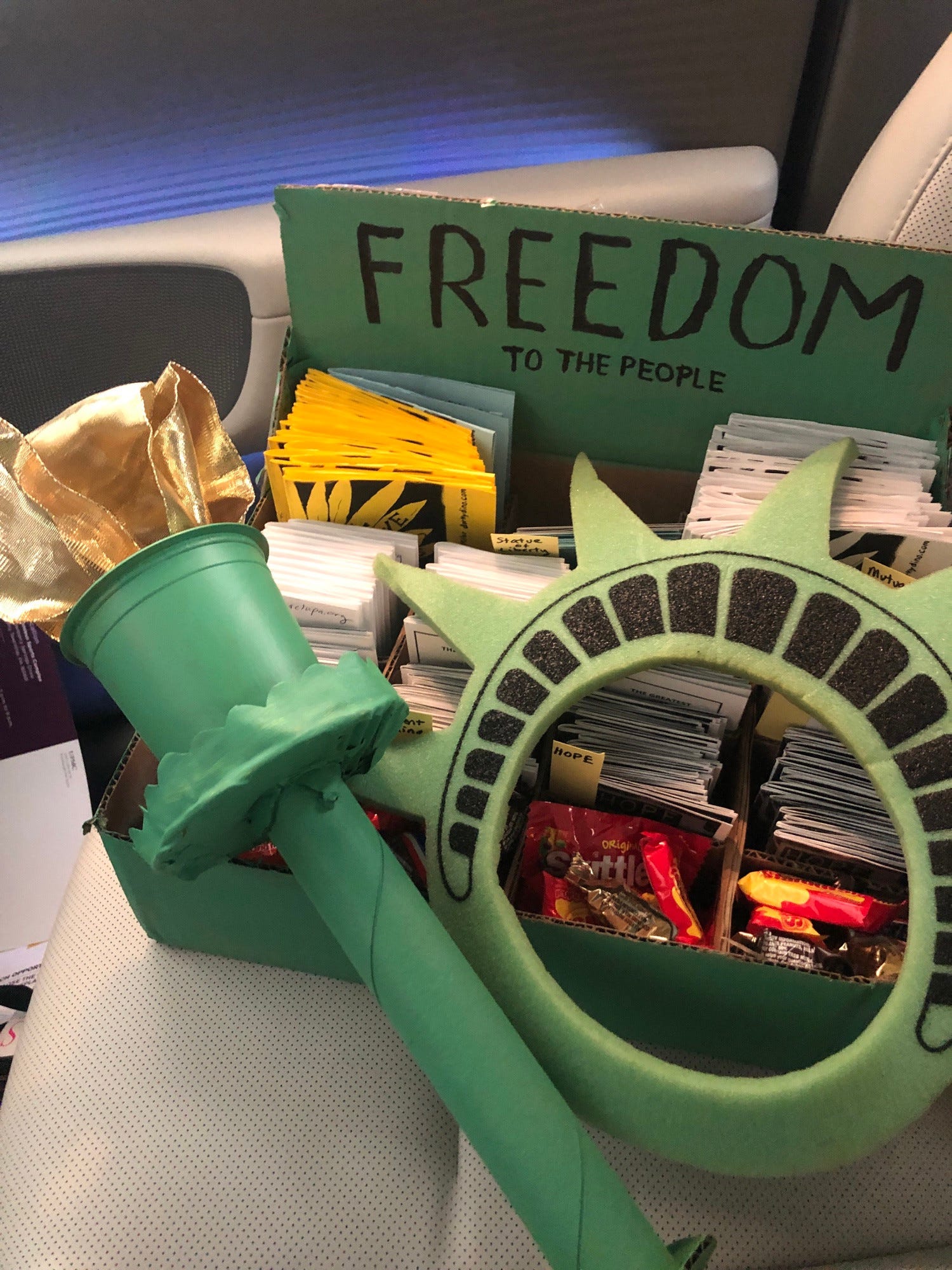
In this episode of Bright Green Futures, host Susan K. Quinn explores the complex relationship between anger and hope in the face of systemic injustice and environmental crisis. Drawing from personal reflections and real-world examples, she argues that anger is not the opposite of hope but a natural, righteous response to brutality—especially when it targets marginalized communities. She highlights how community, mutual aid, and compassion are not weaknesses but strengths, rooted in human nature and history. Quinn emphasizes that the dominant narrative of hopelessness is deliberately used to paralyze people, but stories of resistance, cooperation, and resilience offer a counter-narrative. She shares personal experiences, including waking from nightmares and finding strength in small acts of community, such as a bookseller’s efforts to educate others. The episode underscores that meaningful action—whether through writing, protest, or service—matters more than belief in or rejection of hope. It concludes with a call to action: to stay vigilant, take personal responsibility, and continue building a better world through collective effort, creativity, and care. The message is clear: we are not alone, and every act of resistance and care is a step toward a more just and sustainable future.
Hello friends, welcome to Bright Green Futures, Episode 38, Anger and Hope.
I'm your host, Susan K. Quinn, and we're here to lift up stories about a more sustainable
and just world and talk about the struggle to get there.
A friend reminded me of a post I wrote on my personal blog almost a year ago in March
2025.
She shared it with a friend who had just gotten back from a vigil in Minnesota and was struggling.
She wanted her friend to have Anger and Hope, and this piece titled "Anger Is Not The
Opposite of Hope" spoke to both.
I want to share it with you, but first I have a hard time articulating how deeply this
touched me.
My friend, reaching out to support her friend, using my words to help, that she thought
to tell me about it.
These webs of support and community we are building through the Trump regime's acts
of brutality are not just key to surviving and fighting.
They are literally the world we're fighting for.
The world I want to live in is one built upon support and care as foundational values,
where we understand freedom applies to everyone, where neighbors step up to protect neighbors,
and yes, even strangers.
The fascists do not understand that most of us do this automatically.
The compassion and a sense of justice are intrinsic to who we are.
They call themselves "heritage Americans" while trying to erase the history of us fighting
for exactly this better world from the beginning, back when we were a stubborn and audacious
people who declared independence from a king.
The original "No Kings" protests were 250 years ago this year, and these monsters running
our country right now want you to forget that while waving the flag they fought to destroy
in the Civil War, while they scream at us to comply with their brutality.
They can't understand why we refuse, because they've never had to fight for basic human
rights.
Even like the women of this country, the black and brown people, the queer and indigenous
ones, unlike immigrants who came here, drawn by the promise of our ideals only to experience
the ugliness of our bigotry, we understand that those who fancy themselves heritage Americans
have never embodied the ideals that can actually make America great.
Examples of equality and freedom that none of us are free and less all of us are free,
that there cannot be some people above the law, that impunity for some destroys everything
for all.
They do not understand compassion and empathy at all, much less, that welcoming immigrants
literally built the nation.
Let me your tired, your poor, your huddled masses yearning to breathe free.
Fascists only understand the "logic" of brutality.
It is their greatest weakness.
They cannot understand why a woman who is a poet and a mother would step up to protect
her neighbors.
Rename Mackling Good's final words, "I'm not mad at you," as she sat in her car next
to her wife were an outrage to brutal men who only understand domination, fear, and
compliance.
They cannot understand why a man who was a nurse would step up to help a woman ice was
brutalizing.
Alex Priti's last words were, "Are you okay?"
They executed him for it.
It is impossible not to be angry about this.
It is impossible not to be outraged and overwhelmed with the loss and horror of it.
And it is all too easy to get swamped by those emotions because we feel them so strongly,
so righteously, and because the fascists have been serving up an endless stream of atrocities
to overwhelm us and drown us in our own compassion.
Because all they have is fear, and they cannot understand why when they murder someone in
the street, it just causes more of us to come out.
They are incapable of doing anything but doubling down on their brutality because it is literally
all they know.
As I said, this is their greatest weakness.
And what they think is weakness in us, compassion and love, are caring and diverse hearts, are
automatic reaching for one another in empathy and solidarity, are not only unquestionably
strengths, they are virtues so alien to the logic of brutality as to be incomprehensible.
They cannot understand our outrage, they can only fear it because fear is all they know.
And while anger is the only decent response to brutality, anger is not the opposite of
hope.
I think that's why this piece I wrote a year ago spoke to my friend.
I wanted to bring it to the podcast, updated for 2026, in case you know someone or are
someone who needs to hear this right now, anger is not the opposite of hope.
A nightmare woke me up in the wee hours.
My subconscious was once again doing the work of processing the daylight horrors of the
world.
But my barely awake body was so full of fear hormones, I knew the only way to dispel them was
to literally physically get out of bed.
Move the body, complete the wake the fuck up cycle and process my emotions in my conscious
state.
The one where I have some effective tools to manage my fears.
One of those tools was to reread a post responding to a reader who just said nice things about
one of my works but was still feeling some of that dominant narrative that says everything
is pointless.
Thomas Orchard said, "Just the notion that folks might man together and cooperate feels
semi-fantastic to me these days."
I responded that that constant drum beat that it's "impossible for folks to work together"
is part of what has to be fought.
Interestingly, the immediate reaction I saw post-election here in America was people looking
for community, finding their people, focusing local, trying to find/build the safety nets
they're going to need.
Which makes perfect sense to me.
That's always what happens in a crisis.
The stories we tell about that don't match up with reality.
I aim to change that.
In this post, prior me did a good job of reminding just woke up from nightmare me that these are
the values I truly believe and practice in the world.
Writing hopeful stories where people band together and cooperate in realistic settings to fight
the fascists and the climate crisis isn't the only thing I do but it is one of the main
lanes in which I operate.
Picking a lane and sticking to it is key.
Remembering why you're there is also critical.
As a follow-up to that post, I share to TikTok from an indie bookseller that really speaks
to how people are seeking out new narratives, new understanding, new knowledge, to deal
with the assault on freedom, democracy, and the planet, an assault that's being waged
at many levels but most pressingly right now by the Trump administration and their dismantling
of America.
In that post, I said, "Education is the first step of resistance."
I welcome you to watch the video, I'll have the links in the show notes.
It was made by a woman who works all day in a bookstore, helping people buy books.
She's holding an inclusive space.
She's talking about it on social media, increasing her reach.
She's empowering person after person after person in her southern state to educate themselves
and challenge the dominant narrative that fighting is hopeless, working together as hopeless,
cooperation is hopeless.
She embodies hope in a literal physical way.
These readers and all of us who are paying attention, who care, are angry and scared.
But we are also seeking knowledge and reaching out and forming community wherever we do that.
When we are fighting, we are embodying hope.
I find it amusing when people discover that the hopeful story lady, that's me, is deeply
angry about the world.
And when I find a deep cynic or doomer who is nevertheless out there feeding the homeless
and practicing mutual aid, I think that's the reason why I'm doing this.
I know I found a crushed idealist who's found their cope.
There aren't many ways to get there, which is good because diversity is our strength.
I understand different folks need different ways to access hope.
Maybe you need more angry fiction.
Maybe you need the hopeful kind.
Maybe unsparing nonfiction that bears the realities of the world
is your access point.
Maybe it's the service berry, and it's absolutely radical,
gifting economy ideas.
Cynicism and humorism are emotional strategies to deal with the world.
I can't even say they're bad strategies,
in the sense that they're often just a kind of personality type,
or maybe an orientation for dealing with the world.
Either you got a gloss over some of the horribles
in order to get through the day and do stuff,
or you got to assume everything's horrible all the time,
so you'll never suffer the existential horror of disappointment
in order to get through the day and do stuff.
It's the do stuff part that is important.
If either of those methods of cope are stopping you from taking action,
then they are dysfunctional.
If they're just your personality type and method of cope
to actually enable action, then carry on.
So my metric with people isn't do you believe everything is terrible,
or do you believe there's hope?
But rather, what are you actually doing to enact change?
And if the answer is nothing, because I don't need to,
it's pointless, then that is the problem.
That's where you need an intervention to move you to a place
where you can take action.
It's the action that matters.
One way to understand this is that the dominant narrative
is almost entirely designed to stop you from taking action.
Keep your head down. Keep laboring for the machine.
Keep making content as a digital pro.
Don't agitate for change. Don't speak out.
Don't protest. Don't write op-eds.
Don't demand better. Never demand better.
Be happy with your crumbs, or we will take those too.
Also, we are taking them anyway.
In episode 24 of the podcast, let's talk about the doom loop.
I dig into some of the research about how stories help move people
from inaction to action. And it's widely varying,
because people are different. So, if you need the angry stories
to get riled up to do stuff, great. There are lots of those,
although fewer of the subversive ones, but still plenty.
If you need the hopeful stories to not be depressed,
so you can do stuff, that's where bright green futures comes in,
because there aren't a lot of those stories.
We need more, and that's my lane. There are so many battles
in the fight for a better world. Pick one, two, at the most.
The dominant narrative is the one the establishment hopes is disabling,
that there's no point in trying because it's all hopeless.
I think that's the dominant narrative because for most people,
that is the most effective at disempowering them.
Only a few of us will be like, "Fuck you, I'm doing it anyway,"
when we are thoroughly convinced the battle is already lost.
I'm convinced the hopeful stories are extremely effective.
Overall, for most people, in part because they are so actively diminished,
suppressed, and reviled, not just by the fascists,
but by people for whom cynicism or humorism
is the cope that keeps them from having to take action.
They don't have to fight because the fight is already lost,
but what if it weren't? Then they might have to do stuff,
and that is scary as hell. Scary, terrifying, in fact,
and raging, disorienting, but disempowering only if we allow it.
Sometimes I take action out of sheer spite,
simply because the system doesn't want me to.
I'm like that Hulk Giff, where he says, "That's my secret cap. I'm always angry."
Sometimes I wake up in a cold sweat, full of fear hormones,
and terrified for myself and the ones I love.
Sometimes what I need is a random bookseller on the internet to tell me
people are buying books by the wagon load,
because I know what books do. I know how ideas are the first step to change.
That's why the bad guys ban them. That's why they suppress women's writing,
ban queer books, scrub websites of extraordinary black people,
erase the disabled, and try to legislate trans people out of existing.
This is why I've doubled down in 2026 with my writing practice,
trying to get more of these subversive, hopeful stories out in the world,
so people can find them. Maybe those kinds of stories will work for you,
to process the fear hormones out of your body, and move it into action.
Maybe you need darker stories, or funny ones, or light escapism for a simple
break from reality, a breather, so you can come back to the fight,
rest is wildly underrated. It's not something you deserve after working
hard, it's something you need so you can return to the fight renewed.
And to just live your life, experience some joy, hold your friends and family,
maybe even laugh. For me, writing stories isn't just doing my
lane work, it's also essential for my mental health.
I'm doubling down on writing this year because I'll be damned
if I'm going to let the fascists take my writing from me.
Whatever it is that keeps you going, do that. Again, and again,
be absolutely relentless in protecting what keeps you afloat in the storm.
Be angry, be full of fire, be unwilling to give up.
Reject anything and everything, including the thoughts in your own head,
that tells you inaction is the answer. You know better, and you're not alone.
I'm not going to tell you that fighting fascism is going to be easy,
that's almost too absurd to even say out loud.
I will tell you, we are going to win, not because I know the future,
but because I know us. I know the future is unknown and we are here to write it.
I know fascism only knows how to destroy. They need us to build literally anything,
which means we get to create the world we want to live in.
We are in fact building that world right now with every action we take.
I am so proud of the people of Minnesota. They are leading the way right now
showing us how to fight. I am proud of every single one of us
who is supporting and donating and speaking out and stepping up.
I promise every one of those actions feels better than despair.
Whatever you need to do to stay out of the dark places and take action,
please do it. We need you in the fight.
If you enjoyed this episode of Bright Green Futures,
please support the show by subscribing and sharing with your friends.
If you're listening to the podcast, make sure you subscribe to the newsletter as well.
This year, I'm going to send out more newsletters as a way to share hopeful stories
and other information between podcasts. I'm also hoping to spruce up the website,
but you can already find links of helpful climate fiction,
the Bright Green Futures anthology, free solar punk museums,
and a list of the top 10 solar punk books every library should have.
Making requests at the library, sharing all kinds of art,
whether it's stories or podcasts or crazy little TikTok videos,
is one way we connect with each other. And that's how we get through these hard times
together. Bye for now and remember to keep imagining the possibilities.
Podcast Summary
Key Points:
Anger and hope are not opposites; both are valid and necessary responses to injustice and systemic brutality.
The current political and social climate fosters fear and despair, but community, compassion, and solidarity are powerful forces that resist domination.
Historical and cultural roots of justice, freedom, and mutual aid show that the values of care and cooperation are foundational to a just society.
Fascist ideologies rely on fear, compliance, and domination, which makes their inability to understand empathy and compassion a core weakness.
Personal and collective action—such as reading, protesting, and building community—demonstrates that hope and resistance are tangible and interconnected.
The dominant narrative of hopelessness is designed to disable people from taking action, but stories of cooperation and resistance can counter that narrative.
Mental health and resilience are strengthened through creative expression, rest, and community, which are essential to sustained activism.
The fight against fascism and environmental collapse is not just political—it is a collective human effort to build a world based on care, justice, and imagination.
Summary:
In this episode of Bright Green Futures, host Susan K. Quinn explores the complex relationship between anger and hope in the face of systemic injustice and environmental crisis. Drawing from personal reflections and real-world examples, she argues that anger is not the opposite of hope but a natural, righteous response to brutality—especially when it targets marginalized communities.
She highlights how community, mutual aid, and compassion are not weaknesses but strengths, rooted in human nature and history. Quinn emphasizes that the dominant narrative of hopelessness is deliberately used to paralyze people, but stories of resistance, cooperation, and resilience offer a counter-narrative. She shares personal experiences, including waking from nightmares and finding strength in small acts of community, such as a bookseller’s efforts to educate others.
The episode underscores that meaningful action—whether through writing, protest, or service—matters more than belief in or rejection of hope. It concludes with a call to action: to stay vigilant, take personal responsibility, and continue building a better world through collective effort, creativity, and care. The message is clear: we are not alone, and every act of resistance and care is a step toward a more just and sustainable future.
FAQs
Yes, anger and hope are not opposites. Anger is a valid and necessary response to brutality, while hope remains the foundation of resistance and action.
Compassion and solidarity are seen as strengths because they drive community action, mutual aid, and resistance—values that fascists cannot understand or emulate.
The podcast emphasizes that hopeful stories and community actions can combat despair, showing that collective effort and resilience are possible despite fear and oppression.
Education is presented as the first step of resistance, empowering people to challenge dominant narratives and understand that cooperation and change are possible.
Yes, cynicism or humor can be healthy coping mechanisms, but they must not prevent action. The key is whether they enable people to take meaningful steps toward change.
The host writes hopeful, subversive stories to inspire action and counter the dominant narratives that promote despair and inaction, especially in the face of fascism and climate crisis.
Chat with AI
Loading...
Pro features
Go deeper with this episode
Unlock creator-grade tools that turn any transcript into show notes and subtitle files.
 PodcastTranscript AI