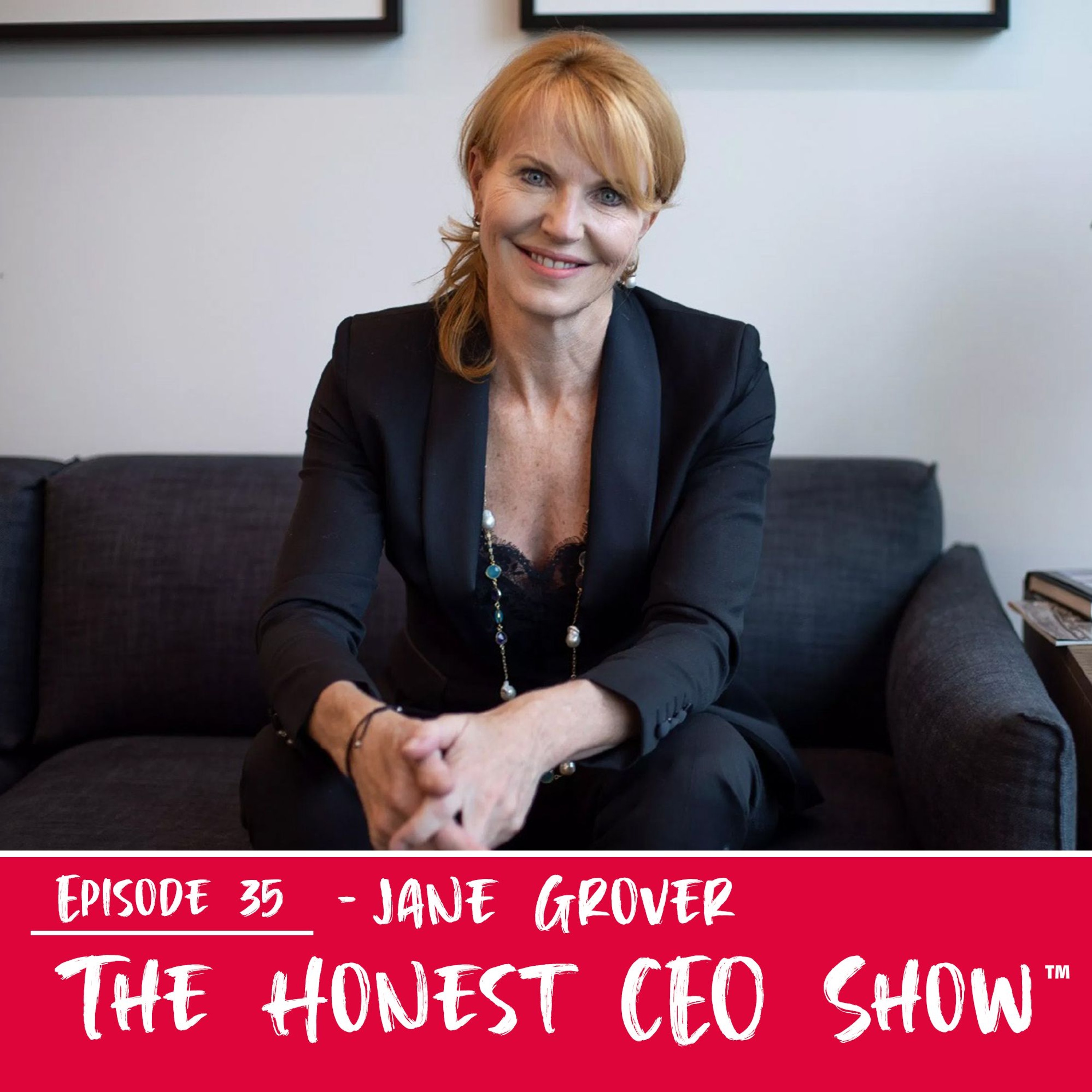
Ep. 35 Jane Grover, CEO of Southern Metropolitan Cemeteries Trust
37m 46s
Jane Grover, a seasoned CEO featured on the Honours CEO Show, discusses her transformative leadership journey, emphasizing customer focus and adaptability. Her career began with early lessons in customer service from her family's business, followed by diverse roles at Sheraton and Crown Resorts, where she embraced opportunities across departments, building resilience and a mindset of continuous learning. As CEO of the Southern Metropolitan Cemeteries Trust (SMCT), Grover redefined the traditional cemetery sector by shifting from an operations-driven model to one centered on community and choice. She introduced amenities like cafes and event spaces, fostering environments for connection and celebration of life, which increased revenue from $37 million to $65 million. Grover highlights the importance of external inspiration, data-driven insights, and inclusive strategic planning to drive relevance. Challenges included managing stakeholder fears, particularly with funeral directors who were both customers and competitors, underscoring the need for clear communication and empathy in leading change. Her approach demonstrates how purpose-driven leadership can innovate even the most traditional industries.
This is the Honours CEO Show hosted by the Honours CEO Caroline Kennedy. Get ready to be informed, inspired and motivated by the Honours stories from passionate, extraordinary business people who share their ups and downs and their learnings on the journey to building success in business. Welcome to the Honours CEO Show where we uncover authentic journeys of remarkable leaders. I'm your host, Caroline Kennedy and today I'm thrilled to be joined with Jane Grover, a season CEO and executive leader who's led organisations such as the Southern Metropolitan Cemetery's Trust which we'll call SMCT for short because that's a talent-twister and she's also held roles at Crown Resort and Box Hill Institute. Jane is a transformational leader who notably redefine the role of the Cemetery's in the community. Under her guidance, SMCT has embraced innovation, creative, lead, compassionate and meaningful experiences for the families in the community. But beyond her accomplishments as a CEO, Jane's leadership is a testament to the power of purpose which we were just talking about before we got recording, strategy driven and community engagement and putting the customer at the heart of everything that you do. So today we're going to explore Jane's journey, how she came to lead SMCT and the challenge she's faced in transforming such a traditional sector. So welcome to the show Jane. Thank you for having me, Caroline and I'm very excited to share my insights and my journey over the past three and a half decades of my executive career with the listeners today. Yeah, and we're so fortunate to have you here. So Jane, take us back to the beginning of your career. What were some of the key experiences that led you to pursue leadership roles and particularly in such diverse industries as well? My career started at a very early age at my insights. I came from a family that ran small businesses. So my father was ahead of the time because he got the customer and so when he left work at the end of the day, he would switch the phone. The phone would be diverged into our home phone. And so at a very early age, I realised that it was about servicing the customer and understanding the customer. And sustainability starts an end with being passionate about what you provide and the service that you provide. But the other interesting insight for me at a very early age was always, always take opportunities. And so I saw my family doing that and I was very fortunate to work. My first role was with the Sheraton Chain and I went through different disciplines from front office through to third and beverage through to housekeeping and it was embracing those opportunities that I realised that there that would help my career long-term in not being afraid and saying yes, not always having the experience that being willing to learn and someone wise said to me, you learn, you un-learn and you re-learn. And so with that, I realised that success is in the new skills that you learn and acquire and that continuous improvement that keeps you relevant. So I would say the Sheraton Hotel was the scaffolding of my career and then I was very fortunate to transition to Crown Resorts and I was there at the opening of the Crown Complex in South Bank. And again, it was a complex that had no systems, no processes, but they wanted people with experience, with values and passionate about change and not scared of really being involved in shaping the culture of the organisation, but the diversity of the organisation and the people that work there both stretched me, challenged me and shaped the way, shaped my leadership. And I love what you said before around how the diversity of saying yes in the different roles, even though you didn't have the necessary skillset to go from front office to back office to all of those very departments, but you leaned in and you knew you'd figure it out and you knew you'd learn the skill. And I think for me, that's about resilience and it's building that muscle of resilience because fear can take hold and if we learn from a young age or the beginning of our career that we can actually adapt and we can lean into things that are uncomfortable for us to learn to grow. And I think that muscle is critical to success because we're not holding back, we're leaning in and we're knowing we're not going to be perfect because nobody is, but we are really embracing opportunity and not being fearful of it, seeing it for the positive that it is and the opportunity that it is. Absolutely and it's not being fearful and it's, your words were spot on, it's leaning into it because the mindset of continuous improvement and not being fearful, but knowing that you're an environment and certainly crowned as an environment where you felt supported. So I had three different portfolios there. My background was sales and marketing. Then I was so sales and marketing, then I was head of corporate services, which is from technology to guest services to people in capability and then my last portfolio crown was security and surveillance. So they were all totally different disciplines, but there was a thing. The theme was around the ability to influence and work with people, the ability to build trust, the ability to ask questions, the ability to engage in authentic ways, but also to realising that you don't have all of the answers, building a team around you that have the experience and experience and perspective interlinked. That really helped me grow, but there was a culture of support and care and that really cemented both my skills and transformation because I understood there was a science taught. Yeah. That it was still all about the customer. And I think if you start from the customer, whether it's an internal or an external or a work back, it really makes you focus on what's important because there are a lot of things that can be distractions, that delivering value or service to the customer is what you'll measure it on as a leader. Yeah. Yeah. That is so true. And let's jump to SNCT because you were talking about transformation. I know that in every one of your roles, but particularly with SNCT because it's such an industry that's very traditional. And what was your vision when you stepped into the role as CEO? My vision was one of how do we make the organisation, an organisation where everyone is welcome, but also to it was about the customer. And so I keep saying I'm absolutely always focused on the customer because it was, so I'll describe the culture to you. It was an operation driven business. So we will provide these services. This is what we've done for the last 50 years and there really isn't a choice. But for me, it was around the sustainability of the organisation. It was about the relevance of the organisation. It was about care about the community. It was about care about the employees. So my vision for the organisation was one that everyone could honour and celebrate life as they choose. And it was about choice. And it was about customers and it was actually starting to understand what was important to the customer. And that was through the power of observation, through looking at the data that we had. It was by talking to customers, but also to it was working closely with the board and understanding what their aspirations were. And the aspiration was to make it a contemporary organisation where traditions could be preserved and new practices could be embraced and enhance the brand essence of honouring and celebrating life. But and through focusing on the customer and making sure that there was a really good culture within the organisation, which is multiple of things that you're doing simultaneously. The organisation went from an organisation that was generating when I commenced of $37 million. And I left, it was around $65 million. And that was not more people passing away. It was a services that we provided and the emerging value that we created that actually people chose us. They want to use our services and we changed our services from we had wellbeing centres. We introduced cafes, we introduced function rooms. We participated in different ways with this.
the community because we actually understood that the community had changed and we were also in an experience economy. So all of the skills that I've learnt at Crown and I've learnt from my parents around the importance of the customer and the importance of delivering value really transformed the organisation in such a positive way and if I look at my career to date I feel the word that I would say is pride. The organisation and we started, it had meaning and it had purpose and they were two key ingredients to its success. Yeah and what I love about what you said at the beginning was the observation and then looking at the data because the data tells the story, it always tells you a story and when you look at it too from a customer centric lens as well as commercial because at the end of the day when you're a CEO of an organisation you want it to be sustainable but ensuring that it adds value so looking from a customer perspective a commercial perspective and then tying all of that together that really is the science of transformation and then problem solving so looking at how do we remain relevant what does that look like? What are other industries doing cross industry analysis that we could bring into this traditional space to actually transform the experiences for our customers and that's exactly what you did. So can you Jane talk us through because our listeners won't know even though I've experienced being out at SMCT and it honestly was a transformational experience. In particular the dining experience, the community experience, bringing people together even though it's a time of grief, it didn't feel heavy in that sense of grief. It was very celebratory of life and I've got goosebumps as I'm talking about it and remembering it. So for our listeners Jane can you perhaps just talk them through what we are initial thoughts about transformation within the sector and how did you begin that transformation? So when I joined SMCT I didn't look to the traditional sector I looked externally and I looked at organisations that were really changing the game but were in traditional sectors. So when you think about the National Gallery of Victoria or when you think about the State Library, there are organisations that realised if they stayed traditional and if they weren't relevant they wouldn't survive and they were introducing cafes, they were introducing jazz in the evenings, they were doing book readings, they were really engaging with the customer in new ways and also too they understood that the world had changed and people wanted experiences. So when I joined SMCT it was making sure that I understood I was looking externally and not looking internally and then I sat down with the board and the executives and we did a number of workshops and we started on our strategic plan and sort of said what are the words that we describe, how do we see the organisation in the next five years and so we went through a number of workshops but it wasn't just the board and it just wasn't just the executives we got the whole organisation involved and that was also around trying to move the job with the culture because as previously mentioned the culture was traditional and it was very purposed but it was an old tradition and so I wanted to attain to feel pride in what they did, I wanted them to feel that there was a career path for them, I wanted them to feel like they were really an important part of the community. So there are a number of things that I was doing concurrently, also concurrently I was engaging and talking to people, role modeling behaviours, observing, listening and trying to paint a picture of the future and trying to give everyone a sense of pride about what we did and do and how we can be a really pivotal platform for people when they're potentially at their lowest. The other observation Caroline and so when they go to cemetery since Springvale Botanical cemetery has 1.4 million visitors a year so just think about that, 1.4 million visitors a year and they're all living. That was the other huge and slightly managed. While we were honoured and looked after the loss of their loved ones people kept coming back and so how did we create an environment where we could generate connections, we could display care, we could improve our sustainability and we also when you think about our cemeteries we were in quite a competitive landscape and people don't understand that. There are also funeral directors that offer similar services. So we had to make sure that we were offering services that potentially they didn't and so we had to have a point of difference. There were a number of things that we did and so the strategy in getting people involved, having a sense of the future, working on the culture of the organisation and then working with key, the other important part was working with key stakeholders and community groups to understand. What loss looked like for them or what celebration looked like for them and that helped shape the whole strategy of understanding the customer and delivering value to the customer in a way that they could honour and celebrate life and it really started to change their landscape not just from a Victorian point of view but nationally. Yeah. There was a talk about honouring and celebrating loss in a way that was contemporary and there were no constraints because loss and grief are really personal. Yeah. But it was in an environment that supported people where they could go and have a cup of coffee or they could go to the deck on a Sunday afternoon and listen to jazz. We did many things to support the community in a way that made us relevant but in a way that allowed us and people to come together and connect and share some of their grief. And that's very visionary in terms of the transformation that occurred but I think from your lens you've always been about the transformation and remaining relevant and I know from the numerous conversations that we've had because it's a big compass for me too in terms of when I've led organisations or when I work with CEOs about challenging that. The status quo and remaining relevant because nobody wants to be that business or steering the ship in and whether it be a business and organisation or an industry that is no longer relevant. And of course in the industry that you are in there will always be demand but how do you add greater value than what exists right now and I think you absolutely accomplish that. And the other thing I want to go back to is also when we talk about being customer centric and I say this to CEOs all the time, growth is on the outside and they say to me what does that mean and I say if you want to transform or grow this organisation look outside, start there and a lot of executives and CEOs find that initially when they start to evaluate their focus it's very internal and when we're looking at internal we might be about continuous improvement but what you'll find is if you're not looking external you're not bringing in those new perspectives, those new insights, your you haven't necessarily got that diverse thinking because you're just it's very tunnel vision and status quo and I think that's really critical for anyone who's listening and they're looking to disrupt their industry or just grow their business growth is on the outside that's where you start look at the data, look at the insights, look at the organisations or industries that are disrupting, look at how they're disrupting, how can you bring that into your current organisation and how do you remain relevant based on consumer buying patterns change because they do and I think you've hit the nail on the head with that Jane and that is why you are a transformational leader because you get it and you really understand it from the core and then you lead the change. Now we've talked about the successes I'd love to talk about because while there are plenty of successes there are always challenges along the way so tell me a little bit about the challenges that you faced in transforming such a traditional industry. So transformation and change is very hard and there was a science taught and you really summarised it was around challenging the dominant logic within the organisation and so people say they won't change but really do that and do they understand that
to have change, you need diversity. So new learning in any organization are the most important. And new knowledge resides with new communities. So you really have to be curious and you have to be courageous. And so the SMCT to me, it was, as I've highlighted, a gift, a highlight in my career, but there were also some incredible challenges. And so many stakeholders and many people, we know the fear of change. And what I went through that time is the importance of communication. And you touched on before Caroline around so many CEOs looking internally or look at the sector, they don't look external. And so one of the biggest challenges for me was also taking the funeral directors on that journey. It was a double-edged short and this is what makes it quite tricky. They were both customers and competitors. And so you're walking a tight-rope at times around you want their support and you want them to use some of your services, but you also know that they're looking at you taking some of their share of the wallet. So one of the biggest challenges that I had as a CEO was getting the cons right, getting the messaging right, refining the messaging, but also to an early days, not anticipating the way that some of them would respond. And so as a CEO and as an executive, I always am one for continuous improvement. And I look back and I thought to myself during that process, but this benefit stem, it makes their product more relevant. But what I didn't understand was that the messaging wasn't clear. It wasn't showing there was added value for them and their customer. And so one of the biggest, I've talked about the customer, but what I learned was really been sharp about the communications and understanding that your communications, when you're dealing with the, whether it's companies or community, it needs to be really clear. And you need to make sure that when you're doing such change that the key stakeholders are met in person, that you are showing empathy, you're showing authenticity, that your language is one that they can understand. And you really do need to take them on the journey. Because what I underestimated with some of the stakeholders is that they were traditionalists too. And it was had a fear of change. So one of my biggest insights during that period was being really clear about your communication, really clear about your messaging, really clear about the value that you're going to provide them and their customer. And then being courageous and moving forward, because so often people want change and they're fearful. But I always think about Rosa Parks on the bus in Alabama and that change and about meaning and purpose. And saying if things are going to change for the better, if I'm going to make an impact, then I've got to stay the course. So for any change piece, that communication space and what's in it for me, and clearly distilling that was one of my key learnings during that time. Yeah. And what I loved about that is also to thinking about human behaviour. And I talk about this a lot, because when we talk about fear, we're hardwired for comfort. And actually the neuroscience for brain is were hardwired for comfort. And a lot of the time individuals unconsciously realize, don't realize that they are responding with fear because of that hardwiring. And so it's operating very consciously first and foremost to be really clear on why is this occurring? What is the behaviour going on here? What does that mean for that individual, which is the empathy piece that you talked about before? And then being able to be influential because you get a sense of what might be going on for them. And interestingly is that the majority of people operate very unconsciously and not thinking about their patterns or their behavioural patterns and how they might not be serving them. And I know even for me in my earlier career, I was certainly very unconscious of my behavioural patterns, but I think, and you and I have talked about this, when we start to really overlay behavioural patterns and why people do what they do, it really can be transformational in how you show up for them with that multi-dimensional approach, right? Because we start to show up differently for different people based on their needs. And you do that very well, Jane. It is, I think, one of your, it's just a home skill that I know has taken many decades down, but you do that extremely well. And I think for you, could you talk to our listeners about what empathy means for you when as a leader, because I think we can use the word empathy and authenticity, but a lot of people, the definition is very different for them on their perspective on it. And I think it will be great to hear your perspective on it. So I would say empathy for me is built on being vulnerable. And if you're being vulnerable, you can display care and compassion and understanding. And from that empathy and from that vulnerability, you also then start to build trust. And trust to me is the currency of leadership. You cannot transform an organisation unless you take the people on the journey. And that empathy, and I was in a sector that is about care, about being empathetic. And as a leader, if you don't demonstrate those behaviors and don't genuinely demonstrate those behaviors, then you don't take people on the journey. So it was about being vulnerable, it was about being authentic, it was about demonstrating care, it was about demonstrating trust. But more importantly, when you're leading change, and you talked about fear, Caroline, people actually watch your behaviors, all of your behaviors, and they need to be concurrent with your words. And as a leader, and as an executive, you realise that unless you can take the people on the journey with you, unless you build empathy, unless you build trust, then they're not going to come on that journey with you. But as importantly to you really need to be passionate about what you do, and why you're doing it. And for me, as a leader now, it's really about making sure that I grow talent, that I role model talent, that I look at how do you develop them. And for me, I have a bit of a metaphor for life, life is sport. What are the things that you learn in sport? And you learn to win, you learn to lose, you learn to shame work, you learn to care, you learn about the dynamics of working with people, and the highs and the lows. And the human condition, what it is to be human. So for me, vulnerability is really being built in trust, being open. I'm showing too that as a leader, you have some of the same fears that they have, but together collectively, we can move forward together. And I think that that is really important to any leader, but for me, it's the satisfaction of why I lead it's to build a high performing teams. Yeah. And I'd like to circle back to that, the high performing teams, because I think that is something that you absolutely create in organizations is that high performance. And I've seen and witnessed how your executive team are all high performers. So if we were to distill how you create high performing teams into three elements, what would it be, or three of the top strategies that you look to, or doing that? I would, for high performing teams, I would make sure that my team are diverse. So they come from diverse backgrounds and they have diverse skills. And to me, experience in different industries is absolutely critical. Getting back to your point about looking out would lean out, looking inwardly. Leadership skills are so transferable. And I would say to anyone listening to the podcast that really wants to transform or innovate, look externally. I think the other being curious and good questions do the heavy lifting. Yeah. You know, a group of people that aren't scared and who ask questions that are curious to understand what are the different ways of doing things? Why do we think like that? And I think the other insight that I would have that people want consistency in their leadership. And so you know that you can go into a meeting, you can ask questions that there is consistency and psychological safety in those environments. So you can
innovate, you can question and if you do that, I think my earlier comment looks around new learnings come from diverse points of view. Then you've got everybody opportunity to make sure your organisation is relevant, sustainable, and can grow and flourish. Yeah. See how you've just distilled and I completely agree with them, particularly the curiosity as a skill is so underrated. But what you've just described are behaviours. Right? And so our psychology, how we show up and the skills that we use are 80% of success and curiosity, absolutely. I know I did some work a while ago with an organisation and they didn't have psychological safety at the executive level. Now they weren't conscious of it, but people would go into meetings and there would be individuals that were quite dominant and those voices were the only voices that were ever heard and everybody else sat back and they decided well I'm don't feel safe, I can't speak up so they didn't. And it is so limiting for organisations when there isn't psychological safety and there isn't curiosity and that stems from the culture and the leadership and I think what you've just said hits the nail on the head because when the leader is asking questions and it seems like such a simple concept but it's not and it's not easy to do is that creates that psychological safety it creates the curiosity and we do so with the willingness to want to hear other people's perspective and to hear their lens so that we can bring it all together but if people hold back your limiting the organisation and when we create cultures unintentionally by the way nobody ever creates it intentionally unintentionally, unintentionally create cultures whereby people are holding back you'll just get the status quo and you'll feel like you're pushing a boulder up a hill to get anywhere and and so thank you Jane for sharing that because I think you've hit the nail on the head with creating high performing teams requires those three elements. Now as we wrap up I'm curious as to what legacy you want to leave behind and the impact you want to have as a leader meaning and purpose are really important to me and who I am so the legacy that I want to leave is making sure that organisations understand the importance of the customer but also to making sure that as a leader you grow talent you nurture talent you give them opportunities for continuous learning and improvement and if I look at my career I have had great mentors Caroline that have invested in me and taken a chance on me you nurtured me backed me so as a leader my legacy I would like to leave to people joining the organisation or any organisation that I grow and nurture talent and that that generosity is paid forward by the next person and continuous improvement and continuous learning it's absolutely critical for the community for the individual to flourish so it would be around growing talent in any organisation and paying forward it's about the people and I'm very passionate about the people and one of my highlights at SMCT is when I left our employee engagement score was 90, 90 best in class when I joined it was in the low 60s and that was all about the people yeah and disting in the people and taking them on the journey so it has to it's for me it's all around the organisation and the people in that organisation are your intangible competitive advantage and never forget that and I just want to make a note on that so you have these high engagement scores you grew them significantly but you also grew the revenue so I want to highlight to everybody the connection between the two because the people make a business and so it's not just about the engagement scores they actually feed into the outcomes that you're delivering and when people feel valued when they feel passionate they thrive and I think your style of leadership is about setting people up for success and also to leaving them better than you found them and that's more about others than it is about you and I think transformational leadership is about putting the people at the heart of everything that you do and we can sometimes neglect that and in society we neglect that too you see that time and time again but you are a testament to the tangible value that that approach brings for people but also for businesses as well so it has a compound effect and so thank you for sharing today and I've got one final question for you we've worked together what was that like Jane? For me it was I would say so the thing is transformative it was a transformational experience in a sense that when your coach I had to ask myself you know how coachable am I and you actually Caroline would ask me a lot of questions and made me see things from different perspectives which really enhanced my leadership but also to enhance my self-awareness and that was a really big shift for me and like up high performing athletes high performing executives need to be coachable and they need to be open to feedback and they need to embrace that feedback so the organization can perform they can be a better performer themselves and also role model the importance of continuous learning I would recommend to any executive that coaching is absolutely critical to achieve high performing teams. Yeah, great. Well thank you for your time today I have love chatting with you and sharing your insights with our listeners and viewers you are a transformational leader who is a role model to many and we need more leaders like you Jane and I'm so grateful a that we got to work together and that I got to also learn from you because I did and and you're such an inspiration and thank you for that. It's been my pleasure and thank you for the gift that you gave me Caroline. Thank you for listening to the Honest CEO show with Caroline Kennedy. Don't miss an episode subscribe on iTunes for your weekly dose on all things business.
Podcast Summary
Key Points:
Jane Grover's leadership philosophy centers on customer-centricity, continuous learning, and embracing opportunities, shaped by early family business exposure and diverse roles in hospitality.
As CEO of SMCT, she transformed the traditional cemetery sector by focusing on relevance, community engagement, and creating meaningful experiences, leading to significant revenue growth.
Key strategies included looking externally for innovation, involving the entire organization in cultural change, and navigating challenges like stakeholder resistance through clear communication and empathy.
Summary:
Jane Grover, a seasoned CEO featured on the Honours CEO Show, discusses her transformative leadership journey, emphasizing customer focus and adaptability. Her career began with early lessons in customer service from her family's business, followed by diverse roles at Sheraton and Crown Resorts, where she embraced opportunities across departments, building resilience and a mindset of continuous learning. As CEO of the Southern Metropolitan Cemeteries Trust (SMCT), Grover redefined the traditional cemetery sector by shifting from an operations-driven model to one centered on community and choice.
She introduced amenities like cafes and event spaces, fostering environments for connection and celebration of life, which increased revenue from $37 million to $65 million. Grover highlights the importance of external inspiration, data-driven insights, and inclusive strategic planning to drive relevance. Challenges included managing stakeholder fears, particularly with funeral directors who were both customers and competitors, underscoring the need for clear communication and empathy in leading change.
Her approach demonstrates how purpose-driven leadership can innovate even the most traditional industries.
FAQs
The Honours CEO Show is a podcast hosted by Caroline Kennedy that features inspiring stories and insights from passionate business leaders, sharing their journeys, challenges, and successes in building successful businesses.
Jane Grover is a seasoned CEO and executive leader with over three decades of experience, having led organizations like the Southern Metropolitan Cemeteries Trust (SMCT), Crown Resorts, and Box Hill Institute. She is known as a transformational leader who redefined the role of cemeteries in the community.
Jane's early experiences in her family's small business and her first role at Sheraton Hotels taught her the importance of customer service, seizing opportunities, and continuous learning. These experiences built her resilience and adaptability, key traits in her leadership style.
Jane's vision was to make SMCT a contemporary organization where everyone could honor and celebrate life as they choose, focusing on customer choice, community engagement, and sustainability. She aimed to shift from a traditional, operation-driven model to one offering meaningful experiences like cafes, function rooms, and wellbeing centers.
Jane looked externally at organizations in other traditional sectors, such as museums and libraries, that were innovating to stay relevant. She involved the entire organization in strategic planning, worked on culture change, and engaged with stakeholders to understand customer needs, emphasizing choice and contemporary practices.
One major challenge was managing stakeholders like funeral directors, who were both customers and competitors. Jane learned the importance of clear communication, empathy, and demonstrating added value to overcome resistance to change and traditional mindsets.
Chat with AI
Loading...
Pro features
Go deeper with this episode
Unlock creator-grade tools that turn any transcript into show notes and subtitle files.
 PodcastTranscript AI