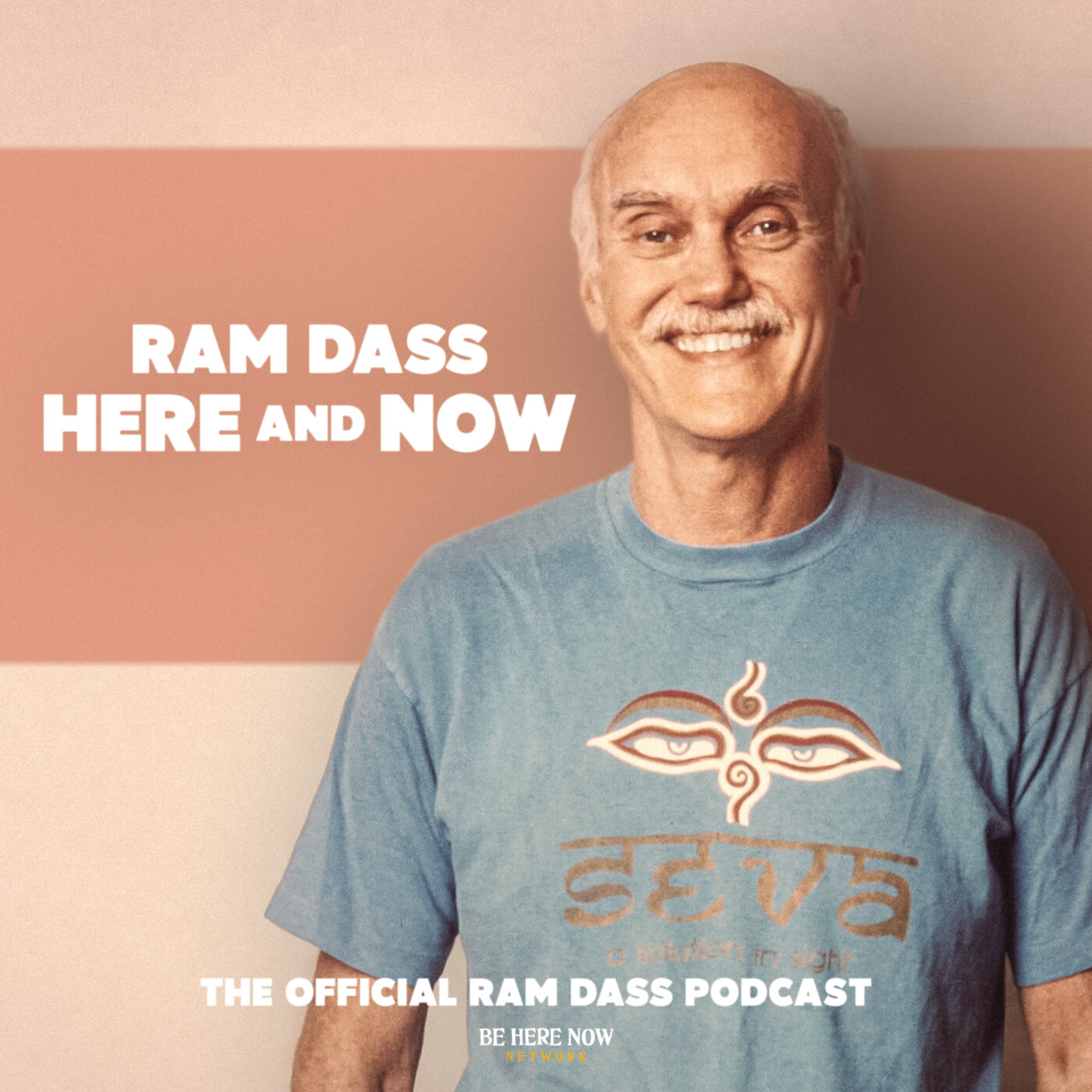
This lecture explores the spiritual process of listening and tuning, emphasizing that each individual's path is unique. It argues against forcing spiritual growth through intellect or imitation, stating that one must intuitively sense the right method and timing for their specific life stage and karmic situation. People are naturally drawn to different practices—devotional, meditative, or physical—based on their needs. However, all methods are temporary vehicles; the goal is to fully commit to a practice until it naturally "self-ejects," leaving the practitioner beyond methodology. The journey is not linear but a spiral of engaging with and withdrawing from the world, ultimately leading to a state where spiritual practice merges with daily life (karma yoga). The key is patient, quiet tuning to deeper inner guidance, trusting the process without judgment or haste.
This episode is sponsored by BetterHelp. If you're struggling with money, you're not alone. 88% of Americans are feeling some form of financial stress to start the year. That stress can take a toll on your mental health. Struggling with money isn't about failure. It's about finding the right support. Therapy can help you unpack your relationship with money. Healthier coping strategies and feel less alone in the process. With over 30,000 therapists, BetterHelp is the world's largest online therapy platform, having served more than 6 million people globally. They do the initial matching work for you so you can focus on your therapy goals. When life feels overwhelming, therapy can help. Sign up and get 10% off at BetterHelp.com/romdos. That's better, H-E-L-P. There is an excitement and a joy when you find a method that's harmonious with your being that you really feel is right for you. And then there is a great sadness when you go through the method and the method self-eject. Because the method became your home. The method became so familiar and so comfortable. Welcome to another episode of Here and Now with Ramdas. This is number 301, the process of listening and tuning. And it is a lecture from a workshop at the Lama Foundation in July of 1982. If you don't know, the Lama Foundation is a spiritual community founded in 1967 and the mountainside outside of Tau's New Mexico. And it is a place that Ramdas visited often. And it is known for being the place where B here now was edited and published. In this lecture, Ramdas explores the process of listening and tuning, which takes place on the spiritual journey as we find the practices that align with our unique karmic predicaments. And if you are looking for practices that align with your unique karmic predicaments, make sure you check out our upcoming 10-day course. Many paths, one mountain, practices for living with awareness and heart. So each day you will get some Ramdas and friends recording and each evening we will have a live call with some amazing teachers from Jack Cornfield to Trudy Goodman, Mirabai Bush, Deneena Rao, Lama Sultram Allioney, to Benji Worthheimer, Sean Corn, to Cortlandal and many others. It starts April 13th and it's a great way to either start a practice or infuse your practice. Go to Ramdas.org/course. And if you want to dive deeper into this episode, join the community. We come together for free twice a month to practice and explore the teachings. Go to Ramdas.org/fillowship to sign up. And with that, here is Ramdas here and now. Namaste and blessings. For everything, there is a season and a time for every matter under heaven. A time to be born, a time to die. Time to plant and a time to pluck off what is planted. Time to kill, a time to heal, a time to break down, and a time to build up, a time to sweep, and a time to laugh. Time to mourn, a time to dance, a time to cast away stones, and a time to gather stones together. Time to embrace and a time to refrain from embracing. A time to seek and a time to lose. A time to keep and a time to cast away. Time to rend and a time to sow. Time to keep silent and a time to speak. A time to love and a time to hate. A time for war and a time for peace. To feel our way into our own lives, our own predicament, to tune to the time, tune to what it is a time for. Each of us has a very unique predicament. No two of us are the same. So we can't imitate. We can only listen. Some of us are at early stages of life and this incarnation. Some of us are well along and we have different work to do at different stages. Some of us are just starting families, some of us have completed families. Some of us are not to have family. What do you hear it's time for you to do? We Westerners have such an agile intellect that we usually think about what we ought to do and then we do it with our thoughts leading. We get ahead of ourselves. We are always sort of one thought ahead of it. We think I ought to and we do it. We don't wait until there is an intuitive rightness about it. We don't tune to the deepness of the time for an action. We jump the gun because we create a model with our minds of how we think we ought to be other than we are and then we try to cram ourselves into it. And the predicament is that every act when you lead with your mind is going to have a pendulum effect. It's going to come back at you later on. Many of us went through the phony holy period in which we were holier than we really were. And then we all went back to the phony unholy period when we were less holy than we really were. Because we open and sense what the possibilities were and then with our minds we try to grab it. And you can't grab. You can only listen and tune and listen and tune and listen and tune. And in the process of listening and tuning you keep hearing many, many, many guides and instructions. Each one insisting that it is the true voice. And you buy a voice and you act upon it and a moment later you realize that you've merely dug your whole deeper. And as Orbindo said, you get up after falling on your face and you brush yourself off and you look sheepishly at God and you get on with it. The tuning is what a whole
whole life is about, it's a process of tuning to a deeper and deeper part of the universe of yourself. At one moment you're fascinated by something and a moment later it's trivial, it's empty, it means nothing. And then a new fascination takes hold and a moment later that's trivial and empty and means nothing. It's called Viragya, the falling away of desire, the falling away of wanting this or that. But you can't rush it by knowing about it in advance. You can't make believe you don't want something when you still want it. You can't make believe you're finished with something. The problem we face is that we get into a value judgment that it's better to be more enlightened than less enlightened, to be less attached than more attached. And actually all it is is different, it's not better. It isn't better to be 40 years old and 20 years old, it's just different. We're dealing with spiritual evolution. We're dealing with movement through vast amounts of time in which there is a process of awakening going on. I remember back in the 60s when we first took acid, we had charts on the board on the walls as to how soon everybody was going to get enlightened. How many millions would get enlightened how fast with acid as soon as we put it in the reservoir? And I look at all the people who were the front runners in that dance and I see that all of them have stopped counting as I have, not out of despair, but out of an appreciation that as Haridas said, you can't rip the skin from the snake, that you must proceed at the pace that is harmonious with your being. You can't wipe away past karma, you just stop creating new karma and then old karma just runs off. And even that process is a process that has its own time. There's a distinction between patience and despair in this game. Patience comes out of a trust. A trust that comes out of the awareness that it's all going fine. If you are in exactly the place you're supposed to be in at this moment and that you could relax into it a bit. Because if you're going to listen and hear, you have to be quiet to hear. Quiet of all models. Quiet of all fear, quiet of all anxiety. You have to keep quieting. And you can't wait till you're fully quiet so you don't hear clearly. You only hear approximations of truth. You keep hearing relative realities, relative truth. And you keep moving a little closer and a little closer. So in this sadhana or spiritual journey or practice, you can't really buy a road map and then follow it that easily because of the uniqueness of your predicament. For example, you may be somebody that is a very emotional person. And you begin to realize that the world isn't the way you thought it was. You begin to be open to the spirit and you just try to move towards some method that will purify you, that will bring you closer to living spirit. Well you've got a strong point going for you. You've got your heart. And so when you just open that way, you are drawn to devotional practices. You may go to church and look at a statue of Christ or Mary or sing hymns or love, honomon. And then as you go on with your practices, you may feel after a while that you begin to sense what's holding you back, where you have work to do. And that work to do may be in your body with your energy systems. You may feel at their block. They're really not moving very well. And you will find yourselves drawn to hotayoga or to other forms of movement. You Tai Chi or Akito or running or ways of moving the energy, of balancing your body, energy, getting it moving. Or you may experience that your mind is terribly agitated. You can't seem to keep it attending to anything for even a second. It's like what's called a monkey mind. And so you are drawn towards quieting the mind. And suddenly you're looking on bulletin boards and laundromats for meditation groups, something that was totally irrelevant to you a while back. I recall coming out of academia when I got into spiritual practices and went to the east, I was very attracted to Zen Buddhism because of its cleanness and its austerity. And it's Yana Yoga, it's mind beating the mind. I loved it. And to me all of the bhaktis stopped, especially the Hindu body. It was so schlock. It was so garish. It was so kind of gross. It had all these gods and goddesses. I was a Jew. I didn't believe in idols and all that stuff. It had gurus and I wasn't going to touch anybody's feet. Funny how it turned out. Turned out in spider-me. Spider-me. Now it may well be that for an individual you'll find one path that will so fulfill, captivate, involve and seduce you. Perhaps the path of the heart. And you will just go deeper and deeper into devotional practices. And as you go into devotional practices, say you are singing shriram, jairam, jaijairam, you are singing to ramb and you just keep doing that and doing that. Your mind is at the same point just as if you were following the breath. It's quieting and quieting in your concentration. And as you sing and your devotion gets deeper, you will find all of this kind of electrical fields of energy and you will find energy in your spine and you will find that all of the shockers are opening, all of the energy systems are followed. If you lead with your mind, with meditation, you will experience again an opening of the heart at certain stages and you will certainly experience energy changes. When people at our deep meditators have a hard time sleeping more than a few hours a night, they have so much shockty just from the meditation. And similarly, if you do hatha yoga in a true form, not as exercise but as a true, as as osmos of prayer, you will open the heart and quiet the mind. And first, that every method is a trap. Methods are traps. The horror is somebody that merely ends up an expert in a method. Who are you? I'm a meditator. Well, that's interesting. How do you do? I'm Dick. Because beyond the method, the hope is that your method will take you in, make you an absolute fanatic and then self-destruct and leave you beyond method. But you can't be afraid of being trapped. If you try to hold one foot back so that you won't look like a fool, forget it. And yet you can't leap into a method fully. Its surrender is not an ego matter. You can't decide to surrender. That is not surrender.
Surrender is something that happens to you. The surrender of no surrender. It just happens to you. You just get pulled in deeper and deeper just by the sheer harmony with you, a deepest, karmic essence. There is an excitement and a joy when you find a method that's harmonious with your being that you really feel is right to you. And there's a timing of when to let go of methods. Recently I was in a few years ago, I was in Santa Cruz and I had all these boxes of memorabilia, which I had always moved from house to house, assuming that someday I would run out of interesting things in life and I would go back over my history. They were all love letters and my bar mitzvah certificate and important documents from the 60s and they were all in boxes. But I never opened the boxes. I just kept adding to them. I guess assuming I'd run out of life sometimes. And I finally realized that life was getting richer and richer. In fact, simpler and simpler components of life were enough that I actually could sit in a room that was kind of empty and I would quite fulfill. And I began to realize that I was saving these things for the rainy day that wasn't going to arrive and I was paying UPS a great deal to do this. So I decided to burn my whole history because I knew Dawn Wann would be pleased. So I started to burn it and each thing I took up and I did it so campy, you know I'd take up something. Here's my bar mitzvah certificate. When this goes I'll never know I was a man. Each thing had to go in one by one. And old pictures you'd never see again. You know there was no negative. That was the last time you'd ever see that particular old friend in that memory. And I started out in the first day I was really light and very cute about the whole thing. By the second day it was starting to get to me and I was getting a little bit emotional about it and starting to hold things a little tighter as I put them into the fire. And I decided I had to have a fire because if I just used the trash bin which I did the first night I went out during the night. I've made a couple of few things I decided I'd made a terrible error. I might want to see though. Well there was a rascal helping me out. And as I was getting down near the end of the last blocks as he brought out a big pile of Maharaji pictures. And he said should I throw those in? And I said no I'm not quite ready for that yet. I still need my method. I still need my security plan. And everybody looked at me with disdain. I thought you were getting rid of it all. Well you don't get rid of a boat when you're still in the middle of the ocean. One thing you don't have to portage but you do carry it to the end of the trip. You do stay in it. There's a time for everything. But when you've had very deep practices a lot of us have found in the course of our lives that a lot of the very very externalized practices of devotion, all meditation or working with energy pranayam, we let go of. We let go of. We let go of into daily life. And we say well we're using daily life as our vehicle for coming into the spirit. We call it karma yoga. Meaning we're it's the yoga of our karma. We are coming to the one through what's given to us to do and to be. And that's very scary when all of the symbols of past start to fall away. Because you get to the point where you don't look different from anybody else. You no longer have a bad your a garment or a symbol or a club membership. You want to well I am too well and you can give the secret handshake like we used to do in fraternity. It's a timing. It's a timing. The timing that you intuitively feel the strength of the faith or the connection that you can live in the world. And yet not be of the world. That you can dance very close to the fire and just get a little synched. Lurking in your back of your mind is this a gross rationalization to allow me to go back into place a more. And you don't really know. You just have to trust some intuitive sense that says it's okay. The connection's still there. In my own journey I've been experiencing the pulls of cycles or really better said spirals I think. The spirals of going very much into the world. And then the spiral of feeling it's time to pull back and quiet and purify and deepen and empty. And then the pull of oh I got work to do in the world I can feel it. And going back in the world and then the pull to come back until the back and forth has ceased to be back and forth. Until the world is not the world and the not the world is the world. Coming up to Lama is for many of you leaving the marketplace. But you ask anybody that lives at Lama and it's a very full blown marketplace. It has its its share of neurosis. It's here of meladrama. It's here of suffering and greed and desire and longing to self pity and hope and joy and all kinds of stuff. You're just exchanging one microcosm for another, one marketplace for another. But one man's marketplace is another's another's rest space. I've noticed over the years I went where I would get so that I would feel my mind had developed so much toxicity from being just in the world of dealing with all of the issues of daily life. Changing the oil and doing the laundry and keeping the bank account and dealing with offices and bureaucrats and and achieving and being successful in praise and rewards and love and money and all that stuff. And I'd see the toxicity building up until I could just barely hear the whisper of spirit. And I'd say it's time. And then I'd drop things and I would go off and I go off somewhere. I go off to a monastery. I go off to India. I go off. I go off somewhere to quiet down, to sit by the ocean, to sit by the mountains, to reconnect just as the silent day does today. And each time, each year, I found myself doing a different thing with those periods of time, those three months. Sometimes I felt I needed one thing, sometimes another, and people would say, "Well, why don't you stay with one thing?" You're like a chip and soup spiritualist. You're just kind of everything all at once. You're just kind of a popery. You don't really commit yourself. They'd say, "Why don't you meditate?" And I could remember Maharajee saying, "Oh, meditation's very good." And the minute you'd start to meditate, he'd disturb you. The way the mind gets, I met a number of people who were the past and the meditators, and I decided that was very, very good stuff. I mean, my intellect said to me that that was a clear way. So I went to Godgyet and meditated with a number of thoughts on, and it was really good. I could see the progress. So I decided if 30 or 40 days is this good, think of what three months would be like. So the teacher was a very important teacher.
essence teacher, his name was Onigorca Menendra. And so it turned out that Onigorca Menendra went up to the mountains every summer. It's a little place called Kosani for the rainy season. So I went to Menendra and I said, "Menendraji, could I and a few other people come and be with you up there and would you instruct us in meditation?" He said, "Yes, that would be fine." So we went up and we found a house and the house needed a new roof and a new water system and we got all involved in getting that all ready. And I was very proud of myself that I was really going to go and do it. So when we came to visit Maharajit and have his darshan with great pride, I said, "I'm going to Kosani to meditate for the summer Maharajit." He said, "Very good." I should have smelled a rat at that moment, but I didn't. So the time came and the four or five of us went to Kosani. We went into our house and got already and it was on a Monday and on Friday Menendra was going to arrive. And we're going to start this rigorous summer program. We got everything already. Our Zafu's and our tea making apparatus and the whole scene. Around Thursday, we were way up on a hill that the village had two hills on either side of it. People went down to the village and they reported that there was an influx of Westerners coming in that were moving into the hotel downtown. Well, that was their business, but what became more alarming was that some of them reported having been sent by Maharajit. I began to see my whole summer going down the tubes and I said in my most authoritarian way, "They're not coming up this mountain. We're going to do what we plan to do." By Friday, there were some 20, I think, up like lemmings. And I was getting very alarmed and feeling very angry about the whole business, waiting for Menendra to come and save me. What should arrive but a letter from Menendra saying that unfortunately, due to unforeseen circumstances, he would not be able to come this summer. So I am left holding a bag that has got a hole in the bottom of it, obviously. So I get out of the hotel with my buddies and we have a dinner with everybody. And we all realize we're there. We've been sent there by Maharajit in one way or another. And across the other hill is a big ash from the vacant that Gandhi used to be at when he was in prison. So we make a deal and we all move into the eye-charmine for the summer we all work together in devotional and meditative practice. And finally, at the end of the summer, when it's time to go back to see Maharajit, we go back and he is giggling. Meditation master didn't come. Rambas teacher and he just thought that was the funniest thing. But all summer long, I had to end up being in some role of like teaching administration, do something. And it's like you pit yourself against with your mind, you decide how you think it ought to be. How it comes out is quite different as you must be finding by now. It's interesting how many of us when we were children had the model of what we'd be when we grew up. And you remember that. Can you look at who you are now and think whether it has anything remotely to do with what that model was? How many of you ended up firemen or nurses or few did? I mean, I didn't even know yogis existed. It's interesting how in order to listen, you have to be ready to let go. You have to be able to let go, be ready to let go of your models of how you thought it was going to be and who you thought you were going to become. The models end up standing in the way. There are ways of having models without getting stuck in them. Just like I can tell you that what I'm going to do for the rest of the summer through the end of November, I can tell you say October something. I say I'm going to be in Cincinnati or something like that. It stretches out from my mind a whole time and space scenario. Whether any of that will come to pass, who knows? Hold on tightly. Let go lightly. Hold on tightly. Let go. In order to listen, there has to be a quietness of mind. It doesn't mean you don't have any plans. It merely means that you are not so identified with a plan that if some new truth appears, you can't let go of the plan. Look at how much your daily life reinforces consistency. How much everybody knows who you are and how you're supposed to be and who you were yesterday and who you'll be tomorrow. All that's Doris. We know about her. Who are you? I'm somebody that you can't talk to before I have my coffee in the morning. All these models that we project out, we enter into conspiracies of defining a solid realities for each of us. How can you hear anything through that? Now let go. Let go. Let go. Let go. And this period up here at Lama is a chance to do that letting go. You don't have to be who you were the drove up to my feet. You can deal with chaos. You can deal with confusion. You can deal with uncertainty. You can deal with not knowing who you are. We'll scoop you up. We'll keep you in a box. It's okay. We'll get you off the mountain at the end. It's okay. You can let yourself splash around a little bit. Push your edges a bit in meditation, in devotional practices, in exploration, in opening to Ramayana, in tuning to nature. Come on out of the prison room for just a moment. And listen, just as Mila Repa sits at the front of his cave with his hand behind his ear and listening. This many of you have heard, but it's so sensitive that I would like to read it again. It's about listening. It's about Yeshi Dand and the Dalai Lama's physician. On the bulletin board in the front hall of the hospital where I work, there appeared an announcement. Yeshi Dand and it red will make rounds at six o'clock on the morning of June 10th. The particulars were then given followed by a notation. Yeshi Dand and his personal physician to the Dalai Lama. I am not so leathery askeptic that I would knowingly ignore an emissary from the gods. Not only might such sangh-fwa be inimical to one's earthly well being it could take care of eternity as well. Thus on the morning of June 10th, I joined the clutch of white coats waiting in the small conference room adjacent to the ward selected for the round. The air in the room is heavy with ill-concealed dubiety and suspicion of bamboozlemen. At precisely six o'clock he materialized. A short golden, barley man dressed at a sleeveless robe of saffron and maroon. His scalp is shavin and the only visible hair is a scanty black line above each hooded eye. He bows in greeting while his young interpreter makes the introduction. Yeshi Dand and we are told will examine a patient selected by a member of the staff. The diagnosis is as unknown to Yeshi Dand and as it is to us. The examination of the patient will take place in our presence after which we will reconvene in the conference room where Yeshi Dand and we'll discuss the case. We are further informed that for the past two hours Yeshi Dand and has purified himself by bathing, fasting, and prayer. I, having breakfasted well, performed only the most desultory of ablutions and given no thought at all to my soul.
Glance furtively at my fellows. Suddenly we seem a soiled, uncouthed lot. The patient has been awakened early and told she was to be examined by a foreign doctor and had been asked to produce a fresh specimen of urine, so when we enter her room the woman shows no surprise. She is long ago taken on that mixture of compliance and resignation that is the face of chronic illness. This was to be but an other and an endless series of tests and examinations. Yes, she dined in steps to the bedside while the rest stand apart watching. For long time he gays at the woman, favoring no part of her body with his eyes, but seeming to fix his glance at a place just above her supine form. I too study her. No physical sign or obvious symptom gives a clue to the nature of her disease. At last he takes her hand, raising it in both of his own. Now he bends over the bed in a kind of crouching stance, his head drawn down into the collar of his robe. His eyes are closed as he feels for her pulse. In a moment he has found the spot and for the next half hour he remains thus, suspended above the patient like some exotic golden bird with folded wings, holding the pulse of the woman beneath his fingers, cradling her hand in his. All the power of the man seems to have been drawn down into this one purpose. It is palpitation of the pulse raised to the state of ritual. From the foot of the bed where I stand it is as though he and the patient have entered a very special place of isolation, of a partners, about which a vacancy hovers and across which no violation is possible. After a moment the woman rests back upon her pillow. From time to time she raises her head to look at the strange figure above her, then sinks back once more. I cannot see their hands joined in a correspondence that is exclusive intimate. His fingertips receiving the voice of her sick body through the rhythm and throb she offers at her wrist. All at once I am envious, not of him, not of yeshydondin for his gift of beauty and holiness, but of her. I am want to be held like that. Touch so, receive. And I know that I who have palpitated a hundred thousand pulses have not felt a single one. At last yeshydondin straightens gently places the woman's hand upon the bed and steps back. The interpreter produces a small wooden ball in two sticks. Yeshydondin pours a portion of the urine specimen into the ball, proceeds to whip the liquid with a two sticks. This he does for several minutes until a foam is raised. Then bowing over the ball he enhales the odor three times. He sets down the ball and turns to leave. All this while he is not uttered a single word. As he nears the door the woman raises her head and calls out to him in a voice at once urgent and serene. "Thank you, doctor," she says, "and touches with her other hand the place he had held on her wrist as though to recapture something that had visited there." Yeshydondin turns back for a moment to gaze at her then steps into the corridor, rounds out and in. We are seated once more in the conference room. Yeshydondin speaks now for the first time in soft Tibetan sounds that I have never heard before. He has barely begun when the young interpreter begins to translate the two voices continuing in tandem, a bilingual fugue, the one chasing the other. It is like the chanting of monks. He speaks of winds coursing through the body of the woman, currents that break against barriers, edding. "These vorhases are in her blood," he says. "The last spendings of an imperfect heart. Between the chambers of her heart long, long before she was born, a wind had come and blown open a deep gate that must never be open. Through it charged the full waters of her river as the mountain stream cascades in the springtime, battering, knocking loose the land and flooding her breath. Thus he speaks and is silent. May we now have the diagnosis of Professor Ashton? The host of these rounds, the man who knows, answers, "Can genital heart disease," he says, "interventricular septal defect with resultant heart failure." A gateway in the heart, I think, that must not be open through it charged the full waters that flood her breath. So here then is a doctor listening to the sounds of the body, to which the rest of us are deaf. He is more than doctor. He is priest. Now and then it happens as I make my own rounds. Then I hear the sounds of his voice like an ancient Buddhist prayer. It's meaning long since forgotten, only the music remaining. Then a jubilation possesses me and I feel myself touched by something divine. In every act in life you can identify with being the actor or you can be listening and out of the quietness you hear and out of the hearing action followed. You are in business, you listen. You are in competition, you listen. When you hear a great musician, when you hear a mediocre musician, you are impressed with that talent. Well, you notice the quality of the voice. Well, you delight in the composition. But when you hear a great musician, you hear what they are listening to. A great musician is listening to those things that are beyond the sounds that come through the ears. And as you, the music reminds you, as you listen. And it takes you into the place where you hear the sound that is beyond the sounds that are available to humanity. And the circle is complete. As these two weeks go on, we are going to be exploring the way in which every act in life is a vehicle to reconnect into the spirit. No matter how mundane that act is, and we are focusing on developing the art of listening, quieting down enough to hear, opening our hearts enough to hear. If your heart is closed and there is a wall between you and the world, how can you hear? If your mind is so agitated and your attachment to your thoughts is so strong, how can you hear? If your body is your enemy, how can you hear? All of these methods are indeed methods of purification, methods to prepare you as an instrument to hear so that your actions are in harmony with the way of things, so that Dharma and karma come together, so that your actions are adormic and they are at the same moment working out your karma. It's the great coming together. And at that moment you are merely at peace and everything is merely happening, including desires, fears, yearnings, your humanity and your divinity. So listen. Listen. Listen. For everything there is a time, and now it's time to go indoors and hear the Ramayana. This podcast is brought to you by the LoveServeRemember Foundation and Ramdas.org. We appreciate you listening and we appreciate all the support that you've given us. Please continue that support and donate at Ramdas.org. We can then continue to share what Ramdas has been sharing for all of these years. Thank you.
Podcast Summary
Key Points:
The spiritual journey involves finding and eventually letting go of methods (like meditation or devotional practices) that align with one's unique karmic predicament.
True progress requires intuitive listening and tuning to the present moment, rather than forcing actions based on intellectual models or desires for enlightenment.
Different life stages and individual temperaments naturally draw a person to different practices (heart-centered, movement-based, or mind-quieting).
All methods are ultimately traps meant to be fully embraced and then transcended, leading to a state beyond method where daily life itself becomes the practice (karma yoga).
The process is cyclical or spiral-like, involving periods of engagement in the world and withdrawal for quiet purification, gradually unifying the two.
Summary:
This lecture explores the spiritual process of listening and tuning, emphasizing that each individual's path is unique. It argues against forcing spiritual growth through intellect or imitation, stating that one must intuitively sense the right method and timing for their specific life stage and karmic situation. People are naturally drawn to different practices—devotional, meditative, or physical—based on their needs.
However, all methods are temporary vehicles; the goal is to fully commit to a practice until it naturally "self-ejects," leaving the practitioner beyond methodology. The journey is not linear but a spiral of engaging with and withdrawing from the world, ultimately leading to a state where spiritual practice merges with daily life (karma yoga). The key is patient, quiet tuning to deeper inner guidance, trusting the process without judgment or haste.
FAQs
The lecture explores the spiritual process of listening and tuning to find practices that align with one's unique karmic predicament, emphasizing patience and intuitive timing over forced methods.
He explains that methods can become traps if one becomes merely an expert in them, but they are necessary to eventually transcend, as they should captivate and then self-destruct, leaving you beyond method.
He highlights that there is a time for everything, and letting go of methods should happen intuitively, like not abandoning a boat while still in the ocean, trusting when the connection remains without external symbols.
He shares a personal story of burning his memorabilia, describing the emotional journey from lightness to resistance, and how he realized some attachments, like pictures of his guru, were not yet ready to be released.
He states that no two people are the same, so practices must align with one's unique predicament—such as devotional practices for the heart-centered, meditation for the agitated mind, or hatha yoga for energy balance—rather than imitating others.
Patience arises from trust that you are exactly where you need to be, allowing relaxation and quiet to hear intuitive guidance, while despair stems from impatience and value judgments about spiritual progress.
Chat with AI
Loading...
Pro features
Go deeper with this episode
Unlock creator-grade tools that turn any transcript into show notes and subtitle files.
 PodcastTranscript AI