EP 292: Tom Randall — How to Program Your Training Like a Pro (Repost from Patreon)
from The Nugget Climbing Podcast
108m 7s
This episode of the Nugget Climbing podcast features a republished masterclass with Tom Randall on designing effective, self-coached training programs for climbing. The host, Stephen Dimit, introduces it as an evergreen resource packed with practical advice, now available for free along with a downloadable PDF summary. Tom Randall, a renowned crack climber and co-founder of Lattice Training, shares a structured approach beginning with a holistic self-assessment—understanding one's current climbing habits and objectively identifying strengths and weaknesses, ideally by gathering anonymous feedback from trusted climbing partners. He stresses the importance of focusing on only one to three specific areas per training cycle, warning against combining conflicting elements like strength and power endurance. The conversation also touches on Tom's personal journey, noting that his hardest ascents came after having children, which serves as motivation for climbers managing other life responsibilities. The overall goal is to equip listeners with a clear framework to build their own purposeful training plans, moving from broad objectives to actionable programming without getting lost in excessive detail.
Hello friends and welcome to the Nugget Climbing podcast. This is Stephen Dimit. And today I am resharing one of the most valuable episodes I have ever recorded on the show. I originally published this episode four years ago in February 2022 on Patreon. So this is the first time this episode is available for free. And it felt appropriate to share it again right now because it's the right time of year. My guest for this episode is Tom Randall. You know him as one of the wide boys. And as an amazing crack climber and off with climber, he's also the co-founder of Latest Training, which is likely the biggest and most successful climbing training company in the world. And this episode was essentially a master class in how to organize and program your training and move toward your goals, especially if you are a self-coached climber. I don't care who you are or what your goals are. If you are interested at all in improving your climbing, you won't want to miss this one because it is absolutely packed with nuggets. And even if you've heard it before, it's worth another listen because it's a new year. Everyone is thinking about what they want to accomplish and how they want to train. And this is one of those evergreen episodes with truly timeless advice. I mentioned towards the end of this episode that I put together a PDF with key takeaways as a reference sheet for you guys. And that is now free to download as well. Just use the link in the episode description or head over to the show notes at the nuggetclimbing.com. Find this episode and you can download it right there. I hope you are all having an amazing start to your year. And please enjoy this reposted episode with Tom Randall. Howdy. Hey, how are you Tom? Yeah, good, thanks you. Good. Excellent. Yeah. What's going on man? Well, first question was, can you hear the screaming children in the backgrounds? Let me listen. No. What about now? No, zoom is doing its job. Okay, that's cool. Amazing. I've been here so for very definitely crying down there. I love it. Little glimpse into Tom's life behind the scenes. Yeah, it's definitely a bit chaotic and maybe not probably not very like a lot of other pro climbers lives are like. Yeah, totally. Yeah. Although some of the big names are heading that way. We'll see if Adam Andre and Alex Hanold can keep pushing standards with kids. We'll see what happens. Yeah, it's a slow, it's a slow drip. And basically you just over time it just gets a bit harder and you're a little bit less motivated to like push against it. It's doable. You have to be super motivated. And then like five years in you go, I kind of can't be bothered on this particular thing anymore because I just don't want to fight against it for five years and then 10 years down the line you go, I don't want to do that anymore and you just slowly don't do it. How old are your kids Tom? They're 10 and seven. Okay, and I don't know this about you. Give us a sense of like when your hardest climbs have happened relative to having kids. Oh, all of my hardest climbing has happened since I've had children. Amazing. Amazing. So that is reassuring for people because I climbed my first 8B. So what's that? 13D. Yep, you got it. One month after my first child was born and then six months after I climbed my first 8C. Oh wow. And then it's just like I haven't I mean I haven't climbed 9A. So maybe I'll blame that on the kids. How old were you when you did your first 8B? 31 years old. Okay. Damn, that's cool. That's encouraging as well. We've got time. It took me five years to get to 7A. Okay, wow. Yeah, not very good climber. Well, that just speaks to your, your credit that gives you more credibility with your training. It means you must really know how to get stronger over the long term. That's awesome. Really stubborn. Really stubborn. That's amazing, man. It's good to have you here again. Yeah, it's yeah, I can look forward to seeing what we can get into and what we can kind of pull out from value to all those listening and you know, but the usual stuff because as you know, I'm I like I like theory and I like methodology and all that still stuff, but I'm most really interested in making sure it's practical for others to go away and as a coach, I like I suppose educating and saying how to do things with best practice. Totally. Yeah, totally. Same. I mean, that's at the heart of what I'm always trying to get to with this podcast is how do I take this these insights and make it actionable for myself and hopefully for as many people as possible listening. So yeah, today's topic tell me tell me what it is that we're going to be talking about and why this felt like an important topic to cover is this something you get a lot of questions about or you just feel is missing a missing piece of the training information that's so prevalent these days on the internet. I suppose the headline or the summary of what I'm keen to chat about really is all around this concept of self-coached climbers and the ability to take the pretty huge amount of information, which is very readily available on the internet or in books nowadays and take the methods and the theories and the ideas of what you can do within your training and apply those into building a basic functioning program for yourself. So really, I want to get people to the point where they can walk away from this podcast and go, okay, I grasp the starting point of a training program, the middle, the mess and what I need to do roughly and then what it should have looked like at the end if you've built something reasonably effective because yes, it'd be great if people come and get a training program from lattice that's written by coach or do a crimp plus skill template program within the app, but I also appreciate that there's loads of people out there that go, I just want to do this myself and I want to program and put everything else by my own power, which I know is really fun to do as well and it's a challenge. So I'd like to give people the framework under which to do that. Awesome, awesome. So yeah, just a deep dive today on programming your self-coached training for climbing and yeah, a lot of people, you know, something that's so common with self-coached climbers is they listen to a podcast like one of, you know, the conversations I've had on the nugget and something specific stands out to them and they want to try to add just one thing to their normal climbing, you know, maybe they're like a three or four day, a week gym climber, but they've really noticed that they could improve at this one thing and so they they add just one element of their training. So I think it'd be interesting. We can start at kind of the top level and just get, you know, where you start with an athlete that's brand new to this stuff, but I think it'd be interesting to cover how you would program like an entire training program that covers a bunch of different things towards a big goal versus how you would integrate a little bit of training into someone's normal climbing if they just want to kind of test the waters and, you know, for, for instance, try out like a six week hang board block and add that to their climbing just to get a little bit of finger strength and how you think about all that stuff, but yeah, maybe to start when you are talking about programming training, what are the biggest picture items? Like what are the foundational things that you start with when you're talking to an athlete about this stuff or coach about this stuff for the first time? Well, I think the first thing to do is importantly, you and you've identified yourself to say, look at the big picture items, the real foundational elements because the vast majority of individuals and coaches that I've trained over the years, they always want to go into the detail very quickly when they start putting a problem in, so keep the hell out of the whole detail thing until right to the end. That's so important to, I want to overstate that because I've done lots of training sessions with people where after 15 minutes they're in some really cool bit of theory and you go, no, no, no, headline summary foundation, big picture.
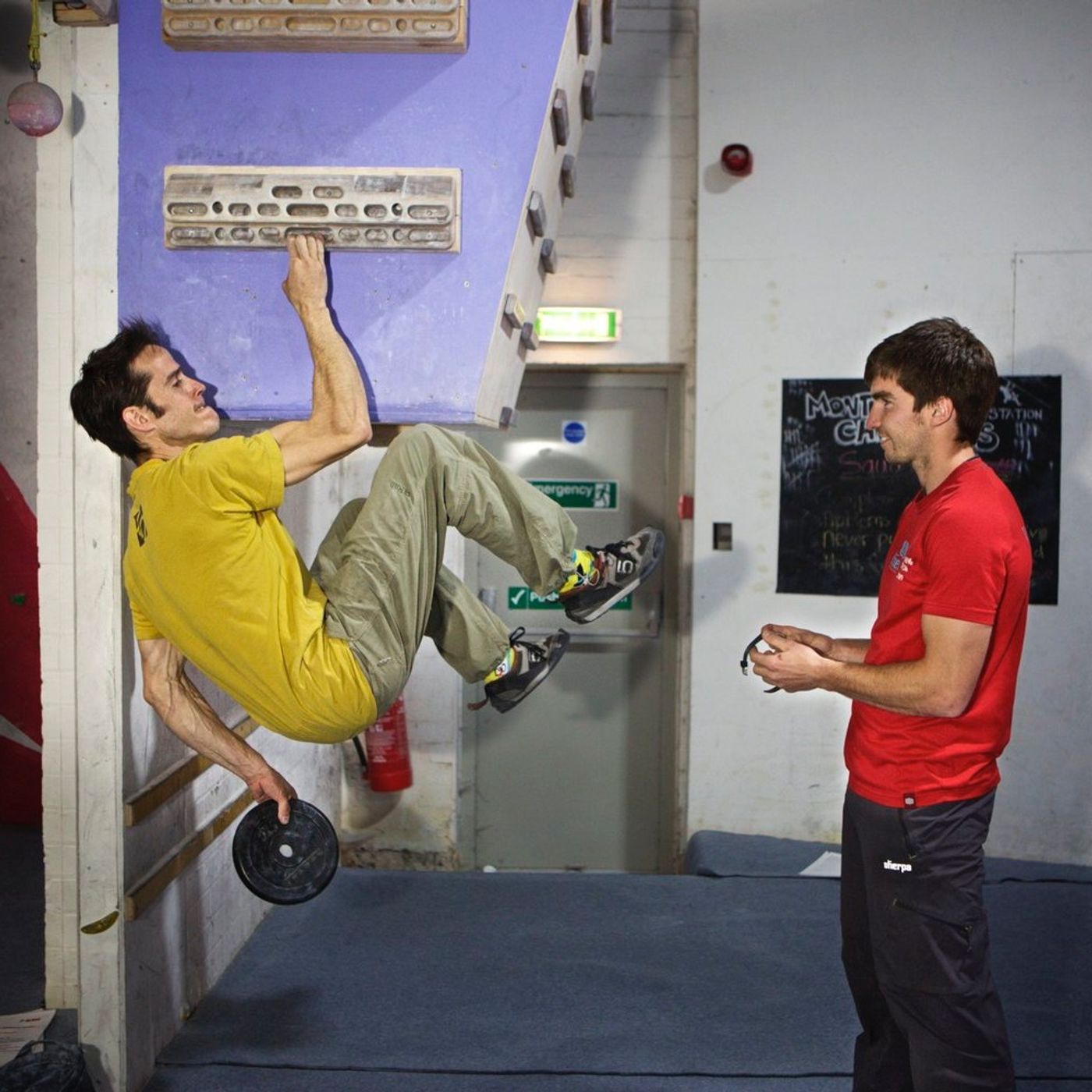
So that's correct. But in terms of the ordering of the big picture approach, I think the first thing that most people want to do is get some kind of objective view on one, where are they right now in terms of a climber and athlete, however you want to term that. So that's what are you currently doing in your everyday life of climbing activity? Are you someone who climbs once a week, five times a week, are you mostly indoors, are you on a hangboard, are you at the crack to build up a realistic objective profile of who you are as a person. That's really important. You want to get it down on paper and be able to keep referring back to that. And then secondly, is that you want to understand the relative strengths and weaknesses that you have within your personal ability as a climber. And that's ideally across skill sets. So technique, the physical side of things, and then also the mental psychological mindset side of things. And the easiest way I think for people to do that, if they want to do it on a low budget, but end up with a basic strength and weakness assessment that's practical and actually works pretty well is get together a group of maybe four to eight friends who know you reasonably well and climb with you reasonably regularly and ask them on a piece of paper privately so you can't see the results until the end and ask them to rank your top three strengths and top three weaknesses as a climber. And they can go for any cast degree you want. They just have to ask them to define those what they know about you as a climber. Get them all to write it down on the piece of paper. It's amazing to do on trips on rainy days and then collect together your pieces of paper, open them up and look at what are the common messages across four to eight climbers who are your friends because I pretty much guarantee you that your close friends actually know you very well and you will get answers that are quite meaningful on that front. Oh, I love that. That makes me so curious. I can't wait to I want to do that. I'm nervous to you but I think that'd be so valuable to do that with people I climb with. That's a great idea. I still have notes from some of the ones that I did with my friends back in 2006, 2007 and I was shocked by a few of the things they said but in the way that it hurt because I went, oh, I know it's true. I promise you I was training all the things I shouldn't have done because they were my strengths and I was ignoring these weaknesses but seeing four or five friends all say your short end, parentsurance, things that take 10 to 15 moves are really hard, it's terrible. You're right. It is. Yeah, yeah, that's a great example. I'm curious, any other examples that stand out for you, anything you still remember from that 2006 or 2007 timeframe? I think strength was my other one. Okay. Back then, I could barely hang a 20 mil edge two handed at body weight. Wow. I would shake. I remember doing it. Yeah. Wow. That's also amazing. You've come a hell of a long way as far as that goes. I have that image frozen in my mind of you. I don't know if it's all he's standing next to you or what but you're bald up on that, you know, that beast maker center edge with like a five pound or ten pound weight in your other hand. Yeah. Yeah. I'm definitely the product of plenty of training and being incredibly weak initially and it was because I put a high degree of focus and trusted the things that people had told me were wrong and this I suppose takes me to the summary headline concept of when you have identified all those things as an individual that you might be looking to work on in your your weaknesses or your errors of potential have you on a term that is you want to then say I can only realistically work on one to three things in a particular training cycle and keep that kind of focus on it. So say yes I can work on finger strength and upper body power or I can work on my roof technique and my on-site and confidence but be quite focused in any one training cycle because I've definitely seen poor results from training programs of those that identify eight things to do and they go I'm so psyched I should just work all of these over the next six months and they just end up with no focus it's better to do two really well than do six in a mediocre manner. You'll have a more mean result. Totally totally and it makes sense here and you give those examples why those might be good pairs you know finger strength with upper body power you can train those in a complimentary matter they don't really take away from each other too much same with steep climbing and on-siding confidence. Do you have can you give us examples of pairs that that you would want to avoid like things that would be mutually exclusive in a way you know they take away from one another. I'd say the two that would two pairs that would be very difficult to work to work strength and power endurance in the same cycle or to work endurance and power endurance in the same cycle. So the two two parts of the kind of energy system which are next to each other if you work them together you end up this weird blend of something in the middle and it's not particularly effective so you can work very high end strength and really low end base endurance to work together that works okay but a combination of stuff in the middle and next to each other it I don't see it as being hugely successful in most cases. That's yeah that's good to hear because I guess that would have been intuitive to me as far as the strength and the power endurance because the power endurance just takes so long to recover from and it's going to zap your you know your high end but I would have thought that the low end endurance and the power endurance would have been a decent pair so you think it's better to to avoid that combination. Yeah because if you're trying to develop and improve your power endurance what you're really talking about here is refining your your base capacity for aerobic work so that endurance work and you're refining it to the demands of your sport so whether that's a 15 bolt sport route a 25 a 30 35 meter not not bolt enjoyment meters so 15 or 35 35 meter and you're refining it to the demands of what you're going for and again for the angle that you're doing it so it doesn't really make sense that you'd be working all the kind of capacity style type work but then trying to refine it to the demands of your event at the same time it just doesn't make sense a same thing again is another coupling that doesn't work particularly well and I've seen some strength athletes get this wrong and it will often be for the boulders is they'll go oh I really want to feel really powerful peak performance at the moment so I'm just going to be working very very high intensity work so what I'll do is I'll do power work so power pull work and they might do a bar or a campus board but then they'll do it with a load of eccentric so lowering that kind of opening up on the movement work at the same time which is slower and more controlled because they logically they go oh I've read the eccentric work is the way to load the muscle at the highest possible amount of force which is true but they're very conflicting in terms of the adaptation and the stimulus that you get for eccentric high loading versus power which is effectively much lower intensity but very high velocity or high speed so those don't work very well together as well okay that's interesting because I've what are your thoughts on complex training as far as that goes because that's something that I've seen people play with a lot within climbing and outside of climbing like an example a couple examples would be pairing a max finger deadhang like a 10 second deadhang with campus doubles something very quick or something that sprinters do I think this is a Charlie Francis thing is do heavy dead lifts paired with box jumps do you think what yeah what are your thoughts on that complex idea I think the jury is probably still out on that one okay it's I can't see a massive reason for why it wouldn't work with certain individual athletes if they've got to the point where in the potential of what they're achieving with their training they're just constiplatowing and they've got very high lows and
to play around with different things or they've got a coach that knows their athlete very well. That might be worthwhile diving into kind of more experimental stuff. But I mean, I myself have worked with loads of athletes for a long time and I don't even feel like I have enough experience to say whether I would consistently use that with I mid-tier climbers. So I think it's probably like a jury's out. Okay, and maybe I'm getting us too far into the weeds. Diving straight for those details. Yeah. Everyone does it. Yeah, only way to put it down. Yeah. All right, awesome. I wanted to ask one quick clarification that just came to mind about this, you know, collecting information from your friends. It seems like it'd be important to leave it really blank. Like let them just write whatever comes to mind versus giving them categories to choose from. What are your thoughts on that? Is it just like a blank piece of paper? Yeah, I think it's best done as a blank piece of paper exercise because you will, if you force people to write about just a physical nature, you might find that some of your friends have absolutely no view on the physical nature of your performance. They might be, but they might be really capable with the mindset stuff. So in a way, it ends up as being a filter for the opinions of your friends, which are most valid. So your friends who's very good with psychology will tend to give you, you know, I think that's something to that side. Someone who's very good at physical training will identify on that side. So it gives you, I think, a more finely tuned picture with better expertise if you go that way. Okay, awesome. I love it. All right, so one of the things I was most curious about that seems like it's the next step, but let me know if I'm jumping ahead if we missed anything, then just let me know and we can backtrack and fill in the gaps. It seems like the next step is to talk about general programming, given that you want to focus on one or two things at a time. How do you educate newer climbers or newer climbers that are newer to training or new coaches in putting this stuff all together? Do you like to start with something periodized and do you have a way of moving climbers through that over the course of a training season versus doing blocks and kind of doing more of a rotation and touching on more things within a few month block? Is there an amount of time that you try to commit to with someone who's new to training that wants to really test the waters to make sure that they're investing enough in it to get something out of it? What are your thoughts on the overarching kind of structure as far as where to begin with training? In general, you want to take a almost like a backwards approach. So you take the timeline that you have to work on and most people, that's either a good part of the year where the conditions get really good in their local area or they have a trip plan for part of the year. And then so when you look at that part of the year and the goals that you have on that, you want to then put on one side, what does your goal, your project, your aim look like? And what are the demands of that? How does that match up with your friend's view and your history as a climber of where you're at? So how how disjointed are you? Are you aiming for a 513 onsite? But right now you're actually on-siting 12Ds quite regularly. Or are you trying to flash your first V11, but your best ever flash was V8 in this year? You've got a little bit of a timeline that you need to work on versus where you are now versus where you want to be. And then once you've understood that, it's to work backwards across that timeline from the goal and say what is realistic to achieve towards my goal in the timeframe that I actually have. And if you work backwards from that and you start to just apply in this sense, you just apply some intuition in terms of the kind of improvements that you'll see because every athlete's different to how quickly they respond to these forms of training. If it feels unrealistic for that timeframe, then normally you need to move your goals down and make them a little bit more cheap. Which is a good thing because it makes it more realistic. And once you have a point where you have a realistic matching of that time scale. So the end point and the start is that you just want to block out periods on an overview of when are you first you're going to have your your rest weeks? And you're going to do those cycles of harder work and then recovery. And then also you've got to plan in on a very high level view when you're holidays and work commitments or travel, family, etc. fitting in that plan and also put those in really, really early. So two items high level is does your timeline look realistic in terms of what you want to achieve compared to where you are compared to where you want to be? And then make sure that you put in right at the start all those immovable blocks like rest weeks and work travel conferences, etc. Because everything else around do I use block periodisation, do I use concurrent periodisation? So where you're doing working strength and endurance at the same time. For example, a raw complete side points unless you can dial that basic framework of how your calendar looks and whether it's realistic for your goals. Because again, people will get dragged into the detail of going, oh I want to know what's the best form of periodisation to use. Honestly, they're all fairly effective if you do them really well. But certain things will be more successful if you just get the basics which is timeline and immovable objects in your calendar. Get them in straight away. That's great. I'd love to hear. Do you have any recommendations for those rest weeks? Do you have guidelines for how often those should happen? Yeah, I would say the industry standard more less for climbers is around three weeks of hard work and one week of relative rest. And what I mean by hard work is that the loading for you is high enough that you feel like you're being pushed and extended and stretched as an athlete. And this can be technical, psychological, or physical. All of those match up with that model. And then in your relative rest week, it doesn't really want to be a full game over. I'm just going to sit on the couch and do nothing and watch Netflix. It's more like cut the total amount that you put into there by around 50% maybe a little bit more. And that's what I mean by the relative rest. So an example that that would be if you're in your working weeks climbing four days a week and you do a fingerboard session every other session in your rest week, you might climb twice a week and just do one fingerboard session. Most people go, I'll do nothing on my rest week. I think that's the best practice. Keeping the kind of the engine ticking over tends to work out better for people. Okay. And what are your thoughts on intensity during that rest week? Should that mean should that stay at the same level as your previous three weeks of training? Yeah, good question actually. Across the breadth of intermediate, advanced and elite level climbers, I think the intensity can kept high. So really, really good quality work, but you massively back off on the volumes. You do a lot less. You stay way away from fatigue in your sessions. You don't tend to fail so much. And you just generally feel like you're you're polishing the diamond as such. Just keeping it ticking over, finishing fresh. But in beginner climbers, or people who are doing maybe their first ever training cycle, I would suggest that for those individuals, they dropped the intensity a little as well. And in particular, I would move any high intensity work in their rest week to having zero failure in any sets and reps. And the reason for this is that one of the biggest structure also talking about actually changing the or affecting the structure of the soft issues is this failure element where you go to the point where you actually can't complete a rep or you're falling out of a hang or you can't hold a lock anymore. The recovery time from that type of work is quite a bit higher. So try and cut that down in that rest week just because you're already you know, pushing your body pretty hard. I'll see it to do its first training cycle. Got it. Okay. Yeah, that's super helpful. I want to dig into some let's just make up some theoretical examples and we can fill in a little bit of context around this. And the first example hypothetical I I want to bounce off.
is like let's say we're taking someone who has a clear offseason. It's winter, they have three months before spring conditions, really good conditions for their local crag or whatever it is or a trip. So they have like three months. Would you suggest them focusing on those one to two things for the entirety of that time or you know focus on one or two of them for a block for one of those four week blocks with three weeks of hard and then arrest and then rotate through and in touch on more things over the course of that longer time frame. I think I'm probably default to saying that in the first instance as long as the climbers and very injury prone or has a history of constantly overtraining, overreaching with their with their work would be to concentrate and focus on one or two items throughout that training training plan for three months because what we're talking about here is a 12 possibly 13 week block of training and that's not a great deal of time once you start factoring in some de-load recovery weeks and also if we're talking about the changes that we want to make in the body and hopefully making some of those longer lasting structural changes in the soft tissues they take time in terms of the stimulus and then the adaptation that comes off the back end of that. So I think it ends up taking that process of focusing and working that for a full three months gives you a lasting repercussion of the training that you do that will be motivating it will then hold on longer through your peak season when you're going outside and coupled with that I think it's important to note that even if you are focusing on one or two areas that doesn't mean that you need to drop all of your other climbing and your all your other activities it's just keep those churning over a flat rate in the backgrounds so that if you're regularly going outside and climbing on rock twice a week you can keep going climbing on rock twice a week but just don't expect to up that as well and the same top just because you're siked because you're in a training period but also don't try and do four focus points for example. Got it got it okay so just prioritize the first two organize your week around them the climbing can still happen but it's kind of you're shifting that to the back burner so to speak. Yet all the focus and the intention of your training if you're going to really focus an area and hope to have quality results from it and lower injury risk because we rarely want to be doing really high quality training when we're fatigued and tired at the end of sessions is it's logical that you would put that at the start or the focus of your day of activity but it is important to keep refining and honing your skills in terms of that mindset stuff and your technique and things. I hate this concept of people going away and saying I want to focus on finger strength for three months and then completely stopping climbing and just hanging off the board and then wondering why they're terrible at climbing or not or it's not going to work when you build your training program you want to keep honing those skills which are important to performance in the long run otherwise you're you're doing yourself a disservice. Awesome okay that makes sense. Let's look at two other hypothetical examples and I've been doing some coaching this last year and I've come across both of these so I'd love to get your thoughts but one type of self-coach climber that's very common is a desk worker you know maybe they they live somewhere that's not a great home base for outdoor rock climbing so they're kind of relying on this beacon of light once per year that's like this two-week trip that they have planned and then the rest of the year they're living in the city and climbing at the gym and not doing much outdoor performance oriented rock climbing and in that case I often come across these people that it's as if they think that they should just train for 11 and a half months per year and focus you know everything towards this two-week chunk of performance and then inevitably it just it just never works that well because like what are the chances that you're going to nail everything that you're going to be able to utilize and capitalize on all the strengths that you've built when you're climbing in a new area on rock that you're not familiar with that the weather's going to work out perfectly etc etc so I'd be curious to hear what your thoughts are for that type of person is there a way to break up chunks of training with I don't know mock performance periods or something that are in the gym but just focusing on yeah performance climbing and red pointing and things like that do you have any suggestions for someone in that scenario? Well first off is I think you want to always have with that individual a a conversation really early on to point out that training for 11 months of the year or 11 and a half months and having two weeks doing the thing itself is setting yourself up for failure ultimately in terms of the amount of movement and the specificity that you'll get and I'll give context on this that a number of years back I went through all the lattice database and looked up like I think it was maybe the top 10 or 20 worst set of performance profiling scores where people would just outrageously strong or fit for the grade I'm like I don't what's going on with these people why are they not climbing b 14s or 8c pluses or whatever and I went and had a little conversations with a number of them just why either dm's or emails and ask them how many days a year do you get outside and go on real rock and nearly every single one climbed around 50 days or less a year on rock that is one day a week so if you're someone who's climbing one weekend day and no more you're actually right in that zone of where it's obviously very hard to truly perform so I think this is a really important thing to note for these individuals is that they are setting themselves up for a very very hard ride because many others have tried it and they all struggle with this. Second is in terms of actually having an effective program to use in this kind of situation is I'd suggest that if they want to have a whole year of training and they can only do one block is to split the year into two halves and say one half of the year is very much preparation foundational work that they can do on a getting the basics sorted out whether that is technique or the physical side of climbing or the mindset side of climbing but for the second part of the year so just to give you a couple of examples is for technique if you were to say I'm not a very fast moving climber not a very powerful climber I'm very very slow is it could specifically work for that first part of the year on becoming a more dynamic climber increasing the rate and the pace of climbing that's chalking up that's stopping doing bigger moves skipping stuff etc or from a physical sense it could be doing a lot more basic strength in conditioning work kettlebells finger boarding on a moon board whatever it might be but then when you get through to the second half of the year for that individual they've just put in six months of very very high quality work in the foundation amazing massive tick tick of the box well done pack yourself on the back most people don't do this you now have afforded yourself a considerable part of the year where you've got to build in a high degree of specificity so now in the next six months think about every element of your training sessions and think how can I make this session more specific to my goal so when I'm doing my moon board sessions maybe they're still confined to using a moon board at home they can't get out on rock think about how does that relate to the trip that you're going to have or the project you're going to do and increase the specificity if you're getting into a gym and you're getting on a rope and you struggle with heights or falling off or traversing moves make that leading experience indoors more specific to what's going to happen when you go outside if it's technique now you want to move from being just dynamic moving with flow but going well my project is actually on 25 degree overhanging terrain that's what I want to aim for so now I need to spend six months flowing on 25 degree works so just really refining that specificity and that will return such so much better results by going off to that specificity element because it's a bit like when you say to people oh how did you do that project that's way harder than anything else you've ever done before and nearly every time they've worked on a replica for ages because specificity was absolutely perfect and that's what I would recommend for those who yeah a desk jockey's can't get out very much confined to a lot of finger boarding gym you know strengthen conditioning work specificity That's great and that's really enlightening to hear actually because I
think I would have guessed or assumed that the ratio would be much different, that maybe three quarters of their year would be spent on more of the base things. And only a smaller percentage would be spent really polishing the diamond, so to speak, or really honing in on something specific. But you think that much time, like a 50/50 mix would be appropriate. For that type of individual, yeah, in an ideal sense, because realistically, when you did that initial task, when you built up the profile and the history and the look of that climber, is you would have identified that that person in the last 365 days only had 20 days on rock. So they haven't got a great degree of base, which is highly specific to their goals. Oh, you're going to have to give them loads of time in the same way that if you take on an athlete and they say, "Oh, I only did 10 sessions of strength training last year, and I want to get stronger this year," is you're going to have to give them a really long ramp up on strength training, give them plenty of time. You can't suddenly make them a beast in two months. But I could take someone who came from calisthenics or CrossFit and is amazing on a set of bars, gyms, gym rings, etc. I could actually make them a pretty powerful climber within a couple of months because they got all the base done in terms of those big muscle groups. So it's just refining it. It's all about what does the person represent now, their history, and then matching it up with that goal and giving it the appropriate time scale? Awesome. Okay. Be patient, for sure. Hey, friends. I want to briefly interrupt this episode to give you an update on what's going on with the Nugget Training app. If you are obsessed with finger strength like I am and want to increase your finger strength by 10% in one month, keep listening for the next minute or so. If you haven't heard me talk about it, I made my dream training app. I'm really proud of it. I think it'll be a game changer for you if you're looking for a little guidance with your training or just want a better system for tracking your sessions and progress. We just launched a handful of our go-to bouldering programs that I designed from over a thousand hours of interviewing the world's best climbers and coaches and from years of my own experiments. And a handful of my go-to finger training programs that have made a huge difference in my finger strength as well as for hundreds of you guys who listen to the show and have been willing to be my guinea pigs. You can try the app for free for 14 days and test out one of our programs and get a feel for the app and see if it's a good fit. And I'm so confident that any of these programs will make a difference for you, that I will give you a full refund if you don't increase your finger strength by at least 10% in 30 days. So if you decide to pay for your first month and you start one of our training programs and you do all of the sessions and you give it your best shot and you don't get results, I'll give you your money back. Check out the Nugget Training app at the link in the episode description right there in your podcast app and start your 14 day free trial today. And again, if you don't add at least 10% to your finger strength in 30 days, I'll give you your money back. Check it out at the link down below and happy training. Let's look at a climber that's on the exact opposite end of the spectrum and I meet a lot of these people living on the road in my van. And perhaps I am one of these people now. But let's take the person who is either living on the road to pursue climbing or they found a place like Vegas here in the States comes to mind. They've organized their life around a place where they can climb all year round or much of the year. They prioritize getting a lot of days on rock and they're becoming more interested. Maybe they did this assessment or got feedback from their friends and they're like I'm just not strong enough or I'm just not powerful. I'm used to really slow technical track climbing or whatever it is. They're just interested in training for the first time. So someone like that who has access to rock all year round, what are some things for them to think about as far as how to integrate training and make sure that they're actually giving self the space and the time to recover and things to get something out of it. Make sure they be setting some of that outdoor climbing aside and doing less of it or is there a way to organize your timing or your day or things like that to be able to do both? Interesting situation on this one and again, quite a common one. I've dealt with a lot of climbers who are in a similar situation and like the previous one, it actually needs to start off with a really honest chap with the person talking to themselves or their friends or their coach around what is actually genuinely motivating for them to commit to and also sacrifice to make these changes in their person, their profile, how they are as a climber because it's going to become with a significant lifestyle or activity change to do these things. I see a lot of people on the road who are loving what they're doing. They're going climbing so much, they are just essentially living the dream and then they think, "Oh, I really want to go and get stronger," for example. Then find out that actually going indoors twice a week to the gym or losing out on two sessions a week is ultimately really demotivating for them and they end up thinking that climbing sucks. They don't like pulling it. All their friends are outdoors. Why are they indoors on their own in a hot, sweaty gym on a finger board training and it's not worth it? I think you've got to have a very, very honest chap with yourself initially to decide how much you want to commit to because you've got to dig deep on this one because I like climbing outside and I like training and it's very hard to get me to choose training over outdoor climbing and without training. That's the first point. The second one is to think about the strategies that you want to take in terms of what you want to change. I think those can be, you can have neurological changes so you can have changes in things like recruitment or power for the muscles that you're using within the climbing sense. You can have metabolic changes so you can have changes in the efficiency using either the anaerobic or aerobic system or fast switch versus slow to which muscle fibers and then you can also see changes in the size of the muscles related to either the general conditioning of the upper body or lower body that supports climbing performance. I think it's not often that relevant to the forearm muscle for example and whether you need massive forearms and then going, well what tools do I have? What time do I have available to factor this in with my outdoor climbing? That's really, again a bit like when we were talking about earlier prioritizing one to focus points across your season and saying I'm going to go after these items and I'm going to do these before I go out to the crag and done and track and see whether you're seeing improvements and changing them and just be happy that you made one or two improvements whilst also being on the road and climbing lots and lots because it's a very hard thing to do. In the sense that you take a competition athlete and you take them in peak competition season is you'll very rarely see those athletes working on making significant changes in their actual strength and conditioning. They're just in peak season, they're going to be good at climbing. You don't ask them to lose of pull ups or finger boarding or whatever it might be in competition season and that's how you can almost view people on the road all the time trying to climb outside as well. Right, totally. It's a very, very tough little balance. Yeah and it's interesting because I've fallen to this category and I've told myself a couple times in the last couple of years and I have taken some like six week training blocks in the last couple of years but I a couple other times I've told myself I'm going to go climb at this location. I'm going to prioritize one or two training facets. I'm going to make those happen first at the expense of climbing at my very best. Maybe I'll climb at 80% or whatever and that's okay and then inevitably I get psyched on some project and the whole thing flips upside down and that just always happens. You kind of zoom out and your life is short and I'm here and I finally get to do this and it is really hard to compromise those days to training indoors like you said. I do think there's a slight kind of hack that you can do for this particularly if you're a sport or track climber is building in a high frequency balance so or rather should say consider it.
consistent balance of boldering and root climbing throughout your season so that you can essentially work on the strength element in at the same time as climbing outside on the roots and the projects that you're trying. And I've seen and come across many people who don't actually do that much of what you've classed traditional training or structured training and they're really, really rounded athletes, really strong, really flexible, et cetera, et cetera, but they have a very good balance of sports and boldering under the belt. Yeah, that's cool to hear. That's very cool to hear. Do you have any thoughts on which works better, whether that would be taking a season of boldering and then following it with a season of sport climbing and just alternating longer chunks of time or are those athletes integrating both of those things within a week, having more variety more consistently throughout the year? Yeah, so for your mid-level climbers, if you're talking about making lasting improvements and also achieving, then I would say a blend of doing them at the same time consistently, but you have to manage the energy levels a little bit, which is a bit harder to do. And you can mix both sport and bolder climbing. So you could bolder on Monday and Thursday, for example, and then go out and climb sport on Saturday and Sunday. Take a rest on the Monday, come round and do bolder on Tuesday and Friday, for example, and just kind of keep moving it along. So you've got adequate rest all the way through. Sometimes you might have to work on a slightly lower week, but just staggering that through the week. So you're putting the quality into the bolder where you're slightly fresher and you're well recovered. And then as you become fatigued from that, where you lose a little bit of the skin, which is often an issue with trying to write your hard limit, write out your limit, and then moving on to your sport or tried. The other way of blocking it out and doing a season of sport and bolder is that for most people, it will work best if they go from bolder into sports as long as they've been able to do very, very low end endurance capacity work in conjunction with that boldering season. So it does have to be complemented by that. And that works well in that direction. The way in which you can flip it around or basically do whatever you want in terms of block approach, so blocks of boldering, blocks of sport climbing, whatever it might be, is in the really elite, is they're so well conditioned and all the foundational workers that have been done in terms of work capacity, efficiency of energy systems, strength and conditioning, soft issues, etc. Is they can just flip in and out of different seasons of focus, kind of in whatever order they want because they've got so much base work. If you take me 10 years ago, I couldn't do that, but now I can just completely do it the wrong way round and I'm always amazed that it works just as well that way round. But it's because there's like a long, long base of training behind it all. That makes a lot of sense and that's really interesting. That makes me think of like a Dave Graham as an example of someone who just goes sport climbing for a whole season, then goes boldering for a whole season and just. I would be very surprised if he did any anaerobic capacity work while he was in Rocky Mountain trying to send hypnotized minds or something like that. Someone like that who has such a robust foundation can kind of just flip back and forth. Yeah, Adam Mondrel will be able to do it no problem. Any of the Olympic athletes who've had to do all of this work for four years building up because there was just such a breadth of it, who'd been such a good position now to just operate in blocks which they can change up to all the way through the year. It's the people at the mid-level that haven't got 10 years worth of base in terms of that training conditioning that have to just be a little bit more strategic with it because it's split the other way round and you do loads of endurance work, loads of operating at your personal margin for sports or trade. You then tend to come round to the boldering part, really fit but feeling weak and you will often have in your mind an idea of how high an intensity you can work out. So you'll go from your sport season where you go, I'm just trying loads of 5-13b's. Before I did this season, I was like consistent V9, V10, bolder for example. You get to the end of that season of sport, you've done three, four months. And now realistically your finger strength will probably be about the lowest it's ever been and your boldering strength will be about as low as it's ever been. And you'll go, well I should be getting back to projecting my 9s and 10s within a few weeks or getting back on it again. But really that's a poor choice. You almost need to give yourself four to eight weeks of doing some very basic conditioning work to ramp it up in terms of the intensity base again. You could go into the boldering, but that's not what we're doing here. We're talking about going from outsourced season to outdoor season. Right. Right. Yeah, that's interesting. I'd be curious to hear. Do you find that most athletes can return to one easier than the other? Because for myself, I have always been able to just go back to boldering and I think that's because I've done it more. I think my body's just kind of built for it a little bit better than sport climbing. But I always seem to be able to just return to boldering and my top end is not quite as high, but it's my base is the same and it's pretty close and I can rebuild to that really quickly. Sport climbing is always more of a struggle. It always takes me more time and I'm like, oh god, 13a is really hard again and I kind of have to ramp all the way back up through the grades when I switch back to sport climbing. But do you see that? Do you see that most athletes have kind of one or the other that they're more maybe locked in at? Yeah, it's more like it's a full spectrum. So I have some people that are really at one end, whether it's the strength side or the endurance side and then you also do have some people that are quite middle ground about it and it's a useful exercise to think about all the things that you've done over the seasons and recognize what you're the longest to do, how long does it take you as an individual to feel great and be back in shape in that discipline because you'll probably understand where you lie on that spectrum. I'm at the far end on the endurance side of things. I can feel really fit within maybe six to eight weeks from any kind of shape and it takes me about six months to feel strong. Gotcha. It's really long time. I get really, really de-conditioned and just sat on the sofa like I did in COVID for a long time. It was much, much harder to get back on the ball during side of things. So yeah, everyone's very different and I think in terms of thinking about the training program that they would put together that comes back to that big picture view where you think, right, I've got my goal at the end. I understand myself as being someone who takes a long time to be in peak strength shape. So have I actually got a runway here of four or five months of training to plan in for myself for my goal? Yes, great. You start to put together a program. But actually, if you've only got two months and you know it takes you five months to feeling strong, you might need to change your focus points and go after different low-carrying fruit that you can actually make some sort of change into two months. That's why that whole strategy of taking big picture overview is so useful because it gets you on a realistic point before you even start planning any sessions. Got it. Got it. Yeah, that makes sense. I wanted to ask one more question about the climber that in this case, let's take the climber that lives in an area where they can climb four seasons a year. They're not living on the road necessarily, but they've chosen a spot where they can climb outside with decent conditions all year round. Is it ideal for them to pretend that they have an offseason, like to just pretend that one of their, you know, that their winter is rainy and cold or whatever and just lock themselves in the gym to really put more emphasis on training or can they get the same sort of improvement over the long term by tight-trading in a couple days of training over a longer, you know, the whole year for instance. How would you think about that if someone's got like a big goal that's long term that they really need to change some of their physiology for? How would you think about that? If the local area where they're training or they're climbing outdoors or where their seasons take them and, you know, living out of their van has always got access to lots of different varieties of rocks, so slab, the steep roof and all different difficulties so I can density. Then I think realistically that person doesn't have to make big sacrifices in terms of going to the gym or spending loads of time on the think board. They can achieve and tick those boxes of volume, intensity, frequency and training load just by climbing up.
outside, they'll just have to be intelligent about it and be quite. I'm not going to this crack today because that just doesn't fulfill the intensity box here on my plan and what I need to do or I can't get enough volume done at this crack because it's terrible on your skin or it's just all too hard. So that's one thing to recognize is what your local area like. Example that, classic example somewhere I go, loads is Moab. Nearly everything in Moab is vertical and it's mostly cracks. Someone who's a sport climbing there, I think needs to be going up to Salt Lake City or training in their shed or something. If they want to be a truly good sport climber, yeah, they can do some of the work on the local areas but their setup isn't right in terms of the variety. But if you are in a situation like that where you can't get every different type of rock around you, then yeah, it's a case of partitioning that time and that resource in your head, in your calendar so that you can put the focus in because ultimately all of this just comes down to where are you now and what do you need to do to get your body to change ever so slightly on this factor that you've identified as something you want to change? That's all it comes down to. So if you can't put in enough stimulus with enough consistency to get your body to change in that focus point and you've got two focus points in your training plan, then you're not going to be successful. That's it. You just got to think, what does it take me to move forward, 0.1% each week, 2% over a month. And if you think you can take that box on that focus point and with those resources and that time, then almost certainly you'll be successful with your training program. It's not hugely complicated when you sometimes think about it. It's more like it's complicated to not let the complexity and all these millions of ideas come in and just crowd your mind and think I'm going to do everything. Think you focus point, what do you need to do to achieve that and to get your body to adapt, get to work on it and make sure you've got the right resources? Awesome. I want to zoom in on goals because that's at the heart of this strategy is starting with that feedback from your friends and knowing where you are now as a climber and what you need to work on. But then it seems like for you that the goal is always the beacon of light. That is the guiding light towards or that tells us what we need to focus on for this chunk of time that we have and then work backwards from that. How do you think about having a chosen goal for a climber that's very specific, like a specific route they want to do or a bolder problem or whatever versus building on some of these more foundational base strengths or skills or mindset things or things like that, the things that kind of pay dividends if we invest in them over the long term. For example, maybe someone doesn't need, this might not be the best example, but maybe they don't need the best finger strength for the specific route that they have in mind for their next coming season, but they know that they do want to continue to grow their finger strength over the next five years. Is there a way to do you combine both of those when you're thinking about your goal or do you just focus on a very specific goal, work towards that and then repeat that process for the next cycle? Most of us about having goals in different time frames and almost having process goals or little chunks, I always like this concept of chunking and breaking things down whether you're working towards a seasonal goal or a two year goal or a lifetime goal and all of them can effectively be broken down into little way markers or pinpoints along that pathway. If you're saying right now for what I want to achieve in year one, doesn't actually require finger strength, but I do want to be in this spot in five years for finger strength, then you can go, "Okay, well, I don't need to focus on this work in year one and I just maintain my work on my other focus points in this particular year." But because you've done that exercise of spelling out that entire time frame of what you need to achieve, you will have identified that once you've achieved that goal after year one, you can then come back to doing that finger strength work and it's about building these goals that just chunk down to smaller and smaller process, the smaller and smaller parts. So I would always like to encourage people that if you've got a one year goal, I'd like to know where you want to be in one month's time, two months time, three months time, what do all those little markers along the way indicate to you where you're heading on the right track. And I think the easiest way to do this is to take your focus points and go, "Okay, my focus point right now is, I don't know, let's keep it really, really simple. It's basic pull up strength. Let's go really, really simple. I want to in a month's time to have added two kilos to my base pull up strength in two months time. So I between those two months, I've now got 10 sessions. So I'm going to break that down and you can just chunk it out in tiny little progress reports so you can write them out in your plan and go, "I wanted to add 200 grams on each session all the way across that period." And then you have tiny little micro goals that give you feedback of whether you're on track, you know you find it motivating, it keeps you focused on that focus area. And then it also gives you feedback that when you get to that one month mark or two month marks, we were talking about two months, is if you achieved it and you did that two kilo addition, you know that you're also being realistic in terms of your time frames. And that's additional useful feedback because it might need to adjust your expectations on your goal if you're not hitting them or you're far exceeding them. So I think really the approach here in terms of goal setting is, yes, you've got this beacon of light, this grand idea that you want to achieve one year, five years, whatever it might be. But actually the more important part of it is all the way markers along your journey and identifying those early of what they'll look like. Me and Pete do it every single time when we have a project, we go, "Ah, we're going to climb Cobra Crack." Right. What does that look like? Yeah, we definitely need to, after three months, be able to do one, three, five, nine on the back of the ladder for six reps. And then after six months, we definitely, I feel like we're going to have to be able to overhang off our pinkies at body weight. And we just make up all these, partly by intuition, goals and way markers all the way along towards Cobra Crack because honestly, it's really intimidating and you can get lost on your training journey thinking about this thing in quite a long time. But if you focus on those bits and those align with what you were really trying to work with, your focus points, it really keeps you on track. And it's incredibly effective at keeping people motivated and doing the thing, not postulating over whether they use the best theory or going back on the training platforms and questioning everything all again. Get on with the training, let your feedback loops going and work out with your on track. This is awesome, man. I'm actually having a pretty big revelation talking to you and just realizing that much of my own approach to my climbing and progression and training is, my goals are never that specific. They're never as specific as what you're describing. And I think that might be a big point of improvement for me because I really buy into like this, you know, strength is king, bouldering is king. Like I really want to just prioritize building that foundation because everything else from my understanding is built upon that. So I try to keep, you know, like some amount of finger training and some amount of bouldering as, and just supplemental strength work is like that always happens. That happens no matter what I'm focusing on, what I'm doing. I at least am maintaining that and working towards that over the long term. And I think I keep that from, I'm almost afraid to focus too much on preparing for a specific goal because I don't want to let that backslide. I'd rather continue building on that over the long term than give absolutely everything for the next three months to try to do, you know, this route and rifle, for instance, or whatever. But yeah, I'd be curious to get your thoughts on that. Do you think it sounds like you are okay with really hyper-focusing on a goal to the exclusion of some of these other things and just making up the difference later or, you know, rotating through different goals that complement each other or things like that. I just threw this in time. I don't even know if there was a question in there. But I think my thought would be, yes, I'm very happy with that kind of process. Of course, it has to match up with the individual and their personality and how they operate.
And it always, always has to be coupled with this concept of, I'm really into focusing on a narrow set of things to improve within your specific time period. I'm really anti this idea of just try and work everything. Be generally like, I want to be a better climber. Yet it does work for some people, but I think focus tends to produce excellence, ultimately. Oh, that's great. I very rarely see people produce excellence without focus. And then secondly, around this kind of goal thing and being, you know, really quite focused or the visualization and imagining it, is that I think working towards a long term goal is really, really hard work. And it requires a lot of discipline. There's lots of ups and downs and it's quite a messy process. And the more that you can really have an emotional or maybe not emotional, but acute, tight connection with your goal and really feel it and know what that means to you, you can get so excited about it. Like I'm not even thinking about a specific, specific goal right now, but I literally want to throw my laptop out the window and just run around the room. And I think it's so excited thinking about the concept of very psyched goals. But I get so, so highly energized by this process because I've done it for like 10, 15 years again and again. And I think it can become very practiced and very refined. And it's very, it's very effective once you get into it. It's also very destructive if you don't have some focus, you don't have supportive people or a supportive process, you don't have realism, you know, you don't have your timeline, you've got to get all those things lined up with it. And that comes back to, you know, a good, a good logical process, which is realistic. I think I would be in pieces and not enjoy my own climbing and my clients wouldn't be particularly happy if every season we were producing these mad crazy, they might be inspiring, but just way off the wall goals that weren't going to happen. No one will be very happy. Yeah, yeah, totally. I'm curious if you have guidance for, for someone that has the flexibility to kind of choose their own timeline and I want to use you as an example here, you and Pete, let's take Cobra crack or let's take some of these other really hard roof off with cracks that you guys have done in Moab. If you have the flexibility to plan your life around that goal and choose when you book your plane tickets, choose which year you go, you're choosing how far back in time to backtrack to where you start your training. Do you have any guidance for people as far as how to think about organizing that or is that just something that you have kind of had to refine and learn for yourself based on, I know it's going to take me this much time to get my strength back or to, you know, to really fine tune my pinky strength or whatever it is that you need for Cobra crack. So I would say roughly speaking for me and for Pete and I think it more or less applies to others as well is if you're talking about fundamental changes in you as a climber, so converting from being a bolder to a sport climber or being a slab climber wanting to be really good at roof climbing or me wanting to go and become really good off with thing for example, is you're going to be talking about things that are going to, you got a lot of time and skills to put in place but you've also got. Structural changes which are going to occur in soft issues in your body and you need to give enough time to go through some cycles of loading, loading on a kind of macro scale so I would say people should and I look at this on a round of two year time scale and I think that's realistic I did the same on ultra running when I went into that for a while it was around a two year time scale and I think that's realistic once you are a well refined athlete individual and you have familiarity with your area of expertise so you're already a good sport climber on big steep Spanish to for climbing for example is I think you can build really good plans that can get you from being relatively out of shape into really good form in about six months I don't think you can do too much less than that unless you came into the training cycle, you know firing on all cylinders but I mean me and Pete have both trained hard but only for around six months for projects and done really well with that but we we were playing within our zone of expertise we were going to go out now we're going to become the world's best and we're going to be a real ret climbers, God it okay so if it's kind of in your wheelhouse and you're going from somewhat out of shape to really fine tuning for a hard objective six months is a good starting place if you're trying to switch modes as a sport climber going to that's more of like a two year plan with these with on the macro scale with these periods of like really high intensity and focus and then kind of pulling your foot off the gas pedal so to speak and alternating that yeah yeah so like if it will two year plan you might actually go through four macro cycles or you know force seasonal plans of four months of really hard work then just pull away for it for a couple of months just you know just go climbing you know you've worked hard for four months come back do another four month block come off the gas for a couple of months and you're not saying stop but you can if you're putting in very very good quality blocks of work most people will be surprised at how much time they can come off the gas and as long as it's not by too much when you come back to the next training cycle yeah you feel a bit funny for a few weeks and it takes some time but you can quickly be hitting PBs and exceeding them very quickly into those next cycles so I would always encourage people when they're building training programs to not think about as being this like this end this like this endless runway of just month after month after month I've got to do 18 months in a row or never achieve my goals actually you better taking a slightly light attention and allowing yourself some time out from it or at least letting your body not have the same physical overload or stimulus. That's great I think that's worth emphasizing so you think it's I mean I imagine that must be physiological as well as psychological like you're giving yourself a mental break but is that do you think that's key to actually letting your body continue to adapt is having these hard charging periods of time and then and then backing off. Yeah definitely yeah and it's why I like that seasonal approach that most climbers have where they do some sport climbing they go bouldering the conditions at this area which is vertical and slaby and pockets is great three months but then they move on to another area which is more like you know too far or granite or whatever it might be it allows those natural cycles and you know the load or compensation from that the certain type of stimulus that you'll have with your climbing of course it doesn't quite so relevant if you only ever do lower intensity endurance work but certainly when it's intense I think it's very good to have those significant breaks. Hey friends if you are interested in building your finger strength and want a better tool to train with at the gym and to warm up with at the crag check out the nug the nug is the portable hang board that I designed in collaboration with frictitious climbing we've sold thousands of them to climbers all around the world and every single person who's given me feedback on the nug says it's their favorite hang board and the only one they use. Lightweight and super portable and also robust enough to pull seriously heavy weight it has four edge sizes along with a jug and a pinch so six different grips all in one and a ways less than one climbing show I use it every time I climb and it's the only tool I've been using for finger training for the past two or three years now and I recently hit a huge lifetime goal of lifting over 200 pounds on the 20 millimeter edge. For my one rep max and I also did my first ever eight second one arm hang on a 20 mill edge which I didn't know if I would ever be able to do I've been trying to do that for ages gets made a huge difference in my training and it's perfect to take with you outside it barely takes up any space in your climbing bag it'll help get your fingers warm help prevent injuries it's awesome pick up your own nug at the link in the episode description below or find it through my website the nugget climbing dot com just look for. The nug at the top of the page happy training and enjoy the rest of today's episode. This is actually an awesome lead in I have a couple notes here next to me and one of the things I wanted to ask you about today I actually it's funny timing because I actually got a text from Ethan Pringle this morning and he's been talking to you and he's been. He's just so funny he's like thinking about these considering training you know for the first time and it feels like this huge decision what's like to you can just try it if you don't like it then stop. But he's putting all this thought into like whether I should try this thing and he's obviously such a strong and proficient rock climbing.
He's climbed 515b, he's climbed v15, but he wants to climb his hardest. He wants to climb 15c and I think he's identified for himself. He has to get physically stronger. He has to get stronger fingers. He has to get stronger. He mentioned that you had told him that you thought he needed to really commit two years like you're talking about to some sort of focus on finger strength to really get persistent gains and adaptations. I'd just love to hear you expand on that. For someone like Ethan who's such a highly trained athlete, what does that mean? Does that mean that he's just training? I'd be curious to get your thoughts on how many times a week he's doing some sort of high intensity finger work. If he's continuing to climb, what does that look like? You've already said this in the conversation. You wouldn't want him to completely stop climbing. I assume. I just love to get a little bit more context in color around that. If you're taking someone like Ethan in trying to bring his finger strength to next level over a two year period. Yeah. It's funny that you brought him up in conversation because we were just chatting maybe a few days ago and I felt bad on the chat that I'd had with him because I felt like I was almost overly harsh about some of the realities of what I felt he had to go through and I was somewhat tempted almost to bring up his name and name drop earlier in the podcast. No, I bet not. I'm not going to be unfashionable here. With Ethan's situation and I don't want to divulge information that he doesn't want out there in the public space is where an athlete of that type who's been climbing at a very high end obviously has a really high load quality quantity stimulus. He's had for many, many years is that he is not realistically going to achieve a significant amount of lasting change in his body and we're talking about physical stuff here by just taking time out and doing an eight week block of training. Yes, he can do that and see some improvements. But he'd have to be really strategic in terms of going right now. I'm going to do a particular thing here to change. We can change tend and density. We can change muscular recruitment. We can change rate of force development. We can do those like short term quick hit approaches which may make him feel good over eight weeks, but truly we haven't really changed the individual in a lasting sense. So when I say to these high level athletes, you need to take much more time out. What we're talking about here is long lasting changes that will impact years worth of climbing going forward. This is coupled with the fact that in high level performers, if you have this phenomenon of decreasing return on investment. You have to put in more and you have to do it with a more strategic approach to get the same returns from the training because they put so much in and the body generally needs a change in stimulus to adapt and change. He's already put a lot into the tank as such. To get the next big out of an individual like that is the loading that we do has to be high quality and it has to be with a degree of risk reduction because I know he would be climbing outside at high intensity as well. So I would have this real fear as a coach that he's trying really hard things. High contact, higher risk of dynamic loading of the soft tissues coupled with very high intensity strength work. To me, immediate risk of hiring injury incident in that case would ring a alarm bell. So I'd want to go more steady, more conservative and build that loading up with time. In terms of that higher level individual is they've already achieved a lot through a level of intuition and balance in the training whether it's sport climbing, he's done really hard track climbing, loads of bouldering. Is it will take time to understand the specific needs of that individual and how quickly they adapt to things as much that I always want to say, there's a specific rule when you get a V15 climber who's 31 years old and eats in this way. You get these kind of results. It's just not like that. It takes time and you have to learn the individual. When you're dealing with a high level is you're working with a much smaller margin of improvement. Someone who's come to me and says I want to move from my first V6 and work towards V10, for example, the improvements you'll see will be really quite quick across that time if you take an effective approach. But someone who's already climbed V15 and you're trying to get to V16, is that improvement is really, really slow and it's a real drip feed. An example of that, how I can also further typify that would be, if you imagine the rate at which it takes in the global, the history of the highest grades that have been achieved by climbers out there is when you look at the number of years that go between 9A to 9A plus to 9. It's not just like year after year, the grade is going up another scale. It's multiple years between those grade increments and that's because everyone in that high end elite population is dealing with that decreased return on training investment. Individuals like Ethan are going to have to take a steady long term conservative approach to understanding how they response training. It's just the nature of it. I wish it was different, but it's not across the board. Yeah. Yeah. I'd love to hear you elaborate on what that sacrifice might look like and of course we're just kind of theorizing at this point. From his text message, I think he kind of balked at that two year thing and I am guessing that he's imagining that I have to give up climbing for two years to be able to do this thing and I don't know if he's willing to do that or he's hesitant. What does that sacrifice actually look like? Of course he can still climb, but you would just want to avoid doing high intensity strength work on the fingerboard whilst also pursuing his top end climbing, which is going to be risky. That makes perfect sense. Is there some balance there to what degree would someone like him have to put climbing aside? In the period of the year where he wants to or where an individual at the top end like that might want to work on their areas of focus, you're probably ballpark talking about dropping around 50% of their outdoor work for focused quality training work to make those changes. It's going to be something like 50% only because or only from the perspective that if you were to look at and profile all the individuals who are moving quickly and this is over the last five years or so in the last 15, 16, etc. is the frequency with which those people, those individuals are training with focus per week is not less than two times a week. That's an absolute minimum. You just have to kind of do common sense exercises with a lot of this stuff sometimes and go, "Okay, let's look at the top end in the sport right now. Look at the people that went to the Olympics, the best in the game, the raw now climbing V15s, look at their training habits and how much focused quality work do they do versus going out projecting and climbing. It's never ever, I don't think, less than two times a week. It's probably three at an absolute minimum and you have to be quite choosy about what you're doing in those sessions. That's the kind of ballpark I would say of what an individual would like have to do with that. It's probably 50% of their work during focus parts of the year. Maybe you could get away with doing it for six months on six months off. Maybe. It's difficult to know until you've worked with the individual. Some people are just total beast, they're machines and you can throw everything at them and they adapt and they respond and they feel like unbreakable athletes and they're great. They're really fun to work with. Other people are really high performers, amazing. I've got so much respect for them, but they're also relatively fragile and you have to be really careful not to break them. Yeah, so individual, especially the top end because people typically at the top end of also niche down to the thing that they're good at and they've had to done that for at least five years in their area of expertise. Totally. Yeah. Well, thanks for that. That was super helpful. How much time do you have today? I want to respect your time. Oh, I've probably got another 15 minutes if you want to keep going. I've got more. I've always got more questions. I just put out an episode with Mina, Mina Leslie Voyastic and I want to pull from that conversation and ask you to fill in context.
around another example. I think this is just useful to hear more context here and this is kind of on the other end of the spectrum. So I had asked Mina in that conversation about her time going from transitioning from a boldering focus to a sport calming focus. And she, for people that haven't listened to that, she's done a lot of both as a teenager and had a really good base of both, but had had several years where she really prioritized boldering got up to like a V12 V13 level and then switched modes and pretty quickly within a season or two got up to 14 B and climb Mecca. And she talked about working with you and she talked about having a very focused period of arrow cap training, aerobic capacity training where she, you know, doubled and tripled down on that work to the exclusion of strength. And she almost felt like she had to let her strength detrain to get that aerobic base. And then after that initial season of that, she was able to then kind of mix both in her training and do some arrow cap work, but, you know, build back the strength and kind of balance them a little bit better. So yeah, if you have more context to fill in, I'd love to hear how you would, I guess this is the same thing, like taking someone switching from boldering to sport and taking two years to build up their capacity. A little more color about what that might look like and then at what point can someone transition to a more balanced approach where they're doing some of that stuff, but, you know, maintaining more of the strength or things like that. Yeah. So always a, yeah, a very, a very, a very different question to many people out there. And there's plenty of boulders who get to a point where they start finding other stuff really inspiring or the area that they move to has better sport climbing so they want to do that or their partner that they're climbing with. It's more interesting sport climbing. They start getting into it and they're kind of curious how to make that transition as effective as possible. And I will, I will definitely stand by my two-year boundary as being realistic to make that change and being a bolder to a sport climber. And I think it's an unusual situation where you see someone like Meena, for example, transfer relatively quickly. And she had a good background, a plenty of, you know, breadth and depth in the kind of climbing that she'd done over the years as a junior athlete as well coming into it. So of course, she had a good foundation to make that transfer. And then also further context of that situation is I'm pretty sure some of the earliest sport routes that Meena chose to operate at the top end with a shorter style sport routes. So there was like a logical transference across the spectrum in the way from bouldering, long boulder, short route, mid route, longer route. Because of, now she's done some really quite long routes that are in that 8C range. So it's definitely fully transferred out. But coming back to the question of, yeah, transition and what you can do with error cap versus strength and things that is most individuals, when they take on this goal or transition are going bolder to sport, I think what you want to do first off is you want to match up your boulder in grade versus your sport grade and work out where the balance is for reasonable sport grade versus boulder in grade. And what I mean by that is I don't think it's reasonable to be a V11 boulderer but only climbing 13a. There's some charts out there on the internet which basically line them up for you. And it more or less works out of things like a V7 boulderer should be very capable of climbing 13a, 13b, a V11 boulderer should be quite very capable of climbing 14a, 14b. So there's those matchups to find out how far you are out on that spectrum first off. Because that will give you an idea of how much aerobic conditioning that you need to do. And then when you start to do the training, I would say most individuals want to take a lower intensity higher volume approach initially. So if you're going to couple that with strength training because they combine together easiest and it's just easy to recover from, it feels like less overload in your training and run that potentially for a full season. Like a full season we can call that, I don't know, anywhere between three to six months. But intermittently with that is experiment with adding in a few blocks of high intensity interval training work. So a classic session that you can do for that is one on one off. And that's just one minute of relatively intense work, rest a minute, come back on one minute and repeat that for 10 minutes in total. So operate with your strength bouldering work, finger boarding, maybe additionally as well. But then very, very low arc style stuff to build to build that generalized aerobic conditioning, capacity for that type of work. And then play around with that high intensity work. Just bring it in for a little period. Just see how your body responds, how you feel. Do you like it? Do you feel over trained? Because everyone's very, very different on this front. And then once you've gone through a full season of doing that, go away, then start to pull it all together, pull your parents' parents together, refine everything, build that to the specific demands of your goal, whether that's a 15 meter, 15 meter root or a 25 meter root. And then the next season, when you come back, I would recommend that then put individual then plays around with a bit more mid intensity threshold style error cap work. So you're doing a bit more volume, but you're just about in control of the pump. So it might be like two and a half, three out of five discomfort. Five is, you know, I'm blown way off the wall. I can talk and chat for everyone. Do a two-hour session on this. Because that one tends to not go very well for boulders who are just coming to their first bit of aerobic work. And it's just too much for them. They either get demoralised, they get over trained, they overreach, or they end up having to do very short mesocycles. So they end up doing like two weeks on, one week off, two weeks on, one week off just to recover from it. And there's no reason why you can't run it that way. It's not like suddenly threshold work is something that will be the answer to all of your fitness and power endurance, you know, problems. It's just something to build in with time. But I think you need to be more conservative as a boulder or someone that hasn't got that conditioning before because I think that's a risk area where people often go too far. Because they've read in books or they've seen online, it's like, just get pumped, man, just go and get pumped. That'll be absolutely fine. You'll get really fit with it. It's not the most, it's not the most intelligent or strategic thing to do. It's not the best use of your time. Yes, it will work to a degree, but I think you can take this more. It's called like polarised endurance training. I think that approach works a little better with those bouldering client-intensity specialists. Just to clarify, when you talk about having the first season being the arcing, you know, the really low intensity high volume stuff and then bringing in those intervals and stuff and then eventually focusing in on a project, what do you mean by that? What is the season? How long of a time period is that? So say, for example, is you are working on your base endurance work and strength work for four months and then you might pull it all together into a parent endurance phase for the last eight weeks or two months before you go into your project. Because more or less when we're talking about parent endurance or strength endurance training, it takes around that eight week mark to pull it together and feel in really good shape. Sometimes some people shorter, some a little bit longer, but that's a good number for most of individuals to work off. And it's always just really worthwhile bearing in mind that when it comes to parent endurance training and the structuring of it and what sessions you use, this is all about specificity. So when you're planning your parent endurance, make sure the total time when you're on the wall is relevant to your project. Make sure the types of grips that you're using are relevant to the project, the angle, the pace of climbing, all of those are so freaking important. It drives me mad watching people on circuit boards or doing laps on a moon board before they go off into the project and they're doing like a move every two seconds. And then they, we full well know that they're going to go to Spain and they're going to get on a route and they're going to do a move every ten seconds. This is miles off. That stimulus is so unspecific to your goals. You're massively screwing yourself over by training in that manner. I just don't think it's even gets talked about enough. Even that, pacing. Pacing, yeah. Yeah. That's great. Okay. That's really helpful. So four months of that base aerobic work, two months to really hone in and do, you know, be way more specific with pacing with grip selection with angles and things like that. And then kind of start that over, but the first four months.
and the second block is threshold, more threshold work. Am I getting that correct? - Yeah, introduce more of that threshold work. Again, so much of this for those individuals that these self-coach climbers is that you're always dealing with this N equals one scenario, yourself, you've got to do all the self experimentation. So successful plans for you over a period of doing this experimentation for 10 years are gonna be always bringing this new stimulus, be focused about it, be reflective about it, and understand what it does to you, but take a staged approach with it. I'm not a big fan when you're doing this self-coach climbing thing of just throwing everything at it all at once, because it's really hard to cut through the noise and understand what's working, what isn't, that's why I like that staged approach. Focus, reflect, feedback, turn it around into another season. - Well, awesome, man, I think this has been an invaluable conversation. I would just love to ask you before we wrap up here, anything we didn't touch on or anything that's worth just rehashing one more time before we sign off here. - Yeah, I think that's just for you, just reiterate that one, the best training program in the world is completely ineffective if you don't follow it with any degree of consistency. So don't build a training program that you can't follow. That's just a big waste of your time and it's demoralizing. And then secondly is, unbeknownst many people, most of the challenge of creating an effective training program is actually just simplifying things down and keeping a degree of focus. So if you get to the end of your training program writing and you think this looks pretty complicated and I can't explain this in two or three minutes to my mum or to my brother who's not a climbing specialist what I'm trying to do here is probably too complicated. Sit quiet down because it's amazing how much more effective that is than building some all-singing, all-dancing, super complicated, periodized model. It's just the way it is in reality. And I've seen a lot of this over the years now. - Well thanks so much Tom. I'm curious do you have any resources that kind of summarize programming guidance for people? 'Cause I think it'd be really cool to create like a PDF that's just a little bit of an overview. Some of the biggest talking points that we touched on. I'm curious if you already have something like that. If not, I can put something together before this goes out and send it to you make sure that I got everything right. But yeah, any resources like that? - So there's definitely a video on our YouTube channel that is all about training program structuring. And I think it's Oli doing it and he goes through all about how to build a training program and it's like on a whiteboard. I think it's one of the more popular videos that we've ever had on the channel. So people will be able to find that on YouTube quite easily. And then secondly, if you did do a PDF, I'm very happy to review it with you and just check that everything on there all makes sense. I've just never got round to writing this whole thing out because I feel like I've got to write a book for it. - Yeah, totally. I think I'll keep it really simple. Like just a check sheet that talks about starting with a goal and then working backwards from that, building in your rest weeks. And it reminds people how many friends to get together to do this strengths and weaknesses assessment. I think that's just starting with that maybe for people to reference I think would be really powerful and it's awesome. I don't know, I've never heard that laid out that way. That's so simple and yet clearly so powerful. I'm so excited to do that. I'm already brainstorming like who are those people gonna be that I can-- - Oh, it's so much fun. - Yeah. - It's really, really good fun. - Yeah. - You'll love it. I encourage everyone to do it. They will learn some stuff about themselves. - Do you do it again and again? Is that something you've come back to or is it just the first time? - No, I did it a few times over my early years within climbing where I think I was basically instilling that self-coached mode where I was reading the internet and Eric Hirst books and I'd read them like a million times over and I was trying to get everything out of it and reading magazines as well 'cause that was the other place you wish used to go for training knowledge. And then I used that feedback from my friends because I had a really good core group of people that I climbed with and I think I did that maybe for three years running and used that bit of feedback to then take me on the next 10 years or so. I still look at some of them and like what else myself but there's even a few things in where they were clear weaknesses but within like four or five years they were my absolute mega strengths in my profiles. - Wow. - Did take me like four or five years. - What are those things? - I can't remember. Am I going to see if I can look through my old training dies now 'cause I have this little piece of paper and I'll send you a photo of the piece of paper so you can see what was written on it. It'll make you laugh. - Amazing, amazing. I'll try to find a way to share that with people as well. - Thanks so much Tom. This has been incredibly valuable. Really appreciate your time and I'm glad you suggested the topic because it's the type of thing that I would have paid so much money for 10 years ago. It would have been so helpful and like you said, there's still just not much out there and putting it all together is the make or break. That's what makes or breaks your training and there's so many good ideas that come out of all these conversations but that's the overwhelming part. It's like, okay, but now what? How do I actually take these great insights from these strong climbers and apply them to my situation and benefit from that? So thank you. - No problem until it's always even just doing the finishing this podcast at the end and going, "Oh, I really enjoy chatting to you again. This is freaking well-good fun." - Oh, thanks man. Yeah, me too. Yeah, it's so much fun. I love it. What's next for you? You have a goal? - Yes, I'm heading out to the States again in March with Oli and Maddie and we're coming out. We're doing a couple of like lattice things and then I'm meeting up with, I'll come here for the real rock for that premiere, for that bridge roof crack thing that we did and then going over to Utah, North Wash Indian Creek with Pete to go on a bit of a crack rampage 'cause we can go. - Amazing. Well, I'll be in the area if you are in Salt Lake it'll all let me know. I'll be in St. George in March and I already have at least one trip planned up to Salt Lake. So. - Cool, I think that will probably be almost certain that we're built to meet up at some point. That'll be really good. - That'll be great. I'd love it. It'll be super fun. - Yeah. - Yeah. - Okay. Well, thanks again, man. Good to see you again. - Yeah, I'm with you and enjoy Hawaii Co. - Thank you. We'll do. Cheers. Say it, bye. All right, bye.
Podcast Summary
Key Points:
The episode is a repost of a valuable masterclass on self-coached climbing training with Tom Randall, originally from 2022.
Key advice includes starting with a big-picture assessment of your current climbing profile and identifying strengths/weaknesses through feedback from climbing partners.
Effective programming focuses on only 1-3 specific areas per training cycle, avoiding conflicting pairs like strength and power endurance.
Tom emphasizes that his hardest climbs occurred after having children, offering encouragement for climbers balancing life commitments.
The discussion provides a foundational framework for climbers to design their own structured training programs toward specific goals.
Summary:
This episode of the Nugget Climbing podcast features a republished masterclass with Tom Randall on designing effective, self-coached training programs for climbing. The host, Stephen Dimit, introduces it as an evergreen resource packed with practical advice, now available for free along with a downloadable PDF summary. Tom Randall, a renowned crack climber and co-founder of Lattice Training, shares a structured approach beginning with a holistic self-assessment—understanding one's current climbing habits and objectively identifying strengths and weaknesses, ideally by gathering anonymous feedback from trusted climbing partners.
He stresses the importance of focusing on only one to three specific areas per training cycle, warning against combining conflicting elements like strength and power endurance. The conversation also touches on Tom's personal journey, noting that his hardest ascents came after having children, which serves as motivation for climbers managing other life responsibilities. The overall goal is to equip listeners with a clear framework to build their own purposeful training plans, moving from broad objectives to actionable programming without getting lost in excessive detail.
FAQs
Tom Randall is a renowned crack climber and trad climber, known as one of the 'wide boys.' He is also the co-founder of Lattice Training, one of the world's largest and most successful climbing training companies.
The episode serves as a master class on organizing and programming training for self-coached climbers, helping them structure their training to achieve their climbing goals effectively.
Gather feedback from 4-8 climbing friends who know you well. Ask them to privately list your top three strengths and weaknesses as a climber, then analyze the common themes to gain an objective assessment.
Focus on only 1-3 specific areas per training cycle. It's better to excel in a few areas than to spread efforts too thin across many, which leads to mediocre results.
Finger strength and upper body power complement each other, as do steep climbing technique and onsight confidence. These pairs don't interfere and can be trained simultaneously.
Avoid pairing strength with power endurance, or endurance with power endurance. These combinations create conflicting adaptations and are less effective for progress.
Chat with AI
Loading...
Pro features
Go deeper with this episode
Unlock creator-grade tools that turn any transcript into show notes and subtitle files.
 PodcastTranscript AI