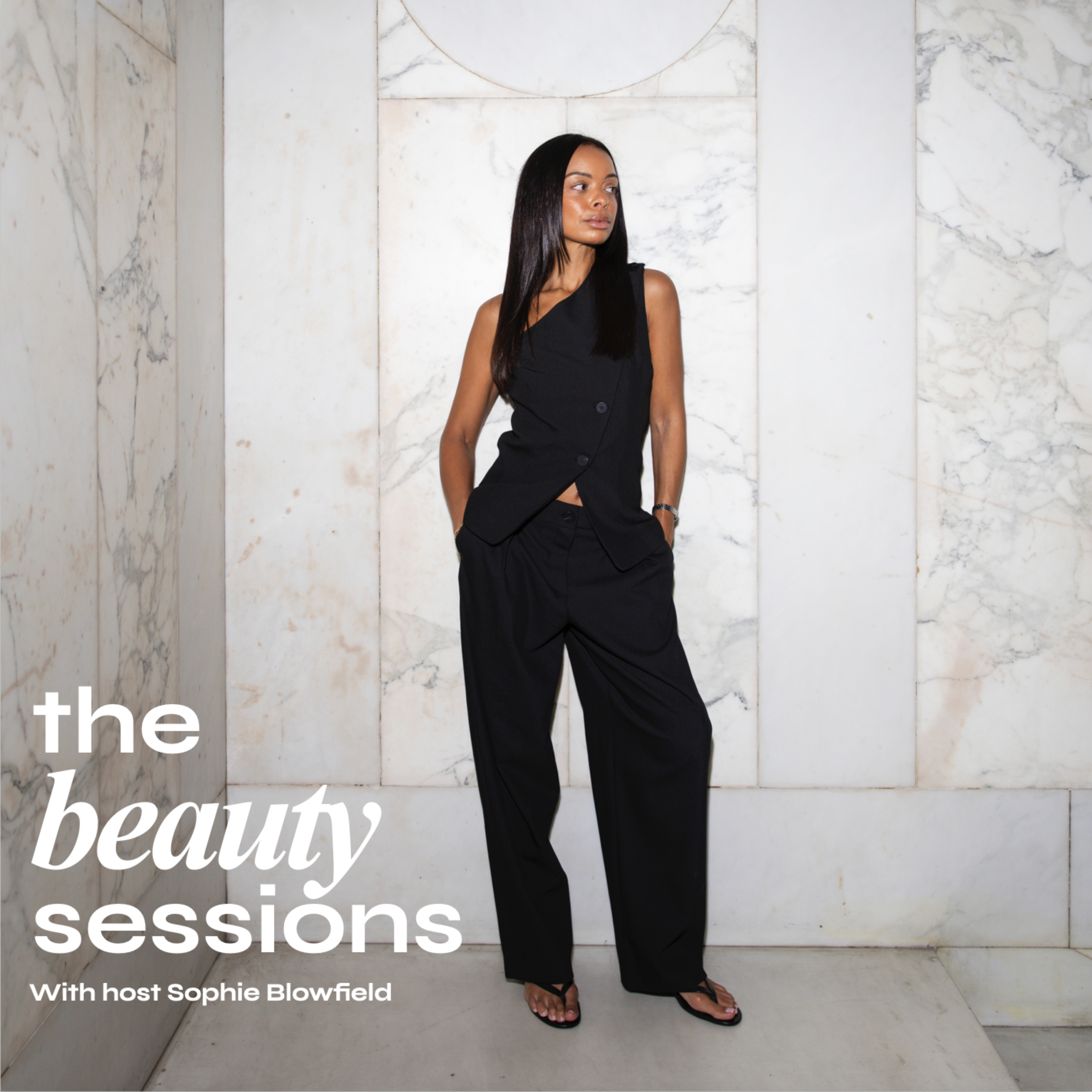
Ep 22: The Making of Merit Beauty with CMO Aila Morin
51m 56s
In this podcast episode, Sophie Blowfield interviews Aila Morin, CMO and founding team member of Merit, a minimalist beauty brand that has redefined modern luxury cosmetics. Morin describes Merit as "makeup you can live in," created in 2019 to address the gap between women's real lives and the beauty industry's offerings. The brand has deliberately launched only seven products in five years, covering makeup, skincare, and fragrance, targeting millennial and Gen X women with a focus on intentionality and longevity. Morin shares her career journey, starting at a beauty counter at 15, which taught her invaluable consumer insights, and later working at Missouri, where she learned about product-market fit and emotional branding. She highlights the Retrospect fragrance launch, which used offline campaigns like magazine scent strips and a book, wiping Merit's Instagram feed to create a nostalgic, tactile experience. Morin emphasizes the importance of ignoring industry noise, staying true to the brand's promise, and avoiding trend-driven product development, which she believes creates synthetic growth and waste. She advises embracing failure and finding passion, noting that her success came after multiple failed startups. Looking ahead, Merit plans to expand in Europe and continue building a legacy brand across the vanity, staying focused on quality and consumer trust.
Welcome to the beauty sessions, the definitive podcast for insider conversations with the
industry's most influential leaders hosted by me Sophie Blowfield.
From breakout indie founders to global beauty executives, I'll be taking you behind
the velvet rope for unfilled to conversations about what it really takes to build, scale
and disrupt in today's beauty landscape.
For the strategic decisions, the pivotal moments and hard one insights that shaped the brands
you love.
Today, I'm speaking with Aila Morin, CMO and founding team member of Merit, the minimalist
beauty brand that's completely redefined what modern luxury cosmetics looks like.
Aila has been at the forefront of the e-commerce and director consumer revolution, and before
Merit, she was the driving force behind Missouri where she created iconic campaigns.
At Merit, she oversees all aspects of 360 marketing, from creative and product development to
retail experience, and has helped build a brand that's both culturally relevant and commercially
successful.
January marked Merit's five year anniversary, so there is so much to dive into.
Welcome to the beauty sessions, Aila, how are you doing?
I'm well, thanks so much for having me.
I'm really looking forward to this conversation today because I think we both started our
careers before social media and influencer teams were even a thing, so I'm so excited
to get into how marketing has evolved and how you've navigated building brands in this
landscape.
Yeah, absolutely.
So I always like to kick off with a little beauty icebreaker, and that is, if you were packing
your top five beauty products for a weekend away, what is coming with you and why?
I mean, this is this is very real life for me because I travel usually every other week,
so I am always packing my beauty essentials.
First is Great Skin Serum by Merit.
So if I'm traveling before a flight, I put it on right before so that my skin has that
great barrier in the dry air and then I use it anyway, but it's great for kind of adding
moisture on a flight.
Flush bomb in bespoke, one thing you'll notice is bespoke comes in almost every one of
our products, flush bomb, inner shades, lick, and there's a reason for that because it
is the perfect, not really a blush color color.
It's this really beautiful, brownie pink that just looks so natural, so yes, I use that
on my cheeks when I travel, I'll swipe it on my eyelids, tip of the nose, and lips as
well.
It just makes you look like you're awake in a live.
La Roche-Pose cyclist B5ness is, oh, I'm a huge fan obsessed with it, I was buying
it in France the longest time, I'm not sure if you can get it in the US now.
It's the engine of the B5 bomb that I feel like it's all overtake talk.
Again, just to dry skin savior and I spray it on every few hours when I travel.
And then a Mason Pearson brush.
It was my first real beauty investment, I was a teenager when I bought the travel sized
one because it was less expensive and I still have it, so I think it's 20 years old.
But I truly love it and don't go anywhere without it.
So those are the ones that I always bring with me, no matter what, and I keep a tight
rotation, I only ever travel carry on unless it's two weeks, so it really has to earn
its spot.
Oh my gosh, I could never do that.
That's so good.
To do like, that's a whole other podcast.
How you pack everything in a carry on because, yeah, that yes, I can, I can imagine.
And all of those things that you've described, I am absolutely obsessed with and I wouldn't
expect anything less than those kind of chic items.
So before we dive in, I really want to, for any listeners who aren't familiar with
merit beauty, although I find that highly unlikely with this podcast, but if you are giving
like a 60 second elevator pitch, how would you describe the brand and what you do within
the brand?
Yeah, so you can summarize it pretty easily by starting with the idea behind it all, which
is that merit, make up you can live in.
Yeah, it was really developed in 2019, not behind an influencer or behind a celebrity or
behind a makeup artist, but instead identifying the disconnect between our actual real lives
and what the beauty industry was offering us.
And that has become, I think, more and more clear as we've gone through many trend waves
since 2020.
And we truly make classic products that make it easy to get ready that will be on your
vanity for a long time.
And we do that all through one lens, which is beauty with intention.
So we do less, we don't have a ton of products since we launched, we've only launched seven
in the five years since the brand came out.
Oh, wow.
But it feels like everything I have is merit.
I find that so interesting.
It's so funny.
I'm just looking at my, I call it my beauty desk right now and like everything from the,
my mascara to my shade slick to my highlight that I use.
So it's when you say seven products, that's fascinating because I feel like it's taken
over my beauty wardrobe.
Yeah.
When we launched the brand, we started with seven and there's been seven.
So you'd be it.
Yep.
Which is why it would be the wardrobe.
But I think what's so different is we did makeup, skincare and fragrance very early.
We always envisioned it would be a cross-bandly brand, not just makeup, which I think has been
a lot of the reason for the success behind the brand, frankly, but also is a lot of the
business differentiation.
It's just, it's truly becoming at five years in a legacy brand that meets the needs
across the vanity.
And that's really what we're focused on continuing to scale and grow.
Yeah.
And it really does meet the needs across the vanity.
I'm utterly obsessed and I want to get deeper into the brand and the product and all
of that.
But I actually want to go back to you and how you got your start working in beauty.
I know that you kind of, you know, if we go way, way, way back, you were working on a beauty
counter.
How did you get your start?
And how did all of those experiences kind of teach you about consumers that still informs
your work today?
Yeah.
I mean, beauty for me has always been a big part of my life.
I had a mom who was very minimalist and used Nivia cream and not much else.
And I had a very glamorous grandma who wore a fabulous blue eyeliner like Princess Diana
and loved fragrance and really bought in with the whole thing.
So I saw kind of both sides of what beauty could look like.
I actually started working at a beauty counter when I was 15.
I grew up in a very small town and prior to that, I was a grocery store cashier for two
years.
It was one of the only jobs you could get at that age.
And an opening came up the beauty counter and it was actually primarily packing people's
orders.
So, yeah, very not glamorous.
But to me, it felt so special.
I got to wear a nylon's and high heels and all black and I felt incredibly grown up
in chic.
So at first, I was mostly wrapping people's orders.
And then over time, and frankly, because it was a small town and there weren't a ton
of people around, I started working on the floor.
So selling everything from Clarence and Lancome to French pharmacy growing up in Canada that
was very widely available as well as products.
So I learned a ton about everything from how amazing Sarah V's can care can be to Lancome
Genofi Xera launch when I was working at the counter.
So I learned a lot both in terms of conversation but also in terms of branding.
I mean, I used to do the Fordham in-night shift after high school.
So I would set up all the displays and all the visual merchandising.
So amazing.
All the tiny details, like I would never do an end cap in black because I can tell you
it's always covered in fingerprints and it's such a painted dust because one he used
to clean them.
So there's a lot of little nuances that I learned in brand design and in conversation.
That job actually carried me through the town where I grew up.
Then living in Toronto and then Vancouver, it was how I supported myself through school.
And I actually continued to do it even when I first started the marketing just to make
ends meet.
So it was almost 10 years and it was something that I loved.
And I thought it would be a career.
When I graduated at university, I had three job offers.
One was to be the manager at Chichetto in a department store.
One was to be a translator from French to English and my French is just not that good.
And one was to be a marketing coordinator.
I took the marketing coordinator job because it felt like that would be a swing where
I could really grow.
And then I got on the side.
When I got into marketing, I worked at a number of different startups and I learned so much
because most of them failed very quickly.
I learned a lot on everything from founders to funding and most importantly product market
fit.
And when I learned about myself very quickly is that I was only good at what I did if it
was a product that I felt really passionate and compelled by us.
So when I joined the Missouri team, I had kind of had all these starts and stops of different
products and jewelry was always something I was really passionate about.
Yeah.
And actually, I want to get into Missouri but I actually want to pick up on your earlier
point and your earlier experience because I I think what a lot of kind of
beauty. I want to say beauty outside doesn't buy that. I just mean people that are lovers of beauty
but don't necessarily work in you know a lot of these companies that you and I have perhaps seen
behind the scenes and it's really interesting because through studying I grew up in London so
I had a bit more exposure from day one but I spent my years through college and university actually
working on the shop floor of a store which you may or may not know marks and Spencer's and I did
the women's wear department and the beauty and like you did the beauty counter and it's so the things
that you learn and it's actually something that I felt quite far removed from when then I did
progress to head office is I wanted to all you want is kind of what are the customers saying
and actually I find many times now when I go in house I actually will go in store and spend my
first onboarding week like I'll do a day on the shop floor and pretend to work in the store just
so I can hear what the customers are saying and I think many people don't understand how invaluable
that experience of being on the ground is to kind of what we in essence do now 100% and I think
it's the same you know whether it's spending a lot of time in Sephora or my customer experience
team I drive them crazy because I spend a ton of time in comments and DMs I mean I respond
yeah comments on social because I think yeah being part of the conversation not in a filtered way
or a way where you're so disconnected from the concerns of the consumer and I hear it all the time
that you know C-suite doesn't understand the actual customer experience yeah and I think for me
so much of my obsession with creating brands is being the customer and understanding the customer
yes and a really unjust okay everything from how does the display get set up so that it looks great
to how do people interact with it and what is the positive and negative feedback it's one
favorite part of the job honestly I guess with Merit as well not only do you have that expertise
and that's why you're in that CMO role but you are you are the customer Merit is for that you know
chic kind of professional not just for the chic professional woman but you know when I look at
the product I'm like oh it just speaks to me in such a way so I mean what a pleasure it must be
to work on a brand that you actually you know would be a customer of absolutely I want to go back
into your journey and the timeline because before Merit you were at Missouri another absolutely
stunning brand where you created campaigns like diamonds for your damn self and launched the brand
and over 30 countries and did all the amazing things what was that experience like and what did
you kind of learn about building a DTC brand from ultimately from scratch I guess yeah it was
a very small one I joined just a few of us and then when I left I think there was over 350 employees
so very yeah in four years it was such a formative experience I think the first thing I learned
is just understanding how do you how do you create product market fit so when I joined there was
this idea of fine jewelry without markups and logically that makes total sense right it's really
compelling as a story and it was around you know 2015 2016 when that was a DTC narrative that you
were starting to see you know Everly and I think was talking in a similar way at that time yeah
and it's when customer acquisition costs digitally were low enough that being a DTC brand was actually
viable so at that time we kind of started with that premise and then it became very clear that
what was so strange about jewelry is that the end consumer is not the person who buys it
is the assumption so you were convincing a woman to want it but then she's convincing a man to buy
it which is a really weird proposition yeah and very quickly it became clear that there was this
strange emotional connection with jewelry where it was very much about being gifted and that
had a value attachment to it right of earning something being worthy having someone else give to you
and very quickly it became you know how do I make the end consumer the buyer so how do I make it
feel like you're allowed and that's a use that word very intentionally to celebrate yourself
in a format of buying yourself jewelry which was something that wasn't really done
so we really adjusted the story we moved away from this markup story moved into this story of
how do you celebrate your own accomplishments and diamonds for your damn self with it was a catchy
tagline for that but what it did was it moved a brand from being very logical as a brand proposition
to deeply emotional yeah and the growth really took off from there I mean I've been fortunate that
my career and I'm sure similarly to yours how the time when marketing was changing so yes 100%
and just you know to to latch on to what you were saying I had a very similar experience as part
of the founding team at Charlotte Tilbury so back in 2013 again like you know it was right there were
five of us in the office I spent the majority of my life at Charlotte's hub you know just traveling
the world and building it and I look at it now and I almost can't lead what you know what it's
what it's done and that was before so you know now I see social departments and influence it
but and I'm sure like you're just like whoa it's it's really interesting when you sit back and analyze
you know the the the the time frame and how things have changed oh totally I mean I also always
joke with people it was so manual back then like yeah early at Missouri we were doing youtuber
collaborations so yes yes now setting up co-designs working with members that you know the early days
of influencer marketing and even it rules prior to that I had done like influencer meet and greets
and again like yeah template there are no platforms for this no it was allowed you to have more fun
right like oh Charlotte Tilbury we did like a treasure hunt around New York City I'm like come and
find us at the barry if you want to we're just there were there were no rules we just kind of
did it I don't know if that's how you felt it was there was kind of a bit more freedom to to play
around I think there was no thought that there was a playbook back then yes 100 something that's
always the thing I'm budding up against I think is reinforcing to teams that we don't do things
the same way twice and there is no playbook and there are no rules they think so quickly you
know you read all these posts talking about marketing campaigns where it's like this is the playbook
they deployed and I'm like identify your playbook then it's not good yeah such a good point
there was such a freedom to it right because you weren't so benchmarking everybody everything was
yeah yeah and I think it was a really great way to learn because everything from you know I was
like in my early 20s negotiating with agents who had influence or talent I had no business negotiating
those contracts but I had the exposure to that and then when Facebook ads came out I learned
how to do those and yeah one of the gaps that I hear all the time about marketing leaders is that
they have never done the actual work in the platform and I think that exposure and all of these
platforms or types of marketing rolling out early in my career allowed me to specialize in
each of those things which now allows me to be a really strong generalist because I can
I know what I'm asking someone to do yes which is could only happen by having exposure to everything
that early so that the timing was really fortunate for me in a lot of ways as I'm sure it was for you
as well yeah yeah 100% and what made you transition from I mean look these you know these natural
transitions happen but majority to then join the amazing Catherine power to build merit which is
arguably I mean I'm so biased because it's one of my favorite brands so I could literally just
give it all of the applause all day long but yeah talk just about what that transition how that
happened and why that happened yeah I'm so interested so I don't have a dissimilar role at
Missouri I was also working on product and creative and marketing and how each of these things
interacts and builds I think by 2019 it was becoming really clear to me that to scale a business
in a really healthy way omnichannel was the best way to do that yeah I say that because directing
consumers an amazing channel obviously it's you know 50% of merit's business it's for us it is
incredibly complex compared to what it was in the 2010s yeah and the customer acquisition cost
that we were seeing back then just weren't scalable and I could see it going up every single year
I also think at that time you know you have to pay for every single piece of brand awareness where
I would say it was becoming very clear that retail can be a phenomenal way of discovering a brand
to get a brand awareness it's actually yeah almost more cost effective than marketing itself
and I was ready to do something new I think you know Missouri grew so incredibly fast it was
such an amazing ride to go from you know there were like four of us at the beginning to when I left
and I had learned a lot about the complexity of organizations and geographic expansion and
it was a mix of I think feeling a bit burnt out yeah we did Monday editions and they still do
every single week which meant a new collection every week and for a marketer that's 52 collections
a year you know four years that's a lot a lot of stories it's a lot of narratives and I think
I was in a place where I wanted to tell less stories but more intentional stories and I was feeling
this sense of overwhelm and I was not actively looking honestly I had a conversation with Catherine
in mid 2019 and when I first spoke to her I I didn't think it was a great idea you know she was like
I I think there's space for a brand that that speaks to millennials and I couldn't really get
outside the bubble or the impression I had
at a beauty at that time, which was, you know, it was makeup artist founded, or it was celebrity,
or it was influencer, but everyone was launching a brand once a week. Yes, that it's a lot.
I mean, and the tempo then was actually even greater than it is now, which is funny to say,
because it feels continually happening. Yeah, but I wasn't sure that there could actually be something
that was different enough to be worthy of building. And it was six months later, I think. It was
that December that I was standing in a retailer in Toronto. I was trying to do some beauty shopping,
and I was like exhausted trying to just pick some gifts. And I just remember standing there,
and it really clicked for me. It was like a very clear moment of, you know, reflecting on my experience
at the counter, the questions that people asked were like, how do I use mascara, and what eyeliner
once mudge, and how do I shade match for foundation. And I was standing in front of this display with
the 150 eyeshadow shades in a palette and these 15 brush collections. And it was so clear to me
that what was being sold was not what people knew how to do for the majority of people. There's
yeah, or a civic segment of makeup users who are so talented, and it's a hobby, and they love it.
It's an art form, and I think they're so well addressed by all the amazing brands founded by
makeup artists that I really admire. But there was this entire group of women who used beauty as
a utility to get ready, not because it's a hobby. But it's really just, you know, to be able to go
about the rest of your day. And it became very clear to me that that customer wasn't being spoken to.
And the add on to that is that it was looking at an ad for a skincare brand in the same store.
And it was an anti-aging ad, and I knew the model in the ad because I had signed to an agency as a
teenager, knew some some models in Toronto. And I knew that the model in the anti-aging ad was my
age. So she was in her mid 20s. Yeah, I actually just had a conversation with Sarah Creel about
this yesterday. Obviously, you know, we all know what she's trying to do with her run, but it's
yes, it's out of control. Yeah. And it was clear. I mean, I remember stepping back and being like,
why is she in an ad for this? But it seemed really clear that there was this representation issue,
and all of these brands that were popping up at a very fast pace were all speaking to Gen Z.
And as a millennial, I just remember feeling like nothing is speaking to the concerns that I have,
nothing is skill set that I have. And I worked in beauty for a long time. So yeah.
That disconnect is fundamentally why I decided to make the jump. And listen, it wasn't easy.
Misery was phenomenally successful at that point. I was leaving it very rapidly growing brand,
took it back to the beginning. And back to the beginning to the point that there was, you know,
there was no like roadmap. There was no fully baked brand products were kind of halfway done. It was
very much restoring 100% no 100% and everything you've just said rings and speaks so personally
for me because also as someone that's been in the beauty industry for as long as I have and also
I'm an avid consumer of beauty. For me, the magic of merit is in the simplicity and the whole
kind of less is more approach. And you know, I just appreciate that as a woman in my late 30s,
living in a post-COVID era, I just find it really speaks to me. And it came at that perfect time,
I feel, you know, when we were already editing our makeup bags down and simplifying our routines.
And I guess, you know, it's so interesting. I've got actually the the everything bag is that I've
got it right next to me with all my things in it. And, you know, I know that you guys are marking
merits five year anniversary, which is so it's such significant staying power in the market.
What I'm interested in is it's looking back. What is the key to the longevity and growth
of merit? Because it just, I don't know, it just has such a distinct point of view. And yeah,
I just think it's so intentional. I'm just so interested in, you know, that and also how you
protect it as it kind of scales, I guess. Yeah. I mean, first I would say I didn't know
these know it was going to work out. I signed on track officially in February of 2020. And then they
closed the border. And I was living in Canada. So the first year I worked on merit, I was in Canada
and the team was in the US. In March of 2020, I'll, I mean, everybody's beauty habits changed,
right? And we'll never forget sitting there looking at the, so Canada data that was saying like
liquid foundation sales dropped 84% all these stores are closed. And I was like, I might have
just torpedoed my career. So it was not, I was not sitting there in 2020 going, this is the best
decision I ever made. Yeah. Yeah. And then I guess it incomes the rise of the Zoom calls and
everyone just running that lash or that brow or that lift. Yeah. And I think it, it was such a gift
because I think we had the very fortunate position of being able to watch how things went. And
yeah, we were supposed to launch in 2020 and we delayed launch more than six months one because
all the products were delayed because of COVID, but also it wasn't the right time. And I think the
free launch is such a gift in a brand because you really just get to think. So suddenly I went from
having a few months to pull this all together and create a business to, you know, over a year.
And I think that is so rare to get a year to spend behind the scenes talking to consumers,
building, creating the brand, shooting, like really taking your time. And I think so much of
the success today is because of that year. Everything from, you know, I got to study, I basically
became a student of everybody else's strategies at that time. And I was watching, you know,
reliance on one hero product resulted in huge shifts for businesses at that product wasn't
still trendy in 2020. Yeah. If you were reliant on one marketing platform, then it was clear that
wasn't going to work anymore because CACs were blowing up so much on Instagram because that was
still pre-tipped. There were so many small things that I think I'd learned during that time that
became, you know, the backbone of the business structure today. And then yeah, brand I think the
reality is the hardest thing to do when you launch a brand is to not get distracted by what everybody
else is doing. Yeah. And I have always been very bullish on ignoring the noise around
us. Yeah. So by that, I mean, Merit has a very clear premise, right? We make it easier to get ready.
We're focused on 100 percent. One y'all and Gen X women. What you see most brands do at five
years is go, okay, maybe we should chase another customer. And then you see this pivot and what you
would have seen primarily in beauty is a pivot of brands and going for Gen Z. And I think to us,
one is the humbleness to go, what is our brand awareness percent? And then when you look at that
percent understanding that we still have so much headroom with millennial and Gen X, we could be
doing this for a decade before we'd really need a brand. But also to say that the promise that we
made at the beginning is still the promise we make today. I think it's very easy to get distracted
by trend or new customers or where you see other people finding growth. But to us, the slow,
steady focus on the same promise is ultimately why we have consumer trust. And it is ultimately why
we've been successful. So I think it's really easy to have that panic where you think you need to do
something different to scale. And I think if anything to us internally, our ethos for 2026 is
doing less, which is also a headline, but continuing to focus on we do well, continuing to stand behind
our promises and not looking at the whirlwind happening around us. Because obviously the growth
today looks exponential, but that's not easy in the early years to be like let me discipline to
just focus on what we're doing here and to know that it will be valuable on term. That just
brings so true to me. And you oversee all aspects of 360 marketing from creative product development,
customer experience, digital retail, which is something that I can very much relate to. And I don't
think people quite understand, but it is such a huge remit. How do you approach kind of keeping
all of those threads, if you like, so cohesive? Because outwardly, merit, whether you're posting
a dog with retrospect on its head or it's a vase or even the, I think it was New Year's Eve,
you guys posted that, we'll just cut. And it was like, you can always count. So from the product
packaging, every time I see merit somewhere, it's so cohesive. And it just speaks so well to me.
So yeah, how, how, how, how? I mean, I, so a few things. We, we function very differently
the most beauty brands, which is that you generally don't see a CMO who's in charge of product
creative marketing customers all the way through. That's super intentional. So we don't work on
products and isolation. So although shout out before we developed the formula, I had named it and
I had sat with the team and talked about how we'll take it to market. So it's not that what you see
in most organizations is product marketing looks at data. Yes. Yeah. They put in a brief to product
development that makes the product passes the brief to creative, who's then told to shoot a certain
way who passes it to marketing. Marketing often the last ones to get it. I've headed up marketing
departments and I'm the last one. And I don't know, we've been, you know, it's all in their head.
And I'm kind of like, well, I need it to be in this process from the beginning. Totally. So for us,
it's a, I have an amazing team and each head of those departments is in every meeting from the
beginning. So they're amazing. There's no line. There's no dairy. We work chronologically. But we
are all working on each.
product in each stage of development to understand every detail. So in terms of it looking cohesive,
I think that's a huge part of it. Yeah, there's disconnect between teams, but
we also are very clear on what is the emotional value of merit. So you'll notice if you actually
look at our posts, there's a split between product marketing and brand world building that you don't
generate. Yeah, I love it. So the dog is super intentional. I say it's time that this made me laugh
or this sparked joy because the thing that people forget about marketing is that people remember
things that make them feel something. So so much of what we do in beauty is if you know use this
cream look like this, use this blush, it does this. It's very if A, then B. It's very it doesn't make
you feel anything, right? Your point about a product and you need to balance it with either how
that product makes you feel or some other way at levity. And I think much of you know what we
experienced today in the world is we're kind of looking for levity. And I you know we have a campaign
coming out in February about signature lip blush, which is all about joy and the small moments
that spark joy. And we have a focus this year on talking a lot more about being offline. Because as
a team, that's where we're finding this sustenance and connection and joy is being off of our phones,
which sounds very backwards for a brand that does a lot of social media marketing. So finding ways
to connect with the consumer is so important. And I think it's so lost because I think marketing
has become very much like how do I sell things? But that's a point marketing is building an emotional
relationship with the consumer that lasts way longer than one product. And that has to be the
most important thing. No, one 100%. And then I kind of want to touch on product a little bit because
I need to be careful with myself here because I could go on literally for hours and I know you're
a very busy individual. But is there a product in the line that you are most proud of and why, I guess?
Yeah, I think the minimalist will always be the one that feels the most merit, I would say.
Yeah, I love it. What I'm most proud of, I think, is a few things. I mean, one, the Stick Foundation
category was essentially non-existent in this day and age when we launched it. I think it opened
up an entirely new category that we've seen everyone else try and join, but we have been the number
one stick. It's a four US for, you know, almost since we launched it. But beyond that, I think
you'll know this well in beauty. To have one complexion item is a huge level of discipline because
what I have a business is repeat through complexion, 100 some. That's why you see Beauty Brands
Launcher Foundation once a year or a concealer. Yeah. They're always pumping out complexion
newness because it's a big sell-in to a retailer because they're so super shades. But also it's
got high loyalty. So to me, it encapsulates both our discipline and our focus. It's been in the
top three total foundation. It's a forer for quite a few years as well, which no stick has been.
It's got phenomenal repeat. But also we relaunched it in 2022. And it's a detail I don't think we
talk about nearly enough, which is when we launched the minimalist, there was feedback of two things.
One, we had an issue with breakage in the stick. Not beyond the norm of what you would actually see
as acceptable because there's always an effect rate, but it was there. And two, people were talking
about the fill weight. So when we had designed it, it had been designed just for what we call
editing. So using around the nose or the eyes on blemishes, but some people were using it as full
coverage. So in 2022, we RTD, which means we took a loss and took back all of the inventory.
We relaunched it with twice the fill weight, solved the breakage issue at the same price.
It makes sense. It's not a traditional move, right? Because to give you twice the product means
you're going to take way longer to rebuy. But to us, it was creating something that is quality that
you can stand behind. And I think one of the brands that's always inspired me is actually IKEA.
Yes. The promise and focus on quality and fairness to the consumer and transparent communication
is honestly one of my favorite examples. And that's what that minimalist story makes me think of
is how do we deliver more value to our consumer and how do we take feedback and continually make
products better instead of just launching more products. So to me, it encapsulates both the ethos,
but also what we stand for and has been a really successful product because of that.
Yeah. Yeah. And I could go on. I mean, I recently actually just got into your signature lip liner as
well, which I think this is so underrated or maybe I've just missed the hype, but you know,
there are the lip liners out there that, you know, everyone talks about and there are some amazing
brands to be fair. But I have to say the signature lip liner, I was gobsmacked, the softness of it.
I think I've got the sportive, which is the warm peach brown, but it's just it's absolutely stunning.
So for anyone out there actually who isn't locked into merits, lip liners, and on top of that,
your shade slicks, I think I have one of my favorites. I think is a discontinued color,
which is falcon, but then I switched to using tabby, which is that same kind of mocha brown,
but with a bit of a shimmer, which I love. Another one of my favorites, products, and I really
want to talk about this is Retrospect. So Retrospect, I've got it on now and the only way I can
describe it is it smells like me. And I know that sounds really weird, but I actually posted it
on my stories yesterday, actually, but it's so interesting this campaign, this launch, because
I read that you wiped the, and I actually remember this, the entire Merit Instagram feed before
launch, which you called certifiably insane. Walk me through that decision and how Retrospect came
about and the whole campaign, because I think for most people listening to say, remember, you know,
the New York Times and the cent strips in Vogue and the billboards, I'd love to talk about that
whole campaign and philosophy. Yeah, absolutely. It's launching fragrance was not considered a great
business decision was the feedback at the beginning, because frankly, most makeup brands that have
launched fragrances haven't done well. We never got of ourselves as a makeup brand, so that was
never really going to stop us. We actually started development right when we launched the brand,
so it took quite a while. And we initially went and tried to develop it in New York with New York
based perfume houses. And what was so interesting at that time and is still true today, by the way,
is that everything being developed was very sweet, very food focused. I mean, if you think of what
trends in the US, it tends to be very quormond. Yeah. And it was so clear to us that, you know,
we had this brief for obviously our customer. So this 30 to 40 to 50 year old woman who
is looking for something that feels intimate and nostalgic about rich. And nobody got it, frankly.
And we met Fanny Ball, who was the perfumer that worked on it with us. And it was such an unlock
because we were joking with her when we met her. You know, she was like, I was so excited to see
this brief because usually, you know, briefs just say, oh, it's for our client who's a woman who
lives in an urban area who is age 18 to 29. And she was always wondered what happened at 30 because
or whatever in the brief. So we, we began a very long development process. And what was quite
different is we didn't have, there wasn't a brief of like here, the trending notes or the SEO that
we want to hit at that time. It was, here's the feeling we want to capture. Here's, you know,
how we think of fragrance here are the notes that make us nostalgic, but it was never prescriptive.
So it was a very creative process. Obviously, we did 252 rounds on it, which is against a lot.
But we always had a very clear view of where it would land. And I think there were a few things
that we knew we would do differently. So during COVID, obviously, fragrance really started to take
off, whether it was home fragments, handles the time we weren't leaving our homes or personal
fragrance. And what was really interesting is fragrance itself bifurcated into kind of two categories.
So you either had, you know, your Maison fragrances where you had a celebrity running down the streets
of Paris posing over her shoulder, yeah, would say the name of the fragrance. You had no idea what
it smelled like, but you're meant to want to be her. So that's the flip side is during COVID. You
started to see marketers try and take digital advertising in a way that made it a really linear
purchasing journey. So yeah, photo of oranges and vanilla. And the fragrance is called orange
and vanilla. So you know, you smell like orange and vanilla. So it's easy to click because you know
what it smells like. Yes, that whole sensory marketing. Yeah. We lost all sense of nuance. And I
think they became this focus on linear. And I, as we were researching fragrance more and more,
what was also really clear is, especially in the clean market, because Meredith Queen at Sephora,
there was such a lack of nuance, complexity, complexity, and luxury, but also wear time.
Because they're doing these very simple, singular note. And generally in an auto toilet,
when you look at free of fragrance, it was an extra to parfum, which is what ours is at 30%
for decades, until the idea that a bottle should be bigger to give more perceived value became
common. So that's, you know, you've seen obviously it went from auto profond to auto toilet,
and then we are now at like, Audimist. So we
We kind of just diluted our way there.
So all of these became kind of the building blocks for the campaign.
So make it next day so that it has a 12 hour wear time.
We ran consumer studies proving that it wore for over 12 hours to make sure that we could
make that claim.
We created something really nuanced and complex.
It used a lot of vintage notes that would feel, they feel very nostalgic and make you
feel very safe.
And the timing of that is not a coincidence because we launched retrospect right before
election season.
And if you look at ecology at the US consumer and years, everything leans more nostalgic.
So in the construction of the campaign, which was, it was launched in October, on October
22nd, we really said, okay, let's build this offline.
One because, by the way, it was more efficient in terms of ad spend, fine the New York times
was cheaper than running digital ads.
But two because it evoked this feeling of nostalgia and safety that we were kind of creating
in both the scent and the creative.
And this is always the point that I make on not having a playbook.
Retrospect was launched in a way that was about nostalgia because the product was about
nostalgia and because we knew the product creative and marketing all needed to be in the
same thought.
So everything from the scent strips, I mean, that was the backbone of my childhood, by
the way, was opening those four lines and rubbing it on my wrists and getting to walk
that line a certain way.
I would sometimes buy like a vogue because it had, I don't know, Georgia Amani, C or whatever
I was into at that time, but yes, hello, yes.
And by the way, that ad that we did, I mean, we did multiple magazines, but the one in
Vogue was the top performing most retained ad in Vogue that month.
Amazing.
And strip.
So we really invested in offline.
We did a collaboration with gentlewoman to create a book that kind of told the story.
Yes.
Beautiful photography, again, really focused on tactile.
The creative was really different.
So what I think is so again specific about fragrance is it's generally male photographers
shooting female celebrities.
So we hired all female photographers and they shot the bottle.
So instead of having it be quite literally through a male gaze, we used a female lens
to put forward the camera to center them as the creators, instead of the people starring
in it.
And then we, you know, we built that into social.
So obviously wiping the feed was for us a way of telling a clean story.
I called it sort of like insane because it means you have to archive thousands of
posts.
And there is no less code on that.
It takes forever.
Yes.
Yeah.
And we all take turns doing it.
So we would like alternate hours where someone would start archiving.
But we really think about how do you tell a holistic story that makes you fall into this
world?
Yeah, and obviously fragrance is so emotional that it was for us almost every big campaign
is a social commentary and it's structured as such and you'll see it in the structure
of the marketing and the creative and it's a whisper, but it's very much there.
So it was very much our view on on how do you put intentionality and nuance back into
a category that's been taken from this deeply personal signature world to wardrobes of
buying more and more and more and using consumption as a lever instead of emotion.
Yeah.
No, it was just done absolutely beautifully and I'm just I'm actually taking the time to
smell it.
If anyone looks at me through the window and sees what I'm doing, I'm like sniffing
the perfect.
It's just so gorgeous and it's actually become my go to I'll put on a crisp white
shirt, a blazer and then spray my merit and I just feel like I'm ready for the day.
I've all put together chic, it's not too overpowering and it just makes me smell like
me.
Mm hmm.
Yeah.
It's just absolutely gorgeous.
I could literally talk to you all day, but we are running out of time and I want to get
to the rapid fire around.
So let's do some rapid fire questions to close out.
So, my first one is what is the best career advice you have ever received?
You know, I am very anti-career advice predominantly.
Most people give advice when they've already hit it, certain level of success and that's
not actually it's that would have been helpful when you're starting.
I can just say that I don't I never had a master plan.
I tried to do things that made me excited to work that was really engaging and that's
how I ended up in marketing.
I mean, I took a marketing job on a year off before I was supposed to go to law school.
And I fell in love with this and so much of the reason that I've been able to build
the career that I have is because I really love what I do.
So I, my advice, it's not really advice is keep trying things until you really find
what you love to do and you'll know when you found that thing.
And also, I mean, I feel so many times before I worked at successful businesses and I don't
think we talk about that enough.
Yeah.
People don't talk about failure enough.
You'll tell you why.
No.
And I think, you know, I often talk about Missouri and then Merit, which are both hugely
successful businesses in a very short period of time.
But I worked on like seven to 10 startups that all failed before that.
And I think, yeah, it's really important to know that failure, whether it's being let
go from a role or working at a business that goes under, this is all part of it.
And I always feel like it's so important to know that because it is never this shiny,
linear thing.
It's just like, very bumpy during that you look back on and appears to be really smooth
on LinkedIn.
But that's never how it feels in the moment.
One hundred percent.
And I know this is rapid fire on, but I think you had some important points for some of
our perhaps younger listeners out there in that, you know, I feel exactly the same.
Be passionate about what you do.
Yes, it takes a certain amount of years to get to a place where, you know, both of us
can probably say at this point, yes, we're only going to work with brands that we feel
that passion for, but I think as long as you have a hunger for, I don't know, it might
be social media or actually you're into community marketing or you love numbers or you're obsessed
with being a chemist, so you want to go into MPD.
I would say be obsessed.
And then I love the other thing you said as well about failure.
And I think we're seeing so much more of it now with, what's that book, Laura Brown and
her co-author, all the cool girls get fired, which I absolutely love that.
Obviously, I'm not advocating for anyone to do anything to get fired, but it's exactly
what you said about, okay, you've been laid off.
Yes, that is a moment in time and everything is temporary.
It just means you're going to go on to do something different and something that's meant
for you and is better for you.
Oh, I always, my grandma always had the advice that, which is, now I feel like I hear all
the time, actually, which is that rejection is protection and yes, I, that laid off from
my job right before I worked at Missouri.
It was a business that went under, yeah, two months later.
So I was actually a really fortunate that I got laid off because I got severance.
But had it not happened, I would have not had the job, did that went on to set up my career.
So I always say that I think that it's never the person, it's always like, are you in the
right role at the right time?
And I think so much of it is that and being open to what feels like a misdirection can
so often be the best thing for you and where really great work comes from.
And is that anything that's coming next for merit that you can perhaps share with us?
We, I mean, we're continuing much of what we're doing, which is a very boring answer.
But we're continuing to expand across the vanities.
So we have a focus in makeup, skincare and fragrance coming this year.
So continuing to focus on being a modern legacy brand and growing brand presence in new
markets.
So we have European expansion that is up in the last few months and continuing to take the
time to build deep relationships in new markets and adapt the brand as needed.
So it's both staying true to who we are and what we do, introducing newness that feels
resonant for our client and getting to introduce ourselves to new ones.
Yeah.
And I think on that, you know, I'm the anniversary sweatshirt, gorgeous, that everything
tote bag, absolutely gorgeous, and none of it fills out of place because, as you say,
you've built a brand that is a lifestyle.
It's not merit isn't a makeup brand, it is a lifestyle brand.
Thank you.
I have one last closing signature question.
If you could wave a magic wand and change one thing about how beauty brands approach marketing
today, what would it be?
Less trend cycle, leading product development.
I think the speed at which trends are moving today, you know, when I first started working
in marketing was, you know, a year, you'd have a trend.
Now it's a week.
And I think creating products for a moment in time is so dangerous because not only do
you not create amazing products that are high quality and sometimes just shelf stable.
But you drive a culture of excess that I think you're really starting to see people disengage
from.
I think this idea that we're constantly getting.
Going to be buying things or needing things, you're really seeing a change in the behavior
where people are going, I don't think I actually need things, right?
You need your basic use case necessities, but you want to have experiences with people.
And I think beauty brands need to start to accept that driving growth off of trend and
massive skew expansion is not actual growth.
It's synthetic.
And it does not lead to you creating an amazing business or brand long term.
So I think those lessons are starting to be learned now.
But the magic wand would be making more products with meaning and frankly making less waste.
Yeah, yeah.
love that and I couldn't have said that better myself and this brings us to a close and I just
want to say thank you so much for joining me today on the beauty sessions. This has been such
an incredible conversation. I've absolutely loved it and can you tell our listeners where they
can find and shop merits. Yeah, absolutely. So you can shop us at miripu.com and Sephora in the US,
Canada and the UK. Amazing. Thank you so much again. Thank you. If you love today's conversation,
don't forget to follow the beauty sessions on Spotify, Apple podcasts or wherever you get
your podcasts. I'm from marketing and strategic insights between episodes. You can follow the beauty
sessions on Instagram at the beauty sessions and you can follow me Sophie Blowfield on LinkedIn,
Instagram and Substock where I share what you should be paying attention to in the world of all
things beauty brands and marketing. Until next time, keep disrupting, keep innovating and keep
pushing the boundaries of what's possible in beauty. I'm Sophie Blowfield and this has been the beauty
sessions.
[Music]
Podcast Summary
Key Points:
Aila Morin, CMO and founding team member of Merit, discusses the brand's minimalist philosophy, launched in 2019 to address a disconnect between real lives and beauty industry offerings.
Merit has launched only seven products in five years, spanning makeup, skincare, and fragrance, with a focus on millennial and Gen X women, emphasizing quality and longevity over trend-chasing.
Morin’s career began at a beauty counter at 15, where she learned consumer insights and branding, later working at failed startups and Missouri, where she created campaigns like "Diamonds for Your Damn Self."
The Retrospect fragrance campaign, launched in October, used offline marketing (magazines, scent strips, a book) and wiped Merit's Instagram feed to evoke nostalgia, hiring female photographers for a distinct creative vision.
Morin advises embracing failure, finding passion in work, and avoiding trend-driven product development, advocating for meaningful products and less waste in beauty marketing.
Summary:
In this podcast episode, Sophie Blowfield interviews Aila Morin, CMO and founding team member of Merit, a minimalist beauty brand that has redefined modern luxury cosmetics. Morin describes Merit as "makeup you can live in," created in 2019 to address the gap between women's real lives and the beauty industry's offerings. The brand has deliberately launched only seven products in five years, covering makeup, skincare, and fragrance, targeting millennial and Gen X women with a focus on intentionality and longevity.
Morin shares her career journey, starting at a beauty counter at 15, which taught her invaluable consumer insights, and later working at Missouri, where she learned about product-market fit and emotional branding. She highlights the Retrospect fragrance launch, which used offline campaigns like magazine scent strips and a book, wiping Merit's Instagram feed to create a nostalgic, tactile experience. Morin emphasizes the importance of ignoring industry noise, staying true to the brand's promise, and avoiding trend-driven product development, which she believes creates synthetic growth and waste.
She advises embracing failure and finding passion, noting that her success came after multiple failed startups. Looking ahead, Merit plans to expand in Europe and continue building a legacy brand across the vanity, staying focused on quality and consumer trust.
FAQs
Merit creates 'makeup you can live in,' focusing on classic, intentional products that make getting ready easy. The brand prioritizes quality and longevity over trend-chasing, targeting millennial and Gen X women.
Merit has launched only seven products since its founding in 2019, spanning makeup, skincare, and fragrance. This disciplined approach ensures each product is meaningful and long-lasting.
Aila Morin noticed a disconnect between real consumer needs and the beauty industry's offerings, such as overwhelming product displays and unrealistic anti-aging ads. This drove the creation of a minimalist brand that addresses practical, everyday beauty needs.
Merit wiped its entire Instagram feed to tell a clean, nostalgic story, and launched Retrospect with offline campaigns in magazines like Vogue and The New York Times. The fragrance was developed over 252 rounds to capture an intimate, complex scent.
In 2022, Merit relaunched The Minimalist with twice the fill weight and fixed a breakage issue at the same price, taking a loss on existing inventory. This move demonstrated a commitment to quality and consumer value over short-term profit.
Aila advises trying different things until you find what you truly love, as passion drives success. She also emphasizes learning from failure, noting that many startups she worked on failed before her later successes.
Chat with AI
Loading...
Pro features
Go deeper with this episode
Unlock creator-grade tools that turn any transcript into show notes and subtitle files.
 PodcastTranscript AI