Speaker 1I think where we're heading is less about creating messages and more about controlling the meaning in a world where, you know, machines are now shaping the perception of everything. The key asset that we have as public sector communicators is that we are storytellers
Speaker 2at heart. Welcome to the GovComms podcast, bringing you the latest insights and innovations from experts and thought leaders around the globe in government communication. Now, here is your host, David Pembroke.
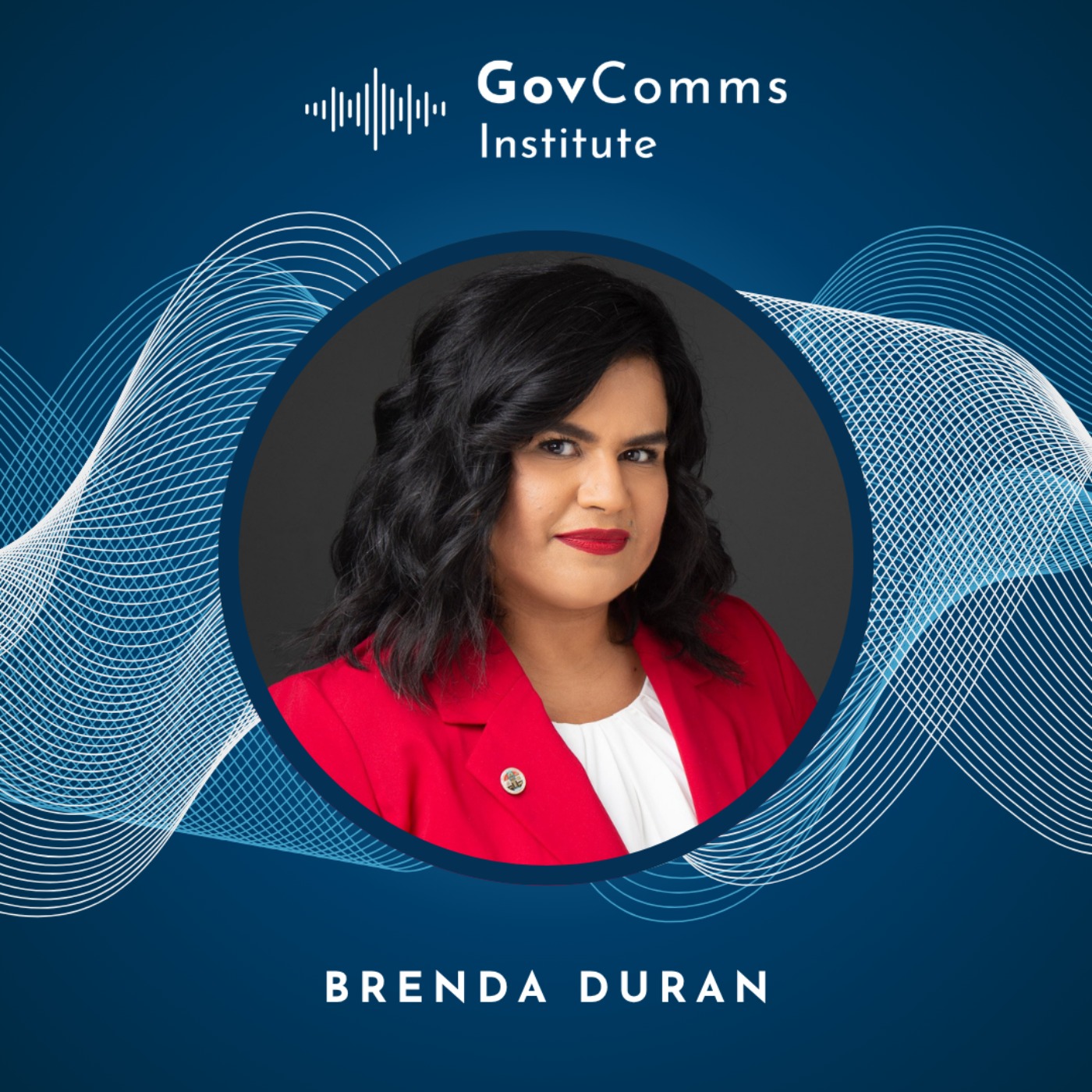
Speaker 3Hello, everyone, and welcome once again to GovComms, a podcast about the practice of communication and engagement in government and the public sector. My name is David Pembroke. Thanks for joining me. As we begin our conversation today, I'd like to acknowledge the traditional owners of the land from which I am broadcasting from today, the Ngunnawal people, and pay my respects to all First Nations people from the lands of where our listeners are joining us from today. Now, one of the great joys of GovComms is that we occasionally get to go back and revisit with old friends of the program. Now, way back in 2019, we had the great pleasure of having a conversation with the LA County communications expert and former journalist, Brenda Duran. Seven years later, Brenda is back to really take us through. What has happened in those past seven years, what she's observed, what changes have taken place, but she is now LA County's Director of External Affairs at the Justice Care and Opportunities Department, and she joins me from LA. Brenda, welcome back to GovComms.
Speaker 1David, I am so excited to be back on GovComms. So much has changed since our last conversation, and I'm really, really excited to dig in today all about it.
Speaker 3Okay, so what's the biggest change that's happened in the past seven years for you? Because I know it's a little difficult to sort of look back, because things have moved so quickly, and we've had the COVID pandemic, we've had all sorts of things that have rolled together, we've had, you know, continued and rapid transformation, we've had introduction of new powerful technologies, but what stands out to you as the biggest change that you've seen in LA? In this intervening period, these seven years?
Speaker 1Yeah, so the last time we spoke was 2019, you know, the year before the dramatic COVID-19 pandemic that really changed everything. This year marks 12 years that I will be in public sector communications, and it's night and day from the time I started to how things operate today. I think the biggest change and the biggest transformation that I've seen since the last time that we spoke is that. Yeah, COVID-19 by far was forced a permanent digital acceleration for government that no one saw coming. I think that it compressed five to 10 years of innovation into a few months. And that really has changed how we communicate today. Now we have virtual briefings, remote governance. We have chatbots and real time. These are all standard in the way that we're communicating in public sector. Before COVID-19, that was not the case. And I also feel that social media has even become more of a prominent, has played more of a prominent role in government communications. It's now become, I think, a primary, not a secondary channel for how we do our service delivery in government. So those, I think, are the two things that we need to do. Those, I think, are the two biggest changes that I have seen over the last seven years since the last time we spoke.
Speaker 3So in terms of driving that innovation, how well prepared was your particular team? Because I suppose you can only speak from your own experience or perhaps what you observed. How well prepared were you to change, you know, were the skills there, were the mindsets there, or was it just such a risk? Was it a rapid uptake that you just had to move, learn and adapt on the run?
Speaker 1It was definitely 100% adapt on the run. I think the experience, it just seems like such a blur now, but it really felt like it happened from one day to the next, from everything sort of just shutting down to having to pivot. And I think what's interesting is in Los Angeles County, it was the first time in its 100 plus year. We had to even think about doing remote meetings and think about how we were going to communicate with the public without having them come to in-person meetings. So it had to happen very quickly, setting up press conferences on the fly, making sure that all the stakeholders that we needed were there and that we had the information that we need. I mean, everything just happened so quickly. And I feel like. One of the other things that I remember is that, you know, before 2019, we were still leaning heavily on traditional media as our primary amplifier. And we had to really change that on the fly, that model eroded with COVID-19. So we really had to lean heavily, me and my team at that time had to lean heavily on communicating direct to public via digital platforms. So bypassing media gatekeepers. And so that was something that we had to do very, very quickly and learn on the fly. And I think there was a lot of really important lessons that we learned at that time. Having to think on our feet quickly and how we're going to pivot. And a lot of those things we carry on today and are making things a lot more efficient in the way that we communicate with the public.
Speaker 3So what were some of those lessons?
Speaker 1So I think that the biggest one is arguably is the explosion of misinformation, which I think we really saw during COVID-19. And I think it was it's become really obviously that with AI now, right, the defining challenge of this era. So I think that one of the things in pivoting to social platforms is that when. We were doing that, you can see that these social platforms, as good as they were to disseminate information when it was most needed, they're also enabled rapid spread of misinformation. And that I think was really important to learn because we had to utilize social media, not just to get important information out, but to also squash a lot of that rapid spread of misinformation and correct the record as an authority. So I think that was really important. And it still carries on with us today is learning how to get ahead of rumors and misinformation on social media platforms where it's, you know, happens quite a lot. I also think that we had to actively counter false narratives then and still do today. And so learning how to do that was also very important as well. One thing is because of the traditional media's gatekeeping role. Being so weakened after COVID-19 and a lot of newsrooms shrinking. Another lesson that's really come with us through that time is that a lot of public sector entities have had to become their own sort of like news machine. So instead of relying on other people to tell your story, you are now becoming the person that's telling the story for your agency and having to utilize a lot of things like video, social media, doing that storytelling. On behalf of your agency and not being so reliant on traditional media to do so. Those I think are some of the big ones that really have come. And those are the big lessons and things that we are still doing today.
Speaker 3That sets the table quite nicely then to go through each of those because they are fundamental challenges that most government communication teams are dealing with at the moment. And let's take them one at a time. The misinformation threat, how are you dealing with that today knowing that obviously you started through the COVID-19 period but we now have artificial intelligence technology which is weaponizing the ability to generate disinformation as well as misinformation. We see a trend to withdrawal from news. Because of the cognitive load of trying to work out well, is that true? Is it not true? I don't know. And you know, the easiest thing is just to ignore it. So I'm not getting the information that government might be putting before me to explain policy program service regulation. So in terms of that, at the moment, how are you thinking about that? How are you set up? And how are you countering misinformation at the LA County at the moment?
Speaker 1climate. So a couple of things. I think with social media misinformation, I think you're right to frame this as weaponized because I think the combination that we're seeing today of generative AI and platform dynamics has turned misinformation into before COVID. It wasn't what it is now, which is more of a high volume and more of a targeted threat than it was before. So I think that treating it as a comms issue alone is no longer what's working. It's an information security and public trust problem. So framing it that way today, I think it really sets you up to counter it. So I think that it's more of a. It's more of a systems threat. And now we're looking at, it's less about correcting bad posts and more about public sector teams competing in a live adversarial information ecosystem. And that's really what it's about today. And I think that we have to really focus on shifting from being reactive to more of a proactive approach to pre-bunking. So before, you know, the model was let's wait, let's. See if there's, you know, detect if there's any misinformation and then respond and then correct. Now, I think that's changed and the model is more, let's anticipate, preempt, shape it, and then reinforce that message. And so I think that that's been a very important thing to do for a lot of public sector teams. Also, what we've tried to do is build a real time monitoring rapid response unit. So, right. I think it's a little bit easier to do that. You have social listening, you can do narrative tracking now, the technology that we have in place now, it helps us get a lot of that done. Also, I think that using trusted messengers is so important in countering misinformation, right? So I think that in public sector, we work with so many communities and we have people like community leaders, peer networks, organizations. That we work with that we really have actually relied on to partner with in disseminating information. And so, you know, we've partnered with local organizations, community-based organizations, advocates, we've equipped them with, you know, material that's ready to share accurate content. And I think this is critical for when you're dealing with misinformation, because oftentimes vulnerable populations are the ones that tend to be targeted. But if you have. If you have ambassadors on your behalf that you're working with, I think that's really important. And I think, you know, when you partner with people in the community to help you disseminate information, it's become really effective and that goes for good times and bad times.
Speaker 3So you mentioned in your answer there that it's not just a comms issue, not just a communications issue in terms of anticipating, reinforcing, shaping and gathering the resources inside the organization. So what does that look like and how has it changed from an involvement or governance point of view and who else is part of your countering misinformation effort?
Speaker 1So I think definitely your internal team needs to be on top of things. I think that looking beyond your institution is important. You know, I talked about the organizations and things like that. And then people out in the community who. Now with social media, there's a lot of trusted messengers out there that you should, that, you know, a lot. There's a lot of. And I don't know if you have seen this in Australia, but I feel like there's been a rise in citizen journalism in America. And they have, you know, the ability to also disseminate correct information on your behalf. And I think knowing who those people are is really important because they are part of this ecosystem now. So the rise of the social media has given a rise to citizen journalism. So you need to know who those people are in your communities because they have as much power as traditional media does now as well.
Speaker 3So, yeah, because you framed it as a, you know, a systems threat and that it's about information security. It's about public trust. So in terms of building out those third party networks with those trusted influences, is that how you're shaping? Is that how you're shaping the requirement or the request that you make their networks available to you that, you know, that this is an issue of public trust? It is an issue of social license and therefore we need you to play a role. Is that how you frame the engagement with them?
Speaker 1Yeah, absolutely. And I think when you have the role as an authority, it's easy to do that because you're the source. And so people need to understand that, you know, if it didn't come from the source, then it's probably. And so definitely I think getting that message across to people that you work with is important because they need to be able to verify that information with the source to make sure that there is no misinformation. There's a lot of things that you see on social media today that, you know, I see it. It happens to me sometimes where I see something and I won't actually believe it until I go to a credible source. And that could be either a government agency or it could be. It could be a credible news organization. And if I don't see it on there, then I know that perhaps this is not true. So I think it's really important, especially as a public sector organization, to always remind people that you are the authority in this space, that you are the final say in a lot of things that happens because you are part of the government and you are part of the local institution that they can trust.
Speaker 3What if those third parties don't like what it is that you're trying to tell them? What do you do about that?
Speaker 1Well, you know, that's why I think it's identifying trusted influencers that you can work with that are going to be people that you can rely on. I think it's important to recognize who those people are. Of course, there's not, you know, not everybody's going to want to. They're going to want to kind of do their own type of content. So it's important to identify which people would make sense for us to work with. Or what organizations do make sense to, you know, collaborate with ahead of time.
Speaker 3So this opportunity or challenge to sort of maintain that role as the source of truth and being a credible source, as you described, for the public sector organization. Just how important is that credible source on your. Your home base, so to speak, or having your own channels, you know, locked and loaded and ready to go. But perhaps even more importantly, having that credible source where people are spending their time. So making sure that you are up to date, that you are relevant, that you are credible, that you are creating useful, relevant, consistent, compelling and engaging content for people in the spaces where they're spending their time. So how do you think about. How do you think about the amount of effort that you use on making sure that perhaps your website is up to date and everything else, but also participating in those public facing social channels?
Speaker 1So I think it's important to always remember something that I think we always try to do is meet people where they're at. And that is critical for public sector. Meeting people where they're at. And what does that mean? You have to be where the public is and where the public is getting information. So meeting people where they're at means that you are going to have a presence on social media. Your website is going to be a final stop for somebody who's looking for information about your organization. And you are also going to be on platforms that matter to people in your community. And you're going to be there also. So as a resource, so somebody can make. You can be accessible to people as well. I think that's really important. Meeting them where they're at, but also being accessible to them. So them knowing that if they go to social media and they have a very important question to ask you, they can access you through that channel. And they know that they can get a response in real time or the next day or quickly, you know. So I think meeting people where they are and letting them know that you're accessible. And that's what the beauty of technology. And today is that we're able to be there on social media for the community. And we're also able to have a presence online. We have a presence like in my current organization. We currently have a presence on YouTube where you can do storytelling and do recaps of events that people might have missed and those sort of things. So really constantly keeping that connection with the community by meeting them. Whether it's YouTube, whether it's Instagram, whether it's on your website, being in all those spaces and having a presence is going to be really important to you. to establish yourself as a as a solid source and in the community and
Speaker 3there's a couple of pieces to that that goes to the third point that you raised around government organizations needing to think like and well not only think but act like a media business to be able to ensure that they are relevant in the places where people are spending their time but before we discuss that there's probably a step before then which is around approvals processes and being able to move at the speed of requirement that getting that tempo right public sector organizations notoriously risk averse they don't want to make don't want to get things wrong don't want to be 100 right so sometimes you know it is the bane of people's existence that they just can't get information moving because of risk averse leadership how have you solved that problem so we like to
Speaker 1call it red tape so i think that's that's what we call it here we call it the red tape right um and uh i think that that is a frustration that is very common with anyone who works in public sector the red tape that we are we all see as a structural bottleneck that we all have in working government communications so what i think we learned and one of the other lessons that i didn't include earlier post-covid is that if approvals are designed for risk avoidance um as we learned during covid they're going to systematically fail in real-time information environments and we we saw that you know during covid so i don't think the solution is to move faster it's to redesign the the decision rights um so that we can build in speed um so basically i think you know the traditional model for a lot of public sector entities is like nothing goes out without the approval uh but i think we need to maybe take a look at that and reframe that to certain things don't require approval and define what that is in our organization so i think that if we can create and this is what i've seen since covid that we've done is creating pre-authorized lanes that you can have beforehand where for example there's this these are things that don't need approval you know deadlines reminders uh you know service updates those types of things okay that's very clear we can go full ahead and and post us and those are okay to go um what does require rapid approval um those are going to be clarifications emerging issues those types of things okay defining that and then what is the key critical components that would require you know full clearance and defining what that is and that's going to be things that are going in almost like crisis calm box right to like legal exposure elected sensitive issues so we're not really by doing this type of process by by defining things that way i think that you're not removing any type of control you're just moving the the control upstream into rules instead of bottlenecks so i think um since covid i feel like that's been an effective way to do things it's just sort of defining them what goes in this box what goes in this box and what goes in this box and so that your team doesn't feel like every little thing is going to be bottlenecked um that there are certain things that are going to be in that red lane and that red lane is going to be the ultra sensitive issues that could potentially lead to a major crisis like i said whether it's legal exposure policy shifts and that sort of thing so i think if your team is able to you know create these pre-authorized lanes and it's going to build in that speed a little bit better into how you're posting things and doing things online so it's just about making it clear about what's going on and what's going to what does require the approval process and how does that look today
Speaker 3so in terms of that particular operating framework which defines your sort of operating left and left and right of arc did you co-design that with your client areas such that they had a say in in you know in what sits in in the different levels or was it something that you developed and then presented to your client areas yeah i think when
Speaker 1you're moving during an emergency especially or a crisis like covid when you're moving like full speed ahead i think that conversation needs to be had pretty quickly with leadership and um understanding that that we're all going to be on the same page of what what exactly this is how we're defining risk tolerance and i think a lot of organizations and and institutions don't ever really do this so like we just need to be aligned with the leadership all right so like asking the questions like is it worse if we don't say something perfectly or say nothing at all and allow misinformation to spread or here are here's when we correct things and here's when we escalate things and here's what we requires our comms team to come in or our legal team to come in so i think that yes that information has to be discussed with leadership especially when it comes from a comms team very early on in any type of situation that you're that you're uh dealing with and then once you have that conversation you can be on the same page as to like what is that a new approval process what does that look like moving forward and so everybody just needs to be on the same page um when when it comes to that how
Speaker 3important have you found it to communicate with leadership around the particular benefits of communication to the organization and ultimately to the community but how important have you found it to be that you communicate in terms like risk like assurance like reputation to to speak more the language of the executive and the boardroom as opposed to the language of comms in terms of outputs and and other activity
Speaker 1yeah i think that's a great question i think that's something that a lot of people in comms tend to to ask quite a lot and always try to figure out um how to do that right how to communicate with leadership about comms and the importance of comms i think one of the things also come since 2019 having come out of covet 19 i think that it's been really important i think it's been like comms has sort of a seat at the table everybody saw how critical it was during that time to have a comms team that's in place and that can understand what the needs are um because they're the people who are going to be communicating what's going on in an emergency and that sort of thing so i think that we need to talk about when we're talking with leadership or executive level framing communications as um about risk about institutional credibility and continuity so i think the most effective approach is that it's more about an enterprise risk management using you know translating communications into enterprise risk management language and i think that that language tends to resonate with executives a little bit better than if you're just talking like on just like another comms person so i think that you know framing everything of why comms is important to your continuity as an organization why it's important to our credibility in the community what type of risk we can avoid uh by using effective comms is the kind of language that they're going to understand because they're looking at it from a different angle than us sometimes and though that that type of language when you're talking about enterprise risk management that type of language i think that's what's going to resonate with the leadership more so than our comms speak so
Speaker 3your experience has been by the sounds of it that you know post-covid that there has been uh a recognition of the importance and the fundamental role that comms plays particularly given that you know the the you know the overwhelming you know just walk out onto the street and have a look you know everyone's carrying a supercomputer in their pocket and they're looking at it all the time and so there is a a connection to everybody who we need to influence in order to achieve our particular goals and i think that's what we need to do and that's what we're doing and i think that's what we need to do and i think that's what we need business objectives but my sort of observation would be that during the crisis of covid there was that recognition but when the crisis passed that there was a movement in many ways back to where it was before and that comms is still struggling to you know assert itself as a as a fundamental input to capacity and that really comms remains not yet uh established as a key driver of organizational uh performance and and efficiency That's just my observation. But your experience sounds a little different to that.
Speaker 1No, I think it's not fully that way. I think that there is a, there's still a gap. I don't want to say that it's, you know, fully guide that, the type of recognition that it fully deserves. I think it's come a long way in terms of people understanding, like, the importance of the role that it plays, especially during an emergency, how comms plays an important role during an emergency. But there's definitely some core reasons, I think, that we haven't fully established comms as fully integrated into organization like you're talking about. There's still a lot of room for improvement on that end. I think there, from where we were to where we are now, I can, I've seen some improvement. Is it 100% where it needs to be? Probably not. And I think that one of the things that we're still dealing with, I think a lot of people, especially in public sector communications, is oftentimes there's no seat at the table that's actually formalized for comms to have access. That still remains in a lot of public organizations. And so when comms directors or public information officers are not in the room, you know, I think that where we don't have that visibility, and I think that still happens quite a lot, even after COVID-19, there's no seat at the table that's actually been formalized in a lot of places. Also, I think we're still dealing, but I think this is an area that's getting a lot better where ROI remains, you know, a little bit hard to prove. And I think that with the new technology tools that we have today, you know, comms still struggles to translate what the value is into metrics. And I think that's something that the C-suite always, like, looks for, right? The data, like, what are we, what is it, what, your effective comms, you know, show us the data. So I think that comms still has a way to, still has a way to go with that with ROI, but I think what the new tools that we have, you know, show us the data. For example, the metrics that we get on our social media platforms, the metrics that we get from our analytics, from website, from our website, things like that, those are things that we should really think about because they showcase what could potentially be good ROI for comms and to bring to the table. So I think that's still a challenge, and I still think that that's something that we can still work on, but with the tools that we have today, it's much easier to get more evidence of ROI. And then I think finally, one of the biggest things I would say after comms is I don't know, because everything moves so quickly, and I even told you earlier that I feel like COVID-19 was such a blur. I feel like we didn't really consolidate the wins that we had during that time. We had a lot of leverage during COVID-19, comms did, especially because it was a lot of the functions that we didn't use before had to be used during that time. So I don't know that we have really had a moment to breathe since then, to really sit down and think about what those wins were. It really doesn't feel like that. Yeah. And then finally, I want to say that I think that going back to social media. You know, everyone's a communicator now, you know, we have a social media, these internal platforms, CEO, direct communication, talking to channels on social media or YouTube and on LinkedIn and things like that. So I feel like people are a little bit confused about like, oh, well, who is the comms team now if everybody is a comms person in the world of like social media? So those are some of the things. I still feel are still lingering from COVID-19. We're not quite there yet, but we did make some strides in terms of just being integrated into a lot of things like, like I said, like social media. And this is like the the way that we do things now in a lot of ways. But we still have a long way to go.
Speaker 3Yeah, I find it staggering that that there still isn't that fundamental recognition when you consider. That, you know, the distribution problems being solved, you know, just go and have a look, walk outside and see how many people have got the reception device and the sending device in their hand. So they're there. And I just, you know, it beggars belief that, you know, I saw another story written the other day in terms of, you know, the investments that are that are made. And most of the investment is in in in in the communication space is in the technology. The technologies and the platforms and the IT that is required. But it's not in the people, in the storytelling, in the skills, in the mindsets. And so, you know, we have these IT systems, but we really haven't yet solved the problem of of equipping people to be, you know, what I call the Swiss army knife, where they're able to think strategically, they're able to create, they're able to evaluate and then they're able to, you know, take a step back. Take that those insights to be able to gain better understanding of what communities want, which should through the process then improve and enrich policy. But anyway, look, that's another winch. And just before I move on from that, I would just throw in an advertisement there for the Barcelona principles, which are propagated by AMEC, where they look at measurement in terms of outputs, outtakes. And outcomes, it's probably the most robust or it is the most robust measurement framework around comms. So anyone listening, if you've been rather than just reporting pure activity numbers, go and have a look at the AMEC website and Google the Barcelona principles and think about how you might be able to apply those to the work that you do. Well, I'm going to have to look that up. Yeah, yeah, you should. Yeah, you should. It's a really robust. Absolutely credible organization who have been hard at it for many, many years, trying to bring credibility, trying to run away from advertising equivalent equivalency as fast as they possibly can and trying to get away from just pure activity metrics because we just, you know, they are useful to a point, but they are certainly useful only to a point. So really what because we what we do want to do with comms is to be able to link it to objectives. And link it to behavior change and link it to actual outcomes such the investment that is that we're asking for, because that is, you know, again, another perpetual challenge is that there's simply never enough resourcing in place to be able to do what it is that you want to do. But I want to move on quickly to the point that you raised around creation of content and being the media on behalf of your policies, your programs. Your services and your regulation and that increasing requirement to be able to generate the volume and the velocity and the relevance and the consistency such that you can attract attention. How hard have you found it to be to make your content interesting in this hyper competitive world where everybody, every brand, every not for profit, every government agency, every university, every. Sporting team, everyone is competing for a share of a person's most valuable asset, which is their time and their attention. So your content has to be good. How hard have you found it to make your content compelling enough for people to stop and engage in?
Speaker 1So I think what's really important to recognize is like we're governments were so we're built for accuracy. And accountability, not what most content creators do, which is velocity and volume. So we're also under a different type of expectation. People, you know, we can get audited and we're a lot more scrutinized than most people are. So some of those things are important to recognize when it comes. So, you know, I think it's really important to recognize that when it comes to being a content creation machine as a government entity and you can't expect audiences to just want to follow government, they're going to follow what their interest is, right? So they're going to follow why or where their attention goes. They're not wanting to automatically consume government content. So I think going to what actually works in building content and being a content machine as a government. An entity is that I think that we need to do a shift from what do we need to say to what does our audience need to know? Why? Why would they stop right now and scroll our information? So I think. that, think about your community that you're in and lead with what is the problem and the things and the solutions that people want to hear about, not necessarily just what you're announcing as an initiative, but like really having your ear to the ground about the communities that you serve. I think that's really, really important. And I think also that one of the things that a lot of government organizations make is they hire one social media person and then it's like, okay, we're good. We have one person that's going to do our social media and that sort of thing. So I think that it requires a little bit more effort than that. I think making a weekly content plan, doing a review of what actually is working on your platform, which is a lot easier to do these days with the, you know, metrics that a lot of the platforms provide. And so talking to the team that you're working with and seeing like what resonates, what's been resonating with people is really important. And then I think one of the things that's been really great that I've seen is making like evergreen content. So building that content that's going to work over time. Government is not easy to understand for a lot of people. So you have the opportunity to do great explainer videos, how-to guides, you know, using, you know, visualizations for data, using real people that are affected by your work, whether that's in the storytelling components of videos. This is the type of content that keeps earning attention without you having to have a news hook or an announcement of a new park or something. So I think creating that evergreen content is really, really great. And I think the other thing that I feel like has done really well is using the people as content. So one of the things that we have as a government that, like regular media businesses don't have is genuine experts and real actual delivery stories and people who are doing really interesting things. So humanizing your organization with people, real people that are working there is, I think, super authentic and people can tell when that is. So using the people that work for your organization to explain how you make things happen in the community, whether it's like your public health, nurse, you know, talking about what she sees or a public engineer explaining an infrastructure project. That's really great content that I don't think you're going to see anywhere else because you have subject matter experts at your fingertips when you're working in a public sector organization. And so the other last thing I think that's worked really well is like government has so much interesting data that we come across almost, you know, daily. So I think that we get a lot of data in government and we don't often think that we're going to get a lot of data. And so I think that, you know, I think it's important to think about the context to that data and how that can turn into a really great, compelling story rather than just being some spreadsheet or some graph that you have on a website. So I think that, you know, you can generate a lot of great high value content from the information that you have in your organization and the data that you collect.
Speaker 3Yeah, absolutely. You know, I often say that, you know, government in the public sector, it's a, what it is, is a content factory. Yes. Because that's what it's full of. It's full of useful and relevant information. It is then a matter of how do you package it? Yes. And how do you, and I think there's, there's something in learning, you know, the habits of, and, and, and, and the, and the, and the life cycles and the working patterns of traditional media. So is it, you can, you know, if you're going to publish through that weekly calendar, make sure that you're doing it in a consistent way. So you can build habits, in your audience so that they know that, okay, every Monday morning, there's going to be a wrap up video of what's, what's happened in the past week, or there's going to be something, but, you know, trying to build those habits in organizations. And I, and I also think that there's also room for personality as well. You know, we've seen that in the most, here in Australia, in the most successful public sector organizations, be it the police force or be it the Australian Bureau of Justice, for example, they, you know, they sit on, you know, they, they lean on humor and they lean on context. And so when things jump and things are moving in, in the news cycle, which are attracting a lot of attention, you know, they make sure that they've got something there. So, you know, Taylor Swift may have, you know, visited Australia and she had a concert in Melbourne at a particular time. And that'd be there with something, you know, from a statistics point of view that takes advantage of all that attention, which is, you know, moved towards that particular area. So there's lots of ways that you can do it. So, you know, being, being authentically you, you know, getting the tone right. But again, this is all part of working with your organization, isn't it? Just to understand who you are, how do you turn up? What is the problem that you consistently solving? And how is it that you want to speak? How do you want to turn up for your community? So you can build that trust over time? Because if you are consistent, I do think that you'll earn the respect. And I think when the bad, you know, if you're there in the good times, when the bad times turn up, you know, you'll be, you'll be forgiven. You'll be forgiven a fair bit if you've, if you've, if you've been there, and not just sort of turning up and demanding that the audience arrive now. Whereas if you've been there for a while, you know, you, you know, you own the trust, you own the respect of, of the community.
Speaker 1So I think also, because oftentimes we're, we're working with under-resourced teams and small, tiny teams as in public sector, I think it's really also important that, like, don't think you have to be everywhere. You know, pick two or three platforms, you know, where your actual audience is, is living. And, you know, there is where you can build a genuine presence.
Speaker 3Yeah. No, well said. Now, listen, just before I let you go, at the start of last year, Melissa Vela-Williamson's book, Latinas in Public Relations, was published. And as one of the contributors, what was your experience being part of a project like that? And what is your advice for Latinas and other minority groups in the fields of PR and government and comms? So a two-part question, what was it like to be involved, to, you know, tell your story, but then also how should people from minorities, from culturally and linguistically diverse backgrounds, how should they think about it? How should they think about a career in communications, in government and the public sector?
Speaker 1Yeah, so it was very exciting to be a contributing author to Latinas in Public Relations, shaping communications, communities and culture. The anthology includes stories from 15 women who are from different, who come from families from all over Latin America. And I think it was, I think it was, it was a big takeaway. I think sharing your story is always really important, whether for, you know, when you're coming from a minority group, because I think that people need to understand cultural fluency is a strategy. It's not an add-on. You're not somebody who's just going to be there to translate messages, but you're actually somebody who can help reframe them. So you bring a cultural competency to context that a lot of people don't have. And also, you understand oftentimes, language nuance and trust dynamics, which can be a strategic asset to the organization that you're working for. And I think that comes really in, you know, it's very valuable, especially in public sector comms where, you know, there's definitely credibility gaps. So I think the other thing too is, you know, it's important to talk about how you navigate under representation, but you're still trying to lead. And so I think that while you are finding yourself, you know, in the spaces, you're both executing, you're also advocating. So you're, you're pushing for inclusive narratives, you know, when you're somebody from a minority group. And I think that that really sharpens leadership instincts. And so I also think that you can bring some great, you know, because of your proximity to community, you bring the ability to have stronger storytelling. instincts, as well. So I think I would say to somebody, you know, who's, who's still building their career, whether they're going into the public sector, or in the private sector, I think that they should really lean in to what they bring to the table and really think about the assets that they can contribute. Not only as, you know, somebody that has a different type of lived experience, I think it's really important to represent that. you know advocate for for diverse storytelling it's really needed especially working in public sector we we represent multiple different communities with who speak multiple languages so i think that leaning into that um is is something really important to do and i think that i like i said cultural fluency is going to be is is something that you can use as a strategy it's not an add-on it's something that you bring to the table that other people might not have so sharing your story and your experience uh is really important with other people that they find inspiration from that they can find how they can make their contributions to a certain space and then i also think that if you're working in the public sector we need people with diverse backgrounds because we serve diverse communities so that is very critical and so i think talking about um those assets is really important
Speaker 3so a final question uh we've we've really looked back really and sort of looked at you know at today you know what's happened what are some of the changes but as you sort of look forward as it's if if we think the sort of last seven years has been rough what about what's coming in terms of the adaptation to you know this transformational technology of artificial intelligence and the impacts that it's having on behaviors the impacts it's having on you know fundamentally every part of the communication uh workflow uh it's it's a big change um because i know because i'm trying you know i'm old so i'm trying to you know work through and try to understand it and try to think about you know where is it that i can add value but the more i sort of dive into it uh and understand it the more i sort of understand it the more i sort of understand it the more i sort of try to you know stay relevant and informed the more that i just think that it's it's it's not a technology that just you know you add on the next layer it's almost like we have to deconstruct organizations now to first principles and foundations and then rebuild them back up so that they are you know powered by uh these new technologies and it's a it's it's a daunting task uh i think that that sits ahead for uh people working in in public sector communications or indeed working in communications anywhere yeah
Speaker 1i mean obviously ai is the big thing now right so i think that that's where what everybody is talking about and i think that's going to be by far one of the things that's going to transform communications in general not just public sector communications but just communications in general and i think it's going to be i think where we're heading is less about creating messages but it's going to be more about creating messages and i think that's more about controlling the meaning in a world where you know machines are now shaping the perception of everything um so what i think is great about the key asset that we have as public sector communicators is that we are storytellers at heart and storytelling is going to become even more critical with the rise of these new technologies and with the rise of ai and you know all of that sort of thing so storytelling is going to restore humanity and it's going to outlive everything else and any new technology that comes along and it's really going to help us i think in the public sector to build a trust even more so that than we have in the past because we're going to be able to do more stories of impact and we talked earlier about you know how we have the benefit as a government institutions uh to data and stories that probably other people don't have so i think that like i said storytelling is going to become even more critical and it's a we're going to bring into this new age that's really going to work in our favor uh with the rise of ai i think that we're going to have a lot of content within an ai driven world that we're moving into i think we're going to have a lot of content but what we're what's still going to be scarce is the the public trust because they're going to have to shift through a lot of information a lot of content and a lot of things and so as communicators we have to look at storytelling as uh looking at that information and making meaning of it and um helping our institutions create things that people believe in and trust and we're not just here to inform anymore i think the future is going to uh really require us to build narratives especially in the public sector that are going to be able to compete in an environment you know where both humans along with the machines are shaping perception and that's going to be a new challenge for us but i think we have the skills especially working in public sector to do that and i think it's it'll be a an interesting time to redefine what that looks like what what public trust looks like and it's going to challenge us in in ways that we haven't been challenged before but i think that we're equipped with the right tools that we need because we are storytellers
Speaker 3at heart there we go let's finish on that a positive optimistic note brenda you've that's well it's true look i think your observation um is is is right um and look i know from some of the experiments that we've been running around here ourselves you know the ability to use these tools to accelerate um you know the production process and to generate greater impact through automation and other workflows and things like that it's fantastic so you know there there is lots of opportunities and i think you've uh absolutely hit the the the hammer on the head of the nail with you know the storytelling piece and really creating um engaging stories and using our people uh to be able to demonstrate the great good uh that many and well most of people working in the public sector around the world are are doing um you know to enrich the lives of of people in in our community so brenda thank you so much for coming back to gov comms once again we'll make sure that we don't leave it seven years uh yes let's do it a lot sooner
Speaker 1than seven years yeah
Speaker 3i don't know about well actually i don't know if i'll be here in seven years time i might be i might still be talking to people from around the world because i do or machines or we'll be
Speaker 1talking to machines yeah
Speaker 3that's right that's right uh yeah the the dave bot will be uh will be uh there you go up here and uh uh answering or asking as many questions as he possibly can from as many interesting people as we can around the world because it's just you know i keep saying and i have said for probably the last 20 years that our time is coming and i keep thinking that we're just about to get there and maybe maybe this you know the storytelling opportunity in the age of ai is where uh communicators working in government are really going to be able to lead uh their organizations speak in the language of risk and assurance and benefits and other things but uh deliver and prove uh the impact of the work that we do so brenda thank you uh so much for joining us today brenda duran uh all the way from los angeles she is uh the director of external affairs at the la county's justice care and opportunities department and what a delightful charming lady uh brenda is and a great leader wouldn't you love to work for brenda you and uh certainly very committed to her community there in los angeles i'm sure brenda like many um people in los angeles looking forward to the olympics uh in la 28 that will be quite the occasion i am sure and brenda and her friends and colleagues across the la county will no doubt be looking forward to welcoming millions of people from around the world to their beautiful city but also no doubt will be very very busy telling great stories about life in los angeles so a big thanks to brenda duran today and a big thanks to you for coming back as always in our monthly cadence as we continue to promote the function of communication in government and the public sector now been running since 2015 and i think in both iterations of the program i think we're well over 500 programs now uh which has been dedicated to your work so thank you for everyone who has participated over time and to everybody who has listened because i think that if we can continue to keep the focus on gov comms we can deliver a substantial benefit to communities around the world so anyway grateful for you to do that you can engage with us on social media uh you can like share uh give us a review that always helps helps us to be found uh and we do appreciate it if you are able to do that uh because yeah it's it's useful for us and it's useful for you and it's useful for the community of government and public sector communicators around the world so a big thanks to you as i say for coming back once again we'll be back in a month's time with a another program about the wonderful world of government and public sector communications and engagement but for the moment my name is david pembroke and it's bye for now Thank you.
 PodcastTranscript AI