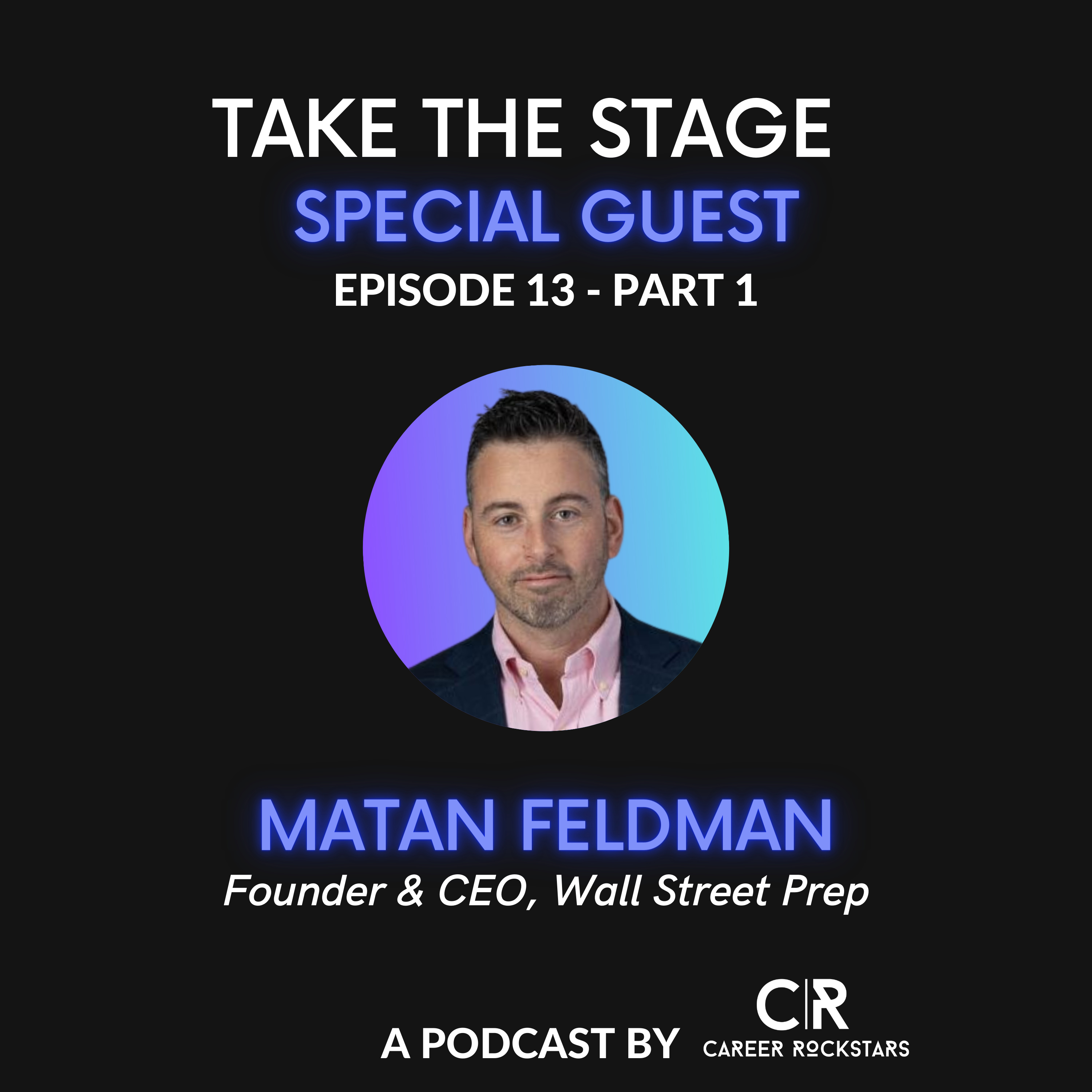
Matan Feldman transitioned from a recovering investment banker at JP Morgan to founder of Wall Street Prep, a leading financial training platform. In 2003, after facing burnout and realizing the gap between academic finance education and real-world investment banking needs, he launched a self-paced, hands-on training program designed for aspiring professionals. Initially rooted in personal experience and a need to decode complex finance jargon, the idea evolved through grassroots marketing and digital advertising, revealing strong demand for accessible, practical learning. Early struggles with credibility, particularly from academic faculty, were overcome by demonstrating tangible value through finance club partnerships and clear, job-aligned content. A key turning point came when repositioning the product—offering a foundational $200 course alongside a comprehensive $500 program—led to significant sales growth. Over five years, Wall Street Prep grew from a home-based operation into a viable business through disciplined content creation, strategic pricing, and university outreach. Despite limited sales and marketing investment early on, the company built a loyal user base and established itself as a pioneer in self-study finance education. The journey reflects not just entrepreneurial resilience but a deep understanding of how real-world financial skills are missing in traditional education—making Wall Street Prep a transformative force in financial training.
(upbeat music)
- Hello, and welcome to the Take the Stage podcast.
I'm your host, Alexis Alvarez,
and I'm on a mission to help make diversity
more of a reality for lower and middle market
private equity and credit firms.
Take the stage, celebrates and amplifies diverse voices
within the lower and middle market private investment space,
and serves as a platform for conversations
that encompass a wide range of perspectives and experiences.
Make sure you subscribe to hear
kind of conversations that touch on career paths,
then not so linear times, valuable insights,
practical advice for how to navigate your career,
and on a stories of how to pave a path
in the lower and middle markets.
(upbeat music)
- Mattan, I am actually very pumped to have you
as my guest today, and this is a really special episode
for me because you are my first Take the Stage guest,
and though I'm not leaving, ladies who rock,
I do want to expand Take the Stage,
so that it does encompass more diversity of guests,
and encourages more diverse conversations,
and you're a unique guest, and I guess,
actually, now that I hear myself say that,
I should say that all my guests are unique (laughs)
backtrack a little bit, but you're unique
in a different way, in that you're not
an investment professional in the traditional sense, right?
But you are, like me, in that you operate in the ecosystem.
So, everyone in my world,
which is the lower and middle market,
private equity, and credit space,
knows who Wall Street Prep is,
and so love it or love it, they are familiar with it,
but obviously you've been around for 20 years,
so it's clearly something that people love,
but I don't think many people know
about the story behind Wall Street Prep,
and so, this is what I find to be really interesting,
and kind of really speaks to me,
because as a business owner,
I can relate to the fact that this is a tale of two stories.
It's the story of Matan,
and then the story of Wall Street Prep.
Of course, there's journeys converged,
and so it's a little bit of entrepreneurship
meets evolution among many other things.
So, I want to kick off by you talking to me
about the early days of your career,
and let's travel back and for context for our listeners,
it's 2003, we are in a very fresh post 9/11 environment.
The investment space looks completely different
than it does today,
and I don't know how to emphasize that more
to some of the early career professionals
who might be listening to how the space really looks
right now compared to them,
because for however, little we may think it has evolved,
it really has come a long way since the early 2000s.
So, I've done enough talking.
So, talk to us about how you went essentially
from a recovering investment banker
to a successful entrepreneur,
and obviously the founder of a,
what has become a market leader
in the financial services training space.
So, take the stage, Sal yours.
- Well, thanks, and first of all, Alexis,
thanks for having me.
I'm excited to be the first,
first guests in this podcast.
So, sure, happy to talk a little bit about how it started.
I graduated Boston University in 2000,
and started my career in investment banking in 2000.
That summer went through a long training program,
and then started my career first in M&A,
and then in sales side equity research.
I did that for a little over three years,
and like you said, decided to start Wall Street Prep.
At that point, my feeling was I really enjoyed
the underlying analytics, the financial modeling,
the technical work that I was doing,
but a lot of the work-life balance,
and a lot of the more qualitative aspects of the job,
I realized really quickly we're probably not for me long-term.
And so, the question I face is probably a question
that most people in my class were facing.
I was actually one of the, in my analyst class,
and there were probably around 200 people in that class.
Very few had stayed on past two years,
let alone three and a half, I was one of the last folks
in my analyst class that really stayed on,
and that continues to be the case today,
that the tenure for junior analysts isn't that long,
at place, in fact, it's actually shortening,
and has shortened over the last 20 years,
20 or 23 years at this point.
So, the feeling was it's time to move out.
The question in my head was just to move out to do what?
The typical path back then was you go to business school,
and then maybe you transition to the buy side,
or you go back as an associate and kind of work your way up.
So, the path that was a little bit different in the today,
the path to the buy side doesn't necessarily require you go,
you know, you take that stop in business school,
that was sort of where most of my fellow analysts mates
were sort of, were at.
But then there was a small contingent of analysts
that started doing other things,
a little off the beaten path,
or non-traditional sort of routes to different careers.
And in my mind, that was sort of bouncing around in my head as well.
I just thought for my personality and kind of where
what I felt would be a really good fit,
there was this sort of feeling of, you know,
let me see if I could start something.
Let me see if I can start a company.
And so it wasn't like, I got to start a training company,
although I will say that those first few weeks in training,
when I was looking at the trainers up there,
I was like, oh, this is a cool idea.
And then, you know, as the 90 hours a week,
start on like that, that was a really cool idea.
Those guys seem to have a better life than the life I've got at the moment.
And so the idea wasn't really germinating in my mind
in any meaningful way,
other than towards the end of my career,
my tenure at JP Morgan,
and it was like, I gotta do something.
It was more like, I gotta do something.
What is that something?
Do I follow the herd?
Or do I do something a little bit differently?
And I didn't actually perceive a big risk of doing something different
because at that point in my life,
there were very few responsibilities.
I was, I think, why is enough not to spend my bonuses,
collected enough of those where there was enough in the back to Sarah?
Well, if I wanna take a stab at something,
I could do without significant risk.
And one thing to add is,
I didn't really contemplate taking on any venture capital for this idea
or institutional capital,
those pathways also seemed a little opaque to me at the time.
They weren't as well-grouped and developed.
So this was very much gonna be an idea
that was gonna be bootstrapped,
and the bonus was an important part of making
that those sort of safe bonuses
was an important part of making that possible.
So kind of my headspace of like getting into this was,
if you're gonna do something now's the time,
not a lot of responsibilities in life.
And the idea ultimately came in my head as a path of escape.
For lack of a better term,
it's just a path of escape out of something
that I knew that I was done with.
And so I'll stop right there,
but that was how that was where my head was at when I left.
- So you really were a recovering investment banker.
Like that wasn't, that's a pretty accurate assessment,
but I gave you.
- Very much so.
- Walk us through kind of like the,
at the point that you're like,
okay, I don't wanna do this.
Whatever those guys were doing,
like at the beginning of my training,
same kind of interesting,
but like to actually see that vision come to fruition,
like what's happening to get you there,
to take that vision into reality?
- Yeah, so hopefully JP Morgan won't hold this against me,
but I was thinking a lot about this while on the clock,
at JP Morgan for the last several months when I was there.
And the idea really very much started as,
what can I create that I myself would have benefited from?
It's just several years before,
when I was trying to break into the industry.
You know, just to give you some context about what,
you're right that the landscape in terms of the investment,
management space is different today than it was back then,
but the investment banking recruiting world
and space was also very different.
And so again, coming from Boston University
was a non-traditional non-target school.
I'd say it was a non-target school.
There wasn't a lot of investment banking recruiting.
I myself had no idea what investment banking was
until like my junior year in college,
which only happened because I happened to be studying abroad
and was placed in a flat in London
with a bunch of guys from Cornell
that were obsessed with investment banking
and had been thinking about that,
or apparently what felt like since their freshman year.
I didn't know what finance was, let alone,
what investment banking was,
but it did occur to me there's some kids here
who seem pretty smart and they seem to be driven,
and I probably should figure out what I'm doing.
And so I started paying attention
to what those guys were doing a little bit more.
And it was only really then that investment banking
even as a concept came to my head.
I still didn't know what bankers did.
I just knew that it was something that is a--
- One more.
- If you don't want to, if you, I may still not know,
but if you don't want to be a lawyer
and if you don't want to be a doctor
and follow those very group paths
towards sort of graduate school
and you want to make sure your parents are happy with you,
I'm like, I don't know what to do.
That's sort of, that was where my head was at
when I was 19 and 20 and 21.
So this seemed like an interesting role
'cause the more you hear about it,
you're like, oh, this is cool.
You've got access to really interesting things
in the world that are sort of changing
the way the financial system is structured.
And again, I didn't, again, have a particular,
I was an econ major and for those that are listening
to their econ majors, probably know how little econ
actually gives you in terms of a feel
for what's truly going on in the financial system.
It's not really finance, you know,
really learn all that much.
accounting. It is more on the liberal arts side of things. You have this sort of general understanding
of incentives and and and how the economy works, but you don't really have a feel for finance or
accounting, things that actually matter a lot in investment banking. When I was thinking about
this idea and this is sort of fast forward three, four years later, it was an idea about taking someone
and again, I wasn't that creative. So I was like, where was I four years ago? What would I have
benefited from? And what do I know today that I can help, you know, that can help accomplish
that job of like of giving me the four years prior version of me, something that would be useful.
And so that four years prior version of me was someone who went in and I should say in that London
study abroad program, it was a program through Boston University. These Cornell kids happened to
sort of piggyback on it, but it was a Boston University program where you spend a few months
studying, quote unquote, studying. Most of it was basically traveling and pretend studying. The
other few months was they would set you up with a finance internship. If that was what you're
interested in, if you're interested in marketing, then set you up with a marketing internship,
et cetera. But in order to get the internship, you have to get through an interview with the firm
where you get the interview with where you get the internship. So my first interview was a disaster.
I'd interview with Merrill Lynch, and it was for the leverage finance group at Merrill Lynch.
This was the internet and had already sort of become a thing. You could still go online and learn
what leverage finance means, but neither those words meant anything, let alone in combination,
they meant nothing to me. And so, you know, trying to figure out what what that was, this may have
been even pretty Google. So this is like going on hotpot or like us and trying to figure out what
those things mean. This is, I mean, like, let's make this clear. I mean, this is like the days of
paper, the days of paper, the days of boxes, you and I have briefly had a conversation about what
it was like in those ancient days of like working and yeah, and life without Google, life without
Google maps. I mean, just, you know, like, it's incredible how much we depend on the internet
in general. And what did we do before this? It was very, very, you know, it was just very so,
I don't know how to explain how different it was. Other than, you know, like these stories of like,
in my day, we didn't have email and we had to like, you know, send letters and things in the mail
and learn how to interview in a very, very different way. So continue.
Yeah, 100%. And I think I'm not that old. The internet wasn't there. It just wasn't that good.
Yeah. Like, so you would go and you'd start trying to figure out, all right, there was a
Merrill website where there's some verbiage around what this was. There was a website called
Vault where you can go and learn a little bit about what these groups do. But it was so mired in
jargon and it was so opaque that someone that did really have an understanding of what this
stuff was to begin with was just going to struggle to figure it out. And so I had probably,
I printed out and I remember this. I printed out everything I could learn about, you know,
leverage finance. And I'd read it over and over again. It was, it was like Greek. I just could not
get through. I had some vague understanding of what it was, but I couldn't get through. And I
couldn't be asked my way through the interview. And it was obvious. I mean, I was sputtering because
like, when I got to the interview, they asked me, you know, it was like my worst nightmare question.
So what do you understand about what we do here? And there's nothing. I was like, you know,
grasping instructions. And so I ended up landing landing an internship at Lehman because that one
needless to say didn't didn't go very well. But what I put in my head and that sort of lingered
through that final decision to say, or I'm going to leave JP Morgan and start Wall Street prep
was was this idea that this that the skill set is actually pretty simple. Like to learn the
technical skill set because I at this point at JP Morgan at the end of my tenure there, I've been
doing it for three and a half years and it boiled down to basic math. You know, if you know basic
like not even high school math, if you know basic like junior high math, you're going to be fine
from a technical perspective. The hard part is putting it all together and like breaking down some
of the some of the modes that I felt like needlessly existed that prevent people from accessing
that knowledge. And part of the realization over those three and a half years was that those
modes exist as a signaling mechanism even internally at a place like JP Morgan is a shorthand for
people to say are you get it. You know what I'm talking about. Let's just keep going. And that
that has value as well because you're you sort of have that shorthand. And so my vision was very
much to to make that available to the four years prior version of me. Right. Just if I someone is
trying to break into this industry, how do you get past those modes? Like how do you get past those
barriers so that you can do your basic, you know, high school or junior high math, get to the right
answers, fill the models the right way. So that was the vision. Right. Really that was sort of the
the crystallizing vision for for it was how do I help myself break in once that sort of crystallize
in my mind that there's just weeks probably months at JP Morgan of just doing what a 24 year old
that's never started a business does, which is maybe spend more time than you need just drawing
the logo and like coming up with the name and thinking about the, you know, the what the website
will look like. And it was just in doing very little competitive analysis, certainly not enough
because that I've done so. I probably would have not done this and would have realized there are
actually a few competitors in the space. But it was just this sort of very product driven. I have
an idea for this product. I want a Kaplan style SAT prep type of thing to make available for people
who are trying to break in. It was like my very initial vision, the one that made me go into my
boss's office and say, I quit. That vision was like an eight week Kaplan style program where,
you know, someone at Boston University goes and instead of going on getting their LSAT taken,
taking their LSAT and prepping for that, they're they're signing up for the investment banking
program. So that was the thinking and that was the obviously the businesses become is evolved
from that original vision. That vision was very much a narrow vision around one particular area
finance, which is investment banking. And for a very narrow persona, which is the person who
doesn't really know much about investment banking, but investment banking, by the way, also 20,
20 years ago, was even more competitive if you can imagine that it is today because you didn't
have the allure of tech, notwithstanding the last year or two of hiring, but you didn't have the
allure of tech and, you know, pool tables and, you know, like, pool office space and offices like
in Google. This was just this was where was that investment banking and maybe consulting was sort of
second as the alluring non pre-med and pre-law kind of option for people really needed to get
a group path for themselves to make everybody in their lives happy. So that was the idea.
Let's take a pause in here because I want to, so you're at JPMorgan and you're in a nice study job.
Your parents are probably, you know, maybe a little disappointed. You didn't go the lawyer,
medical, you know, doctor route, but you're in, you know, a stable job, you're in New York. I mean,
they're probably happy. Your friends, you know, knew you had the investment banker and you decide,
I'm going to quit this job and I'm going to start this company to, you know, basically offer this
eight-week style Kaplan type of training to college kids or those that, you know, might have an
interest in pursuing a path and investment banking. So what is the overall reception or reaction,
sorry, to this idea, once you actually physically, you know, mentally check out of JPMorgan.
Yeah, so I'll give everyone in my life credit for restraining what they, what they told me later,
they were really feeling, which was, I remember I was living in a story at this time and when I
told my parents, hey, I'm going to quit, I'm going to quit my job and I'm going to start this thing.
Remember I was in a coffee shop with them and I'm letting them know, I'm like, I wonder how they're
going to take this. And to their credit, they were like, fine, they didn't object the way that I
thought that they would, what they said after was that they were, they were like freaking out,
but they don't want to say anything. So that was good. So that was good because that, you know,
that gave me the confidence to say, all right, I'm going to move forward. It was very important
for me to make sure that they were, they sort of got it and we're on board with it. And again,
I think the one of the nice things about starting something risky at a early part of your career,
is I think they also recognized that the risk is not nearly as high as one might think.
Because what's the worst thing that can happen? I mean, this is the thing that was in my head.
The worst thing that can happen is that I messed this up and it doesn't go anywhere. And then a year
later, I just get back on whatever path I needed to. It's just, it's the way you perceive risk.
It's a really important factor. It's like once you realize it's not that big of a deal when you don't
have it. And again, not everybody has that privilege, right? Because I had the privilege of saying,
I don't, I've saved enough to like actually take care of myself. I ended up moving back
with my parents. So that helps tip, like I moved back to Boston and I stayed with my parents
of free rent and all that. And I started to just gave myself this year of like, hey, I'm just
going to give this a shot. So very little by way of expenses had that little nest egg saved up
from three years of labor at JP Morgan. So they took it relatively well. They've externalized
some sort of neutral maybe even support for this idea. And
everybody else, you know, I think, again, coming from Boston University, most of my friends,
on the sort of university side, we're like, oh, you know, the time had figured it out
anyway. So you got this crazy lucrative job. So they were like, whatever he does is fine.
It was made sense. They all told me after the fact I thought it was, it was crazy. But again,
to me, everyone was really supportive to my face. It made it a lot easier, actually, to not have
to deal with everyone saying you're crazy to do this. My boss, when I told him, sort of laughed,
and you know, reacted the way I would sort of expect many people to react, which was,
and he was a great boss, a really wonderful person to tell me a lot about finance.
But his reaction was probably, you know, a more organic reaction. It was like, this is silly.
This is silly town where you're doing it. So everybody had, and my girlfriend at the time,
I moved back to Boston because my girlfriend at the time, and she's now my wife, she was really
supportive. And so it was, it was, that helped. I mean, that helped that just the people around,
maybe internally were thinking I'm crazy, but they didn't, they didn't really vocalize it. They
gave me that, that sort of grace of, of being supportive externally. Yeah, you were quite fortunate,
because a lot of the times you hear these stories, and there's a lot of questioning as to, you know,
what are you doing? But if you have a supportive network and a supportive, you know, like the tribe,
as I call it, which is your family, and of course, like professionals in your, you know, in your circle
that support you, then it makes the process, it gives you the confidence, I guess, that's, because
a lot of it is, is confidence, because there's, I'm sure that there were many moments where you're
like, what am I doing? You know, that the rollercoaster, the entrepreneur's rollercoaster, right? Everyone
talks about that, anyone that's kind of dabbled in, in their own types of endeavors or projects,
or businesses have, we talked about this imposter syndrome, maybe at this point, hasn't cropped in,
but that, so at different pieces of the, of the, like the timeline, starts to kind of come in and,
you know, kind of linger in your, in your mind. Okay, so you've told your family, you put your job,
you know, you're, you're running with this, and you're going with this, and then what happened?
So like, what happens from, you know, 2003, until, you know, let's, let's go, you know,
for the first five years of Wall Street Props live. Yeah, so the first year is a very short story.
I basically hold myself up in my, my, my old room, in my parents' house, and just create a content.
Again, this is, this is probably not a best practice if you're starting a business, but this is
what I did. And what I did is there was no market kind of valid, like validation, there was no proof
of concept, there's nothing, there was just me feeling like this could be good. I'm going to spend
a year, and I'm going to create courses, and they took a very long time. It took me a year,
and I was actually fairly disciplined because one of the nice things that coming from
investment banking is they, you get that work discipline of like, the workday is not, you know,
like 930 to, to 5 and you're checking your email and websites for hours and hours a little bit
with some of that banking, but it really, it, but it, it, it's spanned. My definition of a workday,
easily in my mind was like 12 hours and so, just grinding through that and just putting out
and just building. So I'd spent the first year really just building content without knowing if
there was any audience for it, which is again, probably not a best practice, but that's what I did.
The other thing that I did during that first year was I actually, I signed up to be in an SAT
instructor with Kaplan because I wanted to know how to teach this stuff. And I was like, all right,
so, you know, so I sort of, the daytime was, you know, you go, you, you go through the SAT training
program. By the way, I didn't, I actually ended up not doing too much of the teaching. I ended up
going through the training, their training program and learning a little bit about that. And then
once the teaching came out like, this isn't actually a good use of my time, but I went through that
process for the first few months and then just building the content. So that was the first year.
And then once the content was at a place where I felt like I've got a date, I know when I can
get this done, again, silly town. Like I went out with flyers to every university in Boston.
And I go with my friends. Sometimes I'd have to pay them to join me and just hand out flyers.
I dragged everybody that could just hand out flyers around the business schools and all these
colleges, you know, hey, sign up for like a pathway to invest in banking kind of thing. And it didn't
go backwards. It's very grassroots. Again, this was not, I'd come in with a very clear product idea.
Of what product was needed and zero marketing, zero understanding of what it would take to actually
get this out there in any meaningful way. So I was trying in the most basic grassroots way to
raise awareness. That didn't work. I mean, not surprising. That was not a success. That had gone
off for a couple of months. And I think I've got one, I don't think I know I got one sign up
from all that effort for, you know, because you have to anchor yourself to here's the date. Here's
the event, here's the fee, here's all that. And you get the nightmare scenario as you get like one
sign up. It was like an event, right? It's like, I'm thinking, oh, you can just log on online and
like, no, like it's actually physically, you have to present yourself and go through like in class
teaching environment, right? Like that. You're a brick and mortar event event. It's it, you know,
I would rent a space and do it there. That was the idea. And the nightmare scenario is you get one
or two sign ups and then now you're just sort of like, do I run this like eight week, whatever
it was 12 weeks. I forget the exact kind of format at that point. It was so silly. I had, so the one
person that signed up, she called the office, which was my, you know, my parents, my room and my
parents house. And she said, hey, you know, I'd love to just come in and just check out the material
before, before the, the program. And I was like, sure, hey, just, just to let you know it's,
this is a house. You're coming, we don't actually have a formal office. So it's already unraveling,
you know, this whole, this whole idea. She ends up coming over and she's, you know, she comes into
my parents house and there's like, you know, photos of me as a kid everywhere. And she goes into my
room where I grew up and I show her the materials. She's going to go through whatever,
to her credit. She looks great. All right. You know, I'm going to stay on. But that was to me at that
point. And I was like, this is, this is not, this is not good. Like this is not the way to do this.
And so I ended up canceling. I just aborted kind of mission at that point. I said, when I'm not
going to do this anymore. And I told my, a good friend of mine who had just started working at Google.
Like a year before and Google hadn't gone public yet. Actually, Google's AdWords campaign was just,
Google's AdWords platform. It's a platform that you can advertise. That's how they make money now.
But back then they were just a venture backed and they were just had built this amazing search engine
and started taking over around that time became the de facto search engine for everybody.
He was early, you know, he's one of the early guys there and said, hey, look, we've been given
these guests accounts. We can give out these guests accounts for AdWords. One, just, you know,
why you just put it online and see if people come in that way. You get 10 bucks a day. Just for
free, you can spend, do $10 worth of advertising a day before you just cut, you know, cut out,
just see if there's interest through the platform. It's a great. I had already built, you know,
a simple website, which was just supposed to take those registrations, just a simple or someone comes in.
When I sign up, I was just going to, you know, try to build some of the takes registrations.
But I ended up advertising through this free account and the wake up there was how many people
from all over the world were coming in and filling out sort of inquiries. You couldn't buy anything
yet, actually. You just couldn't buy anything. It was just like, you know, I was using this guest
account to get like inquiries. And what that, that was my first actual lesson in marketing.
I guess my first lesson in marketing was that, you know, grassroots flyers for such a niche product,
probably not the best idea. The second lesson in marketing was, you know, if you have a global
product, you need to advertise it globally. And so that realization, been back then,
that $10 went a long way because again, right now, you probably have to pay $3, $4 to rank for
the term, you know, investment banking to get a click for investment banking. So, you know,
the return on ads band is not nearly as high as what it was back then, because back then,
you need to pay nickel to get, because it was new. It was just a brand new platform. So there's no
competition for that kind of advertising. And so that was the wake up moment. Like, maybe I don't
hang this up. What I do is I convert this into a self-study program. So a very long way to answer
your question about the five years, because I'm still on year one, but year one was basically converting
that content into, sorry, the content actually didn't mean much conversion. I was shipping. I
converted it into a self-study program where I would ship the books. I just modified it a little
bit, because I'd already had the idea, even the classroom-based thing, that should be very self-guided.
I didn't want to rely on, like, me as an instructor or someone else to like, wow, he should be very
self-guided. So there's a little bit of tweaking. And I just really, I repurposed it into a self-study
program. Physical books, CD-ROM, you've got to provide those CD-burners and, you know,
printing out the CD-ROMs. And once that rolled out, that took me another month, two months to
sort of repackage. And then I started taking orders. And, you know, all that took at that point,
knowing that I've had the audience through the AdWords campaign was just getting the website ready
and taking those orders. And so once that started coming, there was a trickle. And you'd get an order,
first couple of weeks, there was, there was nothing. And there was another lesson in marketing.
If you're curious, you can go into that as well. There was, there was no orders for a while. And then
something changed. I can go into that or just keep going. What was that change? That would tell.
So the change was another basic lesson in marketing, which was I had put up the program for
the entire program. It was a $500 program where you learn everything you need as a banker,
right, from financial statement modeling. It's still actually the most popular program,
the online version is, is still our flagship program for individuals to want to really learn
kind of the comprehensive skill set of an investment banker or someone in corporate finance.
It's when they just do modeling, valuation, just kind of cash flow analysis, comps.
leverage by I'm modeling, M&A modeling. It's sort of what we think of is that core technical
scale set for some of the corporate finance. So that was the package that put together a whole
bunch of books, you know, like an eight pound package in the mail with Excel files and supporting
documents. And that was the price point that I had arrived at. Again, without a ton of market
research was 499 dollars. And that didn't go. Nobody was buying for the first couple of weeks and
like, what the hell is going on? Like, I've got all this interest. Did I price this wrong? Like,
is it just it does interest not convert into sales? And then I thought, I probably priced this
wrong. Maybe it's just too expensive, $500. Even today is expensive, but you know, $20,
in 2004 is even more expensive. So I just created an abbreviated. I had the idea of just creating
an abbreviated version, a $200 product that was just the first course, like just three-state modeling.
The most foundational thing that you need as a corporate finance professional, just had
the three financial statements in a relay with one another in a real way. How do you build that
the way you would on the job? So the moment that I split those two, an interesting thing happened,
literally the day that I split those orders started coming in. They did not come in,
though, for the $200 program. They came in for the $500 program. So the lesson there was
pricing, positioning. I mean, I was getting sort of an education and a marketing in a very,
very visceral way. And all those things were getting internalized in my head. And I started
enjoying the marketing part of it, too. So that's when it started. And then it was just a trickle.
And I had sort of told myself back then, I'd given myself a very simple bargain, which was if I make
half of what I made as an analyst and as an analyst back then, all in with bonus, by my third
year was like $120,000, $130,000. It's significantly more now. But back then, that's kind of where you
kicked out all in after three, three and a half years. It's like, if I make half of that, I'm good.
I'm good. I don't need to do anymore. Like that's just, and I live my own life.
And the orders trickled in at a pace that exceeded that. And I'm feeling really good. And that
is when I said, all right, well, this is what I'm going to, there's something here. This is worth
pursuing in a real meaningful way. And so coming out of that first year, where it was a little up
and down because it didn't really work in the beginning. I actually even started looking for work.
Very informally, I didn't fully commit to sort of leaving it. But that up and down sort of was
behind me. By a year and change, I was, I was all about this, realizing there's a product,
there's this idea here. The next couple of years was about building that out. Once orders started
coming in, I got super lazy for a while. Actually, I just ended up going to, like literally my day
for a while was just going to the post office and shipping packages. And it was the greatest
feeling. I was basically on a gap year. I've just gone to the post office every day. Because there's
like, I wasn't actually doing anything at that point. I just created probably just sold. You go
to kinkos, you make these books, and you go to the post office, and you just chip them. And it felt
like like a racket. I was like, I can't believe this is happening. I just made it. People buy it.
And it was just a sort of feeling of like, all right, well, that's great. For about six months,
I didn't do much. It was actually kind of a step back of like, this is awesome. It's just relaxing.
But then the sort of motivation kind of crept. And fear actually kept crept in and forced me to do
something. The fear was, there's no way this is going to keep up. I was sort of smart enough
to know this racket wasn't going to last without building more, without like establishing yourself,
without doing more. And also ambition sort of crept and also recognizing this something. So after
about six months of just hanging around, not really doing whole heck of a lot, other than going
to the post office and just celebrating and hanging out with my friends and my girlfriend at
the time and just having a great time, feeling like I had won the lottery. It really did feel like
I'd won the lottery. Like that, that sort of feeling of, all right, I'd made something and no longer
like be holding to anybody felt incredible. It's actually looking back probably the most fun year
in terms of just my feelings about this is unbelievable. Now, and I wasn't making that much money,
but it was making enough money for what I needed at the time. It's just you like that first year.
It's just you, you're still living with your parents making. I finally moved that. But yes,
I did move that. You can move out. I did well enough. Yeah, once, once I started collecting,
collecting some revenue, yeah, I had moved out and I moved in with my girlfriend into an apartment
nearby and things were now in a really good place in my mind about where I'm at. And so after that,
that process of feeling really good and feeling really happy, the next stage was about building.
I brought on a really good friend. The next stage was realizing, okay, look, there's a,
there's something here we need to go to universities because we'd started getting a trickle of like
increase from finance clubs and we even got a couple corporate inquiries. People stumbled
upon us on the website through the website. I brought in a really good friend. He was my roommate
in my JP Morgan days. He was also JP Morgan and I him and I had gone way back. We met in elementary
school. I brought him on. He was at a place in his career similarly where he was just done with
banking. He also moved interestingly to equity research. I said, come on over to this thing. He
moved from DC and joined me in his role was going to be to try to go out to finance clubs and
corporations and help on the sales side where and our split would be I would sort of live on the
product and the product marketing side and the B to C side and he would live on the sort of B2B
and establishing more more relationships with employers and with universities. So that was the
transition. Once he came on, we were really able between the two of us between the marketing and
and the B to B stuff to really start growing it nicely into a nice lifestyle business. So for
the next four years, we started working with universities a lot. You know, a lot of universities
where the demand was finance clubs, career centers. That became our bread and butter. We started
running. Actually, we went back to the original vision. We started running public boot camps. We
had enough of a megaphone at that point where we could run public boot camps and the self-study
business was still the most significant part, these online orders. But now we're building these
other pillars around the business. And I think by year five, we probably had about four or five
employees that were, again, it was slow and we were conservative. And again, because we were
bootstrapped, every dollar that we take out, we got to be sure that it turns into something because
that's money is coming. And both of us had been habituated to living off of much better paychecks.
So those decisions were, well, you know, do we use this $60,000,000 on another employee or do we
just put it in our pockets? And those decisions were hard when you're bootstrapped because you got
to be really confident that those are coming. That's going to come back to you. To our credit, we got
much more comfortable with that idea later on. And for the first few years, we struggled with that.
We wanted to hoard our distributions. And we said, let's just maximize what we can ourselves.
So for the first five years, we had really built out the self-study pillar was really solid.
University business was getting more recognition. There's some incumbent competitors in that space
that we were kind of moving around with self-study. You know, most of our competitors were coming into
universities with these workshops and we'd come in with this idea of self-study. Let's give your
audience. Well, do workshops, go all out to do self-study, giving them more value. You know, our ideas,
you can get this instead of if you want to learn this stuff, you can either do it over a weekend
or you can do it on your own time. And that that was a relatively novel concept again.
Online learning wasn't a thing. I was going to say that. Like self-study at the time was very
unheard of. Almost unheard of. Yeah, very, very novel novel concept. And that you made me
jog my get back to like my, you know, like 20 years ago. And it's like, it's very normal now. You
can self-study anything these days. But then it was, it almost lacked credibility, right? Unless you,
you know, like you wanted to have, you wanted to be tied to an institution, right? Like to have
that kind of credibility. Talk to me a little bit about that. Like did you find that there was maybe
a little bit of kind of that, you know, who are these guys? And like they're not affiliated with any
large organization that we would recognize, you know, like what, or was it something that maybe,
you know, it wasn't, it was maybe an afterthought. So it wasn't obstacle. It was a real obstacle
in some of the larger deals. I mean, we were basically iced out of larger deals because of that
for a while. We sort of had built this reputation as the self-study guys. And then later as the
online guys, because we were the first to really do that in our niche with the larger, you know,
with the larger, at that point, the larger competitors that we were sort of facing that we had to
see. But we were the self-study guys. The way we would get our foot in the door was a combination of
two things. The first was that it was really, it was demand from the finance clubs. Like the finance
clubs really actually powered a lot of that demand. And they would become champions to try to get
the career centers to foot the bill. And so when you have that, you have this advantage that the
product is in demand. People want it. And there's not really an alternative to it. There are workshops,
there are live events, but the demand from the finance club was what we had to offer.
That helped a lot. The resistance, the objections were coming in the beginning. This is not the case
at all now. But the objection, the very strong objection, we come from some academic faculty
who would say we would get stopped by faculty. You know, we'd have a deal almost fully done
with the career center and a finance club. And he's back there when we're not large deals.
These were $5,000 deals to get to your programs. But they were meaningful to us because it was
a little go. It was a credibility. But it would get more.
many many times by faculty that then you had to go and and really have a conversation with sometimes
there just be blocked out right sometimes they would they would want to understand how this
connects or doesn't connect to what's being taught in the academic programs for those who are
trying to break into the industry we know very well how it doesn't connect or does connect in some
ways to the academic concept it just certainly 20 years ago a lot of what we were doing which is very
applied accounting and corporate finance in the investment banking context just wasn't it's
and honestly it really isn't available today outside programs like Wall Street Club because it's
a very specific kind of context all right if you know you're going to learn an accounting class
have a three financial statements interact but you're not going to know what you're managing director
exactly expects you to produce and what those summaries look like and where in the financial
filings the data is actually hidden where it's not the real context of this is often missing from
academic training and for careers that are this competitive that edge gives people confidence
there's a demand for it those were the challenges and we were learning how to market we were learning
how to market to generate the demand really well we were learning how to market to present ourselves
as bigger than we were while preserving our integrity and and not lying because that's the other
thing that you can also do when you're marketing is a small company and sort of finding that balance
of like being honest but also presenting yourself as credible when you're just starting out and that
sort of catch 22 of like to get big you got to pretend like you're big you know there's a sort of
that balance is a lot of marketing and I found myself really enjoying that that sort of how do
you position yourself we had one fortunate thing happened in that first really the second year where
Credit Swiss had brought us on somebody of Credit Swiss had brought us on to run a program to do
something and that really helped because that gave us a logo a big logo to build off of as well
and and and market and so just using it just pulling on every thread that we could we knew we need
to establish more credibility we knew we had a good product the one thing that we that we felt good
about is the product and that's sort of the key actually one of the biggest challenges now for our
business is how do you prevent all the opportunities from the sales and marketing side to actually
from clouding all the product investments you need to make back then it was all product investments
was like the year of my time the year like just never any focus on support and there's very little
actually being invested in sales and marketing so we were learning that we were learning the sales
and marketing part the positioning and all that and just getting this product down we didn't quite
know how big the demand for was but we were learning it every year in that first five six year
period that there's there is more demand that we than we even thought so by the end of that
sort of first phase which I think really takes us to the financial crisis the financial crisis
kind of represents I think the second phase of our business up until then small really you know
like well well regarded business with a solid product that people go through and love it they
championed it they told others about it but it was it was very little proper sales and marketing
happening beyond just building out these little bits not moving beyond me and my business partner
and a couple of you know administrative people at the company just to keep keep things moving and
keeping those you know I was no longer going to the post office to ship the boxes so we had we
had someone who who do that and so that was that first stage and it was very it was a great time
actually and that concludes part one of our discussion with Maton Feldman don't miss out on part
two where we delve into Maton and Wall Street props journey through the 2008 financial crisis
bringing us full circle to his plans for the future stay tuned and that's a wrap thanks for
listening to take the stage if you enjoyed this episode please share with others post about it
on social media or leave a rating and review to hear past shows please go to our website career
dashrockstars.com if you're a company or candidate who would like to work with career rock stars
reach out on LinkedIn or send an email to Alexis at career-rockstars.com thanks again and until next time
Podcast Summary
Key Points:
Matan left investment banking after three and a half years due to poor work-life balance and a desire to pursue a non-traditional career path.
His entrepreneurial journey began with a personal need to understand investment banking fundamentals, which he realized were obscured by jargon and opaque processes.
He launched Wall Street Prep as a self-study training platform modeled after Kaplan, targeting college students and aspiring finance professionals.
Initial marketing efforts—like flyers and AdWords—revealed that online, self-paced learning was a novel and effective solution in a space dominated by live workshops.
Pricing strategy proved critical
The business grew organically through university finance clubs and career centers, overcoming skepticism from academic faculty about its credibility.
Wall Street Prep became a pioneer in self-study finance training, offering practical, job-relevant skills missing from traditional academic curricula.
The company remained bootstrapped for years, focusing on product development over sales and marketing, until demand validated its market potential.
Summary:
Matan Feldman transitioned from a recovering investment banker at JP Morgan to founder of Wall Street Prep, a leading financial training platform. In 2003, after facing burnout and realizing the gap between academic finance education and real-world investment banking needs, he launched a self-paced, hands-on training program designed for aspiring professionals. Initially rooted in personal experience and a need to decode complex finance jargon, the idea evolved through grassroots marketing and digital advertising, revealing strong demand for accessible, practical learning.
Early struggles with credibility, particularly from academic faculty, were overcome by demonstrating tangible value through finance club partnerships and clear, job-aligned content. A key turning point came when repositioning the product—offering a foundational $200 course alongside a comprehensive $500 program—led to significant sales growth. Over five years, Wall Street Prep grew from a home-based operation into a viable business through disciplined content creation, strategic pricing, and university outreach.
Despite limited sales and marketing investment early on, the company built a loyal user base and established itself as a pioneer in self-study finance education. The journey reflects not just entrepreneurial resilience but a deep understanding of how real-world financial skills are missing in traditional education—making Wall Street Prep a transformative force in financial training.
FAQs
Mattan left investment banking because he found the work-life balance unsuitable and realized he didn't enjoy the qualitative aspects of the job. He wanted a path that matched his personality and values, leading him to start a training company to help others break into the industry.
He drew from his own experience as a young professional, recalling how difficult it was to understand investment banking concepts without resources. His vision was to create a clear, accessible training program that would help someone like himself learn the core financial modeling skills he needed.
He discovered that grassroots methods like flyers were ineffective. Instead, he used Google AdWords to reach a global audience and realized that a niche product needed to be advertised globally, especially when there was little competition in the early days.
The full $500 program was priced too high for early adopters. After splitting it into a $200 version focused on foundational modeling, sales surged—showing that pricing and product positioning were critical to conversion and customer acquisition.
They emphasized the practical, real-world relevance of their training—especially how it connected to actual investment banking job expectations—while building credibility through partnerships with finance clubs and career centers that championed their programs.
Self-study was a novel and valuable offering in 2004, giving students flexibility to learn at their own pace. This stood in contrast to traditional weekend workshops and helped differentiate Wall Street Prep as a more accessible, student-friendly option.
Chat with AI
Loading...
Pro features
Go deeper with this episode
Unlock creator-grade tools that turn any transcript into show notes and subtitle files.
 PodcastTranscript AI