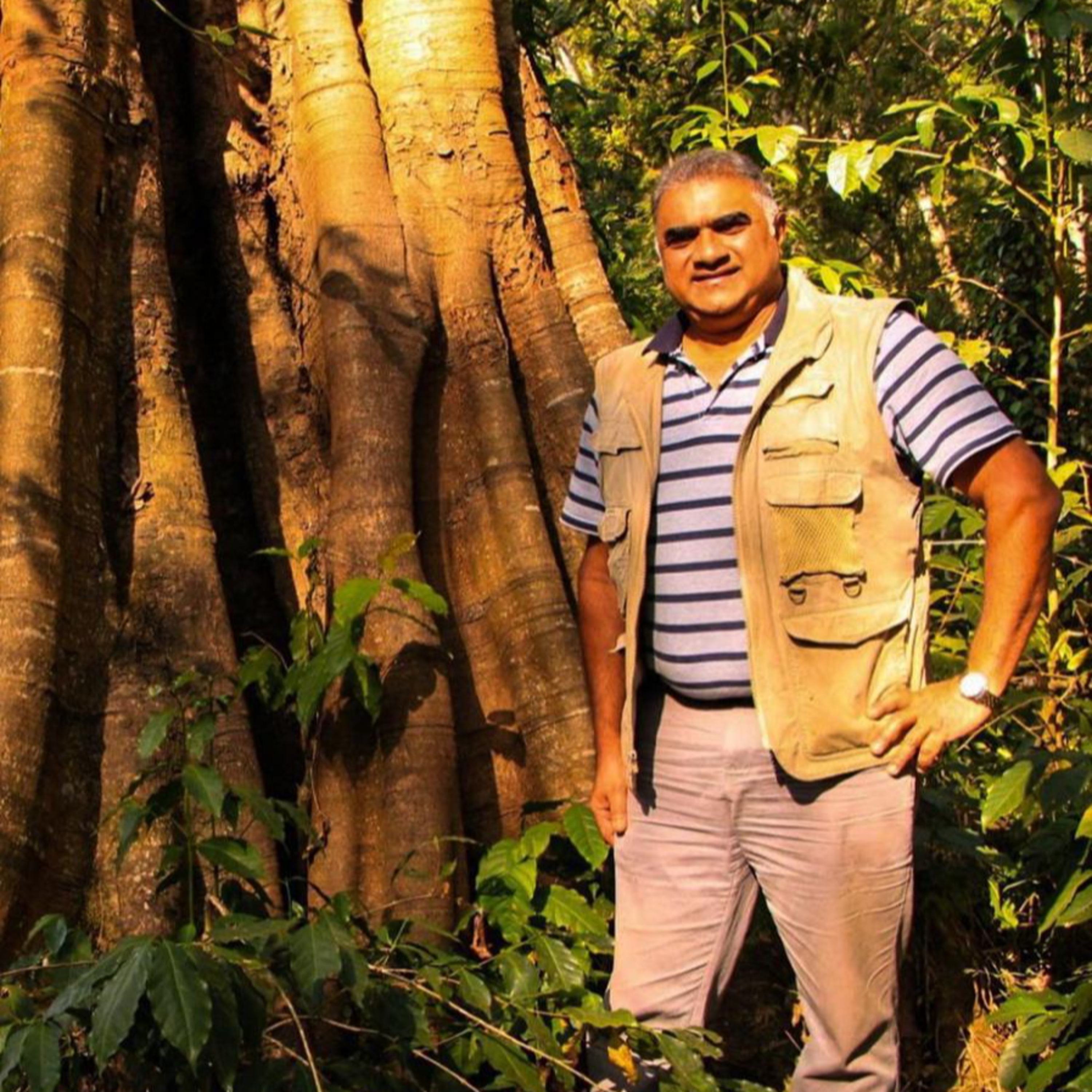
Ep.13 Coffee Protocol Podcast - Nerding the Coffee Plantation side of Coffee with Ajoy Thipaiah, a 4 generation Planter
45m 6s
The conversation highlights key coffee varieties and challenges in Indian cultivation. Selection 795 remains dominant in Arabica zones, while Chandragiri and Selection 9 are gaining ground due to resilience and yield potential. However, all Arabica varieties face significant threats from leaf rust, which spreads via wind and thrives in hot, humid post-monsoon conditions. The disease is exacerbated by climate volatility and reduced shade, which leads to widespread borers, milibugs, and "dye banks" — all contributing to plant stress and lower yields. The shift from traditional shade-grown systems to open areas increases pest pressure and creates a vicious cycle of declining productivity and income. Planters are now encouraged to diversify income through horticultural crops like avocados and mangosteens. The discussion also underscores the loss of traditional Indian heirloom varieties like Kent, and the growing difficulty in managing mixed plantations due to cross-pollination. Practical considerations, such as labor intensity and early ripening, are driving planters to adopt simpler, more manageable varieties. This episode emphasizes the need for integrated, climate-smart approaches to coffee farming in India, moving beyond single-crop thinking.
Hello everybody, so welcome back to Coffee Protocol Podcast.
This is your host, Buristan Pikes.
Most of you do know that I did work at an estate for some while, so while I was working
at Pranoye at Kerala Club, I happened to obviously have a lot of conversation with this
dad, a joy, and he's just an amazing institution himself.
He has a lot of knowledge about plantation, the horticulture side of coffee, and just about
anything to do with coffee.
So the following episode, which is basically a two-part episode, basically a conversation
with a joy and his taken coffee, a lot of wise words about what you shouldn't, and maybe
could do with coffee.
Spose, it's almost like yellow kind of dust, which appears on the lower part of the leaf,
and these are spread by the wind.
Now you'll see this plant that is exhausted, which naturally tends to shed a bit of its
leaf.
So just in case, if you had to introduce yourself, how would you do that?
My name is Ajayati Paya, I am a fourth generation coffee grower, and I have been a, I have
a planting family, we have our coffee plantation in the District of Chikmanglur in Karnataka.
So it's been what in total about a month that I spent here at Keraloo, and every time
I remember I spoke to him, I knew you know there's like a lot of knowledge that people can
soak up from, and so a couple of days ago I spoke to this gentleman from Nagaland, Li
Sam, and he wanted to get some insight from the coffee planters side of the world.
He said brewing and roasting, he said it can get a lot of things online, but when it comes
to plantation side of the coffee or about horticulture in general or growing and stuff like
that, there is very limited knowledge online, plus, especially about India, it's hardly
anything.
So it's either the books that you have at the coffee board, or probably something from
outside, but less about India.
So he said why not you know ask some questions, and I said I was here, I might as well ask
uncle and get some data for you.
So I'm just going to ask a couple of questions, what he has asked, then we'll go and have
some more questions for you.
So what are the most famous coffee varaitals that grow in India, both Arabica and Roboslow?
Well, if you're talking about the scenario which we are faced with today, especially in
Arabica, predominantly, Arabica selection number 795, has been one of the most popular
varaitals in the Arabica growing zones even today.
And to a very large extent, also the Kavari, and of course, then you have the various subspecies
of the semi-doofs.
And in my opinion, Satchimo, which is again a derivative from the, it comes from the
lineage of the Vila Satchi and Kati Mor, and they have re-christined it in India and
they've named it Chandragiri.
Today I think Chandragiri has come into the coffee growing areas in a very big way.
In fact, it's replacing a lot of the areas which were under Kavari.
That is what I have been made to believe.
But 795 still rules the rules in large tracks of the Arabica growing zones.
Of course, you do have selection 9, which again is a derivative from the hybridore DTMOR,
which is one of the best Arabica's world has known, correct?
So although due to its various characteristics, people find it a very kind of a delicate
variety of the Arabica.
But it's gaining in popularity in many areas of the coffee growing regions of the state
of Kanatka as well as I'm told even in Tamil Nadu and Kerala.
So if you had to rank them, like let's say 1, 2, 5, on the top basically based on the
popularity of 795 and then you have Chandragiri, then you have Kavari or selection 9, which
one?
I may be wrong but I'm not too sure but I've been made to understand that it is being
phased out in a lot of aerabica growing areas because one thing is once the leaf rust
problem that Arabica plantations are faced with, most of these Arabica beetles which are
when first introduced have great resistance to leaf rust.
But as you know, leaf rust, they tend to mutate, correct?
And when they mutate, then the resistance of these beetles, you know, reduces.
So then what happens in a year where you have varying temperatures, you know, the micro
climates are so, the variables are so vast, then you see plants, the plantations that are
devastated with defoliation, which is basically the outcome of attacks of leaf rust, correct?
So I would, I don't know if ranking anything after 795 in a particular way is correct, but
I would definitely feel that depending on the zone in which it's grown, you know, the
response to a certain type of varietal is always different, correct?
You cannot have two zones which are similar in many ways, correct?
Fair enough. And what about the known varietals of Robusta?
Robusta although I'm not a, you know, big Robusta grow myself, but the varietals that I have
is the C into R, which is the congences into Robusta, congences as you know is, it is native
of the country Congo which is in the central African, you know, the equatorial region, correct?
And it was cross-bred into a variety of Robusta, and that's why it is called C into R. Of
course there are other varieties of Robusta which have been very, very popular. One is 274.
It is grown in vast areas of the Robusta growing belts in Chipponguru like Balayanore and
Magundi and those, you know, whether lower elevations. And in Kurg, I have been made
to understand, Perendinia is another varietal of Robusta which is grown extensively, correct?
But I'm not too sure as to what the popularity is, but C into R has, you know, people who have
converted a lot of their aerobics zones into C into Robusta, they have preferred planting
those areas of C into R instead of going for varietals like Perendinia or 274 like that.
So, for example, let's talk about selection 795, selection 9, Chandragiri and Kali, let's
talk about these four varietals and physiologically, what are the main differences that one can look
at and identify or try to identify which varietal it is between these four?
If you take the case of 795, it is
a tall variety of Arabic. So when we say tall about what feet? Yeah, when you say tall, now your coffee
Arabic especially has been differentiated into a tall semi-duof and a dwarf. Now tall I would say
typically what the coffee would suggest is you do the first topping at round
between 36 and 39 inches. Okay, that is three feet. Some in areas which have heavy slopes
where there is a lot of chances of, you know, wind, they even, you know, they top the
plants even lower than 36. Some even 30 inches, 33. So they started to that height for the first
topping and then of course second topping in more areas where like if you if you take the case
of R area which is al-dour, we top at that between 36 and 39 and the second tier is top that
round five, five and a quarter feet. But off-late we topping it higher, five six. So that's one of the
reasons why it's called tall. While if you look at a semi-duof which like for instance,
Sachi Moore or Chandragiri, that is a lower by around three inches and even the structure of the
bush also it doesn't, you know, spread out laterally. It's more of a more compact in appearance
and even the, you know, what we call as the, you know, lateral, the primaries and even the
secondaries, they don't really extend too far out. And then you have the duofs which was,
there was a variety called Sandramon which is now, it was introduced by the coffee board but I don't
think it's a variety of Arabic villages really very popular nowadays. I think it's you hardly
refine any estates which have Sandramon. So that is actually a duof in the sense that I don't think
the recommendation was, if I remember correctly, that the second topping was a round four and a half
or four feet nine inches. So that is the differentiation between tall, semi-duof and dwarf.
And if you look at the appearance of 795, it's a very leafy duck. The color of the leaf is
almost like, you know, very deep dark green and extremely vigorous but highly susceptible to
leaf rust, you know. So that being the case, it definitely needs a lot of, you know, care as far
as, you know, your preventive measures are concerned so that you can, you know, do you do your
regular sprays to, you know, stop the spread of leaf rust. And also the other thing is the
curative part. If you have areas which have been hit, then you have to do the other, you know,
the practices of, you know, curing the leaf rust. If you compare that to a selection number nine,
selection number nine is, you can almost say that it's a much lighter green and it has the tips,
the new flush is always got a bronze color. So in many places, they call it, you know, a bronze
tip nine, but at the end of the day, and it's got a almost like a rounded leaf when you compare it to
795. Okay. Slightly smaller clusters in my opinion, but then again, you know, I have seen
some bushes which do have some, you know, clusters of October and 1516 fruit. And the
inter node is slightly wider compared to some, yeah, 795. But it's a very, it's a very robustly
vegetative plant. So it tends to put out a lot of suckers, what we call as secondary primaries,
and it requires a lot of handling, you know, that is one, the downside to the selection number nine.
And an extremely early ripenum. Okay. And considering the fact that, you know, climate change
is happening on such a large scale, this early ripening is not a great thing to have on your
plantation. Correct. Because if the plants start to ripen even before the monsoon has receded,
you know, you are in for a difficult time as to how you're going to dry the coffee if you pluck it.
Correct. Yeah. And let's say between Kavari and Chandragiri, what could be the major difference?
You could say, Chandragiri when compared to Kavari is, you know, you wouldn't say it's very compact,
but it's one thing is, it's got a very, you know, it's a lot more robust. Okay.
Compared to Kavari holds a lot of leaf, big clusters, internals are very close. Okay.
And sometimes you'll even come across, I mean, I've heard of instances where the Chandragiri,
a single plant has yielded up to between 13 and 15 kgs. Wow. Yeah. Which is quite a lot.
That is basically because the internet is very, very small. So the clusters are big,
very small, close nodes. And it's also another plant which has a great degree of resistance to
leaf rust. Yeah. Although it is susceptible to, you know, white stem borer. If in a year,
typically what happens is once a coffee bush yields a lot, it tends to, you will, you will,
you'll see this plant that is exhausted, which naturally tends to shed a bit of its leaf,
you know, after the harvest is over. Okay. So that exhaustion of the plant where it's under heavy stress,
it has been under heavy stress. And then what happens is once it loses a bit of leaf,
it becomes susceptible to a white stem borer attack. Okay. Because there's not enough
of a flush or leaf to protect its stem. Correct. While you have the Kavary, which is more
very, very compact, almost conical in shape structurally, it doesn't have very, very long
primaries nor do its secondaries also, you know, extend out too far. But there have been cases where,
you know, there have been planters who have, you know, gotten very, very, very high yields
in a good year and then seen, you know, drop the next year. So it seems to have that
alternative, you know, high and low pattern of production productivity for Kavary.
Okay. Yeah. So it would end the leaf also is very, very much smaller. If you look at the
Chandragiri leaf, it's big. It's almost like your 795 or two, great extent. Sometimes even
selection number nine. But if you look at the Kavary leaf, even the big leaves are not even half
the size of some of the Chandragiri leaves. Okay. Yeah. Okay. So that's like a major. Yes.
I think that you can. Okay. Now I do want to say that you did mention a couple of diseases. Yeah.
And I think most of us who have read a couple of books or something like that, I mean, we do come
across leaf rust or a berry borer. Okay. So what are the most common coffee related diseases that
are currently prevailing in the country? Well, the major problem that most of the Arabica
plantations have is leaf rust. Okay. What is basically it's called Himalaya as well as correct.
So where you have these spores, it's almost like yellow kind of dust, which appears on the
lower part of the leaf. And these are spread by the wind. Okay. And as these spores kind of
form and when you have that black eye spot on the leaf, then when you have heavy wind, it disperses
this to other plants. Yes. So what happens is if you have an area and you typically see this
in areas where you don't have too much of shade. Okay. Or you could also have areas which
are kind of exposed to, you know,
wind, constant, you know, a greater amount of wind, while you know, you will also not
see it in many areas at all.
The other reason also is that, you know, certain times of the year, like immediately after
the monsoon when the south-west is retreating and then the northeast is just about to make
its appearance.
You do have some times of the year, especially in late September and early October, where
you may suddenly have some very sunny days and where the temperature, which was all cool
and damp and all that, suddenly become very forten humid.
Now those kind of conditions are very, very conducive for the spread of leaf rust, you
know.
So, in the old days, you know, we would do a pre-monsoon spray that was a preventive spray
for leaf rust and then post-monsoon, it was more of a curative.
If you did see, you would do some spot sprays to just prevent that thing from spreading.
But with the, like you say, like the ambient temperature is varying so much between from
day to day, week to week or month to month, now it's become something that, you know,
is very, very hard to control in certain areas.
And the earlier the better, because the moment there is a phase where you see a plant, which
has been hit by leaf rust and if you don't do anything about it, within a week to ten
days, you'll see it's already spread to that, you know, the area which is surrounding,
that particular surrounding of the plant.
So, when a plant is set to be affected by leaf rust, obviously the initial signs
you say is that you see those posts kind of thing, which isn't the underside of the leaf.
But when a plant is already affected, that means it's already shedding the leaves.
Yes, it'll start to shed.
It will, the moment it gets hit, well initially what happens is when you do see the leaf rust
making its appearance on the plant, you will have a few leaves here and there, you know.
But over a period of time, if it's not treated and if no preventive measures are taken,
most of the leaf on that particular plant will get it, and the plant will defoliate.
And so, is there any cure for it?
Yes, basically it's a fungus, right.
So, any fungus side, most people use, you know, bilotone was a product that was used extensively
for curing, but it's an expensive product.
But typically the old days you would have what was called, it's called boda mixture, that
is a mixture of copper sulphate, calcium oxide, which is what we call as tunam, tunam.
And you're a little bit of urea, so you have this concoction which is made and depending
on the severity of the leaf rust, a mixture of 1 to even 2 percent, mixture is sprayed.
So, it's said to be enough, but then off-late, you know, we have heard a lot about how the
use of copper sulphate has left copper residues in the soil, which has led to copper toxicity,
you know.
So, nowadays there is a little bit of, you know, resistance to copper sulphate, the use
of copper sulphate.
So, people are using the other products like contaff and things like that.
So, these are just other concoctions that does not have copper, that's right, yeah.
Okay.
Cool.
So, there is the leaf rust that you know about now.
Yeah.
What would you say is the second most?
As far as disease to a plant is concerned, if you are not, when I say disease, it's not
a pathogen.
So, let's say, even if it's a pathogen, it's a pathogen.
Yeah.
Yeah.
Now, for instance, most herbica zones, now are being, have been hit very, very severely
by the widespread border.
Okay.
Okay.
Now, that is devastated, certain plantations.
Okay.
So, now when you have, you know, it's almost like a, you know, the circle, it's a very
vicious circle.
You know, when coffee prices are down, you know, people tend to put in a lot less into
the plantation.
Okay.
The inputs go down.
Okay.
When the inputs go down, productivity goes down.
When productivity goes down, then how do you supplement your income as to how do you run
the property?
Okay.
How do you run the show?
How do you pay your wages?
How do you, where do you get your money to pay, get for the fertilizer, get your insecticides?
How do you where do you get your money to do a bit of shade-loving?
Okay.
So, what happens is people end up selling a bit of their, their shade trees, which is
a silver oak.
Now, the moment you sell a silver oak, there are certain areas where, you know, you may
sell a lot more than you would sell on the other side.
So, what happens is you're opening up certain areas a lot more than what is required.
You know, you don't have the ideal shade left anymore.
Okay.
So, those areas become susceptible to widespread borrower attacks.
So, widespread borrower attacks, attacks more to a place where there is less shade?
Why so is that the widespread borrower is prevalent everywhere, all right?
Now when the beetle lays its eggs, it lays its eggs on the crevices and notches on the plant.
Now, those eggs will hatch only from the heat of the sun rays.
Oh.
Yeah.
So, if it's laid its eggs on a very damp coal, you know, kind of a part of the, the stem
of a coffee plant, which is not going to get enough light probably those eggs will never
hatch.
No, I don't know.
So, once those eggs hatch, those, the balava bore into their plant, correct?
Okay.
Now, if you go to a shaded area, even the incidence of borrower is a lot less.
So, then this whole cycle starts, you know, and it's a vicious circle.
So, it takes a long time.
So, today, you have to be very, very juricious in your thought process as to how much shade
you can regulate and to what quantum you should regulate and to the frequency at which
you should regulate.
Now, also, a time has come where you cannot just think about your coffee anymore, just
as one crop, correct?
You need to think about other crops like pepper and avocados and maybe lemon and orange, grape
fruit, horticultural crops basically.
So, you basically try to augment your income by other various sources.
So, if you are able to do that, like, for instance, you hear about a lot of small growers
in Kurgu are doing very well, you know, 28 plus 25 acres and even in why not in the Suldan
Batheria area, you know, small growers who have tried various, you know, horticultural
mangosteen and, you know, things like that.
So, today, if you look at the way, you know, the average temperature also has, you know,
kind of recent, the mean average temperature over the last 10 years especially.
So, you are faced with white, white stem borough devastation in aromical areas and the other
side is also is that, you know, when you expose a lot of your soil, especially, you know,
the areas surrounding your coffee plants to the heat of the sun, then you are inviting
a lot of trouble.
One thing is, kind of, you know, you get, you also get something, what is called a dye
bank.
A dye bank.
Yeah.
So, the plants are put under so much of stress because of the openness of the, there is hardly
any shade.
Then you see the primaries of the coffee plants, whether it is arbica or robusta, it starts
wilting from the outer part of the primaries inward into the stem.
So, that is why it is called a dye bank.
So, off late, I mean, I have heard of plantations in many areas where, you know, which were where
a lot of, you know, timber was removed and suddenly some temperatures went up to 233 which
is unheard of a cold day, badly affected the coffee with mainly hoping the dye banks.
Yes.
One thing also is, once you open up areas like that, and then you have a delayed April
Ma Mecha, then you get this leaf green skin.
It's a it's a it's again a microscopic
parasite which hits a lot of coffee plants and it covers all the, you know, the succulent
parts of the new shoots, they're feeding off the, you know, the green, the new shoots
that are correct, correct, correct. So that is one thing. Then you have a lot of milibug,
milibug, milibug. It's a, there again is a parasite, it's almost like, you know, fluffy, white-colored
insect. Again, very, very tiny. And the carriers of those milibugs from place plays a
hand. You know, they secrete a small kind of a juicy thing on their, on their body, apparently,
which has a sweetness to it. So the ants come for that sweetness and these hop on to the
ants and they are carried like that all over the place. So these are some of the typically what we
face are in arabica. And also you have the, the berry borer, correct. Berry borer is used to be
predominantly only seen in robust areas and robust plantations. But now also you do see
it in arabica. But more so in a year where, you know, your, the rainfall is very poor. In a year
where your rainfall is very good, abundant and it's been normal. The, you, the, the incidence of
berry borer is a lot less. It's not that is not there at all, but it's a lot less. So in a way,
it's telling you that if nature is in control of the situation, then, and conditions are ideal,
then you are free of most of these kind of pests. Yeah. Only if something goes wrong. Yes. So these
berry borers. Yes. These berry borers are also very, very tiny. Yes. That so how, how do they
affect the, so I'm assuming since it is berry borer, it is something to do with the berries of the
cherries. Yeah. How does it exactly work? So you have the, the male beetle, which is almost it's
probably the size of a pinhead. Okay. It boars into the, the bean. Okay. And it, the life cycle happens
inside the bean within two months. Okay. Yeah. So then again, it breeds there. And then it, it,
you know, the whole life cycle starts over there. Now, it used to be, I mean, when I, when I first
heard about berry borer, we were told that, you know, in the old days, after you finish your
harvesting, we always did a bit of cleanings where we pick up whatever were dropped off the plant,
while picking or whatever that. Because those were the berries that got hit by.
Oh, the berry borer. So that's why you had to clean up the area of, you had to leave no residues behind
and not even on the plant. Okay. But now, lately in some certain years where, you know,
we have scanty rainfall, I've seen it also in Africa. Okay. Yes. So normally it was not much with
the Arabica, but now with the change in the environment in general. Yes. It is now in,
in Africa. Wow. Okay. So, so you would say these are the four main causes of troubles or
challenges in the country. Okay. And again, with berry borers, is there any cure for it?
They were using a product called endosulfone, then it was banned. Correct. Because, you know,
they had a lot of, you know, side effects to the people who would use it to spray. Correct.
And after that was banned, I'm not too sure as to what. But then the coffee board came out with
some berry borer traps, you know. Correct. I remember I saw what. Yes. Yes. Yes.
You know, we're very, we only diamond shape something. Yes. With a liquid or something inside.
So the liquid, the plastic veil in the center. Correct. Actually, it's a small chemical,
which is supposedly has the same smell as the female fermon of the berry borer. So it attracts,
they attracted the male. And the conical trap, you know, would have a lower part which was filled
with water. Correct. So, once the berry borer beetle, the male came to this, the, to the
tractor that we, it would, you know, buzzer, and then fall into the water. Correct. Correct. Correct. Correct. You know. It was one of the
very genius, well, worked well. But I'm not too sure if, you know, the, if a lot of people continue
doing it. There are definitely, you know, estates, we do it very religiously every year, you know.
These berry borer traps are used extensively in certain years, I'm told. But, you know, all these
things are, you know, very time consuming, very laborious to put out. Correct. So, there's only this
much you can do sometimes, you know, after which, you know, you really don't have the time and the
labor to do all these kind of things. Correct. Yeah. Do we have something which is termed as the
Indian heirloom varieties of coffee? Well, it's not there in there anymore. But the Kent, the Kent
variety was, you could say, it was named after this gentleman who was a British palan planter.
I actually used from the Aadur area. Okay. Here's the, estates was called, they're all good,
just 14 kilometers from here. Correct. He is supposed to have first, you know, he was a plantter,
but also an expert plant breeder. So, he bred this particular variety which he
cushioned as Kent after himself. Initially, it was bred because of the leaf rust that was, you know, very, very prevalent. This is I'm talking about
around the, between just about the time of the Second World War or just immediately after the Second World War. Those are the times where this was seen and it was also causing a lot of havoc in these areas. So, that is what one of the
heirloom varieties you could say, which is very specific to India. The Kent varieties, even there is a mention of it in many of the journals which have been published
about the international, you know, coffee varieties and all over the world and all that. Other than that, I think most of the others have been, you know, crossbreeds, which are, of course, given local names. And so, typically, I don't think
anything else would, in my opinion, would be, yes, enough to be in that, that's right, yes. What about you see, that's again a semi-doff, origins from Brazil. And I had visited Brazil in the year 98 of October. And we were in this coffee,
the Arabic growing zoo area in South Brazil, which is called Pinyol. It's a part of the, it's in the state of Espirito Santo. And even this area, and we met a few of the coffee grows there. And that entire area was all Arabic. So, we requested one farmer who apparently had a nursery, if he could spare us,
you know, give us one kg of Arabic, I mean, a butter. And very reluctantly, he agreed. And we were able to get about one kg of butter into. So, one kg of cherries are seeds, seeds, okay. And since we were seven of us, we divided it equally into seven. I got 750 beans of butter.
And it's from that, all the butter, you know, plants that came out. And I've given it to many planters all over the place. It's growing in Kour, other regions in Murigare, a lot of the strange plants.
I've heard the name, scarcely, but yes. And like, you know, that people have this, where I call it as a butter. And then I also saw it here at Karea Clue, and I definitely wanted to ask about that.
Yeah, but there's one downside to butter. It can't handle high temperatures. Like, if you're in a year where your first rains of the year are late, your summer rains, that is equal to me, you're bound to, they're bound to build.
And the other thing is, they have absolutely very poor resistance to leaf rust. Although they are, you know, it's in very, very close characteristics to the number 10 or the certimo.
But slightly different in coloration. So.
Sometimes I feel even that one block that I have over a period of time and we have done infilling
a lot of the Chandragiri may have come in there also. So what happens is that you have this cross-pollination happening correct, correct?
So I'm the original robot as that I had 20 years ago. I just a few left, you know. Yeah, yeah.
Okay, so two questions are this one. Now that you mentioned that sometimes cross-pollination happens at the found level.
Very have a certain varietals. I'm sure even here also there might be some places with some
regions inside the estate where there are more than one different varietal of coffee,
whether it is a replica or a growing alongside in a similar block. Let's see. How do you deal with it?
Is it easy for you to like, you know, for example, let's say in a block there is
selection nine and seven and five that you pick only selection nine or is it mixed or how do you?
See typically, if I were to mention my own case, yeah.
When I did a lot of re-planting since 96 onwards, I've re-planted at the rate of about five
acres a year, between five and 10 years when I could do more, I did more. Initially it was
just re-planted with selection number nine. Okay. And of course, subsequently, there were also certain
blocks where we did generally. There were certain blocks where we did five B, we did six.
But then over a period of time, what happens is if you are doing your own making your own nurseries,
plants, and if you're having your own beds, you're having your own baskets, all the
all the, the plant material is all from derived from your own state. Sometimes it becomes a bit
difficult to do a whole lot of varieties. You know, you can't have nine, six, five, eight. See to
the logistics of trying to, you know, you can do it. But if you, well, if you leave it labor to
differentiate between, they can't, they are exactly yes. So what happens sometimes is, you know,
like when you're doing border tracing, you remove the border effect plant, and now you're doing
infilling. Sometimes I mistake, instead of putting it on number nine, they can't put in something
else over there. Correct, correct, correct. So this is what may happen, you know, but those are
all, you know, field level problems, which is not a, it's not a big issue, unless, of course,
if the person has gone on to put a robust plant inside of them, instead of a, if it's, if it's
among, let's say, yeah, it's not a problem. It's not big of an issue. No, it's not. It's definitely not.
And in fact, what I'm doing now for my areas where we have exclusively under selection nine,
I have discontinued planting selection nine. Okay. Basically because of the practical problems that
we have faced with that plant. Okay. Because I like I told you earlier, the early ripening, extremely
vigorous by state of growth, which, you know, so sometimes with a kind of labor force that we have,
it's almost impossible to keep up to its, you know, while you have other varieties, which are
a lot less work. So you're better off. So the infilling I'm doing with six or five B. Okay. Yeah. So
anyways, naturally, and sometimes you'll have, yes. Mix of varieties, growing it one place. Correct.
We'll end the episode here and then we'll continue next week from where we left and we'll get to know
a little more about a joy himself. And more importantly, we'll also speak about the time when
coffee was not decentralized. That's before '92 and '93 when coffee was not basically freely
traded and a lot more on that side and about what a joy does with coffee and what he likes to drink
in the next episode. So stay tuned. See you next week. Remember, let's make coffee simple.
[Music]
Podcast Summary
Key Points:
The most popular Arabica varieties in India are Selection 795, Kavari, and Chandragiri, with 795 dominating large areas due to its vigor, though it is highly susceptible to leaf rust.
Chandragiri is emerging as a strong alternative to Kavari, showing high yields, dense clusters, and better leaf rust resistance, but it is vulnerable to white stem borer after heavy harvests.
Selection 9 is early-ripening and robust with bronze-tipped leaves, but its early maturity poses drying challenges in changing climate conditions.
Leaf rust is the primary disease affecting Arabica plantations, spreading via wind and thriving in hot, humid conditions post-monsoon, requiring timely preventive and curative sprays.
Widespread borers and milibugs are increasing due to reduced shade and climate change, with borers now affecting Arabica in dry years and spreading through ants.
The loss of shade trees leads to "dye banks" and leaf green skin, stressing coffee plants and reducing yields, especially in high-exposure areas.
Many Indian coffee varieties, like Kent, are heirlooms bred locally to withstand diseases, while modern varieties are often hybrids with local names.
Cross-pollination between varieties can occur in mixed blocks, leading to confusion in harvesting; planters now prefer uniform, low-labor varieties like 5B or 6B for practicality.
Summary:
The conversation highlights key coffee varieties and challenges in Indian cultivation. Selection 795 remains dominant in Arabica zones, while Chandragiri and Selection 9 are gaining ground due to resilience and yield potential. However, all Arabica varieties face significant threats from leaf rust, which spreads via wind and thrives in hot, humid post-monsoon conditions.
The disease is exacerbated by climate volatility and reduced shade, which leads to widespread borers, milibugs, and "dye banks" — all contributing to plant stress and lower yields. The shift from traditional shade-grown systems to open areas increases pest pressure and creates a vicious cycle of declining productivity and income. Planters are now encouraged to diversify income through horticultural crops like avocados and mangosteens.
The discussion also underscores the loss of traditional Indian heirloom varieties like Kent, and the growing difficulty in managing mixed plantations due to cross-pollination. Practical considerations, such as labor intensity and early ripening, are driving planters to adopt simpler, more manageable varieties. This episode emphasizes the need for integrated, climate-smart approaches to coffee farming in India, moving beyond single-crop thinking.
FAQs
The most popular Arabica varietals include Selection 795, Kavari, and Chandragiri. Selection 795 is widely grown, while Chandragiri is rapidly replacing Kavari in many areas. Selection 9 is also gaining popularity due to its robust growth and early ripening.
Selection 795 is tall and highly vigorous with deep green leaves and strong susceptibility to leaf rust. Chandragiri is robust with large, dense clusters and good leaf rust resistance, though it's vulnerable to white stem borer. Kavari is compact and conical with small leaves and a pattern of high-low production years.
Leaf rust (also known as Himalaya) is the most widespread disease, especially in Arabica plantations. Other major issues include white stem borer, berry borer, and leaf green skin, which thrive under changing climate and reduced shade conditions.
Leaf rust spreads via wind-borne spores, mainly during dry, sunny periods after the monsoon. Prevention involves regular sprays before and after monsoon. Copper-based mixtures like boda mixture were traditionally used, but copper toxicity has led to reduced use; alternatives like Contaff are now preferred.
Shade is crucial for protecting coffee plants from heat stress and pests like white stem borer. Removing shade trees increases vulnerability to diseases and leads to 'dye bank' stress, where plants wilt and lose vigor due to excessive sunlight exposure.
Yes, the Kent variety is considered an Indian heirloom, developed by a British planter in the post-World War II era for resistance to leaf rust. Other varieties are mostly cross-breeds with local names, and no other distinct Indian heirlooms are widely recognized.
Chat with AI
Loading...
Pro features
Go deeper with this episode
Unlock creator-grade tools that turn any transcript into show notes and subtitle files.
 PodcastTranscript AI