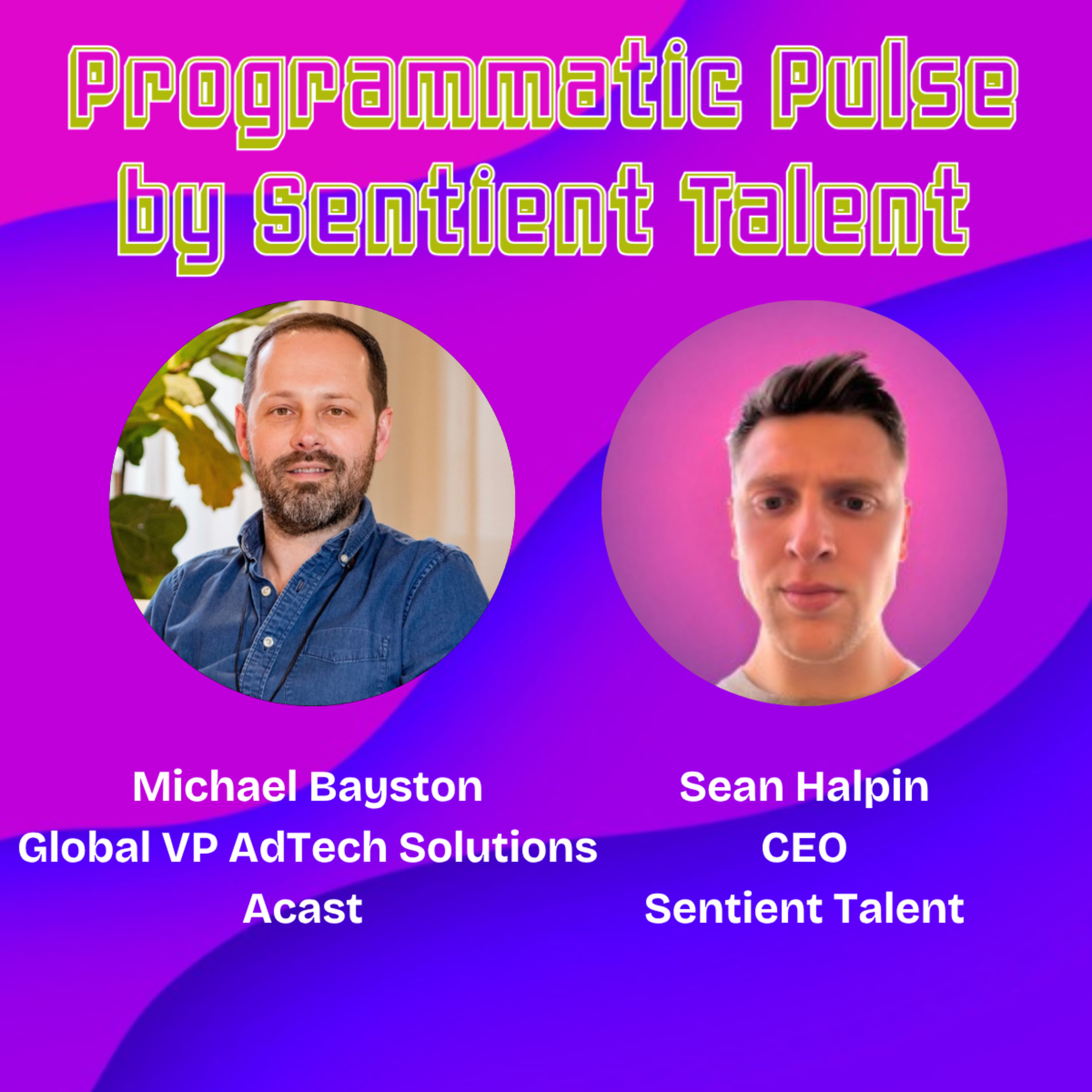
Ep.112 | Michael Bayston | Global VP AdTech Solutions at Acast
37m 40s
The transcription features an interview with Michael Bastard, global vice president of ATTX solutions at ACAST, who shares his 23-year media career journey from press and digital at NewsCorp to programmatic roles at the BBC, leading to his 2019 move to ACAST. He was attracted by the emerging podcast channel’s potential and the challenge of building programmatic capabilities in a data-limited environment. Bastard explains ACAST’s server-side ad insertion via RSS, which provides IP addresses and user agents but lacks deterministic data, requiring contextual targeting (via Podchaser) and predictive audience tools (via Comscore) in Europe, while the US uses LiveRamp for more deterministic IP-based targeting. ACAST, founded in 2014 in Sweden, has grown globally with 15 offices, generating $550 million in revenue for creators. The US is its fastest-growing region, followed by APAC, where recent events in Singapore highlighted growth. ACAST’s mission serves three constituents: creators (distribution and monetization), advertisers (access to audiences), and the ecosystem, with new technology for audio, video, and live streaming. Strategic partnerships with Amazon, Apple, and Spotify are driving podcast expansion, helping creators and business development.
(upbeat music) This week on the show, we welcome Michael Bastard, who is the global vice president of ATTX solutions at A-CAST, let's say, go listen to the episode now. (upbeat music) - We are live from A-CAST Studios. - Nice one. - We are doing it today. - Yeah, no, my absolute pleasure. We're in Studio 3 here, which has got these wonderful screens behind it. Maybe next time, if we catch up again, we could do it with video as well, which would be quite good. - That's really, really nice. - Yeah, and so I covered up the dimensions. It's good fun, actually. Obviously, we've got our A-CAST logo here, but what it's about, is for our creators, they can come into A-CAST Studios here in their old tree. And if they want to put something up on the screen behind their candy. But as I said, this is Studio 3. So we've got four studios in total. One of them's quite a sort of small one, which doubles as a control room for Studio 2, which is the really big one, where a lot of our big podcasters come in. So for example, political currency come in or the regular, but then others as well. And that's really, it's very modular, so you can do a lot with that space. And then there's this one here, Studio 3, both of those are video capable. And then we've got Studio 4, which is actually paid for by our strategic partners, Amazon. - I saw that, and you were absolutely. - Yeah, yeah. So the thinking behind that right is, I mean, hopefully the cost for these studios is not too expensive for our creators. We want to make it manageable, but obviously we've got to like cover ourselves. But the Amazon one's interesting, because the deal we did with Amazon there is that Amazon pay for up and coming podcasters to come and use that studio. And actually that's now video capable as well, so they could do a audio and video in there. And that's why you've got the Amazon branding on it. But it's great actually, 'cause we've got strategic partnerships with the lights of Amazon and Apple and Spotify. So this is a good example of how their strategic partnerships can sort of roll out beyond just the distribution bit in sort of more of a business development and creative development opportunity. - I guess we'll touch on this a bit later on, like the rise of these strategic partnerships and like studio or podcasts too. But first, we're gonna start as we usually do, which is how you got into advertising and then just a snapshot of your career journey to where you are today. - Yeah, yeah, definitely. So, well, first of all, can I just say thank you very much for having us on the podcast. And yeah, I do listen. I think are you up to like 80, 81 apps now, so I'm like that? - I'm 100 now. - Well over. - Yeah, well. - 104, 104 or no? - There you go, that shows that I'm not listening enough to do that sort of shows. Yeah, it's good though, yeah, great to be on the podcast. So yeah, so how did my career start? So first of all, 23 years in media, like a lot of people, I started in press and then sort of went on from there. But like sort of as a summary, if you like, I've been lucky enough to work for both like major networks like NewsCorp, Vyacom, the BBC. But I've also worked a lot for sort of fast growth businesses within emerging channels. So I've worked for companies like PlayStation for King Games, the maker of Candy Crush, Saga, which is still going strong. BuzzFeed, I was part of the launch team for that and then others as well. So yeah, again, as I said, I feel really lucky to have been able to work across major businesses and then also emerging fast growth ones. In terms of channel experience, if you like. As I said, starting in press, a lot of people did. And I moved from there when I was at News onto the digital side at the beginning of 2005, which was again, I'm going to say I was lucky to do so. Really, really interesting, in particular, I was working for the Sun and the News of the World, for which no doubt I shall have to do a bit of a purgatory. But they are powerful brands like RIP, the News of the World. But it's just like an amazing place to learn that digital business, particularly the Sun, because there was really getting into the mobile bit. Did a lot around that, which was really interesting. But then from there, I moved into more emerging things. So that's where I moved into gaming, mobile, and then social, I mentioned some of those companies there, which was really fascinating. I think I went into gaming for too early, really, because quite a lot of redundancies over that period, which is quite punchy. But I'm sure we'll talk about that a little bit later. But then I moved from that into, as I mentioned, some of these bigger organisations, and started working particularly on an international basis with television as well, which is a super important thing for me to be able to do. Because I think it's very easy to go down a digital rabbit hole and not understand just how important television is and still is and will continue to be. Let's just say broadcast show because then that applies to audio as well. But yeah, so a lot of international business. But then when I was at the BBC, I switched from a sort of frontline sales role into a programmatic role, which again, was like an amazing opportunity for me. And like I always, whenever I'm interviewed by the press or maybe on a podcast like this, I'll always call out people I work with at the BBC. So some guys with names of David, Neil and Terry, I learn absolutely everything there is to know about programmatic and ad tech from those guys. And the BBC is still incredibly advanced in terms of where it uses its technology. So that was a great experience for me. And that set me up to, at the end of 2019, this opportunity came to join ACOST. And I joined ACOST very first like programmatic ad tech specialist, if you like. Yeah, and since then, basically what it's been about, the first sort of part of my time here, was about internally it was about educating all of our folks here about the benefits of programmatic and ad tech. So if you think about it like six and a half years ago when I joined, really it was actually a bit of a sort of an unliked word, if you like, by creators, which is sort of silly really, but we had to get through that. But a lot of the rest of the time was spent educating the buy side on the nuances of buying podcast audio ads for our programmatic and the way ad tech works with our distribution system, which I'm sure we can talk about. But the latter half of it is the last sort of two, three years. I've been running a sort of internal ad tech specialist team. And that's really important because like, podcast is now really starting to, so the analogy I would use, if you like, podcasting starts to start to like, lift into the omnichannel, basically. It's getting bigger and bigger. And a more importantly, bigger brands want to buy it alongside other channels as well. So our job really is threefold. One is to support our sales teams around the world on, the technologies the buy side want to use, whether it's execution, targeting, planning, measurement, whatever. Secondly, it's working with all the vendors. So commercial relationships. And then thirdly, it's about working with demand sources. So be that resellers or like, really interestingly, agency marketplaces based on SSPs are just starting to come into digital audio. And obviously for podcasting as well. So, so yeah, so there you go. That's the, hopefully that's the top line that you were looking for. - No, no, really cool. I guess, you know, talking a bit more about ACAST now then. Why I'm actually attracted, you know, I'm sure options were open, especially after BBC. What sort of attracted you to audio? It was like emerging channel. What? What was it about ACAST, the tech, especially podcasting? Because podcasting has blown up massive, recently. But what at the time when you joined, were you think, ah, you know what, like the tech, really like the channel, I think it's got growth. Like what was some of the factors there? - Yeah, so a few things, but the first thing I would say is, there's a sort of guiding light for me, really. I was just very curious about it, you know. And to be fair, there was a very strong relationship between the BBC and the ACAST. And ACAST, I should say, when I was there, right? So, ACAST used to exclusively host and distribute all of the BBC's podcast globally. And we used to monetize all of their podcast outside of the UK. So, basically ACAST was like, it was a reseller for us at the BBC, at BBC advertising, BBC studios. I often think actually ACAST is a little bit like the OSOTN project, actually. And I'm sure your listeners know all about the team and the technology over at the OSOTN project. So, you know, what we're doing there is we're working at our technology provides services across a huge range of publishers. And our sales teams are selling alongside them. So, we co-sell with our biggest publishers. I mean, most of our podcasts are relying on us to sell because that's what we're here to do. And talk more about that in a second. But, so, we had that link anyway. And I was just really curious, like, there'd been someone who'd left the BBC team to go to ACAST and they had a different role. So, I gave her a shout and said, well, what's it like? And she was like, this is amazing over here. The opportunity is huge. The second thing is, as I said to you before, I've done a lot of emerging channels before. And I really wanted to get back into it, you know, just the opportunity to build something, you know, from not from the ground up, because ACAST was founded in 2014. But certainly in terms of like the programmatic and ed tech bit, it was a huge opportunity for me. And then the third thing actually is, I'm gonna say like bloody mind it, right? So, I distinctly remember one of my colleagues at the BBC who's since left, James, if you're listening to this, he's now over at Channel 4. He said to me, why'd you want to go into podcasting, right? There's no data in podcasting whatsoever. And I just said, well, I appreciate there's no, like, deterministic data and we can talk a little bit more about that a second if you're, and you're listening to this or interested. But I was like, there's a huge amount of contextual data. And you just have to look at some of the contextual data.
businesses that have grown up in the last few years to see that that's a viable option and it's growing further and I just thought you know what it doesn't look like it's for example very addressable or it's very easy to work with via you know efficient execution or whatever but I want to give it a shot and see what happens so yeah went for it and here we are. I guess continue on in that sort of truck there so you know from when you've joined in to where you are today how have you seen it sort of revolve when you're talking about the data and the air context or the terminus day like how have you seen that sort of revolve gradually since being at ACAST? Yeah sure well so to give the yourself and and your list is a bit of background to this the I mean it's a very simple distribution system but it's worth repeating a little bit how it works right so podcast distributed audio podcast distributed are distributed via the RSS system so the really simple simple syndication and it is very simple indeed basically so if you're listening to a podcast that's exclusively hosted on our technology platform let's say you want to listen on Spotify or Apple or whatever you hit the button to start streaming we get a signal obviously from that that listening client that listening app saying that this individual wants to listen to this episode and what we'll do with that signal is we'll then run using our proprietary technology we'll run an auction and that auction will look at all the different demand sources whether it's on managed sales or self-serve programmatic managed sales blah blah whatever all all resellers and then we will insert ads into that so it's server side-add insertion and then what we'll do is that in large to MP3 file we send back via RSS to the listening platform okay now what we get in return is IP address and user agent and we also get a signal that says that this this podcast episode has been downloaded or streamed and that comes about 60 seconds into someone enjoying that episode right right so as you can tell that is a very different addressability situation to open web sites apps wall gardens you know just everything else that's digital almost really and the one thing that I found actually when I started when I joined a cast and I was out there alongside the sales teams talking to to buyers at agencies there's quite a few the more advanced buyers all this reminds me a lot of CTV and obviously when I see TVs come a lot come a lot since then what with like logged in data and all that stuff but certainly in the early days that's the way we were playing in so everything needed to be SSP side targeting so there's basically no addressability whatsoever so we had to work really hard to explain particularly to programmatic buyers that you can't you can't run programmatic with us in the same way that you do with display or video online video whatever it is right so actually we work with all the DSPs to create these these buyer guides so it was all very manual but we're trying to make sure that we were holding the hand of the buyer so they understood that it's not standard but if you follow this route it will work and then we've got proxies right so you want to do audience targeting a couple of routes for us you can either do contextual targeting and we use data from a company called podchaser.com that we bought a few years ago right which is basically it's best thought of as like the IMDB of podcasting there's six million podcasts on this website and the data they've got is a sort of mixture of survey data and social data scrapes and then we mix that with Apple's honest it's really it's it's enhanced contextually if you like but then laterally in the last couple of years where we've moved on now is we use audience targeting which in places like Europe where of course you know GDPR is the situation and that relies on consent which we just do not have whatsoever we use something from podchaser called predictive audience targeting and that uses a mixture of like deterministic data seed sets commscore's global panel which is obviously media consumption and then we are transcribing all of our episodes all the time and we're handing that transcription to a comscore who are integrated with us and their predictive audience solution is looking at conversations like this one conversation right now and they're seeing like you know which audience is based on that seed set and the survey panel will be listening to this episode so we we can offer that and off the back of that there's like 2000 segments now that's Europe in the US we actually get full IP whereas we have I should say we have to truncate it here in Europe but in the US we're actually working with live ramp as our DNP and obviously there's like you know 500,000 segments in there and live ramp because we're on live ramp and we're we're logged in as it were two ramp identities we're making slightly more deterministic connection if you like so it's still off IP but it has greater scale if you like than it would do here in Europe or you're able to use more of a deterministic solution so it's a different picture in different parts of the world but we can offer audience talks in alongside enhanced contextual audience talks. You know you're talking here about first and foremost thank you for describing that was really a good breakdown when you talk about the scale and the different sort of markets how have you seen X band because I remember we had a conversation when we first talked about the podcast I think you just come back from Singapore so yeah yeah it seems to be like you know and some of the stats you sent over with ACAST location wise it seems like it's just growing and spreading across the globe at the moment. Yeah massively I mean I mentioned earlier so ACAST we were founded in 2014 you know and and our mission if you like is to serve three different constituents within the ecosystem but I think where we've got to really is you know for example you know we invented dynamic ad insertion for podcasting basically obviously there are other companies out there that have provided dynamic ad insertion for audio but we've done other stuff since then and built a lot of proprietary technology so we've sort of become like the global authority if you like on podcasting and now what we're doing is we're actually building infrastructure which deals with the fact that podcasting can subsequently shifting to audio video and live streaming as well so we're building proprietary technology which means that ACAST will be like a single entry point for our creators into the for the industry but also into the those audiences if you like so when we started so we're a Swedish company so yet another audio technology Swedish company must be something more so I guess and so you know we grew enormously in Europe so very strong in Europe and the last couple of years we've grown massively in the States which is obviously a huge podcast market but we've also seen growth as well in other markets so Latin America but particularly APAC so like you know like in our boilerplate we mentioned we've got 15 offices around the world which is how we're selling you know we're monetizing these these things I think what we've seen is we've seen that you know we were a technology incomeer into the US right so podcasting was already huge in the US but we our technology has really started to be of interest to podcasters and then to agencies in the last couple of years so now we're in significant growth so the US is our fastest growing region or the Americas are fastest growing region Europe's a little bit slower because of flow macroeconomics but there's still loads of growth in Europe as like more and more podcasters and more and more audiences come aboard but Asia Pacific is now growing super fast as well and then you know to your point that's why we were in Singapore at the beginning of February so like we've been in Singapore for four years with salespeople on the ground doing a really good job but we've not actually done any events and that's what we did then so we did two events one was a biceye face event we've got a hundred people in a place called the Mandela Club which was great so we're presenting a really interesting piece of a survey called podcast pulse 2025 so I'd urge all of your listeners to go and check that out as podcast pulse 2025. Oh including the. That would be sweet. Thank you very much, cheers. And then we were talking a little bit about the technology that we have which you know helps those constituents basically so we're distributing to audiences for the creators and whether you know where of the audience wants to listen or to watch we're distributing those platforms. Secondly we're monetising for those creators and by way of example you know we've generated $550 million worth of revenue for creators since we launched and then for the third constituent party of courses the advertisers right so we're providing access to those hard to reach audiences with various technology and I think what was notable was that in that advertiser facing event we had a lot of interest we had agencies but also brands there as well asking quite in-depth questions but then a couple of days later we had the creator event with about 60 podcasters in the room and what was fascinating a lot of these people have been podcasting for like five six years but they never met each other so they're all in like their separate rooms I guess it's maybe it's a hangover from lockdown and all that stuff because that helped podcasting hugely and it was great so we presented to them roughly the same sort of stuff you know and then we left them to it and they basically spent like an hour and a half like taking selfies with each other and having a few beers and eating some food and just chatting and cross-pollinating and off the back of that we know there's a bunch of podcasters who are joining our platform but there's also a bunch of podcasters who are already already on our platform who now are saying they're going to do like they're going to bring some of those other podcasters on as guests which is a classic podcast thing if you like is I suppose they call it log rolling and publishing I think ways you've got one podcast that goes on another podcasters think but by doing that you spark something really interesting so yeah so big hopes for that part of the the world as well interesting when it comes to look at another area of the advertising world it's the you know creators influencers it's quite a big crossover isn't there because the vast majority creators influencers will always have you see it quite often now like they tend to have a podcast yeah yeah so it's interesting how fast
growing that's been as well as the audio podcasting space too. Sure, yeah, yeah. That's interesting. One thing I wanted to talk to you about, I think, A-Custom being providing solutions across this is brand suitability in podcasting. I guess, could you just give us the rundown of A, what the problem was, B, how you're looking to address that? Yeah, definitely, thanks. So I think it's interesting really because we've identified, so just go back to Brass, back to the baseline here, BrassTax, which is, we're an emerging channel and we're still an emerging channel. So the interesting thing about podcasting, podcast has been around for 20 years, but as far as the buy side is concerned, we've only really become of interest, particularly to major brands in the last year or so, but there are still a whole bunch of major brands out there, blue chips, I guess you'd call them, they're not there yet, they're very nervous about it. So there are a number of different things that we need to sort out as an emerging channel. So, and that's true of any emerging channel, like CTB's got the same issue as well, whether you could still call that emerging or not, but you're like measurement, okay, that's absolutely crucial. I'll talk more about that in a second, but like, for podcasting, because it's such a sort of homegrown DIY type form of creation, it's very like UGC, as it were, right, and that's got certain big brands a bit nervous, right? That's the first thing, and the second thing is that obviously there are a lot of quite punchy podcasters out there, so, you know, elephant in the room, Joe Rogan, right? So, you know, that, you know, he's got obviously a huge fan base and is very, very successful, and we've seen particularly in the US that podcasting has really been a driver in things like the political scene, you know, so a lot of politicians go, and not just that, they do it all over the world really, and I think they said the last election was like the podcast election, or whatever it was, but he's pretty divisive, right? And as indeed there are other podcasts out there, so, so unfortunately, what that means is you get, you'll get like marketing directors at major brands, and even, and obviously all the way up to CMOs as well, saying, "Okay, I'll give podcasting a try, but I only want to do those four shows, okay?" Now that completely misses the point of working with a company like ACOST. We've got 140,000 shows on our hosting platform. So, the benefit of that is we're not just giving you big shows, and we've got some huge shows, obviously, and you know, I could mention some publishers like the FT, the Guardian, the Economist, I've also mentioned some, some shows like political currency, but also shows like, you know, we've got Furn Cotton, we've got Peter Crouch, just here in the UK, but also in the states and enormous numbers as well, Le Monde in France, the list goes on. But we've also got a massive amount of like middle and even smaller podcasters. I think there was a period where they were described as like micro influencers a few years ago, so we're talking about people who might have say 50,000 followers, whatever it is. Those people are really important for digital marketing, because, you know, you could drop 2 million to buy a post with the Kardashians, but you're only going to get, you're going to get a lot of scare with that, and certainly they've got some very loyal followers, obviously, but you're missing out on a huge number of hard-to-reach audiences who've got that super strong relationship with those smaller creators, right? And I think that that's the problem that we need to fix. If you've got CMOs at Big Brands, Blue Chips, who are like, "Oh, well, I only want to advertise on something that I recognise or I feel less nervous about, yeah?" Now, I've mentioned to you some of our targeting solutions already. Those targeted solutions are all about getting you as much scale as possible for your audio campaigns. Now, with host reads, which is what we call sponsorship, obviously that will always be at the very niche scale, because you'll only do that on like one or two shows, but that's fine, because that gives you the lower part of the funnel, right? That gives you super, super close engagement, and the creator when they do their hostry will talk about a special code and all that sort of stuff, but you need to work working with that. You need to run audio ad campaigns that run across this huge audience, audiences, if you like. So we can target those audiences, but then how do we do that at scale and make sure that the brands are happy with it? So, basically a few years ago, we areified all of the big brand safety vendors, and we were pretty much ignored by all of them, fair enough, emerging channel. So what we did is we spoke to ComSchool, and we said to ComSchool, if we build our own transcription pipeline, will you help us with a sort of nascent brand suitability targeting solution, which they did? And by way of example, a couple of years ago, we were pitching Procter and Gamble in the States, and they were like, no, we will not advertise with you unless we can use double verify. And we said, well, look, we're talking double verify, but double verify aren't quite there, yeah, with us, and that's still ongoing, instantly, but they've been great, so we are getting there. So we said that ComSchool can do the same job, and they checked out the tech, they liked it, they noted that ComSchool's MRC accredited as well, they said fine, we're going to do it. So we ran audio ad campaigns of the US and then laterally in five other markets around the world, where we're using our targeting solutions, but then we're also doing negative targeting using ComSchool brand suitability. Now, since then, we've integrated with a company called Barometer, who are a brand suitability vendor that's been built from the ground up for podcasting, and their solution is absolutely bang on, and we've been able to use their solution, for example, in the States to bring on brands like Capital One, which is a huge finance brand, and again Capital One's great example, right, when they were running with us initially, they were like, we're like, we're like, we're running run run from three shows, and we're like, that's mad, okay, three, I mean, the shows are great, okay, but you are missing out on so many audiences, so we use the Barometer's brand suitability targeting solution, and now they've expanded it out, they're running on true crimes, crime shows, completely unheard of, they're running on a lot of lifestyle stuff as well, less concerning, but they're even running on news podcasts now, and that is amazingly important. And what's even more important is in these troubled times that we're in right now, they're still live with us, and they're still live on news podcasts, and podcasts from our big news and politics publishers, because this technology is so good at removing any ad opportunity that's close to a conversation where they're talking about the war in Iran, or the war in Ukraine, or things of that sort. Okay, awesome. Quick question before we move on to career advice, what is the sort of split right now between host red, read out versus programmatically enable direct adverts within podcasts? Yeah, sure, definitely. Obviously, it depends on different markets. Broadly speaking though, we were in a situation a couple of years ago where it was, it wasn't quite 50/50, because the way to think of it was it was sort of like 45 was, or 40 if you like, was host read, sponsorships, as we call it, and then you'd have say, you know, 40/45 would be audio ads, and then the bit the delta in the middle would be branded content, and by branded content, we're talking about things like a full branded episode for a podcast, or or maybe like a really long segment we call sponsored stories, or so we're doing a lot of like, we do a huge amount of social extension, because obviously, you know, you mentioned it earlier, there's a crossover, these guys, they're guys and girls, they're creators basically, so they've got their social platforms as well, and social's important for spreading the pushing out podcast episodes, basically letting people know about it. However, as we're growing as a business, we're starting to see slightly more money going into audio ads, and that makes sense, right, because that's the scaled part of the business. Now, I know you didn't really ask the question, but it's good to know, there's obviously a split between how much is run of the audio ads, is run by direct IO, and how much by programmatic, but also a few years ago we launched our own self-serve platform, which has been super crucial in quite a lot of markets around the world, to cater for that SMB market, and we put a lot of effort into that as well, it's really easy to find, you know, just go to our ACOS website. So, you know, the point here really is we just want to make it as easy for different customer sets to be able to buy from us as possible. In terms of the managed sales bit, again, it sort of depends, but in certain markets, like Australia's super advanced for us, you might have as much as 50, 55% of our audio ads being run by programmatic in a market. And so, this is one of the things about ACOS is, you know, we're a technology company, we've got our own proprietary tech, but we really feel like we're market leaders in the way we use third-party tech, and that's in terms of like programmatic. So, we've got three SSPs now, AdSWiz, Magnoi and South Cost, but also in terms of, you know, these third-party technology vendors, like the targeting measurement vendors as well. And that's like really important to digital buyers, because I mentioned it earlier, like emerging channels, you know, you've got to have measurement right. So, the thing that we go out to market and say, which is particularly important, and which, by the way, drives more audio ad sales, is unlike a lot of the war gardens, the platforms, when you measure with ACOS, all of the measurement solutions we're using, we don't know, they're all trusted third-party vendors. So, we are not market our own homework, unlike some of the big platforms, basically. So, whether it's brand lift, sales lift, even football, etc, you know, further up the marketing funnel, all of that is trusted third-party, and we'll work with third-party's that the advertiser wants to use. But then like at the base of the funnel, we work with a lot of attribution companies. And it's so important to us actually that we've vetted, a few years ago, we've vetted like five or six of what we thought were the best attribution companies, particularly for podcasting and the podcast news. And we make a handful of these completely for free for any level of campaign. So, again, we don't own these companies, like the advertiser gets a link and looks at the UI for companies like Clare.
or you know, Podscribe or Veratonic or Magellan. But, you know, we are making it free to the advertiser. Because we're just so sure that podcast advertising, particularly when you combine host reads, audio ads, and also with a bit of branded content as well, you're just going to get outrageously good results. Hopefully that answers your question. That's perfect, man. Nice. We are getting short of time. So, I think it would be awesome. Just get your sort of take on what sort of career advice you would give to those looking to excel across the industry. And if that's a quote story, what the specific is, those, you know, coming through the industry looking really to excel. Yeah, definitely. Well, first of all, when we had a chat the other day, we were just talking about, you know, we were going to talk about this, this get together here. I think I mentioned to you that, like, in a weird piece of co-incidence, I've been asked to go and speak at my son's school next week. I like they're doing a careers day or whatever. So, I've been thinking about this anyway, really. So, I hope you don't mind. But actually, like, I've got a couple of quotes here. That's perfect. Cool. So, yeah, where these quotes are coming from, though, is that, like, there's sort of three things that I always think about or have thought about in my career, really. One is curiosity. I think I mentioned that earlier about why I moved actually to podcasting. Secondly, is resilience. And then thirdly is perseverance, right? So, the two quotes are, the first one is Albert Einstein. I have no special talents. I'm only passionately curious. And obviously, I'm super nervous about anyone who quotes Albert Einstein and thinks they can get away with it, right? But I like that quite a lot because I think that is so important in, like, in our industry, particularly with the pace of technological change. And that's not just in our industry, but in any industry, but particularly in our industry, right? I think, you know, my career has been quite varied, frankly. And again, as I said, I feel quite lucky about that. But the reason that sort of happened, really, is through curiosity. I don't mind telling you. There's been quite a few, like, bumps in the road, if you like, which is why that sort of second point there about resilience. So, I've got this other quote which I found which I really like. And again, I need to be careful because I'm quoting Winston Churchill here. So, you know, again. Not too bad people, though. Yeah, yeah, true. But like, be wary of anyone who's like, going for the big dogs, as it were. But like, the quote is, success is stumbling from failure to failure with no loss of enthusiasm. I like, my sense of gallows humor really likes that a lot, right? And the reason for it is, as I said, I really don't mind telling you that, like, in my career, I've been made redundant seven times, which has been super punchy. You know, every single one of those has hurt, you know, it's hurt a lot. And the vertical was good redundancies and something bad. I think particularly my issues, I probably went into gaming like 10 years too early. I mean, gaming's obviously flying right now. But I just, I love that point from that quote there, from Winston Churchill because, you know, you've just got to keep on going, basically. You've just got to keep on going. You've got to be resilient. And then that's my final point there about, you know, perseverance. I actually say that to my kids quite a lot as well. I've realised, just never give up. Do not give up. Like, you know, particularly like, whether you've been made redundant or it's a bad day at work or the thing you're trying to make happen, it's just not happening. Then, just don't give up. You know what I mean? Just do not give up. Like, be completely bloody minded about it. So I'll give you an example, right? So we, as I said, we now have three SSPs integrated. One of those SSPs, it took from me first voicing it to actually the integration happening took four years. And there was like no real milestones along the way to celebrate. But I just kept on persevering with it. And now we're in a position where, you know, that integration happened. And we're starting to see the fruits of that. But like halfway through that four years, I was like, I could have been like, I'm just going to give up here. But, so yeah, so those, those, hopefully, hopefully those quotes are good. No, definitely not. On the perseverance, it was very similar to my, my type of approach. Community based approach, insights that podcasts, running person events, grow a network organically instead of very transactionally. And I remember like a year and a half into focusing on ad-sac. Yeah, yeah. I just remember feeling like, I'm like, yes, I'm building a good brand, but I'm getting nowhere from a revenue point of view. Okay, yeah. And then just something, just something switch where, you know, it's like to pay off, pay off. But for those 18 months, it's just a perseverance of believing like, you know, got to believe in it. And it will pay off. Yeah. And there were some times where I doubted myself. But, yeah, we're here today. We're about to close more in Q1 than we did in the entire 2020. Nice work. Yeah. Can you, by the way, Sean, can you remember, or because it's funny in the stout, just a weird thing, right? Is it, do you know what I mean? But like, can you look back at those 18 months, I guess towards the end of the 18 months, there was a moment when like the flick was, or like, you reached the tipping point in verse of comments. Yeah, definitely. It was actually a client who I spoke to, actually they came from the podcast. And it was very early on. Yeah. And it was, it works. Yeah. But it was like, they gave me two, three opportunities. And managed to work with them. And filled them successfully. Got some amazing people in, built out a great team. And at that point, it was like, okay, yeah, it feels like it's working. Yeah, yeah, just momentum, build on and build on. Yeah, it really, really do feel like something just switched. Yeah. Things are starting to build with momentum. Yeah. Anyway, pleasure to have you on the podcast. Absolutely. Thanks very much. Yeah, I really appreciate it, man. No worries. Cheers. Finished. And done. Perfect. We'll be less. I think he. He's on his music. Oh, good stuff. Well, though, this is a soundproof window, so I don't think we're. That was great. Nice one. That was awesome. So that gave you everything you wanted, yeah? Perfect. Yeah. Half an hour. It was perfect. Plenty of career advice in there. What I wanted to do was really talk about people, if they were interested about getting into audio, podcasting. Yeah. And then a bit of a take and you painted that picture of you and your whole. Nice. Yeah, no. Well, obviously, when it's 11 o'clock now, it's good to say, if you wanted to do another five minutes on another topic, had another later stage, which you can patch it in or something like that happens to do that. I know you'd like to do it in person, but presumably this is not going to go out for a little while. So if you wanted to. If you think like shit, there's something we miss there, very happy to catch up again and do another five. I'm on Riverside as well, so I can just send you a recording link and we'll patch it up there. Yeah, yeah. That'd be perfect. Yes. I need to jump on that call, but. Let me just give you. Let me just give you this room. Let me just check the load. Okay, perfect. How long's the call? Half an hour? It's about 10-15 minutes. It's good. Now he's going to stop recording. And the room is yours. Yeah, perfect. So I'm going to leave in.
Podcast Summary
Key Points:
Michael Bastard discusses his career journey from press and digital to programmatic roles at the BBC, then joining ACAST in 2019 as a programmatic specialist.
ACAST uses server-side ad insertion via RSS, with limited addressability, relying on contextual and predictive audience targeting (e.g., Podchaser, Comscore) and IP-based targeting in the US via LiveRamp.
The company has grown from a Swedish startup to a global authority with 15 offices, generating $550 million in revenue for creators and expanding rapidly in the US and APAC.
ACAST’s mission is to serve creators (distribution and monetization), advertisers (access to audiences), and the ecosystem, with new infrastructure for audio, video, and live streaming.
The rise of strategic partnerships (e.g., Amazon, Apple, Spotify) is driving podcast growth, with ACAST using these to support creators and business development.
Summary:
The transcription features an interview with Michael Bastard, global vice president of ATTX solutions at ACAST, who shares his 23-year media career journey from press and digital at NewsCorp to programmatic roles at the BBC, leading to his 2019 move to ACAST. He was attracted by the emerging podcast channel’s potential and the challenge of building programmatic capabilities in a data-limited environment. Bastard explains ACAST’s server-side ad insertion via RSS, which provides IP addresses and user agents but lacks deterministic data, requiring contextual targeting (via Podchaser) and predictive audience tools (via Comscore) in Europe, while the US uses LiveRamp for more deterministic IP-based targeting.
ACAST, founded in 2014 in Sweden, has grown globally with 15 offices, generating $550 million in revenue for creators. The US is its fastest-growing region, followed by APAC, where recent events in Singapore highlighted growth. ACAST’s mission serves three constituents: creators (distribution and monetization), advertisers (access to audiences), and the ecosystem, with new technology for audio, video, and live streaming.
Strategic partnerships with Amazon, Apple, and Spotify are driving podcast expansion, helping creators and business development.
FAQs
ACAST's mission is to serve three constituents: creators, advertisers, and the ecosystem. It provides distribution to audiences across platforms, monetization for creators (generating $550 million in revenue since launch), and access to hard-to-reach audiences for advertisers with advanced technology.
When a listener streams a podcast, ACAST receives a signal via RSS, runs an auction using proprietary technology to select ads from various demand sources, and inserts them server-side into the MP3 file. It then sends the file back to the listening platform, receiving IP address and user agent data about 60 seconds into the episode.
In Europe, ACAST uses predictive audience targeting via Podchaser, which combines deterministic seed sets, Comscore's global panel, and episode transcriptions to create 2000 segments. In the US, it works with LiveRamp for more deterministic targeting based on IP, offering 500,000 segments.
ACAST was founded in Sweden in 2014 and has grown strongly in Europe. The Americas are the fastest-growing region, while Asia Pacific is growing super fast. The company now has 15 offices worldwide, including in Singapore, where it recently hosted events for advertisers and creators.
Michael was curious about podcasting as an emerging channel, saw a huge opportunity to build programmatic and ad tech at ACAST, and was motivated by a colleague's skepticism about data in podcasting. He joined as the first programmatic ad tech specialist, focusing on educating internal teams and buyers about programmatic advertising.
With 23 years in media, Michael worked at major networks like NewsCorp, Viacom, and the BBC, as well as fast-growth companies like PlayStation, King Games, and BuzzFeed. He moved from press to digital in 2005, later shifted to programmatic at the BBC, and joined ACAST in 2019.
Chat with AI
Loading...
Pro features
Go deeper with this episode
Unlock creator-grade tools that turn any transcript into show notes and subtitle files.
 PodcastTranscript AI