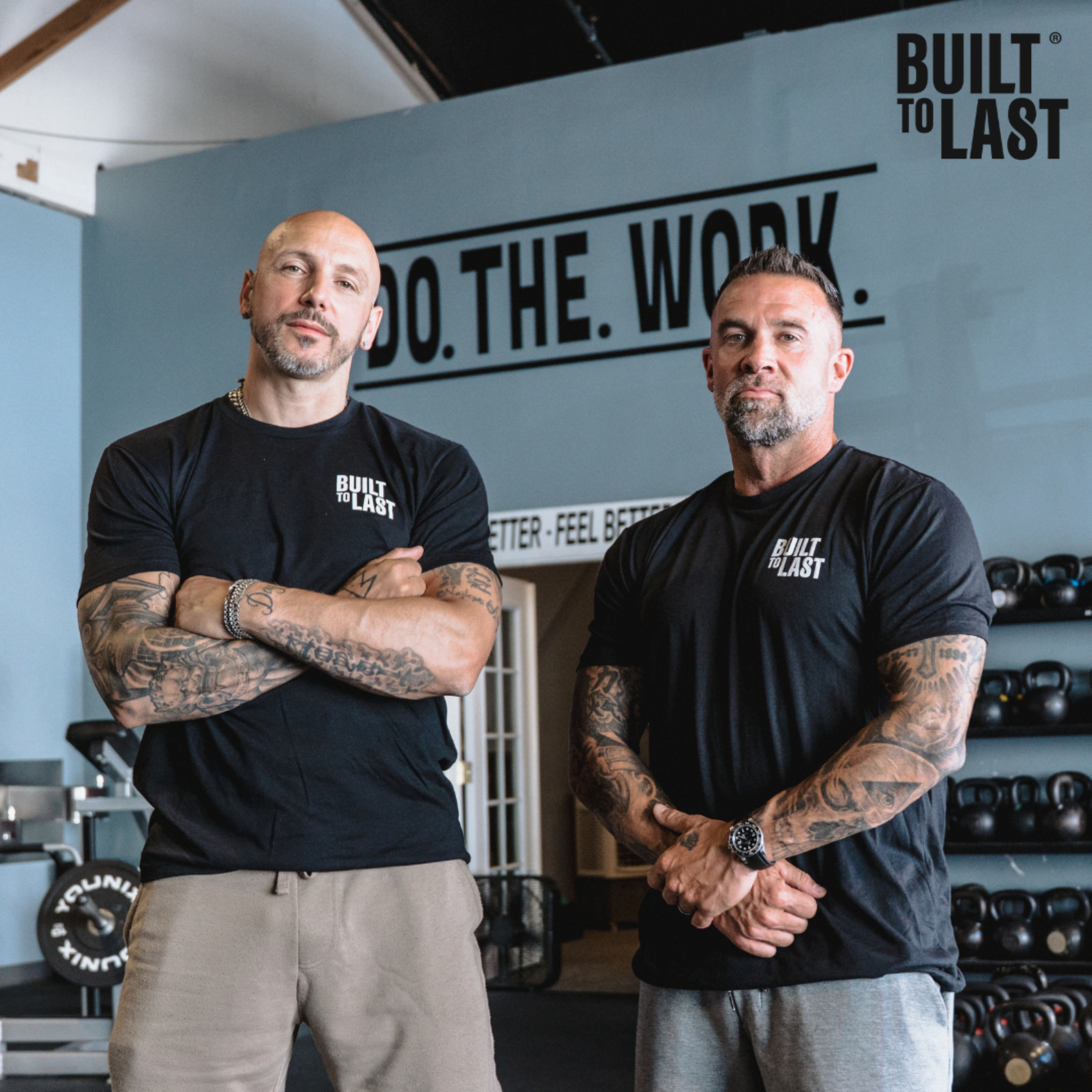
EP 08: Tolerance For Failure, Garage Doors & Your Gym Business, & How PERMA Will Elevate Your Team
58m 34s
The podcast explores key lessons from entrepreneurial success stories, particularly Tommy Mello’s garage door business, to provide actionable insights for gym owners. It emphasizes that building a thriving gym requires more than just a business model—it demands deep skill development through real-world experience, such as hands-on training and practical execution. The show highlights the shift from a "hustler" mindset—working endlessly—to a "leader" mindset, where delegation, systems, and team building drive sustainable growth. A core theme is the PERMA model of well-being: positive emotions, engagement, relationships, meaning, and accomplishment. These elements show that true fulfillment in business comes not from money alone, but from purpose, connection, and meaningful work. The podcast stresses that entrepreneurs must cultivate resilience, embrace failure, and invest in personal development through consistent reading and deep learning. It also promotes treating staff like elite performers through mentorship, training, and strong team culture. Finally, it underscores that success in fitness ownership is rooted in a combination of personal values, community impact, and continuous growth—making well-being a foundational element of long-term success.
Welcome to the Build the Last Gym Podcast. The only podcast helping you build an MBA, a
masters in business for gym ownership hosted by two coaches who have become gym owners
and have done it successfully for 45 years combined and still doing it to the highest
level.
Giving you the real world insights of how to build a gym that you love, impact clients
in the community and makes you the money that you deserve.
Let's go.
What is up, we are back with the Build the Light last day.
It's the Build the Light, Build the Last Gym Podcast, and that happens when we don't get
a lot of sleep.
And we got a bunch of topics we're going to talk about.
We're going to still knock out some Q and A's a little bit later on.
But me and Andy had some good insights.
We both read a lot.
We both listen to a lot of pods.
We talked a lot of business owners, whether they're in the fitness industry or in other industries
because it's part of, you know, we've built a network of successful entrepreneurs, which
is a lesson in and of itself that you should certainly pick up.
But we actually kind of broke down a bunch of stuff from Tommy Mello, who bought, he basically
built the A1 garage door service company, which is, I think, value to like 1.7, yeah,
1.7 billion.
Yeah.
Bill, I am.
Bill.
Krush, that crazy story, incredible dude too, like fires you up.
But we want to take some of the stuff that he was talking about and share it and kind
of connected to how this works out in the gym space.
I think there's a lot of good insights and kind of filter it, right, because we're kind
of chatting back and forth about this.
So that's one of the things I wanted to talk about perma, which is the formula for well-being
and flourishing by Daniel Cannonman, and how it kind of applies to, I've really spent
the last couple of years diving deeper into that, meaning like, you know, you're seeing
a lot of this now where people will take less money because the job has other things,
right, like amenities, people, how they work, you know, meaning in the work and stuff
like that.
But like, it's a thing that you should really pay attention to when it comes to your
gym business, because a lot of the gym owners that we talk to don't and it's kicking them
in a butt.
And it honestly, it's like you're not running as good of a business you could and you're
definitely not keeping your, I would say, team and employees if you don't understand
as well.
So we're going to dive into that.
And then we still got a whole bunch of questions that we haven't answered, which will be an
ongoing theme for the pod, because again, a big part of the pod is answering the questions
for all of, I would say, the gym owners.
So with that said, let's rock and roll.
Like, I want to like just because I know that you loved it.
But like, what are some of the biggest insights that you got from, you know, how to build a
1.7 billion dollar garage business, but garage door business and the stuff that Tommy Mello
was talking about that kind of relays over to the gym space.
The first thing that I realized after listening to that podcast and I sent it to a bunch of
people and was that I might be in the wrong business.
The home services industry, man, there's a lot of opportunity there, but that's neither
here nor there.
But the podcast was so good that, you know, we went back and forth about how it applies
to all business.
And, you know, I took some notes on things that really stuck out to me.
And one of the first ones comes back to a book I read and I don't know if you've ever
read it before, but it was called Driven and it's really, you know, who recommended it?
And I know you mentioned it, but I think it was jail, jail holds worth, I think, recommended
it to both of us, if I'm not mistaken.
Yes.
Yeah, he did, because, and then my friend, Devin, even, he talks about like this meditation
course centered around long range shooting in the book too, which is really cool.
But the just of it is that he believes in, and there's some evidence to this that there
is a gene for people that are driven, like the entrepreneurial gene.
And I think that whether this is 100% accurate or not, I don't know.
I haven't, you know, done a deep dive on the genetic research in the area of entrepreneurs,
but I do think it lends itself to some, some truth.
And the reason I want to bring that up is that if you are a gym owner and you've stepped
into this thing, like I want to salute you, because it takes a lot of bravery to just
put something on your back and be like, I'm going to build this.
And they're, you're going to go through tough times and some of the things that he said
may or I would hope they resonate with the people listening to this.
But he said that anybody that has this gene, like they're okay with working a lot.
And that's one of the things that I think is not talked about enough, because everybody's
selling everybody the free lunch.
It's like, all you have to do is plug in these systems.
All you have to do is this.
And then you're going to be successful and you're going to make it rain and you're going
to have all the money.
And that's just how it's going to be.
And I know that is not true for you.
It's not true for me.
It's that, and I'm okay with that.
That's what's weird.
It's like, I'm okay with working on the weekends for a couple hours.
I'm okay with working early in the morning and late into the evening.
The thing that matters most to me is choosing what work I'm doing inside the business and
how it's relevant to the outcomes I'm trying to create.
But like, I'm okay with that.
And I think that if you're one of those people that is okay with working long hard hours,
you probably have that gene or you've got the right mentality to really build something.
He also talked about the fact that most entrepreneurs are ADHD.
And it's funny because I know you probably hear this all the time too, is like, people
like, man, I'm so ADHD.
I'm like, well, good.
Right?
That's probably your superpower.
Right?
I'm definitely that way, full blown diagnosed as a kid and as an adult.
And I really think it's helped me a ton.
It's helped me learn a lot about a lot of things.
And then given that I've focused on kind of one career for the past 25 years of my life,
I've been able to pull from all those things and drive it into this one business.
And there's two other things I want to share.
One is that if you have this gene, you don't really look at the end game as being an in zone.
The goal post just keeps moving because it's about achievement and accomplishment, which
I know you'll talk a little bit about later when we talk about kind of the the perm or framework.
But the other one was this and I think this is what people need to hear.
You have a high tolerance for failure.
And man, I've had so many ups and downs over the past 25 years.
And I've just developed a pretty strong chin like I can take it on the chin.
I can honestly reflect on why those things happened and then and then move on, right?
Just learn from the lesson, create a new strategy based on that lesson and then get right
back to work.
And I just thought that was a really good part of the podcast that that he hammered home
and that that is a good book and I'm sure that resonates with some of the people that
are listening.
Yeah, and it's like there's a bunch of stuff that I get from that, right? I think he said,
I've heard this before, I heard the percentages are a little different, right?
But like four to five percent of people kind of going to entrepreneurship because you
got to be kind of nuts, you know, have ADHD, like, you know, be loud there.
Now, the thing is, what that doesn't mean, I think that, you know, you mentioned another
thing, like you have to have this ability to get kind of kicked in nuts and keep going
essentially, right?
Like you just have, and, and by the way, this is another stat that most people succeed
on their seventh or eighth business, you know, which again, what does that tell you?
It means that there's a bunch of failure involved and then you learn from that and you keep
building and you keep moving and Tommy was talking about, you know, that he didn't really
make real money for until year 10, like a year 10, it kind of started, right?
The first 10 years, he was a practitioner.
So he even called it practice.
He said my first 10 years were practice.
Yeah, because he was basically painting garage doors for a hundred bucks each.
And then you, and then you got so, you know, effective that he was doing it fast.
Then he realized that like he could hire other people to do it and then take margins.
Then he realized that they're actually like garage doors and selling them have much bigger
margins, right?
But the thing is, he was going through the industry and learning the craft and like
the in and outs of every one of those things, you know, before he kind of went and kind
of dug deeper, picked a company name and all that stuff, right?
But my point is, is that like, you can't, you know, I got a cool like a social media
post I'm going to put up.
It involves Liam Neeson.
And you remember, you remember in a taken movie and he goes like, I was a specific cent
of skills.
All right.
It's going to start like that.
And I'm just going to talk about skills because how like this is the thing that's mind
boggling to me, right?
Like if you come out of college or anywhere else, you have knowledge, but most of the
time you don't really have a lot of skills, right?
I mean, hopefully if, you know, and let's, let's, let's look at the training industry.
If you had an exercise science degree, hopefully, and I encourage people like if you're doing
that in college, at the same time, you should be interning and you should be personal training
and doing training, right?
Because now at the same time as you're gaining knowledge, you're actually also getting
in reps and building, building experience and skills.
But you know, whether it's the training business, the gym business, the garage door business,
either way, you know, what Tommy did is he acquired a certain set of skills at a very high
level because he understood he not only became good at like painting doors, understanding
rosters, but like he don't deeper margins hiring out like all these other things that are
associated with him before he built, and he was young when he started this, right?
So he's currently I think 43, 44, which is kind of nuts.
He's built like this incredible business.
And, but the lesson is the skills.
So if you're coming out of college and you're like, all right, I want to make 120K and it's
like with what skills do you want to do that?
You know, he like, so you have to be skilled.
Now, I will say in the gym business,
which you also get is sometimes you get
a very skilled practitioner in coaching.
They're very good.
You know, they built their book of business
and man, they can get results,
they're greater retention, all those different things.
And that's awesome.
Now they open up a gym business.
They may be lacking a lot of skills
that requires to be good at the gym business, right?
Things like, you know, leadership and crucial conversations
and hiring, firing and systems and, you know,
marketing, selling sales, which is persuasion,
which is a really big one there too.
And, you know, and the thing is like, you have to build that,
which is why we're kind of like,
hey, I think it's a really good idea to go work
for people who are very good at what they do.
You know, like, I think it's, I think it's very good
that you build your skillset up
and are under someone that's really phenomenal at that craft.
Now, the other side of it that I will connect the dots to
is if there's only four to five.
And by the way, this is statistical.
Like he's talking about this as stats that are researched.
So it's not like my opinion, if there is only five percent
of people, you know, entrepreneurs and succeeds entrepreneurs,
that means 95 percent aren't.
And guess what, that's perfectly fine.
You'll probably be happier.
You know, I think that a lot of those people,
if they try to be entrepreneurs, they won't be happy
and you can be an entrepreneur, which is, you know,
today, honestly, it's easier than ever.
You can, you know, you can work somewhere to build skills,
be happy, we'll talk about Perm a little bit later.
You can have a side hustle that makes you money.
You can, within the company, you know,
as being an entrepreneur have ideas, deliver value,
you know, get paid more.
And that's, by the way, that's, not only is that fine,
that's incredible.
And I'll tell you what, there are days,
I trust like days, weeks and months,
where you go through the shitter in small business
and you're like, man, maybe I would rather just do that.
I, you know, I've, I've, I've been hired
by and brand sponsored by companies worth a billion or billions of dollars,
where, you know, I would show up for a video shoot to create content
for that company and there's 19 people there.
You know, one person's a copyrighter,
one person's doing makeup, one person's doing it.
And I'm like, oh wow, like I do all those things
for my company.
And you're like, how, how, man,
how easy would it be if I just did one of those things in a company?
But again, because we're ADHD and we're nuts,
it pulls us back into doing business.
But I think there's a lot there that I know I veered off,
but I like stories and I like giving context to stuff.
Good, you know, hopefully, hopefully you get something from that, right?
Let me jump real quick.
I'm, I'm my ADHD's kicking in and I want to,
I want to get this thought out because everybody knows,
well, I don't, I don't know if everybody does know,
but most people know these days that sales and marketing
are kind of the backbone of most businesses.
When it comes to acquisition, right?
You have to market and get in front of people.
You got to be able to sell and close.
And we are in a world now where people are outsourcing
a lot of that quickly, like quickly.
I was on a podcast last week with the guy from Namali.
And we were talking about like doing this this long.
One of the things that I'm really grateful for is I know
we're like a lot of the sources of direct marketing
and copyrighting come from.
I've gone back and read the books.
I've studied marketing.
But today, you know, as I function inside my business,
I don't really, I don't sell and I don't really do the marketing.
But I know enough about it to lead and guide in that way.
And I think this one thing that, you know,
he also talked about, he's read hundreds of sales
and marketing books.
I know you have, I have the best gem owners
that I know read every day in a large part of their study
has been in in sales and marketing.
So whether you're doing it like right now,
somebody listening to this, you may have to do
all the sales and marketing and that may be exhausting,
but that's such a good thing.
You're developing a skill and a competence
that is going to pay off tremendously.
Even if you offload it later on,
like you're going to have a level of understanding
that will allow you to make better decisions in that area.
So before I lost that thought, I wanted to,
I wanted to highlight that for sure.
- Hey, you know what, since you're on that,
like I do want this, this popped up
and I mean, shutting out Brad Stover for his last book,
but he put up a post and this is regarding reading
because I posted a story.
I usually post a story a couple of times a week of like,
hey, you know, I read every morning,
like I get up with Arya early just playing,
I drink coffee and I read and that can be anywhere
from the pens, 15 minutes to, you know,
45 minutes or longer, depends.
But I read every morning, I usually read for lunch at Boona
and like during the weekends, I try to read for hours.
And here's a crazy step.
Okay, this is, I kind of knew this,
but if you read even one book in 2026,
you'll read more than half of American adults, right?
Deep reading, focus and ability to think
are part of what makes this human.
Research shows they're a dramatic decline, okay?
Reading books can change your life.
Here's seven research back in practical steps
to maintain a deep reading habit.
Number one, read a hard copy whenever possible.
Now, I personally, a lot of people are like,
oh, you do audio books, I'm like, I do not.
Very rarely, very rarely.
Everything, if you guys have been looking,
like I've books everywhere, everything's physical.
And research shows that you comprehend
and retain information best from physical pages.
I flap pages, I have a system for what to remember.
I have four by six cards.
And again, you eliminate distractions and multitasking,
which e-reading and audio books invite.
And they create an environment where it's harder to do that.
To bring devolved for tactile experience,
studies show, recall is higher this way.
So that's number one.
Number two, it eliminates digital distractions.
So even your for phone is phased down on silent
or your laptop is closed in a sleep.
Research shows the mere presence
of these devices disrupts focus.
Keep your devices in a different room
where establish a dedicated reading spot
and time as part of your routine.
Number three, keep a pen and paper handy.
And again, I'm so glad I built this habit, right?
The more you engage with the book, the better.
There's a big difference between passively reading
and skimming or active reading being in conversations
with the latter promotes further absorption
and material and more creative insight.
This is why I flapped the pages.
This is why I write notes when I have an idea.
'Cause now you're actually gonna take into stuff
that you're learning.
The other thing that I do,
like I think about what we're doing right now, right?
There's a book that I reread, Flourish,
and a podcast we listen to,
we're talking about it and relating it
to our industry and our business, right?
So we're getting deeper into it.
And this is how we're gonna retain stuff.
Number four, for when you read,
keep a notebook for passing thoughts.
Even if you're fully engaged in reading,
random thoughts will pop into your mind.
Emails to write, groceries to get conversations
to have thoughts on a project, problems to solve.
All that's fine, but like write them
on a piece of paper and then keep moving.
Read for at least 30 minutes.
This is a big one.
Now I said, most of the time I read 30 minutes or more.
Sometimes I can't, obviously, if you have a young child
that can kick you into balls sometimes
and that's it is what it is.
But it takes time to get into groove.
There's nothing wrong with reading
in nooks and crannies of your day or listening to an audio book
while walking your dog or skimming a page
into your eyes, get heavier than a day.
But this is not the same as deep reading.
Schedulant, make it a regular practice.
And that is what I have done for 20 years, right?
It's in my, think about this.
It's in my damn calendar.
Reading is in my calendar, right?
And then think about, I always say like to all our clients,
I talk about like, hey, physical lifting, right?
Physical training, but mental training is just as important.
And like consider deep reading like a muscle to train.
The ability to pay full attention
and get absorbed in the book is built over time.
It may be hard at first,
especially for these younger generations now, right?
It's especially if it's been a while
since you've done it regularly,
but it gets easier just like building any other skill.
Eventually becomes enjoyable.
Be patient and stick with it because it's worth it.
Number seven, last one is read as much as you can.
Books are the best bargain there is.
There's no better place to get a rich distillation
of insights and wisdom.
And then this is Brad's kind of like insight here.
I've helped four time Olympians move on
from simple, simply by recommending books.
I helped founders navigate rough waters the same way
from great leaders to entrepreneurs to athletes to creatives.
The people we tend to deem wise
and discerning all read hell of a lot.
The proof is into putting.
So again, yeah, go ahead.
Okay, sorry, I mean to cut you off there.
(laughs)
When it comes to this idea of deep reading,
that is something that I think it's probably
not being able to read deeply is why most people don't read.
They start reading and then they get distracted
and then they move on.
But the only way you develop the skill of deep reading
is by reading more often, right?
So what I've done for a long time,
the way I've chunked reading into my life
is I try to read three times a day
and I try to only read 10 pages at a clip, all right?
So I read in the morning, one book,
but while I have my coffee, just like you do,
I read midday before my deep work block and another book.
And in the evening, I sit down at my kitchen table
when I eat and I try to read another 10 pages,
three different books, generally three different topics.
And what happens is over the course of a month,
that 10 page investment usually nets me three books a month.
The consistent habit of doing that
in checking the box leads to you wanting to read more.
So outside of those reading box,
like you sit on the weekend,
sometimes you read for hours,
where there's times that like,
instead of me reading 10, I read 30.
There's times on the weekend where I get lost in a book
for an hour and it's like, holy shit,
time just disappeared.
But what I wanted to say,
there's like, there's so many people
who are versed to reading these days
because they have all these other options,
but you just rattled off a ton of reasons
why people should be reading real books.
And if you find yourself not being able to stay focused,
like you're getting a little diverted and distracted,
you have to build that skill.
But when you have that,
and it's kind of like meditation,
that first time that you meditate,
for like 20 minutes, you know, "Yo, time just dissolved."
The first time that you read for 30 minutes to an hour
and time to like dissolve is like,
"Oh, now I've got evidence I can do this."
And if you make this a habit, it is a super power.
I know you feel the same.
I don't know a person that I deeply respect
who doesn't read.
And I think it is, when you look out into the world,
I'm not saying there are not people
not worthy of your respect who don't read.
There certainly are, okay, so let me be clear on that.
But when you look out into the world
and you have access to all this information
and all these really smart people are reading themselves
and all these really smart people have taken the time
to put what they believe and think into a book.
It is a super power if you will immerse yourself into that.
And it's probably been the thing that's helped me
more than anything in my life.
- That's a great point.
We weren't even gonna talk about this,
but I do think that, you know, yeah,
I really do believe that it's important
because I believe books change my life completely.
They kind of almost brainwashed me
into a different way of thinking.
I think, I've talked about this before.
There's these two kind of perspectives I have about,
you know, like collect role models and hunt for skill sets.
And books allowed me to do both
because before I could ever, you know,
invest into coaching, like higher ticket coaching
or a mastermind or mentorship programs,
I was mentored by the people in the books.
You know, I love reading autobiographies
and biographies about people.
I think I mentioned this,
but like I just finished a Dan Hurley book,
the Coach of UConn, incredible book.
You know, and it's like, you're getting these insights
and wisdom and lessons that people are speaking to me
from the pages, right?
Like they are your mentors.
And I can't, like, you know, I had a person go like,
man, like you read so many books, they're so expensive.
And, you know, I'm talking to this coach
and I'm like, oh, you got the iPhone 17, you know?
How much was that?
Oh, well, you know, like I split it up into payments
but the deposit would like, yeah, you paid 400 for it.
So 400 will get you 30 books, right?
So that's insane, right?
Like you, oh, you got nice shoes, you got a nice hat.
I'm not saying to not have those things,
but like that's insanity because imagine somebody,
I don't know, putting 20 years of 30 or 40 years
of their knowledge, like, you know,
I'll take Charlie Munger's book,
which I've reread a lot of times, right?
And like one of the greatest, you know,
the partner to one of the greatest investments
of all time and has the way he thinks.
And you buy the book for 15 bucks
and he's basically mentoring you on all his mistakes
and what he did for $15, right?
Now, you got to take the time to read it,
you got to take the time energy and focus to,
you know, take it in.
But it's kind of like absolute craziness.
Now, would I say that, you know,
that coaching direct accountability
and like is the best, they're absolutely,
you know, you know, get guidance and coaching
from somebody you deeply respect
because you won't want to let them down.
My buddy Craig Valentine,
taught me that as far as in a phrase.
I was like, man, that's true, like every person
I've ever hired or, you know, the mentorships
we've been in, the masterminds we've been in,
there's a part of it where you deeply respect the person.
And yes, you're learning, you're getting insights,
you're getting accountability,
you're getting experience and guidance.
But there's a part of it too where you go like, man,
I want to bust my ass so I don't let them down, right?
So I think that's important, you know?
But man, get me, because I'll hear people say this all the time,
it's really hard for me to read books.
And it's like, yeah, of course it is.
Like you're currently in a digital space,
everything is like, you know, very short attention span.
And so you're trained not to be able to do it.
So you have to practice to be able to do it.
Like literally I just read the research on this stuff, right?
I feel like we're kind of fortunate in some ways
because yes, we are also living in this digital era.
But, you know, I started reading crazy story.
Like so I had to read in high school when I was in Slovenia
because like the curriculum there is like pretty strong
on a reading.
Like you're, you know, you're in seventh, eighth grade
and you're, you're, you know, I'm reading waiting for Godot
and, you know, like the Odyssey and all these different things.
But then when I went to junior college in the States,
I was broke as fuck.
So I was living in this like an Eli Park apartment's,
it's pretty much the hood.
And I got, I had a bed, dude, I didn't have curtains, right?
The coach's wife, Karen gave me a bed, bookshelf,
but I had no curtains, I had no TV.
Eventually like they gave me a couch.
So like I couldn't even watch TV.
So I was reading like, you know, around the world
in 80 days, Philly is fog.
Like I was just reading a lot
because it was like my form of entertainment as well.
But it was like, imagine I have like no distractions, right?
'Cause it's like all I'm doing, I go to school,
I lift, I play hoops.
And then when I'm at my apartment at Eli Park,
man, I'm just reading a shit ton.
And that became my form of also like, you know, entertainment, right?
And I got very good at it.
And then later on, you know, I took a lot of the courses,
the gym quick stuff on how to read faster.
I had a software that I used to read faster.
And I got hooked on it, and I also got hooked on,
I'll tell you what got me like really into reading was,
believe it or not, it was like T Nation, Elite FTS.
When I got crazy into, you know, the performance world,
even when I was playing ball,
I started reading a ton about training
because I was into it.
And in all those articles back in the day,
were like really, really good, really in depth.
There's a lot of really smart people writing,
writing was the main form of education, right?
It wasn't a lot of video back then.
And so the point is, is like, you can build your skill.
So if you just like, if you don't play ping pong right now,
you're gonna suck at it.
But if you play it every day for an hour for the next year,
you'll be all your friends at ping pong, right?
Like you might not be, not go to Olympics,
but you're gonna be all your friends at ping pong for sure.
So like, Gip, get good at a practice of reading
because reading also helps you write better.
You know, that's a little trick that we didn't kind of mention,
but like, no, Andy's talked about it before.
Like when you, when you read great writing,
it helps you become a better writer.
- Anne's a collaborative expands.
- Anne's speaker, I think, you know,
I think that's like, they layered on top of each other.
The more you read, the better of a writer and a speaker,
I believe you'll become.
And like you, and you mentioned those days of like,
the T Nation days, the lead FTS, Q&A days,
the West Side Q&A days, the super training board.
Like I remember, I mean, we're talking,
I mean, like 2000, like 99.
- Yeah, 25 plus years ago, yeah.
- And I was so averse to like technology
that I was running my business out of a gold gym back then,
and they had one of those like big industrial printers.
So I would just print all the articles and the Q&As,
and then I would leave no book.
- Anybody listen, for anybody that's,
that's gonna watch this video,
because you guys think I'm fucking playing games
what Andy's talking about.
- Okay.
- Check this out.
- Now, I can't show you how many of these I got, okay?
These, my friend, are printed articles.
Jim Wendler, look at that, categorize.
- Say it.
- Right?
So again, if you're not watching the video,
hundreds and hundreds.
So I would print them, organize them, title them,
and they'd go in a folder as I have thousands,
I'm not playing, thousands of articles,
and I still go back to some of these at times,
'cause it's really good stuff,
and it kind of refreshes your memory.
And the thing is, if you guys are listening to this,
going like, oh, these guys are going down memory lane,
I hope that you're extracting the lessons here, right?
- Well, by the way, we were probably coaching
10 hours a day back then when we were doing all that, too.
- Yeah, easily.
- Yeah, easily.
- Was it like--
- That was the only thing I wanted you to sit around reading.
We were also coaching 10 hours a day
and finding time to read that much.
- That was my life.
That was literally my life, like it was like,
I'm training people, I'm studying, I train myself,
and that's why the days were so long, right?
They were so long, but I was so engaged with it.
You know, and I think this will be fun
to get into that perma flourishing part of things,
but I wanted to get back into some of the lessons
from Tommy, and like this one I know,
we both were like, ooh, I love this quote.
It was something like, the hustler has to die
for the leader to rise.
And it's about killing the hustler mentality to scale.
Now, here's a thing.
He talks about early stage grinding is necessary, right?
He's not like saying that it's the exact opposite.
Like, you got to grind a hustler at the beginning,
but there's a point, and then for him,
he says, you know, again, this company,
different company, different skill,
he talks about growing beyond 20 million.
I would probably say it to Jim Space,
it's like growing beyond, you know,
half a million to 600,000 from microjim owner that is.
You know, so we're talking microjims here.
That scale at bigger gyms might be a different number,
but you got a transition from a solo hustler
to a true leader and stop doing everything yourself.
You got to delegate and build systems,
or you're just going to cap your growth.
But I wanted to kind of ask you
what you got out of that specifically,
'cause sure, I mean, it's like the tagline is great.
Like, and I'm going to repeat it, right?
The hustler has to die for the leader to rise, right?
Like, and, but what were you thinking when you heard
that and haven't talked about that?
- I mean, that resonated a lot with me.
It was like, the hustler had to die for the leader
to be born, I think is what he said.
- Oh yeah.
- And that really resonated.
Like, I had a, like, I can tell you,
like going back 90s, early 2000,
I remember I had one of my favorite shirts,
and it said natural born hustler right across the front.
and I really identify.
with that. Because up until that point, everything that I had done was pure hustle.
Like, I love this thing. I want to do it. I'm going to do everything I can to be really good at it.
I'm going to work longer than people. I'm going to read more than people. I'm going to outhustle
everybody. Like, that was the mentality. And I think that was super important for me. Like,
super important. And I embodied that in a lot of ways. And later on in life, though,
I started to learn about entrepreneurship. And like, I've shared before, I had this moment of like,
you know, I wanted to get custody of my oldest daughter. And when I got custody of her,
what I realized is like that that hustler energy was not going to work would be in a single dead.
I had to figure out how to not hustle as much and create leverage over my time and income.
And that's, and I don't even know if I identified with that was like shifting into a leader.
It was just like, I have to learn how to actually build a business. And if you if you live this kind
of hustler archetype, you can get really far. But you can also become trapped by it. And I found
myself in this weird space where I knew a lot about I read probably, I don't know, 100 business
books. I bet you by the time I got to this point. So I knew a lot about business. But because I
lived in this identity of like being a hustler, I didn't really know how to like shift towards
being a leader. It's kind of ironic that later on today we're shooting our webinar, even though
we're on the second part, but the third part is all about becoming a leader. And that's a whole
another skill set. But in order for you to really step into that role and become that person,
a lot of times you have to like cut off that hustler mentality. It's a quote. I think I shared
with you in conversation where I was like, I read this quote where it's like a a strength can
become a double weakness or it's a strength unchecked can become a double weakness. And it's like
if you double down on that hustler mentality for too long, you can trap yourself into this job
that you've created that has high income and high standards. But now you don't have the systems
in team to offload that and build a business. And I am sure somebody listening to this has been
in that space before. Maybe they're in that space now. And I know we both have walked that journey.
And you know, I really that really hit when he said that, I was like, man, that's gold now.
He talked about going from like 30 million to 300 million, I think in that context. But man,
if you're in this industry, I hope 300 million in the goal. You might ought to go sell garage doors.
But it doesn't mean that you can't, you know, no, the less the less they're the same because
there's a bottleneck, right? Like for every micro gym owner, there's usually a bottleneck where
you can't, you know, it's like you're maximally working and like there's a ceiling, right? Because
you're not doing other stuff. Now actually, this really leads well to the next two, I think both were,
we're the next three points that I have note my notes here written down was, uh, I mean,
this is literally what we're, what we've just done a webinar on because when this pod comes out,
I hope it's been done, but you can get the recordings because we're making it into like a three-part course.
But it's train employees like lead performers like SEAL style, invest heavily in ongoing training,
boot camps and culture, treat texts and salespeople like Hollywood athletes, continuous education turns
average performance into superstars and create soil tea. And I mean, we've been so like, I would say,
I say we've both done this. For me, I'll share that the thing that I've done over time significantly
better is organize the training where, and I'll, this is my selling point for why I believe every
micro gym owner should create like curriculum as if they're creating a cert. You can use somebody
else's too, but you know, training your team, now remember training your team there's parts of it,
right? Like if I, if Andy comes on to my team and I give him videos and SOPs, right? So systems
operation for him to go through, that's great. You need that, but that's not enough because then
that person needs to be actually trained, right? They have to see it, they have to be kept accountable,
have to be coached on it, right? You have to bring them up to be able to do the thing at the
standard that you want. But like I said, treating your people like elite performers and it goes back
to this thing, right? Like where the way that you treat somebody is the way that they're going to kind
of live into that identity. And you've got so much, you know, research on this in schools where
they did that one thing where the smart group, they told the teacher that they're really done,
basically that their grades were low, right? Like super low. And then they're actually the
low performance that scored low on the grades. They told the teachers that they're the smartest,
that they're elite, that they're like super super like super students. And because of those frames,
now what happened is that the low performers actually like really exceeded their expectations
and crushed it, but the high performers because of the way that were treated, their performers went
down, right? Now, and this has been found over and over in different studies, which means that like
if I go to my team and my frame is that like I can turn these folks like into better coaches,
right? To better performers. And I treat them this way. And I train them. Like that's what's
going to happen. And so the thing that we usually see lacking in businesses, one, as there,
there's no systems that you might have them, but they're all in your head, right? Like it's not,
it's nowhere to be found, where it's organized. And in number two is there isn't a level of training
to develop them. And you made a very good point, even in our presentation that we have later today,
is, you know, what would you do with a client? Like, well, you get a client, you assess the client,
and then you build out a plan and a path for them to achieve their goals. And it obviously,
you take in their lifestyle and previous training, it's dream, whatever. But for somebody on your team,
it's the same thing. Wow, they have great charisma. They have great energy. They don't have a great
understanding of the training. All right, we're going to spend more time here, right? Like, you know,
maybe again, they have certain really good abilities, but they're not as self-aware and they need
to be better listeners, right? Like you're going to train them to a standard. And everybody's not
going to be the same, but you should have systems to develop them. So I think that's really important,
is there anything on that side that you kind of heard that you were like, oh, this is an aha moment,
and like, this is something I really want to share? Now, I think, I mean, I mean, we could spend
an hour and a half probably on everything that that guy said that we thought was really valuable.
But I think those are the really important things that I would want people to hear, you know,
because I also think, you know, that the perma framework, I think, is important for people,
people are constantly, I think, in search of significance. It's like one of the Tony Robbins
things he talks about the six human needs. I think significance is the master thing that everybody's
chasing. And I think perma becomes a good filter for how to actually achieve that in a meaningful
way that doesn't lead to significance chasing, cloud chasing, and these things that just kind of drain
you. And I think in this industry, finding, finding your well-being is more challenging, right? Like,
actually developing a career that supports a certain part of life and happiness.
That's what I would want, you know, for people. So that's a great cue. I actually messed this up,
because I said Daniel Cannonman, but it's actually Martin Seligman that wrote the book Flourish.
And in it, you know, it's literally kind of like a formula that they judge well-being. It's not
happy, you know, because people are like happiness, but happiness is just one part of well-being.
And he breaks it down into this acronym perma. And perma stands for P is positive emotion,
which is happiness. And we'll kind of come back to that. E is engagement, R is relationships,
M is meaning, and an A is achievement. So think achievement is like status money you make, you know,
the things that most people think about like, hey, are you successful? Fall into the A category.
But it's, again, it's far from what makes people fully kind of like makes them fully flourished.
And like, again, I don't want to say happy, because that's not the, like, the more fulfilled in life,
right? And work. And so here's the cool thing about this. If you've read any of Sonja Ljubin-Marski's
work, I've read just about every book on happiness. And when you look at it, so the first P,
which is important, but here's the thing, you can only influence it so much, because most people have
a genetic ceiling, meaning like half of their happiness is set. It's got a genetic set point,
half 40, 50%. Then 10% comes down to circumstances, like what happens to your life. There's a lot of
things that happen. It's not your fault, right? And then 40 is internal, an intentional, meaning
like you can influence it. So 50 is set, 10 is circumstantial, 40 you can influence. Still a good chunk,
by the way, right? And here are, here are like in her book, The How of Happiness,
and without going too much into depth in these, these are the ones that help you with the 40%
intentional activities, expressing gratitude, practicing acts of kindness, big, like big reason why
I think doing charity work, like the reason why we do a lot of charity work of vigor. By the way,
when you think about this stuff, right? Like when you have your team involved with philanthropic work,
acts of kindness helps people be happier, good, chip, nurturing social relationships, developing
optimism, remember,
Remember, developing optimism is a practice, right?
'Cause you can, it's like the,
why am I blanking on this?
What do we learn in warrior?
Positive focus, right?
I've talked about this one podcast before,
positive focus, right?
Something happens and you go, like, what's positive about this?
So you're practicing optimism,
developing optimism, saving life's joys, right?
Just being present, like if me and Andy start talking
and go like, man, let's talk about this meal we just have, right?
Committing to goals, taking care of your body.
So that's a big one actually, you know,
exercise is a really, really big part of being able
to be happy to 40% of intentional happiness,
avoiding overthinking and social comparison.
So those things, those, I would say,
activity/deliberate practices can improve your happiness
by 40% based on what a research shows, right?
And by the way, so that is the P positive emotion.
So this refers to the feelings of joy, gratitude, pleasure,
and contentment that contribute to well-being.
It's about experience, positive feelings,
and the moment in cultivating a general positive mindset.
Again, a lot of it is genetic.
The E is engagement, also known as flow,
which is another book that I know you've probably read,
right, and I'm gonna blank on who wrote it,
but I'll pull it up.
And this is a state of being fully absorbed
in an activity that one loses track of time
and becomes fully immersed.
It involves using your strengths and interests
to participate in activities that are challenging
and fulfilling.
So, then, now, why does this matter?
Why does this E matter?
I'm 21 years into coaching.
When I coach, I am in flow.
I'm not thinking about anything else.
I'm there, that's it.
Like, I am enjoying, like, it's my strength.
I'm using my strength.
I'm focusing on my skill sets, and I'm completely immersed.
And like, my blocks of time of coaching are very busy.
Like, I got like five, sometimes even eight, nine semi-privates
in an hour, and I'm just coaching my ass off, right?
And again, that is E.
So, if you're not engaged with your work and in flow,
you will have lower well-being.
Like, you will not, like, and by the way,
somebody can be paying you a bunch of money,
and you're making enough money, like, again, as far as like,
what you need, but you're not gonna be as fulfilled
because you don't have engagement.
R is relationships.
Now, this one may be, a lot of the research shows
this might be the most important one, right?
This element emphasizes the importance
of strong, positive connections with others,
feeling loved, supported and valued
by friends, family, and colleagues,
enhances our sense of well-being.
I said this to Andy earlier, there's a book.
I think I've read just about every book around this,
but the business of relationships.
And it talks about how one of the big factors
and whether somebody loves their work
is if they have friends at work, right?
That they believe some of the people at work
are their friends and they engage with them in that way.
So that's R. M is meaning.
This refers to a sense of purpose in life,
a feeling that your life has value and direction.
Meaning can be found through various avenues,
such as career, a cause, a community, personal values, right?
And again, this is, everybody that has a kid
who understands this, right?
Like, does having a kid always make you happy?
You know, when it's like 3 a.m.
like I'm changing the diapers and like I can't go back to sleep
and I'm exhausted and I got meetings the next day
that I am not happy.
But there's so much meaning to being a father
that like it overrides that, right?
Like it makes it worthwhile.
Now at work, I know you feel the same way, Andy,
but like what I do in every one of my businesses
and our businesses is very meaningful, right?
Like, and I think this, you know, to be in business
for, in the gym business, I'm coming in on 20 years.
Andy's coming in on 25.
And it's like, there has to be meaning.
I always say like I'm a missionary, not a mercenary, right?
Like I want to mission locally.
Like we want to change people.
We want to change this community.
And the thing is when you have a team that believes,
they have meaning in their work.
And sometimes, by the way, I've had times in my life
where my personal life was absolutely in the shambles, right?
Whether it was divorce, loss of my mother,
you know, a lot of these other things
that were very challenging.
But the meaning of work almost saved me.
Like, you know, pouring into others saved me.
So meaning is an incredibly important part of well-being.
And the last one is the A in accomplishments.
So this involves a sense of master in achievement
that comes from working towards reaching goals.
So this is, you know, what we do and built to last
where we set yearly goals, quarterly goals, you know,
create KRAs and basically tasks for everybody on our team
and for ourselves.
And it includes achieving personal definition of success,
whether through small wins or larger than life objectives, right?
Everybody kind of understands that one.
Like, hey, am I achieving my goals?
But notice, it's only one of five things
when it comes to, when it comes to a well-being, right?
So if I look at it in a waste increase engagement,
hey, participate in things that you really love
where you lose track of time when you do them.
And again, hopefully you find the right work
because that will be it.
But it can be also outside of that.
Like, from e-playing basketballs out,
love drawing, love being in nature, right?
So it doesn't have to just be work.
Practice living in a moment,
even during daily activities, mundane tasks.
Spend time in nature watching,
listening, observing what happens around you.
Identify and learn about your character strengths
and do things that you excel at.
Going back to that thing that I was talking about, right?
Like, is it a fit, great quit?
That will help you.
Like, if you do a lot of shit that you hate doing,
that by the way, there are also not your strengths.
I mean, like, I guarantee you,
Andy will probably go like, hey, right now,
if we have you become like the head of technology
of a company, you're gonna be like,
bro, give me the fuck out of this place, right?
Like, this is not my fit and he's gonna be miserable.
But, but again, but Andy has some incredible strengths
that if he's gonna play to his strengths
and do that work, I guarantee you,
he'll have more, I would say, he'll have a better life
and he'll have a better career as well, right?
So again, like, this is, you know,
how do you build relationships to are?
Join a class or group that interests you?
Join, by the way, a big benefit of like,
built to last is not just all the insight,
the knowledge, the coaching, the strategy,
the accountability that you get,
is that you will get into a group of people
that have similar interests,
similar drives and desires, right?
Definitely the 5% that you talked about at the beginning
driven that wanna build great businesses
to support their lives that are do-mitting for work, right?
Create friendships with people you're acquainted with.
Get in touch with people you're not spoken to
or connected with, well, one of all.
Connect with, you know, connect with,
you're asking more questions
than the people that you work with, right?
It's like that Martin Rooney thing, right?
To be interesting, you have to be interested.
So there's ways to do all that,
but like, I would ask you,
and actually I wanted to ask you this too, Andy,
like, if you've thought about this,
but I really started going like,
hey, how am I implementing perma into my business, right?
How am I hoping my team be more engaged,
have better relationships, have more meaning, right?
And then obviously we definitely solve all the A stuff
'cause we have goals and accountability for this team,
but I think this is a really important topic
because most homeowners just don't think about it, right?
'Cause it's very easy to be like,
we gotta hit these goals, we gotta get these leads,
we gotta get these cells, we gotta,
and it's like, yes,
but well-being and flourishing of a community/team
is more than just the A.
- Yeah, so I think perma as a whole
can be applied inside your organization for sure.
But I think as a leader,
it's really, really important for you to understand
its impact in your own life.
And what I mean by that is like,
if I could tie that whole perma thing
back into another positive psychology book,
it reminds me of Sean Anchor talking about
the happiness advantage.
But let's just call happiness well-being, right?
A lot of people think that like when I make the money,
when I build my gym to a certain size,
when I have all these accomplishments,
then I'll finally be happy
and I'll get the benefits of that
and my well-being will improve.
When in reality, if you improve your well-being,
that often leads to you being able to build that gym,
make that money.
But for some reason the way our brains work
is like we are so future-paced
that we're always focused on the accomplishment
as opposed to developing your well-being first
and using that as a lever to create the success in your life.
So the positive emotion part,
I've jokingly said I have a genetic level of misery
that I can't do anything about, right?
Because that's just the nature of my family genetics.
But that 40% man, I work incredibly hard at.
And that kind of ties me into the engagement part.
I think you mentioned powerful engagement,
which is a Jim Lear book.
And one of the things that he talks about
is that energy management is the key to engagement.
So like you said, if I had to be the chief technological officer
for any of my businesses,
that would completely zap my energy.
Quite frankly, if I had to do all the follow-up
in my business, that would zap my energy.
So I try to live inside of the activities
that give me energy that allows me to stay more engaged.
And where I'm at now, it's primarily leadership.
That's what I've really kind of fallen in love with
is this path of like being a leader inside my company
and running it through people in process.
When it comes to relationships, I have a,
I'm super close with my team, you know?
And I know you are with yours.
I mean, that is a big thing.
And I think that's challenging at times.
If you don't. have radical candor and some of the things that I know we're gonna talk about in our webinar
series because when you're when you have deep good relationships with people that should lend
itself to being able to have good, hard, honest conversations, but also uphold a certain standard,
right? So I think it is important to have that type of leadership inside your business as opposed
to things being so transactional. The meaning part, you know, we talked about this a little bit
and I had a buddy of mine that came by who's a retired Navy SEAL, he came by the other day and
we were sitting down talking and we were talking about like his transition but like the meaning he had
in his work and the meaning that I've found in my work and to reference back when we started this
podcast talking about is like you have to have a high tolerance for failure. When you make mistakes
or you have failures, the meaning and purpose behind your work keeps you going. That really helps
like solidify your well-being, it doesn't feel like your life is over, right? Because there's meaning
behind what you're doing and that really is important because you're gonna go through ups and
downs and to tie all that together to the accomplishment side, for me, I mean listen, it's definitely
about making a certain amount of money to contribute to this life plan, this dream life plan that I have
for myself and that we teach people about inside built to last but so money is definitely a part of
it and I don't want to run from that because that definitely matters but there are two major
accomplishments for me that matter and it's like really setting the standard in my community
when it comes to gym ownership and like training services. That is a big thing that I think we can
be more objective about than a lot of people like to be. I think you can be pretty objective about
these things and then the other is providing real careers for people in the fitness industry which is
I'll be honest with you, that was something that I didn't care much about early on in my career
because it was so about me but now my accomplishments are about to be cliche, it's about we, right?
Can I provide those careers for people which all that ties back into meaning as well, right? So
I think if you spend time looking at Perm as a filter for your life and you understand the
influence that your well-being can have on your career, it is one of the more powerful things that
you can understand and there are a million other books that we could talk about from
Saul for Happy, the Happiness Hypothesis, like I said, the Happiness Advantage. I mean there's
the Happiness Files by Arthur Brooks like studying positive psychology I think is well worth your time
because entrepreneurship is hard. Yeah, I mean a lot of good points there and I think that it starts
with you like you know you're assessing your own permit because how many times will we
said this, right? Like I mean one of our five kind of values in a compass of B2L is like personal
leadership and it's very difficult to give what you don't have. It's very difficult to coach what
you don't have. It's the honest it's very difficult to see what you don't have, right? Like what I
mean by that is you don't recognize something in another if you don't possess it and so if you don't
know even have awareness like you have awareness that you know genetically you're you're kind of
50% that's genetic may not be as good as the baseline or average let alone for somebody as happy
as as a baseline but you have awareness of the things that help you you know change that 40%
intentionally exercise to graduate to developing optimism and so on and so forth. Same thing with
engagement and flow like you you have it so you know what it looks like in somebody else or you see
that they don't have it right you see oh man this person doesn't really have like I talk to a lot
of my coaches right like uh meaning like on a daily like even when it's not scheduled and walking
talks or any of that stuff so you kind of say hey you good everything going on like what's going
on right like so you go like oh man like you don't have a lot of relationships outside of here right
like and so it's important one to build relationships here but it's also important so you coach people
right you coach people like hey how about like try to do this do this because again like you have
to have these things the team has to see it in you and then you help other people develop it
but I'll tell you what you know like there's there's people that are worried for me right now that
like you know work somewhere and like yeah nobody you know I buy like a box of books from a friend
that launched the book right and I come in and like I give everybody a book and it's like it's such a
small thing to me because I've always done it but for some of my new coaches it's like oh thank
you man like what like I'm you know it's like this guy's giving me more books in like three months
that I've received in my life from people right and it's like well yeah like hey read this hey I really
think you're gonna love chapter three you know and they're like what so this I think
it's it sounds cliche here right but like hey do you um you know have you achieved anything or have
you coached anybody to be an incredible powerlifter you know is one of the people that wants to be
the best powerlifter in the world gonna come to see you probably not right like and so as the leader
of your gym this whole permit thing man you don't talk about the stuff if you really haven't worked
on your own right that's what that's when the audio really doesn't match the video and then people
recognize that and that's like out of integrity right um it's it's like the you know the guy that
just uh I don't know came out of jail for for theft and is telling his team about how like it's
really important not to steal you know it's like hold up hold up or I get it you need your time but um
yes I think that's a good point like I you know it's crazy like we uh because we're like almost an
hour into this pod and uh it was purely conversational because we were like hey let's talk about these
things I think they're important and then it veered off into all these other areas that like we
bring up because there this is stuff that we talk about like when we're not on camera this is the
things that we have conversations about with our people with meaning like with our network of other
gym owners and entrepreneurs that we know with our people and built to last me and you we're texting
we're talking like this is the real shit right it's it's not um it's not nearly like we have
guidance but we're but it's not as scripted and I we wanted this show to be that um because I think
that's how folks get the most out of it right is these valuable conversations and hopefully things
that hit you you know there's something hit you like in our home moment and if it did go do something
about it right like if we gave you any type of recommendations here uh man go go and take an action
on it because otherwise it just becomes information that you don't do anything with and it doesn't turn
into wisdom experience and skill which is what the goal is um so with that said I don't
when this comes out let's see this is gonna be out next week oh so you're still gonna have so
we're we are 12 out of 15 tickets that are open to non B12 members sold for Phoenix uh again no
scarcity nothing like that like there's three spots left um and then this is gonna come a week
late out later than then when we shot it so um I guarantee we're probably gonna be at like one to
two left for Phoenix so if you are a gym owner and you want to have the best you know second third and
fourth quarter and 2026 and meet with 40 to 50 other gym owners and again strategize because
what we do like we present on strategies insights we give you real worth shit we're gonna have some
incredible guest speakers and Brett Bartholomew and student McMillan um and we're gonna map out your
success for those three quarters then make sure to go and the link in the bio or just go to my bio on
Instagram and you'll see the link there up top four built the last gym mastermind in Phoenix
Arizona February 20th and 21st because there's probably gonna be a couple more spots left and um
and reach out and hopefully we'll see you there with that said appreciate you guys being here we'll
see you next week in the built-to-last gym podcast we'll go through any McCoy we are out out
[Music]
Podcast Summary
Key Points:
Tommy Mello’s garage door business success highlights the importance of building deep skills through hands-on experience, not just relying on systems or templates.
Successful entrepreneurs often have traits like ADHD or a strong "hustler" mentality, but true growth requires transitioning from hustling to leading by delegating and building systems.
The "hustler has to die for the leader to rise" principle emphasizes that long-term success demands shifting from personal overwork to strategic delegation and team leadership.
Deep, consistent reading improves focus, knowledge, and decision-making—skills essential for gym owners to build effective businesses and teams.
The PERMA model (Positive emotions, Engagement, Relationships, Meaning, Accomplishment) provides a framework for well-being, showing that fulfillment comes from purpose and engagement, not just financial success.
Leadership effectiveness is tied to how teams are trained, treated, and supported—treating employees like elite performers boosts performance through culture and accountability.
Entrepreneurial success involves multiple failures before achieving steady growth; resilience, learning from setbacks, and long-term vision are critical.
Skill development should occur through practical experience, such as internships or hands-on training, especially in fitness—knowledge alone is insufficient without real-world application.
Summary:
The podcast explores key lessons from entrepreneurial success stories, particularly Tommy Mello’s garage door business, to provide actionable insights for gym owners. It emphasizes that building a thriving gym requires more than just a business model—it demands deep skill development through real-world experience, such as hands-on training and practical execution. The show highlights the shift from a "hustler" mindset—working endlessly—to a "leader" mindset, where delegation, systems, and team building drive sustainable growth.
A core theme is the PERMA model of well-being: positive emotions, engagement, relationships, meaning, and accomplishment. These elements show that true fulfillment in business comes not from money alone, but from purpose, connection, and meaningful work. The podcast stresses that entrepreneurs must cultivate resilience, embrace failure, and invest in personal development through consistent reading and deep learning.
It also promotes treating staff like elite performers through mentorship, training, and strong team culture. Finally, it underscores that success in fitness ownership is rooted in a combination of personal values, community impact, and continuous growth—making well-being a foundational element of long-term success.
FAQs
PERMA stands for Positive Emotion, Engagement, Relationships, Meaning, and Accomplishment. It provides a comprehensive model for well-being beyond just happiness, emphasizing balance across these five key areas.
Engagement refers to being fully absorbed in work activities that challenge and fulfill you. When gym owners are deeply engaged, they experience flow, which boosts motivation, satisfaction, and long-term well-being.
Strong, positive relationships with team members and clients create a sense of support and belonging. This fosters emotional connection, trust, and team cohesion, which are vital for a thriving and fulfilling gym environment.
Meaning comes from feeling that your work has purpose and value—such as improving community health or creating real career opportunities. This sense of purpose helps sustain motivation during challenges and builds long-term resilience.
Gym owners should actively develop skills in areas like leadership, sales, marketing, hiring, and systems management by interning, working under experienced mentors, and consistently applying learning through hands-on practice.
Sustained hustle can lead to burnout and limit growth. Shifting to a leader mindset involves delegating tasks, building systems, and focusing on strategy—enabling sustainable scaling and long-term success.
Chat with AI
Loading...
Pro features
Go deeper with this episode
Unlock creator-grade tools that turn any transcript into show notes and subtitle files.
 PodcastTranscript AI