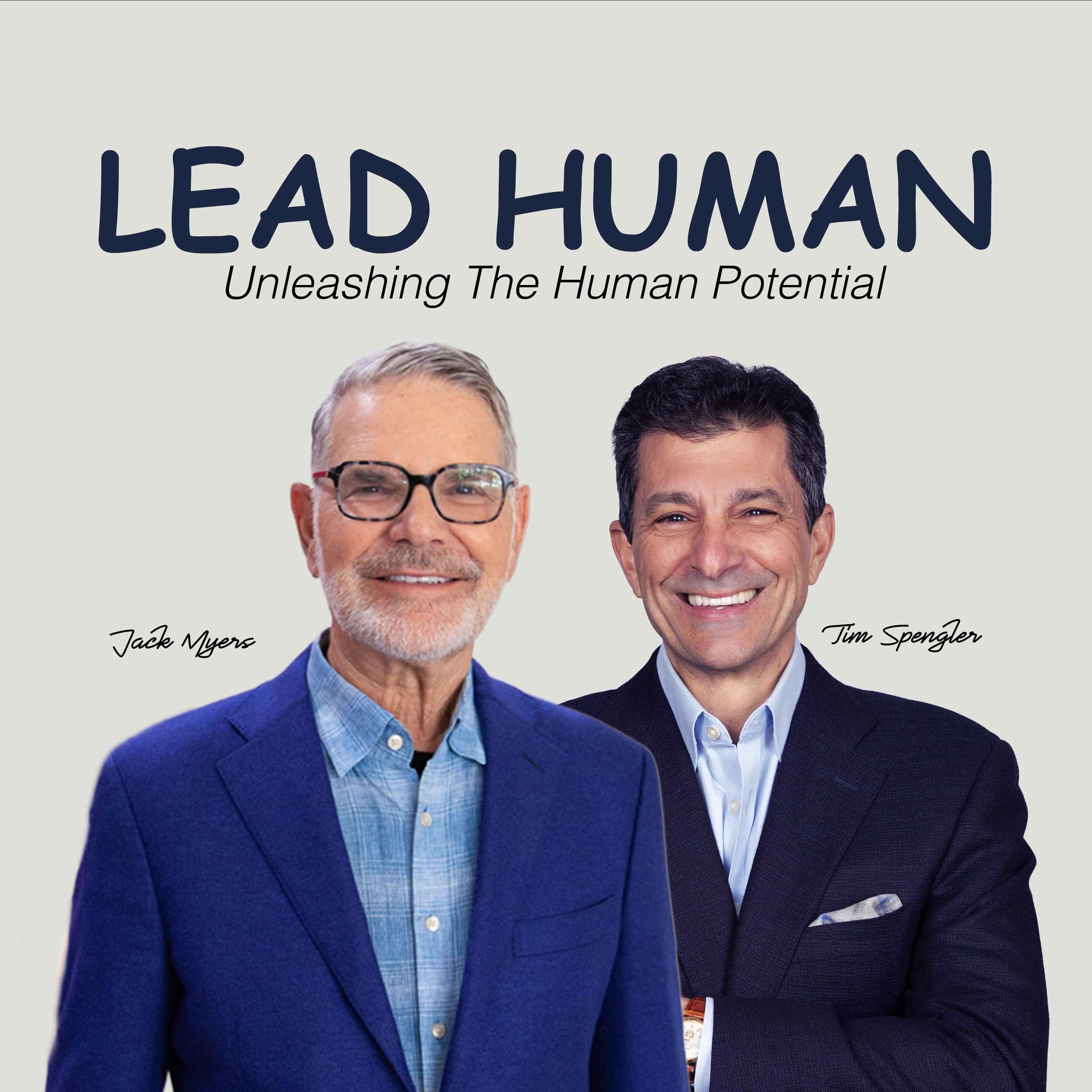
Energy, Demand, and Doing It All with Supergoop! CMO Lauren Weinberg
43m 12s
The discussion begins by highlighting NBC's broadcast of two major events: the Winter Olympics and the Super Bowl. It then focuses on the upcoming 250th anniversary of the United States, noting that public awareness is currently around 25% but is predicted to jump to approximately 75% after the Olympics and Super Bowl, largely due to marketing and advertising during these events. The conversation then transitions to an interview with marketing executive Lauren Weinberg. She shares insights on career paths, distinguishing the grit and generalist skills needed for entrepreneurship from the relationship-building and adaptability crucial in large organizations. Weinberg discusses personal strategies to combat burnout caused by "energy vampires," stressing the importance of activities that replenish energy. As a leader, she advocates for setting a clear vision, listening to teams, and being physically present and approachable, particularly during challenging times like corporate turnarounds, to maintain morale and focus on the broader mission.
So, Jack, interesting week this week, we've got both the opening ceremonies of the winter Olympics from Milan on Friday night. The Super Bowl two days later, it's a power packed blockbuster and NBC's got both of the properties. Kind of an interesting week. And I wouldn't want to be the sales executive that's NBC a year from now when they've got to meet those numbers. Yeah, that's true. I heard they did very well with selling out those properties right now going for some major. About a few months ago, yeah. And across all their channels. They have so many channels. Yeah, exactly. So, also, as we enter first week of February, it is the 250th birthday of this country. You know, 1776, 2026. And I don't know how significant that will ultimately be for anybody. Probably everyone's July 4th parties will have a little extra kick to it. But what's interesting is right now, as we sit here in early February, about 25% of the country in the research I've done is aware of this. That 20 that this is our 250th birthday. When we get to the end of June, let's just say. The whole country is going to know. It's our 250th birthday. What does that mean to me? Do I care? Do I care a lot? Do I care a little? Is it just interesting? But everyone will know right now only a quarter of American knows. Coming out of the Super Bowl and the 17 days of Olympics, about three quarters of the country. It'll go from about a quarter of the country to about three quarters of the country is now going to know that this is the 250th our 250th birthday. It's kind of interesting how that's going to scale so quickly. It's interesting. First of all, I'm somewhat surprised that 25% of the population actually know that this is the 250th and the first time given the. I'm surprised that I would have thought it might have been half of that. So that's good news, I think. And it's unfortunate when you think that only two thirds of the three quarters will know when in June. It's going to be interesting to watch the activities of the Olympics and the Super Bowl to see how that plays because nationalism and love of country is challenged right now. So the Olympics are especially important. The Super Bowl is a moment when we all seem to come together, although as a fan of New York teams and don't even go there. I don't have a skin in the game, but I'm interested to follow your thoughts there, Tim, in terms of how that plays out over the next couple of weeks with the Olympics and Super Bowl. Yeah, I think it's three quarters in two weeks. That's what I think is interesting. It's going to go from a quarter or maybe less to three quarters because of those two platforms. That would be interesting. We should talk about that when we're together next. Yeah. Because of the ads, because of the, some of the promos too, but because of the ads, because the marketers in these big platforms, some of them will be leaning into this notion and we'll all kind of know. I just find that interesting. In about a two week period, the number of people aware of it's a 250th birthday is going to triple. You know, Tim, I think you brought up a really interesting talk concept and idea for us to continue to track over the next few months as we head towards July because advertisers are more challenged than ever in terms of being patriotic and using patriotism and the 250th year anniversary of America, the United States of America. It will be interesting to see how advertisers play this out themselves over the next several months and what we see over the next week and in the Olympics and Super Bowl next 17 days and so. Yeah, absolutely. I'm in my, I'm going. I'm actually going, right? The, I told you I was going to, you know, the second we love that you're going to be in Milan. I love that. I'm taking my son and we're in the garb now. All right. Let's, let's, let's, why don't we kick it off? Go USA. Let's kick it off. Let's say, greetings, humans. Welcome to lead human. I'm Tim Spangler, along with my co-host, the futurist and author, Mr. Jack Myers. And together in about 30 minutes or so each week, we try to highlight those leaders who are actually leading human. And in a world that is increasingly dominated by data dashboards and AI, we know that the real competitive advantage is less about managing the machine and more about unleashing the human potential and this is lead human. Jack, we got an interesting guest today, smart lady, Lauren Weinberg. She, you know, a real serious marketer. She most recently, CMO, Peloton. She spent a little time at Intuitous CMO, Global CMO of, of Square Jack Dorsey's company. Interestingly, she's won pretty much every list of the best marketers in the country. She's been on those lists. Interestingly, she started as a career, her career as a researcher at Nielsen, at CommScore, got into research at Viacom networks. Then went to Yahoo research into marketing. And since then has been on the CMO track and a real thought leader. So I'm looking forward to the conversation with Lauren today. Lauren and I first met when she went from CommScore to advertising.com. Right, that one too. Right, right, right. So she was very early into the internet space and then of course spent several years at MTV networks at Viacom. More recently with her work at Square and at Peloton, she was named one of the 50 most entrepreneurial CMOs. She was named to Ad Weeks, top 18 CMOs list and she was honored by brand innovators as a top woman in marketing. So she's an incredible guest to have here and looking forward to it. Awesome. Let's bring her on. Lauren, welcome. Thank you. Thanks for being with us. Excited to be here today. Awesome. We're going to jump right in. Okay. All right, so first question, we like to ask all of our guests. It's a grounding question. And it's not about what you do, but it's more about who you are. So tell us Lauren as a human being, who are you? What's it like to be you? I would say I'm a mom and more specifically a boy mom. So I feel like if you're a boy mom, you get what that means. There's a lot of energy in chaos in my house. I also have three dogs. How old are the boys? 18 and 16. Okay. I get different kind of chaos than okay, right? Yeah, but there's always been some amount of boy chaos. Are the dogs of dogs boys too or two boys? One girl. I guess you might grow. You got one on your side. Yeah. Yeah. I would say I'm a lifelong learner. Always curious. Taking on new hobbies, open to adventures, read a lot of books. What kind of books? All different kinds. I like to go back and forth between fiction and nonfiction. And also in this time that I've been off of work, I've been on an AI learning journey, which has been really fun. And I also have a lot of hobbies, a lot of new hobbies, but I would say I love baking and making flower arrangements are my two favorite hobbies. And those are my things that keep me really zen. But I also am a very active person and like to work out a lot. Awesome. You're a perfect candidate for Peloton in addition to your strategic chops. You were living the brand, huh? I still use Peloton every day. Well, I bet you do. We're going to get back to the learning journey on AI specifically. Okay. But let me ask you, stay with a broader question. You've been an accomplished executive both in the C suite, but also as an entrepreneur. And you've worked with and seen a lot of C suite people as your colleagues, but you've seen a lot of entrepreneurs in some of these roles. So this is like a short cut, like help us short cut if I'm listening, help me short cut if I'm thinking about should I go the entrepreneurial path or am I better in the in the big company path? What are those criteria, those characteristics? Because you're going to be all in either way. You're going to work your butt off. We get that that's all in common. You're going to have grit. You're, you know, you're going to have patience, resilience, all that stuff. So if all that's equal, what are the qualities that make something? Somebody likely to be more successful as an entrepreneur or more successful in a bigger organization with layers and stuff like that. I think a lot of the things are actually the same, but I mean, you mentioned some of them, but I would say the thing about being an entrepreneur is the grit. I think being an entrepreneur requires even more grit. It's hard. It's lonely. And so you're really going at it alone, solving problems, doing things for the first time, sharing a lot of multiple hats. I think when you run your own business, you're everything. You're the CEO, you're the CMO, you're the CFO, you're the chief legal officer. And sometimes you're most of the time you're doing things for the first time. And so I think you have to have so much passion for your business and what you're doing. And this idea that you're going to keep
going and you're going to keep finding solutions no matter what obstacles get thrown your way because there will be a lot and you are by yourself more. Right, so grit, perseverance. Perseverance, a learner, a generalist, I guess, right? Also because you're doing lots of things. But most people aren't generalists. So just this idea that you're comfortable starting to wear those other hats. And I think you learn a lot about yourself. For me, whenever I go down that path that helps me realize some of the things that I don't love to do as much helps me realize what are the kinds of people I need to hire, bring in around me to compliment the things that I'm going to do. Cool. Last thing on that. So, okay, so that was on the entrepreneur side, some of the qualities you need. What about in the big organizations to be successful? In the big organizations, I would say relationships are paramount. So being able to work well with other people, understanding how different types of people like to work. And in very tech engineering product led organizations in Silicon Valley, I've been in New York and media organizations. Those are very different personalities and profiles. So I would say being able to adapt, understand the way people like to be communicated with. When you work in marketing in particular, you work with everybody. And a lot of times you really are the glue that holds a lot of the organization together. You will touch every single part of the business. And so I think having great relationships, being able to figure out what makes people tick working really well with people is the most important thing about being successful in an organization. Love that. Love that. Jack, what do you think? So first of all, Lauren, thanks for joining us. I'm definitely feeling some fomo not being there in the studio with you and being able to say hello. But I really do appreciate you joining us here. I read your 2026 LinkedIn message, which was pretty detailed and there was a lot to unpack in it, which which I thought was really good. One of the things you wrote in that is we talk endlessly about burnout culture and work life balance. Burnout, you say, is the result of energy vampires, people, processes and work that continue to withdraw from your energy reserves without making any deposits. So tell us about energy vampires and how you defeat them, how you put a stake in their heart. Well, I think that a lot of it, it's hard to defeat them. It has to come from you. And so I think the thing about, you know, I was reflecting a lot at the end of the year. And energy vampires are in all parts of your life. It can be people in your family, just people that are constantly coming in and just taking from you and you're not getting a lot back. And it made me think about the times at work where I've been so busy and it's been the craziest, but I'm so energized by what I'm doing. And I feel so good about the work that I don't feel burnt out. And then what it feels like when people are really, I think just starting to take away and to plead your energy and it's a total shift. And so I think the only thing that you can do is do the things that you need to do. So learn what it is that fills up your cup and continue to make time and space for those things. And so for me, a big reason why I try to move my body every day is that that is how I reduce my stress, but it also gives me so much energy. It's a huge difference for me when I work out versus when I don't work out. And so just finding the things that give you joy, I was talking about how I like to bake and make flower arrangements. That's a really important creative outlet for me. And so I'll just go to Trader Joe's, buy a bunch of stuff and make a really beautiful flower arrangement for no reason because that's something that will give me energy. I get to see it in my kitchen every day. It's just for me, for my family. But I would say if you're in a situation where you do feel there are people in your life that are depleting your energy. It's really on you to make sure that you find ways to protect your own energy. No one else can do that for you. You know, energy is so important. Energy is a big deal, obviously, in order to maintain it. You also need your sleep. And that's another way to build up your energy reserve. I was learning a lot about Adora. Frankly, your role there has really familiarized me with the company. I did a little research on the founder and CEO Marco Mados. And what he said about you when you were hired, Lauren has led marketing transformation at the scale and complexity our customer space. Now that's typically a way of defining things that are related to finance, to technology, to data. But I'm interested, given that we're here on lead human, what are the skills required for leading the teams and individuals as they negotiate such dramatic transformation in finance, technology, and data? What are your rules and lessons for leading teams? So it depends, right? I think different teams are in different places in their maturity and just facing different challenges at the company. So at Square, I was there through a time of massive scale and growth. And it required really thinking about how do we mature the team? How do we take a team of generalists and create some specialists? And then I would say a Peloton was a period of transformation and turnaround. And so there it really became paramount to give vision and strategy and direction. Peloton is such an incredible brand with an amazing marketing team. When I got to Peloton, they were doing so many things. And when I came in and I said, well, this is the strategy. Having a strategy and a vision of what you're doing also makes you understand what you shouldn't be doing. And I think that was probably the biggest gift to the team at Peloton was a better understanding of where to focus their time and attention to not be doing as many things because they didn't fit in to the strategy and to remind people when I call them ankle biters, just the things that sound cool. You want to do them, but if you do a lot of them, then all of a sudden you feel like you're getting your little burnt out because you don't have enough time for the things that are very critical. So I like to come in and really share a vision and a strategy. And I like a lot of buy-in from the leadership team and at a place like Peloton, they've been through a lot. And so I did a lot of listening all throughout my time there. I think it's really frustrating for teams when leaders come in and assume that teams don't know what they're doing. I like to say, what did you learn when you did this? And how could we think about doing it differently in a way that capitalizes on the learnings. Instead of coming in and assuming you did this before but you did it wrong. And so a lot of feedback I got when I left Peloton was thank you for teaching me how to lead by listening and asking for what we learned already so that we didn't have to repeat the same mistakes again and I never make assumptions that people don't know what they're doing. I would say it's the opposite. I always assume you're here, you're smart. You know what you're doing. There's a reason why something hasn't worked. What did we learn? There's also different time in circumstances. So I'm also not a fan of well, it didn't work. We shouldn't do it again. I like to say, well, why? What did you learn and what's different about how you could do it based on what you learn and also the time that we're in and how that's changed. So I really am a big fan of listening, learning, but setting a clear strategy and a vision so people know what to do and more importantly they know what not to do. Quick follow up Lauren because you joined Peloton in the midst of a crisis with COVID. What did you learn about leadership in times of crisis? It's hard. I mean, I knew that going in. I knew that it would be hard. I think when you work at a brand like Peloton, that's something that is so important to your life. It makes it easy to go into a hard situation because I wanted to work at Peloton for a long time. And I just thought, I love this brand. It's such an important part of my life. It really got me through COVID like millions of other people, but it still plays such a critical role in millions of people's lives. Like I said, I still use Peloton in some way every single day. And so to know that you're a part of something that can make people's lives better is something that gives me a lot of energy. So when you go in leading in a time of crisis, I think it's important to remind everybody, you're here to do something that's bigger than just all of us and what we're doing. What we do at this company is we actually make people's lives better. And that's a really important thing to do. And that I think staying grounded in your mission and purpose helps keep people motivated. It kind of reenergizes them again. It's easy to lose sight of that when you're in a culture where there's a lot of hard things going on where there's reductions in workforce and there's budget cuts and it feels hard. But then to stay grounded in, we are here because what we do with this company is really important to millions of people and we're changing people's lives. To me, that's the way that you keep teams motivated and energized during times that are very hard where there's a lot of changes. And I also think being present and being approachable and human, and I'm sure we'll talk about that a little bit more on this podcast. But I like sitting in
an open floor plan in the middle of the team at Peloton, every executive had their own room. And I would be in my room when I had meetings. And whenever I didn't, I just sat at a standup desk in the middle of the teams. - That's great. - Because I want people to line up at my desk to ask me questions or just get to know me as a human. And I think when I, that was the way that I worked at Square. And I'm a big fan of that kind of workspace and the fact that you're in it with the team. You get to hear what people are talking about. You really get to get a better idea of who people are in that sense. And so I love working like that with the team. - That's awesome. That's great advice. I mean, not everyone does that. I love the corner office. But I love you. I've got times being there. But the rest of the time, let me be in the middle of the group because it's about the group. - Yeah. - That's a very human quality, no, Jack? - Absolutely. You know, there's always, those standing desks are really, it's an interesting dynamic. And also the round desk, the whole concept of desk and community is really shifting. That's an important observation. - So I was gonna ask, did you go and have to go on any hibernation journeys with Jack Dorsey? What was that like? Not that, but what was it like working with him? Was he more of a solo pernor? And then you're bringing this team culture into Square, or am I overblowing that based on only what I've read? - So I've never been on a hibernation journey with Jack. I would say Jack is someone that I learned so much from as a leader. - Like what? - So Jack leads with this incredible combination and balance of confidence and humility. And I think that he is open to hearing other people's thoughts admitting when he's wrong or he doesn't know something, but never doing it in a way that you don't feel confident in the decisions that he's making. And he's really an incredible visionary leader. And it was really fun to be part of a company where he can see things around corners that most people can't see. And you learn over time to really trust his vision. And when I was at Square, I mean, he's been big on cryptocurrencies and Bitcoin for a long time, but I learned so much by being at Square. And he says, listen to this podcast. It'll teach you everything you need to know about cryptocurrency is in blockchain. And I've always really trusted him, but I think the way Jack leads is he's respectful of people's time. He's always on time. He's very punctual. He is very humble. - Interesting. - And just is this very quiet person, but when he has something to say, he says it with a lot of confidence. And it's very rare, I think, to find leaders that have that perfect balance of humility and confidence. And I feel like since I have seen the way Jack leads, I've always aspired to be like that myself. - What a great combo, Jack. - You know, there's so many questions I could ask, but I keep going back to your talk. You're bringing up first where I'm going to ask who you are as a human being. The first thing you said, you're a mom. And a mom of a couple teenage boys, three dogs. What are the lessons that you learn at home in leading your sons and your dogs that you bring into the workplace? - Well, I just think kids really keep you humble. I mean, my kids are constantly making fun of me. And I don't know. I think that you're, to me, my kids are the most important thing in my life. And one of the best things that happened for me during COVID was a complete reset in how I work. I think prior to COVID, I was living in California in the Bay Area, commuting over an hour each way. So I would leave really early seven in the morning and get home after my kids had dinner. I didn't really get to go to any of their sports events. And I kind of just accepted that that was the way that my life was. And then all of a sudden during COVID, we had dinner together every night. And I spent so much more time with my kids. And then it really reset the way that I wanted to show up as a mom. And I think as you get older and your kids get older and you realize that my now I have a senior in high school right now. So I have half a year left with my son at home. And he could never live at home again that you really want to be there for all those moments. And so for me, that's been just a really important way to prioritize and think about how I want to work. And the boundaries that I set for myself and the advice that I give to all parents who are returning to work after having a child is to think about the way you want to work and your boundaries. And then just be unapologetic about it. I think I learned that lesson too late. It wasn't as accepted when I had kids. I felt like I was often the only woman in the room. I never talked about my family or my kids. I had kids when I was young. It just was not part of what I talked about at work ever. And it feels like today people bring much more of their whole self-suffer work. And I really love supporting people who are having families and trying to also be really successful in their career. So I feel like my life is so much more balanced now. And there's moments for my kids. I'm definitely not at everything. But there are important moments. And I will not miss them. And the lesson I learned is that it was really all on me. And that I had to be organized. It was all possible. I just wasn't on top of my schedule enough to plan far enough in advance. And once I started doing that, everybody respected the boundaries that I had. It was my own doing that I wasn't able to get to stuff. And so I fix that. And it's how I advise other people. Just make sure that you plan in advance. You have your schedule. Don't miss the things that you don't want to miss. And I do think there's a lot more support now. But I would say my kids are the most important people in my life. And there's so fun to be around in the stage. I mean, sometimes they're really hard. But they're finally becoming the people that they'll be and just seeing them grow up in mature and really turn into these men. It's just been so amazing. So it's more culturally accepted now to do everything you just said with the balance and just your advice is do it, but get ahead of it in the schedule part. Could you have done it in 17, 18 and 19? I think I heard you say you could have. You just would have. And you were good enough to pull it off. Maybe I'm talking the past. It doesn't matter as much. I'm just curious about people thinking about it then versus now. The bottom line is do it. I think I think it's a combination of things. Part of it was on me not being organized enough and really getting ahead of things. I think it also was not culturally as accepted then. And so it's definitely gotten a lot easier for parents in the workplace today. So that's a good thing. But part of it was also that I was not as organized as I needed to be to make it work for myself. Yeah, well, there are generational realities following up on your response to Tim and Tim's question. There are a lot of different generations that are now taking leadership roles and organizations that come into it with a different psyche about the very things you're talking about, how being their full selves, being creating work-life balance. And there are also generational realities people who say there is no such thing as work-life balance. You have to dedicate yourself to work. So that leads me into a question. And putting that context into corporate realities that you confront in your consulting work and your work with Adora and with Fortune 500 companies between looking at performance marketing, which is critically important to get those bottom line results and brand building. And how do you create balance when you've got conflicting realities organizationally, both generational conflicts as well as directional role and responsibility conflicts? That's a pretty loaded question, Jack. Well, I was going to ask you the same one. That is the question on the table. But don't give us the cliche answer about brand versus performance. Give us this morning's. So the thing about brand and performance that I've said is that I try not to use the word brand and performance. OK. Because in a lot of organizations, not all of them, but brand feels like a dirty word. Nowadays. And so the way that I like to talk about it is that you have to create demand. And then you have to capture demand. And you can't create demand through performance marketing only. And a lot of times, and the conversation that you're having this with the most often is with the CFO. And so when I'm talking to the CFO about this, I say, what I see happening is that there's some diminishing return. So you've done a great job of capturing the demand that exists. But you have to create demand. You have to create demand with new audiences. You have to create demand for new products. You have to have people have an emotional connection with your brand. And all of those things are in service of creating more demand. You need more demand to keep your performance marketing engine working really hard and continuing to be efficient without it. You can't really have one without the other. And so that I think,
helps explain how those things work in tandem. It gets complicated when you get into what's the metrics and what's the measurement and we have these conversations. And how long, right? There's the metrics measurement and when, probably. And that's going to be different for every company, but at Peloton, for example, for the treadmill product, that's an amazing product, but it's expensive. And so the consideration timeline for that product is a year. Did your CFO agree to that? It was facts. It was in the research. It could not be. Yes, it was in the research. And so there's the reality of understanding that people are thinking about buying this product for a year. And then there's the other reality of we're a quarterly business. We're a publicly traded company. We have to report out on the quarter. And how do we balance those things? And I wouldn't say that we had figured it out, but I would say that we were figuring it out together and that we had a great relationship. And it's, these are the same problems every marketer has. And there's no perfect answer or perfect science for how you do this. So all you can do is keep iterating. And even if you think you've cracked the nut and you have a great measurement solution, something changes, new channels, new privacy laws. And so you're always having to rethink it. And so we were thinking a lot about how do we make sure that we see signs that our longer term brand initiatives are doing what we want them to do, but also being patient to give them the time that they need to do the work that we think that they need to do to help drive growth in the overall business. And so that's a year for the treadmill product. Yeah. And you were on the same page about that. Yes. What about a square? Probably a shorter, shorter cycle. It's different depending on the size of the business. Uh-huh. So smaller merchants, solo
preneurs, a little bit of an easier timeline. If you have a multi location restaurant business, and you are doing your payroll and a lot of other things, it's a whole operating system for you, that's a much longer cycle. But you get on the same page with everybody about the sales cycle. Yeah. And then the need for demand versus. Yes. And it's still you have that conversation. You get on the same page. And when you start spending money, there will immediately be some reaction to we're not seeing results right away. And it's just a constant education or reminding people, this is what we said success would look like. And so the way I like to get around that is to say beforehand, this is how we're going to be evaluating success. So we have a goal, a revenue goal that we need to hit as an organization and the way that we'll think about it. But when we start spending money, this is what we'll look at to say, whether we think what we're doing is successful or not, because in the absence of that, then you'll get everybody saying to you, well, I'm looking at this and it doesn't look good. And so I think you need to say, this is what success looks like and be on top of and really accountable about sharing metrics, what you're seeing, and owning that narrative so that it doesn't get out of control. I want to pivot this a little bit. Great learnings. Thank you. Let's talk about, so this is less about leadership, more about learning, which is you being, you can lead people here in learning. You talked about your AI learning journey in this time that you've been off. So give us some recommendations, tips to go faster. Everybody wants to know more about it. We're all probably starting to explore it. But give us, give us, synthesize maybe the tips about learning the learning journey on AI. So I think the number one tip is use all the tools. What do you mean by all? Do you mean Claude, Groc, Jat, all of them? As many as you can, lovable, all of them. Just get in there, Canva, just start playing around with all of the different tools and really learning what works best for different use cases. So if you love Claude for writing, you like chat GBT for doing research, proplexity for finding out more about companies, whatever it is, I would say what happens in a lot of companies is that they're signing an enterprise license agreement with one. I love them. Right. And so I think that what leaders need to do is enable learning in a safe way that's privacy safe for those companies. But there's no winners in the AI space yet. And so people need to be on all the tools. As a marketer, I always say, I'm on every channel. There's something new that comes up and all my friends make fun of me because I'm the 48 year old on SNAP. But I think if you are going to advertise in these channels, then you need to be in them and see how people use them. I don't know how you know what good or endemic looks like if you don't really understand the way people use those platforms. The same thing is true for AI and the LLMs and learning how people are using them and seeing how people use them will tell you what you need to know about how you should be thinking about marketing and the role that they will play in driving discoverability. So number one is just get in there and just start playing around with the tools. And then there's a lot of great training on prompting learning how to discern what's good and what's not good. Because there's a lot of stuff in AI. There's a lot of just things that are hallucinations, things that are incorrect. I'm always saying, where'd you get that stat from? You're right, Lauren. I made that up. And it's funny. But they are like, Oh, yeah, I just, I made that up. I actually can't find the source for that. And so I think a lot of people, especially younger people, probably don't realize that they need to be much more discerning. And so Anthropic offers good courses. There's so many good courses for that. So I would say number one is getting in the tools. Number two is finding good training and then following people who are really smart in the space. I listened to Lenny's podcast. He's a lot of great hosts on. I've learned a lot in the beginning of my AI learning journey. I would have to stop. I would be walking listening to Lenny's podcast. And I'd have to put notes in my phone. Cool. And then go ask AI, what does this mean? And so the best part about AI is it can help you learn everything that you need to learn about AI. And so you could just use AI to help you learn AI. All right. I got one quick follow up there. So you were in between roles. So a little easier than someone who's in a 60 hour a week job and maybe balancing a family too. So any, any, I mean, you just have to fight, fight the schedule, huh? I think so. And I would say if you're in a leadership position, then create space within your organization. Have a learning day, bring in laptops, have the tools on there. I've done that in other jobs. I did that when I was at Intuit. And it was just really helpful to say we're going to allow you to play around with different AI tools in a really safe space. So I would say a lot of CMOS have asked me what should I do? And I think some people are waiting for some directive to come from their CEO or the board. And I don't think it's coming. And so I think it's really up if you're in a position and you can create a learning day for your teams, you can do prompting exercises and talk about it. I was in an AI study group. Again, I did have time because I was on a break. Highly recommended, though, most of the people in our study group were in operating roles. So we did a course and we met for 20 minutes a week. Right. Where did you find that? I'm LinkedIn. Okay. Somebody posted, I'm starting an AI study group, DM me if you want in. Did it with somebody that I have not talked to in 20 years. I did not know anybody else in the group. But I need that kind of accountability. So I love that I had this group every week. 20 minutes, everyone can find 20 minutes. Awesome. Awesome. Jack. Well, so what I've heard you say, Lauren, and so correct me if I'm missing or off on anything, go wide on tools, go wide on learning and education. Use the word discernment as kind of a keyword that we all need to pay if you're paying attention to in the AI age. You talked about self energy, finding your energy and dispelling those energy demons and vampires. You talked about family. It's important. And you also brought up measurement a number of times, harken back to your early days in research at Nielsen Comscore MTV. And so that's obviously core to what you're doing now. Did I miss anything important? I don't think so. I love the confidence and humility about of Jack Dorsey. That was one. Here are my two favorites. That and the, let's not get into a brand versus performance discussion. Let's have a demand discussion and let's get on the same page about the, the sales cycle for demand. That was my, those are some really, I mean, because everyone's going to fight that and the CFO is, how do you make the CFO your partner? I think you just gave us some of the really good answers. Yeah, you have to make the CFO your partner. I would never take a job, but I don't feel like I can work well with the CFO because it's for the CMO and the CFO. Those two people have to work together so they'll ask. Okay, last question. So on that, that one, that one right there. So seeing if you're on the same page before taking the job with the CFO, anything else beneath that that's even more strategic when you are interviewing to go to a company to see if it's a right fit. And you can take it from the CFO or R&D.
any other aspects? Well, I think there's a couple things. I would say culturally making sure that you understand how that organization likes to work, and is that a good fit for how you like to work. But I would say specifically with the CFO and the CMO, like, you know, I would say, at Peloton, for example, had a great relationship with our CFO. And what I love the most about the conversations that we had is that we didn't agree a lot of the times. But what you need is someone who can, that you respect, that will challenge your thinking, that will help you think differently about it. And if you're open to that. And so she and I probably debated more than anybody else, but we also really liked each other's people. And I never left an interaction with her where I didn't feel smarter or she didn't challenge me to think differently. And I think that I did the same for her. And so that is a good thing. I think that this idea that you can have healthy diversion perspectives with mutual respect. Well, anyway, that's the kind of working style that I like because I don't want people to agree with me all the time. I want to learn from other people. I feel like I get better when someone challenges me with a different perspective, but I respect them. And so I just think going into a role where you're open to working and being challenged in that way. But seeing if you the counterpart or the CFO is also is the insight there. Well, for me, in particular, because I really enjoyed that type of work style, it may not be for everybody. Right. Right. Right. Right. Right. Right. Right. Right. Right. Right. Right. Right. To come back to your LinkedIn message for 2026, you wrote in 2026, choose the organizations, people, and work that fill you up. This is consistent with your point on culture, your best work, you wrote, and your best self depends on it. Filling that gap, choosing the organizations, people, and work that fill you up. Amen to that. And thank you for sharing your advice in wisdom on lead human. Thank you for having me. It's been a pleasure. Thanks, Lauren. And let's also thank the audience. Thank everyone for for being part of this today. If you learn something or felt something different from our conversation with Lauren, please do share it and follow us wherever you get your podcasts. Help join this movement that we're on now with Lauren for everyone to lead more human. Because we all know that the competitive advantage in today's era dominated by conversation about AI and data and dashboards that the real competitive advantage is not about managing the machine, but about unleashing the human potential. And this has been lead human. [Music]
Podcast Summary
Key Points:
NBC is broadcasting both the Winter Olympics opening ceremonies and the Super Bowl, creating a major media event and sales challenge.
Awareness of the U.S. 250th anniversary (Semiquincentennial) is currently low (~25%) but is expected to surge to ~75% following the Olympics and Super Bowl due to associated advertising and promotions.
The conversation shifts to an interview with Lauren Weinberg, a former CMO of Peloton and Square, discussing leadership, career paths, and managing energy.
Weinberg contrasts entrepreneurial success (requiring grit, perseverance, and being a generalist) with corporate success (relying on relationship-building and adaptability).
She emphasizes combating "energy vampires" through personal habits, setting clear strategic vision for teams, and leading with empathy, especially during crises.
Summary:
The discussion begins by highlighting NBC's broadcast of two major events: the Winter Olympics and the Super Bowl. It then focuses on the upcoming 250th anniversary of the United States, noting that public awareness is currently around 25% but is predicted to jump to approximately 75% after the Olympics and Super Bowl, largely due to marketing and advertising during these events. The conversation then transitions to an interview with marketing executive Lauren Weinberg.
She shares insights on career paths, distinguishing the grit and generalist skills needed for entrepreneurship from the relationship-building and adaptability crucial in large organizations. Weinberg discusses personal strategies to combat burnout caused by "energy vampires," stressing the importance of activities that replenish energy. As a leader, she advocates for setting a clear vision, listening to teams, and being physically present and approachable, particularly during challenging times like corporate turnarounds, to maintain morale and focus on the broader mission.
FAQs
The Winter Olympics opening ceremonies in Milan and the Super Bowl are both occurring in early February, with NBC broadcasting both events.
2026 marks the 250th birthday of the United States, commemorating the nation's founding in 1776.
Awareness is expected to rise from about 25% to 75% of the population due to exposure during the Olympics and Super Bowl broadcasts.
Entrepreneurs need grit, perseverance, passion, and the ability to wear multiple hats as generalists, often working alone to solve problems.
Success in big companies relies on strong relationships, adaptability, understanding different personalities, and effective communication across teams.
Identify activities that replenish your energy, like exercise or hobbies, and prioritize them to protect your own well-being, as others won't do it for you.
Chat with AI
Loading...
Pro features
Go deeper with this episode
Unlock creator-grade tools that turn any transcript into show notes and subtitle files.
 PodcastTranscript AI