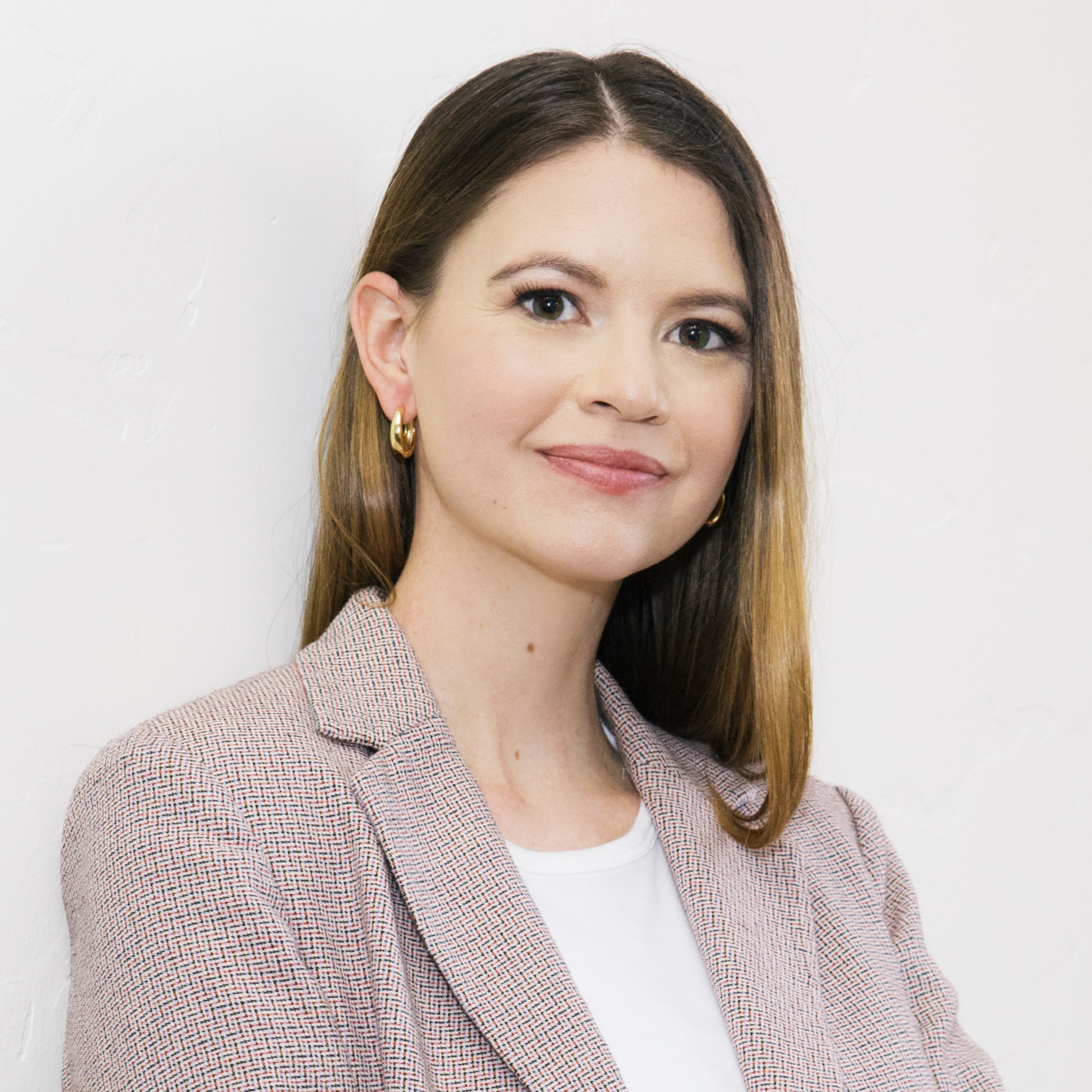
Ellen Rudolph, co-founder and CEO of WellTheory, on rebuilding autoimmune care
from The Pulse by Wharton Digital Health
41m 40s
WellTheory is a virtual care platform addressing the autoimmune epidemic, founded by CEO Ellen Rudolf after her own seven-year struggle with undiagnosed autoimmune disease. The platform serves 50 million Americans with conditions like rheumatoid arthritis, lupus, and psoriasis, offering personalized root-cause care that integrates nutrition, lifestyle changes, and expert support from registered dietitians and health coaches. Rudolf emphasizes that autoimmune disease is a women’s health crisis, affecting 80% of women, and is often mismanaged by a fragmented medical system that treats symptoms in isolation. WellTheory’s unique approach includes supporting patients without a formal diagnosis, recognizing the two-to-five-year window before diagnosis when early intervention can alter disease trajectory. The company initially launched as a direct-to-consumer service to build proof of concept and outcomes data, then shifted to selling to employers and health plans, who bear significant costs from autoimmune patients (30% of pharmacy spend). Key milestones included demonstrating ROI through independent actuarial data and member satisfaction. The program balances a standardized evidence-based framework with personalization at the member level, using health coaches to bridge the gap between knowledge and behavior change. WellTheory has raised over $26 million from investors including General Catalyst.
Hi everyone, this is Trisha Tucker, co-host of the Pulse Podcast. I'm excited to introduce today's guest, Ellen Rudolf, co-founder and CEO, Wealthyory. A platform and a mission to reverse the autoimmune epidemic. It ended in 2022, Wealthyory was inspired by Ellen's Postal Health Journey and supports the 50 million Americans navigating autoimmune disease through evidence-based care, education and community. The company has raised over 26 million from investors including General Catalyst, Seven Wire, In-Borg Investments, Axel and Boxcoop. Ellen graduated from Stanford University and previously spent 7 years building Olesh Consumer Companies. She left the marketing website at Oscar Health and was an early product manager at Evelyn where she helped build a 3D technology stack. In this episode, we cover Ellen's Journey Building Wealthyory, her approach to user experience in AI and her insights on fundraising, resilience and help. I hope you enjoy this conversation. Hi, Ellen, thank you so much for joining us on the Pulse Podcast today. We love to start our episode with a fun icebreaker and we're very curious what did you want to be when you were growing up? Well, first things, much for having me, Trisha. I'm super excited to be here. It's funny because I definitely would have never expected myself to be an entrepreneur when I was younger. I wanted to be a professional soccer player. So I grew up playing competitive soccer. I don't know if you remember me, I am, but she was my idol. I think I read her autobiography front to back more times than I can count. I vividly remember going to the 1999 World Cup as a kid. I think at the time I thought that if I worked hard enough, that could be a viable path for me. That was really it with no real backup plan. When I got to Stanford, I would say that dream started to evolve. I studied product design there, which was a mechanical engineering degree and I think that really gave me exposure into how creativity and empathy and design could all come together to solve real problems. I really fell in love with this process of identifying a problem, forming a hypothesis, testing that in the real world and iterating on that. So I think that's ultimately what sparked the desire to one day start a company. But if you had asked me when I was five or six, if it was being a professional soccer player, that's awesome. It's funny to see how you went from one very difficult career to another. And so for the list, for Lesnar's hearing about well theory for the first time, I'd love to actually just jump right in. Can you tell us what well theory does and who it's built for? Definitely. So, well theories are virtual care platform that delivers specialized care for auto-earned patients. We provide personalized root cause care that combines evidence-based nutrition lifestyle interventions with a dedicated care team of autoimmune experts, whether or not a patient has an official diagnosis. And we'll talk a little bit more about what autoimmune disease is in a little bit. But these conditions impact everything, right, from digestion to hormones, energy, mental health. And the challenge with the traditional system today is that it's incredibly fragmented and really treats each issue and isolation. And so really, our well theory, our belief is that treating autoimmune disease requires this fundamental paradigm shift in how we think about these conditions and trying to look at the underlying issues of autoimmune disease. So things like infections and inflammatory foods, hormonal imbalances, rather than just trying to fix what's above the surface. So our models were looking across some of those systems I talked about before, trying to understand how they interact and addressing, again, what's actually driving symptoms, not just where they show up. And we're really built for the 50 million Americans who are living with autoimmune conditions today. And again, the majority of whom are navigating this fragmented system that quite frankly wasn't really designed for these complex diseases. And this is very personal to me as well because I am that patient as well. And so when I think about it beyond just those autoimmune disease, right, well theories really for people who've been sick for many years have seen many doctors. Maybe they have a diagnosis, maybe they don't. And maybe they've been told some version of your labs look normal. Or here's a pill without a clear care planner guidance on how to manage their condition. Thank you so much for sharing. It's incredible how you're focusing on this patient population that's really struggling and trying to transform the system. I know you've started to touch on this and you've spoken in the past about how the idea of a well theory came directly from your own health journey. Can you take us back to that moment in your 20s when you realized something deeper was going on and that the system wasn't built to help you? Definitely. So it was about seven years ago that I was living in New York and climbing the corporate tech ladder. I really should have been in the prime of my health and my career when I started to navigate this chronic health mystery that unfortunately left me totally bad red in. And I was experiencing a lot of symptoms that didn't quite add up, right? It was everything from fatigue to digestive issues, brain fog. I was experiencing scaring neurological symptoms and these unpredictable health episodes often popped up without warning. And so that led me to wind up spending my days and evenings and urgent care in the ER. And honestly at the time I was pretty terrified that I was a QLIL. And like I mentioned, it got to the point where I couldn't work at all. I was totally bad red and not just 25. And for months, I ping-ponged from specialist to specialist. And it was honestly a desperate for help and answers and often was met with your labs abnormal or it's probably just stress. Or my favorite, which was you're too young to be sick and unfortunately navigating this medical mystery quickly became a full-time job for me. Finally, after many years, I eventually got answers and learned I had an autoimmune disease. And in that moment, I feel like I should have felt relief, but honestly, I felt very frustrated because there was no clear plan. I was essentially handed a prescription, you know, bandaid for my symptoms and told to come back once things got worse. And no one told me how to actually manage this condition away that let me continue to live my life. No one talked to me about nutrition, movement, sleep, or what could actually be triggering my symptoms in the first place. And so I started my own research and fell down the pub at Rabahol, read anything I'd get my hands on. And that's when I discovered the profound impact of incorporating certain dietary and lifestyle interventions and actually getting to the root causes of these conditions. And that discovery ultimately changed my life. And I decided that, you know, once I got better, I would really dedicate my life to making sure that others didn't have to go through the same journey that I did. And my co-founders, Claire and Wallace had their own lives, you know, shaped by autoimmune disease as well. And so that's part of why we founded both there in the first place. Really under this simple premise that this patient population deserves better answers, to support an ultimately better outcomes as well. And so sorry to go through that. And it's incredibly inspiring and powerful to hear your story. For listeners who may not actually realize the scale of this, can you walk us through what qualifies as an autoimmune condition, how common these conditions are and who they actually tend to affect the most? So taking a step back, let's start out autoimmune 101. We actually is an autoimmune disease. So autoimmune disease occurs when the immune system mistakenly attacks healthy cells or tissues. And it can affect different organs or body parts, 50 million Americans. You know, this is, there are over 100 different autoimmune diseases that this ranges from rheumatoid arthritis to psoriasis, lupus. The list goes on and on. And I think autoimmune disease is a lot more prevalent than most people realize. It's actually the third most diagnosed condition, even more common and type 2 diabetes. Like I alluded to before, the medical system is very fragmented. And so if you have rheumatoid arthritis, you're going to work with a rheumatologist. If you have psoriasis, you're seeing a dermatologist and the list goes on. And so often it's not really looked at or thought of as this larger category. And so that's a lot of what we try and educate folks on at Walthare, which is looking at this broader umbrella set of conditions. Unfortunately, autoimmune disease is really a women's health crisis. About 80% of autoimmune patients are suffering from autoimmune disease or women. There are certain conditions that are 16 times more common than women. And so we can talk a lot more about why this is and why these conditions disproportionately impact women. But I think the net of all of that is, it's this large population rate, one in every six Americans. And we'll talk more about some of our business model evolutions. But it's a huge cost driver for employers and health plans who bear the burden of the cost of this patient population, not to mention as I share it a really painful journey for patients as well. Yeah, thank you so much for sharing and giving us the 101. It's incredible that you're raising so much awareness through the process of building Walthare as well. I think one thing that stood out to me from your story was you are kind of both the founder and the user and patient for this platform. So how do you decide when you kind of trust your lived experience? Boses, when you kind of step back and let data, business outcomes, it's a big deal.
and clinical judgment lead. - I love this question. So I'm a product person by background, and I would say that user research was really in my DNA, and I know the danger of building for an N of one. I'm also aware that I'm a particularly biased data point because I'm also a Walter remember. I often joke that I'm probably our most critical user. But the way that I think about is that my lived experience is really the starting point. It's not the answer. I think it's most useful at the front end in terms of thinking about what are the problems or pain points as a patient that are particularly frustrating, which product moments feel dismissive or supportive. What are the clinical gaps right that maybe are invisible to people who haven't lived them? And so I think that's where my personal experience is valuable and provides outsized impact. I think on the flip side, you know, what I've had to learn sometimes the hard ways that I am again, still only one data point. And I think there have been moments where my intuition didn't match but our clinical data or our broader member population was showing and in those moments, really the data has to win. So if I had to try and distill it down into a framework, I would say I try and use my personal experience to ask better questions and then data and clinical expertise to answer them. - I really like that framework and it's definitely something I'm gonna co-opt in the future as I think about my own career as well. I'd love to kind of dig deeper into, you know, the user experience and go to market strategy. You gave us insight into how fragmented and paid and filled the patient journey is. And one of the most distinctive parts of well-theories that you also support patients, even if they don't have a formal diagnosis. Why was this something that was important to you and how does well-theories program specifically support this population? - Hello, that question. I think fundamentally, well, we don't believe that care should only start once the system effectively labels you with the diagnosis. The reality is that at the average patient undergoes four and a half year, five doctor diagnostic odyssey. And during those years, patients are really sick and they're struggling with severe symptoms. And like I said, I was that patient as well. Again, you know, I think a reframe that was helpful for me was when you think about a diagnosis is really just a label for a set of symptoms, right? And just because you don't have a label yet, doesn't mean we can't start to address some of those symptoms. And interestingly, there's also a clinical case for early intervention as well. The research shows that there's often a two to five year window before a formal autoimmune diagnosis occurs where that condition is already developing. And it makes intuitive sense, right? When you think about it, it's not like you develop rheumatoid arthritis overnight. That's inflammation that's been brewing in your joints for many years. And so intervening during that window leads to meaningful, better health outcomes and also lower long-term costs for again, the payers who are bearing the burden of the cost of this patient population. So it's not just about filling a gap while people are trying to get that diagnosis, it's about actually potentially changing the trajectory of the disease entirely. And I think practically what that translates into is that members are becoming better advocates with their own doctors, right? They're able to track symptoms, identify patterns, walk into their appointments with more information. And actually part of what we help folks do is get to the right specialist earlier on their journey so that they're not bouncing around from specialists to specialists. So again, I think this is a population that's just as deserving. And as those with a diagnosis, and oftentimes what we see is the symptom burn they're experiencing is typically just as severe as those who do have a diagnosis. - I really like the reframe that you provided about what a diagnosis means itself and it makes a lot of sense from an outcome in a business perspective to catch these patients as early as possible in the journey. As you start to think about business model, go-to-market strategy, and specifically, what were the milestones that were most critical to successful shift from selling directly to consumers, just selling to employers and health plans? - Definitely. So like I mentioned before, well theory was born from personal experience, right? Mine, Claire's, and Wallace's, we really wanted to build the care experience that we wish we had earlier on around health journeys. And so that was part of why we started our direct to consumer, which was to create that ideal patient and caregiver experience first and foremost. But I would say from the beginning, making the care that we're delivering accessible and affordable was central to permission to and thinking about making this a win-win-win, right? That's always been the North Star, which is how do we deliver higher quality, more empathetic care for patients that actually address the root cause of these conditions, make that available at zero cost to them, save money for the employer and health plan and for us it's about just building a strong, viable business. So really part of the reason why we started our direct to consumer was to create that proof of concept. And that phase was really about two things. It was about building and experience that members really love and then also generating outcomes data that was rigorous enough to take to an enterprise buyer to convince them that this is something that they need to invest in. So during that time, we were really demonstrating that there was demand and that people were willing to pay their hard earned dollars, right? This was a cash pay program because there was such the need here and then also obviously refining our care model. And once we had that data and the proof, the shift was to employers and health plans who like I mentioned before are bearing the burden of the cost of this expensive patient population. For a typical employer, autoimmune disease drives about 30% of overall pharmacy spend and 50% of high cost specialty drug spend. Not to mention, we I should say, as an auto invasion, are just an incredibly expensive patient population, usually about four to five times as expensive as the average employer member. And so there was really nice incentive alignment there around being able to drive better outcomes, but also again, driving real savings for the enterprises who adopt our solution. I would say the milestones that matter the most were getting that initial evidence base and outcomes data, right, that could hold up in procurement conversations. And also, honestly, for me, as someone who had never worked in the employer benefit space before learning how to effectively sell to HR and benefits buyers, obviously that's a very different, you know, go to market motion then selling direct tick and seemer. But I think what is exciting about the space that we're in is that I think it's one of those care, those rare cases where, you know, better care and lower cost are actually aligned. Yeah, that makes a ton of sense. I'm also curious just hearing about your switch from direct to consumer to this B2B sales motion, given how broad this patient population is and their symptoms are, how did you kind of shortlist which milestones or outcomes to focus on? That's a great question. I think for us, it was really a focus on demonstrating for some of these high cost conditions in particular, just the ROI that we could deliver. And when you think about providing a solution like this and an employer study in particular, right, it's obviously about the cost, but it's also about employee experience and thinking, looking at things like member satisfaction, you know, validated quality of life questionnaires. And then again, how does that actually translate into, you know, savings and we, you know, engaged independent third party actuaries early on based on our direct to consumer data to again, really make that business case to the buyer that this is a less expensive, lower risk way to manage autoimmune disease. And so I think those were some of the data points that were really critical and really honing in on the particular conditions that tend to be incredibly expensive, especially those who are on some of these high cost specialty medications to really make that value proposition clear to the end buyer. - That makes a lot of sense. And it's awesome how you've created that win, win, win in healthcare, which is always so difficult to do. Kind of taking this question of broad presentation and diversity of autoimmune conditions one step further, how did that actually impact program design? So how did you balance between creating a program that's uniform, structured evidence base, but then also flexible enough to feel post-nalized for this patient population? - The way that I think about it is that personalization really happens at the member level and not at the program level. So we have a rigorous evidence based framework that's really grounded in what the research says about the interactions between diet, sleep, stress, and autoimmune disease at the program level, but how that actually gets applied is going to look completely different for someone who has, let's say, Lupus that works night shifts versus someone who has Crohn's disease who maybe just had a baby. And so I think that's really the super power of our care team members. And I think our, we employ both registered dietitians and board surveyed health coaches. And I really think our health coaches are the engine of that. You can think of them as behavior change experts. Their job is really to meet people where they're at. So that takes into account, they're a schedule, they're constraints, their food preferences. And really the goal is to help bridge the gap between knowing and doing because that's ultimately where outcomes come from, right? If people aren't actually taking the actions they need to, you're not gonna see the impact ultimately on symptom improvement and ultimately cost savings. And so I just think at the end of the day, that fundamental looks different.
based on the patient. I would also add that one of the other challenges with autoimmune diseases is that they are incredibly heterogeneous. So no two patients look the same and this is where we've really invested heavily in our technology and specifically some of the AI tools that we built out. To help our care team analyze member data and surface patterns that help to inform how those plans evolve over time. And really the way that we think about the world is that the AI tooling is there to help provide more leverage to our care team members rates so they can be more present in those live sessions with their members and also really utilizing the technology to handle that data layer. So that's ultimately what allows us to maintain that level of personalization as we continue to grow in scale. That makes a lot of sense. The knowing versus doing dilemma in health care is definitely a critical one. Kind of shifting goes to another patient population within well theories offering. You spoke a little bit about how women are disproportionately affected by autoimmune conditions and you're recently expanded into dedicated women's health program focused on hormonal conditions like endometriosis, PCOS, menopause. What led you to launch this program and how does it both build on and default from your core autoimmune offering? Great question. So like you said, 80% of autoimmune patients are women and when you look at the researches to why one of the big theories is around these big hormonal shifts as a big driver of disease activity. So life stages like postpartum, menopause, even parimenopause are among some of the most significant hormonal shifts in women's life right and what we see in our population is that they're common triggers for maybe new diagnoses or flare ups and so for us to be able to treat autoimmune disease in this more sort of whole person way we have to also understand and incorporate life stages right and so this was something that we were anecdotally hearing more from our members and our population and it's interesting too because when I connected the dots in my own journey I actually had a PCOS diagnosis before I got my autoimmune diagnosis and no clinician ever told me that having a PCOS diagnosis put me at greater risk of having an autoimmune diagnosis and so there's sort of this gap I would say in the stare of care in terms of connecting the dots between some of these different conditions and in particular these hormonally related diagnoses. So I think the postpartum program particular which we recently launched a couple months ago is again a clear example of a gap at the system just as an addressing today when you think about traditional postpartum support. First of all it's not even thinking about the potential risk of autoimmune disease flares but it often you know that support is ending within a couple weeks of delivery even though these hormonal changes can continue or continuing for months right and symptoms can worsen. I think also our traditional you know system is set up to like I mentioned before really treat a lot of these symptoms in silos so again you know we started to see this pattern occur and our member population were women who are managing their health before pregnancy like they were starting to experience newer worst-name symptoms after giving birth and really didn't have any word of turn and so a lot of what we're trying to do differently is really provide this continuous longitudinal care for these members where they're not getting handed off you know the person who's working with them through you know their pregnancy is also staying with them through that postpartum transition and you know we're also integrating advanced hormonal testing when it's appropriate so looking at things like sex hormones cortisol etc and so I think that continuity and a lot of ways is pretty different from you know what traditional OB or primary care you know can provide and also just the amount of time too these are complex conditions and the average 15-minute you know primary care visit is just not enough time to dig into the complexity of autoimmune diseases so those are some of the key differentiators I would add and I think this is also an increasingly important story for employers too because there's been a big focus on you know women's health and supporting you know women with returning to work in that postpartum period but I think this is a big invisible gap that that historically hadn't really been addressed as part of that larger picture it's awesome to hear about how focused you are on that long-term patient relationship and continuity of care I have a couple of questions on fundraising but before moving to those I want to make sure I go back a little bit and ask you about the proprietary AI tools I feel like all this knows I definitely going to be interested in that can you touch on a little bit about the care hub and care sky BI tools as well as with your product background how did you decide like those are the right places to start when it comes to your AI roadmap and a little bit of insight into where you want to go next when it comes to AI tooling definitely so our philosophy like I shared out well theory is how do we empower our practitioners to be the most effective versions of themselves we're not trying to automate away the human it's really focused on helping our care team members to be more present and effective in those you know live sessions with their members you touch on some of the tools that we you know announced publicly launching our our care hub and our care scribe and you know a lot of what we're trying to do is automate away a lot of the administrative tasks the things that are not high leverage for our care team member to be doing so that looks like auto generating summaries from you know member sessions so everything related to charting or even auto generating care plans or even interpreting labs this is still a human in the loop and that's still our philosophy and approach but it just helps to free up our care team to again you know be able to really connect with members and those moments that really matter and so that's really been our philosophy to date I would say there are so many opportunities and areas that we're looking to invest in around shortening the diagnostic Odyssey like I alluded to before optimizing treatment options for members and I think even at more of a metal level what we're talking a lot about right now is how does AI transform how we operate as an organization so not just in our product but also in other areas the business too so my my co-founder and our head of product Claire has been spending a lot of time thinking about that we're actually hiring for a head of AI ops role which I'm really excited about who's going to be helping us think about this more holistically and just how this is going to change the way that we operate as an organization as well that's super exciting and thank you for sharing insight into that now to a little bit about fundraising congratulations on your 14 million series areas you've had some incredible investors on your cap table and a great fundraising trajectory with funds like general catalyst accel seven-wire and box can you take us behind the scenes and give our listeners a little bit of insight into your fundraising process and what were some of the factors that led to the success in it how much time do you have Trisha and I'm just kidding so I would say it's funny because on the outside you look looking in I think you know both both fundraisers were successful and we're very fortunate to take it to work with incredible you know claims investors in digital health but honestly it was a lonely journey as I think it is for many CEOs who are who are fundraising and both fundraisers were definitely difficult as you know I'm a female founder and so unfortunately the odds are just stacked against us I think less than 2% of venture funding or that's been a reoccurring stat has gone to female founders and so I definitely met with many investors who said you know this is this is just a niche problem or you know let me let me talk to my wife we definitely fall in this women's health bucket and in an interesting way and so yeah certainly did not did not come easy but I think the things that helped and what I the advice I would give to other founders going through this journey is to really treat it like it's a sales process because it is one at the end of the day you've got a you know map your stakeholders know who's going to be supportive who's going to have objections and and be very deliberate about building momentum I think on the momentum side specifically speed matters a lot more than people realize the longer raised drags on the harder it gets and the reality is that if someone's taking more than a week to get back to you on next steps that's usually a signal because investors who want to do a deal they move quickly and so the thing I always told founders too is like you are in the driver's seat so you decide when you're fundraising so never be half-heartedly fundraising like you're either you're on or you're off and you are the only person who gets to decide when you are officially fundraising and be very thoughtful about that because honestly at that point it's sort of like the clock starts right the other thing I would add to is to go in person whenever you can I find that in person meetings are so much higher signal this is true not only for us on you know in terms of enterprise sales but also in fundraising too and I would highlight that every single important meeting from our series I happen in person I don't think that's a coincidence so I always say to hop on a plane when it's important and I just I just think that leads to again much much higher signal around just the interest level you can engage just a lot more around about people from those those in person conversations thank you so much for your honesty and
all the tactical advice you shared on sales, speed, in-person meetings. Hopefully, you know, your success at fundraising is paving the way for more female founders and women's health founders. I know fundraising is kind of just one part and parcel of the challenges and problems of founding an Oli State startup. To touch on some of the other problems in your Oli days of building well theory, what was one challenge you'd say that really tested you and how did you kind of find the resilience to overcome that and keep going? - The list is very long, but you know, I think it's funny because there's so many things that happen in the company building journey that you think will kill the company and I highly encourage other founders to keep a journal of all those challenges that you face to look at later on. I love to come back to that and realize just how many things we've endured and gone through and that the company is still standing. I think that's a very humbling experience because it makes you realize just how much you can endure and helps to put things in a perspective. So that's just a side note. I think one specific story that comes to mind is actually an early conversation I had with a former benefits leader. This was shortly after closing our seed fundraising. Our seed was very focused on the direct consumer traction we had and a lot of what we had talked about was making that transition into the enterprise, you know, go to market and so it was just sort of an introductory conversation and I just remember him firing away so many questions and telling me that this was a really crowded market. There were so many point solutions. Why would anyone buy this? And this was pretty terrifying because I just sold our investors on this vision, right? We were going to successfully make this transition and I just remember being so afraid and just realizing how much I didn't know. The irony of this story is that this person actually later came on as one of our early commercial advisors and became a huge champion for us and really helped us learn so much about making this go to market transition. And so it is funny how sometimes even your biggest skeptics can become some of your biggest champions later on. But I just remember at that point being terrified and what did I just sell these investors on and what are we getting ourselves into? But anyways, the list is very long and I think it just gives you proof to yourself that you can really overcome anything when you reflect on a lot of these early challenges that you have in the company building journey. - Well, that's awesome that you converted a skeptic into a champion and I love your idea about keeping a list because I think it's much easier with hindsight 20, 20 to think about what else you could have done but in the moment kind of keeping a list of the challenges you face can be very enlightening. I'm curious to continue kind of that thread. Are there any other pieces of advice that you have to offer early stage founders? Is there something you wish you had known early on your own journey? - It's interesting. I talk to a lot of people who are interested in starting a company and I think it's felt a little bit glamorized in some ways and so one of the things I always ask, you know, aspiring entrepreneurs is are you staying up late, you know, thinking about this idea? Are you dreaming about it? I think I think people should be so obsessive and just enamored by this thing that you really can't think about anything else. That's what I thought about well if they're obviously after going through my own journey and I think it's so important to make sure that this is the thing that you feel like your, this problem is something you're uniquely qualified to solve and that you're incredibly passionate about it. I have realized how much companies are built by sheer grit and force of will, especially in the beginning. And I think back to a Stanford talk where Jensen Huang of NVIDIA said, if I knew how hard it would be, I would have never started a video. And this is not to discourage or dissuade people from starting companies, but I think that there's realism in that where you have to almost be a little bit naive to start a company and the realities that you fully understood what was ahead of you, the rational choice would be to not do it. And so I think some of the boldness comes from not knowing. And I think the thing that I wish I'd known earlier on was that so much of the challenge and I think where you find success as an entrepreneur is in your ability to just manage your own psychology effectively. There's such an incredible amount of uncertainty and building an early-stage company. And like I mentioned in my prior story, you encounter the seemingly insurmountable obstacles, which can be really scary. So I think that is such a critical part of it too. So whether that's working with a therapist or a coach or finding some sort of outlet or someone who can support you and effectively managing your own mental health and psychology, I think that's such a key part of it. As a way to help care specifically, you touched on this before at Trisha, but I would say to always look for the win-win win, the challenge with the healthcare system is that it's full of stakeholders that have competing incentives and the realities is that if your solution only works for one party, it's not going to scale. And so when you take a step back and understand the incentive landscape, I think the question can move from, how do I sell this to? How do I create value that compounds across the whole ecosystem? I think that's a much more durable way to build an healthcare. - That makes a ton of sense. And I'm sure a lot of patients are extremely grateful that you kept your naivety and started well-thurie. And I really like the point you mentioned about the psychology of founders, because I think that is something that's really not spoken to enough. So a lot of great insights there. Kind of coming to a closing question when it comes to well-thurie, what's on the horizon, what's next, what are you most excited about? - Ah, so many things. I would say looking ahead, our focus is really on three key things. It's continuing to deepen our partnerships with employers and help plans, expand our care programs to reach more people and more conditions. And then as I alluded to continuing to invest heavily in AI to make our care even more personalized and accessible. And so a lot of the areas that we're investing in center around technology, clinical research, enterprise expansion, because there's such a huge amount of money that we're investing in. And so we're investing in a lot of the energy and energy that we're investing in. And so we're investing in a lot of the energy that it was the number one restaurant in the world. And the whole book is a center.
about how these world-class experiences are really created through intentionality and doing things that don't scale. And I think that framing has really shaped how I think about health care because I feel like today the bar for what a care experience should feel like is so low, unfortunately. And so I like to take inspiration from other industries outside of health care to think about kind of ideally what the experience would be like. I actually loved this book so much that we did a book club at Wall Theory. And I often sent it to new hires who joined the company. And I think our belief is that there's really no reason why I can't, health care can't feel like it's warm and human and like someone actually cares about you. I think that's a lot of what we're trying to build at Wall Theory. You're the second person who's recommended this book to me. So I definitely have to check it out. With that, I know we're coming to close on our conversation. Just want to say, Alan, thank you so much for your time. This was such an incredible conversation. It was so inspiring to hear about your own personal health journey and how you kind of have taken that experience to really walk on transforming the health care system and helping so many patients along the way. We're so excited about everything you're doing at Wall Theory and really looking forward to following the success of the company. Thank you so much for joining us. Thanks so much for having me. This was so much fun. Thank you.
Podcast Summary
Key Points:
WellTheory is a virtual care platform for autoimmune patients, founded by Ellen Rudolf after her own health journey.
The platform provides evidence-based, root-cause care combining nutrition, lifestyle interventions, and a dedicated care team.
Autoimmune disease affects 50 million Americans, is more common than type 2 diabetes, and disproportionately impacts women (80% of patients).
WellTheory supports patients even without a formal diagnosis, recognizing the diagnostic odyssey and the clinical value of early intervention.
The company shifted from direct-to-consumer to a B2B model (employers and health plans), driven by outcomes data and cost savings.
Personalization occurs at the member level within a rigorous, evidence-based program framework, using health coaches as behavior change experts.
Summary:
WellTheory is a virtual care platform addressing the autoimmune epidemic, founded by CEO Ellen Rudolf after her own seven-year struggle with undiagnosed autoimmune disease. The platform serves 50 million Americans with conditions like rheumatoid arthritis, lupus, and psoriasis, offering personalized root-cause care that integrates nutrition, lifestyle changes, and expert support from registered dietitians and health coaches. Rudolf emphasizes that autoimmune disease is a women’s health crisis, affecting 80% of women, and is often mismanaged by a fragmented medical system that treats symptoms in isolation.
WellTheory’s unique approach includes supporting patients without a formal diagnosis, recognizing the two-to-five-year window before diagnosis when early intervention can alter disease trajectory. The company initially launched as a direct-to-consumer service to build proof of concept and outcomes data, then shifted to selling to employers and health plans, who bear significant costs from autoimmune patients (30% of pharmacy spend). Key milestones included demonstrating ROI through independent actuarial data and member satisfaction.
The program balances a standardized evidence-based framework with personalization at the member level, using health coaches to bridge the gap between knowledge and behavior change. WellTheory has raised over $26 million from investors including General Catalyst.
FAQs
WellTheory is a virtual care platform that delivers specialized, personalized root-cause care for autoimmune patients, combining evidence-based nutrition and lifestyle interventions with a dedicated care team. It’s built for the 50 million Americans navigating autoimmune conditions, whether or not they have a formal diagnosis.
WellTheory was founded in 2022 by Ellen Rudolf, inspired by her own chronic health journey and autoimmune diagnosis. She and her co-founders, Claire and Wallace, aimed to create the care experience they wished they had earlier.
Autoimmune disease occurs when the immune system attacks healthy cells, affecting over 100 conditions like rheumatoid arthritis and lupus. It impacts 50 million Americans, is the third most diagnosed condition, and disproportionately affects women (80% of patients).
WellTheory believes care shouldn’t wait for a diagnosis, as patients often face a 4-5 year diagnostic odyssey. Early intervention can change the disease trajectory, and the program helps track symptoms and get to the right specialist sooner.
WellTheory started DTC to prove the concept and gather outcomes data. Once they had rigorous evidence, they shifted to B2B, as employers bear 30% of pharmacy spend and 50% of specialty drug costs for autoimmune disease, creating alignment for better care and cost savings.
Personalization happens at the member level, not the program level. They use a rigorous evidence-based framework for diet, sleep, and stress, but care teams tailor it to each member’s schedule, preferences, and condition, focusing on behavior change to bridge knowing and doing.
Chat with AI
Loading...
Pro features
Go deeper with this episode
Unlock creator-grade tools that turn any transcript into show notes and subtitle files.
 PodcastTranscript AI