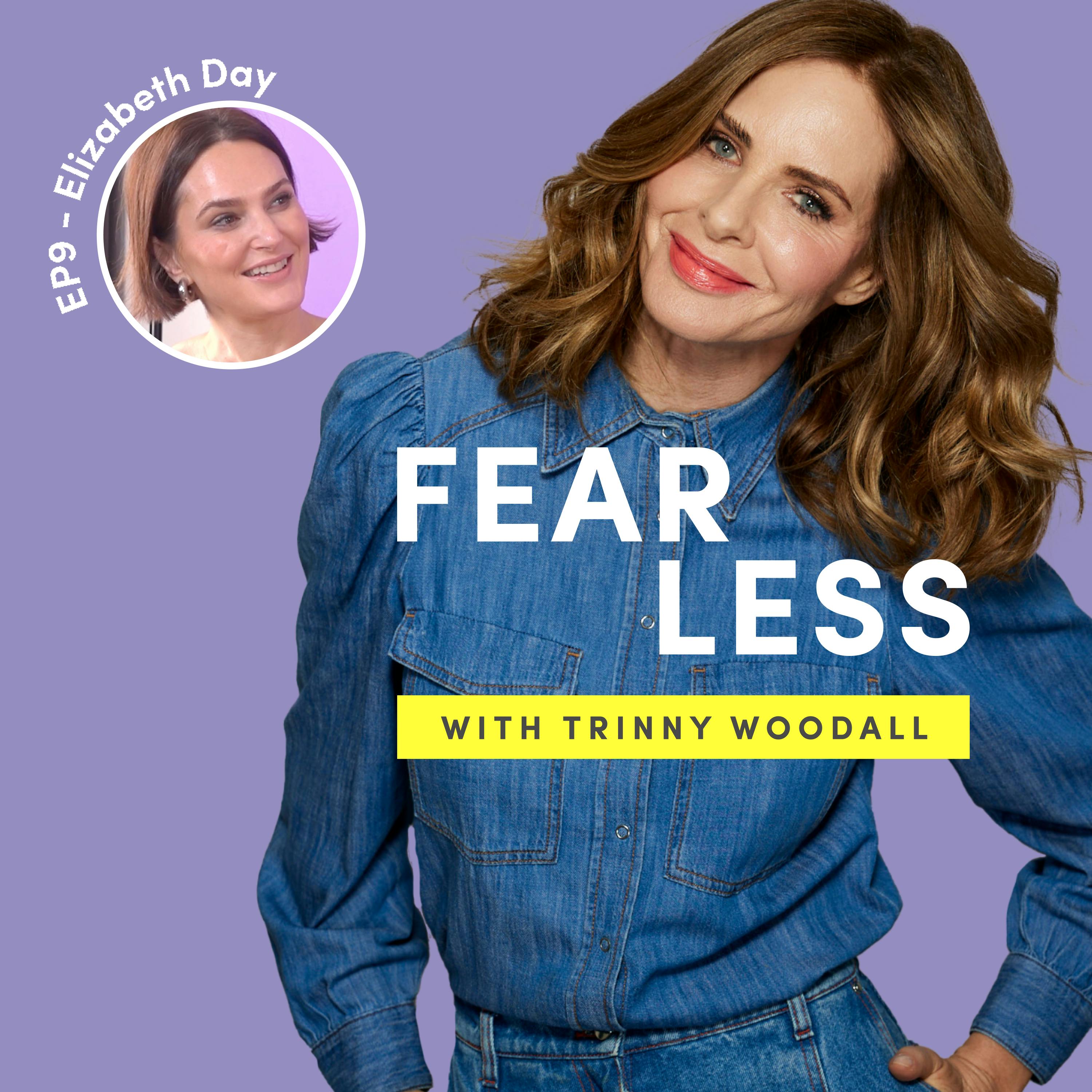
Elizabeth Day On Modern Dating & Unconventional Friendships
37m 28s
In this season finale conversation, the host and guest Elizabeth Day discuss the nuances of modern friendship and dating. Day reflects on friendship as a chosen, intentional practice, sharing how she proactively formed a deep bond with Phoebe Waller-Bridge after meeting her at a conference. She also humorously cites her cat as an ideal friend due to the relationship's lack of guilt or expectation. The dialogue acknowledges that friendships can evolve or naturally conclude without failure, challenging the notion that they must last forever. Shifting to dating, both share personal anecdotes, with Day recounting a particularly memorable story about a date who brought his own camp bed, using it as an example of recognizing incompatibility. They discuss how past relationship disappointments and anger can be constructive, guiding personal growth and clearer self-understanding. The exchange blends lighthearted stories with deeper insights into building meaningful connections and learning from life's unexpected journeys.
(MUSIC PLAYING) Hello and welcome to the season finale of Fearless. And I'm so excited that one of my very favorite guests and one of your favorite guests has dain't to be on our season finale. Please welcome the Broadcaster and Writer and Podcaster, Elizabeth Day. (APPLAUSE) I say Broadcaster. It's not a traditional way of describing but you broadcast life in so many different formats. No matter whether you want to hear it or not, I'm broadcasting away. I always want to hear it. And we're having this audience today and I love that we've got an audience because it makes it slightly, you know, you've got somebody to perform against. Yes, there's a lovely energy to it. And I'm really struck by your team how good people are trying good people. And I think you can really feel that energy and so I really love being around this. They give me my good energy. So I've got a series of questions, but I thought we'd do this in two parts for people who are listening and watching as well. Because we've spoke before about being friendless girls when we were young. And we spoke about fertility journeys and we spoke before also about things not panning out the way that we thought they would pan out. So that is in a way part one, if you would like to listen to that. I think that was a deep journey. This is about friendship and dating. Yes! Oh, good, I can't wait. We're not going to be that deep. I mean, you know, we're not going to be tear-y and. Yes, same-bought literature. We've done that. We've done that. We've done the clickbait tears. Exactly. Yeah, we don't need those now. So friendship is obviously something you've written about a lot and you've done, friend, holic, your fantastic book. But what's the most unusual friend you have in your life? Oh, well, that's such a great question. The most unusual friend I have in my life is probably my cat. Because some people would consider that an interest-species friendship doesn't really work and isn't really a thing. And that you identify as a cat? Yes, and on this, you feel like you've got an ancient Egyptian heritage. Well, it's just a dream of mine. Yeah, it's just some feels that. Yes, yes. But genuinely, my cat Huxley gives me such support in ways that are very difficult to define. But I think the fact that he's always happy to see me is just such a lovely thing to be greeted by. So I'm being slightly facetious, but I do consider him a very good friend. It's like an ideal of the ultimate friendship. Yes. Because it never goes wrong. He does suck a bit, though. Actually, he doesn't. He's really an amazing cat. He doesn't suck when I go away. And there's a reciprocity to it. And there's never any guilt attached to it. And I think that's the thing that can often be quite toxic in friendships. Is that feeling that you have done something wrong or that your friend expects more from you than you can give? There's none of that with Huxley. Great. You're walking the door slightly, Piscope, excuse me. Come on. No, really. Never. You just marry and enjoy it. And then I think I've made friendships in some unusual ways that have stood me in very good stead. So I went on a completely random conference one year in 2014. And I hate networking. And I hate the idea of a four-day networking conference. But this was one which was an all-expenses pay trip to Vegas. And there was a competitive interview process. And as you know, I'm super competitive, which is one of my biggest flaws. I thought, well, I'll do the interview process because I want to show that I can do it. And then I got in. And so I ended up going to Vegas, not knowing anyone I was going with, but just being sort of plunged into the deep end. What kind of conference-- It's called the British American Project. And it's still going. And every year, they take 40 people under 40 from the UK and from America. And they just put them together in an American or British city. And the idea is that you're going somewhere interesting in your professional life. And so it's a good place to forge those early collegiate friendships. Anyway, I got really lucky. Because my year, I was given these short biographies of everyone else who was a delegate. And on that list was a woman who-- the world hadn't really heard of then, but her name was and is Phoebe Wallabridge. And she had just taken Fleabag as a stage show to Edinburgh. And I read her potty biography and I was like, she's going to be my friend. And I sort of stalked her into submission. Because I just had that thing where I just knew that we were going to get on. And we landed in Vegas Airport. And I sort of sidled up to her. And we started chatting. And then we sat next to each other on the coach. And we've just never stopped talking since. So that's a friendship I'm very grateful for, because it was an intense and surreal beginning four days surrounded by slot machines. But she's become one of the most important people in my life. But you could also turn it around to, I purposely want to be friends with this person. And it's not as sort of-- because they're well known, because at times she wasn't. But it was just something you were drawn to. It's like dating without having the sex. You know, it's that pursuit. So did we pursue one another? Yes, I think we did. And I think that there is something really beautiful about being intentional in friendships. And the ones that we choose to pursue, particularly at a certain age, we only have so much time. And so I think we chose to pursue each other. But I would never have dreamt that you would want to be my friend until you came on how to fail. And I remember this so clearly at the end, because it was over Zoom. It was still kind of lockdown time. And you said, well, what I'd like to do now, Elizabeth, I'd like for you and I to go for lunch and to meet up. And that was such a nice thing to hear. And I thought, well, I would love that too. But I'm sure Trinice Farty is busy, and there'll actually be no follow through. And there was. And now we have our monthly breakfast days that have been transformative for me. And me? Honestly, you're like the sister I would choose to have. It's just an amazing, amazing gift to me. So yes, I think we pursued each other. I think we did pursue each other. And I think there's something so utterly positive about that intention, because I was making a commitment to myself that year. I need to form some friendships of people who are different generation to me. And then we did the podcast and I thought, this is going to be my first one. I just literally sat there and you asked the best questions and I felt hurt. And it was also time during lockdown when it was very-- we all were full of more emotions. So it was a very motive interview. And having that connection with the Total Stranger, even if it was in this public broadcasting way, it just cut through what we were actually doing that instance. And maybe think, this is a friendship I want to develop. There's such a difference between friends that we form when we go to university and they grow up with us and they're automatic. They're there. We take-- not take them for granted, but it's a process. It's not a proactive-- Yes. --I've got to work at it a moment. Yes. And I think there are so many things that we could talk about when we talk about friendship. But one of them is we can outgrow friendships of circumstance. And I think there's so much misconceived guilt attached to that where there's this idea that in order to be a quote, unquote, good friend, which in itself is quite a moralizing judgmental term. You have to be friends forever. If you've made a friend, you're locked in forever, otherwise you've done something wrong. And actually, I think there's something really beautiful and empowering about understanding that we all evolve and that a friendship can be there for a lifetime or for a season or for a reason. And now I'm so much more aware of who I am that I think the great thing about meeting you when I did was that I knew who I was. So I wasn't pretending. And I could meet you where I hoped you were, too. And what I always say to people about our monthly breakfast is that you have helped me so much in so many ways. But one of the ways in which you've helped me is really helped me understand my business side. Because you've got such an amazing business brain. And one of the things you made me understand is that I don't. No. You so-- No, you're so good at it. Because I'm going to totally refute that. All right. Because I remember when we first chatted, and you had one agent and you were thinking, do I get an assistant? You know that time of how many years I go that was two and a half years ago? Maybe. Is it that much? I think it was about three-- Three years ago. But you were an established writer, and you were thinking, shall I move over to fame? But you know, there were just changes you were making in your life. And here you are today, and your podcast is done by Sony. And you have a big production company behind you. And you do sell-out events, and you do tours of Australia. And you just went to New York, and you had a billboard on Times Square. I mean, that's a bit of progression, isn't it? It is. And I honestly-- but thank you for saying that. And for being such an integral part of it, I know that you all say that you weren't, but you have been. And I always-- when I was on tour in Australia, I got a FaceTime from Trini. And I was like, it must be really late at night for her. And she was just FaceTime, you mean, to say, darling, this is so brilliant that you look at where you are. And I just want you to take that in, and it's so great. And to have some-- I have a female friend do that for you is so special. And I think what I really appreciate having seen in you is your vulnerability. I think that there's something so gorgeous about those glimpses that you have trusted me with. And one of our first breakfast dates, Lila Turned Up. And to see you as a mother and the amazing mother you are, it's just been a real privilege. Oh. Oh, I lost you. Oh, come here. I'm not quick. Let's move on to dating. Because she set me up with somebody. Am I going to become a stalker? [LAUGHTER] They'll probably lose me. This is the thing about Trini. Is that you are-- It's not if you get a triple threat. You're like an infinite threat. You're like, there's just so much that you have to offer someone. But obviously, anyone, Justin and I, introducing to, is going to fall in love with you. And that's the difficulty. That's the difficulty. It's because-- [LAUGHTER] Let me just say it on the dating questions. Because you're a very good person by the team. So I'm just going to look at these questions. Yes. Oh, I love this question. If your dating life had a theme song, what would it be? Oh, gosh. OK. What would it be? The obvious one is I will survive Gloria Gaina. I know, but I know. I know. I'm going to let you get away with that. I'm sorry. I love to hate you, Eurasia. First of all, that's a banger. Can you just-- yes. I'll tell you-- No, can you sing it? I love to hate you. I love to hate you. I love to hate you. [LAUGHTER] No one's getting that yet. Are we getting that yet? No, they're really honest and candid. I don't know. I'm eternally what it is. Hate. Does anyone know that song? I saw the whole generation. OK, try another one, because they've been listening to her for a while. Is this the one that's failed by now? She won't know this. Yes. And I tell you why I chose that song, because it was a lizard with her on a boat in Egypt that you invited me to. Who reminded me how absolutely brilliant Eurasia are, because they were on her playlist for me as well. That's why they weren't. She had a very good playlist in the year too. On the last few days. On the very good with Damien. You were in the last few days. Damiening. I mean, the other way around. Anyway, Eurasia are really great, and I've been listening to them ever since. And the reason I pick that particular track is because I think there's a lot of energy that can calm from anger that is positive. Oh, explain that in more detail. That's interesting. I mean, you have to be careful not to let anger make you bitter. But I think that women in particular and marginalised people generally have been sold this myth that anger is somehow shameful. And actually, a lot of the time, we need to lean into our anger, because it's pointing out an injustice that we want to fight against and change. And I think that I've had a lot of anger in the past about relationships that haven't worked out and people that have turned out to be disappointing, who have acted in ways that don't align with my values. And I think that that anger has been necessary to help me evolve and to help me understand who I am and what I do want. And that led me to Justin. So I think I would choose that song even though no one knows it. Or how's the pain jump around? Because you have to go through some pain. OK, can we just do that one? That's like a rap song. Jump around. Jump around. Yeah, yeah. I'm going to get-- Spinning out, lyrics, "Hole Me, I'll Wedgia," by that one. Do you know that one, Danny? Do we know that one? OK, god, this one is-- I mean, imagine if they'd gone, like, look. What was your dating theme, TV? Hot to shrapnel, roon. Hot to-- what was hot to go? Hot to shrap? Would you-- would you really? How long have you known? Hot to go. Hot to go. Hot to go. Yeah, I have no idea the answer. OK, the most outrageous opening line somebody has ever used on you. Oh, did it hurt when you fell from heaven? Like, in a bar in Wimbledon? No, yeah. I've had a terrible closing line, but it was one of those ones that made me realize beyond out that this man was just covered in red flags. He was wearing red flags like a decorative scarf. When I was in my single days and my late 30s having gone through a difficult divorce, I mean, what divorce isn't difficult. But I was sort of really, really wanting to be in a relationship. And so I just threw a lot of cellarly, a lot of walls to see what stuck. So I basically saw a lot of people, as what I'm saying. And one of them was this guy who I sort of just turned a blind eye to a lot of pink flags to begin with. Yeah. That he would call me up when I was at dinner with a friend. He'd be like, I want to see you now. Leave. You need to leave now. And I'd be like, um, just having dinner, it's all a bit possessive and weird. And we don't even be dating for three weeks. Anyway, one night he buzzes on my buzzer downstairs and my flat in Kentish Town. And asks me to come downstairs. My go downstairs. And he's driven his parents car, pink flag. And he's like, oh, I just need to get something out of the passenger side. Help me with it. And he gets out this sort of rolled up package. Big and bulky. I was like, what's that suddenly thinking? Is this an axe murderer? And he said, oh, it's a camp bed. I was like, OK, didn't think to question it. Helped him with it upstairs. And I had a perfectly serviceable double bed in that flat. And we had sex. And then he, like, unrolled the camp bed on the floor next to the double bed. And just rolled off me onto the camp bed. I was like, what are you doing? He said, oh, I find your mattress very uncomfortable. It gives me lower back pain. And that's why I bought my own camp bed. And I, again, didn't think to question it until the middle of the night my subconscious kicked in. And I remember waking up, sitting bolt upright thinking, this man cannot be my boyfriend. I need to break up. And the next day I broke it off. And he said to me-- and this is the terrible closing line-- he said to me, well, as long as you don't change your mind in six months, because by then, you were ovaries sort of dried up. And I won't be interested. I was like, oh, thank you for the mattress for protecting me. I know. Yeah. Anyway, I've got lots of mileage out of the camp bed man. So I just-- Yeah, that means just that experience. Because I mean, you must have maintained so many audiences with that one. And he can just-- Yeah. camp bed man. Do you think he'd ever hear it? He actually-- I wrote about him and my bird can I to fail. But I anonymized it all. How many people bring a camp bed to the moon? Well, exactly. It's a lot of bad calories. OK. But he wrote me a disgruntled email. Oh, did he? Yeah. I ignored it. I kind of loved that. Yeah. I had one where they sort of-- we came to the end and I had written something to them. And they just emailed back. Good luck. Yeah. Like I was like, oh, it's-- Yeah. Thank you for the-- And they were like, good luck. Oh, my gosh. Savi-- No. Sussis. Yeah. I'm not going to talk about that. I'm going to talk about that. Yeah. You were worst day ever. I want the setting. I want the crime and how fast you made your exit. I didn't speak to them. But the entire day. No, I just-- I've been set up by somebody. Yeah. And I saw them at the bar waiting for me. And I called to make sure it was them. And they answered, and I just left. I didn't even-- I didn't even say hello. You've done us amazing. Yeah. I just thought, no. Was this recently? No, I'm not going to say what it was. [LAUGHTER] Yeah. Oh, my god. Because I think it's-- - No, no, no, no. - No, no, no, no, no, no, no. - I read people. - Yes. - And I read a bad energy. - Why? - It wasn't my way. - Why? - Yeah. - Oh, that was an amazing idea. - I did observe them for about two minutes first, yeah. - If I could say something, if I could say something I could say something for you in the next 24 hours, which I'm gagging to do, - Yeah. - What are the three bits of information you think I'd include about you. - Toul? - Yes. - Because we can't have different-- - No, no, no. - Different and high type of it. - I did it, I definitely tried this word. - I tried for me, when there's, yeah. It's challenging for me. I've done that being there, and it-- - Ditto. - Difficult to kiss when you're standing. Like, I rested my hands on his shoulders. - That's like, really, it's like your dog that jumps up. - Exactly. - And there's great day in jumping up on this small child. - And then he was the one who broke it off, saying there was no chemistry. I was like, I beg your pardon. (laughing) - It depends how you carry yourself. - We love a short king who carries himself with confidence. - But-- - Yes. - We'll-- - We'll depend entirely 'cause look at Napoleon. - Yeah, no, no, I saw a picture of Napoleon Bonaparte's descendant recently on Instagram, and he's a very handsome man. - Is he really? - Yes. - Is he one that's alive now? - Yes. - Oh, really? - And he's put his surname's Bonaparte. - We would say that you were tall. - Yes. - Yeah. - We would say, I would say, I would say, I would use your business success. - Okay. - Yeah. - But we need someone who can hold their own. - Yes, we do. - So I think I would say that. - And then I'd say you were very kind. - Okay. - Come out of space! (laughing) - I just the idea of writing a profile is a challenge, 'cause I've never internet dated. - Yeah. - Like me? - With phenomenal partners. And I think, okay, but how do I go about it? - Well, excellent. - Okay, she went back from Abu Dhabi. - Yeah, okay. - That's what I think together. - Okay, let's do it. - Okay, let's do it. - Yeah. - What's Ms. Bazaar or unexpected place you've been on a date? - Anywhere. - The problem with me is that I was in a series of monogamous long-term relationships in the age of 19 to 36. - Really? - I had not slept with enough people when I got divorced, so I went about and rectified that. - And I'm really thrilled that I did. And Justin did the same, who's now my husband. And we're both really glad that we had that period of sort of sowing our wild oats. Anyway, we attach so much to it. And it's this sort of, it can be the most romantic thing ever, but we can sometimes be very judgy on it. - Have you seen Baby Girl? - I want to see it. That's Cougarine. - That's yes, it is. - That's Cougarine, yes. - But you know what? - Oh, I mean, God, I can't tell you who it's with, but it's very, we've got a very funny WhatsApp group, which is called Tilth. - Something I'd like to find. - Trini, I'd like to find it. - No, no, no, no. - No, no, no, no. - I can't understand what it's like. - Oh shit. But it's that myself and two other women who are similar in all many ways, which, you know, I'm not going to say who they are, but maybe. And so we just set up the things we're going to do a single stoner. - Oh, I love that. - All right, and so everyone's got to bring somebody, who's a friend. This is something I've tried to do with Trini London team endlessly. And what if we did it, Pete Stru Express, everyone brings a friend. - Why does Pete Stru Express? - Oh, it's so funny. - I'm sorry. - We just saw that. - And everybody brings a friend who they don't fancy. But they know someone's fancy. - It's so difficult finding single straight man in my experience. - Well, you've got to get on this WhatsApp channel 'cause there's seem to be quite a few there. - Oh, really? - Yes, on this cheese that I can't know what it stands for, I-O-F, which is like the middle, but not quite the same. - Most unexpected date. - Yeah. - It's actually not that unexpected, it was an unexpected person. So I was living in LA for three months, post-a-walls. And my dear friend Joan set me up with her boss at the time, so he ran a TV company. And I don't think he was my normal type. We just got on incredibly well and he was very funny. - Yeah. - He tried and enjoyed. And he was like a billionaire. We were just really fun to date us on my lands. And he knew all the best spots in LA. And he took me to this kind of speak easy sushi joint where he had to knock on a secret door and then you were allowed in. And it was the best sushi I've ever tasted. And then he drove me back to his mansion in his incredibly fancy car. And we were like laughing all the time. And that was really, really fun. And then I spent the night and then the next morning 'cause I was a freelance journalist at the time. And I had to get up and go and interview Amy Pola. - So I went straight from his ass to go and interview Amy Pola or a junket. And actually we're still in touch. And I kind of have a lot to be grateful to him for because he was just really kind and nice and fun. I had one where it was not a date date, but it was sort of just in Canter with Keanu Reeves. And so I'm sorry. - What? - So I-- - I recently met his girlfriend. He's amazing. - She's fantastic. - She's an also tall. - Yeah, also tall. So I'm in London with this friend of mine who's got a film premiere and their good mates. So afterwards we go for dinner and we all walk for dinner. And so I'm walking with him through London for a bit. And then this person comes up and has roses to sell. And he gets a rose and he buys the rose and gives it to me. - It was really sweet. - Keanu Reeves. - It was so sweet. But it was done as he's a very gentle lovely man. - So lovely. - And so it was just done like that. But a paparazzi had followed us. - Oh my god. - So you kind of look up and there are things on the internet, did Trini Day Keanu Reeves, which was literally a sort of three hour encounter. - I did have an a-lister who I interviewed then form a sort of quite intense email relationship. - Oh really? - That lasted a few months. - Yes. And when you say intimate email relationship, how far does that go? Are you having sex? - No, no, no. - Not at all. It was more like intellectual essays. Quoting T.S. Eliot and stuff like that. But it was very much, and then occasionally I'd be like, I'd receive an email saying, I'm thinking of you. And then I got an email on Christmas Eve from him. All of this sort of stuff. Anyway, the emails stopped noticeably. And then two weeks later he was dating an incredibly famous person and it was splashed across the front pages. And I was like, oh, I think you're one of those people who keeps many irons in many fires just to see which one takes. - Yeah. - I'll tell you who it is afterwards. - Yes, I can't wait. But can I just ask you something about this whole thing of when you're trying to be clever in text, how challenging it could be? Like, I know I love that bit. - I love that bit. - I love that bit. - I know, but you're right. So it's really easy for you. - I know. - You're right. - I'm a writer. I've got a funny story about your texting. - Oh, yeah. - Five. - Okay, so I tell you the funny. So Carla Rockmore finds out I'm single when I'm in New York. You know, she's saying, I've got this amazing man for you. Then was on the phone to our mutual Elizabeth. - Her? - Her. - And she said, she said, what are you saying? - She looked like. So I got a picture of the internet and I sent it to her. And she goes, I haven't got it. - You sent it to him. - And I sent it to him. - Oh, so, so I know you let use that guy. - I mean, it's like, what the fuck? How do I get out of this one? So I knew he'd looked at my Instagram. So I, that's all I do. So I text it back and I said, I'm just checking the right man is stalking me. - Well done, well done. Very, very calm. - It's a pick up. - Yeah. - Did you ever go on a date with him? - No, because he lives in Los Angeles. - Okay. Okay, give me a concluding piece of dating advice. Give me some dating advice. - This is the perfect opportunity actually. I need dating advice. Because you have how to date, the podcast, have you listened to it any of you? - Yeah, it's very sweetly. - Thank you for listening. And yeah, it's a passion project of mine because I basically want to put out into the world work that would have helped me when I was going through any specific type in my life. So how to fail is born out of my own experiences of failure. And then I did a podcast, actually called them Pod Classes because their podcast Masterclasses called "Hash writer book." So it's sort of free tuition for anyone who wants to get a book out there. And now how to date is the thing that I wish I had had in my late 30s when I was entering the dating market for kind of the first time. And it's been an amazing process because I have learnt so much from my co-host, Mel Schilling, who many of you will know who's the expert on married at first sight. She's a relationship coach and she's fantastic. And one of the things that she says is that you absolutely must date yourself first. And what she means by that is that you have to understand who you are, what your values are, what is a non-negotiable for you, what is a nice optional extra, and what you can throw out from your checklist. And the only way that you can do that is to understand who you are. And that's really about spending time on your own doing things that you enjoy. And I think that's where I went slightly wrong because I went straight into dating. I had no clue who I was. And so it means that you take rejection so much more personally because you're still in that sort of self-discovery phase. Whereas if you know yourself and you have a great group of friends who are helping you through it, at least you always have that to go back to. So that's my number one piece of advice, along with listening to how to date, obviously, because we take you through the whole journey from getting date ready, how to prepare for the first date, that red and green flags, how to do communication. And then I think the other thing is that rejection is redirection. And that's something that I just practice in my day to day life as well. But it's very difficult when you're putting yourself out there because the whole art of dating is the art of vulnerability because someone has to be able to get to know the real you. And when you're vulnerable, you do open yourself up to rejection. And that's really hard. But you have to accept it as part of the game. It's just it is part and parcel of dating. And if it's important to you to find a relationship as it was to me, you simply have to accept that it's part of it. But any time I was rejected, yes it hurt and yes it's done. But gradually I came to realise that everyone brings their own emotional baggage to a date. And it's generally a reflection of that person's emotional journey, rather than who you are. And ultimately you need to find someone who's emotional journey, dovetails and compliments yours rather than feels eclipsed or challenged by it. And I now look back and it was a thing that really annoyed me when I was going through heartbreak. When people used to say to me, "You look back one day and you'll be grateful for this." And genuinely I am. I'm so grateful for every single one of those rejections, every single one of those relationship breakups. Thank goodness. Because they weren't my person. And so actually each rejection was a protection too. That's the other thing that I'd say. That each rejection is a kind of data acquisition as well about what you want to do differently next time, or what you're looking for differently next time, what you don't want. But I like that rejection is redirection. Yes. You're going to repeat that again in an Oprah way. She says it three times whenever you say something to her. And then you hear it. Rejection is redirection. But it's good. It is good. Yeah, because it's just a learning curve. Yes. Exactly that. Alice asks, "I'm turning 13 next week. What advice would you give to your 30-year-old self now?" Who's Alice? Hi, Alice. Happy birthday. The advice I would give to my 30-year-old self is I thought when I turn that age, that would be the end of my youth, as in, no one would ever say to me again, "Gosh, you're very young to be doing what you're doing." And it really bothered me. It was this sort of blot on my psychological horizon. And then I turned 30 and I realized that was all nonsense. And then actually, the old-drive got the more myself I felt and the more empowered I felt with each passing year. So I think I would give myself that advice that we have been sold a myth that age diminishes us. And that has been the polar opposite of my experience. I feel stronger and better now at 46. And the other thing that I would say is that some stuff's going to happen in your 30s. And it's going to take you where you need to be. And don't panic if life doesn't go according to plan. Because when life doesn't go according to plan, it turns out to be so much more exciting than you could ever have imagined. And that was certainly my experience in my 30s. Such a great answer. Yeah. Alana. I'm very well done. Women supporting women is so important to have you ever had a mentor and what did you learn from them? I came of age in the 90s. And I look at my teenage stepdaughter now. And she wears lots of 90s star clothes. And I'm like, that's cultural appropriation. You did not have to live through the hard grafts of the 90s, where women were constantly pitted against each other. And a lot of the media narrative was women hating on other women. And so there's probably part of all of our psychology that is socially conditioned to believe that other women are a threat. And that could not be further from the truth. That actually a rising tide raises all boats. I get so much strength and power from female solidarity. And if I had to choose a mentor, I would choose one which I'll come to. But I actually think my most important mentors have been my friends, my friendship group, and that generosity of spirit with which we greet each other and celebrate each other's successes and with their for when things are tough. But genuinely, I think Trini is kind of my mentor now. And I'm so glad that I've met you, because not only you, dear friends, but I really sort of so respect and admire you. And I do feel that you're the mentor that I've always wanted. So thank you. - Oh, no. - No, it's true. It's so true. I like what you say about friendships, because I think they are our biggest mentors because we are most candid with them. - Yes. - And we are most vulnerable with them. And as a result, we can listen to their feedback. Exactly. - Yeah. - Say now, how do you position failure as something not to be fearful in your career? - Oh, yeah. Say now, but how do you say now? Oh my gosh, it's so tough. I think so many people understandably live with a fear of failure. But whenever you're confronted by that kind of fear, I think it's really important to drill down into what the worst could be. Like, what is the worst that could happen if you failed at something? So taking a job situation, say you apply for a promotion and you are fearful of it because you're fearful of not getting it. The worst that could happen is that you don't get the job. And then that might spiral and then you might end up sort of out on the streets and all that sort of stuff. Could you cope with it? And you might not want to, but ultimately most people could probably cope with it. Now, in a world where the worst possible thing can happen, the best possible thing has also got to be conceived of because that's equally likely to happen. So then think, what's the best thing that could happen? The best thing is that I could get the promotion. I could do really well. I could become CEO and then I could start my own company. Amazing. Now, the most likely outcome is somewhere between the two. But having done that psychological exercise, it's almost like confronting your fear as a sort of immersion therapy and then realizing that you could cope with any eventuality. And that makes you really, really strong. And the most likely outcome is somewhere in between the two. And so I think that really helps naming your fears, I think, is really helpful in overcoming them. And I also want to say that the bigger risk is not taking the risk. So sometimes we're so fearful it puts us off from taking the risk that can help us grow. And I did a podcast interview with Gloria Steinem a few years ago who's a feminist hero of mine. And she said this beautiful thing. She said so many of us are often fearful of the unknown. But where else can you grow into, if not the unknown? So sometimes when we're fearful, we're also just feeling anxious and potentially excited. Sometimes those feelings can be quite similar. So I would really drill down into where your fears lie, face them, and understand that the one thing that connects us all is failure. We've all failed multiple times. And it's not the definition of your character. The true definition of your character is how you respond to it. And every failure is data acquisition. So say you don't get that promotion. But that's probably giving you really valuable data about where your strengths are. And maybe that job wasn't for you. Or maybe the company's not for you, not saying that, obviously, because you weren't for Trinidad London. Or maybe there's something that you can do to prepare differently next time. So just treat it as data acquisition, but allow yourself a moment to come to terms with the loss of experience, because that's fine. But ultimately, if you treat every failure as that opportunity to acquire more knowledge, it brings greater meaning to your life. Louisa, who would be your dream dinner party guests? Well, obviously I've had Trinidad Fidena, and she's a dream for dinner. My dream dinner party guests, I would have Richard III. You didn't say if they had to be dead or-- No, we can have them any decomposition. OK, fine. It's niche. Maybe I'd have Richard III. And the two princes in the tower, because I don't believe that Richard III murdered the princes in the tower. So I definitely have him. You've been to the car park and you've dug him up. I actually have been to the car park. I knew you'd been to the car park. It was sort of peace I was writing, but I was completely fascinated by it. Mesmerized. Then I would have-- I probably have a favourite author of mine. So I'd probably have Jane Austen. I think I'd have Jim Amanda and Gossier D.J., who I was lucky enough to interview on Sunday night. Oh my god, she's-- Yeah. Everything she says, it's like I want to sit at her feet and just drink it in. She's just got such presence and such a way of expressing herself and she's an amazing writer. I think I'd like Barack Obama or Michelle, whoever's available at the time. And then I think-- actually, I'd be really interested to have Kim Kardashian. Would you? And Victoria Beckham, let's put her in there as well. Yeah. Yeah, that's a good-- I've sat next to Victoria Beckham at lunch, and she was very fun. Yeah, she's got a great sense of humor. She does. Yeah, she's fantastic. I'm just fascinated by how the Kardashians have shaped popular culture. And if you look at someone from Kim Kardashian, she just spans so much of our modern history. Her father, Defender Doe J Simpson, she is a Armenian heritage. So we get into a loss of sort of complex history there. Then her sex tape was leaked, and that generated this reality TV career. She has launched sort of billion dollar businesses off the back of it, and made her whole families financial security. And now she has passed the baby bar. She's like training to be a lawyer, and she is releasing prisoners, wrongfully convicted prisoners from death row. Like, we live in a culture where a former reality star is our president of the United States. It just goes to show how reality TV actually is an incredibly potent force. Yeah. In making us familiar with people and concepts and things. And so I'd really like to ask her all about that. Yeah, I would say that it is a central point of our culture for today. Yes. Thank you. Whereas the cartoons of the 1750s would have been a central part of culture. And Jane Austen would have been in '18 something. Exactly. And maybe Charles Dickens was just like a sort of weekly reality show, because it used to come in installments. Thank you. So for that time, the Victorian era, it was the same. Yes. Exactly. Exactly. And your very good friends are dorenda Medley, formerly of the real house I was in New York. That's how I met her, and I'm so grateful. I know. Now you're best friends. BF with Andy Cohen on that show. I mean, you're going to be like a regular on that show. I really-- When are you moving to America? You are so far. When are you moving to America? Do you think I know? Can we flat-chair? Yes. That's such a good idea. Oh, my god, yes. Let's do a time show in here. Yeah, I can see you're going to be getting that move. OK, I think that is all we've got time for. And I just want to, first of all, say thank you so much for coming to our trendy London studios. And thank you for the audience for being here too. And let's give a real round of applause for Elizabeth Day. Thank you so much. [APPLAUSE]
Podcast Summary
Key Points:
The conversation explores the value of intentional adult friendships, including how some form through proactive pursuit rather than circumstance.
Elizabeth Day shares that her most unusual friend is her cat, Huxley, highlighting the non-judgmental and guilt-free nature of that bond.
She recounts forming a significant friendship with Phoebe Waller-Bridge by intentionally connecting at a conference, emphasizing the beauty of chosen friendships.
The discussion touches on evolving friendships, noting that it's acceptable for some relationships to last for a season or a reason rather than a lifetime.
The hosts share humorous and negative dating anecdotes, including a story about a man who brought his own camp bed, to illustrate learning from past experiences.
They discuss the positive role of anger in personal growth and setting boundaries, particularly in the context of dating and self-discovery.
Summary:
In this season finale conversation, the host and guest Elizabeth Day discuss the nuances of modern friendship and dating. Day reflects on friendship as a chosen, intentional practice, sharing how she proactively formed a deep bond with Phoebe Waller-Bridge after meeting her at a conference. She also humorously cites her cat as an ideal friend due to the relationship's lack of guilt or expectation.
The dialogue acknowledges that friendships can evolve or naturally conclude without failure, challenging the notion that they must last forever. Shifting to dating, both share personal anecdotes, with Day recounting a particularly memorable story about a date who brought his own camp bed, using it as an example of recognizing incompatibility. They discuss how past relationship disappointments and anger can be constructive, guiding personal growth and clearer self-understanding.
The exchange blends lighthearted stories with deeper insights into building meaningful connections and learning from life's unexpected journeys.
FAQs
Elizabeth considers her cat Huxley her most unusual friend, describing it as an interspecies friendship that offers unconditional support without any guilt or expectations.
They met at a British American Project conference in Las Vegas in 2014, where Elizabeth intentionally pursued the friendship after reading Phoebe's biography.
She believes it's natural to outgrow friendships of circumstance and that friendships can be for a lifetime, a season, or a reason, without guilt.
She chooses 'I Love to Hate You' by Erasure, as it represents channeling anger positively to understand herself and evolve in relationships.
A date brought his own camp bed to her apartment, citing back pain, and later made a disparaging comment about her fertility when she ended things.
She emphasizes being proactive in pursuing friendships, especially as adults with limited time, and values the commitment and connection it fosters.
Chat with AI
Loading...
Pro features
Go deeper with this episode
Unlock creator-grade tools that turn any transcript into show notes and subtitle files.
 PodcastTranscript AI