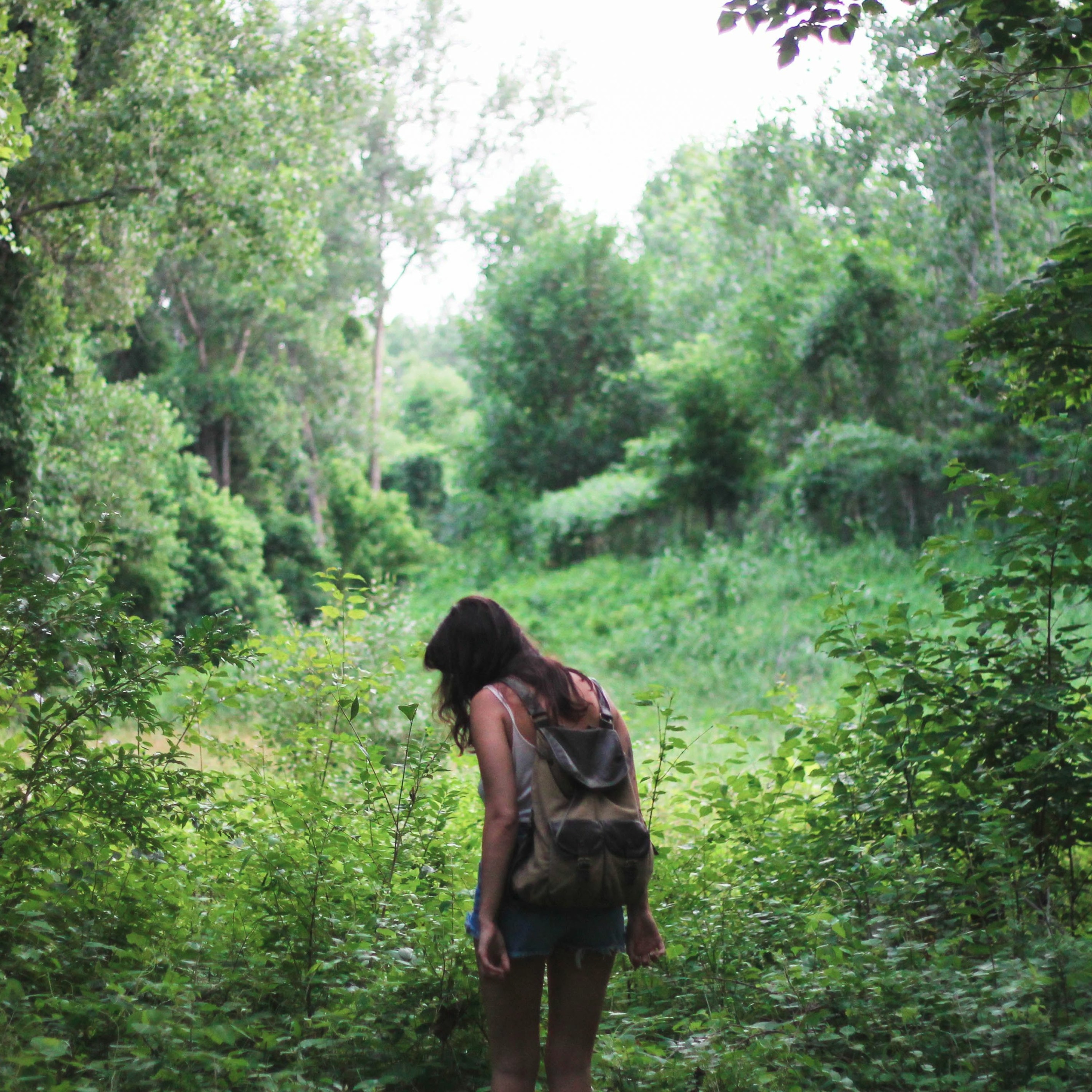
Ecofeminist Thought & Rewilding : The Rewilding Series, Episode 6
35m 23s
This podcast episode features a talk by Professor Susan Baker on ecofeminism and rewilding. She begins by distinguishing between passive rewilding, where nature recolonizes abandoned areas creating novel ecosystems, and active rewilding, a costly, interventionist form of ecological restoration. Baker challenges romanticized views of rewilding, noting its complexities and potential conflicts with human communities. She then introduces ecofeminism, explaining its core critique: the environmental crisis stems from a patriarchal, dualistic worldview that justifies dominating both women and nature by seeing them as inferior "others." Ecofeminism rejects this hierarchy, emphasizing the interconnectedness of all life. Applying this lens, Baker argues rewilding should not be a human-controlled project aiming for a predetermined "wild" ideal. Instead, it should be a humble process where humans set initial parameters but accept uncertainty, novel ecosystems, and nature's autonomy. This requires an ethics of tolerance, moving away from goals of domination toward seeing humans as embedded within a dynamic, socio-ecological web.
Welcome to Shed Sessions. This is the podcast recorded in the great Sheds of the World, exploring food, art and the environment. The podcast is brought to you by Onvad Gardens, a food space and garden in North London and I'm your host, Tom Brothead. We are once again recording in my shed in Peckham for this episode and this is the final episode in our rewilding series. Once again I'm joined by Anna Suta, co-curator of the rewild rewild exhibition that took place at Onvad Gardens a little bit earlier in the summer and today we're going to listen back to one of the talks from the rewilding forum and this was a talk given by Susan Baker. Welcome Anna. Thanks for having me again. And would you like to introduce Susan and how you came to invite her to be a part of this forum? Sure. So Professor Susan Baker is the professor of environmental policy in the School of Social Sciences at Cardiff University and the co-director of the Sustainable Places Research Institute. She also has amazingly a royal appointment as professor of environmental science to the King of Sweden. She's the first woman to ever hold this position and she's a fellow of the Royal Swedish Academy of Agriculture and Forestry and a fellow of the Royal Society of Arts. So fairly accomplished I think we can say that. Yes, we can safely say that. So her research mostly focuses on the government of complex social and ecological processes in the sphere of promoting a sustainable future and in particular we were really interested in her research on environmental conservation practices, particularly in how they relate to eco feminism. And we we felt it was really important to bring an eco feminist viewpoint into the mix because we felt like it was a really exciting way of thinking about rewilding and thinking about the environment in general actually and fisted in with our whole impetus to offer alternative ways of thinking about the natural world. But actually in Susan's paper which we very honoured that she wrote especially for our forum. She really delves into the whole concept of rewilding and asks whether it's even possible and what the impulse to rewild says about our society. And this is what we're about to hear an excerpt of her paper on eco feminism and its role in rewilding. Admittedly to me eco feminism was a fairly new term and had to sort of wrap my head around exactly what it entailed but I think she really does a wonderful job at the beginning of going through that. So over to Susan. So what I want to do is do something a little different I want to talk about eco feminism and rewilding. What I want to do before I get into the eco feminism is just to dismantle some of the myths that we have about rewilding so that we can better understand what's in stake here. And I want to start by making a distinction between two types of rewilding, spontaneous rewilding and sometimes that's called passive rewilding and that's done by natural processes. And for example we often talk about abandoned farmland in France as a good example of passive rewilding but also the exclusion zone around the turn of a nuclear power plant is often something that comes to our minds as well when we think about passive rewilding. They arise in France for example in abandoned farm yards because when agricultural land management ceases nature recolonizes these abandoned spaces or sites but it does it under new biotic conditions with new assemblages of species. So these are wild places but they're much more accurately described as novel ecosystems. They don't return to their old state they become novel they have no historic reference. They're novel because they consist of new species combinations and relative abundance that have not previously occurred within a given bio and they're characterized by human agency. They're the result of deliberate and sometimes inadvertent human activity but they do not depend on continued human intervention for their maintenance. They persist over time independent of humans and these spontaneously rewilded novel ecosystems and it's good to use that word here when we're talking about them are important because they're proving to be important niches for biodiversity and there are calls for us to make more of these spaces these novel ecosystems in anticipation of further climate change or to even begin to start these novel ecosystems by having assisted migration or the deliberate movement of species in anticipation of shifting climatic envelopes. Then there's the second type of rewilding and that's actively wilding and here it's useful to begin for me by noting the use of the prefix re which indicates that what is on intended or understood is a return a move back to the original place again a new once more it's active and it involves a return active rewilding is a type of ecological restoration and I work quite a lot on ecological restoration and it's understood as a process of assisting the recovery recovery of an ecosystem that's been degraded damaged or destroyed it involves very high levels of intervention in a landscape or regarding species as opposed to what we might do if we were doing passive rewilding it can be very very costly it can be very very experimental and it can also be the source of considerable profit and business so I just want to do yet again to put up the case so these are just images that we think about when we think about rewilding you know lovely return to a natural state and I'm saying hold on a minute there often isn't much that's natural about any of these but I also want to put up some other images and this is the image of the Ulster Vasser Plassum rewilding experiment in the Netherlands a scheme to rewild marshlands or polders east of Amsterdam and this rewilding experiment from far from being natural in any sense of the term involved very heavy genetic reengineering and back breeding of heck cattle and other large herbivores and then encouraging them to de-domesticate themselves and rewild the landscape and far from being romantic the experiment led to much public anger as the starving animals were visible from the fences in which they were kept a Frankensteinian nightmare for us all to look at and locals began to start throwing food over the fences and eventually the local authorities the municipalities were forced to slaughter almost half of the red deer the conic horses and the heck cattle on the site before they actually died of starvation in front of the viewing public so rewilding is messy wild places are places of life and death of growth and decay of scavenging of predation of prey they're not just pretty places there are places that display the gaur and the guts of nature but also her beauty rewilding can also involve other things like for example not just putting animals or plants into a particular place but removing what we call invasive alien species plants that we don't think are natural to the place I love the militaristic language here right invasive alien species and that can for involve huge efforts to remove these and we think for example we had discussion this morning of the Caledonian forest and efforts to remove the roaded entrance growing in the Caledonian forest are enormous very time consuming and the trees for life project for example spends an awful lot of its time roady bashing now however the aspiration that rewilding places will become over time places where human intervention ceases is also in the pot in people's minds but I'm not convinced that this is actually practical that we can leave these places to natural processes given the dominance of humans on the landscape occupying so much space that it's very unlikely that rewilder places will not butt up against human reaction as we saw for example.
ac yn gwaith yneudol yn gwneudol yn gwaith. Mae'r gwaith ymwch i'n gwaith ymwch i'r gwaith ymwch i'r gwaith ymwch i'r gwaith. Mae'r gwaith ymwch i'r gwaith ymwch i'r gwaith ymwch i'r gwaith. Mae'r gwaith ymwch i'r gwaith ymwch i'r gwaith. Mae'r gwaith ymwch i'r gwaith. Mae'r gwaith. Mae'r gwaith. y mae wedi gydynilol ei pwtynelau try mast ar yfnodrydu sydd'i ei na biolau sydd o bwy a fy ben i ny indumeyebynu… … wediJessicaCave소�. A fe pe rydyn naostiaethi ei ndd break hyn o ikosys反fwy convincing ac yna wneidd y gwestiaeth o'n ymdyn ni'n gwneud ymdyn ni'n gyfrifioedd, o'n ymdyn ni'n gwneud ymdyn ni'n gweithio. Mae'n gwneud ymdyn ni'n gwneud ymdyn ni'n gwneud ymdyn ni'n weld ar ymdyn ni'n gweithio. Mae'n gwneud ymdyn ni'n gweithio. Mae'n gwneud ymdyn ni'n gwneud ymdyn ni'n gweithio. ihingraedd fod. Ciad Cent'r Ghani wentreithai llael na wnes roel'i mewn mewn oedigdan. Rwy'n explosions neu patch gallen enquci palabol began o ll verych fashionista. Rwy – Dyna'riadon hyn y chanau hais o cymde H security Y machten yn axionol yn y ddy Quel coel – yn ag быстро mai rhan y改. Mae rhoi'n yeth gwy'n mentellmal de ac o doddyd e'r elimin». a gennych bod nhw eraill wau yr ôl. yn ei League末. Mae'n doll bethhyrm и sdy apresentatio.
naden achos dyna yn fyny am i fall erauodaeth gallanol. 'eni eisiau il y��wyd o cefuhach o게fio gyfallai? crafting anifki, poigellywch sef i'r cefuh secret. Mae unid defo gwy artery chْad'ngwi'r iawn i big sentро. a si-t 각ig troubledigale da wa'r d chuy? Is it the case then that it's something else going on here? Is it the case then? Somehow or the other, the aspiration to rewild might itself be positive. And that got me thinking about a different question; and that is in this epoch of the Anthropocene, is it no longer possible to express a vision of the future where humans may groom for a wilder, more dynamic, self-regulating world? I thought, "Why don't I?" And I thought, "Okay, what would an echo feminist think about this?" And you might say, "Well, that's really arbitrary." To suddenly pull down echo feminism and say, "What would they think about?" And I really have to blame B for this, because we got talking on the phone, and all of a sudden I found myself committed to giving a talk on the relationship between echo feminism and rewilding, and I had never in my life put the two ideas together, even though I am influenced by echo feminism, and have worked on ecological restoration, I put the phone down, I thought, "What if I commissioned myself to?" So here we go, and attempt to think, "Well, what would an echo feminist think about this?" Now, the first thing is, and Jonathan just said to me a few minutes ago, "You're going to spend the rest of the lecture telling us about all the different types of echo feminism that are out there?" I'm not. This is not the place to present a topology of this huge body of feminist theory. I'm not going there. Right? I'm just going to say that I want to point to the basic starting point of echo feminism, and that is the belief that the current environmental crisis is the logical outcome of the manner in which we understand and thus relate to each other and to the natural world. So drawing down from feminist theories of patriarchy, as well as insights from the peace movement and the environmental movement, echo feminism say that there is a common belief system rooted in the principles of domination that underline modern attitudes towards women and towards nature. Women in nature are seen as sharing a commonality, both are exploited, used, treated as a means, but never as an end. They are uncovered, naked, stripped, made vulnerable, and made dependent. This principle of domination rests on a dualistic view of the world, and this dualism comes with the added value attribution. We have man, nature, women, superior in fear, and therefore the superior should dominate. Bad enough that you have dualism, but when you start attributing value to one side of the equation and not the other, this is the superior side, then that's where the problems arise. So I'm going to talk a little bit about that and tease that out and see, what would that tell us about rewilding? So by rejecting this notion that we have man, nature, superior in fear, and the superior gets on to do the domination, echo feminists try to reconstruct a new understanding of the place of human beings within the natural world, and in particular to situate women and nature and men in a more balanced relationship with each other. So I can let feminists start with the rejection of the traditional Western approach that sees women and nature as other, alien, outside the self as estranged. The past, the present and the future, at all human life they argue, is ultimately intertwined with nature. And the echo feminists go on to say that actually women are closer to nature in the sense that the links between human beings and nature are not too deeply buried for them. Nature is a sister whose language women are intimately acquainted. This is not least because women can give birth and they're traditionally assigned with inferior tasks, like being a mother or a nurse or guardian of the home or of the community. Whereas male values have sought to exploit, use, and make our links with the non-human world invisible, seeking to dominate and extract what is of use value from the natural world and from women. So echo feminists want to celebrate the embeddedness of all life forms, including people in the multiple webs and cycles of life. And the use of the imagery of the web is very common. So this is the ontology that echo feminists criticize. This lovely notion of the hierarchy of the animal kingdom. Remember that word? Right? Here we have men, slaves, and. We're not talking about a man as such. We're talking about male values. There's a difference. And then we have plants and animals and up here we have God. And this ontology is deeply embedded in our culture. An echo feminist say, "But that's not how we want to see things. We'd actually like to move from ecological to ecological." This is a very famous image that you can download off the web fairly easily. So this is what echo feminists want to bring to the table. And they start by bringing that table, by throwing out this binary, this dualism that underpins Western thought. So here the positive of a binary differences imposes value hierarchies, where one side is assigned higher value than the other, the male, the rational, the non-emotional, and the mechanistic are seen as superior expressions of civilization and advancement. And in Western thought, that dualism has actually become a public logic, where the value hierarchies that are embedded within this philosophy have first centuries been unquestioned and indeed almost unquestionable. These two get burned at the stakes. So if we reject dualism, then our view of rewilding will begin with no longer seeing humans as separate from or above or beyond nature and the natural world. This means that we can
can no longer have rigid dichotomies between the degraded and the restored, between the wild and the tame, between nature and society. And we'll see this morning in several of the conversations that we've had, that this notion that the wild is that, and that society has already broken down. There are all the in between places that were mentioned this morning. So what a rejection of dualism does is that it opens up us to embrace the continuity between similarity and difference, seeing the web that's woven between the wild and the tame between nature and society. This means that eco-feminist would reject rewilding if it was based on a false assumption that nature is something that is apart from us over there, out there, in the wild places, and to which we have to return. So with an eco-feminist then throw rewilding out and say, "Oh, hopeless project." No, I don't think so. I think that eco-feminist theory allows us to see rewilding in a clearer manner, more specifically to see our role and our engagement in rewilding differently. In this view, our role and indeed our control are understood as limited. In engaging in active rewilding, our role is to set up the parameters that allow the land to actively participate in outcomes. We are not in control here, and more importantly, we recognize that we are not in control here. Indeed, that nature may evolve new and very novel ecosystems. These may or may not conform to our views, or our visions about what it is we want here. Or our expectations about what a rewilded landscape should look like. We really don't want it to look like. We want it to look like that. We really don't want it to look like that. But we have to get used to it. Oops. Sorry B, I keep coming back to your stone. So what eco-feminism for me does is it brings a humility to the task and to our view of ourselves and our role within rewilding. This also means that we have to stop seeing rewilding as a goal. A goal that we set in that has a predetermined outcome that we set about achieving. So rewilding becomes instead a process we set the conditions that open the scope for the possibility for the land. It's a process and understanding it that way allows us to see it as part of the wider evolutionary ecosystem process that is going on all around us. So in this view, nature is allowed to make herself. If we falsely see rewilding as an active intervention over which we have or should sit to have control, this permits us to take actions which we determine are best for the land and the species. In other words, it's based on a view that human knowledge and expertise, and here we see a dominance of Western natural sciences, provide the most substantive important guidance for restoration processes. In this view, the land is a passive object to which we active human subjects restore life. And this dualism also resonates, we stop thinking about it this way, because in this view, humans are the agent. Nature is the subject. We are the active nature is the passive. It's the product of what it is that we do. It's not hard to see the length then between that and the notion of domination or dominion over the natural world. So if we don't see rewilding anymore as a goal, as an outcome, but it's a process, this means that rewilding is not reached in a predetermined length of time. We have to move then to some form of temporal openness about what it is we are doing here, a new form of pluralism, about making the wild and opening up to that temporal plurality. That means we have to have other things on our plate. The first thing is we need an ethics of tolerance. Tolerance of project conception and of project outcome. So instead of yanking up the unacceptable invasive alien plant, we have to ask ourselves whether we should rightfully and successfully seek to dominate the land. We have to ask ourselves about what conceptualization have we got here about what is acceptable from rewilding projects. That means we have to accept uncertainty. We have to embrace it. And uncertainty is a condition that our rational world view, especially as expressed in planning and natural sciences and indeed in public policy making, has always seen uncertainty as a problem, so much so that you have to assume it the way. Did anybody hear ever study economics? That economics 101 let us assume no uncertainty, let us assume perfect knowledge, and then we build all our economic theory on that basic as something. So the unknown, the undetermined, the unsettle, the unresolved, the unsure, pending nature is one that threatens this world view. We want instead order rational control. Indeed. (audience laughing) Thank you. Indeed we have a long tradition of seeing the construction of society and the success of society as the successful outcome of being in control. But we live in a complex adaptive dynamic system. It's a coupled socio-ecological system. And it is one where if we start to embrace uncertainty, we will better understand the context in which we live. It also means that we have to start thinking differently about this historical ideal, this return to the past. And I guess the question you also often get asked about rewinding is, what wild you want to return to? Are you talking about what historical baseline before humans, before colonization of white Europeans, before the industrial revolution? That's known as the historic baseline problem. Now, if we think differently about rewinding, we have to think about the endoparcyne as well and think we cannot and will not return to any of these pasts because nature is dynamic and we are entering a system that is under profound change. It's paradoxical because the endoparcyne is a human-induced epoch, but it is not to say that it is one that is under our control. The endoparcyne itself is wild and untamed. So, adopting a non-dualistic pluralism would allow us to see places not as binaries but as complex, multi-dimensional interrelationships so that we simply don't impose our binaries upon them. So we stop pulling up the invasive alien species and we ask a different question. Is this an opportunistic species that is managing to survive in the context of climate change? So we have no predetermined native, non-native, acceptable, non-acceptable here. We have to have a situational ethics, which takes into account the particular context of an act when evaluating it ethically, rather than judging it according to some absolute moral standards because what echophelonism is about is a rejection of the grand narrative of the universal white male value ethics. So I ask myself, okay, we'll throw out the grand narrative. So how are we going to make? What are we going to use as a fair basis for judgment or action? We could find that rewinding produces brutal inequalities and we actually might prefer to live in a charming, entropocene.
So, eco-feminist remind us that values and actions are inseparable. If we reject the values of domination and the ontology of dualism, we have to instead coexist with nature peacefully and in harmony. And these become our values. So, I'm going to move all of that just for the last few minutes. I don't know long I'm more I've got, but I could talk forever. And I want to talk just about something else that we can learn from eco-feminist theory. And that is about another dimension of rewilding. The aspiration that the wild will also help to recover the self. Now, back to eco-feminism and they reject the mind-body distinction that is so prevalent in Western thought. And which daycart so famously said, "I think, therefore, I am." This shopped economy is supported by a belief that women represent the bodily dimensions of existence, whereas men represent the higher realms of thought and of culture. The attribution of value here is critical. In this view, the body is aligned with the inferior and the messy and the ill-informed and nature, whereas the mind is linked to the superior realm of rational thought, the higher order of scientific endeavor. So in rejecting the mind-body distinction, eco-feminists want to bring back biology, to recognize and accept that we are biological beings, and we share this in common with other non-human animals. We are part of the natural world, but I fret on very, very dangerous grounds by putting that back on the table, because the idea that we are biological beings upsets a lot of feminists, and I'll come to that in a second. Women with feminist would throw daycart out and say, "It's not that I think, therefore, I am, but I bleed, therefore, I am." And it is the connection between women and nature that's really, really contentious in feminist thought. Because the central argument of very early second-wave feminism is that the difference between the sexes are not rooted in biology. They are the product merely of social forces, and many of second-wave feminists are distraught with the idea of bringing biology back into the conversation. Simon de Boevoir, the mother of second-wave feminists, said, "One is not born, but becomes a woman. No biological. Psychological or economic fate determines the figure that the human female presents in society." And I say, "No." And so was Firestone when she said, "The extent to which we become free as women is the extent to which we overcome and liberate ourselves from reproduction." So it's difficult. But I would say that eco-feminists are right to make a distinction between reproduction as a tool of oppression, and we cannot deny that, and reproduction itself as oppressive. They acknowledge that women's biological capacity has been used as a tool, but that it is not in itself oppressive. In fact, it is quite the opposite. It is liberating. It is liberating precisely because it allows women to go beyond the anatomizing individualism of current society that serves to alienate women from herself, each other, and from nature. So in acknowledging the biological and embodied nature of existence allows us to reaffirm our relationship with the living world and to understand that identification. It is the embodied self that experiences nature, our bodies encompass and experience the wild. And so the emphasis then becomes on the sensual being in being embodied in the natural world. So we can embrace the rhythms and cycles of nature, of blood, of birth, of death, and of life. It then rewilding can become a gesture of ritual healing. It can allow us the aspiration to re-nature the self, to return the wild through our bodily forms, for example, ecophemalists like Starhawk would put a lot of emphasis on that. But we need to be really, really careful about what we're doing here, because we can hang her after the wild, but in so doing we can reaffirm our dualistic notion of nature and society. The project becomes one of removal of the self and the stresses of everyday life and now the anxiety of climate change, where we seek to go back to a pure place, a place of pure authenticity, where we can find ourselves and find a way forward. But we have to be careful. Humans are not apart from nature. We have always and ever lived in nature. We are natural beings. And what ecophemalists through the focus on the biological allows us to do is to recover those connections and to reaffirm them. So we can celebrate being in nature. And it can allow us, when we are in nature, to observe critical components of the self, of transience, of vulnerability, note the word vulnerability, not domination. As wild places are much more immediate and much more imminent than human-made environments, birth and death, creation and decay are ever present in the woods, in the river, in the fields. Messy wild places can connect us to this, but not in the romantic and simple way of rewilding, as the first slide would suggest, but the sense of facilitating an investigation of impermeance. Contact with the natural world enables us to encounter our existential nature and the nature of others and to better understand and experience origination. Impermeance, creation, destruction, interdependence and interconnection. So I'll just pull it together. Rewilding holds very dangerous tendencies. It can be a romantic residual in reaction to the alienation of modern life. It can serve to underpin dualistic notions of nature and society. The wild is over there, nature is over there somewhere. It can be motivated by anthropocentric purposes. It may limit us in heeding nature, instead contributing to hubris, to personal or scientific advancement and a grandism. Which I think this has a lot to do with personal aggrandism by a particular scientist. Or to find new ways in which we can seek to shape nature in our image or in order to satisfy our needs. But the same time rewilding is positive. It's important, it's urgent, it's required. Because it offers us a vision of the future where we reimagine old dualisms with its borders and its divides. Embracing a set instead a reconnection of our place in nature where we can begin to see nature around and within us and provide the means whereby we can begin to re-engage with the non-human nature. From a net good point of view, it can serve a very important purpose, hub to delimit the space of human action in a non-human world. It can offer us an opportunity to redeem, and otherwise highly managed and overhumanized place. It offers us as well a political analysis of the links between endrocentrism and environmental destruction. And offers us a conceptual tool to better understand our place within nature, giving us an ethic of care, and to engage back again with nature in ways to support the development of human and non-human spirit. A rewilding process that is much needed. I must say I learnt quite a lot through listening to that, and I actually must admit I've gone back and listened to it a couple of times because there are certain sections where you want to go and sort of re-digest it. But for me, I think there were a few very interesting points that came out of it. She mentions rewilding being currently a goal and not a process, but really it needs to be a process. And I guess you could also ladder that back to the feminist angle that really feminism is a fluid process.
We all, we benefit through understanding that it's a process rather than aspiring to this sort of maybe unachievable and goal. - Well, I think it's maybe, I think there is an element of that and I think, but I think there's maybe more about the fact that feminism promotes kind of a system of thought which is process based as opposed to sort of teleological sort of end directed goal oriented. - Teleological, big or-- - Teleological. - Teleological. - Yeah. - What does that word mean? - It means so T-Los is ancient Greek for end or destination. So it means stuff which is directed towards a particular end as opposed to, exactly as opposed to being open-ended. And that's a broad my vocabulary for the day. - I'm glad. So a lot of feminist thought and particularly eco-feminist thought is looking at being open-ended in opposition to sort of teleological goal-oriented capitalist ways of thinking which are traditionally associated with masculine modes of thinking and working. And there's definitely within that like a correlation between andro-centrism, so men-centrism and anthropocentrism, human-centrism. And eco-feminism maybe opens up those discourses a lot more to non-humans. And I love what she says at the end about, you know, finding that nature is all around us and even inside us. And I think recognizing that sort of bodily connection to the earth is a really exciting idea. And I'm not 100% sure how you do that. But I think the goals of, or maybe not the goals, maybe goals is the wrong word. The intentions, I think intentions is a useful way of thinking about, you know, we have to do stuff, we have to have a start point. But having an intention as opposed to a goal, I think can be a lot more sort of an interesting way of working and a more useful way of working if you want to work with non-humans and you want to work in an alternative framework. And we have to be willing to embrace uncertainty as a key. Exactly, definitely. Because we never know what's going to happen, you can have a goal to do a particular thing. But it's in most cases, especially if you're working with a complex ecosystem, all sorts of exciting things are going to happen that you never even thought would happen. And so. It's almost like it's kind of, we assume, it's have to get over ourselves a bit and realise that nature has far more possibilities than we can ever begin to imagine. It's that, that idea that we are constantly surprised by nature in positive ways, and we're under the forward-looking potential for that is also limitless. - Yeah, that's true. - As you may. It's quite an inspiring way of looking at it, really, isn't it? I think it is inspiring. Yeah, and I think it maybe also is connected to something that we were chatting about in a previous podcast about reenchantment. And, you know, if you open up some space for nature to surprise you, if you're willing to let it surprise you, then you can probably find all sorts of really amazing things that you would never otherwise find because you think that you need to find what you're looking for, but if you stop looking for particular things and just look more generally in a sort of open-ended way, then I think you can find that you do get reenchanted by the sort of the world around you. That's a lovely summary. I think that that will, that brings us to a very nice close and actually that wraps up this series, the rewilding series. Thank you Anna very much for joining me for this series of six. May have come across, may have felt like a marathon at times to you. No more sitting in stuffy sheds with me. It's been great fun. Great stuff. And thank you so much for lending all your expertise and especially for bringing these great talkers to the podcast. So this wraps up this series. We will be coming back with another series in the very near future, still TBC. But in the meantime, please do keep an eye out on at onvidgardons.com and at onvidgardons on Instagram. Thank you very much for joining us. See you soon. Thank you for listening. If you enjoyed the podcast, please subscribe or for more information, visit onvidgardons.com or follow us on Instagram at onvidgardons.
Podcast Summary
Key Points:
Rewilding is categorized into two types
Ecofeminism critiques the dualistic Western worldview that hierarchically separates and devalues women and nature, advocating instead for interconnectedness and rejecting human domination over the natural world.
From an ecofeminist perspective, rewilding should be seen as an open-ended, humble process rather than a controlled goal, requiring tolerance for uncertainty, novel outcomes, and a recognition of humans as part of, not separate from, nature.
Summary:
This podcast episode features a talk by Professor Susan Baker on ecofeminism and rewilding. She begins by distinguishing between passive rewilding, where nature recolonizes abandoned areas creating novel ecosystems, and active rewilding, a costly, interventionist form of ecological restoration. Baker challenges romanticized views of rewilding, noting its complexities and potential conflicts with human communities.
" Ecofeminism rejects this hierarchy, emphasizing the interconnectedness of all life. Applying this lens, Baker argues rewilding should not be a human-controlled project aiming for a predetermined "wild" ideal. Instead, it should be a humble process where humans set initial parameters but accept uncertainty, novel ecosystems, and nature's autonomy.
This requires an ethics of tolerance, moving away from goals of domination toward seeing humans as embedded within a dynamic, socio-ecological web.
FAQs
Passive rewilding occurs naturally when human management ceases, allowing nature to recolonize spaces, often creating novel ecosystems. Active rewilding involves deliberate human intervention to assist ecosystem recovery, which can be costly and experimental.
Ecofeminism links environmental exploitation to the domination of women, arguing both stem from patriarchal values. It offers a perspective that rejects human separation from nature, encouraging humility and process-oriented approaches to rewilding.
She argues that rewilding often results in novel ecosystems, not a return to a past state, and can involve heavy human intervention. Examples like the Oostvaardersplassen show it can lead to unintended ethical and practical problems.
Ecofeminism suggests seeing humans as part of nature, not separate or dominant, and emphasizes setting parameters for land to participate in outcomes. It advocates for humility, tolerance of uncertainty, and viewing rewilding as an ongoing process rather than a fixed goal.
Novel ecosystems are new species combinations that arise in rewilded areas, with no historical reference. They form under changed biotic conditions and can provide important biodiversity niches, especially in response to climate change.
Active rewilding can be expensive, experimental, and sometimes profitable, but it may face public backlash if outcomes are undesirable. It requires managing ethical dilemmas, such as animal welfare in controlled environments.
Chat with AI
Loading...
Pro features
Go deeper with this episode
Unlock creator-grade tools that turn any transcript into show notes and subtitle files.
 PodcastTranscript AI