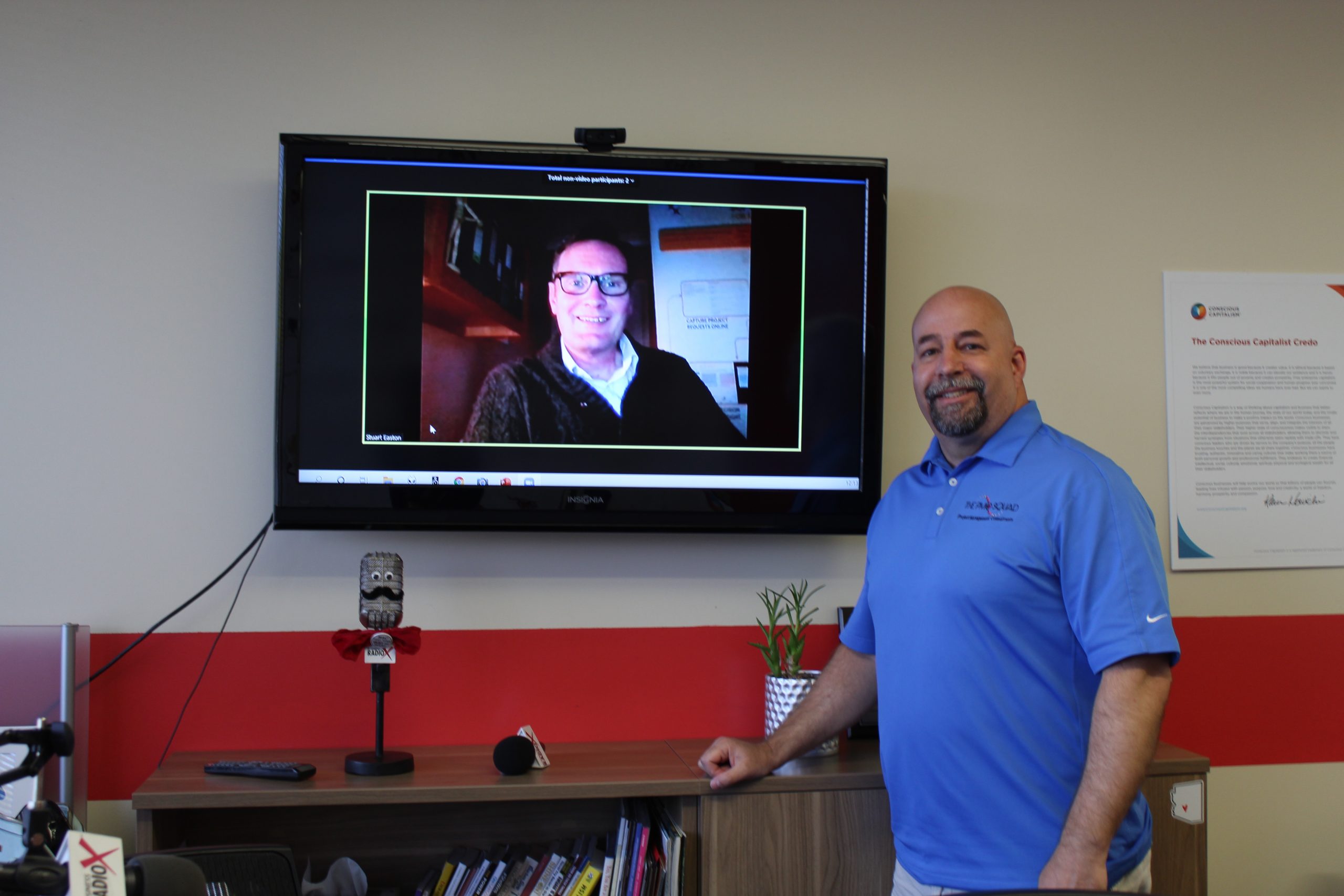
E77 Zen and the Art of Strategic Alignment with Stuart Easton
56m 22s
The episode of "Project Management Office Hours" features a discussion on strategic alignment and portfolio management with guest Steward Eastern. It begins with updates on the PMO Leader community, inviting listeners to participate as hosts or ambassadors. The conversation centers on the importance of aligning projects with business strategy to deliver value, rather than merely focusing on execution metrics. Eastern argues that improving strategic alignment can yield quick, significant returns, whereas enhancing execution is a longer process. He highlights a common disconnect where projects are initiated without clear ties to business goals, leading to wasted resources. The dialogue stresses that leadership must agree on organizational objectives to guide project selection, avoiding overload and inefficiency. Eastern introduces decision science, like the Analytic Hierarchy Process, as a method to quantify project value, blending measurable and subjective criteria. The episode concludes by advocating for a purpose-driven PMO that prioritizes business outcomes over internal project metrics.
Do you wonder if others are dealing with the same project management challenges as you? Not sure where to turn for guidance and leadership? Office hours are in session as we discuss project management and PMOs with global leaders hearing their story and learning their secrets to success. Our goal is to empower you and help you elevate your PMO and project management career to new heights. Welcome back to project management office hours with your host PMO Joe. Welcome everyone to project management office hours where the number one live project management radio show in the US. And we're broadcasting to you today from the Phoenix Business Radio X Studios in Tempe, Arizona. I'm your host PMO Joe and for the next hour so we'll be talking project management and portfolios with our special guest. Just before we kick into that I also want to mention to everybody that we had a great launch week for the PMO leader community site last week. Was a big success and that community continues to grow with membership from around the world. And we've also added several partner organizations, authors, coaches, consultants, speakers, technology solution organizations, trainers and more. So we announced several things during launch week, including several webinars that we're going to be hosting technology webinars, consulting professional services webinars, book club webinars and also hosting and starting up the PMO leader podcast. And for each of those programs we want to have a member from the community become a host. So here's your chance. If you've been interested in getting your voice or your personality heard out there in the project management industry to come on and host one of those monthly events that we'll be having. We can go out to the PMO leader com and fill out the form to let us know you're interested. And we also announced that we're looking for country ambassadors. If you're interested in being an ambassador for your country within the community that you can help spread the message and help us learn more about what your country is doing in the PMO and project management space. Please go out there to the site as well. And we'd love to hear from you also want to thank our sponsors, the PMO squad and the PMO leader. If you go out to those sites, you can learn more about those organizations PMO squad, of course, is a premier project management and PMO consulting firm in the United States, looking to help you with all of your PMO challenges. Also be sure to visit project management office hours dot com to check out all of our upcoming episodes and catch all of your previous episodes while there be sure to subscribe so you get all of our shows whether you can catch them live or on the replay. So today we are very excited to have a return guest one of the very few return guests we've had over the years steward eastern welcome steward. I'm hoping a return guest isn't the same as a return gift. We'll find out when the show is over. I know you've been on before steward and I've had the good fortune to to be on with you and your webinars on a couple of occasions so it's great to have a familiar face and know where we're headed with the show. And listeners, this may be the first time that they're getting to meet you. So if you want to take a moment just to introduce yourself and let them learn a little bit more about you, that would be great. Sure, sure. Yeah. So I'm the CEO, one of the founders of a complicate transparent choice. That's a software company and our main focus is around strategic alignment project prioritization software. It's portfolio management software with a real focus on that strategic alignment angle. I also do a lot of blogging and talking on conferences and even you know taught on project prioritization as part of the Oxford University Masters in major program management and things like that. So this is this is kind of the area that I that I live in and I'm hoping to be able to share some of my enthusiasm and possibly be even a little bit of wisdom today because we're talking about Zen and the art of strategic alignment. And certainly thanks for coming back within the project management space. I think we focus so often on project execution that we fail to look at what's probably more important is should we have started the project right I mean the beginning decision is is really where we need to look at project management. And just to know we're working on the right things I mean what's what your experience been related to that store. It's a it's a really good question and the obviously I'm biased a little bit in this but you're absolutely right you can either focus on executing better or focus on getting the right projects into the pipeline. And of course you have to do both so it's a question of sequencing more than you're one or the other and the way the way I look at it and you know I think it's it's very clear is that improving execution is is quite a difficult and a long journey. So you should certainly start on that journey straight away because it's going to take you while the strategic strategic alignment piece actually if you can get if you can get everybody thinking about it you can you can be done and dusted in a month. And I think that's the differences that you can you can get a 20 30 40% boost to the value that you're delivering is a pmo and you can do it really really quickly so if you're if you're new into a pmo role just joined a new company is the pmo and you want to go in with a bang that's a really great way to do it because you can deliver value quickly. Yeah, the execution side you can definitely deliver value just takes a little longer yeah working the rate projects at the right time with the right people. Then if you're improving your execution on that you're focused really on what you need to do but I see far too often organizations that we work with you know there'll be six months into a project and then say well why did we start this in the first place. And you can't get those six months back right the the dollars and the time that your team is spending a number gone it's on cost. Absolutely and it's really interesting because one of the things I hear again and again and I suspect we'll come back to this theme later on one of the things I hear again and again is you know the project profession talking about project metrics. And that you know that kind of interesting they're useful to manage and see sort of that quite useful diagnostically but actually the business doesn't care not in the slightest about your project metrics they don't care how many projects you deliver on time on budget. What they care about is are you giving me business value right. That's what they care about is am I getting business value am I growing revenue am I reducing cost that kind of thing and I sort of reminds me of my introduction to to project land was couple of decades ago and the I joined a software company that was selling into the telco space. And I don't like and really don't know what possessed them to do this but they gave me P&L responsibility for that to largest accounts. I never run a project I never had a P&L you know just I don't know what they were thinking but anyway they gave me P&L responsibility and it just happened that I'm out of week or two after I joined the company. One of my customers was kicking off a really big project yeah it was 15 million dollar project or something to replace a billing system. So so I was invited along but our our project manager on this on this particular project kind of gave me the stern I before we went into the looks to it you don't want to think about the product you don't know anything about the industry you don't know anything about project management. So just sit there smile nod and don't say anything. And so we so we get into the meeting and the the customers project manager called the meeting toward us stood up and it is best liquor at a wedding impression you know dearly beloved we're gathered here today to implement a billing system. That was it we're 10 seconds into the meeting and my hands in the air. It looks like my project manager looking at we're going just shut up. So yes you what what is it so we're not here to implement a billing system are we. So we look absolutely puzzled we say yeah we're here to I mean we're paying you tens of millions of dollars to implement this billing system. I said no you're not you're paying us tens of millions of dollars to increase your revenue right. That's why you're paying us tens of millions of dollars we're going to do that by putting in a new billing system and you don't a few other things. But that's not yeah we're not here to put in a billing system we're here to grow revenue. And I think that's that's the first step on on the journey to sort of strategic alignment is at the project level.
understanding what is my project contributing to the business strategy. You must have seen situations like that, Joe. Yeah, that's the birth of the purpose driven PMO. I mean, we had organizations that were being created because they needed to run projects. They needed, they said, "We have project management here. We must have a department for project management." And then we'd say, "Well, why do you exist? Why is your PMO exist? What do ensure our projects get done well?" And I said, "No, that's not your reason." The purpose for your PMO is to ensure that the organizational strategy gets executed properly with the right return and investment that the leadership team has put in place. If we don't start with why it exists, if you have that wrong from the beginning, if you don't understand why you're there, how can anything that's afterwards meet expectations for those people who've approved your existence in the first place? So absolutely agree with that, whether you're around the project level or you're at the PMO level, understanding the purpose that you're trying to accomplish for us at the PMO squad, that's become paramount, right? That's number one priority for us is we don't look at how or what until after we've identified why. And not just identified why, but get everybody to agree that that's why. Because too often we have our own version of why that somebody else has a different one, and you have to come together and make sure that you're both on the same page. And that can be difficult to do in a project, and it can be 10 times more difficult at the portfolio level. So when we were kicking around titles for this session, Joe, we came up with Zen and the Art of Strategic Alignment, so why Zen? Yeah. Because that whole process of picking a portfolio, that prioritization and that whole negotiation is anything but Zen. And it's the opposite of Zen. It's chaos, it's madness, it's political, it's emotion, it's everything except for, yeah, it's the opposite of Zen. So I can't promise we're going to get to Zen today, by the way. But we'll take a couple of steps. I want to get to Zen, I need it. Well, we'll have a go. We'll have a go. Yeah, but a lot of that frustration, what about emotion comes from the fact that people aren't aligned. They don't have a common picture of what we're trying to achieve. So we have a partner down in Brazil who is a very, very wise man. And he's been studying and a practitioner of decision-making for a couple of decades. And he has this really interesting take on a typical business. So you've got the leadership team. And if you're down in the middle of the organization, you usually kind of assume that the leadership team is aligned, they know where they're going. I mean, come on, they had that big off site. They've rolled out the vision, the mission, and all this stuff. So they must know what they're doing. And they must be on the same page, right? Well, wrong. These guys walk into the same building every morning. They walk through the same door into the building. But your VP of sales is walking into a totally different business than your VP of manufacturing. And from a totally different business from the CFO. They just have such different world views and such different goals that they may as well be in separate companies. And it's that that makes the project selection, the strategic alignment of your portfolio so difficult. Because the guys that you're serving don't even agree usually what it is that they're trying to achieve. Does that make sense? Absolutely. And taking a step further, that's at the top of the organization. But then within sales, within manufacturing, within marketing, there's lower level mid managers who are thinking about their performance review. And they want to ensure that they accomplish what they need to get their raise next year. So they're requesting projects that aren't even aligned with what the senior executives want to do. And they can walk down the hall. Usually the executives are too busy to walk down the hall and stand outside your door and say, "I'm not leaving until you approve my project." Right? That puts a lot of pressure on a PMO to try to please everybody within the organization. But again, if we define the why upfront the purpose, it's not to please everybody in an organization. Right? We have to create a portfolio that's going to provide value back to the organization. Yeah. Well, it's kind of sticking with the theme. It's like the old joke, right? The Zen Buddhist monk goes up to the hot dog vendor and says, "Make me one with everything." "Make me one with everything." Sounds nice. When you think of Zen, point of view, that sounds really nice and calm. But actually, if you think about that story, you just, you know, that anecdote you just put out there. When that VP comes and bangs on your door and says, "I want everything." Right? He's saying, "Make me one with everything." "I want mine in there and I want his in there and I want this one in there." Just put everything on that hot dog. I put everything into the portfolio. And what happens when you do that is the, you know, the team very quickly gets overwhelmed, overloaded. You know, if you're loading your team beyond, you know, 85, maybe 90% capacity, then the productivity actually just knows dives. Yeah. Right? It just drops right off. So if you're piling on more and more projects and asking them to go faster, what actually happens is they go slower. And you get less value, you get more errors and so on. So this idea of, you know, being the guy, you know, being the Zen Buddhist, who just says, "Give me one with everything." "Make me one with everything." It just doesn't work. Just try and do every project. It just doesn't work. You have to prioritize. And if you're prioritizing, you have to ask the question, or if you're doing projects at all, in fact, you have to ask the question, "Why are we doing projects?" Yeah. And the answer to that is, you know, we're doing projects to achieve our goals, our business goals. So simple as that. And so the whole out of strategic alignment is being able to catch what those business goals are, being able to get your leadership team aligned on what those business goals are. And that's not a sales process. I sometimes get asked by PMO leaders, you know, "Sure, can you help me sell my portfolio to the leadership team?" The answer is no. That's the wrong way around. Yeah. It's the leadership team that should be setting the goals. They should be setting kind of a policy that is then executed within the PMO. Right? They're setting the direction that we should be going. And so it's, you know, it really has to start with the leadership team. And the PMO absolutely has a role to bring best practice and process to that. But at the end of the day, the most important step, the only way that I know of to get more zen-like in this strategic alignment process is to get the leadership team around a table in a structured way and get them to agree on what the overall business goals are. Well, let me play Devils Advocate here on that, right? This is one of the challenges we hear frequently when people are picking apart the project management profession. Everybody says we get to pull back and focus on the art of something because there's no science to this, right? And manufacturing, we can look at our throughput and we can fine-tune the machines and the robots and we can increase efficiencies. In our marketing, we can look at the number of hits and we can look at cost per lead and we can diagnose and we can make adjustments. But you guys over there in project management land, it's always art. You don't have anything that you can tell me that actually makes sense of how that we can make this better. What's the feedback for that, right? What's the pushback on the people that say we use art as a way to deflect that really we're not providing value? Well, I would push back on the notion at this point in time that this is a pure art. I disagree with that very strongly. There is some artistry, but that's different from something being an art. You can execute science if you think of Carl Sagan, great scientist, but man was he also an artist, right? He would deliver the whole golden disk on the sides of the voyages spacecraft, the pale blue darks. This was all artistry backed up by a whole bunch of science. So in project management and portfolio management, I think it's the same thing. There's a lot of best practice out there. There's a lot of mumbo jumbo out there as well. There's a lot of mythology about you do this and you do this and you do this and it works. And when you dig into the research, you often find that a lot of that mythology doesn't work, because it was from the days when it was all artistry. So if you look at the strategic alignment piece, for example, the project prioritization process, There's actually rings and rings.
and reams of academic research into how to do this properly. There is solid mathematical foundations to the processes for calculating scores for projects. This isn't just artistry that we make up. It's really solid decision science. And it's not even new. This stuff, the foundations for this work, will lay down in the early 70s by a guy called Tom Salty and his grandmother. That's another story we'll maybe get to that on the next one that one of these that we do. But this stuff isn't even used. So there's absolutely there is science in there. And that science is what lets you, first of all, transform your performance at different stages in the project life cycle, rather than relying on mythology, rely on science. And then that science means that you then have metrics that mean something to the business that you can track. So for example, so the research on project prioritization comes down very heavily in favor of this methodology called the analytic hierarchy process. It's a horrible name. It's not actually very difficult or horrible as a process, but it's a horrible name. So we call it AHP. We pretend the horrible name doesn't exist. But this AHP process helps you define and quantify the value that you're going to deliver to the organization. And value might be financial, but it also might be more subjective. Just because something subjective doesn't mean it's not real. It doesn't mean that it can't be measured. So some of the value that the business is looking for is going to be measurable in the traditional sense of let's see how much money we got in the bank. And some of it is going to be measurable in other ways, you know, net promoter score or something like that. And so we can measure these outputs. We can see if we're making a difference or not. We can see if we're being successful or not. And those are the metrics that really matter and can turn it into a science. And less, in my view, it's less about things like, did we deliver it on time? Because you know what, if you project a month late, that's a sad thing. But if the choice you made was a month late or missing half of the business value, I would usually take a month late. And to make sure I deliver the business value because that's actually the output that we want. And that's the thing that we can measure and we can track and we can report to the leadership team. So, and this perception of it being art and not science, I think, is part of the whole project, project ease voodoo, language that we use. You know, you walk into a, you walk into an executive meeting with a Gantt chart. Everybody's eyes just blaze over. Right. Executive's have got zero interest in that. They don't really understand how it all works. I don't really know what you mean by these dependencies. I don't really know what your risk register's telling me. But I do understand it if you come to me and say, "Do you know what? We said we're going to deliver $20 million worth of cost savings." And 15 million of that is at risk right now for the following reason. And I need you to take this action as a result. Right. That's not artistry. That's been very precise and very methodical and giving people a link in their language. So, the result they're interested in and a clear path to what they need to do with it. So, I think there's a whole artistry thing, you know, as an industry, we should be getting beyond it. A couple of weeks ago, we were talking about, you were on a webinar with us talking about leadership. Yeah. And leadership at this point has been studied like crazy. We know what a good leader is. We know what a good leader does. And you talked about that. Right. And you even talked about some of the results that come from that. So, there's the champion. Do you remember that bit with the champions versus the the under performers? Yeah. And, you know, and there's leadership measurements in general. And there's leadership analysis and research within project management. And we have from PMI that the champions outperform the under performers consistently. And we can point to specific reasons why. And it's public knowledge. It's out there for the world to consume and choose to do it as they choose. And the great majority of organizations around the world ignore it. They don't actually use the data to go make the changes that statistically show you're going to be a champion. You're going to outperform by a two to three margin over those under performers. There's no art to that. That's the lack of good leadership. And what we need to focus on to your point is what what the data is telling us. What can we see? Now, before we go out to the next question, I want to we talked art. And I want to make a connection back to the first time you're on our show. You had mentioned your niece Emma Easton who is visually impaired, but she's an artist. And I think that's just so inspiring. And she's out on Instagram. Anybody can go out there and check out the work that she's done. Emma Easton 7, the number 7, is out on Instagram for folks to be able to go look at. And I'm we haven't chatted about Emma in a year or so. So I'm not sure how she's doing, but I'm assuming she's doing well and still making art. She's doing great. And so if you go to her Instagram account, you'll see Emma Easton 7 is the Instagram.com/en@easton7. And you'll see that if you go there, her art style, since we last spoke, is kind of evolved. She's learned a couple of new techniques. And so Emma, as you said, visually impaired, she really can't make anything out beyond a few inches from her face and even then it's quite fuzzy. So when she paints, she's got to know she's pretty much right up against, or when she's creating her art, and knows it's pretty much right up against the canvas. And it takes a very, very long time to create this stuff. And it's absolutely beautiful. The reason we got onto it last time is I have some of her work up on the wall in the hands here. And it's kind of interesting because it ties back to the topic today, where we, one of our partners actually used our software, a company called Harley McMaster in the UK, used our software with the Royal National Institute for the Blind to help prioritize their key initiatives and interventions. And what was really interesting, what I really loved about this was that they took this idea of alignment to the point of really getting their community involved. So it wasn't the executive sitting in a room defining what the goals were, what the key objectives of the organization were. It was actually visually impaired community members that were doing that with the support of our software. And what I gave them was a really clear insight and a really prioritized heat map, if you like, of what topics, what areas needed attention and support that then allowed them to go away and create programs targeting those areas. And so this is one of the key points that I really wanted to get across is that the way most organizations operate is there's kind of a PMO sitting there. And projects come flying at them from all different directions. And those projects have been driven by different, different events and pressures around the business. So if I'm the VP of manufacturing and there was an outage in some system last week and 10 customers rang me up and screamed at me, then I'm absolutely going to go down to the PMO bang the table and say, you've got to do this project to make sure that never happens again, because I don't want to be shouted at again. Now, is that a strategic project? Maybe? Probably not. That's just an executive with power who doesn't want to do his job at some level. Right? And figure out what's important and cure things at source. He just wants the problem to go away and not get shouted at anymore. So that's the normal way that organizations get projects. It's knee-jerk reactions to things like that. It's someone's pet project. It's all that kind of stuff. But what the R&I B did was they turned that all in his head and they said, no, don't send us your projects. What we want to do is we want to understand the goals. We want to understand the people that we serve. What the challenges are that they face. And we're going to prioritize those challenges. And then we're going to ideate so that we get projects that address the things that are strategically important. Right? So they turn the whole process upside down. So instead of prioritizing
being this filter to try and cut out the noise of the nonsense. You're using prioritization to drive good quality ideas in the first place. And that is getting really close to Zen in Project Land. Because then you're not dealing with the crazy projects and you just focused on ones that are aligned by design with your business goals. And that is really powerful. And I think, you know, metaphorically speaking, the Project Management Office has been a blind spot for business acumen within the organization. It's the industry itself has 100% focused on individual project execution, right? Which certification do you have, which supposedly is going to help you run projects better? But imagine if that was the case in the manufacturing world. What if an executive, what if it's a auto manufacturer that makes white, blue, and orange cars and an executive standing on the desk and stomped his foot and said, no, I want a black one. I know we don't make black cars, but I want one. So change the entire manufacturing line for my one car. The organization would never allow that. But here in the Project Management space, since we don't have leaders who know how to communicate in the business setting and understand how to maneuver within an organization, we just say yes. And we take on that work without pushing back, without having a business discussion. So I think where we failed in this spot is an industry, or we're, and certainly we're headed, I think, in a right direction with some recent changes. But we have to stop focusing on just the individual contributor and just the individual project, and have these discussions about leadership, about portfolios, about business alignment, to make sure that we're working on the right projects at the right time with the right people for the right outcomes. And I couldn't agree more. And I think there's an element of culture in there as well. Is our culture inward facing PM metric oriented? So is it oriented around the triple constraints? Or are we outward oriented? And business results, business strategy oriented? And one of the things that I would strongly encourage anyone who is a project manager, PMO, leader to do is to go and jump on a few websites, buy yourself a book on business strategy. Kind of understand a little bit about the environment you operate. So if you're working in that that company producing green and blue cars, go and sign up to an industry website, find out what's happening in the automotive industry. So you then have context. When projects come to you, you have context in which to understand them. You have context in which to figure out the best way to implement or to achieve the business goal. Rather than just thinking, okay, here's the project that's been given to me, let me start creating my to do list. I began charts and all that kind of good stuff. So I think just at the individual level, there's an upskilling around just business knowledge that's needed. And then at the leadership level, taking that up another couple of steps to really being able to engage strategically with the organization. And to think about what's the value we're driving for and what stopping is getting there. And it does seem kind of ironic that one of the biggest barriers to organizations achieving value from that project is the project prioritization process. Because in many organizations, it's just simply not fit for purpose. So let's play a little bit of statistic salad now. So the PMI, Pulse of the profession, you and I both cite that an awful lot, right? So the Pulse of the profession, the survey about the number of projects that were so badly aligned, there should be stopped tomorrow. It was about 20% of projects. Now, if you go to a PMO leader or to an executive in most companies and you say, I bet 20% of your projects badly aligned. They say, no, no, no, no, no, that's not possible. Because we have a process. That process may just be a beauty contest where people, you know, they're sharp tank type thing, where people pitching their ideas or it might be a magic spreadsheet that they just plug some random numbers into. But they've got, we've got a process. We can't possibly have 20% of our portfolio be wrong. But I can tell you from experience that the number is 20%. It might be 15, it might be 25. I've seen up as high as 40% of the projects being so badly aligned that they should just be stopped tomorrow. I've seen portfolios where 30% of the projects were obsolete, right? The team was working on project active projects and a third of them were obsolete when they went back to the business and said, do you still need this? They went, no, we didn't need that. We that went away six months ago. So this is a huge barrier to being effective, being able to deliver value. And again, I think most people assume that because we have a process, a magic spreadsheet or whatever it may be, that we're doing a good job. And that is not true. What the research tells us, then we're back to the science again. Not the art, back to the science. What the research tells us is that there are really only a couple of methodologies that reliably deliver good results. One is called DEA Data Envelopment Analysis. The name is even worse than AHP. So that's a great methodology, but it's really difficult. And then the other one that works really well is AHP, the one I mentioned earlier. And that's the one that we built into our product because it's the one that the research tells us works. So there's lots of these areas where we could be much more led by the evidence value oriented. I sound like a broken record today. It's all about the value to the business and aligning everything we do with delivering that value. Well, a broad question as well. In the United States, approximately 98 percent of the companies have 100 or fewer employees. I don't have the data on this, but I would question how many of them even have a portfolio? So they're doing work because they know they have to. They have projects. It may be a not a Fortune 500 company, but to the owner, it may be more impactful than to a shareholder of Fortune 500 company. His or her existence depends on the success of their company. If they're not looking at a portfolio of work to make decisions of how to drive value in their company out of that, they're missing the opportunity to make strategic decisions. And I think that's ultimately, there may be multiple ways to say the same thing, but there needs to be multiple ways to say it because not every organization is the same. We have to be able to fit into the context of that organization. But how does transparent choice drive that you mentioned AHP as the methodology that's in there that drives it? But as an organization, you get the old argument of, well, technology's not going to solve anything. We bring in a different tool. Why is that going to make us any better at this? Oh, you're absolutely right. Technology doesn't solve a bin. And as a software vendor, I think software vendors and people, gosh, I'm going to trouble for this, but I think PPM tool vendors, PPM vendors in particular have been guilty of this. They kind of wave the tool around and say it's going to change everything. And the tool itself doesn't. You actually have to get people aligned. So when the first step in deploying our software, for example, has got nothing to do with the software and has got everything to do with making sure that all the key stakeholders understand why we're doing this, what's the benefit for them? You know, just good old fashion change management stuff. And so the software doesn't solve everything. The software is the scaffolding. It provides the structure for you to do what's right. And so in principle, this AHP process is very, very simple. You agree as a leadership team what your goals are. And you capture those goals and convert them into criteria that you use to score projects. And then you score projects and that score is a measure of how much value those projects are.
projects are going to deliver to the organization. And then you use that to drive your prioritization, to choose. And if you're being really smart, you won't just use the score, but you'll take the cost into consideration as well, so you can do value for money stuff. So you can actually align your resources with the best value for money projects, not just the highest value ones. So that's great. It conceptually is really simple. But the secret source is in the how. It's in the structure that you put into that. And one of the most important things is collaboration. If different people have different knowledge, different people have had different journeys through life. And so in the executive team, the VP of sales has a point of view. The VP of finances, the CFO's got a point of view. And they're both valid. And quite often, they're contradictory. Sure. And so you have to resolve that. And AHP provides a collaboration method to resolve those conflicts, to build agreement and consensus between the leadership of where we're going. So that's a really important part of it. And that's really the foundation on which everything else is built. So as I say, there's a little bit of decision science in there. There's a whole heck of a load of maths that's being validated, very rigorous ways to tease this stuff out. So the software's not a magic bullet, but it's providing you the structure, the framework, the scaffolding that let us the executives have a better quality decision lead to sort of better outcome. And then the second big thing is that lots of organizations don't really have a very good process for evaluating projects. They just kind of bring them up, they've got a big spreadsheet, they kind of bang numbers in, and that's it. But actually, if you think about it, you've got to take your projects through a process, a step-by-step process. We're going to validate it. We're going to rough out the scope. Then we're going to do an estimate of how many resources are going to be needed, what the cost is, and so on and so forth, risk profiles, all that kind of stuff. And every step there, you're collecting data. And very often, that data comes from a person. But actually, if you want to improve any decision, a really good way of doing that is to have multiple people provide input, because all of these data that are going in, the risk level of a project, for example, that's a subjective judgment. Sure. And if you just have one person do that, then you're subject to all the biases that go along with being human. That person has their own biases. Absolutely. And so what the software helps you do is bring in-- we call it wisdom of the very small crowd. You've probably heard of wisdom of the crowd. So we call it wisdom of the very small crowd. You might just bring in three or four people to very quickly score your projects on a particular aspect. And what happens, we had a great example just a few weeks ago, one of our customers, a big engineering company. And they were estimating the complexity of their projects. And they had three people, four people in the meeting. One was the manager of the group, and then there were three engineers. And it was really interesting, because they had to rate it on a five-point scale. And for about half of the questions, there was one person rated it at the very bottom of the scale, and everyone else was at the very top of the scale. So there was this incredible disparity. And so what it did with it, bubbled that up, made it visible. And then they could have quick conversation and resolve it. And so you're building consensus and understanding buy in to the data. And ultimately, what that translates into is good, trustworthy data, bubbling up to the executive team to sign off on the portfolio. And that's so important. That trust in the data is so important, because the VP that you talked about, that came and banged on the door and said, I want my project. The reason he did that is because he had absolutely no trust in the prioritization process you're following today. Because if he trusted that process, he wouldn't do that. He wouldn't come and just try and do an end run round and his own project. Well, and that goes back to the software. And this AHP process really helps drive quality data that aligns projects with the strategy and then builds really strong trust and buy in to the portfolio, which means when you're executing, you've actually got executives supporting projects that they think are important. So your exact sponsorship goes up and your execution rates improve and all that kind of good stuff. Yeah, and the PMO leader, oftentimes that trust isn't there, because he or she hasn't built a PMO that's for the business, right? They've built a PMO for the PMO. And I like the analogy used there, talking about the different functions of the organization, maybe having different objectives to accomplish. Within the PMO squad, I was joke with our leadership team of our director of sales is our gas pedal. Our director of operations is our brake pedal. And I'm steering. The reality is all of us in the car want to get to the same destination. But we have a different perspective of how to get there. Do we go fast? Do we go into control? Or do we steer the right way? But when you're going around the curve, you can't go fast, right? You have to be able to moderate your speed. And the way I view this with portfolio management is everybody in that executive team wants to get to the same destination. But they have that different perspective, maybe of how to get there. The PMO leader needs to come in and be somebody that can steer to ensure that everybody is getting heard, but that we're making sure that we don't go in the direction of one person because of a maybe a dominant personality or a stronger interest that they have in the organization. We, as the portfolio organization or the PMO organization rather, hoping to facilitate those portfolio discussions, have to know the business to ensure we don't go fast around the curve and go off the cliff. Because then we don't reach our destination. And I think we don't have enough PMO leaders in the world today that know how to steer a car properly because they only know how to do project management. And then I'm not trying to diminish their ability and knowledge of project management, but running a PMO is a different ballgame than running a project. And you have to have these additional skills that you've been talking to to understand value, to understand politics, to understand business acumen, to understand how to be able to operate in that political environment. And the outputs of that oftentimes are a portfolio that doesn't get prioritized and you just work everything. So we started with Zen and the art of strategic alignment. So there's the old Zen saying, what's the sound of one hand? I thought that's actually Zen said, the one hand clapping thing. Is an extension of the Zen saying, what's the sound of one hand? And that came from a guy, actually, an interesting story. The guy called Huike, who was waiting outside his master's cave to be instructed on how to achieve enlightenment. And he got so frustrated because his master wasn't coming out and giving him the answer. But he chopped his hand off, chopped his own arm off for the forearm. And it was at that point that his master came out and said, "Oh, enlightenment can't be sought through another. You've got to find it yourself." So this whole thing about, we started talking about strategic alignment. But we've kind of got to the point where a lot of PMOs are these one-handed monks trying to clap. They've got one hand. They've got the project execution skills. But there's no sound. Right. You need the other hand. You need the business skills, the leadership skills. And it's only when you've got two hands that you can make the noise. That's great. I love that. So they go. I can use that. I'm not going to use that. Well, and it's also having the right tools. Whether it's a PPM system or a desktop application or transparent choice that's focused on a specific execution within the organization, we have to have both hands clapping. But you want to know when to clap and for how long to clap and have all of those different tools to give you those inputs, right? Absolutely. And again, the biggest investment is in those skills. You can invest in all the tools you want. I've seen so many PPM implementations that have added almost no value because they were implemented. Because that's what you do, right? You implement a PPM tool. If you're a PMO leader. No. No. You need a reason to implement a PPM tool.
and you need to know what that reason is before you implement it. Because otherwise you won't get the value that you wanted. It's like the value of the billing system. If you implement a billing system just to implement a billing system, you are not going to get the business result you want. So take the time before implementing that billing system to understand what is the business goal. What is it? Where are we going? Do that strategic alignment piece at the portfolio level, at the project level. Make sure you understand what the strategic alignment of your project is. What's the contribution your project needs to make and use that as the foundation. But to do that, we need skills first and then tools. Yeah, we had a similar story with the CRM system, right? Where we asked, went into an organization, and we had asked the IT team, why are you implementing this new CRM system? And they said to help the sales team be more efficient. And we went to the executive team and said, why did you approve to implement the new CRM system? And they said because we wanted a 20% increase in sales this year. And they didn't have the same definition, right? Within the same organization, the team that was implementing the project didn't even understand why they were doing it. Right. So there was no fit purpose. Right, the purpose wasn't common between the organization as to how and why we were doing this. So if you're going to implement a project to drive efficiency, you might not go above and beyond. Right, it's just we're going to make that other team more efficient. If you're implementing a project to drive 20% revenue improvement, which might make my bonus actually be a little bit higher, because we're going to make more money this year, I might be willing to put in a few extra hours this week to make sure I get that project done. Those sorts of communication challenges is what we find in organizations at the project level, at the portfolio level. And if we choose wrong, or if we're not even choosing, if we're just doing, we're missing out on probably one of the most critical components of the PMO, right, this strategic alignment. And they build it to choose the right projects. I think you've done a great job, obviously, given us some examples and walk us through all that today. Well, just just type back and put some numbers on it, Joe. Right, let's say you're spending just to make the math easy. Let's say you're spending $100 million a year on your projects. And now 20% number tells us that 20% of that 100 million we are wasting. Yeah. Okay. Now, unfortunately, it's worse than that, because that 20 million could have been spent on projects that delivered 200 million value. So we didn't lose 20 million. We lost 220 million. Right. Right. Now that I don't care how big your organization is. 220 million is a lot of money. Yeah. A lot of money to waste because you are not focused on aligning projects with business goals. I said it slowly because I don't want anybody to miss it. It is, you've now listened to this podcast, right? You've now listened to this broadcast. So you are now no longer, you can't use the excuse that I didn't know what governor. Right. That doesn't work anymore. Right. There's no excuse to that. Now you know. So the choice you have is to put your head in the sound and pretend it doesn't exist. Or to try and do something about it. And I'm not going to say that it'll be easy, because it's like any change management, you gotta carry the organization with you. But you now no longer can sit there and say, it's okay just to work with our magic spreadsheet and let that 20% go to waste because it has such a big impact over time on your organization. Well, I don't know if we made it to Zen today or not, but I have a view, right? Because again, we work with organizations around the world and we talk to them about these things. And it's just a better place to work when everybody's on the same page, right? Is it Zen? I don't know if it's Zen, but it's certainly better. And you don't have to worry about trying to make everybody happy because the system, the process, the culture of the organization's working. And it's helping everybody make the right decision. It doesn't remove stress. It doesn't avoid problems, but it certainly makes it a better place to be. I think you and I have talked about Maslow's hierarchy of needs before. So we all have these emotional, spiritual needs come what you will. And it starts off with just safety. So in a job context, that means I'm getting paid enough and my environment is safe. And then it goes on to, is the work interesting and then is the work meaningful. Now, one of the things that strategic alignment does, it's a beautiful side effect. And it is very Zen. Is it defines what meaningful means? It gives people that sense of purpose. You know, you talked about, you know, gosh, two webinars ago, you talked about purpose driven PMO, right? Yeah. But it gives people the sense of purpose. And when you get up in the morning, you can go to work for the paycheck or you can go to work and do something that you believe is important. And I would rather do the second of those. Absolutely. Yeah. And that's what strategic alignment gives you. And I think ultimately, you know, we got to Zen probably not, but that's a pretty good start on the road. Yeah, we may not have reached the destination, but we certainly started the journey to get there. And that's, that's the important thing. You know, we, it's a long traveled path, as often hard to get there, but it's where you're headed to make sure we're in the right direction. Absolutely. So one of the things that I would, you know, we've talked a little bit about some recommendations. One is go out, get a book, subscribe some newsletters, industry newsletters, things like that. That'll get you into the into the business vibe of your industry, of your, of your company. The other thing I would suggest people do if this is something that they, they want to learn more about is head across to our website. And there's a, there's a resources section up at the top, up in the menu. And if you click on that, you can go into there's a section with ebooks webinars and more or something, I think it says. And there are a whole bunch of resources in there, including a couple of webinars that we've done with you, Joe, I think are in there. But there's a whole bunch of resources, not just on the strategic alignment project prioritization piece, but on this whole upgrading your PMO to be business oriented, impact oriented, purpose oriented. So it's a really great place to go. There's a project prioritization guide there, there are guides to how to create criteria. There's all kinds of stuff there. And it's a really good place for you. If you want to learn more about this topic and we give it all away for free, we're big believers in the community, raising skills. And so we put out a lot of content just to help people get up skilled and to make a difference. Yeah, that's fantastic. And you know, the reality is nobody's just a software company anymore, right? It's really your driving improvements within the organization and a tool, the software certainly a main component of that. But the better the organization resources are, the better they can use the tool and the more everybody benefits from that all coming together. Stuart, I want to thank you again for being a return guest. We've actually come up on our timeline here, which sneaks up on me all the time. Is there anything we didn't get to today that you'd like to cover or what's a great way for folks to get in touch with you? What are some things coming up that people want to be aware of and any last thoughts? Great. Well, certainly if you head to our website and you can reach us through the contact page or just reach out to me on LinkedIn. So it's Stuart Eastern STUARG and then EASTOM. You know, search for me on LinkedIn and I'll be happy to connect and if I can't help you, I'll try and connect you to other people who can. Awesome. Thank you so much. And if you're looking for some inspiration as well, go out to Instagram and check out Emma Eastern 7 and look at all the artwork she's done. It's beautiful. And I think taking a pause in the middle of your day to go check out some great artwork is always a plus or a benefit for everybody. It is indeed. It is indeed. And thank you again, Joe, for inviting me along. It's been fun as usual. Yeah, I love it. And of course, your Boston accent that you have stands out. Of course, I'm joking. You're in the UK, but you're here in the States for a while as well. And that's one of our connections. I know you're not a big Boston Red Sox fan or Sports fan per se, but I know you've had some stories you've shared in the past of attending some of the games. And as a Red Sox fan, I can say they won nine games in a row this year. They're supposed to be horrible and they're actually off to a good start. So it's at least for the first 12 games of the year. It's been encouraging. Excellent. Excellent. It's great to see. Do you know what, since we last spoke about that? I was out kayaking with one of my little boys.
and we got caught up in a little bit of white water. We went over and I lost my red socks hat so I'm not gonna have a red socks hat. - Oh my goodness. - Isn't that a tragic? - Yes. - Oh, there's a fish out there that's happy somewhere. - Yeah, absolutely. It was the championship hat as well, so. - Oh my goodness. - Oh good. - Well, thank you for being with us again today, Stuart. And of course, thanks to all our listeners who join us. Be sure to visit project management officehours.com to subscribe to the show and catch all of the great episodes we've had in the past. We do have a really all-star lineup of guests coming up with David Barrett, Alanna Hill, Danielle Torrelli, Hamotal, Vice and Daniel Zitter, Antonio Neo-Doradry-Gez and Karsten Leigh, just to name a few that we've got coming up in the next few months. Reminder that these shows are also recorded. So it's fun to be live, but if you missed the show, you can always catch the replay. Subscribe to project management officehours podcast on Apple podcast, I heart radio, Spotify, Speaker, whatever your platform of choice is. And of course, thanks for sponsors, the PMO squad and the PMO leader. That's it for now. Officehours are closed until next time. PMO Joe, and you've been listening to project management officehours. - Thanks for listening to another episode of project management officehours with PMO Joe. You're not alone in your project management journey. We're here to help you achieve your goals. Subscribe to project management officehours on your favorite podcast platform to catch all of our episodes and hear industry leaders share their story and secrets to success.
Podcast Summary
Key Points:
The episode introduces the PMO Leader community's growth and opportunities for members to host events or become country ambassadors.
Strategic alignment and project prioritization are emphasized as critical for delivering business value, often more impactful and faster to improve than execution efficiency.
A common pitfall is focusing on project metrics (like on-time delivery) instead of business outcomes (like revenue growth or cost reduction).
Leadership alignment on organizational goals is essential for effective portfolio management, as misalignment can lead to chaotic project selection.
Project prioritization is supported by decision science, such as the Analytic Hierarchy Process (AHP), which helps quantify both financial and subjective value.
Summary:
The episode of "Project Management Office Hours" features a discussion on strategic alignment and portfolio management with guest Steward Eastern. It begins with updates on the PMO Leader community, inviting listeners to participate as hosts or ambassadors. The conversation centers on the importance of aligning projects with business strategy to deliver value, rather than merely focusing on execution metrics.
Eastern argues that improving strategic alignment can yield quick, significant returns, whereas enhancing execution is a longer process. He highlights a common disconnect where projects are initiated without clear ties to business goals, leading to wasted resources. The dialogue stresses that leadership must agree on organizational objectives to guide project selection, avoiding overload and inefficiency.
Eastern introduces decision science, like the Analytic Hierarchy Process, as a method to quantify project value, blending measurable and subjective criteria. The episode concludes by advocating for a purpose-driven PMO that prioritizes business outcomes over internal project metrics.
FAQs
The purpose of a PMO is to ensure that organizational strategy is executed properly with the right return on investment, not just to manage projects efficiently.
Focusing on strategic alignment and project prioritization can provide a 20-40% boost in value delivery within a month, offering a faster impact than improving execution alone.
Strategic alignment ensures projects contribute to business goals like revenue growth or cost reduction, preventing wasted resources on initiatives that don't deliver value.
Leadership teams often lack alignment on business goals, making project selection difficult as different departments have conflicting priorities and worldviews.
Using methodologies like the Analytic Hierarchy Process (AHP) allows for quantifying project value based on both financial and subjective criteria, grounded in decision science.
It's a global community for PMO professionals offering webinars, podcasts, and events. You can join by visiting the PMO leader website and filling out a form to host or become a country ambassador.
Chat with AI
Loading...
Pro features
Go deeper with this episode
Unlock creator-grade tools that turn any transcript into show notes and subtitle files.
 PodcastTranscript AI