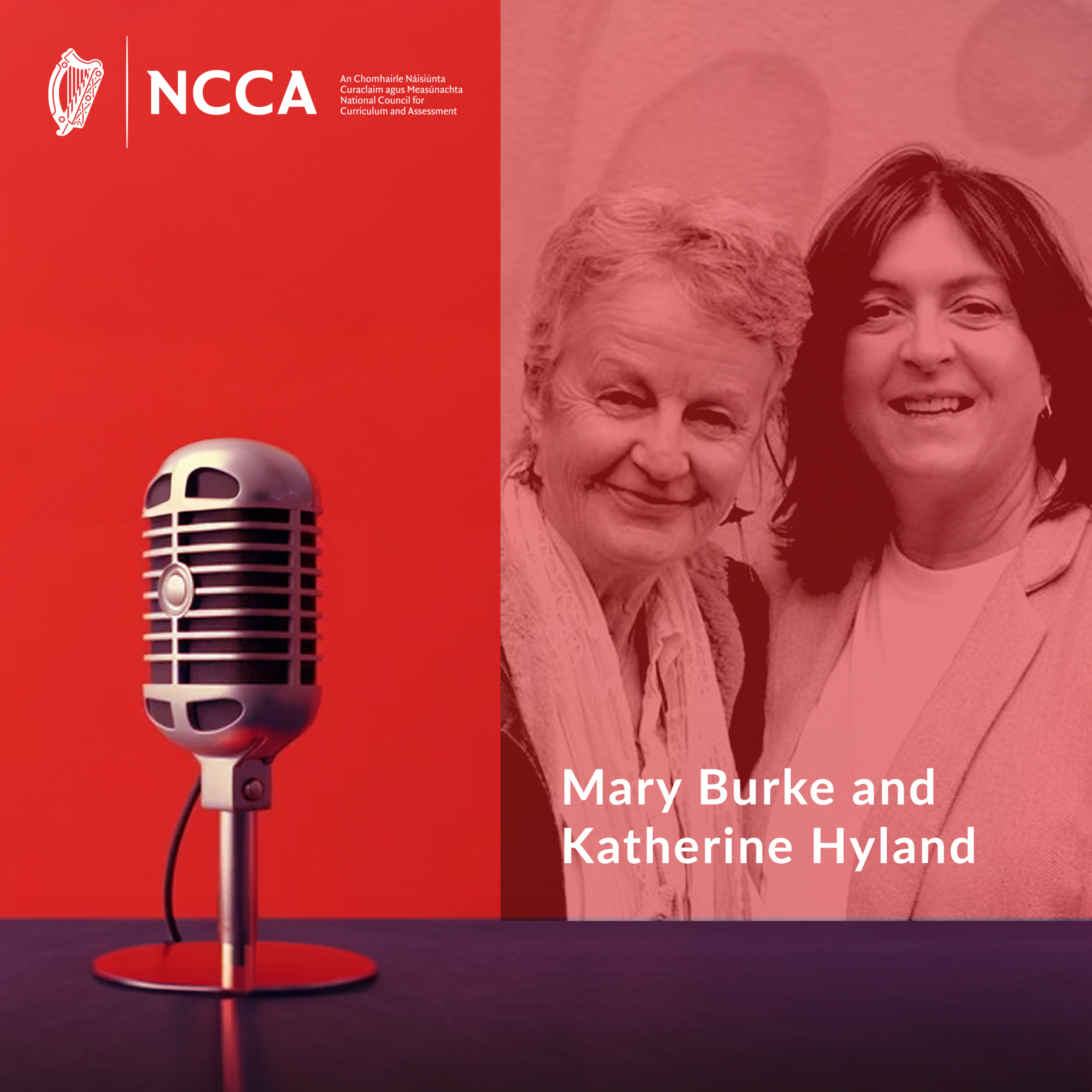
E5: ‘The confidence to change’ - Embracing a redeveloped primary curriculum (Mary Burke and Katherine Hyland)
39m 52s
This podcast discusses teacher confidence in the context of upcoming primary curriculum changes. Host Tracy Kern, joined by experienced educators Mary Burke and Catherine Highland, explores how confidence impacts teaching and change adoption. Both guests reflect on their own learning and teaching journeys, noting that confidence often develops over time with experience and support. They emphasize that early-career teachers particularly benefit from mentorship and a supportive school culture. Practical strategies for maintaining confidence include self-reflection, positivity journals, and acknowledging small successes. Externally, a nurturing environment, clear leadership, and collaborative approaches are vital. The conversation highlights that curriculum change is a gradual, social process best approached collectively, with trust in educational bodies and a focus on the child's needs. Teachers are encouraged to view change as an ongoing journey rather than a disruptive event, leveraging support systems to navigate it effectively.
The primary curriculum is changing, but why? Why now? What's new and what opportunities does this change offer? Hello and welcome. My name is Tracy Kern, a member of the team at the National Council for Curriculum Assessment. In this podcast we are going to discuss the topic of teacher confidence. The primary curriculum is changing and change can be exciting and invigorating, but it can also bring discomfort and challenge our confidence in different ways. In light of this, today's podcast will explore the topic of teacher confidence and consider her confidence impacts, how we adopt and enact change, and maybe also how teachers can navigate this upcoming period of change as new curriculum is introduced to primary and special schools over the next number of years. For this conversation, I'm delighted to be joined by two guests, Mary Burke and Catherine Highland. Catherine has been teaching in mainstream primary schools for over 20 years. She's currently teaching six-class insane bridges primary school in Kildar town. Her passions in education include arts, drama, music, geography, and everything to do with the natural world. Catherine came to teaching a little bit later in her career where she actually met our second guest, Mary Burke, when Mary was lecturing her in Reno Institute of Education in SESE. Mary Burke also has taught for over 20 years before transitioning to support teachers at different levels of their career, supporting student teachers in initial teacher education in St Patrick's College of Education in Drumcander and Reno Institute of Education, as well as supporting newly qualified teachers as the co-ordination of the national induction program for teachers from 2004 to 2015 guiding this project from pilot to a national program on teacher induction. Mary was a founding member and the first chairperson of Kildar Education Centre. She's worked with a number of organizations and has worked with thousands of teachers over her career in supporting them as professionals. You're both very welcome. Thank you. Thank you, Tracy. So our topic today is looking at teacher confidence, but I think it's really important that we start this conversation by actually thinking about ourselves as learners before we move into kind of our experiences as teachers. So Catherine would you have described yourself as a confident learner in school and if so where did this confidence come from? I'm not sure I was a confident learner in school. I think that I was a comfortable learner in school and I was I suppose never really a shining student but I certainly enjoyed primary school. I had some wonderful teachers. I went aboard in school so we had a very wide range of activities and opportunities available to us and I suppose moving on to university then I did kind of find university a little bit challenging. I went to UCD, it was a huge university so I suppose thinking about the question was I a confident learner probably as time progressed I became more confident but you know there were certainly ups and downs in my learning journey as a student. Thanks Catherine and Mary for you. I'm sure there were things in school that you were more or less confident about and could you talk a little bit about this and maybe where that stems from? Yes well like Catherine I enjoyed my primary school years I was in a two-teacher school in primary school and I suppose one of the subjects that I was less confident in stems from primary school I wasn't very confident in maths and I think that stemmed from the fact that I felt the teacher was actually not confident in teaching the maths and she was quite anxious when it came to maths whereas when we came to doing history and geography and story she was really confident about those and as a result I suppose right through my secondary years and into my third level education I brought a love of history and geography with me. Okay well I mean that would certainly suggest that the teacher's confidence had a big impact on you and his learner and we're going to pick up on that a little bit later in our discussion. I want you to move now kind of out of the the learner's base you talked about you know your experiences in primary school and secondary school and then in college but then kind of coming into the teaching profession when you think about your early career experiences Catherine you know as a teacher did they help you to become more confident and as you think about the different stages of your career that you moved through did your confidence change over time and in what ways. Well I suppose like anything in life that you know the only constant is change I look back now compared to where I am now to then and I'm a completely different person in terms of my confidence but certainly my early years of teaching especially my first year I mean you come out of college having immersed yourself in you know learning to be a teacher and training to be a teacher for eighteen months but I I really really struggled in my first year and I'm being completely honest when I say that because I found classroom management very difficult but you know and I was very much reliant on you know older teachers in the school I would go and ask them questions I was saying this is really you know troubling me or this is a problem where I'm not doing very well in this area or what do you think if I tried that so I think certainly the you know that culture of being able to go and talk to older teachers was really really helpful to me being able to take on board feedback that people gave you but I mean I still remember that feeling of not feeling very confident it was all new to me but I suppose looking where I am now I would I think now thankfully so you're saying after twenty years I do feel very confident in the role but I'm also grateful that I had those struggles that kind of enabled me to be at the place that I am now I mean Mary Catherine has talked about ups and downs in your career and I mean do you think the stage of career that a teacher is at has a big impact on how confident they are and maybe their ability to manage change what do you think about that absolutely Tracy because there has to be a better way to be introduced to your career than just being thrown in at the deep end because unlike other professions there is no time you are on your feet from day one in the classroom and you have to teach I was very much of the view that in your first year you need support you need that support to get your on your feet to get you up and running and to be able to ask questions and one of the first things when I became involved in the induction program one of the first things I did was look at the model of it's a sign of strength to ask for support and while that first phase in teaching is a critical phase and and all of the research points to the fact that support and mentoring is very much needed at that stage and in my first year I was very lucky to find a teacher who actually was there to guide us you know I used to refer to them as a guiding star because you could go to very approachable but along the stages of that teacher professional continuum support is needed so it doesn't matter what stage you are at in your teaching you will always need to access support be it of a mentor be it of a service be it of you know leadership you will need that support I remember a professor once telling me that he'd done some work on resilience and he said in one day he'd seen one teacher go from being super confident to inner classroom in the morning to at the end of the day questioning why she had become a teacher so in one day it could swing and he was making the point to me that that's why support and mentoring is absolutely essential but you have to work I developed strategies such as I had a positive notebook for the days and maybe things went pear-shaped on me I had this positive notebook I would go to it and I'd say where her Catherine had said to me as a parent like he really likes coming into your class he's really improving at that particular in that particular subject and there are days when you'll get your wings clipped there were several days when I got my wings clipped for me you know where you know I I needed to go back and look at and and one of the tools that I I use I didn't really I didn't have a name for it I suppose back then but that whole idea of self-reflecting on what I was doing and questioning and I did a lot of that and this is I feel strongly about this confidence grows when you have the same goals the same vision you work together and you share and you empower each other and if you can't find that within your own school or you need more you go outside and you find it and one of the things back in when we started teaching in the eighties we had one child guidance and clinic in the county where I worked so a group of teachers we came together and we started talking about the issues that were so we ended up inviting the minister down to meet in a classroom opposite my room about the psychological services and as a group we grew in confidence about yeah we're all we're all sharing the same vision here we're all sharing the same goals here and together we and that clear map or that clear support that you get it comes from many sources and particularly I think in terms of curriculum leadership which will be coming through the NCCA now I think people look to other bodies to see the clarity in what you're saying and school culture is absolutely crucial I feel and school culture has to nurture it has to acknowledge teacher first of all the teacher in the classroom teacher agency I know it's crazy I've probably referred to this along the line the book The Courage Teach by Parker Palmer where he talks about yeah good teaching comes from the identity and integrity of the teacher and it's your way of being and your confidence comes if you can strengthen your core belief in yourself as a professional then you know things will happen you'll make changes because you're ultimately the driver Mary you've talked about you know the different things that you know you did as a teacher to support you in kind of managing those more challenging times Catherine I wonder are there any strategies or things that you did that were more effective than others that had you to manage these challenges just listening to what Mary was saying and you know things like the positivity journal I don't have that but things that kind of make you feel a bit good about yourself and it's okay like we can all be very hard in ourselves and saying well I didn't do this and I didn't do that and I didn't get it to this and I really I took the head off your man and I shouldn't have and I you know had a crossword with somebody and it doesn't make you feel good but it was you know you're kind of at the end of your year of a year of teaching and I taught six class this year and I hadn't been in six class for a really long time and a bit like Mary Math would not be my strong point and you know I had children in the class who were fantastic at Math but again I sort of sat down every evening went through everything what am I teaching tomorrow how am I doing it so I felt confident I wasn't anxious I wasn't going to get caught out but kind of more to the point of your positivity notebook which is brilliant I mean you were way ahead of the curve there you know everybody should have been marketing those Mary but you know the cards that you get from the children at the end of the year honestly it just makes you feel that I did something right I what the way I taught this child meant something to them the way that I engaged the way that I made those children feel and it's not that everyday with sunshine and roses and wonderfulness but you know I did try to go into the classroom every day with enthusiasm and I think you know just those little things it's okay for someone to tell you that you're doing a good job and it's okay to get positive feedback and it's okay to say to a younger teacher you're absolutely flying it's keep going and you're very conscious that you want new teachers to have a positive experience of collegiality of support ask me any question no question is silly you know I felt exactly the same about this or you know and that doesn't change over the years whether it's your first year your 10th year or your 20th or your 40th year I just think it's okay to take the good things and it gives you the confidence to go forward saying I did something right now I'm ready for my next challenge or my next year and you go forward with a smile on your face Mary and Catherine I think what you've provided are some really really practical ideas and strategies that teachers listening can maybe adopt to help them in you know managing the more challenging aspects of change that might impact their confidence I'm thinking now about you know apart from what the teacher can do themselves to support their own confidence let's say are there other things external to the teacher that can help to promote teacher confidence and I suppose I'm thinking about the kind of things that help others the environment has to advocate has to advocate for a very open encouraging caring and I notice that you have in your vision competent caring which I think is so important to see that word care in there because that has to be the nurturing and bedrock it's all about the child it's all about the centrality of the child as learner but here's how we can make this journey step by step and one of the things I meant to say earlier was I used to say to people slow the pace make the space slow your pace make the space for learning I remember once a teacher said to me is it all right if I teach and they don't learn and I think it you're gonna have to let's reframe that question Mary has touched on this Catherine but what would you say are kind of the factors that have the biggest impact on teacher confidence I kind of think of a school as like layers so you have the classroom layer so within I always feel okay how would I feel if I walked into school every morning no one said a lot to me no one said how's things going nobody acknowledged my presence so I always feel that I try to come with a positive attitude you know and it just kind of settles everything and then you might check in see how everybody is doing and most days I come away from work saying that was actually an okay day but a couple of years ago we had the opportunity we'd a very very good teacher in our school who was extremely musical and she sat down with another teacher and she said we're going to our school anthem and it is just beautiful and every we kind of did it and it was wonderful then we kind of forgot about it and I said you know what really really needs to kind of you know resurrect this again it's really fabulous and it's amazing when you hear the children singing it together it really feels that they're part of something special I suppose those are the kind of things it's that sense of community belonging respect being seen I want to be seen I want to be heard I want to be respected and again you know when you get sort of notes from the board of management or the acknowledgement that you know that they acknowledge all the effort of the whole school and I'm not talking about teachers is everybody to create this very special teaching and learning environment for staff and for the children and at the end of it it's all about the children and look I want to build on that when I suppose I'm thinking about this period of change that's that's coming forward and this is a question to you both about you know what role does the teacher have to support other teachers within the school community to help manage their confidence and navigate change and you know in the context of you know school leaders and support service providers what are the important things that need to be remembered well one I think one of the things I said it there about slow the pace make the space and I think what teachers often feel is if change is coming overload overwhelmed overworked you you hear this you know all the time and I think that one of the lines I used to use with induction was Antonio MacArthur's line Machado's line I am sure we make the road by walking and I I love that line just for life in general that we do not you know have to rush into anything and that also change is not something that's going to happen on Monday or happen on the first of the next month it's not an event it's a process and and it's about looking ahead to the future because as you move towards you know the future you will be incorporating change into everything you do because as a teacher if you keep the centrality of the child as your focus then you will have to and the other point I think is very important is change is not an individual thing it's a social practice that happens it's a social piece it's a school together making a change and and it's it'll be it'll be us as a group you know listening to each other learning from each other strengthening actually our belief in in what we want for the children in our school trusting trusting in say Tracy the likes of you and your colleagues in the NCCA that when you've done your research into this change that you have listened to all of your partners and you've taken on board all of that and that we will trust you because you've come from education you've come from where all our teachers are at and you're you're you're going to take us on a journey and again it's a journey it's not because when people hear oh there's a new doesn't you curriculum coming down the line now God like what are we going to hear now it's from unhigh like this is coming down to us now and what are we going to what's expected of us now and I'm I really feel that you know this it's it's it's something that we will embrace together and we will do it in the context of our school using the map that you give and the map the clarity you know it's not to get worked up about change it's to work with it at your level and at your school level and because as well Mary you know change is is something that everybody grapples with and this isn't the first period of curriculum reform that many teachers will have engaged with we've also had you know smaller reforms and redevelopments that have been introduced to the system in more recent years I mean if I can bring you back to you know you know maybe thinking about different periods of reform but even you know the pandemic and you know the introduction of the more recently let's say the language curriculum and the maths curriculum can you talk about your experiences of how you felt around those times of periods of change and importantly how you navigate it through that change well when I started teaching it was back in 2003 and you know the internet was kind of new all those think YouTube I don't think existed mobile phones were very basic and and you had your set of books you didn't need anything else you were ready to go you were you know full of confidence this is going to be a great year and after about four years I'm I'm thinking I can't remember exactly but they presented you with a laptop in a bag I said what are we supposed to do with this what are we on this for then more trauma they introduce the interactive whiteboard which nearly sent me over the edge completely and it took me the guts of another two years I'd say to become comfortable with it but I'm just I'm not technologically savvy I'm not but again it's all changed and it's small things but I mean if I went to school now without a laptop I'd have to turn around and go home I wouldn't actually be able to do my day like you're embracing change all the time and we recently had a very very good in-service day on the new math curriculum focusing on maths talk it was a great day because the first thing they said to us was we don't want this to become something that is overloading with notes we wanted very short and sweet which is music to any teacher's ears not ours of planning but they also gave us very practical activities tools games and ideas to go back into our class and said listen you know you're finishing it once go in and try these few things and see how you go and everybody came away from thinking I am actually going to try that I'm going to see how it is I just think that small steps little bit at a time but you know we have excellent leaders in our school we have excellent A&B posters who you know encourage you along the way and so you take small little bits we're gonna try this this year see how we go we'll come back to it then and then maybe we'll go on to the next thing so you can't do everything at once thanks Catherine and I mean Mary on down to clean you've seen a huge amount of change over the periods not at all on don't leave seen a huge amount of change I mean if you even think about society and technology changes alone but if I say the word curriculum change to you really memories that come to mind or even kind of you know things you think about in terms of how you navigate it I'm the proud owner of two brown books two brown curriculum books from the 70s which were absolutely incredible I mean the people who wrote those I mean they're I mean they're such thick volumes of material and I still see the that they had illustrations and everything and those books I kept them which is a good sign because you know you are meant to declutter and but I kept them because they signified change and they signified a way of doing things and the go to you know the map for the journey because I mean I suppose I'm bringing in my geographical connections here now but I view everything as a journey and it was a map it's a map and it's tools to help you and and it'll you know it'll guide you along the way and then I remember the 1999 curriculum and what I remember about that is the volume of books oh my god I think that alone the image of all these books alone was enough to say it cried overload it cried you know anxiety I run my respect to get through all this like you know this is huge and you know how do you use an elephant slice by slice this has to be done in you know in in in a staged way you know in in like a journey short-term ways and then I'm witnessing now you know a new curriculum but what I really love is and I had a look at the seven key competencies and you're beginning with the word being and that's music to my ears because I've been singing this for years it's at the end of the day it's your way of being with children and that's why when you bring in reform and what you're doing at the moment the entity is bringing it from you're doing it because you you have to look to the future it's not about us it's about the children absolutely and I'm smiling at the thought of you know you keeping those two brown books and even you know having that record of the 99 curriculum because as you said it it reflects what we see as being really important for children at a given time and I love the analogy used about you know it's signifying a journey and we're going on a new journey the curriculum is changing and as you said it's in response to the evolving needs of children in our primary schools and so when we think about this journey I mean Catherine you know you're going back into sixth class in your in your school in September and you know you're going to be you know at the helm of of curriculum change and enacting that in your classroom over the coming years how do you feel about no changes to the new primary you know are they are they welcome do you feel like there's opportunities and challenges are what what are those opportunities and challenges for you personally as a teacher well ultimately you know curriculum we we we have to embrace the change because it's it's here it's now but it's changing all the time and I'm very excited about especially I think the new math curriculum I think it's going to be hugely beneficial to the way to children perceive maths that it's not just a thing in a book it's not just you know learn this and know that but you're applying it to the outside world it's practical it's going to leave them into all sorts of wonderful careers hopefully in the future but I think coming back to what Mary said is how am I making them feel if I'm all did they're in an offer given out and they're going to feed off that they want to feel that this is a really positive thing wonderful fantastic we're going to do loads of practical maths board games whatever it is so I suppose on a personal level I'm excited about it but it doesn't mean that I'm a hundred percent OFA or confident just yet that's going to come in time Mary can I come to you now and ask you if I was asked if I was to ask you to distill advice for teachers student teachers only qualified teachers more experienced teachers on how they might kind of best navigate and manage their confidence over the coming years as a new curriculum is introduced what would you say well first of all acknowledge where you're at there there is change coming but I can guarantee you that many teachers are ahead of that change they're ahead of it because if and they're involved with their pupils and they're involved with teaching and they've been engaged so they've been changing to suit their classrooms so as I said earlier it's not an event it's it's a process and and to remember that first of all I've met teachers several times down through the years and they'll say to me I've been doing that I've actually you know I have a version of that approach in my class or whatever so acknowledge where you're at start with short-term goals and use your teacher agency that you have that I think agency is a really good work because you are you are the decisive you make those decisions I think Andy Burke in Pat's used to say that teachers make about 300 decisions I'm sure that's gone up now with inflation but didn't make those decisions every day but use that agency that and the flexibility I think that's coming down the line for the good of your school and for your profession take your time don't rush through stuff for the sake of what I would call what people you said me covering things covering stuff I to be pro-change you know and for what is good for the children and I think that's important because I have to keep saying that for the children for their future I think don't spend time looking over your shoulder at who's checking in on you particularly outsiders you know is the whoever's coming in from above that is a waste of energy and I'd say be confident that the experiences you provide will sustain enable and empower and that the children will face the future with confidence as a result of you you have to trust the process of change but not go blindly into it rather steer your own course at a pace and tempo for your particular circumstances of school and you have to be hard on your views sometimes and you have to challenge your views about stuff and in that way I'd say teacher talk is very important you know if you're constantly in a negative now frame and you're hearing negativity or cynical talk about stuff you have to challenge that you have to challenge that and you have to look at where that's coming from and and look at look at in terms of where you're at where you're at in a world which is ever changing you stay true to what teaching means to you and why you became a teacher in the first place and now more than never teachers all I believe teachers always lead the way in society when others are floundering around teachers are in there constantly every day creating that secure atmosphere and they're integrating change all the time so I think they'll look to you Tracy and your colleagues in NCCA to steer them on this journey so you know you might start them off and be with them and show them the way and all of that but I think teachers are confident to people and I think they're which is really good to say they are good people teachers have a huge heart in terms of society and in terms of the children to teach and and I think that you know we rely on them hugely to keep us all going absolutely Mary and I mean Katherine you know when you think about kind of what's ahead what's down the road the proposed changes I mean can I ask you what will be you know the first steps for you I mean we talk about taking change step by step what are going to be those kind of priority first steps for you in navigating change do you think well I think maybe looking at what I'm doing already is there anything that's sort of a positive thing that I'm doing that is sort of a bedrock of the the new changes that are coming and say okay fine now what else can I do or what is the next step how can I develop this how can I expand this out into my classroom that's going to work for me you know kind of as you move up the line of management in the school they need to look at say okay do the teachers in the classroom have everything that they need in order to be able to enable this change again nothing has to be too complicated and the more I do this job I kind of learn the simpler the better it is allowing yourself time and finding the time and time is hard to find to try and get into the new curriculum and to the new change saying okay I don't really understand what this is about but I know this one so I'm going to try that first and to come back to the confidence thing all the time get comfortable get confident don't be anxious be prepared spend a little bit of time and you kind of build on that then kind of going forward and then you know younger colleagues see you saying well she thinks it's all right so maybe she will give it a go and the community you've talked about keeping the child at the center I mean is it about you know finding time for what matters depending on teachers and schools determine the priorities for them I think so I think for schools number one they're unique number two and they are and I've looked at the department document now for planning and preparation and they talk about teacher agency and the school agency in being able to make decisions at school level about what they think is best for their school and their community I think that is absolutely brilliant right so you know that is huge you know that the department are have that belief in schools and in teachers that you are the agents at of change now at school level you are this is you can make these decisions about your priorities for for your school and the children in your school and as teachers if you can as a group come together and decide you know where the expertise is within your school there is no need to fear change there is absolutely no need to fear change because you make change work in the way that you want it to work for your circumstances and your school because if you if you keep the child as the focus and the center of your attention at school level you cannot go wrong if you're working for the measurement of the child so I would say teachers and schools you have it you have it I mean intuitively it's there but for some strange reason and I know the topic of this conversations teacher confidence for some strange reason we've issued teachers have an issue with confidence I have met the best of people and teachers and it's not your mirror you know God there's probably much better out there than me now this is just the way I do it and I'm going but look that's fantastic what you're doing and no better person than this person across from me here like and and some and a lot of teachers are unaware of the major impact that they're actually having in their classrooms so I think other staff you go for it be pro-change you know look what I might look look what the journey might give you it's like that from my Robert Frost two roads if you just plot the same road maybe you know maybe the other road has something very interesting to give you and change how you how you do things Mary that I think that's such a lovely way to conclude our our podcast and our conversation on you know a very abstract topic which is which is teacher confidence and I think this has been really really helpful and I hope really helpful to the listener as well and you know I really want to take the opportunity to thank you Catherine and Mary for your generosity in sharing your stories and your personal experiences the quotes the poetry it's fantastic now I have one final question and this is a tradition that we're trying to build into the the podcast which is just to ask a very general question to each of our guests which is you know what does curriculum mean to you you know you can respond in any way you like you can use a mesh for an analogy or whoever'd like to go first. Curriculum to me is I think in our school this year we had an excellence example of curriculum in action and I'm coming back to the story again of Bridget 1500 we decided as a school we were going to celebrate this in a very big way our school the St. Bridget primary school were based in Kilteartown the center of St. Bridget we kind of took it upon we have three buildings in our school so each building we've got the junior the middle and the senior so we kind of took the visual arts curriculum we broke out into strands so we had one building that was focusing on possibly fabric and fiber another was on clay and construction and another one was painting and drawing and we all took different elements of the story of St. Bridget so this culminated in a beautiful exhibition in two of our buildings in in February and we had every single person in our school involved in creating something very special whether it was a group project it was audiovisual or it was you know construction then we transferred it across to the Paris church so we were out into the community we had we ran a race in this in on one of the weekends in February so we had over a thousand people participating the children had the opportunity to design a medal we even had a teacher in our school who wrote a play about the life of St. Bridget and then it sort of finished off with one of our fifth classes they got the opportunity to design a postcard garden in for bloom and it was just such a special experience as a whole school and for me that is curriculum in action it's every element people coming together the children were learning without realizing that they were learning that would be my answer to that question thank you Catherine Mary so curriculum is a is a journey I have the map in terms of where I want to go but as we all know maps change and places change and so what you do is you you take as many opportunities as you can from that journey so curriculum is that blueprint you're the people who will devise that in terms of your consultation in terms of your expertise on your research but then it comes down to the people on the ground then have to take the blueprint the map or the drawing of whatever you want to call it and they have to then negotiate that on the ground and implement that and there there will be the architects of that on the ground themselves you know and again I go back to my final or at the point of being making all day you really you really have to love what you're doing there there is a really good quotation I think it's John James Audubon which says when the bird and the book disagree trust the bird thank you for joining us for this conversation and we hope that this podcast will spark your own thinking and further conversations around curriculum at ncca all voices matter and we would love to hear from you if you have any thoughts in response to this podcast episode or even some ideas for what we might explore in further episodes please do get in touch by emailing us at [email protected] or by using the hashtag nccapodcast to continue the conversation on social media you can support the podcast to grow by liking and subscribing. Thank you for listening.
Podcast Summary
Key Points:
Teacher confidence is crucial for effectively adopting and implementing curriculum changes, and it evolves throughout a teacher's career.
Support systems, including mentoring, collegial collaboration, and positive school culture, are essential for building and maintaining confidence, especially during periods of change.
Personal strategies like self-reflection, maintaining positivity, and continuous learning help teachers navigate challenges and adapt to new demands.
Curriculum change should be viewed as a collaborative, gradual process rather than a sudden event, requiring trust in guiding bodies and a focus on the child's centrality.
Summary:
This podcast discusses teacher confidence in the context of upcoming primary curriculum changes. Host Tracy Kern, joined by experienced educators Mary Burke and Catherine Highland, explores how confidence impacts teaching and change adoption. Both guests reflect on their own learning and teaching journeys, noting that confidence often develops over time with experience and support.
They emphasize that early-career teachers particularly benefit from mentorship and a supportive school culture. Practical strategies for maintaining confidence include self-reflection, positivity journals, and acknowledging small successes. Externally, a nurturing environment, clear leadership, and collaborative approaches are vital.
The conversation highlights that curriculum change is a gradual, social process best approached collectively, with trust in educational bodies and a focus on the child's needs. Teachers are encouraged to view change as an ongoing journey rather than a disruptive event, leveraging support systems to navigate it effectively.
FAQs
The change is part of an ongoing process to update and improve education, ensuring it meets current needs and prepares students for the future. It reflects evolving educational research and societal expectations.
Teacher confidence directly influences how effectively changes are implemented, as confident teachers are more likely to embrace and enact new practices. Low confidence can lead to discomfort and resistance during transitions.
Teachers can maintain a positive notebook to record successes, engage in self-reflection, and seek support from colleagues or mentors. Embracing a mindset of continuous learning and celebrating small victories also helps.
A supportive school culture that encourages collaboration, open communication, and mutual respect is crucial. Leadership that acknowledges efforts and provides clear guidance also fosters confidence among teachers.
Experienced teachers can offer mentorship, share practical strategies, and create an environment where asking questions is encouraged. Building a culture of collegiality and sharing successes helps navigate change together.
School leaders should provide clarity, slow the pace of implementation, and ensure teachers feel supported and trusted. They must foster a collaborative environment where change is viewed as a shared journey, not an individual burden.
Chat with AI
Loading...
Pro features
Go deeper with this episode
Unlock creator-grade tools that turn any transcript into show notes and subtitle files.
 PodcastTranscript AI