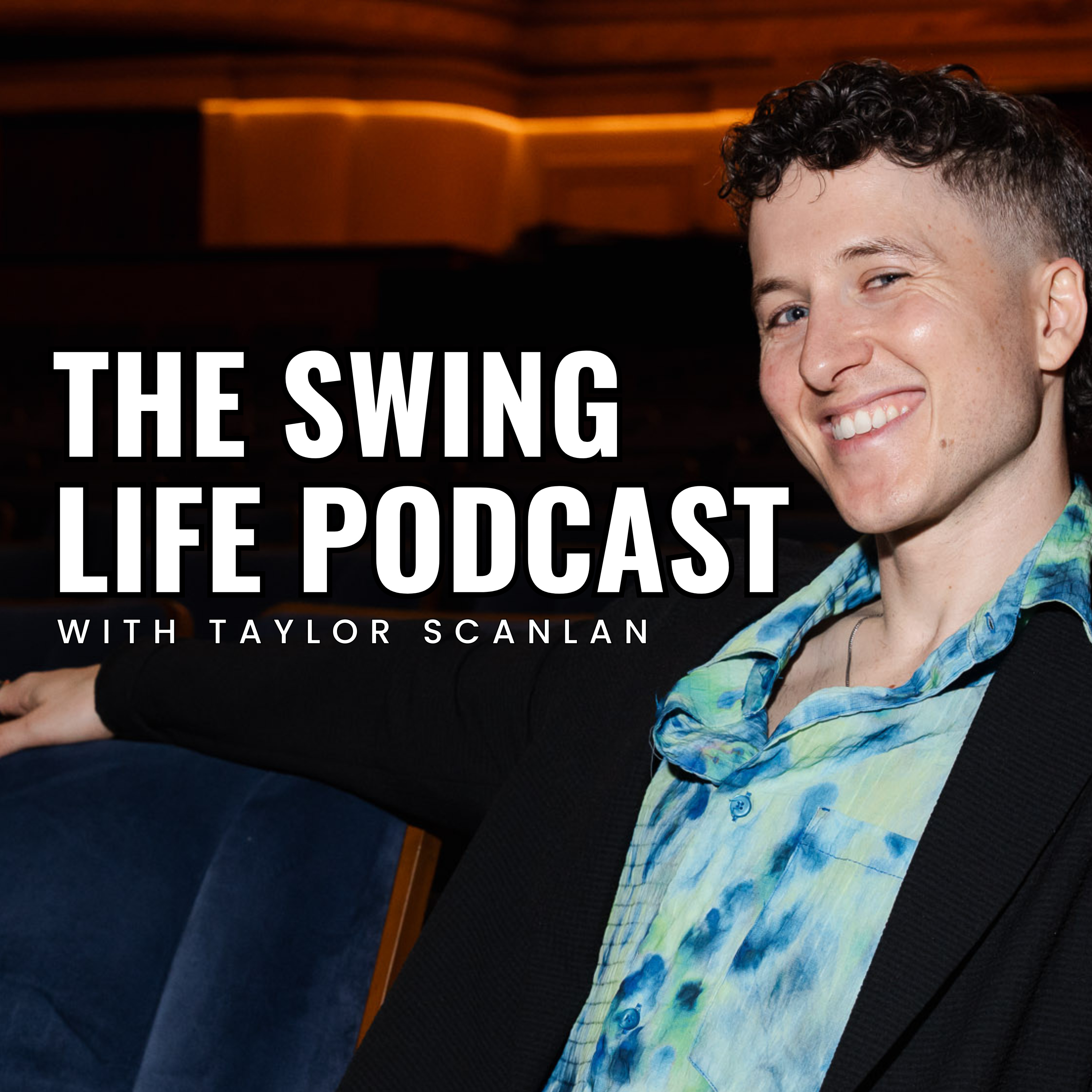
The "Swing Life Podcast," hosted by Taylor Scanlon, explores the specialized role of a swing in musical theatre—a performer who learns multiple ensemble tracks to cover for absent cast members at short notice. Taylor shares her 11-year journey from a dancer to becoming a swing and dance captain, highlighting how the role has brought her joy and opportunities to perform globally. She explains that swinging involves tracking, retaining, and debuting various roles, which requires trust, adaptability, and resilience under pressure. The podcast aims to educate performers on practical strategies to thrive in this demanding position, reducing industry stress through honest conversations, tools like a free rehearsal template, and mindset shifts. Taylor’s goal is to support swings in navigating their careers with clarity and enjoyment, fostering a community where performers can excel both on and off stage.
Welcome to the Swing Life Podcast. This is a place where we go beyond learning multiple roles and into the trust regulation and joy it takes to thrive as a performer. I'm Taylor Scanlon, a swing dance captain and performer who spent the past 11 years learning how to track, retain and debut multiple roles in a way that feels supportive, grounded and exciting. Through swinging, I've learned that this journey isn't just about being ready to go on. It's about learning to trust yourself when everything changes, to regulate your body when pressure hits and to actually enjoy this life you've worked so hard for. Here you'll find honest conversations, practical tools and the mindset shifts that help you perform and live with more clarity and connection. This space is for the performers who want to feel proud of how they show up both on stage and off. Welcome to Swing Life. Let's dive right in. Yes, we have made it. Here we are. Welcome in. My name is Taylor. If we have not met already and this is the Swing Life Podcast. Something that I guess you could say, been creating in a way over the past two years since running a podcast. If you are unfamiliar with the podcast that I ran last time, it was recently called The Dive. And it kind of stemmed out of a conversation that I had with my mom about two and a half years ago where I was like, "Really? I feel like I've got lots of things to say and lots of things to help people with and I've always had a strong desire to want to help people." And especially being a performer for 11 years, I feel like I've got so much to offer and so many things that have honestly just helped me along the way to become the performer that I am today. That I want to share what I've gone through and how when I was chatting to my mom about that, she said, "Why don't you do a podcast? You should do a podcast and interview other people in performing arts to see if there's any similar stories and whatnot." Anyway, I ended up just doing it and within a week or two we had, it was all set up the lighting and I had three guests booked in and it was just awesome. And it went on to help so many people, like literally thousands of people, and it was crazy because it just started from a want and need to share more about that. And it was more about the arts and how to navigate the challenges that we do face as artists as well. And so I went on, I think we did about 50 or so 40 or 50 or so episodes. They are still there. So if you're listening to this podcast for the first time, you can scroll down either on Spotify, Apple Podcasts or even on YouTube if you're watching this on YouTube. And see the progression of what these podcasts has begun, we've had so many wonderful guests on as well that can help you on different variety of topics. But now as I've made this branch out specifically to swinging, I, to be honest, didn't think anyone would want to know about swinging. It was really strange that I had that thought because it's what I have personally been doing for the past, I guess decade or so. I've also been in the ensemble, I've done a supporting role before and around that I've been a swing. And it's what I usually do now as a dance captain and swing. I'm currently in Biddle Juice, the musical, just finished up here in Australia and we're about to go overseas in Abu Dhabi and Singapore, which is so exciting to bring that show there. And I have been a swing for, I believe it's about eight or so contracts now. So I feel like I'm at least a little bit qualified to share on the aspect of swinging what it is and really how it's helped me. And that's what I wanted this episode, first episode to be about. What is a swing? What is swinging actually and how has that influenced and changed my life? So if you're ready to come along and hear more about that, then let's stay together and let's get into it. So what is a swing? You may have been thinking, what is a swing or maybe you've heard about it before and you're just really a bit unsure about what the actual role of a swing is. If you were like me in full time, we actually didn't even get told that there was an option to be a swing and a musical. It was either that you're the lead or that was it. To be honest, I wasn't even, maybe they did teach about swinging. I am trained in dance specifically. I did the dance stream at Patrick's Studios Australia, now called Patrick's School of the Arts 11 years ago for two years of the full time. And then I also did some training before that, but I was strictly in dance. So I had not even my mind set on musicals, which is crazy because if you are currently studying right now, you're in full time and you're really honing in on the musical theatre aspect. Amazing. You're already like a few years also ahead of me. I was strictly going into my dance. I really loved the dance. And to be honest, musical theatre was never really on the cards for me. I wanted to be a contemporary dancer and I really liked the fluidity and the lyrical and all that sort of stuff. So I really didn't even think that musical theatre was going to be something that I was getting into. And I ended up doing a bit of musicals, but let's first of all just answer the main question. What is an actual swing? Now having done it for a while, what is it? In my opinion, a swing is a part of the cast, part of the cast of a musical. And it's an essential part of the cast. And usually there's depending on the show, there's about three to six different swings. And the main role is to cover the ensemble that may be in doing a feature part or even just a non-somble track. You can cover up to five to 20 to whatever amount that the show needs. And the main purpose is that you are there every single night, every single show and able to step in to a ensemble track if they are sick, injured or just can't be there. Maybe they have annual leave. And so you then learn multiple tracks, not just one, you learn multiple and you are there ready to step in to that specific track at any given point. So this might mean that, I mean, my day in the life now when it comes to swinging is usually just wake up and I know I'm always going to work, but I may not know what I'm actually going on for until I get a message on that I'm on for this person. And I may not be on for a week. So there is this kind of role of the poster that you can go on as a swing, but throughout this podcast I'm going to ease you into what it actually means to swing how to do it in a way that actually feels supportive and exciting and something that can be really enjoyable because it's brought me so much joy, taking me all around the world. And it's just been so awesome. So that's what a swing is. Your job is to essentially cover multiple roles and if the cast needs it, the company needs it, you will step into either one or several tracks in a night. You can also see it as an understudy or a cover. Depending on what musical you're doing or what company you're with, they can the complexities of it can be different, but essentially that's what a swing is. Like a stand-in, someone that can cover up to multiple different roles. For my instance, now on Beetlejuice, we can cover up to 13 different ensemble tracks. And they're not full ensemble tracks. If I'm being honest, there's probably, I believe, five or six main dancer tracks. So that's a heavier dancer amount of tracks and then the others are more character-based, but still you're still learning a full track anyway. So let's paint back. So now that you know what a swing is, I just want to share with you just a little bit. I didn't really want to make the first episode a massive brain overload. But I just want to share with you why I'm making this podcast, why I'm making this education and really why swinging was the topic that I wanted to talk on. Like I mentioned, the swinging role came to me out of nowhere. So I was straight out of full-time. I got cats, the musical, which was so cool when I got to tour around New Zealand and Australia, but I was in the ensemble and I covered a few different characters. And I loved the fact that I could cover other people, but I was in the ensemble. So I still didn't have an idea of what a swing was, even though when you're covering someone, you're doing half of the role already. So I was just like, minus that you're just going to be on every single night in your own ensemble track. So when I first caught my glimpse that I wanted to swing or it was something that brought me joy was in a cover call in one of my first contracts with cats. And I was in a cover call to cover Mr. Mustafa Lee's, which if you don't know, it was a very high dance-based male track, male identifying cat in cats. And I remember going to the cover call and the resident director at the time, she was teaching the main guy what the role was, the dance that he does. And I was just in the back corner, living my best life watching and absorbing it all. And essentially it came to a point in that same rehearsal they asked me to get up. And let's step through it just together. And it was quite funny because I actually when they played the music, I just knew it already, fully immersed myself into learning the track when he was teaching it. So when I went up, I felt like I already knew it. But, and I was really enjoying it too. So I guess the resident director at the time, she was shocked to be like, "Have you learnt this already? What's going on?" And so in that moment I was like, "Oh, maybe this is something that I find joy and maybe I want to discover this more." And fast forward through my career, I've been in and out of ensemble tracks and then back to being dance captain in a swing. swing and the first swing
experience I ever got was back on cats so I guess from that moment on I was able to go on in the first contract I was able to go on for a few covers and I was really enjoying it and I guess the word spread that I could do something like that so then when I was asked back for a second time for Cats of Music Cool I actually then went on and became the dance captain in swing at 21 years old which was so huge for me at the time still huge now to be able to be given that opportunity and so I went back into it and even though I didn't really know what a swing was I thankfully already knew the show so there was elements of it that I already knew but I was then given seven tracks to learn plus my onstage swing role as well so I really loved the show I was able to use my talent and my energy to absorb the other characters and I really enjoyed it and so I guess from then which was when I was about 21 I'm now 30 was the first time I was like this is what I want to do I really love it and it was something that I was finding really joyous I wasn't really stressed when it came to learning a lot because it was something that I really enjoyed but now coming about now into a decade or nine years or so into my journey I realized that I was using my own system a way in which to retain roles effortlessly by using these pattern progressions that I didn't even know where they came from maybe from my earlier days of training and what I want to share with you is this is that when I was first starting out as a swing there were elements where I was doing way too much meaning taking so many notes saying up really late at night and just doing all the things so I've definitely gone on the role the coaster of what it means to be a swing I've done it the really hard way the complicated way the burnt out way and to be honest I did get burnt out throughout my career and by doing too much and so for the past few years specifically I've been able to really just hone in on the key elements or the key pillars that make a swing enjoy their job and I've been able to be gifted opportunities to teach other swings and become a dance captain on other shows as well and that's what I'm doing now being dance captain on Beatle Juice The Music Hall and I was assistant dance captain on Mary Popman's musical and I've been able to tour around the world with Cats The Musical to be a dance captain for them for I believe like four different contracts it's been so crazy and I love it and I want to help and I want to give back so I guess that's the main purpose of this podcast I've got some really exciting things coming that I want to put together and publish and give out to the world of swings and covers and ultimately I'm just looking to alleviate stress that I see in the industry I see a lot of people stressed when it comes to learning multiple tracks or in the rehearsal room or just navigating the life as a swing and as a cover because to be honest it's really not taught it's not taught at all and it's not really taught up to date so I'm here and I'm really keen to start bringing this education forward to share what I've known learnt and known and honed in I hope to bring stories from other people in maybe get some interviews on here as well with other covers and swings and not only share with you the practical side of what it means to be a swing but the ins and outs of what my story has been to get to where I am in hope to support you and your own progression and your own growth because if you have been a swing before and you're listening to this you are going to find your own way over time but there are some key important steps that I'm going to start teaching through here online that are going to help you not have to wait nearly a decade to hone it all in maybe a bit shorter a shorter time I guess I usually do a little bit of a recap but essentially I share with you today that what a swing is I've a little bit more about my story and what I'm doing now and why I'm doing it and if you haven't already I have already got a free template that you can use in rehearsals if you're just about to start a rehearsal period as a swing I've actually designed a free template you can download right now go check it out in the show notes it's essentially a tracking sheet so how to track multiple roles in rehearsal room I've given you a template that you can print out and take with you in rehearsals or you've been used on your iPad and I've also given you a seven minute break down on exactly how to use it what to focus on and what not to focus on so you can go check that out in the show notes too that's a great place to get started there's more things on its way I'll be hosting a free live master class where I go in depth of my process very soon if you want to go check out the show notes it may already be there a replay of it if this is in the future that you're listening to this and I just want to say thank you for being here thank you for all the support and the immense of what's come on my social media since sharing more about swinging with that free starter kit that swing kit that I just spoke about we're already have over 450 people downloaded it and I go messages every single day every single day someone's downloading it and using it and really enjoying it so if you haven't got that please go check that out and I just can't wait I can't wait for the progression of this and the support if you have any questions please you can reach out to me on social media at Taylor Scanlan official or email me at Taylor Scanlan at iCloud.com and I cannot wait to hear your questions please connect with me I love and I read every single email and message I may not go back to you straight away but I'll always do my best to get back to you and to support you in any way I can until then I'll see you in the next episode bye bye for now
Podcast Summary
Key Points:
The podcast "Swing Life" focuses on the life and skills of a swing performer in musical theatre, covering trust, self-regulation, and finding joy in the role.
A swing is a crucial cast member who learns multiple ensemble tracks to cover for absent performers due to illness, injury, or leave, requiring flexibility and readiness.
Host Taylor Scanlon shares her personal journey from dancer to swing and dance captain, emphasizing practical tools and mindset shifts to reduce stress and improve performance.
The podcast aims to provide education and community for swings, offering resources like a free tracking template and upcoming masterclasses to support performers in managing multiple roles effectively.
Summary:
The "Swing Life Podcast," hosted by Taylor Scanlon, explores the specialized role of a swing in musical theatre—a performer who learns multiple ensemble tracks to cover for absent cast members at short notice. Taylor shares her 11-year journey from a dancer to becoming a swing and dance captain, highlighting how the role has brought her joy and opportunities to perform globally. She explains that swinging involves tracking, retaining, and debuting various roles, which requires trust, adaptability, and resilience under pressure.
The podcast aims to educate performers on practical strategies to thrive in this demanding position, reducing industry stress through honest conversations, tools like a free rehearsal template, and mindset shifts. Taylor’s goal is to support swings in navigating their careers with clarity and enjoyment, fostering a community where performers can excel both on and off stage.
FAQs
A swing is a cast member who learns multiple ensemble tracks and is ready to step in when a performer is sick, injured, or on leave. They cover various roles to ensure the show runs smoothly every night.
Taylor discovered her passion for swinging during a cover call for 'Cats,' where she effortlessly learned a track by observing. This experience sparked her joy in covering multiple roles and led her to pursue swinging as a career.
Swinging allows performers to travel, develop versatility, and find joy in supporting the show. It builds trust in oneself and offers opportunities to work consistently in various productions.
Swings often deal with uncertainty about which track they'll perform, the stress of learning multiple roles, and potential burnout from over-preparation. It requires adaptability and effective tracking systems.
Taylor provides a free rehearsal tracking template and a swing kit to help manage multiple roles. She also hosts masterclasses and shares practical tools through her podcast and social media.
Swings can use structured tracking sheets, focus on key elements of each role, and avoid overcomplicating notes. Taylor emphasizes pattern recognition and efficient rehearsal techniques to reduce stress.
Chat with AI
Loading...
Pro features
Go deeper with this episode
Unlock creator-grade tools that turn any transcript into show notes and subtitle files.
 PodcastTranscript AI