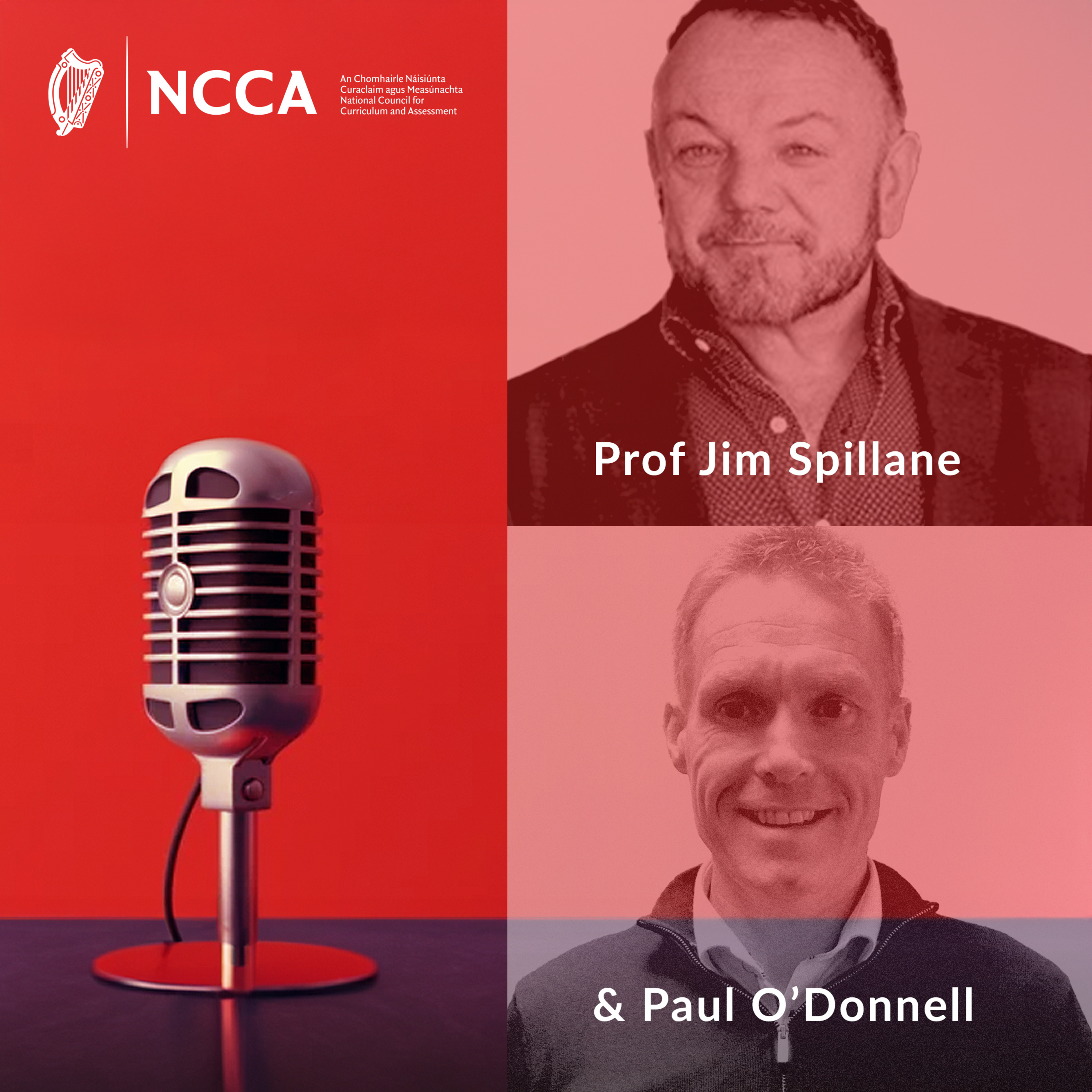
The Primary curriculum is changing, but why? Why now? What's new and what opportunities does this change offer? Hello and welcome. My name is Tracy Kern, a member of the team at the National Council for Curriculum Assessment. In the four word for the Primary Curriculum Framework that was published in March 2023, Minister Norma Foley endorsed the vision for the new curriculum and the high standards this sets for the learning experiences that children will be afforded. In introducing the curriculum, the Minister highlighted how the success of the curriculum will require the continued commitment and dedication of school leaders and teachers to inspire learners and ensure improved quality of learning experiences and outcomes. In today's podcast, we will be exploring the role and importance of leadership in realising the vision for the new curriculum and ensuring improved quality of learning experiences and outcomes in the years ahead. For this podcast, I'm joined by my guest Professor Jim Spalan. Jim is the Spencer and Ann Ollen Professor in Learning and Organizational Change at the School of Education and Social Policy at Northwestern University Chicago. For over three decades, his research has explored the policy implementation process and organisational leadership in school systems. A former primary school teacher, he is an elected member of the American Academy of Arts and Sciences and the National Academy of Education. He is also a member of the advisory panel who is supporting and informing the development of the new primary curriculum in Ireland. He is joined by Paul O'Donnell, who has been a school leader for over 22 years in the role of Assistant Principal, Deputy Principal, Education Advisor with the CPSMA, as Administrative Principal in St Patrick's School Slein County Mead. He has a Master's in Educational Leadership and is the author of Wild Teaching, a book of cross-curricular lesson plans published by Mead County Council. So, Paul and Jim, you're both very welcome. Thank you. It's great to be here. Thanks for having us, Tracey. Jim, I'm going to start with you. I mean, you've written and researched extensively on the topic of leadership. I want you to think specifically about curriculum change and what is the primary role or responsibility of a school leader in that context as you see it. So, assuming Tracey, you mean the school principal, at least for now, I think the primary responsibility is to cultivate the conditions that will be necessary for ongoing learning from and about teaching and learning. That will be essential for successful curriculum enactment over time. And this will involve, I think, first of all, working with teachers, other leaders, SNAs, students, and even parents, to set direction for curriculum enactment, and identify the sort of short-term and long-term goals, for example, maybe what curricular areas should we work on as a school first and so on. And then devising ways together as to how we will know if we're making progress on those goals. And, of course, the first step in that will involve some diagnostic work. You know, where are we as a school in terms of teaching and learning, what are our strengths, where are some areas maybe that need work, things that we are struggling with or know we might be able to do better with, but have shied away from working on them. This diagnostic work, I think, will be important so that the school can make an informed decision about where to focus with respect to the new primary school curriculum. Moving beyond that, I think the work will involve maybe redesigning or repurposing some key school structures. Talking here about, you know, committees, routines, formal positions of various sorts, so they are focused on supporting curriculum enactment, and in particular the goals that the short-term and long-term goals that have been established, ensuring that these various structures are working in a coherent fashion. At the same time, I think it will be important to cultivate a set of norms and values that are essential for enactment, including an openness to innovation and experimentation. Some teachers are going to be worried. This is new. And am I doing it right? When, in fact, actually a lot of given the focus on teacher agency, student agency, the new framework will require a lot of experimentation. So that people can feel they can be open with one another and say, look, I'm struggling with this, or here is what I think the new framework means for the teaching of, let's say, STEM, what do you think, what without trust, that's not going to happen. Finally, for now, I think, as principal, it will involve developing and distributing not only formal leadership responsibilities, but also informal leadership by recognizing teachers, and indeed others, would expertise in particular areas, and inviting, and indeed encouraging, to take on some leadership responsibility for that area. All of this will be essential for the principal to be accessible to staff and stakeholders, to show they value and appreciate staff and stakeholders for the work they do. And I think to model that it is okay to disagree with one another, to argue about things in a civil way, so that there are really rich deliberations about what this means for curriculum and instruction. Listening to that description, it certainly puts a school principal in a very important and influential role coming to you. Now Paul, you are a school principal and look, you've had recent experience with curriculum change yourself in the context of the primary language curriculum, and even more recently with the maths curriculum. Listening to Jim's description, how does this sit with your assumptions and expectations, and lived experiences around this role? The first thing is, Jim has just outlined my job description, and I'm starting to sweat profusely at the level of expectation that's on me, but I agree with everything he's saying. I think there's a few things about it that are really important to my mind as a school leader, and the first one is that he mentioned the word thrust, and I think that's not just essential for the curriculum, but for the role in general. It has to be maintained and sustained and thrust with others, and that has to be genuine, it has to be authentic. That's the glue that holds the whole organization together, so for example, around maybe distributed leadership, we have to be careful that it's not just distributed tasks, that it's distributed leadership. A lot of principles might, for example, feel, I think this is the case, that their identity is tied to their role, and that the success of the school is reflected, they feel that that's reflected in their identity. And quite commonly, they're hardworking, they're perfectionist, they're good at their jobs, and as a result of that, it can be difficult to hand that responsibility over to somebody else and give them the autonomy to do it. That will require, to some extent, perhaps biting their tongue, letting things fail, and then having conversations afterwards. The other thing I think is important around it is imagination, is before we start to look at maybe the maths curriculum, which we're going to embed this year, is sitting down together and saying, "What would a dream scenario look like here?" Let's look at what we're doing at the minute, we have a very good standard, and I actually believe for this curriculum, a lot of stuff is already happening in schools, there's a lot of innovation, a lot of change in a lot of areas, so it's more tweaking things and building on fundamentals rather than we're throwing everything out, and now we're going to look at a new thing. We're going to get in the chance to sit and say, "What would we like the children to be able to, what skills, knowledge, values, would we like them to have at the end of this?" And the other thing, as well, is value in everybody as part of the process, and that ties into what I just said, but that's not just, as Jim said, just the teachers, it's the SNAs, it's ancillary staff, it's the parents, that everybody is involved in this. There's a great quote that when JFK went to visit NASA, he was speaking to a cleaner, and he said, "What do you do here?" and the cleaner said, "Well, it's my job, I'm helping to put somebody on the moon." And I think if all of your staff in the school feel that they are important and that they're a part of this process, then that helps hugely. I mean, I can see Jim nodding very strongly as you're talking for, because I know Jim, you're a really strong proponent of distributed leadership and the importance of harnessing the collective strengths and expertise of the people in the community. I suppose I'm just wondering about, you know, curriculum change, you know, it's coming, it's here, and you know, how do you actually go about bringing the school community along with you to achieve the dream that you're talking about? You know, how do you go about bringing that school community together? What are the role of the parents, the wider community as you see it? Again, I guess I would go to this notion of, well, first of all, let me emphasize Paul's point about trust, I think. Perhaps there is no other norm that is more important in an organization than social trust among the people in that organization. I just want to underscore that, I think Paul is very right, if you don't have that, it's very hard to do a lot of what's necessary. I like to think about the leadership that it will take as distributed or collective practice. I mean, here, let's pause just a second and ask, what do we mean by leadership? It's a word we draw around a lot. I think leadership is a social influence relationship among two or more people. And in the case of schools, fundamentally tied to the school's core work, which for me is teaching and learning end of story. And thinking about teaching and learning, you know, not just about cognitive development, but socio-emotional, moral development, et cetera. So, for me, I think when we think about leadership from a distributed or collective perspective, it's important that we put the actual practice of leadership. What happens from one day to the next in a school that enables, that brings about change in how people think, in how people practice, in how people to go back to our policy and how people imagine different ways of doing things. For me, yes, the principle is critical, but what the principle does is more often than not an interaction with others, other leaders, other teachers. Therefore, that's where practice is. And for me, this practice is not just about behaviors or actions. Yes, Paul acts, he does something, he says something. What's critical is when Paul does that, whether it's with a parent, whether it's with a group of teachers, somebody reacts, they respond. That's the practice of leading. That's the sort of practice that I think we need to focus on developing. And this is true of all human practice. It is fundamentally social. It's about what people do together. That's really, really important. So, if we think about leadership in that way, we certainly acknowledge the core role of the school principal, the deputy principal in some cases. When I was a primary school teacher, there were A-posts and B-posts and A-posts had teacher leadership positions of various sorts. So, I don't know how they have reconfigured that today, but we can think about teacher leaders. Here, I think this, and also, of course, bringing in here the role of students, potentially, if we're serious about student voice, then students can be powerful sources of leadership. They already are informally. They exercise a lot of peer pressure on their fellow students in classrooms that any teacher will tell you can have huge consequences for what happens in the classroom. Of course, parents and other community members. So, I think figuring out all these various actors, not everybody needs to be a leader or should be a leader, but asking ourselves, given the array of people who are involved in making the enterprise of schooling possible, who are supporting teaching and learning every day, where does the expertise reside? There's a lot of people, maybe, that you have a third-class teacher who really has a great background in science and STEM. How can you harness that expertise, maybe together with a teacher in math, in the fifth class, who has a real strong background in math, bringing them together, so I'm going to pause. This is why it's so important to have such a practical perspective on this topic, Paul. And I'm just wondering, when you think about the role of the school principal, are there any particular acts that you see have been particularly important or powerful in triggering or promoting the kind of reactions that Jim is talking about? Paul is a school of community here now, you know, your teachers and your school, your engineering staff as you describe parents, the wider community. I think in particular that you say from a very practical point of view. Well, one of the most important things to my mind is the attitude of the school leader. And again, we're talking specifically about curriculum here, but it's the same everywhere. If I read a statistic at once, these are a piece of research that the attitude of the, and the behaviors of the leader in the school can influence the school community plus or minus up to 30%. So I think there have been many days where I've sat in my, no, I'll just qualify this way and I'm maybe unusual. I love my job. I really enjoy it. And as a friend of mine said, listen, Paul, love is a very strong word to be using about being a school leader, but I do. There are very challenging days. And sometimes I'm sitting in my car before I go in the door and I'm thinking, I'm just tired or there's family stuff at home. And then I go, okay, I'm going in the door here. So I have to behave in a certain way. And I think that the way that I behave is communicated around the whole school community without me saying anything. I had one day, I had been running before school and I did not have, I got changed in school and I'd forgotten my shoes. So I had my dirty runners aren't with a pair of slacks in a shirt and I walked on to the yard. And 300 children all locked at my feet immediately. So around the curriculum, me behaving in a way that I am positively disposed to it. So keeping people calm about it and not maybe say, oh my god, the curriculum's come, what are we going to do? It's saying, listen, this and I did a bit of research on the maths curriculum before it came in. And I was, I was saying, okay, it looks like we're very good on procedural maths, very good on the lower order stuff, but we're not good on the higher order stuff. That's what I communicated to the staff. This is the reason why we're doing it here. Would you agree? And if you disagree, like Jim was saying, let's have a good discussion in the bed about it. So being open-minded like that and saying, listen, this is coming in, this is good. And we need to move with it because ultimately we want the best for our children in the school. And that's what I've done. So at the start of this year in our Crow Park meeting, I have to be honest, we didn't do a lot of talking about the curriculum. There's about ties and uniforms and timetables, but I did say in our priorities for the year, this is the most important thing we're doing this year. And that is the implementation of the maths curriculum. Our core work here is teaching and learning and our job is to fight with every ounce of energy we have to keep everything else out and keep this in. I'm focusing on your priorities. Jim, do you want to come in? Yeah, I think just two things that Paul mentions here that I think are really important. First, Paul, explaining to the community, the school community, that we're not doing this because the department has decided we need, there's a new curriculum. We're doing this because this is what is best for our children. I think that is really, really, really powerful. And always being transparent about the reasons behind that we're doing something, and especially if we can locate it in the lives and improving the lives of children. And I think the other thing that Paul just described that I think is powerful and the leaders, not only in my reading of the research, but in the leaders that I really value, is someone who says, you know, here is my thinking about this. But I know there are people who will have different opinions and I'd like to hear them and we can discuss them and we may not come to a consensus, but we can continue a conversation. So I think that openness, you're not just doing it as a school leader, you're also modeling it for other people in the school so that they can, when they interact with others, even when you're not there, maybe they can do the same thing. I know this is common among school leaders to talk about the inspectorate as a way of instigating change in a school. And we better get to where it's been five years since we the WSE. Now this year we're going to have to make sure we have our notes. Whereas my attitude on this is, I don't really care about the inspector. The inspector is going to come and go and we're going to be here for years and years. So really it's not about the inspector. It's about what's best for the children in our school. That's what we focus on. It's the most important people. And I think that's dangerous to use that threat of the inspectorate. And sometimes I think there are stories that run around the country in a day about something an inspector said in a particular school. But I really like the fact in the maths, in the maths curriculum and in the PCF that there is that element where there's been good consultation with the inspectorate about it, the preparation for teaching and learning document has come out in advance. And there's good communication there saying there is not this idea that you're going to be micromanaged within an inch of your life once this comes out has kind of been lifted. And I think that's very positive. Paul, picking up on what you've been talking about there, the importance of focusing on what's most important for the children and what's best for them. Essentially that is what a curriculum is aiming to achieve. And following on almost a quarter of a century from the 99 curriculum lots has changed since then. I mean, if we think alone about the societal, cultural and technological changes in and of themselves. This new primary curriculum, it presents a fresh and contemporary vision of the teacher and the child and the kind of learning experiences that are most appropriate and most important for children to equip them to learn and live in the world today. Jim, you've played a very important advisory role in shaping this new curriculum. Can I just ask you, what are your thoughts about the new curriculum and what this will offer children and Irish primary schools in the years to come? So first a quick reflection and the thing that has struck me about the last four years now, I guess we've been working on this was the process that was involved. I have talked about that not only in the US, but all over the world about this really rich learning process that has spanned almost a decade, I think, in terms of how can we best redesign the Irish primary school curriculum and being part of that has been absolutely wonderful and a huge learning experience for me. For me, the notion of child agency that is a central guiding principle to me, that's one of the most powerful ideas. I taught then was it 1972 or three curriculum, that big orange. And talk about a difference like here's the knowledge, let me help you learn it. But now we have this notion that children have a voice. We should have opportunities to co-construct learning, co-construct teaching with their pupils and what their teachers, excuse me, and I think this is really important in that it will help children to become self directed learners that will be increasingly important as they go into secondary school as they go into college. Across the lifespan so that I can think I have a contribution to make here to constructing my opportunities to learn. I think it's also very important because one of the things we've learned over the last several decades is the importance of the cultural resources that children bring to the classroom. I think when we put child agency and their voices to the fore, that creates opportunities for teachers to recognize these cultural resources. It's a very diverse country over the last 30 or 40 years. There are lots of different ways of thinking, different ways of knowing, and recognizing those I think is going to be really important for not only kids to feel appreciated, but also to help them learn in the classroom so that teachers can activate the knowledge and resources they bring from the home and use those in their learning. I think the final thing I would say that it's really exciting that the children of Ireland will have a curriculum that is based on the latest research about how kids learn and about what knowledge is important for them to learn. That I think is in great part thanks to the wonderful work that the NCCA has done in reviewing the literature, not only the research literature, but also talking to teachers to get a lot of craft knowledge, a lot of knowledge from practice to inform this new curriculum framework. Paul, you're very much at the chalk face of change and you know you've had your more recent experiences I suppose with the language curriculum, the maths curriculum and the primary curriculum framework that was published in March 2023. I mean can I just ask you what your experience has been so far and importantly what are your hopes and expectations for what is yet to come in terms of curriculum change? I think Jim is right in terms of the structures that have been put in place for this curriculum to come in. I think I think the literature would say that previously that curriculum change was very centralized, it was very much top down, this is being almost imposed on you. Whereas I think the process this time around is much more research based, there's been much more consultation with schools, with teachers, practitioners and learning from that as as we've gone to get to the point where it is actually released. Probably the primary language curriculum, it didn't go so well in terms of its implementation. I think that the NCCA has learned will not just the NCCA but lots of stakeholders have learned from that to really value schools and my example here is with the maths curriculum is last year when it came out, the moment of the first day that I went to a seminar which was for the principal and leader of maths. After 10 minutes I knew this was a lot better and we were very much valued, it was step by step and even before I went to the meeting somebody had told me from a previous meeting is very the maths curriculum is very good. What do you based not on? We had a very good day in the Navon Education Centre. So that sense that people get initially is absolutely crucial, that's starting point. And I have to say, I kind of call it the tea bag test where you can pick these wonderful tea leaves from all around the world, you can package them up beautifully but it's only when you throw them into the hot water that you really find out what your tea is going to be like. And the thing about the maths curriculum was that that first dip in of the tea bag in that day led myself and Sean Flanagan the teacher to come back to the school and say I think you're really going to like this and then we had our next day in the school and that went well as well. Again it wasn't we weren't overloaded with information it was practical and teachers kind of said yeah this is actually they said we're doing a lot of this already and that comes back to my point. The first off is already in school and actually into my mind the primary curriculum framework is documented a lot of the practices that are already in place. We have a very inclusive society now there's a lot of differentiation additional needs is a massive core component of teaching and learning in schools. And there are lots of initiatives around outdoor learning around coding around the arts that are that are happening in schools all of the time now at the moment. We're going to be fundamental to big change common because schools are familiar and used to pilot initiative small schemes happening in their schools. Now the difficulty will be suppose that maybe sense of overwhelming about it's all common together but in saying that again if it's structured well that that's a possibility and just finally on Jim's point about the agency. We probably have a bit to go in terms of child agency because my sense of it is yes there's a lot of children being given maybe responsibility and tasks and jobs but there's an element of tokenism here where we're calling a child agency but in fact they're being directed by staff. The question then is okay well do they have that that kind of London model do they have the space do they have the audience are they getting this opportunity to do it themselves rather than being directed to do it so that's going to be interesting to watch in the next world. Paul you've talked about you know what helped to get least perceptions of the new maths curriculum off to a good start and you know we often see in the literature about the importance of you know winning hearts and minds and supporting teachers to adopt change with their hearts and their minds but like Jim this can seem like a very high level way of describing change I mean what does that actually mean in real terms when we think about curriculum change. Well first of all let's acknowledge that curriculum change curriculum enactment will involve learning by all by teachers, school leaders, parents, the homework will change for example. Students of course but the inspector to others also and then let us acknowledge that learning is not just about the cognitive the mind even though for the last 20 or 30 years I guess maybe going back to the 60s with the cognitive revolution. We have focused entirely on the cognitive but we all know when we go to learn something there's an affective there's an emotional response often I'm a little nervous about this or I feel well this is completely new I don't I'm scared that is fundamentally intertwined with the cognitive there's also the motivational I mean if I encounter something entirely new and I try and play around with it. I can't make head or tail of this I don't have any sense of efficacy I'm going to stop give up and of course the behavioral aspect so for a long time we separated these out as academics as we do we silo them you know there's cognitive psychologist over here there is affective psychologist over here and the research is separate the reality is as any teacher will tell you. Primary or secondary or university is that these things are deeply intertwined so when I think about this hearts and minds fundamentally I'm arguing that when we present new knowledge when we create learning opportunities for the teachers and other stakeholders around to support the enactment of the new curriculum that that's not just about new information new knowledge new skills. It openly acknowledges and Paul did this couple of paragraphs back when he said he's transparent with people you know this may cause people to be a little nervous or this may look new and there may be a lot of uncertainty to begin with acknowledge that affective dimension. Let's discuss it just like we discuss for example you could imagine the new maths curriculum which I'm not entirely familiar with but you could imagine two teachers talking to one another and they said well I did this in my class and the other teacher said well I did a little different and they have a conversation about oh maybe maybe this is a better way that I could do it but also acknowledging in that you know I'm a little scared about you I've never been good at math. Putting that out there I think and being transparent about it will really help the learning I also think that teachers having some successes even if they're small at the beginning will help motivate people to engage more knowledge and motivation are very intertwined but one another. I mean very often one of the key challenges we have in life true for teachers too is that I think I'm doing a great job until somebody I have no motivation to change well my motivation is a function of the fact that I think I'm doing great. So here is what I mean by the cognitive and the affect and the motivational being intertwined will one another and of course final point the behavioral of the practice think about what we learn every day if we reflect a little bit on our own practice how that changes how we think about things you know an interaction with a student who raised an idea that I'd never thought about and got me to reframe. How I think about teaching something. And I mean I agree Jim thinking on the examples that you've given Paul I think you've given really good examples of easing hearts and minds you know reassuring teachers giving positive messages around change and how that that supports positive change in that regard. And I'm thinking about the school principal who's listening to this and and wondering like what else could I do in very practical terms to inspire and motivate hearts and minds towards curriculum change. Well I'm laughing at the the phrase inspired hearts and mind I feel like I'm getting ready for battle here. But I don't think it's that dramatic and that's again part of it is is putting people at their ease and so there are a few practical things I suppose I would say the first one when I started in my role as principal an experienced principle said to me your biggest job is PR. And I thought this fellow is crazy with policies with finance with buildings with structures with all this really important stuff and I realized very very quickly that he was right so the messages that the leader transmits to everyone else are crucial so I mentioned that previously that at our crow park day I said to the staff was only a small thing. This is the most important thing we'll do this year is embed in the math curriculum and later in the day we had a kind of two stars and a wish exercise where I put the staff and groups and they talked about two things they really liked about our school and one thing they would like to change or they're thinking about for the future and one of the groups referenced we want to get the grips with the math curriculum. Now I don't know if there was a connection but I suspect that the fact that I had referenced it earlier in the day was a trigger for them to have it in the forefront of their mind so that change was already happening and doing that on an ongoing basis. I go to the first parents association meeting in September and I'll say what the most important thing we will do this year is embed the math curriculum so I'm making space for it in with everyone else competing to try to get what they want or think is important to say this is our top priority. The other thing as well is communicating that regularly throughout the year and there's there's an aspect about a two where we all love the new shiny initiative and the difficulty is it's not fashionable to do it month after month year after year. I suppose as I say it's difficult to enact it's very complex to embed and it's almost impossible to sustain and that's what I think by keeping it topical throughout the year and in future years that's the ultimate challenge and in the staff as well what I've done and Jim mentioned this about good teachers in the school. We also piloted this thing where I had teachers away on advance training loads of different things and no one else knew what they were doing that in the clue I knew they knew but we had in the time so one of the crow parkers I said you know this format of the teach me I just said I want you to talk for three minutes about what you're doing but the other thing as well is and this comes back to let's say in terms of the expectations in the school I think everybody is a school leader myself. In whatever capacity but every their teacher leaders SNAs everyone is a leader and there's an expectation I might feel that everyone contributes more than just perhaps what their job specs as but I think it's important that everybody realizes that everybody else is doing something as well. So in this format with the teach me they spoke for two or three minutes and but some of the teacher said I'm not comfortable talking front of the staff I don't really want to do it. I said well school center of course and you've all this knowledge so I'll give you a few alternatives I co-present with you if you want if that will put your mind at ease so there were still a couple who said listen I just don't want to so then I said we're trial and math journals as part of the mouse curriculum this year will you trial and math journals and later in the year just talk about a staff meeting about that so nobody escaped but also everybody contributed and I think that's a kind of an important part of it too. I think Paul this is really powerful on several levels I think in that you're developing the expertise of different staff going off to do focus on something that they're interested in that's important to the school and this is earlier when I was talking about developing leadership this is exactly what I was thinking about and it's very very powerful but the other thing here is listening to you I get the sense of I've often thought about you know this in the literature they talk a lot about collective responsibility that we as a school are collectively responsible for the learning of all the kids not just the 20 or 25 I have a my classroom so I I'm struck here by potentially how this approach and then making it public to the whole school might cultivate a sense of collective responsibility for the learning of children in the school. I'm thinking about this in a kind of a positive way Jim and I have to tell you I'm from Donnie Gal and when people say positive things to us we immediately think what is this fell after. So I just I think it's important to qualify I make lots of mistakes yeah lots of things go wrong but these are some things that we have developed step by step and it's not a case of nobody talking to the staff and then suddenly everybody has to talk right it's at meetings where it's small scale can you just give us an update on that on a brief and I got my caretaker to talk to the staff about things that were important for her at the start of the school year for Crow Park I got my caretaker to do it as well. So there's small little things but that builds that trust they feel that confidence and then it little by little it becomes more open. Do you talk to the staff publicly about the mistakes or the errors? Yes great and I mean I say listen I may excuse my French I made a ball to that you know I don't mind saying that because I do think and this is the other important thing you mentioned here about being open and having honest discussions. So if a principal or a school leader facilitates that and then there's this open conversation and then it's immediately shut down by the principal or they don't like what is being said then the lesson there is we don't open our minds and I think that can be dangerous. So when that space opens up you have to have the courage to allow people to say things that maybe you're not very comfortable with and reflect on that afterwards rather than at that time. I think that's discussion of when we make a mistake and that while this didn't go the way I had hoped for I think modeling that is critical because otherwise the teacher is not going to say well you know I tried this new approach but it did not work. They'll cover it up and I've made the mistakes I'm talking about myself but even at that stage I've gone back to staff and said listen I've had to think about that I actually was wrong and what I did and I want if I do that again I want you to say it to me because they have to feel that space is there is it to trust me and that I trust them. We've been talking about teachers within the school the staff dynamic and things like that and it's making me think about the primary curriculum framework and how it describes the contemporary primary school teacher in our primary school today. It has a skilled capable and agent professional and we're moving towards the learning outcomes curriculum and they certainly aims to allow for and promote greater agency for schools and to put schools and teachers in the driving seat for change and to allow teachers and the school themselves to construct and shape and make the curriculum for their own context but how can a school go about this Jim do you think. The way I would think about it is in terms of schools and teachers and school leaders thinking about themselves as a learning community are the literature I think calls it a professional learning community. In other words yes we are individuals we teach a particular class or we cut across several classes but we are a community of professionals and not just because we have a new primary school curriculum but because any organization should really think about ongoing learning as part of the work how can we improve our practice over time. And a consistent theme in the literature for 20 or 30 years or maybe even longer is that teachers learn from one another and yes they learn bad things at times they sometimes teachers learn to have lower their expectations for kids because they reinforce that but teachers learn a lot of good things from one another. This learning I think is critical for supporting the enactment of a new curriculum but improving practice over time and I think can happen in several ways teachers are maybe an expert teacher you know when you think of a school teachers of expertise in different areas it may be different school subjects it may be different pedagogical approaches it may be a couple of teachers are just going back to Paul's example may have gone off to do. Do courses or do even a masters in student assessment are learning progressions you know too often I think we think about expertise as though it is entirely within the head of an individual everybody has to know everything I think that's a really outdated way of thinking about expertise can we think about expertise as distributed within the organization. We know there are people who bring and we can be strategic about that also as a school principal or as a leadership team what we encourage people to participate in now what's important here then is that other teachers needs to know this goes back again to Paul's example you know having teachers present for three minutes about the course I went to well the problem in an organization is if you have all these people with different sorts of expertise but others don't know it then you've got a problem so you have to think about how do I ensure that everybody in the school and here I would also think about SNAs maybe even parents how do how do we help people know where that expertise resides there's a word for this I can't think of it right now but I think also we need to think about what are these structures within the day to day weekly work of a school that enables the transfer of expertise across teachers among teachers but in addition to that rather than just thinking about teacher A helping teacher B learn about learning progressions in addition it's the opportunities for teachers to share their knowledge not only the knowledge they've acquired in a course but their efforts to apply that knowledge in their classroom and what happened so they together actually construct new understandings that could be a new lesson it could be a new way of teaching multiplication it could be a new way of integrating STEM with literacy but a lot of those things come from this teachers gaining new knowledge applying it in their classroom then discussing it with others but we need to create the structures for that such as the crop park days that Paul just talked about even if we can have somehow weekly opportunities or bi-weekly opportunities for those sorts of interaction they don't necessarily always have to be faced to face is there a way that we can begin to ensure that the expertise is shared with others and in that sharing I think there's opportunities for developing new understandings and this is critical to the notion that actually enacting the curriculum teachers are making the curriculum it's their curriculum and I'm going to play devil's advocate here now because I'm thinking of a school principal listening to this and thinking well that sounds fantastic Jim but so Paul you know so Jim has talked about schools as learning communities change as a process that requires learning by all by bringing this learning to bear and sharing these expertise but essentially it's a new way of working together as professionals within a school you know how how do you realize that in practice like how how easier challenging is that to actually realize in practice well the first thing I suppose is that it's different in every school and I think that's an important point to make here we have a lot of very small schools we have a lot of schools that are not very small maybe four five six seven classroom teacher schools and the principal is also a teacher and then we have admin schools and like school I mean as eleven classes and then we have very large schools so it's very very different in those circumstances and small schools are very very intimate but also we have less room for wider discussions because there might only be three or four people around the table and similarly at very big school level there are so many people around the table that is very difficult to have those conversations so schools need to think about their own situation first and how what makes most sense for them so one of the things that's worked well for us is when when I'm looking at initiatives or changes in terms of the curriculum I think there's a lot of support for school leaders for principals there's a lot of people that I can discuss other things with there's really good structures now in terms of coaching in terms of mentoring but I'm conscious of teachers in the school so one of the things we've trial that has worked well is send in teachers to other schools to see something that's working well in their school something we've talked about and before we go at it I would send the two or three of the teachers and again that's time and effort in terms of covering supervision but I think there's nothing better than teachers seeing something in practice in another school and talking to other teachers and it has a number of positive effects the school that hosts suddenly realizes maybe we are actually very good at this this other school wants to talk to us about it now the vast majority of the conversations that I have had with teachers in those schools as typically everything and I listen and we're not really at that much here at all but we see a huge value in it and then the teachers are bringing that back to the school and sometimes maybe I'm saying this is something we need to look at etc and it's not gain interaction and then the teachers come back to the school and go we have to change things you want to see what's going on in that school and they sometimes then drive to change themselves in a more general sense this idea of this new curriculum and the autonomy and the agency for schools is something that is going to be a cultural shift and I think like there's an element here for the last ten years where the curriculum has been narrowed due to policy decisions over literacy and numeracy and there's been a more of a focus on quantification and in terms of test scores and expectations in society in general and maybe as I said that that possible fractious relationship with the inspector to some extent but I think no schools are reading the document and saying listen you're in charge you do whatever you want it's up to you to make the decisions it's a bit like the dog run and after the boss for so long and then suddenly catching up with it and going okay what do we do now and there's that sense you know that that expression who wants change everybody who wants to change maybe not so much and then obviously who wants to lead the change and then the room is empty so that's going to be difficult and there's going to be a lot of trust required there because primary educators have been burned to some extent by this before and like one of the examples there would be maybe school self-evaluation like John McBeath who enacted or who came up with this concept of school self-evaluation it was basically that the school had a voice in what they thought was important in the school aside from the inspector and that's how it I mean our inspector came in and sat and shouted with his John Fitzgerald of a very good relationship with him and he said you pick whatever you want you decide and we did and it works really well but then in the latest kind of of SSC it's kind of well these are kind of priorities that you have to consider when you're doing this so it's going to be a little bit of a challenge and in that uncertainty I think different leaders will think about it differently and you have maybe those and I kind of look at it in simple terms those who maybe feel more towards control and those who are more in favour of adventure and we come back to make a mistakes trust I think we need to be allowed to make mistakes and set back and go well listen this is what we've learned this is where we get better rather than saying oh yeah we have this agency but listen we're not going to go down that road we're just going to play it safe now I think it's crazy to go running down the road without thinking about it and I think people have to take their time but it still has to be done so it's that balance the sweet spot between not reason not going too slow but still feeling like we're making progress and just wrapping up that idea that Teddy Roosevelt who said you do what you can where you are with what you have and that's important for leaders that they don't feel this pressure listening to this podcast I have to do all this stuff now overnight you look at your own school and say what's important to us and that's a conversation and not a decision from the leader and Paul look actually you've really gone a long way to answering my next question and I suppose maybe we'll just spend another minute on it then again thinking about the school principal who is supporting a school community for whom some teachers within that school you know changes it's difficult and it's challenging and it brings anxiety and apprehension what does the school leader do in that situation to try and address that to help teachers to manage anxiety or apprehension and change or to make sense of change is there anything else that they can do? they definitely have to talk about it because if it's this elephant in the room then do you know the way they say when a row erupts about anything then that's never really what the row is about and I think by having open conversations and I mean I do this in a very simple way I like I would I would something like we had curriculum we had a curriculum book that we were introducing and there were opposing ideas on which one we would have so I said okay pick your camp you go into the camp that you believe is the best book in this case and let's pitch it and you have to prove it and you have to show us examples and and that's what they did so we had this kind of row over no way that this has to be this and it went like that and eventually then we did come to a conclusion so having those those conversations the other thing I think is really important that has worked well for us is pilot projects is taking something on a small scale and again using that imagination piece we had teachers a teacher who was concerned about maths in her class a number of years ago and she came to me and I said well what would be what would help you most and she said well if I could get a couple of teachers in the classroom to help me if we could do some station teaching and I said well I'd like I'll do that because I have a kind of a theory that actually the children you're talking about the weaker children are not the children who need to help most it's the group in the middle so I want we'll put this in place I'll help with the admin pre and post test I got three teachers in I was the subteacher so again I was there there was some kind of credibility and I think that's important for the school leader too where an admin principal that I'm not sitting in the office distant away from what's happening in the classroom and we did and at the end of it the teacher said we can't go back to the way we had it before I said well you're not getting four teachers in the classroom all day but this is what we can do so those pilot initiatives can be useful from that point of view too just to Paul's comment here one of the things that's really striking to me is that the important networks that we create are not just within the school as you have pointed out but creating connections and networks to other schools to teachers and other schools I think this is important for all schools but it's maybe especially important for the two teacher schools I don't know if there are any one teacher schools in Ireland but for these smaller schools those networks are really really critical regardless of the size of the school but especially for smaller schools because I also think you know like any organization we can easily get into kind of a group think oh we're great we're doing a good we're doing a solid job but then we go and we see something else as oh maybe we should be really thinking about doing it this other way the flow of new thinking new ideas into the organization is very important I think and building these connections to other schools I think is very important to that another way of course we do it is we hire new teachers who come with new ideas I think partly you know one of Paul's observations that I found really powerful is that we've been doing a lot of this already and I think that may be in part a function of the new generation of teachers who are learning these ideas already in their teacher preparation programs so so look a podcast on the topic of leadership for change you would expect that there'd be much in our discussion that talks about the important role that a school leader has to support the teachers and the school community but what about support for the school leaders themselves I mean what do you think is necessary it's system level or indeed at a more local level to support and enable school leaders to lead change how do we help school leaders to help others Jim could I come to you um sure I think clearly it's very important that there are rich and ongoing learning opportunities for principles and indeed other formal leaders so I'm thinking deputy principles but also maybe teacher leaders you know the formal opportunities here clearly there are things that should be principle focused but I think we might want to think of things that bring together teams of leaders from a school like the principal deputy principal and a teacher leader maybe as well as the more focused on the individual and I think this focus on the collective is important having said that I think we still have a notion about professional learning or professional development that is very much focused on the workshop that you go off and take and then come back or a course you take but I really think we need to think and this is true for teachers also we need to think about how do we structure the job of the principal or the teacher or the deputy principal so that there is ongoing opportunities that the very practice itself is an opportunity for learning whether that is true you know online network communities coaching so I really think that the success of the new primary school curriculum should also involve a mind shift if you will away from professional learning equals professional development workshop or university course that the very practice itself can be structured in ways that school leaders can learn from it and I think that could be really really powerful the other thing I guess you know thinking about this so this is a system challenge but I think here I would broaden it out to we still tend to think that the professional learning will be for those who work in schools or maybe we might add the board of management here which should be a critical consideration but I think we have to get away from that this effort will take a system and the inspector has come up a few times in the conversations here I think there needs to be opportunities for all stakeholders, the inspectorate, support agencies to learn and develop to support the enactment of the curriculum and I think those opportunities yes there may be targeted given the particular role of a particular stakeholder but I think the sort of learning that will be essential needs to bring together different roles if you will so principals, deputy principals and inspectorate having opportunities to learn together about the supporting the enactment of a curriculum and those sort of if they'll create boundary spending they'll create people crossing over and think well when I visit a school as an inspector I'm worrying about this and the principal will say well here is how I'm coming at that very same issue and have you thought about implications of that for supporting teachers in the classroom I think the system should try and create opportunities that cross these roles and bring them together because we share this goal of supporting curriculum enactment the same question to you Paul I was thinking as Jim was answering the questions there and I had written some notes down and just put a tick beside them all in terms of the board, in terms of the wider system all of those are really important the only thing I would add on it is that schools need the time and the space to talk and to implement it and so from that point of view the other and it's become a juggernaut in terms of the administration in schools and I think that's where maybe the department can support where management bodies, unions can all support in terms of reducing that administrative burden or maybe providing support around I suppose fundamental obligations that schools have to implement stuff in terms of policy or legislation to make that as manageable as possible to give the time and space for schools to do it and the final point I will make as well is I mentioned my own inspector, John was shared I think when school self evaluation came in first that was the first time where inspectors came to school with an advisory remit, a supportive remit and I think that broke down a lot of barriers because schools saw that their inspector was human that they were sitting here like and I asked my inspector to come out to talk to us about school self evaluation and one of my and school management team teacher said, what are you doing? throw on a monos, you'll get away out of that I won't be able to sit in the meeting for an hour, I said listen, he's only human, he'll be grand and we had a and she at the end of it she said, wasn't that just great, he's a lovely man and I think that's a really important thing to remember is that the inspector does have an advisory remit and I think they would possibly like that more too so I would say to individual schools, principals boards they'll be afraid to contact your inspector about this to have conversations about it because any expectations they have will they have that experience of seeing things in lots of different schools and that that can be of benefit to you in one phone call or one conversation I think time is so so important and creating time, making time for these sorts of interactions I think is critical I guess one thing other thing I would add is in all of this the role of artifacts like the new primary school curriculum, the specifications and the role of these documents not just as guides that tell us what to do but can they be designed in ways that they help facilitate learning when people use them together and there is has been some work done for example in designing curriculum not only to support kids learning in the classroom but the curricula is designed in ways to educate teachers about the teaching of math as they use the curriculum in other words there's prompts for teachers now see how kids respond see how they are thinking about mathematics not just as procedural knowledge but as principal knowledge and the research is powerful on this that actually teachers learn from using the curriculum in their classrooms but also then the interactions they have with other teachers afterwards about oh my god just see what I noticed here I never knew this was why we do x in multiplication that can be really powerful but I also think these documents could be designed in ways for learning not only by teachers but by parents but by by school leaders just by using them together absolutely Gemma really important point so just in terms of our final question on this topic of leadership change Paul I'm going to come to you and I suppose as the new specifications are being introduced to schools over the coming years I want to ask you know what do you think are important for steps for you and maybe other principles and I think I'm probably thinking in particular of maybe newly appointed school leaders who are entering a school leadership position at a time of change you know what would be important for steps do you think to lay the foundations for change and to foster a culture within their schools where the curriculum can flourish successfully? Yeah well for a newly appointed principle the change isn't only in the curriculum it's in general so I think for a new principle coming in any change that's happening it's making it small incremental manageable and sustained and where there's a culture of that in a school then any new change that comes along isn't really such a big thing and what simple practical things can you do there? well even things like from the principle's point of view not parking in the same spot in the car park not sitting at the same place for lunch not talking to the same people just very in your own habits and being unpredictable and similarly then that's an expectation in the school so small things we've done like we've two yards so one of the things I said the teacher I think it's important that we all get to be on yard duty with all of the children so each term we change what you are you're on and those kind of things I think are important that people are used to change because like I mean there's traffic words outside my house about a year ago and I was going bananas in the car that I couldn't get to where I wanted to go because this was a new change and I didn't like it even though the road that we have now is fantastic so that's going to be a natural reaction there's going to be resistance there's no need for this what was wrong with the old curriculum shirt it was never the grand look at the generation we have so that's a really important point and that again the points I suppose in summary that I've made already there's a space to talk about it that apprehension is kind of discussed and also that there's that kind of acknowledgement well we are doing lots of different things we do have changes that we've had we do look at curriculum we're a progressive school there are a lot of things that we do really well in the school and that this isn't an overwhelming change we're just looking at modifying things and we're going to take our time and do it right and not just create this school plan that we have written down and nobody ever refers to that there isn't this rush to just take this box and that can be uncomfortable because it's nice to take boxes because you have a lot of boxes to take and it's nice to say that's out of the way now so it's a bit more it's kind of a wee bit like a toothache where it's just there in the background all the time and you're still in this niggle in at you but if you can be comfortable with that uncomfortableness so if I can put it like that then I think that puts you on a good path I think that's a fantastic way to wrap up this podcast on this really important topic and thank you both so much for sharing your perspectives on school leadership and change and look with every podcast that we are producing on in this series it's really about the listener also thinking about what are their perspectives around school leadership and change and the contributions you've made to this podcast have really really been so important and insightful and useful and I hope will really provoke a lot of thinking from those who are listening as well so in concluding our podcast a running tradition we're trying to introduce to the podcast is that we ask a final question of all guests and that's a big question which is what is curriculum and what does it mean to you so who'd like to start? I knew this was a Latin word, the curriculum but that it comes from the verb to run and I like this idea of the curriculum being this race and I have a, it was coaching juvenile athletics there for a number of years and a friend of mine who's a secondary school teacher Andy Murphy, PE teacher he coordinated a group of children between 12 and 17 and we were at the track and the way in which he coached our coordinate at the coaching of the children was just phenomenal we had children there who weren't even doing PE in secondary school and he had one of the athletes who was a member of an Irish underage cross-country team but they were all coached together and it was incredibly inclusive he was very supportive but he had a structure and a framework and place and he also got our input from different people we had conversations about what we would do he would modify it from session to session and this idea of the race was never really about the race itself it was about the preparation and all the days that go up to it yes there were some days where there were big high-stakes races but really it was about the community of children together and their progression and their development and in terms of the curriculum that we have and have had I think we do have and the primary curriculum framework outlines this in a really good way that it really specifies what we want to have in our curriculum and that that is not a high-stakes test and that it's first passed the post that it's elitism but that everybody is important and there are lots of different approaches that we can have and there are lots of areas that we can look at and then it's only when they come to schools or individual coaches that they all look at those factors and say okay well what is appropriate for us in our club and the children we have? Over to you Jim, what is curriculum and what does it mean to you? I think if you had asked me that question when I graduated from St. Patts in 1984 I would more than likely have said it's that orange primary school curriculum that we all got I think it was the 1973 curriculum 1971 curriculum but I think over the last several decades and now as a university teacher are actually not just when I'm teaching at the university when I'm doing professional development or workshops my notion of curriculum has really shifted yes it is still the assigned papers that I assigned for graduate students or undergraduates to read it's the case studies that they read but I think equally important and I actively set this up at the beginning of any course or any workshop is that the ideas they bring the knowledge, the stories, the analogies that they bring are as much a part of the curriculum as the readings I have prescribed are indeed the knowledge that I have stored up over the years and relate to them and this creates a notion of a curriculum really as a living thing what exactly is in it well you can predict it in some ways but surprises constantly come up because students come from diverse backgrounds they come with different funds of knowledge with different ways of being and seeing the world and once you embrace that the particulars of the curriculum evolve across a ten-week class or a one-day workshop and it makes for much more interesting experience as a teacher and hopefully for students too thank you for joining us for this conversation and we hope that this podcast will spark your own thinking and further conversations around curriculum at NCCA all voices matter and we would love to hear from you if you have any thoughts in response to this podcast episode or even some ideas for what we might explore in further episodes please do get in touch by emailing us at
[email protected] or by using the hashtag #nccapodcast to continue the conversation on social media you can support the podcast to grow by liking and subscribing thank you for listening (upbeat music)
 PodcastTranscript AI