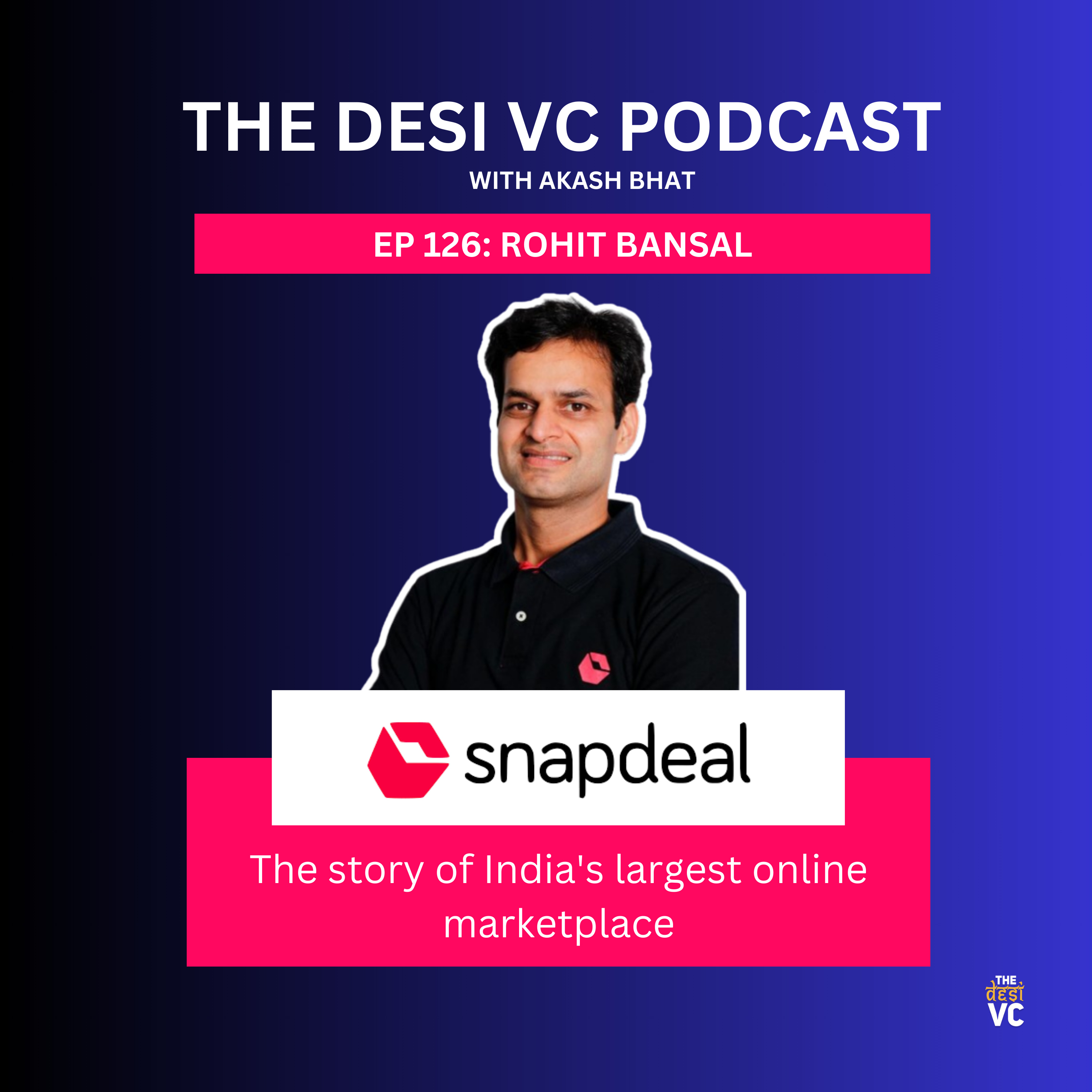
Rohit Bansal, co-founder of SnapDeal, shares the personal and pivotal journey that led to the founding of India’s largest e-commerce marketplace. What began as a spontaneous decision during a family wedding—prompted by a conversation with co-founder Kunal Maco—was shaped by serendipity, low financial risk, and a young, unburdened mindset. Early setbacks, such as the failure to sell a coupon booklet without customer validation, taught them the critical importance of real-world feedback and iterative learning. Rohit emphasizes that entrepreneurship requires patience, resilience, and a long-term mindset—giving businesses at least three to four years to develop, rather than expecting overnight success. He highlights how India’s entrepreneurial landscape has transformed dramatically, with societal perceptions shifting from viewing startups as risky or unprofessional to being seen as a viable, even desirable, life path. This shift is reflected in social contexts, such as Indian families now considering entrepreneurs as potential grooms. Rohit’s personal philosophy centers on enjoying the journey over the destination, valuing experiences over material outcomes, and maintaining balance through habits like fitness, family time, and social connection. He envisions the next decade as one of transformation, where hundreds of Indian startups go public, become globally recognized, and create lasting legacy companies—mirroring the success models seen in the US and Europe. His advice to aspiring founders is rooted in humility, patience, and customer-centricity, stressing that entrepreneurship is as much about personal growth and societal contribution as it is about financial success.
Hey there everybody and welcome back to another episode of the DCVC Podcast.
I'm your host Akash Bhatt and I bring you leading investors and operators investing
and building companies all around the world.
Well, technically my guest today needs no introduction.
He has single handedly changed the face of Indian e-commerce.
Sitting across the table from me today is Rohit Bansal.
He is the co-founder of SnapDeal.
India's largest online marketplace which was launched in February 2010.
SnapDeal since then has become a market leader in retail services, deals space and is the
largest e-retailer of watches, sunglasses, jewelry, clothing among other categories.
The company has raised over 1.7 billion dollars from marquee investors like Tomasik Holdings,
SoftBank, Nexus Venture Partners, Ironpillar Fund, Ali Baba and many other investors.
Over the course of this episode, Rohit and I sit down and talk about some of the challenges
that he has faced in building what seems to be an overnight success in the case of SnapDeal.
He was also extremely generous in sharing some of the frameworks that he has used for
decision making, navigating tough situations in life and most importantly, how he looks
at the next 5-10 years and how UNI can also use similar strategies and decision making
processes as we are thinking about the future.
This is one of my favorite episodes and I am extremely thrilled to share it with each
and every one of you.
So without further ado, let's head in and listen to one of the strongest entrepreneurs
who has changed the face of the Indian tech startup industry.
Rohit was an absolute pressure to have you here on the podcast today.
I have been looking for this for quite some time now and extremely thrilled about speaking
to you over the course of the next 45-15 minutes and uncovering the journey that you have had
and something that a lot of us from the outside have looked at and taken a lot of inspiration
from.
So on that note, welcome to the show.
Thanks.
Thanks a lot for having me, Akash.
It's been an absolute pleasure and I really am really looking forward to our conversation
today.
I followed your podcast for many months now and some of the conversations you've had with
all the people that you got on the podcast are absolutely fabulous, so I'm personally
looking forward to a conversation myself.
Thank you for the kind words and typically I start off most of my episodes asking people
what kind of got them started and each one has such a unique story to tell and I'm going
to pose a very similar question to you too.
You know, they say you've got to be really crazy to get into the world of entrepreneurship
but it's been years in the making for a lot of people.
It's not something that somebody wakes up one morning and feels like, you know what,
I'm going to jump into this, although lately that might be the narrative because of you
know, it's kind of like you want, but back when you did, that wasn't the narrative.
So take us back memory lane and let's, you know, discuss what got you started?
Why entrepreneurship and was that something that you always knew that you were going to
explore?
Hmm.
It's very interesting.
So, you know, I actually grew up in a very small town in India, you know, there's a population
of about 70, 80,000, this is pre-Google maps, you know, it was even hard to find that on
the map.
So, thankfully Google Maps has made it easy to locate now.
The only thing that, you know, at least my parents were very careful, you know, come from
a business family, my father ran a pesticides store in the small town.
The only thing my parents were very clear was that they want me to sort of focus a lot
on my education, but most of my friends from the small town went and sort of joined their
father's family business, etc.
My parents were very clear that, you know, we would like you to focus on education and
do whatever you want.
This shop, for you, doesn't seem to exist and you figure out what you want to do.
And the only thing people knew about future of education in my small town was that whoever
got decent marks ended up in Delhi Public School Archipram.
Right.
So, I have fortunate enough to get decent marks in class 10th and hence I landed up in
DPS Archipram.
That's where I met Kunal.
So, me and Kunal happened to be in the same Kunal Maco founder, both of us happened to
be in the same class, same section of DPS.
And within the first week or two, we became very good friends.
And for the next two years through our 11th and 12th, we used to sit together next to
each other.
And back then, you know, even in school, me and Kunal always used to discuss between
the two of us that both of us, at some point of time in our careers, wanted to be entrepreneurs.
We didn't know that we'll end up doing it together or what we will end up doing or when
we will end up doing.
Just that at the back of our minds, both of us had this feeling that we wanted to be entrepreneurs.
Then, both of us went our separate ways, even to the US, I went to Arctic Dairy.
Fortunately, he was from Delhi, so whenever you would come back from summer and winter
vacations, you'd hang out together, sort of watch movies and sort of go out and get good
all you can eat restaurants.
And both of us then graduated, he started working Microsoft, I started working at Capital
One.
And that's when I vividly remember, this was some months into when we had started working
individually working, and I and Bangalore and E and Seattle, that the conversation started.
Kunal was back home for his brother's wedding and, I mean, obviously I was there for all
the events.
On the sidelines of the wedding, we started having this discussion, so he asked me, so what's
the plan?
And I said, you know, I mean, we just graduated.
I worked for a few years, go to the US, do my MBA, work for a few more years to pay
off my loan and then we'll come back to India and then we can start a business.
And then he said, look, if that's what you're going to do, why wait for these six, seven
years?
Why not do it now?
That's what first got me thinking there was to say that, why wait, if you can do something
now because we realized that we were very young, we had no liabilities, no one really expected
that much from us and our cost of living was low enough because both of us were unmarried.
Maybe that's a good time to start thinking more seriously.
I think that's what really sort of started the conversation.
It didn't really end there because still Kunal was working in the US, I was in India,
so there was still a lot more inertia to doing something.
And that's, I think the final thing happened when both of us simultaneously applied for
each one of these because I was supposed to go to the US Kunal was already there.
And ironically, mine got approved and Kunal's got rejected.
And then he gives me a call and says, Rohit, look, I'm not coming back, I'm here anymore.
So what do you say we should do it now?
I think that's how we decided that we started our business right away.
That's how we really got into entrepreneurship.
Well, in some sense, the stars kind of aligned itself.
I think I strongly do feel that while all of us work hard and hope that we have good skills
and hard work, we actually don't realize how much of a role Sir Indipity plays in all
these things.
And looking back at my own life, it was a big Sir Indipity that I actually bumped into
Kunal and vice versa, it was again big Sir Indipity of what happened in the visa situation
which led to the turn of events as they unfolded.
So there is a lot of credit that goes to Sir Indipity in all these things as well.
It's just one of those things when you hear people and how companies were formed at least
back in like 2000s or early 2010s, you often hear this kind of stuff.
You often hear a lot of Sir Indipity, you often end up hearing that, hey, I wasn't meant
to do this, but eventually something happened.
I met a founder who said, I got fired for my job and I'm nothing to do and I'm nothing
to lose because I hit rock water.
And how much more look can I go and already lost my job and pretty publicly as well.
And now I take a better myself.
And then I remember back then because this I'm talking to 2008, you know, entrepreneurship,
today I'm very happy to see that entrepreneurship has become a lot more mainstream in India,
which is a good thing, you know, I was, I was talking to the IT, at least that we have
year or two left and very interestingly, they ran a poll.
This is for first year IT, at least, students to ask them what their career of choice would
be.
And within first year, the number one was entrepreneurship.
Back in the day when we graduated, I remember people used to think that these guys wouldn't
have gotten jobs, which is why they're starting their own business.
I think it's a remarkable change in perspective, which is a very refreshing and a good one
to see.
It definitely is.
And not just the amount of opportunity that India has presented, a lot of young people
with like good success stories, but also it's the amount of, it's even in some cases also
giving back.
It's like, hey, I've been beneficiary of some great companies and products and I want
like do something and create.
opportunities for like other people as well. I know a lot of young people today getting into the
workforce don't just go in because there's wealth creation opportunity but also there's an
opportunity to to make sure that you're adding to the economy you're adding more jobs to the
economy and then so on and so for people are thinking long term even in terms of what entrepreneurship
really means to them and not just what it can do for them it's what can they do in return for
the larger population the economy the country its people and so on and so forth which to me is
very interesting because 10 years ago you had you asked anybody getting into entrepreneurship
I don't know if a majority of them would have said I'm getting into entrepreneurship because it's
creating a lot more jobs yes it's a byproduct yes there was an opportunity to really
disrupt a market it was a very different time than what it is today but today people are also
thinking about India first like what can we afford the country as such which I think is a very
different narrative that's come about in the last 10 years or so absolutely I completely agree
with that you know what I feel is this one more element which is very important which adds to
why you know people are choosing to become choosing to go down the path of entrepreneurship a lot more
now as compared to earlier is also this you know demystification and humanization of entrepreneurship
what I mean by that is you know just maybe going going back into my own journey you know when
I came to Delhi to DPS from a small town we had only heard of you know IIT in the famous that
because no one from my town had ever been to an IIT in the history of like forever and you know
as a result there used to be this mystique around IIT that you know that just you know we don't
know anyone who's been there somehow you know the people who go there are superhumans etc etc and
then I mean the perception I used to carry as well and I just that made me never even think about
trying to get in and when I came to DPS the biggest thing for me the biggest thing that I realized
many of our seniors who were in grade 11 they are grade 12 when we entered DPS many of them got
into IIT and you know we used to hang out with them and we realized that look all of these are
people like us yes they smart people but I mean they are human beings they are flesh and blood and
so they are no like you know there is no mystique around this and that just
humanized and made it made it a lot more approachable and accessible for us
I feel that similar thing is happening for entrepreneurship as well because back when we were
in college there were so few entrepreneurs that you almost used to feel that the same thing about
entrepreneurs that you know even if I have an idea in mind I just don't know where to start
and go out kind of people who build companies now that there is a lot more history a lot more people
have done it I think it's become a lot more relatable for students because they see many of
their senior college seniors who they personally know get into entrepreneurship build successful
companies suddenly they just feel a lot more capable and entrepreneurship seems a lot more
accessible and there's a lot more sort of knowledge pulled to tap into to know what to do and
where to start even if I which which wasn't the case back when we started our business I think
that's an excellent point that you bring up because what circles that you hang out in also matter
so much in terms of where you end up in life like it's always that debate about you know nature
and you know sure kind of like a thing but if you grow up in a pond with people who are
who are not ambitious you kind of like almost have to either mold yourself into becoming ambitious
or you get just drawn into the larger perception of what the public in that pond give kind of like
portrays if you hang out in a crowd that is super ambitious you almost get that impostor syndrome
and also at the same time you're driven because you're part of that at which you know you're going
to get left behind but what entrepreneurship today has done or good success stories in India has
done is that actually opened up that opportunity today and saying hey you've got founders around you
you can ask people questions there is no blank slate about where to start what to start you have
the internet at your disposal as well amongst all other things so there's that support system
and then you can look at look to your look to your left and look to your right and be like hey I've
got 10 people here and 20 people here who can tell me what I need to even start so that's given
a lot of people more encouragement saying I can do this and I think that's interestingly
that is how we started our investment journey as well because you know both myself and
Konal started our company in 2000 end of 2007 2008 and we started investing in 2011 which is
not that much later than when we started our business and became entrepreneur which is just maybe
four years post as becoming entrepreneurs and you know the big driver for us was actually less
about investing it almost started as a hobby but a lot more to address what you just talked about
that when we were starting there was almost no ecosystem at all we just didn't know who to call
we would have made so many rookie mistakes which were you know for any entrepreneur who had built
any business of any scale would have told us that hey here are the 10 things which are just
absolutely absolutely avoidable we made all those mistakes ourselves because the ecosystem
was so small and the number of people we could go to for advice or investment was so small
that is the precise reason why we started investing in companies because we just felt that
you know as you mentioned India has this huge potential I mean every every year we are stunned by
the number of opportunities that exist and they probably will continue to exist for the many decades
to go but there was something between the large number of opportunities and more people starting
out and we wanted to figure out how we can in a any small way catalyze that sort of entrepreneurship
in India which is why we became investors that you know just you know we've made many mistakes
ourselves we have at least some learnings and this is in some way you know a way for us to give back
to the ecosystem and in whatever small way we can sort of promote entrepreneurship in the country
because we which is both both myself and Kunal are very very passionate about entrepreneurship and
want to do everything that we can to create as many entrepreneurs in India as possible that's actually
how we got into investing doesn't amazing story as one of the things that I wanted to bring up later
in the episode was why investing as well because in my opinion some of the best investors are those
who have been through that operator journey and in probably the most beautiful sense you and
Kunal both have shaped what today's Indian tech industry is like there have been a handful of people
who played a tremendous role in becoming those early success stories and you know yours is right
up there with Snapdeal right and what that does is not only has it inspired people but also it's
given somebody a framework of hey this is what we could do and the best investors also the people
who can share a lot of those experiential learnings back with founders that they invest in
and that is again going back to the point that you mentioned when you started you didn't have that
you didn't know those 10 things that somebody asked you know did had they you probably would have
saved a lot of time money and you know the company could have taken a different direction but
hindsight's 2020 I'm sure those experiences and learnings have kind of like had it in some way
shape or form now we've been talking for the last you know five 10 minutes about what the Indian
startup ecosystem is kind of like done and what founders like you have given back it's you know it's
do that inspiration stories and giving people the opportunity like hey I can build a Snapdeal at one
day as well now let's talk about the dark side of entrepreneurship this is something that I don't
think gets portrayed quite as much in the media or I haven't heard a lot of founders coming and
talking because it's hard like building companies is not easy what might seem like just a 13 14 15
year old journey probably has a lifetime of decision making failures challenges things that you go
through on a personal basis that nobody gets to see like I would love if you know we could spend
another 5 10 minutes here talking about just those dark days because anybody to do it tomorrow or
today wants to be an entrepreneur often looks just to success stories and like I want to do this
because these are reasons I can make money I can make a brand I can do this I can do that it opens
up a lot of doors but what they don't really understand is what snap with Snapdeal what might seem
like an overnight success story had yours in the making and kind of challenges tribulations that
you went through nobody probably has seen it it's probably very intimate between you and Kunal
these are things that you guys spoke about on a daily basis so let's spend a little bit more time
on what is the dark side like when you were building it out I'm sure there were a lot of naysayers
people who are looking at you and saying are you crazy why are you doing this financial crisis in
the world you guys are trying to build a company and and do something and sell stuff online
and going from there to all the other challenges that have come along the way how does a founder
deal with that how do you deal with it what have you learned about yourself in those tough
tough moments in life that's a you know fabulous topic to talk about and you're absolutely
right I think it doesn't get talked about enough
look at you needless to say obviously entrepreneurship is a really exciting thing to do we are all
extremely extremely pro entrepreneurship we really want India to have many many more entrepreneurs
but you know it's important to not you know misinterpret that into thinking that entrepreneurship
it's easy yeah it's not easy for at all and you know I remember you know especially
just going back to a personal story when we were starting you know both of us
went to good colleges had this you know thought process that we have very good pedigrees we can do
whatever we want to within the first 90 days of starting the business all that chip on the
surely it was for the way because our first business was a business where we had to so we were
trying to create a coupon booklet where we had coupons from restaurants pass salons etc and it
was just the two of us so both both myself and Kunal we go sit outside restaurants try to talk to
the general manager there and try to get offered from the person and that restaurant manager
understandably they don't care what your degrees are or what which college you went to or you are
starting trying to start something new and exciting etc for them they just for them it's one more
business transaction you are one more salesperson who showed up at their doors and they will treat you
accordingly according to their own sort of time and time and preference and suddenly you start
realizing okay this is this is not as easy as I thought it would be you know but going back in time
I remember you know one of the best advices I got in the early days was actually from my dad
he mentioned that look great that you're starting up I'm very happy you know you had this
fancy job in the US which you're not taking up anymore let's leave that aside for now whether
that's a good decision or bad decision but now that you're starting I'm fully supporting
what you're doing the only thing I would suggest you do is give yourself at least three to four years
don't give up the phone that because you know again I think he's run a business for many many years
and maybe it was all those years of wisdom which which made him say what he did when he said it I
almost felt it to be laughable that what is it talking about we already have the best idea on the
planet they're just going to launch this product and it's going to be all all roses and rainbows
from there on but I think in nine seconds is advice as as we started going through the struggles I
started realizing how how helpful is advice boss because look you know you start with an idea in
mind and more often than not that idea doesn't work because it's still in your own mind the only time
when you start realizing whether that will work or not work is when you go and talk to real
customers and get real customer feedback that's when you start realizing and sometimes you will
be lucky that the first idea that you had seems to resonate very well with customers and as a result
very launch your product you will start seeing some success upon which you can build upon but
you may also realize at least in our case like we did that's just the idea doesn't work at all
no I mean we both me and Kunal were so convinced about the idea you know that of this coupon booklet
that you're trying to build that is spent one year building the product without talking to
even a single customer and by the time we had spent the one year building the product
both of us were so convinced that this is the most beautiful idea on the planet again just to
remind you without having spoken to a single customer that we were sure that we will run out of
booklets the day we start selling them so to make sure we don't run out of booklets to sell
we printed 50,000 copies of the first booklet and our reality reality check happened within
the first three months when in the first two three months we sold I don't know I mean it is
5, 7, 10 like some some single single digit number of booklets and that's how we realized
how important it is to talk to customers very early on and you know that's how our
are sort of running into failure started if I may very very early on but I think then over a
period of time those are the experiences we teach you to do better job next time so when you're
actually launching snap in the online version that time we didn't make that mistake we sort of
we had a very sort of absolute MVP but which we put out there in the next 10, 12 days
so that we can start getting real customer feedback and start talking to real customer and
within using that we were able to sort of put a pretty decent product out there in the next two
three months so I think those are many learnings that we've seen going through entrepreneurship but
as you rightly mentioned it's it's not easy it's important to mentally be prepared to give it
a few years yeah it is also important like many other things in life that there is no guarantee
of success yeah the only thing that worked for us in hindsight when we got into entrepreneurship was
I feel we had the right mindset that look we are very young we'll give this a shot we'll give
this three four years of our lives at the very least to begin with and even if it doesn't work out
you know we'll first of all we'll keep trying for three four years till we make something work
we didn't have any preconceived notions that whatever we start will absolutely absolutely be
a raging success from day one so I feel that was the right mindset to have but even if it doesn't
work three four years later we would have probably learned so much that we will be a lot more
employment if we had to go back and work somewhere because the experiences we would have had in
this entire journey would be tremendous and would hopefully give us give us an edge over most of
the people who are starting I think that it's important to go into entrepreneurship with that mindset
so that you know because at the end of the day like the Geeta say which I'm a big follower of
you only have control over all your actions you don't have any control over the outcomes
and as much as all of us who ended up building successful companies may want to feel like it was
only us and you know it was our skill and hard work I don't think that is it there is always always
always a lot of luck involved you may do everything right and still things may not work out
so being mentally prepared for that from very early on is very important in having that right
mindset like with anything else in life I feel is very very important when you're moving on the
path of entrepreneurship was there ever a moment where you felt you didn't want to do what you were
doing the reason I asked that is because most recently like two days ago I was speaking to a
founder here see these D building the company for the last eight years and he's taken a sabbatical
know he's he said I'm I'm out for a year I'm not doing anything for the next year I just want to like
recoup my energy and he said I've loved building this company and to do the thing I've loved anything
more than doing what I've done but I think at the same time as much as I loved it I think it broke me
it it really brought me down to pieces and that's just the harsh truth that I've had to like take
a year to digest and then let my shareholders and my employees know about it that's one of the
reasons why I'm asking you this question how real is that thought in your head or do you get
thoughts like goes where you're like man this is hard of course it's hard but I I think I just
need a little bit of a break and there's no and and what I'm trying to do by asking this question is
if there is a thought like that I want to normalize this going forward for founders to take a break
just look at you know some of their own decisions re-prioritize things that are probably
important mental health just overall wellness and all of that so did that thought ever cross your mind
so it's it's interesting that you ask that question ironically enough
there are many many times when not once like many many in numerous number of times when I've said
this is very hard and you know I'm trying you're trying trying everything you can you know with
all the still we have all the hardware we have all the number of hours everything that we can put
we put in everything and still things are not working out and you know I think that just
it is just human for anyone to feel extremely frustrated at that and that that feeling has happened
not once but many many times over somehow or the other though the feeling of
let's just give this up and do something else that just somehow has never come I don't know
it's you know it's it's a very personal thing it's you know both me and Gunal are probably built
that way that we always feel frustrated about we can feel frustrated about a situation and by
situ that situation is not getting untangled or how do we get out of that situation but
underlying all of that they've thought that just let's give up on the concept in itself or let's
just go back doing something different and not the entrepreneurs anymore somehow that has
just never never crossed our mind and you know I think both of speaking personally for myself
You know, just to, we've become better at coping with this situation for as the youth
progressed and you know, it's not been easy the first time you feel frustrated like that,
you know, especially if you've done at least in the context of India, if you've academically
done well in life, you've had very few chances to fail, which fortunately was the case
for me that I was academically a bright child and as a result, there are academically very
few failures that are faced, but when entrepreneurship is not only a cabinet, it's very, very different
to that and when you face failure for the first time, it's heartbreaking, it's frustrating
sometimes.
You're not used to it.
You just, you don't know how that feels like, but just it is important to get over that mindset
and at least we, at least I personally are actively, actively try to, try to cultivate habits
and practices which help you sort of broaden your, broaden your point of view and perspective
and just realize that again, just going back to the one learning that which I keep repeating
to myself on and on is just, you know, it's my job to do the best I can.
I can't really control what happens as an outcome.
Yeah.
This needs easier set than done.
It takes years and years of practice to really internalize it and still trying to, I think
over the years I've become better at internalizing it than many people, but you know, not good
enough and this is a lifelong journey.
Yeah.
What are some of these habits with, I think, you know, this is a very interesting topic
that you brought up.
I would love to understand the framework, the things that you can like internalize or ways
in which you have built a very robust sort of coping mechanism that helps you deal with
these tough decisions and tough instances and situations in life.
See, I think for me, I mean, every person has their own methodology about doing this.
The way I go about it is just, you know, having, having, you know, in some ways a life outside
of work as well.
For me, you know, I think if I realize reasonably early on that, you know, looks like I'm going
to be doing this for the rest of my life until the time I can be working and at least
that's my intention till the time I can stay healthy and fit.
And as a result, what are some of the things I can do today to start mentally preparing
myself for that and sort of so that I can not only have intensity, but longevity and
consistency of doing this over an extended period of time.
Some things that work for me and again, that's my own personal preference.
I'm into health and fitness, so I spend, spend time making sure, even in the busiest
of days I take time, take time out to sort of to work out and keep myself fit.
You know, I spend a lot of time with my family, both life as and as kids, so that's always
distressing.
I've consciously, entrepreneurship can also get extremely extremely lonely sometimes.
Yeah.
Both myself and another fortunate to have each other and having a co-founder place sort
of mellows that loneliness down quite materially, but even outside of that I've consciously tried
to develop a little bit of a social network of people who I can sort of just meet and
sort of have this sense of community and not feel, not feel extremely lonely.
So those are the two three things that that work for me and making sure that I don't see,
I don't feel that while we're on this journey of entrepreneurship, which is obviously very
demanding in terms of time, you don't feel like you're postponing everything else in life.
Because that resentment can then come back and bite you quite a bit, that if you postpone
every joint life, I'll not have time for family, for myself, health, no friends, no sort of
taking time off to travel or whatever you like to do.
Because I'm busy doing this and one fine day when I'm X years old, I will retire and
fulfill all those sort of dreams and desires, I'm personally not in the camp that believes
in that.
And as it has chosen to sort of make that a part of day-to-day life as well versus waiting
for one fine day when all those things will come true, that ensures that I'm not feeling
this sort of resentment or postponement or this thing that, you know, why am I so busy,
why am I doing this, I would rather be doing this, actually whatever I would rather be
doing, I'd just try to give that as much into my normal days as I can.
I love that answer because there's also no right or wrong here, right?
You could be like an Elon Musk who's like just work all day or you could also be like
what you mentioned, you know, like this person who can compartmentalize life.
And I think that's one of the, that's a harder thing to do in my opinion.
As opposed to just saying I'm going to go all out and just do work because I think that's
an easier decision because you, you probably are able to just sidetrack everything else.
But compartmentalizing life, dedicating time to family, kids, your hobbies, travel, things
that you really like to do, fitness, I think fitness and health are one of those things
that most founders, at least Indian founders that I've spoken to, it's almost like an
afterthought.
You know, they're very companies for five, 10 years and then 10th to 10 to 15th year, they're
like, oh, you know what?
I think I'm neglected health, I put on a lot of weight, I don't think it's the same.
I have, I'm signed to see these like early signs of diseases that are coming through and
now I need to start taking priority of my health.
That's the hardest decision.
I think most people will make when they're starting about on their journey of entrepreneurship.
And I think you mentioned that pretty clearly that it was very important to you.
I'm glad you mentioned that coming from a very successful operator like you, I think it's
a good example to also have because not a lot of founders are dedicating enough number
of time to things that really matter to them outside of just work.
Absolutely.
And you know, it's a funny story how, again, I think this, this habit somehow got built
in the childhood itself and it's a very funny story.
I just very vividly remember how this happened in me is that, you know, I was like all, you
know, all good Indian parents, you know, I was told in my class eights that, you know,
spend your time in well in class 10s, study, get decent marks, then your life is set and
then when you're 11th, then you know, get into a decent college, then your life will be
set.
So I started sensing fairly early on that this pattern is not going away.
I think every two years, there'll be a next thing to do and suddenly your life will be
set, which is not going to be the case because you fast forward every two, three years, there
can be some next milestone to chase after which you feel you'll be set, but then something
else will come up.
And as a result, it's very important to keep enjoying life in parallel to all of this
going on.
So I think I decided that in class 10th or 11th or some time like that, which is why even
during the time when you're preparing for our entrance exams, which is again a very,
very rigorous time for most students and they have to sort of slog themselves and both
sort of study for many, many hours.
I used to make sure that I go out and watch my weekly movie at least in a cinema and have
a good time.
I think that habit probably comes from there.
It has taken a different shape and form now that I'm an entrepreneur.
But just I think the seeds in some way got so fairly early in life.
Yeah, knowing that life is going to be the same.
It's always going to be something or the other that will keep coming, that will keep bringing
you back to what you're doing.
So it's very difficult.
And this personally, not a big fan of postponing happiness because I think it's, I know it's
a cliched statement that the journey has to be more important than the destination.
Actually, I'm personally of the Philippe belief that there is no destination because whenever
you reach somewhere, at least I've personally had that experience many, many times over
to now believe that that you always have this thing in mind that you know, if I do this,
then I'll be happy.
Yeah.
It usually lasts a few days at best.
Yeah.
So this is the next thing and then there is the next thing.
So, you have to at least start realizing fairly early on or as soon as you can that this
is a never ending thing.
And I think the job isn't actually sort of going through this journey, which is why the
journey itself has to be an enjoyable one so that you can carry it out for a long period
of time versus always carrying this feeling that I'm somehow making such a huge sacrifice
to go through this and you know, which in which case, if you don't get what you want,
you'll be absolutely heartbroken and that's what will bring many of those past years which
now you can't do anything about sort of that to you that you know, I postponed so many
things, I sacrificed so many things, etc.
I just personally never, never.
want to carry that feeling of regret in the future years as well that somehow or the other
has sacrificed so many of the things which I can't get them back now because time one's gone never comes back.
Yeah, you're absolutely right about that and we know Kursla famously once said that
there is no real satisfaction that an entrepreneur can settle on like something or the other is
constantly going to keep them awake and bothered. So there is a real entrepreneur is never satisfied
by anything by his achievements or her achievements or the company's achievements or whatever it is
there's always going to be something that'll keep coming along the way and building off of that
thought you know you've obviously I mean I'm not going to go and embarrass you and you know
cite everything that you've kind of like done and then achieved in life but right from let's say
childhood where breaking into an IIT for a small town boy like you is unfathomable but you
did that building a company and then taking it from where it was to where it is today getting into
investments investing in some of the biggest brands in India all of those accolades that have come
along the way and successes and the highs that have happened what stands out to you what are you
like truly proud of today having had the n number of successes and great stories and the legacy I can
actually use the word legacy here because the contributions that you've made to the Indian startup
ecosystem is by far you know they're only a handful of people have done so so you really fall
into that bracket of like maybe 20 25 people who have contributed so much so when you look back
at your own journey wasn't the one thing that you're really proud of I think first of all you're
being too generous and too kind kind in the words you're using but thanks a lot for mentioning all
those things I actually feel you know the one thing which I feel really really happy about is
you know as I mentioned I'm personally a big big fan of entrepreneurship I feel
India should have many many many entrepreneurs as a country because there are innumerous
number of opportunities in our country and you know I've always for a long for many years now
carried this belief that look if people like us don't do it then who will I think it's somehow
somehow stems from that fact that you know all entrepreneurs all businesses that are created
are created by human beings like sort of human beings and if people don't unlike us don't give
ourselves the best shot then who else will and as a result I've always felt very passionate about
in whatever small shape and form trying to promote entrepreneurship in the country
I feel through our own journey as entrepreneurs as well as having having been a sort of participant in
many many entrepreneurship journeys from very early stages as an investor you know both myself and
Kunal have been able to I don't know in what quantum but in some shape or form bring this feeling
or sort of catalyze entrepreneurship in our country in some ways by either being
role models as entrepreneurs to many of the people who are graduating now or in helping and
supporting them as investors and hopefully that sort of changes the perception of perception of
entrepreneurship in the country because it's a funny incident I remember I mentioned you know how
people used to think about entrepreneurship but back when we were graduating that people used to
carry this perception that these guys who did have got in decent jobs which is why they are they're
starting their own thing too fast forward to a few years back where if my close relatives
all made up on day and said you know we are looking for a groom for because they were I mean
their daughter was of a marriage relation they were looking to do an arranged marriage
so they called me and asked who we are looking for a groom for our daughter so if you have any
entrepreneur type guy in your network let me know I think that we was a watershed movement
in how the perception of entrepreneurship in India has changed from being considered people who are
otherwise jobless yeah to now you know I think finding a groom for their daughter is I would
say the epitome of trust that people need to have in a personality and people wanting to find
an entrepreneur as a groom for their daughter is a is a remarkable transformation in India and the
Indian psyche of look at entrepreneurship so to me that is personally the most rewarding thing
and is it actually I love that story because 15 years ago when I was graduating and I told my
grandmother at that point of time that hey one day I want to start my own company she said you're
crazy don't do that we don't come from the world of business we we're not the banyata if you're not
going to be credited and then when I went and started out something this year she's like what took
you so long so that just goes to show that somebody who in 15 years is coming on so much so that
story that you are sharing this story which is very close to like my family it's kind of just go
and goes to show you how far we have come as a country in just the last 15 years or even the last
decade or so it's been one you know that that probably inspires a lot more you know newer countries
and geographies that probably want to take a leap out of like our playbook and how we've kind of
like done so and you know the next question that I hadn't mind as you were talking about that is
here's a person who's kind of again not trying to be generous with my words here but just
stating some facts who shaped the way that the Indian started because systems kind of like evolved
in in one way shape or form what motivates this person like what is it that keeps you going even
today like you know 15 years or 16 years in what what what is it that the next 5 10 years of your
life what are you dedicating that towards building actually what keeps me going is again it's very
cliched but I genuinely really enjoy what we do and you know I think it's very hard to replace
that feeling with many other things like I can't imagine what I would be doing if I would not
be doing this and you know I genuinely feel like being at a place where you know obviously there
many setbacks and many things that don't work out many things that work out as well but just
I can't picture myself doing anything else because it just it doesn't feel like word to me at all
and you know it is very hard to find such things in life you know yeah and I think we do find them
it's I feel it's almost a responsibility to do the best you can with them because you know
there can be many other motivations that I want to be successful I want to make money etc I've
seen that all of those you know if you don't have any money of course having some money
materially upgrades your quality of life I you know I won't lie about that and I won't
sort of go down the path of saying that you know money doesn't matter etc etc but I do feel that
if you do anything anything meaningful for most people at least knowing for myself
that number gets reached fairly early at least because you know I've maintained a reasonably
reasonably simple standard of living and that's what I want to teach my kids and that's all
bring up my kids as well our cost of living is not very high and as a result you know soon you find
yourself in a place that then money is just a number you know the point till which it could
give you happiness is already passed then you ask yourself you know that stops motivating you
fairly quickly yeah and then it has to be really really you have to be enjoying what you do which
I just happen to have been lucky in finding something that I really enjoyed which is why that's
the that's the primary thing that keeps me going I don't think it's about either financial success
or you know that I want to be known by an xyz number of people those things are important for some
people and credit for them that may be their motivation definitely not for you and is there
like a thing that you think you've yet to accomplish in life or there's a goal that you're working
towards I know you mentioned that what you're doing today in various aspects investing snap
all the other things that you're involved with do you feel there's a chapter of your life that's
yet to be written do you think there's something that you know has been on your mind for a long
time but you probably will work on it when time kind of like opens up or when you kind of make time
for it I think one of my unfulfilled desires which you know I'm sensing that over the next one
decade or so will get fulfilled just very professionally speaking is I still feel the number of
Indian startups which have gone public and not only created wealth for sort of the early investors
but also you know being being iconic market companies employees public market investors
those are it has started to happen but those are still relatively very few and as a result
I do feel that fairly strongly that that's that's what should happen over the next one decade
in the country I would really love for that to happen because that will unlock
very different level of respect for entrepreneurship in the country very different level of passion
entrepreneurship and sort of the willingness in sort of younger generations to go down that path.
And maybe becoming international success also. So that's what I would really like to see happen
in our country. It is starting to happen now, but I still feel there's a long way to go for
Indian startups to sort of go public and become these iconic large public market companies.
Yeah, that's that's a grand vision right that's that's what we all want that's what we are hoping
for. We're cheering for from the sidelines is having these great success stories that can come off
and build these generational companies and you know like the ones that we've seen here in the US
or in China or in Europe. The ones that start off as something but today have become just
household names and iconic brands that globally recognize and that's what we want coming out of
India and that's happening with a bunch of you know companies that have been launched. I'm sure
that'll happen in this decade is India's they say the century is India's of course it is but then
I feel this is the this is the decade that we'll see a lot more companies come out and really build
that foundation that everybody tomorrow coming out saying hey I don't want my company just to be
acquired. I want to go I want to take it public. I want to make this a a globally recognizable name
because even when you take it like just vertical you know commerce companies or just as an example
we've seen companies come out of India that have kind of just been Indian household names
but you've not seen somebody with an ambition saying I want my company to be like globally recognized
it's every third world country or I think I actually strongly feel the next decade we're going to see
that I feel the next decade years going to see hundreds of startups if not more Indian companies
which are going to go public going to be extremely profitable then grow into large even larger
companies and sort of from mid cap to large cap companies in the public market and also go international
become sort of international household names I can I can feel that's going to happen I really desire
it to happen so I think that's something that I'm personally personally really looking forward to.
You were all sharing out from the sideline for that story to like breakout and before I let you go
this is something that I typically ask every person who is here on the podcast if you were to
look back on your journey and in you were to start all over again what's the advice that
Rohit of today is going to give that Rohit of yesterday or it's so it's a very hard question to answer
because there's so many so many accumulated learnings over the last many years but if I were to
just try and pick the first two three that come to mind one is I just going back you know
going back to what I mentioned earlier in the podcast as well when you're going down the path
of entrepreneurship giving yourself at least three to four years to begin with and not
not sort of overburning yourself to become successful within the first six months or one year so
that's number one number two you know if you're building a business you know almost any domain
making sure you start talking to your customers from very very very early on as early as possible
because at least we've seen that journey ourselves and have seen many other entrepreneurs go through
a journey the perspective on what you are trying to do and what you should do sometimes
completely changes when you go and talk to customers so that's probably the second advice I would
sort of give the people give myself to go back in time and third would be to you know
to not postpone postpone everything else in life for that you know maybe it's okay they're always
periods of six months one year sometimes when you are so all in that you don't have time for
anything else but I wouldn't expect myself or anyone else to postpone that for five years or
ten years because that time you know why one may become financially successful in that period
one doesn't want to carry the regret of having lost lost precious time which you know won't come
back and as a result just gearing yourself up to you know almost like a marathon continue continue
doing this for many many years is a lot better than trying to be very intense for a short period
of time and then feeling burnt out or this resentment of having postponed too many things in life
I love that and you've also in some sense summarized what this whole episode's been about it's been
a very personal journey that you've shared with us you've shared these tidbits that I haven't
come across during my research so thank you for that to be the first time that hopefully some
people are like hearing about this and more than anything else I've just loved how vulnerable and
genuine and honest you've been about your journey and that's the one true part I really love about
this show that I do is just getting people to like just walk back and memory lane and just
tap into those things and memories that may have gotten lost along the way and I really had a great
time talking to you about this and I always say this but then I would really really love to do an
episode sometime later in the future again sit down and talk about just just a philosophical side
of of of everything which is building things and things that you've learned because I think there's
a lot more that I personally can just learn off of you and everything that you've kind of like
modeled your life around and that would be a great inspiration if you're not impacting hundreds
of thousands of lives I'm sure you'll be at least impacting one person here so I would love
to sit down with you so thank you so much for being on this show I really really had a great time
thank you so much for having me a car share and you know thank you for a generous word then you
know I must say that you've you've done an excellent job in winging out whatever I had to whatever
I had to share so credit goes to you thank you so much and that's good
Podcast Summary
Key Points:
Rohit Bansal and co-founder Kunal Maco started SnapDeal after a pivotal conversation during a family wedding, driven by a desire to act on their entrepreneurial dreams early rather than waiting for conventional career paths.
The founding of SnapDeal was influenced by significant life events, including visa rejections and a shift in mindset, highlighting how serendipity and personal circumstances can catalyze entrepreneurship.
Early challenges, such as failing to sell a coupon booklet due to lack of customer validation, taught them the critical importance of customer feedback and iterative product development before launch.
A key lesson from their journey is the necessity of patience—giving themselves at least three to four years to build a business, rather than chasing quick success, which helped them navigate uncertainty and failure.
Rohit emphasizes that entrepreneurship is not just about financial gain but also about creating long-term value, giving back to the ecosystem, and building a legacy of opportunity for future entrepreneurs in India.
He believes the Indian startup ecosystem has evolved significantly, with entrepreneurship now seen as a viable, respected, and socially valued path, even being considered a suitable life partner.
A core philosophy guiding his approach is that success is not guaranteed, and the journey is inherently long, requiring mental resilience, self-awareness, and a focus on enjoying the process rather than just the outcome.
Rohit envisions a future where more Indian startups go public, become iconic, and achieve international recognition, transforming entrepreneurship into a sustainable, respected, and generational force in the country.
Summary:
Rohit Bansal, co-founder of SnapDeal, shares the personal and pivotal journey that led to the founding of India’s largest e-commerce marketplace. What began as a spontaneous decision during a family wedding—prompted by a conversation with co-founder Kunal Maco—was shaped by serendipity, low financial risk, and a young, unburdened mindset. Early setbacks, such as the failure to sell a coupon booklet without customer validation, taught them the critical importance of real-world feedback and iterative learning.
Rohit emphasizes that entrepreneurship requires patience, resilience, and a long-term mindset—giving businesses at least three to four years to develop, rather than expecting overnight success. He highlights how India’s entrepreneurial landscape has transformed dramatically, with societal perceptions shifting from viewing startups as risky or unprofessional to being seen as a viable, even desirable, life path. This shift is reflected in social contexts, such as Indian families now considering entrepreneurs as potential grooms.
Rohit’s personal philosophy centers on enjoying the journey over the destination, valuing experiences over material outcomes, and maintaining balance through habits like fitness, family time, and social connection. He envisions the next decade as one of transformation, where hundreds of Indian startups go public, become globally recognized, and create lasting legacy companies—mirroring the success models seen in the US and Europe. His advice to aspiring founders is rooted in humility, patience, and customer-centricity, stressing that entrepreneurship is as much about personal growth and societal contribution as it is about financial success.
FAQs
Rohit and his co-founder Kunal were both passionate about entrepreneurship from a young age. A pivotal moment came when Kunal, after returning from the US, suggested they start the business immediately instead of waiting years to do so. This decision was reinforced when Rohit’s visa was approved and Kunal’s was rejected, prompting them to launch SnapDeal right away.
In the early days, Rohit and Kunal struggled to gain traction with their first product—a coupon booklet. They spent a full year building it without talking to customers, only to realize they sold just a few copies. This taught them the importance of early customer feedback and validated the need for a minimum viable product (MVP).
The perception of entrepreneurship has shifted dramatically. Once seen as a risky alternative to stable jobs, it is now viewed as a viable and respected career path. This is evident in social trends, such as parents seeking entrepreneurs as grooms, and the growing number of young people starting businesses with a focus on job creation and societal impact.
He advises giving oneself at least three to four years to build a business, not rushing for success in the first year. He also emphasizes talking to real customers early and not postponing personal life, health, or family due to work, to avoid long-term regret.
He prioritizes fitness, family time, and personal hobbies, making them part of his daily routine. He believes that entrepreneurship is a long-term journey that requires mental and physical resilience, and that enjoying life alongside work prevents burnout and regret.
He envisions a future where more Indian startups go public, become iconic, and achieve global recognition. He sees this as a key development that will elevate entrepreneurship’s status in India and inspire younger generations to build sustainable, impactful businesses.
Chat with AI
Loading...
Pro features
Go deeper with this episode
Unlock creator-grade tools that turn any transcript into show notes and subtitle files.
 PodcastTranscript AI