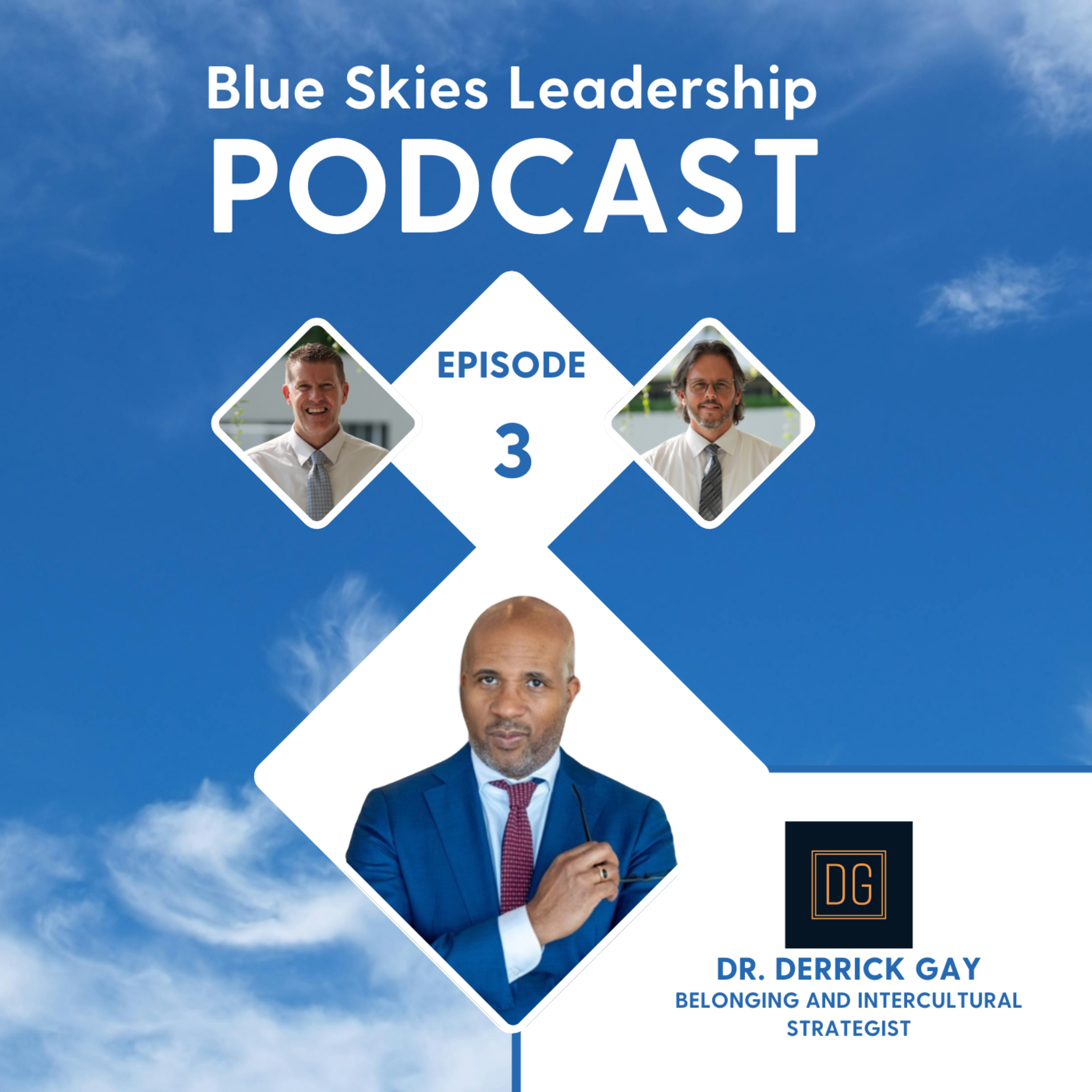
E03 - Dr. Derrick Gay - Reframing Diversity to Foster Cultures of Dignity and Respect in International Schools- Blue Skies Leadership
29m 51s
The transcription discusses the common misunderstanding of diversity, where marginalized groups are considered diverse while others are seen as normal. It also introduces the Blue Skies Leadership Podcast, featuring conversations on education and change initiatives in schools. Dr. Derek Gay highlights the significance of cultural context in diversity work within international schools, emphasizing the need for belonging and inclusion for all members of the community. The importance of engaging stakeholders, understanding common language priorities, and considering cultural specifics are identified as key priorities for schools moving forward in their diversity and inclusion efforts.
Transcription
4925 Words, 28310 Characters
not only that people have very different understandings
of what diversity means,
and often people think that diversity means
whoever the historically marginalized group is,
and those are the diverse people,
and everyone else are just the normal people.
And so we engage in this work,
it's those diverse people who typically are the most
marginalized in the communities,
having to engage in the work to solve all of the problems,
which makes no sense.
(upbeat music)
(upbeat music)
- You're listening to the Blue Skies Leadership Podcast,
featuring discussions with international school leaders
about the future of education.
The podcast embodies the spirit of reciprocity
by sharing strategies and change initiatives
from leading schools around the world.
Here are your hosts, Dan Kerr and Daniel Mendes.
- So Dan, I was just thinking that we just came off
in October 3rd.
I'd love to hear about your October break.
We had the best time, you won't believe this,
but we've been planning a 50th birthday surprise
for my wife, Jocelyn, for over a year,
and we actually pulled it off without her knowing,
and it was such a magical experience.
So we told her a couple of days before we got on a plane
that she was gonna go to London, England,
one of her favorite places in the world,
but she had no idea that waiting for her on the other end
in an Airbnb house was her mother, her father,
her two sisters, her brother, and our son, Max.
So when we showed up at the house,
and they all surprised her, she literally fell apart,
and it was a beautiful, beautiful experience,
and I can't believe we pulled it off.
- I can't believe, with so many people in the mix,
you pulled it off.
I'm assuming you had a great time together.
- I was the best.
We loved London.
It was the perfect time.
We got two great days of sunshine through Hyde Park,
and yeah, it was just really, really special.
And my daughter, Gabby, was part of the plan
the entire time and that gave us something to do
together over the last year and something to focus on.
So it was beautiful, a beautiful time, and it worked out,
and I think she felt really, really seen and loved.
- Awesome.
- Yeah, thanks for that.
What about you?
You guys headed somewhere?
- Yeah, well, we're a Disney family,
and we decided to do one of our trips
was to go to Shanghai Disney and Tokyo Disney,
and it was just purely magical.
But it was a really small moment
that I will never forget for the rest of my life.
My son, Bruce, and I, we said at the beginning of our trip,
hey, let's just get something at Tokyo Disney
that we could share and keep as a memento.
We get there and nothing fits me,
and the sizing is all a little bit too small for me,
and we're just walking around
and we just can't find anything that we want.
And so on the way out, Mila pointed out that,
hey, Dad, you guys didn't get anything.
And I said, well, yeah, nothing fits.
I have a big head, I've got big hands,
I've got a big body.
My son, without missing a beat, said, yeah,
and you also have a big heart.
- Oh man, you're gonna make me cry in this podcast.
- I know, it's just one of those moments
where I was just like, welled up and wasn't expecting it.
This made me feel so good, made my year.
- Yeah, that's beautiful.
I'm glad that happened to you, that's fantastic.
You've been to every Disney on the planet now, it sounds like.
- Except for the one in France, where we'll get there soon.
But yeah, we have a fantastic guest today.
Get ready to welcome a true champion of belonging,
a global voice for inclusion,
a man who has helped over 800 organizations
across the world create cultures of dignity and respect.
Dr. Derek Gay.
- Yeah, and Dr. Derek Gay is not just an expert,
I think he is the expert.
Now he's a speaker, he's an author, university lecturer,
he does it all.
- Yeah, his work transcends borders
and industries from the bright lights of Broadway
with Phantom of the Opera,
to the halls of prestigious institutions
like Yale and Oberlin.
- Yeah, and he's been a senior content and curriculum advisor
for the Sesame Street Workshop since 2016, which is awesome.
And he was just here at SSIS, not that long ago,
really helping us walk this work
in a really contextual and strategic way.
So Dr. Gay, welcome to the show.
- It's great to be here,
and I'm looking forward to our conversation.
- Well, we just experienced, for our listeners,
we just experienced two days
of such amazing, profound conversations
around diversity and belonging.
And I wish every one of you could be here
to have experienced what we experienced.
We just came out of a gym with 250 employees
with such a clear vision of the differences
between dignity and belonging and respect
that I've got goosebumps just thinking
about the great work that we need to do at this school.
- You're gonna almost hear a pin drop
and we need to be grounded in that way.
So Dr. Gay, can you tell us how did this go
from your perspective and how did you get us
to such a place that we walked out of there
sort of mouths opened and tearful and full of emotion
in such a beautiful way?
- I'm getting goosebumps just hearing you all share
how the work has impacted you.
You're having clear understanding of some key terms
and clear vision of the work moving forward.
It really has been a wonderful time here.
I've had an opportunity to work with students,
middle school students, upper school students,
staff, parents, administration here in Vietnam.
And it has been truly welcoming.
It's really the overarching feeling that I've felt
and really just a sense of openness to the work.
A sense of the importance of engaging in the work.
A sense of acknowledging where we are as a school
and where we want to be.
I also just love that there were students, for example,
in the high school, we had a conversation today
around all the things you mentioned,
around dignity, around respect,
around the importance of intercultural competency
for their wellbeing and inclusion at the school
and for them to be successful adults moving forward
and university in life.
And one student shared with me, he was a 10th grade.
He said, I really, really appreciated the talk.
It went by so quickly.
It was so interactive.
And you mentioned that the talk really had been a process
that you have always received feedback from students
to make it better.
I was like, where is he going with this?
And he said, and I thought it was great.
And can I offer you some feedback?
I said, please offer me some feedback.
And he said, and I love what he said.
I mentioned that in our schools,
we have identity-based harm going on.
He said, absolutely.
And he said, and you mentioned that there were popular kids.
I think it would be important for you to know
that it's not popular kids like it was
back when you were a student.
I was like, okay, it wasn't that long ago
that I was a student.
But he said here, and I think in other international schools,
is that we have different cliques and different groups
and there are different popular kids for each group.
- Yeah, that's interesting.
- So there's not just one group of popular kids,
but each group has this popular kids.
And I so appreciated him sharing that with me
'cause certainly something that I will now think about
as I'm working with schools and sharing with staff
and sharing with students,
but that he took advantage of the invitation
that I offered to make my work more impactful
and to include student voice and agency in the works.
It was a wonderful moment for me
that I had been able to work with the students
and that the student took to heart.
The idea that I thought his perspective and voice
was important and I can integrate it
to make this work more salient.
- As a wonderful commentary, beautiful commentary actually,
to have a high school assembly on a Friday afternoon
and have 30 to 40 kids waiting to speak to you
after the assembly was over was really, really telling.
- And very diverse kids.
It wasn't the same group of kids.
It was just all the different students
that we have in our school,
which leads me into the next point
that you helped us to really understand
in the last two days is that
even though we're an international school
and we call ourselves diverse,
just based on the population that we draw on,
you actually think it takes more work
for us to build belonging.
- Yeah, and I mentioned this in our sessions
that prior to really to George Floyd,
the murder of George Floyd,
that very few international schools
were having intentional conversations around belonging.
It's not to say that we didn't have advisory programs
and well-being and character development
weren't efforts that were important
and we're doing great work around,
but the model of intentionally thinking
about belonging in our schools,
because many of us felt that because we were international,
that we were also organically inclusive,
that because we had all of the different nationalities
and the passport holders
and all the wonderful food, fun, flag, festival events
that all of our students and our staff and our families
were feeling a sense of belonging
and that's certainly not the case.
And if we think about belonging really
as being the emotional feeling that we have
when people show us that we're valued,
that we're seen, that we're heard, that we're safe,
we then recognize in an international school
that we have that many more types of differences.
It makes sense then and it takes more intentionality
to really align all of those differences
in a way that we have common understandings
around some key constructs
and also common understandings of ways
that we're going to then treat each other
with respect and with kindness.
- This is a quick takeaway from you
over the last couple of days.
You helped us to understand as well
that this work is not only complex,
but it's different depending on the regions
that you step into.
And you talk a lot about the idea
of indirect and direct conversation,
high and low context cultures.
And that's the complexity that was down almost
when you have to get to a cultural piece
that is different than what people expect
to come out of the United States
or Europe, for example.
So here in Asia, it looks very, very different.
- Yes, and that's one of the challenges
that I think of the implementation
of diversity work in international schools.
Not only that people have very different understandings
of what diversity means
and often people think that diversity means
whoever the historically marginalized group is
and those are the diverse people
and everyone else are just the normal people.
And so we engage in this work.
It's those diverse people
who typically are the most marginalized in the communities
having to engage in the work to solve all of the problems,
which makes no sense.
But thinking about then how we reframe diversity
to really think about everyone's backgrounds,
but that doesn't mean that there's an accountability.
It's actually more accountability
because if we think that everyone's included
in this definition of diversity,
then it's everyone's responsibility then
to ensure that all members of the community
are being treated with dignity and respect.
So it's not the onus of just certain people to do the work,
it's the onus of everyone to do the work.
So then that's the first issue
and getting to your question then,
the cultural context of the implementation is key.
So if I'm doing this work, for example, in the United States
and I work in New York City and San Francisco
and Huntsville, Alabama and Little Rock, Arkansas,
even there, the work will look different
in different cities and different states.
And then when I do this work outside of the United States
and currently I'm working in Latin America and Asia
and Europe and other places that each country
has a different history.
There are different social structures in the country
where words take on different connotations
and different meanings.
Here in Asia, as I mentioned,
one of the challenges around diversity
in international schools is that most
of the international schools have a very Western framing,
usually Western administrators, Western teachers largely
and having a Western very direct communication style,
which is culturally misaligned with Asia.
It's not that a direct communication style is correct
or an indirect communication style is direct,
but ultimately if I want it to be effective,
I need to be aware of how the message
is best going to be received by constituents
to get them engaged and sustained in the work.
- Yeah, that's so important and so interesting.
Just before we started this podcast,
we were having a conversation about how at the root of it,
this work really is strategic change management process.
Would you agree with that?
- 100% and this is what I say to schools
that it's not enough to say, I believe in diversity.
It's not enough to say, I believe in belonging.
It's not enough to say that we must be kind to each other
and smile at each other all day.
That's not going to sustain whether integrate this work
into the DNA of the school and operationalize it
in a way that is going to be sustainable over time.
So it must be conceived as change management.
It must be conceived as a structured approach
to guiding and facilitating individuals, teams
and organizations through a transition
from whatever the current state is
to whatever that desired future state is.
It needs not only intentionality,
it needs priming beforehand.
It needs some group planning what we're going to do.
It requires common understandings of key terms.
It requires some type of execution.
It requires some type of, again, sustaining change
and recognizing that whenever there's change management,
whenever there's change, we should expect resistance.
Resistance means that people care about something.
What is it that people care about
and how can we intentionally integrate
some of those change management best practices
into the process of really making this work
meaningful and not an initiative?
You know, initiative is something we do this year.
- Yes, yes. - The diversity,
the theme of diversity, the week of diversity,
that's an initiative.
It's not something that's being ticked off the box.
- Sustainable. - Sustainable.
It's sustainable.
When it is viewed as something that's ticked off the bus,
people are surprised when you revisit the topic.
Didn't we, didn't Dr. Gay come last year?
Aren't we done?
- We already did belong. - That's right.
I went to Irko's and I sat in on a workshop.
Aren't we done with that in ways
that we would never be done with the curriculum?
We would never be done with the ongoing work
of supporting students around wellbeing, for example.
So again, reframing this model as strategic change management
creates in everyone's mind this idea that this is ongoing.
This is something I'm always going to be doing.
And it's also part of what it means
to be an effective staff member at a school,
to be an effective teacher, to be an effective counselor,
to be effective, whatever your contribution is
to the school.
There has to be a piece around intentionally creating
a culture of belonging grounded in dignity and respect.
- Absolutely beautiful.
We ask each and every one of our guests the same question,
but what is your blue skies vision for schools,
for the work that you do?
What would you like to see in international schools
and other schools around the world?
- My blue sky vision for this work is similar to some
of my other friends who work in international schools
where it is just, it is inherently understood
the value proposition of their work.
When my friends who are college counselors come to the school,
this is important, everyone knows they're part of this.
This is something that everyone feels is of value to them.
When other friends who are running searches for teachers
or for administrators, when they come,
people understand the inherent value of this.
I would hope that this belonging work,
people would all see themselves as part of this.
They would see themselves as part of the solution.
They would see themselves as the benefactors of this work
and they would be running to the auditorium.
They'd be running to the class.
They'd be running to think about how they can integrate this
into the design of their lessons
that the parents would be running to the workshop,
that there would be emails coming to the teacher
asking about belonging.
What can I do to be more part of the solution
that the board would think that this is so important,
that they need annual quarterly trainings on this work,
that everyone sees themselves as part of it,
everyone sees themselves as contributors,
everyone see themselves as benefactors,
and it's inextricably linked with the mission of the school
that we're really creating a space where all students
and all members of the school thrive and flourish.
- Yeah, I love that.
The other thing that I love about international schools
these days and the narrative that's,
and the changes happening when you talk to leaders
around the world, it really is around
social, emotional, and health, and well-being, and wellness,
and how that is linked to belonging.
And you really can't have one without the other.
If you have that sense of belonging
and you feel open and welcome and seen and heard,
then your sense of wellness and well-being
would grow, I would imagine.
- And it's all mutually reinforcing.
I also think it's important.
Two other pieces I think are important
around my blue sky vision, my blue sky vision.
One is that we would understand this model
of having all these other components
that you just mentioned as being connected to.
So character is not discreet from well-being,
it's discreet from belonging,
it's discreet from these other parts,
these other efforts that we're sustaining.
The other part I'd be remiss if I didn't also mention
in the international school context is important.
Belonging is important.
The other piece that I must highlight
is representation is important.
There is still a disconnect in our international schools
of the curators of our schools
and our local populations in particular.
That we need to be more mindful of the culture,
the norms, the histories, the ways of being,
of where our schools are located.
So if you are an international school in Panama,
if you're an international school in Vietnam,
if you're an international school in Thailand,
that I should see members from the host country
represented throughout the school.
And that the culture and the needs
and the contribution of the host country
are not secondary to often the Western viewpoints.
That host country individuals should not feel
as second-class citizens in our international schools.
Yeah, I'm glad you brought that up.
'Cause I think when, through your work
over the last couple of days,
we came away with, I think, three priorities moving forward.
One was identifying common language priorities.
So for our own community to have a deep sense of understanding
as a foundation, to understand it with regards
to cultural and context and the work related
to the specificity around that.
And then the third one was to engage in all stakeholders,
which is parents, students, teachers, local staff,
for sure, our wider community,
and all go through this work together.
So those three priorities,
I think you've helped us identify
over the last couple of days, which we're very grateful for.
You would say that those are a good place to start for us?
It's a great good place to start for you and for others.
And the other piece that you just reminded me of
around this representation piece
and in recognizing that your viewers
are all around the world,
often are in our international schools,
the role of a director of diversity
or a director of belonging often doesn't exist.
And so we create committees, which is fine.
As long as the committees are effective,
as long as the committees have
some type of accountability measures,
and as long as we have representation
from all of the groups in the school, in the committees,
as it currently stands, by and large,
our committees are overrepresented by expats
and overrepresented by native English speakers.
And so it creates this perception in our schools
that the belonging is the expat Western effort,
where they come together, speaking in English,
about issues that are important in their home countries,
that they superimpose on to us
without taking into account our histories, our issues.
And the irony is that then the belonging committee
then stands up in front of the school
and speaks about the importance of belonging for all,
yet our group does not represent
the majority of people in our schools typically,
which is the host country folks.
So that is an incredible growth area I see
in our international schools in particular,
and an opportunity to be mindful
of the composition of those groups
that we're inclusive of host country staff,
and also staff that aren't teachers, every adult contributes,
and that we're creating multiple linguistic entry points
into the belonging committee as well.
- Thank you for that.
We've been overseas for now 20 years,
and we've completely seen the demographics
of our schools change,
where it used to be 20 years ago
that it was mainly expat students,
and we were delivering to expat families,
but now we are seeing the change
where a lot of the host country families
are coming to our schools,
'cause there's a lot less expats.
- Yeah, but also a lot more international schools popping up,
right? - Exactly.
- And a lot more access.
You think about India, China,
these places that international schools are exploding,
and there's more and more local kids exposed to that,
but they're still continuing to bring in expat teachers,
and it's really difficult, complex work,
and I think that's something that's been highlighted
over the last couple of days,
is this is gonna take some time,
thinking about strategic change management.
This is not easy work, so easy fix,
and you have to be in it for the long run,
and it's never done, like curriculum, like you mentioned.
- In it for the long run,
and acknowledge the reason we're in it,
because often we think about how difficult things are
without also articulating the benefit,
and the benefit is what we mentioned earlier,
this idea of having this inclusive school community
where everyone feels that sense of belonging.
- Well, that's Blue Skies.
- That's the Blue Skies, that's the Blue Skies.
- That's about as profound as we're gonna get
and we're gonna move forward.
Well, listen, I know you're,
so where's the world taking you now?
You do indeed live on a plane,
and you're gonna be out of here in about 24 hours
to your next adventure.
What does the next six months to eight months look like for you?
- Been here in Asia now for about three weeks.
I started in Hong Kong at HKIS,
and I was at Taipei American School,
then I was at Earcoast where I saw
many of my friends and colleagues there,
and then I'm here at SSIS,
and then I'm off to Shanghai, Shanghai American,
then back to this place that I call home in Chicago,
and I'll be there for about 10 days,
and I'm off to Barcelona, American School of Barcelona,
and then from there back to Bangkok for ISAT,
I am keynoting their 30th gala there in Bangkok,
working with ISB International School of Bangkok,
then taking a really long flight to Panama,
International School of Panama,
I'll be there back home, back to Guadalajara, Mexico,
and then it is Christmas.
- That's before Christmas.
- And I will be, I will be home.
And whereas most people,
either they take holidays in the summer,
and they're like, I have reverse holidays,
which is I do a staycation.
So all of June and July,
I'm usually at home in Chicago,
enjoying a wonderful Chicago.
Next year, at the beginning of the year,
I'll be in Europe again,
I'll keynote CSUN some other places,
but I live on a plane,
certainly I have systems to make it work,
but I pinch myself every day
that I have the honor to do this work.
I can't imagine doing anything else.
I wake up every day excited to go to school,
excited to work with students,
excited to work with staff,
excited to think about how are we going to work together
to shift this paradigm in a way
that's kind of foster belonging.
And I, yeah, I couldn't think of,
I couldn't imagine anything else.
- Wow. - Wow.
I just love that.
You were doing such profound work.
And if our listeners wanna contact you,
get ahold of you,
see if they can fit in somewhere in that schedule of yours,
how would they contact you?
- So the best way to contact me is on LinkedIn.
I think LinkedIn for me now is the professional Facebook.
My love the learning on LinkedIn as well,
and seeing all the wonderful work
that my colleagues are engaging in.
So LinkedIn is number one.
Second would be my website, www.derrick.com.
Then afterwards, there is Instagram.
Anyone who knows me knows that I like to eat.
So I have an Instagram accounts called the bold foodie,
the underscore bold underscore foodie,
where I share all of my culinary delights with the world.
And then I have my professional Instagram,
which actually I'm not as good with as I am with with LinkedIn.
The other two things I think will be important to note
and I should mention is that May 24, May 25,
I'm offering an institute,
a belonging institute in Bangkok.
So for any educators who are in the area
who want to fly to Bangkok,
there'll be a wonderful opportunity,
a two-day opportunity to engage in some of this work
around what belonging looks like in international schools,
what are some best practices,
what are some challenges,
common understanding around this work,
what are some strategies that we're seeing,
and then also thinking about when we're engaging
in this work and we have issues,
we have a case study model that we use
to build capacity for educators
who are interested in building their own capacity
and having some pragmatic tools
to solve some of these challenging issues.
So that's Bangkok at the Verso International School,
May 24, 25.
- And they can find registration information
on your website, I would imagine.
- They can find on the website,
they can find on LinkedIn.
And then if we're thinking about next year,
we'll be doing an institute in Hong Kong,
and those dates are forthcoming,
but they'll be in October
and it'll be at Hong Kong International School.
- We'll put those in the show notes and--
- Ah, thank you.
- I can't thank you enough for the profound impact
that you've made on our community, on us as well.
We've really appreciated every moment of this.
- Yeah, we're profoundly grateful.
You've been an absolute gift for us and our community.
And I think one of the best compliments I can give you
is that a number of people walked out of that session
this afternoon and said that's very rare
that they walk out of a PD session
and they become better people because of it.
And that's about as true a statement
as I can share with you,
'cause I think I'm a better human
because of what I just went through
over the last couple of days with you.
So thank you and we hope to see you again.
Thank you for taking the time to be on our show
and thank you for being such a gift for the world
around this work.
Thank you.
- Thank you so much.
I think we have to change the title of your show
to Daniel and Dan.
(laughing)
Or two Daniels.
- Yeah, maybe so.
(laughing)
Thanks again.
- Thanks so much.
- Thank you, Dr. Gay.
- Thank you for listening
to the Blue Skies Leadership podcast.
Do you know a specific leader who would be a great guest?
Fill out all the details at blueskiesleadership.com.
[BLANK_AUDIO]
Podcast Summary
Key Points:
Diversity is often misunderstood, with marginalized groups seen as diverse while others are considered normal.
The Blue Skies Leadership Podcast features discussions on education and strategies for change in schools.
Dr. Derek Gay emphasizes the importance of cultural context in diversity work and the need for belonging in international schools.
Summary:
The transcription discusses the common misunderstanding of diversity, where marginalized groups are considered diverse while others are seen as normal. It also introduces the Blue Skies Leadership Podcast, featuring conversations on education and change initiatives in schools. Dr.
Derek Gay highlights the significance of cultural context in diversity work within international schools, emphasizing the need for belonging and inclusion for all members of the community. The importance of engaging stakeholders, understanding common language priorities, and considering cultural specifics are identified as key priorities for schools moving forward in their diversity and inclusion efforts.
FAQs
Whoever the historically marginalized group is, and those are the diverse people, and everyone else are just the normal people.
It is important for everyone to ensure that all members of the community are treated with dignity and respect.
It requires understanding the cultural context of the implementation and aligning different backgrounds to create common understandings of key constructs.
No, it should be viewed as strategic change management to be sustainable over time.
To create a space where all students and members of the school thrive and flourish, with a focus on social, emotional, and physical well-being linked to a sense of belonging.
Identifying common language priorities, understanding cultural context, and engaging all stakeholders including parents, students, teachers, and local staff.
Chat with AI
Loading...
Pro features
Go deeper with this episode
Unlock creator-grade tools that turn any transcript into show notes and subtitle files.
 PodcastTranscript AI