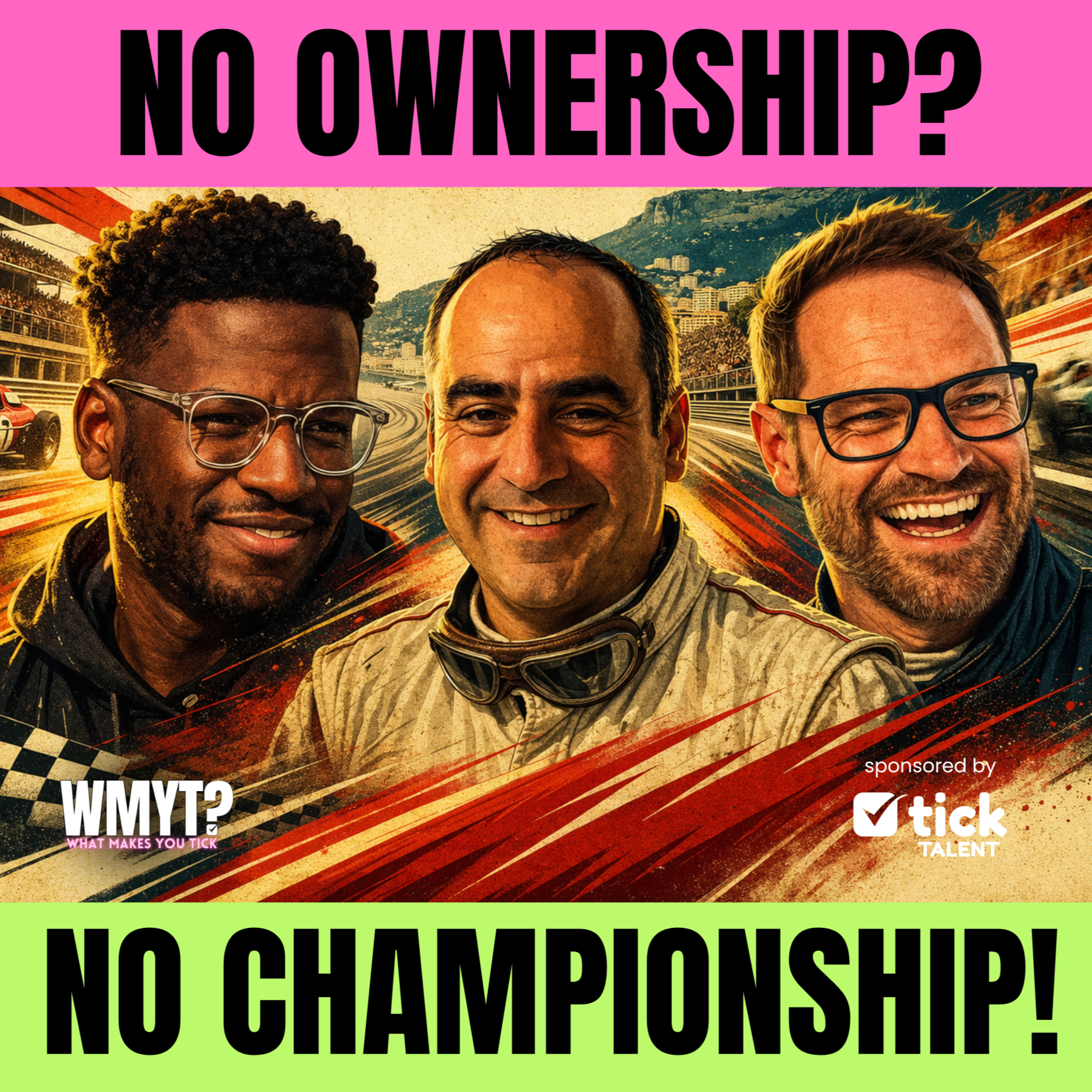
E.127 - The Mindset That Changes Everything in Sales w/ Benjamin Caller
from WMYT - What makes YOU Tick? Tech Leaders Career Stories
69m 6s
Benjamin Keller, a French sales and marketing leader, shares his career journey on the What Makes You Tick podcast. At 17, he was a poor student who left home and bought a book on HTML and Java, leading him to create the first Paris Saint-Germain fan website. This venture funded his studies and led to his first job. Keller highlights the role of trust and teamwork, comparing leadership to racing with a copilot—where you must rely on others to navigate. He believes developing people’s careers and showing by example are key to success. Professionally, he started in marketing at Lotus, was made redundant (which he calls a gift), and became the third employee at a startup as VP of marketing at age 22. He later moved to VMware and then to partner sales at Click and Medallion, thanks to mentors. Keller emphasizes hiring senior people who challenge you, communicating consistently, and maintaining a positive attitude. He advocates for sales and marketing alignment through a shared focus on pipeline generation and honest conversion metrics, not separate dashboards. His biggest achievement is seeing individual contributors grow into VPs over 27 years.
Imagine having access to a tribe of mentors. Leaders that you might have never heard of, but in just an hour, you'll know their unfiltered career story. The bets they took, decisions they made, and the lessons that they land along the way. Welcome to the What Makes You Tick podcast. Lights out, it's time to reveal our guest. Benjamin Keller, how are you doing? I'm very well. I'm ready for more getting your questions. Amazing. You have permission to take the helmet off because otherwise it's going to be a horrendous experience for you. You're listening on Apple War and Spotify. You need to tune into YouTube to see what just happens there, but it's pretty cool and we're all very excited to get it. I'm also joined by my wonderful co-host, Tolo. How are you doing? I'm very well. Thank you. How are you? Good to be here with you and Benjamin. I know. We reflected on our Friday to do a bit of a pre-chat and that's Greenroom. We were saying how I'd met Ben through going for a search to find the best sales leaders within Europe. I found Ben and we happened to have a conversation and I just missed him unfortunately at that time. We instantly hit it off and I was like, we have to do something. I remember Ben said we should definitely talk about the career story part of the journey because I've had quite a unique journey. Boy oh boy, if we got a treat in for our listeners today. Benjamin Keller, just for people who don't actually know you, Ben, just tell us a bit about who is Ben. Benjamin Keller. I'm French. She will tell with my beautiful French accent I'm 49 and I'm married. I've got three kids and I'm based out of Paris. As I used to say, I'm born on the net. I should know about sales and marketing and driven by result. When I was 17, I left home and I didn't know what to do. I didn't know how will be the next step. I think I was incapable at that time to know that. I went to buy and bought a book in La Fnappe. Everyone was in the shop in France and I bought a book on how to program HTML and Java. I think that's where everything stopped. Don't ask me why I bought this book because I don't know. But I remember reading the first chapter and the introduction says, "Pick a theme." I'm passionate about football. I'm passionate about Paris Saint-Germain. I'm very happy we won the Champions League last year. And actually, I ended up creating the first website ever of the Paris Saint-Germain Fund. And from that, I made a business that helped me finance my study and my business school and that helped me to get my first job. And here I am this way, here to me. Ben, what makes you take? It's a lot of things. What makes me take is when I develop people career. I mean, getting to, I mean, sales right now. I started my career marketing then once in partner sales, no indirect sales. I think what makes me take is when I get people to get to the next level, when I see their results. The other day I was asked, "What did you do? What's your most important achievement?" When I look at the numbers of VPs that have hired in the past 27 years, that actually started as an individual contributor. That's what makes me professional. Personally, I was wearing the helmet. So it's kind of cheating. You have already the answer. My brand is pretty much the team leader, brand. I like to get the team behind and I'll use the football and the racing analogy. When you race, everyone thinks, "Yeah, it's a very individual project. It's not." I am nothing without Michael Pylot. And Michael Pylot is my wife, the pilot of my life, but it's also a copilot in the car. But without the recognition you're nothing. You know, if the car breaks, you can have a tragic end really is. And you need to trust people and you need to listen to what they tell you. If you imagine you're in a row and in the dark and there is no light, you're just with your whole car because I do historic racing, you don't see very well unless you have like additional light. And you don't see. And then your copilot has turned right. And it's a very narrow, it's, she would say, D2, which is a very narrow right or G2, which is a very narrow left. You trust the person, you trust her. And if you miss, and this is, is she got it wrong, you can finish into stone or in downhill or, or crush your car and then we don't want to know what happens. So it's like the same in business. I was actually talking to some candidates last weekend. And saying like, when you talk to working with a solutions architect or solution engineer, and he tells you, "There's no deal here. You need to listen to your copilot because he used to copilot on your own opportunity." And saying, "I think you got it wrong when you were working with leaders around you." Is actually the trust you put in people. So that's I think where the journey is beautiful when you're building this together. And that's the team spirit around marketing, sales, generation, renewal, everyone contributes. And that's what I use this analogy at end of this. Would you say that your career impacted how you race or how you race is what's impacted your career? I think I didn't, I started racing only what eight years ago, 10 years ago. So actually I started the journey with the football analogy pretty much, which is, you know, I used to consider myself like a captain, like in football. You run on the pitch because you need to eat by example. You need to show the efforts. You need to show that it's possible. You know, when I left home at 17 and you ended up living at my grandparents. And my grandfather always said, "When you really wanted to do something, you'll find a way." Otherwise you'll find excuse. I mean, we need to live it. And you need to show people in your working ways you every day that you're living what you say. So actually having no great courage never give up attitude is I think where I think it's thriving. When you talk about competition today, it's the spirit of competition. Yes, I want results. And I want to get to the results. And I want people to be successful to get to the results. But if you don't develop people career, you don't show them how to do it. If you don't help them, you never reach the journey. The number is just the outcome. What's important is how you get them. I'm really curious to ask somebody, which is, you've mentioned 17 a couple of times. And I'm now, I remember, it's probably the fifth or sixth time you've mentioned 17. I know that there are defining ages in our life when there's kind of like these decision points, which when we look back and we connect the dots, we know that that was a really critical change that we made. The set us on the path where we came to this realization and had the self awareness to understand that that was important. What's the story behind what happened to Bennett 17? How was the terrible students? That's the story. I actually was not working. I mean, let's call it cat a cat, right? I was not working. I was not school was not interesting. I didn't like it. And I was not putting the efforts. So there was a moment where I realized that I was either going into a wall. I should do something differently. And yes, my parents wanted me to do it in a certain way, which I didn't want to. I had to discover it by myself. And I think that's the learning. And discover it with and building from building myself to those elements. So it happens when I was 17 could have been later, but it was a tipping point last year in school before business school, which is where you decide if you do something of your life or maybe not. And I was actually fortunate to buy this book probably that helped me do what I really like and care, which was programming website in 90 playing something around football. You see it is behind me, but it's all like this sport. And from that, I created website. I remember the first training I was doing around the website in companies or funny story when people won't maybe relate to this. But back in the days was the very beginning of internet, very, very beginning. And I remember training into an insurance company, a very small group. And I asked the person, can you put the masks on the top of your screen? Literally took the mask and put it on the top of the screen. So that tells you where we were. And I think this is when it happens. And I was very fortunate to be at that time of the beginning of the internet. If you ask your team what a great leadership hire looks like and everyone gives you a different answer, you're hiring in the dark. You need a shared language for what drives scale and impact, not vague traits. The multiply matrix gives you that clarity. Let's define what great really looks like.
I know that there's some breaking news that we're going to cover in this part. Maybe we'll just leave it for a little bit later on to keep the audience in suspense. Because I think it's a really cool thing that you're announcing, which obviously I missed you, which I'm gaffed about, but I'm delighted that I've got you in this conversation. What's that journey that you've been on professionally since that point when you built the first ever website and became, you know, so anonymous with Paris Saint-Germain? Yeah, created the first website of the fan, and then ended up interviewing players, became friends of some very famous players. And from that, they asked me to create the first website of PSG and I did. But the great moment was we know when you're the last year of your business school, I did the ESC, because Chicolier, the ComaSex, the International School. I didn't know how to find a job, so actually I sent a report I had done around how to, was the benefits of Internet, and Internet, and extra-netful companies. And I sent it to Lotus. You know, back then Lotus was the group where revolution. And they hired me as the head of web marketing, where I started in marketing and did very well. And so I became acquired Lotus, which was a fact. And then, then on that day, I said, okay, no more job was made redundant, which is the best gift that ever happened to me. I'm so fortunate it happened. And the marketing team at Lotus was so great that they introduced me to the GP of Marketing of IBM that was creating a startup. And actually we met, I didn't know what the startup was, we were very beginning of 1998. And then he says, oh, we created a software called the Net Portal with the name of the product. And we were doing the mysignet.com, my financial time, so it's cool. The product was super cool. So you would say, hey, my name is Benjamin, I like this, the weather forecast in Paris, you would put keywords, semantic search. And whatever, it was super easy to demonstrate and convince. And together we created a startup where I was entry number three. And I started as VP of marketing with the consumer today. But at 22, I was asked to build it and lead it. I didn't know that. And I'm very fortunate this guy, Laurent Bina, which I thanks. Trusted me that day. And throughout my journey, the people has been a very strong element of everything I did. Is the people I met, people I've built connection with, who tend to create connection. I care a lot of tend to see that help me go on this journey and continue to go on. What was some of those early lessons that you had to learn as a relatively young leader? I still remember the first time when I was hiring. I was asking question, do you mind if I'm actually half your age? Because I was recruiting very senior people. And the first lesson was hire people that has the competencies. Don't care if they want to take your job, actually. I want them to take my job and grow. Don't be afraid to hire very senior people that are at the top of their game. A player, so I would call them today. I was not calling that like this before. But yeah, strong people that can bring and contribute and drive the team forward. And actually that challenge you every day. So if you're not pushed, you're not challenging yourself. So I think it's important that you're hired right. That's the first one. The second one is the impact of communication. I used to say, there was, I think it was saying, I think it was the skill of a via back in the days. They used to say, you have to say things 11.5 times before people get set. I don't know if there's been a survey on this. But I used to, in every role where I have been saying consistently, you need to say, you're going to do something. You say, you're doing something and you say, you've done something. There's three tempo. Very often people are doing amazing things, but they do not communicate on it. They are not sharing how they went. What did they learn how? Why did they fail? So those are the two things actually that drove it. And I think later, something I didn't know at that time again, it's Carly Shinbach, the X, Y, R, O of VMware. We was actually recently this year who are working for Sequoia today. As I said, when I decided to leave after seven years of VMware, it sent me a note saying, then always remember that it's your attitude. That will define your attitude in life. And I think very often I see people that leave organization in a nice way or it's difficult. We are in a long-term game. It's a marathon. It's not a sprint. And I think building those connections with people and living it with them, do not cheat. I think it's also the first lesson. I would. I think that's a big big request. Hey guys, your attitude, not your aptitude, will determine your altitude. Well, I know that. Well, I know that. Well, I know that. I know that. Well, I know that. Ultimate classics. But yeah, I love that. What happened next after you left VMware? So actually, when I left VMware, I was called by Rick Jackson and Tony Adams. We went to click. And that's where I started to work on the partner business even more and start to move to the dark side of the forest, as I would say, and being in partner sales. And when you build a career in marketing, it's very difficult to swap. And I was actually very fortunate that Tony, which I would meet in my next company, kind of giving a bit. [LAUGHS] Porsche, I don't know. Not a client. Yeah, that's true. He trusted me. He gave me this chance. Long gave me the first chance to be a leader and learn from it. Tony gave me the chance to move from marketing to partner sales. And actually, show me how was they able to do. I felt I couldn't make the move. I wanted to go there. I felt I couldn't go there. But that was the fantastic move. So that's when I moved from VMware to click. But then when Tony left to click, he went to Medallion. I went with him with Medallion. And then when he left, and I met all the people, all the leaders I've been working with, like, Coalition Back, Tristan Monday, those other people are really care about. And then I joined the same thing from Medallion. We went to Salzburg, where I was very fortunate to cross the Basel Pride McCarthy, which is one of the most actually inspiring Siyaroh have been working with. One of the things that always comes up, you know this. The tale, the oldest time, is the sales and marketing misalignment. The breaks organizations. And I often find the bigger the organization is, the bigger the break. Because, you know, the behaviors of the in the metrics of setting, how people are measured, cultures, everything can be so different between marketing and sales that it makes it almost impossible to make that one cohesive machine that makes it not only great for the people inside the business to operate also for customers to purchase and to buy and to love the brand. And I wonder what is what your unique perspective is as someone who came from marketing background. And then to a sales journey, what you've learned about how to make that work that's performed or created the foundation of the success that you've managed to achieve. I will use what I said before, it's being the copilot. It is something actually, I would call copilot today, at the time I would say being the partner in crime. And I think it's two letters, PG, pipeline generation. I mean, sales care about pipe, right? Of course awareness, events, all those things are super cool and help us every day, right? I'm saying now with my sales hat. But when I was in marketing, I had people that worked in my organization where they wanted to do a certain number of events or activities, activities or stuff. What matters is the outcome. What are we doing? Why are we doing? You know, especially in RB2B environment. When you in B2C is slightly different, you need a lot more awareness, etc. But on the B2B side, I mean, what matters is, what have you done and what is the impact of those activities in your business? And this is something Elikanan actually taught me a lot at VMware. I was actually always trying to see the outcome, but we're not measuring this outcome so well. So really, on everything we're doing is like, what's the number of role leads? What's the number of respondent role leads? Then the number of marketing qualified leads, sales qualified leads. And what's the impact on revenue? And we're building what of what we were doing in review and on the height. We were having one version of the truth, not like Martin doing the dashboard, like very often they do. And then sales is measuring, says, I have no pipe and it's Martin's hand. He gave you a lot of leads. And it's your job, they're not converting. The thing the truth is, we need to be together in sync in the range. And it's, we cannot have two versions of the truth. It's only one version and have this honesty of looking at the numbers. I frankly don't care if Martin doesn't deliver any dollars. What I care is what do they do to go from zero to 10 and 10 to 100 and 100 to 1000? I think that's what matters. What did we learn? What's the activity that drove you?
the most conversion rate between respondent and role leads, role leads to a QL. I mean, and even if they close to SQL and then they drop out of the funnel, then it's not it's not a good, we need to understand what are the people in my team doing? Are they doing and taking the leads fast enough? Are they passing the right message or just are we just not, are we poorly executing now? So this is, I think, we need to understand there are many, many answers. I think the biggest gap is when people don't look and don't have the courage to address the issues, to address the conversion rate within 1.2, 2.0. And when people have the honesty, then you find a solution together. Well, actually, Magerie wants to move from the marketing side into the sales side. I think I had several conversations with sales leader and that says, you're very sensual and we're very excited, we never seen you. And I remember at VMware, part of the top achievement we've done is, my team was working a lot on recruiting and activating partner and we were doing, we were inventing program like virtual storm activation. Remember Frederick, my team, Frank Erickson, back in the days was creating this project and came to me. I have a crazy idea, remember that mine. It was a package box where pretty much there was everything from sales and marketing standpoint to go recruit and activate the partners, activate those first transactions, like real business coming in. And from this day we recruited an active 23,000 partners in building a 95% indirect business. Of course, it was marketing and sales working fully aligned together. It's massive, and back in the days, we were smashing it. But when you do this, then once they've done the first transaction, it's not the end. What do you do from first transaction to go to three, four, five transactions? And that's where we invented virtual storm market penetration, which was another pretty idea. And then we did program that helped partners using that database and trying to convert. So I don't want to be very tactical, but really was like very sensual intake. But then we didn't stop. We had MDF marketing development fund. So because we had a lot of budget back in the days, we wanted to really measure the outcome. And a lot of our partners didn't know how to use that. So we invented a conserved service with an outsource model where people would reach out to you and say, hey, Tulu, what did you have? 10K to spam. What's your business? How do you operate? Can you share your database? Can we do a campaign? Do you want to do telemarketing? And from that, we're generating pipelines. So by doing all of this, I was always between sales and marketing because you're touching the pipe and then measuring the outcome. And I think that's where I was always different, like being always in the middle. So actually leading towards that aspect. So when actually I wanted to go further, I think, after that, and actually close deals and being in here. And I have to say, I also continue to learn. Because when you do 15 years in a role or being in marketing, it's great actually to discover a new role after. And I still learn every day in my job, which is, I think, fantastic. So luxury, I wish for everyone. So, huh? Did it feel like a big risk for you? Because you obviously very successful as a marketer. Did it feel like a big risk to go into something where you weren't so proven, but also the pressure and sales is very high? Right now you've got a big number on your head and it's not just, okay, I've got to get X number of leads. This is my big revenue target. And if I don't get it, I might actually lose my job. You know, did it feel like a big risk for you? It is. And I should have a day still. I mean, but you know, when you have not done it, I mean, I always feel I'm still an impostor after. I have this impostor still. No, I have to say. You know, when you start marketing and you start eating teams, I was saying at 22, I didn't know, you know, sometimes what to do. I'm not going to, I'm not going to fit to fake it. I didn't know. And I was inspired by asking others and learning from the boss. But same in sales, you know, you have the big numbers and people are looking at you as like, what should we do? What's your strategy? What's the plan? And you have to show that you know where we're going to go. And, yes, so I've been stressed about this. But because I work with amazing people that you know, helped me first trust myself, trying to trust myself and then getting people to get you to to rethink sometimes how you do. And I had people in my team sometimes that said, one of my key strengths is kind of my chameleon effect, where I can mirror what I see on others and repeat and improve and enrich. And that's where I think it's also what I call collective intelligence. And I think that's what I think is the most important thing. It's just so interesting because it sounds like you inspire a lot of loyalty from the people that work within your teams. And what I just find fascinating is that even if you know in some technical ways they might be more experienced than you, they still trust you to lead them to the right place and to lead them to success. I think that's a really interesting balance to strike because often the people that lead are the people who are really experienced, they've done it all before. But it sounds like you take a slightly different approach. If you say, "Look, I want people that are better than me who I can actually lean on to help us get to the right place." So it's a really interesting balance that you strike. It's winning together. I mean, if you make this challenge, the team challenge, then you all enter it. When we were preparing this call, I told you I did a deck a couple of months ago after the Paris Saint-Germain won the Champions League. Yeah, it's beautiful, they won it. But that's not the important. I think there was tipping points in there. And when they decide not to lose, when you have a team that decide not to lose and to keep winning, I think you've succeeded. Because the game against Manchester City, and I will use this parallel, we were using Tzu Zero, we were eliminated, end of the story, you go home. But if you're a team, and I'll give another example on the team, if you see that you're going to lose and be eliminated, and then the team reacts and says, "No, we are refusing to lose." Like a customer is saying, "No, you're here not yet." When you're starting on a very bad quarter with one month where you don't have enough pipeline and you start to see the results, like, "Let's go." But you bring your team together and says, "What do we do about it?" "What's the solution? What are we going to do differently?" What's the thing we do? And very often leaders do it just in their team. But it's marketing. It's client success. It's renewal. It's the pre-sales. If the pre-sales team start to do PG Day on the same day as you. If marketing suddenly starts to send twice as many campaigns to our audience to invite them to an event. If the renewal team is starting to sell PS on your behalf and that's reduce your channel construction. Guess what? All those things, they add up and that's create a multiplier effect and then you refuse to lose. And then suddenly the results comes in and then the team is behind. I have been at the board of companies that were public or I've been a CMU at the Public Trade Organization that was brought up. I have seen others doing and I'm trying to bring my knowledge. And that's why I am different is I have the sales, the marketing, the partner experience. At the international level. So those things are in 27 years. So that's what I use. But then if you pretend you know to others, they won't trust you. I remember some of the customer meeting I observed how people were doing. And then you just bring your own words and how you do and then people like, "Alright, we do it together." You're on the same pitch. You were running, I'm running as fast as them. And I was a great the courage to never give up to get them to get to the next level. I'm really curious to ask. So there's five questions in my mind that I'm going to prioritize. So I do the right job by the flow of the conversation here. But you've mentioned the multiplier effect and that's really dear to my heart as a work because I believe that what we're hiring for when we hire people is people who multiply the impact of everyone around them. We call them multipliers. And I also believe you can hire bad people who do the opposite, which are dividers. And they try and divide and conquer and create silos and politics. They're at others who are good but they're not quite great. Study state but they don't multiply. And then there are subtractors who are just a terrible higher wrong capability, bad culturally. Cohe, the opposite of a collaborative team environment is what you create. What are you thinking about multipliers in your business? And you mentioned some characteristics there that you hold dear to your heart. What are the characteristics that you've observed? Adopt to someone who has a multiplying effect within the culture of your team. It's a very good question. The question.
Something I would say is the most important things we have in our job is to hire. And very often people don't think this way. It's funny because it's only a few years ago I realized that sometimes you rely on your recruitment team to get the best talent. But it's also your job to find the best talent. How you reverse the table on who you want on your team. And the analogy I would use is like in football again, you have the mercato. I mean you don't wait to see who's the players that are going to be offered for your team. The trainer is looking for the talent that will add to your team. And I think that's exactly where it's all duty as leaders and every leader to do this. So to answer your question, yes, great courage never give up attitude. It's what I would look a lot for in people I hire. I also look for people capable of having the ambition to be CEO of their business. When you really want to do something you'll find a way. If they want to be a passenger, great, in a racing car there's no passenger. You have a pilot and a copilot. The copilot does his duty and without that the pilot will say, "Yeah, so I don't want passenger. I want people that will have an impact. The people that will want to build something depends on the company of course. But in the companies where I have been it's every time where we build something, where we want to create something. And so I need people that have an entrepreneur mind that are willing to care about their business and how they do that are self. I like when I have a ease coming to me and saying, "I failed on that job. What did you learn from?" And then they say, "I should have done it differently or I should have tested my champion differently or I should have engaged with the EB material. You're all signing up from contract with them." So whatever it is. Then it's okay, he's learning from it and you'll be able to coach him. So the coach ability is another element of what I'm looking for. Because nobody's perfect and we are in the business today where today it's AI that revolutionized everything we do. But the true form two years ago is not the same truth as today. So we need to adapt every single quarter on how we change, how we do things. I think that this is really important. So adaptability, coachability, never give up attitude, being CEO of your business. And one element is collaboration. You know, I very often say, I was saying that to some of the person I'm trying to recruit for the next ride, it's like, "I want our team to be the team that is more appreciated by every support team." That's where you get multi-fire. Because suddenly, if marketing loves working with you, what did they do? They will prefer you. Right? If the pre-sale team is coming, happy, it's like, "Yeah, I'm going to help you and I'm going to win this deal together." And they are in the deal asking the question to the customers or even challenging the opportunity without you being in the deal. You again have this multi-fire. Then is it the partner business? You know, when you want to build a business, you need partners. And very often, we are, "Oh, this is okay, they'll do the transaction." No. Partners are not just there to do the transaction. They have the ability to open a deal or close the deal. Open an account or close the account if you're not doing so. And if they close the account, you can do whatever you want, you will not come back. So again, this is how we become the most collaborative team to work with. And so that's what I care a lot when I hire people. I wonder when you've failed in hiring, which we all do from time to time, particularly when we're learning and stepping up. What has been one of the most memorable things that you missed or got wrong and what did you learn from it? When there is a doubt, there's no doubt. Sometimes you have made decision and I regretted it. You know, you've been waiting for three months. That's why I actually changed the way I recruit. And I asked the people in my team to change the way they recruit. When you have like, you still five candidates over five weeks, right? It is like, I haven't seen enough, right? And suddenly you see one person that is actually good, but not excellent, not an A player. And you say, okay, and you try to negotiate with yourself. And yeah, I think this person is good. I should hire this person. But there's something like there is a doubt. And then you start to think about it. In 90% of the case, if not more, when there is a doubt, there's no doubt. And that is about the decision. It's better to have nobody in the world than having the wrong person. And that's what I've learned. That's why I actually shift the way I want to recruit. Because, as you said, Rich, it's having impact on the team and can destroy everything you take years or months to build. >> Which do you think is the hardest thing to get right? So the way we've defined a multiplier is those four elements that make a multiplier, the collaborative, which you've mentioned. They take ownership, which you've mentioned. They're resourceful, which is like ties in a lot of the things that you've mentioned around their ability to solve problems and get results out of very little foundations within the business through leveraging partners and team resources, but also within customers, solving customer problems and execution. So it spells the word core, collaborative ownership, resourceful and execution. Which do you think is the hardest to find in people? >> Ownership. >> I think some people, so you have people that have it and you have people that pretend that they have it. And when you see when they, we all face down days. We all face the difficult days. When 10 customers doing this, I don't want to talk to you or you lost 2 deals and you committed the deals and you're stressed because it's not coming in. Yeah, those hard moments is where you see the real color of the courage of the people. And is it an excuse or what do they do about it? And sometimes there's nothing they can do, but at least you have the duty to try something. And again, when a customer says no, you should hear not yet and then ask questions like, what should we do to win that? What can we do? Where did we fail? Because I don't want to, I've seen some deals where when we ask those questions, what did we do wrong that made you go to make another decision? Some customers look at us and say, you're the first one to ask me this. And then, yeah, but they change because then this, yeah, you should have done this and this and this. Then that opens the time to how do we turn the ship around, right? And so I think that's, I think ownership is the one thing I would say. >> Yeah, I was going to say, you mentioned being the CEO, maybe think about ownership, which is true, right? And you mentioned ownership around, it's brilliant, but what Dave Markett loved that book. You should be married and the ship's really famous, but we talk about this a lot and I think it's really hard to find people that have their ownership and like I said, a lot of people say that they have it where they don't. But I just wonder if there's a practical thing that you've realized helps you to spot the ones who genuinely have ownership from the ones who say they do, but in reality, don't. >> Yeah, very often I asked the question, was it the cheap you to become where you are today? And I also asked, what's the deal you've lost and that you want to talk to me about and what did you understand why you lost it? And when you start to see people telling you, actually, yes, I felt I built a champion, but I didn't test enough. What would you've done different? But you have some people that actually, I do everything right or I did everything perfectly on this opportunity or on this, nothing I would change. I mean, you've seen, you understand what I'm going through, you know, people that were extremely lucky and lucky is not a strategy, but it's good. It's part of the game. What people are working for product like graph organization and sometimes when it's hard, they go outside. I think that when you look at the pattern of some people, when they stay, when it's hard, and they want to succeed and invent a new way of selling or testing a champion or solving customer pains as well. Learning medic is not easy. You have many medic leaders and some people might pick shall I say now. When you ask questions around, you see how people play and understand and how deep they go, you just could stock on, yes, I make the deal. I don't make it. I gave an example a couple of weeks ago at GitLab. I was interviewing at Candidate and I asked him how he wanted to deal. Can you tell me the deal? Tell me the story of what you're. it was evident.
that this person has not made it here. Yes, the deal was landed, but he was not a person who drove it here. So you can see those things as well. Very often. I love that concept of true ownership, right? It's very different because that kind of obsession over some of those details, some of the small things that leave us that you can actually pull. I think that's where that true ownership really comes in. And what I was just thinking about is if you have someone who is working their way through their career, do you think there's something that they can do to develop their ability to really take true ownership? Or do you think it's just something you either have or you don't have how do you think someone can develop that? Yeah, I think it's had the courage to address what you don't do well. And now, but very often, I have a question like, if I was talking to your previous manager, what would he say that you're doing extremely well? And what would he say that you need to improve? And then you can see if people are taking serious stuff around this, like some people say, have an happy years or I struggle to focus, whatever, there are many things, right? It's an incident. And I think if you have people that take ownership and they ask for help, this is, I need help for this. And if they say that to you, you have your duty to help them. And that's what I want my leaders to do or me as a leader to do. And this is where I use a lot of methodology, the do methodology, which is sure to do help do, make do, let do. If people don't know, you can show them how to, let's find ones, twice, times, it's okay. Then once they get it, you help them do. Then you make them do and then you let them do. And then you don't have to worry about it until next thing. So it's actually, if you're courageous to say, actually I don't know how to do it, then you'll improve. And I'll admit, at the beginning of my career, there are things I didn't know how to do. And I asked people to help me and show me and I watched. And then did it myself. I think if we do it, you show it, but you need to have a safe space to do that in a company. You should have this safe space. Just say, actually, I had wraps coming to me, says, I need your help in better forecasting. Forecasting is part of what we do. And you can show them how you do. And then the mirror are very often, I still actually people doing an amazing job at doing it. But again, being courageous in saying, have no pipe. It's not 150k, but I don't have the under the game pipe. But you know, it's where ownership comes back. And that's interesting. That's interesting. Because that's also a different side of ownership, right, is owning the challenge and the problem. Right? So being realistic as saying, this is a real problem. And if I don't do something about it, this is going to be very bad. But bringing the right people in to then help solve that problem. Because sometimes people might see that as conflicting, right, because I'm getting help with my problem. But no, you're just owning solving the problem. However, it needs to be solved. But definitely, people sometimes think there are problems alone. And they feel it. Everyone is against them. But actually, if you have a copilot, I'm going to use again, again, when you're in sales, you need marketing. Go talk to marketing. You need a pre-seller. You need your boss. You need your renewal manager, your client success person. Whoever they are, and your office, whomever is in your ecosystem around you. It's the same in racing, your machination. If he doesn't get the screw right, you can go finish in the wall and then pass the way. And you don't-- I mean, it happens. So here, it's not-- we're not in the extreme. But it's again, what do they do? Do they suffer about it and do nothing? Or actually, yes, I have a pipeline problem. Let me reverse the table to ownership around. And all right, what I do, I get marketing with me. I got all the gist of events. I have done three PG days this week because I was short of five. Then you stop people doing it. And if they don't create the pipeline, then you can go to the next level. Is it the qualification? Is your messaging not well? How is your storytelling? And then that's why, by doing the deal review-- I mean, territory plan, a con plan, deal review, you assess that. And very often, when people arrive there in RAM period, you should have how they make the first deal. You'll live there. And then when they get one, the second one, the third one. And yeah, sure, how to do a help do. And yeah, and it's very hard because people sometimes take everything and they decide that things is against. It's where the ability to say, you're not alone. We are here. I mean, the time you exit a person, people sometimes don't think that. It's like when you invest on people, you're making a huge investment. But if they go, you're losing half a year, if not more. Because the person will show decreasing productivity. The time you hire the next person and get the productivity, you've lost a year. So it's actually in our interest, everyone to focus on how we get people to win together. But again, it's a real space. You agree? I do. Yeah, absolutely. Absolutely. I know there's a question I've got about the Paris St. Germain thing. Because I say, you're very connected to the club and you've talked a number of times about them. The perception of the world outside of Paris St. Germain, as I speak, for the world. But certainly, it's, you know, they unlimited money. They bought their success. And I wonder if someone who's much closer to it and has seen the evolution, the things that went well, the things that didn't go well. What have you observed that they did very well? And which mistakes do you think they made that success slower than they might not have liked? At the beginning, I mean, they never had that many money at the beginning, right? We never had that money, right? So the club did it and was built on other foundation. I think they hired very expensive players and the strategy didn't work because we didn't want it. And this is when they hired young people, which are very talented, that put the team at the heart of it, instead of the ego of one pure three person, or three person in the same role, not to mention them. It worked because they all fight for each other. When you have some going back to the analogy with what we're saying, if you have two or three big egos, which are the people that have best territory in sales, or the best thing, then the others don't. It doesn't work. If everyone feels it's part of their project, you're part of the same team to achieve. Suddenly, that's why you have this multi-fire effect, and that's how they won last year. I mean, I show you, give an example. There's a moment, I love that I was actually-- I love the video. It's at the 79 minute in the final. My partner, Jamal, was being 4-0 against Inzer. Vracheela, our Jordan player, started to run from one place-- I mean, to the other side of the pitch, to the end, just to get the ball. And just there was nothing. I mean, 10 minutes left, 4-0. There's no way Inter would come. But he fight it for the rest of the team. Got the ball, and as soon as he gets like, yes. But it's nothing. It's not score, but at least he contributes to the rest. And I think the thing is the effort. Sometimes you don't win, but at least you learn from it and you get there. And I think all those years we've learned from it, and I'm just going to point that the start system doesn't work. And that's the team that works, and you hire talented people, ape players, and we've gifted things, and try to make something where you have this multiplayer. I think that, especially in sports, momentum is such a big thing. And those little moments, they're huge from momentum, because if you didn't do that, and actually intergots momentum from that, then you're actually in danger. And just like in sales, momentum is everything. So doing those little things, even in the last 10 minutes of the deal, make a massive momentum shift for the next deal that you go into as well. Is that confidence builds as you go into the next game the next moment? So yeah, I think those little things are huge. Yeah. It's never give up. Consistent execution or consistent effort, should I say. Maybe you understand this. Consistent effort beats sporadic brilliance. It's like, you strike the deal great. But it's all the PGU doing every single week. And some of that doesn't be off until it pays off. That's going to play the success. And that's the same in football. If you run 10 minutes or if you run 94 minutes, it's not having the same impact. And I think that's the learning, actually. I just think about that, right? I've had that feedback before. In a previous role, that I had at moments with consistent brilliance. What I realized is, it wasn't the right environment for me. So I'd been in career for 12 years, rising up through the ranks in the business. I'd become a joined forces with an entrepreneur to learn how to become an entrepreneur. And I was doing all these different roles inside the business. It was the most amazing experience ever. I was in a bit of a, what's that word when you're in between things? I was like a bit in, what's that word? Yeah, limbo. I kind of got career purgatory. And I was going, I don't really know what my next step is and I was showing the
these wonderful moments of what I could do, but there was like a lack of purpose, the lack of interest, the lack of like congruence around what I was doing. And I think that it's just what I realized is a signal that if you're in a place where you're going, I know I can turn it on and I can be great, but actually I'll then I'll default back down to something that's like below the standards that I know are my best. Maybe you're in the wrong environment. If you see it within your team, maybe they're in the wrong environment, you need to shape what they're doing and their responsibilities, maybe give them a challenge, multiply as love challenge. So if you've got let's say top performers who are capable of smashing 200% of goal, but they're inconsistent quarter to quarter, are you giving them enough opportunities to take responsibility? You pushing them hard enough, you throwing extra challenges their way. And I wonder what you've learned if you're thinking about coaching teams about how if someone is a bit showing moments of brilliance, but you know they've got it in them, what's worked to get more consistency and more potential out of that person, like you say, to help them reach that next level. - Yeah, the thing is it's the challenging people. It's funny because as you said that, I was thinking about recent like a trainer of 5 Sanjama. One of his mentor is no one is playing the same position each time. And you know you have players that used to be midfielders, they finish right defender or something. It's tricers, whatever. So changing the position makes you learn because it makes you uncomfortable. It makes you think about different things and different, new skills that get you to get to the next level. So I think this is exactly in the same business when you've seen those brilliance. I mean people have challenges with PG-D, right? Or in pipeline generation day and some people have difficulties in organizing their territory. So how you challenge them to go there or some people do when I go back to some accounts planning and deal reviews and the way they said, you pick up. So it's all those things where if you challenge them. So sometimes you feel how should I tell this person, I think you should. It's hard, we should, I mean you should have tested this. What are you going to do different group? I'm here to help, again, safe space. If people have disability to come to you and say, yeah, I think this is my deal, I'm stalled and I need your help, then you can help. And then you challenge the everything that can be done. And again, challenging is not for being bad. It's actually for being good, it's striving to get the best out of it. Again, it's getting this, I think that's the thing is how do you challenge people and to get better at what they do. I used to do things when I was more in marketing than in sales. We're way more individual sometimes in sales, because it's the team of individuals that are connected as you reach. But saying, if this is the area of your improvement, why don't you take a project on behalf of the team about one thing that will actually prove yourself you're capable of doing it? And that can be leading on the rest of the team, on whatever, you can achieve new product. But this is where the coaching of people is reading. When I was at Kliker, I was very fortunate to go to the US on a top-down program called Greater from the Inside Out, with somebody amazing Jeff Battenberg, who's not in a good health at the once, he's thinking about him. He's a coach. He was, you really, you imagine you're on a retreat, and he tell you, what is it that shape you to become when you are today? That's the funding question. And then, what's your purpose? Why are you here? What are you trying to accomplish? And then, from the defining, what's your top value? What are you good at doing? And what do you want to improve? And then, taking your disc, understanding the top criteria. But ultimately, how you align your headbrain, your heartbrain, your gut brain, on where you want to go. So it's actually a long-term coaching and I'm doing those things. But it's help people to get to the next hour. The question is, do people want to go? Sometimes they don't. They just want to be here, do the job, and go home, and do something else. So I think this is where the new arms doesn't match for everyone. But I think a lot of what you've just been talking about is almost about alignment as well. So even when you went back to the PSG example, when they got the guys who were more aligned around, this is about the team than it is just about me, that's where you start to see that shift, where you understand, are you all aligned going in the same direction? Do we want to go to that next level? That's where you can then get the right feedback. You then have the right conversation. So alignment is a really important thing. Definitely. I mean, we all have been in companies where you have people that are not aligned anymore. But they stay until they have their next job. That's the time where you have a disconnect between what it is. And unfortunately, that's the way the companies are working. But in some times, it's difficult. But I think people need to start to courage just say, hey, I'm not in line with this. I should've lost more. Yeah, absolutely. Well, speaking about momentum and challenge, I know we've got a breaking news story that we're going to share here, Ben. And I also know that in the more senior people that I have the opportunity to speak to, the more I realize it's about being in the right environment, where you can have a bigger impact and where you just feel like where we're going to go on this journey. It's so incredibly exciting that I can't wait to lead the charge here. I can't wait to bring people on the journey with me. Tell people about what is this wonderful news that we can share to our listeners today. So that's a big piece of it. So I'll join an amazing company called Cursor. And I'm actually recruiting the entire team for addressing the Southern Europe market. So if you don't know Cursor, it's actually in AI and we're helping your companies to could faster, better, and be amazing at developing amazing software and compete every day. Cursor was created in 2023 and passed the $2 billion in revenue last month. It's the highest growth I think in history of IT. So it's an amazing journey. And I think the challenge is crazy because imagine, I'm going to build a team in Southern Europe from scratch. So I have the ability to hire the best of the best to start this journey. And we're going to build this market together winning the first years and grow this region. So super happy about it. It's amazing. Yeah, congratulations. First of all, we're very well-deserved. I wonder what it is about your character. There's so many things you've mentioned about your love of sport, being entrepreneurial from a young age, making that very pivot from marketing into sales. You've been through some large corporates. Now you've gone to one of the fastest growing companies. If not fastest growing company. And you've obviously got this love for racing. You want to go fast. We talk about momentum. What is it? This burning fire within you, this pushing you to want to take on a challenge so big when others might prefer to stay in something a bit larger, a bit more steady state, with a bit more security. Yeah, I think it's the people. When Brian McCarty calls you and tells you about this challenge and I work twice with Brian, that's pretty the third time, you don't resist. I pre-certain times a leader that comes to work and say, hey, come on, you can do it. And give you energy. Now the energy you receive from others is very important. I've been in places where I didn't have that type of energy and positive vibe. But when you get this type of leaders, we've-- I cannot mention leaders yet-- that will join this adventure. They are amazing leaders that have worked within the past that give you this positive attitude and positive vibe that makes you to go to the next level. I think this is a very important thing. That's a point. I think with the team, I think I shared it. I actually-- I don't build teams. I build careers of people. That's what I care. I want people to grow. I want people to develop. I mean, I want-- this is my legacy pretty much. You know, I want this to be my legacy. I mean, it's not hitting 10 quarters. Yes, of course, it's amazing. It's very important. We have to do it. But I pre-certain times having people like say, hey, where do you-- every day asking, where's your next journey? Because I have not announced what-- can I come with you? Can I come with you? Of course, we'll see if we can make it work. But this is-- I think where you see how you help people being better and tell you that. And I share a moment with you. I was doing my firewall. This is very personal. And I decided to do it in my house, a couple of weeks. And this is a decision we've done with my wife. And I never did it this way. And having people at home, and they start talking. They start to share everything I have done or impact in their job, in their life. And you hear, there's one guy, you recognize himself, that said, you know, then you change my life. And yes, you had to rent his apartment in Airbnb.
to face bills. And last year when he made president's club, super, the top of cheer, super happy, we helped him with his leader to be get there. But when he says you changed my life and send you pictures of the first watch e-boat or the first look sure you, you know, he says you really changed my life. And you have always like, you know, without you, without you. But as I said to them, it's like, thank you for saying all of this. It means so much. But why don't you say it when we're in the job? Because that would reinforce even more the partnership we will have. And sometimes we don't do it at that time. And you know, I say Brian, Brian is amazing. Brian always finishes, I don't know if he's doing does it or find out very soon. But I love you. I mean it. I love you. I mean it. That's how you conclude is a lot of his own hands. But but he gives you this energy and you want to be better because you have that. And I that's what I want. I want people better because that help me be better. That's how I change. And I grow. That's that's beautiful. I this this might be a slightly random question. But you've done a lot of going to new places with people that you've worked with before, right? And for example, I've never done that. Right? So I'm really curious about is there is there any advice that you would give to someone? Because people are doing that a lot more now, right? Is there any advice you'd give to someone who is going to a place with someone that they've worked with before? Because you've obviously done it really successfully because you know, they want you to come again. So what is it that you do when you're going to a new place with someone else into a new culture, a new environment that means that you can replicate some of that old success that you've had before? First you need to learn the company culture and understand what made it successful. That's no matter if you know people or not, you must and learn to relearn. This is really important. That's the one advice I would give because it's not because people like it's going to be easy and etc. No, there's there being success. They've done it in a certain way. There's a culture that has been built, which might be different than the one we've used to. And so actually you might write your culture by doing it. So first is listen, watch, observe, and understand that. But where you win a lot is you know that how the people works. You have the connection. You don't hesitate. You know, I mentioned on the other, because we didn't have four companies together. It was my bus for 14 years or something like this. I mean, is that cursor? Is leading the partner business worldwide? So if I need partner support, what would I do? I will text Tony or ring him and say, "Hey, Tony, can you help me on this? I'm trying to work with this company. Can you help me?" So the time it takes to build relationships, sometimes, and companies will delay that. So I have that. Song Pa, leading the client success team. I work with him at SOTSPA, is that cursor? So this is this example of thing. I need a customer churning. I hope not. But if I need your help, he will reach out and put the right people into it. Again, there's no political game. It removes the political part, I think, of the political game, which I think won't have that place in work. We hear on a duty, let's do the duty. It's not a lot of things. I think that's what I would say to her, or it's like, it helps with that. But I have to say, I had to go away from my network to learn and do the next round sometimes, which is great, because I learn a lot more that I can bring back. I think this is where we have this change. You need to have the right now. It's such a beautiful thing, actually, where it's great to work with the same people. But also, it's great to be confident to go into a totally new thing, learn something new, bring that back. I love that whole concept. Even just me past this time, I've been thinking about who would I want to go and follow in the future. At the moment, I'm out learning new things, but I know that at some point I'm going to want to go back into something with someone I've worked with before. I say, yeah, I'm really, really helpful. Richard, you said earlier the other thing that was around the concept around the stress to learn something new. But when you know some people there, part of that is going away, because you know you're not alone. I'm going back to what I was saying earlier. You know you're not alone, because you have people you can rank and say, hey, what am I not doing right? Or why should I do differently? And they will tell you because you have that connection. They look great on paper, but in practice, they create silos, block alignment and store execution, dividers are the leadership hires who kill scale from the inside. Learn how to spot them before they slow you down. The multiplier scorecard will show you how. So Benjamin, we have a closing tradition on our podcast, which is our tick fire questions. Are you ready to go? You've asked the racing driver if he's ready. He's like, come on. Let me see those lights. If you started your own podcast tomorrow, who would you pick as your first guest and they can be dead or alive? Luis de la Leque, the trainer of Faisa Jama. I am so curious to ask him a lot of question on how he motivated the team every day and how we can pick up what he did into the business life. Amazing. When you think about AI and its impact on the world, what are you most excited about and what are you most cautious about? I think it's crazy what it does. Over the past few weeks, I created so much with AI, PG plan, etc. But actually fun stuff. My daughter, 10 years old, asked, hey, I want to learn English. Can you help my lesson? So I developed her game. So she's playing on an iPad and learning English at the same time. So this is cool because it's freaking up. I created all the stuff of it. I think on the, so the amazing is I think we all now sit here as of what we want to do. And if people are creative, they will be able to do everything they want with it. It's just a good idea. This is amazing for it. It's very easy to use and actually enterprise writing. That's advertising, right? I love it. Joke aside, I think, it's amazing for the big it because that's good for the lot being that. So I think that that's being all CEOs of it and being creative or CMO, whatever we want to create. I think it's both free up and not a creative mind to finally do what they want. And we're talking about lining your head heart and God's like, it's like not having cognitive dissonance between what you really want to do for your living and what you do in your living. I think that would help a lot. On the other side, Mike creates some people to the insecure. If they don't embrace, I have two kids who are 18, we're in business school. I remember this sentence from the director of the school. There will be two types of users that people that actually will understand AI and use it or actually use it every day and be expert at doing it. And I think everyone needs to be expert because that creates new jobs. So I think that's the thing everyone needs to learn now because it goes super fast. When you're coaching new leaders, what's one piece of advice that you always share? Communicate, communicate, communicate. And when there is a doubt, there's no doubt. What's a piece of feedback that you received that made the biggest impact on your thinking? Trust yourself. You're doing what's right. Trust yourself. Which book would you choose to add to our listeners' library? I always remember that it's your attitude that will define your attitude in life and when you really want to do something, you'll find a way. I think that's a great part, I think. Benjamin, thank you so much for being on the podcast. This has been an amazing conversation. Thank you so much for inviting me. I'm very happy I did today. Thanks so much for joining us for the What Makes You Tick podcast. I hope you enjoyed listening as much as I enjoyed having the conversation. Yeah, there's so much value in hearing other people's career stories and if you're someone focused on growing in your own career, check out our growth magnet newsletter on LinkedIn. We'll put a link in the show notes. And we will see you on the next episode.
Podcast Summary
Key Points:
Benjamin Keller is a 49-year-old French sales and marketing leader who started his career by creating the first website for Paris Saint-Germain fans at age 17 after buying a programming book.
He emphasizes the importance of trust, teamwork, and developing people’s careers, using analogies from racing (with a copilot) and football to illustrate leadership.
Key early lessons include hiring senior people who challenge you, communicating consistently (saying things 11.5 times), and maintaining a positive attitude to define your altitude.
Keller transitioned from marketing to partner sales thanks to a mentor, Tony, and stresses the need for sales and marketing alignment through a single version of truth focused on pipeline generation and conversion metrics.
He credits his success to the people he met and connections built, viewing redundancy at Lotus as a gift that led to a startup role at 22.
Summary:
Benjamin Keller, a French sales and marketing leader, shares his career journey on the What Makes You Tick podcast. At 17, he was a poor student who left home and bought a book on HTML and Java, leading him to create the first Paris Saint-Germain fan website. This venture funded his studies and led to his first job.
Keller highlights the role of trust and teamwork, comparing leadership to racing with a copilot—where you must rely on others to navigate. He believes developing people’s careers and showing by example are key to success. Professionally, he started in marketing at Lotus, was made redundant (which he calls a gift), and became the third employee at a startup as VP of marketing at age 22.
He later moved to VMware and then to partner sales at Click and Medallion, thanks to mentors. Keller emphasizes hiring senior people who challenge you, communicating consistently, and maintaining a positive attitude. He advocates for sales and marketing alignment through a shared focus on pipeline generation and honest conversion metrics, not separate dashboards.
His biggest achievement is seeing individual contributors grow into VPs over 27 years.
FAQs
It features leaders sharing their unfiltered career stories, including the bets they took, decisions they made, and lessons learned along the way.
Benjamin Keller is a 49-year-old French sales and marketing leader based in Paris, married with three kids, who started his career by creating the first Paris Saint-Germain fan website at age 17.
He is driven by developing people's careers and helping them reach the next level, seeing their results as his most important achievement.
At 17, he bought a book on HTML and Java, created the first PSG fan website, which funded his studies and led to his first job as head of web marketing at Lotus.
He learned to hire senior people with strong competencies without fear of them taking his job, and to communicate consistently—saying what you'll do, what you're doing, and what you've done.
Focus on pipeline generation and a single version of the truth by measuring outcomes like lead conversion rates, with honesty to address issues together.
Chat with AI
Loading...
Pro features
Go deeper with this episode
Unlock creator-grade tools that turn any transcript into show notes and subtitle files.
 PodcastTranscript AI