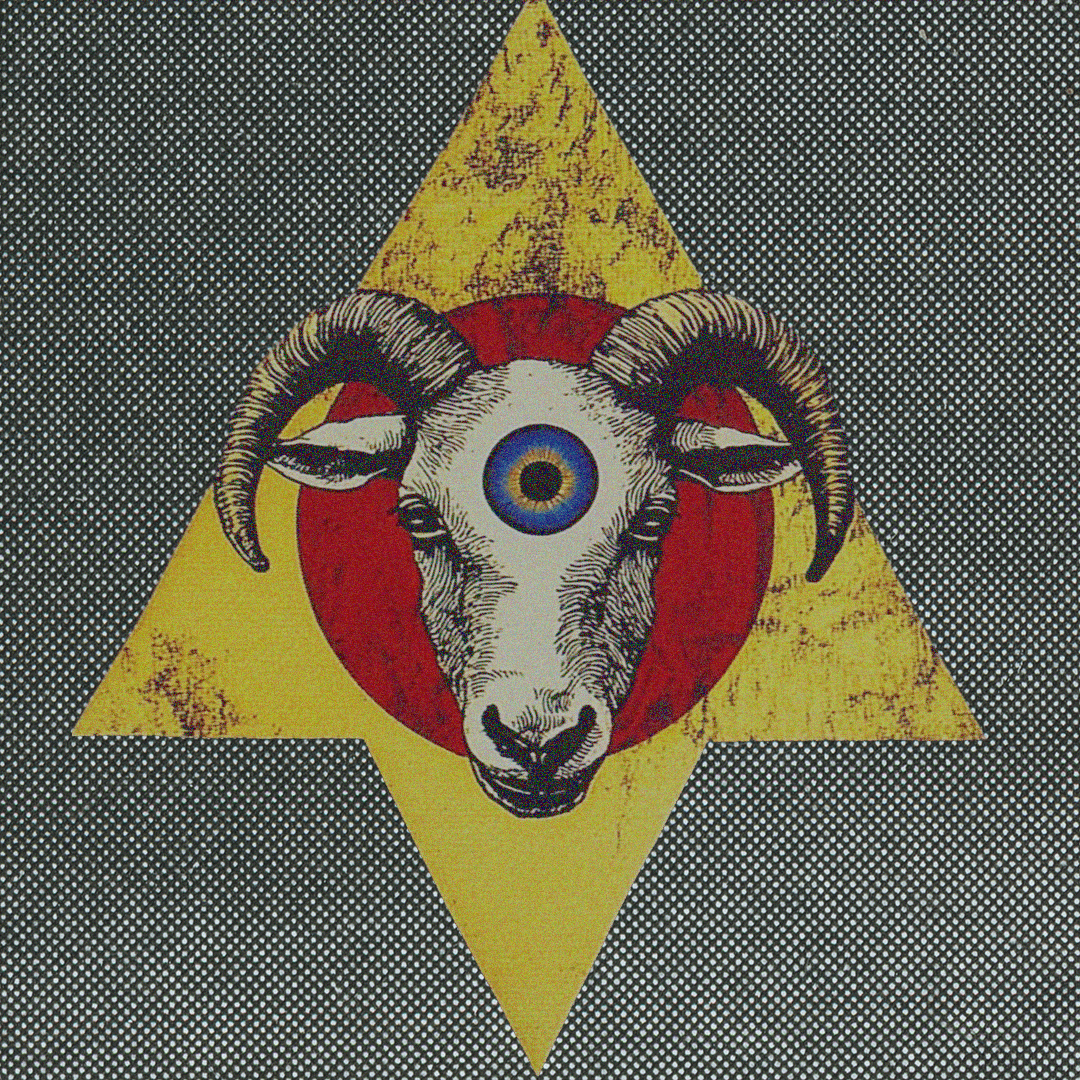
In this episode of "Write Where You're Sitting Now," the host apologizes for past audio release delays, explaining they were due to technical issues now resolved, and celebrates having internet in the new studio, enabling future co-hosts and live streams. The main feature is an interview with Tomas Fincente, author of "The Faceless God," a book that explores connections between Lovecraft's Nyarlathotep, European witchcraft, and Egyptian mythology. Fincente describes his dual role as an academic researcher in esotericism and an occultist, using both analytical and experiential methods. He details how the book emerged from long-standing interests, including Lovecraft's dream of Nyarlathotep, which caused visual disturbances, and the figure's link to the Black Man of the Sabbath in witch trials. Through Gematria, he found numerological connections between Nyarlathotep's name and the eye, across Greek and Hebrew. He also draws parallels between Nyarlathotep's facelessness and Osiris's headlessness, and between Azathoth and the nocturnal sun, linking these to the goat of Mendes and sabbatic lore. The host praises the book as well-researched and critical of Kenneth Grant, noting it convincingly unites disparate themes. The episode ends with announcements about upcoming content, including video episodes and a new Greenfield Files installment.
[Music] You're listening to write where you're sitting now. Hi there and welcome to episode 109 of Write Where You're Sitting Now. We're back actually publishing audio episodes at the same time as our YouTube episodes, which means I've actually figured out how to do the audio properly on this service that we use. It's been a real pain in the ass. It was probably a combination of user error and the service error, I should say, both causing an issue. But I have it sorted now. I can now finally get back to releasing the new episodes as they're made and released on YouTube. So I don't feel like I was singling out your audio listeners, you know, sort of implying that you should only be listening to us on YouTube. That's not the case. It was a technical snafu at my side. We've also got internet in our new studio finally. So, well, technically I need to run a really long cable into my room, but that's not difficult. So I can do that. So that means we can have co-hosts back again and do live streams again just generally do what we're meant to have been doing this year. So I'm assuming next year is going to be a good year for CityNow in terms of content. Like this year was just a absolute nightmare or sorts of things went wrong behind the scenes and life just general life. So next year it's going to be great. This week we are talking to Tom Asivin Cente, author of the Faceless God. His book looks at the kind of connections between a sabbatic, European law, a Cyrus all through the lens of HP Lovecraft's character Nala Fautap. So if you're a Grantian, this is the episode for you. It's very Grant heavy this episode. Not to say that this is a Grant, a piece of Grant fanfic by any stretch of the imagination. It's actually really, really well put together. It's a little bit critical of Grant at times this interview. In a good way, it's a hard put to describe in some ways. It's very complex and it draws together very seemingly disparate subjects but it's actually very well thought out and very well put together and very convincing. The book came out on Theon Publishing. We've had a Theon author on before Richard Gavin and enjoyed that one as well actually. And we're hoping to have David Beth on soon to discuss another Theon books. So you can look forward to that one. Obviously it's just me so no out trope. So it's just the intro since this is the bit where I remind you that we have a Patreon Patreon.com/sitInNow where you can get early access to this episode, come out a couple of days ago for the Patreon's and they also get this audio without any adverts on it. And the Seagulls have decided to join the conversation. So welcome to the Seagulls. Anyway, but yeah, you also get exclusive show with Helen Greenfield that we do called the Greenfield Files and we have another one coming soon. I've been planning that and now we've got the studio. We can do it. We're also I'm also looking at doing video episodes. I've been saying that for probably a few years now, but I've actually written them now, which is a step in the right direction and it's kind of hard to figure out how to do the kinds of topics that we cover and sitting now as videos. But I think I have it figured now it should be interesting. So and probably calls me lots of extra work, but we'll see. Anyway, don't forget to follow us on social media. I know a lot of you do now, which is really good. I've been having some fun conversations. Instagram, Twitter, we're at CityNow, Facebook is right we're sitting now and TikTok is sitting now official, I think. I am very guilty of not posting to TikTok and I should be because apparently that's where the people are these days. I don't know if that's true. I don't know if the sort of people that listen to the show or on TikTok maybe they are. Maybe they enjoy a good video of people dancing. I don't understand how TikTok works. That's probably my age showing through there. Anyway, let's get on with the episode and go and have a chat with Tomas Fincente. Hi there Tomas Fincente. Thank you so much for coming on the show. Could you give us a brief biography of yourself please? Thanks very much, Kenneth's pleasure to be here. Sure, so well in my in my mundane life I am a scholar and academic working in the areas of ancient religions and esotericism. Somewhere in the course of my advanced studies I became fascinated with the history of esotericism. I was actually working in a slightly different area at the time and I in fact had had a lifelong interest in mis mysterious and spooky things we might say just a kind of juvenile interest. Then in the course of my doctoral studies in fact I became interested in esotericism as a field of research and of course these days there's a kind of booming scholarly movement in the study of esotericism. So I have kind of two vocations as a researcher and an author on the one hand working within the methodologies of the academy. And on the other as a I suppose an occultist I mean we can get into this the terminology and how appropriate it is. But yeah on the other hand as Tamas which is a pseudonym I am interested in you might say moving beyond the limiting methodologies of the academy which certainly are a crucial bedrock for my esoteric work. But reaching a little beyond what those analytical methodologies can show us to and encounter with the ineffable with mystery with what lies beyond human conceptualization and in developing techniques that can open the soul to those mysterious forces. So how does that obviously the the book feels like a journey of sorts almost like especially from your introduction while from David Beth's introduction and your introduction on the book it feels like there was some kind of initiatic process almost that happened with the book. Would you say that did the book kind of come from this lifelong sort of interest or did it was it something that kind of popped up you know the subject matter I should say that sort of popped up as you were you know doing some other research or it felt to me like something that you'd been working on for quite a long time. So the book draws to certainly draws together a number of currents that I had been invested in for a long time. One of them is the Egyptological dimension. Another is my fascination with the the weird fiction of lovecraft and in particular Kenneth Grant's unusual approach to to lovecraft as a possible vehicle of a cult knowledge. I kind of unwitting vehicle of a cult knowledge. And a third current was my interest in the testimonials relating to European witchcraft. And the work is a very strange kind of synthesis of those three currents which on the face of it probably seemed to have very little to do with one another. Yeah and we could certainly talk about the way the research unfolded. Yeah, I think that's it's could like you say it is a very they seem on the surface to be very disparate subjects don't they? Where is that certainly do they certainly do and you know the on a first description of the book as I think some critics might have noted it sounds a little bit like weird fiction in itself right.
But as I probed ever more deeply into the connections between these currents, it became clear to me. And I think that I've made a pretty strong case for this in the book, that there are connections here that are far beyond the realms of coincidence. That's just saying we can get into what some of those connections are, I'm sure we will. But in terms of the genesis of the research, I became interested in the figure of Nier-Lathotep in Lovecraft's Spirit Fiction. This protein messenger figure who appears in many guises throughout Lovecraft's stories, in a particular I was interested in his representation in Dreams in the Witchhouse, as the Black Man of the Sabbath, a figure who appears in Witchcraft testimonials of the early modern period, especially in British Witchcraft testimonials, as the initiator of the Witch Cult. Lovecraft got a lot of his information about Witchcraft from Margaret Murray's book, The Witch Cult in Western Europe. So he would have read of the Black Man of the Sabbath in her work. But he draws a connection between this figure of Nier-Lathotep and the Black Man of the Sabbath. And Nier-Lathotep himself is a figure who appeared to Lovecraft in a dream, a very unnerving dream, which he records in his correspondence, which really shook him and manifested in some quite unpleasant physical symptoms. He describes a kind of what we might call an ocular migraine that persisted for some time after the dreaming of Nier-Lathotep, which resulted immediately in the prose poem by that name, which he says was basically written in his dream. So this is a very unusual dream. So the figure is obviously fictive, and yet it has this weird origin in Lovecraft's dreaming mind, which echoes in a strange way throughout the various appearances of Nier-Lathotep in the fiction, where we see over and over again that the noses offered by Nier-Lathotep and the effects of that noses are connected with vision, in particular with distortions of vision. So I realized that this theme of optical distortion was a kind of thread linking all of the appearances of Nier-Lathotep, and it was also rooted in Lovecraft's own experience of this god. And I began to explore Gematria, which is a technique that I often use. I kind of really a kind of visionary technique for exploring synchronicity associations. And I think Grant was interested in as well, as he was very Gematria-heavy. Coincidences in rendering the name of Nier-Lathotep both in Greek and in Hebrew, various permutations. I came up over and over again with this connection to the eye. You might say encrypted in the very name Nier-Lathotep. So in one formulation, his name equals 780, which is the very same numeration as I-in in Hebrew, the eye. And in another, a completely different numeration in Greek, his name equals 1,500, which is equivalent to the Greek word, sorry, 1,500 being an enumeration of the name in Hebrew, sorry, is equivalent to the Greek name, ops. So that in itself is highly improbable. That we would get this, no matter which language, you might say we use to transliterate this name. We arrive at this connection to the eye, which again is central to the appearances of this figure in the fiction. At this theme of optical distortion, cognitive derangement, which accompanies the sinister noses of this god. And then Lovecraft's own dreamed experience of the god and the attendant physical symptoms. I began to see, well, there's something going on here. There's something going on. And then I began to map out some of the possible symbolic associations that might connect Nier-Lathotep to which lore, right, and Lovecraft's decision to map that figure onto the black man of the Sabbath. Which again, it could be perfectly explained, you might say, in terms of the influence of Margaret Murray on his thought, right? One might say there's nothing more to it than a kind of fictive borrowing of those materials. But I realized that, you know, a comparison of the initiatory function of Nier-Lathotep in the fiction with the witchcraft testimonials, the role of the black man of the Sabbath as an initiator into the witch cult. And also the relationship between Azaphoth, who is, as it were, the god of chaos, who Nier-Lathotep follows, right? He is the herald of Azaphoth. And this figure of the sabbatic goat, right, the devil as the sabbatic goat, who is the kind of central figure of the witch cult, and who is served in turn by the black man of the Sabbath. Is this okay? You can see that there's a kind of parallelism here. Yeah, this is what would be struck me in the book actually, immediately. I was like, oh my god, yeah, he's right. So then I began, you know, if you explore the witchcraft testimonials, which of course have to be approached with caution, because we have to kind of peel away, you know, the biases and ideological projections of inquisitors, right? The accusers of so-called witches. We have to do so very delicately. But there is a kind of underlying folkloric bedrock there, as I think many scholars or historians of which craft would concede. Carlo Ginsburg is, of course, a famous proponent of this idea that there is some kind of shamanistic element underlying many witchcraft testimonials. And other scholars have, you know, cautiously followed that approach, right? That witchcraft was not simply a fantasy of the inquisition. There might have well have been in many cases where innocence were accused based on nothing at all, right? But in other cases, we're dealing with individuals who might have been engaged in ritual healing within that, within that kind of rural community. And those practices might be traced traceable ultimately to very, very ancient. And I use this word with qualification, shamanistic currents. So I became interested in thinking about what initiation means in all of these contexts, right? What initiation might have meant within that so-called. which cult, where individuals in a certain way are imagined to completely part ways with orthodox religious belief in a very radical way, pledging themselves to the devil. The antithesis of true religion, a sinister inversion of religious belief. So what is that issue in that? You might say in that fear, that fear that there are these individuals who seem to be Christians on the surface but are secretly in the service of the devil. Like what kind of spiritual experience is at issue there. And once we kind of remove the ideological projections of the Christian worldview, the fearful imaginings of the Christian worldview, is there something in that experience that is worthwhile? What initiatory value does it have? And this kind of touches on the meaning of the so-called left hand path and why so many occultists are drawn to that sort of adversarial countercultural understanding of initiation. So we have some kind of connection between this notion of sinister noses in Lovecraft's fiction where Nier Lathuteb leads these hapless protagonist and Lovecraft stories to this mind-shattering noses of the outer ones, which of course is presented to something no one would ever want. Yeah, horrifying experience, which is not unlike the fearful projections of the Christian authorities who accused witches of diabolism. Right? You see in both cases we have these fearful ideological constructions, which are disguising some kind of primal initiatory experience, which from the point of view of the normative mind seems like something diabolical, something evil, something simply to be feared. But maybe there's something salvific in this, maybe there's something necessary in this sinister moment. The third current, and I'm talking, I realize I'm talking way too much here probably, but I'll just mention this and see what you think about it. The third current is this Egyptological current. So I thought, how might we get beyond these sort of fearful representations of sinister noses, whether it's Lovecraft's kind of materialist kind of aversion to, he's both fascinated with and and repelled by, and he's a very complicated figure psychologically speaking, right? He's absolutely captivated by this idea of a sinister alien noses and horrified by it. And then on the other hand, dealing with the testimonials relating to witchcraft, right? We have to get beyond these kind of Christian ideological biases that are distorting the reality of these of these shamanistic experiences. So how do we kind of rescue? How do we get to the initiatory core here? So I turn to the Egyptological material. Now why? Because, well, for one thing, oddly, your Lathotep is described as a kind of antique pharaoh, right? And the name itself is a kind of Egyptianizing name. It's a weird touch. And again, you could dismiss it as nothing but a kind of literary fancy, except it became clear to me that in the description of Neralathotep as the faceless god, there is a weird resonance with Osiris, who of course is always represented as a pharaoh, who is described in Egyptian sources as the black one. And of course, Neralathotep is consistently described as the black man, the black man of the Sabbath, for example. And also the facelessness of Neralathotep, which maps on to the headlessness of Osiris. So Osiris is described in Egyptian sources as the headless one, both in Egyptian sources and later in Greek translation, he's called a Catholic, the headless god, which is in the most basic sense, an allusion to his dismemberment by set. He is the god of mummification, he dies, he's dismembered, and he is revivified, the kind of prototypical mummy. Headlessness for the Egyptians is a way of alluding to the decomposition of the body, the disintegration of the mundane person at death. And of course, there is a hope there within the Egyptian religious framework that the individual can pass through this experience of decomposition and disintegration to be reborn as Osiris was, to attain a new head, to attain a new face and facelessness and headlessness are synonymous within the Egyptian mythological symbolism. So now we have something strange, another kind of uncanny coincidence, right? We not only have the the the pharonic image of Neralathotep and his representation as the black man of the Sabbath, but now we have this deeper connection between facelessness and the headless god. Osiris. And the Greek word, you know, the Greek word, a Kefilos has the same Gematria as Azaphoth, as I discovered, just in playing around with with the names. So yeah, various little pieces began to fall into place. And I realized that there was more than a passing resemblance between the initiatory profile of Osiris and that of Neralathotep. And an interesting connection, especially between Osiris, who is equated with the nocturnal sun in in Egyptian new kingdom texts, the the dead sun who awaits reanimation under the earth. And Azaphoth, who is described by Lovecraft as this nuclear chaos at the center of infinity. Both of these principles, who of course are presented in mythological symbolic guise, are getting at this unfathomable origin of reality. The this ineffable source, which the Egyptians speak of as the nocturnal sun. Lovecraft has a different way of describing it, but it's getting at the same point that there is this primal singularity, which is hidden within the depths of space, as it were in the Egyptian case, in the depths of the underworld, which is the source of all of manifest reality. And every morning the sun god is reborn, raw is reborn from the corpse of Osiris, and the world begins a new. This initiatory experience in a certain way maps on to that very very ancient Egyptian symbology. So I began to trace the connections between Azaphoth and Osiris at this notion of the black sun. And discovered the central importance of the symbol of the ram, the ram of Mendes, who is, you might say, an animal manifestation of Osiris, described as the soul of Osiris. Why?
Pyle Asairas dreams in the underworld awaiting resurrection. And when he encounters the sun God during his nightly journey through the underworld, the two are synthesized and they take the form of this mummiform ram-headed figure who's described as the ram of Mendez. The ram of Mendez was worshiped in Mendez, the precinct of Mendez in Egypt, as a kind of fertility god and a manifestation of the fertilizing power of Asairas. And the Greeks described the ram of Mendez as a goat, the goat of Mendez. And of course, eventually that symbolism of the goat of Mendez is woven into which lore. So again, we have another connection here between the Egyptological symbolism and the symbolism of witchcraft in this figure of the goat of Mendez. So of course, Elifas Levi, Levi ties to witchcraft famously. Yeah. But the devil as the goat appears quite commonly in the later European witchcraft testimonials. So that was another thread linking Osiris as the god of the underworld to the devil figure of which lore. So you can see how the project kind of built up from an intuition into something quite intricate and very difficult to elaborate. But I hope that at least gets us started. Yeah, definitely. The thing really struck me early in the book, you talk about this kind of weird fear that in the modern age, we're meant to be in this kind of post-Christian kind of age, yet when these kinds of topics are brought up, these so-called post-Christian, all of a sudden become very fearful of the idea of things like blood packs or goat-like figures appearing. It's almost as if actually they are still holding these kind of Christian fears. And the other thing that kind of interest to me was that Lovecraft himself was a deeply fearful person, wasn't he? And Nalafate, that seems to have come from this place of fear. I found a letter to his friend, was it a line, a Reinhart Kline? Yes. And it said, "Don't fail to see." This is apparently in the dream where he first discovered Nalafate, he receives a letter from a friend of his called Samuel Loveman and says, "Don't fail to see Nalafate if he comes to Providence. He's horrible. Or will be on anything you can imagine, but wonderful. He wants one for hours afterwards. I'm still shuddering at what he showed. Brilliant bit of. That's brilliant. Yeah. And it's perfectly kind of sums up that kind of fear, doesn't it? That kind of this idea, and Lovecraft himself was. I mean, he feared everything from society, it seemed, and other races as well. He was deeply, deeply troubled by other races. It's almost comic effects. I mean, it's the kind of. I've never seen writing quite so. I can't think of even the word for it. It's almost comically racist. If you know what I mean, it's almost like a parody. But. Yeah, this. What did you all take on this idea of. Because one thing the book seems to really delve into is this idea that actually initiation. Part of it's about fear. It's about that kind of confrontation with a sort of avoid darkness and the true initiate or the true aspirant actually embraces that kind of fear and that kind of. You know, uses it as a positive almost. Right. Yeah, and certainly the initiatory experience of the characters in Lovecraft's stories is a very unsettling one. You know, a complete inversion of our ordinary cognitive and perceptual grasp of reality. Something similar is hinted at in the witchcraft testimonials. There's a kind of. You know, when the individual signs their name, as it were, in the devil's book. And this is an image that also appears in Lovecraft's story, which is what the book dreams in the witchhouse. They are rejecting the status quo entirely. Right. They are leaving behind the world of normative values. What does that mean from an initiatory point of view? You know, how can that be relevant to us as modern practitioners? Well, if we think about initiation, right? All of the occult and esoteric orders talk about initiation, but we don't often think about what it actually means in a very basic sense. Now, what are we after in pursuing initiation? What is this hidden knowledge that we're after? And what do we think it's going to do for us? There is a kind of profound dissatisfaction with the limiting conceptualizations of the modern rational mind. We are entirely infrained in this rationalistic kind of technocratic world view that seems to leave no room for imagination. Seems to leave no room for mystery. It claims that it has at least in principle the answer to the riddle of existence, which it can present to us in an entirely analytical way. Now, of course, there is much that's tremendously impressive about that modern scientific world view. But this notion that we have somehow dispensed with the superstitions of the past, that we no longer need, we no longer need to engage in, let's say, the realms of spiritual imagination, spiritual imagining intuition, that we're now in a post-religious even frame. I think that is a bit of a delusion. We are always pulled to mystery. And it's interesting to think historically about the rise of supernatural fiction and weird fiction after the Industrial Revolution. Why is it that we see this explosion of interest in ghost stories, weird fiction, and an interest that continues on to this day? But always in a fictive form. Always as something that we claim not to take seriously. But at the same time, it lingers. So the realms of mystery, which you might say were banished from the scientific paradigm, now take root in the world of fiction and pure imagination. And we think we can explore them safely at a distance. And we even suppose that none of it is to be taken very seriously. So we can laugh at old superstitions and magical beliefs. And speak of them as primitive or outmoded. But none of those derisive attitudes, it seems to me, can satisfactorily explain the persistence of these beliefs. Carl Jung once wrote about this and noted that modern ridicule of ancient superstition, actually masks up profound fear. In the individual, maybe entirely oblivious to this, in their own personality and their own personal attitudes to these subjects. But in a wider cultural perspective, I think this is a very important point.
is important that the repression of these older esoteric spiritual currents within the rationalistic worldview actually feeds them in a curious way. They gain power through repression. We sublimate them in the form of literature as Lovecraft himself did, sublimating his own fearful dream experiences, which he could not handle as a rationalistic human. Transferring them into mere fiction where he could sort of deal with them as it were. And what's control them? Control them. Yeah. And we can see this happening quite clearly on a wider cultural scale. Lovecraft is just an extreme example of this, right? With, as you say, his extreme moralizing and racist attitudes. He's a kind of hyperbolic example. But yeah, these, the soul hungers for contact with the enoughable. It longs to be freed from the inframing control of abstract ideological conceptualization. And so we are drawn to these experiences one way or the other, right? We might be drawn simply to in the most kind of, the most kind of superficial way, you might say, to fiction, to fictive representations of these experiences, which both can excite and repel the person, right? Or we can be drawn in a more substantial way to seek out initiation and to authentically question the predominant rationalizing biases of our culture. Yeah, it's definitely one thing. I mean, we sort of briefly mentioned this in, in our email conversation, which was I was a member of the OTO for a decade or so for a long time. And when, kind of Grant's name was brought up, and this is obviously, I left, you know, quite a few years ago now. But whenever his name was brought up, the big critique of him, or that he was almost seen as almost a comical character in a weird way to the, you know, the older felomites within the OTO. But the thing that was always brought up was this idea that he had sort of dared to kind of incorporate lovecraft's work into, into kind of phallemic framework. Obviously, and that's why he was eventually removed from the, you know, leadership in the UK OTO as one of the main reasons anyway. But it feels like even within the, the culture as it were, there's a kind of a fear of, in some ways, of approaching topics that aren't pre-controlled by, say, an Alastair Crowley or a Golden Dawn or, you know, this idea that you can somehow bring in fictitious, you know, I was saying this in quotes, or that fictitious kind of ideologies into, and kind of renew a cult beliefs. Somehow it feels like there's a similar fear there, isn't there? And Grant, for a long time, was kind of prosecuted almost, you know, because of that, it felt like it was kind of, until very recently seen as, like I said, almost a comical kind of character that had kind of warped Crowley's ideologies. Yeah. Yeah. Oh, there's so many, there's so many directions we could go with this. Yeah. Well, you know, modern occultists like to think of them, themselves as the custodians of the authentic esoteric traditions that have been kind of displaced within the modern, the modern scientific worldview, right? So if you want access to that primal noses, you need to be initiated into one of these organizations. On the other hand, we might argue, and I think Grant certainly had this intuition that if you want, if you really want to identify those individuals who are tuned into these repressed, to these, to these, to these currents, which have been repressed within the modern scientific worldview, look to the artists. Look, look to those highly sensitive, intuitive individuals. You might say have a kind of, kind of inborn capacity to open themselves to these hyperrational influences. Right. So cultists like to think that they have some kind of monopoly over mystery, but in a kind of maybe in an ironic way, when you look at many of these cult systems, which have evolved from the 19th century onwards, they are all conceptual constructs of one kind or another, which over time become ossified. They become no different than any other religious worldview. You have to accept that this is the model of reality, the tree of life or whatever it is. Follow the directions that are given to you. Don't ask too many questions. Stay in line. And then at the end of the journey, you will be rewarded in some way. There's, you know, it's the kind of literalism and fundamentalism that emerges there is startling, it seems to me. And this notion that surely fiction cannot be a legitimate source of esoteric knowledge. I mean, where does that even come from? When we think about the fact that, you know, if we trace back these magical traditions to the pre-modern world and even beyond, it was always the faculty of imagination that was seen as the seat of magical experience, the properly trained and attuned fantasy of the human. That is where, that is where we can communicate with these luminous powers. The notion that fiction has nothing to do with occultism is just bizarre when you think about the preeminent role of symbols. Think about the tarot. You know, is the high priestess of the tarot, more objectively real than Lovecraft's Nearlathotep? I mean, they're both fictive, but they at the same time encode some kind of primal experience, some kind of primal symbolism. So, yeah, so I'm with you entirely that there's a kind of false divide there between, you might say fiction and non-fiction, which are, in that binary really is a binary that belongs to the modern worldview. When we think, because when we think about fact, we're talking about what the scientific methodologies provide us with, right? And anything that does not conform to those methodologies is fiction, right? And that includes all of these ancient esoteric systems which are now jettisoned to the dustbin of history. Well, it's in fiction, in weird fiction, that those currents continue to thrive, you might say, in the modern world. It's in the work of visionary artists, and Grant was very interested in surrealism. He talks of, and of course, the work of Austin, you know, the work of Spare. Grant realized that artists inadvertently tune into these mysterious forces. They do so quite naturally. And so he developed really an experimental approach to occultism, which is not appreciated by traditionalists who think that initiation is simply about parading kind of pre-established models of reality. You know, the critics of, you know, there are things, of course, that we can criticize.
in the methodologies of grant. I'm not simply a grantian though grant has been one influence. There are some limitations of his approach, I think. But the complaint that grant blurs reality and fantasy is not a legitimate one. This is his actual intended and explicitly stated aim. For example, in Outer Gateways, one of his typhonian books, he very clearly explains. He talks about surrealism, he talks about the work of visionary artists. And he relates his own esoteric methodologies to the development of a kind of paranoic mentality, a kind of delirium, a kind of self-induced delirium that allows the initiate to break through the limiting, ossifying influence of rationality. I kind of to open themselves up as it were through delirium and even through a kind of delusion, a kind of engaging in a kind of fantasy that can be freeing and liberating. But if you think about ritual, especially these kind of more structured, the Lemick or Golden Dawn rituals, that kind of thing, isn't it? You're taking part in a play of sorts. I've never understood that kind of mockery of grant in that sense, this idea that our version of vehicle is somehow verified or something. It's like a, because Crowdy was involved with it, therefore it's the correct occult. Crowdy was obviously influenced in his time by the Golden Dawn and so on and so on. I often wonder if what Crowdy would think of this kind of rigid adherence to it. It seems very strange to me that there hasn't been more modern editions. Other writers are often, it feels like there are other great occult writers out there that could be added into these philemic systems. That seems sacrilegged to philomites almost. When you set yourself up as a prophet, you can kind of expect that. That's one of the unfortunate consequences. But you have followers who will look upon you as a kind of a prophet. Assuming the role of the prophet is a tricky thing, because it can foreclose, it can seem to foreclose, future, discovery, it can seem to foreclose, an open experimental approach. And of course, in other respects Crowdy was extremely experimental in his occultism. So there's a kind of tension there within Crowley's own approach. Of course, he was a very revolutionary countercultural figure who was all about opening up new vistas, new, even scientific approaches, as he called them. The Methodist Science, he says. But at the same time, in becoming a prophet, you set your system up as another religion. Which he warned about as well, didn't he? Yes, so it's very complicated. One way to look at Grant's approach and his works is that they are performative rather than descriptive. So what I mean by that is he's not simply giving you a system. It's not like reading the rituals of the Golden Dawn or even reading some of the prescribed philemic rituals. The writing of Grant does something. It's not simply describing it is intending to create an effect on the reader. It's actually by piling on the endless geometry and using extremely obscure writing, not dissimilar in a way from Lovecraft's own unusual writing. Lovecraft grants can kind of pull you into a hallucinatory frame of mind. That's what I'm talking about. That's the real goal here. It's not that we should take everything Grant says literally, as though he's presenting us with a fully articulated system. So I think the critics of Grant have definitely missed the point on that score. Yeah. I mean, the one thing he also gets criticized for quite a lot, I think, is ridiculous as he sort of brings this idea for that Lovecraft's characters or his kind of writings are kind of received almost dreams, rather than just being the subconscious kind of arranging itself. He makes the implication that somehow the dreams themselves are a form of a cult wisdom and that Lovecraft is kind of filtering that out through the method of fiction essentially. That's another thing that Grant gets a lot of criticism for saying because I know that one of the big contests against that is that Lovecraft himself said he doesn't consider himself a necaltist or blah, blah, blah. But then I guess the counter to that would be, well, you know, a lot of artists don't think that they're a cultist, but they are. And Grant never says that Lovecraft was an occultist. What he says is that Lovecraft was tuning into some of the same currents that Crowley tuned into. Now where it goes wrong, I think, sometimes in Grant's exposition, but again, we have to remember it's not clear where fact and fiction diverge for Grant, right? We always have to remember that. But there are sometimes indications that he thinks that there's a one-to-one correspondence between various images and figures in Lovecraft and concepts that we find in Crowley. Where it almost seems like he's trying to excavate a complete occult system that's buried within Lovecraft's fiction. That's, I think, where we can be a little critical of Grant's approach. Absolutely we have to remember that Lovecraft was not a necaltist. Autocultism, at least in his waking attitudes, thought occultism was silly, nonsense. In a certain way, his lack of knowledge of occult systems is actually a plus, right? Because he's not inframed by, you know, a fully worked out understanding of occult initiation or the history of occultism. The images in his fiction are not restricted. There's a kind of openness. Do you see what I mean by that? If a writer of weird fiction was completely inframed by occult knowledge, it would come across as still did an artificial. It's an unfiltered, isn't it? Whatever you want to call it. But it's just its insinuations, its echoes of a primal symbolism rather than some kind of fully articulated system. And in my own work, that's the way I've approached it, that there are echoes of weird echoes of very ancient Egyptian symbolism, right in the connection between Yarlathotev, the faceless god and the headless Osiris, between the figure of a new bus who we haven't touched on yet, you know, the herald of Osiris. And the figure of Yarlathotev as a kind of a herald or initiator or liminal figure who is both human and beast simultaneously, who is sort of gesturing towards an initiatory experience that will reunite the human soul with the Catholic powers, the hidden powers of the cosmos. So yeah, there are these threads within the fiction that we can kind of pull. Yeah, you know, it's quite a remarkable thing that Lovecraft in his dreaming mind was able to
tune into some of these very archaic spiritual initiatory experiences. And it's the way he transmitted them as well. There's something about the way he lovecraft writes. It's very different to other writers. And that's another thing that, I think originally that's kind of what appealed to me about Grant Strange Day as well, was this like, he kind of, I got the impression that he had that same feeling about lovecraft, that there's something about the way he writes. So I can't put my finger on it. It's, it's, there's almost like a dream logic in the way he writes. It reminds me a little bit weirdly of David Lynch in the way he presents his films. There's this kind of, you feel like you're stepping into somebody's dream almost when you read lovecraft. And yeah, again, to me that kind of, I don't know what it is that I find that incredibly appealing as someone that's very, interested in the occult for a very long time, because it feels unlike other horror, I suppose, or other, you know, other styles of writing. And I think, yeah, I don't know if you'll find that. Now where one has to be cautious, I think, and this maybe gets to where I might part ways with Grant is that, you know, being absorbed in this kind of hallucinatory worldview. That's not worldview, sorry, kind of hallucinatory experience. That's intoxicating and it can be in many ways liberating. And it certainly can open, open us up to mystery. But then the question is, what do we do with it in a practical sense? You know, when we come back to mundane reality, as it were, when we close Grant's book, what are we going to do with that? In terms of constructing for ourselves, kind of an issueatory set of initiatory practices that can kind of cultivate those luminous intuitions and experiences that Grant has kind of opened up for us. And Grant doesn't give us any help there. You're not going to find any kind of workable system in my view. And so the limitation of Grant is that he kind of jumps straight away headfirst into this kind of into this kind of hallucinatory world without first setting out a bedrock of objective knowledge. That's one of the ways in which my own method differs from Grant, partly of course, because I'm a scholar myself, but there is great value in anchoring your spiritual framework in a bedrock of objective analysis so that you don't simply get lost in that hallucinatory world. And when you do that, I mean, I discovered this in my own work. The impact of what is revealed in those more visionary moments and through the use of those more obscure occult technologies like Jumatria, the impact of the revelations is so much more powerful when you begin from a standpoint of reasoned fact. So if I can ground my more visionary experiences in a knowledge of Egyptology, in an understanding of the deep roots of which law are impossible connections to Shamanic experiences. Now I can test myself. Now I have now I can check myself and make sure that I'm not simply engaging in fantasy. In magic, the imagination has to be trained to a certain extent. We can't simply let ourselves go off into hallucination. We also have to be able to come back to reality and relate those experiences to the here and the now. So combining rational methodologies with occult methodologies has been very important in my own in my own approach. Because initiation requires us to come back to reality at a certain point, to find a way to relate what we've discovered to the here and the now. Yeah, I mean you talk about that a lot later in the book where you go over the ordeal of the abyss and the clip off and this kind of thing where you're kind of there's this kind of destruction of the self and eventually if you're grounded enough and you do it correctly, you reappear in the mundane as it were, but Jane, that kind of thing is that kind of thing. I do see what you mean with Grant though. He does that is the lack of any kind of, he doesn't also, it's not really a grim war almost. Does it what he writes? It's more of a, it seems very accountative, doesn't it? He's more, he's not really presenting you with a system or with a, you know, any work in such as it were, as there's some but not, you know, very, very scant. That's right. That's right. It's, it's, it is, yeah, it often felt like there was a book missing from Grant, but it was kind of, let you say like an anchor almost that you could go back to, you know, where you reappear from his, is a best as it were. Yes, he's not going to give us that bedrock, so we need to supply it for ourselves. Yeah. That's right. His work is, as I said, kind of magically performative. It's meant to do something to us. Yeah. It's meant to stir us. It's meant to open us up to make us functional and ten eye as it were for these alien transmissions. But then what we do with it is the next question. Yeah. Talking of Cliffoth, Cliffoth is something that we've not really mentioned on the show. There's a whole other show in it, a whole other conversation probably we could have. You could easily have an entire show on just that one subject, but you talk about the 26th path and the Cliffoth a lot in the book. I was wondering, could you talk us through kind of what that is for people that, you know, haven't read like Leibor 231 or, you know, this, for the listener who's not well steeped in that, would you be able to talk us through the importance of that within the framework of this book? Let me try. I know. It's never tough. No, if it wasn't tricky enough, we now have a fourth sort of current that's woven into the book, which is a cabalistic framework. And you know, I use that cabalistic framework with some caution because of course it is a transcendental framework. And the initiatory approach that I'm following in the book in which I think is glimpsed in, in, you know, the witchcraft testimonials and also in the Ossurian, the ancient Ossurian cultus is not a transcendental experience. It's not about ascending to the ideal transcendental realm. It's about communing with the Catholic forces that are all around us and beneath us. It's about coming back into communion with the invisible forces of this world. And that is how I understand the left hand path. And that's a terminology that means different things to different people. Oh, yes, that's one that comes out. We've been out of it. For me, it is, for me, it is adversarial in the sense that it involves a critique of transcendentalism with all of its conceptual abstractions in all of its dualisms and binary oppositions. That is precisely what we have to break through. That's what Grant is doing in his work too. He's trying to break through that conceptual armor, right? To get at this more original encounter with the demonic or enthusing forces of the cosmos. So I use the Kabbalistic framework with some reservation because it is one of these transcendental maps that shows you how to get from this world to the the supernal realms. But still, it has lots of Kabbalah gives us lots of tools, methodologies and in symbologies that can be helpful, especially if one is coming from that kind of tradition, right? That sort of Christian Kabbalistic tradition that informs the golden dawn and even to some extent.
Crowley system. So to get to the point, on this map of the tree of life, which shows us how the modalities of divine essence are connected to one another, and how they ultimately emanate to form our world. There are various paths, right? Various pathways, emanative channels that connect these modalities. And one of those pathways is called the path of iron, which means eye in Hebrew. The 26th paths, the paths correspond to the Hebrew letters as well. Now that path on the tree of life connects the sphere of hot or mercury to tipperate, which is that central most sephora on the tree of life. And when one crosses that path in Kabbalah, one is passing from the realm of formation or yet zero to the realm of Brear creation. So we're passing from the lower sephora on the tree of life, the lower triad to the middle. So this is a kind of fundamental initiatory moment as it were. We're breaking, you might say, we're breaking through the ordinary phenomenal consciousness to a deeper initiatic understanding of reality. Now that path, as Crowley explains it, corresponds to the devil cart in tarot. So it's linked to the goat, the goat of Mendis and Capricorn. So the devil atu is ruled by Capricorn, the goat fish. So we have a bunch of astrological associations here as well. Now as I mentioned earlier, in the which law the devil appears in the form of the goat at the which is seventh. And the goat has this much more ancient connection to Asairus, originally the realm of Mendis. It comes to be known as the goat of Mendis. So the goat is and the ram are symbolism that are gesturing to the primal fertilizing power of the Black Sun as the Egyptians would call it. And this path of iron is somehow connected to that symbolism. Are you with me so far? Yep. Yep. Yeah. So the devil as the initiator is the primary force that is in play as we move from the sphere of mercury or hot to this deeper experience of typerate, which Crowley links to coming into contact with our own inner dimo or guardian angel. So we are moving within ourselves to a deeper understanding of the self beyond the phenomenal. And the initiator on that path is the devil, which is interesting. So this signal is already that this initiator experience is going to be quite traumatic potentially. It's going to involve a complete overturning of our ordinary experience of reality. And on the devil at you know very prominently in the thoth deck, you have that they sit the eye, right? The eye, that single eye in the forehead of the goat. Iron in Hebrew means eye, right? Yep. And this is bringing us all back to the nullified test stuff again. And you are left with that, right? And this theme of optical distortion, right? Nosis involves a transformation of vision, right? This is what all of this symbolism is pointing to. And that's what's happening on this path of iron, our seeing, our ways of seeing, our perceptual and cognitive relationship to reality and to ourselves as being radically upset. The devil, we have to in a certain way dedicate ourselves to the devil at this point and completely step outside of our ordinary experience of reality. Now the devil, the goat in Greek mythological terms is pan. And in fact, the goat of Mendes was linked to the Godpan in ancient times, right? So the Egyptian symbolism of the Océrian realm or goat is going to be linked to the Godpan in Greek mythology. And pan literally means all the all. So the goat is a symbol of the primordial all or totality. Either in its unmanifest form as the black sun of Cyrus or Azath as Lovecraft would call him, that primal singularity from which all of reality emanates. Or we can think of pan as the all in the sense of the totality of the created order universe, which emanates from that source. So pan as the pan genitor, the creator of this organized cosmos. And cosmologically, what is explored on the tree of life is precisely that relationship between the unmanifest and the manifest, right? That from this primal ineffable source, the boundless principle in Kabbalah, the Einsaff, all of these modalities of divine essence emanate and emerge interweaving, coursing through this hierarchy until we reach Malkut at the bottom, the our world of time and space and matter. So cosmologically, this journey through the pathways is all about relating pan in these two senses, pan as the the unmanifest totality and pan as the complete ordered world of Malkut. The initiate as they travel in visionary trance, right, through these pathways is in a way emulating that dialectic, right? We're moving from the ordered complex understanding of the self as an embodied person inhabiting the realm of Malkut with a kind of limited perceptual and cognitive structure to this more unmanifest understanding of the self, which connects to typerant or what Kroly calls the guardian angel, right? So we are kind of imitating the reversion of the divine principle to its own unmanifest beginning. So pan, the mythology of pan when you unpack it esoterically is all about that relationship between the manifest and the unmanifest. And Kroly has a very interesting analysis of of the word pan, a kind of cabalistic unpacking of the word, where he explains it as a kind of magical formula through which we return to the womb of the mother, knocks, right? The primal beginning. So as he analyzes pan, it begins with the letter, the letter PAY in Hebrew, which literally means mouth, and he identifies it with duality, which is to say this is the emergence of manifestation from the unmanifest, the one becoming two, right? So this is the process where the divine unfolds itself. And then the second letter, he connects to alaf, which is the fool of tarot. So this is, you might say, the reckless cascading of the divine, right? As the fool launches himself off the cliff, right? The principle unfolding itself in this kind of free play, this careless creative activity. And then finally, we have the end, right? The last, the third letter, which he identifies with
death, the atu, the tarot of death, and the watery abyss of Scorpio. This is the moment of reversion. Right? So we begin with emanation, duality emerging from singularity, right? From the azoth or from the the black sun as the Egyptians would call it. Then we have the the emanate of energies, the fool, which emanates from that origin point. And then we have a turning back as the divine reverts to its unmanifest unity. And this is the end, the the nun, the final letter. So the word pan, and this is really an ingenious analysis to my mind, right? Because it's linking up both senses of the all, right? The all as the unmanifest, and the all as manifest reality. And he's saying that in that symbolism of the goat, the devil as the goat, the devil atu, we have a pictorial representation of this formula, which is all about descent and return to the source. And that's what's happening in an initiatory sense. Now again, I would not interpret that experience in a transcendental way. Right? So that's the point at which I would say that the the map is limiting one. But I would agree that the function of initiation is precisely the undoing of the manifest self. And the return, our return to our own inner, demonic center, which we will discover is actually completely entangled with all of the other demonic forces of the cosmos. Right? So this is the notion that that David Beth describes as the pan-diagonia, at the notion that what the initiatory experience actually unveils is not some kind of transcendental reality beyond this world. But the reality that everything is fundamentally entwined, once we step outside of the kind of abstract conceptualizations of the rational mind, which wants to define and separate things, wants to dissect and analyze things, what we actually discover is that we are completely emmached with these unseen energies. And in this initiatory experience of kind of undoing the conceptual armor that inframes us, we are once again opened up to to that demonic experience, which is both the true experience of the self and of the cosmos simultaneously. How was that? That was great. We're definitely going to have to do a part two of this, I think, at some point, because I don't want to keep you too much longer. The book we haven't actually mentioned the name of the book, which probably should be, is the faceless god. It came out a while ago, and I genuinely believe it's one of the great underrated occult books of recent years, and if people can track it down. Well, I knew addition is emerging. So, yeah. The other thing I was going to say, so perhaps what we should do is, because I have so much more I'd like to cover with you, when this second edition emerges, perhaps we should have you back on and delve deeper if possible. But yeah, it's been absolutely fantastic to have you on. And like I said, it's genuinely one of the my favorite occult reads of recent years, the faceless god. So I look forward to great enthusiasm to it. To an years ago. I appreciate that it's always heartening to learn that that very strange book has been meaningful to to others. Oh, yeah. No, it's fantastic. But everyone I've come in contact with has read that book, including Dara Mason, who we had on the show recently, it's incredibly high praise all around. So it's great to hear that there's a new addition. Would there be a new material within the book? Yes. So I've revised the original manuscript and added a new introduction, which is really a new chapter. And David Beth is contributing a fantastic essay as well. So yeah, it's been revised and it's in somewhat enlarged as well. So stay tuned to see on for announcements about that. Imagine the pre-orders will be happening in the new year. Brilliant. Oh, that's great. David, someone that we're planning to have on as well soon. It's always like trying to, you know, often criticize for not having people on soon enough on this show. But David's definitely very, very high on the list of people I want on as well. I think he's also great. Actually, I wonder if you're wonderful. Yeah. Theon in general, putting out some great stuff. I mean, you're our second Theon author we've had on. We had Richard Gavin, as well recently. And he was fantastic as well. Excellent. Yeah. So it's definitely one of the better, I think, one of the better stuff. One of the more interesting publishers out there. So it's always great to have an author from that fold on the show. Great. Well, yeah, I would love to speak with you again. Brilliant. Yeah, we'll definitely do that. And I'll speak to you soon. Thanks so much. I appreciate the invitation. It was fun. [Music]
Podcast Summary
Key Points:
The host announces a return to simultaneous audio and YouTube episode releases after resolving technical issues with audio publishing.
The episode features an interview with Tomas Fincente, author of "The Faceless God," published by Theon Publishing.
The book synthesizes three currents
Fincente, an academic in ancient religions and esotericism, also practices as an occultist under a pseudonym, blending scholarly methods with experiential approaches.
The discussion explores Gematria connections linking Nyarlathotep to the eye, and parallels between Nyarlathotep, the sabbatic goat, and Osiris as the headless god.
The host notes the book is critical of Kenneth Grant in a constructive way and draws seemingly disparate subjects together convincingly.
Future plans include more co-hosted episodes, live streams, video episodes, and a new "Greenfield Files" episode with Helen Greenfield.
Summary:
In this episode of "Write Where You're Sitting Now," the host apologizes for past audio release delays, explaining they were due to technical issues now resolved, and celebrates having internet in the new studio, enabling future co-hosts and live streams. The main feature is an interview with Tomas Fincente, author of "The Faceless God," a book that explores connections between Lovecraft's Nyarlathotep, European witchcraft, and Egyptian mythology. Fincente describes his dual role as an academic researcher in esotericism and an occultist, using both analytical and experiential methods.
He details how the book emerged from long-standing interests, including Lovecraft's dream of Nyarlathotep, which caused visual disturbances, and the figure's link to the Black Man of the Sabbath in witch trials. Through Gematria, he found numerological connections between Nyarlathotep's name and the eye, across Greek and Hebrew. He also draws parallels between Nyarlathotep's facelessness and Osiris's headlessness, and between Azathoth and the nocturnal sun, linking these to the goat of Mendes and sabbatic lore.
The host praises the book as well-researched and critical of Kenneth Grant, noting it convincingly unites disparate themes. The episode ends with announcements about upcoming content, including video episodes and a new Greenfield Files installment.
FAQs
It explores connections between sabbatic European lore and Egyptology through the lens of H.P. Lovecraft's character Nyarlathotep, with a focus on Kenneth Grant's interpretations.
The author is Tomas Fincente, a scholar of ancient religions and esotericism, who also works as an occultist under a pseudonym.
It emerged from a synthesis of research on Lovecraft's fiction, European witchcraft testimonials, and Egyptian mythology, sparked by a fascination with Nyarlathotep's connection to the Black Man of the Sabbath.
The eye is a recurring theme linked to Nyarlathotep, as Gematria reveals his name's numerological equivalents connect to the Hebrew 'Ayin' and Greek 'Ops', both meaning 'eye', reflecting optical distortion in his appearances.
It draws parallels between Nyarlathotep's facelessness and Osiris's headlessness, both symbolizing initiation through disintegration, and connects Azathoth to Osiris as the nocturnal sun or black sun.
The ram of Mendes, an animal form of Osiris, is linked to the goat of Mendes in witchcraft lore, connecting Egyptian symbolism to European sabbatic traditions.
Chat with AI
Loading...
Pro features
Go deeper with this episode
Unlock creator-grade tools that turn any transcript into show notes and subtitle files.
 PodcastTranscript AI