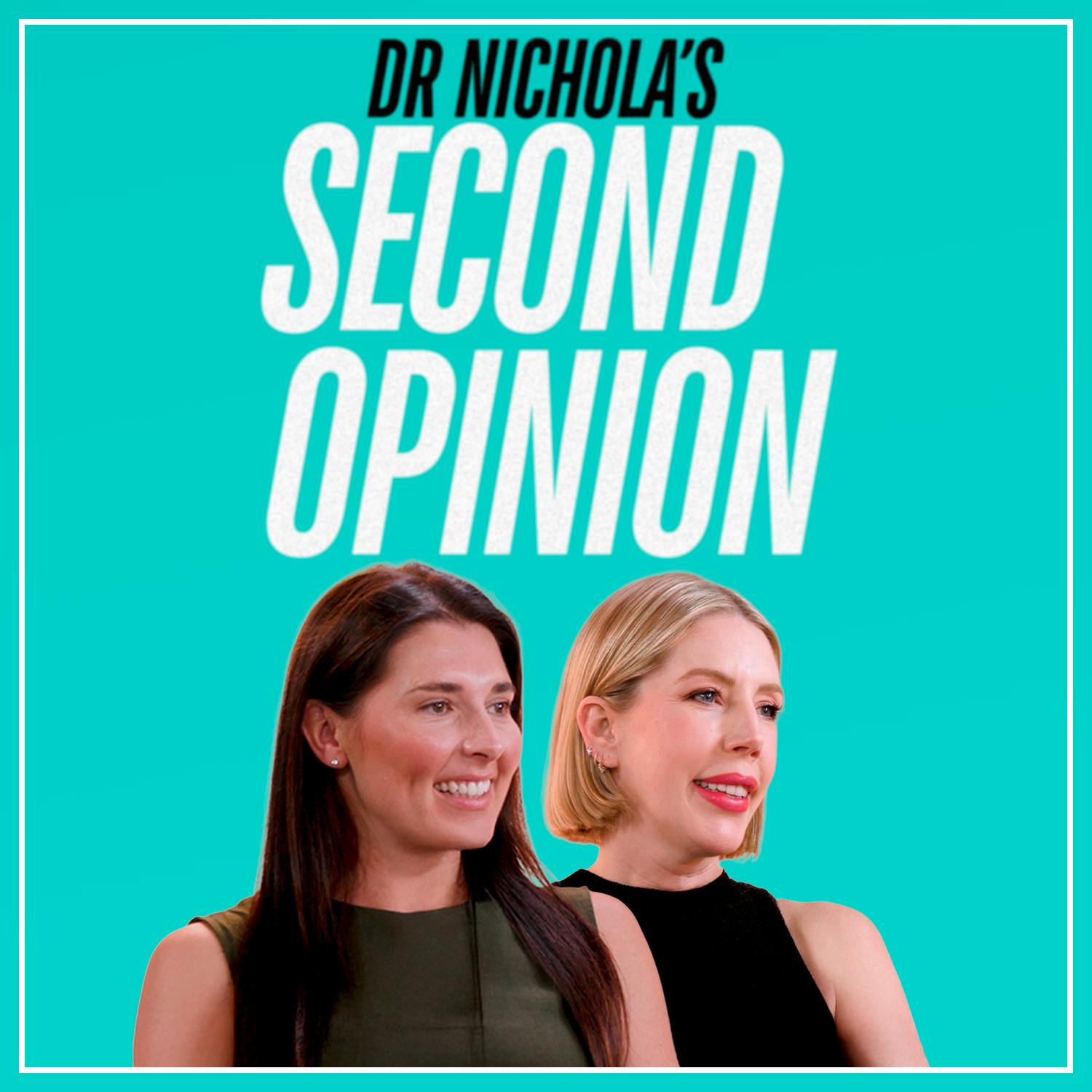
In this podcast episode, Dr. Nicola shares her personal routine for maintaining a biological age of 20 at 38 years old. Her non-negotiables include morning daylight exposure to reset circadian rhythms, daily walks, and gym sessions four times a week combining strength and cardio. She uses red light therapy and sauna for mitochondrial health and cold exposure for mood boosts. Nutritionally, she follows a 12-hour overnight fast to promote autophagy, eats whole foods with 30 plants weekly, and avoids ultra-processed foods with an 80/20 balance. She checks her blood work every six months to track baselines. Stress management involves nature and music to counter chronic stress, which accelerates aging. Supplements are personalized, but she takes omega-3, vitamin D/K2, functional mushrooms, and NAD. Sleep is key: 7-8 hours, consistent timing, a cool room, and rare alcohol. Dr. Nicola dispels the myth that aging is purely genetic, noting 80% is lifestyle-driven. She answers listener questions on balancing work and rest, her motivation from the gap between lifespan and healthspan, and the future of longevity science moving toward proactive cellular health. Her quick fix emphasizes basics, consistency, and knowing your own baseline.
Arreo Original Podcast Hi, I'm Katherine Ryan and welcome back to Dr. Nicola's second opinion. The place where aging myths get busted and the latest research gets a glow up. Coming up, Dr. Nick's straight up from the lab to give you a heads-up on hard science. We've got your questions lined up and as always, she'll finish up with a quick fix to help you stay younger from the inside out. This week, we're getting personal with Dr. Nicola herself. What do we know about her biological age and what other secrets are she keeping from us? Dr. Hello and welcome back to second opinion. And for this final episode, I wanted to do something a little bit different because throughout the series, we've talked a lot about all of the things that influence our biological age. But today, I am going to talk about what I actually do. Because this is a question I get asked all of the time because my biological age is 20. And I am chronologically 38. So today, I'm going to walk you through a typical day in my life and explain all the things that I personally do to support my biological age. So, first of all, one of my absolute non-negotiables is just getting outside in the morning and getting some natural daylight. Now, I live in the UK, so this isn't always bright sunshine. But quite often, it's grey and cloudy, but that doesn't matter. Because it's not about the sun, it's about getting some light on your skin. And when light enters the eyes in the morning, it signals to your brain that the day has started. And this really helps reset your circadian rhythm. So this is your internal body clock. And that controls everything from your hormones to your metabolism, to even helping with your sleep later that night. So, it quite literally switches on and off thousands of different genes that control your body. So this simple act of me just stepping outside in the morning really does set the tone for my entire day. So that is the first thing I do and I do that pretty much every day. And I usually pair that with movement. So to go outside, I'll get out and I'll go for a walk most mornings. So sometimes it'll just be a really short walk or sometimes a bit longer depending on how much time I've got. But that is usually how I start my day. I do also go to the gym. So I usually go to the gym around four times a week. I love going to the gym. And I do both strength and cardio training. But for me, that every day movement that just getting out and having a walk is just as important as the gym. I like to get my steps in, especially when I'm traveling and I might not be able to make the gym. This is what I do instead. And it just keeps my body in a more naturally active state. Now, if I'm not able to get as much natural daylight as I'd like, especially in winter, what I do use is a red light panel that I've got at home and I literally just sit in front of it for around 20 to 30 minutes. And this is because red and near infrared light, in particular, interact with our mitochondria. These energy-producing powerhouses in the cells. And this really does help to support energy production. It reduces inflammation. It's very good for your skin and for collagen production. The other thing I'm also a fan of when it comes to more techy type stuff is sauna. Because there is so much evidence that something is simple as heat exposure and just sitting in a hot sauna has been linked to improved health and longevity. And I also do quite like an iceberg. Not everyone's cup of tea, but I do like it. I don't do this every day, maybe twice a week as the dopamine hit that you get from it really boosts my mood. And it's also a good way to stimulate the production of mitochondria again for energy production. So it does really give you this energy boost. And I'm lucky that I do have both of these things in my local gym. So I usually pair these things with my gym time. Now, when it comes to food, I don't personally follow a strict diet, but I do follow a couple of principles. For example, one thing that I do is I tend to leave at least 12 hours between my last meal of the day and my first meal of the next day. So I get this sort of gentle overnight fast. It's not an extreme fast, but it's enough time to give my body a break from constant digestion. And we know that when you do this and you have this fast in period, it switches on a process in ourselves called autophagy, which is essentially like a cellular recycling system that helps to clear out any damage. And when I do eat foods, I focus on whole good quality food. So I love to cook. I really like to cook things from scratch. I like to know what's in my food. I aim for plenty of vegetables, fruits, nuts, seeds, perhaps not surprising. Given how often I talk about eating 30 different plants a week, I really do try to do this myself. And the other thing is I try to avoid ultra-process foods wherever I can. Now, I'm the first to admit that I am definitely not perfect. If you ask anyone that knows me, I definitely have a sweet tooth. But broadly, I aim for about an 80/20 balance of 80% whole food. And 20% is a little bit more flexible, having some things that are perhaps a little bit naughty. Now, the other thing that I think is really important is for me to understand my own biology. So what I regularly get done is my blood work. So usually around every six months, you can get some quite good at home finger prick blood tests to do this now. And that's all I use. And I keep it quite broad. I look at my vitamins, my minerals, liver function, hormones, thyroid, glucose, inflammation, all of these foundational markers. And the reason I do this is not because I'm expecting something to be wrong, but I really want to understand what's normal for me when I feel good. Because if you know your baselines, then if something changes, like if you feel more tired or you're moved, so your energy drops, then you've kind of got something to compare to, and you can look at something and go, "Oh, do you know what? I've been become deficient in this." So this has changed. So I think it's really important to get to know your own body and your own biology and what's normal for you when you feel in fit and well. The other thing that I really do work quite hard to keep on top of is stress. Because if anyone looked at my diary, or if they looked at my life on paper, they would probably say, "Oh my goodness, how do you survive?" Because I work a lot, I travel, I have a daughter, I have a very hectic life. So for me, stress management is absolutely critical, and I'm never going to be able to remove it completely. That's not realistic, but how I manage stress is by how I respond to it. I'd say that over the years, I've learned to become quite a calm person. I don't tend to sweat the small stuff, I've learned not to, and I think that really matters because it's not short bursts of stress that actually drive aging. We know it's this chronic, unrelenting stress, and if you've got a busy life, then this can easily creep up on you. Raising your cord is all increasing inflammation, and just pushing that biological age up, as we know. So my tips are nothing crazy, actually. It's just whenever I find that things are getting too much. For me, the antidote is one of two things. It's either getting out in nature, getting outdoors, going for a walk and getting some fresh air to reset, or it's listening to music. So music, again, for me, is something that just really helps me and wind and switch off. So even just 10 minutes of outside nature or some music can personally reset me and bring my stress levels down. Now, I probably can't get away without talking about supplements, as it's probably the number one thing that I get asked. And my honest answer is that, yes, I do take supplements, but what I do take is personalised to me, and probably won't be applicable to you because it's based on my own blood tests and my genetics, which have highlighted certain deficiencies that I have in things like full-ate. Having said that, there are some general things that I think most people can do with more of that I take. Things like Amiga 3, Vitamin D and K2, which have actually been shown to improve markers of biological age. I also take functional mushrooms, so I like to take Raci, which is very good for immune protection and also Lyons main for brain health. And then there's NAD, which I'm also a big fan of, and as a scientist, personally, I have spent many years of my career studying this. NAD is an exciting molecule in the longevity space. It's something that declines with age, but it's essential in ourselves for energy and repair. And I take a supplement that supports my body's natural production of NAD to help switch these repair pathways back on. And finally, I just want to mention sleep because I still think sleep is probably the most powerful tool that we have when it comes to longevity. I try to go to bed and wake up at the same time every day. That's actually really important for sleep quality. And I am for around seven to eight hours sleep. Now, I track my sleep with an ororing. Everyone's probably seen me wearing this. And this really helps you understand what helps you sleep well and what disrupts your sleep. So for me, I know that a room that is too warm will absolutely destroy my sleep. So I actually have the radiator switched off in my bedroom. And the other thing is alcohol. That has a massive impact on my sleep. So I tend to only drink occasionally. I'll have a glass of wine as a treat if I'm going for a nice meal or something. But that's it. So that's
me. You might be surprised that I'm not doing anything completely crazy. Or there again, if you've been listening to the podcast, you might not be so surprised because you will know that it is absolutely the basic things that count. There's no magic formula, there's no perfect routine. But if you do the basics consistently, it really does pay off. Dr. Nicholas II opinion. So this week, I've been inundated with questions about me. So I will do my best to answer as many as I can as truthfully as I can. And Catherine is going to read the first one. Carrie, thanks for your question. She says, "Dr. Nick, I follow you on the gram and I'd love to know how you personally balance work, rest and well-being. Do you actively rest if that makes sense and has your own relationship with aging changed over the years?" Ooh, so I love this idea of actively rest in because I think that's exactly what it is. My life is busy. I work a lot, I travel, so I don't really have the opportunity for long periods of doing nothing. So instead, what I do is build recovery into my life in smaller ways. So that might be my morning walk, my time with family, or just switching off in the evening. So these are all forms of rest, even though I'm not just sitting doing nothing. Because rest isn't always about stopping completely. It's about giving your body opportunity just to come out of that constant ghost state. And in terms of aging, I would say yes, my relationship with aging is definitely changed because earlier in my career, it felt probably more like something I just studied. But now as I'm older, I definitely feel like it's something I have to support and put into practice what I've learned. And the next question is from Priya and she says, "Hi, Dr. Nickler, what is the biggest myth you've heard about aging?" Oh, okay. So I think the biggest myth that I've heard about aging is that it's purely genetic and it's out of your control. Because what we do know is that whilst genetics does play a role, the majority of aging is actually influenced by your lifestyle and your environment. So it's estimated that only around 20% is your genetics and the rest is lifestyle. So 80% is lifestyle, which means that how we age is actually largely within our control. So let's get another question. Michelle is 49 and she says, "Hi, Dr. Nick. I'd love to know what daily habits you personally prioritize for your own longevity. Could you share the non-negotiables in your own routine?" So for me, Michelle, the non-negotiables are actually the really simple things. So the morning light, the daily movement, the whole good, quality food and the sleep. So those are the anchors, everything else that I do, the supplements, treatments, tracking, anything else, they all sit on top of that. So if I had to strip it back completely, I'd just keep the basics because those are the things that consistently move the needle. And the next question says, "Hi, Dr. Nick. It's Laura. I'd love to know what first sparked your interest in longevity science and whether there was a personal moment that you set out on this path. Could you share what motivates you to keep exploring this field?" Oh, that's a really nice question, actually. So my background is actually in drug development. And I remember learning that aging itself is our biggest risk factor for almost every single disease that drugs companies are trying to treat, things like heart disease, cancer, dementia. And that really stopped me in my tracks because we tend to think of all these different things as separate conditions, but actually they're all linked by the same underlying process, which is age. Our age is our biggest risk factor for all of these things. Now, at the same time, I became very aware of the gap between our lifespan and our health span. So we're living longer than ever, but we're not necessarily living those extra years in good health. And I saw that in my own grandparents, which I just found really sad. And that really motivated me was that if there was a way that we can slow or even support aging at the cellular level, then maybe we could change this. Maybe we could improve our health span because I think it's not just about adding years for the sake of it. It's actually about trying to improve the quality of those years. And I think that's what the science has really shown over the past decade. Okay, so who's next? Joe has a question. She says, "Hey, Dr. Nick, I'm 57, baby." She didn't put baby, but I just feel like she's that kind of lady. I'd love to know what you think the most misunderstood aspect of aging is, what's one myth you wish more women knew the truth about, baby? So I think one of the most misunderstood things when it comes to aging is that it only shows up on the outside because when people think of aging, they tend to think of what you can see, the visible signs, the changes to our skin, the changes to our hair. But what we know is that everything starts deep inside our bodies at the cellular level long before we see it on the outside. And also on the flip side of that is you can actually look pretty well on the outside, but still have aging happening smaller and away beneath under the surface. So the real focus should be on what's happening beneath the surface because that drives how we feel, that drives eventually how we look on the outside at energy and our resilience and also our long-term health. And the final one. Helen wants to know, Dr. Nick, what do you think the future of longevity science looks like? Will I be around to see them? What breakthroughs do you think I'll see in the next decade? Yeah, this is definitely an exciting industry to be involved in. And I think the biggest shift that we're going to see is longevity moving much more into mainstream medicine. So instead of being reactive, where we're waiting for age-related diseases to develop and then treating them, I think we're going to start seeing a formal proactive approach where people are much more focused about looking after their cellular health earlier and kind of monitoring what's happening inside the body and taking an approach where we're supporting things like metabolism, inflammation and hormones to address any problems before they actually arise. So it becomes less about treating age-related illnesses and more about just maintaining our health and our vitality as we age. Dr. Nicholas second opinion. So thank you so much for the wonderful feedback on this series of Dr. I did want to find a funny clip of me and Catherine a rough up the series, but after we revealed that her biological age was 77, I think she might want me to go away and work a bit more on my bedside manner. Nicholas, am I going to die? Is there anything positive from the data that you collected? The positive is, as I always say, that it's reversible and knowing something about it, it's not reversible. I have a chronic illness. I'm not going to be doing any yoga, just you and your little northern friends. I think that I appreciate you always try to give some actionable advice, but I just lean into being 77. I thought it was going to be older to me honest with you, with the few weeks and months that I'd have leading up to the test. I mean, what would you do if you were me? Honestly Catherine. Oh, I already know, you'd exercise. Whatever makes you happy. I guess happiness is very good for longevity. So I promise that one day I am going to get Catherine to come to yoga with me and maybe do a bit of exercise. So as you know, just to wrap up in each bonus episode, I try and summarize the things that we've been talking about into bite-sized chunks. And this week we've been talking a lot about me, but anyway, here is Dr. Nick's Quick Fix. Dr. Nick's Quick Fix. Number one, the basics work. So before supplements, before biohacks, get the sleep, the food, the movement, and the stress right because these are what move the needle the most. Number two, focus on consistency, not perfection. You don't need to do everything, but what you do do it consistently. And number three, know your own baseline. Understand what is normal for your body, whether that's your energy or sleep or your blood work, because it really does make it easier to spot when something shifts and respond early. Now, some of the things that I am doing are right for me, but they might not be right for you. So if you're going to make any major changes to your lifestyle, make sure you talk it through with a medical professional first. Dr. Nick's Quick Fix. So thank you for joining us for this week's episode and getting involved in the podcast. I'll be back on the sofa with Catherine very soon, and we'll also return with more bonus episodes of Dr. Nicholas's Second Opinion. If you can't get enough Dr. Nickla in your life, she will be back with us very soon on the What's My Age Against Sofa as we reveal another celebrity's biological age. Get in touch on the socials if you've got a question, and we'll answer them in a future episode of Dr. Nickla's Second Opinion. Arreo Original Podcast.
Podcast Summary
Key Points:
Dr. Nicola’s biological age is 20, while her chronological age is 38, demonstrating the impact of lifestyle on aging.
Key daily habits include morning daylight exposure, daily movement (walks), gym sessions (strength and cardio), and red light therapy.
She practices a 12-hour overnight fast, prioritizes whole foods, and aims for 30 different plants per week, with an 80/20 balance.
Regular blood tests (every six months) help her understand her personal baselines for health markers.
Stress management is crucial; she uses nature and music to reset, avoiding chronic stress.
Supplements are personalized based on blood tests and genetics, but she takes general ones like omega-3, vitamin D/K2, functional mushrooms, and NAD.
Sleep is prioritized with consistent timing (7-8 hours), a cool room, and minimal alcohol.
She debunks myths about aging, emphasizing that 80% is influenced by lifestyle, not just genetics.
The future of longevity science is shifting toward proactive, mainstream approaches to maintain health rather than treat diseases.
Summary:
In this podcast episode, Dr. Nicola shares her personal routine for maintaining a biological age of 20 at 38 years old. Her non-negotiables include morning daylight exposure to reset circadian rhythms, daily walks, and gym sessions four times a week combining strength and cardio.
She uses red light therapy and sauna for mitochondrial health and cold exposure for mood boosts. Nutritionally, she follows a 12-hour overnight fast to promote autophagy, eats whole foods with 30 plants weekly, and avoids ultra-processed foods with an 80/20 balance. She checks her blood work every six months to track baselines.
Stress management involves nature and music to counter chronic stress, which accelerates aging. Supplements are personalized, but she takes omega-3, vitamin D/K2, functional mushrooms, and NAD. Sleep is key: 7-8 hours, consistent timing, a cool room, and rare alcohol.
Dr. Nicola dispels the myth that aging is purely genetic, noting 80% is lifestyle-driven. She answers listener questions on balancing work and rest, her motivation from the gap between lifespan and healthspan, and the future of longevity science moving toward proactive cellular health.
Her quick fix emphasizes basics, consistency, and knowing your own baseline.
FAQs
She goes outside to get natural daylight, which resets her circadian rhythm and controls hormones, metabolism, and sleep.
She manages stress by going outdoors in nature or listening to music, which helps reset her mood and lower stress levels.
The biggest myth is that aging is purely genetic and out of your control; in reality, 80% of aging is influenced by lifestyle and environment.
Her non-negotiables are morning light, daily movement, whole good-quality food, and sleep.
Yes, she takes supplements personalized to her blood tests and genetics, such as omega-3, vitamin D, K2, functional mushrooms, and NAD.
She learned that aging is the biggest risk factor for diseases like heart disease and cancer, and she wanted to improve health span, not just lifespan.
Chat with AI
Loading...
Pro features
Go deeper with this episode
Unlock creator-grade tools that turn any transcript into show notes and subtitle files.
 PodcastTranscript AI